17 Flipped Ends Hairstyles

Flipped ends hairstyles are built around one simple detail: the lower edge of the hair bends outward instead of curling under. That small change can make a bob feel sharper, give a lob more movement, or add a playful finish to long layers. The flip can be soft and barely lifted or more defined for a polished 1990s-inspired shape. It works especially well when the cut has a clean perimeter, face-framing layers, or enough weight through the ends to hold the bend.
Straight and slightly wavy hair usually forms the outward curve most easily, but curly textures can wear a softer version by directing selected ends away from the face. Fine hair can benefit from the visual lift, while thick hair often needs controlled layering so the ends do not become bulky. The shape can also be adjusted for different face shapes by changing the part, fringe, length, and placement of face-framing pieces.
Daily styling ranges from a few minutes with a round brush to a more polished blowout with heat tools. Most versions need regular trims every six to ten weeks to keep the perimeter crisp. Before choosing one, consider how often you use heat, how your hair reacts to humidity, and whether you want a subtle flick or a noticeably turned-out finish.
Quick List
- Classic Shoulder-Length Flipped Ends
- Sleek Blunt Bob With Flipped Ends
- Long Layered Flipped Ends
- Side-Parted Flipped Lob
- Curtain Bangs With Flipped Ends
- 90s Supermodel Flipped Layers
- Short Rounded Bob With Flipped Ends
- Medium Shag With Flipped Ends
- Half-Up Hair With Flipped Ends
- High Ponytail With Flipped Ends
- Feathered Midi Cut With Flipped Ends
- Soft Waves With Flipped Ends
- Fine Hair Flipped Lob
- Thick Hair Flipped Layers
- Curly Hair With Flipped Ends
- Pixie Bob With Flipped Ends
- Center-Parted Long Hair With Flipped Ends
Classic Shoulder-Length Flipped Ends
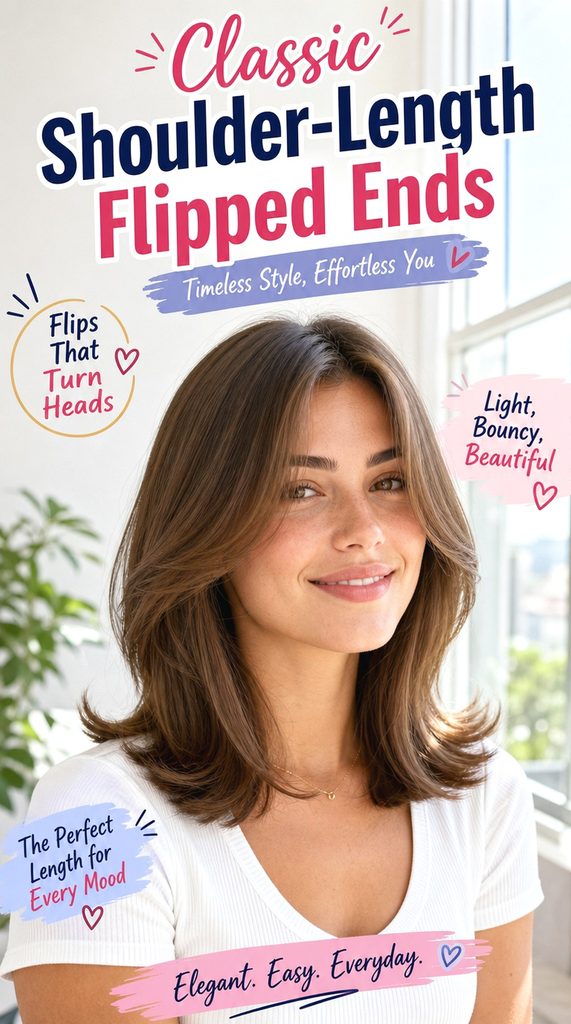
A shoulder-length cut gives flipped ends enough room to show without making the shape feel dramatic. Keep the body smooth, the perimeter fairly full, and the last inch turned outward with a soft curve. It suits straight to wavy hair in fine, medium, or moderately thick densities, and the balanced length works with many face shapes. Styling is usually quick to moderate: use a round brush, heat protectant, and light-hold hairspray to set the bend. A trim every six to eight weeks helps the ends stay neat. At the salon, ask for a blunt-to-soft perimeter with minimal thinning near the bottom so the flip has enough weight to hold.
Pro tip: Ask for the bottom inch to stay fairly dense. Heavily razored ends may separate too much to create a smooth, noticeable flip.
Sleek Blunt Bob With Flipped Ends

A blunt bob makes the outward flick look clean and graphic because the ends sit at one strong length. Wear it around jaw to chin level with a smooth surface, controlled volume, and a crisp flip at the perimeter. Straight or lightly wavy hair is easiest to style this way, especially in fine to medium densities. A smoothing serum, small flat iron, and heat protectant are useful for keeping the finish polished. Styling takes moderate effort if your hair naturally bends inward. Plan on trims about every five to seven weeks. Tell your stylist you want a solid baseline with very little graduation, since too much layering can weaken the sharp flipped edge.
Pro tip: Bend the flat iron only through the final inch instead of turning it halfway down the hair. This keeps the bob sleek rather than overly curled.
Long Layered Flipped Ends
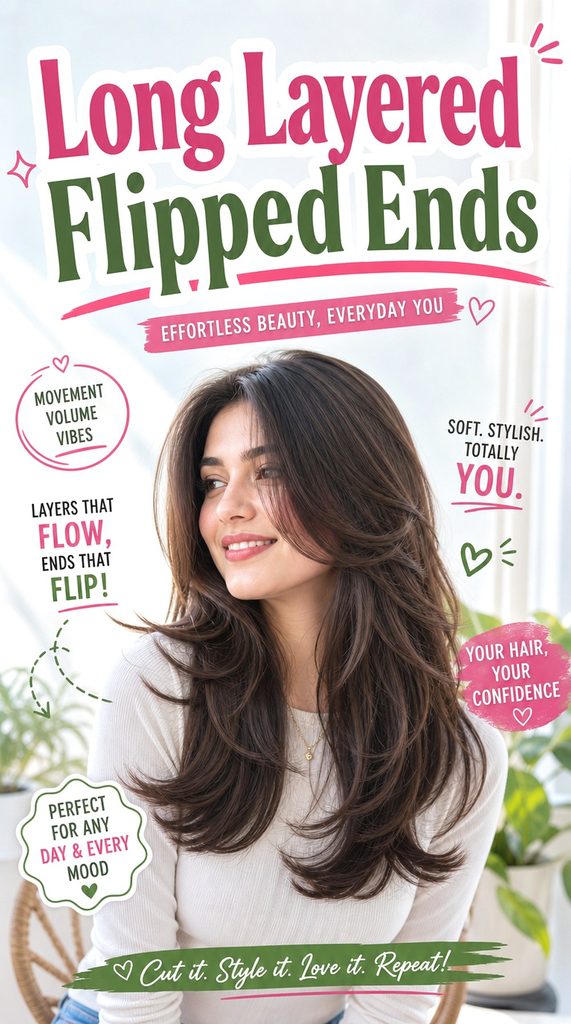
Long layers make flipped ends feel lighter and more flowing, especially when several sections turn outward at slightly different heights. The overall length can sit below the shoulders, with face-framing pieces beginning around the cheekbones or jaw for extra movement. Medium to thick straight or wavy hair handles this shape well, although fine hair can wear fewer layers to preserve density. Use a large round brush, volumizing spray, and heat protectant for a soft blowout finish. Styling takes moderate time because each layer needs direction. Refresh the shape every eight to ten weeks. In the salon, request long connected layers rather than short choppy ones so the ends still look full.
Pro tip: Keep the shortest back layers below shoulder level if you want a flowing flip rather than several disconnected shelves of volume.
Side-Parted Flipped Lob
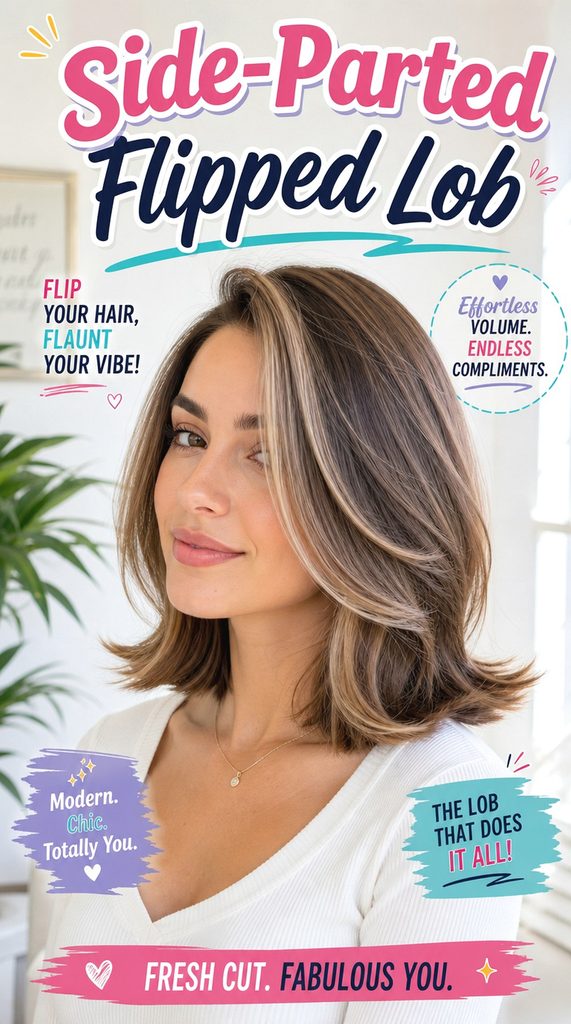
A side-parted lob combines a collarbone-length cut with a lifted front and outward-bent ends. The deeper part adds asymmetry and can create more height on one side, while the flip keeps the lower edge lively instead of tucked under. It works especially well on straight and wavy hair with medium density, and the side sweep can soften angular or elongated face shapes. Styling is fairly quick with a round brush, root-lifting spray, and light smoothing serum. Most cuts hold their shape well for six to eight weeks. Ask your stylist to keep the front slightly longer if you like a sweeping effect and to avoid over-thinning the perimeter, which can make the flip look wispy.
Pro tip: Start the side part near the highest point of your eyebrow rather than moving it extremely far over; this usually gives lift without creating an unbalanced heavy side.
Curtain Bangs With Flipped Ends

Curtain bangs pair naturally with flipped ends because both shapes move away from the face. Keep the fringe soft through the center, longer toward the cheekbones, and blend it into shoulder-length or longer hair with a gentle outward flick at the bottom. This combination suits straight and wavy textures and works particularly well when you want face framing without a heavy full bang. A medium round brush, heat protectant, and flexible hairspray are enough for most styling. Expect moderate daily effort, mainly around the fringe. Bangs may need refreshing every four to six weeks. Show your stylist where you want the shortest curtain piece to land so the fringe opens at a flattering point instead of sitting too high.
Pro tip: For softer curtain bangs, keep the shortest section around eyebrow-to-cheekbone level and let the outer pieces gradually connect into the sides.
Supermodel Flipped Layers
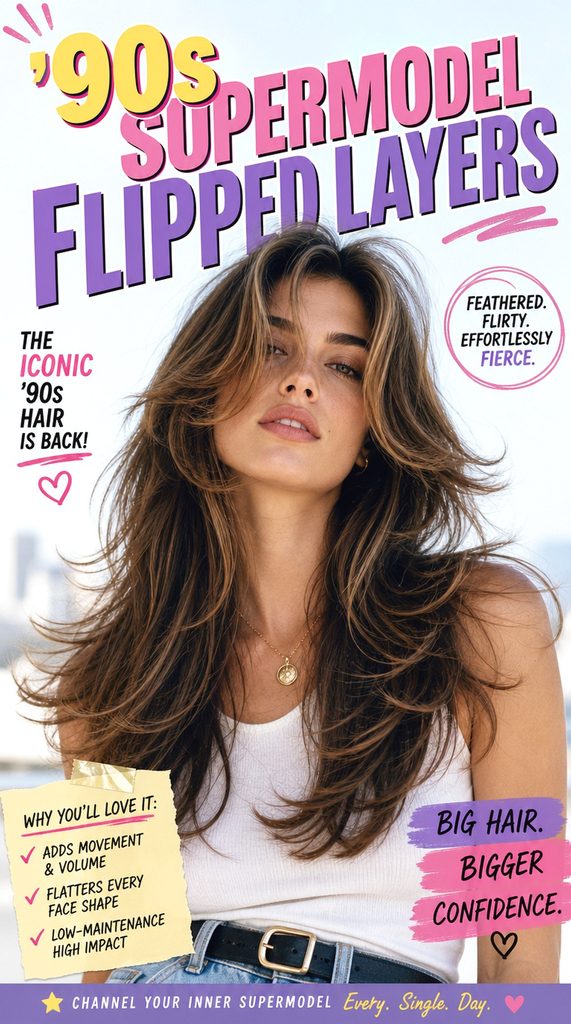
The 90s supermodel version is all about airy volume, sweeping layers, and ends that kick outward around the shoulders and face. A center or soft side part both work, while shorter front layers help create the signature lifted movement. Medium to thick hair usually holds this full shape best, though fine hair can get a similar effect with fewer layers and strategic root lift. Use volumizing mousse, a large round brush, and light-hold hairspray. Styling takes more time than a simple flip because the blowout needs sectioning and direction. Plan for a shape refresh around eight weeks. Ask the stylist for broad, blended layers rather than heavily textured ends so the blowout stays plush.
Pro tip: Direct each face-framing section backward while blow-drying, then let it cool before brushing it out. Cooling helps the outward sweep last longer.
Short Rounded Bob With Flipped Ends
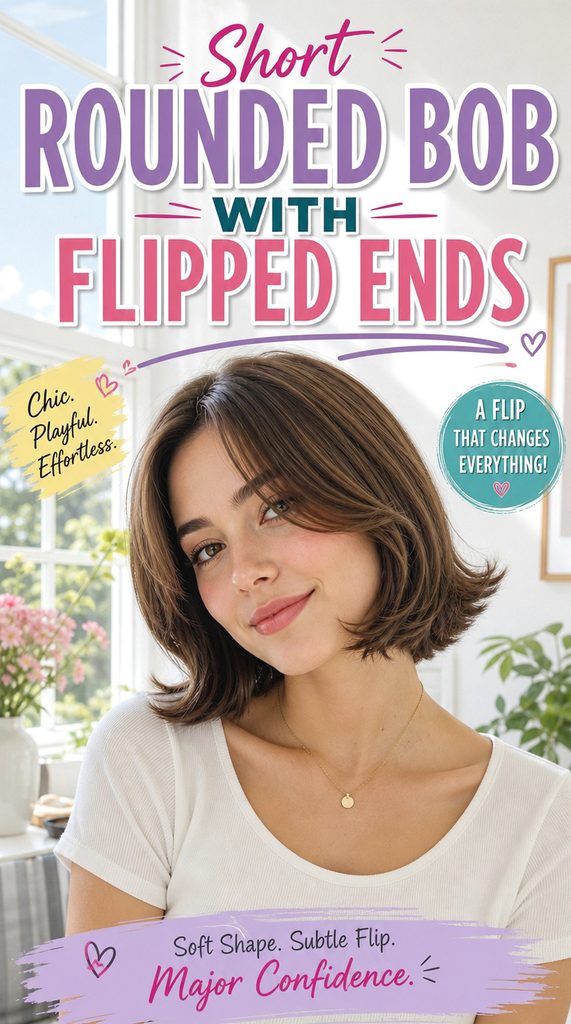
A short rounded bob keeps gentle fullness through the crown and sides, then turns the bottom edge outward for contrast. The curve gives the cut structure while the flipped tips stop it from feeling too tucked or helmet-like. It is a practical option for straight to slightly wavy hair in medium density, and the length can be adjusted between chin and jaw level to suit the face. Styling is moderate: a small round brush, smoothing cream, and heat protectant help shape the curve. Short bobs usually need trims every five to six weeks. At the salon, request subtle internal graduation for roundness but keep enough weight at the very ends to create a visible outward flick.
Pro tip: Keep the crown softly rounded rather than heavily teased. Too much height above a short flipped perimeter can make the silhouette feel top-heavy.
Medium Shag With Flipped Ends
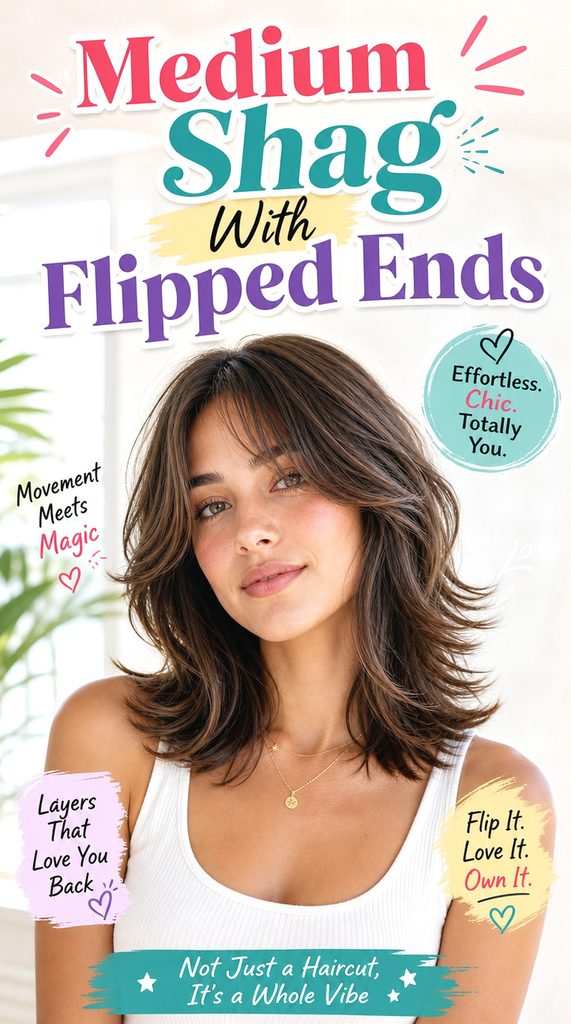
A medium shag gives flipped ends a looser, more textured character. Layers can begin around the cheekbones, continue through the mid-lengths, and finish with scattered outward bends rather than one uniform curve. Wavy hair and medium to thick density suit this relaxed shape especially well, while straight hair can create the texture with styling. Use texturizing spray, lightweight mousse, and a diffuser or rough blow-dry before shaping selected ends. Styling time is moderate but does not need to be precise. A trim every eight to ten weeks keeps the layers active. Tell your stylist you want movement through the interior while keeping the perimeter strong enough that the ends do not become overly feathered.
Pro tip: Flip only selected pieces rather than every single end. Uneven outward bends suit a shag better than a perfectly uniform curved line.
Half-Up Hair With Flipped Ends
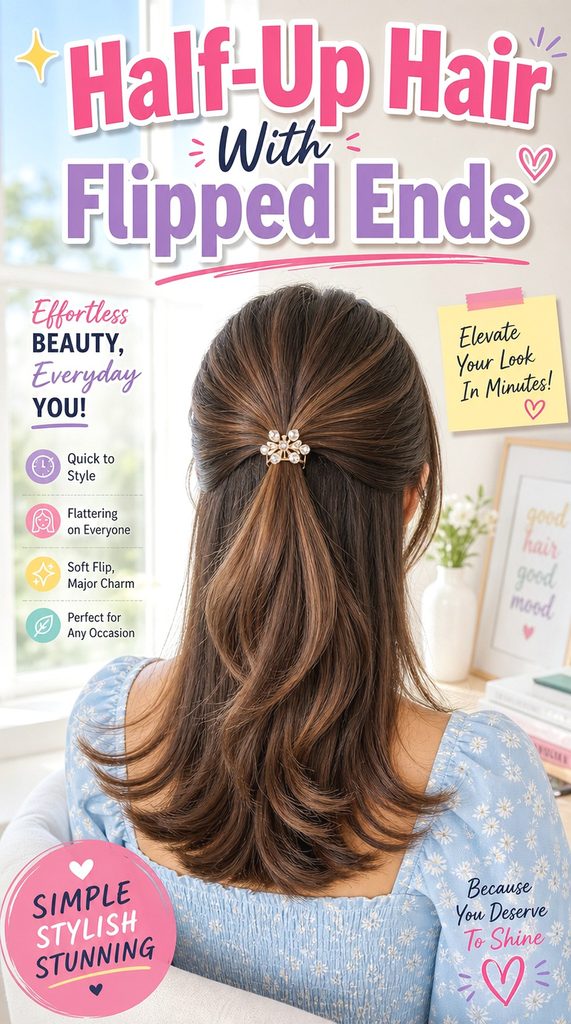
Half-up hair with flipped ends gives a simple everyday style more polish without needing a complicated updo. The top section is secured away from the face while the loose lower lengths stay smooth and turn outward at the tips. It works on shoulder-length to long straight or wavy hair and is especially useful when you want volume at the crown without wearing all the hair up. A paddle brush, heat protectant, and medium-barrel curling iron or flat iron work well. Styling is usually quick once the ends are pre-shaped. Keep regular trims every eight weeks or so. For the cut, ask for soft face-framing layers that still blend cleanly when the top half is pulled back.
Pro tip: Secure the half-up section before refining the flip. Pulling the hair back afterward can change the direction of the lower pieces and flatten your finished bend.
High Ponytail With Flipped Ends

A high ponytail makes the flipped finish more noticeable because the ends fan outward from a lifted base. Keep the ponytail smooth or slightly voluminous, then curve the last few inches away from the center for a bouncy, retro-inspired effect. Medium to long hair with straight or wavy texture is easiest to control, while thicker hair creates a fuller tail. Use a smoothing brush, flexible hairspray, and heat protectant with a flat iron or curling iron. Styling takes moderate effort, especially if you want a sleek base. Regular trims keep the tail ends looking dense. Ask your stylist to avoid excessive short layers if you often wear high ponytails, since they can slip out around the sides.
Pro tip: Divide a thick ponytail into two or three sections before flipping the ends. Smaller sections create a cleaner bend and prevent the underside from staying straight.
Feathered Midi Cut With Flipped Ends

A feathered midi cut sits around the shoulders or upper chest and uses soft, directional layers to create movement around the face and ends. Instead of one solid flip, the tips separate into light outward sweeps that feel airy. This shape works well for medium to thick straight or wavy hair; very fine hair should keep feathering concentrated around the front so the perimeter stays substantial. A blow-dry cream, vented round brush, and lightweight hairspray help define the pieces. Styling takes moderate time but grows out gracefully. Refresh the layers every eight to ten weeks. In the salon, ask for feathering that begins below the cheekbones and preserves visible density through the bottom line.
Pro tip: If your hair is fine, keep most of the feathering above the perimeter. Removing too much weight from the final two inches can make the ends look sparse.
Soft Waves With Flipped Ends

Soft waves with flipped ends combine gentle bends through the mid-lengths with a deliberate outward turn at the bottom. The contrast keeps the waves relaxed while giving the perimeter a clear direction. It suits naturally wavy hair and straight hair that holds heat styling, with medium density offering an easy balance of movement and fullness. Use a heat protectant, wide-barrel curling iron, and texturizing spray, then leave the final inch outside the curl before flicking it outward. Styling takes moderate time but can last well between washes. Trim every eight to ten weeks. Tell your stylist you want long, soft layers that support waves without creating too many short pieces near the ends.
Pro tip: Curl the middle of each section first and shape the tip separately. Trying to make the wave and flip in one motion can turn the end into a full ringlet.
Fine Hair Flipped Lob
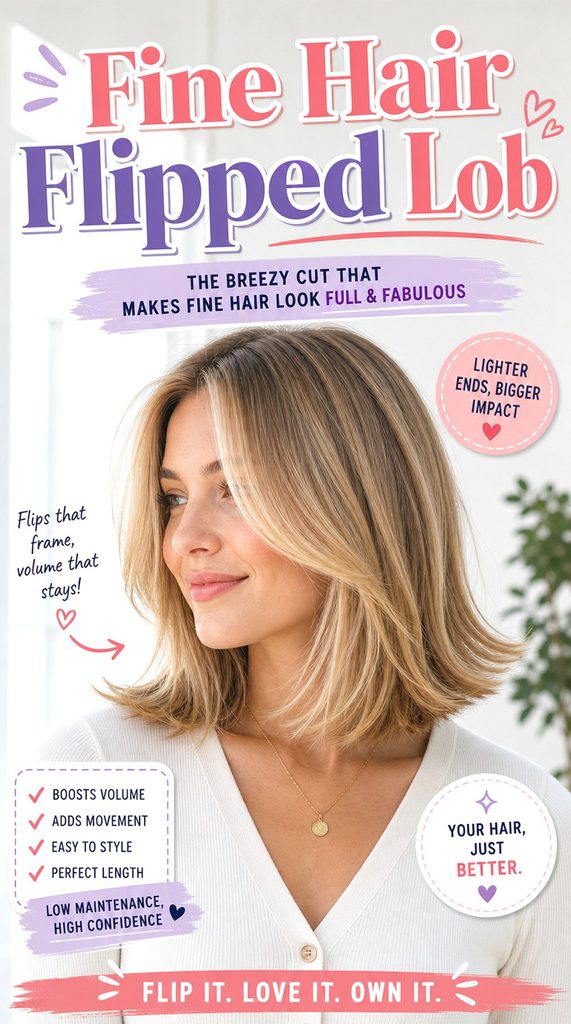
A flipped lob can make fine hair look more animated without relying on heavy layering. Keep the length between the shoulders and collarbone, preserve a fairly blunt baseline, and use only subtle face-framing pieces so the ends retain visual density. Straight to slightly wavy fine hair usually works best. A lightweight volumizing mousse, round brush, and dry texture spray can add lift without making the hair sticky or flat. Styling is quick to moderate because the shape depends more on the perimeter than complicated sections. Trim every six to eight weeks to prevent thin ends. At the salon, ask for minimal internal thinning and a clean edge, with just enough front shaping to keep the cut from feeling boxy.
Pro tip: Avoid applying heavy oils before styling. On fine hair, they can pull down the bend; keep richer products only on very dry tips and use them sparingly.
Thick Hair Flipped Layers
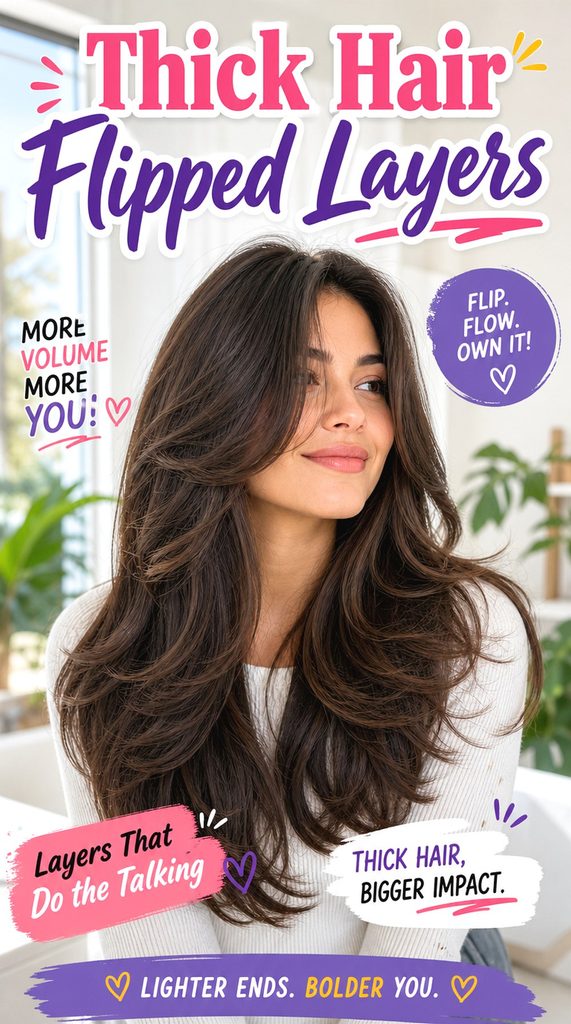
Thick hair can wear flipped ends beautifully when bulk is controlled before the tips are turned outward. Long or medium layers remove excess weight through the interior while keeping the perimeter substantial enough to form a smooth flick. Straight, wavy, and loosely curly textures can all adapt to this shape, especially when the cut is tailored to the hair’s natural expansion. Use a smoothing cream, strong heat protectant, and large round brush to direct the ends. Styling takes moderate to higher effort because dense sections need more drying time. Refresh the cut every eight to ten weeks. Ask your stylist for strategic internal weight removal, not aggressive thinning at the bottom, so the flip stays polished instead of frayed.
Pro tip: Ask for bulk removal through the interior rather than thinning shears directly across the bottom. You need enough density at the edge for a controlled outward curve.
Curly Hair With Flipped Ends

On curly hair, flipped ends should follow the natural curl pattern rather than forcing every strand into a straight outward bend. The effect is created by directing selected curls away from the face and encouraging the lower pieces to kick outward with definition. Medium to thick wavy-curly textures usually respond best, while tighter curls may need a more sculpted, individualized approach. Use leave-in conditioner, curl cream, and a diffuser to preserve shape and reduce frizz. Styling is moderate but can be mostly heat-free apart from diffusing. Trim according to curl shape, often every eight to twelve weeks. Tell your stylist you want outward movement at the perimeter while keeping enough length for the curls to spring naturally.
Pro tip: Twist or finger-coil the perimeter curls in the direction you want them to move while they are wet. It is easier than reshaping completely dry curls with heat.
Pixie Bob With Flipped Ends
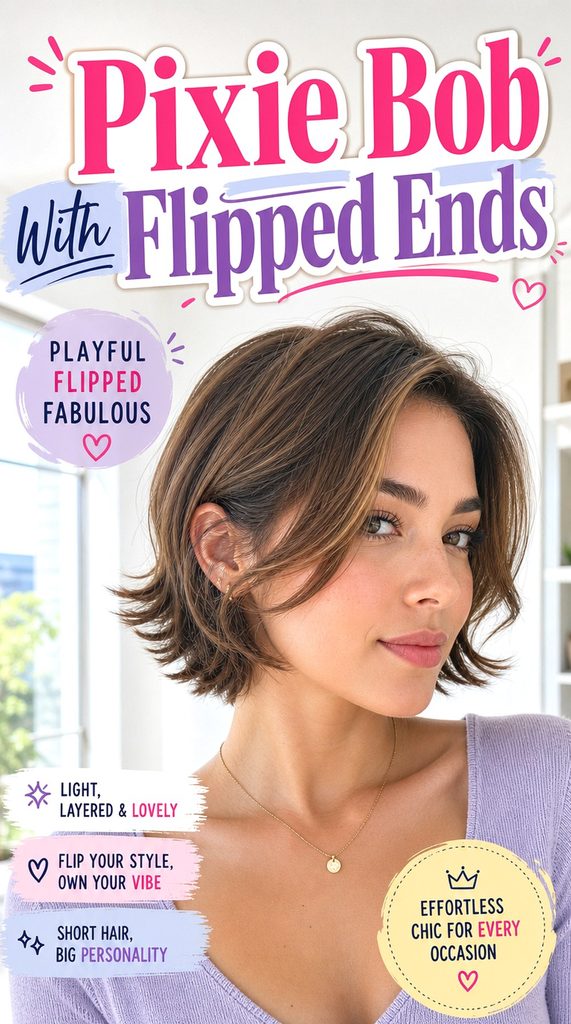
A pixie bob with flipped ends keeps the nape and back compact while leaving enough length around the ears and front to flick outward. The result feels light and playful rather than sleek, with texture concentrated along the perimeter. Straight and softly wavy hair in fine to medium density is easiest to direct, and the cut can be adjusted with a side fringe or longer front pieces for different face shapes. Use a small flat iron, texturizing paste, and heat protectant. Styling is quick, but the cut itself needs frequent upkeep. Plan on trims every four to six weeks. Ask your stylist to leave the side pieces long enough to bend outward instead of cutting them tight to the head.
Pro tip: Point out exactly which side pieces you want to flip in your reference photo. A difference of even half an inch can determine whether short hair bends outward properly.
Center-Parted Long Hair With Flipped Ends
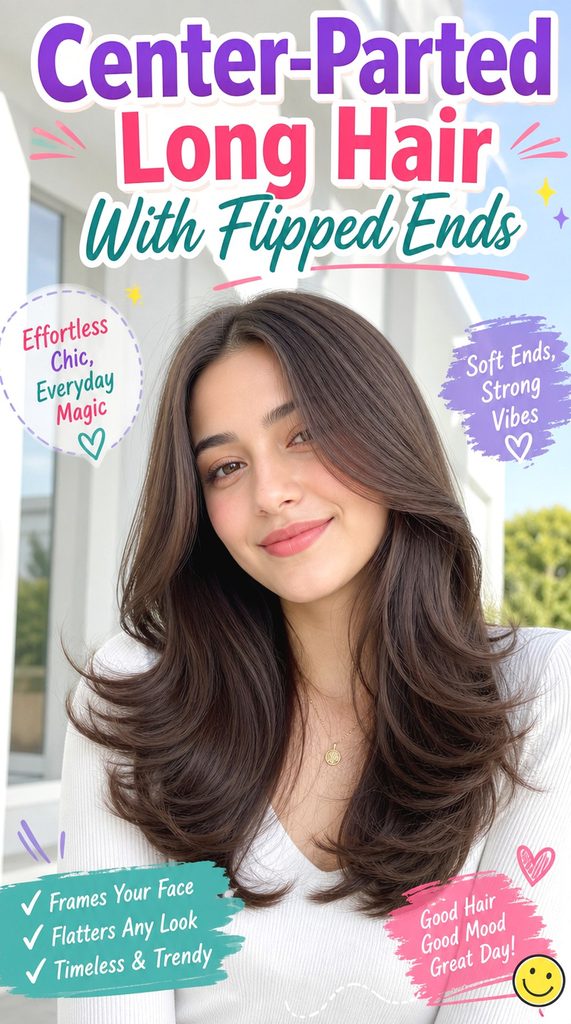
Center-parted long hair with flipped ends keeps the upper shape simple so the outward movement at the bottom becomes the focus. The lengths can stay mostly one level or include long layers, with both sides balanced around a middle part. It suits straight and wavy hair in medium to thick densities, and face framing can help adapt the shape for round, square, or longer faces. Use a large round brush, smoothing serum, and heat protectant for a glossy finish. Styling takes moderate time mainly because of the hair length. Trim every eight to twelve weeks. At the salon, ask for a dense perimeter and long blended layers that do not remove too much weight from the final few inches.
Pro tip: Compare both sides after styling. With a center part, uneven layer lengths or different flip angles are more noticeable, so mirror the direction and height of the bend.
Conclusion
Flipped ends hairstyles can be adapted far beyond one retro shape. A small outward bend can sharpen a bob, add bounce to a lob, or give long layers a lighter finish. The result changes depending on length, density, layering, bangs or fringe, volume, natural texture, parting, and how polished or relaxed you want the finish to be. Styling effort matters too: some cuts need only a round-brush flick, while others look best with a full blowout or careful curl direction. The strongest choice is the one that works with your face shape, natural hair texture, hair density, maintenance preference, and daily routine. Use reference photos to compare details, not just the overall silhouette, before deciding on your final version.
CTA
Choose one or two favorite ideas and save clear photo references before your salon visit. Discuss your face shape, natural hair texture, hair density, preferred length, maintenance level, and usual styling routine with your stylist. In each photo, point out the exact layers, fringe length, perimeter, volume, parting, or flipped finish you like. Those details make it much easier to adapt the inspiration to your own hair instead of simply copying the overall shape.
FAQs
Are Flipped Ends Hairstyles Best For Straight Or Wavy Hair?
Straight and softly wavy hair usually forms a defined outward bend most easily. Curly hair can also wear flipped ends, but the direction should work with the natural curl pattern rather than forcing every curl into the same shape.
How Do I Keep Flipped Ends From Falling Flat?
Apply heat protectant, shape the final inch with a round brush or heat tool, and let the section cool in its flipped position. A small amount of flexible hairspray can add hold without making the ends stiff.
How Often Should A Flipped Bob Or Lob Be Trimmed?
A short or blunt bob may need a trim every five to seven weeks to keep its perimeter crisp. Longer lobs can often go six to eight weeks, depending on growth rate and how neat you want the ends.
Can Flipped Ends Work On Both Fine And Thick Hair?
Yes, but the cutting approach should change. Fine hair usually benefits from a denser perimeter and minimal thinning, while thick hair may need internal weight removal so the ends can turn outward without becoming bulky.