15 Curly Bangs Hairstyles
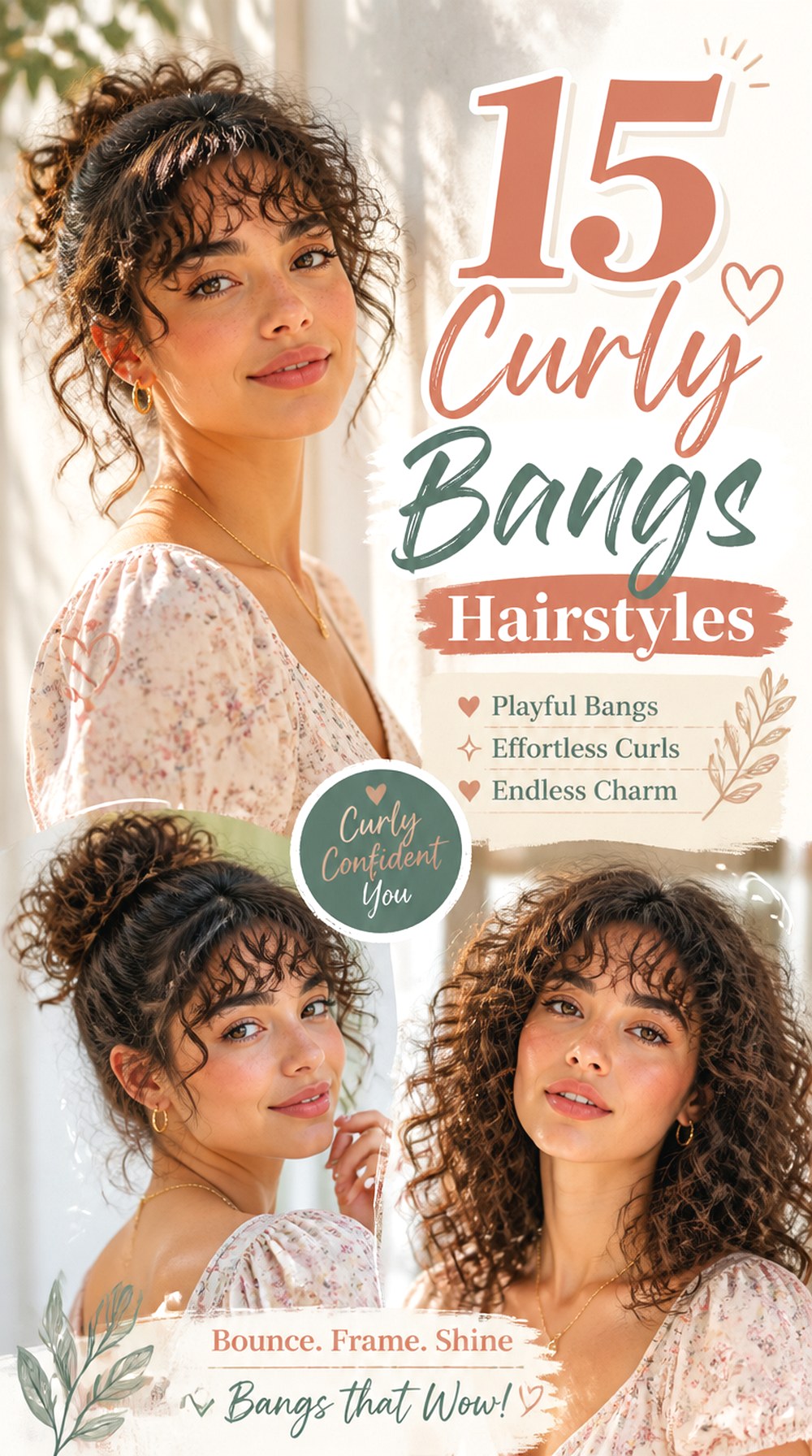
Curly bangs bring part of the natural curl pattern forward over the forehead instead of keeping every curl pushed back or blended into longer layers. Depending on how they are cut, the fringe can be airy and separated, thick and rounded, short and defined, or long enough to split into curtain pieces. Because curls shrink as they dry, the finished length and shape need more planning than a straight fringe.
These bangs can work with loose waves, springy curls, and tighter coils, although the amount of hair used in the fringe should suit the person’s density. Fine curls often benefit from a lighter section that preserves fullness around the sides, while dense hair may need careful weight removal. Length and face-framing can also be adjusted for round, oval, square, heart, or longer face shapes rather than following one fixed bang shape.
Most curly bangs need some refreshing between wash days, but daily styling can remain fairly simple when the cut follows the natural curl pattern. Before choosing one of these curly bangs hairstyles, consider shrinkage, humidity, how often you wear your hair straight, and whether you are comfortable having the fringe reshaped regularly. A dry or curl-by-curl consultation can be especially useful.
Quick List
- Soft Curly Curtain Bangs
- Short Curly Bangs With Bob
- Long Curly Bangs With Layers
- Shaggy Curly Bangs
- Wispy Curly Bangs
- Voluminous Curly Bangs
- Side-Swept Curly Bangs
- Micro Curly Bangs
- Curly Bangs With Pixie Cut
- Curly Bangs With Lob
- Curly Bangs With Wolf Cut
- Curly Bangs With Round Layers
- Curly Bangs With High Ponytail
- Curly Bangs With Shoulder-Length Cut
- Defined Coily Curly Bangs
Soft Curly Curtain Bangs

Soft curly curtain bangs are longer through the outer edges and gently separate near the center, allowing the fringe to blend into face-framing layers. They work especially well with loose curls and waves because the natural bend helps create movement without a rigid part. Medium-density hair gives the fringe enough fullness while keeping it light. Refreshing usually takes only a few minutes with a water mist, curl cream, and a diffuser. A little light-hold hairspray can control flyaways in humid weather. Salon maintenance is moderate; ask for bangs that remain long enough after shrinkage to separate around the brows and cheekbones.
Pro tip: Keep the shortest curls near the center and let the outer pieces gradually lengthen toward the cheekbones so the curtain shape blends naturally instead of looking disconnected.
Short Curly Bangs With Bob

Pairing short curly bangs with a bob creates a compact shape with plenty of texture around the face. The bob can finish near the jaw or just below it, while the fringe sits above or around the brows once completely dry. This combination is useful for medium to thick curls that can hold a rounded silhouette, although finer hair can wear a softer version with less layering. Styling is moderate rather than lengthy: apply leave-in conditioner, scrunch in lightweight mousse, and use a diffuser for controlled volume. Trims help prevent both the bob and fringe from losing their outline. At the salon, discuss the dry length of the bangs rather than relying on their stretched length.
Pro tip: Leave enough weight along the bottom edge of the bob to balance the shorter fringe; removing too much from both areas can make the overall shape appear thin.
Long Curly Bangs With Layers

Long curly bangs sit around the brows, eyes, or upper cheekbones and flow directly into layered lengths. The extra fringe length makes this option easier to pin back or grow out than a very short bang, making it practical for someone experimenting with a fringe. It suits wavy, curly, and moderately coily textures, especially when medium or thick hair needs movement through the front. Styling is fairly quick with curl cream, a wide-tooth comb, and a diffuser used on low airflow. The layers normally need periodic reshaping rather than constant trimming. Ask your stylist to connect the outer fringe to the first face-framing layer so there is no obvious gap between sections.
Pro tip: Check where the bangs land when fully dry before shortening them further; several centimeters of shrinkage can dramatically change the final position of a curl.
Shaggy Curly Bangs
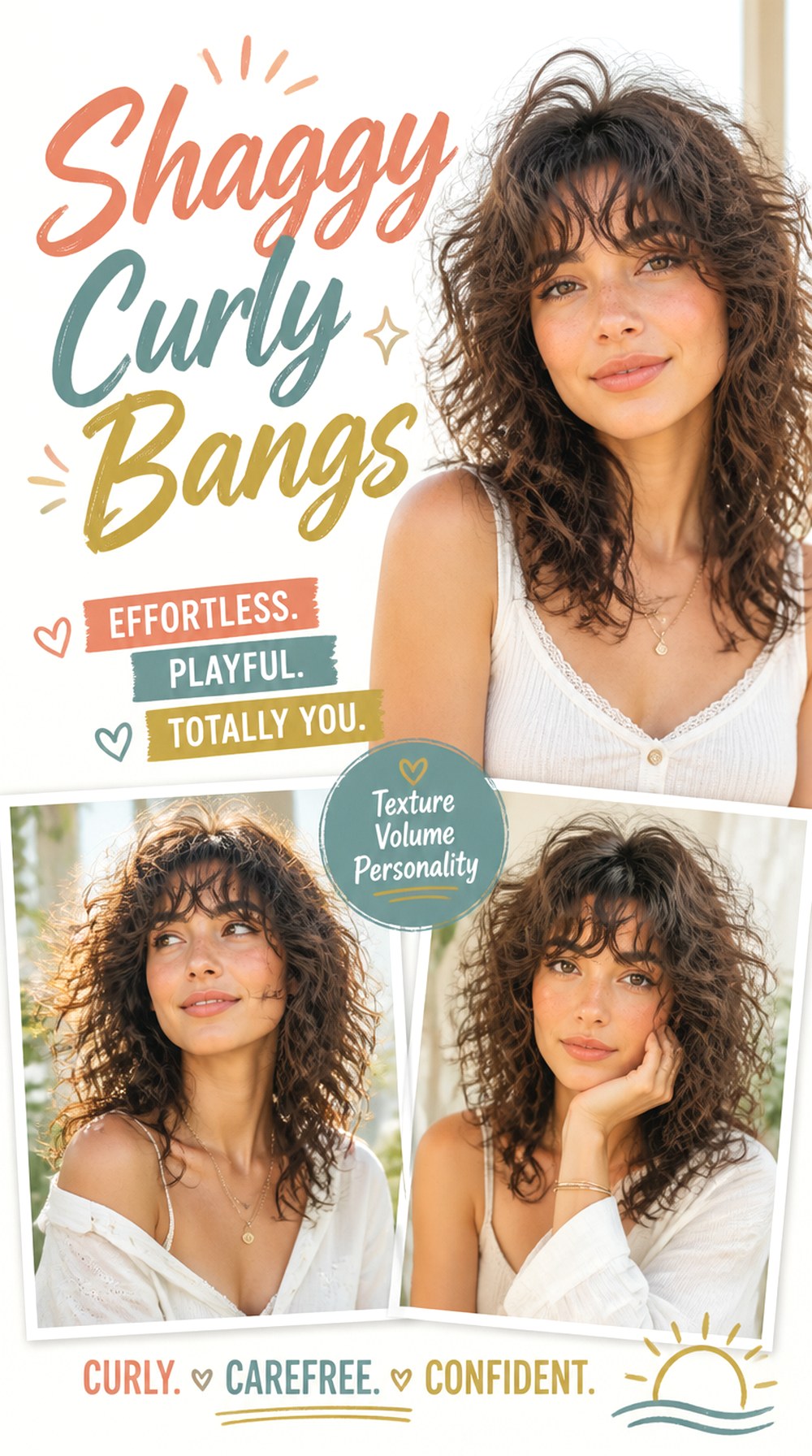
Shaggy curly bangs have a deliberately broken-up finish that blends into shorter crown layers and longer, textured ends. The fringe is usually less polished and more separated than classic rounded bangs, making it especially suitable for naturally wavy or curly hair with plenty of movement. Fine to medium-density hair can gain visible lift from the shorter layers, while very dense curls may need selective bulk removal. Styling takes a moderate amount of time: work in texturizing spray or lightweight mousse, then dry with a diffuser to keep definition without flattening the crown. Salon visits should focus on maintaining the layered silhouette. Ask for soft, irregular fringe edges rather than one heavy horizontal line.
Pro tip: Keep the crown layers short enough to create lift but not so short that they spring away from the rest of the haircut when humidity increases.
Wispy Curly Bangs
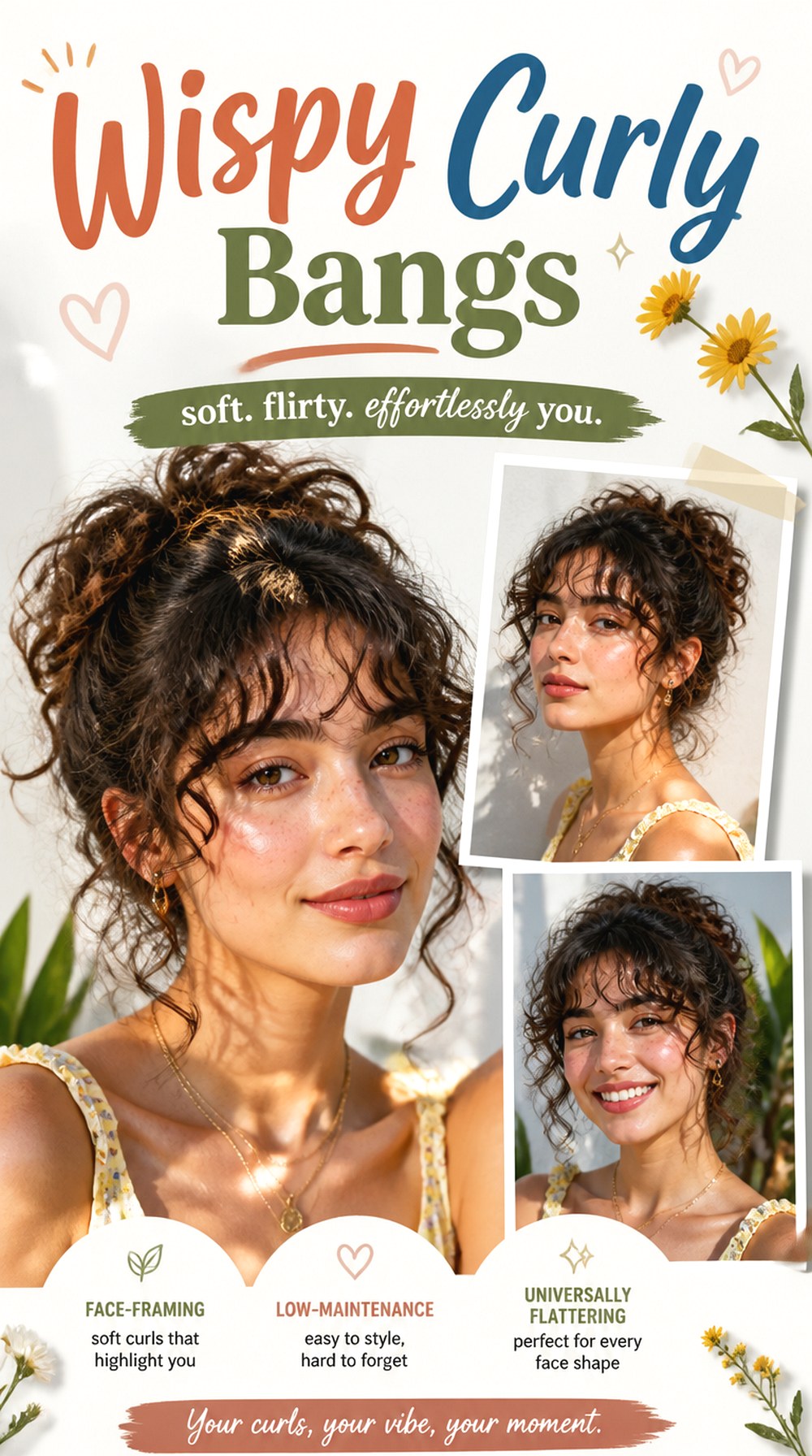
Wispy curly bangs use a smaller section of hair, leaving soft spaces between individual curls rather than forming a dense curtain across the forehead. That makes them a useful choice for fine or medium-density hair and for anyone who wants a fringe without removing too much fullness from the sides. Loose waves and curls create the easiest airy finish, although tighter textures can also be shaped into delicate curl clusters. Daily styling is quick with leave-in conditioner, a small amount of curl cream, and a water mister for refreshing. The fringe may need more frequent small trims than longer bangs. Tell your stylist you want low density through the fringe and visible separation between curls.
Pro tip: Avoid taking the fringe section too far back on the head; a shallow section keeps the bangs light and prevents the front from becoming wider or heavier than intended.
Voluminous Curly Bangs
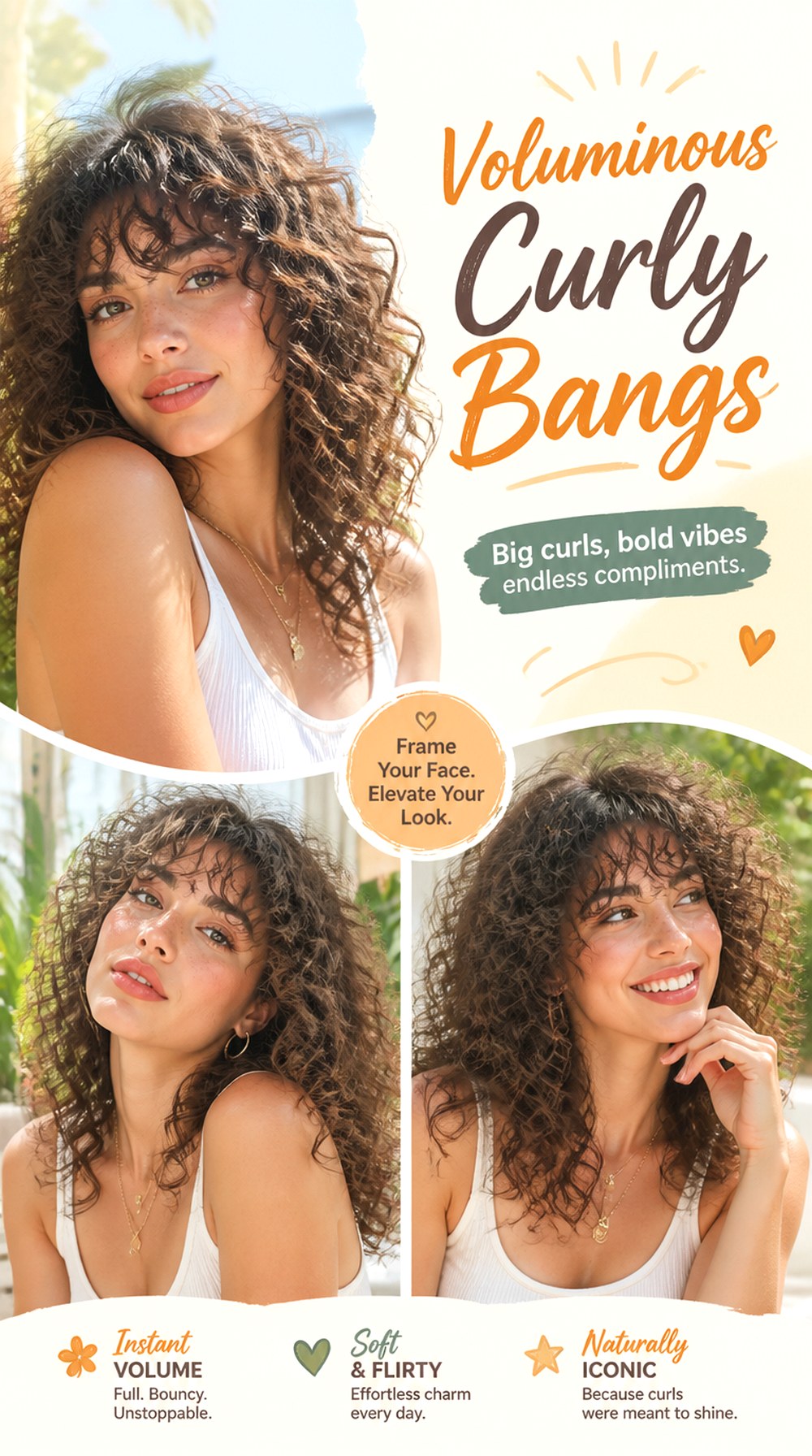
Voluminous curly bangs create a fuller, rounded front with enough height to connect visually with the sides and crown. They are particularly effective on medium to thick curls that naturally expand as they dry. The fringe can skim the brows or sit slightly above them, depending on shrinkage and how much forehead you want visible. For styling, use volumizing mousse, a root-lifting spray, and a diffuser, drying the roots in different directions rather than pressing them flat. Styling time is moderate, especially on wash days, while second-day refreshing is usually much quicker. Regular shaping prevents the fringe from becoming too heavy. Ask the stylist to preserve fullness while removing bulk only where individual curls crowd together.
Pro tip: Create volume at the roots rather than brushing out the ends; separating the ends too much can turn defined curls into unwanted frizz instead of controlled fullness.
Side-Swept Curly Bangs
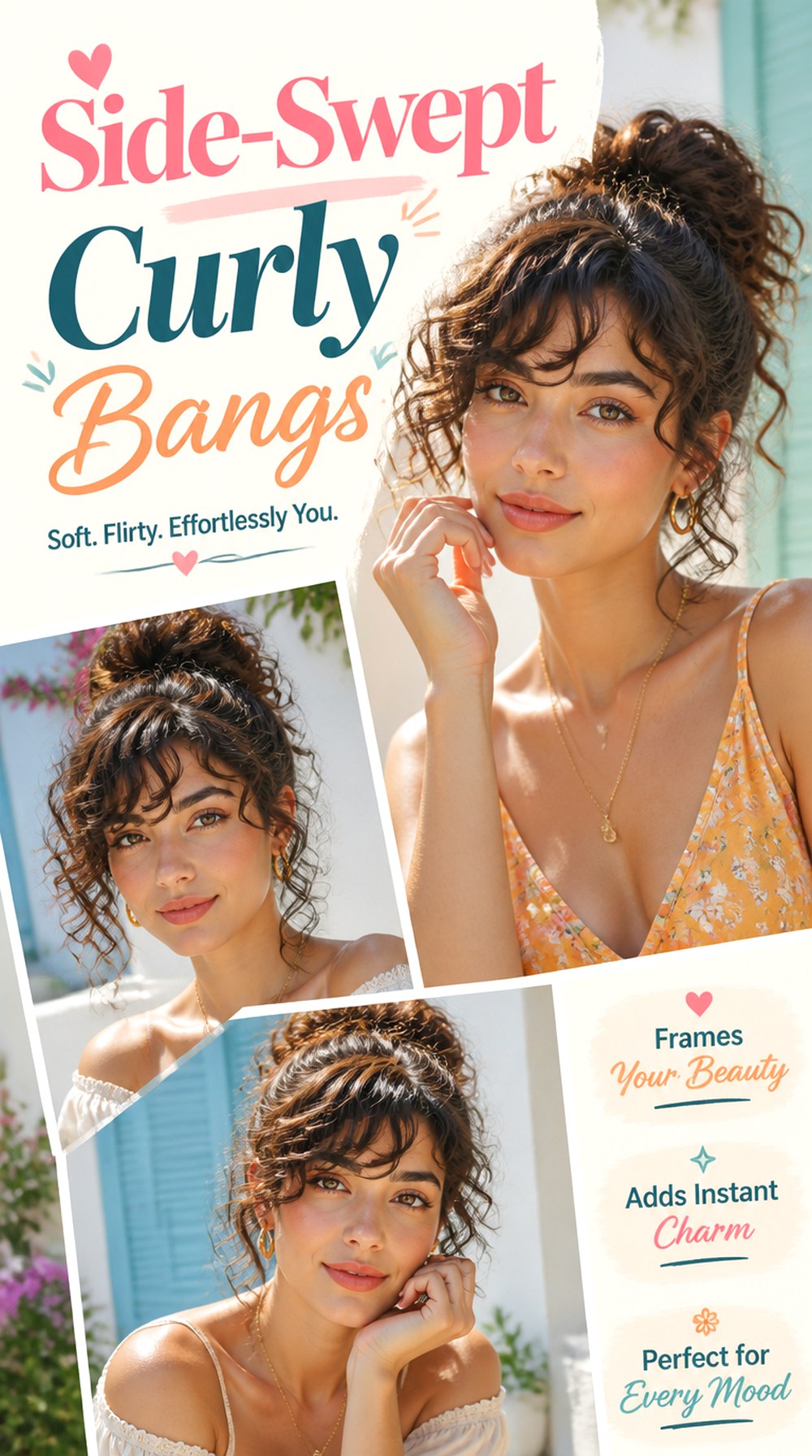
Side-swept curly bangs move diagonally across the forehead and usually become longer toward one temple. The asymmetry is useful for someone who prefers an open forehead or dislikes having curls fall directly into both eyes. It works with loose curls, waves, and springier curl patterns, and the length can be adjusted for many face shapes. Styling is usually quick: apply curl cream, guide the section sideways with your fingers, and use a diffuser or a small amount of light-hold hairspray once dry. Because the fringe is longer, maintenance can be less frequent than with micro bangs. At your appointment, show which side you naturally part your hair on so the cut follows its usual direction.
Pro tip: Let the shortest part begin close to the chosen parting and gradually increase the length across the forehead; this keeps the sweep fluid rather than creating a sudden step.
Micro Curly Bangs
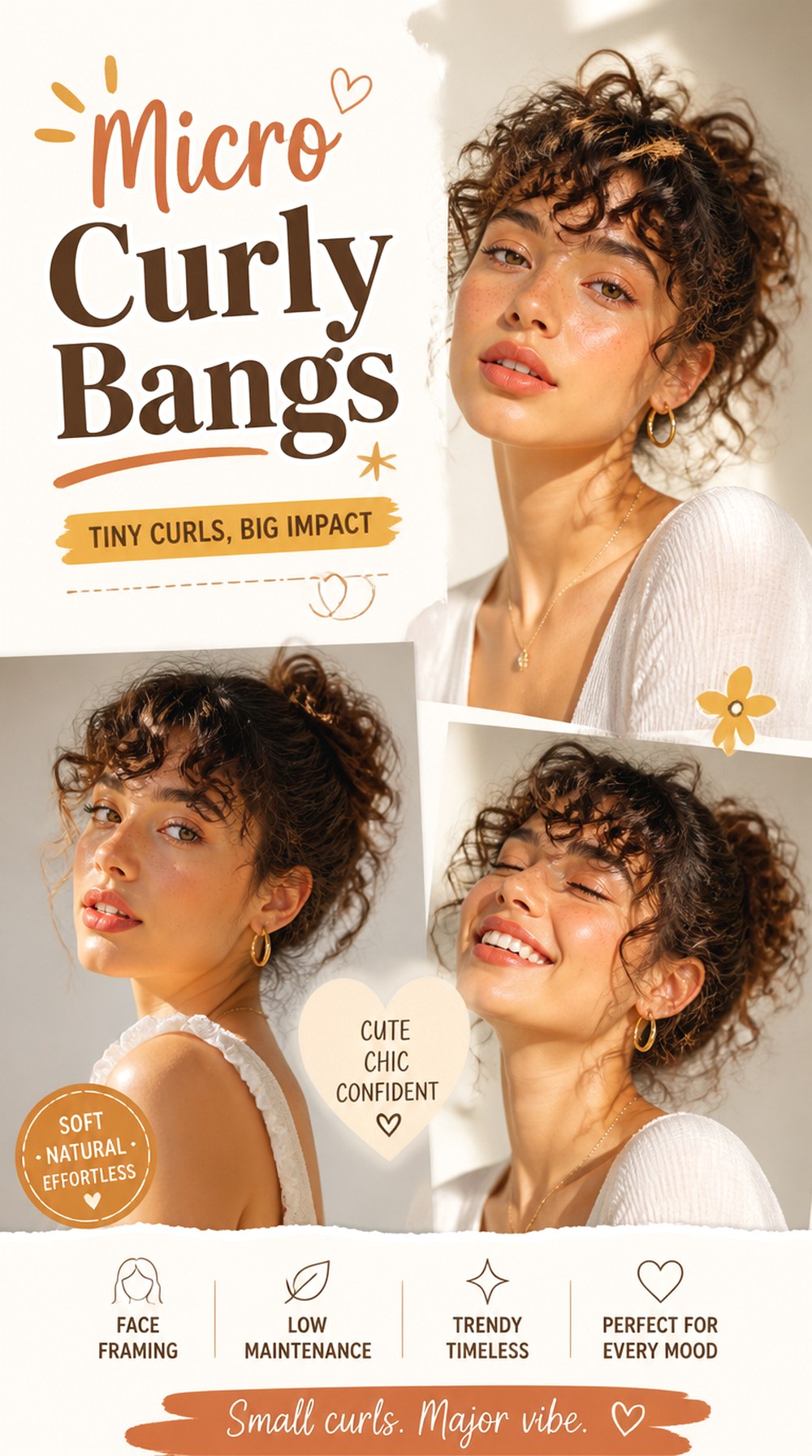
Micro curly bangs finish well above the brows, putting the curl pattern and forehead on full display. Because curls contract after drying, this is one of the fringe styles where conservative cutting matters most. It can suit fine, medium, or thick hair, but tightly curled and coily textures may show considerably more shrinkage than looser patterns. Styling is quick once the cut is right: a little curl cream, leave-in conditioner, and finger coiling can define individual pieces without adding unnecessary weight. Expect more frequent salon maintenance because even a small amount of growth changes the proportion. Ask your stylist to assess each curl in its dry state before deciding the final fringe length.
Pro tip: Start slightly longer than your target length during the first appointment; you can always shorten selected curls after seeing how they settle completely dry.
Curly Bangs With Pixie Cut
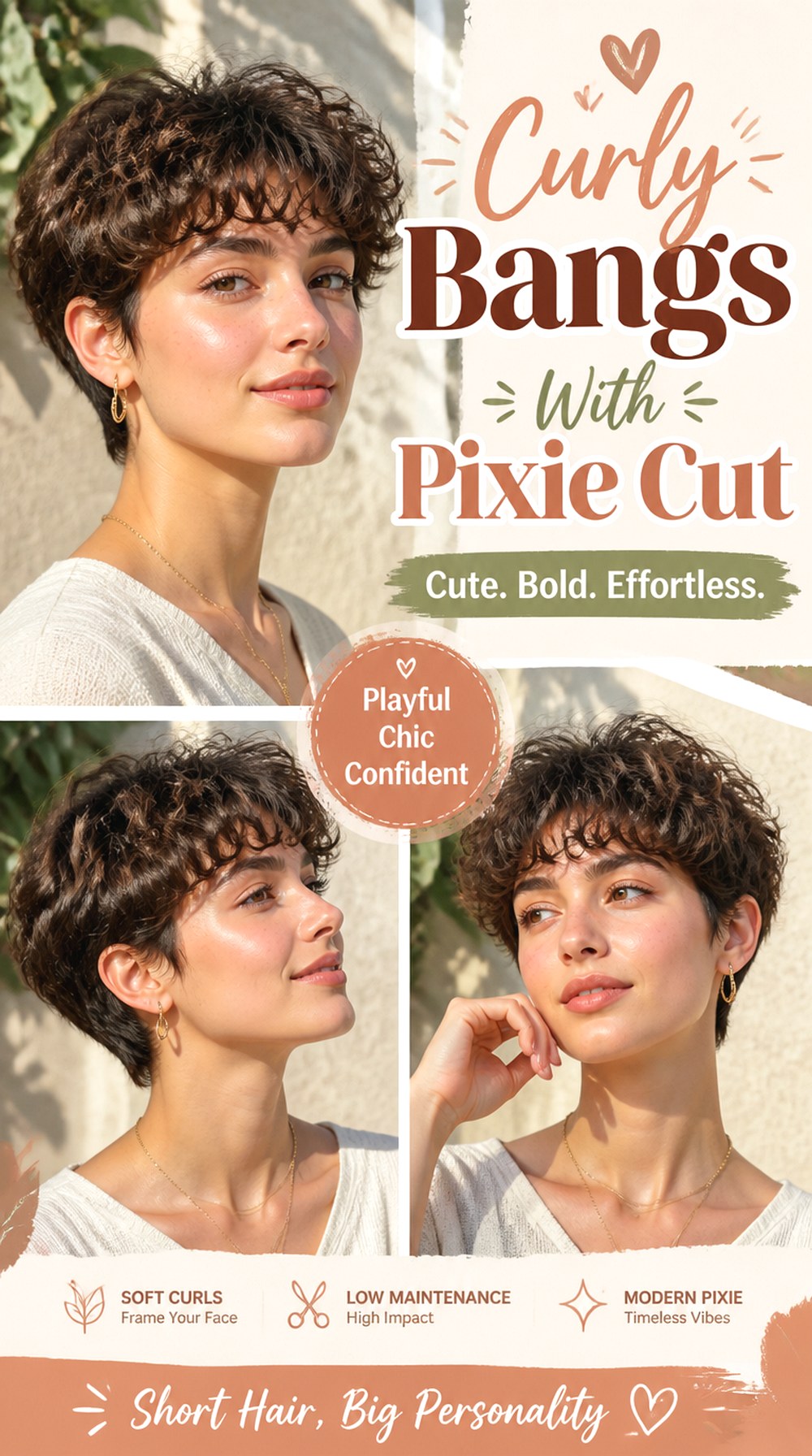
Curly bangs add softness and movement to a pixie cut while keeping the overall haircut short and manageable. The sides and back can be closely tapered, while extra length through the top allows the fringe to curl forward or slightly to one side. This shape works particularly well for curls and coils with enough spring to create definition in a small amount of length. Styling is generally quick with curl-defining cream, a small diffuser, and light-hold gel for selected pieces. The main commitment is salon maintenance because both the taper and fringe can lose their proportions as they grow. Ask for enough top length to account for shrinkage instead of cutting the front uniformly short.
Pro tip: Keep a little extra length at the front hairline so individual curls can form complete bends; cutting through the middle of a curl can make the fringe sit unpredictably.
Curly Bangs With Lob
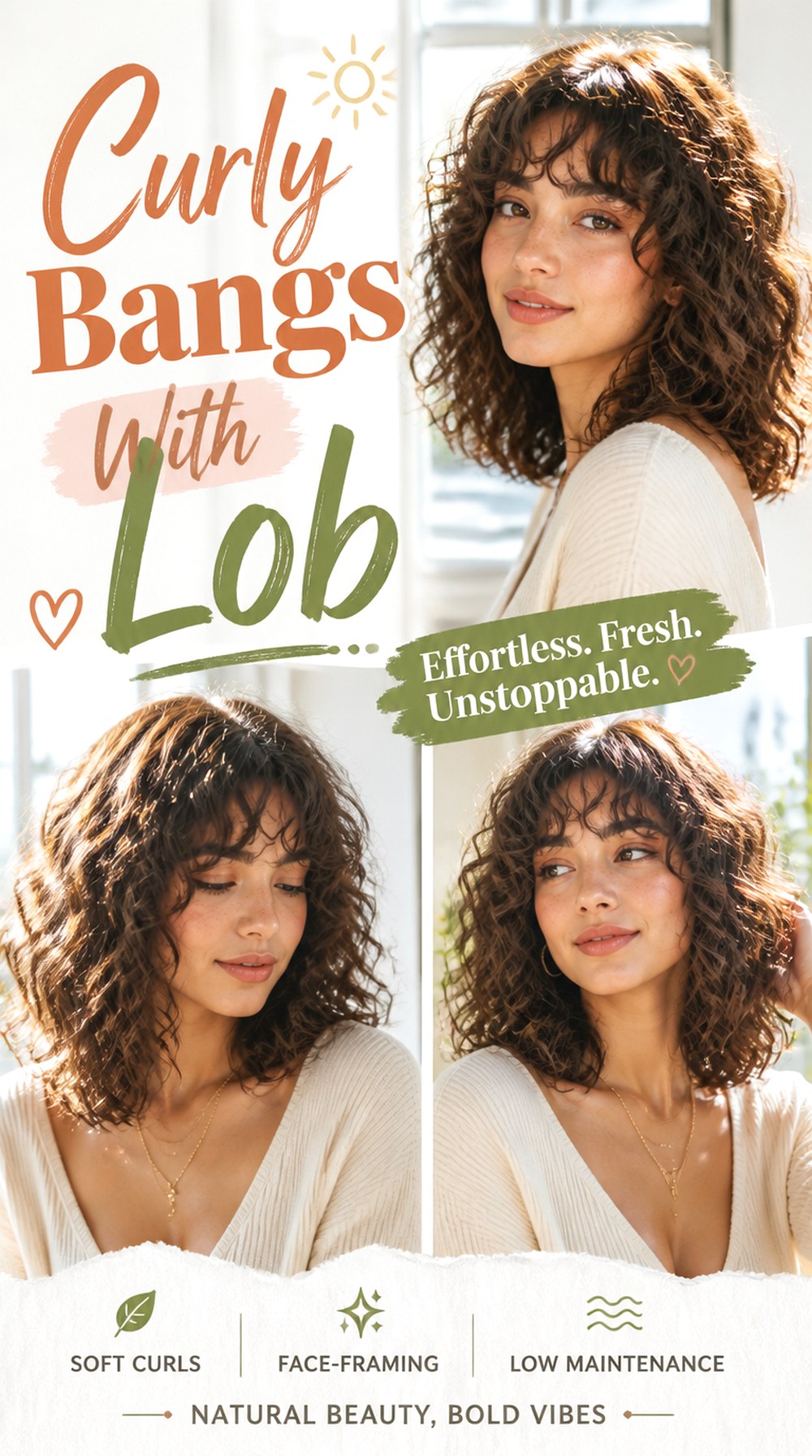
A curly lob usually falls between the chin and shoulders, giving the hair enough length to show curl movement without the weight of a long haircut. Adding bangs brings more texture around the eyes and helps connect the front to subtle layers through the body of the cut. Medium and thick wavy or curly hair often suits this shape, while fine hair may look fuller with fewer internal layers. Use heat protectant if diffusing, curl mousse for definition, and a wide-tooth comb only while the hair is damp. Styling time is moderate, and the lob itself grows out smoothly. Ask your stylist to balance the fringe density with the width and fullness of the lob.
Pro tip: Let the outer bang curls end near the temples or upper cheekbones so they transition into the lob instead of appearing like a separate short section.
Curly Bangs With Wolf Cut
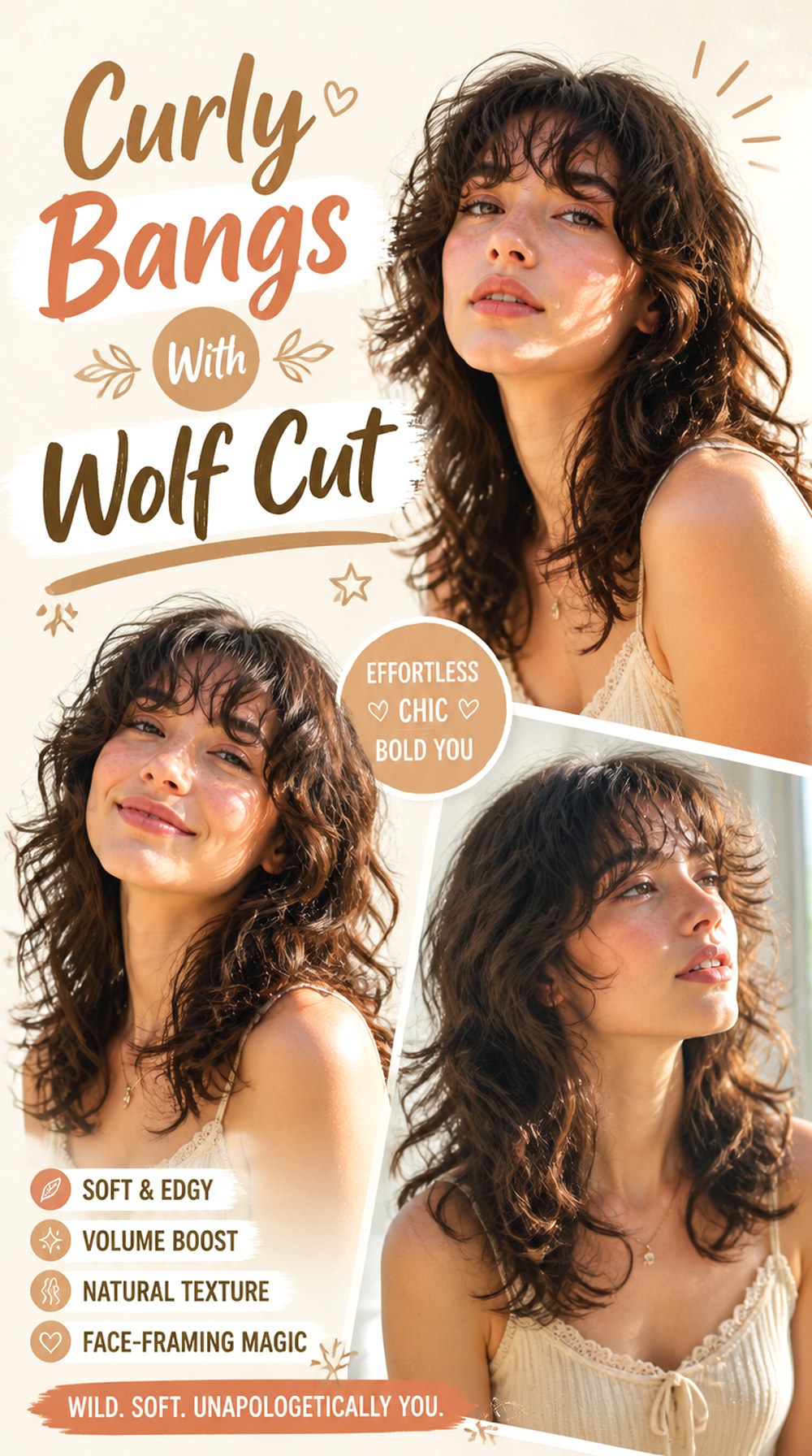
A curly wolf cut combines shorter layers near the crown with progressively longer lengths through the sides and back. Curly bangs complete the front by echoing that piecey, layered movement. The shape can give medium or thick curls more lift, especially when excess weight is making the crown look flat. Fine curls can also wear it, but overly aggressive thinning may leave the lower lengths sparse. Styling needs moderate attention with texturizing mousse, curl cream, and a diffuser to encourage both definition and root lift. Layer reshaping is more important than frequent end trimming. At the salon, ask for visible crown layers that still connect gradually with the longer perimeter.
Pro tip: Keep enough density in the longest layer to support the haircut; the wolf shape should come from intentional layering, not from thinning every section heavily.
Curly Bangs With Round Layers
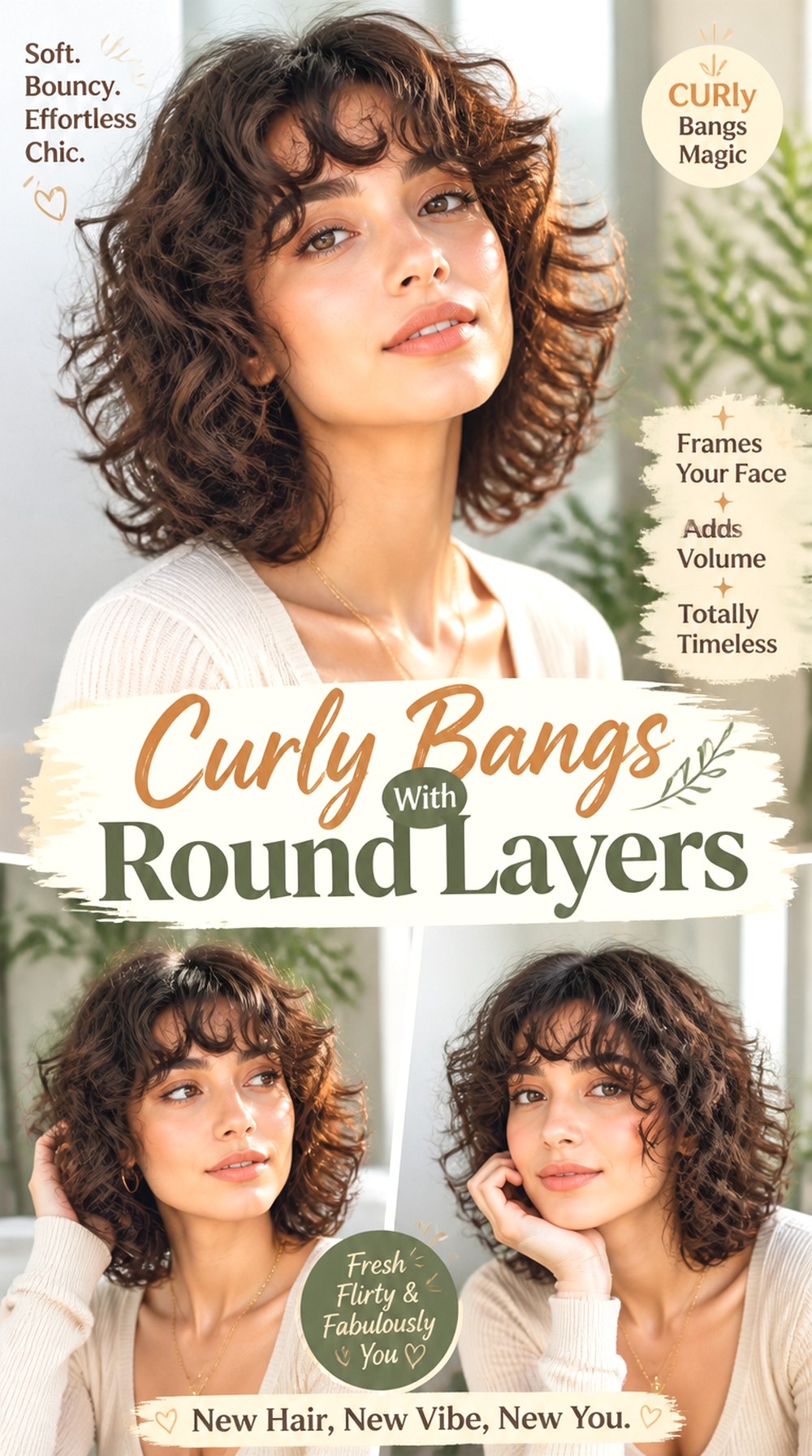
Round layers build a balanced silhouette around the head, with shorter sections supporting volume through the crown and sides while the bangs continue the curved shape at the front. This approach can be especially flattering for springy curls and coils because it works with their natural outward movement rather than forcing them into a flat outline. Medium to thick density usually gives the strongest rounded finish. Styling is moderate with leave-in conditioner, curl gel, and a diffuser used gently to preserve curl clumps. The shape generally benefits from periodic dry reshaping as different curls grow at different rates. Ask your stylist to judge the overall silhouette from every angle instead of concentrating only on fringe length.
Pro tip: Keep the widest point of the haircut where you want visual balance; removing too much bulk near the temples can make the crown seem unnecessarily tall.
Curly Bangs With High Ponytail
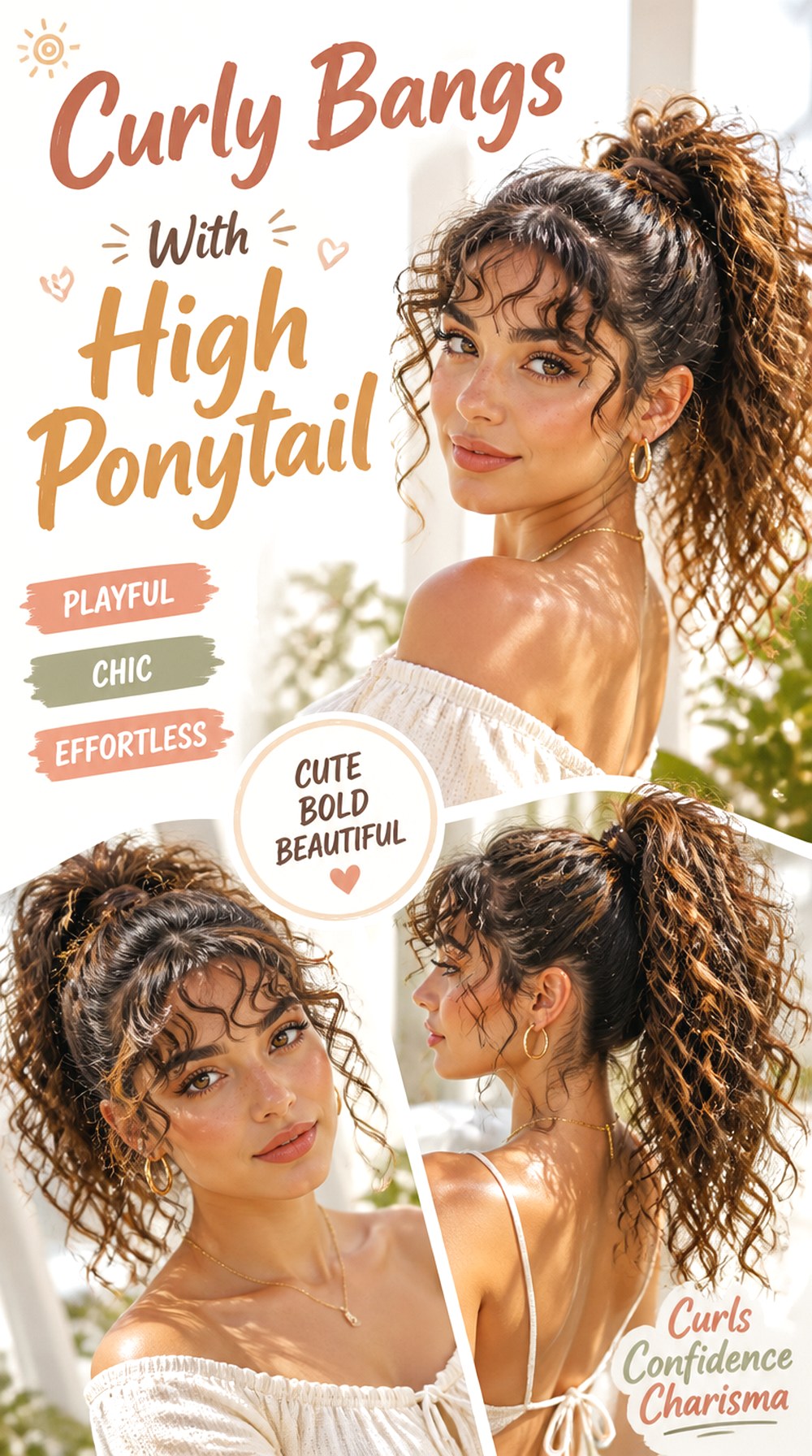
Curly bangs can stay loose at the front while the remaining hair is gathered into a high ponytail, creating clear contrast between face-framing texture and a lifted back section. This option works well with medium to long curly or coily hair and is useful between wash days when the lengths need a simple refresh. The bangs may be full, wispy, or slightly longer at the temples depending on the haircut underneath. Styling is fairly quick with curl refresher spray, edge gel, and a soft hair tie that does not pull tightly on the curls. Regular bang trims are more important than maintaining the ponytail itself. Ask for side pieces long enough to blend when your hair is worn down.
Pro tip: Position the ponytail before refreshing the fringe so you can see how much front volume is needed to balance the height at the crown.
Curly Bangs With Shoulder-Length Cut
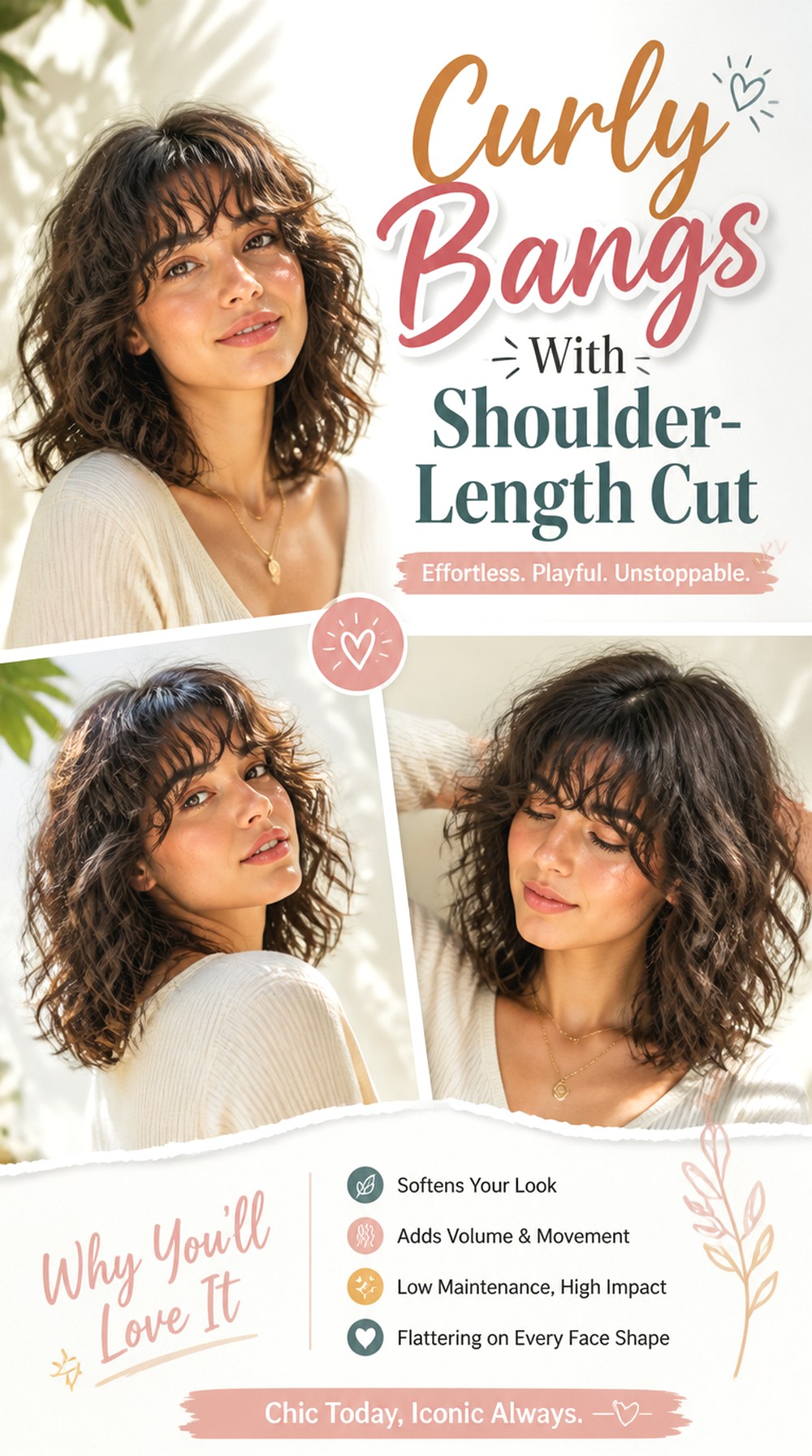
Shoulder-length curls provide enough movement for layering while remaining shorter and lighter than long hair. A curly fringe brings definition to the front and can be cut softly across the brows or graduated toward the cheekbones. This length works with many curl patterns and is particularly useful for medium or thick hair that becomes weighed down when much longer. Wash-day styling is moderate: use curl cream, heat protectant, and a diffuser, lifting at the roots if the shoulder area creates too much width. The length is relatively forgiving to grow out, while bangs need separate maintenance. Ask the stylist to shape the front after considering how the ends behave when they rest against the shoulders.
Pro tip: If your curls kick outward at shoulder level, slightly shorter layers around the face can redistribute volume and prevent the whole shape from becoming bottom-heavy.
Defined Coily Curly Bangs

Defined coily curly bangs highlight tighter curl patterns by keeping individual coils visible across the forehead instead of stretching or smoothing them into a straight fringe. They can be shaped into a rounded line or cut with slightly varied lengths for a softer edge. Medium and thick densities provide plenty of definition, while finer coils may benefit from using a smaller bang section to protect overall fullness. Styling may take moderate time on wash day with leave-in conditioner, curl-defining gel, and a detangling brush used before the coils are formed. Refresh only individual pieces rather than soaking the whole fringe. At the salon, ask for shrinkage to be assessed with the hair completely dry.
Pro tip: Have the stylist trim coil by coil where possible, especially around the center forehead, because stretched cutting can leave the dry fringe considerably shorter than expected.
Conclusion
Curly bangs hairstyles can range from light curtain pieces to short micro fringes, rounded coils, layered shags, and fuller statement bangs. The useful part is that the basic idea does not require one specific length or curl pattern. Length, density, layers, bangs, volume, texture, parting, finish, and styling effort can all be adjusted to suit the person wearing them.
The best choice depends on your face shape, natural hair texture, curl shrinkage, hair density, maintenance preference, and normal daily routine. Before committing, look closely at how the fringe in your reference photo connects with the rest of the haircut. That connection is often just as important as the bang length itself and can make growing the style out much easier later.
CTA
Choose one or two favorite ideas and save clear photos that show the haircut from more than one angle. When you meet your stylist, discuss your face shape, natural hair texture, density, preferred length, maintenance tolerance, and normal styling routine. Point out the exact fringe length, layer placement, volume, face-framing pieces, parting, or finish you like in each reference instead of simply asking for the entire haircut to be copied.
FAQs
What Hair Types Work Best With Curly Bangs?
Curly bangs can work with waves, curls, and coils. The important factors are shrinkage, density, curl pattern, and how the fringe is shaped. Fine hair may need a lighter bang section, while thick hair may need selective bulk removal.
How Often Do Curly Bangs Need Trimming?
Short bangs may need refreshing roughly every few weeks, while longer curtain or side-swept bangs can usually go longer between trims. Curl growth and shrinkage affect the schedule, so the correct timing varies from person to person.
Do Curly Bangs Need Heat Styling Every Day?
Usually not. Many curly bangs can be refreshed with water, leave-in conditioner, curl cream, or light gel and then air-dried or diffused. Daily heat is unnecessary when the fringe has been cut to work with the natural curl pattern.
Are Curly Bangs Difficult To Grow Out?
They are generally manageable to grow out because the fringe can gradually become face-framing layers. Longer curtain and side-swept bangs transition most easily, while micro or very short bangs require more patience before they reach cheekbone length.