20 80s Glam Hairstyles

80s glam hairstyles are defined by visible volume, strong shapes, lifted roots, curls, feathered layers, crimped texture, and accessories that are meant to be noticed. Hair was rarely worn flat or overly polished. Instead, the silhouette often spread outward around the crown, temples, or shoulders, creating movement and a dramatic finish. You can recreate that character today without making the hair feel costume-like by controlling where the volume sits.
Many of these styles work especially well on medium or thick hair because the density helps support teasing and full curls. Fine hair can also carry 80s volume with strategic layering, mousse, root lift, and lighter finishing products. Straight hair usually needs blow-drying or heat styling, while naturally wavy and curly textures can often reach the shape with less manipulation.
Most 80s glam hairstyles can be adjusted for oval, round, square, heart, or longer face shapes by changing the fringe, parting, width, and crown height. Before choosing one, consider how much heat styling and daily refreshing you want to do. Layered cuts may need shaping every six to ten weeks, while bangs usually need attention sooner.
Quick List
- Big Feathered Blowout
- Voluminous Side-Swept Curls
- Crimped High-Volume Hair
- Teased Half-Up Glam
- Curly Shag With Full Bangs
- High Side Ponytail
- Sculpted Glam Waves
- Feathered Long Layers
- Permed Shoulder-Length Curls
- Big Bow Half-Up Hair
- Rocker Mullet Glam
- Fluffy Rounded Bob
- Banana Clip Curl Cascade
- Teased High Ponytail With Scrunchie
- Spiral Curls With Side Bangs
- Swept-Back Crown Volume
- Asymmetrical Curly Bob
- Crimped Half-Up Ponytail
- Curly Fauxhawk Updo
- Headband Volume Blowout
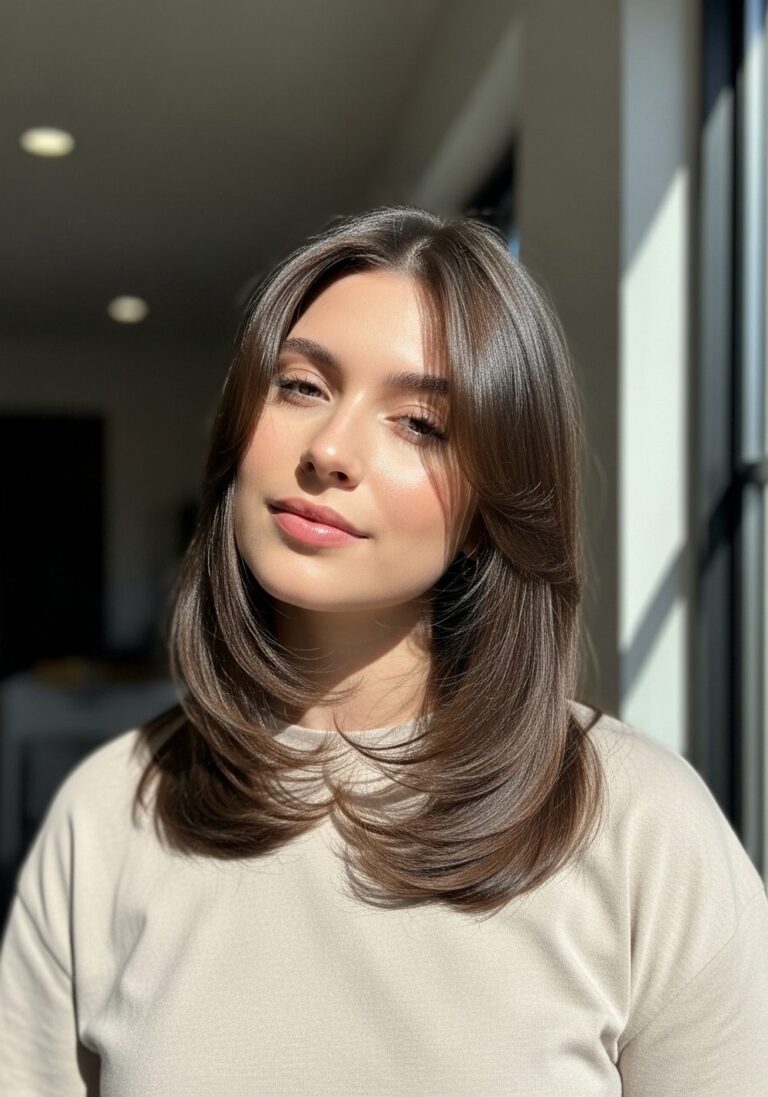
Big Feathered Blowout

A big feathered blowout uses medium or long layers that sweep away from the face, with the strongest lift around the crown and cheekbones. It works especially well on straight to softly wavy hair with medium density, although fine hair can benefit from shorter crown layers. A round brush, volumizing mousse, and heat protectant help create the curved, airy finish. Expect moderate styling time because each section needs to be directed backward while blow-drying. A trim every six to eight weeks keeps the feathers from becoming heavy. At the salon, request graduated face-framing layers that blend into the length rather than short, disconnected pieces.
Pro tip: Ask for the front layers to begin near the cheekbones or jaw so the feathering frames your face without removing too much weight from the ends.
Voluminous Side-Swept Curls
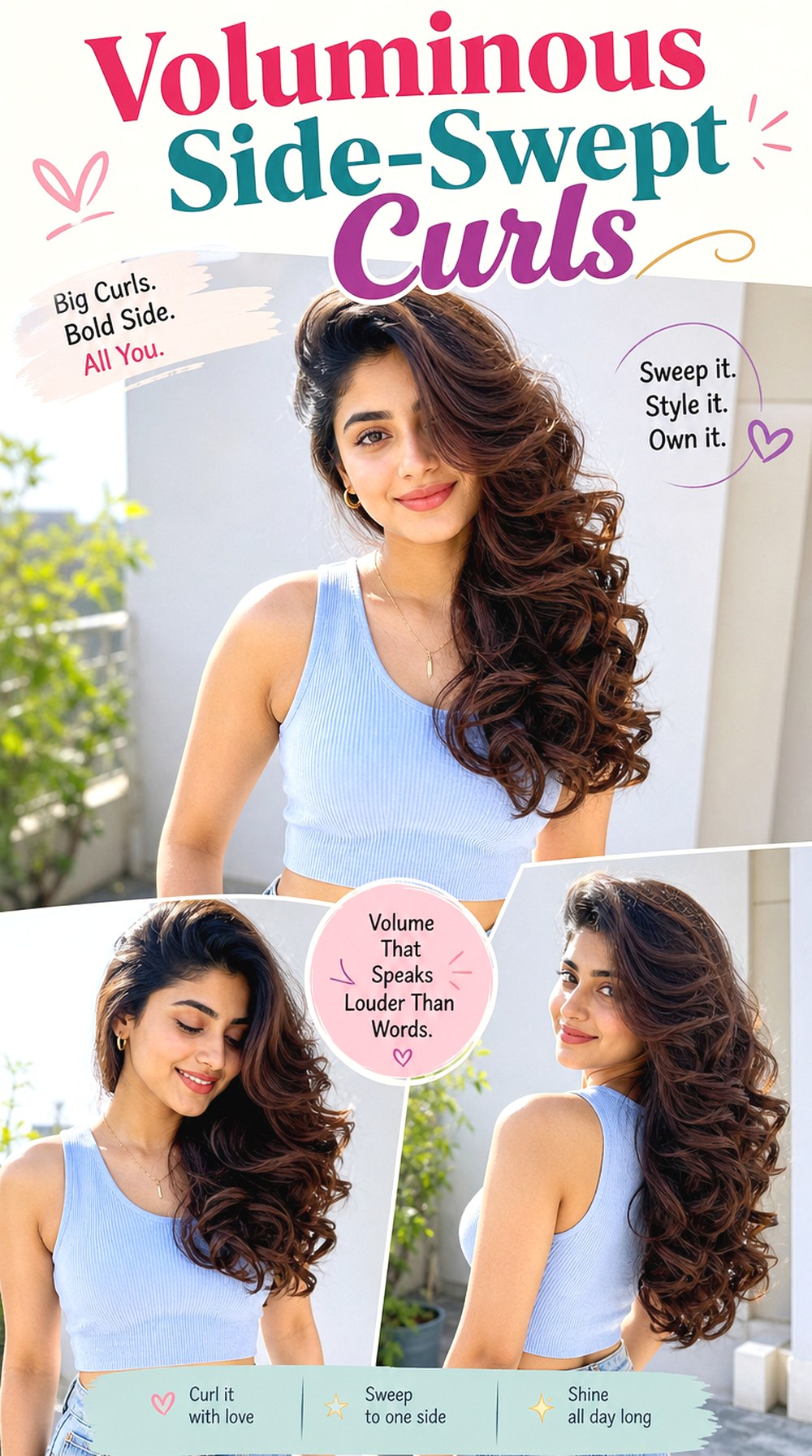
Deep side-parted curls give 80s glam hair an intentionally unbalanced silhouette, with extra height and fullness concentrated on one side. Medium to thick wavy or curly hair handles the shape easily, while straighter textures need a curling iron or rollers. Curl cream, a wide-tooth comb, and light-hold hairspray are useful for keeping definition without creating a stiff shell. Styling usually takes moderate time, especially if you are starting with straight hair. The cut can stay fairly simple, but some internal layering prevents thick curls from forming a triangular shape. Ask your stylist to preserve enough length around the heavier side so the curls stack rather than spring outward too abruptly.
Pro tip: Build the highest volume just above the temple rather than directly beside the jaw if you want the side-swept shape to feel balanced.
Crimped High-Volume Hair
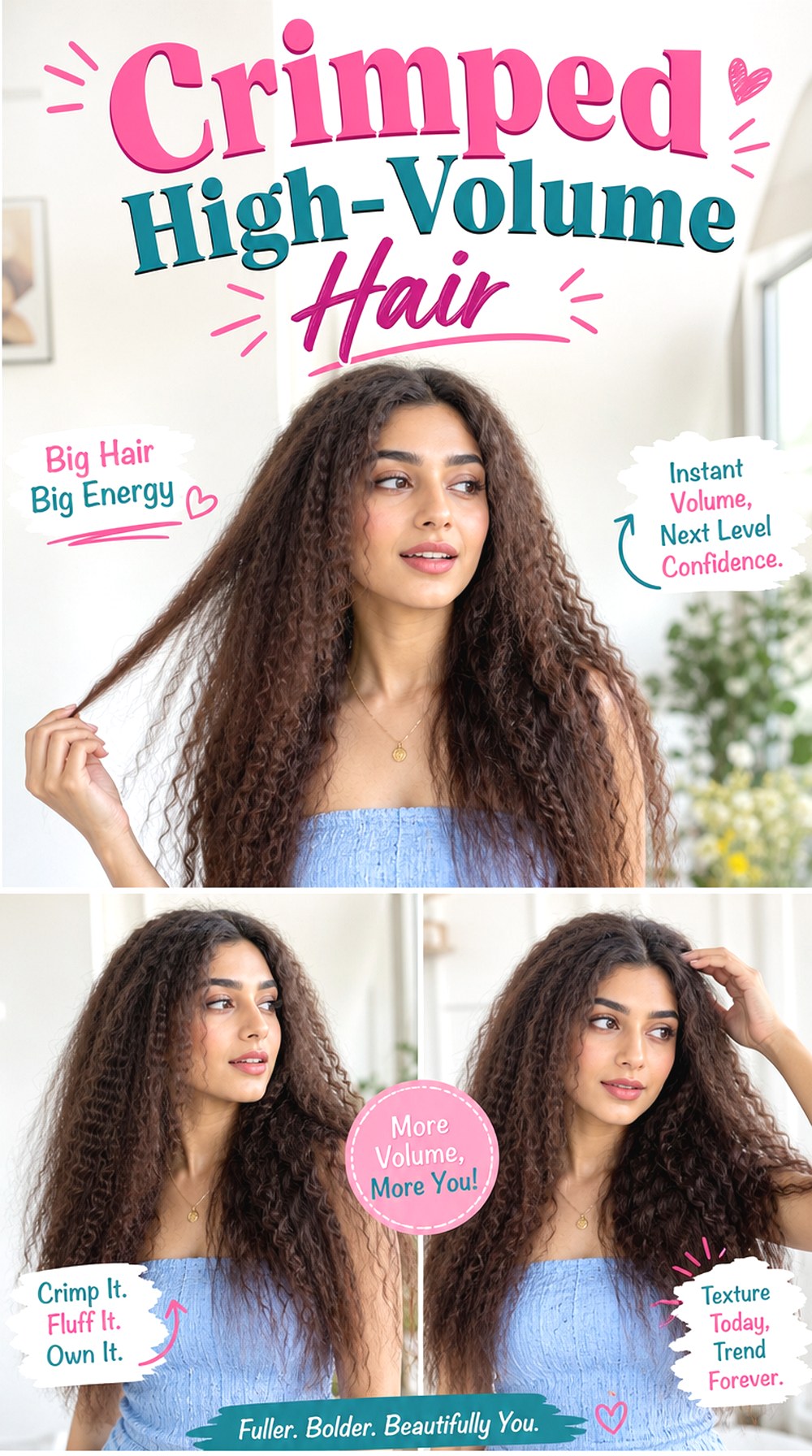
Crimping creates the tiny zigzag texture that instantly gives straight hair a larger, fuller appearance. For a strong 80s finish, the texture can run from roots to ends, with light teasing around the crown. Medium and long hair show the pattern most clearly, and fine or medium-density hair often gains noticeable visual fullness from it. Use a heat protectant, crimping iron, and flexible hairspray. This is a higher-time style because small sections give the cleanest texture. Salon maintenance depends mainly on your haircut rather than the finish itself. If you want layers, ask for long, blended sections that will still look full once crimped.
Pro tip: Keep each crimped section fairly narrow and avoid repeatedly clamping the same area, which can create unnecessary heat exposure and uneven ridges.
Teased Half-Up Glam
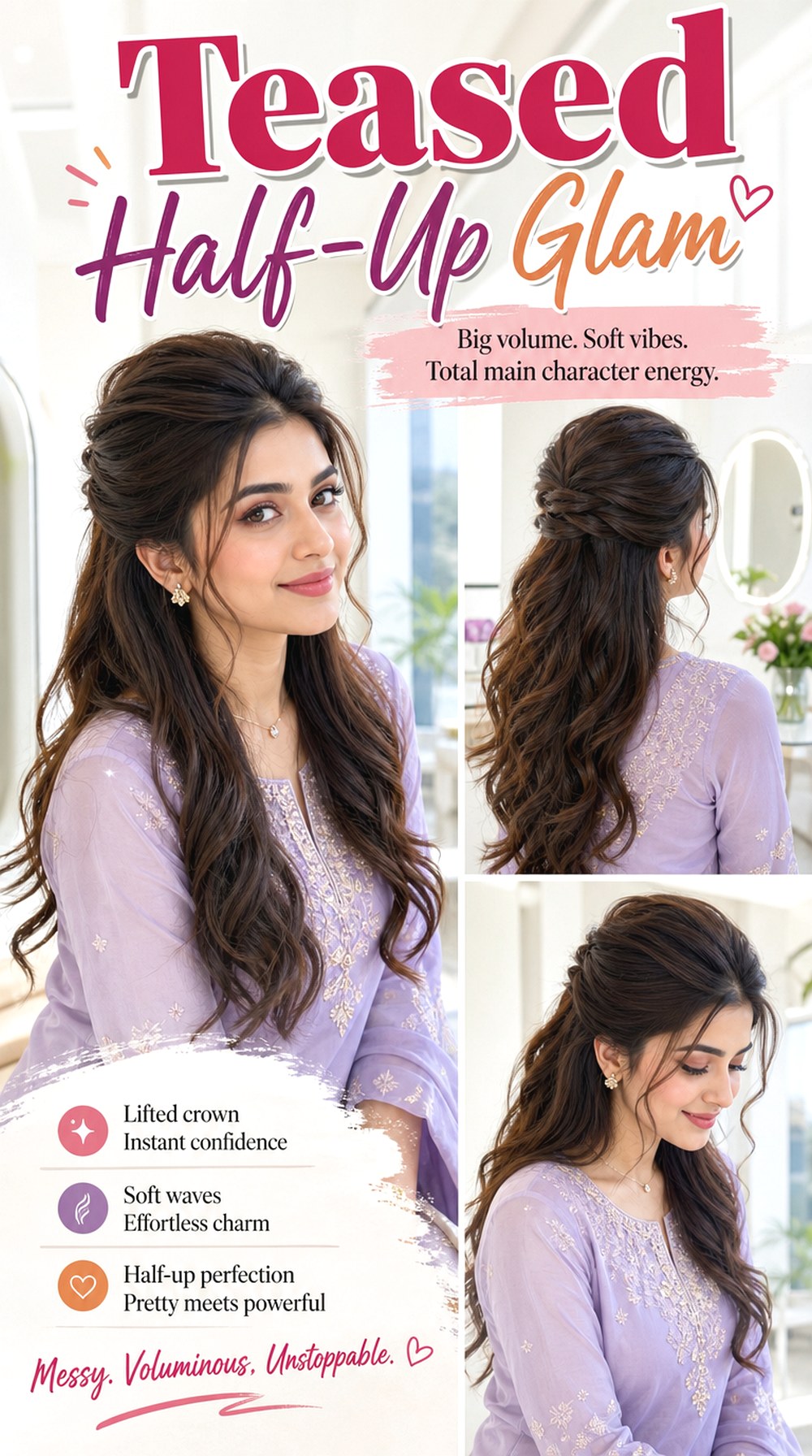
The teased half-up shape combines height at the crown with loose length through the back, making it easier to wear than an entirely teased hairstyle. Straight, wavy, and curled textures can all work, especially when the hair is shoulder length or longer. A teasing comb, volumizing spray, and light-hold hairspray provide enough structure without making the top excessively hard. Styling takes around a moderate amount of time because the crown needs sectioning before the sides are pinned back. Long layers help the loose hair maintain movement. Tell your stylist you want enough density left at the crown to support backcombing instead of heavily thinned layers.
Pro tip: Tease underneath the crown sections and smooth only the surface layer over them so the finished height looks full rather than visibly tangled.
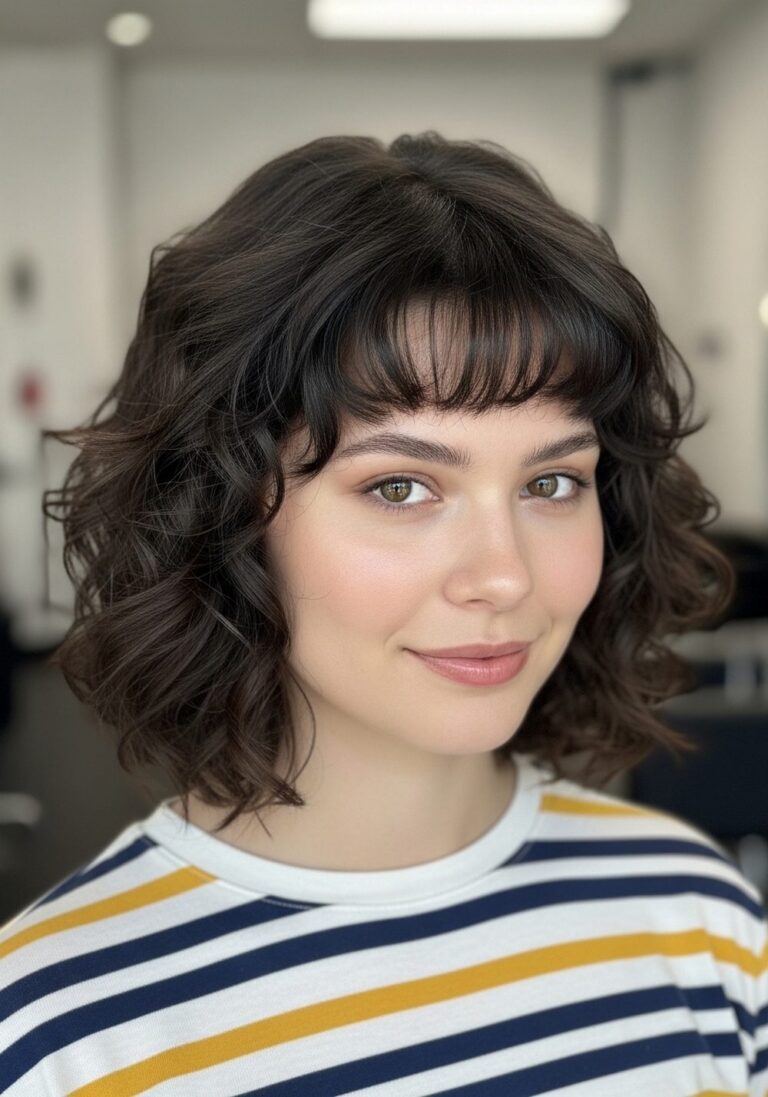
Curly Shag With Full Bangs
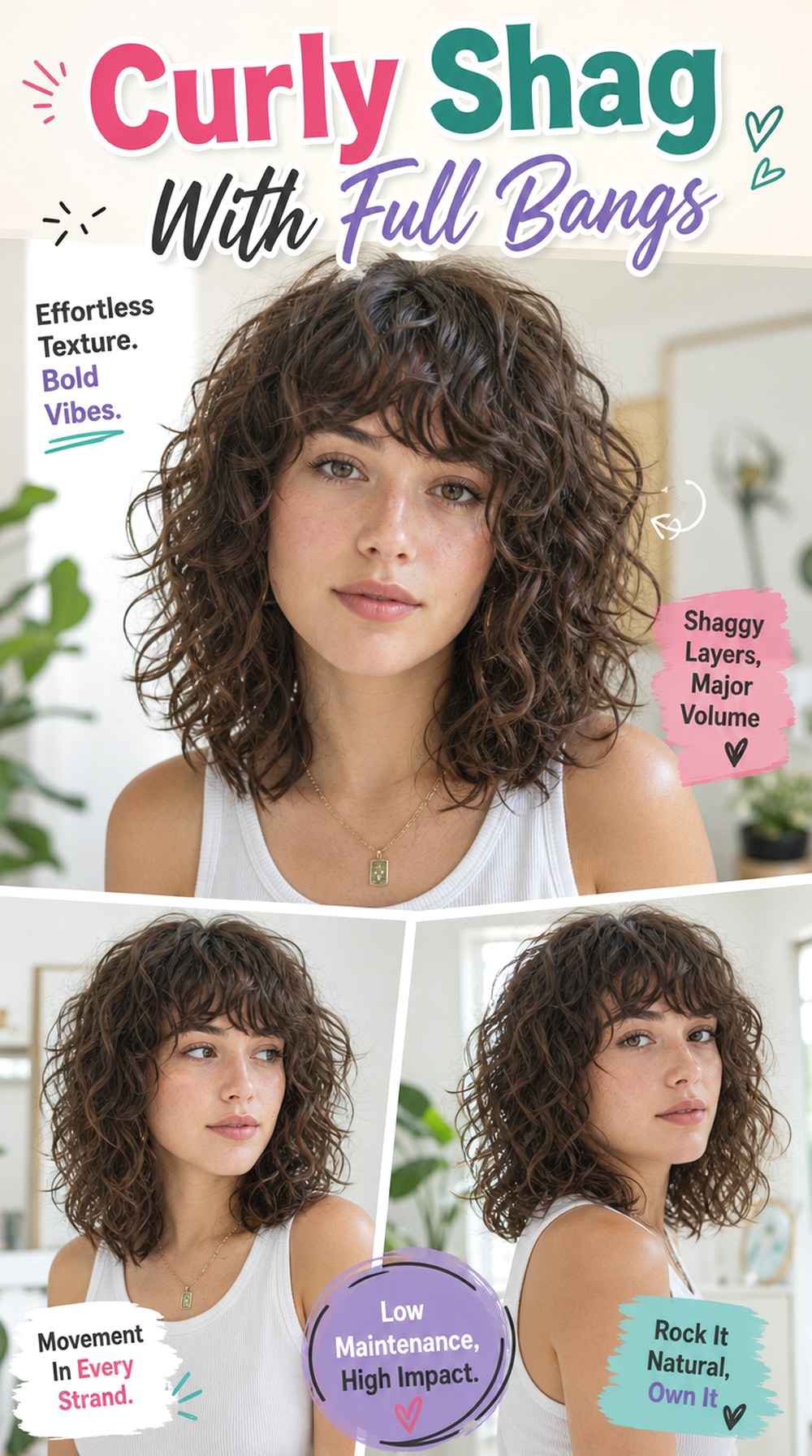
A curly shag with full bangs captures the rock-inspired side of 80s hair through short crown layers, a rounded fringe, and progressively longer pieces toward the shoulders. Naturally wavy and curly hair is particularly suited to the cut because the layers release movement without requiring a perfectly smooth finish. Curl cream, a diffuser, and leave-in conditioner can usually handle everyday styling. It is relatively quick for natural curls but takes longer if the texture must be created with heat. Expect the fringe to need refreshing more often than the main shape. Ask for soft, connected crown layers instead of extreme thinning, especially if your curls shrink significantly.
Pro tip: Have the bangs cut with curl shrinkage in mind; trimming them too short while wet can make the finished fringe sit much higher than expected.
High Side Ponytail
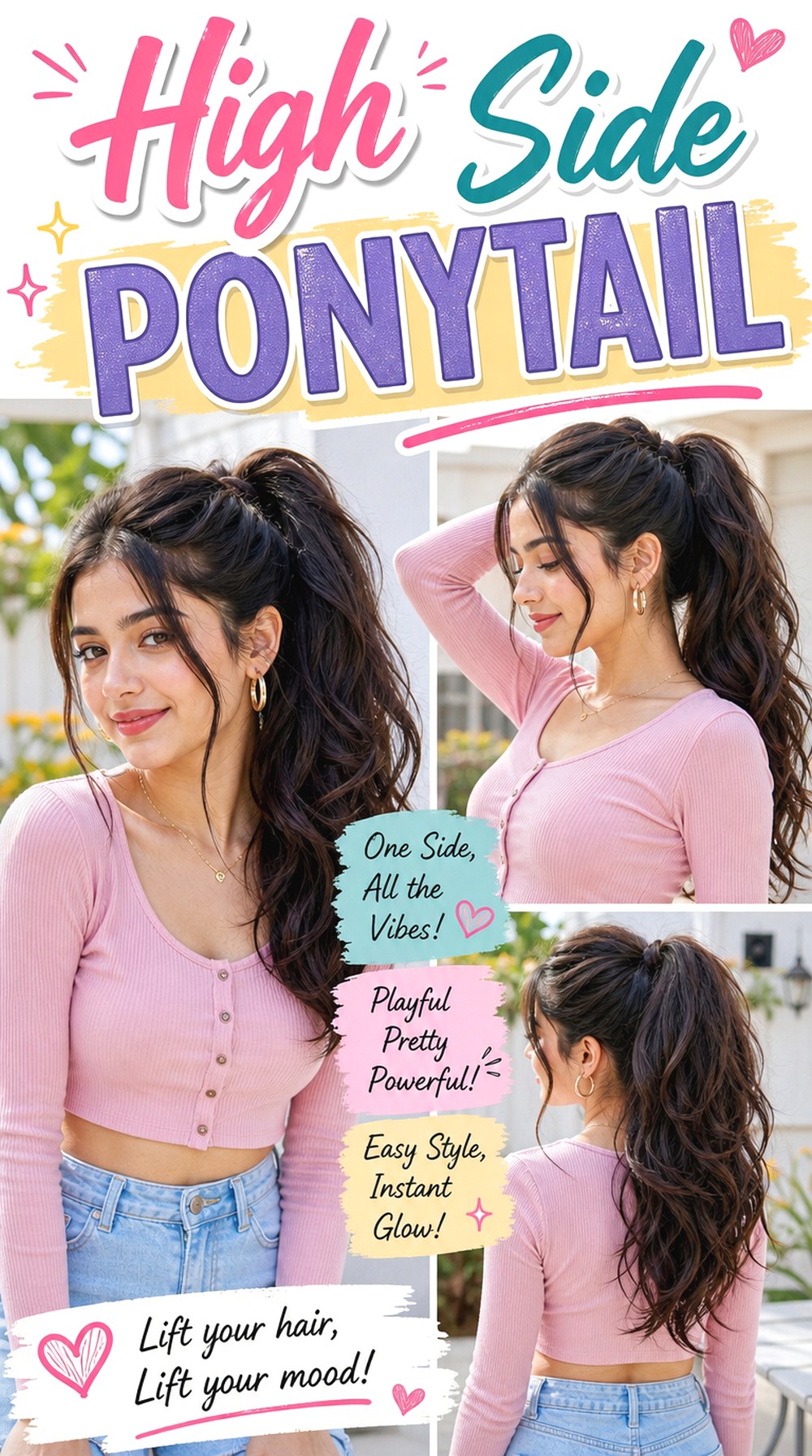
The high side ponytail places the base above one ear or slightly behind it, creating the playful asymmetry closely associated with 80s styling. Shoulder-length to long hair works best, and curls or waves make the ponytail appear even fuller. A smoothing brush, flexible hairspray, and fabric-covered elastic are enough for most versions. Styling is usually quick, especially when your hair already has texture. Layers around the face can be left loose for a softer outline. This style does not require a special haircut, but tell your stylist if you regularly wear high ponytails so the face-framing pieces remain long enough to secure or intentionally leave out.
Pro tip: Position the ponytail slightly behind the highest point of the ear rather than directly over it for height that feels dramatic without pulling awkwardly at the hairline.
Sculpted Glam Waves

Sculpted glam waves offer a smoother interpretation of 80s volume, combining large bends with lifted roots and a glossy surface. Medium to long hair with moderate density holds the broad wave pattern well, although fine hair can gain body from a setting mousse. Use large hot rollers, heat protectant, and smoothing serum to control frizz while keeping movement. The styling process needs more time than a casual wave because sections should cool before being brushed into shape. Long layers are useful, but overly short layers can break the wave pattern. At your appointment, request rounded perimeter movement and subtle face framing rather than heavily textured ends.
Pro tip: Let heated sections cool fully before brushing them together; this helps large waves hold their curved shape instead of immediately falling flat.
Feathered Long Layers
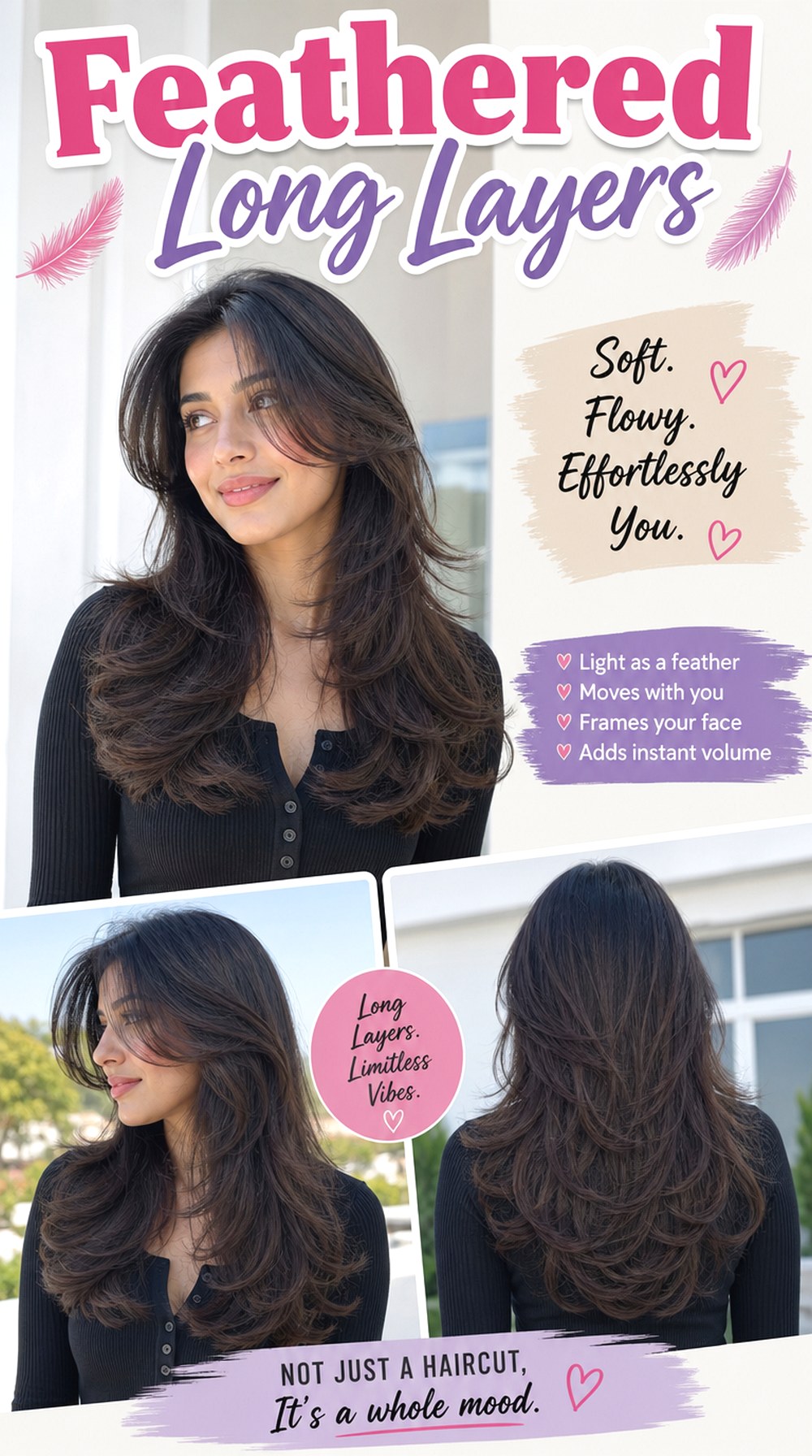
Feathered long layers create movement without sacrificing the overall length, making them a useful choice for someone who wants 80s character with fewer dramatic changes. The front layers turn away from the cheeks while the back remains long and full. Straight and wavy medium-density hair tends to show the feathered sections clearly. A round brush, lightweight mousse, and heat protectant are practical for styling. Blow-drying takes moderate time, but the cut can also be worn with natural texture on quieter days. Ask for long layers that begin around the collarbone in the back, with shorter framing only around the front.
Pro tip: Keep the bottom perimeter reasonably dense; too much thinning through the ends can make long feathered hair look wispy once the layers are blown outward.
Permed Shoulder-Length Curls
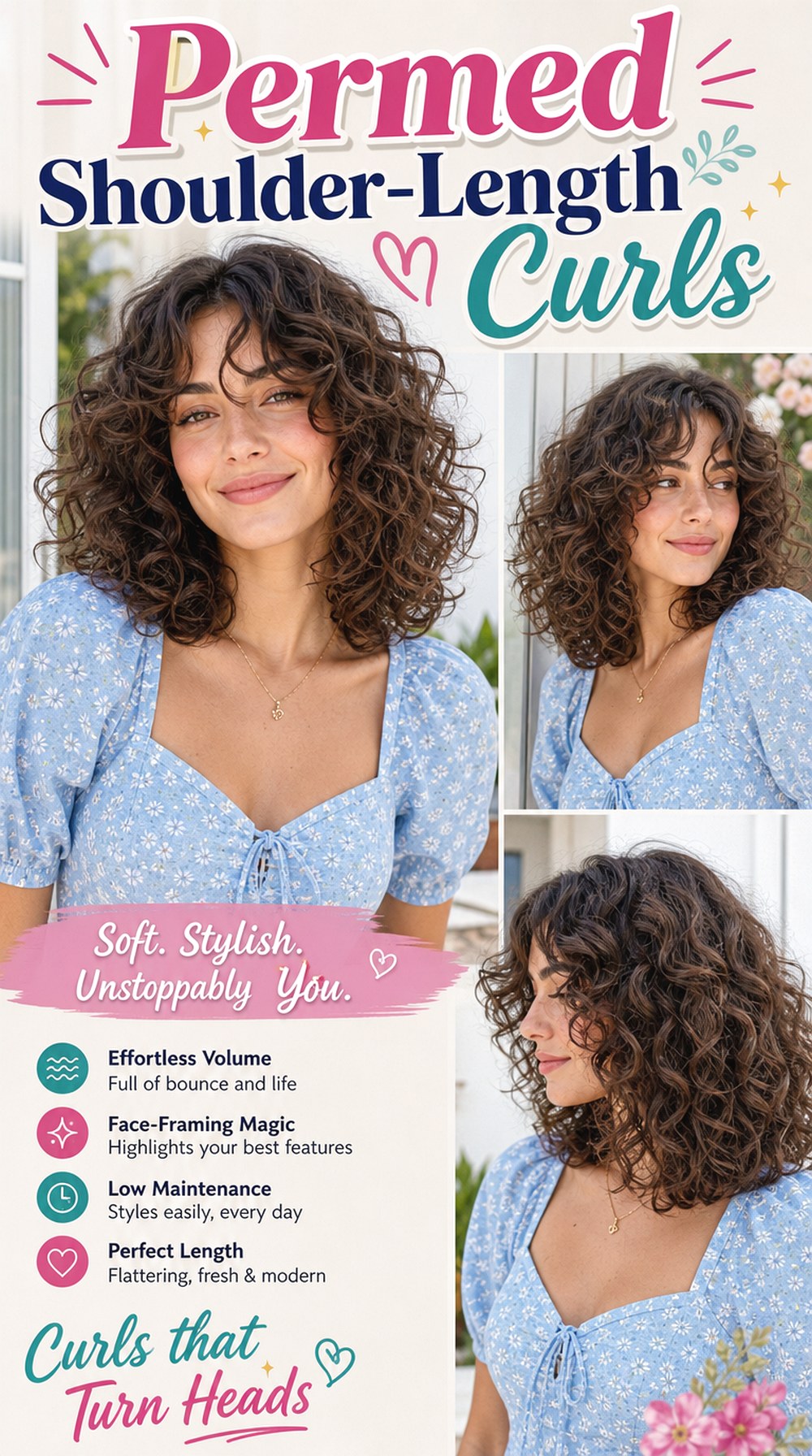
Shoulder-length curls create the rounded, energetic volume often seen in classic 80s perms. The length gives curls enough room to expand around the sides without becoming extremely heavy. Naturally curly hair can achieve a similar silhouette through layered cutting, while chemically straight hair requires professional consultation before considering a perm. Curl cream, leave-in conditioner, and a diffuser help maintain definition. Natural curls are fairly quick to refresh, but chemically processed curls need careful moisture management. Tell your stylist you want balanced fullness around the crown and sides with controlled bulk near the bottom.
Pro tip: If considering a chemical perm, discuss your color and previous chemical services first; already compromised hair may not be a good candidate for additional processing.
Big Bow Half-Up Hair
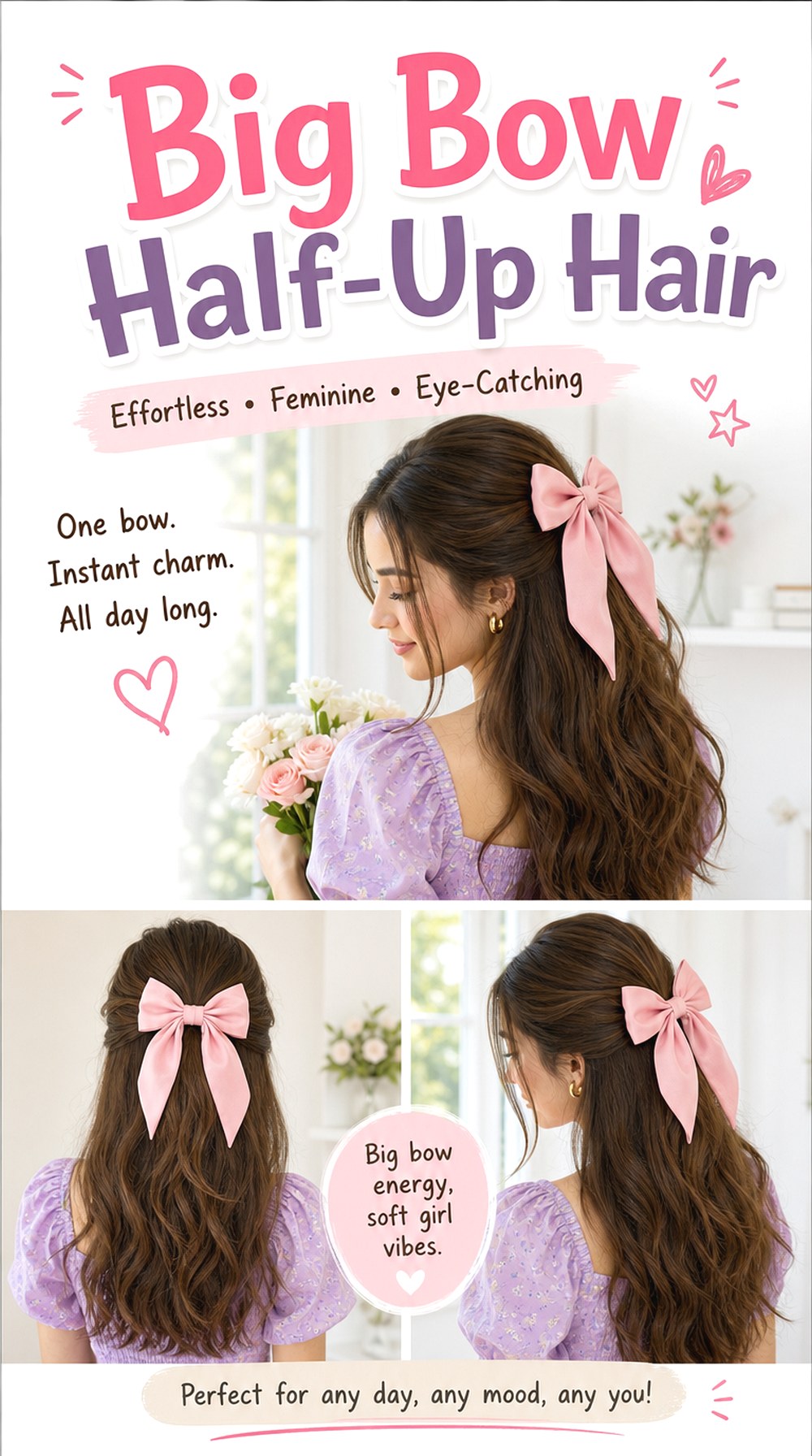
A large bow turns a simple half-up style into a clear 80s statement while keeping most of the hair loose and touchable. The crown can be gently teased before the top section is secured, and the remaining length can be curled or blown into soft volume. It works on medium to long hair and is useful for fine hair because the accessory adds visual impact without requiring extreme teasing. Use a teasing comb, texturizing spray, and flexible hairspray. Styling is moderate but easier than a full updo. At the salon, long face-framing layers can add movement while still leaving enough hair to secure comfortably.
Pro tip: Place the bow at the upper back of the crown rather than too low on the head so it supports the lifted 80s silhouette instead of flattening it.
Rocker Mullet Glam
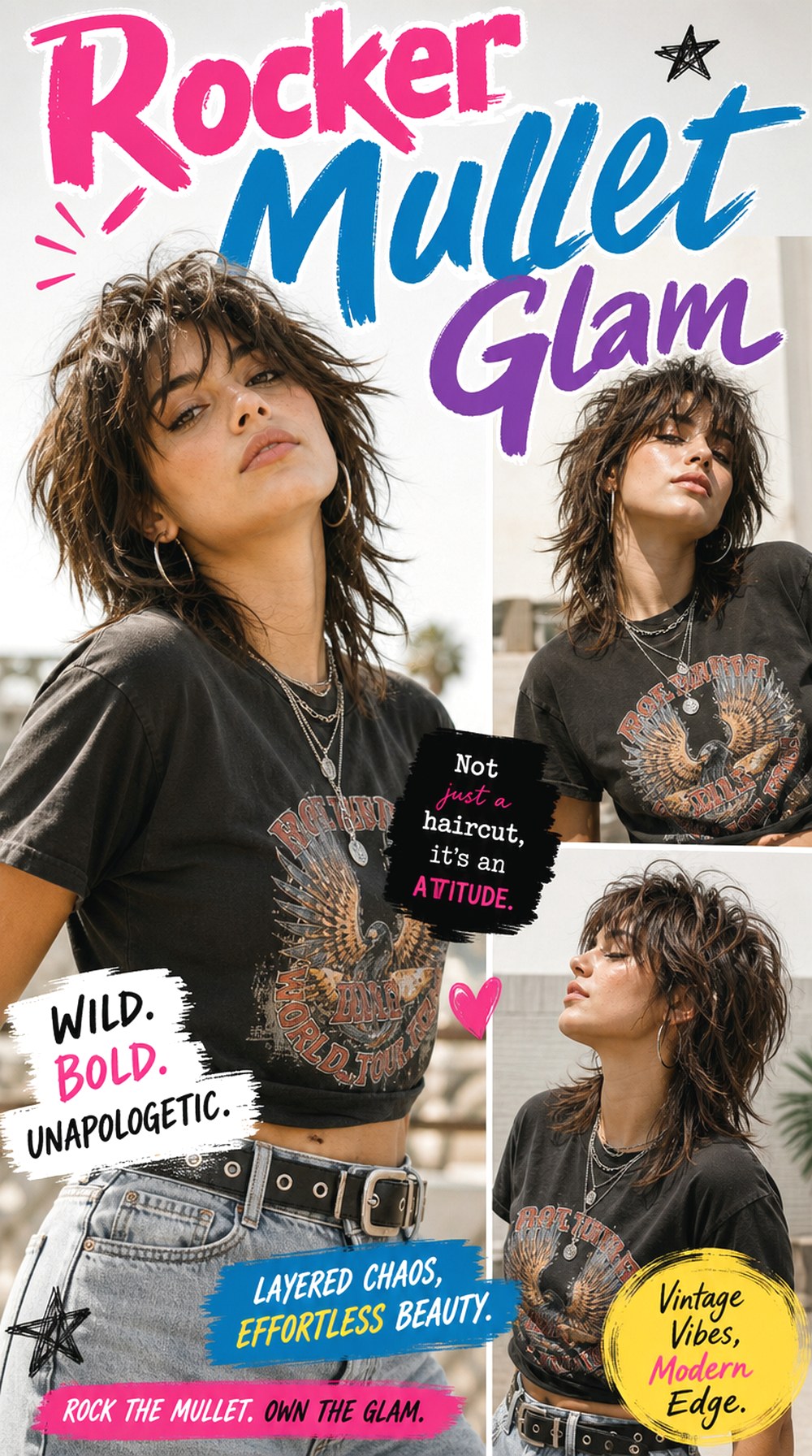
The rocker mullet glam cut combines shorter, textured layers through the crown and sides with noticeably longer hair through the back. Its strength comes from contrast rather than polished symmetry, making it suitable for straight, wavy, or curly textures. Medium to thick hair can support the crown shape especially well, while fine hair benefits from conservative layering. Texturizing spray, lightweight mousse, and a small round brush help exaggerate lift. Daily styling is usually moderate, and the shorter top layers may need shaping every six to eight weeks. Bring your stylist a reference that clearly shows how much length difference you want between the crown and back.
Pro tip: Keep some weight behind the ears if you want a wearable mullet rather than a very narrow tail through the back.
Fluffy Rounded Bob
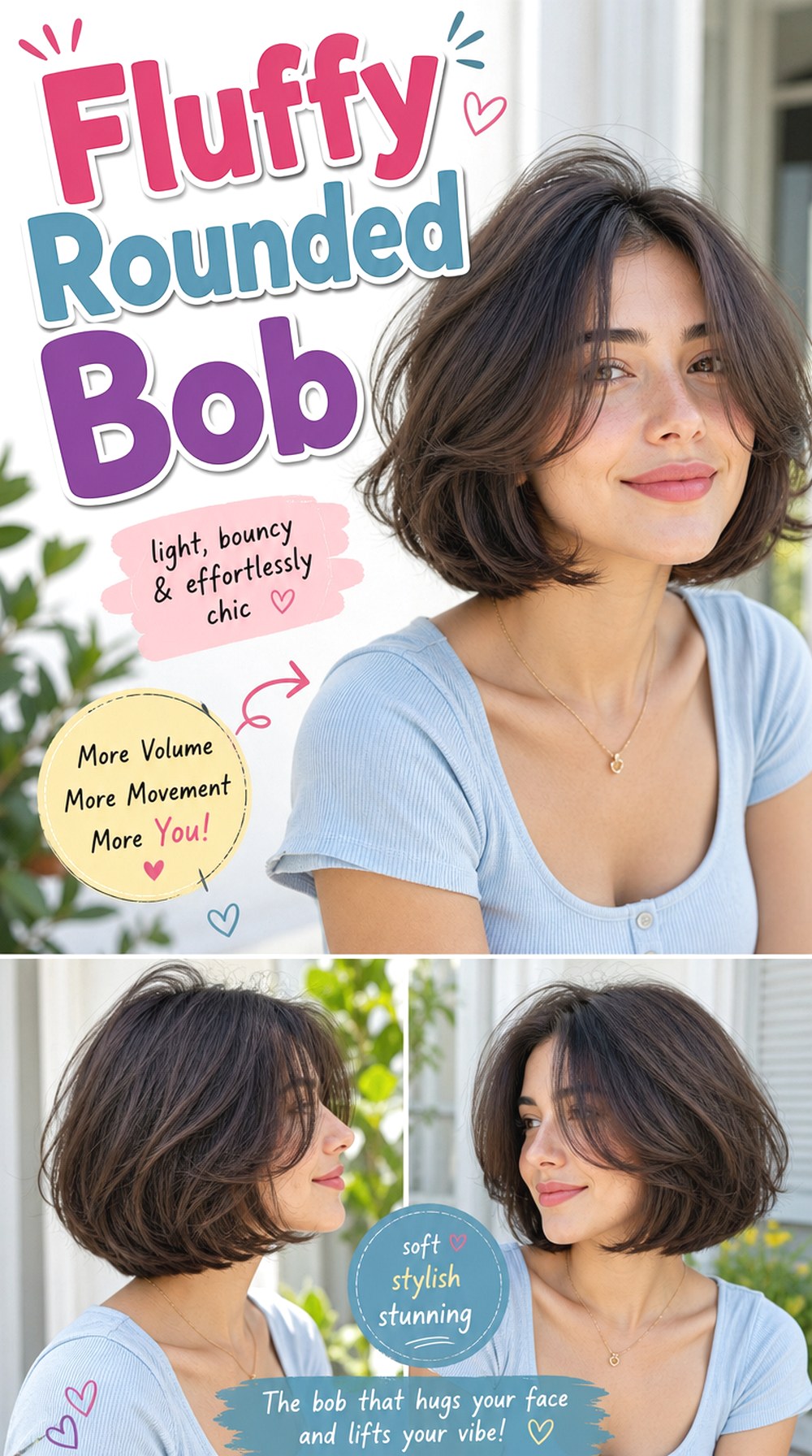
A fluffy rounded bob sits around the jaw or lower neck with lifted roots and curved ends that create a soft, expanded silhouette. The shape works particularly well for straight or wavy hair with fine to medium density. Thicker hair may need careful internal weight removal so the sides do not become too wide. Volumizing mousse, a medium round brush, and light hairspray are useful for achieving the airy finish. Styling generally takes moderate time because the roots and ends both need direction. Ask for subtle graduation or rounded layering rather than heavily razored ends if you want the bob to retain its full outline.
Pro tip: For a round face, keep the widest part of the blowout slightly above or below the cheeks instead of directly beside them.
Banana Clip Curl Cascade

A banana clip gathers the sides and back vertically, allowing curls to spill upward and downward in a narrow cascade. It is an easy way to create 80s height without forming a traditional ponytail. Medium to long wavy or curly hair works especially well, while straight hair can be curled beforehand. Use curl cream, a wide-tooth comb, and a sturdy banana clip with smooth edges. Styling is relatively quick once the curls are prepared. The haircut can include long layers for extra movement, but very short pieces may escape the clip. Tell your stylist you frequently wear gathered styles if you want the layers to remain easy to secure.
Pro tip: Choose a clip long enough to distribute the hair evenly; forcing thick hair into a small clip can flatten the curls and create unnecessary tension.
Teased High Ponytail With Scrunchie
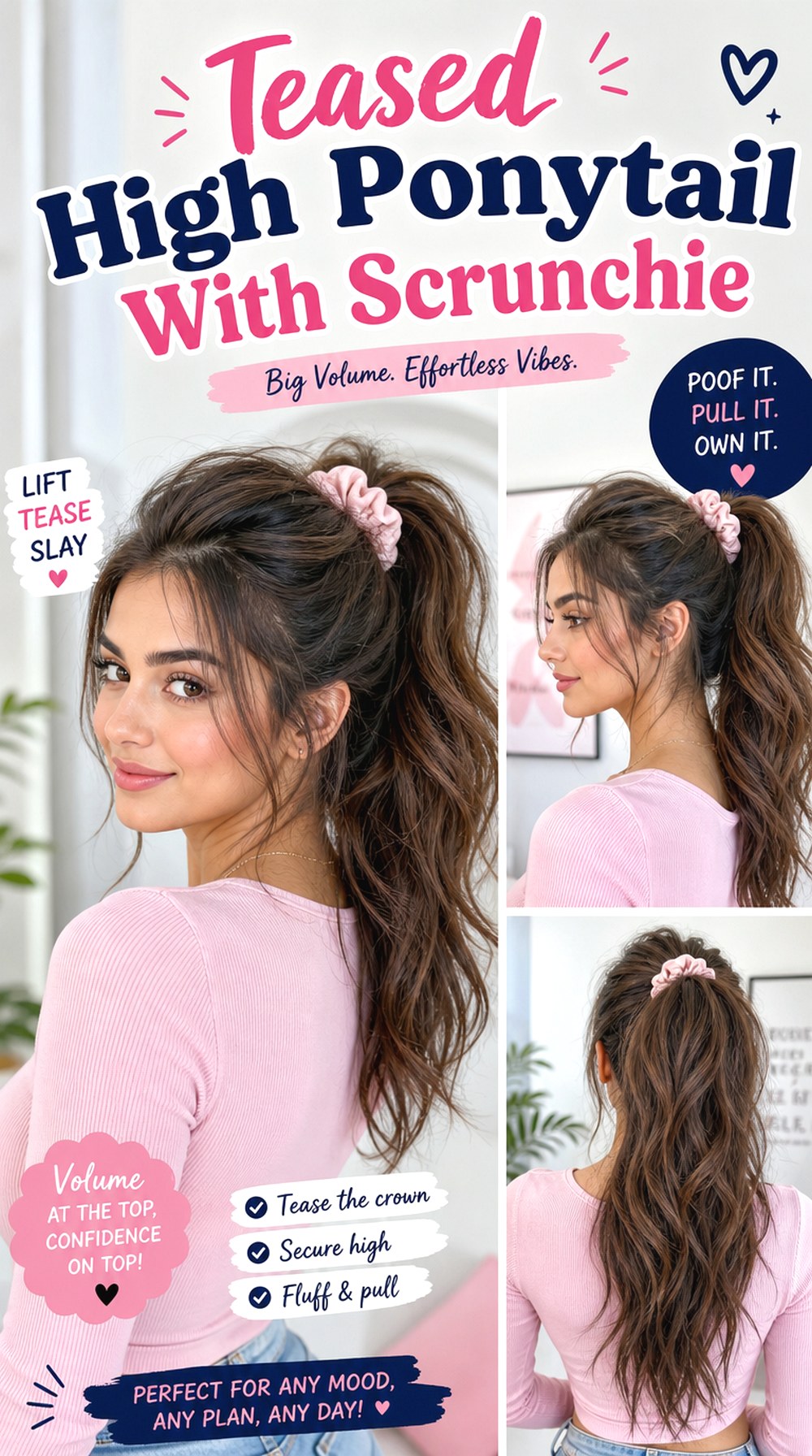
A high ponytail becomes distinctly 80s when the crown is lifted, the ponytail is expanded, and a visible scrunchie wraps around the base. It works on medium and long hair, especially with waves, curls, or layered ends that create movement. A teasing comb, volumizing spray, and soft scrunchie provide the main structure. Styling is fairly quick, although curling the ponytail adds extra time. Because the hair is pulled high, broken or overly short crown layers can be difficult to secure. Let your stylist know you like high ponytails so they can keep enough length around the perimeter while still adding face-framing movement.
Pro tip: Tease the ponytail itself in small sections near the elastic, then smooth the outer surface lightly to get fullness without making the ends look frizzy.
Spiral Curls With Side Bangs
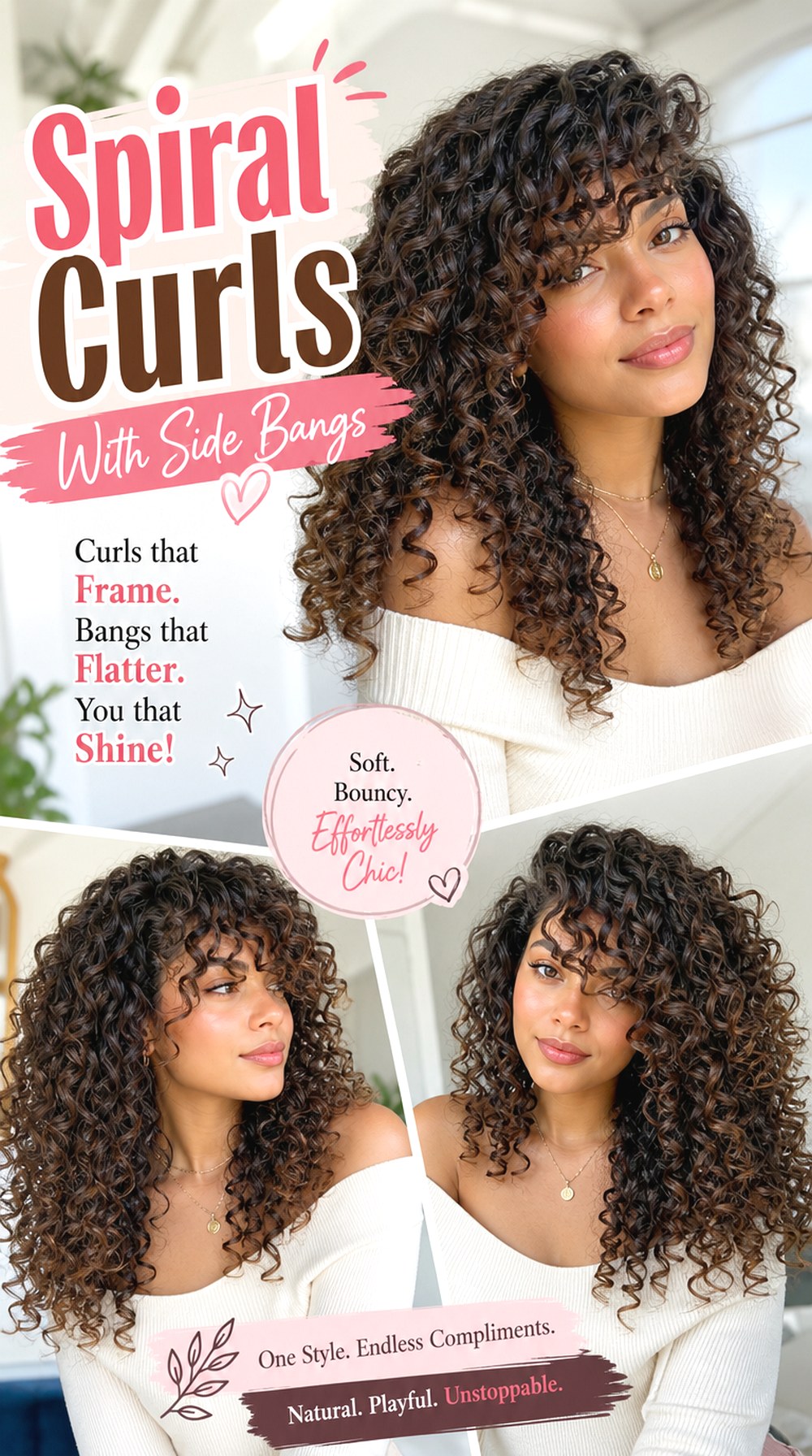
Defined spiral curls paired with side-swept bangs combine strong texture with one of the decade’s most recognizable fringe shapes. The curls can fall to the shoulders or longer, while the bangs sweep diagonally across the forehead and blend into the side layers. Naturally curly hair needs less daily work, while straight hair requires a small-barrel curling tool or setting method. Curl cream, heat protectant, and flexible hairspray suit this finish. Styling time ranges from quick for natural spirals to fairly high for heat-created curls. Ask your stylist to blend the side fringe into the cheekbone area so it does not appear disconnected.
Pro tip: Keep the bangs slightly looser than the rest of the curls so they sweep across the forehead instead of shrinking into a short, tightly curled fringe.
Swept-Back Crown Volume
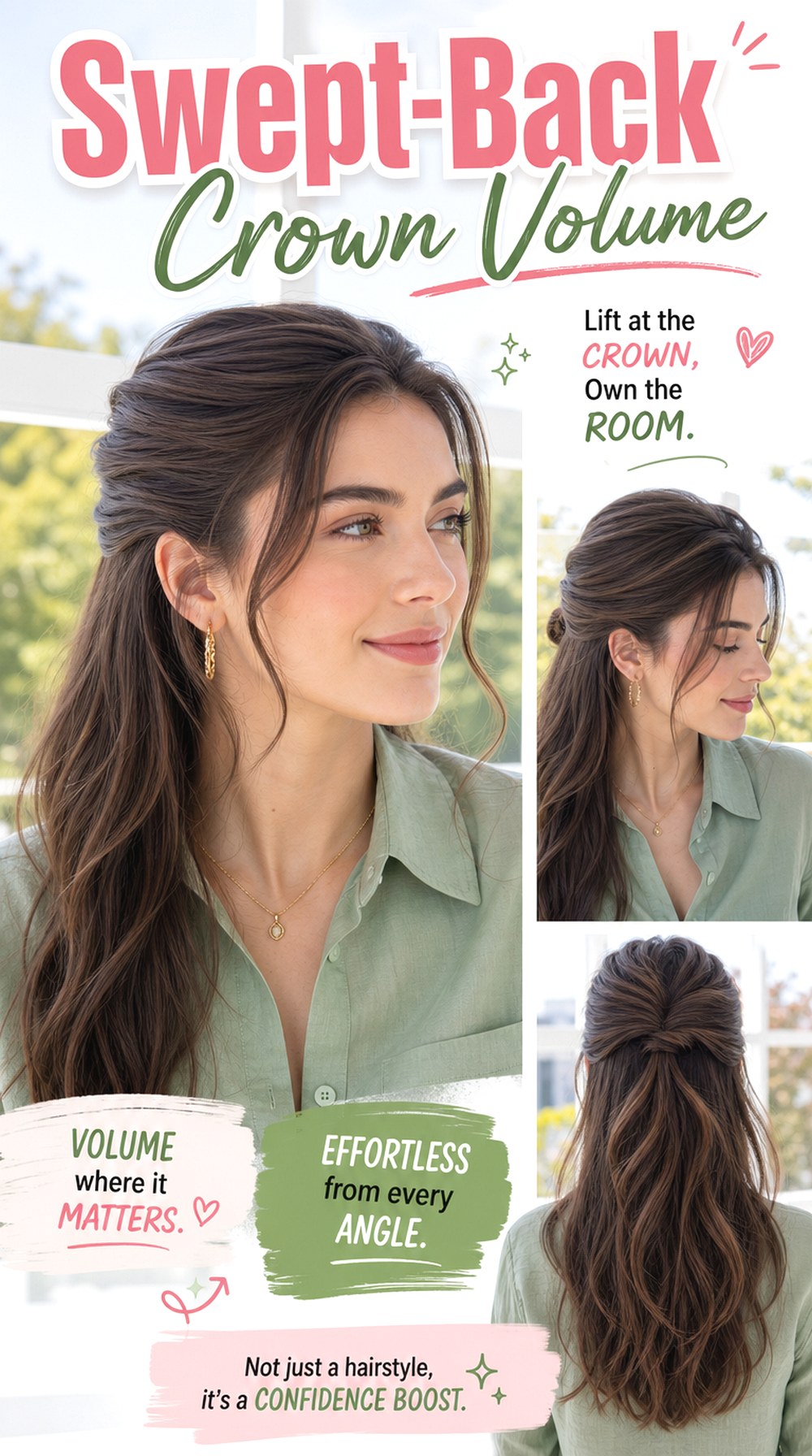
Swept-back crown volume keeps the forehead open while directing the front and top sections upward and away from the face. The result is bold without needing bangs or complicated accessories. Medium-length and long hair can carry the shape, and fine hair often benefits from the concentrated lift at the roots. Use root-lifting spray, a vent brush, and light-hold hairspray. Styling takes moderate time because the front needs to cool in an elevated position after blow-drying. Long layers make the sides blend more naturally into the back. Ask your stylist to avoid excessive thinning around the crown if you want enough density for lasting height.
Pro tip: Direct the front hair up first and backward second while blow-drying; pulling it straight back from the start can remove the root lift you are trying to create.
Asymmetrical Curly Bob
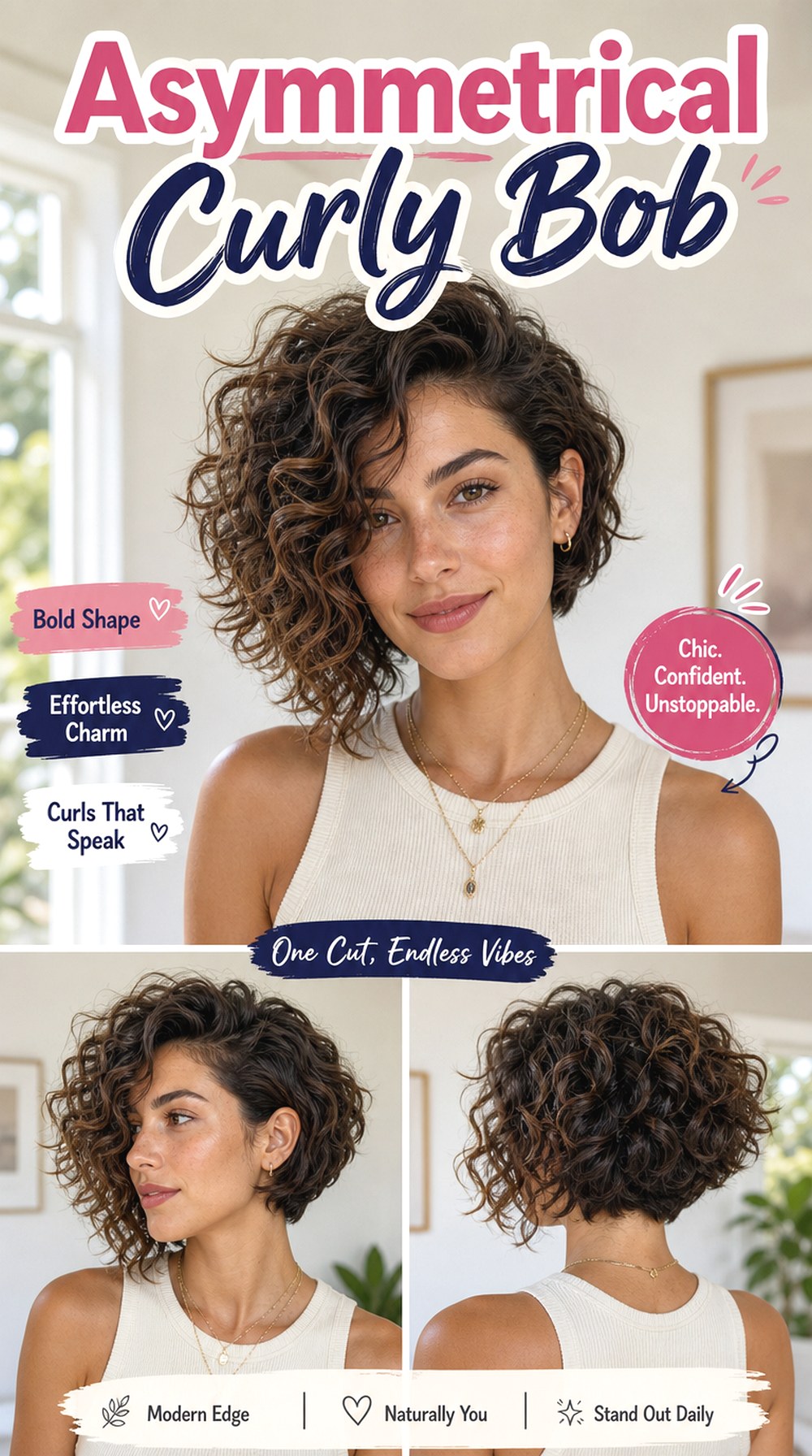
An asymmetrical curly bob creates 80s drama by pairing a deep side part with uneven visual weight, leaving one side fuller or slightly longer than the other. Jaw-to-neck length works well because it keeps the contrast obvious without allowing the curls to become too heavy. Wavy and curly textures are natural choices, especially with medium density. Curl cream, a diffuser, and lightweight smoothing serum help define the shape. Styling is usually quick to moderate depending on your natural texture. Maintenance matters because the asymmetry becomes less clear as the cut grows. Show your stylist exactly where you want the longer side to finish.
Pro tip: Keep the shorter side softly graduated rather than aggressively thinned so the asymmetry comes from shape, not from one side looking sparse.
Crimped Half-Up Ponytail

A crimped half-up ponytail combines two strong 80s elements: visible zigzag texture and height through the crown. The top section is gathered high while the remaining crimped hair falls freely, creating fullness from several directions. Medium to long straight or lightly wavy hair works especially well. You will need a heat protectant, crimping tool, and texturizing spray. Styling takes more time because the crimped pattern is formed section by section, although the half-up construction itself is simple. Long, blended layers keep the loose portion full. At the salon, request enough crown length to gather securely without losing all movement around the face.
Pro tip: Leave a small uncrimped margin close to the hairline if your front pieces are fragile; you can create lift there with mousse and blow-drying instead.
Curly Fauxhawk Updo

The curly fauxhawk updo gathers the sides close to the head while stacking curls vertically from the forehead toward the nape. It gives 80s rock energy without requiring shaved sides or a permanent dramatic cut. Medium to long curly hair is easiest to arrange, although straight hair can be curled first. Use curl cream, strong bobby pins, and flexible hairspray. Styling requires more time than a ponytail because the curl placement and pinning need to stay balanced. This style works best when the haircut contains enough length through the center. Tell your stylist you want layers that encourage curl movement without making updos difficult to secure.
Pro tip: Build the center ridge in overlapping sections rather than one large bundle; smaller pinned sections create better height and are easier to balance.
Headband Volume Blowout

A wide headband paired with a full blowout creates an easy 80s shape by pushing the front sections backward while leaving plenty of volume behind the band. Medium and long hair work well, and straight to wavy textures are simple to shape with a blow-dryer. Use volumizing mousse, a large round brush, and flexible hairspray. Styling takes moderate time if you want a polished blowout, but the headband makes second-day refreshing much quicker. Long layers help the ends move without sacrificing density. Ask your stylist to keep the crown layers long enough that they do not stand straight up when pushed back by the accessory.
Pro tip: Place the headband a little behind the natural hairline and gently push it forward after positioning; this creates a small lift in front instead of pulling everything flat.
Conclusion
The appeal of 80s glam hairstyles is that the decade offered much more than one type of big hair. You can choose feathered layers, structured curls, dramatic bangs, crimped lengths, asymmetric cuts, lifted ponytails, or statement accessories and adjust the intensity to suit everyday wear. Length and density can be preserved or reduced, while layers can be subtle or strongly defined. Bangs, volume, texture, parting, and the final finish can also change how retro the result feels. The best choice depends on your face shape, natural hair texture, density, preferred maintenance level, and daily routine. If you enjoy the look but dislike lengthy styling, focus on one recognizable 80s element rather than trying to recreate every detail at once.
Choose one or two favorite ideas and save clear photo references before your salon appointment. Discuss your face shape, natural texture, hair density, preferred length, maintenance expectations, and normal styling routine with your stylist. Point directly to the layers, fringe, crown height, side volume, curl pattern, parting, or finish you like in each photo. That makes it much easier to create an 80s-inspired result that still works with your own hair.
FAQs
What Hair Types Work Best For 80s Glam Hairstyles?
Medium and thick hair naturally support many high-volume shapes, but fine hair can also work with strategic layers, root-lifting products, rollers, or mousse. Wavy and curly textures are especially useful for styles built around volume and movement.
How Much Daily Styling Do 80s Glam Hairstyles Need?
It depends on the style. High ponytails and accessory-based looks may take only a few minutes, while feathered blowouts, crimping, sculpted waves, or heat-created curls usually require more time. Preparing the hair the night before with rollers can reduce morning styling.
How Often Should 80s-Inspired Layers And Bangs Be Trimmed?
Full bangs may need attention around every three to five weeks depending on growth, while layered cuts often hold their shape for roughly six to ten weeks. Longer feathered layers can usually grow out more smoothly than short crown layers.
Can 80s Glam Hairstyles Work On Fine Hair?
Yes. Fine hair often benefits from shorter crown layers, root-lifting spray, lightweight mousse, strategic teasing, and large rollers. Avoid excessive thinning and heavy oils, since both can reduce the fullness that gives 80s glam hair its characteristic shape.