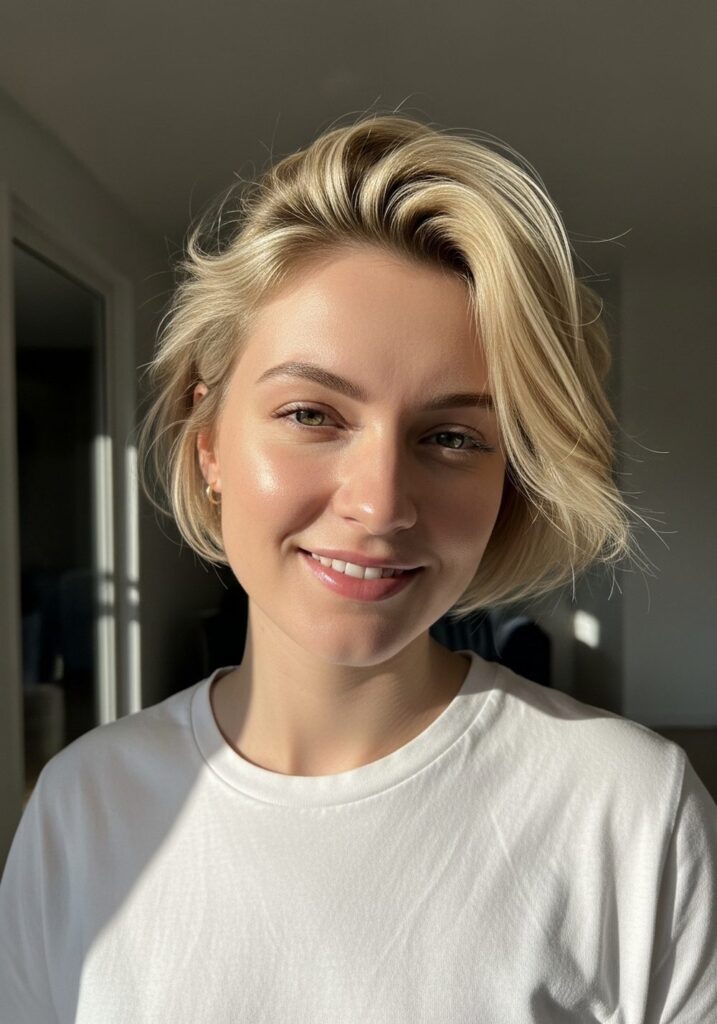
18 Whisper Fringe Hairstyle Ideas
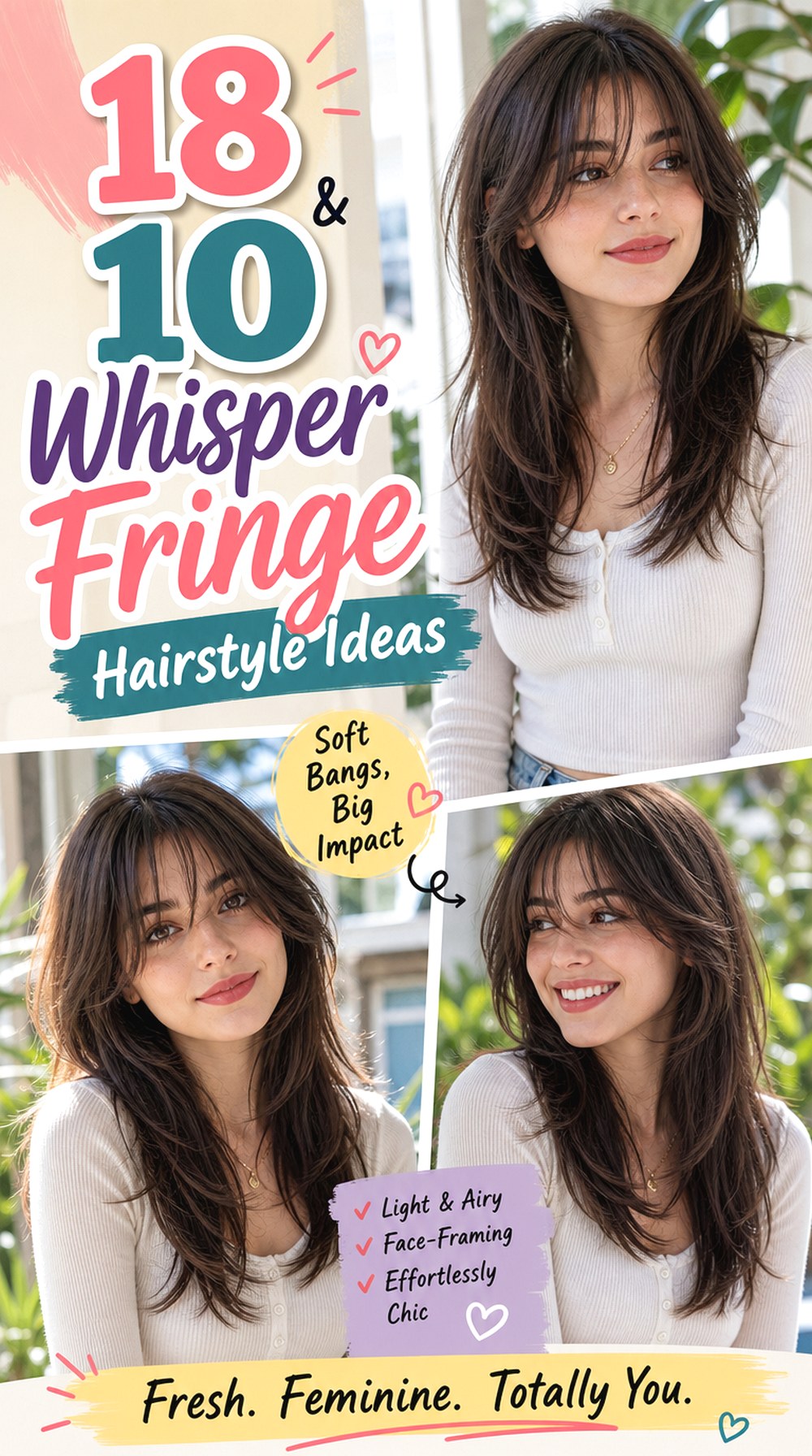
Whisper fringe is a very light, airy type of bangs designed to soften the forehead without creating the heavy line of a traditional full fringe. The ends are usually finely textured, with small gaps that allow some skin to show through. Depending on the haircut, the fringe can sit near the brows, separate around the eyes, sweep to one side, or gradually blend into longer face-framing pieces. That delicate shape is what gives whisper fringe its soft movement.
These whisper fringe hairstyle ideas can work with short bobs, long layers, pixies, shags, straight hair, waves, and curls. Fine hair often suits a lightly cut fringe because too much hair is not removed from the overall density. Medium and thick hair may need careful weight removal so the bangs remain airy rather than bulky. Length and width can also be adjusted to balance round, oval, square, heart, or longer face shapes.
Daily styling ranges from a quick air-dry to several minutes with a brush or small iron. Because the fringe sits around the face, trims usually matter more than the rest of the haircut. Before choosing one, consider your natural growth pattern, humidity, willingness to style bangs, and how frequently you want salon maintenance.
Quick List
- Soft Wispy Whisper Fringe
- Curtain Whisper Fringe
- Long Feathered Whisper Fringe
- Micro Whisper Fringe
- Side-Swept Whisper Fringe
- Bottleneck Whisper Fringe
- French Bob With Whisper Fringe
- Long Layers With Whisper Fringe
- Shaggy Whisper Fringe
- Wavy Whisper Fringe
- Curly Whisper Fringe
- Blunt Lob With Whisper Fringe
- Pixie With Whisper Fringe
- Face-Framing Whisper Fringe
- Air-Dried Whisper Fringe
- Piecey Whisper Fringe
- Rounded Whisper Fringe
- Low-Maintenance Grow-Out Whisper Fringe
Soft Wispy Whisper Fringe
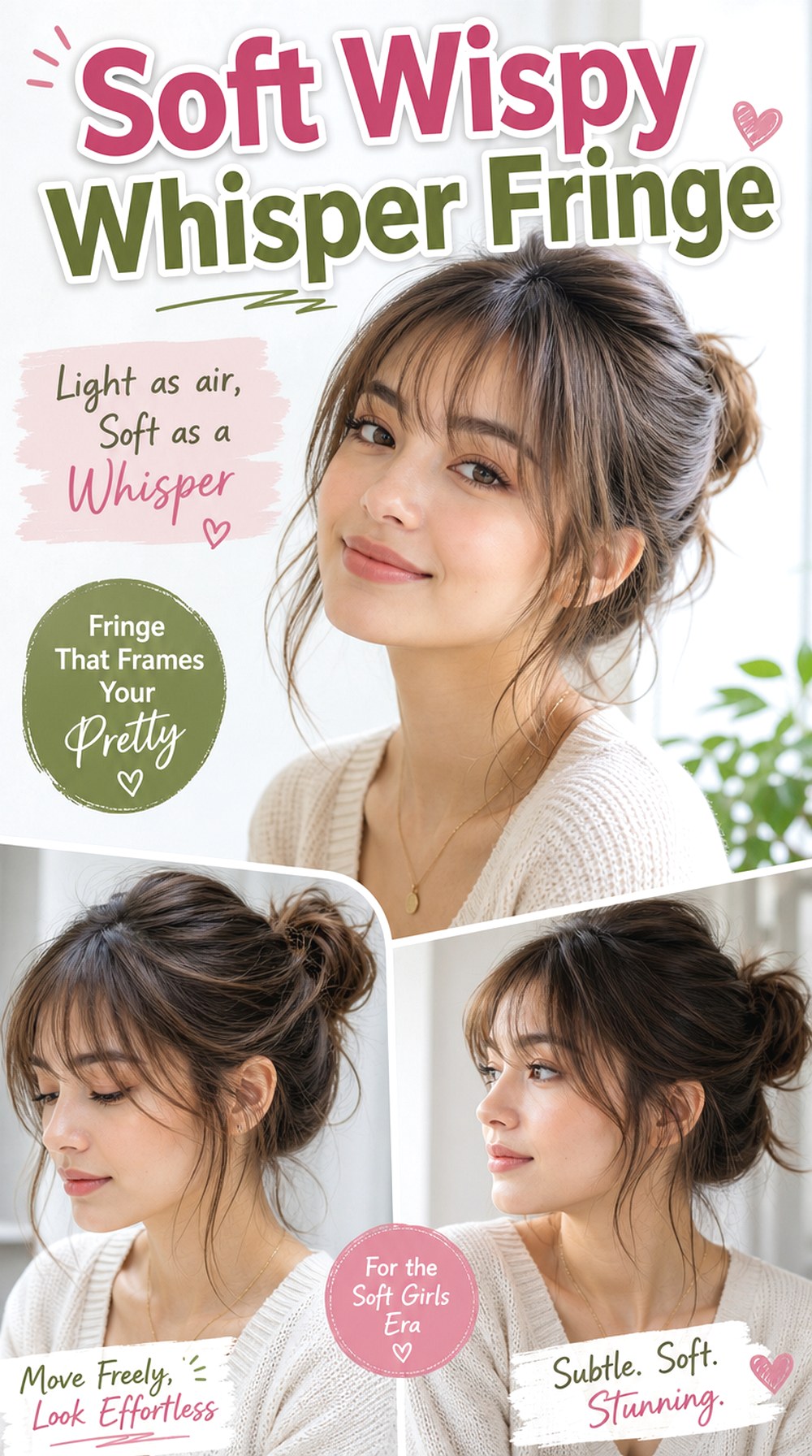
Soft wispy whisper fringe uses very little hair, creating separated strands that skim the brows without covering the whole forehead. It works especially well with fine to medium-density straight or softly wavy hair, although thicker hair can wear it when the section is kept shallow. The finish should stay light rather than rounded and stiff. Daily styling is usually quick: a short blow-dry in alternating directions helps prevent the fringe from splitting awkwardly. A lightweight mousse, small round brush, and light-hold hairspray are useful. Expect occasional fringe trims to preserve the airy length. Salon note: ask for a narrow, softly textured fringe with enough weight left at the ends to prevent flyaways.
Pro tip: Keep the fringe section shallow at the crown; taking too much hair forward can turn a whisper fringe into a dense full bang.
Curtain Whisper Fringe
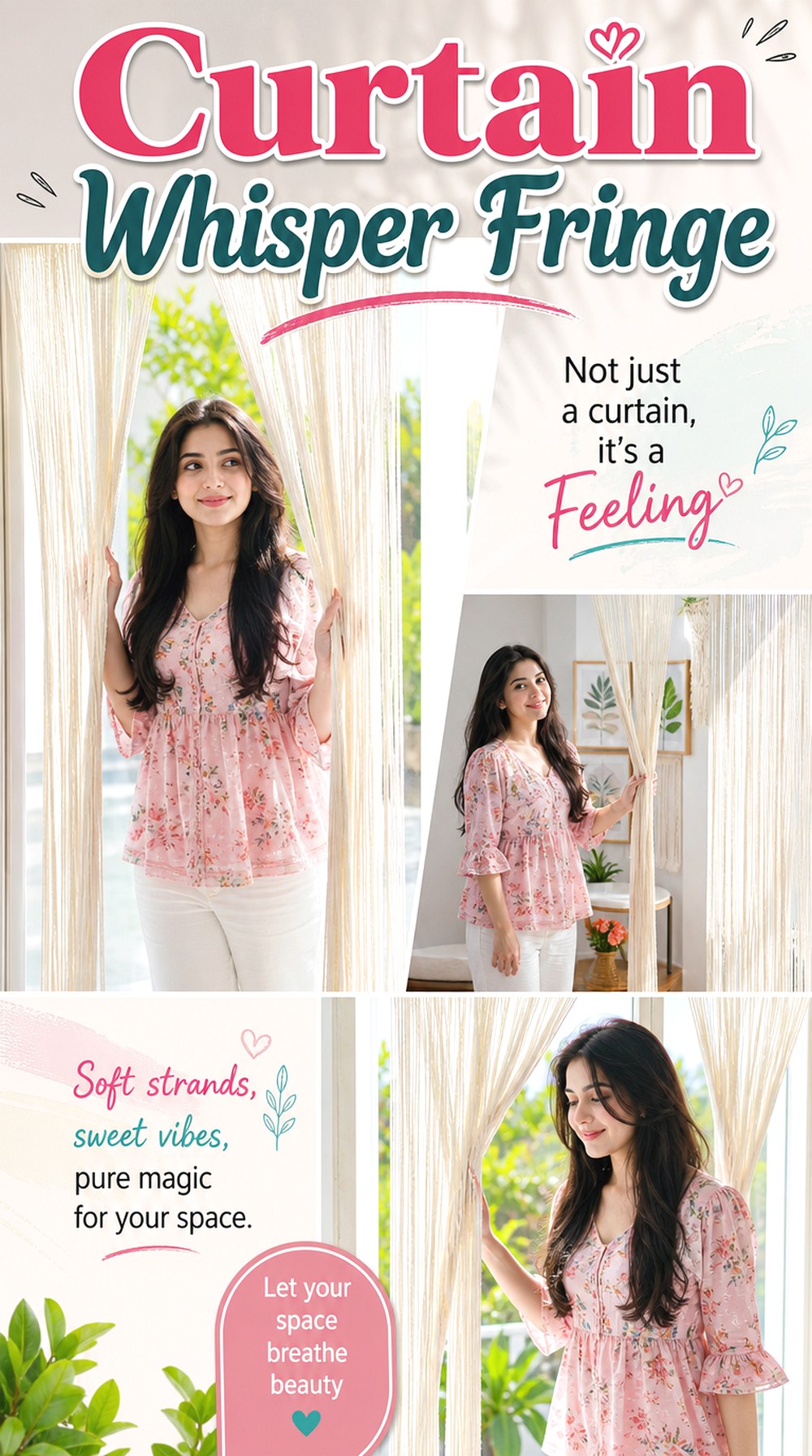
Curtain whisper fringe combines the openness of curtain bangs with much lighter density. The center is usually shorter around the brows or upper lashes, while the sides gradually lengthen toward the cheekbones. This shape suits straight and wavy textures particularly well and can help add vertical openness around rounder faces. It is also useful for someone who likes bangs but wants an easier grow-out. Styling takes only a few minutes once the fringe is trained. Use a heat protectant, medium round brush, and lightweight texturizing spray to create gentle separation. The center may need trimming before the sides. Salon note: show where you want the shortest center pieces and exactly where the longer corners should meet your cheekbones.
Pro tip: Ask for the two sides to blend gradually rather than leaving a sudden step between the fringe and face-framing layers.
Long Feathered Whisper Fringe
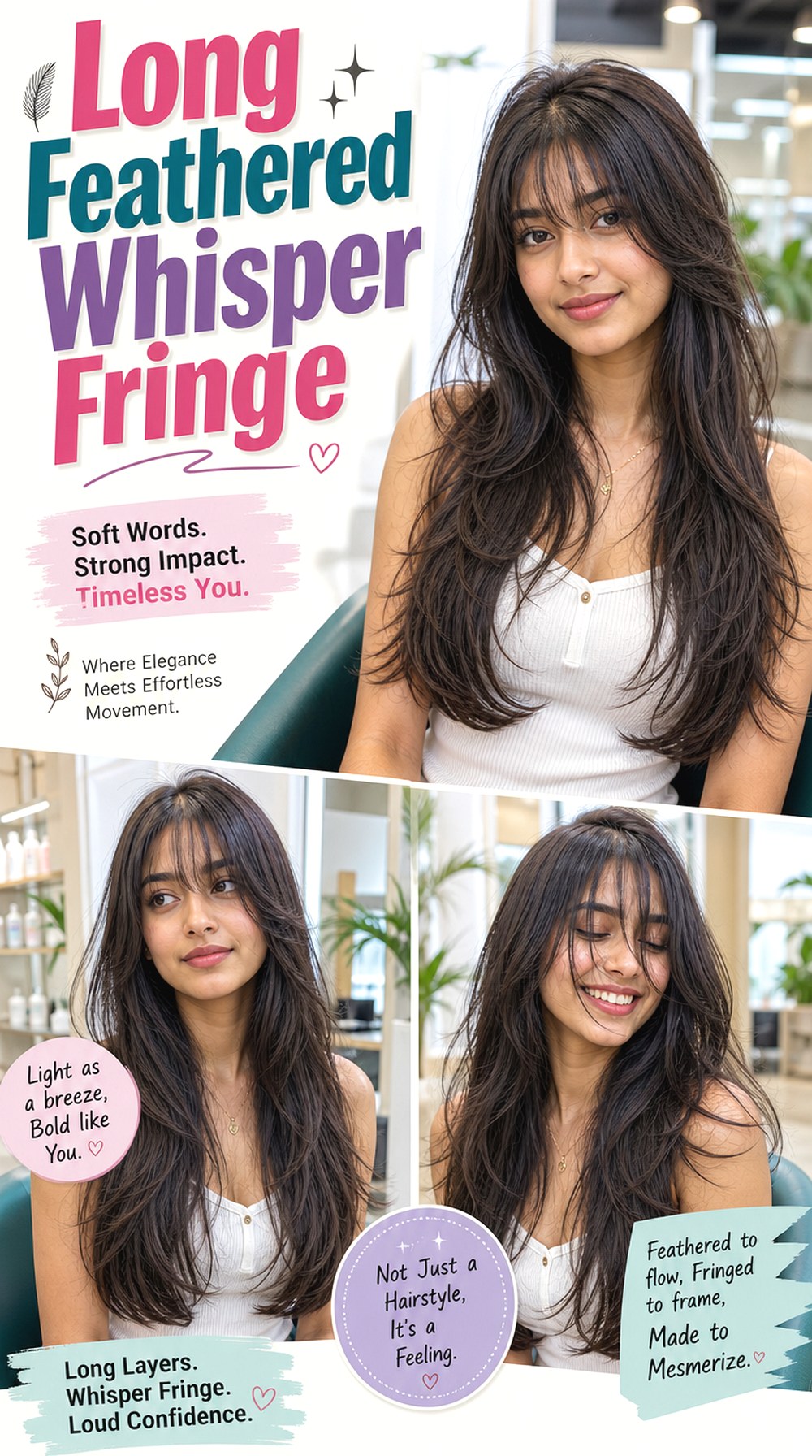
Long feathered whisper fringe sits below the brows and blends softly toward the temples, giving the front of the haircut movement without a strong bang line. It pairs naturally with shoulder-length and long hair, especially medium-density straight or wavy textures. Because the pieces are longer, they can be tucked aside or blended into the rest of the hair on low-styling days. A wide-tooth comb, heat protectant, and round brush are enough for most routines. Styling time is moderate if you want a polished feathered bend but minimal when worn naturally. Maintenance is gentler than with short bangs. Salon note: request soft point-cutting through the ends rather than aggressive thinning that could make the fringe stringy.
Pro tip: Let the outer pieces reach at least the upper cheekbone if you want the fringe to transition naturally into long layers.
Micro Whisper Fringe
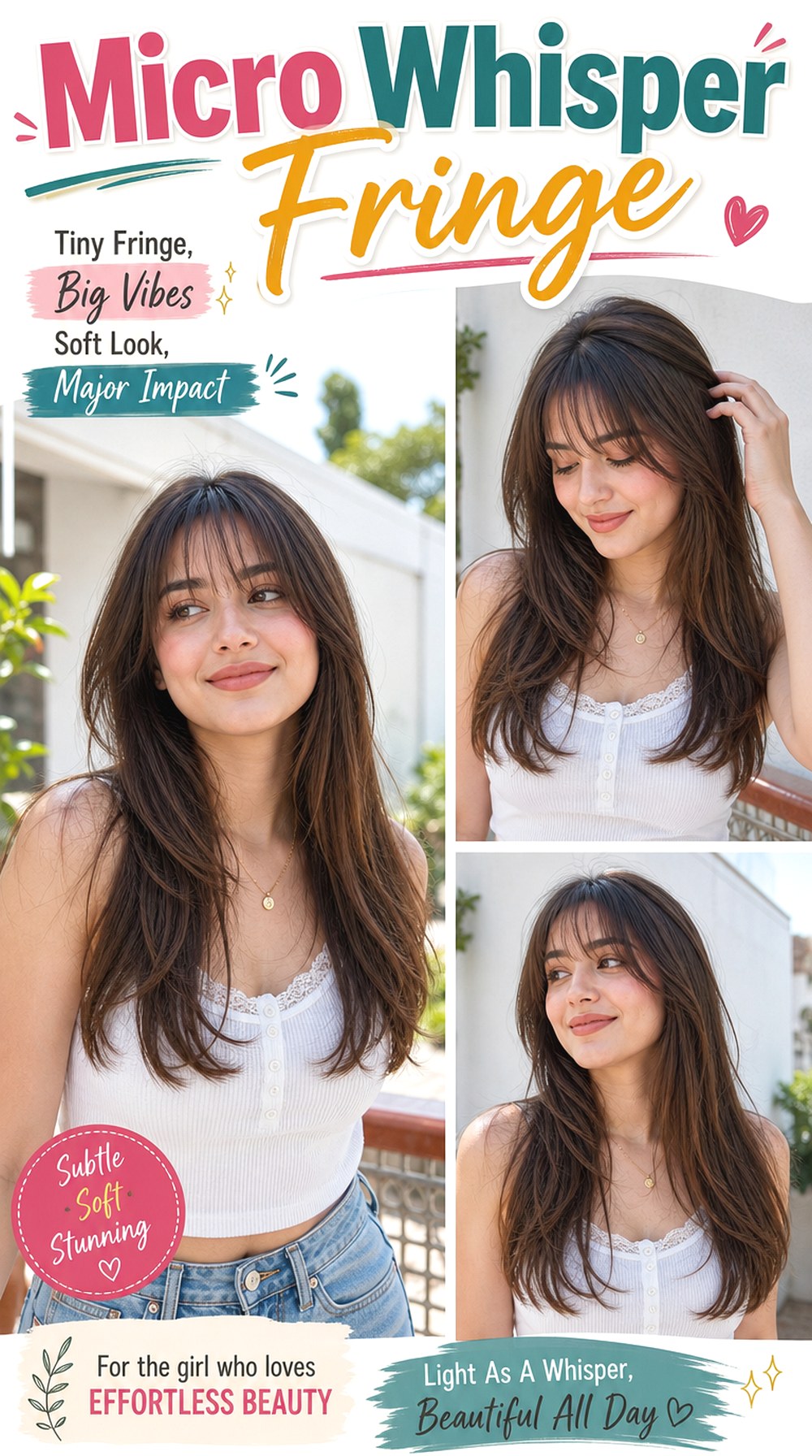
A micro whisper fringe keeps the airy texture but raises the length above the eyebrows. The result is more noticeable than a longer wispy bang, yet the separated ends prevent it from looking like a solid baby fringe. Straight to slightly wavy hair is the easiest texture to control at this length, while strong cowlicks may require more daily work. It can pair especially well with short cuts or graphic bobs where contrast is intentional. A small flat iron, heat protectant, and light styling wax help guide individual pieces. Styling is usually quick, but trims need to be frequent because a few millimeters can noticeably change the shape. Salon note: agree on the shortest point before cutting.
Pro tip: Keep some uneven softness through the lower edge instead of cutting one perfectly straight horizontal line.
Side-Swept Whisper Fringe
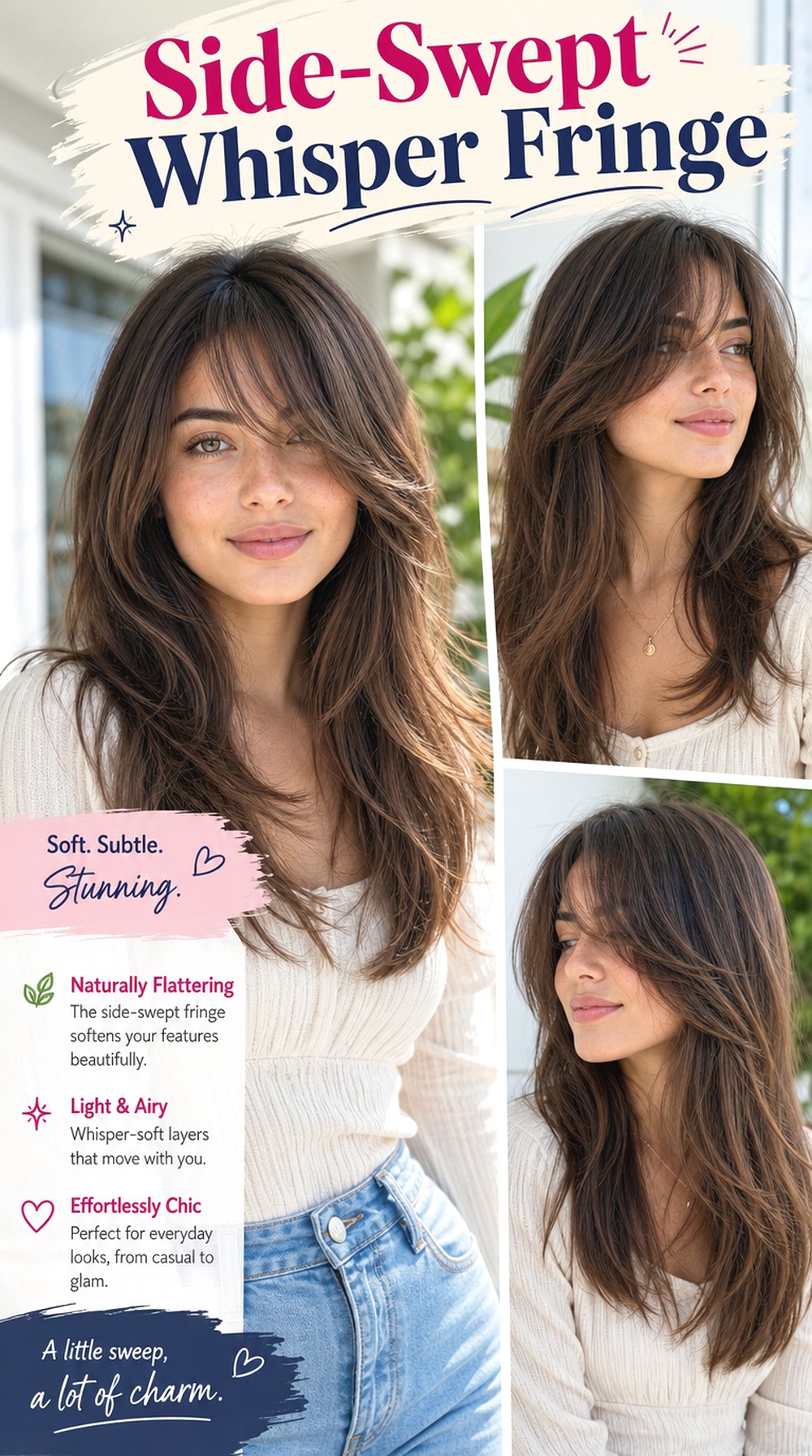
Side-swept whisper fringe moves diagonally across the forehead with a light, broken finish rather than a thick sweeping section. It is helpful for people who already wear a side part or have a natural growth pattern that pushes hair in one direction. Straight, wavy, fine, and medium-density hair can all adapt well. The longest pieces may finish near the outer brow or upper cheekbone, depending on how dramatic you want the sweep. A lightweight mousse, flat paddle brush, and flexible hairspray keep the shape controlled without making it rigid. Styling takes only a few minutes, while trims are less demanding than with a straight-across fringe. Salon note: have the fringe cut according to your usual part.
Pro tip: Style the fringe first while it is damp; once it dries in the wrong direction, redirecting the roots takes more heat.
Bottleneck Whisper Fringe
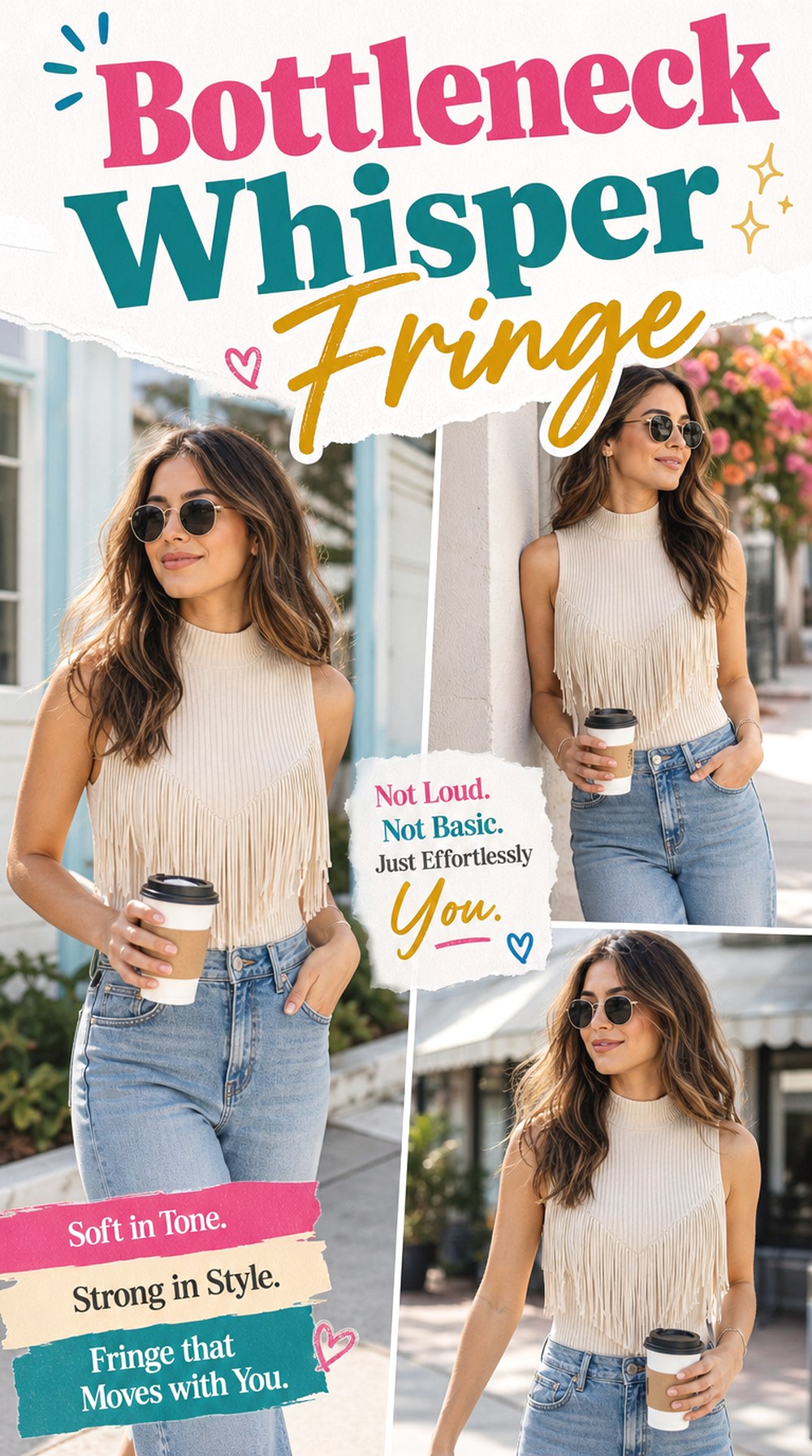
Bottleneck whisper fringe starts shorter around the center of the forehead and curves gradually longer beside the eyes, creating the narrow-to-wide shape associated with bottleneck bangs. Keeping the density light makes the result softer and easier to blend. It works nicely with medium to long hair, waves, layered cuts, and hair with enough density to support face-framing pieces without thinning the front too much. Use volumizing spray, a round brush, and light-hold hairspray for a controlled bend. Styling takes moderate effort because the center and sides need slightly different directions. The shortest pieces require more frequent trimming. Salon note: ask your stylist to connect the outer fringe directly into your cheekbone-length layers.
Pro tip: Avoid making the shortest center section too wide; a narrow center keeps the bottleneck shape visible and airy.
French Bob With Whisper Fringe
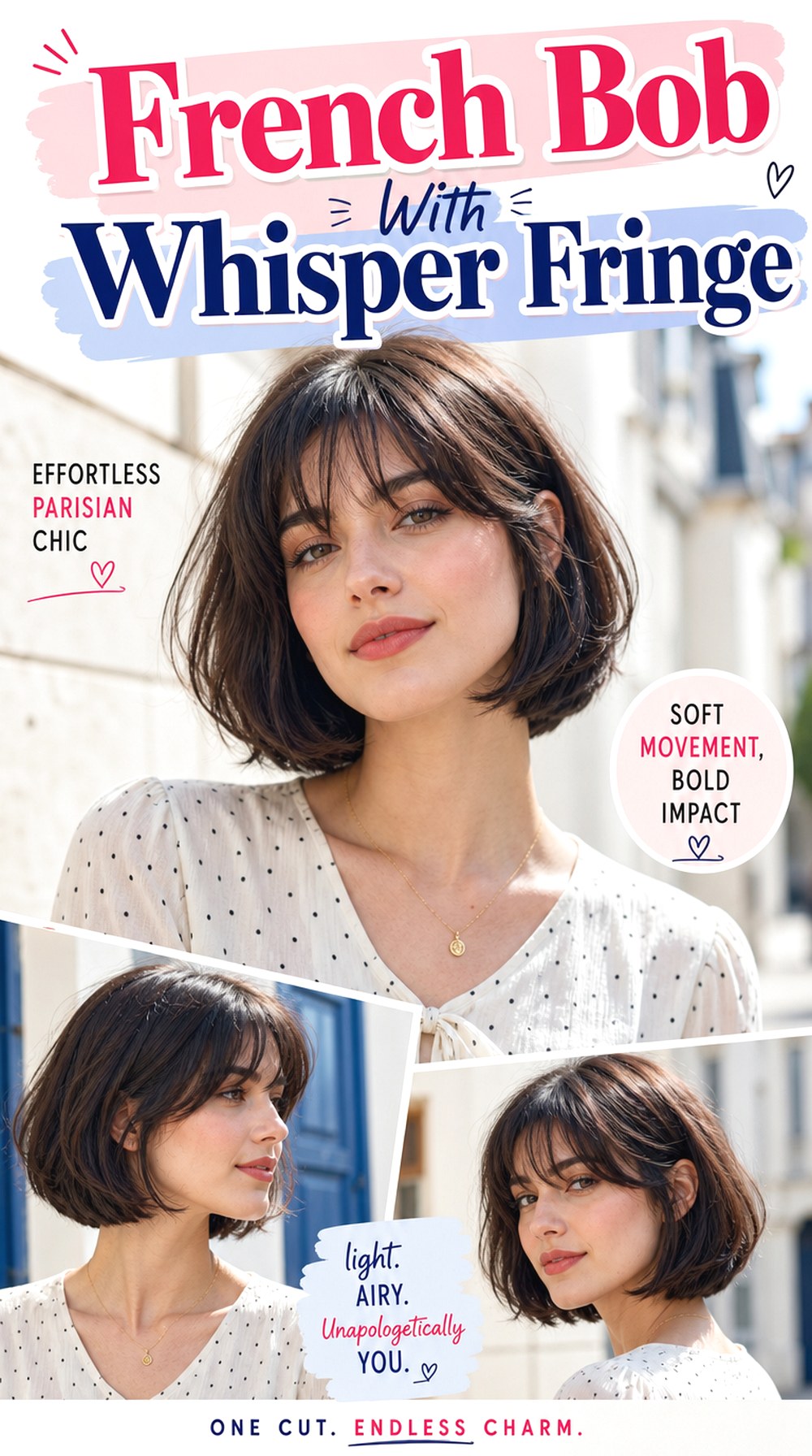
A French bob with whisper fringe balances a short jaw- or chin-length perimeter with fine, lightly separated bangs. The bob gives the haircut structure while the delicate fringe prevents the front from feeling too heavy. Straight and softly wavy textures are easiest to maintain, although fine curls can create a more relaxed variation. Fine hair benefits from keeping the bob perimeter fairly solid, while thick hair may need discreet internal weight removal. A smoothing serum, heat protectant, and compact round brush work well for styling. Expect moderate maintenance because both the fringe and short perimeter show growth quickly. Salon note: decide whether the bob should hit at the lip, jaw, or chin before discussing the fringe.
Pro tip: Keep the bob ends fuller if your hair is fine; excessive layering can remove the density that makes the short shape work.
Long Layers With Whisper Fringe
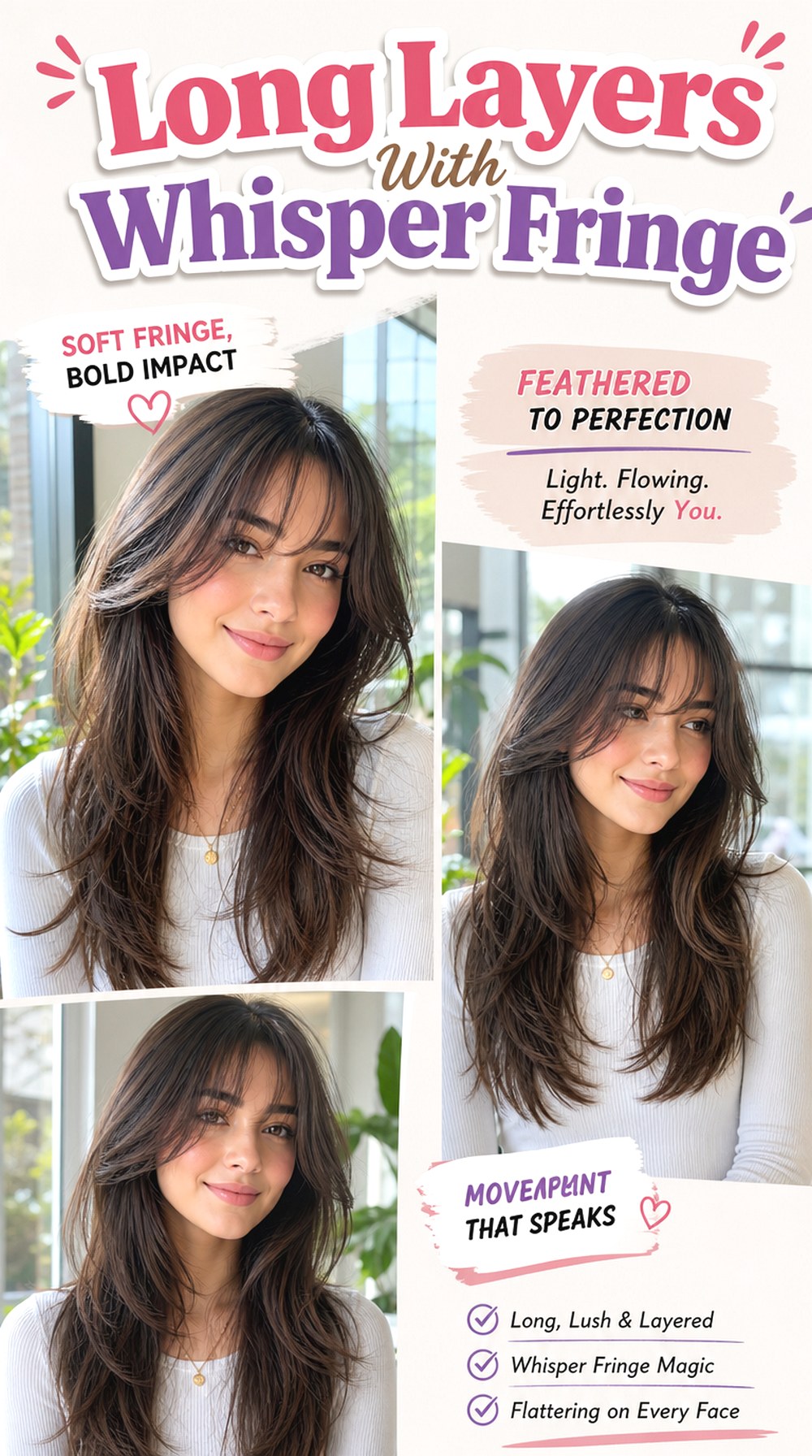
Long layers and whisper fringe create a gradual transition from light bangs into movement through the lengths. The fringe can sit close to the brows while longer face-framing sections fall around the cheekbones, jaw, and collarbone. This option suits medium to thick hair particularly well because layers can remove excess weight while preserving length. Fine hair can also wear it when the layering is restrained. Styling may be quick for natural waves or more involved if you want a full blowout. Use heat protectant, a large round brush, and volumizing spray. The fringe needs more frequent attention than the long layers. Salon note: identify exactly where you want the shortest face-framing layer to begin.
Pro tip: If you want movement without losing fullness, keep most layering through the front and upper lengths rather than heavily thinning the ends.
Shaggy Whisper Fringe
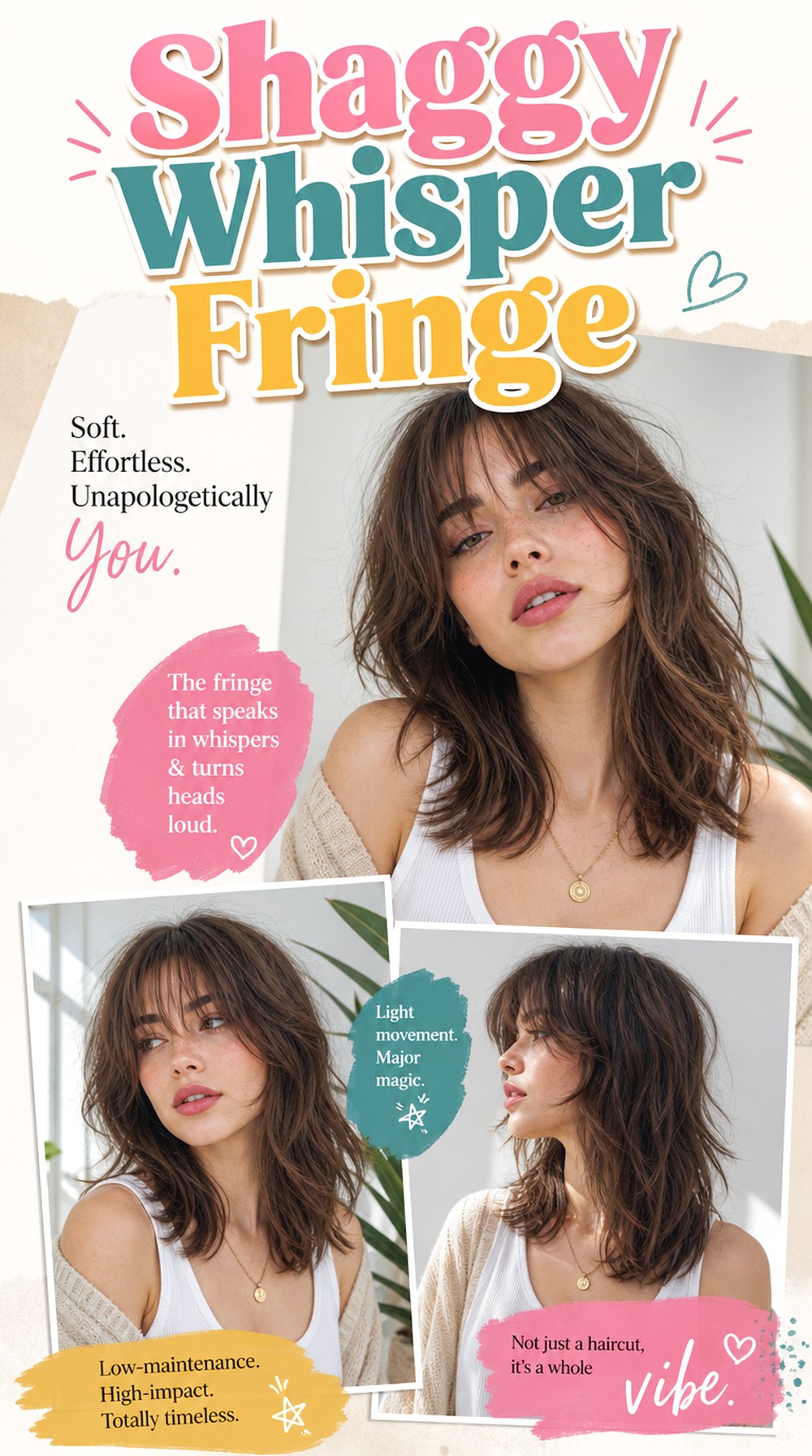
Shaggy whisper fringe blends naturally into choppy layers around the temples, cheekbones, and crown. The finish is intentionally loose, making it a useful choice for wavy hair or anyone who prefers texture over a polished blowout. Medium and thick densities often support the layered shape well, while fine hair needs carefully placed layers to avoid looking sparse. Curl cream, texturizing spray, and a diffuser can emphasize movement without flattening the fringe. Styling time ranges from quick air-drying to moderate diffuser work. The cut can grow out gracefully, but the fringe may need refreshing sooner than the shag layers. Salon note: ask for softness around the face without removing too much density from the perimeter.
Pro tip: Keep the crown layers slightly longer if your hair expands easily; very short layers can create more height than you want.
Wavy Whisper Fringe
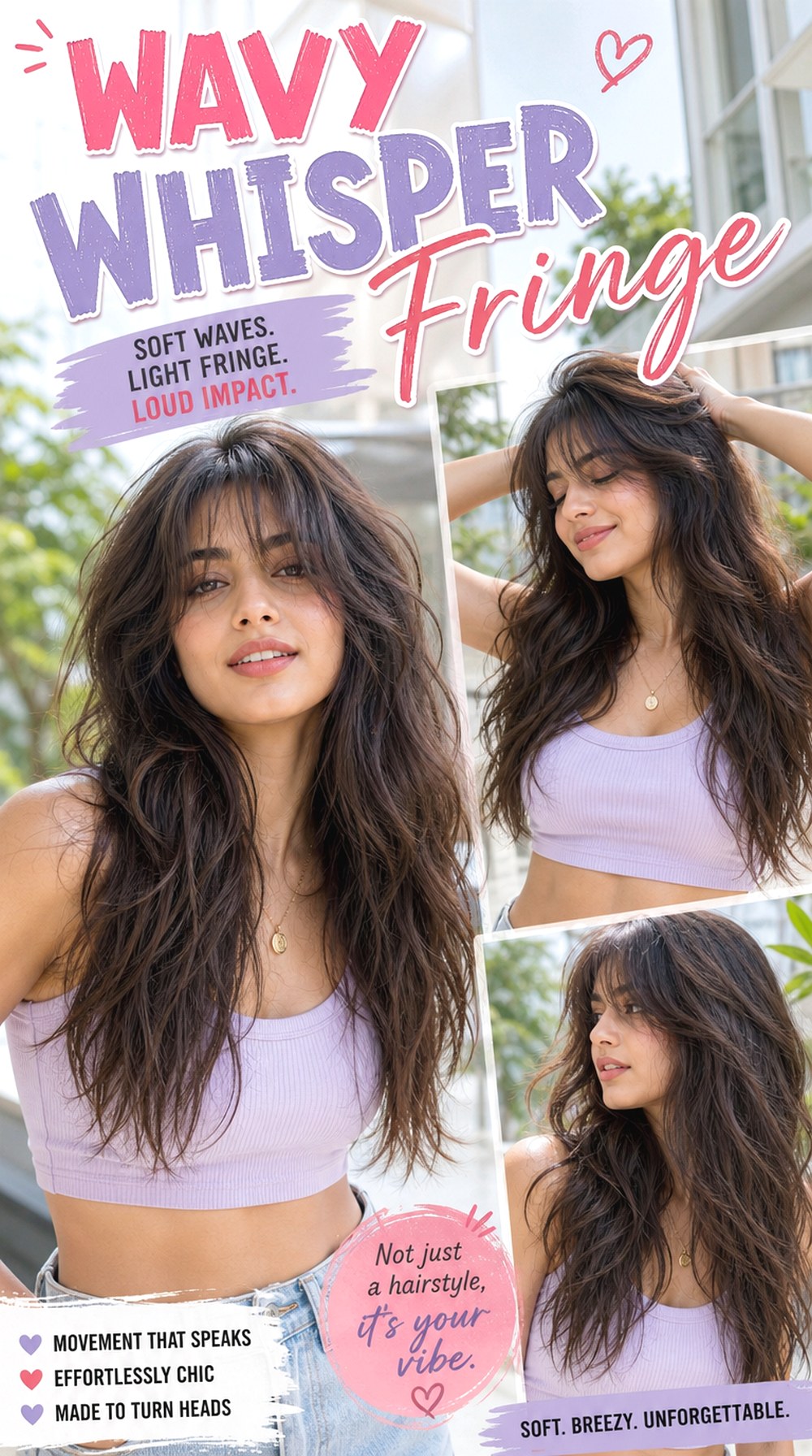
Wavy whisper fringe allows a slight natural bend instead of forcing the bangs completely straight. The texture creates soft separation and works especially well when the rest of the haircut includes loose layers. People with 2A to 2C waves may find this approach easier than repeatedly flat-ironing the fringe, although the exact result depends on the individual curl pattern and hairline. A leave-in conditioner, lightweight curl cream, and diffuser are useful for controlling frizz while preserving movement. Styling is fairly quick once you know how the fringe dries. Humidity can change its length and shape, so avoid cutting it overly short. Salon note: whenever possible, have the stylist assess the fringe in its natural dry texture.
Pro tip: Leave slightly more length than you think you need, since waves can spring upward as the hair dries.
Curly Whisper Fringe
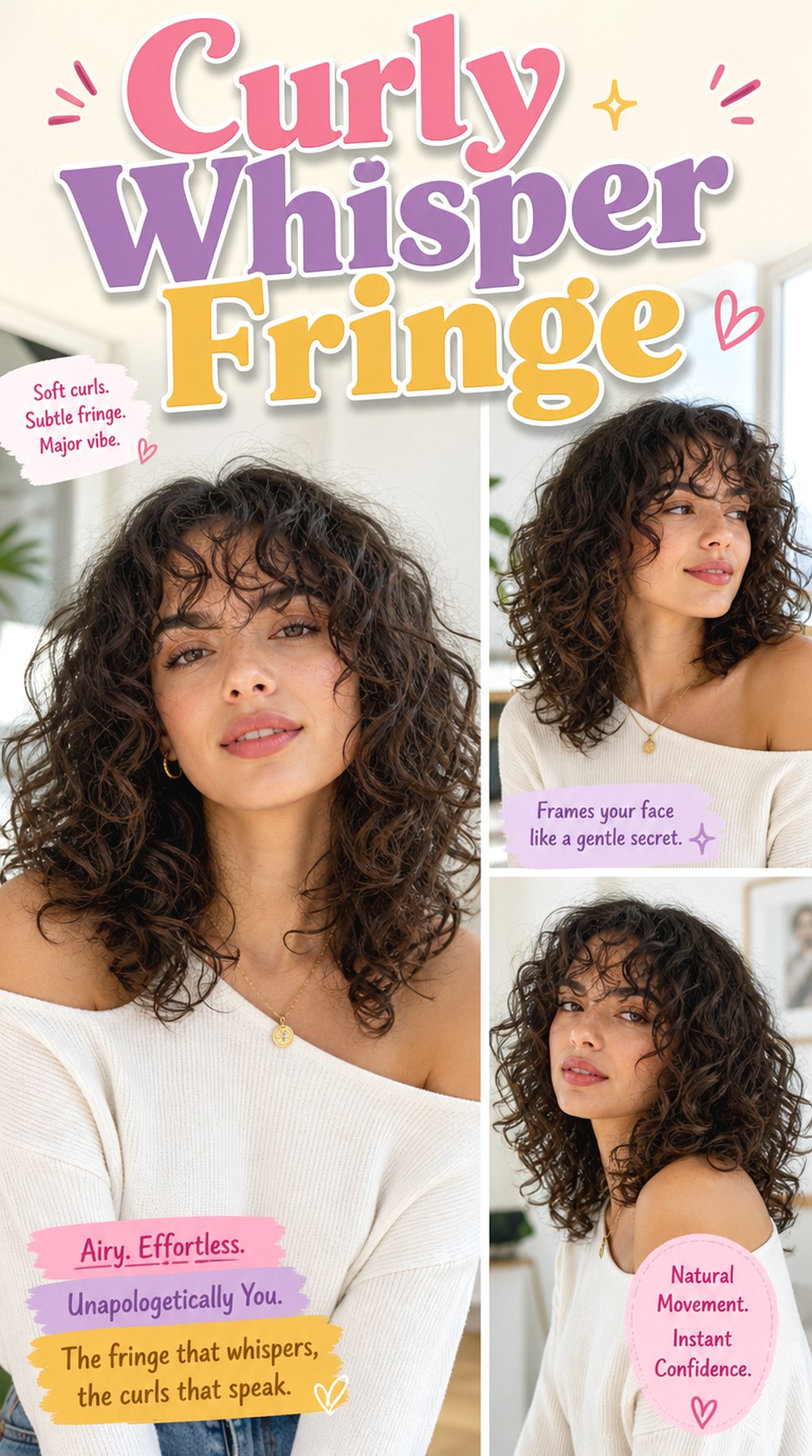
Curly whisper fringe uses small, separated curls across the forehead instead of forming one dense wall of bangs. It can suit a wide range of curl patterns, but the cutting method should respect shrinkage and each curl’s natural resting position. Medium and thick curly hair often provides enough density to create defined pieces while leaving the overall front balanced. Fine curls usually need a smaller fringe section. Use leave-in conditioner, curl cream, and a diffuser on low airflow. Daily styling can be light, although individual curls may need refreshing with water between washes. Salon note: discuss the desired dry length rather than judging only by stretched or wet hair.
Pro tip: Choose the individual curls that naturally fall forward instead of forcing hair from farther back on the head into the fringe.
Blunt Lob With Whisper Fringe
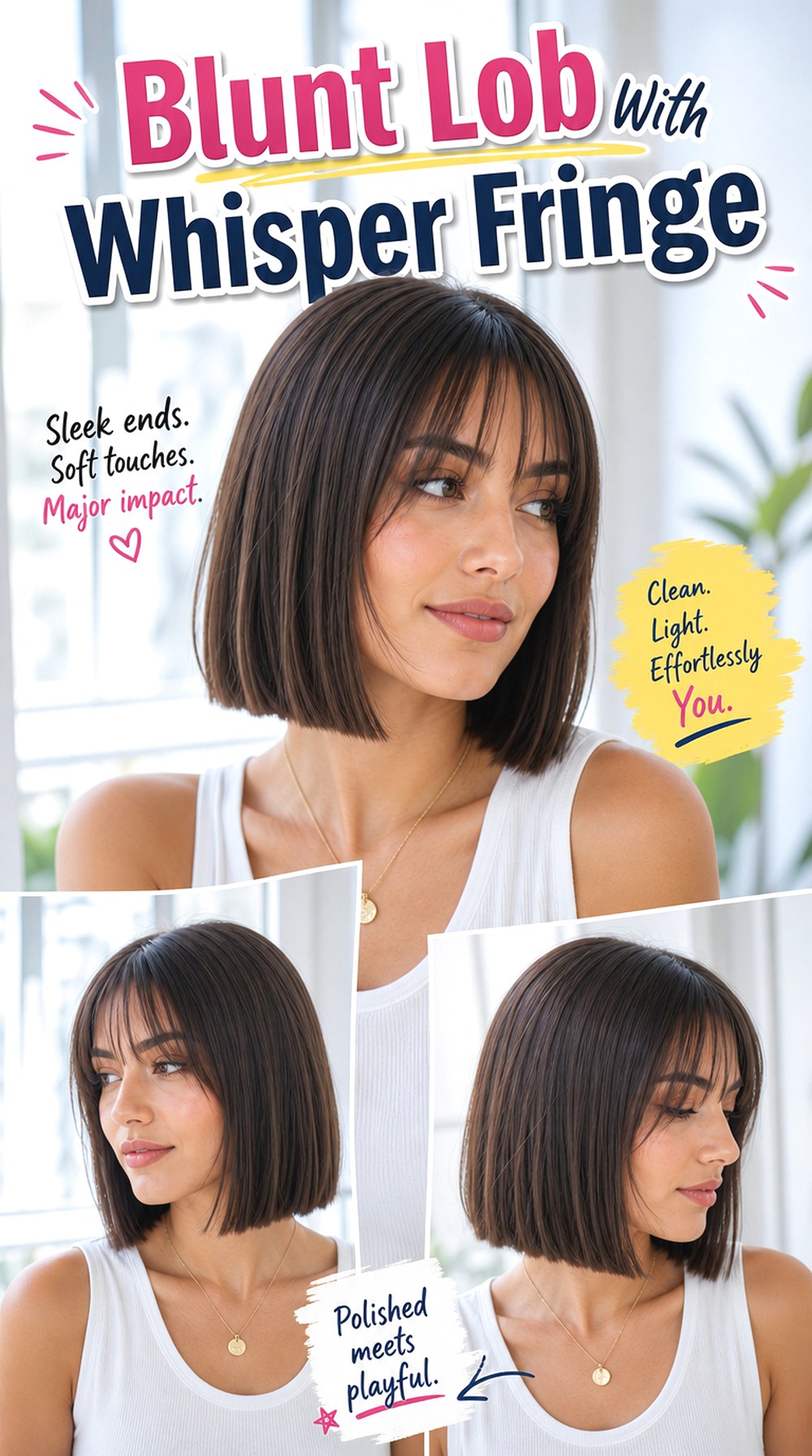
A blunt lob creates a strong shoulder- or collarbone-length baseline, while whisper fringe adds a much softer element around the eyes. The contrast works especially well for fine to medium hair because the solid perimeter helps retain visual fullness. Straight hair gives the cleanest outline, though loose waves can soften the shape further. Daily styling ranges from quick air-drying to a polished blowout. A smoothing serum, paddle brush, and heat protectant are practical choices. The lob can go several weeks between shaping appointments, while the fringe often needs attention sooner. Salon note: ask to keep the lower perimeter dense and avoid unnecessary layers if fullness is your priority.
Pro tip: If your ends tend to look thin, keep the lob almost one length and concentrate softness around the fringe rather than throughout the entire haircut.
Pixie With Whisper Fringe
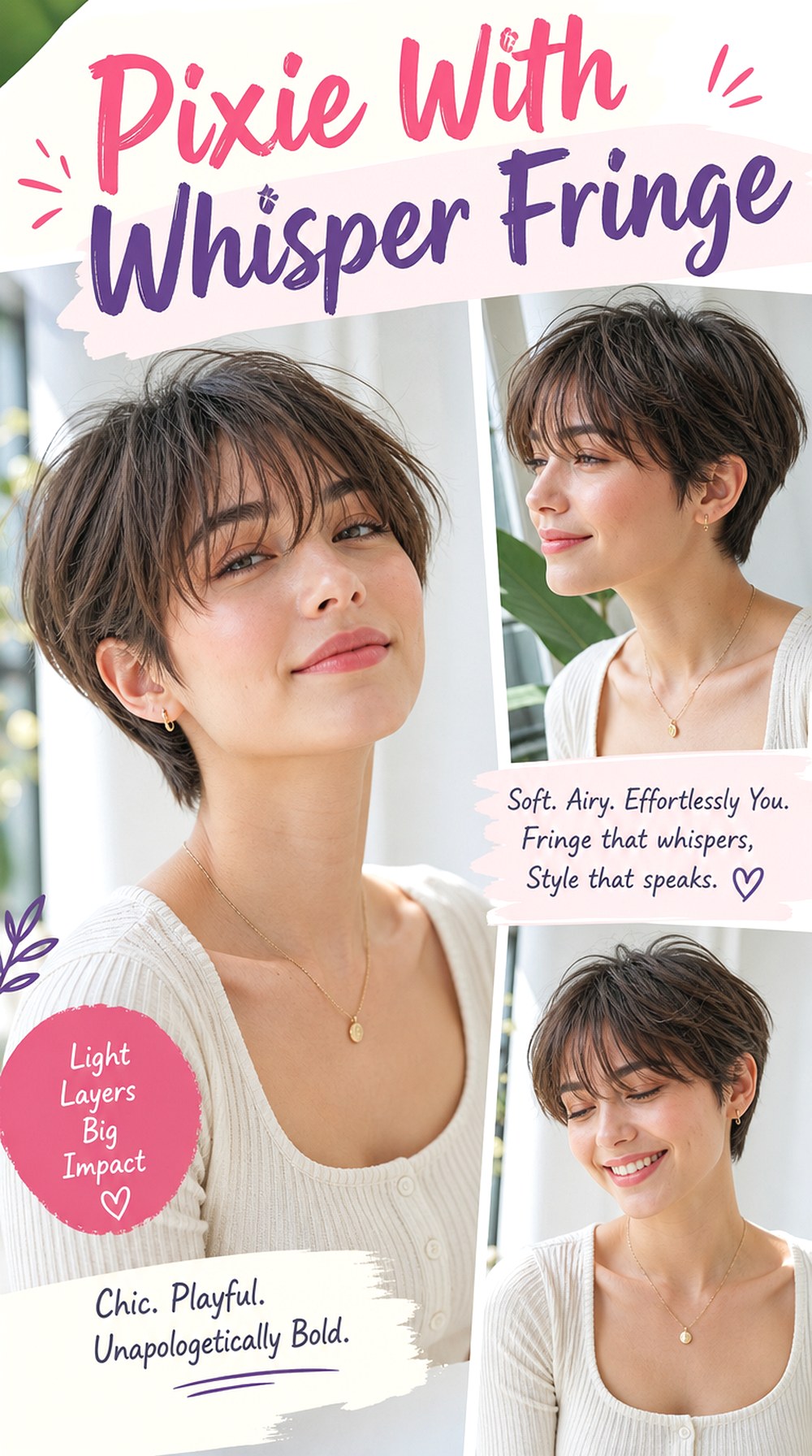
A pixie with whisper fringe keeps the sides and back short while leaving light pieces through the forehead for softness and movement. The fringe may sit straight, slightly to one side, or separate into tiny sections depending on the hairline. Fine and medium-density straight or wavy hair can be particularly manageable, though thick hair works when bulk is carefully controlled. Styling is fast: a small amount of texturizing paste, volumizing spray, and a fine-tooth comb can direct the front. Short cuts need regular salon shaping because changes in length quickly alter their proportions. Salon note: specify whether you want the fringe disconnected and piecey or smoothly blended into the longer top.
Pro tip: Keep a little extra length around the temples if you want the pixie to feel softer as it grows between appointments.
Face-Framing Whisper Fringe
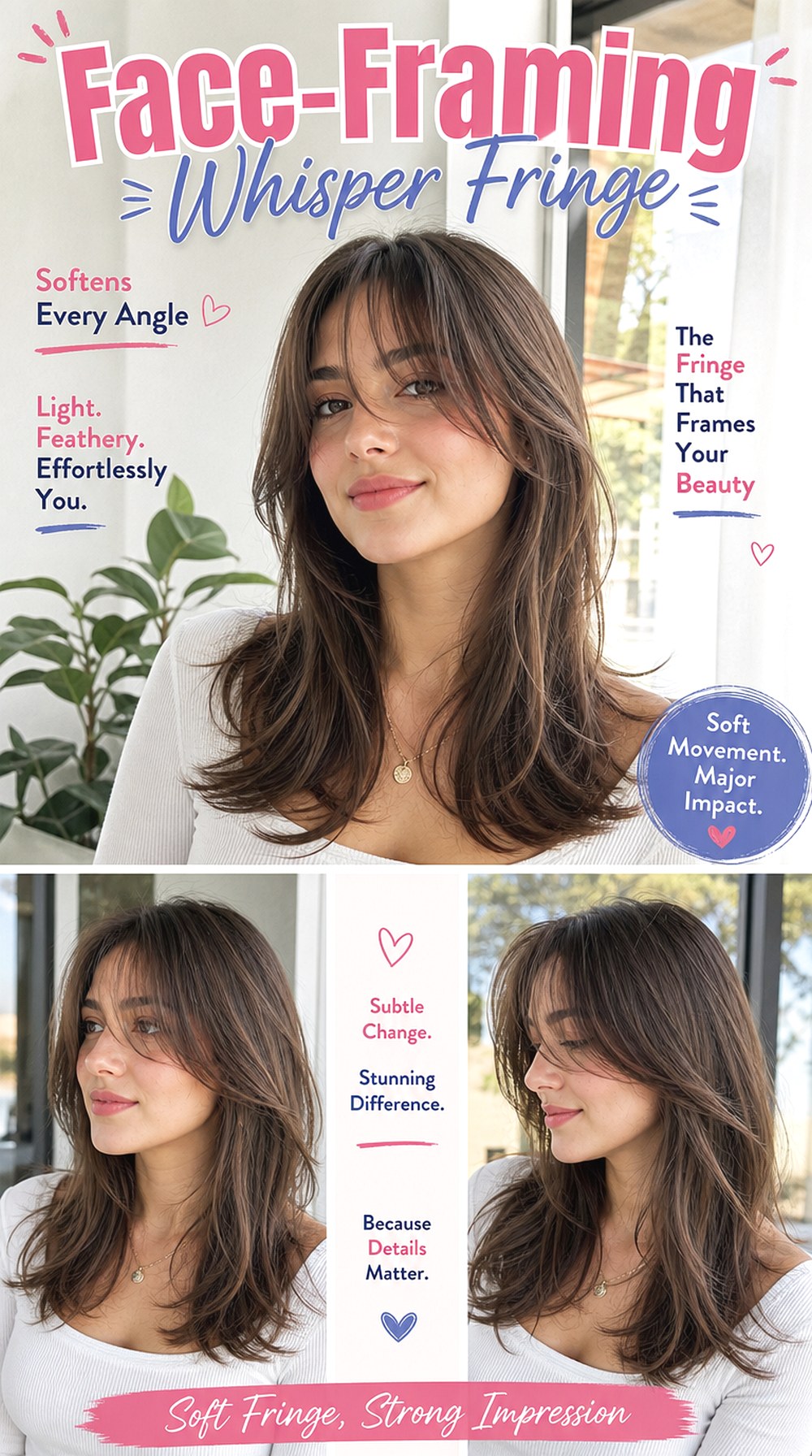
Face-framing whisper fringe extends gradually from airy bangs into longer pieces beside the cheeks and jaw. Rather than creating a separate fringe and haircut, the whole front section feels connected. It can be adapted for straight, wavy, fine, medium, or thick hair by changing the amount of hair included. Longer faces may prefer more width around the sides, while rounder shapes can use longer diagonal pieces for added vertical movement. A round brush, lightweight mousse, and heat protectant help define the front without over-styling it. Expect moderate styling time if you want visible bends through every layer. Salon note: mark the cheekbone and jaw points you want the framing sections to hit.
Pro tip: Ask for enough distance between each face-framing length so the layers look intentional rather than like several short pieces clustered together.
Air-Dried Whisper Fringe

Air-dried whisper fringe is cut to work with the hair’s natural direction and texture, making it useful for someone who wants to reduce daily heat styling. The fringe remains soft and slightly imperfect rather than looking highly polished. Straight, lightly wavy, and some curly textures can work, but strong cowlicks should be considered before the section is cut. A leave-in conditioner, wide-tooth comb, and lightweight styling cream are usually enough. Styling is quick, although shaping the damp fringe with your fingers during the first few minutes of drying can make a noticeable difference. Maintenance depends on length. Salon note: tell your stylist that air-drying is your normal routine so the cut is not designed around a blowout.
Pro tip: Avoid repeatedly touching the fringe while it dries; too much handling can create frizz and separate the pieces unevenly.
Piecey Whisper Fringe
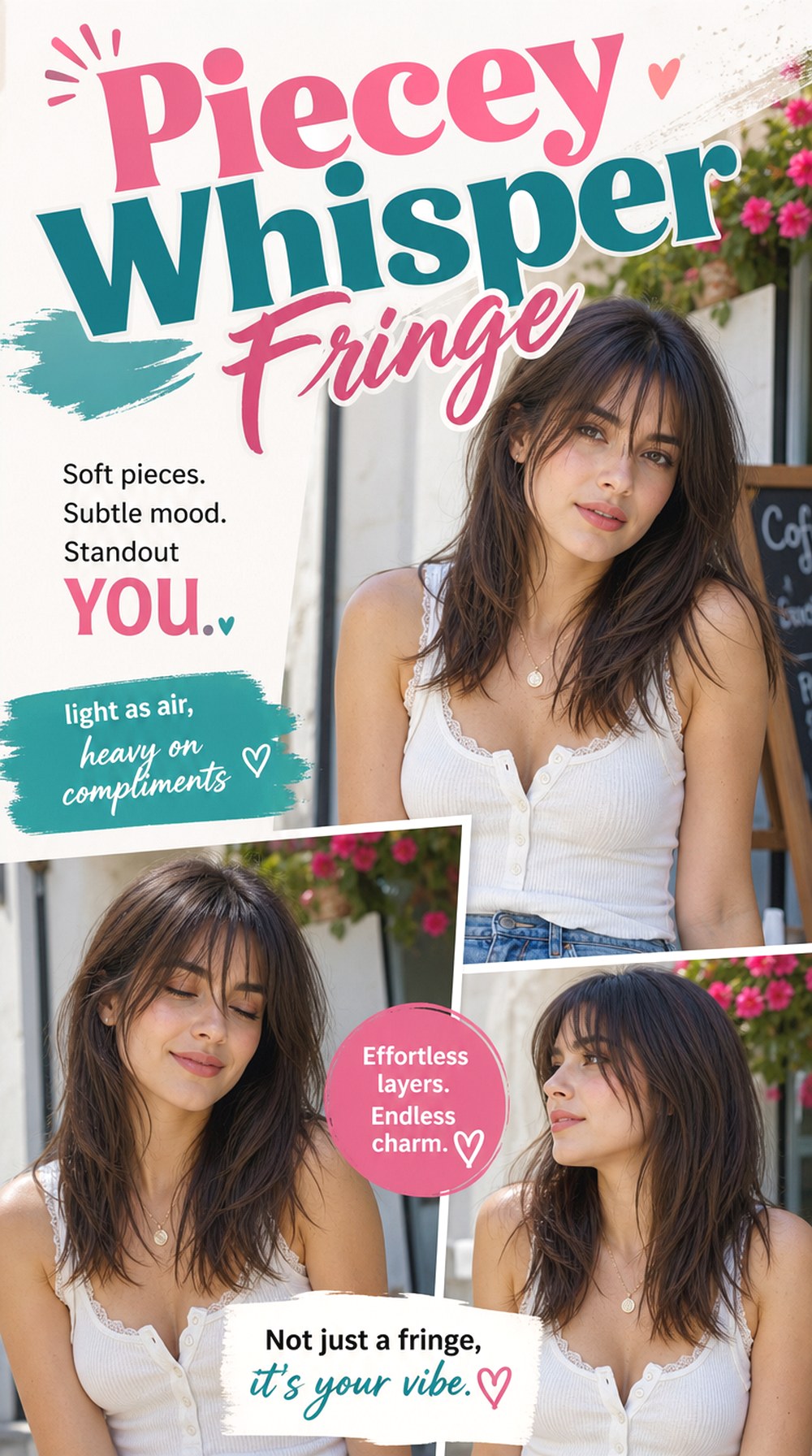
Piecey whisper fringe has slightly more visible separation than a classic wispy bang, with individual strands or small sections intentionally defined. It works well with short and medium cuts and can add texture to otherwise simple straight hair. Fine hair requires very little product, while medium or thicker hair may need subtle internal thinning to keep the pieces narrow. Styling is quick with a small flat iron, dry texturizing spray, and a tiny amount of light styling wax. Avoid heavy oils that can make the separated fringe look greasy. Trimming needs depend on whether the pieces sit above or below the brows. Salon note: request point-cut ends rather than a perfectly blunt fringe line.
Pro tip: Apply styling wax only to the last inch of a few selected strands instead of coating the entire fringe.
Rounded Whisper Fringe
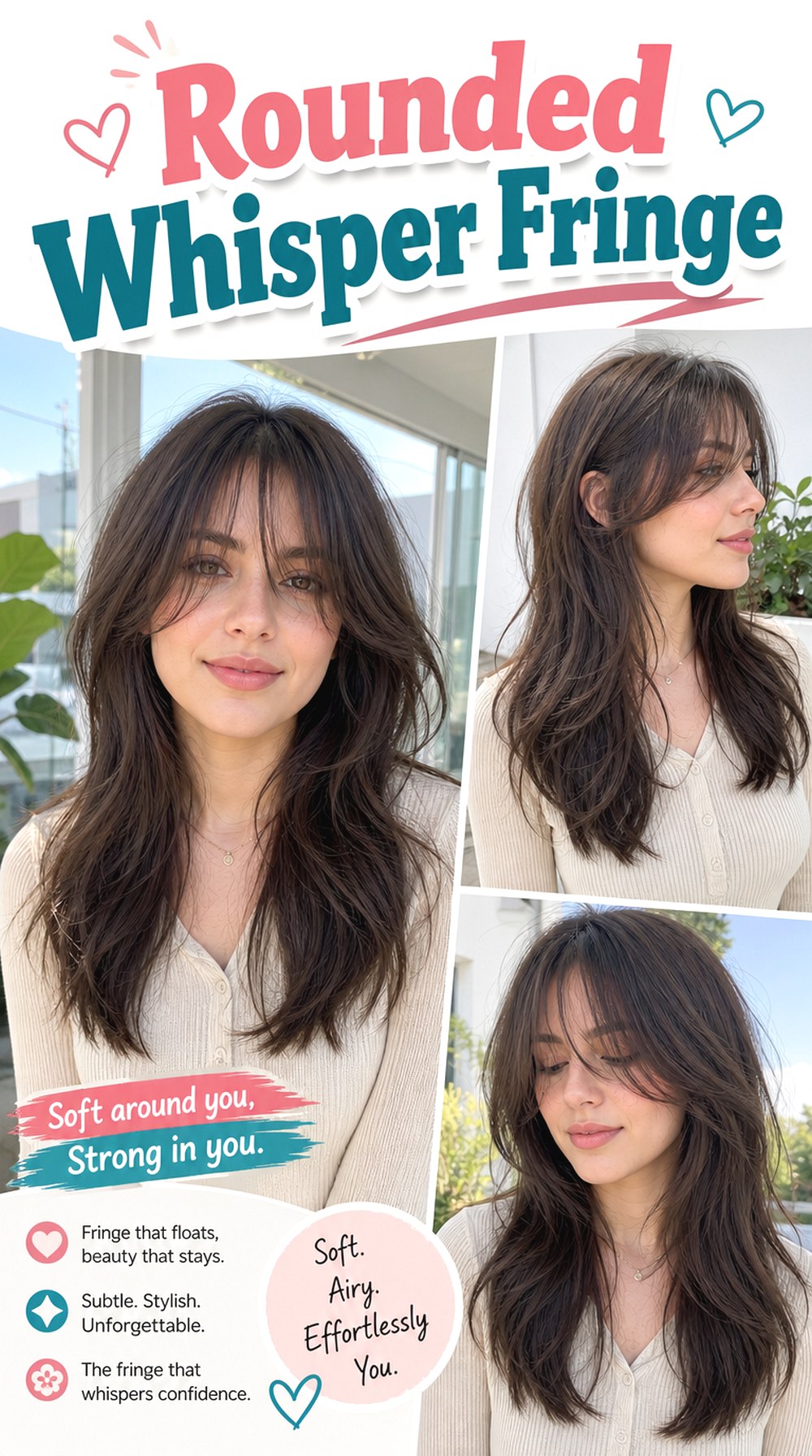
Rounded whisper fringe follows a gentle curve over the forehead, with the center sitting slightly shorter and the sides becoming longer near the temples. Unlike a heavy rounded bang, the interior remains light enough to show small gaps. Straight and softly wavy hair generally holds the curve most predictably, while medium density provides enough hair for shape without requiring a thick section. Use a small round brush, heat protectant, and flexible hairspray. Styling takes moderate effort because the bend should look soft rather than rolled under. The center can require regular trims. Salon note: ask for a subtle curve that follows your brow area rather than a dramatic semicircle.
Pro tip: Blow-dry the fringe downward first, then add only a slight bend at the ends to prevent an overly rounded, bubble-like finish.
Low-Maintenance Grow-Out Whisper Fringe

Low-maintenance grow-out whisper fringe starts slightly longer, often around the brows or lashes, and gradually connects into temple and cheekbone pieces. The extra length makes it easier to sweep aside as it grows, which is helpful for someone unsure about frequent fringe appointments. Straight, wavy, and medium-textured hair can adapt easily, while curly hair needs enough length to account for shrinkage. A wide-tooth comb, smoothing serum, and light-hold hairspray can control the front without complicated styling. Most days are quick, and salon visits can be spaced farther apart than with a micro fringe. Salon note: ask for softened corners that already blend into the surrounding haircut.
Pro tip: Keep the outer corners longer from the beginning; they provide the bridge that lets the fringe turn naturally into face-framing layers during grow-out.
Conclusion
Whisper fringe can be adjusted far beyond one standard bang shape. You can change the length, density, layers, bangs or fringe width, volume, texture, parting, finish, and styling effort to make the haircut better suited to your routine. A short piecey fringe creates a very different effect from longer curtain-style pieces, while curls and waves need different cutting decisions than straight hair.
The best choice depends on your face shape, natural hair texture, hair density, growth patterns, maintenance preference, and the amount of daily styling you are comfortable doing. When comparing these whisper fringe hairstyle ideas, pay particular attention to the fringe length and where the outer pieces connect to the haircut. Those details often determine how naturally the shape sits and grows out.
CTA
Choose one or two favorite ideas and save clear photo references before your salon visit. Discuss your face shape, natural hair texture, hair density, preferred length, maintenance schedule, and usual styling routine with your stylist. In each reference photo, point out exactly which details you want—such as the fringe length, amount of separation, starting point of the layers, face-framing pieces, volume, parting, or finished texture. It is equally useful to explain which details you do not want, especially if you prefer a very light fringe instead of dense bangs.
FAQs
What Hair Type Works Best With Whisper Fringe?
Straight and wavy hair usually make whisper fringe easy to control, but curly hair can also wear it when the fringe is cut according to natural shrinkage. Density matters too; thick hair may need a shallower fringe section, while fine hair should avoid excessive thinning.
How Often Does Whisper Fringe Need Trimming?
Shorter versions may need attention roughly every few weeks to keep hair out of the eyes. Longer curtain or grow-out variations can usually go longer because they blend into the surrounding layers more easily.
Can Whisper Fringe Work On Fine Hair?
Yes. A light fringe can suit fine hair because it does not require a large section of hair. The key is keeping enough density through the ends and avoiding aggressive thinning that makes the fringe look sparse.
Does Whisper Fringe Need Heat Styling Every Day?
Not necessarily. Hair with a cooperative growth pattern may only need finger styling or a quick blow-dry. Cowlicks, strong waves, or a very polished fringe shape may require a round brush or small flat iron, ideally with heat protectant.