11 Two Fluffy Ponytail Hairstyles

Two fluffy ponytail hairstyles are built around a pair of ponytails with visible fullness rather than tight, narrow lengths. Placement makes a major difference: high ponytails create more lift, while low versions sit closer to the neck and feel softer. A middle part gives the pair clear symmetry, and loose face-framing pieces can soften the front. The ponytail lengths may be wavy, curly, coily, lightly teased, bubbled, or partly braided depending on the finish you want.
Natural texture and density affect how easily the fluffy shape forms. Dense curls or coils may already provide substantial volume, while straighter or finer hair may need gentle texture or strategic expansion after securing. The base should feel stable without uncomfortable pulling. Hair length also matters because longer ponytails provide more room for waves, bubbles, braids, or accessories, although shorter lengths can still create compact fluffy pairs.
Most versions are temporary styles, so upkeep focuses on hold, frizz, and comfortable tension rather than changing the haircut. A quick refresh may only require reshaping the ponytails, while creating polished waves or detailed bases from scratch takes longer.
Quick List
- High Fluffy Twin Ponytail Hairstyle
- Low Fluffy Twin Ponytail Hairstyle
- Curly Fluffy Twin Ponytail Hairstyle
- Wavy Fluffy Twin Ponytail Hairstyle
- Middle-Part Fluffy Twin Ponytail Hairstyle
- Face-Framing Fluffy Twin Ponytail Hairstyle
- Braided-Base Fluffy Twin Ponytail Hairstyle
- Bubble Fluffy Twin Ponytail Hairstyle
- Half-Up Fluffy Twin Ponytail Hairstyle
- Ribbon-Tied Fluffy Twin Ponytail Hairstyle
- Coily Fluffy Twin Ponytail Hairstyle
High Fluffy Twin Ponytail Hairstyle

High placement makes both ponytails appear especially lifted because their bases sit above the ears and closer to the upper sides of the head. The front can remain cleanly parted while the lengths spread outward into loose waves, curls, or natural texture. Keeping similar anchor heights on both sides creates balance, although the fluffy lengths do not need to match strand for strand.
Two fabric-covered elastics provide the main anchors, while a light texturizing spray can add grip and separation through straighter lengths. If you create the fluffy finish with heated waves, heat protectant should replace the texturizing spray as the third supply. Hair with medium or greater density can produce substantial fullness, while finer hair may need gentler expansion rather than aggressive teasing. A morning refresh is usually limited to reshaping flattened sections; creating heat-styled texture from scratch takes longer.
Comfort is important because high ponytails can pull more noticeably than low ones. When discussing professional styling, specify the exact anchor position and ask for firm but comfortable tension rather than the tightest possible hold. If the bases begin to sag, reset them instead of repeatedly tightening the same elastics against the scalp.
Pro tip:
Tilt each ponytail slightly outward as you secure it rather than pulling both directly backward. This gives the fluffy lengths room to spread beside the head instead of collapsing behind it.
Make It Work for You:
For shorter hair, position the bases slightly lower so more strands comfortably reach each elastic. Keep the lengths fluffy and outward-facing to preserve the defining paired shape without forcing loose pieces.
Watch Out For:
Unequal anchor heights become particularly visible with high ponytails. Check both bases from the front before finishing; if one sits noticeably higher, reposition the elastic instead of disguising the imbalance with extra volume.
Low Fluffy Twin Ponytail Hairstyle
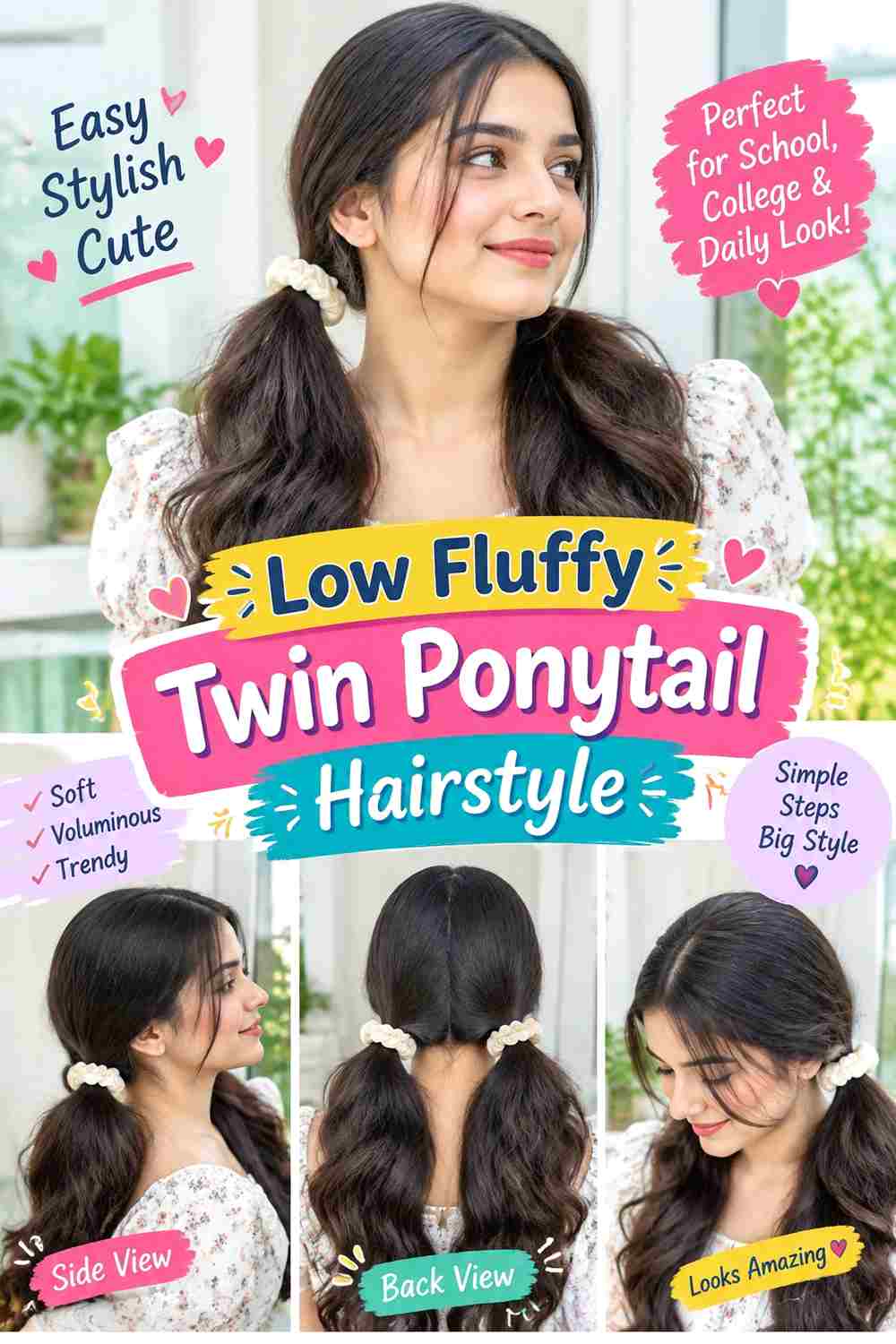
Low twin ponytails place the anchors near the nape or just behind the ears, allowing the fluffy lengths to fall over the shoulders. A centered part creates a clear division from forehead to nape, while loose waves or curls prevent the lower placement from appearing flat. This version keeps crown volume restrained and concentrates most fullness below the ears.
Fabric-covered elastics hold the bases without requiring elaborate anchoring, and lightweight mousse can encourage body through the ponytail lengths. A wide-tooth comb is useful for distributing product before styling without creating an overly brushed finish. Wavy, curly, and coily textures can work naturally with the fluffy shape, while straight hair may need additional texture. A quick refresh usually means fluffing compressed sections and correcting the part; a full wash-day routine depends on texture and drying time.
The lower anchor position can be comfortable for longer wear, provided the elastics are not overtightened. For event styling, explain whether you want each base directly behind the ear or closer to the nape because that small placement difference changes how much of each ponytail is visible from the front. Reset the style when the anchors loosen enough to make the two sides hang at noticeably different heights.
Pro tip:
Before securing the second side, compare both bases using the tops of your ears as visual landmarks. Matching those reference points helps the ponytails fall at a similar level without excessive adjustment.
Make It Work for You:
If your hair is very dense, divide it evenly by feel as well as appearance. Similar amounts of hair in each ponytail help prevent one side from looking substantially heavier than the other.
Watch Out For:
Avoid smoothing the ponytail lengths repeatedly after securing them. Over-brushing can remove the airy separation that makes low twin ponytails fluffy; refine the base while leaving the lengths comparatively loose.
Curly Fluffy Twin Ponytail Hairstyle

Defined curls naturally create the rounded fullness that suits twin ponytails. Each base can sit around ear level or slightly higher, while the curls expand outward and downward instead of being stretched into narrow tails. A center part provides balance, and a few naturally shorter curls may remain around the front if you prefer a less controlled hairline.
Lightweight leave-in conditioner provides slip and moisture, curl gel supports curl grouping, and two fabric-covered elastics secure the style. Existing curls can make the routine straightforward because the ponytails do not need to be straightened before styling. Between washes, refreshing selected curls may be relatively quick; a complete wash, product application, drying, and ponytail setup requires more time, particularly with dense hair.
Shrinkage affects both the visible ponytail length and overall width, so judge placement with the curls in their usual state. For professional styling, explain how high you want the anchors and whether you prefer compact definition or more expanded volume through the tails. Comfortable tension matters at the bases, especially if the curls are dense and therefore add weight. Rather than repeatedly brushing frizz back into the ponytails, refresh individual areas so the curl groups remain visible.
Pro tip:
After securing each ponytail, gently separate only a few larger curl groups near the outer edges. Expanding the perimeter first adds visible fluffiness without breaking apart every defined curl in the style.
Make It Work for You:
If your curls shrink tightly, place the ponytails where their dry lengths create the balance you want. Slightly lower anchors can provide more visible drop while preserving plenty of rounded volume.
Watch Out For:
Do not pull the curls straight when comparing the two ponytails. Their stretched lengths may match while their dry shapes differ; assess symmetry after both sides have returned to their natural curl pattern.
Wavy Fluffy Twin Ponytail Hairstyle

Loose waves give twin ponytails a broad, airy shape without creating tightly defined curls. The bases can sit slightly above the ears, with soft bends beginning through the mid-lengths and straighter tips creating a relaxed finish. A center or subtle zigzag part separates the two sides, while modest crown smoothness keeps the fluffy ponytails as the main feature.
For heat-created waves, apply heat protectant before using a curling iron, then finish with flexible hairspray to support movement without making the lengths rigid. Naturally wavy hair may need far less intervention and can simply be arranged around its existing pattern. A next-day refresh should focus on flattened sections rather than recreating every wave. Starting from freshly washed straight hair is a longer process because drying and shaping both add time.
When having the style prepared for an occasion, specify the wave size and where you want the bends to begin. Large, loose bends produce a different amount of fullness from small curls. Also discuss comfortable base tension and anchor height. If the waves begin dropping during wear, reshape selected outer pieces rather than adding heavy layers of hairspray throughout both ponytails.
Pro tip:
Let heat-shaped waves cool before loosening them with your fingers. Expanding warm curls immediately can make them drop faster, while cooled bends usually keep their shape better when separated into fluffy sections.
Make It Work for You:
If your natural hair already has uneven waves, refine only the straighter pieces around the outside. Keeping some natural variation makes the ponytails full without requiring a perfectly uniform heat-styled pattern.
Watch Out For:
Small identical curls can make the ponytails look more structured than fluffy. Use broader bends and vary their starting points slightly, then loosen them instead of keeping every section in a matching spiral.
Middle-Part Fluffy Twin Ponytail Hairstyle
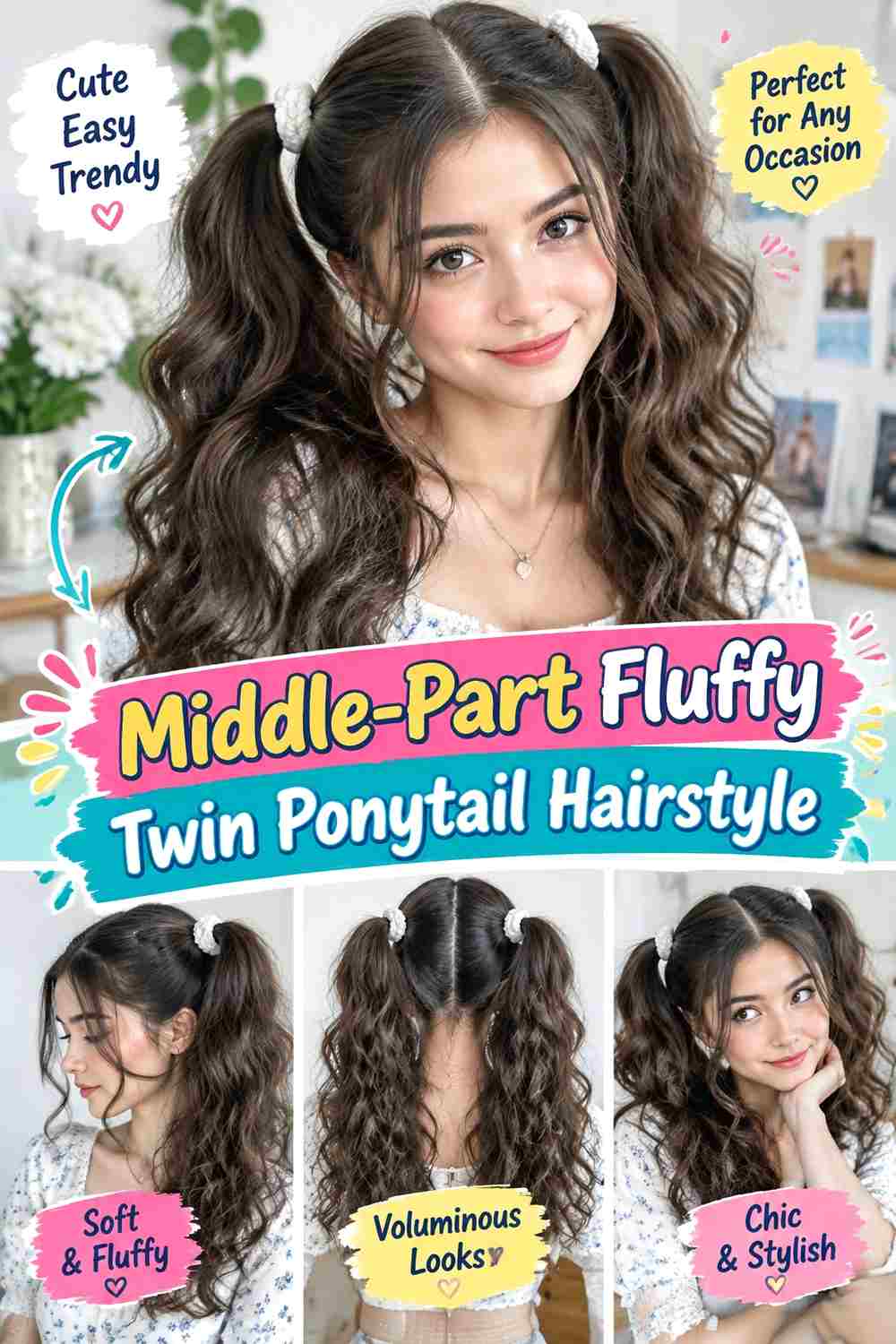
A precise center part gives this version its strongest visual feature. The line continues from the forehead toward the back, dividing the hair into two balanced sections before each side is secured at a similar height. The ponytails themselves stay deliberately fluffy, creating contrast between the orderly parting and the soft, expanded lengths. Waves, curls, or natural texture can all supply that fullness.
A tail comb helps establish the part, while two fabric-covered elastics create comfortable anchors. Lightweight styling cream can control short surface pieces without flattening the ponytails. The style is particularly practical when your hair naturally separates near the center, although other growth patterns can still be arranged this way. Refreshing the part and fluffing the tails can be quick; washing and fully restyling the underlying texture takes considerably longer.
For professional styling, show how clean you want the center division and where the two bases should sit in relation to the ears. Perfectly flat roots are not necessary unless that is the finish you prefer. As the style loosens, correct the anchor that has shifted instead of tightening both sides unnecessarily. The goal is visual balance combined with enough softness to keep the twin ponytails full.
Pro tip:
Create the center division before applying much styling product. A clear part is easier to adjust on flexible hair, and you can then smooth only the sections that actually need extra control.
Make It Work for You:
If your natural part sits slightly off center, keep the front division close to its preferred position and balance the ponytail anchors instead. The paired effect can remain clear without fighting strong root growth.
Watch Out For:
Do not borrow large sections from one side just to make the part appear mathematically centered. Uneven distribution can leave one ponytail visibly smaller; prioritize balanced amounts and comfortable placement.
Face-Framing Fluffy Twin Ponytail Hairstyle
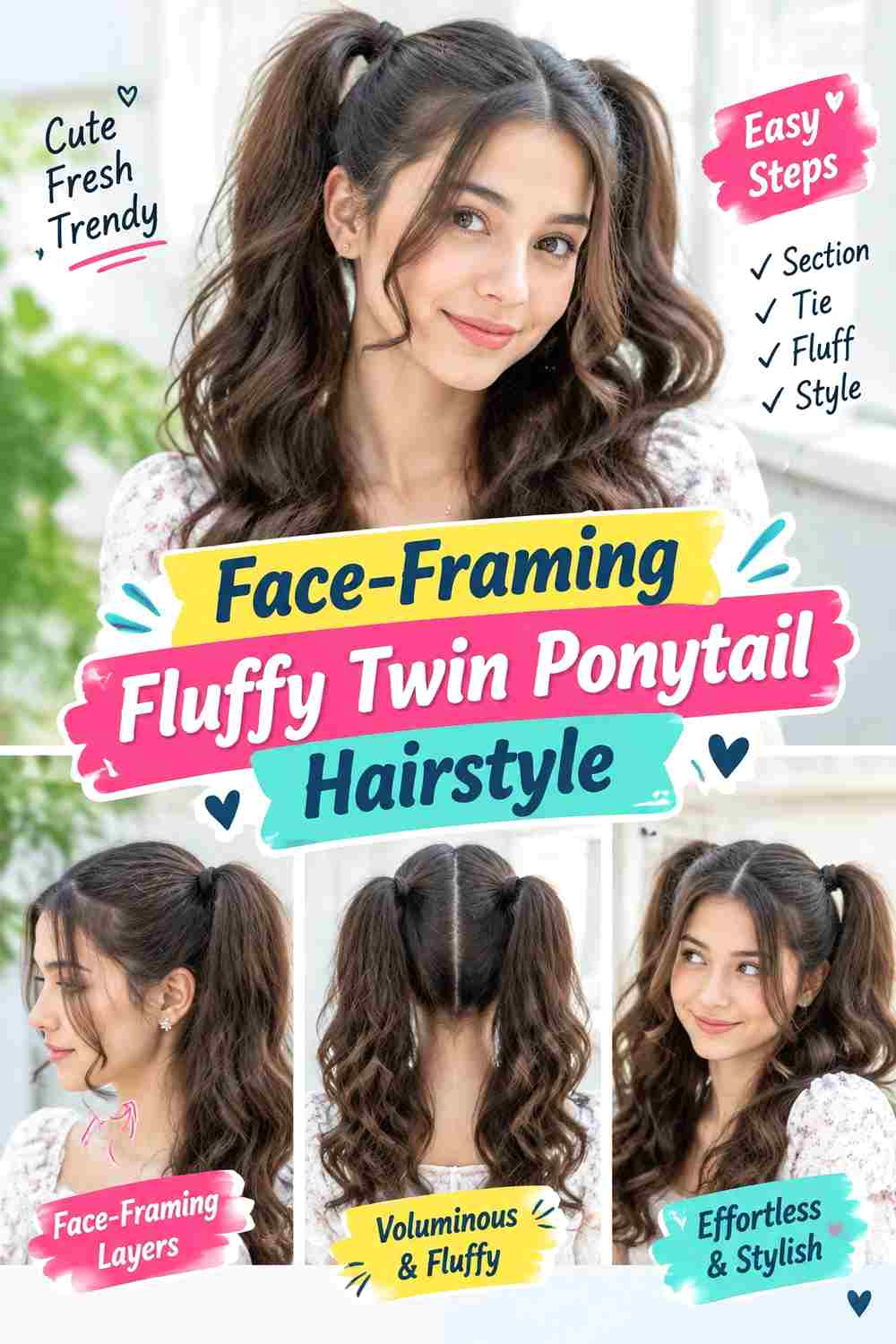
Loose front sections soften the transition between the hairline and two full ponytails. Instead of gathering every strand, leave a controlled amount around the face, with pieces finishing anywhere from the cheekbones to below the jaw depending on your existing cut and preferred effect. The ponytails can sit high or around ear level, while fluffy waves or curls keep their volume distinct from the loose front.
Two fabric-covered elastics secure the main sections, and a lightweight styling cream can control the face frame without making it stiff. If the loose pieces need heat shaping, heat protectant should be the third supply. Hair that already has front layers can make this arrangement particularly easy. A quick refresh may involve only the loose pieces and outer ponytail texture, whereas setting the entire style from wet hair takes longer.
You do not need a new haircut solely to create this temporary style. For professional styling, specify exactly how much hair you want left out and how long those pieces should appear once styled. Too wide a loose section can reduce the density of the ponytails. During wear, reset flyaways selectively rather than repeatedly smoothing the entire front, which can remove the softness that defines the design.
Pro tip:
Separate the face-framing pieces before building either ponytail and clip them temporarily out of the way. This prevents you from accidentally pulling them into the elastics and disturbing the finished bases later.
Make It Work for You:
If you do not have short face-framing layers, leave out narrow longer sections instead of cutting new pieces. A gentle bend can visually separate them while keeping the hairstyle completely temporary.
Watch Out For:
Leaving too much hair loose around the temples can make the ponytails look unexpectedly sparse. Start with narrow front sections, check the overall balance, and release more only when genuinely needed.
Braided-Base Fluffy Twin Ponytail Hairstyle
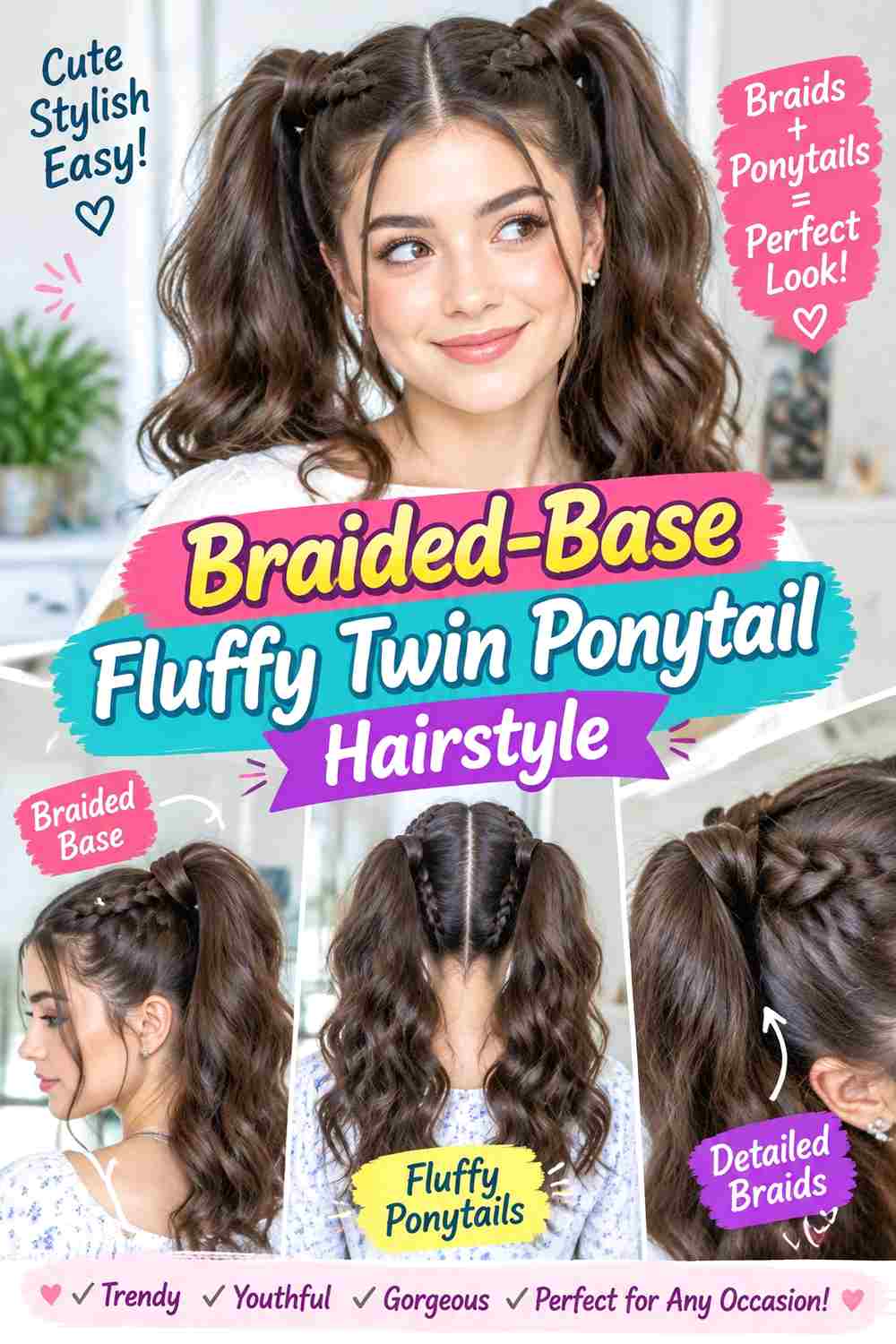
Small braids leading into the ponytail anchors add structure before the lengths open into fluffy volume. Each side can use one defined braid traveling from the front or temple toward an anchor near the ear. The contrast matters: the braided section stays controlled, while the ponytail beyond it becomes wider through waves, curls, coils, or natural texture.
Two fabric-covered elastics secure the ponytails, and a light styling gel helps keep the braid sections orderly. A tail comb can create clean divisions before braiding. Medium to long hair provides more room for the transition, although the braid itself does not need to be lengthy. Refreshing the fluffy tails can be quick once the bases are established, while building two balanced braids from scratch takes more time and concentration.
For salon or event styling, specify braid width, direction, and where each braid should meet its ponytail. Comfortable tension is more important than making the braids extremely tight; a secure style should not depend on scalp discomfort. If the tails lose volume, fluff them independently rather than pulling on the braided bases. This protects the structured-to-soft contrast that makes the design visually distinct.
Pro tip:
Finish each braid exactly where you intend to place the ponytail anchor. Connecting the braid directly into the secured base keeps the transition neat and prevents an awkward loose section between textures.
Make It Work for You:
For fine or lower-density hair, use narrower braids so they do not consume too much of each side. More hair remains available for the fluffy tails, preserving the defining volume.
Watch Out For:
Tighter is not automatically more secure. If the braided base feels painful or pulls strongly at the hairline, reduce the tension and rely on a well-positioned elastic for the main anchor.
Bubble Fluffy Twin Ponytail Hairstyle
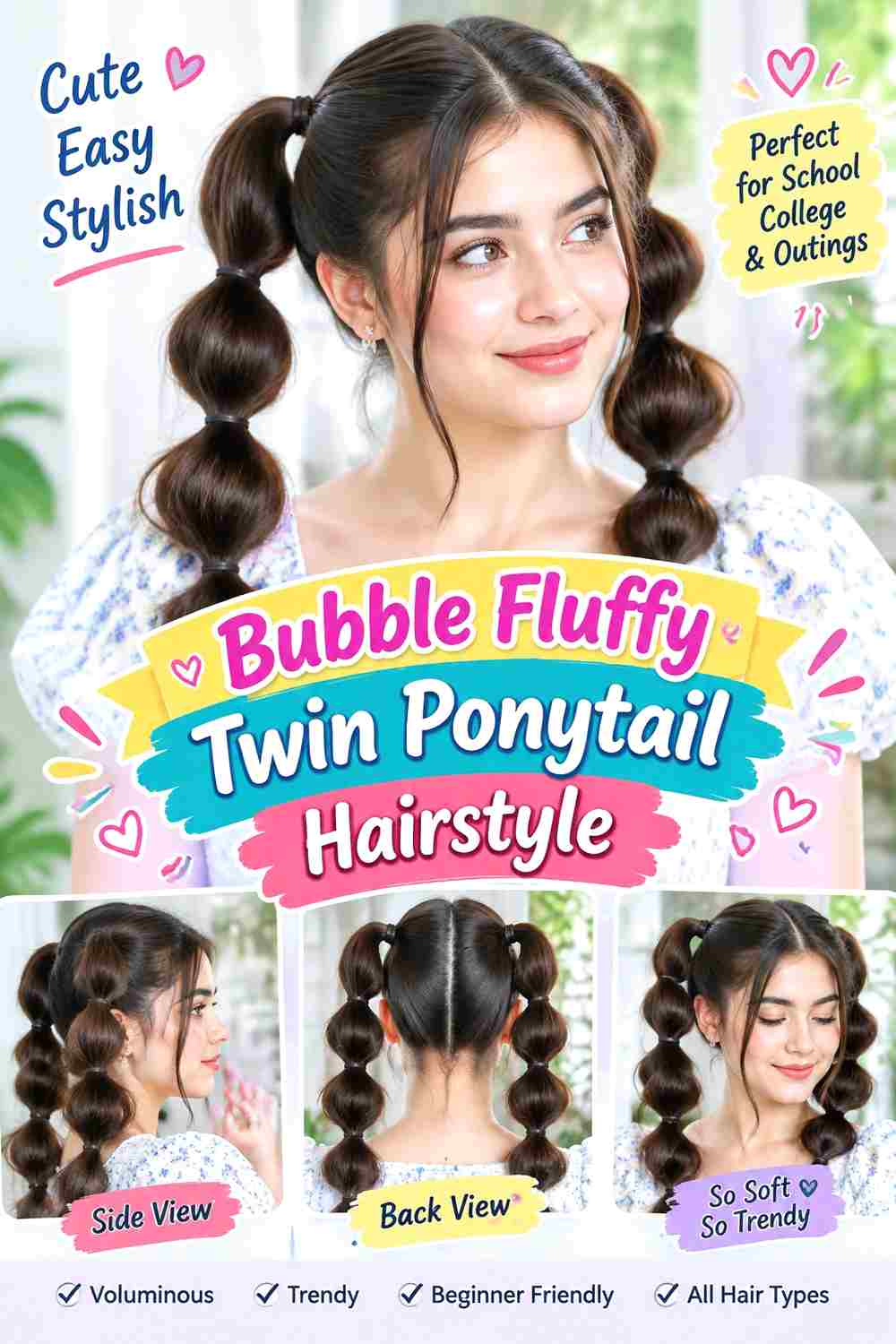
Bubble sections turn each ponytail into a sequence of rounded, expanded shapes. After creating two balanced ponytails, additional elastics are placed down each length with space between them. Each section is then gently widened to form a soft bubble. Matching the general spacing on both sides creates rhythm, while slightly imperfect expansion keeps the result fluffy rather than rigid.
Small snag-free elastics form the bubbles, while two fabric-covered elastics create stronger primary anchors. Light texturizing spray can provide extra grip when very smooth hair slips through the smaller ties. Longer hair offers room for more bubbles, but medium lengths can still create a shorter sequence. Building the complete design takes longer than simply securing two ponytails; refreshing it later may involve only expanding sections that have flattened.
For professional styling, specify the approximate bubble width and whether you prefer compact or exaggerated fullness. The elastics should be secure without pinching or creating uncomfortable pulling as the sections expand. Check each bubble after shaping because enlarging one can subtly change the neighboring section. When removing the style, release the small elastics carefully instead of dragging them down the hair, especially if the lengths have become tangled during wear.
Pro tip:
Expand each bubble gradually from several points around its perimeter rather than pulling one large section outward. Small adjustments create a more rounded shape and make it easier to match the opposite ponytail.
Make It Work for You:
For shorter lengths, create fewer, wider bubbles instead of squeezing many small sections into each ponytail. The rounded pattern remains obvious while the proportions fit the amount of hair available.
Watch Out For:
Do not expand one entire ponytail before checking the other. Bubble size can drift noticeably from side to side; alternate between them so you can compare fullness as the style develops.
Half-Up Fluffy Twin Ponytail Hairstyle
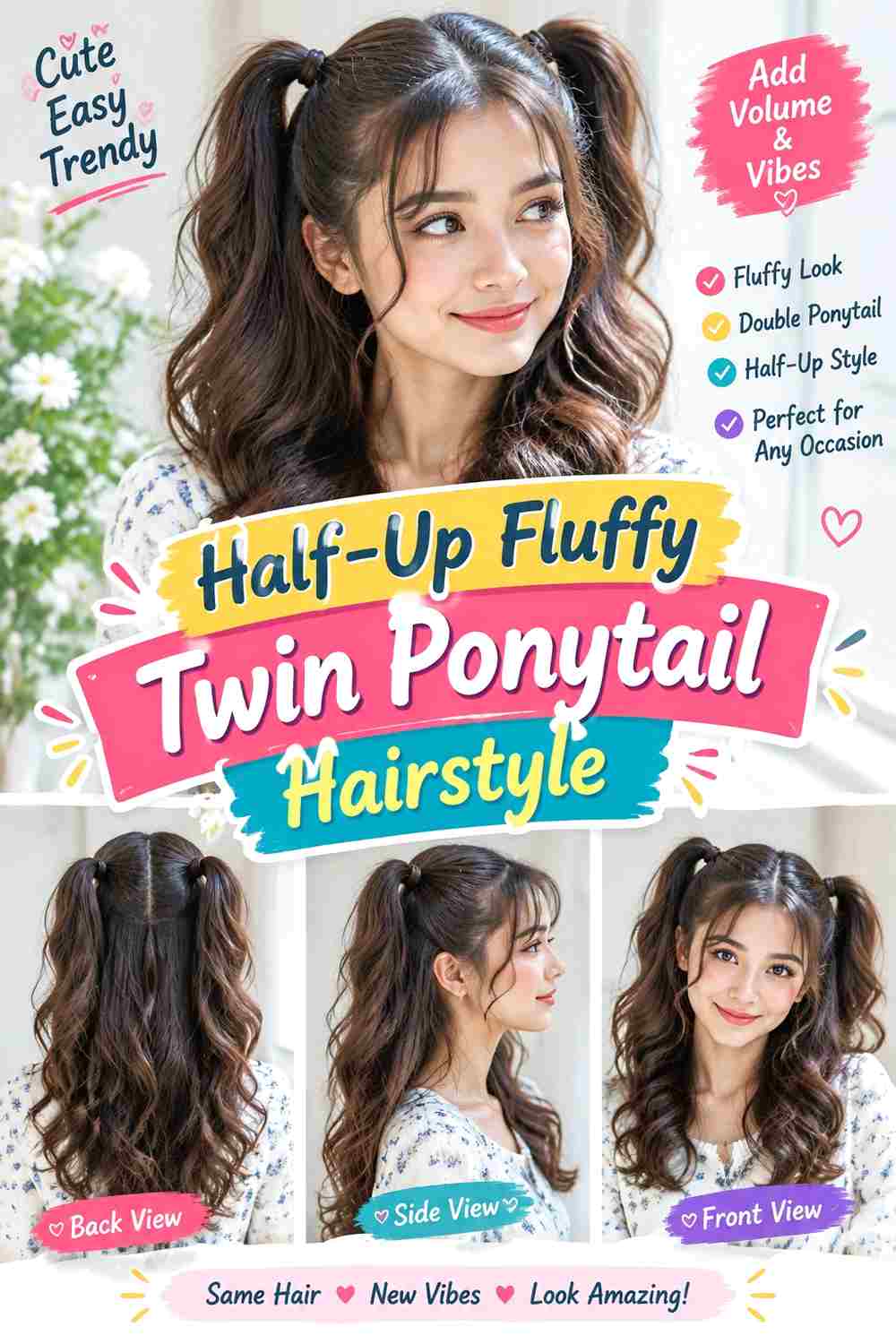
Only the upper portion of the hair forms the two ponytails, while the lower lengths remain loose. This creates fluffy volume near the upper sides without gathering the whole head. A center part can divide the top cleanly, with each ponytail anchored above or slightly behind the ears. The loose lower section can stay straight, wavy, curly, or coily, providing contrast beneath the lifted pair.
Two small fabric-covered elastics secure the upper ponytails, while lightweight mousse can support fullness without making the loose hair rigid. A wide-tooth comb can help distribute product through appropriate textures before sectioning. This version works particularly well when shorter layers cannot reach a full ponytail or when you want less weight at each anchor. The daily refresh can be brief, while wash-day effort depends mainly on how you style the loose lower section.
When having the look professionally styled, specify how deep you want the upper sections to be. Taking too much hair can leave the bottom sparse, while very shallow sections produce smaller ponytails. Comfortable placement matters because the bases remain highly visible. If they loosen, reset the elastics rather than repeatedly pulling the ponytails apart, which can make the upper section uneven.
Pro tip:
Use the top of each ear as a starting landmark when dividing the upper sections. Matching the section depth on both sides helps the ponytails appear balanced while preserving enough hair underneath.
Make It Work for You:
If your hair is very dense, use slightly smaller upper sections and allow the loose lower hair to carry some of the volume. The twin ponytails remain fluffy without becoming excessively heavy.
Watch Out For:
Avoid taking unequal section depths from the back of the head. The ponytails may look balanced from the front but noticeably different from behind; check the division before securing both elastics.
Ribbon-Tied Fluffy Twin Ponytail Hairstyle
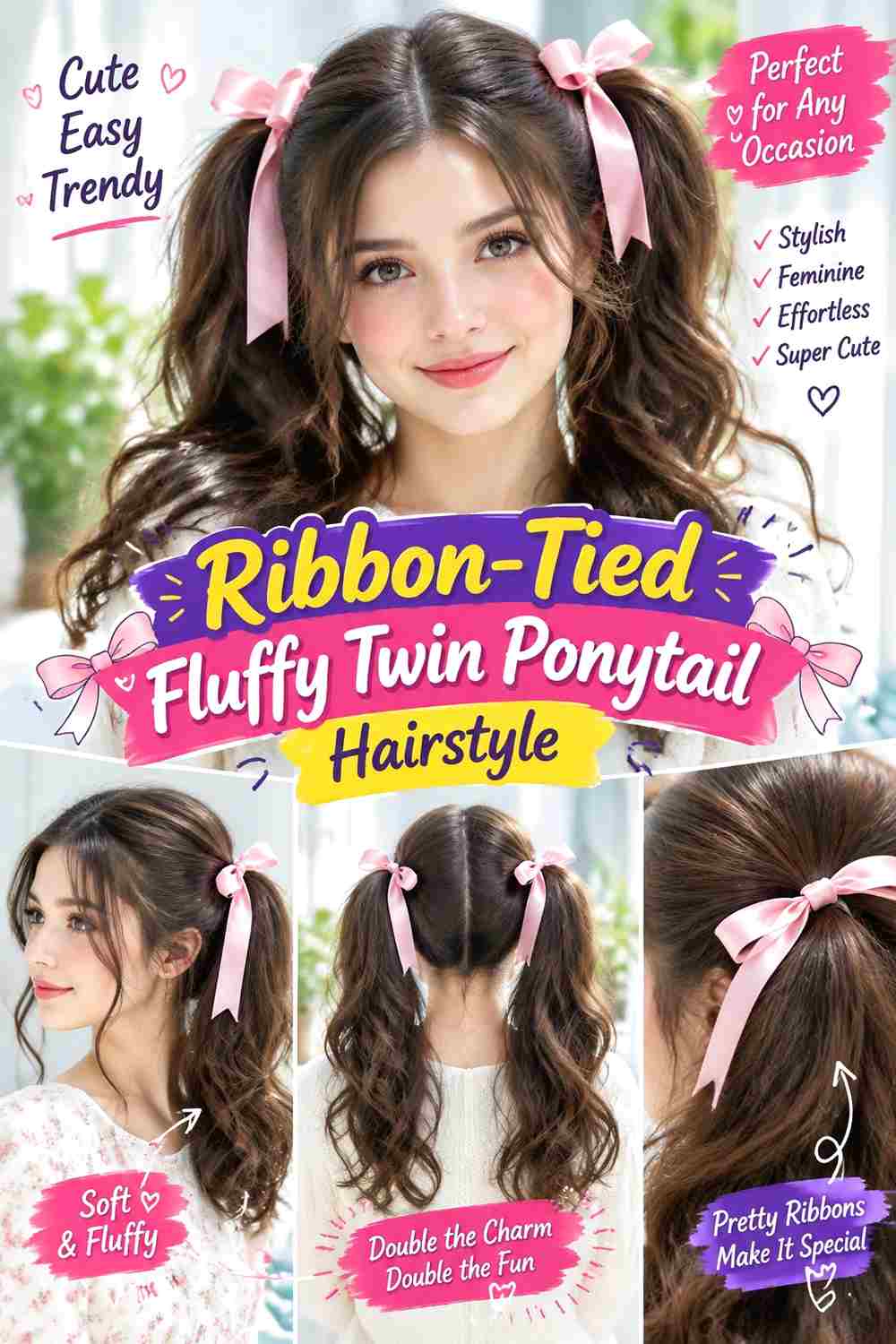
Ribbons make the two anchor points more noticeable while the ponytail lengths remain soft and full. The bases can sit high, low, or near ear level, but matching ribbon scale helps the pair feel intentional. Loose waves, curls, or natural texture provide the fluffy portion, and a centered part can give the accessories a clear symmetrical framework.
Two fabric-covered elastics should secure the actual ponytails, while two ribbons are tied around those stable bases as decoration. A light texturizing spray can add grip if smooth ribbon tends to slide. The accessories should not be responsible for holding the entire hairstyle together. Once the underlying ponytails are secure, a refresh is quick: adjust the bows and reshape flattened lengths. Building heat-styled texture first will naturally make the initial routine longer.
This version can suit many densities because ribbon size can be adjusted to the amount of hair. For event styling, specify where the bows should face and whether you want their tails to blend into or contrast with the ponytail lengths. If an accessory repeatedly slips, fix its anchor rather than tightening the ribbon against the hair. A stable base gives the decorative element somewhere secure to sit.
Pro tip:
Tie each ribbon around the elastic rather than around loose hair beside it. The elastic provides a defined anchor point, helping the bow maintain its position as the fluffy ponytail moves.
Make It Work for You:
For shorter or finer ponytails, choose narrower ribbons with shorter tails. The accessory still defines both bases without visually overwhelming the hair or hiding much of the fluffy texture.
Watch Out For:
Do not rely on slippery ribbon to secure the ponytail itself. If the knot loosens, the whole style can sag; build a comfortable elastic base first and treat the ribbon as decoration.
Coily Fluffy Twin Ponytail Hairstyle
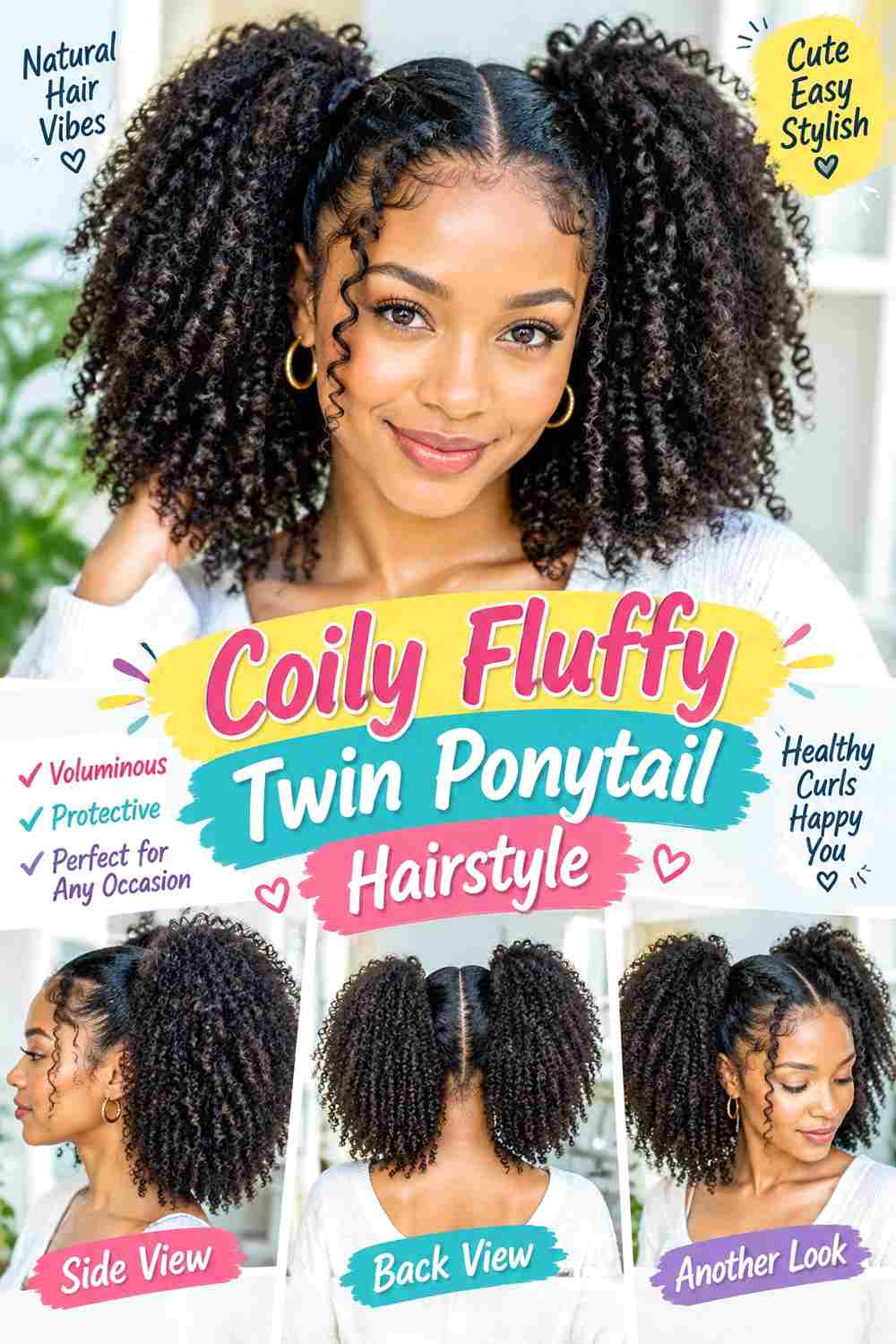
Natural coils can create substantial fluffy volume without requiring a heat-shaped wave pattern. Each ponytail expands from its anchor into a rounded or elongated mass of coils, depending on shrinkage and length. The bases may sit around ear level or higher, while the front can remain neatly parted or include a few loose coils for a softer frame.
Lightweight leave-in conditioner provides slip, curl gel supports selected definition, and two fabric-covered elastics create the anchors. The goal does not have to be maximum definition throughout; retaining some expansion can help preserve the fluffy character. A between-wash refresh may focus on compressed outer sections, while a full detangling, product application, drying, and styling session requires substantially more time depending on density and length.
Because coily hair can shrink significantly, judge ponytail proportions after the texture settles rather than comparing stretched lengths. For professional styling, describe the desired anchor position, visible volume, and comfortable tension. Avoid treating a very tight base as necessary for neatness. If the ponytails become compressed overnight, reshape the outer coils rather than repeatedly combing through the entire length, which can disturb established grouping and create more tangling.
Pro tip:
Once each ponytail is secured, lift and arrange the outer coils with your fingers instead of combing through the whole tail. This concentrates expansion where it is most visible while preserving internal grouping.
Make It Work for You:
If your coils shrink into compact ponytails, place the anchors slightly farther outward or lower. That adjustment can make more of each fluffy shape visible without requiring the texture to be stretched.
Watch Out For:
Avoid comparing the ponytails only while wet. Coils can settle into different shapes as they dry, so make final balance adjustments after both sides have reached their usual finished pattern.
Conclusion
Two fluffy ponytail hairstyles can range from high and bouncy to low and relaxed without losing their defining paired shape. High placement emphasizes lift, while low anchors create more visible length over the shoulders. Waves offer loose movement, curls and coils supply natural expansion, and bubble or braided details introduce more structure. A precise middle part looks different from loose face-framing pieces, while ribbons shift attention toward the anchors. Density, texture, hair length, shrinkage, and routine should guide how much volume you create and where you place it. For easier styling, choose a version that works with your natural texture and uses comfortable, secure tension rather than depending on constant tightening or restyling.
Before Your Salon Visit
Choose one or two favorites and save references showing the exact placement and finish you like. Since these are temporary styles, focus the conversation on styling rather than requesting a haircut solely to recreate them. Discuss your texture, density, length, shrinkage, face shape, and normal routine. Point out the ponytail height, parting, loose pieces, braid width, bubble size, accessory placement, volume, and finish you want, and ask for secure but comfortable tension at every anchor.
FAQs
How can I make two ponytails look fluffier without heavy teasing?
Work with your existing waves, curls, or coils first, then gently expand the outer sections after securing each ponytail. Straighter hair can gain fullness from loose waves or light texture. Avoid aggressive backcombing if a softer, movable finish is your goal.
Do fluffy twin ponytails work on fine or lower-density hair?
They can, but scale matters. Smaller ponytail sections, loose bends, and careful expansion can create visible fullness without excessive teasing. Avoid oversized accessories or very wide braids that consume or hide much of the available hair, and keep the anchors comfortably secure.
How do I stop two ponytails from slipping during the day?
Build each ponytail on a stable elastic anchor and avoid relying on ribbons or decorative pieces for primary hold. Very smooth hair may benefit from light grip before styling. If a ponytail repeatedly sags, reposition its base rather than continually tightening an uncomfortable elastic.
Can curly or coily hair create fluffy ponytails without heat?
Yes. Natural curls and coils already provide texture that can support a fluffy shape. Work with the dry pattern and shrinkage when deciding placement, and expand selected outer sections rather than straightening the hair first. Leave-in conditioner or suitable styling gel can help manage grouping and frizz.