17 Boyfriend Bob Hairstyle Ideas
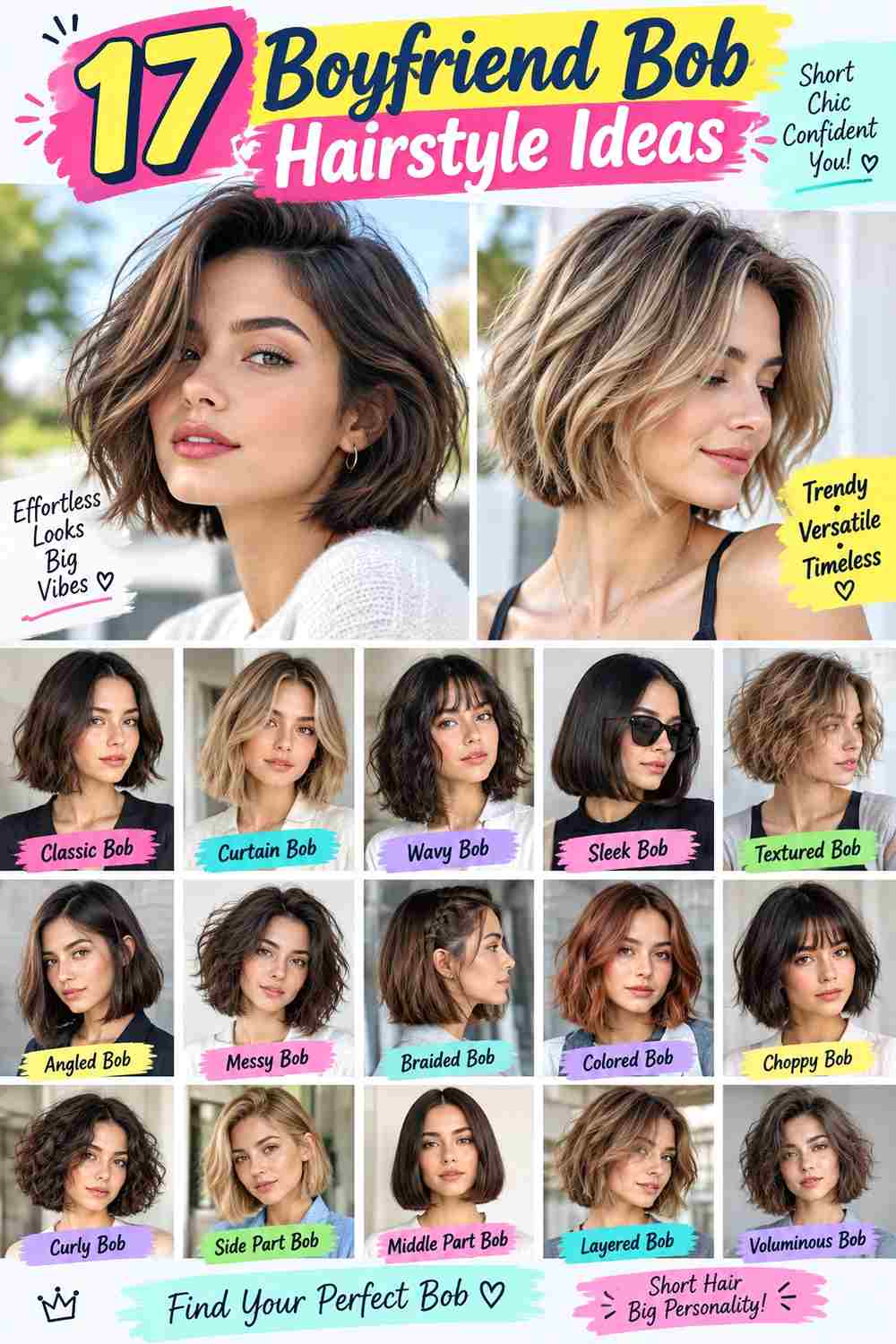
The boyfriend bob is a compact bob built around a clear, relatively strong outline rather than highly graduated layers. It commonly sits from jaw to chin level, although slightly longer interpretations can work when the perimeter still reads as substantial. The ends may be blunt, gently textured, waved, or flipped, and the front can stay open or include a fringe. What connects these versions is the balance between a simple bob silhouette and enough movement to keep the cut from feeling overly sculpted.
Straight and wavy textures can display the bottom line clearly, while curly hair can interpret the same shape with spring and rounded movement. Fine strands may benefit from preserving density through the perimeter. Dense hair can support the shape too, though excess internal bulk may need thoughtful adjustment. Parting and face-framing placement can also change how much width or openness appears around the face.
Styling effort depends heavily on the chosen finish. An air-dried version may need only product and reshaping, while a smooth or flipped finish requires more deliberate styling. Cut maintenance is separate: once the perimeter loses its intended line, reshaping may matter even if daily styling remains simple. hairstyle_caption_depth_knowled…
Quick List
- Classic Blunt Boyfriend Bob Hairstyle
- Center-Parted Boyfriend Bob Hairstyle
- Side-Parted Boyfriend Bob Hairstyle
- Jaw-Length Boyfriend Bob Hairstyle
- Chin-Length Boyfriend Bob Hairstyle
- Softly Layered Boyfriend Bob Hairstyle
- Textured Ends Boyfriend Bob Hairstyle
- Tousled Wavy Boyfriend Bob Hairstyle
- Curly Boyfriend Bob Hairstyle
- Sleek Tucked Boyfriend Bob Hairstyle
- Air-Dried Boyfriend Bob Hairstyle
- Curtain Bangs Boyfriend Bob Hairstyle
- Wispy Fringe Boyfriend Bob Hairstyle
- Micro Fringe Boyfriend Bob Hairstyle
- Rounded Volume Boyfriend Bob Hairstyle
- Flipped Ends Boyfriend Bob Hairstyle
- Long Boyfriend Bob Hairstyle
Classic Blunt Boyfriend Bob Hairstyle

A strong bottom edge is the main feature of this boyfriend bob. The hair sits around the jaw or just below it, with minimal visible layering and enough weight at the ends to create a compact outline. A center or relaxed natural part keeps the front uncomplicated. Instead of curling the ends dramatically inward, let them sit fairly straight with slight natural movement so the perimeter remains easy to see.
This shape can be particularly useful for fine strands when maintaining end density is important, but dense hair can wear it as well if internal bulk is assessed carefully. For a polished finish, use heat protectant before heated drying, a paddle brush to guide the hair smoothly, and lightweight smoothing serum to control flyaways. A dry-hair refresh may take only a few minutes; fully washing and smoothing the bob takes longer depending on density and texture.
At the salon, discuss exactly where you want the bottom edge to land and how much perimeter weight you want retained. The clean line is what defines this variation, so excessive thinning can alter its character. Maintenance becomes useful once uneven growth makes the bottom edge look less intentional. If you usually tuck your hair behind your ears, mention that too, since the front length should still sit comfortably after repeated tucking.
Pro tip:
Dry the ends downward before deciding they need extra smoothing. Keeping the final passes simple helps the blunt edge sit naturally instead of bending underneath into a much rounder, more traditional bob shape.
Make It Work for You:
If your hair is very dense, ask whether controlled internal weight removal could reduce unwanted width while preserving the outside line. The goal is easier movement without making the perimeter appear thin.
Watch Out For:
Aggressive thinning near the bottom can leave a supposedly blunt bob looking wispy. If bulk is the concern, discuss where it actually sits and preserve enough weight to maintain the intended outline.
Center-Parted Boyfriend Bob Hairstyle

A precise or softly relaxed center part gives the boyfriend bob a balanced, open front. The length can finish between the jaw and chin, with both sides falling at roughly the same level and a substantial bottom edge keeping the shape compact. Minimal face framing preserves the graphic symmetry, while a slight bend through the mid-lengths prevents the hair from looking rigid.
Straight and gently wavy hair can make the centered shape particularly visible. A center part can also work with other textures when the natural growth pattern allows it, but forcing a strong natural side part into place may add daily effort. Use root-lift spray sparingly around the part, heat protectant before heated drying, and a paddle brush for controlled direction. A morning refresh is usually focused on the front; wash-day styling takes longer because the roots need resetting while damp.
Tell your stylist you want the front corners to retain enough length to fall evenly on either side of the part. If they are heavily shortened, the balanced outline changes. Cut maintenance is usually driven by the perimeter losing its clean relationship to the jaw rather than by the part itself. Between appointments, changing the part slightly can alter the finish without requiring a new haircut, provided the front pieces still settle comfortably.
Pro tip:
Establish the center part while the roots are damp rather than trying to move fully dry hair afterward. Early direction gives the front a better chance to settle evenly with less repeated manipulation.
Make It Work for You:
If your natural part sits slightly off-center, keep that small shift instead of forcing exact symmetry. The bob can retain its balanced shape while following the direction your roots naturally prefer.
Watch Out For:
Too much root product along the part can make the top look stiff while the ends remain mobile. Use a light amount and concentrate only where you genuinely need support or control.
Side-Parted Boyfriend Bob Hairstyle
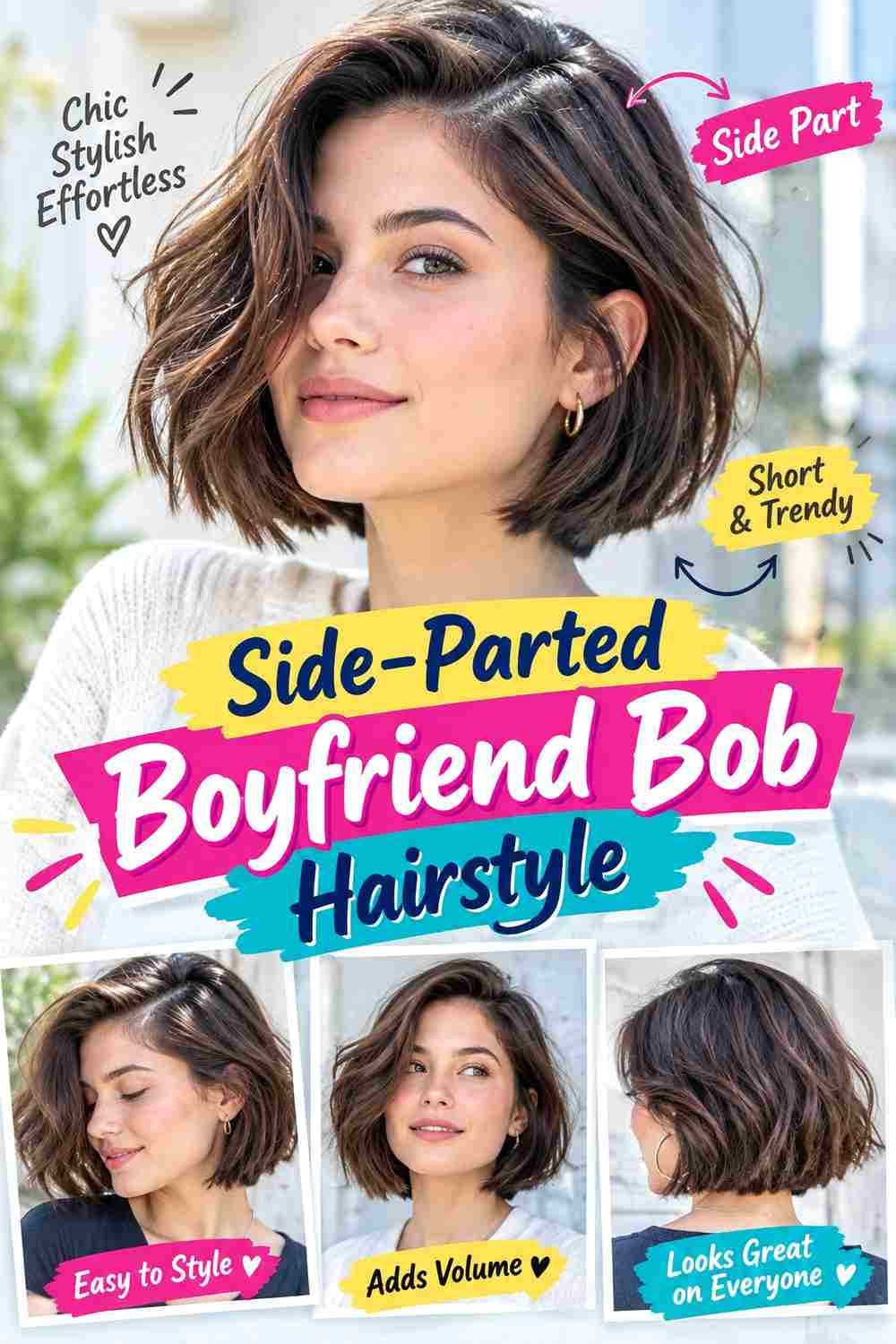
Moving the part noticeably to one side creates asymmetrical volume without changing the boyfriend bob’s strong perimeter. One front section falls closer to the face while the heavier side gains lift and movement above the temple. Keeping the length around the jaw or chin and limiting obvious layering ensures the cut still reads as a compact bob rather than a heavily shaped short haircut.
This arrangement is useful for hair that naturally prefers a side part or for anyone wanting more crown movement without adding numerous short layers. Straight and wavy textures can show the shift clearly. Apply lightweight mousse near the roots for support, use heat protectant when heated drying is involved, and direct the front with a round brush. Refreshing the part and heavier front section can be quick; a complete blow-dry naturally requires more time.
At the salon, identify your normal part before the perimeter and front are finalized. The stylist can then assess how the heavier side sits and whether the front corners need any adjustment. As the bob grows, the part itself remains flexible, but the bottom can lose its compact line. Reshaping should focus on restoring that perimeter rather than automatically adding layers. If you alternate sides regularly, mention it so the cut can be discussed with that routine in mind.
Pro tip:
For extra lift, dry the heavier front section briefly in the opposite direction before placing it back over your preferred part. This supports the roots without requiring a tight curl or heavy teasing.
Make It Work for You:
If you have lower density, choose a moderate rather than extremely deep side part. You can still gain directional volume without leaving the lighter side looking unnecessarily sparse around the temple.
Watch Out For:
A very deep part combined with heavy product can make one side collapse into a solid section. Keep the roots movable and let the ends retain separation so the asymmetry looks intentional.
Jaw-Length Boyfriend Bob Hairstyle

Finishing directly around the jaw creates one of the sharper boyfriend bob proportions. The compact length makes the bottom edge prominent, especially when the hair is kept mostly one length. Front pieces can skim beside the jaw with a center, side, or natural part, while subtle movement through the ends prevents the outline from becoming overly rigid. There is little need for obvious face-framing layers when the perimeter itself supplies the structure.
Straight, wavy, and softly curly textures can all interpret this length, although shrinkage and spring must be considered before cutting textured hair. For smooth styling, heat protectant prepares the hair for heated drying, a paddle brush directs the short lengths, and lightweight styling cream controls separated ends. A small refresh can be fast because there is less length to manage; full styling time still depends on density and natural texture.
At the salon, point to the exact jaw landmark where you want the finished edge to sit. Even a modest length change can alter how this short bob moves and tucks. The perimeter may need reshaping once growth causes it to sit below the intended position or lose its crisp outline. Consider how often you wear collars, headphones, or tuck the sides, since a jaw-length cut interacts with those daily habits more than a longer bob.
Pro tip:
Check the finished length with your head in a neutral position before finalizing the outline. Tilting forward or back can change where a short perimeter appears to sit relative to the jaw.
Make It Work for You:
For wavy hair, allow enough length for the bends to form without lifting the entire edge too high. A slightly softer perimeter can preserve the compact shape while accommodating natural movement.
Watch Out For:
Do not choose the length based only on how stretched hair hangs when wet. Waves and curls may spring upward when dry, so judge the intended jaw placement in the finished texture.
Chin-Length Boyfriend Bob Hairstyle
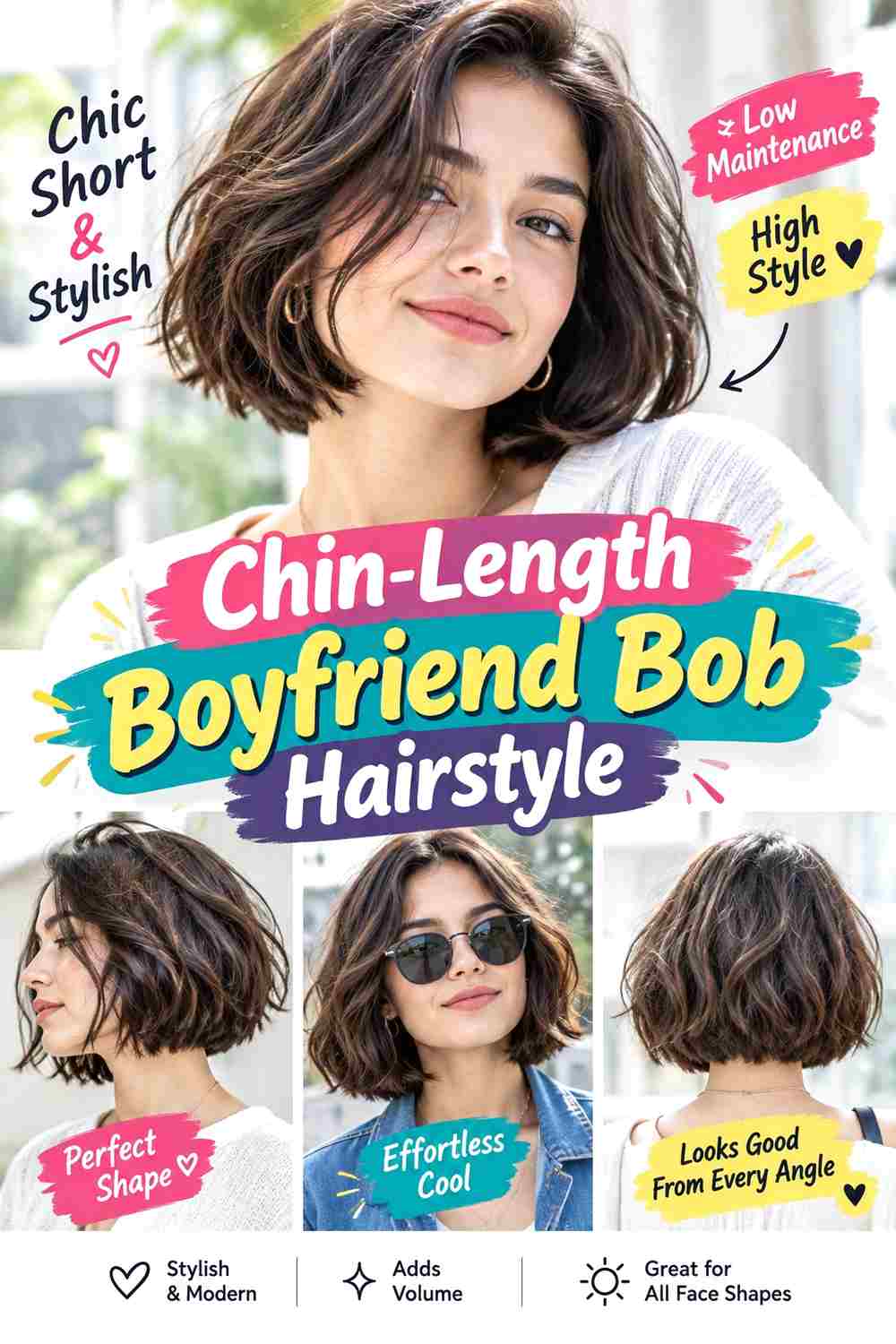
A chin-level boyfriend bob has slightly more vertical length than a jaw-skimming version while retaining the same substantial outline. The front corners finish close to the chin, giving the cut enough room to move, tuck, or bend without becoming a lob. Minimal internal layering keeps the ends full, and a natural or centered part lets the perimeter carry most of the visual structure.
This length can be practical for straight or wavy hair because it offers more styling flexibility than a very short bob. Fine strands can benefit from the preserved bottom edge, while dense hair may need internal weight assessed if the sides expand too widely. Use lightweight mousse for controlled body, heat protectant before heated styling, and a round brush when you want a soft bend. Refreshing the front and ends is shorter than a complete wash-day blow-dry.
At your appointment, explain whether you want the chin length measured at the front, throughout the entire perimeter, or with a subtle change toward the back. That distinction matters more than simply asking for a short bob. Maintenance becomes useful once the ends move far enough below the chin to change the intended proportion. If you prefer natural texture, discuss that before cutting so the finished length reflects how the hair actually sits when worn.
Pro tip:
Use the round brush only enough to smooth and lightly bend the ends. Leaving some straightness through the perimeter keeps the chin-length bob relaxed rather than turning it into a strongly rounded shape.
Make It Work for You:
If you frequently tuck both sides behind your ears, keep enough front length to remain comfortable after tucking. The cut can stay compact without leaving short pieces repeatedly slipping forward.
Watch Out For:
Too much inward curl can make the chin-length perimeter appear shorter and rounder than intended. Loosen the ends after styling so the cut’s actual line remains visible and movable.
Softly Layered Boyfriend Bob Hairstyle
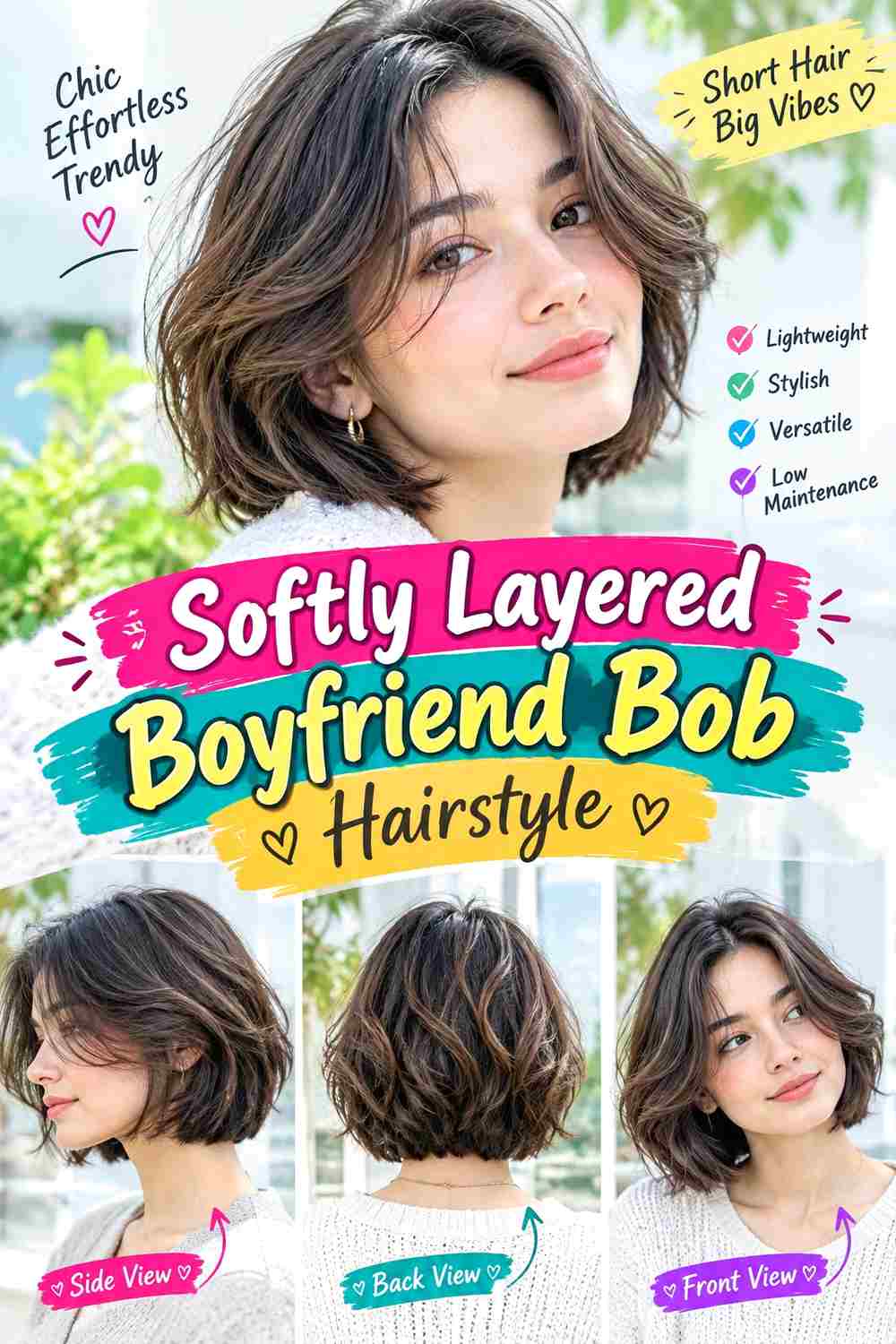
Layers can work within a boyfriend bob when they support movement without erasing the compact bottom edge. Here, the shortest visible layers begin around the cheekbone or lower rather than creating heavy crown graduation. The ends retain enough weight to form a recognizable bob, while the upper sections gain a little separation. A relaxed center or off-center part complements the softer structure.
This option can help medium to dense hair move more freely, and it can give wavy textures room to form bends. Fine hair can also wear controlled layering when the amount and placement preserve sufficient perimeter density. Use lightweight styling cream to define separated sections, heat protectant if you add heat, and a round brush for gentle movement. A quick refresh can focus on the front layers, whereas a full blow-dry involves rebuilding movement throughout the cut.
At the salon, specify where you want the shortest layer to begin. Asking only for “soft layers” leaves too much ambiguity. Also explain that you want to preserve a visible bottom line. Maintenance is needed when the layers stop sitting together or the perimeter grows beyond the intended bob length. During grow-out, avoid automatically adding more short pieces; sometimes restoring the outer shape is enough to make the existing layers behave coherently again.
Pro tip:
When styling, direct different sections slightly differently instead of curling every layer the same way. Small variations create movement while allowing the stronger bottom edge to remain the visual anchor.
Make It Work for You:
If your strands are fine, concentrate most of the movement around the front and keep the back relatively full. This preserves the layered effect without unnecessarily reducing density across the entire perimeter.
Watch Out For:
Layers beginning too high can change the cut into a rounder, more graduated bob. Keep the shortest placement deliberate and preserve enough lower weight for the boyfriend bob silhouette to remain clear.
Textured Ends Boyfriend Bob Hairstyle
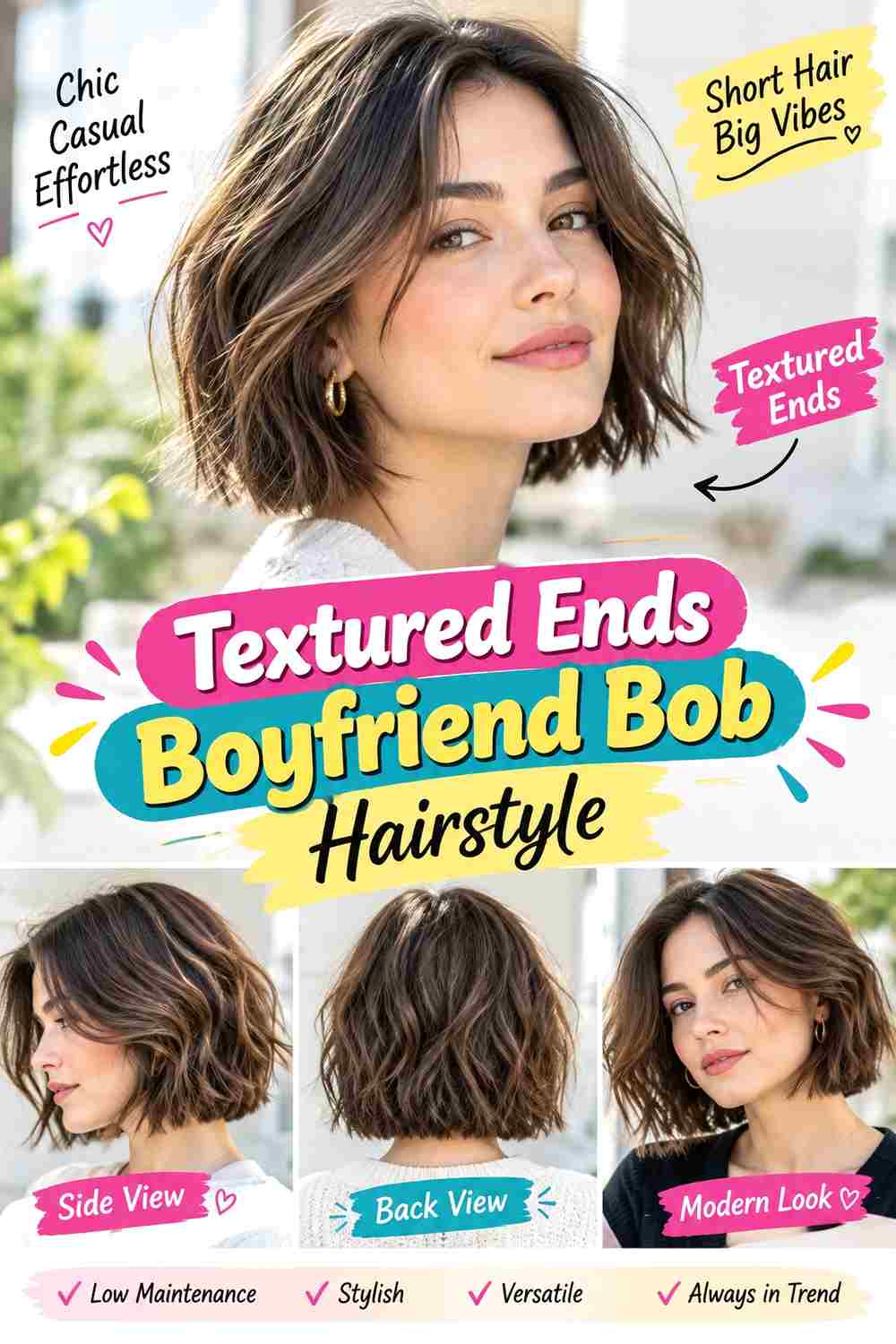
Instead of a perfectly solid edge, this variation uses controlled separation at the tips while keeping the overall perimeter substantial. The bob finishes around the jaw or chin, with small differences in the way individual ends fall. The upper shape remains simple, so the textured finish looks intentional rather than heavily layered. A loose part and slightly undone movement suit the less polished edge.
Straight and wavy hair can show this subtle separation clearly. Dense hair may benefit when carefully placed texture prevents the bottom from feeling overly blocky, while fine strands require restraint so the perimeter does not become sparse. Light texturizing spray helps separate the finished ends, styling cream controls fuzzy pieces, and a wide-tooth comb can arrange the shape without over-smoothing it. A dry refresh can be short; wash-day styling depends on how much natural movement you want to preserve.
At the salon, explain that you want visible texture without losing the strong bob outline. The location and amount of weight removal matter more than a particular cutting technique. As the cut grows, textured tips can become less defined and the overall perimeter may lose its compact position. Reshaping should restore both elements. If the ends already tend to look thin, preserving density is more important than forcing additional separation into the cut.
Pro tip:
Apply texturizing spray lightly to dry mid-lengths and ends, then separate a few pieces with your fingers. Concentrating too much product at the roots can create volume that distracts from the textured perimeter.
Make It Work for You:
For finer hair, keep most of the bottom line intact and create separation through styling instead of extensive weight removal. You retain the casual finish while protecting the appearance of fuller ends.
Watch Out For:
Over-texturizing can turn a compact bob into a wispy shape with little visual weight. If the edge starts looking transparent, reduce product and discuss preserving more perimeter at the next reshaping.
Tousled Wavy Boyfriend Bob Hairstyle
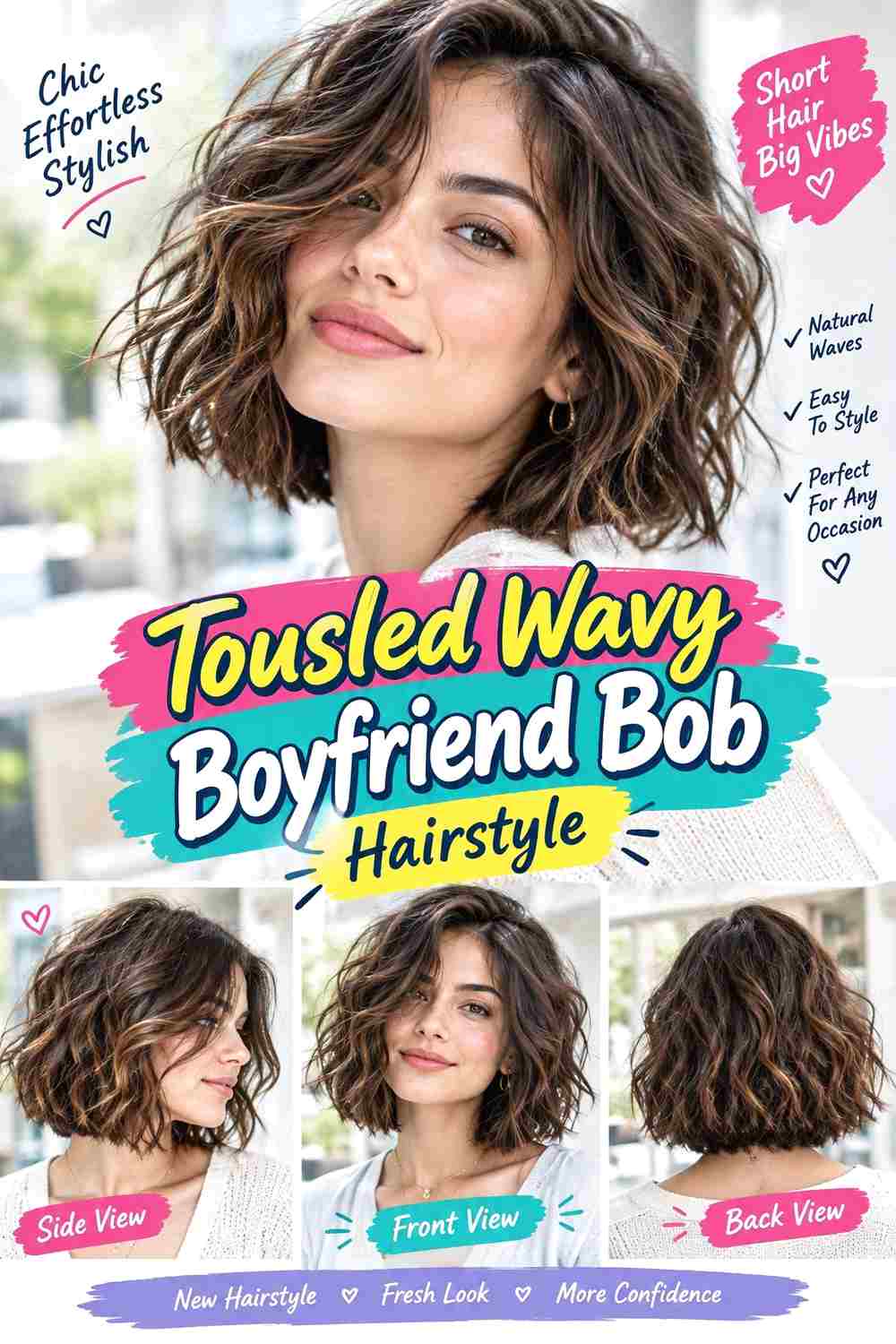
Loose bends bring movement to the boyfriend bob without hiding its short, substantial outline. The strongest waves can begin around the temple or cheekbone rather than directly at the roots, leaving the crown relatively relaxed. Alternating bends through the mid-lengths keep the shape irregular, while straighter tips allow the jaw-to-chin perimeter to remain visible. A slightly imperfect part reinforces the casual finish.
Naturally wavy hair has an obvious head start, but straighter textures can create the same shape with styling. Use heat protectant before heated work, a curling iron to form broad alternating bends, and flexible hairspray to keep movement without a hard shell. Refreshing two or three flattened sections between washes may be quick; creating waves across the entire bob from freshly dried straight hair takes more time.
At the salon, ask to retain enough weight at the bottom for the bob to remain recognizable after waves shorten its apparent length. If you want layers, specify that they should support movement without making the ends sparse. Maintenance becomes useful when the perimeter grows too low or the internal shape no longer encourages the bends to sit together. Natural wave patterns vary, so assess the cut in the texture you actually plan to wear rather than judging only a stretched finish.
Pro tip:
Leave the final inch or so comparatively straight when creating waves. That small contrast keeps the finish loose and helps the boyfriend bob’s bottom edge remain visible instead of turning into a mass of curls.
Make It Work for You:
If your natural waves form unevenly, define only the sections that fall flat rather than resetting everything. Preserving some irregularity keeps the tousled character while reducing unnecessary styling work.
Watch Out For:
Curling every section in the same direction can create one continuous wave pattern. Alternate selected bends and loosen them after cooling so the bob retains movement rather than looking uniformly set.
Curly Boyfriend Bob Hairstyle

A curly boyfriend bob keeps the compact length and clear overall outline while allowing individual curl groups to create the surface texture. The dry shape can sit around the jaw or chin, with enough lower density to prevent the perimeter from disappearing into excessive layering. A natural part works well, and a few shorter front curls can provide framing without requiring a separate fringe.
Curl pattern and shrinkage make finished length especially important. Lightweight leave-in conditioner supports moisture and slip, curl gel encourages grouped definition, and a diffuser helps dry the short shape with less disturbance. A small next-day refresh may involve only a few flattened curls; complete wash-day styling takes longer because the whole pattern needs to be reset and dried. Frizz control should preserve movement rather than flattening natural volume.
At the salon, discuss where you want the bob to finish when your curls are fully dry and sprung. There is no universal shrinkage allowance, so the stylist should assess how different sections behave. Also explain how much lower weight you want retained. Maintenance becomes relevant when growth changes the compact silhouette or the sides develop more width than you prefer. The solution is not automatically aggressive thinning; bulk placement and curl behavior should be assessed together before removing weight.
Pro tip:
Diffuse until the curls have formed stable groups before doing much separation. Once dry, loosen only the areas that look too solid so the bob gains airy movement without creating unnecessary frizz.
Make It Work for You:
If your curls shrink strongly, choose a slightly longer cutting target and judge the shape dry. You can still achieve a jaw-focused boyfriend bob without relying on a fixed wet measurement.
Watch Out For:
Removing too much weight from the lower curls can make the perimeter look narrow or uneven. Preserve enough density to communicate the bob shape, then adjust specific areas where unwanted bulk actually develops.
Sleek Tucked Boyfriend Bob Hairstyle
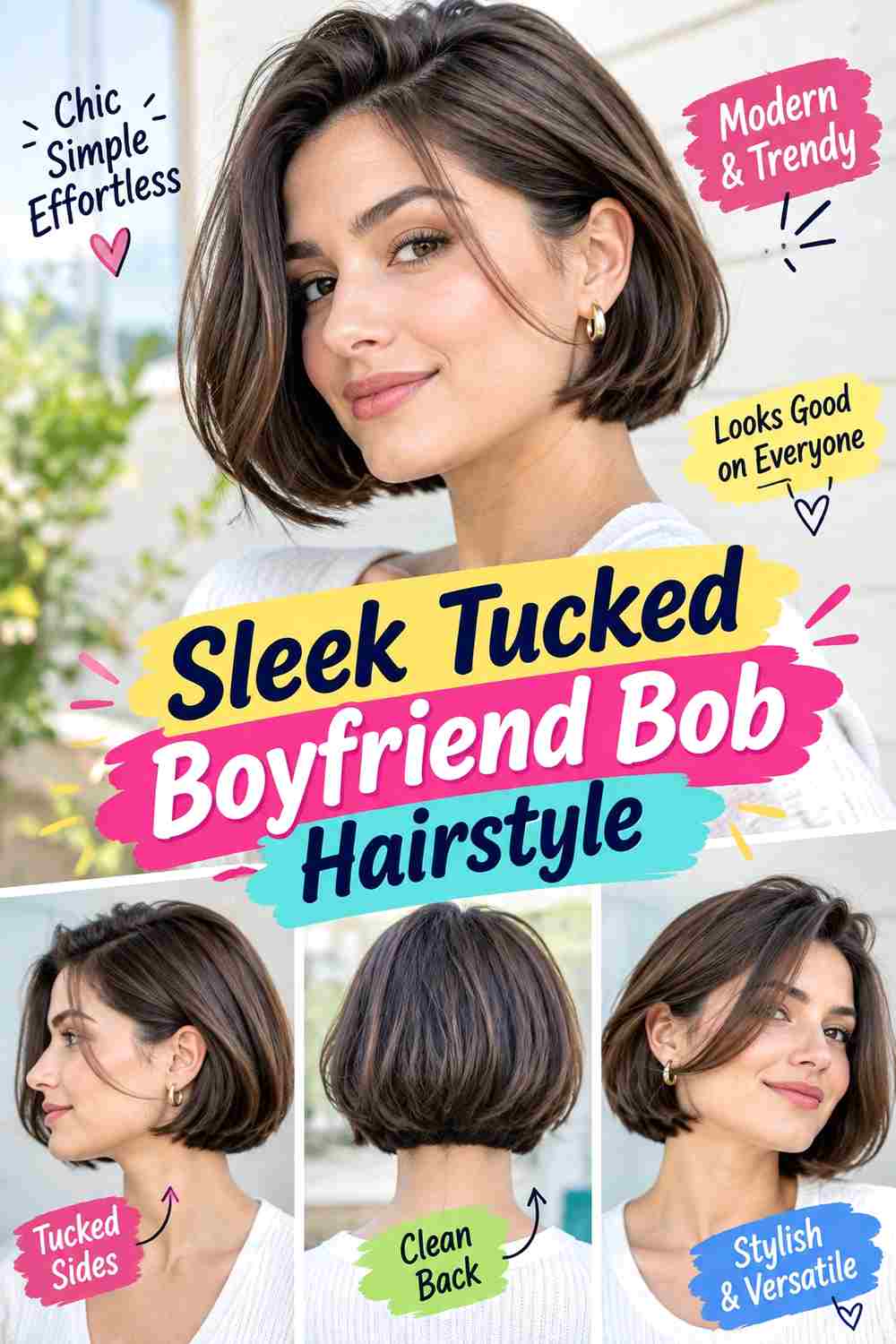
Tucking one or both sides behind the ears exposes the clean structure of a boyfriend bob and gives the front a sharper, more controlled finish. The length should comfortably reach the jaw or chin so the tucked sections stay secure without constant pulling. A center or side part can work, while a relatively straight surface and defined bottom edge keep the result compact.
Straight hair can make this finish easy to maintain, though wavy or curly textures can also be smoothed when that suits the reader’s routine. Use heat protectant before heated styling, a paddle brush for controlled drying, and lightweight smoothing serum to reduce flyaways around the ears and ends. Retucking and smoothing the front is a short refresh. Recreating a sleek finish from a substantially different natural texture is a longer wash-day task.
Tell your stylist that ear-tucking is part of your routine and show where you want the front corners to finish. If those pieces are too short, they may repeatedly slip free. The cut itself needs reshaping when the perimeter loses its clean position, not simply when the surface becomes less sleek. Product buildup can also make short hair look flat, so use smoothing products sparingly rather than assuming stronger hold will improve the result.
Pro tip:
Smooth the front backward before placing it behind the ear rather than pulling it tightly after styling. This keeps the surface controlled while allowing the roots to retain a little natural lift.
Make It Work for You:
If you prefer to keep your natural waves, tuck only one side and leave the other loose. The asymmetry preserves the recognizable ear-tucked detail without requiring the entire bob to be smoothed.
Watch Out For:
Too much serum near the roots can collapse a short bob quickly. Concentrate a small amount on flyaways and ends, keeping the crown lighter so the sleek finish still has dimension.
Air-Dried Boyfriend Bob Hairstyle
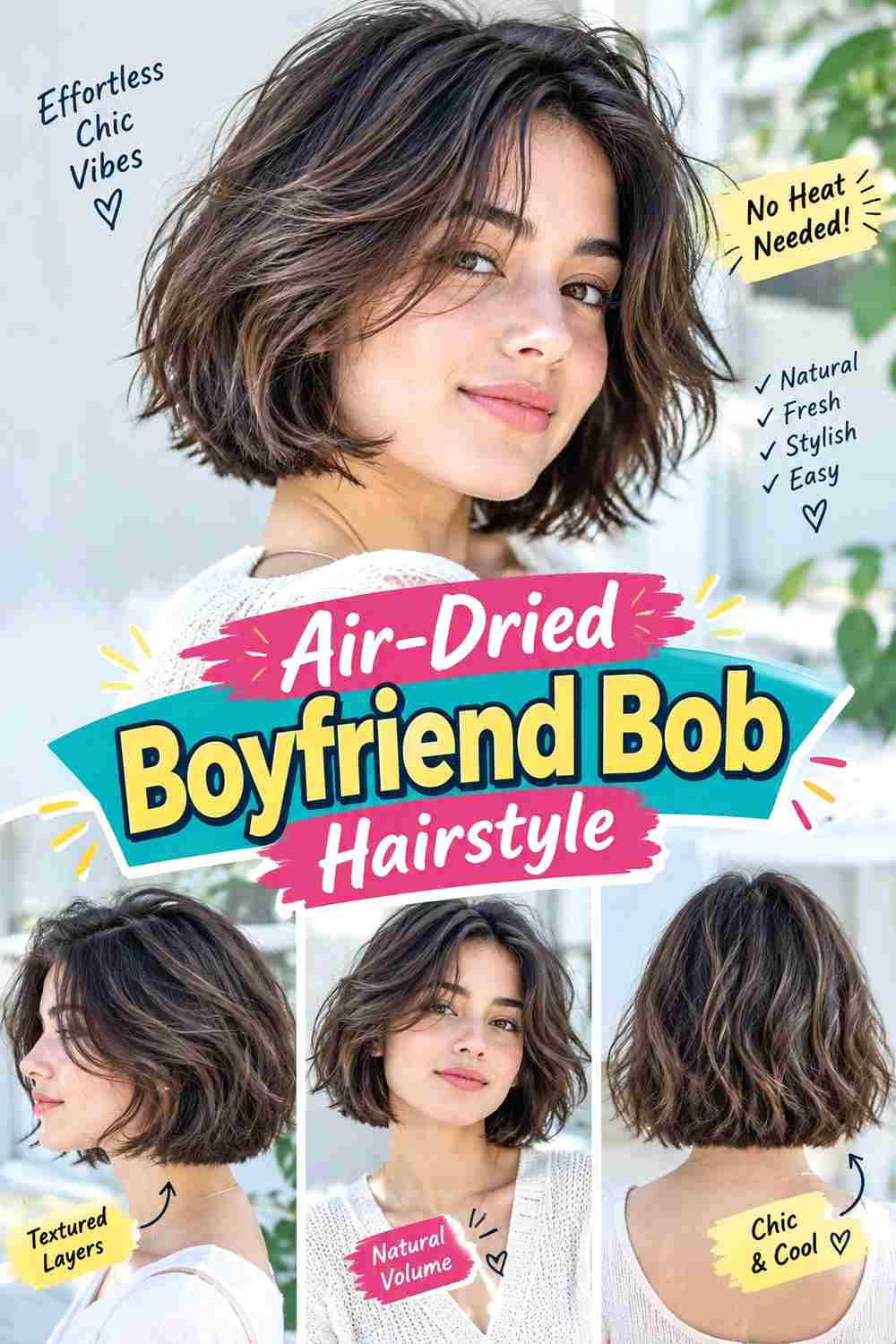
An air-dried boyfriend bob relies on the haircut and natural texture instead of requiring a highly polished finish. The perimeter still sits around the jaw or chin, but bends, slight flips, and irregular separation are allowed to remain visible. Layers should be limited or deliberately placed so the natural movement does not erase the compact bob outline. The part can follow wherever the hair settles most comfortably.
This approach can suit straight, wavy, curly, or mixed patterns, but the final appearance will naturally differ between them. A lightweight leave-in conditioner helps manage dryness, styling cream can encourage controlled separation, and a wide-tooth comb distributes product without overworking the texture. Wash-day styling may involve little active tool time but requires drying time; between washes, dampening a few flattened sections can provide a short refresh.
At the salon, explain that you intend to air-dry regularly. Ask for the perimeter and any layers to be assessed in relation to your natural movement rather than only a blown-out finish. Maintenance is prompted when growth changes the bob’s balance or the ends no longer sit in a useful shape. Air-drying does not mean the cut itself is maintenance-free; a strong underlying outline is what allows irregular texture to look deliberate instead of simply overgrown.
Pro tip:
After distributing product, arrange your part and front pieces while the hair is still damp, then limit unnecessary touching. Repeated handling during drying can disturb wave or curl groups and increase frizz.
Make It Work for You:
If your hair dries straighter underneath and wavier on top, embrace that variation rather than forcing uniform texture. Keep the perimeter strong so the mixed movement still sits inside a recognizable bob shape.
Watch Out For:
Applying heavy cream everywhere can pull short hair flat as it dries. Start with a modest amount through the mid-lengths and ends, adding more only to areas that genuinely need control.
Curtain Bangs Boyfriend Bob Hairstyle
Longer curtain bangs soften the boyfriend bob without hiding its compact perimeter. The shortest front pieces can finish around the brows or upper cheek area, then lengthen toward the temples and connect with the jaw-to-chin bob. A center opening makes the fringe easy to distinguish, while a broad outward bend creates movement without turning the entire haircut into heavy layers.
This combination suits readers who want a noticeable front feature but prefer bangs that can eventually merge into face framing. Straight and wavy textures can show the curtain shape clearly. Use heat protectant before heated drying, a round brush to build the outward curve, and flexible hairspray for movable hold. Refreshing only the fringe can be quick; washing and shaping the full bob naturally takes longer.
At the salon, identify both the shortest fringe point and the length of the outer corners. Those two landmarks determine whether the bangs connect smoothly with the bob. Fringe upkeep may be needed before the perimeter requires reshaping because the front reaches the eyes sooner. During grow-out, the bangs can gradually become longer face-framing pieces. If your natural part strongly favors one side, discuss whether a slightly off-center opening would be more realistic than forcing a perfectly centered split every day.
Pro tip:
Shape each curtain section forward first, then guide it away from the face as it cools. This helps create lift near the roots without producing an exaggerated flip at the outer corners.
Make It Work for You:
For lower-density hair, use a narrower fringe section and keep the outer corners longer. You preserve more temple density while still creating the open, graduated curtain shape against the bob.
Watch Out For:
If the curtain fringe begins too far back on the head, it can remove useful density from the sides. Discuss fringe depth carefully and prioritize the finished outline over simply creating more bangs.
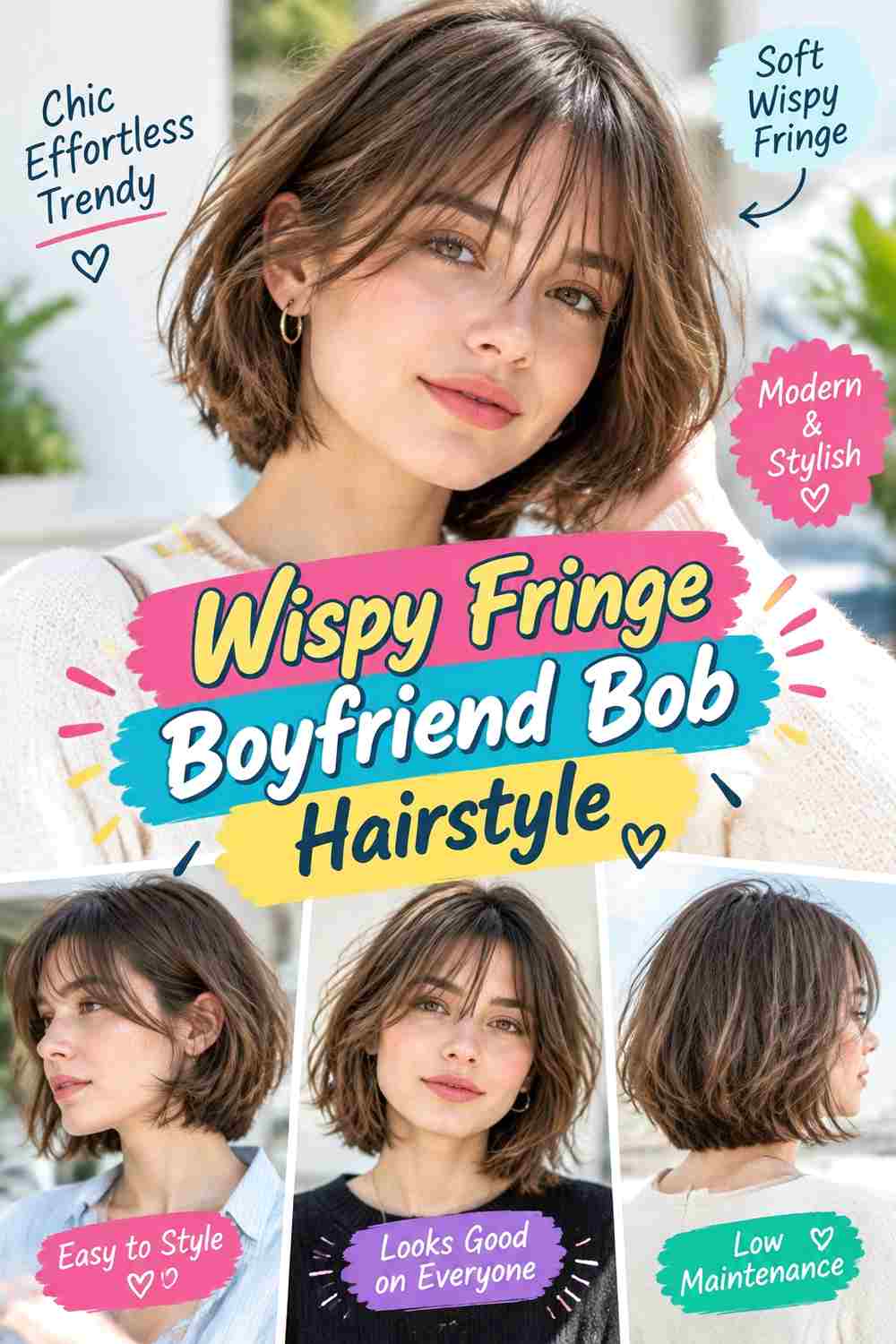
Wispy Fringe Boyfriend Bob Hairstyle
A light fringe creates contrast against the boyfriend bob’s stronger bottom edge. The center pieces skim the brows with small spaces between strands, while longer corners merge softly into the sides. Keeping the rest of the bob around chin length and relatively full makes the airy front more noticeable. The fringe can sit almost straight or carry a slight bend, depending on natural texture and preferred finish.
This version can be useful when you want forehead coverage without committing to a dense fringe. Straight and gently wavy textures often require limited shaping, while stronger growth patterns may need more root redirection. Lightweight mousse supports the fringe, a small round brush controls its bend, and heat protectant belongs underneath when using heated drying. A morning fringe refresh can be short, while a full bob wash and style is a separate, longer task.
Ask your stylist to discuss fringe width and density, not only its length. Taking too much hair from the front can undermine the wispy effect and reduce fullness around the sides. Maintenance becomes useful when the center enters the eyes or the fringe starts merging into heavier sections. Avoid repeatedly trimming isolated strands at home, since small corrections can gradually create an uneven bottom edge or alter the intended width.
Pro tip:
Dry the fringe from side to side at the roots before giving the ends their final direction. This can soften a stubborn split and create more even distribution across the forehead.
Make It Work for You:
If your hair is fine, keep the fringe narrow and preserve a strong bob perimeter. The contrast between airy front pieces and fuller ends can provide definition without removing excessive overall density.
Watch Out For:
Too much styling product can bind wispy bangs into several thick sections. Use a small quantity and separate the dry fringe gently so the intended spaces remain visible rather than sticky.
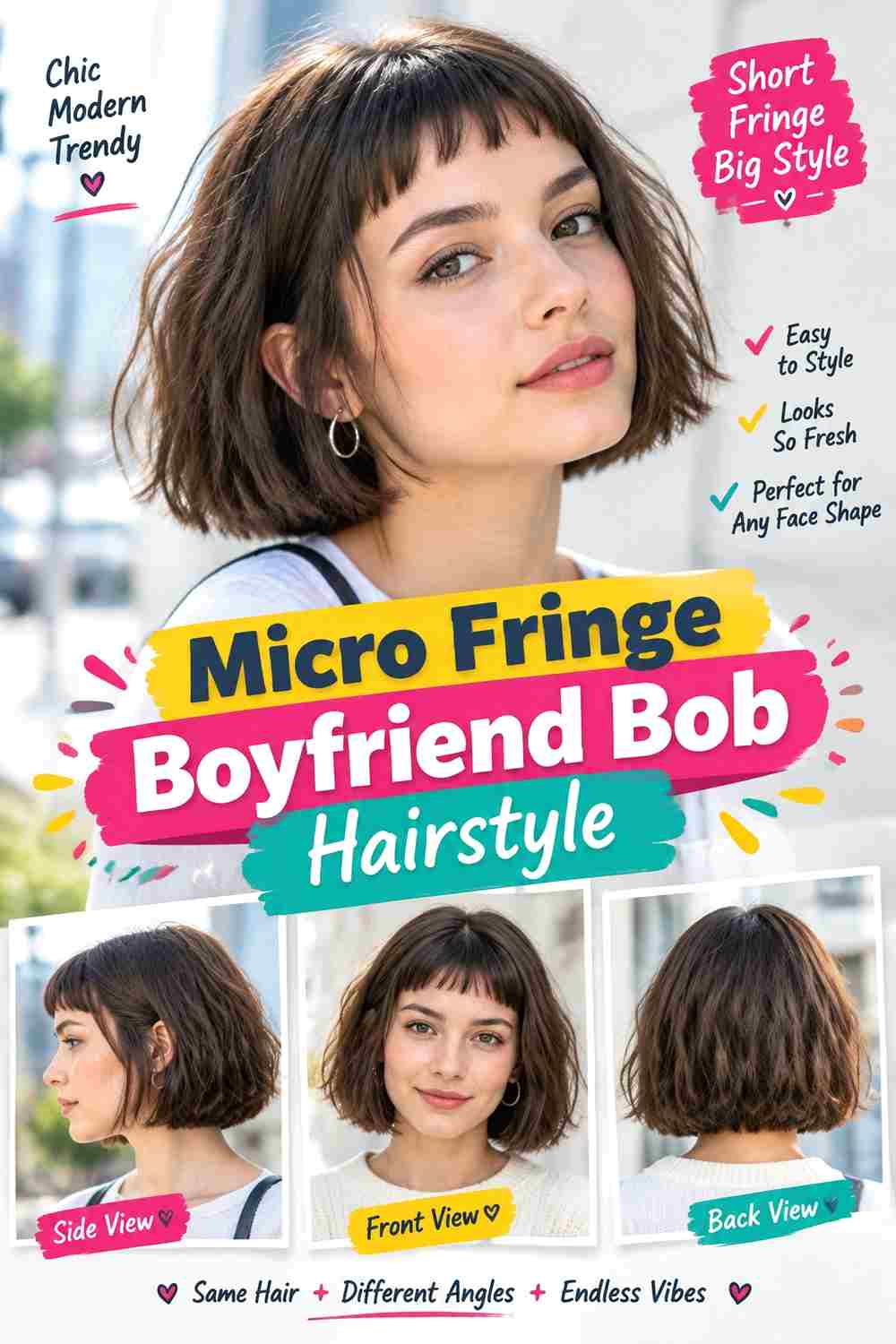
Micro Fringe Boyfriend Bob Hairstyle

A short fringe introduces a graphic detail while the boyfriend bob supplies the heavier lower shape. The bangs sit clearly above the brows, with a relatively clean edge or light separation depending on preference. The bob itself remains around the jaw or chin with limited layering, so the two horizontal landmarks—the short fringe and substantial perimeter—create the main structure. A straight or softly natural finish keeps those proportions readable.
Straight and gently wavy textures can show the short fringe clearly, while curly hair requires careful consideration of shrinkage before committing to the finished position. Use lightweight mousse for root control, heat protectant before heated styling, and a small round brush for a subtle bend. Short bangs can be quick to refresh, but they reveal changes in growth direction easily and may need more frequent attention than the bob perimeter.
At the salon, agree on the dry finished fringe length before substantial shortening. Starting slightly longer provides room to assess how the hair springs and settles. The fringe may need reshaping once it no longer reads as intentionally above-brow, even when the bob itself still looks fresh. Growing it out requires patience through brow length, so consider that maintenance commitment before choosing the shortest version.
Pro tip:
Use only a slight curve when styling micro fringe. Strongly rolling short pieces can lift them much higher than expected, changing the proportion and exposing considerably more forehead than the cut intended.
Make It Work for You:
If your front hairline has a strong growth pattern, keep the fringe slightly longer and softer. You retain the short visual statement while gaining extra length for controlling its everyday direction.
Watch Out For:
Never judge final fringe length only while the hair is stretched or wet. Dry movement, wave, and root lift can shorten its appearance, so assess the intended finish before removing more.
Flipped Ends Boyfriend Bob Hairstyle

A small outward turn at the perimeter gives the boyfriend bob movement without changing its basic cut. The length sits around the jaw or chin, and the ends flick away from the neck instead of falling completely straight. Keeping the roots and mid-lengths comparatively smooth lets the flip remain the focal point. A center or side part works, and minimal layering helps the turned ends form a clear continuous accent.
Straight and softly wavy hair can be convenient for this finish, while other textures may require more smoothing if a defined flip is desired. Apply heat protectant before heat styling, use a round brush to direct the tips outward, and finish with flexible hairspray for light hold. Refreshing a few flattened ends can be quick; recreating a polished flip across freshly washed hair takes longer.
At the salon, ask to preserve enough perimeter weight for the ends to form a visible line. Heavy thinning can make the flip look fragmented rather than deliberate. The haircut needs reshaping when extra length changes where the turned ends sit against the neck or shoulders. Because the styling itself is temporary, you do not need a dramatically different haircut every time you want to switch between flipped and straighter finishes.
Pro tip:
Concentrate the outward movement in the final section of each strand instead of bending from the roots. Keeping the upper bob smooth makes the small perimeter flip appear clearer and more controlled.
Make It Work for You:
If your natural waves already kick outward in places, follow those bends and adjust only sections that turn inward. This reduces styling effort while preserving the defining flipped perimeter.
Watch Out For:
An exaggerated flip can make the ends look stiff and shorten the apparent bob length. Use a modest outward bend, then loosen the tips so they retain movement instead of forming hooks.
Long Boyfriend Bob Hairstyle
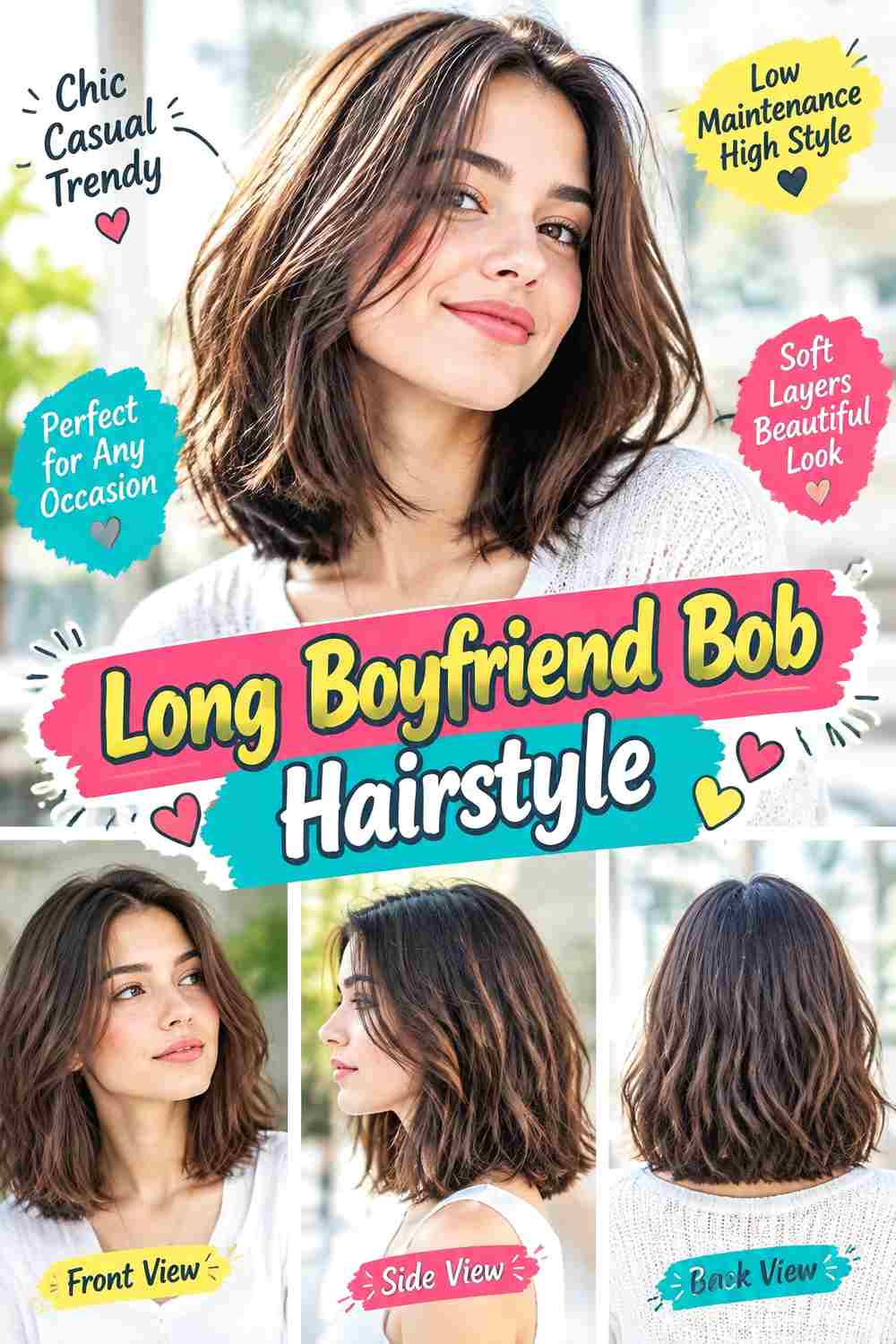
A longer boyfriend bob extends the compact idea to just below the chin, approaching the upper neck without becoming a shoulder-length lob. The key is retaining a clear, weighty perimeter and relatively restrained layering. The additional length allows easier tucking and more natural swing, while a center, side, or relaxed part can change the front without altering the basic shape. Ends can remain straight or carry a subtle bend.
This option can be useful for anyone who likes the boyfriend bob silhouette but wants slightly more styling flexibility. Fine strands may benefit from the fuller edge, while dense hair may need controlled internal weight adjustment. Use lightweight styling cream for separation, heat protectant before heated styling, and a paddle brush for smooth direction. A dry refresh is usually modest; complete wash-day styling depends on density, texture, and how polished you want the surface.
At the salon, show exactly how far below the chin you want the perimeter to sit. A few extra centimeters can shift the cut toward lob territory, so the visual target matters. Maintenance can be guided by when the length loses its compact relationship to the neck. If you plan to grow it longer, this version also provides a relatively straightforward transition because the strong perimeter can be retained while the overall length increases.
Pro tip:
Keep the ends relatively relaxed when styling the longer version. Too much curl can disguise the strong perimeter that separates this shape from a more layered or heavily waved short haircut.
Make It Work for You:
If you want more movement on dense hair, ask whether subtle internal adjustment could help while leaving the visible bottom edge full. You gain flexibility without sacrificing the defining compact outline.
Watch Out For:
Allowing the cut to grow far toward the shoulders changes its proportions. If you specifically want a boyfriend bob rather than a lob, reshape the perimeter once that compact neck-level relationship disappears.
Conclusion
Boyfriend bob hairstyle ideas can look quite different while sharing a compact length and recognizable perimeter. A jaw-level blunt cut gives the clearest outline, while textured ends, waves, curls, or soft layers introduce more movement. Center parts emphasize balance; side parts create directional volume; fringes change the front without requiring the lower bob to lose weight. Fine or lower-density hair may benefit from preserving fuller ends, while dense hair may need carefully placed internal weight adjustment. Natural texture should guide how much daily styling is realistic. Compare not only the finished image but also length, parting, fringe upkeep, volume, texture, grow-out, and the effort required to recreate your preferred finish. hairstyle_human_writing_reader_…
Before Your Salon Visit
Choose one or two favorite references and save images that clearly show the features you want. Discuss your natural texture, density, face shape, preferred bob length, usual part, styling routine, and how often you are comfortable reshaping the cut. Point specifically to the perimeter weight, fringe length, layer starting point, volume placement, or finish you like. If you love the length from one reference but the texture from another, explain that difference instead of expecting one image to communicate every detail.
FAQs
Does a boyfriend bob work for fine or lower-density hair?
It can, especially when preserving a substantial bottom edge is a priority. Fine strands and low density are not the same thing, so the cut should be adjusted individually. Avoid assuming heavy layering is necessary; keeping useful perimeter weight and using lightweight styling products may better support the compact shape.
Can curly hair wear a boyfriend bob without being straightened?
Yes. Curly hair can keep its natural pattern while using the boyfriend bob’s short, compact silhouette. The stylist should consider dry curl spring, shrinkage, density, and where bulk sits. Discuss the desired finished length when curls are dry rather than relying on one standard wet measurement for the cut.
How often should a boyfriend bob be reshaped?
Use the silhouette rather than a universal calendar. When the perimeter drops below your intended jaw, chin, or upper-neck position, becomes visibly uneven, or no longer forms the compact shape you chose, reshaping may help. Fringe versions can require separate front maintenance before the main bob needs attention.
Does a boyfriend bob require heat styling every day?
No. Air-dried, wavy, and curly versions can follow natural texture, while sleek, rounded, or flipped finishes generally require more deliberate styling. A quick refresh between washes is different from a full styling session. If you use heated tools or heated drying, include heat protectant and minimize unnecessary repeated heat.