19 Tousled Lob Hairstyle Ideas

A tousled lob sits around the shoulders or collarbones and uses loose, irregular movement rather than a perfectly smooth or uniformly curled finish. The perimeter can stay blunt for visible weight or soften with textured ends, while long layers create space through the middle. Fringe may be wispy, curtain-shaped, or swept aside. What makes the shape distinctive is the combination of lob length with bends that vary in direction, straighter tips, soft root volume, and a finish that remains touchable rather than rigid.
Straight hair can create tousled movement with styling, while naturally wavy hair may need only selective reshaping. Curly and coily textures can interpret the idea through separated curl groups and controlled volume. Fine strands often benefit from a substantial perimeter, whereas dense hair may need internal weight adjusted in specific areas. Face framing can begin at the cheekbones, jaw, or chin depending on the preferred amount of front movement.
Daily effort varies considerably. Refreshing several flattened pieces may take only minutes, but creating bends throughout freshly washed straight hair takes longer. Cut upkeep should preserve the lob’s length, density, layers, and balance separately from the intentionally relaxed styling.
Quick List
- Soft Wavy Tousled Lob Hairstyle
- Center-Parted Tousled Lob Hairstyle
- Side-Parted Tousled Lob Hairstyle
- Curtain Bangs Tousled Lob Hairstyle
- Wispy Fringe Tousled Lob Hairstyle
- Soft Layered Tousled Lob Hairstyle
- Curly Tousled Lob Hairstyle
- Air-Dried Tousled Lob Hairstyle
- Fine Hair Tousled Lob Hairstyle
- Dense Hair Tousled Lob Hairstyle
- Textured Ends Tousled Lob Hairstyle
- Face-Framing Tousled Lob Hairstyle
- Collarbone Tousled Lob Hairstyle
- Shoulder-Grazing Tousled Lob Hairstyle
- Shaggy Tousled Lob Hairstyle
- Deep Side-Swept Tousled Lob Hairstyle
- Piecey Waves Tousled Lob Hairstyle
- Flipped Ends Tousled Lob Hairstyle
- Long Relaxed Tousled Lob Hairstyle
Soft Wavy Tousled Lob Hairstyle
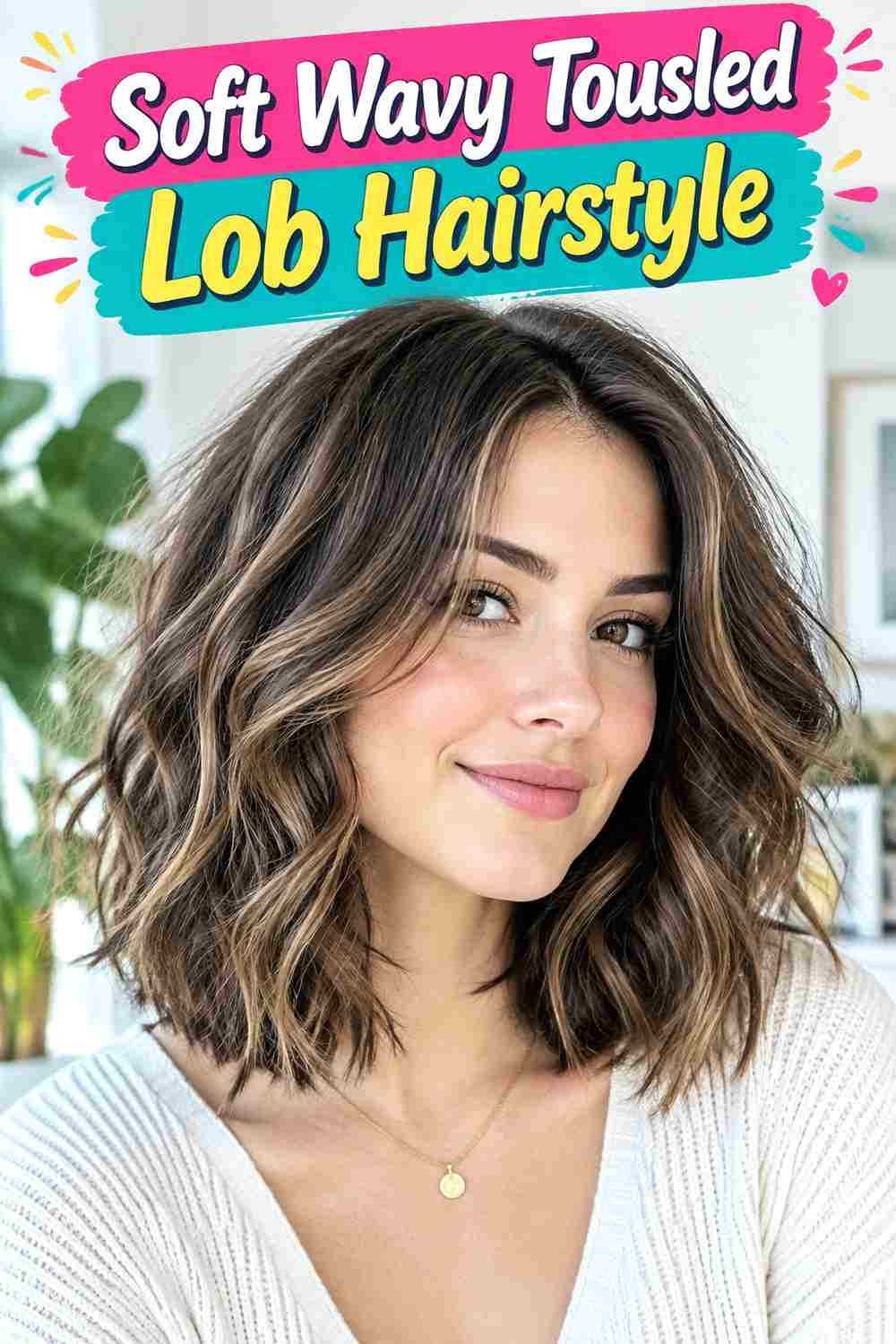
Broad waves give a lob natural-looking movement without making the length appear heavily curled. Keep the perimeter around the collarbones with restrained long layers through the sides. The strongest bends can begin near the cheekbones or ears, then loosen toward comparatively straight tips. Alternating direction prevents the waves from joining into one continuous pattern, while a natural center or slightly off-center part keeps the roots relaxed.
Naturally wavy hair can use much of its existing pattern. Straighter textures need more deliberate shaping, while very dense hair may require additional sectioning. Apply heat protectant before using a curling iron for broad bends, then use flexible hairspray to maintain movement without making the lengths rigid. A quick refresh can target four or five flattened sections; creating waves throughout freshly washed hair takes longer.
At the salon, explain where you want the visible layering to begin and how substantial the bottom edge should remain. A tousled finish does not require heavily thinned ends. Maintenance becomes useful when the perimeter loses balance or long layers stop connecting. Leaving a few sections close to their natural texture also makes daily styling more forgiving because the design does not depend on every wave matching.
Pro tip:
Leave the final inch or two outside the curling iron on selected sections. Straighter tips interrupt the wave pattern and help the lob retain visible length instead of appearing uniformly curled.
Make It Work for You:
If your natural waves become wide through the sides, keep crown layers longer and place the strongest bends lower. You preserve tousled movement without adding unnecessary horizontal volume near the cheeks.
Watch Out For:
Curling every section in the same direction creates a polished wave set rather than loose tousling. Alternate selected sections and leave a few pieces softer to break up the pattern.
Center-Parted Tousled Lob Hairstyle
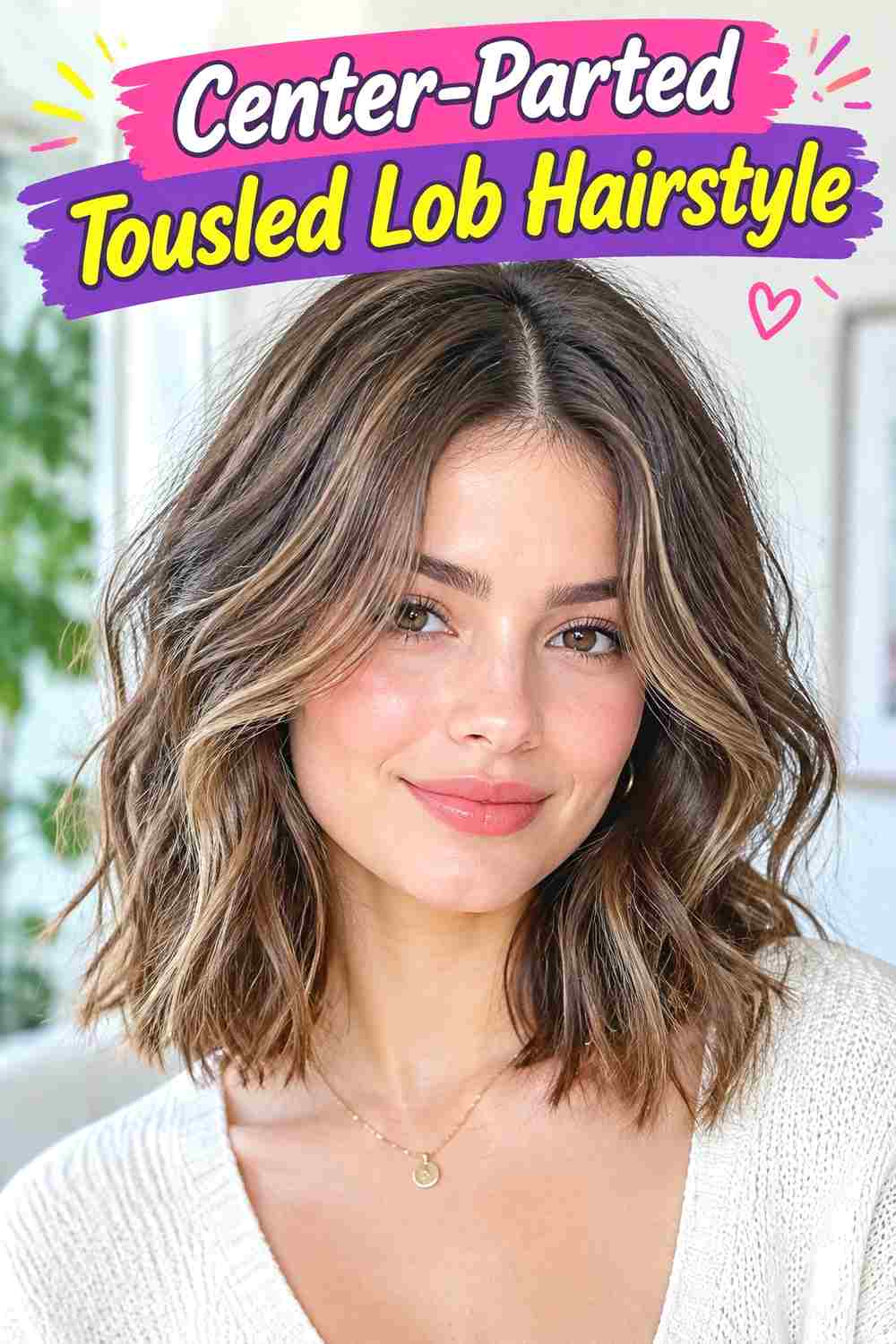
A center part gives loose texture a balanced framework while allowing each side to move differently. Keep the lob between shoulder and collarbone length, with long face-framing pieces starting around the jaw. Gentle bends through the mid-lengths create width and separation, while the ends stay relaxed. The roots can remain comparatively flat near the part, with volume developing farther down for an unfixed silhouette.
Straight and wavy textures can both use this arrangement. A center part also makes differences in wave placement visible, so exact symmetry is unnecessary. Heat protectant prepares the hair for heated styling, a curling iron adds selected bends, and light texturizing spray separates dry sections. Refreshing only the front and surface may take a few minutes; building the complete texture after washing requires more time.
At the salon, establish whether the part is truly centered before choosing the shortest face-framing point. If you regularly change your part, mention that so the front remains flexible. Maintenance should focus on the perimeter and layer balance rather than minor differences between the two styled sides. Keeping the face frame long enough to tuck can also make the cut easier to manage on days when you want less hair around the face.
Pro tip:
Style the two front sections away from the face, then vary the direction farther back. This gives the center part an open frame without making the entire lob look overly coordinated.
Make It Work for You:
If your center part exposes a lower-density area, shift it slightly rather than forcing exact symmetry. The tousled texture still works while the roots sit in a more comfortable natural position.
Watch Out For:
Trying to mirror every wave on both sides can make the finish look formal. Keep the part balanced but allow different bends and straighter pieces through the lengths.
Side-Parted Tousled Lob Hairstyle
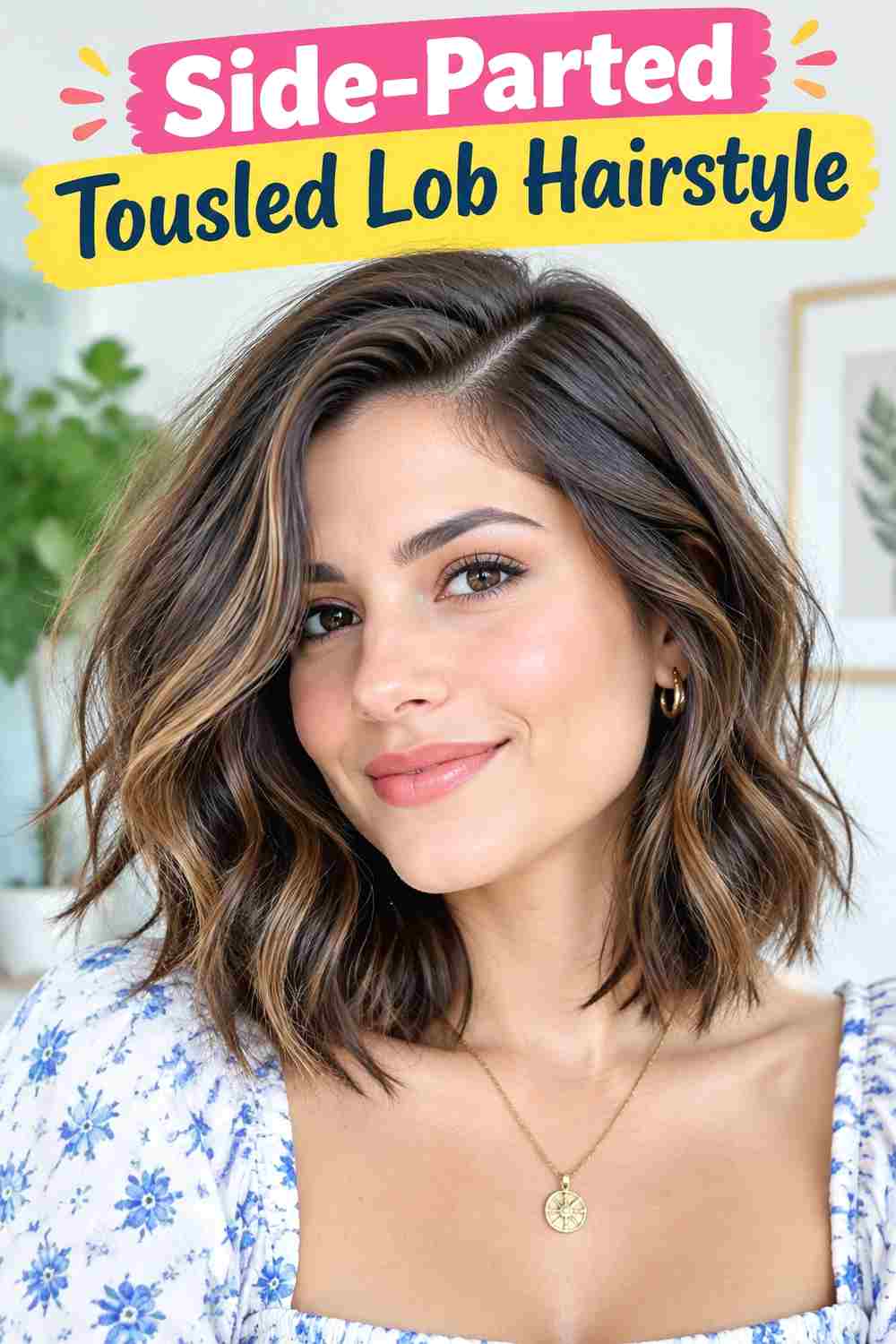
Moving the part off-center creates instant directional volume and lets the heavier side sweep across the forehead before falling into loose bends. Keep the perimeter near the collarbones, with long layers beginning around the jaw or below. The lighter side can sit closer to the head or tuck behind the ear, while the fuller side carries more root lift. Irregular waves keep the asymmetry relaxed.
Hair that naturally favors one side may require less root manipulation. Straight and wavy textures show the diagonal sweep clearly, while curls can create a fuller interpretation. Root-lift spray supports the heavier side, heat protectant belongs underneath heated styling, and a curling iron shapes selected mid-length bends. Resetting the front can be quick; styling the whole lob after washing takes longer.
At the salon, show your usual part before the face frame is cut because changing placement alters its apparent length. If you switch sides frequently, ask for flexible front layering rather than pieces designed for only one direction. Maintenance becomes useful when the perimeter grows unevenly or the layers stop connecting. The side part itself can create substantial movement without requiring extra-short crown layers, which helps preserve versatility.
Pro tip:
Dry the heavier front section briefly opposite its final direction before sweeping it back. The root gains lift without teasing, while the rest of the lob can remain loosely textured.
Make It Work for You:
If one side naturally carries more volume, place the part where that difference feels balanced rather than forcing a dramatic sweep. The tousled finish does not require extreme asymmetry.
Watch Out For:
Do not cut one side shorter simply because the side part makes it appear longer. Check the perimeter in a neutral fall before deciding whether the haircut is actually uneven.
Curtain Bangs Tousled Lob Hairstyle

Curtain bangs give a tousled lob movement around the forehead before connecting with longer waves through the sides. The center can finish around the brows, then gradually lengthen toward the temples and cheekbones. Keep the main perimeter around the collarbones, with long layers supporting loose bends. A center or softly offset opening lets the fringe separate naturally instead of forming a dense line.
Straight and wavy textures can show the graduated fringe clearly. Strong growth patterns may need additional root direction, while curly versions should account for shrinkage. Heat protectant prepares the hair for heated styling, a round brush creates the broad curtain bend, and flexible hairspray keeps the front mobile. Refreshing only the bangs can take a few minutes; resetting the complete tousled lob takes longer.
At the salon, specify the shortest dry fringe length and where the longer corners should connect with the face frame. Fringe upkeep may be needed before the lob itself requires reshaping because the center reaches the eyes sooner. If you want easier grow-out, keep the outer corners generous. They can transition into cheekbone framing while the rest of the haircut continues growing without a disconnected front section.
Pro tip:
Dry the fringe forward first, then split it and direct each side outward. This controls the roots before adding the soft bend that connects the bangs with the tousled lengths.
Make It Work for You:
For less frequent fringe upkeep, keep the center slightly longer and use a softer opening. The bangs can move toward face framing more comfortably as they grow between trims.
Watch Out For:
An overly deep bang section can remove useful density from the lob’s front sides. Keep the fringe proportionate and let longer face-framing pieces provide additional movement and coverage.
Wispy Fringe Tousled Lob Hairstyle
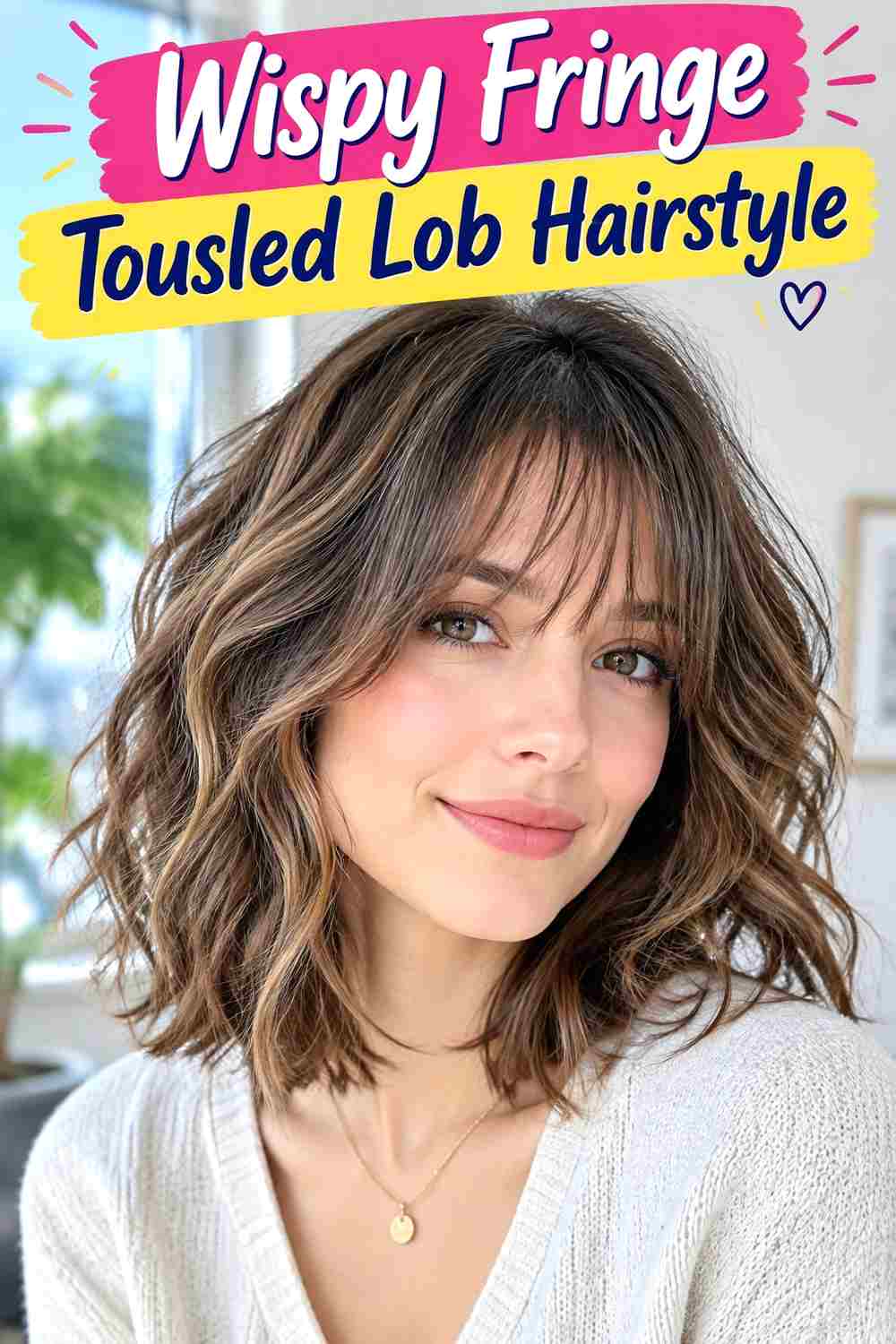
A separated fringe adds fine movement across the forehead while the longer lob carries broader, messier bends below. Keep the center pieces around the brows with small spaces between them, then lengthen the corners toward the temples. The main cut can fall near the shoulders with restrained layering and a substantial lower edge. Soft mid-length waves stop the fringe from looking disconnected from the rest.
Straight and gently wavy hair can make the light fringe particularly easy to see. Fine strands can also suit it if the bang section remains narrow enough to preserve side density. Lightweight mousse supports the fringe roots, heat protectant prepares the hair for heated styling, and a curling iron creates loose bends through the lob. A fringe refresh is brief; full wash-day styling takes longer.
At the salon, discuss fringe width, density, and dry finished length separately. Those details matter more than simply asking for wispy bangs. The fringe may need maintenance before the rest of the cut because small amounts of growth are noticeable around the eyes. Keeping the outer corners longer also creates a smoother route into face framing if you later decide to grow the fringe out.
Pro tip:
Style the fringe before adding waves through the lengths. Once the light front pieces sit correctly, you can judge how much texture the rest needs without making both areas overly busy.
Make It Work for You:
For lower-density hair, keep the fringe narrow and preserve more fullness around the temples. Use the lob’s waves for most of the movement instead of adding extensive front layering.
Watch Out For:
Heavy cream can join wispy fringe pieces into thicker sections. Keep product light near the forehead and separate the completely dry bangs gently with your fingertips when necessary.
Soft Layered Tousled Lob Hairstyle
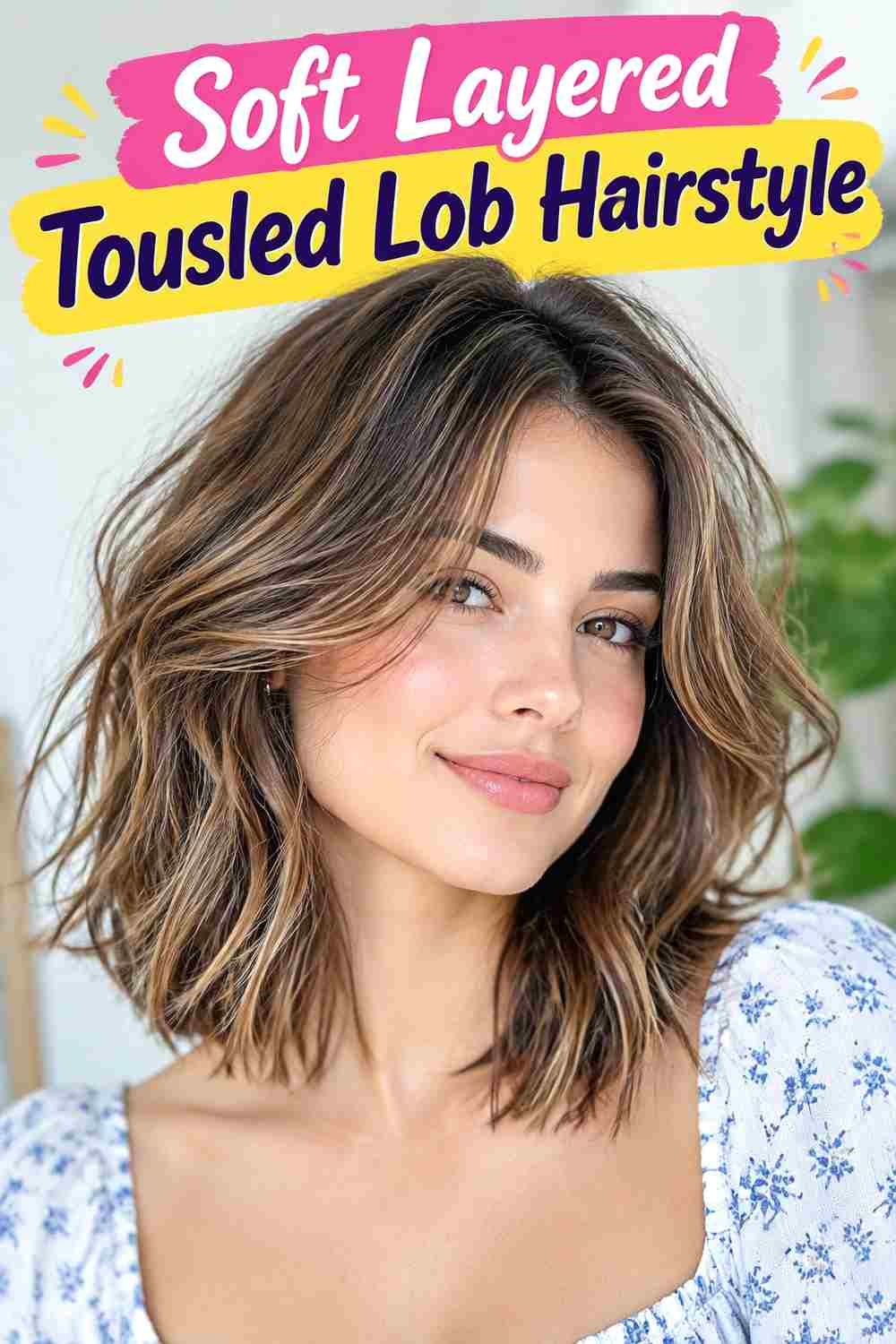
Long, connected layers create movement at several heights while preserving the recognizable lob perimeter. Keep the shortest visible layer around the jaw or below, then let it blend gradually into collarbone-length ends. A few pieces can bend near the cheekbones, while lower sections carry looser waves and straighter tips. A center or natural part keeps the layers from appearing overly sculpted.
Straight and wavy textures display the gradual movement clearly. Fine hair generally needs fewer layers through the back, while dense hair can support more internal separation when bulk is placed carefully. Heat protectant belongs underneath heated styling, a curling iron shapes selected bends, and light texturizing spray defines the dry layers. Refreshing visible surface pieces is quick; shaping every layer after washing requires more time.
At the salon, specify exactly where the shortest visible layer should begin. Asking only for “lots of layers” can produce a very different silhouette. Keep enough perimeter weight for the haircut to remain a lob rather than becoming thin at the bottom. Maintenance becomes useful when the layers stop connecting or growth pulls the movement downward. If you plan to grow the cut, longer layer intervals can make that transition easier.
Pro tip:
Wave alternating layers rather than curling entire vertical sections together. Separating the heights creates visible movement through the haircut while preventing the ends from merging into one heavy wave.
Make It Work for You:
If your ends have lower density, concentrate layers around the front and upper surface while keeping the back fuller. You gain movement without weakening the lob’s lower outline.
Watch Out For:
Very short crown layers can create more height than a soft tousled lob needs. Keep the layer progression long and connected unless a deliberately shaggy silhouette is your goal.
Curly Tousled Lob Hairstyle
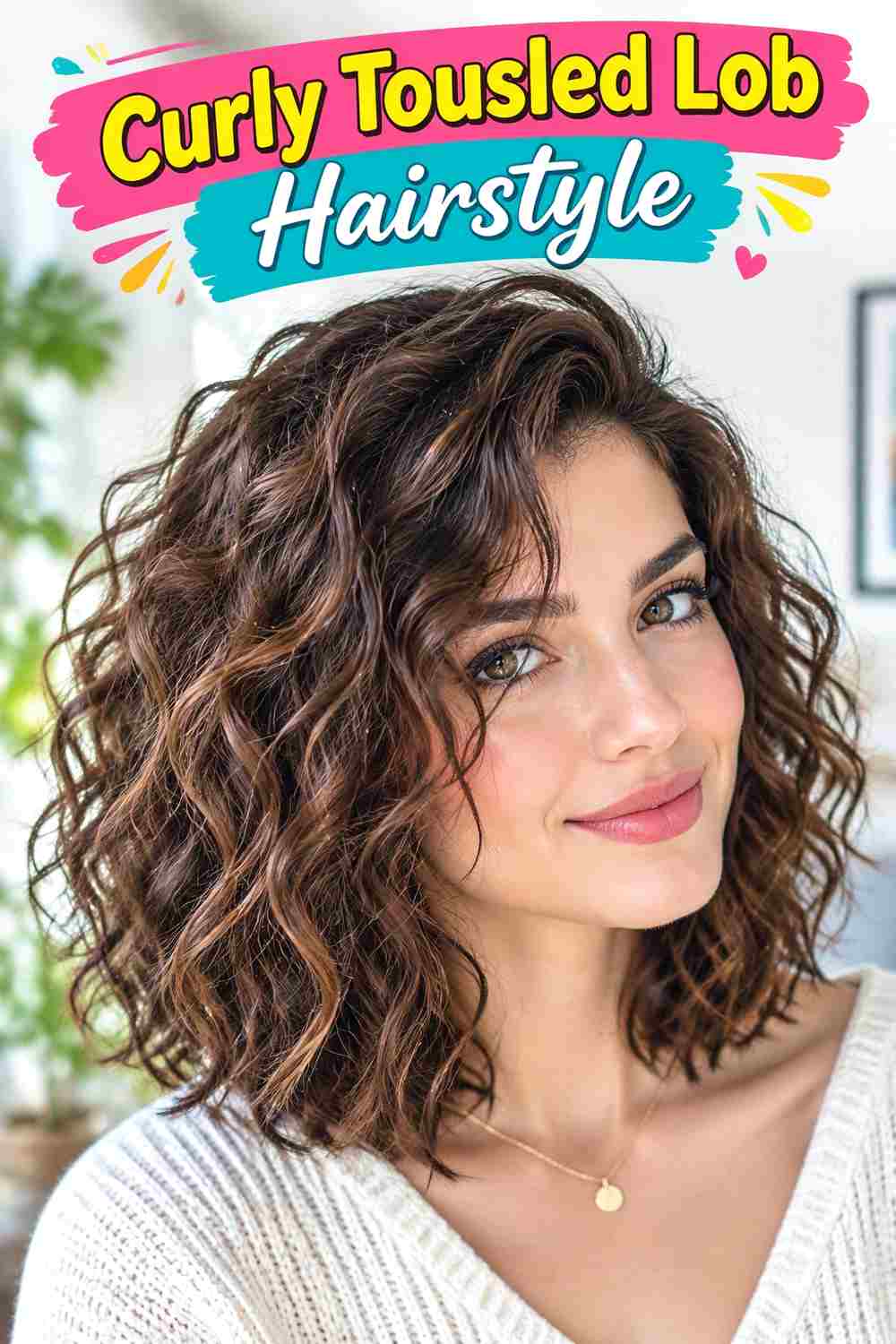
A curly lob creates tousled movement through varied curl groups rather than deliberately imperfect heat-styled waves. Keep the dry perimeter around the shoulders or collarbones, with layers positioned to prevent all the volume from collecting at the bottom. Shorter curls can frame the cheekbones or jaw, while longer groups support the perimeter. A natural part allows the pattern to settle with less forced direction.
Shrinkage, curl pattern, and density determine where each layer actually finishes. Lightweight leave-in conditioner adds slip, curl gel supports grouped definition, and a diffuser helps dry the shape without excessive disturbance. Refreshing several flattened curls may be quick, while a complete wash-day reset takes longer because the pattern needs to be formed and dried throughout.
At the salon, discuss the intended dry length and where you want volume to sit. Stretched or wet hair cannot show the finished proportions accurately. If a dense area feels bulky, identify its exact location rather than requesting thinning throughout. Maintenance becomes useful when growth shifts volume downward or face-framing curls stop connecting with the perimeter. A tousled finish can include differences in curl size and separation; every curl does not need to match.
Pro tip:
Wait until curls are fully dry before separating selected groups near the crown and sides. This adds controlled volume while protecting the definition you established during the wash-day styling process.
Make It Work for You:
If your curls shrink strongly, keep the proposed layers longer at first and judge their dry position. Refining afterward is safer than assuming stretched length predicts the finished silhouette.
Watch Out For:
Aggressive thinning can create short internal curls that expand unexpectedly. Adjust weight where bulk actually develops and preserve enough lower density to support the lob’s overall perimeter.
Air-Dried Tousled Lob Hairstyle

Air-drying makes natural bends, flips, and differences between sections part of the finished lob. Keep the perimeter around the collarbones with long, restrained layers that encourage movement without requiring a blowout. The part can follow its natural position, while face-framing pieces settle around the jaw or chin. Some ends may dry straighter and others may turn outward, creating the irregularity that defines the tousled finish.
Straight, wavy, curly, and mixed textures can all produce different interpretations. Lightweight leave-in conditioner adds softness, styling cream controls selected ends, and a wide-tooth comb distributes product without over-smoothing. Wash day includes passive drying time but little active styling. A next-day refresh can simply involve dampening flattened front or crown sections and letting them reset.
At the salon, explain that air-drying is part of your normal routine so the cut can be assessed without relying on a polished blowout. If one area expands more strongly, identify it before removing weight. Maintenance should focus on perimeter balance, end condition, and layer connection. Natural variation does not need to be corrected section by section; allowing some irregularity is what keeps the finish relaxed.
Pro tip:
Set your part and arrange the face frame while the hair is damp, then reduce handling as it dries. This helps preserve natural grouping and limits unnecessary surface frizz.
Make It Work for You:
If your texture varies around the head, keep the perimeter fairly substantial. A clear lower outline can connect different bends, waves, and straighter sections into one coherent lob.
Watch Out For:
Adding more cream whenever one section dries differently can flatten the overall shape. Dampen and redirect that area first, then add product only when extra control is genuinely needed.
Fine Hair Tousled Lob Hairstyle
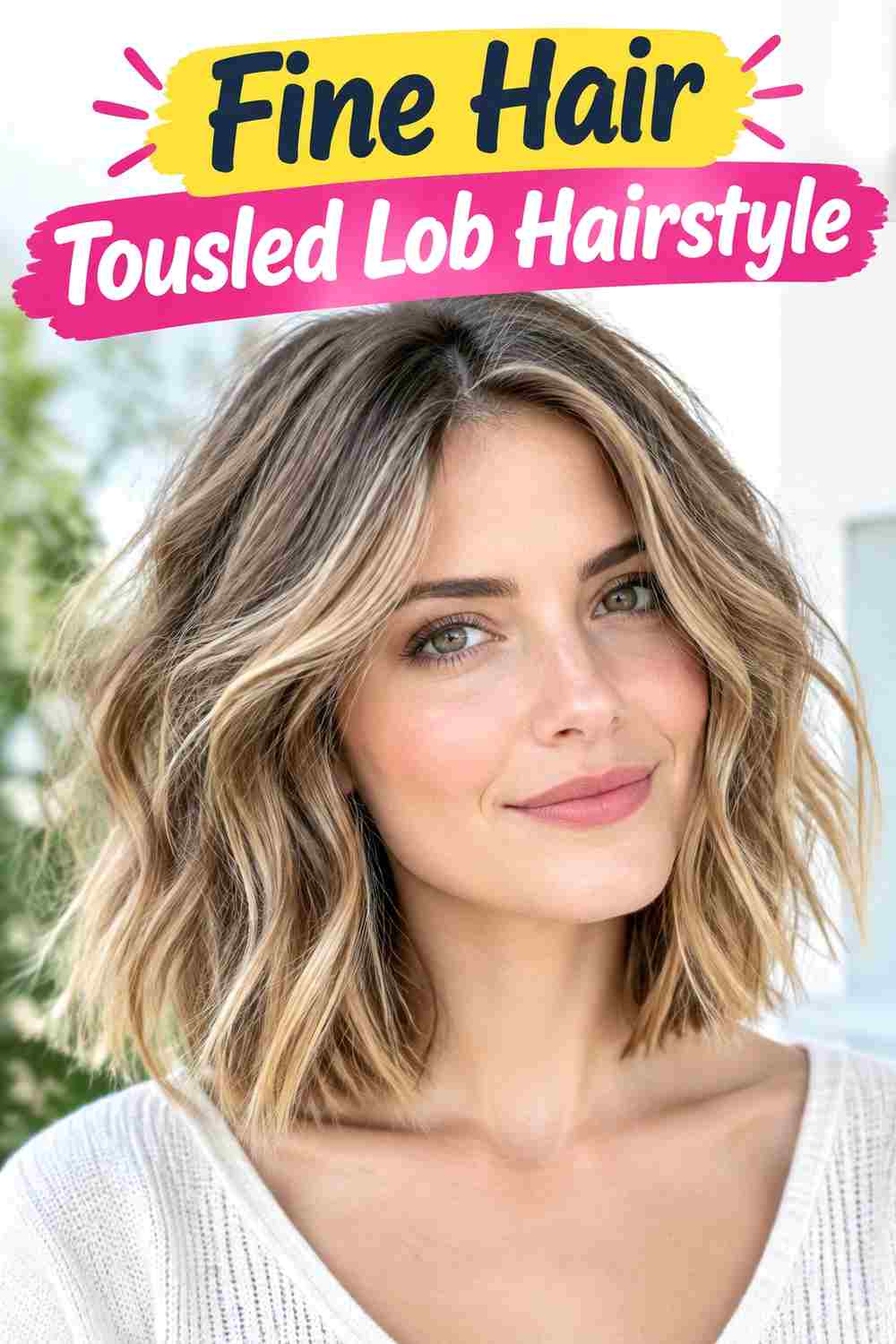
Fine strands can create a tousled lob without extensive layering when the perimeter retains enough visible weight. Keep the length near the collarbones, with restrained face framing and only subtle internal movement. A slightly off-center or center part provides flexibility, while broad bends create dimension through the middle. Straighter ends help the lower edge appear fuller instead of disappearing into numerous curls.
Fine describes strand thickness rather than overall density, so the amount of layering should reflect how much hair is actually present. Lightweight mousse supports the roots, heat protectant prepares the hair for heated styling, and a curling iron adds selected loose bends. Refreshing the crown and front can take only minutes; building texture throughout freshly washed hair takes longer.
At the salon, explain that maintaining visible perimeter density matters. Ask for movement in specific areas rather than extensive thinning to create a tousled effect. If the roots become flat, styling direction can often help without adding shorter layers. Maintenance should preserve the ends and allow any overly short sections to catch up. The relaxed finish comes from varied bends and root movement, not from making every section physically lighter.
Pro tip:
Apply mousse mainly at the roots and upper lengths, then keep the ends comparatively clean. This creates lift where fine strands need support while preserving a stronger-looking lower edge.
Make It Work for You:
If your fine hair also has low density, keep the back close to one length and concentrate waves around the front. You retain fullness while still creating obvious tousled movement.
Watch Out For:
Fine hair does not automatically need aggressive texturizing. Excessive weight removal can weaken the perimeter, so assess overall density before deciding how much layering or internal adjustment is useful.
Dense Hair Tousled Lob Hairstyle
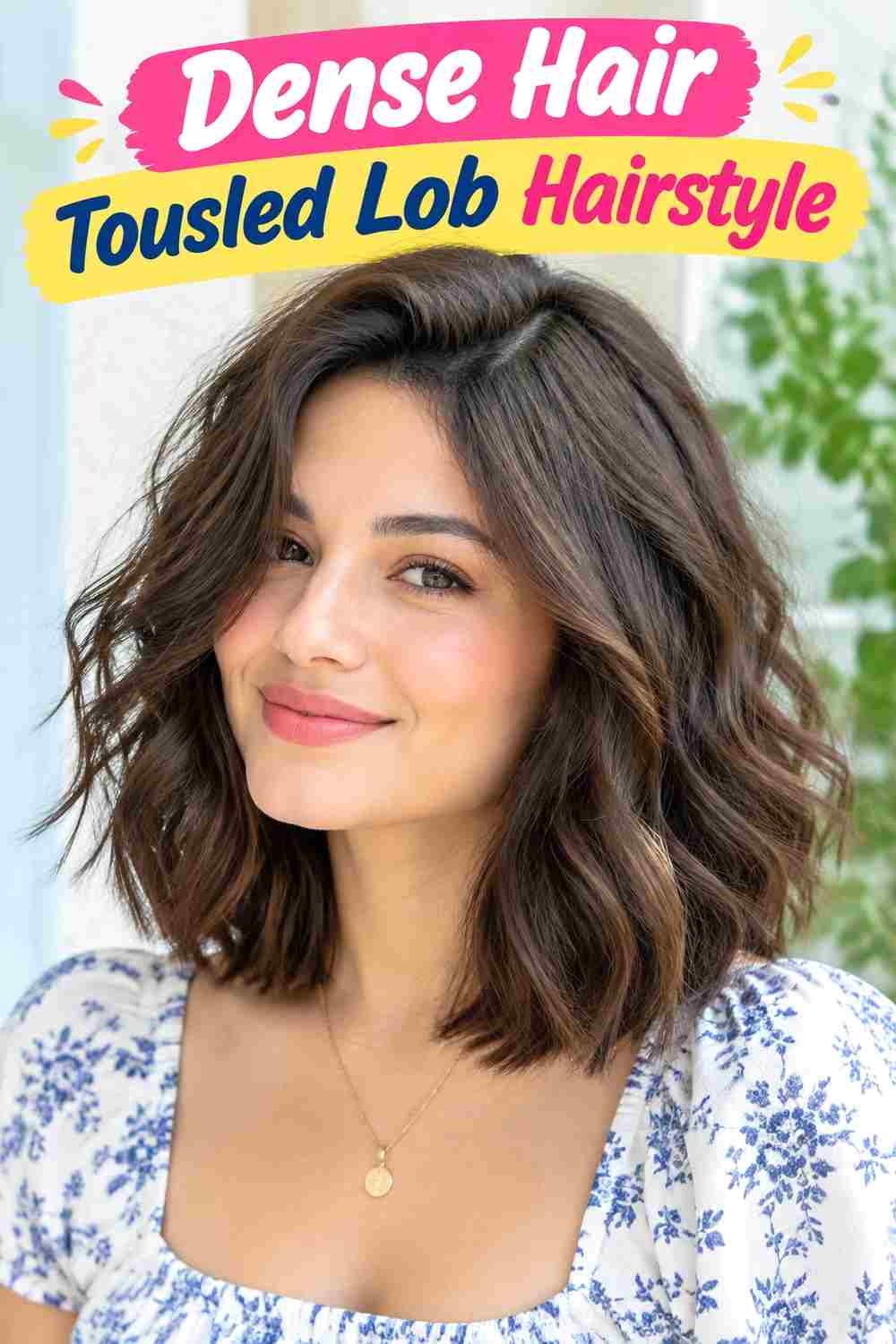
Dense hair can give a tousled lob substantial movement, but the location of its weight determines whether the result feels loose or overly wide. Keep the perimeter around the collarbones with long surface layers and carefully considered internal adjustment where bulk actually collects. Face framing can begin near the jaw, while broad bends break up the middle without adding excessive root volume.
Straight, wavy, curly, and coily dense textures distribute fullness differently. Lightweight styling cream controls fuzzy separation, heat protectant prepares the hair when heated styling is used, and a wide-tooth comb keeps the lengths loose. A quick refresh may focus on the front and surface; complete washing and drying usually takes longer simply because there is more hair to manage.
At the salon, point to the specific areas that feel bulky rather than asking for thinning everywhere. Weight near the lower sides creates a different issue from fullness at the crown. Maintenance becomes useful when growth shifts the shape downward or the layers stop creating movement. Preserving strategic outer weight also helps the lob maintain a clear perimeter while internal adjustments provide space where the hair genuinely needs it.
Pro tip:
Evaluate dense hair after it is fully dry before deciding where more weight should be removed. Damp hair can appear significantly flatter and hide the volume that returns during drying.
Make It Work for You:
If your dense hair expands through the sides, keep crown volume restrained and concentrate movement lower down. This creates tousled separation without making the silhouette unnecessarily wide around the face.
Watch Out For:
Thinning indiscriminately can create shorter internal pieces that push outward during grow-out. Adjust specific bulky areas and preserve enough weight to keep the lob controlled and connected.
Textured Ends Tousled Lob Hairstyle

A softly broken perimeter adds separation to a tousled lob without requiring short layers throughout the cut. Keep the length between the shoulders and collarbones, with minimal crown layering and a relaxed face frame. Individual tips can separate slightly, while loose bends through the middle prevent the bottom from appearing rigid. A natural part reinforces the unfixed finish.
Straight and wavy hair can show the piecey edge clearly. Dense hair may support more perimeter separation, while fine or already sparse ends need a conservative approach. Light texturizing spray defines selected dry pieces, styling cream controls fuzzy tips, and a wide-tooth comb keeps the underlying movement loose. A perimeter refresh can be quick; complete wash-day styling depends on the natural texture and amount of hair.
At the salon, describe how much visible bottom weight you want beneath the texture. Softening an edge should not automatically mean making it thin. If your ends already lack density, preserve them and create most separation through styling. Maintenance becomes useful when the lower edge appears worn rather than deliberately softened. A balanced lob still needs enough perimeter structure to connect the front, sides, and back.
Pro tip:
Apply texturizing spray to only a few dry end sections, then separate them gently. Leaving much of the perimeter untouched creates contrast and prevents the whole bottom from looking wispy.
Make It Work for You:
For lower-density ends, keep the back edge cleaner and concentrate textured separation around the front. The lob retains visible fullness while the most noticeable sections still look relaxed.
Watch Out For:
Repeatedly texturizing the perimeter can gradually create transparency. Once the bottom is soft enough, change the finish with product and styling instead of removing more hair each visit.
Face-Framing Tousled Lob Hairstyle
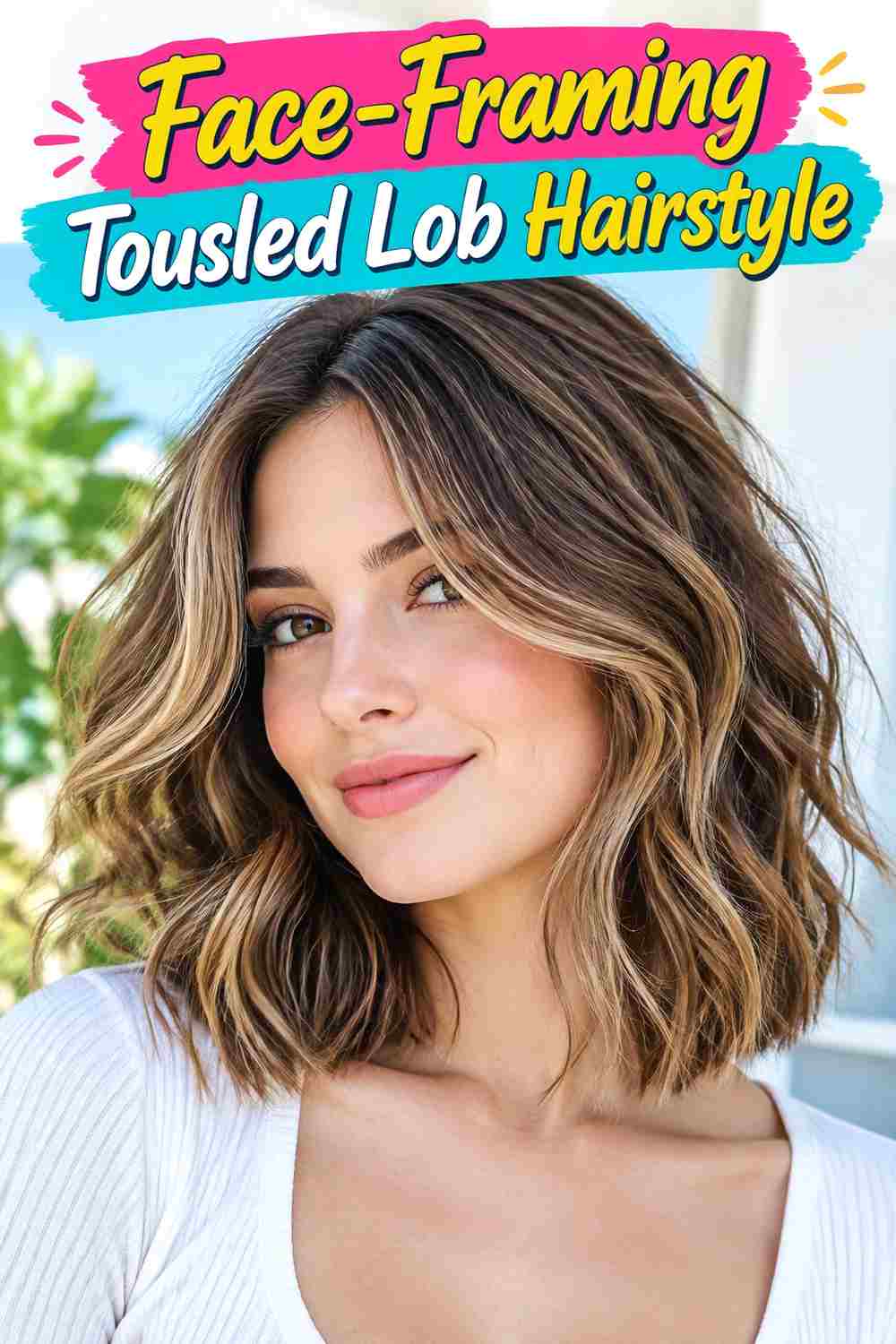
Long face-framing pieces create visible movement near the cheeks and jaw while leaving the back of the lob comparatively full. The shortest pieces can begin around the cheekbones or jaw, then blend gradually into a collarbone perimeter. Bend the front away from the face while allowing the middle and back sections to vary between waves and straighter pieces. A center part makes the graduated framing especially clear.
Straight and wavy textures show the front layers easily, while curly hair can adapt them with shrinkage considered. Heat protectant prepares the hair for heated styling, a round brush directs the front, and flexible hairspray maintains soft movement. Refreshing only the face frame can be quick; recreating texture throughout the whole lob takes longer.
At the salon, identify the exact landmark where you want the shortest face-framing section to finish. Cheekbone, jaw, and chin placements produce different amounts of movement. Ask for those pieces to connect gradually with the perimeter rather than forming isolated short sections. Maintenance becomes useful when the front grows beyond its intended landmark or loses its connection. If you frequently tuck your hair, preserve enough length in selected pieces to keep that option practical.
Pro tip:
Direct the front sections forward while drying, then bend them away from the face. This creates controlled root movement and helps the frame fall back naturally instead of lying flat.
Make It Work for You:
For lower-density hair, keep the face-framing section narrow and preserve more fullness through the back. The front still moves visibly without sacrificing unnecessary weight from the overall perimeter.
Watch Out For:
Starting the face frame too short can create disconnected pieces that require more daily styling. Keep a gradual progression into the lob so the front remains flexible during grow-out.
Collarbone Tousled Lob Hairstyle

Collarbone length gives a tousled lob enough room for loose bends while staying clearly shorter than long hair. The perimeter sits close to the collarbones, with long layers beginning around the jaw or below. Broad waves through the middle create movement, and slightly straighter ends preserve the visible length. A center, side, or natural part can work because the longer proportions remain flexible.
Straight and wavy hair can use this shape readily, while loose curls create a fuller interpretation. Fine strands often benefit from a stronger bottom line; dense hair may need internal weight assessed as the length increases. Heat protectant belongs underneath heated styling, a curling iron forms broad bends, and light texturizing spray adds separation. A front refresh can be quick, while styling the entire collarbone length takes longer.
At the salon, identify the dry collarbone landmark and explain how much layering you want above it. If continued growth matters, keeping the layers long can make the transition easier. Maintenance becomes useful when the perimeter moves beyond your preferred point or the front layers lose connection. Clothing can also change how these ends sit, so assess the haircut away from collars before assuming an outward bend means uneven cutting.
Pro tip:
Check the finished ends both in front of and behind your shoulders. Collarbone hair changes position frequently, and seeing both placements helps you judge whether the tousled balance works naturally.
Make It Work for You:
If your hair is dense, preserve the visible outer length while adjusting internal heaviness selectively. This can create movement without turning a collarbone lob into a heavily layered haircut.
Watch Out For:
Collars and jackets can make individual ends flip unpredictably. Move the hair away from clothing before trimming or restyling so temporary bends are not mistaken for structural problems.
Shoulder-Grazing Tousled Lob Hairstyle

A shoulder-grazing perimeter creates natural opportunities for small flips and bends where the hair meets the body. Keep the back close to shoulder level, with long face framing around the jaw and restrained layers through the sides. Some ends can turn outward while others remain straighter, and loose mid-length waves add movement above. A natural part suits the slightly irregular finish.
Straight and wavy textures may develop outward movement simply from shoulder contact. Curlier textures can use the length while accounting for dry shrinkage. Lightweight mousse supports the upper sections, heat protectant prepares the hair for heated touch-ups, and a round brush redirects selected ends. Refreshing several front pieces can be brief; styling the full lob after washing takes longer.
At the salon, specify whether you want the dry perimeter above, directly on, or slightly below the shoulders. Each placement behaves differently. If you like natural flips, mention them rather than asking for every end to be made uniform. Maintenance becomes useful when growth moves the perimeter beyond the shoulder zone or the layers become bottom-heavy. The design can tolerate small changes in direction, so daily perfection is unnecessary.
Pro tip:
Observe how your ends behave after wearing your usual clothing for a while. Natural shoulder contact may create useful bends that need only minor adjustment rather than complete restyling.
Make It Work for You:
If your hair flips strongly at the shoulders, leave some of that movement visible and soften only the most extreme sections. It supports the tousled finish and reduces styling effort.
Watch Out For:
Do not assume every outward tip means the cut is uneven. Shoulder contact changes direction temporarily, so check the perimeter away from clothing before deciding it needs reshaping.
Shaggy Tousled Lob Hairstyle

A shaggy lob uses shorter upper layers and stronger separation than a classic softly layered version. Keep the overall perimeter around the shoulders, with crown layers beginning higher and progressing into cheekbone or jaw-level face framing. A broken-up fringe or open forehead can work, while irregular waves emphasize the different lengths. The ends stay loose rather than forming one dense line.
Wavy hair can reveal this structure naturally, while straight hair may need more styling to show the layer changes. Curly hair can create a fuller version when shrinkage is considered. Lightweight mousse supports the upper layers, heat protectant prepares the hair for heated shaping, and a diffuser encourages irregular movement. Refreshing the crown can be quick; a complete wash-day reset takes longer.
At the salon, specify how short you are comfortable taking the crown. A shaggy finish does not require extremely short top layers. Maintenance becomes useful when those layers grow flat and merge into the lower length. If you plan to grow the lob longer, remember that strong crown-to-perimeter contrast takes more time to even out. Keeping the lower edge substantial also helps the haircut remain recognizably lob-length beneath the shaggy movement.
Pro tip:
Refresh only a few crown and face-framing sections when the shape falls flat. Restoring movement at those visible points can revive the shaggy silhouette without restyling every layer.
Make It Work for You:
For lower-density hair, keep the shag effect concentrated around the front and upper surface while preserving more perimeter weight. This maintains texture without making the bottom unnecessarily sparse.
Watch Out For:
Taking crown layers very short can create unexpected expansion on wavy or curly hair. Begin with moderate contrast and assess the dry movement before shortening the top further.
Deep Side-Swept Tousled Lob Hairstyle

A deeper side part creates a stronger sweep than a standard off-center placement, shifting much of the front volume toward one side. Keep the lob around the collarbones with long layers that allow the heavier section to move across the forehead and cheek before blending into the lengths. The opposite side can tuck back, while irregular waves keep the larger front section from looking too formal.
Straight and wavy hair can show the sweep clearly. Hair with a natural cowlick may need the part positioned where the roots cooperate rather than against their strongest direction. Root-lift spray supports the heavier side, heat protectant prepares the hair for heated styling, and a curling iron shapes selected bends. Resetting the front can be quick; creating the complete texture takes longer.
At the salon, show the exact part placement and where you want the longest front section to finish. If you frequently return to a center part, mention that so the layers remain wearable in both positions. Maintenance should respond to actual length imbalance rather than apparent asymmetry caused by the sweep. Keeping the crown layers relatively long also prevents short pieces from becoming exposed when you change direction.
Pro tip:
Dry the heavier section across the opposite side first, then sweep it back over the part. The root gains noticeable lift without requiring teasing or very short crown layers.
Make It Work for You:
If a deep part exposes more scalp than you prefer, reduce the distance slightly. You can retain a strong side sweep while keeping the root placement comfortable for your density.
Watch Out For:
A dramatic side part can make one side appear much longer. Check the cut with the hair falling neutrally before removing length to correct what may only be styling asymmetry.
Piecey Waves Tousled Lob Hairstyle

Piecey waves create stronger separation than soft flowing bends, with individual sections remaining visibly distinct through the middle and ends. Keep the lob around shoulder or collarbone length with restrained layering so the texture does not compete with too many short pieces. Alternate wave direction, leave some ends straight, and use a relaxed center or side part. Moderate root volume keeps attention on the separated lengths.
Straight and lightly wavy hair can create this effect with targeted styling. Fine hair needs lighter product use, while dense hair may require smaller sections. Heat protectant prepares the hair for heated work, a curling iron forms selected bends, and light texturizing spray separates the cooled pieces. Refreshing several visible waves can be quick; shaping the whole head after washing takes longer.
At the salon, explain that you want enough perimeter weight beneath the piecey finish. The visual separation can come from styling rather than aggressive thinning. Maintenance becomes useful when the lower edge loses balance or the layers stop supporting movement. If the ends already appear light, preserve them and use the texturizing spray sparingly. The goal is distinct pieces that still belong to one connected lob silhouette.
Pro tip:
Let heated waves cool before separating them, then pull apart only selected sections with your fingers. This preserves bend definition while creating the irregular spacing that makes the finish piecey.
Make It Work for You:
For fine hair, use fewer waves and keep larger sections between them relatively smooth. The contrast creates visible texture without requiring heavy product or excessive manipulation of delicate ends.
Watch Out For:
Too much texturizing spray can make the lengths dry, stiff, or tangled. Apply it selectively to cooled sections rather than coating the entire lob every time you refresh.
Flipped Ends Tousled Lob Hairstyle
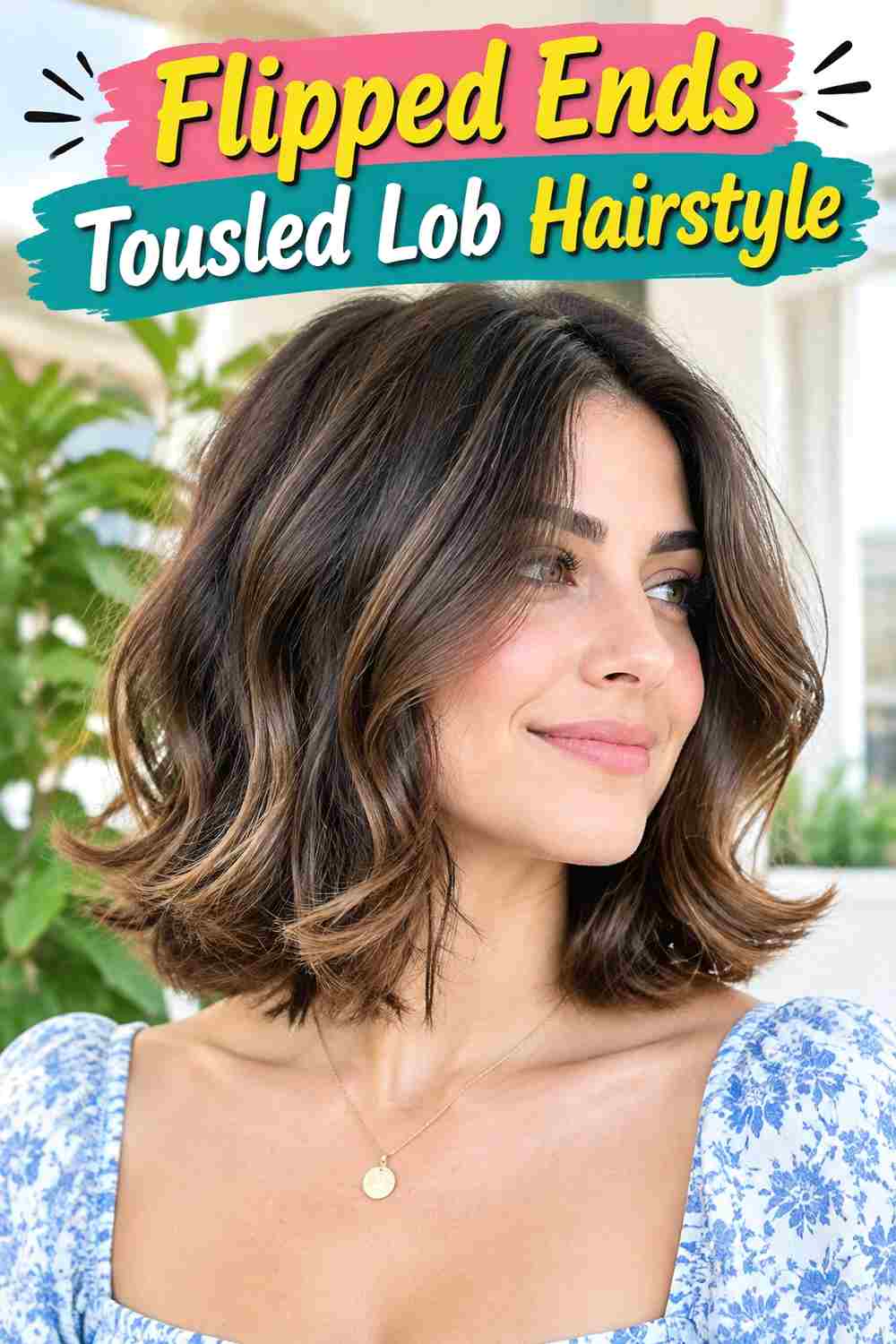
Outward-moving tips add a directional detail to an otherwise loose lob. Keep the perimeter near the shoulders with long layers through the front and sides. Mid-length bends can vary in direction, while selected ends turn away from the neck or face. Some tips may stay straight, which prevents the flip from becoming overly uniform. A natural or side part reinforces the casual movement.
Straight and wavy hair can create the flipped detail readily, and shoulder contact may already encourage some ends outward. Heat protectant prepares the hair for heated styling, a round brush directs the lower sections, and flexible hairspray maintains movement. Touching up several tips can be quick. Creating waves and flips throughout freshly washed hair takes longer and requires more sectioning.
At the salon, explain how much perimeter density you want beneath the outward movement. The flip itself is primarily a styling direction and does not require excessive thinning. Maintenance becomes useful when the lob grows beyond the length where the ends move as intended or the perimeter becomes uneven. If your hair naturally flips on one side, working with that movement and adjusting the opposite side can simplify daily styling.
Pro tip:
Create the mid-length texture first and turn only selected tips outward afterward. Separating those two steps keeps the flip visible without making the entire lob look uniformly curled.
Make It Work for You:
If your ends naturally turn outward at shoulder level, style only the pieces that fall inward. Using existing movement can shorten your refresh routine and reduce repeated heat exposure.
Watch Out For:
Flipping every end at exactly the same angle can make the finish look structured rather than tousled. Vary the bend slightly and leave several tips closer to straight.
Long Relaxed Tousled Lob Hairstyle

A longer lob that falls just beyond the collarbones offers more space for broad, low bends and a softer overall silhouette. Keep the layers long, with face framing beginning around the chin or jaw and the strongest movement through the lower half. The roots remain relatively relaxed, while the ends vary between loose waves and straighter pieces. A center or natural part suits the understated shape.
Straight, wavy, and loosely curly textures can all work with this extra length. Fine strands often benefit from retaining a substantial perimeter, while dense hair may need internal weight assessed as the cut grows. Heat protectant prepares the hair for heated styling, a large curling iron creates broad bends, and lightweight styling cream controls fuzzy ends. Refreshing the front may be quick; styling the entire longer lob takes more time.
At the salon, specify the dry length you want to retain and whether continued growth is part of the plan. Ask for long layers that preserve movement without sacrificing unnecessary perimeter. Maintenance becomes useful when the ends need cleanup or the layers stop connecting, rather than simply because the cut has gained a little length. This version also transitions toward longer hair more easily than heavily layered alternatives.
Pro tip:
Place the strongest bends below the jaw and keep the upper lengths comparatively relaxed. Lower movement emphasizes the longer proportions and reduces the amount of styling needed near the roots.
Make It Work for You:
If your routine is minimal, keep the layers especially long and use your natural texture through most of the cut. Refresh only the face frame when you want extra definition.
Watch Out For:
Adding many short layers just to create movement can undermine the relaxed long-lob shape. Preserve length and use broad bends or natural texture to supply most of the tousling.
Conclusion
Tousled lob hairstyle ideas can shift from collarbone and shoulder-grazing lengths to slightly longer, relaxed shapes. Fine hair often benefits from a stronger perimeter and restrained layers, while dense hair may need carefully placed internal weight adjustment. Soft layers create flowing movement; shaggy layers make the texture more obvious. Curtain and wispy fringe require separate upkeep, while face framing can provide movement without full bangs. Waves, curls, flipped tips, and air-dried texture each create a different finish, and center versus side parting changes the volume distribution. Consider your natural texture, density, preferred length, face-framing placement, styling time, and grow-out goals. The most practical version is one whose relaxed movement still works with your normal routine.
Before Your Salon Visit
Choose one or two favorites and save references showing the length and texture clearly. Discuss your natural texture, density, face shape, preferred lob length, upkeep, and normal styling routine. Identify the exact fringe, face-framing point, layer starting position, perimeter weight, volume placement, wave shape, or piecey finish you like. Also explain whether you usually air-dry or use heat, because a cut intended for natural tousling may need different layer placement from one you plan to style regularly.
FAQs
Can fine hair wear a tousled lob without looking thin?
Yes. Fine describes individual strand thickness, not overall density. Keeping a substantial perimeter and limiting unnecessary layering can protect fullness. Loose bends, root support, and selective face framing can create movement without heavily texturizing the ends, especially when the lower edge already has limited density.
Does a tousled lob need heat styling every day?
No. Naturally wavy, curly, or mixed textures may need only selective refreshing, and an air-dried lob can use natural bends as part of the finish. Straighter hair may require heat for more obvious waves. When heat is used, apply heat protectant and avoid repeatedly restyling sections that still hold their shape.
How should curly hair be layered for a tousled lob?
Plan around the dry curl shape, shrinkage, density, and where volume naturally develops. Layers can prevent all the fullness from collecting at the perimeter, but aggressive thinning is not automatically helpful. Ask where the shortest curls will finish dry and identify specific bulky areas before removing internal weight.
How does a tousled lob grow out between salon visits?
Long layers generally allow a flexible grow-out because small length changes can blend into the relaxed finish. Reshaping becomes useful when the perimeter loses balance, fringe interferes with the eyes, face framing stops connecting, or volume shifts into an unwanted area. Styling changes can handle minor growth without automatically requiring another cut.