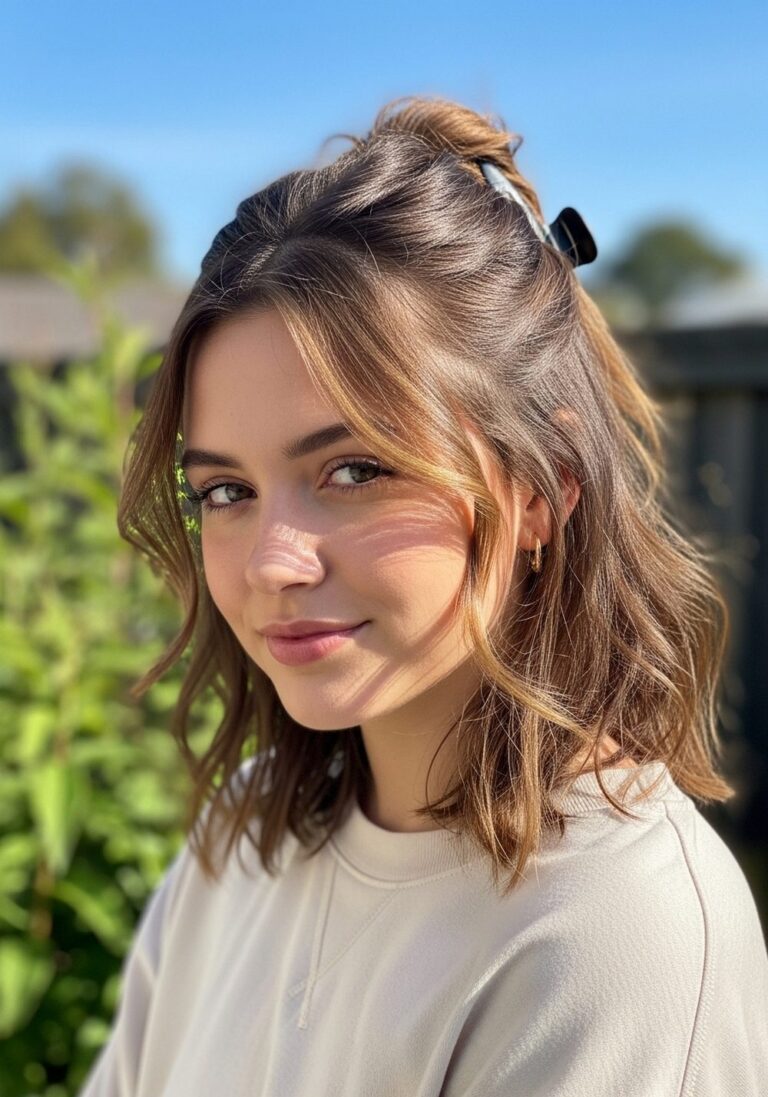
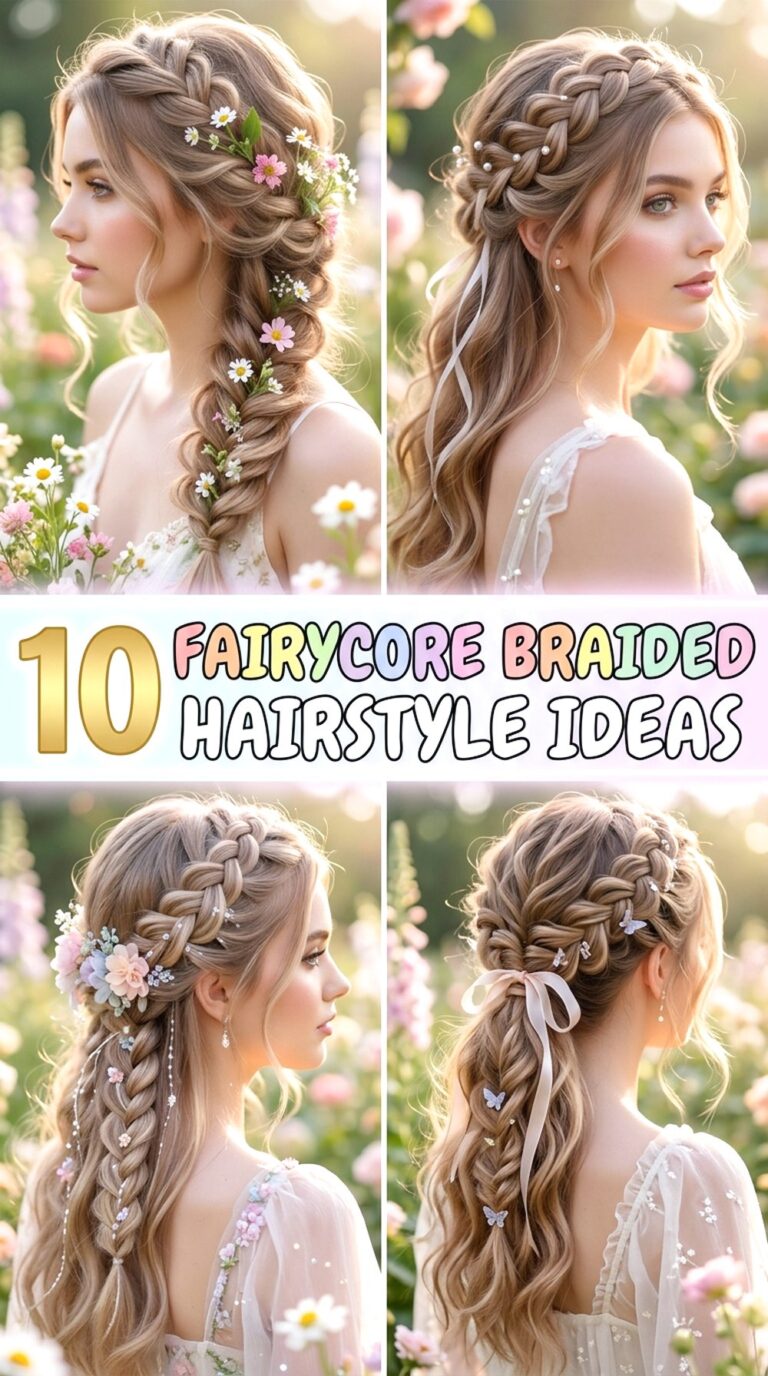
18 Whisper Fringe Hairstyle Ideas
Whisper fringe is an especially light type of bangs cut with enough separation for small sections of the forehead to remain visible. Instead of forming a heavy, solid line, the fringe falls in fine pieces with soft edges and gentle movement. It can sit around the brows, sweep toward the cheekbones, or blend into longer face-framing layers. These details make Whisper Fringe Hairstyle Ideas useful for anyone who likes bangs but wants a less dense finish.
The effect can be adapted to straight, wavy, and curly textures, although the cutting approach changes with each hair type. Fine hair usually needs a narrow fringe section so too much density is not taken away from the sides. Thick hair may need internal weight removed to create genuine softness. Oval, round, square, heart, and longer face shapes can all use different lengths and partings to balance the fringe.
Daily styling is generally light to moderate. Some versions air-dry well, while smoother bangs may need a quick blow-dry after washing. Fringe trims are usually more frequent than full haircut appointments. Before choosing one, consider natural growth patterns, humidity, shrinkage, preferred length, and how often you are comfortable refreshing the shape.
Quick List
- Classic Wispy Whisper Fringe
- Long Feathered Whisper Fringe
- Curtain Whisper Fringe
- Micro Whisper Fringe
- Side-Swept Whisper Fringe
- Bottleneck Whisper Fringe
- French Bob With Whisper Fringe
- Layered Lob With Whisper Fringe
- Long Layers With Whisper Fringe
- Shag With Whisper Fringe
- Wavy Whisper Fringe
- Curly Whisper Fringe
- Fine Hair Whisper Fringe
- Thick Hair Whisper Fringe
- Face-Framing Whisper Fringe
- Rounded Whisper Fringe
- Piecey Whisper Fringe
- Grown-Out Whisper Fringe
Classic Wispy Whisper Fringe

Classic wispy whisper fringe sits around the brows with tiny gaps between the strands, giving the front of the haircut a soft rather than solid outline. It works particularly well on straight or lightly wavy hair and can suit fine to medium density when the fringe section stays shallow. A small round brush and heat protectant help direct the roots, while light-hold hairspray can keep flyaways controlled without making the bangs stiff. Styling normally takes only a few minutes, although the fringe may need trimming every four to six weeks. At the salon, ask for lightly tapered ends and visible separation instead of a thick horizontal cutting line.
Pro tip: Keep a little more length near the temples so the fringe blends naturally into the sides rather than ending abruptly above the brows.
Long Feathered Whisper Fringe

Long feathered whisper fringe falls below the brows and gradually becomes longer toward the outer corners, creating more movement than a short straight-across fringe. The extra length is useful for medium or thick straight and wavy hair because it can be pushed sideways when needed. Apply heat protectant before using a round brush, then finish with a small amount of smoothing serum through the ends. Styling is moderate rather than demanding, especially once the fringe develops its preferred direction. Longer bangs also grow out more comfortably than a short fringe. Tell your stylist you want soft feathering through the lower edge while keeping enough weight for the strands to fall cleanly.
Pro tip: Ask for the longest outside pieces to reach roughly the upper cheekbone if you want an easier transition into face-framing layers.
Curtain Whisper Fringe
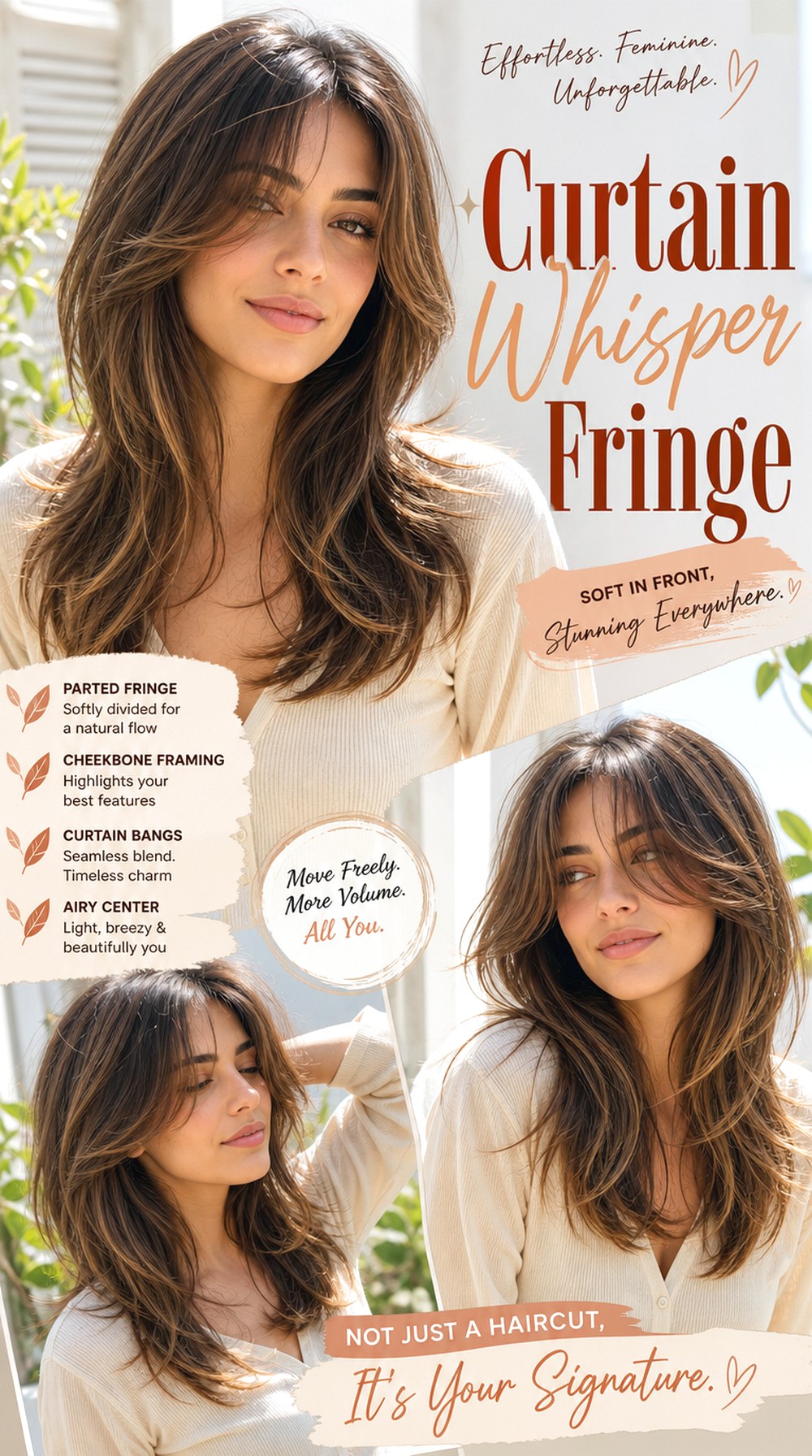
Curtain whisper fringe opens gently through the center and sweeps toward each temple, combining the lightness of wispy bangs with the shape of curtain bangs. It can help create width around a longer face or bring softness around a square jaw, while an off-center part can adapt it for other face shapes. Straight and wavy textures are usually easiest to manage. A volumizing spray at the roots, medium round brush, and light-hold hairspray are useful for creating the curved sides. Expect a few minutes of blow-drying after washing. At your appointment, show the stylist exactly where you want the shortest central pieces and where the sides should meet the cheekbones.
Pro tip: Dry the fringe forward first and divide it afterward; separating it too early can create an exaggerated center gap.
Micro Whisper Fringe
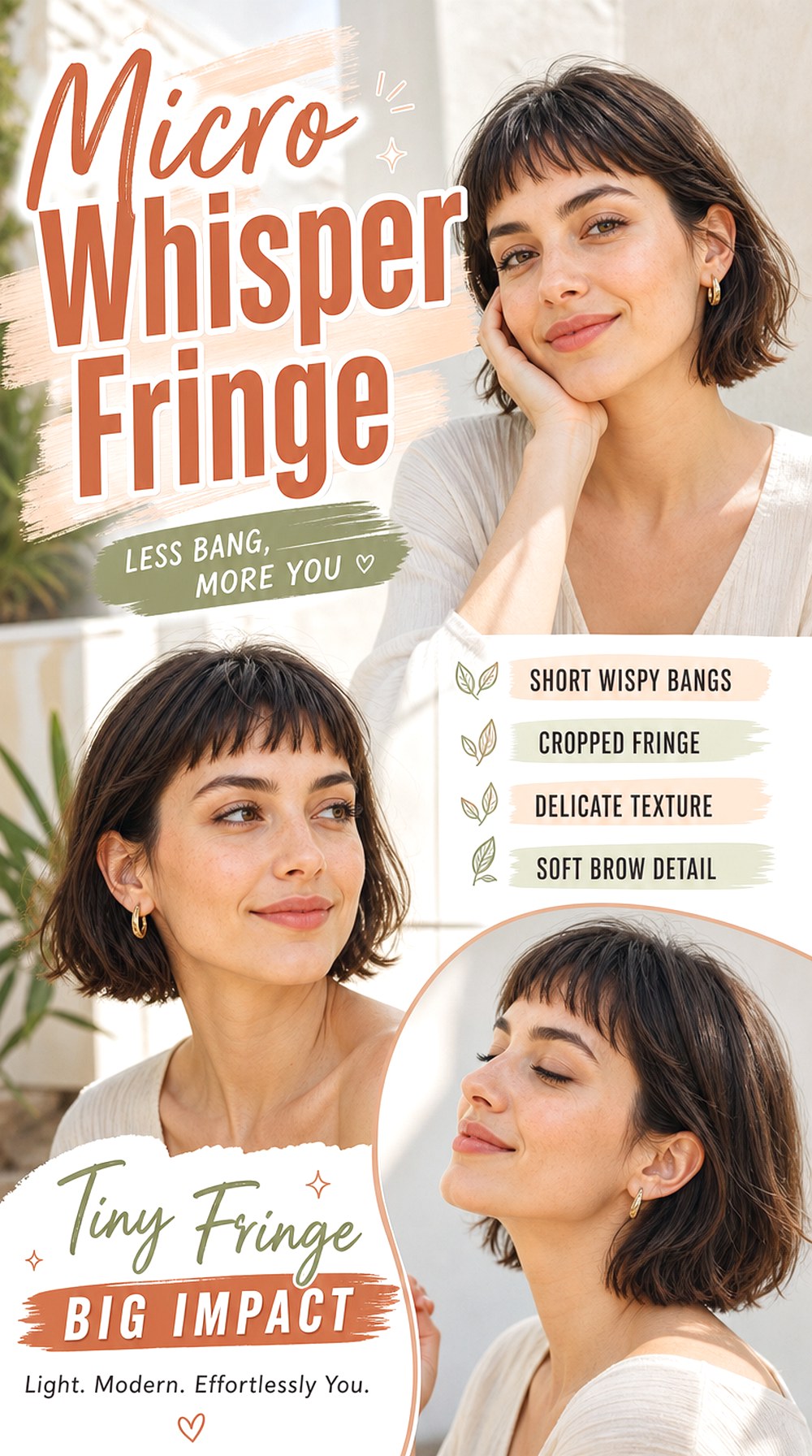
Micro whisper fringe sits noticeably above the brows but keeps a delicate, broken edge instead of the compact line associated with heavier baby bangs. The exposed forehead makes the short length a stronger feature, so it works best when you are comfortable making the fringe an obvious part of the haircut. Straight to gently wavy hair gives the most predictable finish. Use heat protectant and a small flat iron only when needed, then separate individual strands with a tiny amount of texturizing spray. Daily styling is quick, but trims can be frequent because a few millimeters change the shape. Ask your stylist to establish the finished length on dry hair.
Pro tip: Avoid removing too much density at the roots; softness should come mainly from the ends so the micro fringe does not appear sparse.
Side-Swept Whisper Fringe
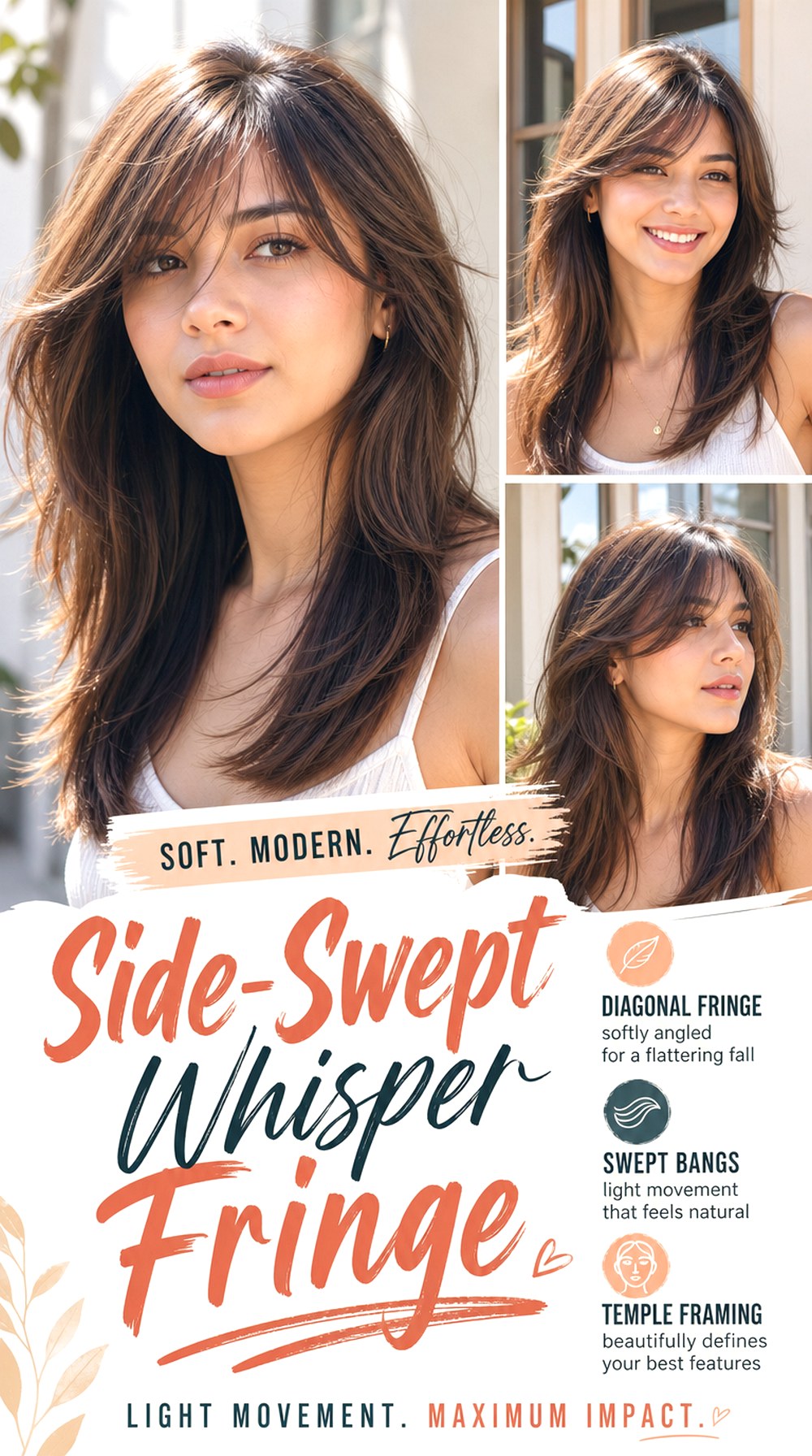
Side-swept whisper fringe travels diagonally across the forehead and becomes longer toward one temple. Because it does not rely on a precise center part, it can be practical for anyone with a natural front growth pattern that already pushes the hair sideways. Straight, wavy, and moderately thick textures can carry the shape well. A lightweight mousse gives the roots control, while a round brush and smoothing serum help create a clean sweep. Styling is usually quick after the fringe has been trained into position. Maintenance can stretch longer than with short blunt bangs because extra length blends naturally into the side. Ask for a soft diagonal perimeter rather than a sharply angled line.
Pro tip: Have the shortest point cut near your preferred brow area so you can sweep the fringe without constantly pushing hair away from your eye.
Bottleneck Whisper Fringe
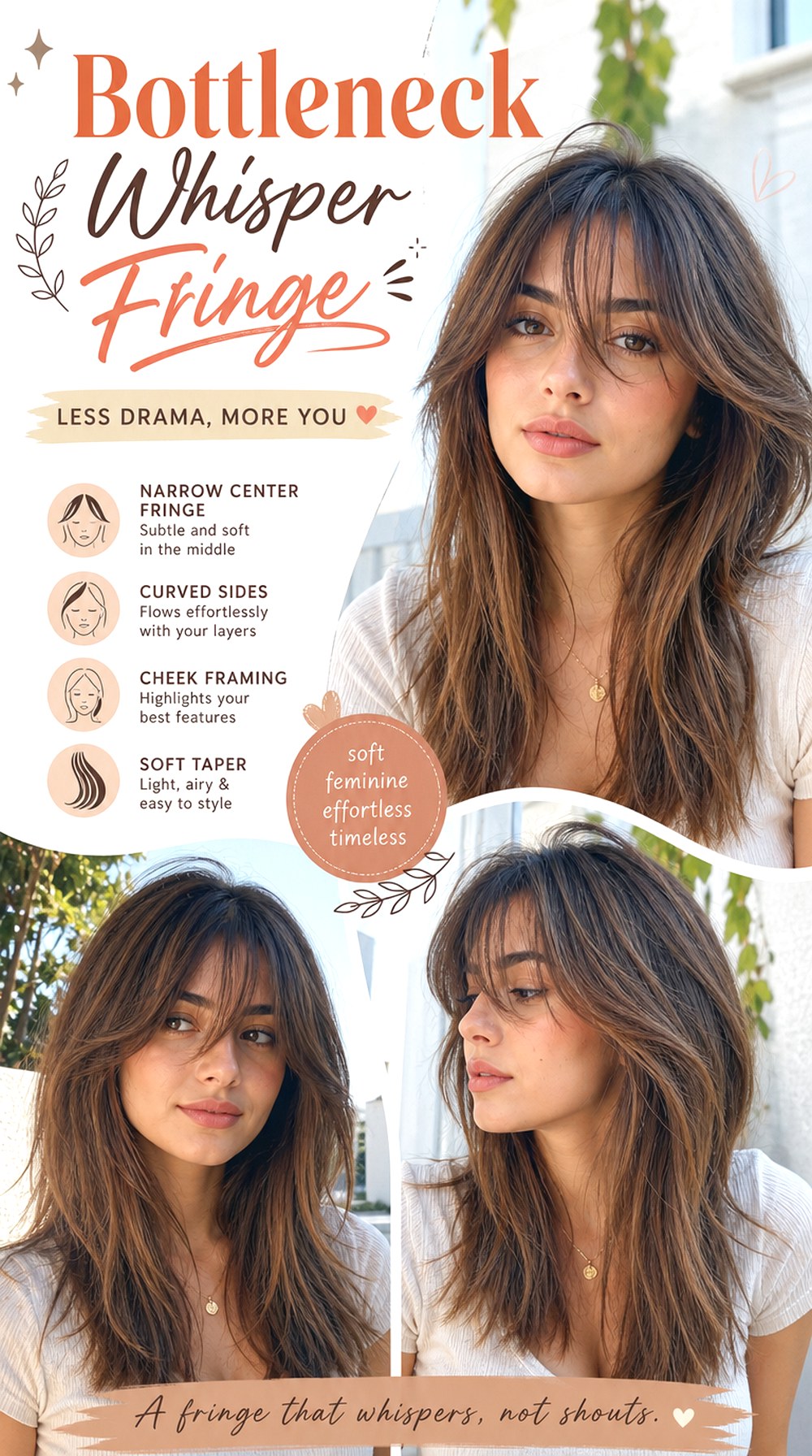
Bottleneck whisper fringe stays shorter and slightly narrower through the center before curving outward into longer cheek-framing pieces. The result has more shape around the face than a uniform wispy fringe but remains light enough to show small sections of skin. It works especially well with medium-length or long layered hair and straight-to-wavy textures. Heat protectant, a small round brush, and texturizing spray are enough for most styling routines. Blow-drying takes moderate effort because the sides need a gentle outward bend. At the salon, request a narrow central section with progressive length toward the cheekbones rather than one continuous curved bang.
Pro tip: Point out exactly where the outer pieces should end; cheekbone length gives a different effect from pieces that extend all the way to the jaw.
French Bob With Whisper Fringe

A French bob with whisper fringe combines a compact bob, usually around the jaw or slightly below it, with light bangs that soften the shorter perimeter. A subtly blunt baseline keeps the bob looking intentional while the airy fringe prevents the front from becoming too heavy. Straight and loose wavy textures are especially suited to the combination, although density determines how much internal weight should be removed. Use a leave-in conditioner, heat protectant, and small round brush for a smooth but flexible finish. Styling is moderate, and the bob generally needs regular reshaping. Ask your stylist to preserve fullness at the ends while cutting the fringe from a relatively shallow section.
Pro tip: If your hair is fine, avoid excessive layering through the bob itself; keeping the baseline fuller creates a better balance with the delicate fringe.
Layered Lob With Whisper Fringe

A layered lob gives whisper fringe enough surrounding length to blend naturally rather than sitting separately at the front. The main haircut can finish around the shoulders or collarbones, with soft layers creating movement through the middle and ends. This combination suits straight and wavy hair particularly well and can help thick hair feel less bulky when weight is removed carefully. A volumizing spray, heat protectant, and medium round brush support a polished blowout without flattening the layers. Styling requires moderate time, though loose natural texture can shorten the routine. Ask your stylist to connect the outer fringe gradually into the first face-framing layer rather than leaving a noticeable gap.
Pro tip: Keep the shortest front layer below the cheekbone if you frequently wear your hair tied back and want the pieces to tuck away more easily.
Long Layers With Whisper Fringe
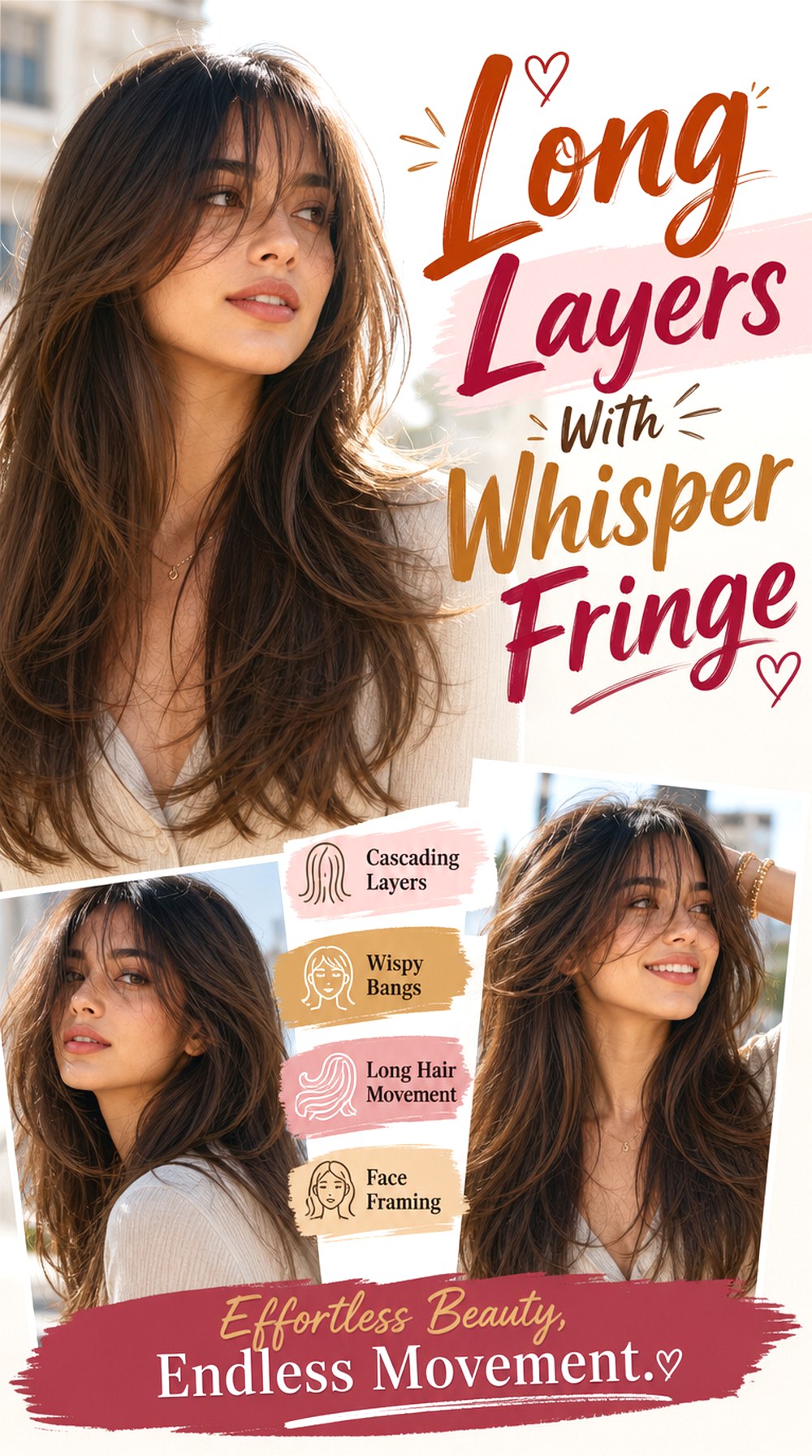
Long layers with whisper fringe preserve overall length while adding movement around the face and through the lower sections. The contrast between flowing lengths and feather-light bangs can work well for medium or thick hair that otherwise feels visually heavy. Straight and wavy textures make the layering easy to see, while gentle bends add extra dimension. Apply heat protectant before blow-drying and use a large round brush for the lengths; a lightweight smoothing serum can control dry ends. The haircut itself grows out comfortably, although the fringe needs more frequent attention. At the salon, explain whether you want the face frame to begin at the cheekbones, jaw, or below.
Pro tip: Keep enough weight through the bottom several inches of long hair so the addition of layers and fringe does not leave the overall silhouette looking thin.
Shag With Whisper Fringe
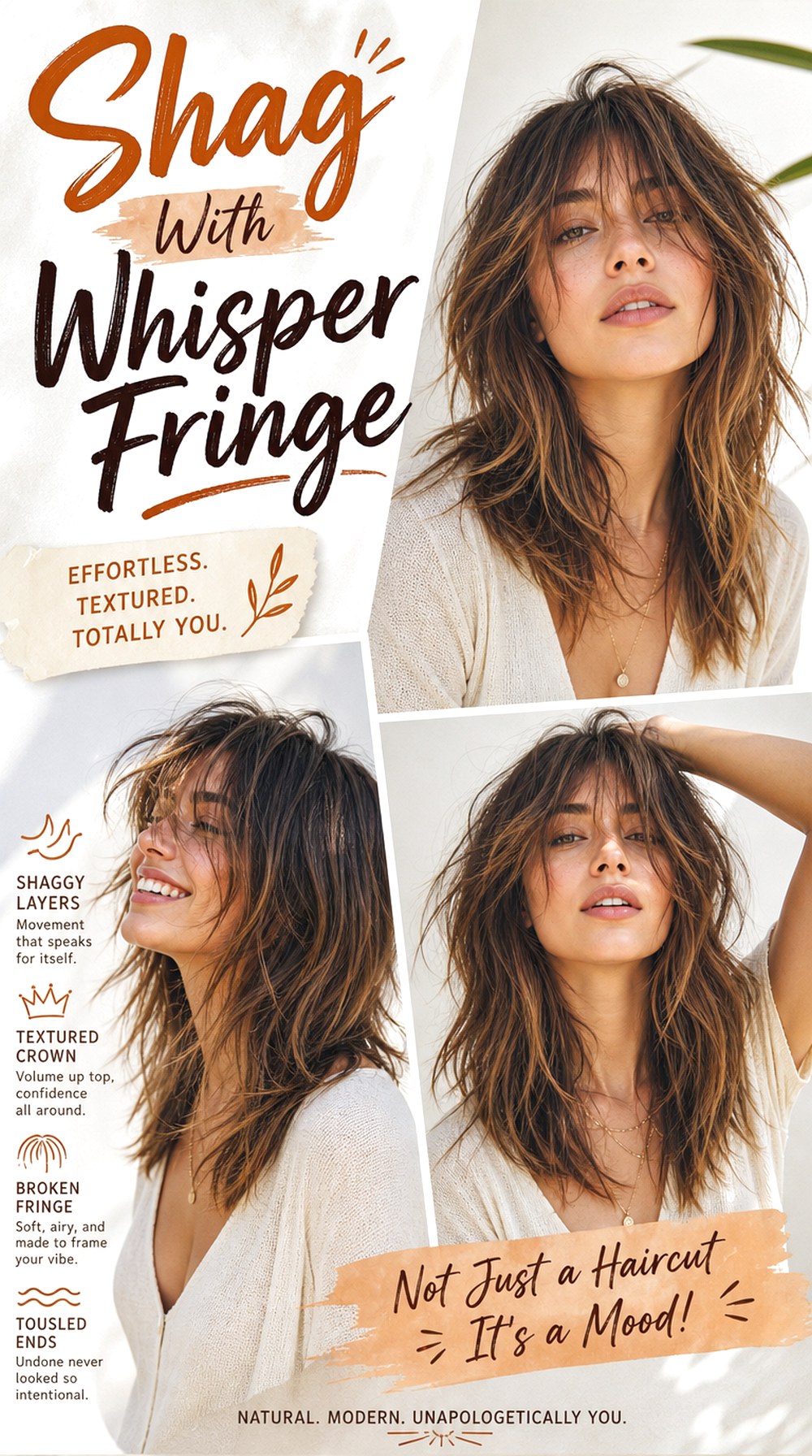
A shag with whisper fringe uses shorter crown layers, textured mids, and lighter ends to create movement from the top downward. The soft fringe continues that broken texture across the forehead without becoming as dense as traditional shag bangs. Natural waves and loose curls are especially useful because they bring the layers to life with less heat styling. Work curl cream or lightweight mousse through damp hair, then use a diffuser or texturizing spray depending on your texture. Styling effort can be low to moderate, but the layered shape benefits from periodic reshaping. Ask the stylist to customize crown volume to your density instead of automatically removing large amounts of hair.
Pro tip: On fine hair, keep the shag layers longer and less numerous so the crown gains movement without sacrificing too much fullness through the ends.
Wavy Whisper Fringe
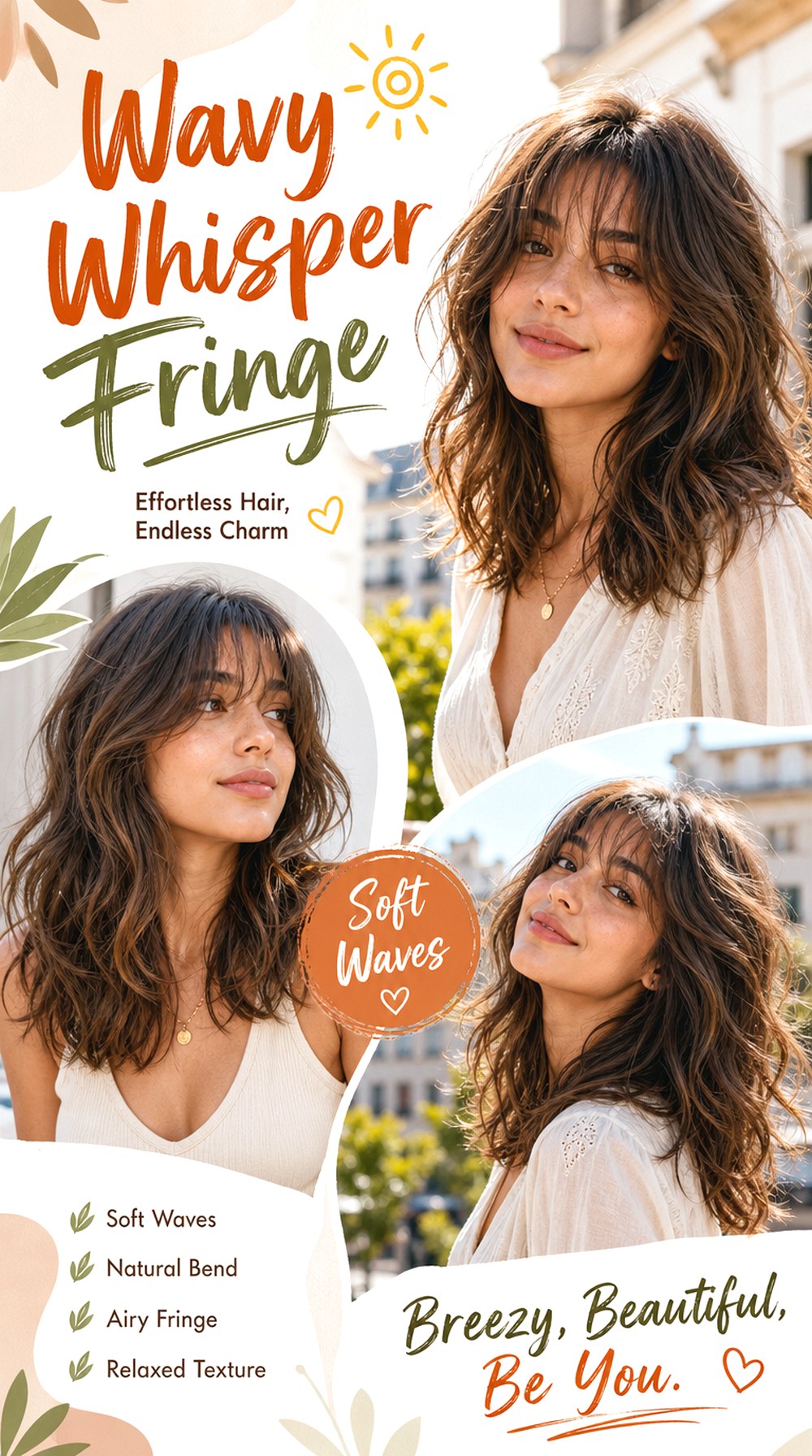
Wavy whisper fringe allows a slight bend to remain in the bangs instead of forcing every strand into a perfectly straight finish. The uneven movement gives the fringe a relaxed edge and connects naturally with wavy lengths. Medium density is particularly easy to adapt, but fine or thick hair can also work when the section size is adjusted. A lightweight mousse and diffuser help preserve the wave pattern, while texturizing spray can refresh separated pieces between washes. Styling is often quick because a little irregularity suits the finish. Since waves can spring upward once dry, the salon cut should account for natural shrinkage and growth direction.
Pro tip: Bring a reference showing the fringe in its natural wavy state, not only a straightened photo, so your stylist can judge the finished length accurately.
Curly Whisper Fringe
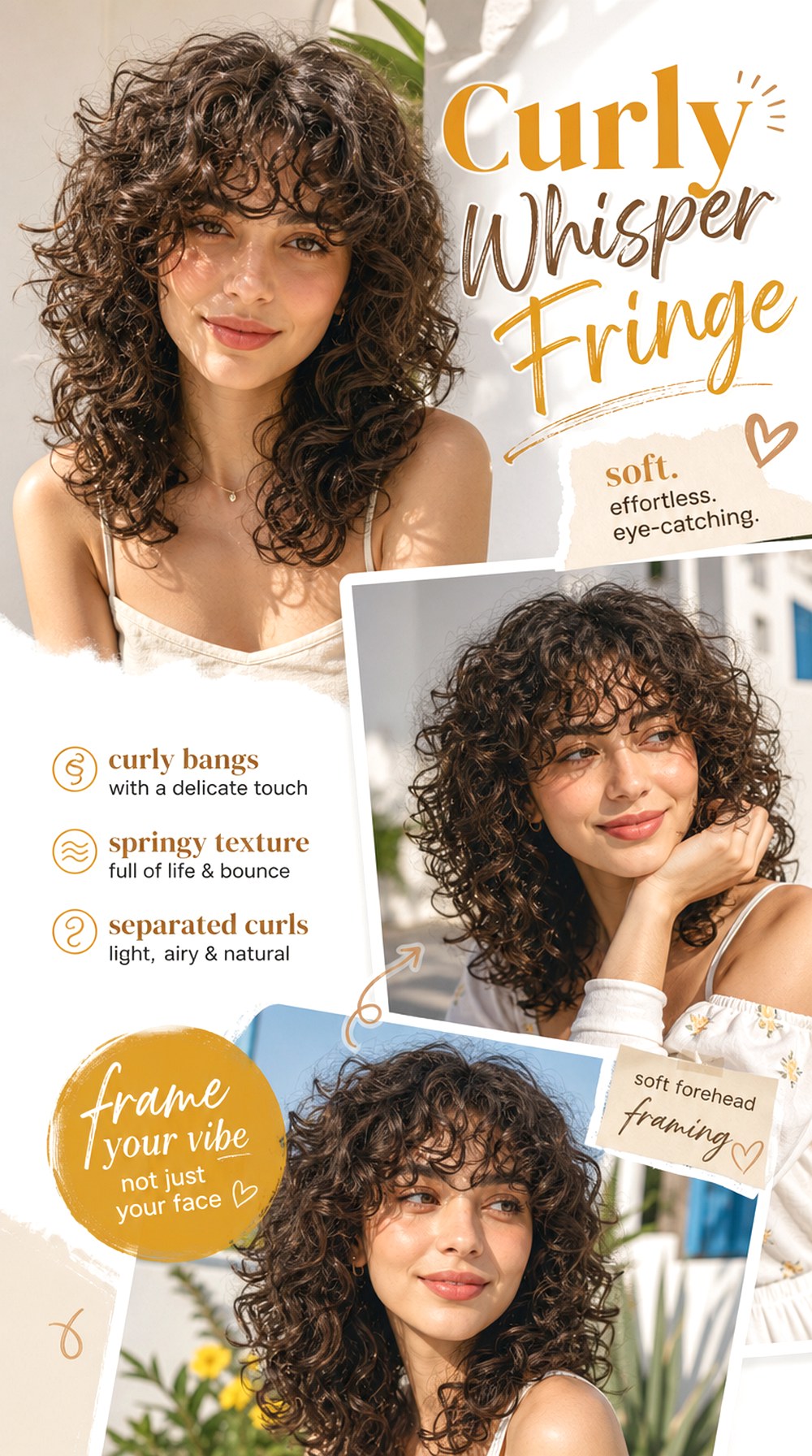
Curly whisper fringe consists of individually defined curls or small curl groups that fall lightly over the forehead rather than forming one dense mass. Length is especially important because curls can shrink considerably after drying. This approach can suit loose curls through tighter patterns, provided the fringe is shaped around the natural spring of the hair. Use leave-in conditioner, curl cream, and a diffuser on low airflow to encourage definition without disrupting the curl groups. Styling effort is moderate on wash day but may require only light refreshing afterward. Ask for the fringe to be assessed and preferably refined in its dry, naturally curled position.
Pro tip: Request a slightly longer first cut if you are unsure about shrinkage; extra length can be shortened later, while an overly short curl takes time to grow.
Fine Hair Whisper Fringe
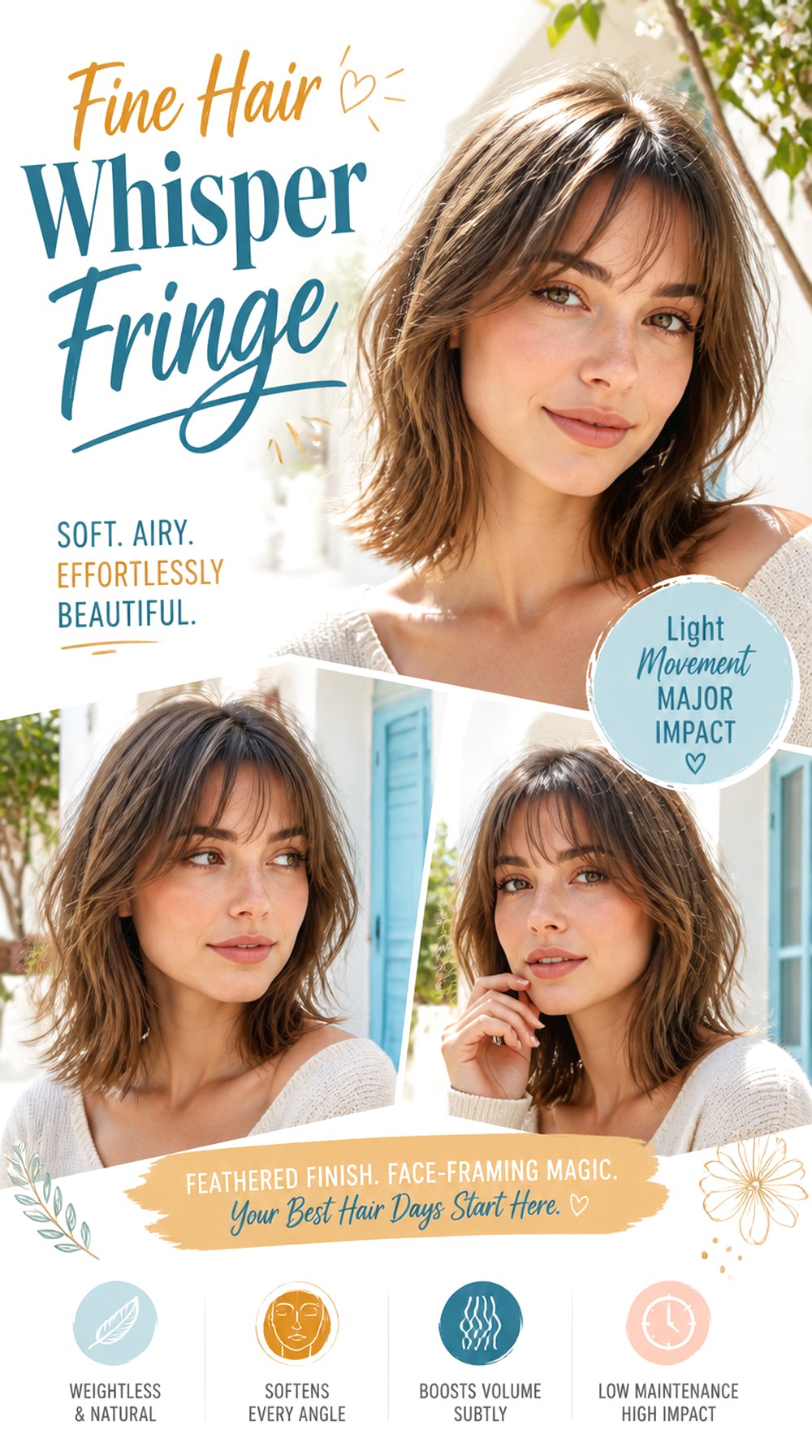
Fine hair whisper fringe uses a narrow section of hair to create visible wisps without taking unnecessary density away from the temples or main haircut. The fringe may sit around the brows with softly irregular ends, helping it look intentional even though each strand is delicate. Straight and lightly wavy fine hair usually needs only modest styling. A root-lifting volumizing spray, small round brush, and light-hold hairspray add control without coating the hair heavily. The routine is quick, but oily roots can make thin bangs separate more than intended. Ask your stylist to avoid deep point-cutting or an overly wide fringe section that could reduce fullness around the face.
Pro tip: Keep dry shampoo focused near the fringe roots rather than loading the ends with product; this preserves movement while helping the bangs stay fresh.
Thick Hair Whisper Fringe
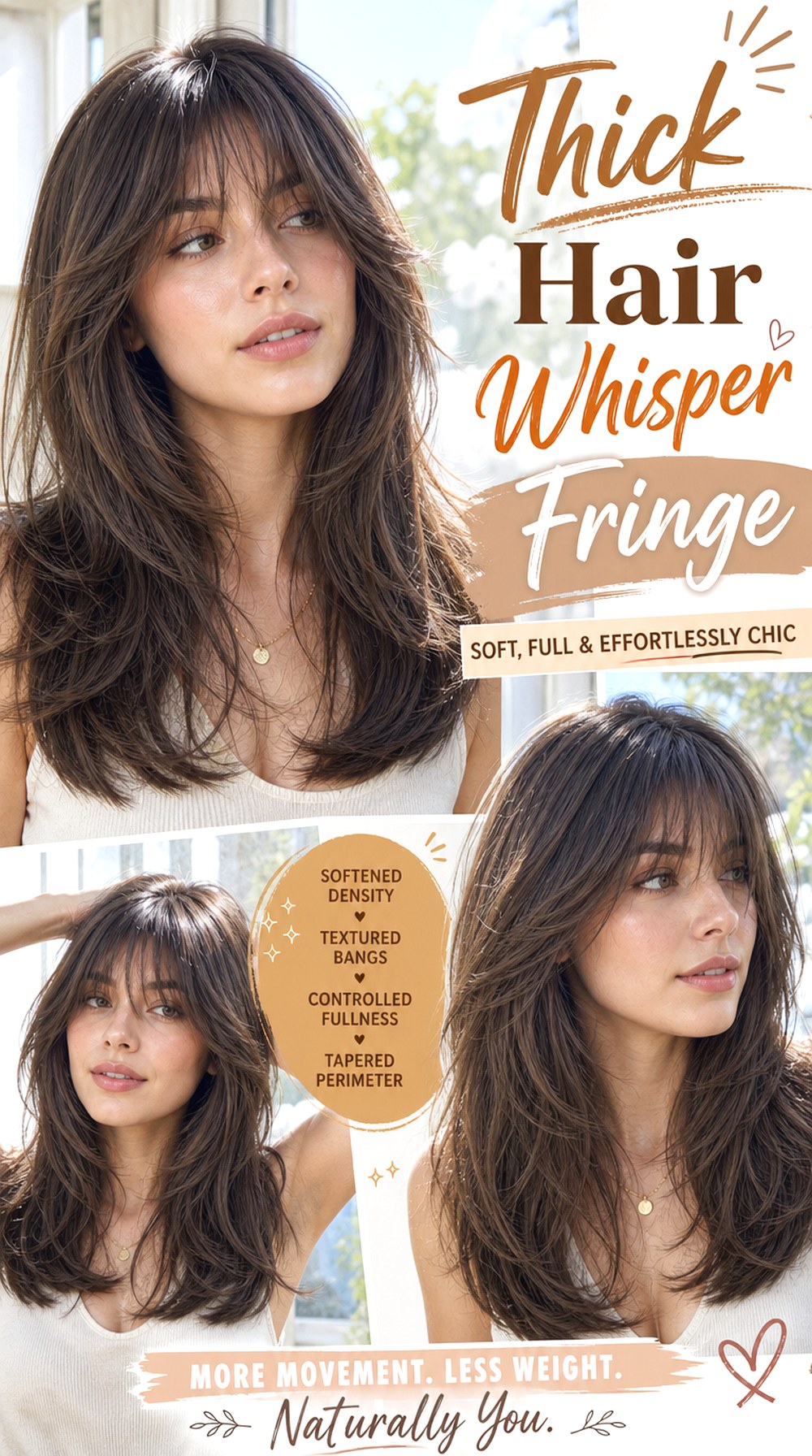
Creating whisper fringe on thick hair requires controlling density so the bangs look light without becoming puffy. A carefully selected section can be internally softened while enough weight remains along the perimeter to keep the strands lying in place. Straight and wavy thick hair are both workable, although coarse textures may need a little extra smoothing. Use heat protectant, a paddle or round brush, and lightweight smoothing serum rather than heavy wax. Styling takes moderate effort when humidity is high. Fringe trims help maintain the intended balance as bulk returns. At the salon, ask for controlled internal texturizing rather than aggressive thinning directly at the hairline.
Pro tip: Have excess bulk removed slightly behind the visible edge; thinning the very ends too heavily can leave thick bangs looking frayed instead of softly separated.
Face-Framing Whisper Fringe

Face-framing whisper fringe begins with light pieces around the forehead and gradually extends into longer sections beside the cheekbones or jaw. The uninterrupted transition makes it a practical choice for someone who wants bangs without a strong boundary between fringe and layers. The placement can be adjusted for many face shapes by moving the shortest and widest points. Straight and wavy textures are straightforward to style with heat protectant, a round brush, and flexible hairspray. Daily effort is light to moderate, and the longer side pieces make growing it out relatively simple. Show your stylist where you want each transition point to land rather than requesting generic face-framing layers.
Pro tip: Choose one facial feature—such as the cheekbone or jaw—as the main landing point for the longer pieces so the framing has a clear, intentional shape.
Rounded Whisper Fringe
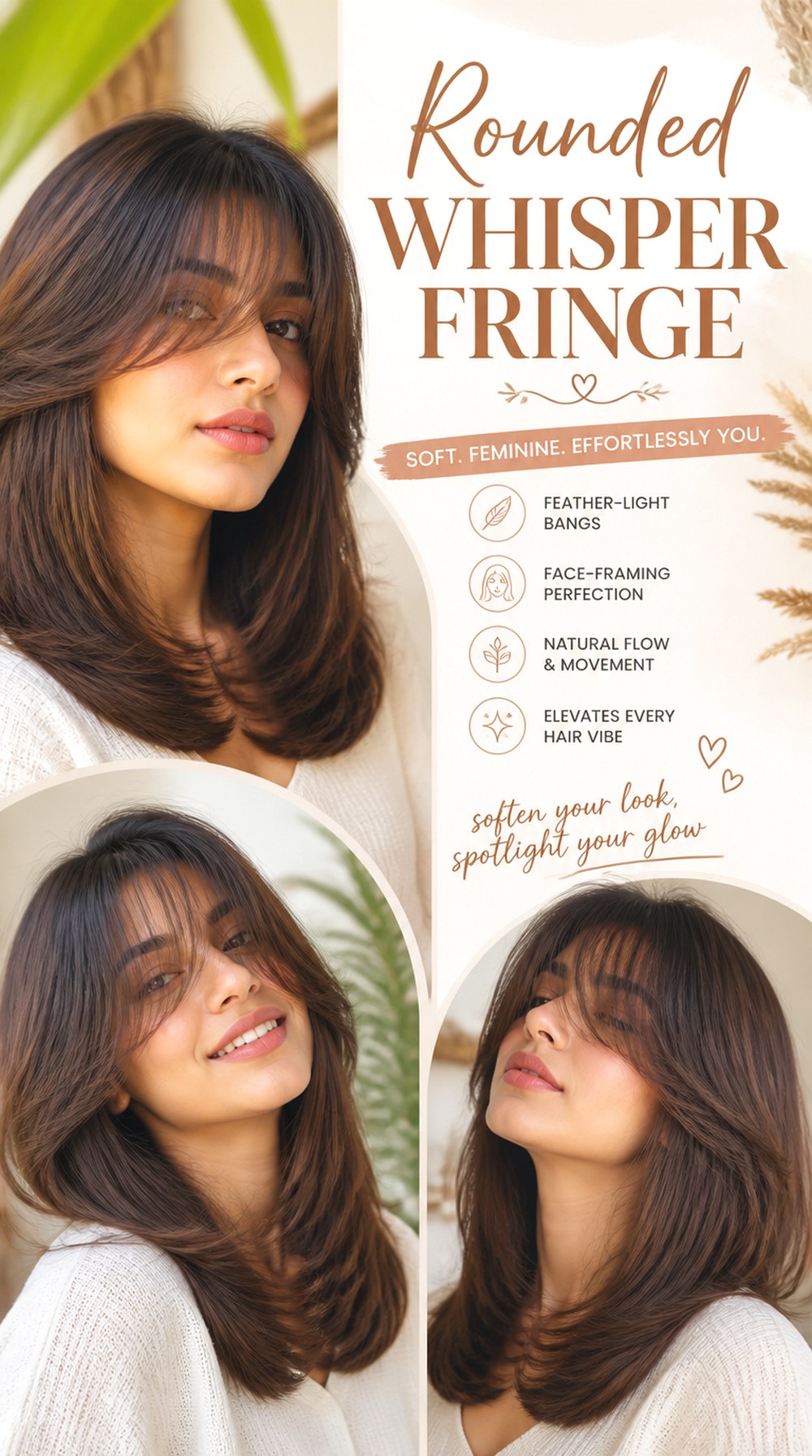
Rounded whisper fringe follows a soft curve, sitting slightly shorter near the center and becoming subtly longer toward the outer edges. Unlike bottleneck bangs, the difference in length is gentle rather than dramatic, creating a smooth frame around the brows. The shape can complement oval, square, and longer faces depending on width and length. Straight hair shows the curve most clearly, while soft waves give it more texture. Use a small round brush, heat protectant, and light-hold hairspray to maintain the bend. Styling is moderate because the curved direction needs some control. Ask the stylist to keep the perimeter airy while maintaining enough weight for the rounded line to remain visible.
Pro tip: Avoid an overly deep fringe section if you want a true whisper finish; too much hair can turn the soft curve into a heavy rounded bang.
Piecey Whisper Fringe

Piecey whisper fringe emphasizes intentional separation, with several fine sections falling individually across the forehead. It has more definition than a fluffy wispy fringe but still leaves visible space between strands. Straight and slightly wavy textures make the separated finish easiest to control, and the idea works well on fine to medium density. Use texturizing spray sparingly, add heat protectant before any hot tools, and use a small flat iron only to redirect stubborn pieces. Styling is generally quick but may need a short refresh during humid weather. Tell your stylist you want distinct, narrow sections at the ends without removing excessive density from the roots.
Pro tip: Apply texture product to your fingertips first and pinch only selected ends; spraying heavily onto the fringe can make separate wisps stick together.
Grown-Out Whisper Fringe
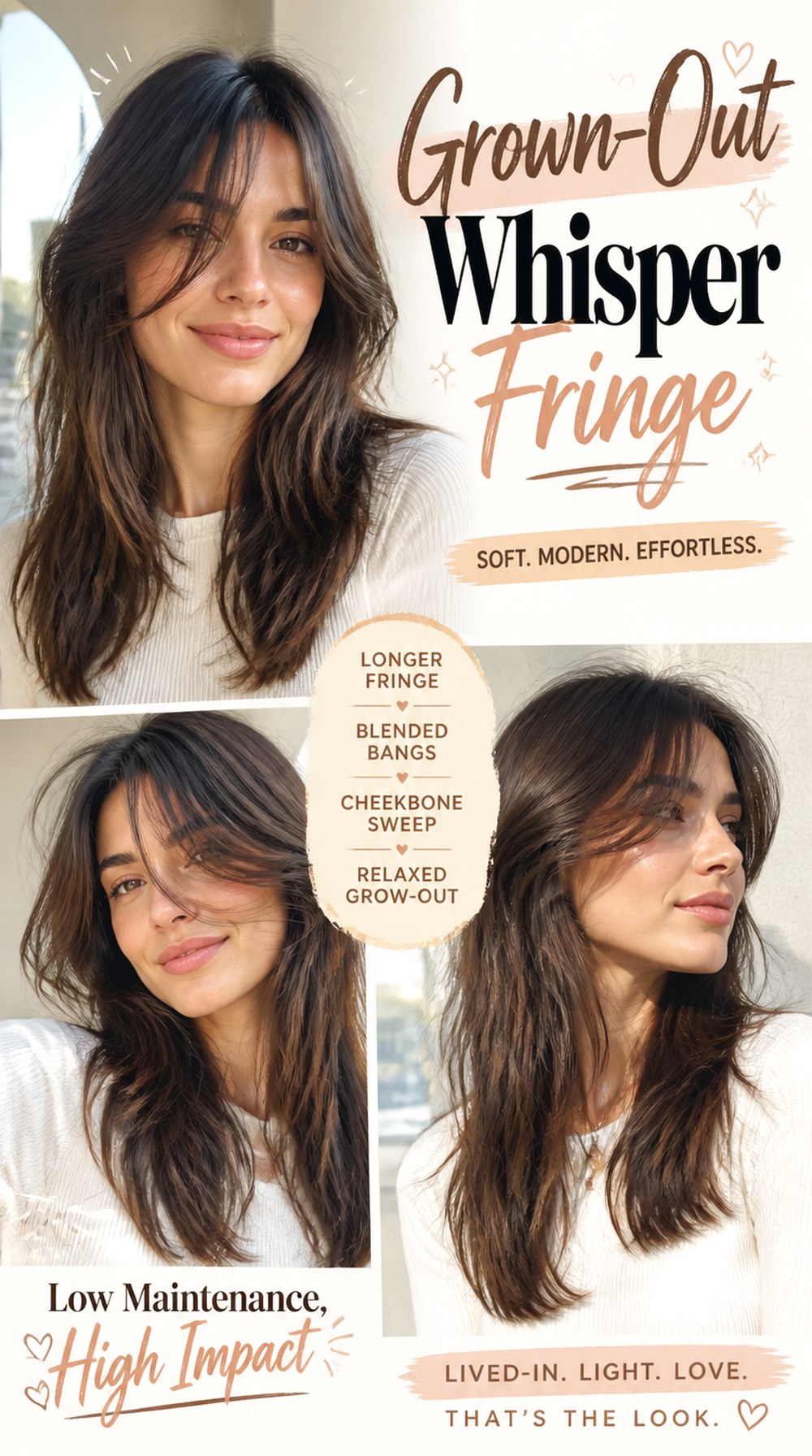
Grown-out whisper fringe sits around the eyes, cheekbones, or upper cheeks and can be divided through the center or swept to either side. It is useful during the transition from shorter bangs because the longer pieces begin functioning like face-framing layers. Straight, wavy, and many curly textures can adapt to this shape, making it one of the lower-maintenance options in the group. Use leave-in conditioner, a medium round brush, and smoothing serum when you want a polished sweep. Daily styling is usually light, and trims can focus on blending rather than restoring a short fringe. Ask your stylist to connect the longest pieces gradually into the surrounding layers.
Pro tip: If you plan to keep growing the fringe, trim only damaged or uneven ends and concentrate on reshaping the connection to the sides instead of shortening the center again.
Conclusion
These Whisper Fringe Hairstyle Ideas show how much variation is possible within one soft, lightweight fringe family. The bangs can be short or grown out, narrow or wide, gently rounded or side-swept, while the surrounding haircut can range from a French bob to a long layered shape. Density, layers, fringe thickness, volume, texture, parting, and finish can all be adjusted rather than copied exactly from one photo.
The best choice depends on your face shape, natural texture, hair density, preferred maintenance level, and normal styling routine. Pay particular attention to fringe length and where the outer pieces connect with the haircut. Those small details often determine whether the finished shape works naturally with your hair or requires constant restyling.
CTA
Choose one or two favorite ideas and save clear photo references before your appointment. Discuss your face shape, natural hair texture, density, preferred length, maintenance tolerance, and usual styling routine with your stylist. In each reference, point out the exact fringe thickness, layers, face-framing length, volume, parting, or finish you want. It is equally useful to identify anything you do not want, such as heavy bangs, short sides, or excessive thinning, so the final haircut can be adapted to your own hair rather than copied without adjustment.
FAQs
What hair type works best for whisper fringe?
Straight and wavy hair can usually achieve the airy separation easily, but curly hair can also wear whisper fringe when the bangs are cut with natural shrinkage and curl pattern in mind. Density matters as much as texture.
How often does whisper fringe need trimming?
Shorter versions commonly benefit from a refresh around every four to six weeks. Long, curtain, or grown-out variations can often go longer because extra length blends more easily into surrounding layers.
Can whisper fringe work on fine hair?
Yes, but the fringe section should generally stay shallow. Taking too much hair from the front can reduce fullness around the temples and sides. Light texturing at the ends is usually more useful than heavy thinning.
Does whisper fringe require daily heat styling?
Not necessarily. Straight bangs may need a brief blow-dry to control the roots, while wavy or curly fringe can often be styled with natural texture and a diffuser. Growth patterns, humidity, and the finish you prefer will determine how much daily styling is needed.