12 90s Supermodel Haircut Ideas
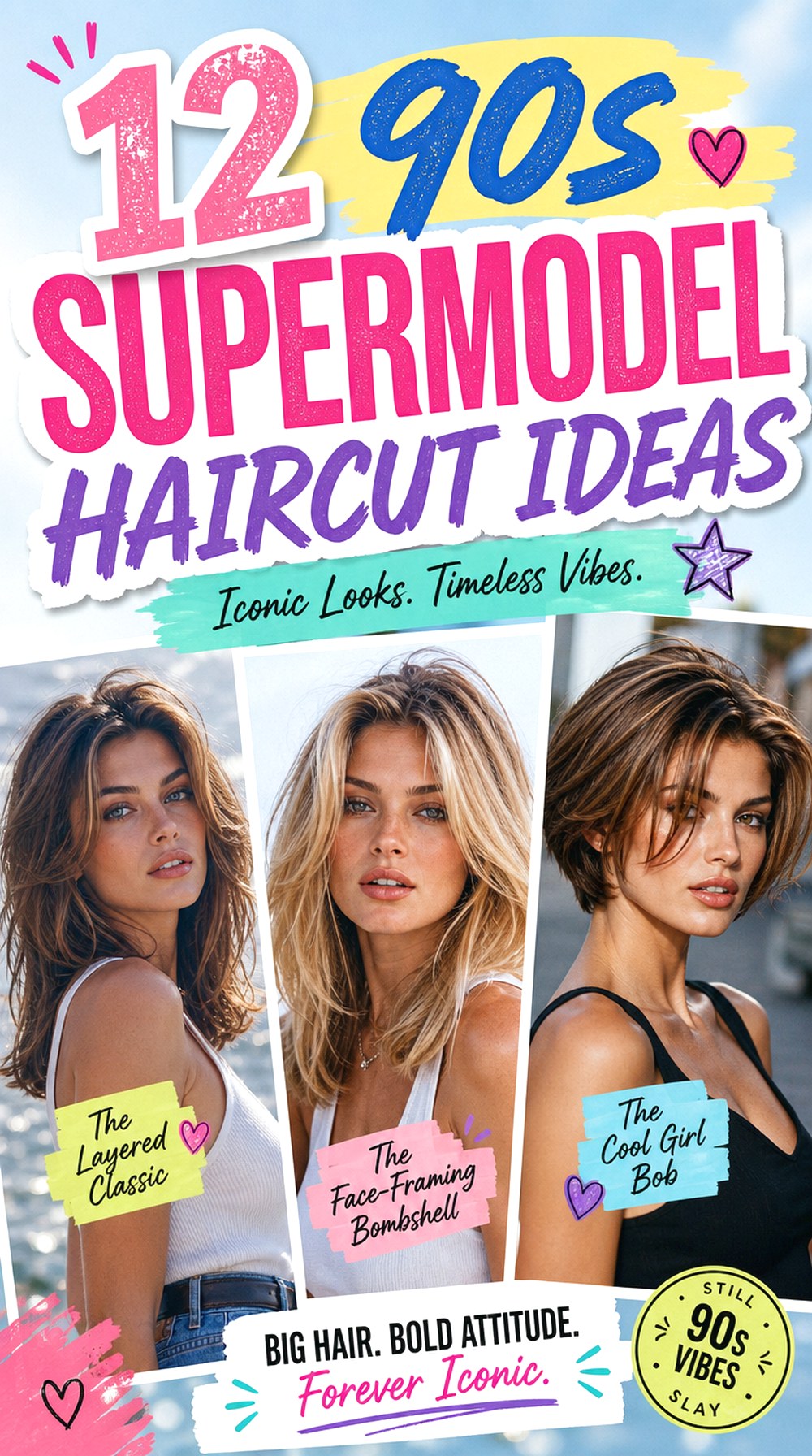
90s supermodel haircut ideas are built around movement, polished volume, and layers that look especially good with a full blowout. Instead of heavily disconnected pieces, many of these cuts keep enough weight through the ends while using longer layers around the crown and face. The result can range from waist-length, glossy hair to shoulder-skimming shapes and short layered pixies, but the common thread is hair that moves rather than sitting flat.
These cuts often work best on medium to thick hair because there is enough density to support sweeping layers, although fine hair can wear softer versions with fewer layers and stronger ends. Straight and wavy textures are particularly easy to shape into the classic rounded finish, while curly hair may need customized layering to avoid excess width or shrinkage. Face-framing pieces can also be adjusted around the cheekbones, jaw, or collarbone to suit different face shapes.
Daily effort depends heavily on the finish you want. Air-dried texture can make many versions relaxed and soft, while a true supermodel-style blowout usually needs heat protectant, a round brush, rollers, or another volume-building tool. Before committing, consider your density, natural texture, preferred length, willingness to blow-dry, and how often you want to refresh the shape at the salon.
Quick List
- Cindy Crawford-Inspired Long Feathered Layers
- Claudia Schiffer-Inspired Bombshell Layers
- Naomi Campbell-Inspired Sleek Long Layers
- Christy Turlington-Inspired Collarbone Blowout
- Linda Evangelista-Inspired Layered Pixie
- Tatjana Patitz-Inspired Soft Shag
- Helena Christensen-Inspired Side-Parted Layers
- Tyra Banks-Inspired Voluminous Face-Framing Layers
- Kate Moss-Inspired Tousled Midi Layers
- Elle Macpherson-Inspired Extra-Long Layered Blowout
- Yasmeen Ghauri-Inspired Curved Shoulder-Length Layers
- Stephanie Seymour-Inspired Long Curtain Layers
Cindy Crawford-Inspired Long Feathered Layers
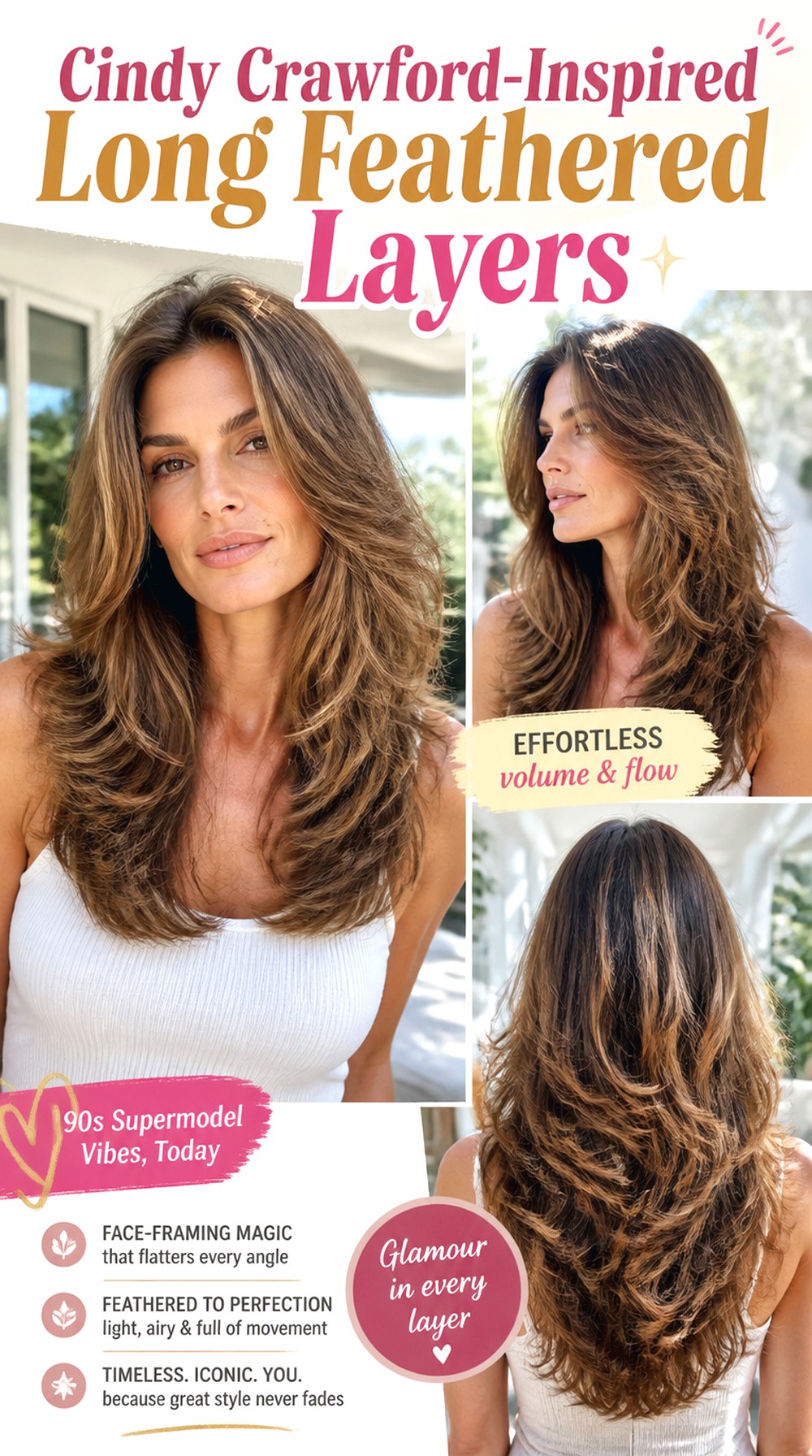
Long feathered layers keep plenty of length while creating lift and sweeping movement around the face. The shortest pieces can begin near the cheekbones or jaw, then blend gradually into fuller ends instead of becoming thin and wispy. Medium or thick straight-to-wavy hair supports the shape especially well, and the face framing can be adjusted for oval, round, square, or heart-shaped faces. A full blowout takes moderate styling time, though the cut can also be worn softly air-dried. Use a volumizing mousse, large round brush, and heat protectant. Ask your stylist for long blended layers with enough weight left through the bottom, and plan to refresh them roughly every 8–12 weeks.
Pro tip: Keep the crown layers long enough to fall below the chin when possible; cutting them too short can create more height than the classic flowing 90s shape needs.
Claudia Schiffer-Inspired Bombshell Layers

Bombshell layers create a rounded silhouette with noticeable crown lift, sweeping front sections, and polished ends that curve away from the face. This shape is particularly flattering on medium-density straight or slightly wavy hair because the layers can hold volume without looking overly bulky. Fine hair can wear a simplified version with fewer interior layers. Styling normally takes moderate effort and works best with a controlled blow-dry. Try root-lifting spray, a ceramic round brush, and light-hold hairspray to keep the bounce flexible. Salon maintenance is usually manageable every 8–10 weeks. Bring a reference showing exactly how much volume you want at the crown and ask for longer, connected layers rather than short, choppy pieces.
Pro tip: Have the front layer land near the mouth or jaw if you want dramatic movement without committing to a shorter fringe that needs frequent trimming.
Naomi Campbell-Inspired Sleek Long Layers

Sleek long layers focus more on shine, length, and fluid movement than exaggerated volume. The perimeter stays strong and full, while subtle internal layers prevent long hair from feeling heavy. A clean center or soft off-center part keeps the finish refined. Straight hair is the easiest match, although wavy textures can be smoothed when desired. This cut suits medium to thick density particularly well because bulk can be removed without sacrificing the long outline. Styling can be fairly quick on naturally straight hair but takes longer if smoothing is needed. Use a smoothing serum, heat protectant, and paddle brush. Ask your stylist to preserve a dense baseline and use restrained layering through the mid-lengths, with trims approximately every 10–12 weeks.
Pro tip: If your ends become thin easily, keep the shortest layers below the collarbone so the bottom still appears full when the hair is worn straight.
Christy Turlington-Inspired Collarbone Blowout
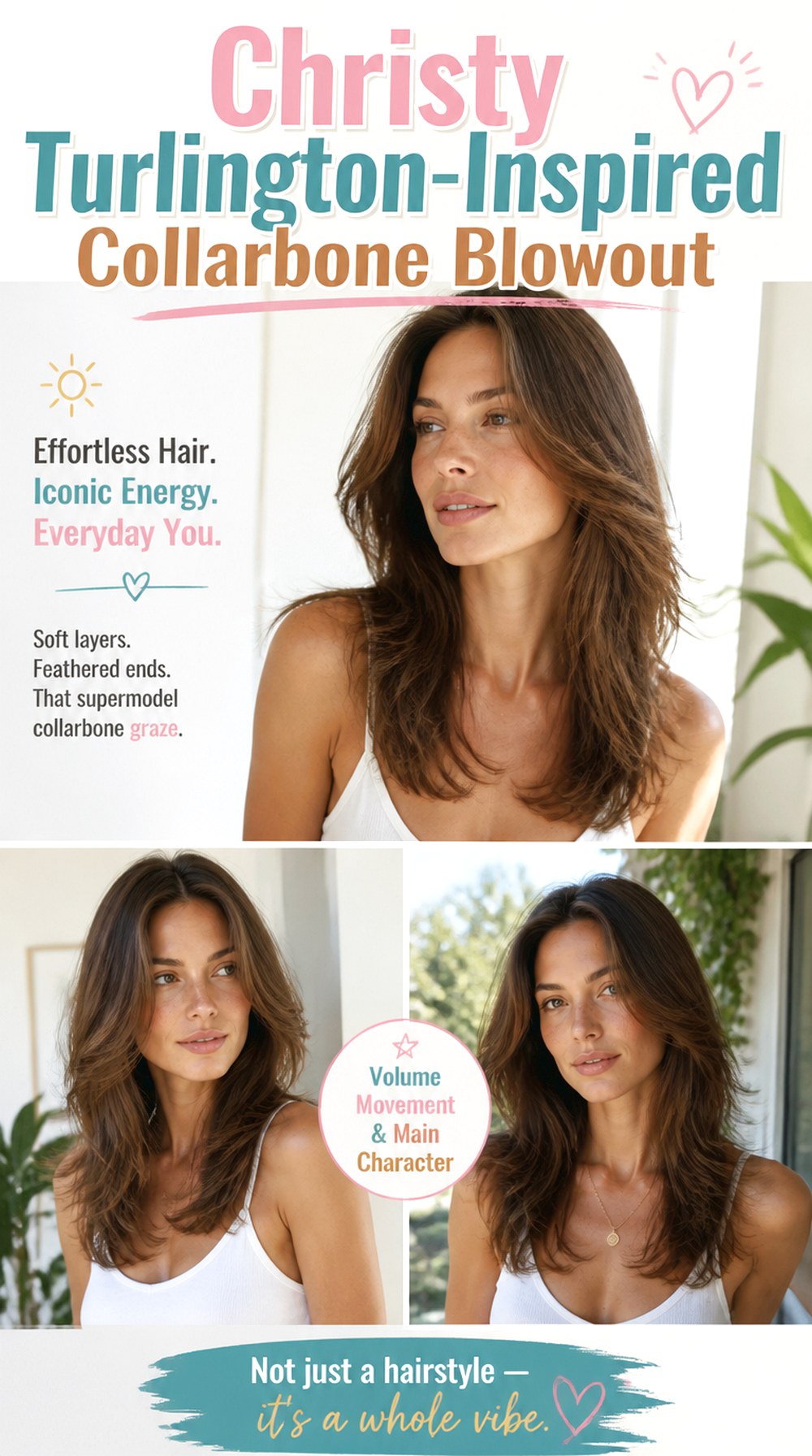
A collarbone-length cut brings 90s volume into a more manageable shape. Soft layers around the jaw and neckline give the hair enough movement to turn under or flip outward during a blowout, while a slightly rounded perimeter keeps the ends substantial. Medium-density straight and wavy textures are ideal, but fine hair can also benefit because the shorter length naturally creates more lift. Expect moderate styling time when aiming for a polished, brushed-out finish. Useful supplies include a lightweight mousse, medium round brush, and flexible hairspray. The shape may need trimming every 6–8 weeks to keep the ends crisp. At the salon, explain whether you want the collarbone length to sit above, directly on, or just below your shoulders.
Pro tip: Ask for only light layering at the back if your hair tends to flip unpredictably at the shoulders; more shaping can be concentrated around the face instead.
Linda Evangelista-Inspired Layered Pixie

A layered pixie offers a short take on 90s supermodel hair, using soft graduation, crown texture, and longer pieces around the front rather than a severe cropped finish. It works well on straight, wavy, and softly curly textures, especially when the hair has enough density to create shape at the crown. The fringe can be swept sideways or lifted away from the face, making the cut adjustable for several face shapes. Daily styling is quick, but the haircut itself requires more frequent salon visits, usually every 4–6 weeks. A light styling cream, small round brush, and texturizing spray give useful control without stiffness. Ask your stylist to keep enough length on top for movement while tapering the sides neatly.
Pro tip: Avoid thinning the top too aggressively on fine hair; keeping a little weight there makes the pixie easier to shape and prevents it from appearing sparse.
Tatjana Patitz-Inspired Soft Shag

The soft shag combines relaxed 90s texture with longer, blended layering rather than the heavily chopped finish of a more extreme shag. Layers create movement around the crown and cheekbones, while the ends remain loose and slightly undone. Wavy hair is particularly suited to this cut because natural bends help define the shape with minimal heat. Medium to thick density can handle more internal layering, whereas fine hair should keep the perimeter stronger. Daily styling can be quick when embracing natural texture. Use texturizing spray, curl cream, and a diffuser if waves need encouragement. Salon visits every 8–10 weeks usually keep the layers balanced. Show your stylist how soft you want the transition between the crown and longer lengths.
Pro tip: On thick hair, ask for controlled internal weight removal rather than excessive thinning at the ends; this reduces bulk while preserving the shag’s full outline.
Helena Christensen-Inspired Side-Parted Layers
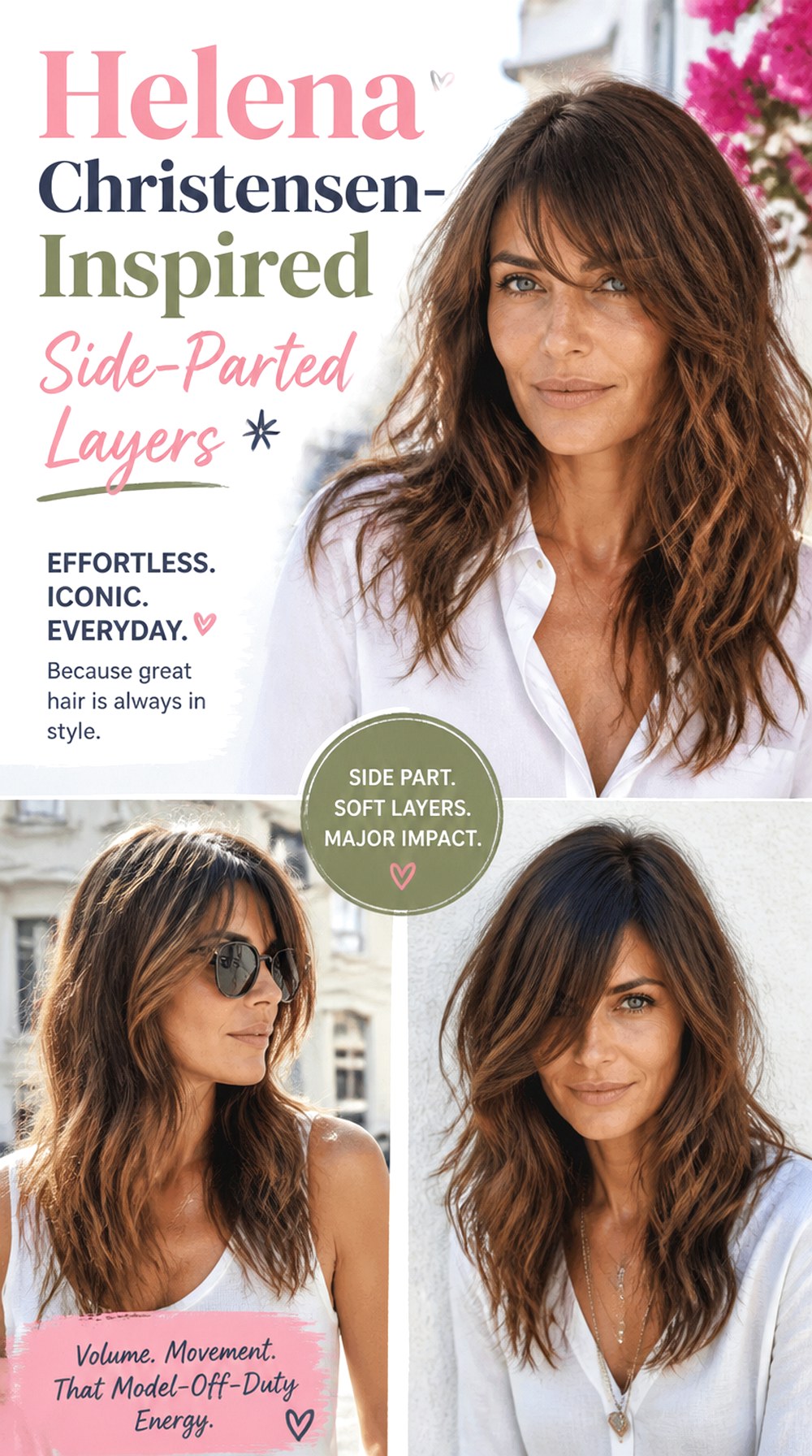
A deep side part instantly changes the balance of long layers, creating extra lift over one side while the opposite side sits closer to the cheek. Long face-framing pieces can sweep from the cheekbone or jaw into chest-length layers, giving the hair a glamorous but wearable shape. Medium and thick straight or wavy hair tends to hold this silhouette well. It can also help soften angular features because the parting creates asymmetry around the face. Styling is moderate if you want a smooth blowout, though natural waves can reduce the work. Reach for a volumizing spray, large round brush, and smoothing serum. Ask your stylist to cut the face frame with your preferred side part in place so the front pieces fall correctly.
Pro tip: If you regularly switch your part, keep the front layers slightly longer and more balanced so they still sit well when moved from one side to the other.
Tyra Banks-Inspired Voluminous Face-Framing Layers
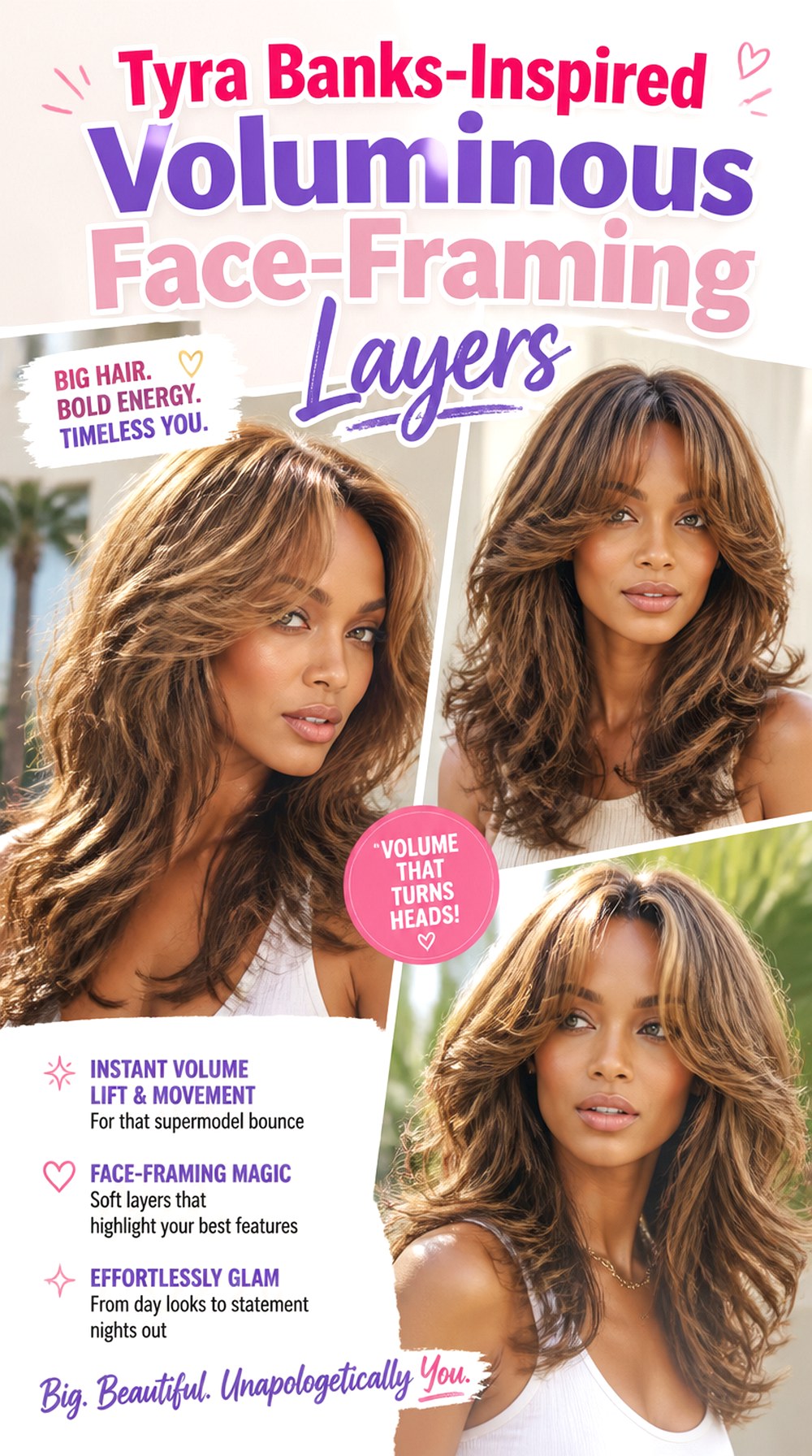
Strong face framing is the main feature here, with shorter pieces sweeping around the cheekbones and longer layers building volume through the sides. The ends stay soft but substantial, allowing a round-brush blowout to create the wide, bouncy movement associated with 90s editorial hair. Medium to thick textures have enough body for this layered shape, while finer hair should use fewer layers to protect density. Styling requires moderate time when you want maximum bounce. A root mousse, heat protectant, and large Velcro rollers help hold the shape after blow-drying. Layers usually benefit from refreshing every 8–10 weeks. At your salon visit, identify exactly where you want the shortest face-framing section to hit rather than simply requesting “lots of layers.”
Pro tip: Let the first major layer begin around the cheekbone for stronger framing or closer to the jaw if you prefer a softer, easier-to-grow-out result.
Kate Moss-Inspired Tousled Midi Layers

Tousled midi layers create a less polished interpretation of 90s supermodel hair. The length usually falls between the shoulders and chest, with light layering that encourages bends, separation, and an airy finish. A center or slightly uneven part reinforces the relaxed feel. Straight-to-wavy textures work naturally with this shape, and fine or medium density can benefit because the layers are not overly aggressive. Styling can be quick: air-dry when possible, then add definition only where needed. Try a sea-salt or texturizing spray, lightweight leave-in conditioner, and small flat iron for a few loose bends. Salon maintenance is relatively easy at around 8–12 weeks. Ask for soft, almost invisible layers instead of a highly sculpted blowout cut.
Pro tip: Keep the bottom two or three inches fairly dense if your hair is fine; too much razoring can make this intentionally undone finish look stringy rather than airy.
Elle Macpherson-Inspired Extra-Long Layered Blowout

Extra-long hair can still carry dramatic movement when the layers are planned carefully. This cut keeps the overall length well below the chest while using long internal and face-framing layers to stop the hair from hanging in one heavy sheet. Thick straight or wavy hair is an especially strong match, since strategic layering can release weight while maintaining a luxurious perimeter. A polished blowout takes more styling time simply because of the length. Useful tools include a heat protectant, extra-large round brush, and lightweight volumizing foam. Trims every 10–12 weeks can help prevent thin, worn ends. Ask your stylist to keep the shortest back layers long and concentrate visible movement through the front and mid-lengths.
Pro tip: If your hair is extremely thick, request internal debulking beneath the surface rather than short top layers; it controls heaviness without creating unwanted puffiness at the crown.
Yasmeen Ghauri-Inspired Curved Shoulder-Length Layers

Shoulder-length layers with curved ends create a controlled, sculpted finish that still has plenty of movement. The front sections can sweep around the jaw while the lower layers turn softly inward or outward, depending on the blow-dry. This length suits straight and wavy textures and can work particularly well for medium-density hair that needs shape without losing fullness. It is moderately easy to maintain, though the curved finish generally requires heat styling after washing. Use a heat protectant spray, medium round brush, and light smoothing cream. A trim every 6–8 weeks keeps the shoulder-length outline intentional. Tell your stylist where you normally part your hair and ask for blended layers that follow the head shape without removing excessive weight from the perimeter.
Pro tip: If your hair expands in humidity, leave slightly more weight around the lower half; over-layering can encourage the sides to become wider as moisture levels rise.
Stephanie Seymour-Inspired Long Curtain Layers

Long curtain layers combine a center-parted face frame with flowing lengths through the chest and back. The shortest front sections can sit around the cheekbones or jaw before gradually connecting to longer layers, producing the sweeping motion of curtain bangs without requiring a short fringe. Straight and wavy medium-to-thick hair responds especially well, while fine hair should keep the framing pieces longer and lighter. Styling takes moderate effort if you want the front to curve away from the face. A round brush, volumizing spray, and flexible hairspray are useful for holding that movement. Refresh the face frame every 6–8 weeks while longer sections can often go longer. Ask your stylist for seamless connections rather than obvious steps between each layer.
Pro tip: For easier growing out, keep the shortest curtain section at jaw level; cheekbone-length pieces create more drama but usually need more regular shaping to sit correctly.
Conclusion
These 90s supermodel haircut ideas show how much the same volume-focused aesthetic can change depending on the cut. You can keep the length dramatic, move it up to the shoulders, or choose a short layered pixie while still using the decade’s signature movement and face framing. Density determines how much layering the hair can comfortably handle, while natural texture affects whether you need a full blowout or only light styling. Bangs or fringe can be short, curtain-like, or skipped entirely, and the parting can also change the overall balance. The best choice should account for your face shape, hair texture, density, preferred volume, finish, maintenance level, and realistic daily styling routine.
CTA
Choose one or two ideas that match the length and amount of styling you actually want, then save clear photo references for your salon appointment. Discuss your face shape, natural hair texture, density, preferred length, maintenance schedule, and normal styling routine with your stylist. In each reference photo, point out the exact layers, fringe placement, volume, parting, or finish you like rather than asking for the entire haircut without adjustments.
FAQs
What Hair Type Works Best For A 90s Supermodel Haircut?
Straight and wavy medium-to-thick hair often holds the classic layered blowout easily, but fine or curly hair can also wear adapted versions. Fine hair generally needs fewer layers, while curly hair benefits from layering planned around its natural shrinkage and volume.
How Much Styling Does 90s Supermodel Hair Need?
A full, rounded blowout usually requires moderate styling with a blow-dryer, round brush, rollers, or similar tools. Softer shags and long subtle layers can be much lower maintenance when worn with natural texture.
How Often Should 90s Supermodel Layers Be Trimmed?
Most long layered cuts can be refreshed about every 8–12 weeks. Shoulder-length shapes may need trimming closer to 6–8 weeks, while short pixies often need maintenance every 4–6 weeks.
Can Fine Hair Wear Voluminous 90s Layers?
Yes, but the layering should usually be restrained. Keeping a stronger perimeter and using longer face-framing pieces helps preserve fullness, while lightweight mousse or root-lifting spray can create volume without removing too much density.