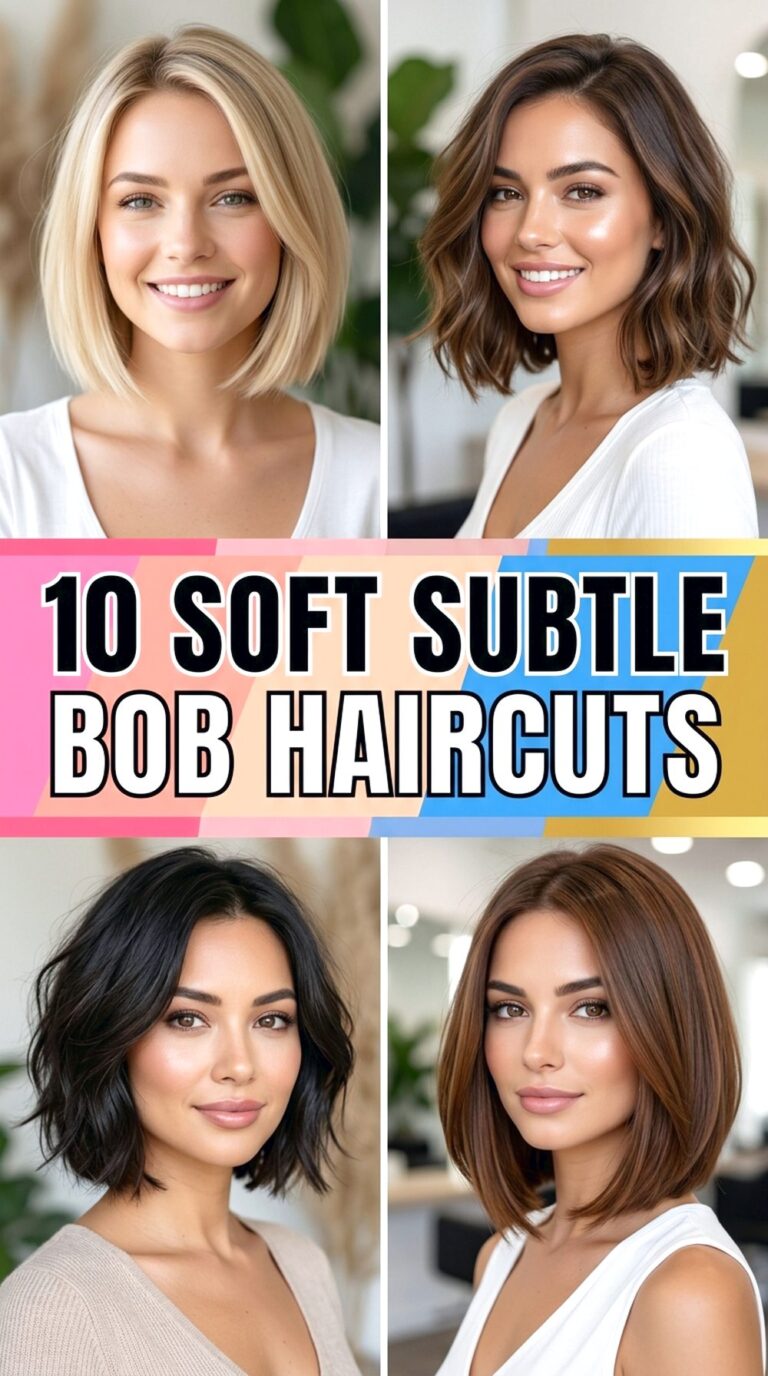
16 Long Rachel Haircut Ideas

The Long Rachel haircut takes the recognizable face-framing shape of the classic Rachel and stretches it into a softer, longer silhouette. Instead of sitting around the shoulders with strongly defined layers, this version usually keeps the overall length below the shoulders while adding shorter pieces around the cheekbones, jaw, and collarbone. The result can look smooth and polished, feathered and bouncy, or relaxed with natural waves.
Long Rachel Haircut Ideas can work across straight, wavy, and some curly textures, but the placement of the layers matters. Fine hair generally benefits from fewer internal layers so the ends do not become thin, while dense hair can handle more weight removal and movement. Oval, round, square, heart, and longer face shapes can all be accommodated by changing where the shortest face-framing section begins.
Daily styling varies from a quick air-dry routine to a more structured round-brush blowout. Most versions benefit from shape-refreshing salon visits every eight to twelve weeks, with bangs requiring more frequent attention. Before choosing one, consider how much length you want to keep, how your natural texture behaves, and whether you prefer visible volume or a softer, lower-maintenance finish.
Quick List
- Classic Long Rachel With Face-Framing Layers
- Long Rachel With Curtain Bangs
- Long Rachel With Wispy Bangs
- Long Rachel With A Deep Side Part
- Sleek Straight Long Rachel
- Wavy Long Rachel
- Curly Long Rachel
- Long Rachel With Feathered Ends
- Long Rachel With A Rounded Blowout
- Long Rachel With Subtle Layers
- Long Rachel With Heavy Layers
- Long Rachel For Fine Hair
- Long Rachel For Thick Hair
- Long Rachel With A Center Part
- Long Rachel With Flipped Ends
- Long Rachel With Jaw-To-Collarbone Face Framing
Classic Long Rachel With Face-Framing Layers
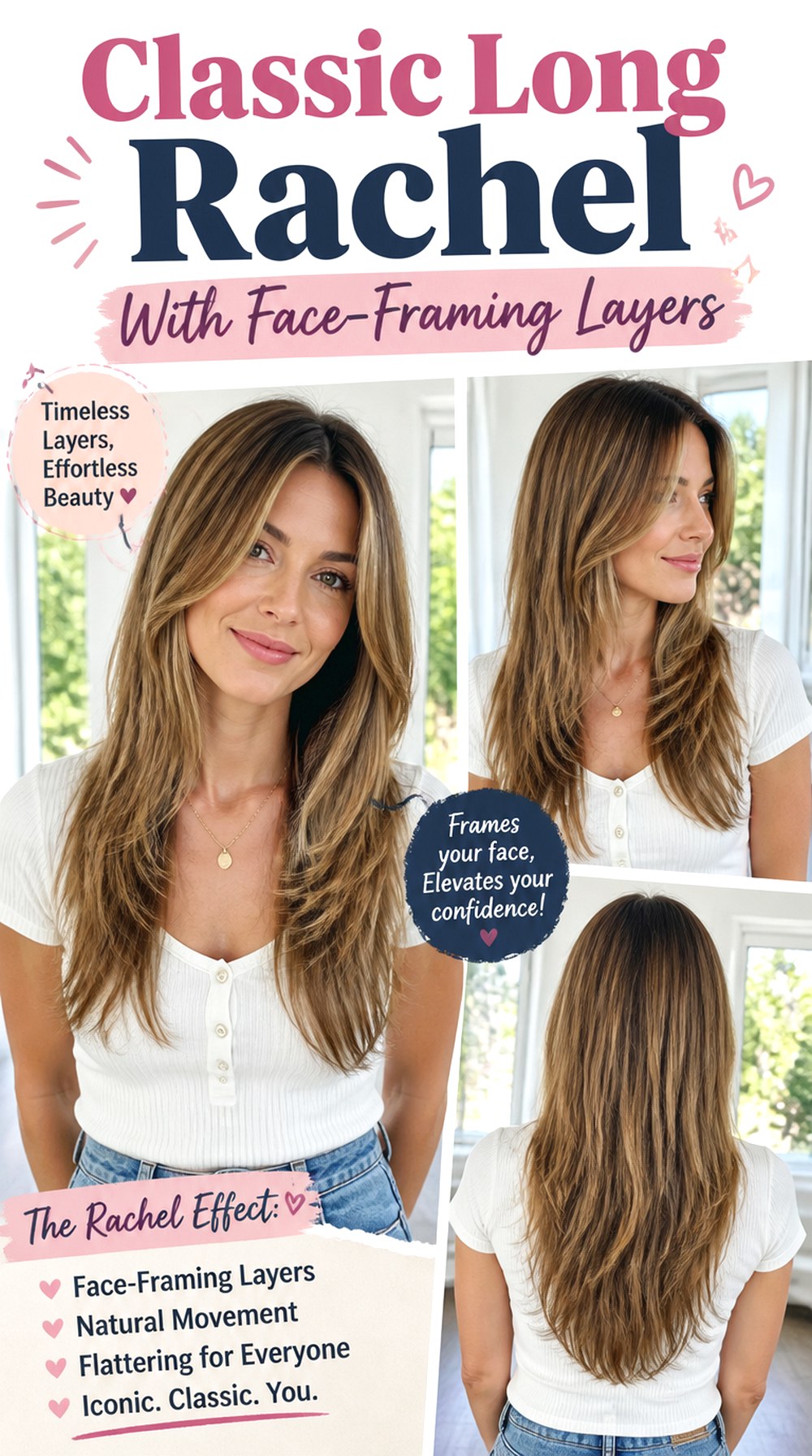
The classic long Rachel keeps plenty of length through the back while building noticeable movement around the face. Shorter sections can start near the cheekbones or jaw before blending into shoulder and chest-length layers. It works especially well on medium-density straight or softly wavy hair, although thicker hair may need some internal weight removed. A round-brush blow-dry gives the layers their familiar curved shape, so styling takes moderate effort rather than being completely wash-and-go. Use heat protectant, a medium round brush, and lightweight mousse for lift without stiffness. Salon visits every eight to ten weeks help maintain the graduation. Show your stylist exactly where you want the shortest front layer to fall.
Pro tip: Keep the perimeter fairly full rather than heavily thinning the bottom; the contrast between solid ends and lighter face-framing layers gives this haircut its recognizable shape.
Long Rachel With Curtain Bangs
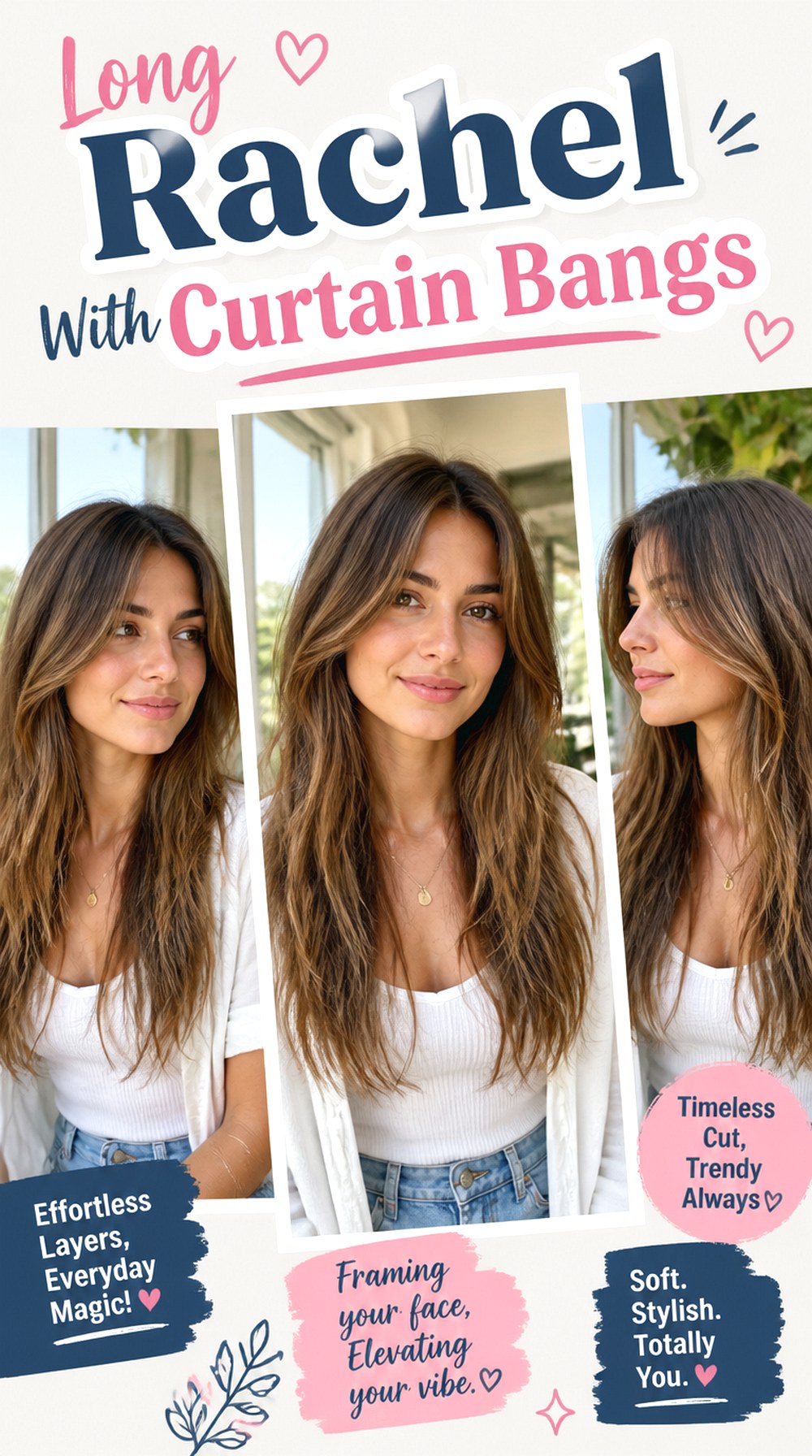
Curtain bangs add a softer focal point to the long Rachel by creating short pieces around the eyes that gradually open toward the cheekbones. The rest of the haircut stays long and layered, allowing the fringe to blend naturally instead of looking disconnected. This option suits straight and wavy textures particularly well and can help balance oval, heart, or longer face shapes when the bang length is adjusted correctly. Expect a few minutes of fringe styling most mornings. A small round brush, heat protectant, and light-hold hairspray are useful for controlling direction without making the bangs rigid. Bang trims may be needed every four to six weeks, while the longer layers can go longer. Ask for a fringe that separates easily at the center.
Pro tip: Have the shortest part of the curtain fringe cut long enough to sweep away from the eyes; overly short center pieces can make the grow-out stage more difficult.
Long Rachel With Wispy Bangs
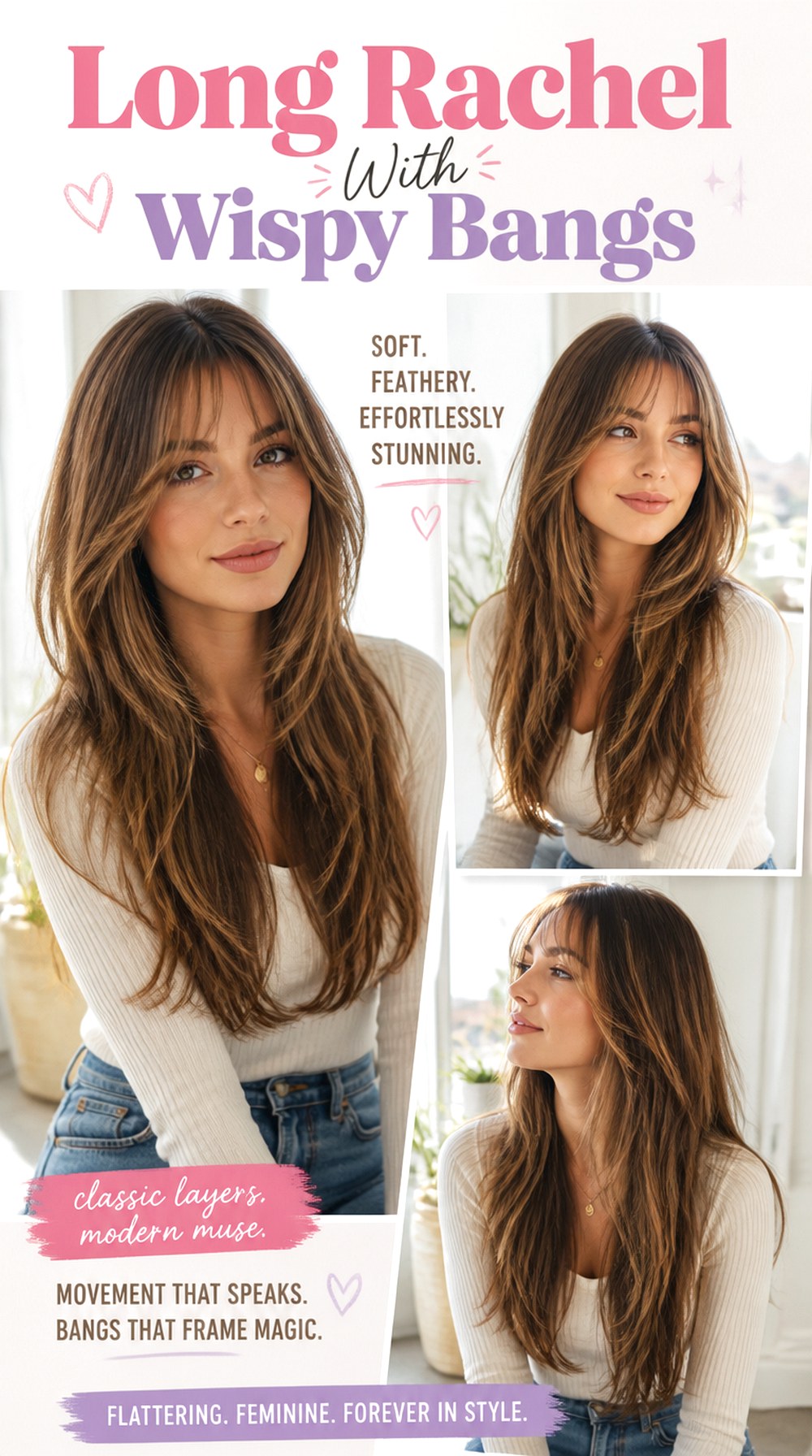
Wispy bangs make the long Rachel feel lighter around the forehead while the layered lengths provide movement below the shoulders. Unlike a dense blunt fringe, these bangs contain visible separation and should allow some forehead to show through. They can work well for fine to medium hair because they do not require removing a large section of hair from the front. Straight and slightly wavy textures are generally easiest to manage. Styling is fairly quick, although the fringe may need refreshing after sleep or humidity. Keep dry shampoo, a small flat iron, and a lightweight styling spray nearby. The bangs often need trimming every three to five weeks. At the salon, request a narrow, soft fringe section rather than a heavy triangle.
Pro tip: Ask your stylist to leave slightly longer pieces at each outer corner of the fringe so the bangs flow naturally into the Rachel layers beside the cheekbones.
Long Rachel With A Deep Side Part
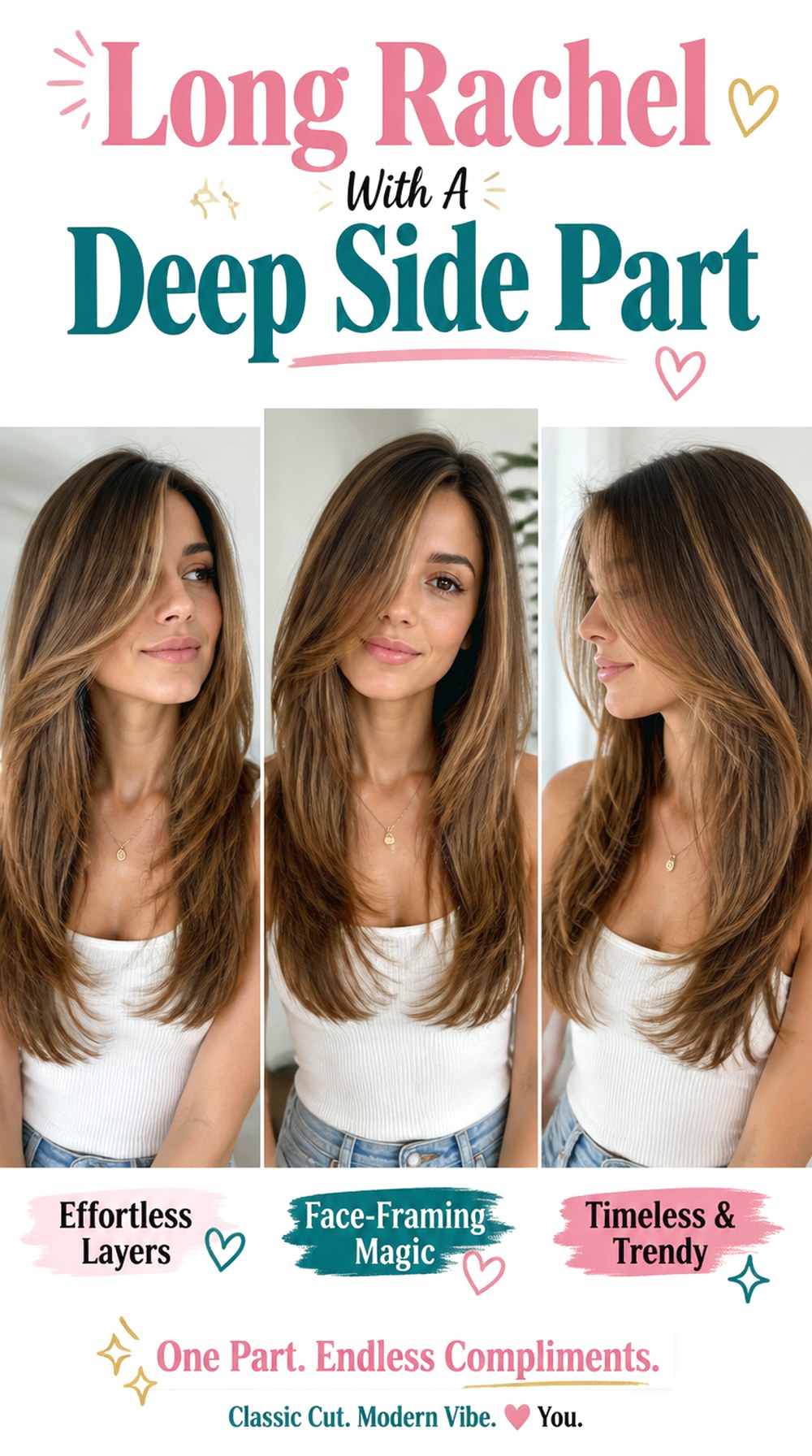
A deep side part shifts the volume of a long Rachel toward one side, creating an asymmetrical sweep without changing the actual length dramatically. The face-framing layers become more noticeable because one side falls across the forehead while the opposite side opens the face. Medium and thick hair usually holds this shape well, though fine hair can gain useful root lift from changing its natural part. The finish can be straight, softly waved, or blown out. Styling takes around moderate effort when you want lasting volume. Try volumizing spray, a large round brush, and light-hold hairspray. A trim every eight to twelve weeks keeps the layers fresh. Tell your stylist which side you normally part your hair on before the front sections are cut.
Pro tip: Avoid cutting both front sides to look identical while hanging from a center part if you always wear a deep side part; layer placement should account for your real styling direction.
Sleek Straight Long Rachel
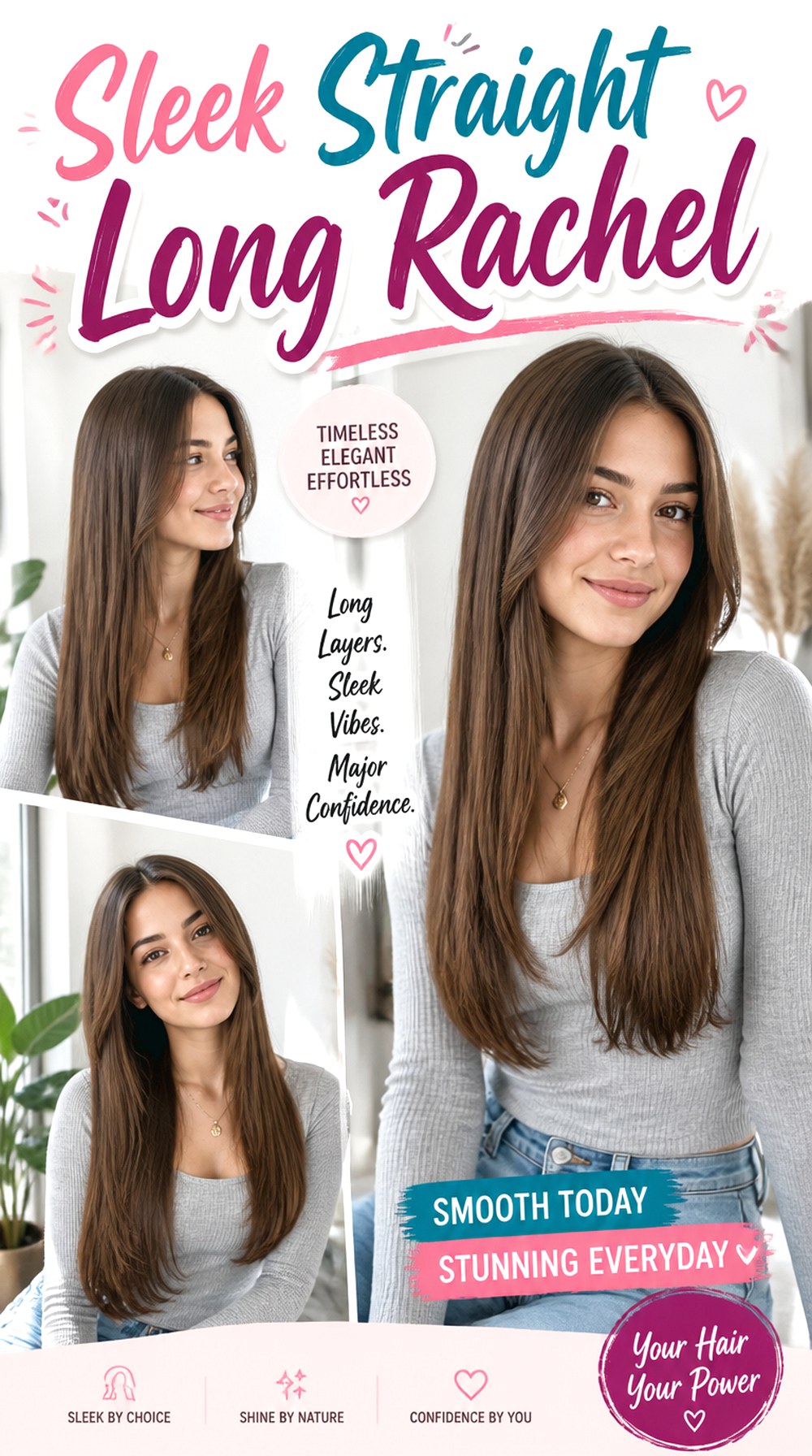
A sleek straight finish makes the stepped layering of the Long Rachel easier to see without creating excessive volume. Hair stays long through the perimeter while the front sections graduate from around the jaw or collarbone into the main length. This approach works especially well on naturally straight, medium-density hair and can also suit thick hair when bulk is carefully reduced beneath the surface. The daily routine is fairly simple for naturally straight textures but takes more time if your hair needs blow-drying or ironing. Use heat protectant, smoothing serum, and a flat brush to keep the finish controlled. Trimming every eight to ten weeks prevents the ends from losing definition. Ask for blended layers with enough weight left along the bottom to avoid a stringy appearance.
Pro tip: Request internal weight removal rather than aggressive thinning at the ends if your hair is dense; this keeps the silhouette smooth while preventing the perimeter from looking sparse.
Wavy Long Rachel
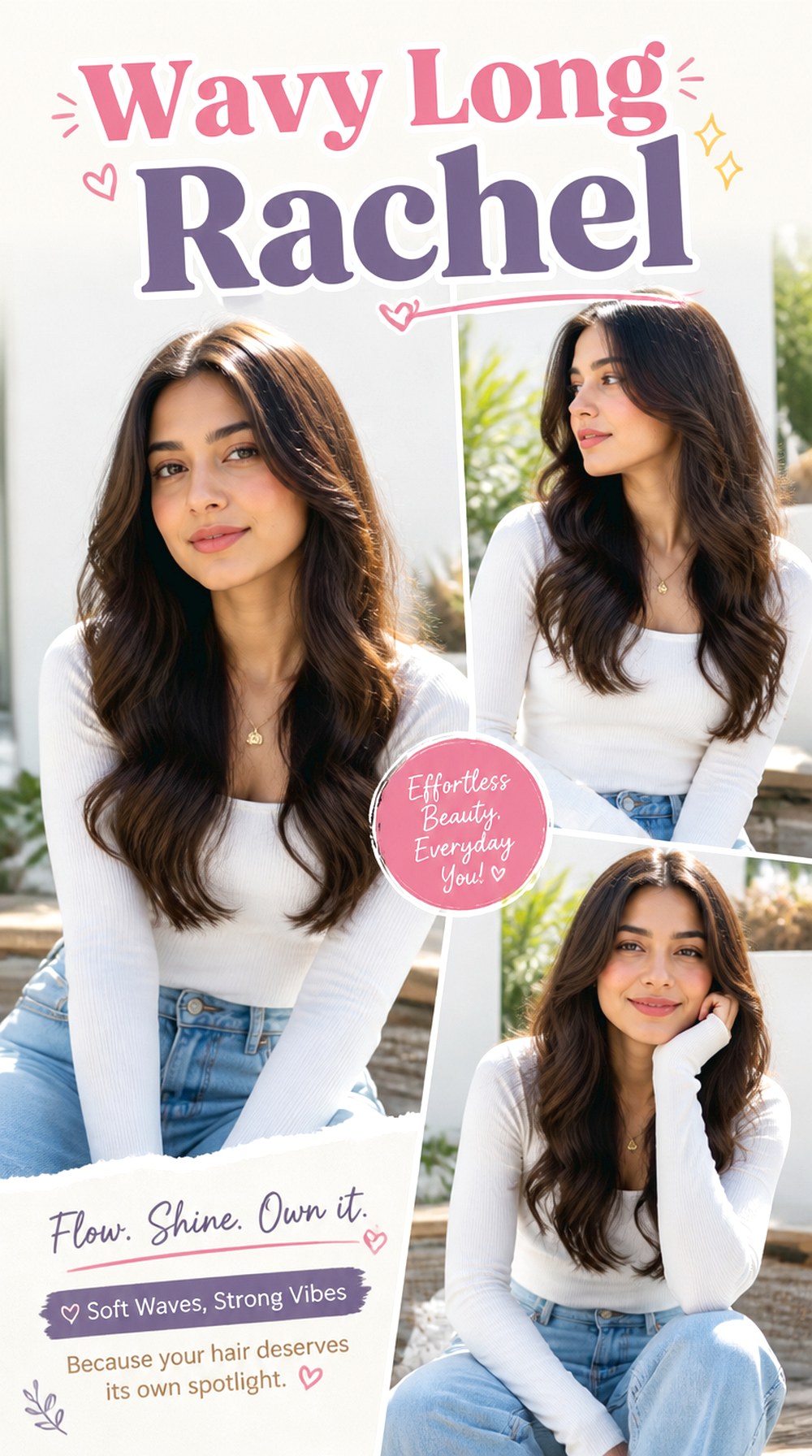
Natural waves give a long Rachel extra movement because the layers encourage bends to form at slightly different heights. The front can begin around the cheekbones or jaw, while longer layers through the sides prevent the haircut from becoming too triangular. Medium to thick wavy hair often responds well, although fine waves should keep fewer layers to preserve fullness. Styling can be quick when the natural pattern is allowed to air-dry. Use curl cream, a wide-tooth comb, and a diffuser when more definition is wanted. Humidity may increase expansion, so avoiding excessive layering can help control volume. A salon refresh every ten to twelve weeks is usually enough. Ask your stylist to consider your dry wave pattern before deciding exactly where each front layer should finish.
Pro tip: If your waves shrink noticeably after drying, have the face-framing pieces cut slightly longer than the final length you want rather than judging them only while the hair is wet.
Curly Long Rachel
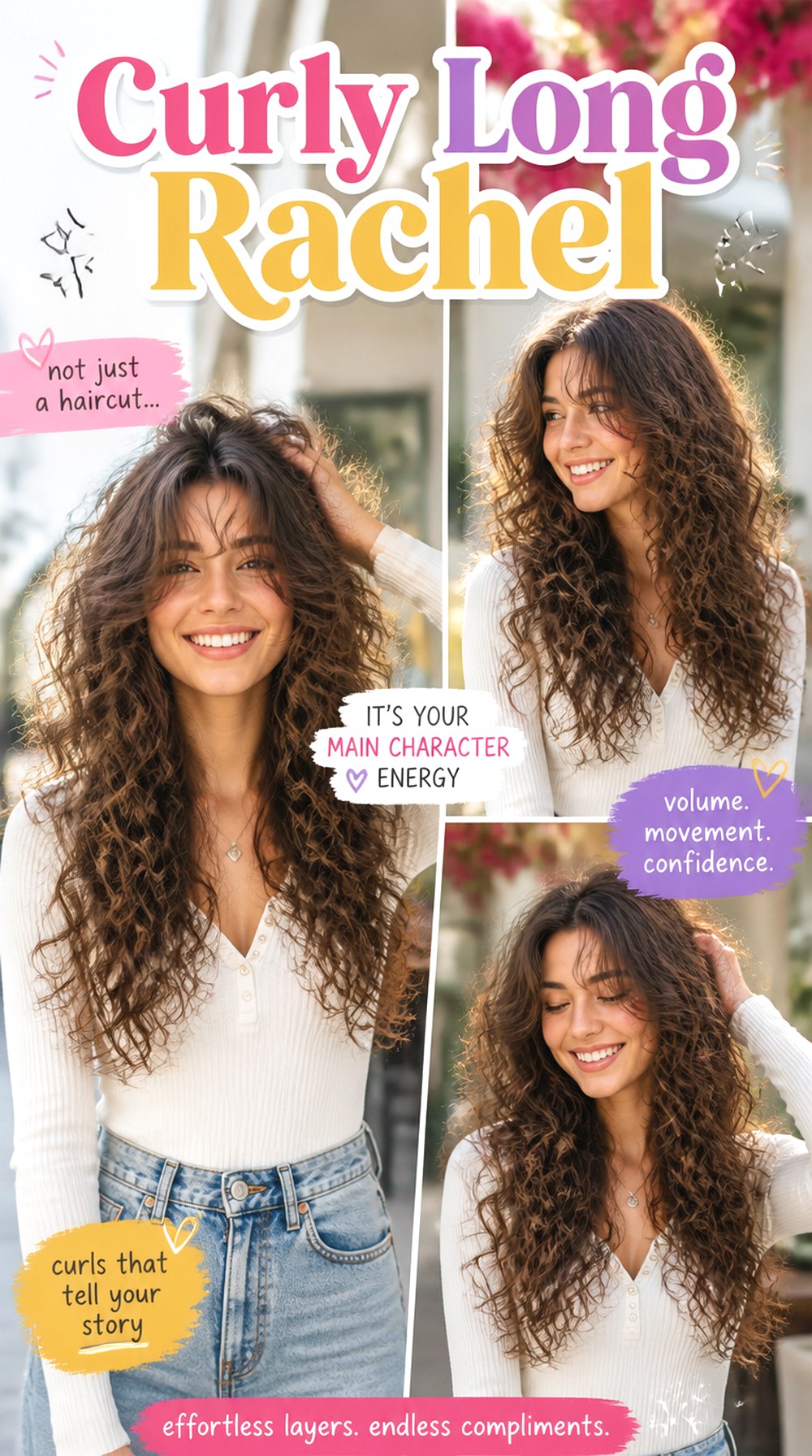
A curly Long Rachel uses graduated front layers to create the familiar face-framing effect while respecting natural curl shrinkage. Instead of relying on a smooth blowout, the shape comes from carefully distributed layers that let curls sit around the cheeks, jaw, shoulders, and longer lengths. Medium and thick curly hair can carry this structure well, provided too much weight is not removed from the ends. Styling time ranges from quick refreshing to a longer wash-day routine. Helpful products include leave-in conditioner, curl cream, and a diffuser. The shape generally needs refreshing every ten to twelve weeks, depending on curl growth and shrinkage. Ask your stylist to assess the curls in their natural state and discuss whether cutting dry or partially dry would give better control.
Pro tip: Point out the curl that you want to become the shortest face-framing piece; individual curls can spring up differently, so its natural resting position matters more than a fixed measurement.
Long Rachel With Feathered Ends
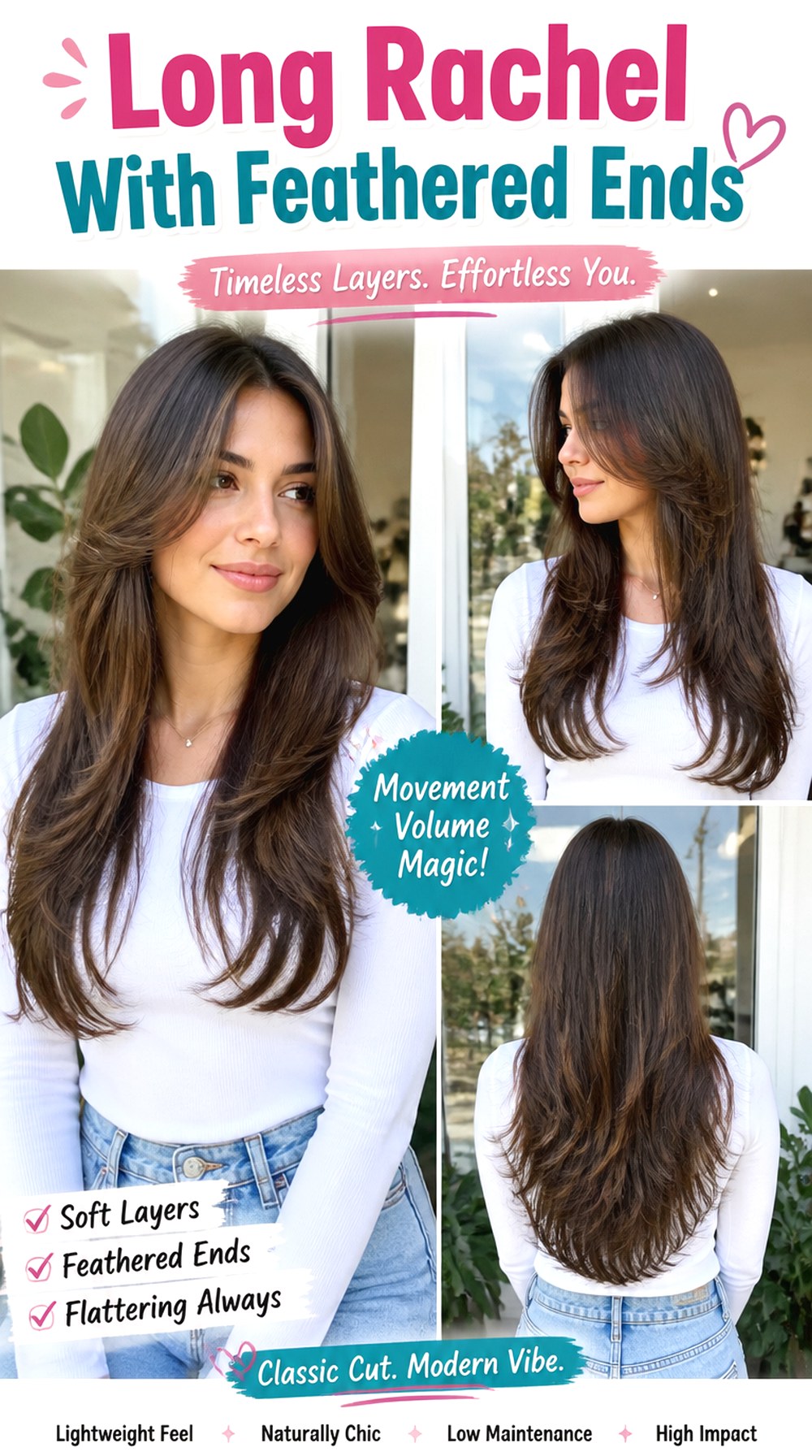
Feathered ends give the Long Rachel a lighter, more separated finish without sacrificing the overall length. The front layers sweep away from the face, while the lower layers are softly tapered so they move instead of sitting as one heavy block. This works best on medium to thick straight or wavy hair with enough density to support visible layering. A blow-dryer usually brings out the feathered shape, making the routine moderate rather than minimal. Use heat protectant, a round brush, and texturizing spray to encourage separation and movement. Regular trims around every eight to ten weeks keep the tapered ends from becoming rough. Ask your stylist for softness through the last few inches rather than deep thinning through the entire haircut.
Pro tip: Keep feathering concentrated around the face and outer surface if your ends lose fullness easily; too much razor work through the bottom can make long hair appear thin.
Long Rachel With A Rounded Blowout
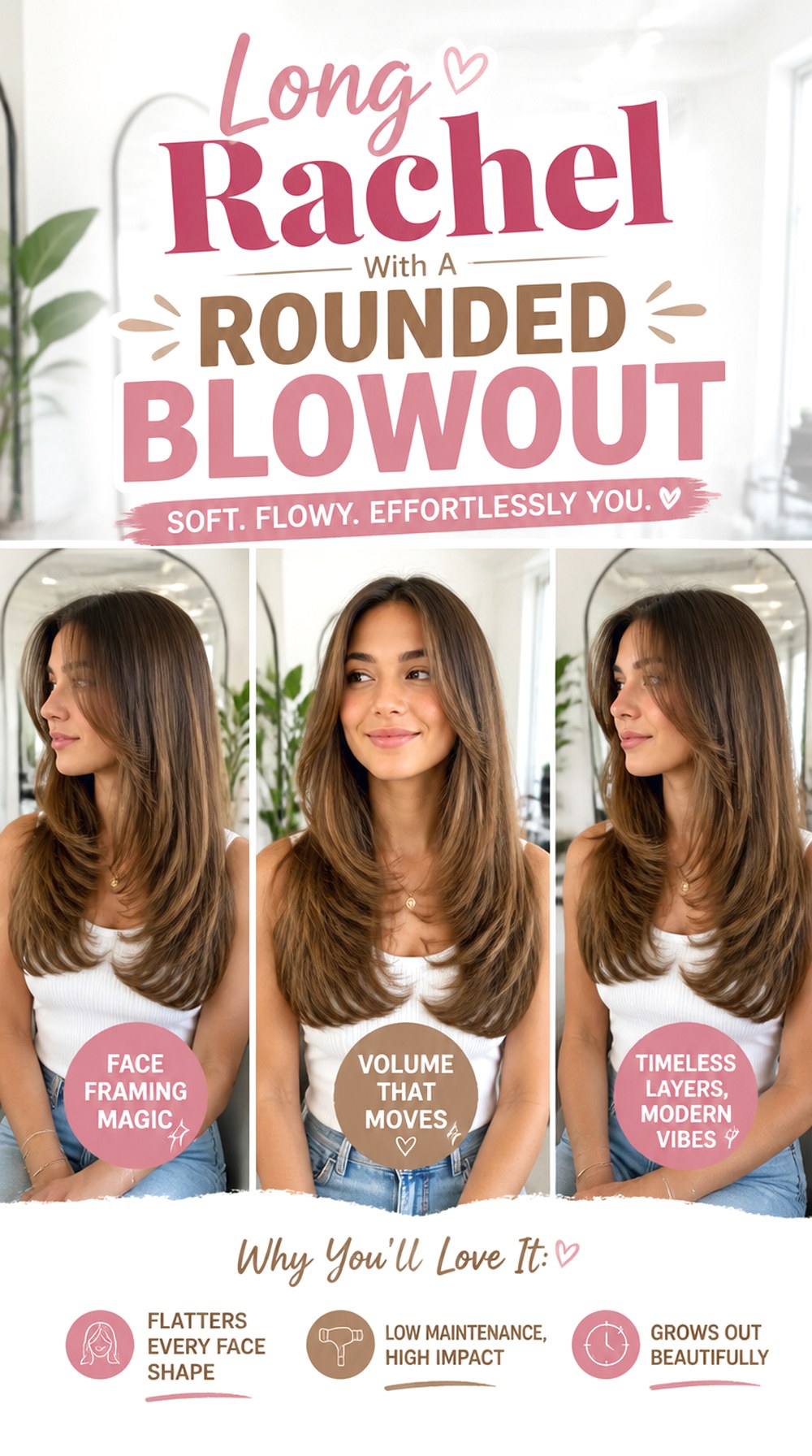
The rounded blowout emphasizes the bouncy side of a Long Rachel. Face-framing layers curve inward around the cheekbones and jaw, while the longer layers roll under or away from the shoulders to create a full, polished silhouette. Medium and thick straight or slightly wavy hair usually holds the shape longest, but fine hair can also benefit from the added root lift. This is one of the more styling-intensive options because it relies on controlled blow-drying. A volumizing mousse, large round brush, and heat protectant are the most useful basics. Layers can be refreshed every eight to ten weeks. At the salon, request enough graduation to create movement but avoid extremely short crown layers unless you specifically want extra height.
Pro tip: Dry the roots first and shape the ends second; trying to create every curve while the roots are still damp can leave the top flat and the lower sections overworked.
Long Rachel With Subtle Layers Hairstyle
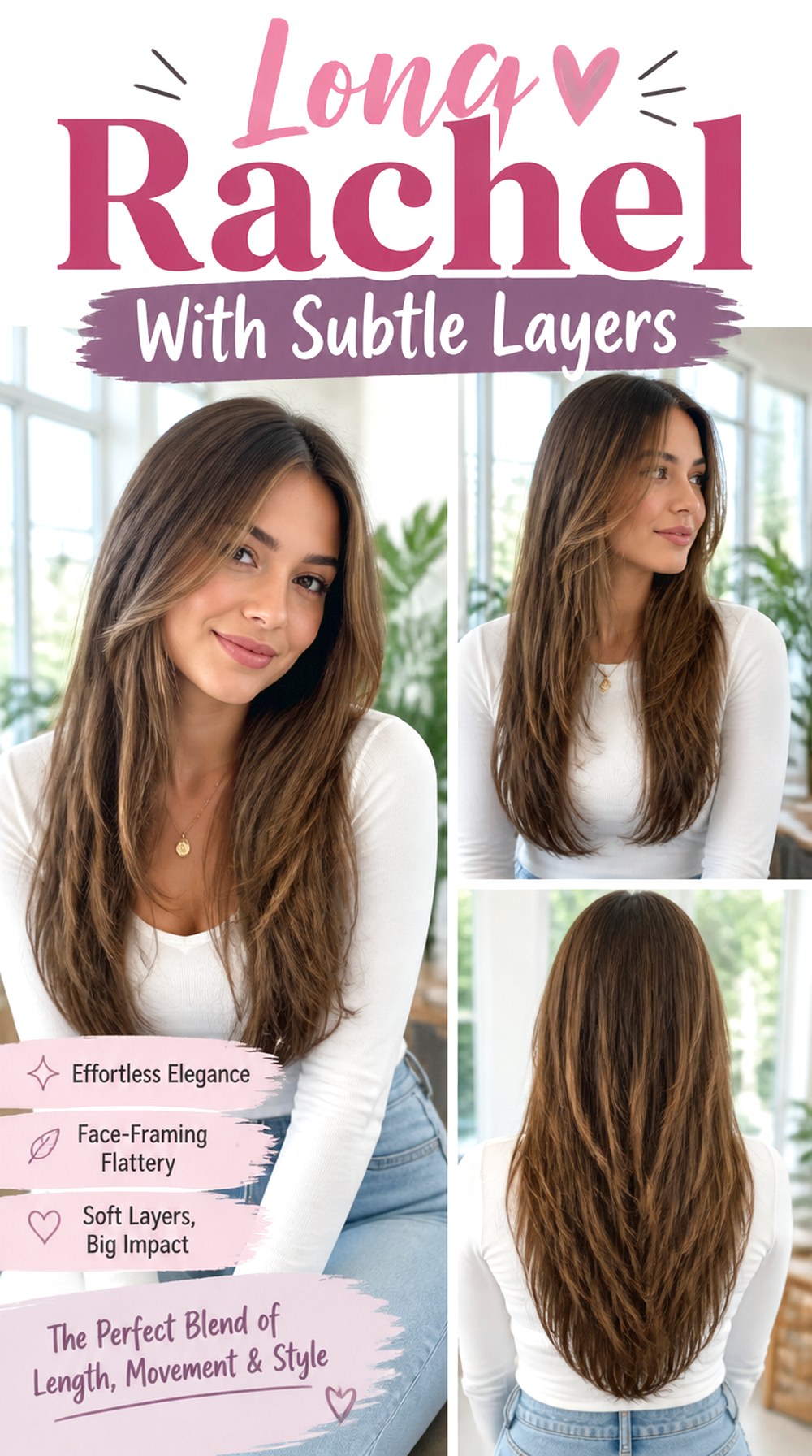
Subtle layering offers a quieter interpretation of the Long Rachel for anyone who wants movement without a strongly stepped haircut. Most of the density remains through the lower lengths, while a few long layers around the face and perimeter break up the outline. It is particularly useful for fine to medium hair or for people who want an easy grow-out. Straight, wavy, and softly textured hair can all suit this approach. Daily styling is relatively quick because the layers do not need precise shaping to sit correctly. Use leave-in conditioner, a paddle brush, and lightweight smoothing serum for a controlled finish. Salon maintenance can stretch to ten or twelve weeks. Ask for long, connected layering with no sudden shelf between the front and back sections.
Pro tip: Have the first face-framing layer begin no higher than the jaw if maintaining visual fullness is your priority; longer front pieces remove less weight from the perimeter.
Long Rachel With Heavy Layers
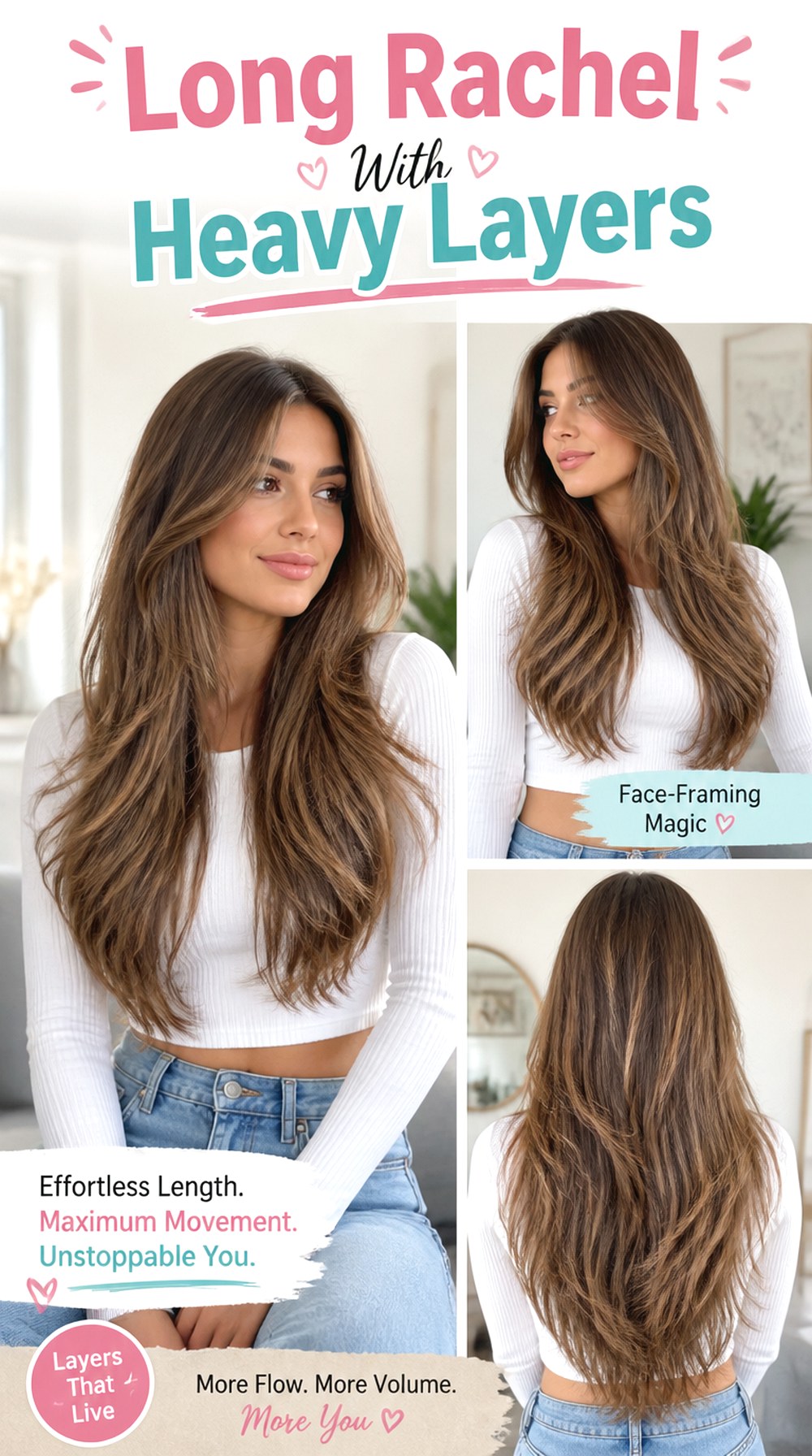
Heavy layering creates more visible separation from the crown through the long lengths, giving the Rachel shape plenty of movement and airiness. This version is best suited to medium or thick hair because repeated layers remove a noticeable amount of weight. Straight and wavy textures show the graduation clearly, while very fine hair may appear too thin at the bottom if over-layered. A quick tousled finish is possible, but achieving a defined blowout requires moderate styling time. Try volumizing spray, a vented brush, and texturizing spray for body and separation. Shape maintenance every eight to ten weeks keeps the layers from merging into one length. Tell your stylist you want noticeable layering while still preserving enough density through the last few inches.
Pro tip: If your hair is thick, ask for hidden internal weight removal beneath the surface rather than simply adding more short layers; this controls bulk without creating excessive width around the crown.
Long Rachel For Fine Hair
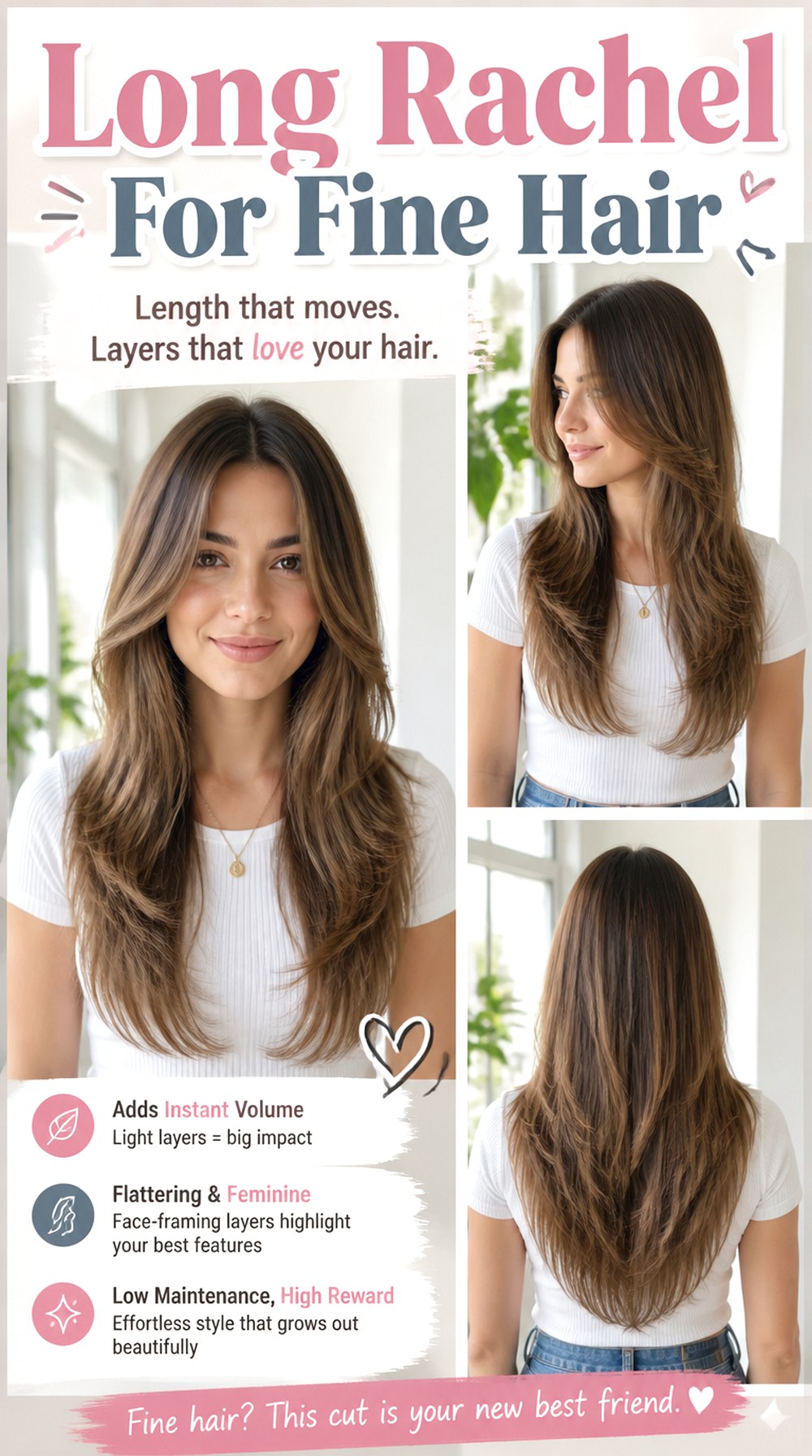
A fine-hair Long Rachel should create movement without sacrificing too much density. The main length remains fairly solid, while a limited number of face-framing layers begin around the jaw or collarbone and blend gradually into the perimeter. Fine straight or lightly wavy hair often suits this balance because the layers can add shape while the fuller ends preserve visual thickness. Styling is usually quick to moderate. Use lightweight mousse, root-lifting spray, and a medium round brush rather than heavy creams that may flatten the hair. Trims every eight to ten weeks help prevent fine ends from looking wispy. Ask your stylist to avoid excessive texturizing shears or deep point-cutting through the lower lengths and to keep the baseline deliberately substantial.
Pro tip: Place most of the layering around the face instead of throughout the back; this gives the Rachel effect while leaving more hair in the longest section.
Long Rachel For Thick Hair
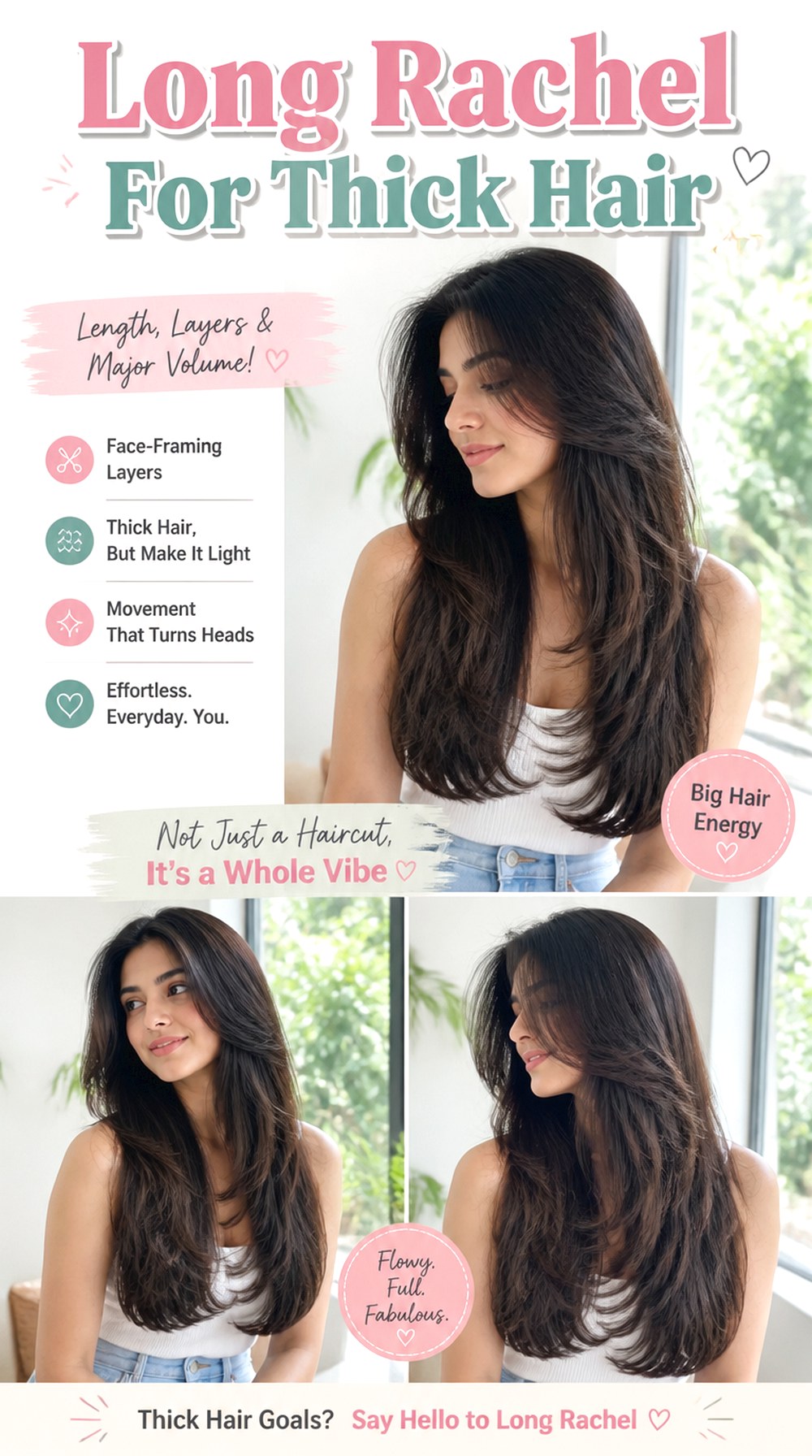
Thick hair gives a Long Rachel plenty of material for layered movement, but managing excess bulk is important. Face-framing pieces can start around the cheekbones or jaw, with long internal layers helping the sides and back sit closer to the head. Straight, wavy, and some curly textures can all use this approach when the cutting method matches the natural pattern. Daily styling may take longer simply because dense hair holds more moisture and takes longer to dry. Useful supplies include smoothing cream, a wide paddle brush, and heat protectant. A trim around every ten weeks keeps the weight distribution balanced. At your appointment, discuss where your hair tends to expand so your stylist can remove bulk strategically rather than thinning every section evenly.
Pro tip: Keep enough weight at the perimeter to stop the ends from puffing outward; removing bulk from the interior usually works better than heavily thinning the bottom edge.
Long Rachel With A Center Part
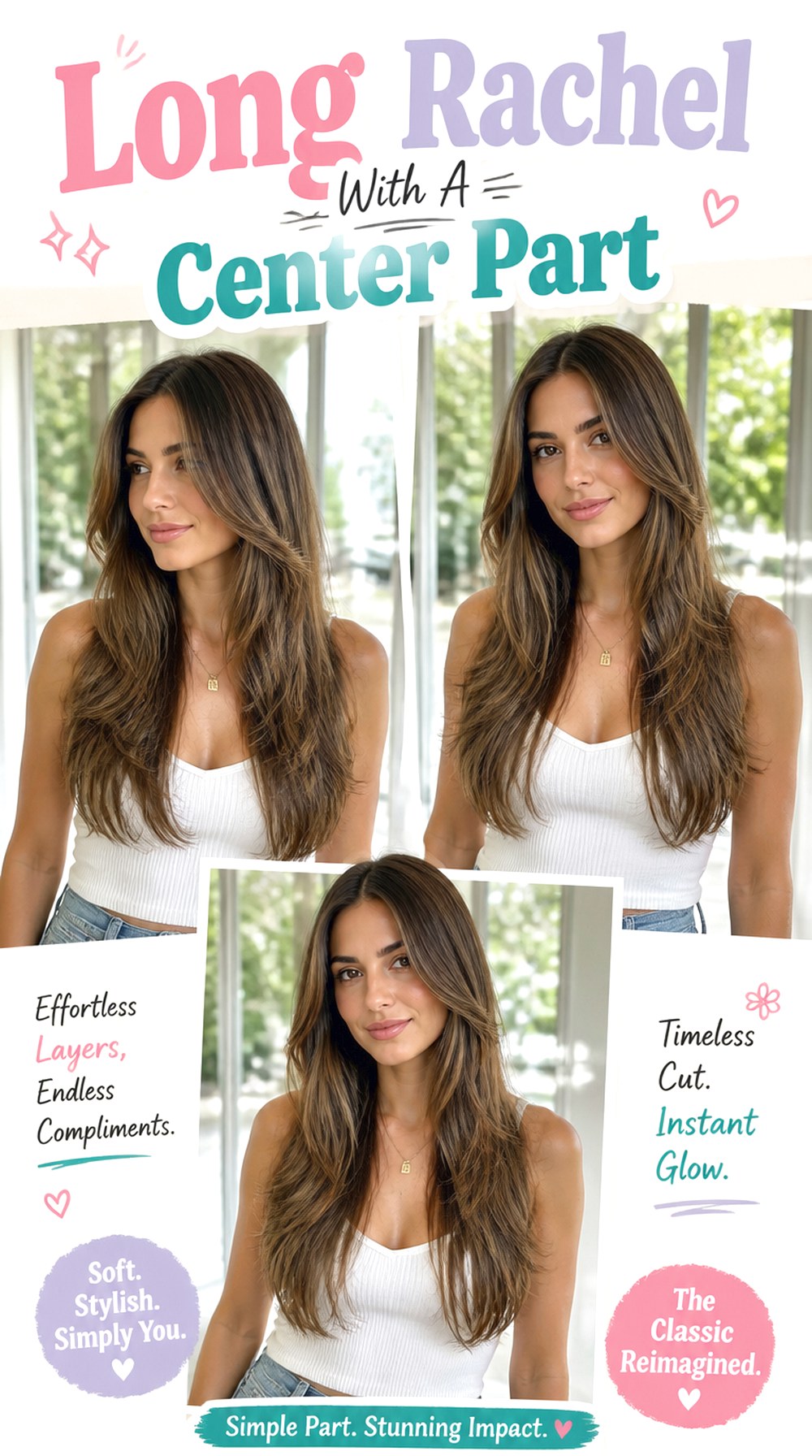
A center part gives the Long Rachel a balanced frame, allowing matching layers to fall on both sides of the face. Cheekbone, jaw, and collarbone pieces can be graduated gradually so the front opens outward while the back remains noticeably longer. This arrangement suits straight and wavy hair especially well and can be adjusted for different face shapes by changing the shortest layer. Styling takes little time when the hair naturally parts in the middle, though a blowout adds more definition. Use heat protectant, a round brush, and lightweight finishing spray for soft movement. Trims every eight to twelve weeks usually maintain the shape. Ask your stylist to cut the front while considering your natural center part so both sides settle evenly.
Pro tip: If your face-framing sections regularly flip in opposite directions, blow-dry them forward first and then sweep them back; this helps create a more balanced curtain effect around the face.
Long Rachel With Flipped Ends
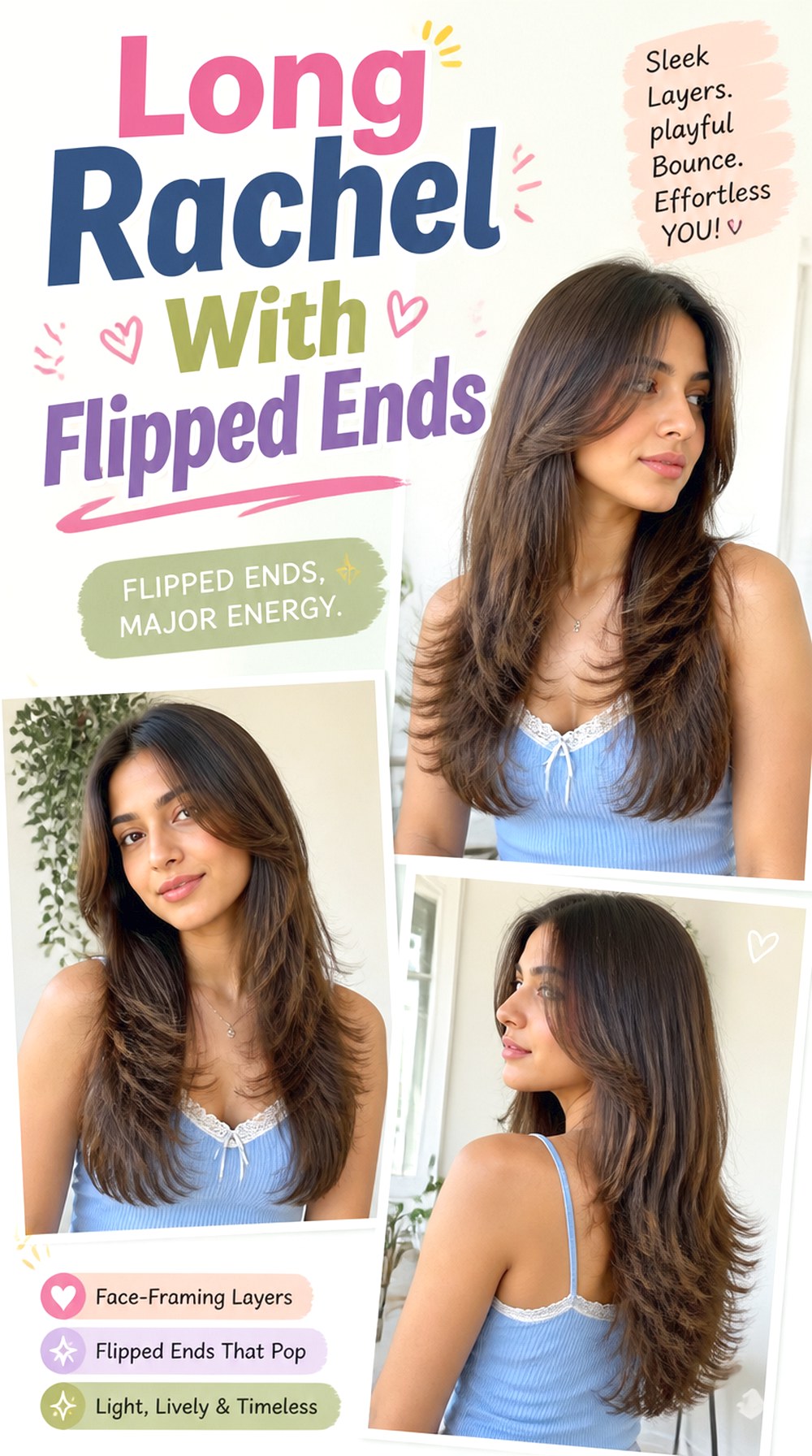
Flipped ends add a playful outward curve to the Long Rachel while keeping the layered structure easy to recognize. The upper sections stay relatively smooth, then the face-framing pieces and longer ends turn away from the face. Straight and slightly wavy hair tend to hold this finish most predictably, especially at medium density. The haircut itself can remain low-maintenance, but creating defined flips adds several minutes to the styling routine. Keep a heat protectant, medium round brush, and light-hold hairspray on hand. Regular trims every eight to ten weeks help the ends curve cleanly instead of looking frayed. Ask your stylist for long layers that finish at useful turning points around the jaw, shoulders, and chest rather than random short pieces.
Pro tip: Do not curl the entire length outward. Concentrate the bend in the last few inches of each layer so the result looks feathered instead of overly curled.
Long Rachel With Jaw-To-Collarbone Face Framing
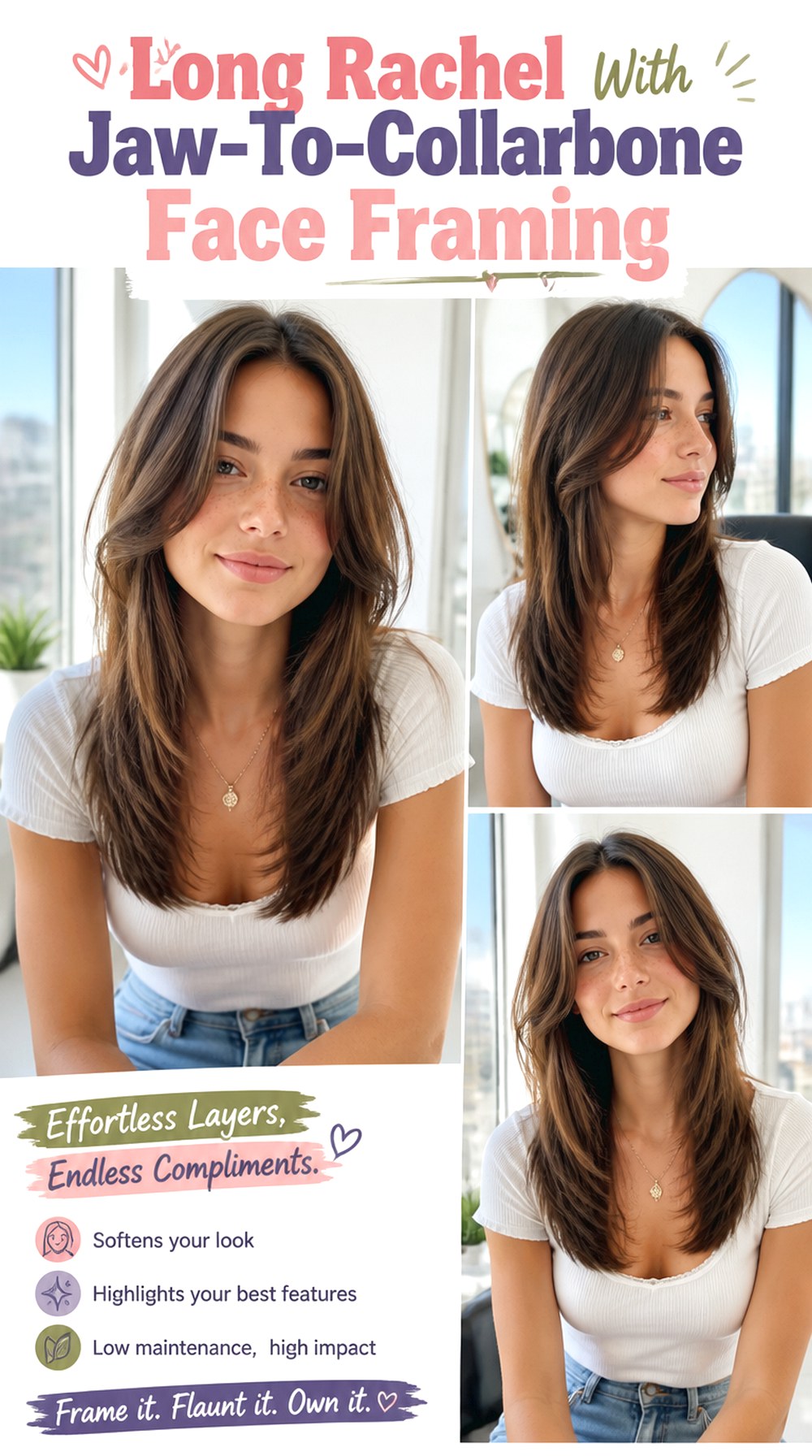
This version concentrates the Rachel effect between the jaw and collarbone, making it a useful choice for someone who wants visible front layering without taking the shortest pieces near the eyes. The back can remain chest length or longer, while several connected sections gradually increase in length along the sides. It suits medium and thick hair especially well and can be adapted to straight or wavy textures. Styling is relatively manageable because the front pieces are long enough to tuck back or wear naturally. Use leave-in conditioner, a large round brush, and lightweight hairspray when you want a polished bend. Refresh the layers every ten to twelve weeks. Show your stylist the exact lowest and highest points you want around the face.
Pro tip: Ask for the jaw-length section to connect smoothly into the collarbone layer; a visible gap between them can make the front look like two separate haircuts rather than one blended shape.
Conclusion
Long Rachel Haircut Ideas can range from softly blended and easy to maintain to highly layered styles designed for a full blowout. The basic shape is flexible because the overall length, density, layers, bangs or fringe, volume, texture, parting, finish, and styling effort can all be changed without losing the face-framing character of the cut. Fine hair may need stronger ends and fewer layers, while thick hair often benefits from carefully placed weight removal. Natural waves and curls also require different layer placement than straight hair. The most suitable version depends on your face shape, natural texture, hair density, maintenance preference, and normal routine. Focus on the specific shape you can realistically style rather than choosing from the finished blowout alone.
CTA
Choose one or two favorite ideas and save clear photo references before your salon appointment. Discuss your face shape, natural hair texture, hair density, preferred length, maintenance tolerance, and usual styling routine with your stylist. When showing each photo, point out the exact details you like—such as where the shortest layer begins, how full the ends remain, the type of fringe, the amount of crown volume, or whether the finish curves inward or flips away from the face. Those details make it much easier to adapt a Long Rachel haircut to your own hair.
FAQs
Is the Long Rachel haircut good for fine hair?
Yes, but fine hair usually benefits from fewer layers and a fuller perimeter. Keeping most of the layering near the face can create movement without making the ends look too thin.
How often does a Long Rachel haircut need trimming?
Most versions can be refreshed every eight to twelve weeks. Curtain or wispy bangs may need separate trims every three to six weeks depending on their length.
Does a Long Rachel haircut require daily heat styling?
Not necessarily. Straight or wavy hair can often be air-dried with light styling products, although heat tools are usually needed to create the rounded, feathered blowout associated with the Rachel shape.
Which face shapes work with a Long Rachel haircut?
The cut can be adjusted for oval, round, heart, square, and longer face shapes. The key is changing where the shortest face-framing layers or bangs sit so the proportions work with the individual face.