18 Ribbon Ponytail Hairstyles
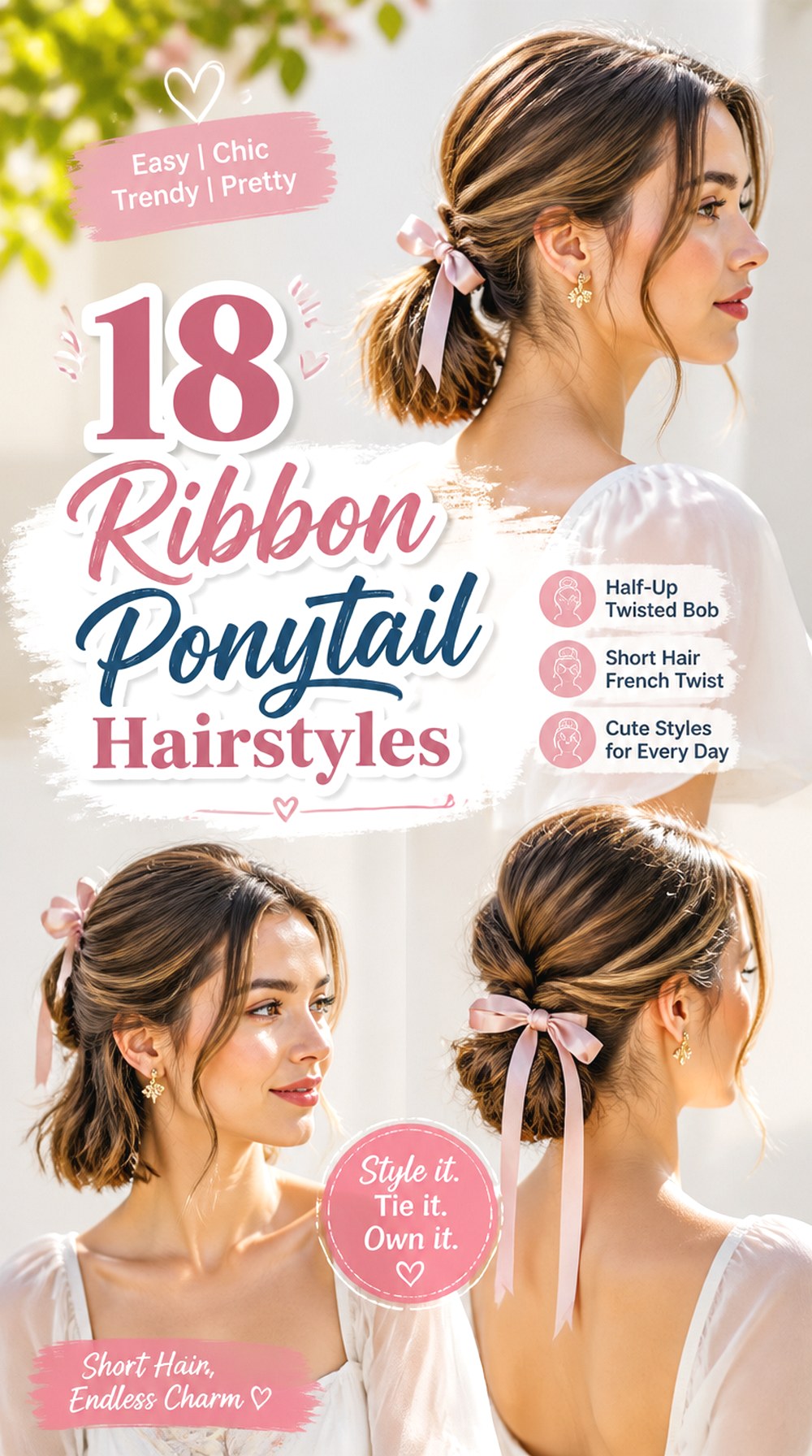
Ribbon ponytail hairstyles combine a familiar tied-back shape with a decorative ribbon, creating anything from a clean everyday finish to a softer occasion hairstyle. The ribbon can sit around the elastic, trail down the ponytail, form a structured bow, or be woven through braids and twists. That small detail changes the overall mood without requiring a completely different haircut.
These styles work across several lengths and textures. Straight hair creates a smoother, sharper ponytail, while waves and curls give the ribbon more movement and volume around it. Fine hair may benefit from lightweight volumizing products or gentle backcombing, while thick hair often needs a strong elastic and some weight removal around the crown. Ponytail height and face-framing pieces can also be adjusted for round, oval, square, heart, or longer face shapes.
Daily styling can take anywhere from five minutes for a simple low ponytail to 20 minutes or more for braids, curls, or bubble sections. Most versions do not require special salon maintenance beyond keeping layers and ends healthy. Before choosing one, consider ribbon width, ponytail placement, natural texture, hair density, and how much heat styling you want to do regularly.
Quick List
- Satin Ribbon Low Ponytail
- Velvet Ribbon High Ponytail
- Sheer Organza Ribbon Ponytail
- Braided Ribbon Ponytail
- Bubble Ponytail With Ribbon Bows
- Half-Up Ribbon Ponytail
- Sleek Center-Part Ribbon Ponytail
- Soft Wavy Ribbon Ponytail
- Curly Ribbon Ponytail
- Long Ribbon Wrapped Ponytail
- Double Ribbon Ponytail
- Side Ribbon Ponytail
- French Braid Into Ribbon Ponytail
- Twisted Crown Ribbon Ponytail
- Short Hair Ribbon Ponytail
- Textured Low Ribbon Ponytail
- Pearl-Trim Ribbon Ponytail
- Oversized Bow Ribbon Ponytail
Satin Ribbon Low Ponytail
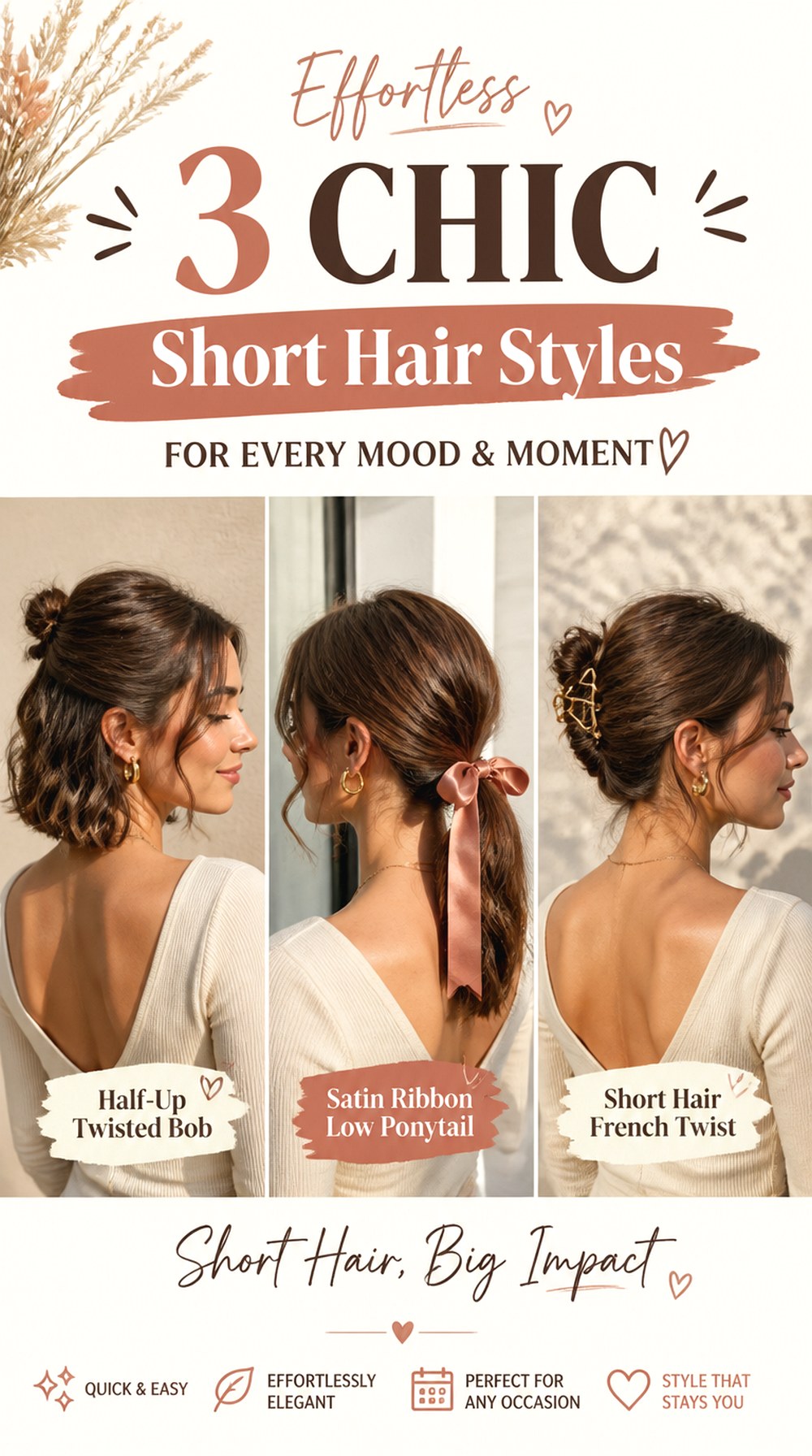
A satin ribbon gives a low ponytail a smooth, polished finish without making the hairstyle overly formal. Wear the ponytail at the nape with a center or soft side part, keeping the crown neat and the lengths straight, softly waved, or naturally textured. Medium and thick hair hold the shape particularly well, although fine hair can work with a little crown volume. A smoothing serum, boar-bristle brush, and light-hold hairspray help control flyaways. Styling usually takes around 5–10 minutes. Keep the ends trimmed so the ponytail hangs cleanly, and show your stylist where you normally tie your hair so face-framing layers remain long enough to tuck back.
Pro tip: Choose a ribbon that is slightly wider than the elastic so the fastening is completely hidden without creating unnecessary bulk.
Velvet Ribbon High Ponytail
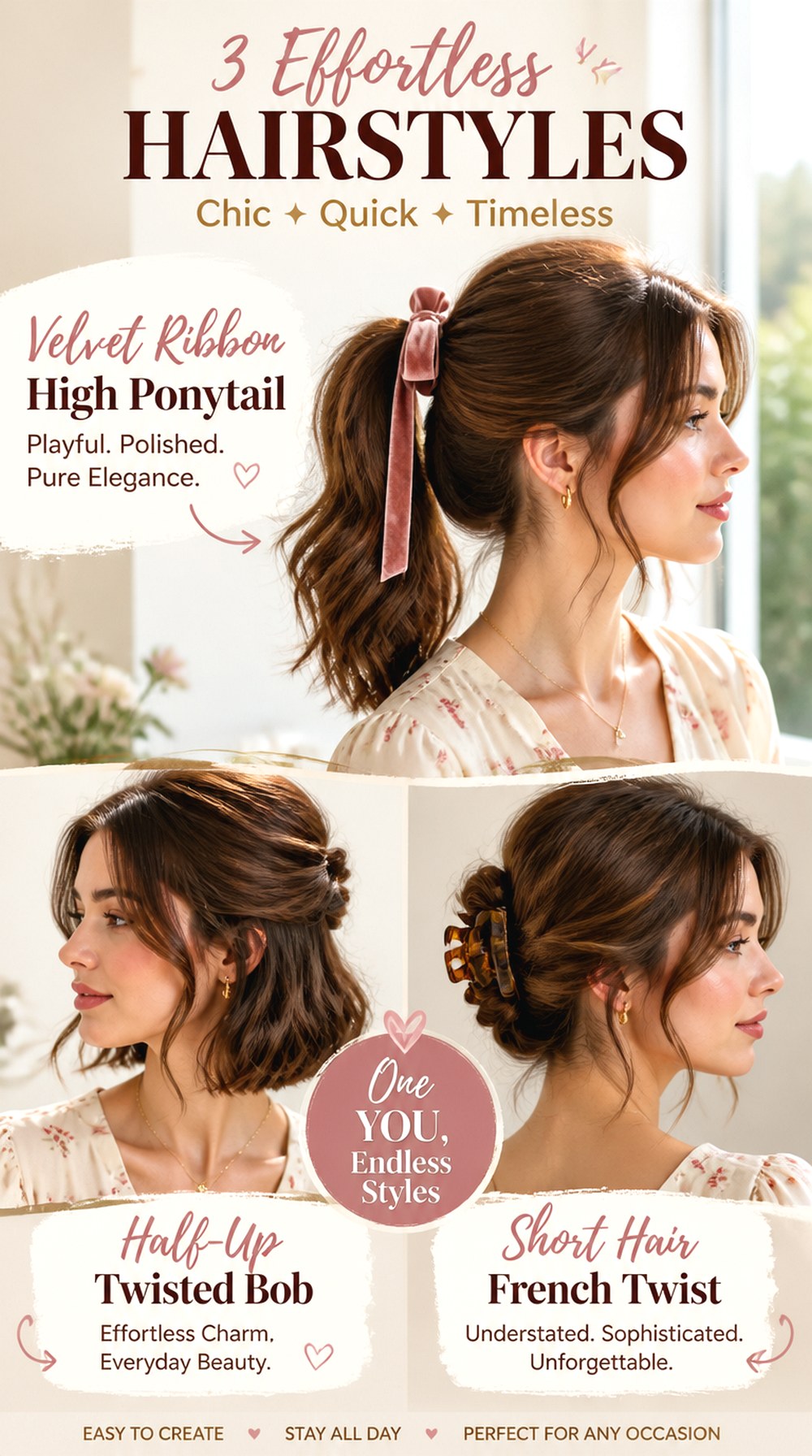
A high ponytail paired with velvet creates more height and visual weight than a thin satin tie. The ponytail can sit close to the crown with softly curled ends, while a few short face-framing pieces keep the front from looking too severe. It suits medium to thick hair particularly well because enough density is needed to balance a substantial velvet bow. Use volumizing spray at the roots, a strong snag-free elastic, and a small amount of smoothing cream. Styling is moderate and usually takes 10–15 minutes if the ends are curled. Regular trims help prevent thin-looking ends. At the salon, request layers that maintain fullness through the ponytail rather than heavily thinning the lower lengths.
Pro tip: Place the ponytail slightly below the highest point of the crown if a very high position makes the front sections pull too tightly.
Sheer Organza Ribbon Ponytail
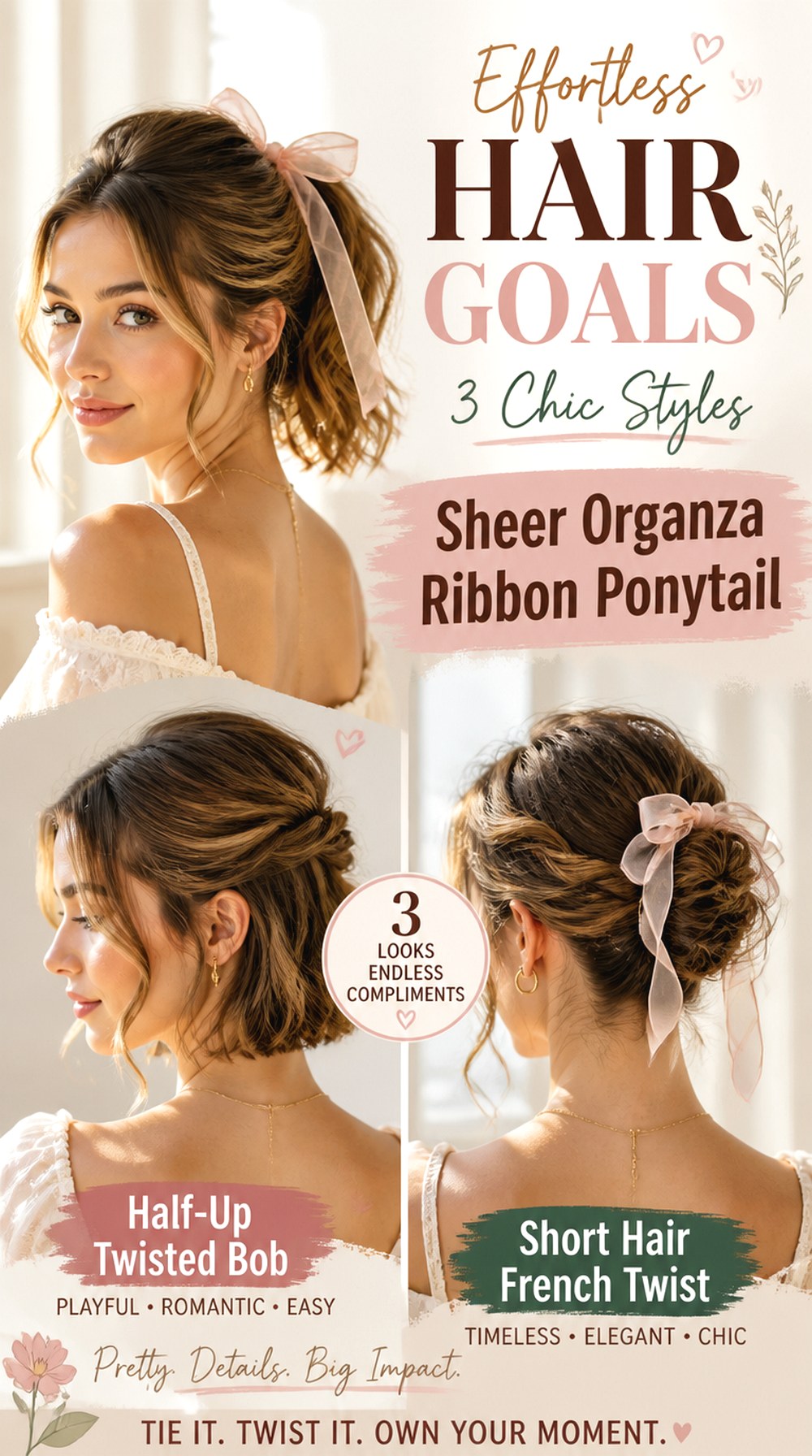
A sheer organza ribbon keeps a ponytail light and airy, making it especially suitable for soft waves and romantic finishes. A mid-height or low ponytail works well because the translucent ribbon can fall alongside the hair without overpowering it. Fine and medium-density hair suit this approach, and loose movement helps create the appearance of extra fullness. Prep with lightweight mousse, use a large-barrel curling iron if needed, and finish with flexible hairspray. Styling takes roughly 10–15 minutes. The waves may need refreshing on humid days, but the overall shape is forgiving. Ask your stylist for long, blended face-framing layers that can curve naturally around the cheeks before joining the ponytail.
Pro tip: Keep organza ribbon tails close to the length of the ponytail so the decoration looks intentional rather than disconnected from the hairstyle.
Braided Ribbon Ponytail
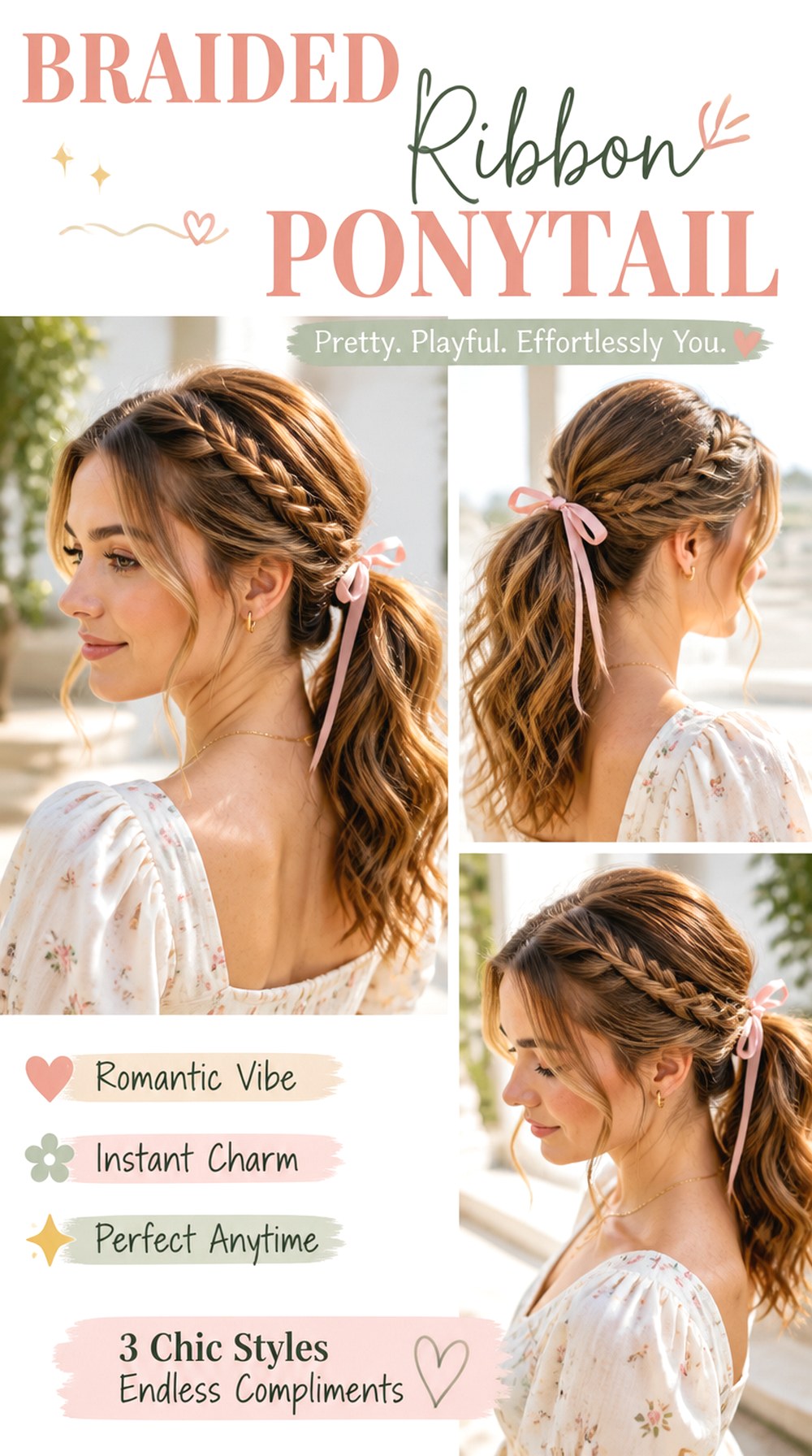
A braided ribbon ponytail incorporates the ribbon directly into a three-strand braid, creating color and texture throughout the length instead of only around the elastic. It works especially well on medium to long hair because enough length is needed for the pattern to show clearly. Straight, wavy, and loosely curly textures can all be used. Apply leave-in conditioner before braiding, keep a wide-tooth comb nearby, and finish with a light texturizing spray for grip. Styling generally takes 10–20 minutes depending on length. Regular end trims prevent the braid from looking wispy. Tell your stylist you frequently braid your hair so the lower layers are not cut too short.
Pro tip: Attach the ribbon securely beneath the elastic first; this prevents it from sliding out while you braid.
Bubble Ponytail With Ribbon Bows
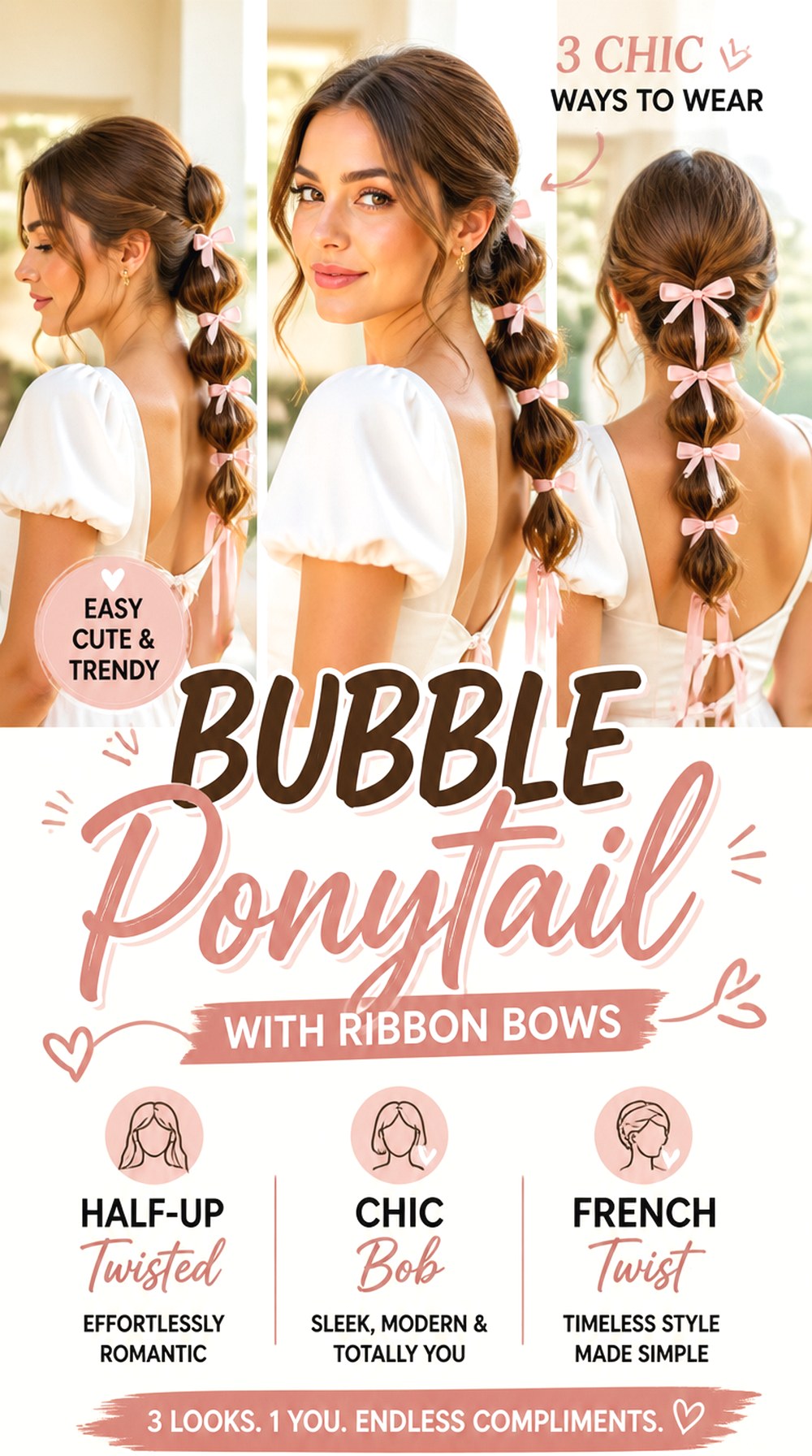
A bubble ponytail creates rounded sections down the length, while small ribbon bows highlight each division. Long, medium-to-thick hair works best because the bubbles need enough density to look balanced from top to bottom. The crown can stay sleek or slightly lifted, and the ponytail usually looks cleanest when positioned at mid or high level. Use small clear elastics, volumizing powder, and flexible hairspray. Expect 15–20 minutes of styling because every section needs to be gently pulled outward. The style does not require special salon maintenance, although healthy, even ends help. Ask for minimal thinning through the lower half if you regularly wear bubble ponytails.
Pro tip: Make each bubble slightly smaller as you move toward the ends so the shape follows the natural reduction in hair density.
Half-Up Ribbon Ponytail
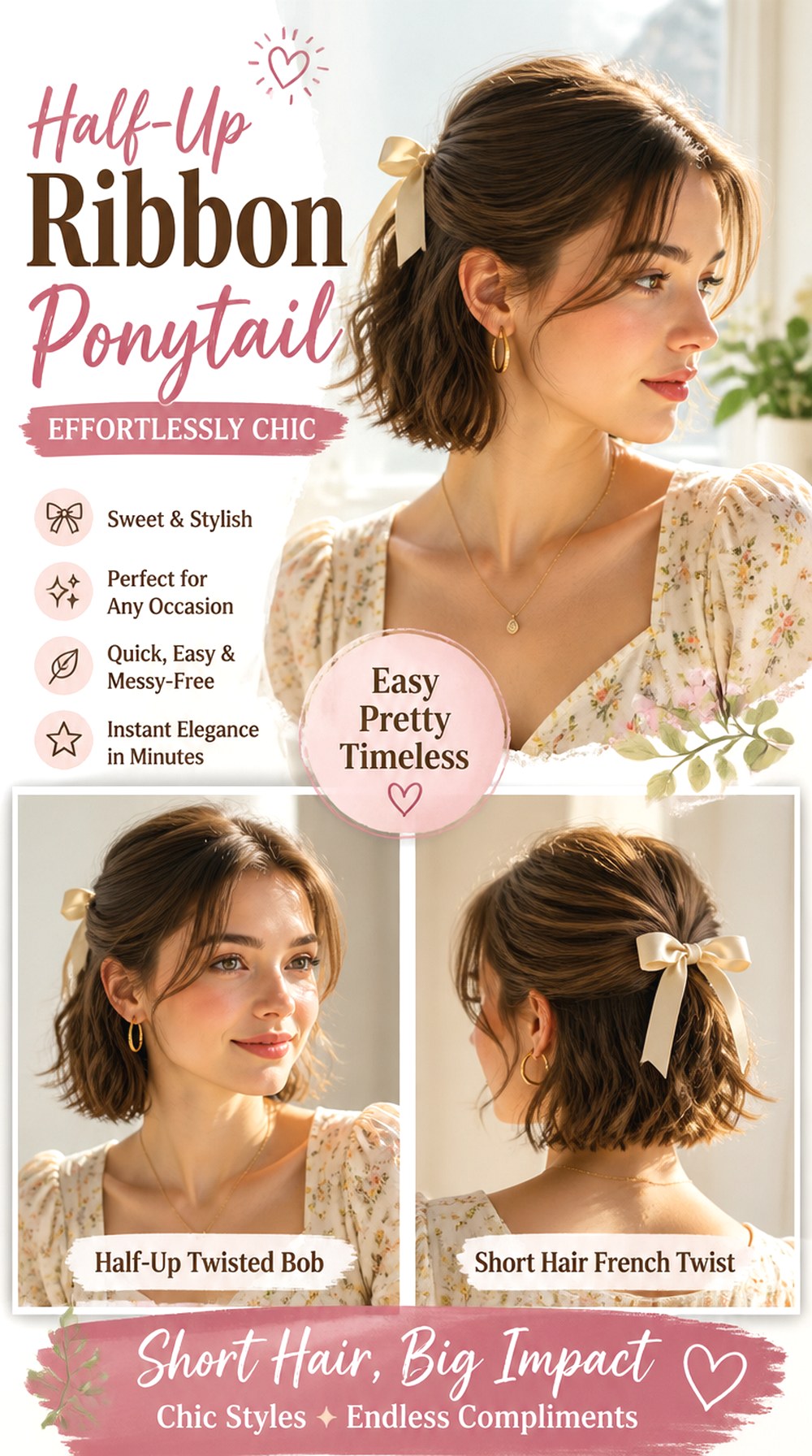
The half-up ribbon ponytail leaves most of the hair loose while gathering the crown section into a small ponytail. It is useful for anyone who wants hair away from the face without losing overall length or movement. Straight, wavy, and curly textures work, while fine hair often gains extra visual volume because most of the density remains down. Use texturizing spray around the crown, a small elastic, and a wide-barrel curling tool if you want soft bends through the lengths. Styling is quick to moderate at about 5–12 minutes. Ask your stylist for face-framing pieces that blend naturally when worn both up and down.
Pro tip: Take the half-up section from just above the temples rather than too low, which helps maintain fullness around the sides of the head.
Sleek Center-Part Ribbon Ponytail
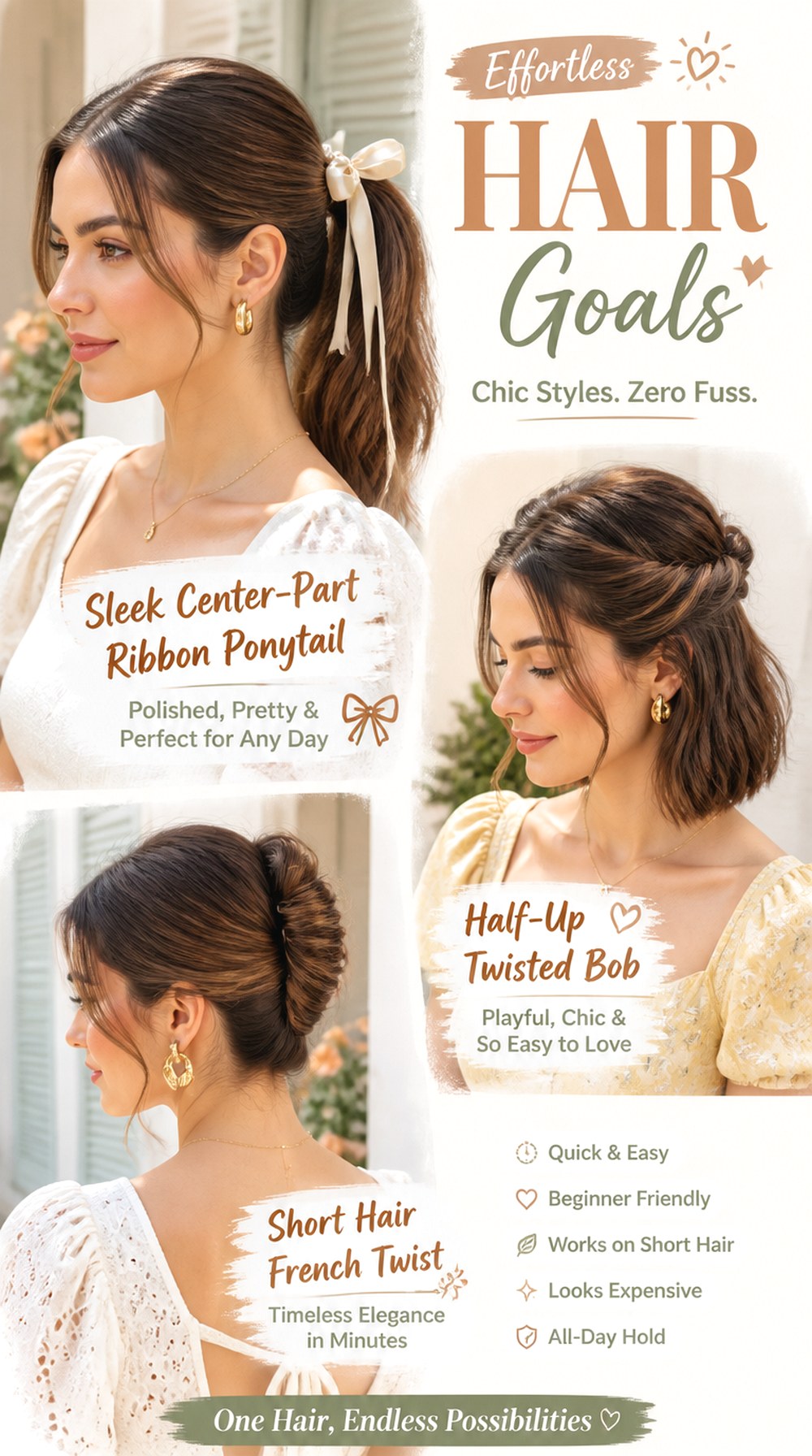
A sleek center-part ponytail focuses on clean lines, controlled roots, and a ribbon tied neatly around the base. The ponytail can sit low or at mid-height, but the center part should remain precise from the hairline to the crown. Straight and slightly wavy hair are easiest to smooth, while curly textures may require more preparation if a glassy finish is wanted. Use heat protectant, a fine-tooth comb, and smoothing serum. Styling takes around 10–20 minutes depending on natural texture. Humidity can encourage flyaways, so light hairspray may be useful. At the salon, request enough length around the hairline to tuck securely into the ponytail.
Pro tip: Apply smoothing product in thin layers rather than one heavy application so the roots stay polished without looking greasy or stiff.
Soft Wavy Ribbon Ponytail
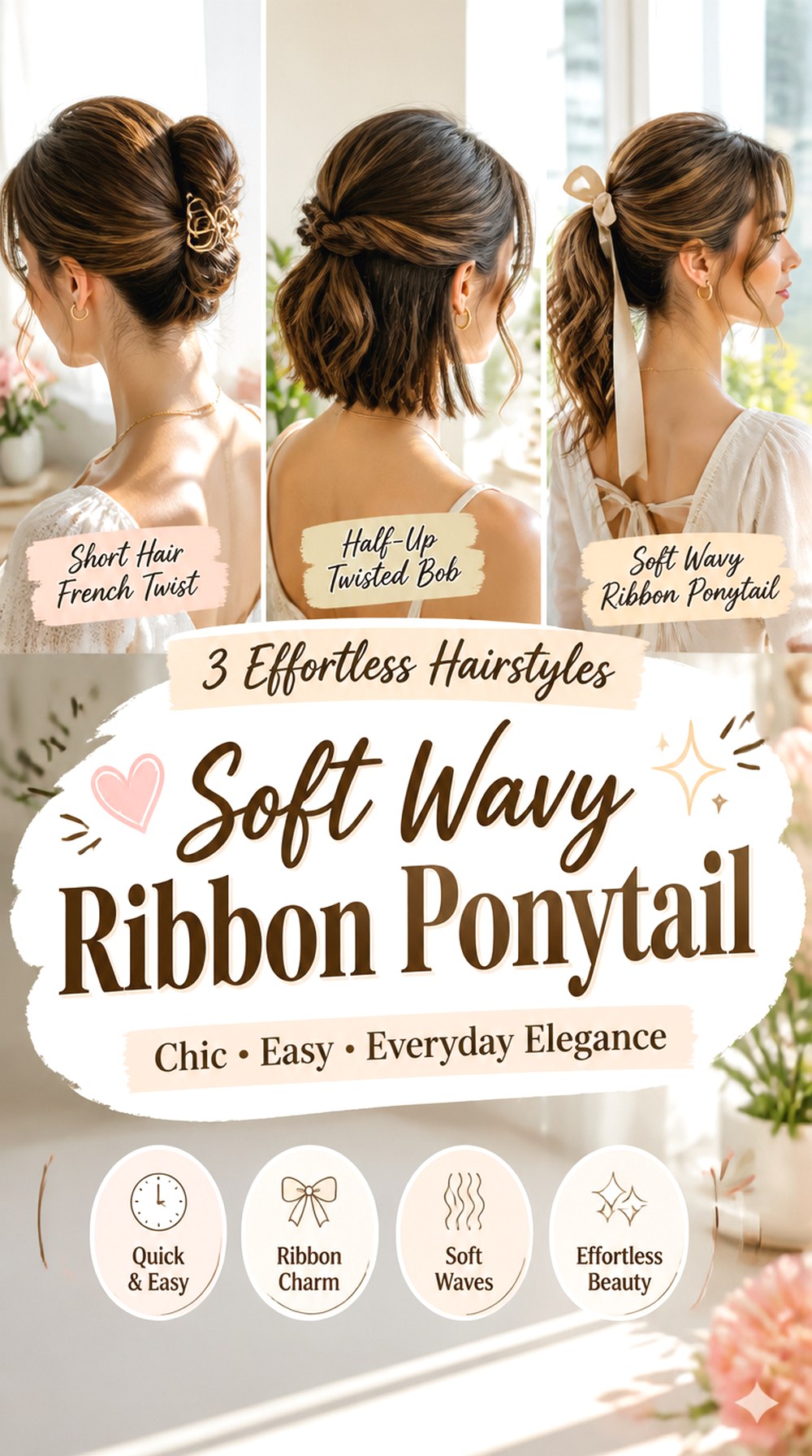
Soft waves give a ribbon ponytail movement through the ends while maintaining a relaxed shape around the crown. A low or mid ponytail usually complements the waves best, especially when a few face-framing pieces are left loose. Medium-length to long hair provides enough space for the curl pattern to show, and fine or medium-density hair can gain fullness from the added texture. Use heat protectant, a large-barrel curling iron, and flexible hairspray. Styling normally takes 15–20 minutes. Heat-free overnight waves can reduce daily heat exposure. Ask your stylist for long layers beginning below the chin so the ponytail keeps enough weight through the ends.
Pro tip: Curl sections in alternating directions before tying the ponytail, then gently separate them to prevent one solid curl from forming.
Curly Ribbon Ponytail
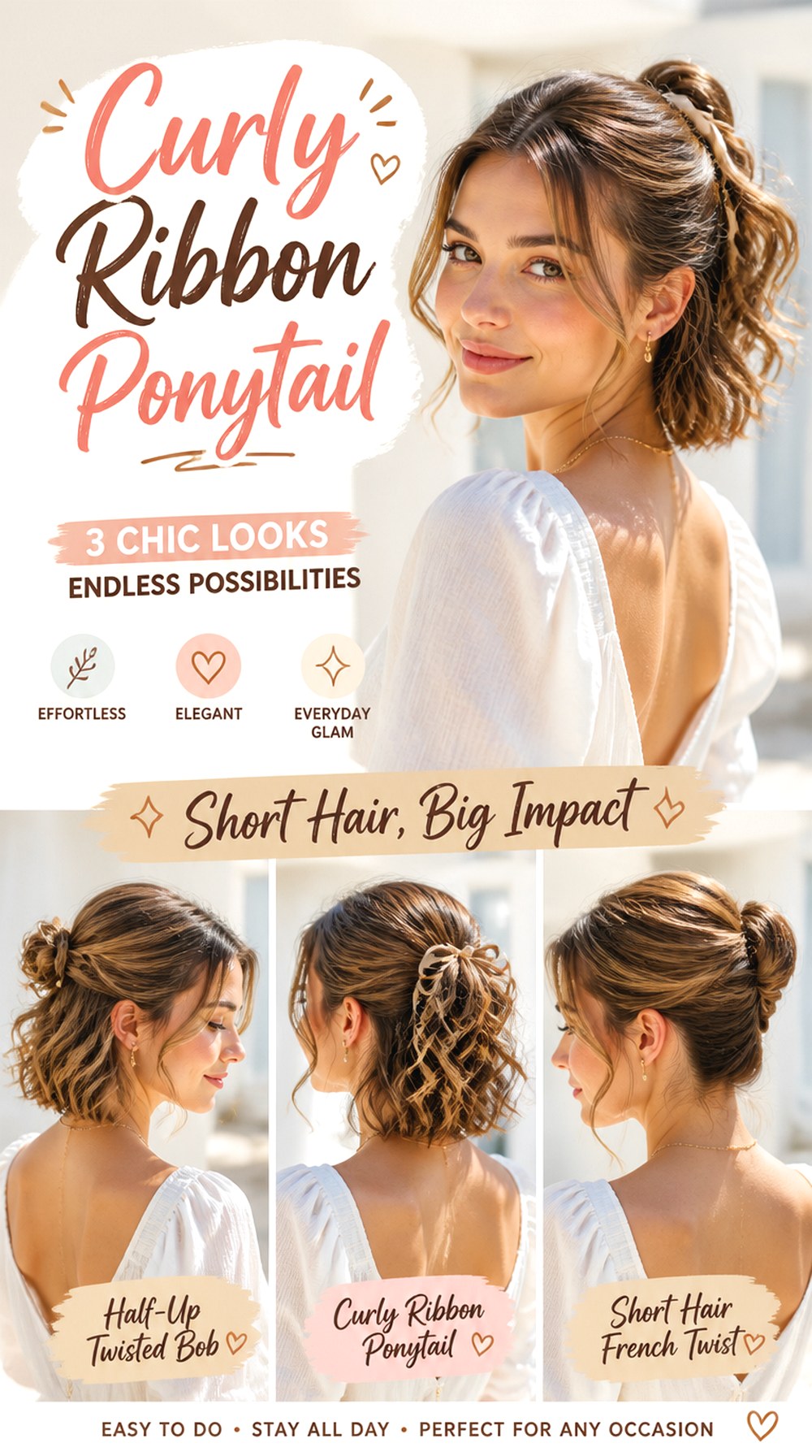
Natural curls create plenty of texture around a ribbon ponytail, so the decorative tie can stay simple while the curl pattern remains the main feature. A high, mid, or low placement can work depending on length and shrinkage. Medium and thick curly hair usually produces a fuller ponytail, while finer curls may benefit from light root lift. Use leave-in conditioner, curl cream, and a diffuser if the hair needs drying. Styling can be quick once curls are refreshed, usually around 5–15 minutes. Avoid brushing through dry curls because this can disrupt definition. At your salon appointment, mention your usual ponytail height so layers are shaped to fall evenly when gathered.
Pro tip: Tie the ribbon around a secure elastic instead of using the ribbon itself to hold the curls, which reduces slipping and uneven tension.
Long Ribbon Wrapped Ponytail
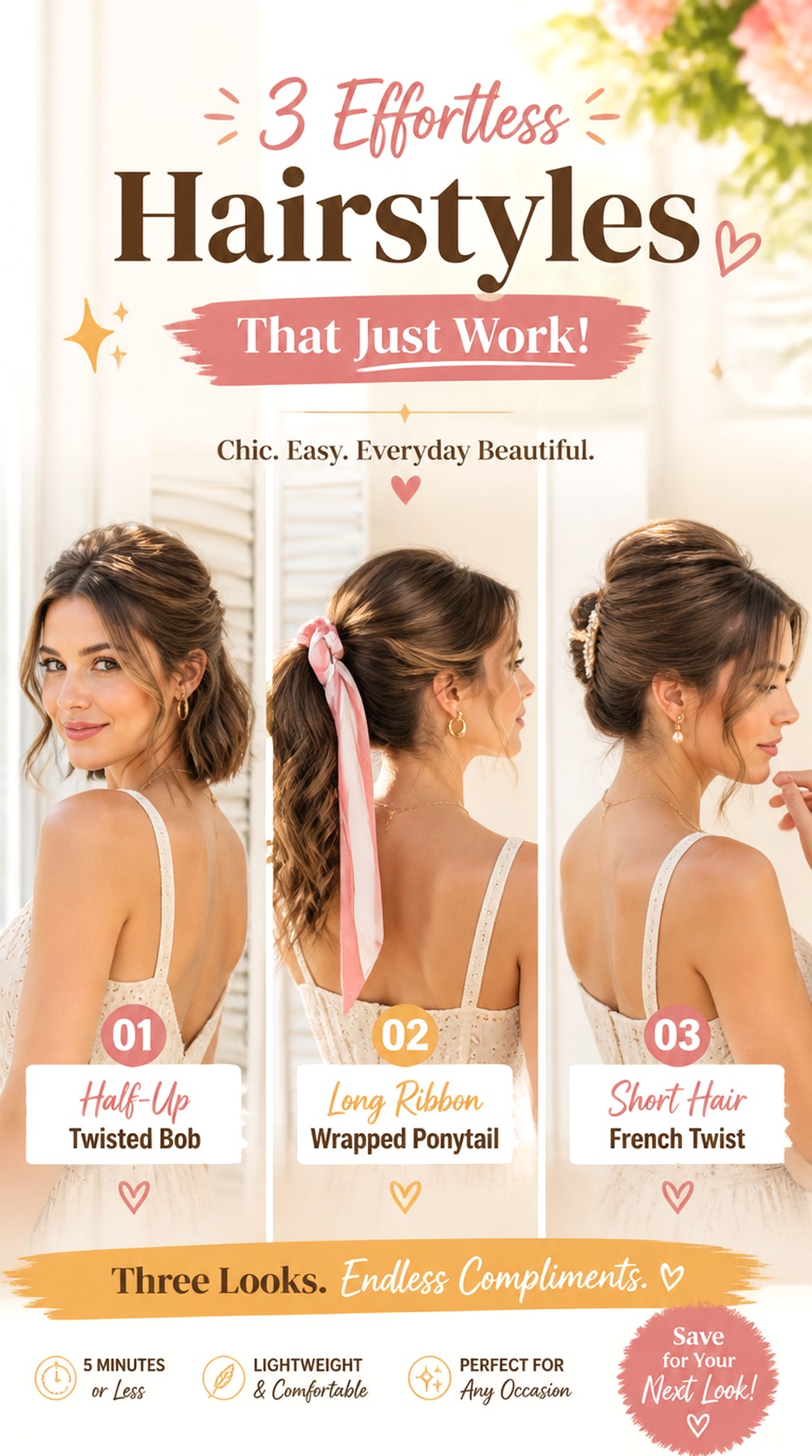
A long ribbon can be wrapped several times around the ponytail base before its ends trail down through the hair. This creates a longer vertical detail and works particularly well with long, straight or softly waved hair. Medium-density and thick hair provide a stable base, although fine hair can also wear it with a smaller ribbon. Keep the crown controlled with smoothing cream, use a paddle brush, and finish the lengths with lightweight shine spray. Styling usually takes about 5–10 minutes. The ribbon may need retightening after several hours. Ask your stylist to maintain a strong perimeter through long hair so the ponytail ends do not become too sparse.
Pro tip: Wrap the ribbon over the elastic two or three times before tying it so the base stays compact and the tails fall from one clean point.
Double Ribbon Ponytail
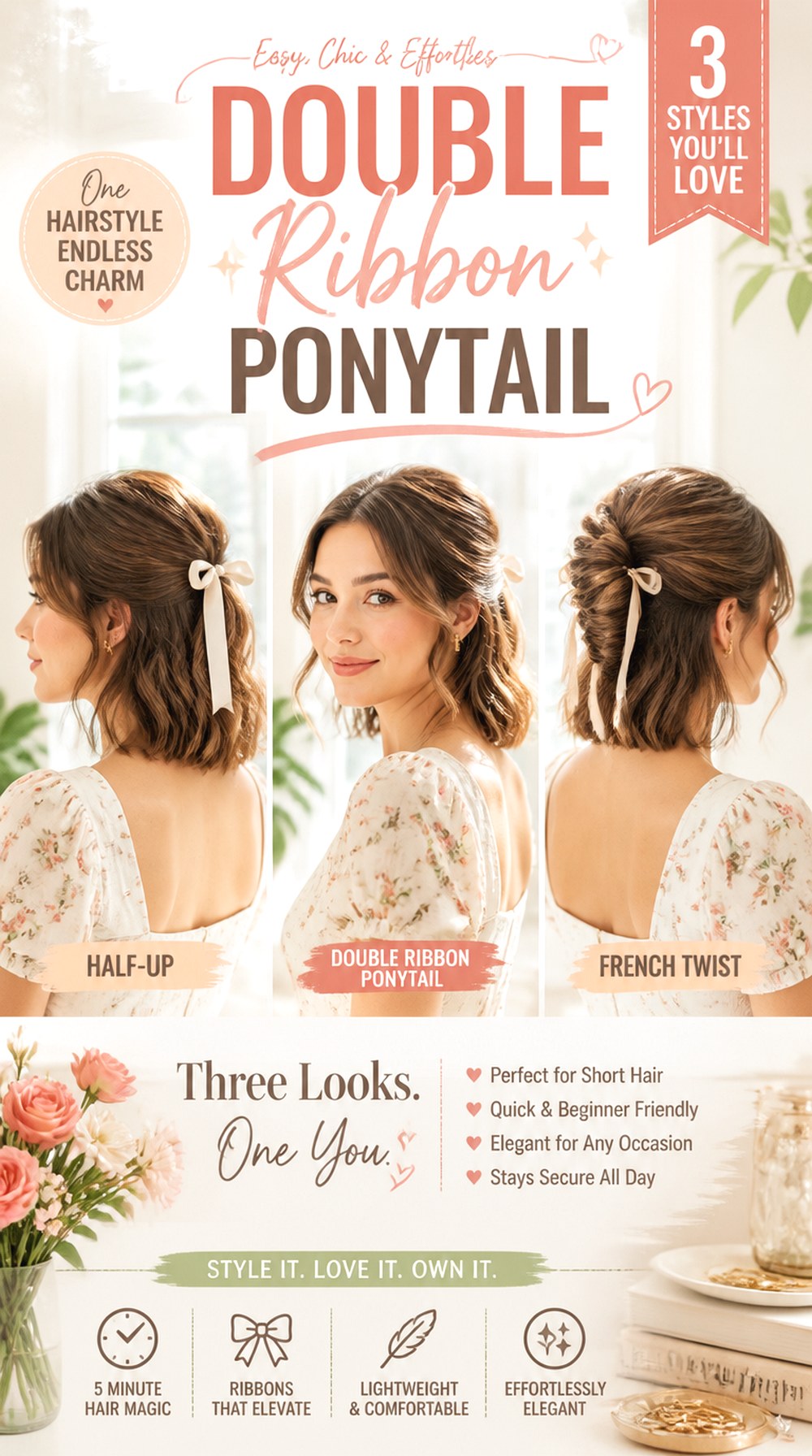
A double ribbon ponytail uses two coordinating ribbons at the ponytail base or in separate positions along the length. The layered detail works well on simple straight or softly wavy ponytails because the hair itself does not need complicated styling. Medium and long lengths are easiest to work with, and medium-to-thick density prevents the ribbons from dominating the overall shape. Use volumizing mousse if the roots need lift, a strong elastic, and light-hold hairspray. Styling generally takes 5–12 minutes. Choose lightweight ribbons to avoid pulling on the base. Ask your stylist for long layers that maintain an even ponytail shape instead of creating thin separated ends.
Pro tip: Use ribbons with different widths rather than two bulky bows of equal size; the contrast keeps the base from looking crowded.
Side Ribbon Ponytail
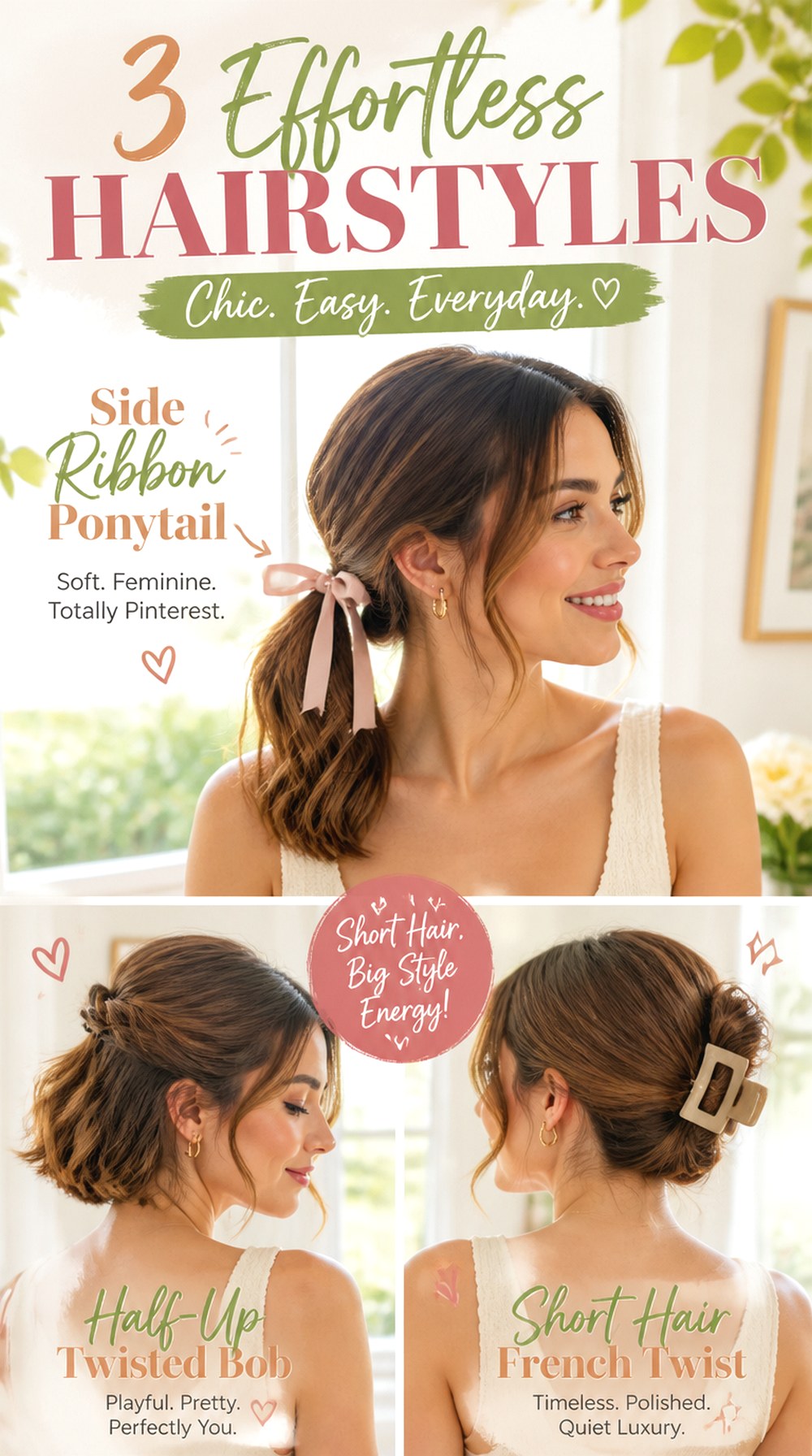
A side ribbon ponytail shifts the hair toward one shoulder, creating an asymmetrical shape that works especially well with waves, curls, and longer face-framing layers. The ponytail should sit low behind the ear rather than directly beneath it, which helps the hair fall forward naturally. Medium to long hair is most suitable, while fine hair benefits from soft texture for additional body. Prep with texturizing spray, define the ends with a curling wand, and use flexible hairspray for hold. Styling takes around 10–15 minutes. Side pieces may loosen during the day. Ask your stylist to keep face-framing layers long enough to reach the ponytail if you prefer a cleaner finish.
Pro tip: Position the elastic slightly toward the back of the neck so the ponytail drapes over the shoulder without placing pressure directly behind the ear.
French Braid Into Ribbon Ponytail
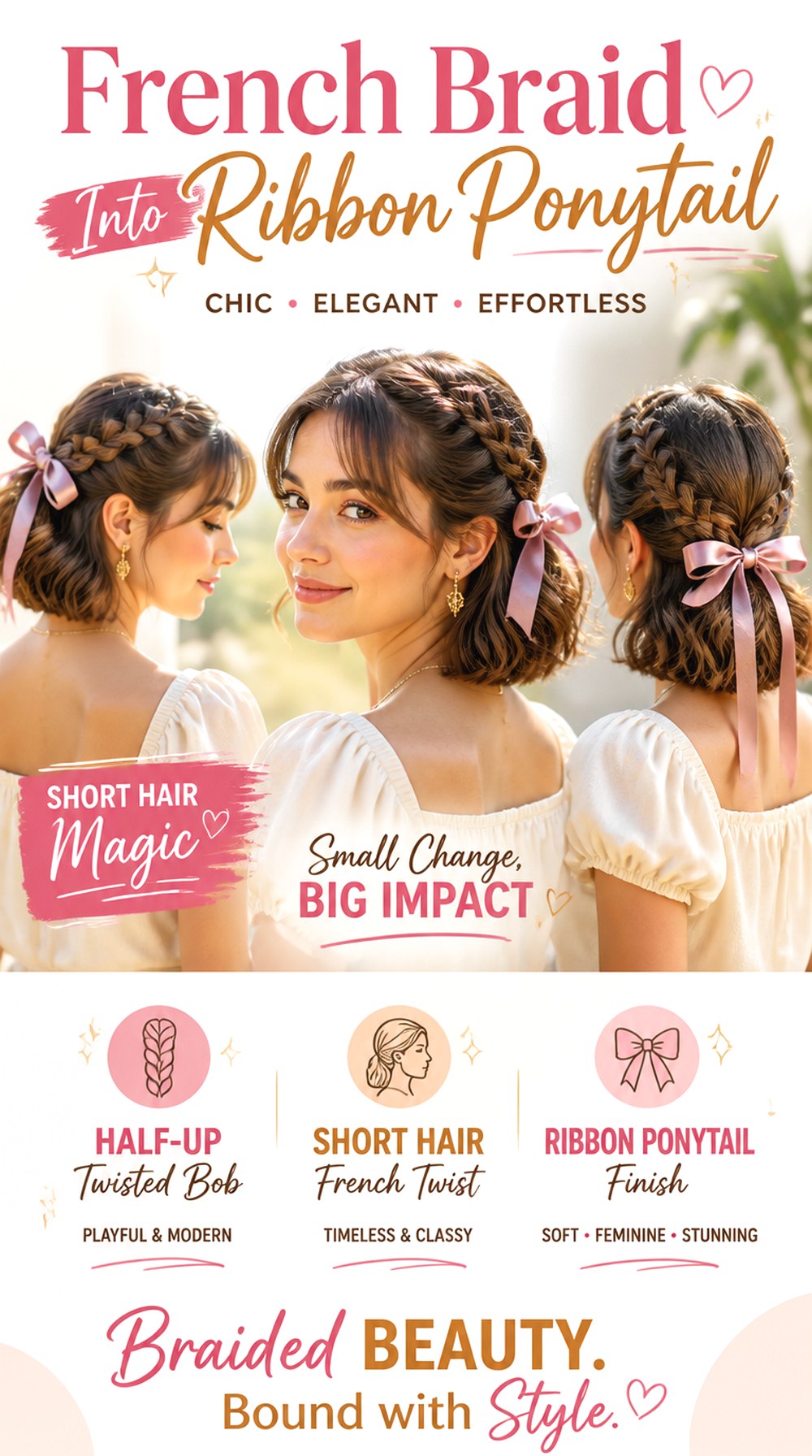
A French braid flowing into a ponytail combines structured detail at the crown with loose length below. The ribbon can be tied where the braid ends, clearly separating the two textures. Medium to long hair works best, and straight or wavy hair is often easiest to braid neatly. Curly hair can also work with a softer, more textured finish. Use a detangling spray, styling cream for grip, and light-hold hairspray. Styling generally takes 15–25 minutes, so it requires more time than a basic ponytail. Ask your stylist to avoid very short crown layers if you want them contained within the braid.
Pro tip: Stop the French braid near the occipital bone rather than continuing too far down, giving the ponytail enough loose length to move naturally.
Twisted Crown Ribbon Ponytail
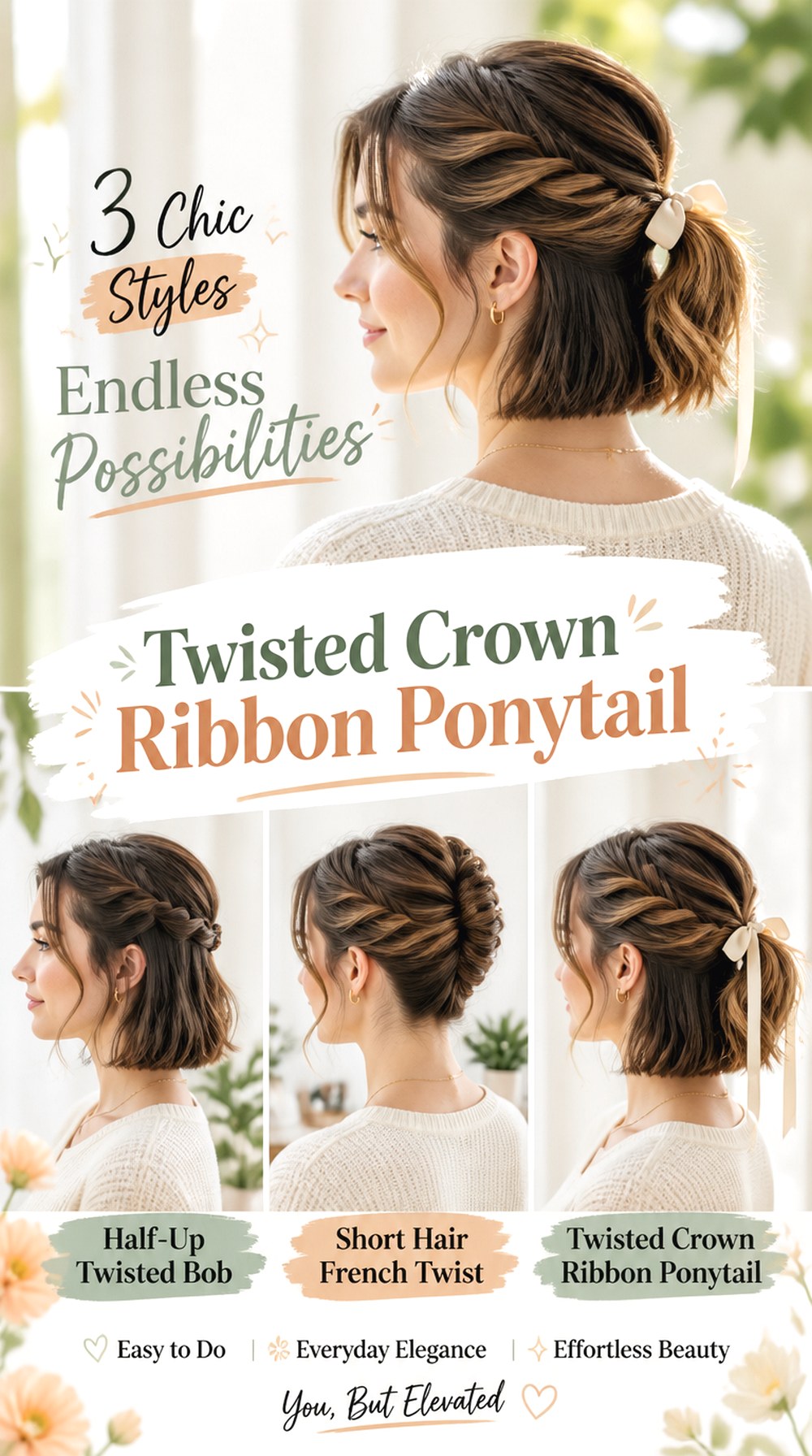
Two softly twisted side sections can meet at the back and flow into a ribbon ponytail, adding detail around the crown without requiring a full braid. This approach is especially useful for medium and long hair with natural waves because the texture helps hold the twists. Fine hair can gain gentle fullness by loosening each twist slightly, while thick hair may need larger sections to control bulk. Use dry texture spray, small bobby pins, and flexible hairspray. Styling takes around 10–15 minutes. Long face-framing layers blend best with the twisted sections. At your next haircut, ask for crown layers that remain long enough to twist securely backward.
Pro tip: Pull only the outer edge of each twist for volume; loosening the entire section can cause it to collapse or expose the pins.
Short Hair Ribbon Ponytail
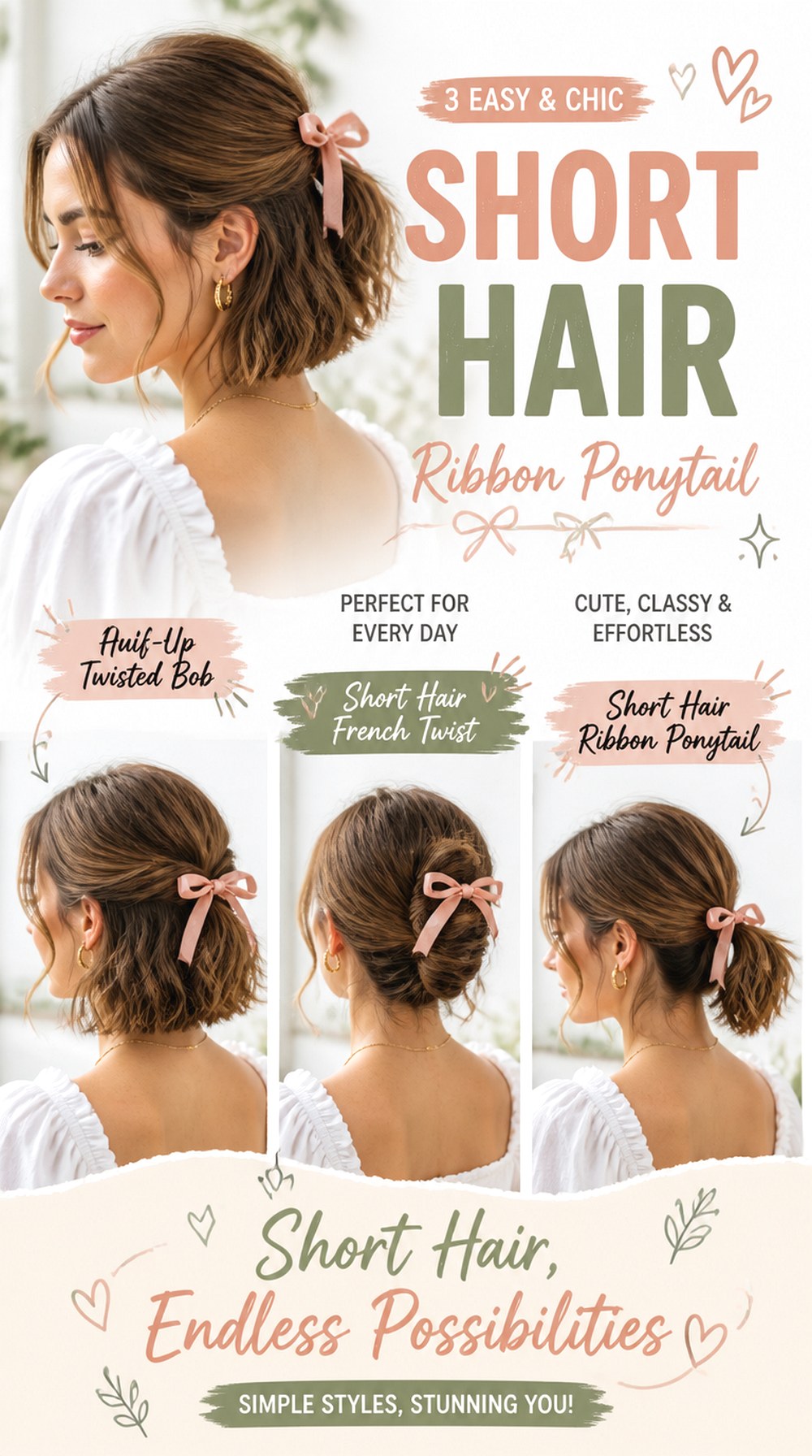
A ribbon ponytail can work on shorter hair as long as enough length reaches the elastic. A low ponytail positioned at the nape is usually the most secure choice for bobs, lobs, and grown-out layered cuts. Short face-framing pieces can remain loose rather than being forced back. Straight and wavy textures are particularly easy to manage, while curly short hair creates a fuller compact ponytail. Use lightweight styling cream, small bobby pins, and a mini flat iron when necessary. Styling generally takes 5–10 minutes. Short layers may escape naturally during the day. Tell your stylist you want enough perimeter length to gather comfortably at the nape.
Pro tip: Select a narrow ribbon or small bow so the accessory stays proportionate to the shorter ponytail instead of hiding most of the hair.
Textured Low Ribbon Ponytail
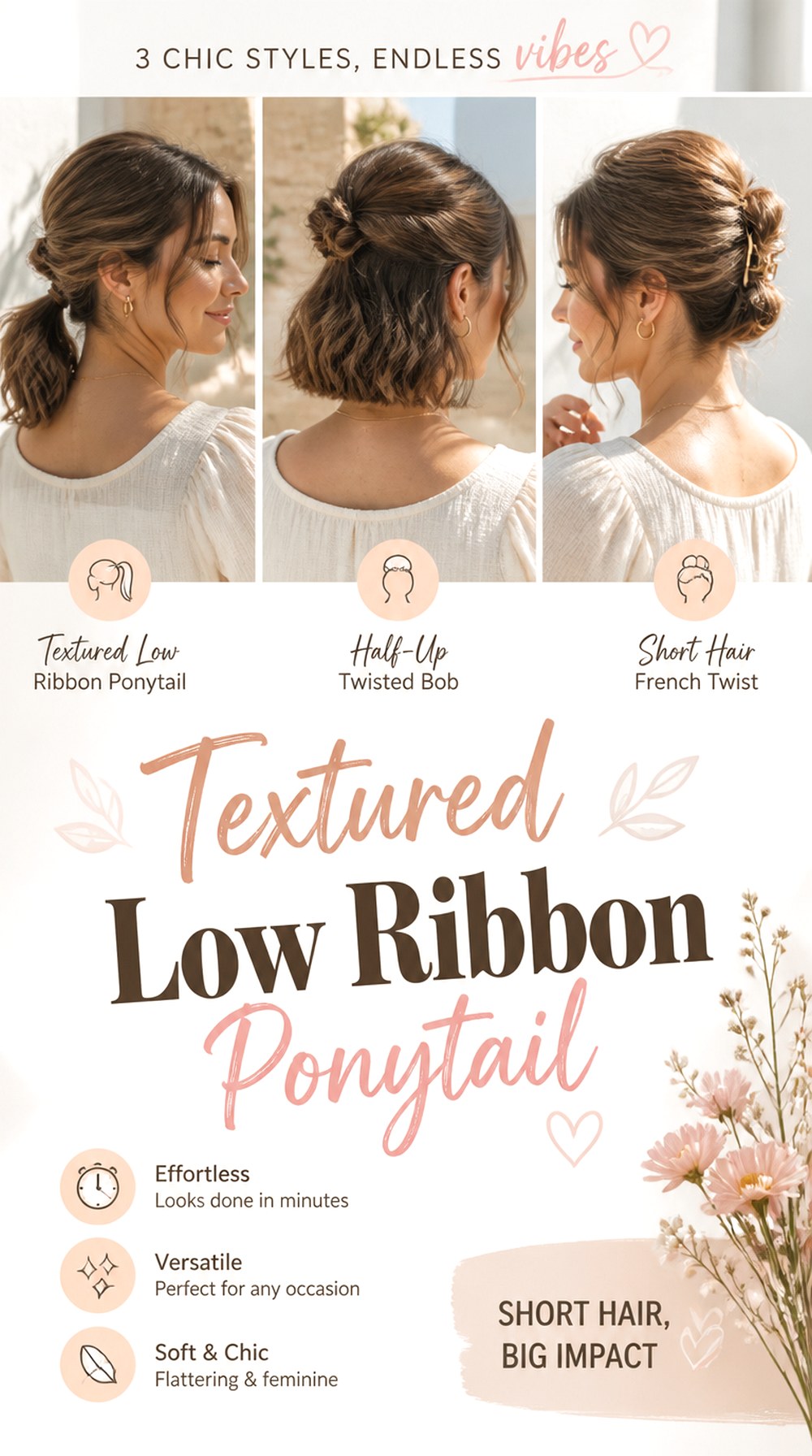
A textured low ponytail keeps intentional softness around the crown instead of smoothing every strand flat. The result works especially well with naturally wavy hair, loose curls, or hair that has been lightly waved before styling. Medium and thick density provides plenty of body, while fine hair can gain fullness from dry texture products. Use texturizing spray, lightweight mousse, and a few bobby pins for loose pieces. Styling takes about 10–15 minutes and does not require a highly polished finish. Humidity may increase texture, which can suit this style rather than ruin it. Ask your stylist for blended layers that encourage movement without removing too much weight from the ponytail.
Pro tip: Create volume at the crown before securing the elastic; pulling sections loose afterward can cause bumps in the wrong places.
Pearl-Trim Ribbon Ponytail
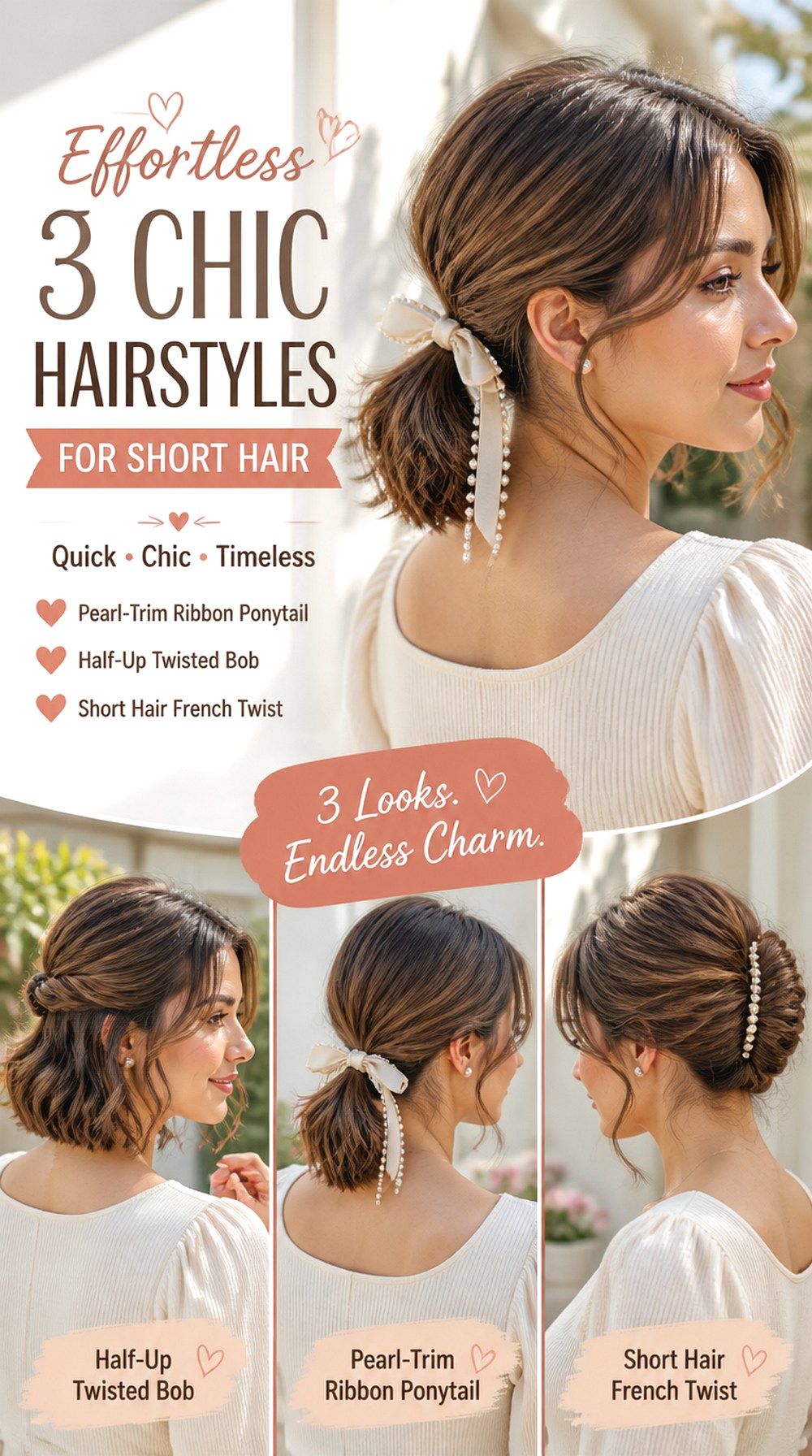
A pearl-trim ribbon adds decorative detail to an otherwise simple ponytail and works particularly well for parties, dinners, bridal events, or other dressed-up occasions. Keep the ponytail smooth and relatively uncomplicated so the ribbon remains visible. Low and mid-height placement both work, while soft waves through the ends prevent the result from becoming too severe. Fine to thick hair can wear this style, but heavier embellished ribbons need a secure elastic underneath. Use heat protectant, smoothing serum, and light-hold hairspray. Styling takes around 10–20 minutes. Ask your stylist to keep the perimeter healthy and polished because decorative accessories draw attention toward the ponytail.
Pro tip: Secure heavier pearl ribbon with one hidden bobby pin beneath the ponytail to stop the bow from rotating as you move.
Oversized Bow Ribbon Ponytail
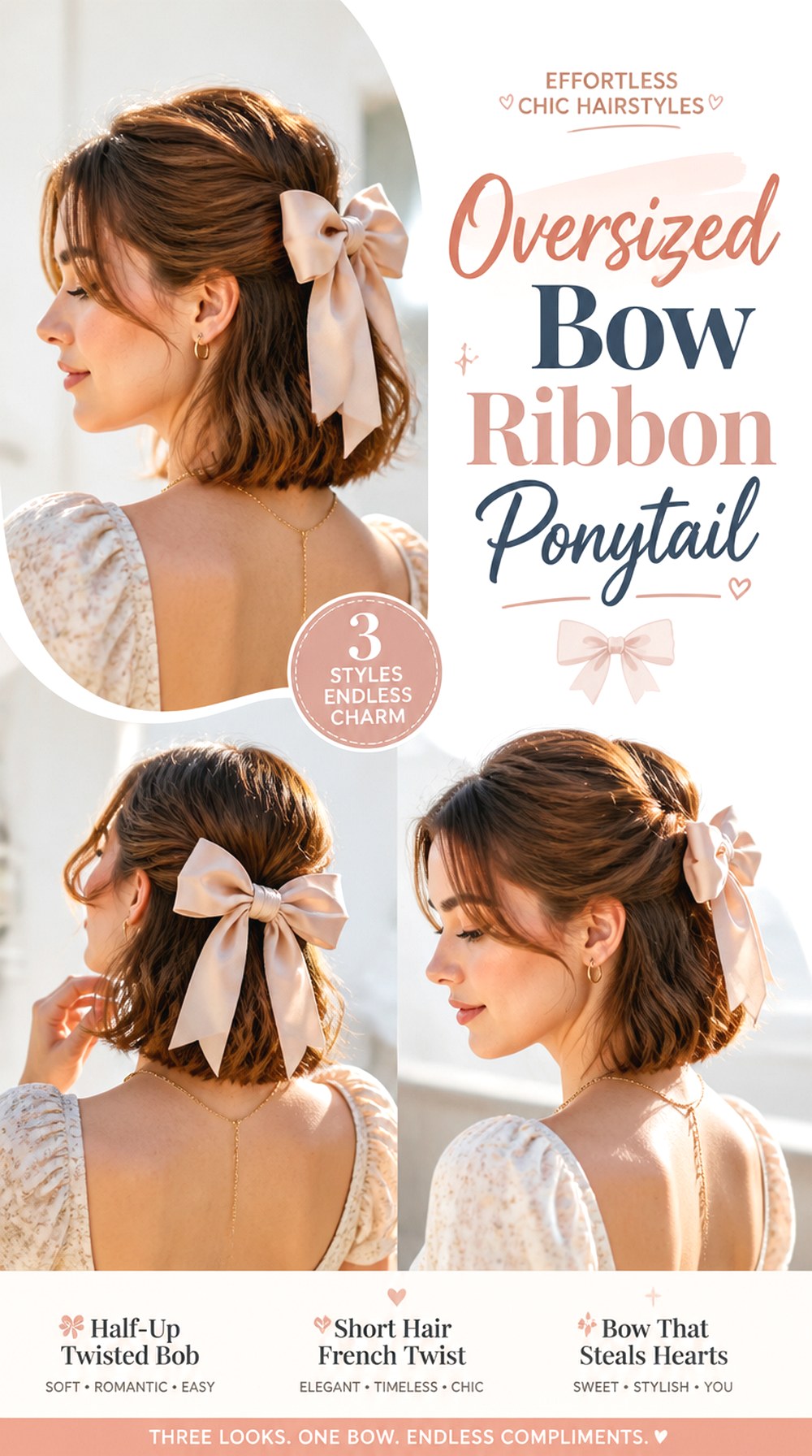
An oversized bow creates a strong focal point, so the ponytail itself usually looks best with a simple shape. Position it at the nape or mid-height and keep the surrounding hair smooth, softly waved, or gently textured. Medium-to-long hair balances the larger accessory particularly well, while fine hair should use a lightweight fabric bow to avoid pulling. Prep with volumizing spray, smooth flyaways with a soft brush, and finish with flexible hairspray. Styling takes roughly 5–15 minutes depending on the finish. The bow may need occasional repositioning during the day. When discussing your haircut, ask for enough fullness through the back so the ponytail visually balances the accessory.
Pro tip: Match bow scale to hair density—a slightly smaller oversized bow often looks more balanced on fine hair than a very stiff, heavy ribbon.
Conclusion
Ribbon ponytail hairstyles can be adjusted far beyond simply changing the color of the bow. Ponytail height, hair length, density, layers, bangs, face-framing pieces, texture, parting, and ribbon size all influence the finished shape. A sleek low ponytail may suit someone who prefers minimal daily styling, while curls, bubble sections, braids, or twisted details require a little more preparation.
The most useful choice is one that works with your natural hair texture, density, face shape, routine, and maintenance preference. You can also change the finish from smooth and polished to loose and textured without changing the basic ponytail. When choosing a reference, focus on the specific placement, volume, fringe, and ribbon proportion you want rather than copying every detail exactly.
CTA
Choose one or two ribbon ponytail ideas you would genuinely wear and save clear photo references before your next salon visit. Discuss your face shape, natural hair texture, hair density, preferred length, maintenance level, and usual styling routine with your stylist. Point out exactly where you want the layers to begin, how much volume you like at the crown, whether you want loose face-framing pieces, and the ponytail height or finish you prefer. Those details will make your reference photos much more useful.
FAQs
What Hair Type Works Best For Ribbon Ponytail Hairstyles?
Straight, wavy, curly, fine, medium, and thick hair can all work. The best ponytail placement, ribbon weight, and styling products depend on your texture and density.
How Do I Stop A Ribbon From Sliding Out Of My Ponytail?
Secure the hair with a regular elastic first, then tie the ribbon around it. Textured fabrics such as velvet generally grip more easily than very smooth satin.
Do Ribbon Ponytails Require Heat Styling?
Not necessarily. Straight, curly, and naturally wavy hair can be tied without heat. Curling tools or flat irons are only needed when you want a more controlled finish.
How Can I Make A Ribbon Ponytail Look Fuller On Fine Hair?
Use lightweight mousse or volumizing spray at the roots, add gentle texture through the lengths, and avoid very heavy ribbons that can make a fine ponytail look smaller.