27 Fall Bob Hairstyles
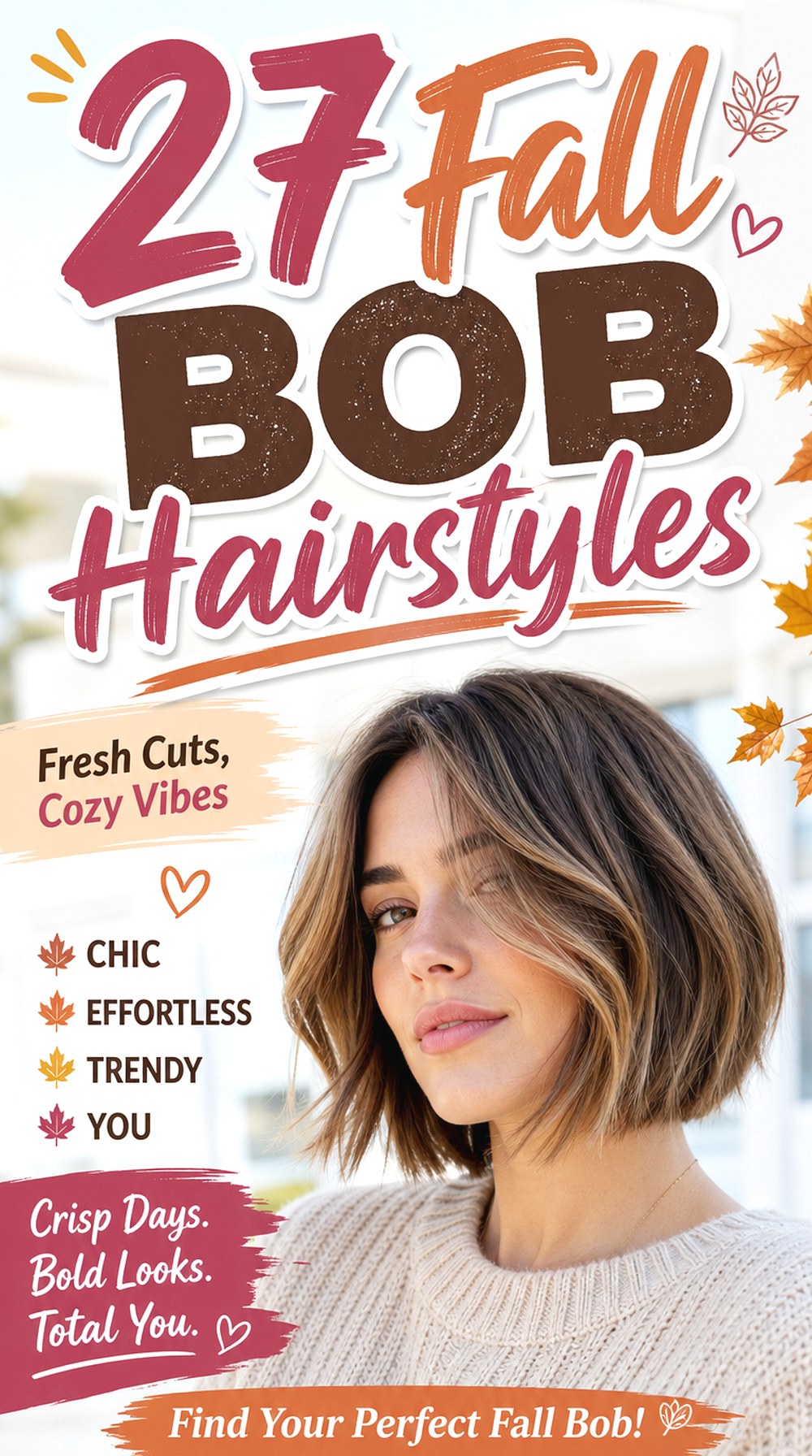
Fall bob hairstyles combine the clean shape of a bob haircut with colors, textures, and finishes that feel especially suited to autumn. The cut can sit anywhere from the jaw to the collarbone, with blunt ends for weight or layers for softer movement. Some versions are smooth and polished, while others use waves, curls, flipped ends, or shaggy texture. Warm chestnut, copper, cinnamon, auburn, caramel, and deep brunette shades can also give the haircut more seasonal depth without changing its basic structure.
A bob can work with fine, medium, or thick hair when the internal weight is adjusted correctly. Straight hair shows precise lines clearly, while wavy and curly textures can create fuller, softer silhouettes. Round faces may benefit from slightly longer front pieces, while oval, heart, and square faces can often be balanced through fringe placement, parting, or face-framing layers. Density matters too: fine hair usually benefits from stronger ends, while thick hair may need controlled bulk removal.
Daily styling can range from a quick air-dry to a full blowout. Fringe, sharp perimeters, and highly polished finishes generally require more attention. Before choosing a cut, consider your natural texture, willingness to use heat, preferred length, and how often you can return to the salon for trims.
Quick List
- Blunt Chestnut Bob
- Copper French Bob
- Caramel Balayage Bob
- Soft Layered Bob
- Textured Wavy Bob
- Espresso Sleek Bob
- Cinnamon Angled Bob
- Curtain Bangs Bob
- Burgundy Bob
- Long Bob With Face-Framing Layers
- Mushroom Brown Bob
- Curly Rounded Bob
- Shaggy Bob With Wispy Bangs
- A-Line Bob
- Chin-Length Bob With Side Part
- Auburn Bob With Bottleneck Bangs
- Tousled Bob With Root Volume
- Ash Brown Bob With Soft Waves
- Italian Bob
- Inverted Bob
- Bob With Flipped Ends
- Razor-Cut Bob
- Side-Swept Bangs Bob
- Golden Brunette Bob
- Collarbone Bob
- Deep Chocolate Bob With Subtle Layers
- Air-Dried Wavy Bob
Blunt Chestnut Bob
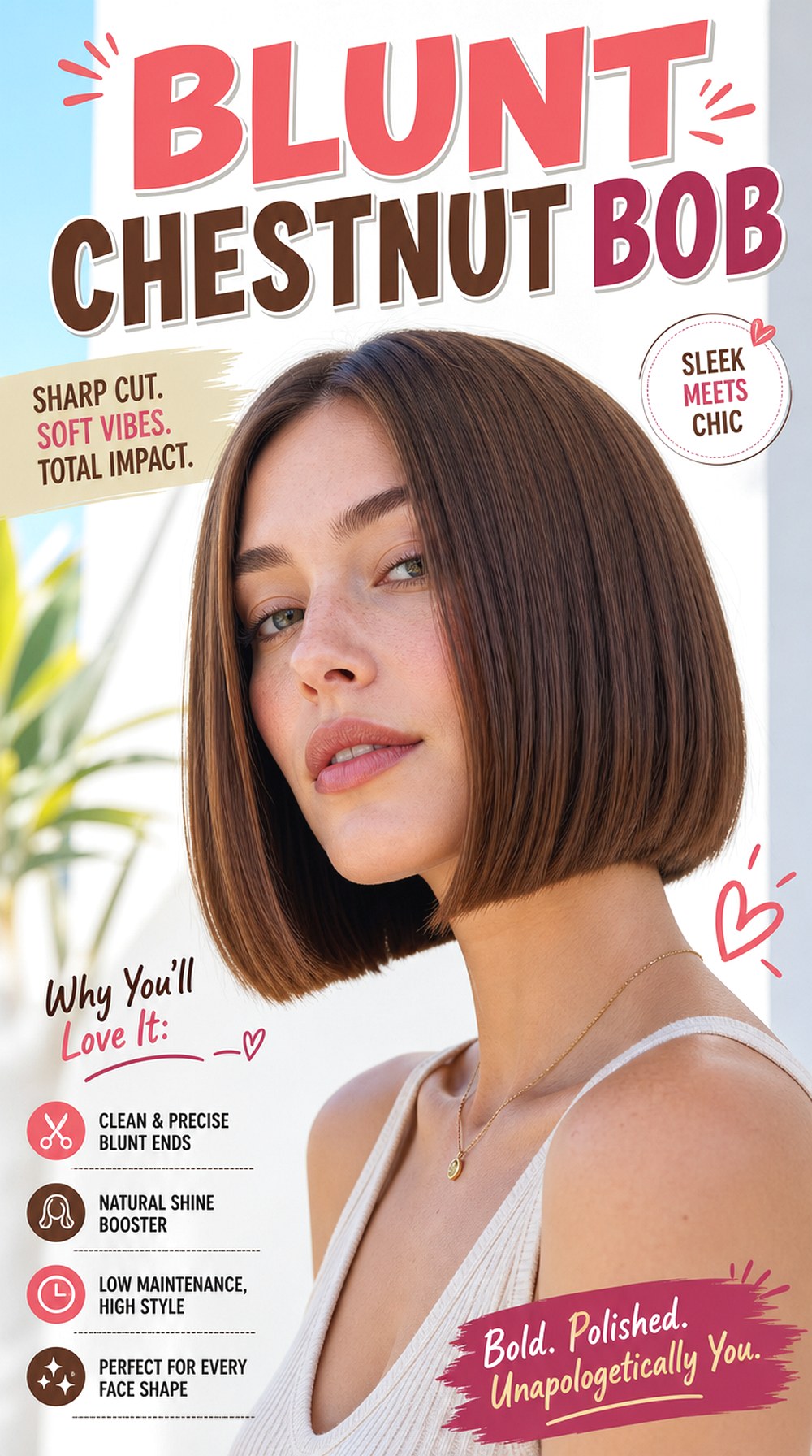
A blunt chestnut bob keeps the perimeter strong and relatively uniform, usually landing between the chin and shoulders. The solid edge gives fine to medium hair a denser appearance, while the warm brown tone adds depth without relying on dramatic layers. Straight and lightly wavy textures show the shape particularly well. Styling is fairly quick if your hair naturally dries smooth; otherwise, a short blow-dry helps keep the ends controlled. Use heat protectant, a paddle brush, and smoothing serum for a polished finish. Expect trims roughly every six to eight weeks to preserve the clean line. At the salon, request minimal graduation and a substantial perimeter rather than heavily texturized ends.
Pro tip: Ask your stylist to keep the bottom edge dense, especially behind the ears, where over-thinning can make a blunt bob lose its strong outline.
Copper French Bob

The copper French bob usually sits around the jaw or slightly above it, creating a compact shape with plenty of personality. A soft fringe can be added, although the cut also works with an open forehead and natural part. Copper tones emphasize texture, so loose bends and slight movement can make the color appear more dimensional. It suits straight to wavy hair and can work well on medium density, while very thick hair may need discreet internal weight removal. Styling takes moderate effort when bangs are involved. Try lightweight mousse, a small round brush, and light-hold hairspray. Ask your stylist for a jaw-skimming outline with soft rather than heavily feathered ends.
Pro tip: If adding a fringe, keep it slightly airy through the center so the short overall length does not feel too visually heavy around the face.
Caramel Balayage Bob
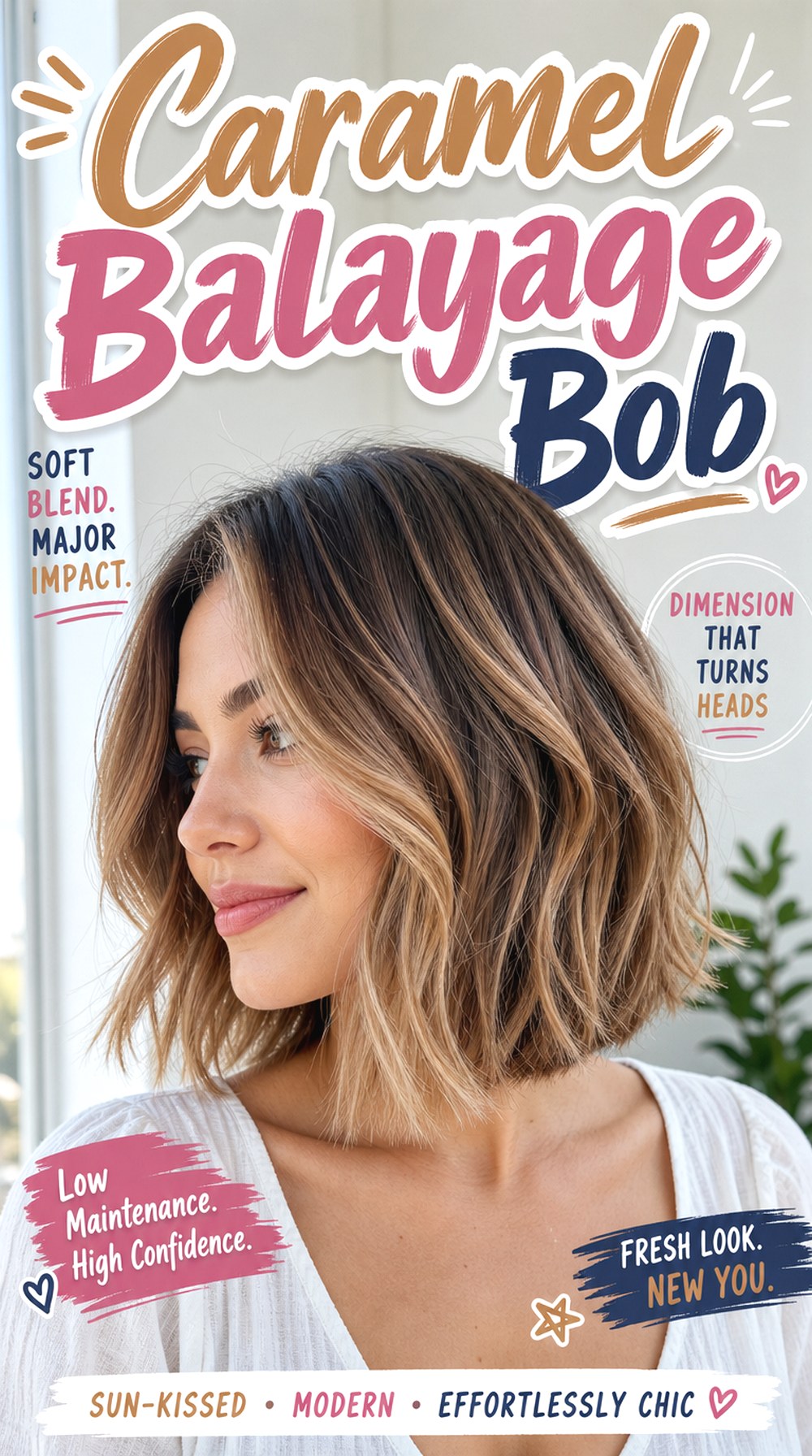
A caramel balayage bob combines a structured short-to-medium cut with softly painted lighter pieces through the mid-lengths and ends. The contrast is especially noticeable on medium and deeper brunette bases, where caramel ribbons can highlight waves and face-framing sections. A slightly layered shape works well because the color catches different lengths without making the ends look thin. Medium and thick wavy hair are natural matches, although fine hair can wear it with restrained layering. Use texturizing spray, heat protectant, and a medium curling iron for soft movement. Styling is moderate rather than demanding. Tell your stylist you want visible dimension around the face while keeping enough darker depth near the roots.
Pro tip: Place the brightest caramel pieces near the cheekbones and front perimeter instead of lightening every section equally; the contrast will look more deliberate.
Soft Layered Bob
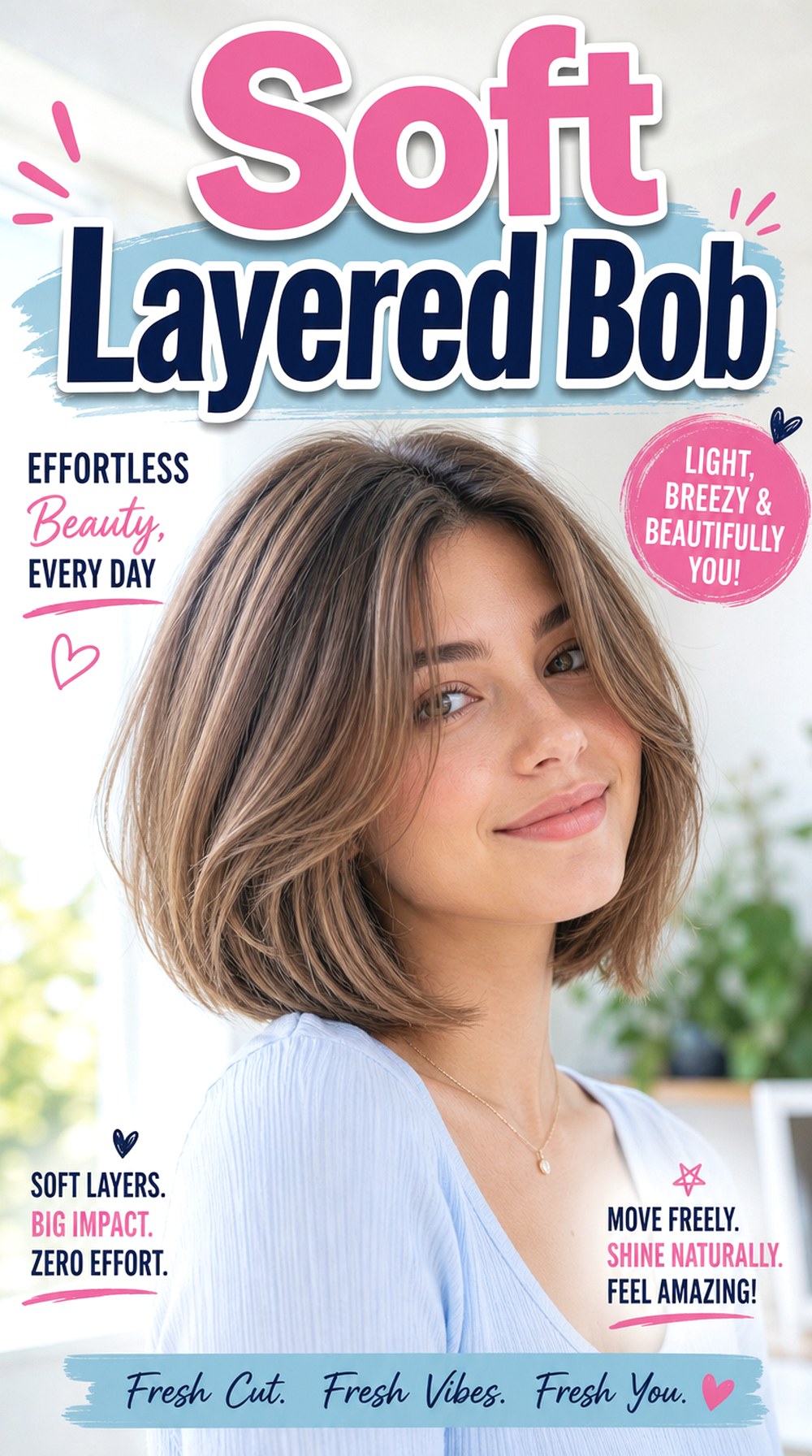
The soft layered bob removes some of the rigid weight associated with a one-length cut while preserving a recognizable bob outline. Gentle layers can begin around the cheekbones or lower, depending on how much movement you want. This approach suits medium to thick hair particularly well because it reduces bulk without creating a shaggy finish. Fine hair can also wear soft layers when the ends remain substantial. Styling can be quick with natural texture or moderate with a blow-dry. Useful tools include volumizing spray, a round brush, and heat protectant. Plan on shaping the layers every eight weeks or so. At your appointment, request blended layers that move but do not create short, disconnected pieces at the crown.
Pro tip: For a fuller-looking perimeter, ask for the shortest layers to stay above the ends rather than cutting multiple wispy layers all the way through the bottom.
Textured Wavy Bob
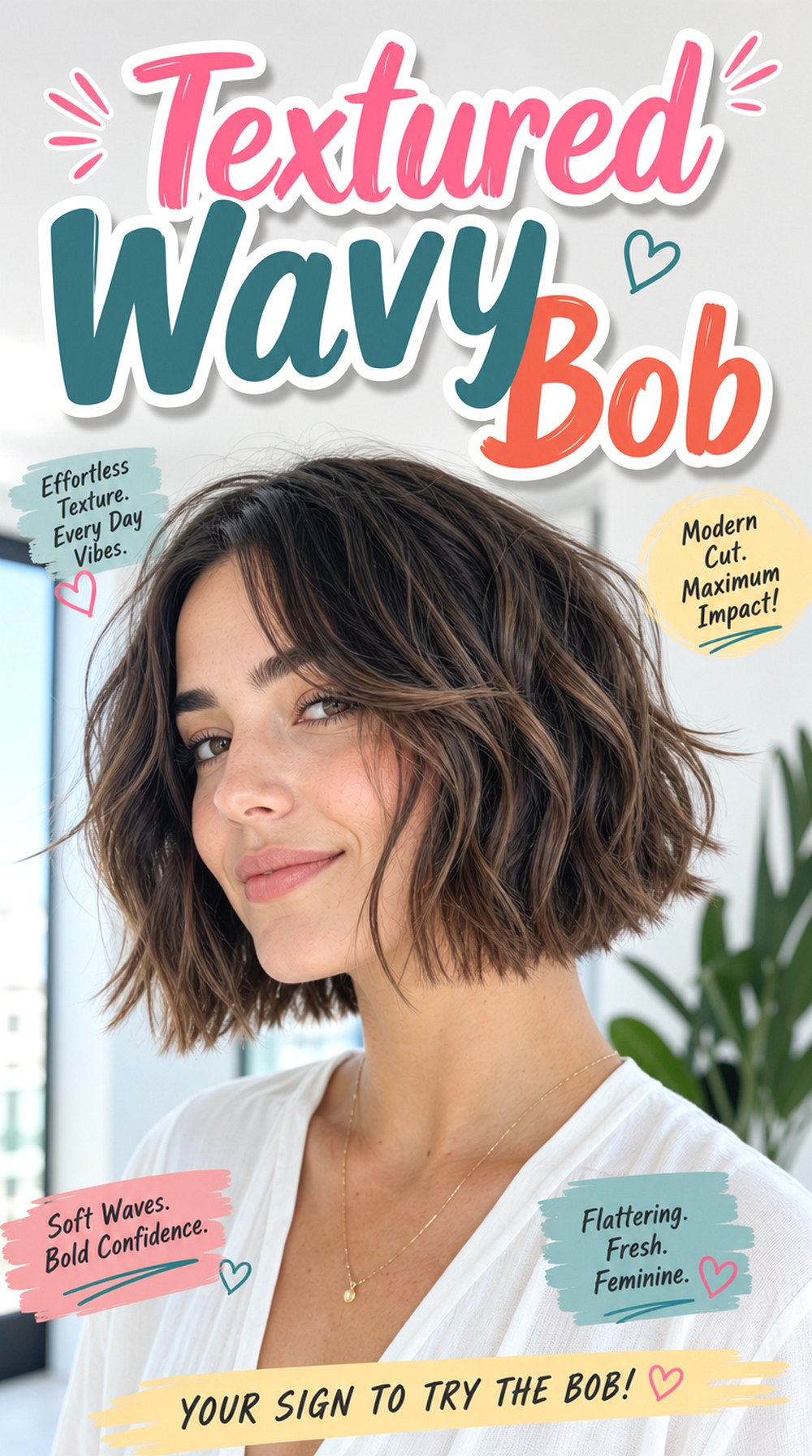
A textured wavy bob uses bends, separation, and slightly irregular movement to keep the haircut from looking too precise. It often falls between the jaw and shoulders, with light layering that allows waves to form instead of stacking heavily at the bottom. Naturally wavy hair can make this a low-effort option, while straight hair may need a curling tool for the same finish. Medium density is particularly easy to manage, although thick hair may need some internal debulking. Work with curl cream, texturizing spray, and a diffuser to encourage definition without stiffness. Salon visits every seven to ten weeks usually keep the outline controlled. Ask for movement without overly shredded ends.
Pro tip: Alternate the direction of a few front and side bends, leaving some ends straighter, to avoid turning soft texture into uniform ringlets.
Espresso Sleek Bob
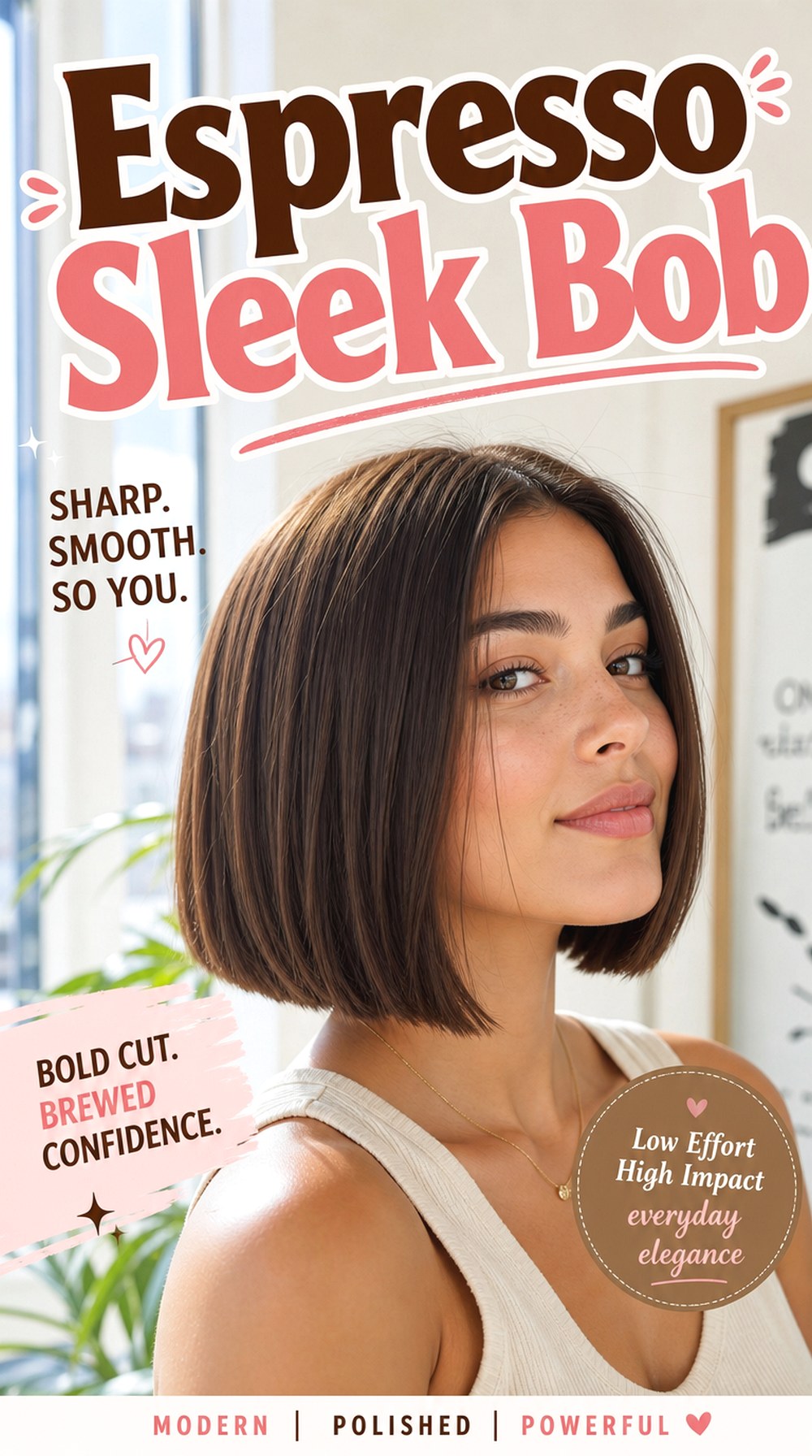
The espresso sleek bob is built around smooth texture, dark reflective color, and a controlled perimeter. It can sit at the chin or slightly below, with either a center part for symmetry or a side part for softer balance. Straight and slightly wavy hair can achieve the glassy finish most easily, while dense hair may benefit from hidden internal layers to prevent excessive width. This bob requires more styling than a tousled cut if your natural texture is curly or frizz-prone. Keep heat protectant, a small flat iron, and smoothing serum nearby. Sharp versions usually benefit from trims every six to eight weeks. Ask your stylist to keep the visible surface clean and avoid obvious short layers.
Pro tip: Smooth small sections rather than repeatedly passing a flat iron over large sections; you can get a cleaner finish with less unnecessary heat exposure.
Cinnamon Angled Bob

A cinnamon angled bob is slightly shorter through the back and gradually longer toward the front. The diagonal shape gives the haircut direction without requiring extreme stacking, while cinnamon brown or reddish-brown tones bring warmth to the finish. This cut can be useful for medium to thick straight hair because the angle removes some weight at the nape while preserving length beside the face. Wavy textures can wear it too, although the line appears softer. Styling takes moderate effort with blow-dry cream, a round brush, and heat protectant. Ask your stylist for a gradual forward angle instead of a dramatic wedge if you want easy grow-out.
Pro tip: Decide exactly where you want the longest front point to sit—jaw, chin, or collarbone—and show that length clearly in your reference photo.
Curtain Bangs Bob
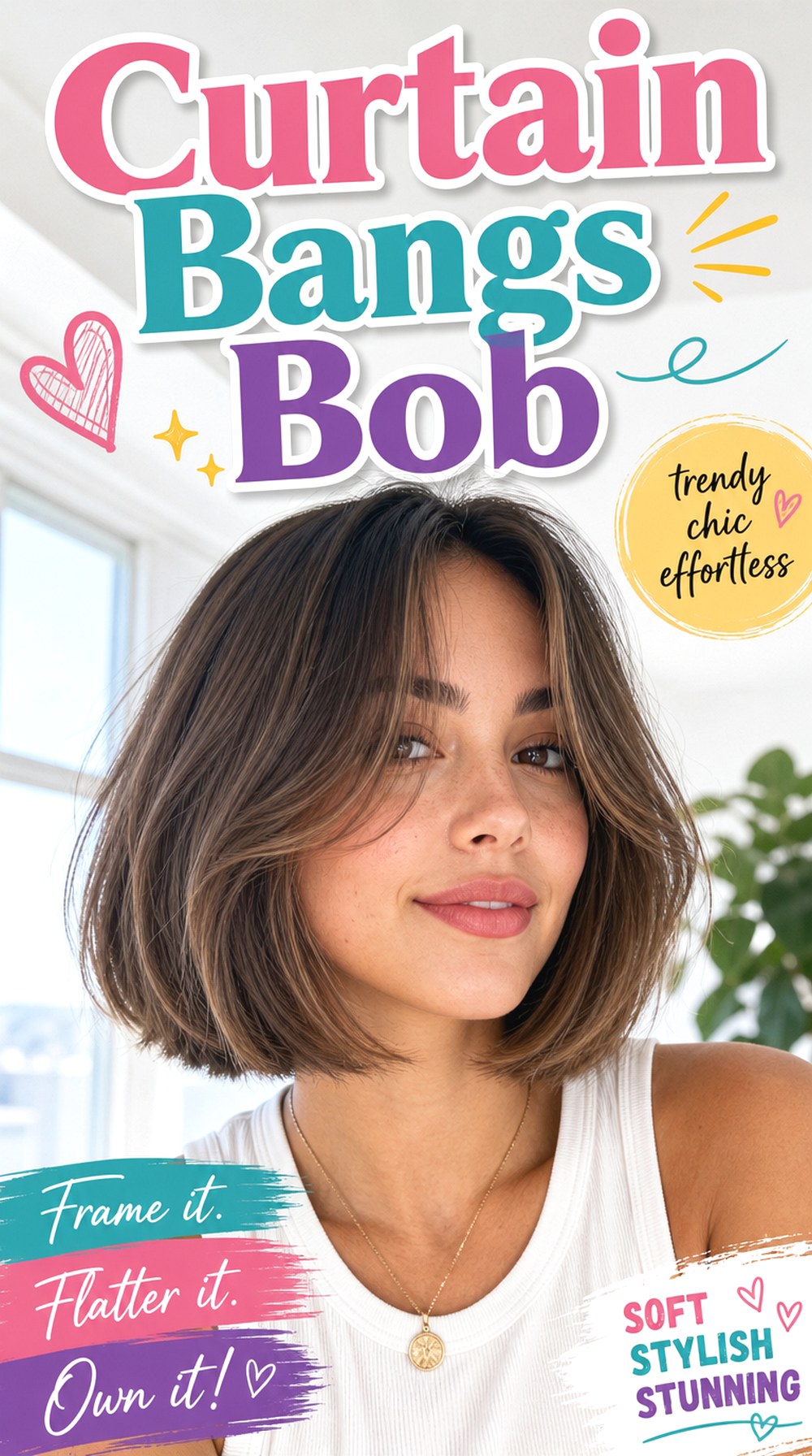
A curtain bangs bob pairs a shorter haircut with fringe that separates near the center and sweeps toward the cheekbones. The bangs soften the front while maintaining more flexibility than a full straight-across fringe. This combination suits straight and wavy textures and is particularly useful if you like changing between center and slightly off-center parts. Fine hair needs a lighter fringe so too much density is not removed from the sides. For daily styling, use a small round brush, lightweight mousse, and dry shampoo. The bob itself may need trimming every seven to nine weeks, while the bangs often need attention sooner. Ask your stylist to blend their outer edges into the face frame.
Pro tip: Have the shortest part of the curtain fringe fall around the brows or upper cheek area so it can open naturally instead of separating into two long side pieces.
Burgundy Bob

A burgundy bob makes color the main feature while retaining a clean, wearable haircut shape. Deep wine, berry, or red-violet tones can look almost brunette in low light and more vivid in daylight, giving short hair extra depth. A blunt or softly layered bob works well because both shapes provide enough surface area to show the color. Straight, wavy, and loose curly textures can all wear burgundy, but color upkeep may be higher than haircut upkeep because red pigments often fade visibly. Use color-safe leave-in conditioner, heat protectant, and shine spray when styling. Salon timing will depend on your color formula and root contrast. Ask for a shade suited to your natural base.
Pro tip: Bring daylight reference photos of the burgundy tone you want, since terms like wine, plum, cherry, and mahogany can describe noticeably different colors.
Long Bob With Face-Framing Layers

A long bob with face-framing layers usually finishes around the shoulders or collarbone, giving you bob structure with more styling flexibility. Shorter pieces can begin around the chin, cheekbones, or lips depending on your face shape and preferred amount of movement. This length works well for medium to thick straight or wavy hair and is relatively forgiving during grow-out. Fine hair can keep the perimeter fuller by limiting layers to the front. Styling is usually moderate with leave-in conditioner, a round brush, and volumizing spray. Trims every eight to ten weeks help prevent the front pieces from losing their shape. Ask your stylist to preserve density across the back while concentrating movement around the face.
Pro tip: Choose the starting point of your face frame based on the feature you want to highlight instead of automatically requesting layers that begin at the chin.
Mushroom Brown Bob

The mushroom brown bob uses cool taupe, beige-brown, and muted brunette tones for a softer alternative to warm autumn colors. A smooth or lightly textured bob lets the understated shade remain visible without competing with excessive layering. It works especially well on straight and wavy hair, although the final color result depends heavily on your starting shade and previous color history. Medium density can support either a blunt or gently graduated perimeter. Style with smoothing cream, heat protectant, and a wide-tooth comb for a controlled but not overly stiff finish. Haircut maintenance is moderate, while toning appointments may be needed to keep unwanted warmth controlled. Show your colorist several neutral-brown references rather than one image.
Pro tip: Ask whether your desired mushroom tone is realistically achievable on your current base before committing to a cool finish that may require significant lightening or toning.
Curly Rounded Bob
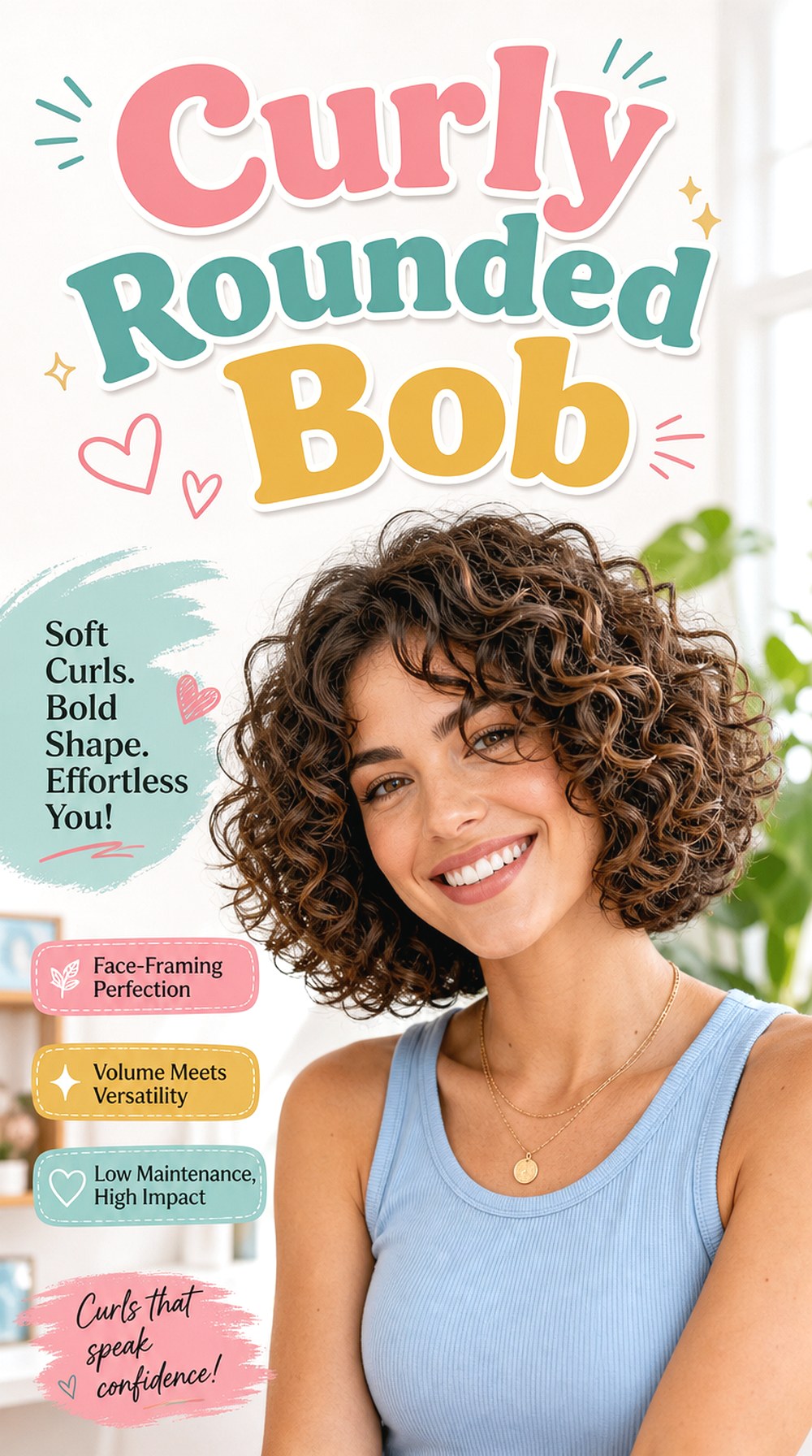
A curly rounded bob follows the natural expansion of curls rather than forcing them into a sharp geometric line. Carefully placed layers distribute volume around the head, helping prevent a heavy triangular shape while keeping enough density at the ends. It works particularly well for naturally curly medium or thick hair, although fine curls can use fewer layers to protect fullness. Daily styling can be fairly quick once the cut suits your curl pattern. Try curl cream, leave-in conditioner, and a diffuser for definition and controlled volume. The shape may need refreshing every eight to twelve weeks. Ask your stylist to consider shrinkage and cut the outline at a length that works when your curls are completely dry.
Pro tip: Point out where your curls spring up the most around the temples and crown so your stylist can balance those areas without removing too much overall length.
Shaggy Bob With Wispy Bangs
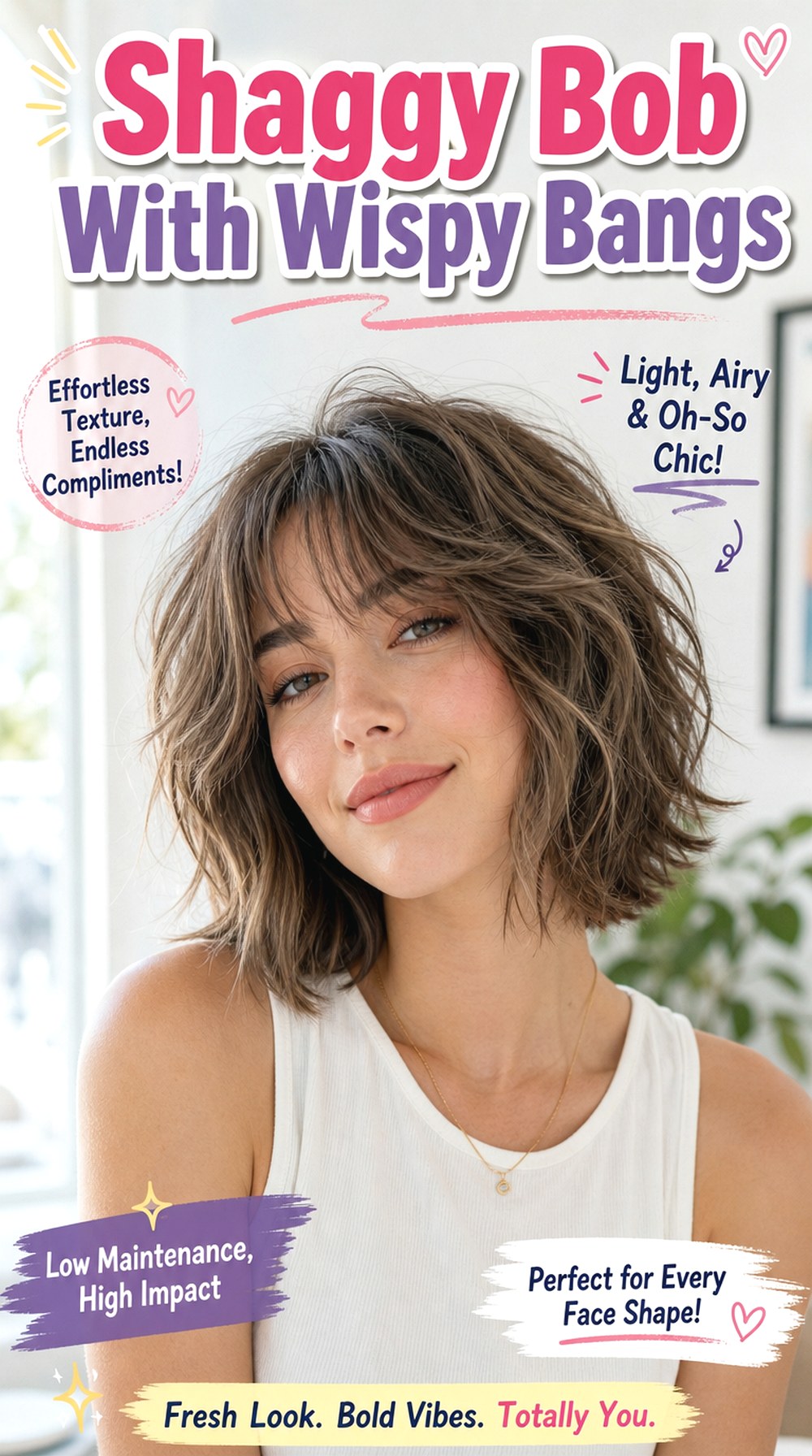
A shaggy bob with wispy bangs uses short-to-medium layers, broken-up ends, and a lightweight fringe to create relaxed movement. Unlike a blunt bob, the perimeter is intentionally softer, making it a good choice for wavy hair or straight hair that holds texture easily. Medium density provides enough material for layering, while very fine hair should keep the internal layers restrained. The style can be quick to refresh rather than fully restyled each morning. Use texturizing spray, lightweight mousse, and dry shampoo to encourage separation. A trim every eight weeks can keep the fringe and layers recognizable. At the salon, explain that you want softness without an excessively thin or mullet-like back section.
Pro tip: Keep the wispy fringe narrow and lightweight if your front hairline is fine; taking a very deep bang section can reduce fullness around the temples.
A-Line Bob
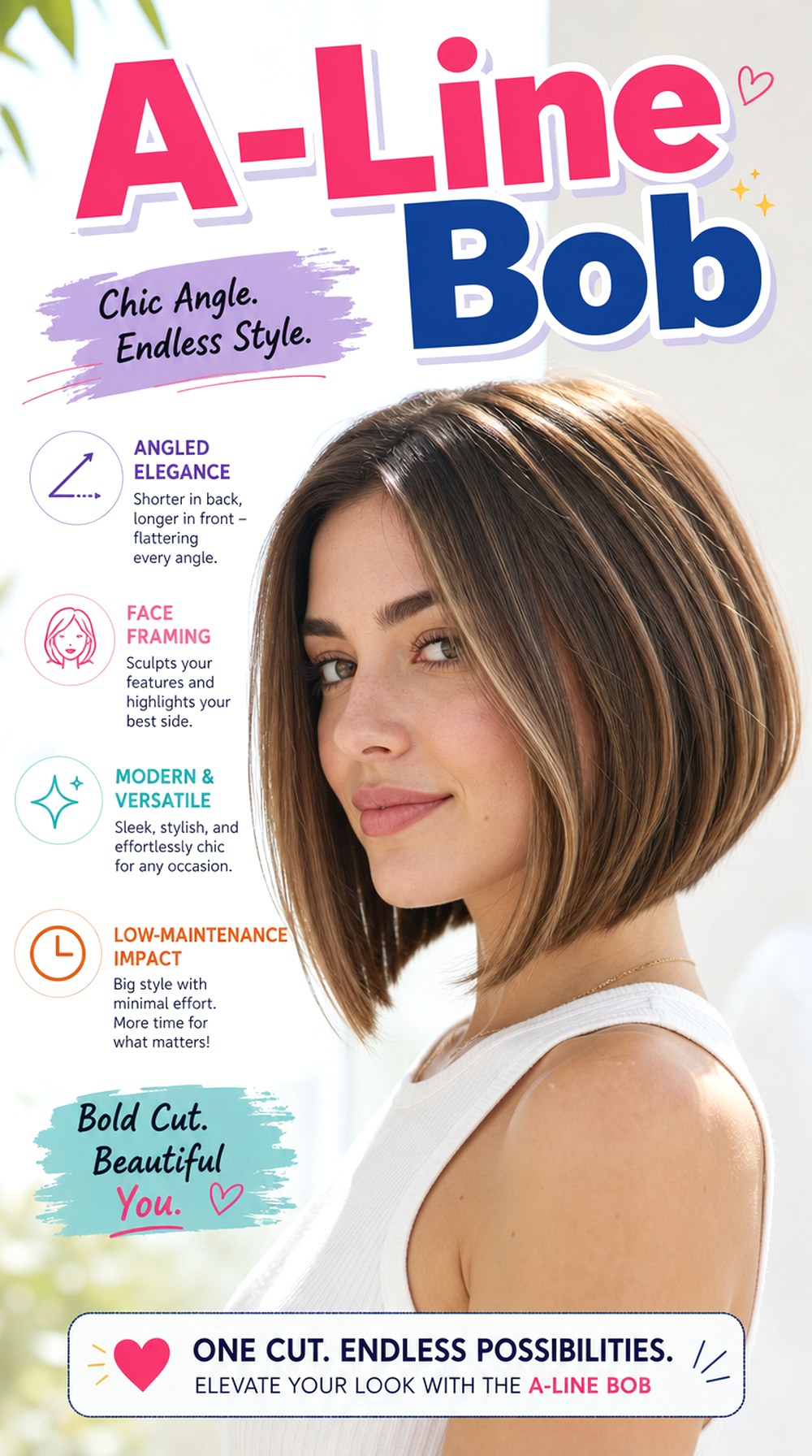
The A-line bob creates a clear forward progression, with the back sitting shorter and the front gradually extending toward the chin or shoulders. Unlike heavily stacked versions, it can remain relatively smooth through the back, which makes the shape easier to grow out. Straight hair displays the angle most clearly, while subtle waves create a softer outline. Fine to medium density can benefit from the strong perimeter, and thicker hair may need internal weight removal. Styling usually takes moderate effort using heat protectant, a paddle brush, and lightweight smoothing cream. Regular trims around six to eight weeks preserve the angle. Ask your stylist how dramatic the front-to-back difference should be for your preferred routine.
Pro tip: A one- to two-inch difference between the back and front often gives visible direction without creating an extreme shape that becomes awkward as it grows.
Chin-Length Bob With Side Part

A chin-length bob with a side part frames the jaw closely while shifting volume toward one side of the face. The asymmetry created by the part can soften an otherwise precise cut, especially when the front pieces bend gently away from the cheeks. Straight, slightly wavy, and medium-density hair can manage the shape easily. Fine hair may gain visual lift by moving the part away from its usual position. Styling is generally quick with root-lifting spray, a small round brush, and light-hold hairspray. Since the ends sit directly around the jaw, a six- to eight-week trim keeps the length intentional. Tell your stylist where you normally part your hair before they finalize the perimeter.
Pro tip: Have the cut checked while your hair sits in its natural side part; a perfectly level center-part cut may shift unexpectedly once the part moves.
Auburn Bob With Bottleneck Bangs
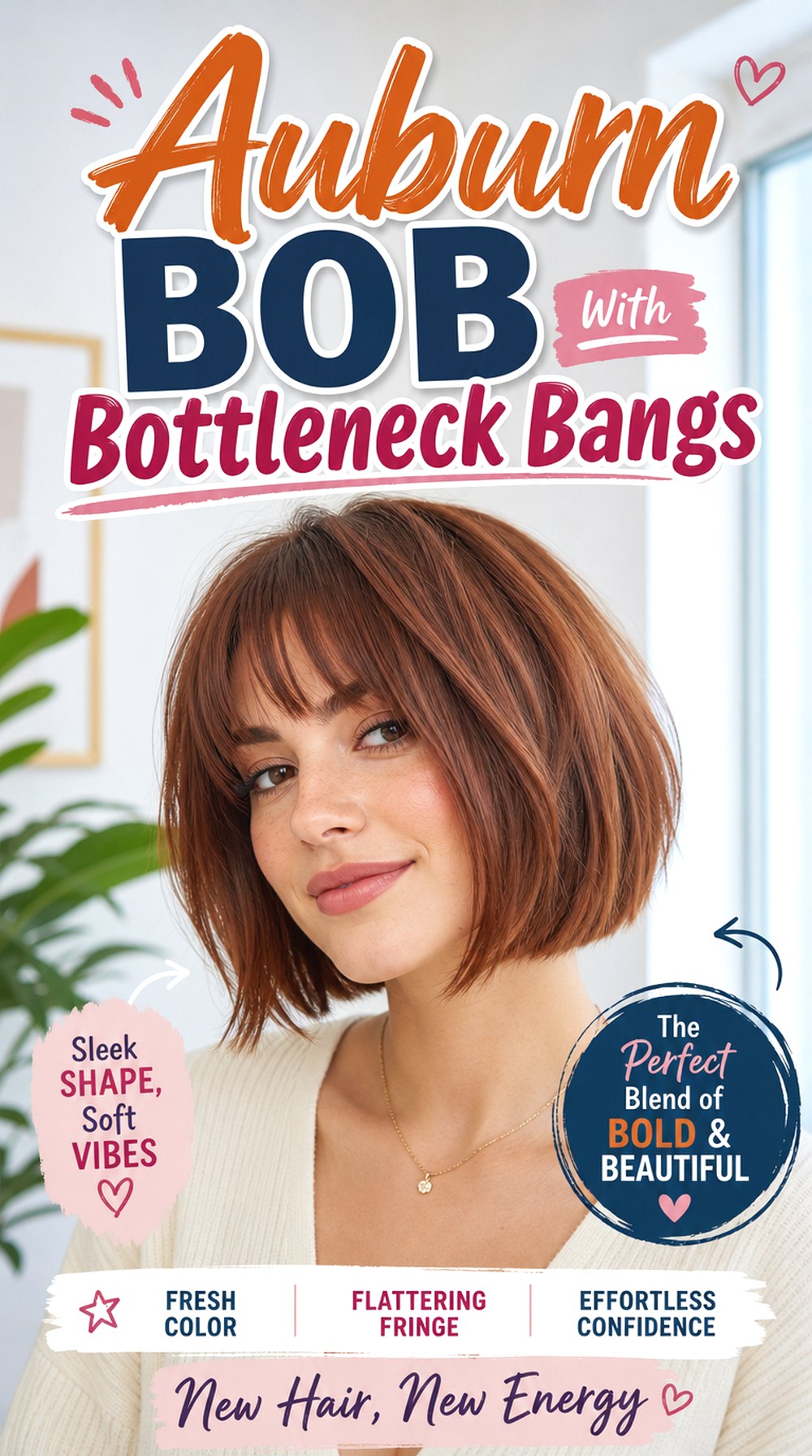
An auburn bob with bottleneck bangs combines warm red-brown color with a fringe that is shorter through the center and gradually longer toward the sides. The result gives forehead coverage without the solid weight of traditional blunt bangs. The fringe blends particularly well into cheekbone-level pieces, making it suitable for straight or gently wavy hair. Medium density offers enough fullness without making the bangs bulky. Expect moderate styling using a round brush, heat protectant, and lightweight hairspray. Bangs often need trimming every four to six weeks, while the main bob can go slightly longer. Ask your stylist to keep the fringe curved and connected rather than cutting a separate heavy block across the forehead.
Pro tip: Request longer outer corners that can tuck or sweep toward the cheekbones; they make bottleneck bangs easier to style as the center grows out.
Tousled Bob With Root Volume

A tousled bob with root volume focuses fullness higher on the head rather than concentrating all the width at the ends. Soft layers and loose bends keep the shape movable, making it especially helpful for fine to medium hair that tends to sit flat. A slightly off-center part can create even more natural lift. Wavy hair may need only a quick refresh, while straight hair can use a few loose bends for texture. Keep volumizing mousse, root-lifting spray, and a large round brush in the routine. Styling is moderate but does not require a perfectly polished finish. Ask your stylist to avoid excessive thinning at the crown, where you still need enough density to create lift.
Pro tip: Apply volumizing product primarily near the roots and mid-lengths rather than coating the ends, which can make the lower section stiff and reduce movement.
Ash Brown Bob With Soft Waves

An ash brown bob with soft waves combines a cool brunette shade with relaxed movement through the mid-lengths. The waves break up the solid shape of the bob, while the muted brown color keeps the overall finish understated. Shoulder-skimming or chin-to-neck lengths both work, although a little extra length makes loose waves easier to create. Medium and thick hair can support gentle layers, while fine hair benefits from a stronger base. Use heat protectant, a wide-barrel curling iron, and flexible hairspray for a softly shaped finish. Styling takes moderate time. Cool-toned color may require occasional glossing or toning. Ask your stylist to preserve enough length around the front for an elongated bend.
Pro tip: Curl only the middle section of each strand and leave the last inch straighter to keep the waves relaxed instead of turning the bob into short curls.
Italian Bob
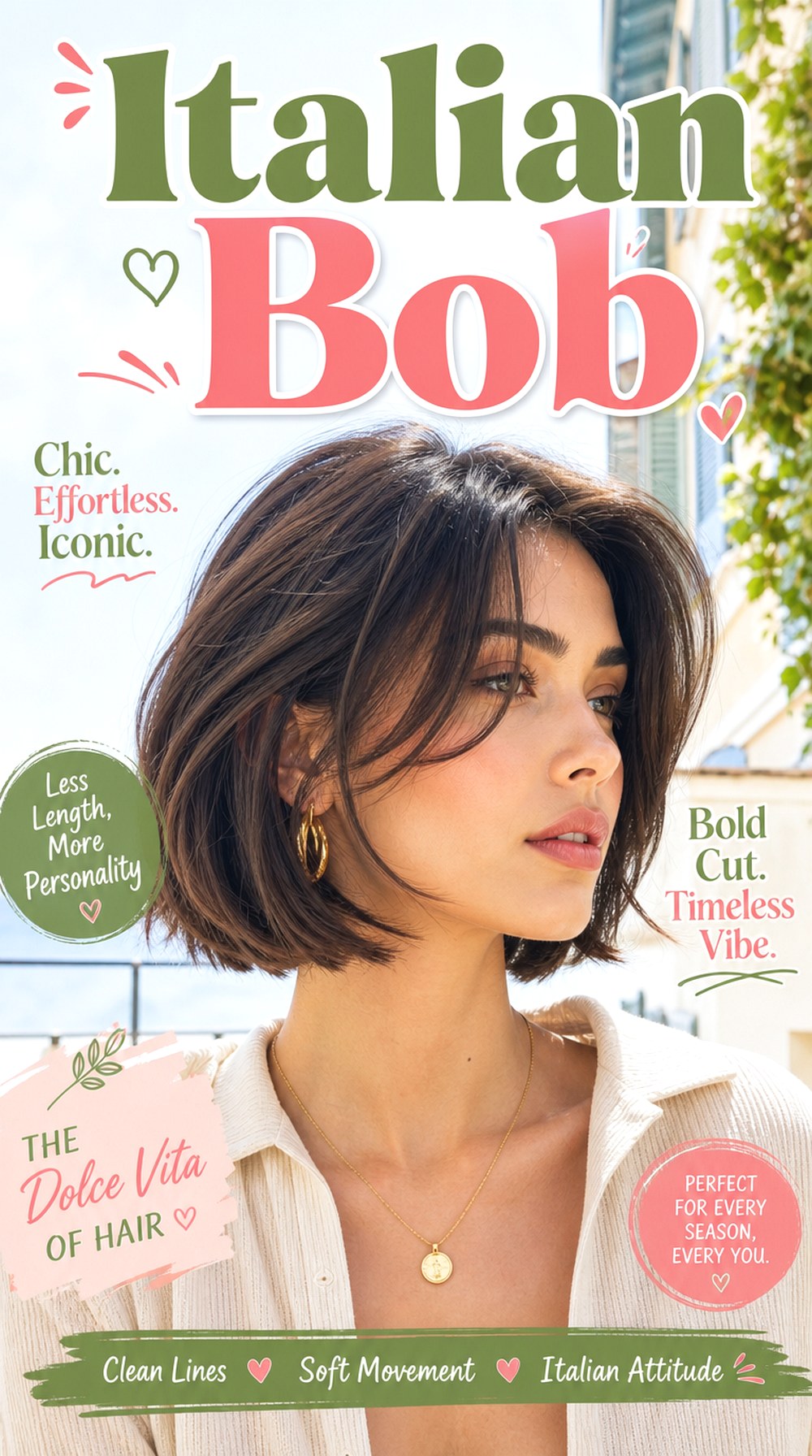
The Italian bob is typically fuller and slightly longer than a classic French bob, often finishing around the lower jaw or upper neck. Its defining feature is substantial weight through the ends, creating a plush silhouette that can be worn smooth, tucked, or softly waved. It suits straight to wavy medium or thick hair especially well. Fine hair can also benefit from the fuller perimeter when layering is minimal. Daily styling ranges from quick to moderate with blow-dry cream, a large round brush, and smoothing serum. The strong outline benefits from trims every seven to nine weeks. Tell your stylist you want fullness and movement rather than heavily razored or feathery ends.
Pro tip: Keep a little hidden softness inside the cut if your hair is very dense, but protect the visible bottom line so the signature full-ended shape remains intact.
Inverted Bob
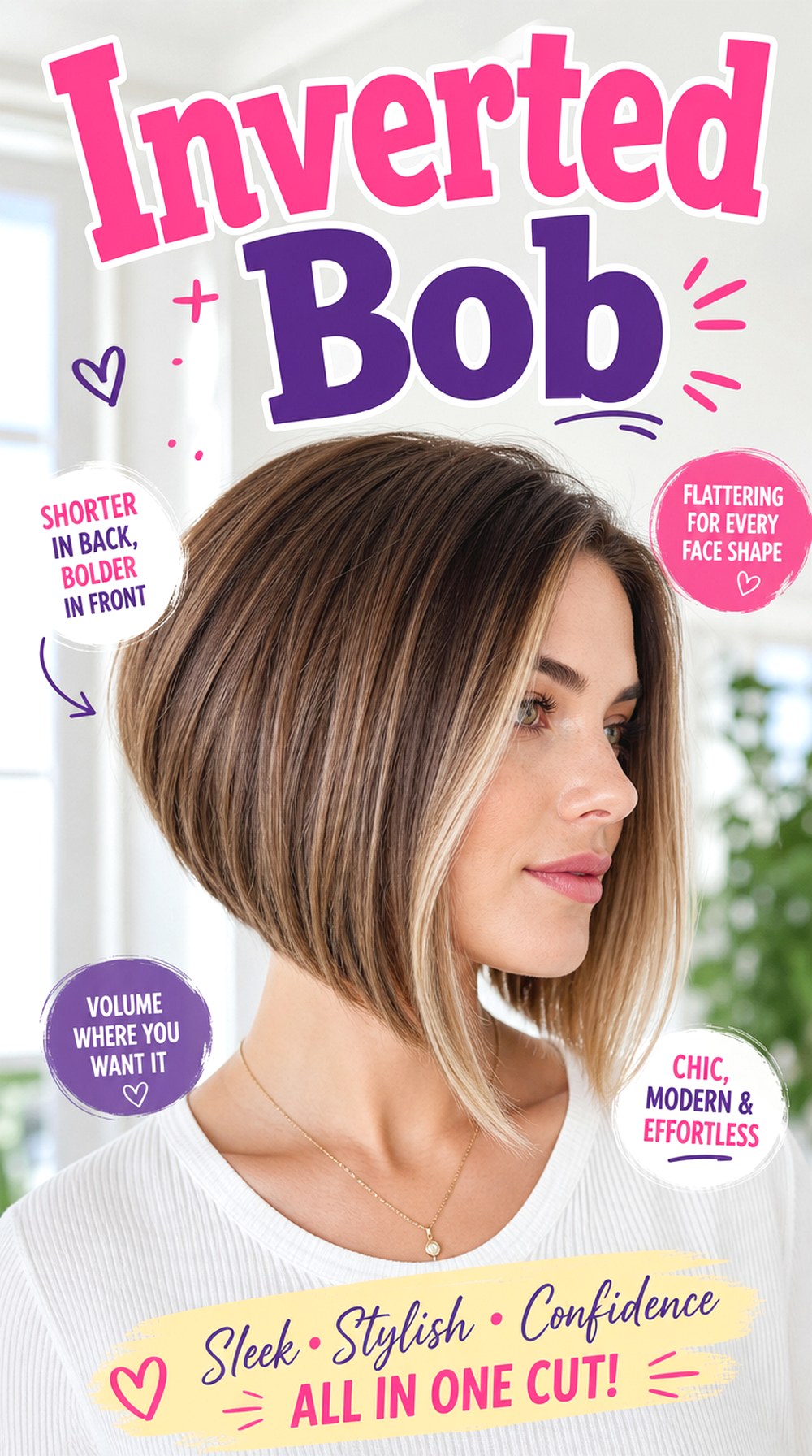
An inverted bob builds more graduation through the back while leaving the front longer. This creates lift around the nape and crown, making it useful for hair that benefits from a structured silhouette. Straight and slightly wavy textures display the graduated shape clearly, while very curly hair requires more careful planning because shrinkage can alter the angle. Medium or thick density usually provides enough weight for the stacked back. Use volumizing spray, a vent brush, and heat protectant for controlled lift. Styling is moderate, and trims around six to eight weeks help prevent the back from becoming heavy. Ask your stylist for a graduation level that matches how much roundness you actually want.
Pro tip: Avoid requesting an extremely short, highly stacked back unless you are comfortable with frequent trims; the silhouette changes noticeably as those layers grow.
Bob With Flipped Ends

A bob with flipped ends keeps most of the haircut smooth before turning the tips gently outward. The flip can be subtle around the entire perimeter or concentrated beside the face for a softer effect. Shoulder-skimming bobs provide enough length to create the bend without making the haircut look overly rounded. Straight and slightly wavy hair work especially well, while fine to medium density keeps the ends light enough to move. Styling requires a little extra time with heat protectant, a round brush, and flexible hairspray. The underlying haircut can remain fairly simple and grow out comfortably. Ask your stylist to avoid excessive internal layering if you want the flipped perimeter to look consistent.
Pro tip: Direct the brush outward only during the final few inches of drying; turning the whole section from the roots can create unwanted bulk through the middle.
Razor-Cut Bob
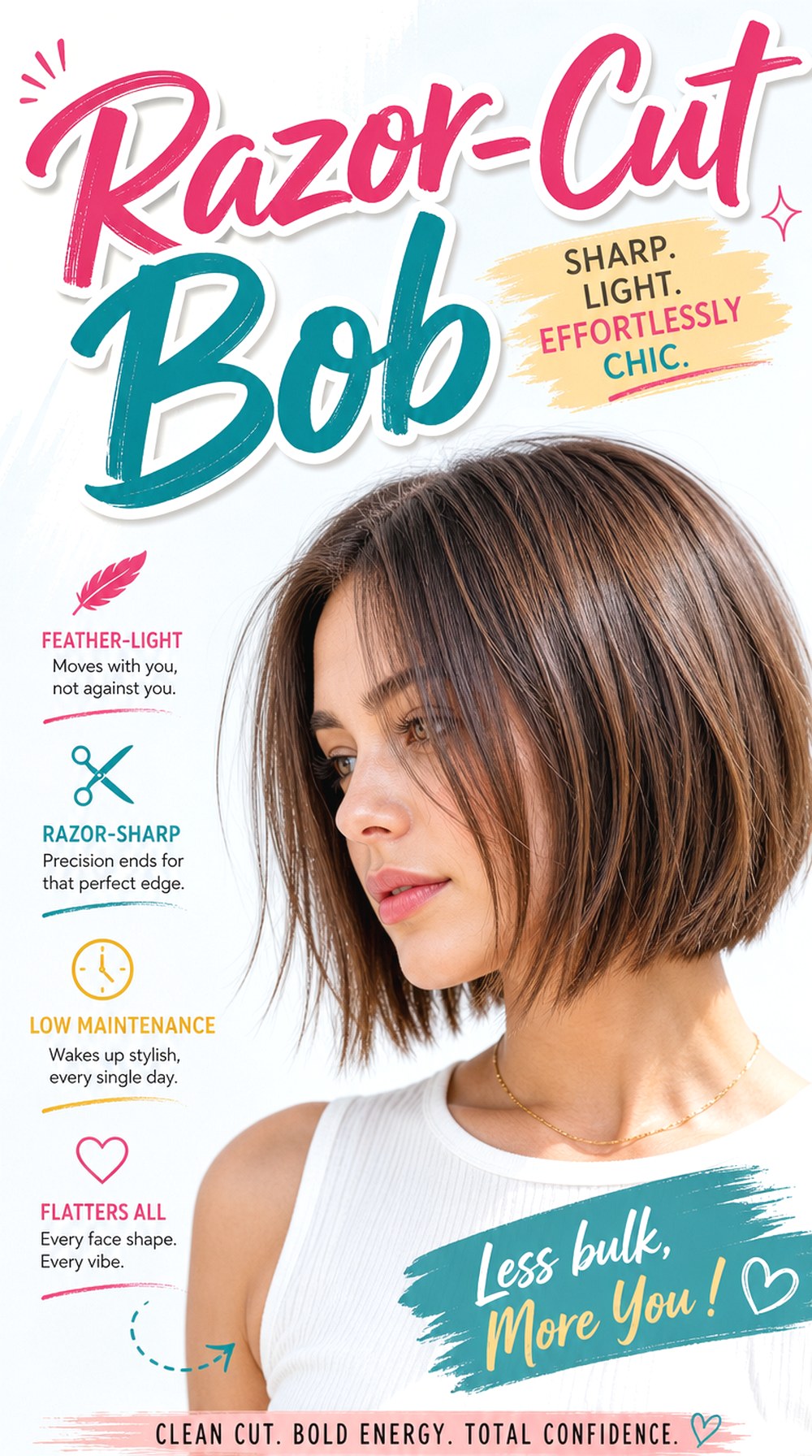
A razor-cut bob has softer, more separated edges than a scissor-cut blunt bob. The technique can encourage movement and remove weight, which makes it useful for certain medium or thick straight and wavy textures. It is less suitable for some fragile, highly porous, or very fine hair because excessive razoring can leave the ends looking sparse. The finish often works best slightly tousled rather than completely sleek. Styling is quick to moderate with texture cream, sea-salt spray, and a wide-tooth comb. Trimming every eight weeks keeps the ends controlled. At the salon, discuss how much razor work your hair can tolerate rather than assuming the entire haircut needs to be cut with one technique.
Pro tip: Ask for razor softness mainly through selected ends and face-framing areas if you want movement while still keeping enough weight across the bottom.
Side-Swept Bangs Bob

A side-swept bangs bob adds diagonal movement across the forehead, helping break up the strong horizontal line of a short haircut. The fringe can begin near the brow and become progressively longer toward the temple, where it blends into the rest of the bob. Straight and wavy textures usually style it easily, and medium-density hair provides enough coverage without needing an overly deep bang section. Styling is moderate because the fringe may need refreshing each morning. Use a small round brush, dry shampoo, and light-hold hairspray. Bang trims are often needed before the main haircut. Tell your stylist which side you naturally prefer so the fringe is cut to follow that direction.
Pro tip: Avoid making the shortest part of the fringe too short if you want a true side sweep; a little extra length helps it lie diagonally instead of springing forward.
Golden Brunette Bob
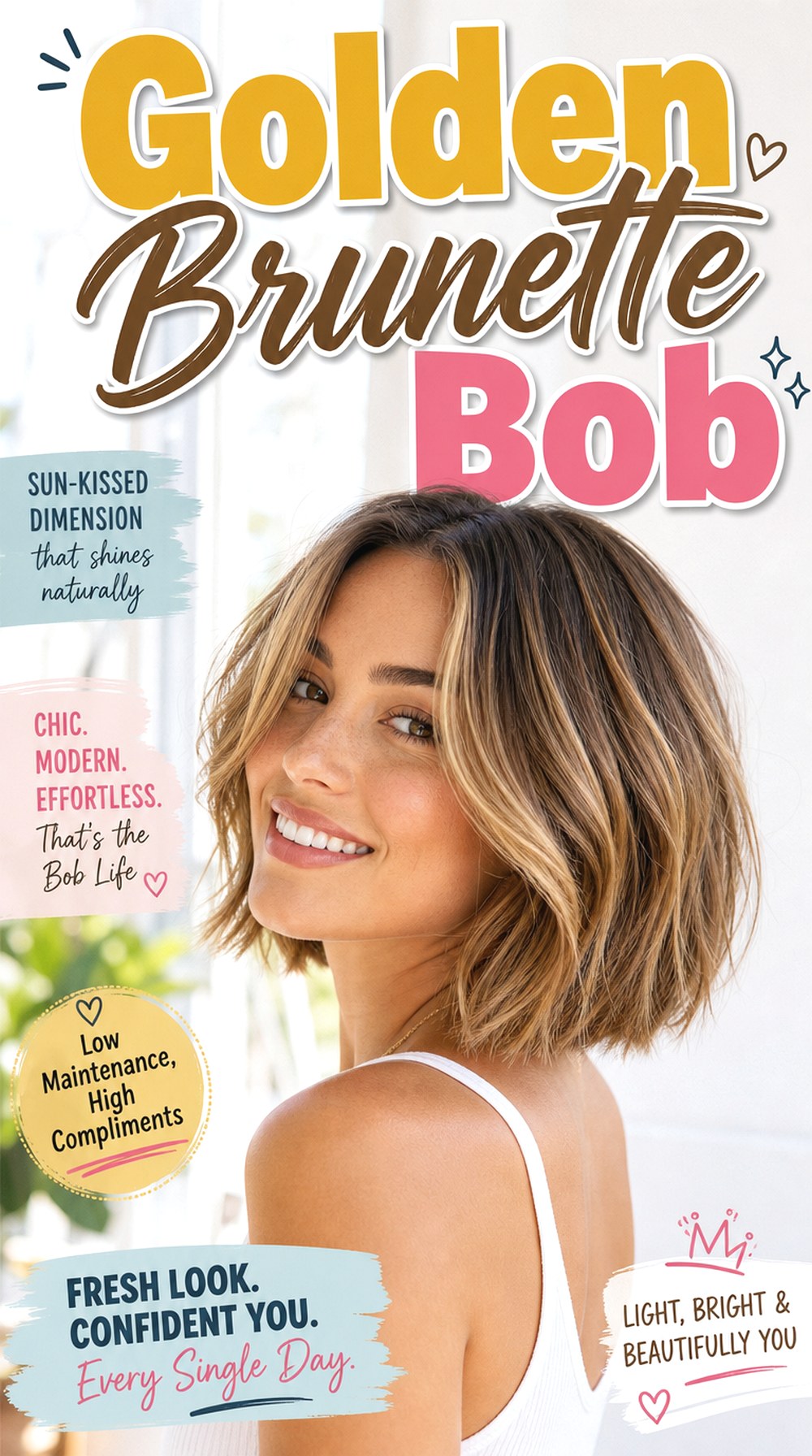
A golden brunette bob uses warm brown depth with soft honey or golden reflections that become more visible in daylight. The color works especially well with gently layered or wavy bobs because movement exposes different tones through the lengths. Straight hair can also wear it with a smoother, richer finish. Medium-density hair offers plenty of flexibility, while fine hair should keep highlighting strategically placed so the overall color retains depth. Styling can be quick to moderate with shine serum, heat protectant, and a round brush. Color glosses may help maintain a reflective finish between larger services. Ask your colorist to keep enough brunette at the roots and underneath so the result does not become uniformly blonde.
Pro tip: Request a few brighter pieces around the face but leave deeper sections behind them; that contrast makes the golden tones appear more dimensional.
Collarbone Bob

The collarbone bob sits at the border between a classic bob and longer hair, making it a practical choice if you want a noticeable cut without going dramatically short. The extra length provides room for waves, tucked styles, and small ponytails while maintaining a clean overall shape. Straight, wavy, and loose curly textures can all work, and the length is forgiving for both fine and thick density. Fine hair may prefer minimal layering, while thick hair can benefit from subtle internal removal. Styling ranges from quick to moderate using leave-in conditioner, heat protectant, and a paddle brush. Trims every eight to ten weeks are usually sufficient. Ask for the perimeter to land clearly at the collarbone when dry.
Pro tip: Check the final length with your shoulders relaxed, because a collarbone cut can appear noticeably shorter once natural waves or curls spring back into place.
Deep Chocolate Bob With Subtle Layers
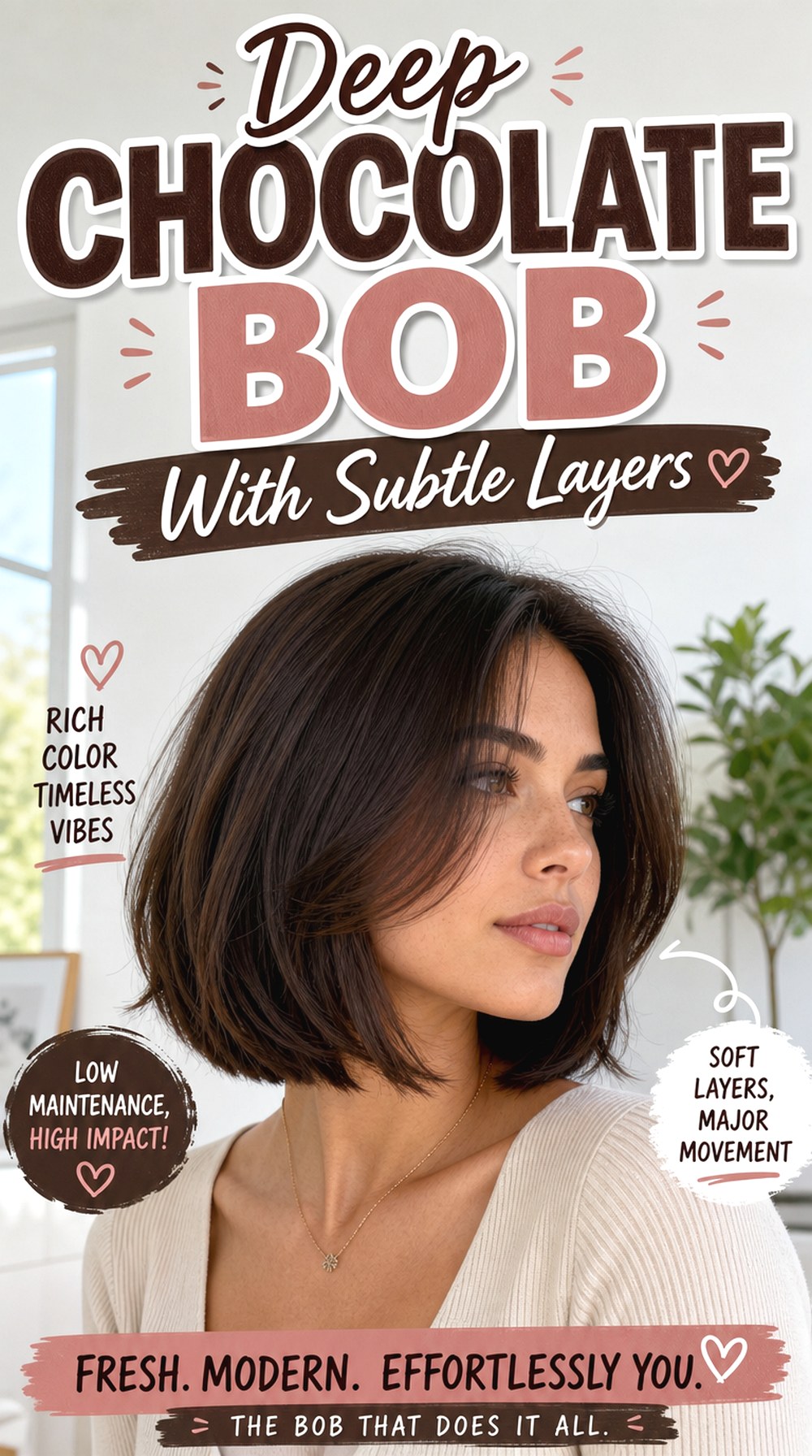
A deep chocolate bob with subtle layers keeps the richness of a dark brunette base while introducing just enough movement to prevent the haircut from feeling blocky. The layers are usually long and blended, leaving the perimeter relatively full. This makes the cut useful for medium to thick straight or wavy hair, especially when excess density collects around the sides. Fine hair can wear it too if layering is concentrated close to the front. Use smoothing cream, a round brush, and shine spray for a controlled finish. Styling is generally moderate. At the salon, ask for hidden or long layers rather than visibly short pieces through the crown, and discuss whether any internal bulk needs removing.
Pro tip: Keep the shortest internal layers below the cheekbones if you want movement without creating excessive width around the upper sides of the head.
Air-Dried Wavy Bob
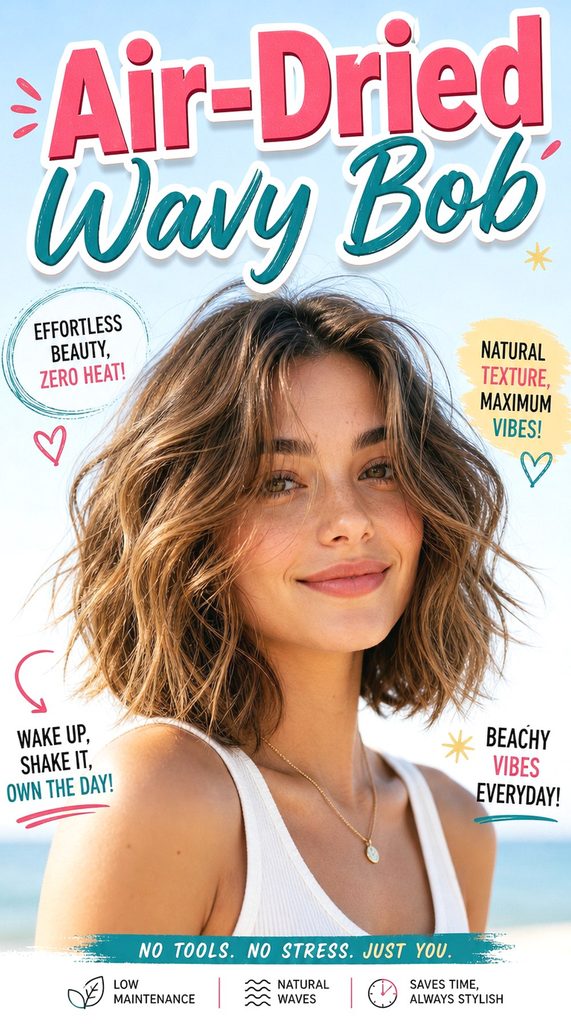
An air-dried wavy bob is designed to work with natural bends rather than requiring a polished blowout every day. The most successful shape usually includes enough layering to release waves but enough weight to prevent the ends from becoming overly fluffy. It is especially practical for naturally wavy medium-density hair, although curl pattern, humidity, and porosity will affect the finish. Styling can be very quick: apply leave-in conditioner, curl cream, and a wide-tooth comb, then allow the texture to settle with minimal handling. Salon maintenance is usually every eight to ten weeks. Ask your stylist to assess the haircut in its natural dry state so the layers match your real wave pattern.
Pro tip: Avoid repeatedly touching or combing the hair while it dries; disturbing partially formed waves can increase frizz and separate sections before they set.
Conclusion
Fall bob hairstyles can be adjusted far beyond choosing one standard short length. A stronger perimeter can make fine hair appear fuller, while strategic layers can free up movement in dense, wavy, or curly hair. You can also change the overall character through length, density, layers, bangs or fringe, volume, texture, parting, finish, and styling effort. Warm copper and brunette shades create one direction, while cool browns, sleek finishes, or natural waves create another. The most practical choice depends on your face shape, natural texture, hair density, maintenance preference, and normal daily routine. Instead of copying every detail from one photo, identify the specific shape and features that suit the way you actually wear your hair.
CTA
Choose one or two favorite ideas from this list and save clear photo references before your appointment. Discuss your face shape, natural hair texture, density, preferred length, maintenance expectations, and normal styling routine with your stylist. In each reference image, point out exactly what you like—whether that is the layer placement, fringe length, front pieces, volume, perimeter, parting, color placement, or smooth versus textured finish. Clear details make it much easier to adapt a bob to your own hair rather than simply copying a cut that was created for a different texture or density.
FAQs
Which fall bob hairstyle works best for fine hair?
Blunt, Italian, chin-length, and collarbone bobs can work well because a stronger perimeter helps preserve visual density. Keep internal layering light if your ends become thin easily.
How often does a bob haircut need trimming?
A sharp chin-length or angled bob may need shaping every six to eight weeks. Softer layered and collarbone styles can often stretch closer to eight to ten weeks, depending on growth and desired precision.
Can curly or wavy hair wear fall bob hairstyles?
Yes. Wavy hair works particularly well with textured and air-dried bobs, while curls can suit rounded layered shapes. The cut should account for shrinkage, natural expansion, and where your texture holds the most volume.
Do fall bob hairstyles require daily heat styling?
Not necessarily. Sleek, flipped, and highly polished bobs generally need more heat styling, but naturally wavy, curly, shaggy, and air-dried versions can be maintained with curl cream, leave-in products, or light refreshing instead.