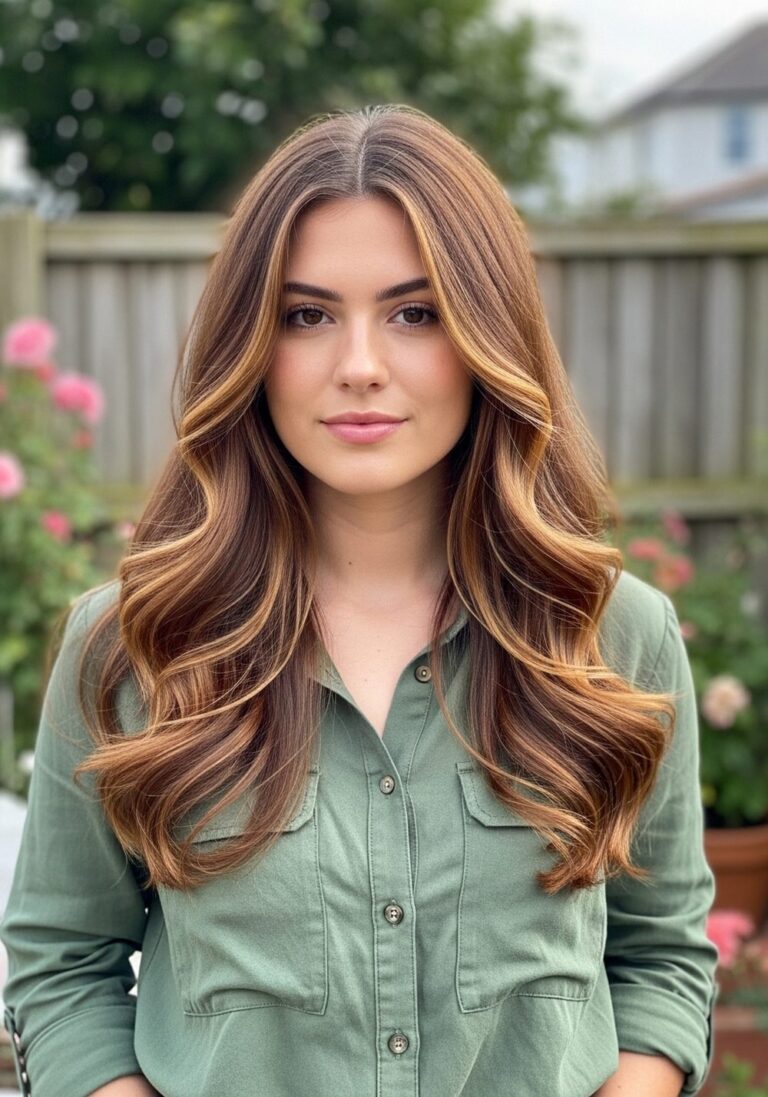
12 Honey Blonde Fall Hair Ideas

Honey blonde fall hair combines golden blonde tones with deeper honey, beige, caramel, or softly rooted shades that give blonde hair more depth for autumn. Instead of looking extremely pale or uniformly light, the color usually has several levels of warmth running through it. Those variations can emphasize waves, curls, layers, and face-framing pieces while keeping the overall blonde finish bright.
The color can work across short bobs, shoulder-length cuts, and longer hair. Fine hair may benefit from strategically placed highlights that create visual dimension, while thick hair can use layers to prevent the shape from feeling heavy. Straight, wavy, and curly textures can all wear honey blonde, although the placement and strength of highlights should be adjusted to the natural pattern. Face-framing pieces can also be positioned to suit oval, round, square, heart, or longer face shapes.
Daily styling depends more on the haircut than the color itself. Some layered cuts need blow-drying or curling, while simpler shapes can air-dry with light product. Before choosing honey blonde fall hair, consider your starting color, root-growth preference, heat routine, and how frequently you are comfortable returning for toning, glossing, highlights, or trims.
Quick List
- Honey Blonde Face-Framing Layers
- Honey Blonde Long Waves
- Honey Blonde Balayage Lob
- Honey Blonde Curtain Bangs
- Honey Blonde Textured Bob
- Honey Blonde Root Melt
- Honey Blonde Soft Curls
- Honey Blonde Shag Layers
- Honey Blonde Blunt Lob
- Honey Blonde Dimensional Highlights
- Honey Blonde Half-Up Waves
- Honey Blonde Low-Maintenance Layers
Honey Blonde Face-Framing Layers

Long honey blonde hair gains noticeable movement when the shortest face-framing layers begin around the cheekbones or jaw and gradually blend into longer lengths. Keeping some density through the ends prevents the haircut from becoming wispy, making this option useful for medium to thick straight or wavy hair. A center or soft side part can change where the layers fall around the face. Styling is moderate: use heat protectant, a round brush, and lightweight smoothing serum for a polished bend. Regular trims help maintain the front shape. At the salon, show exactly where you want the shortest framing piece to land rather than simply requesting “layers.”
Pro tip: Keep shorter pieces concentrated around the front if you want movement without losing too much fullness through the back.
Honey Blonde Long Waves

Loose waves show off honey, gold, and slightly deeper blonde ribbons particularly well because each bend catches the light differently. Long hair can be kept mostly one length with subtle internal layers to prevent excessive weight while maintaining a full perimeter. It works especially well for naturally wavy hair and medium or thick density, although fine hair can wear it with fewer layers. Styling usually takes moderate time if waves are created with heat. Apply heat protectant, lightweight mousse, and flexible-hold hairspray before and after curling. Trims can focus on keeping the ends healthy. Ask your stylist for long, blended layering rather than short layers if you want relaxed movement.
Pro tip: Curl sections in alternating directions and loosen them only after they cool to create softer, less uniform waves.
Honey Blonde Balayage Lob
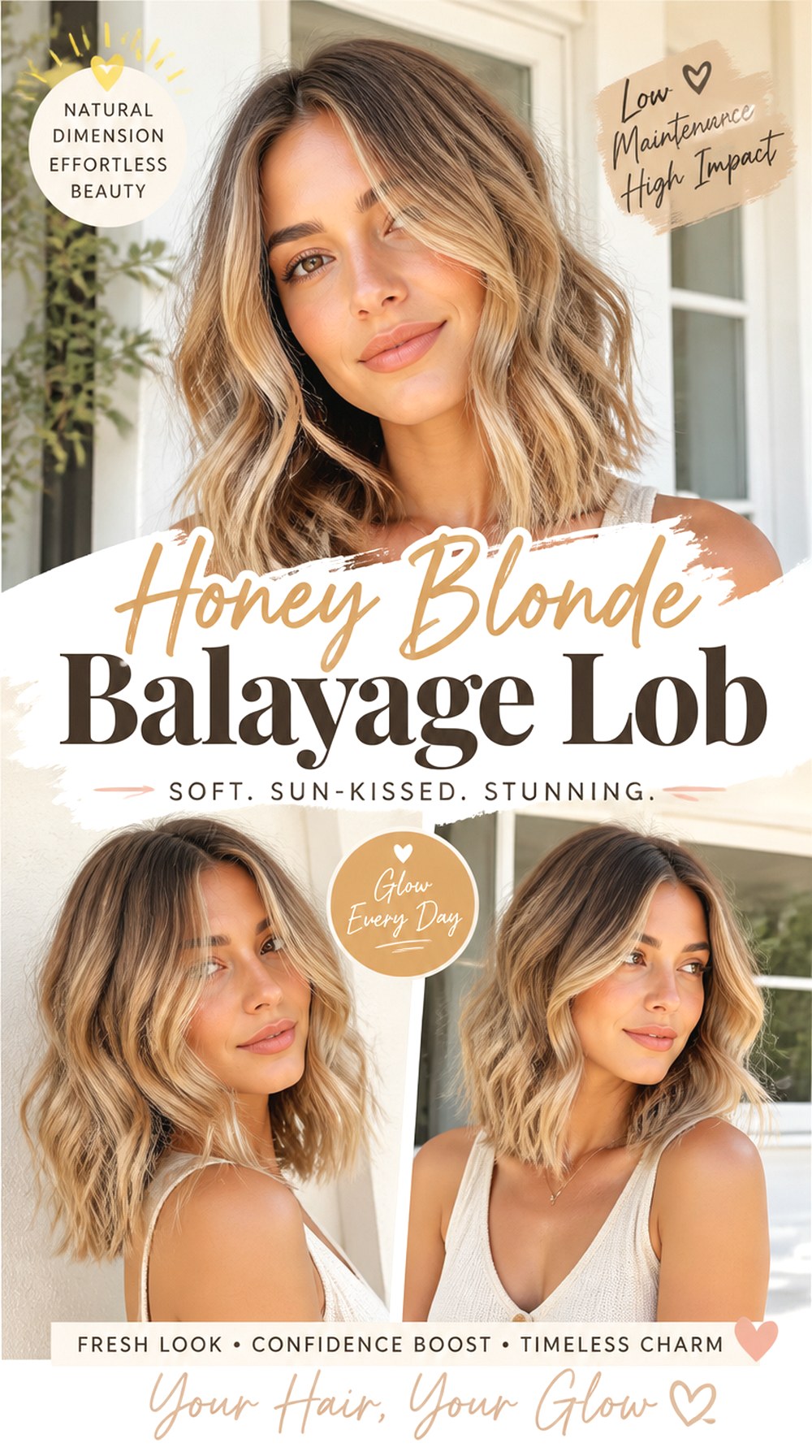
A shoulder-skimming lob paired with hand-painted honey blonde balayage offers brightness without requiring a solid blonde result from roots to ends. Leaving natural or slightly deeper color near the root gives the haircut dimension and can make grow-out less obvious. The shape suits straight and wavy textures particularly well, and it can be adjusted for fine, medium, or thick density by changing the amount of layering. Daily styling is usually quick to moderate. Try volumizing spray, heat protectant, and a medium round brush for a smooth finish with slight movement. Ask for balayage placement that becomes brighter toward the ends while maintaining enough contrast around the root area.
Pro tip: Request a few brighter pieces near the face if you want the balayage to look noticeable without lightening every section heavily.
Honey Blonde Curtain Bangs

Curtain bangs bring attention to the front of honey blonde hair while blending more easily into longer layers than a short, straight-across fringe. The bangs usually separate near the center, with shorter sections around the brows or cheekbones and longer pieces sweeping toward the sides. They suit straight and wavy textures and can help add shape to medium or thick hair without removing too much overall length. Bang styling takes a few extra minutes each morning. A small round brush, heat protectant, and light-hold hairspray help direct the fringe away from the face. Tell your stylist where you normally part your hair before the bangs are cut.
Pro tip: Keep the outer edges slightly longer so the fringe blends naturally into cheekbone or jaw-length face-framing pieces.
Honey Blonde Textured Bob
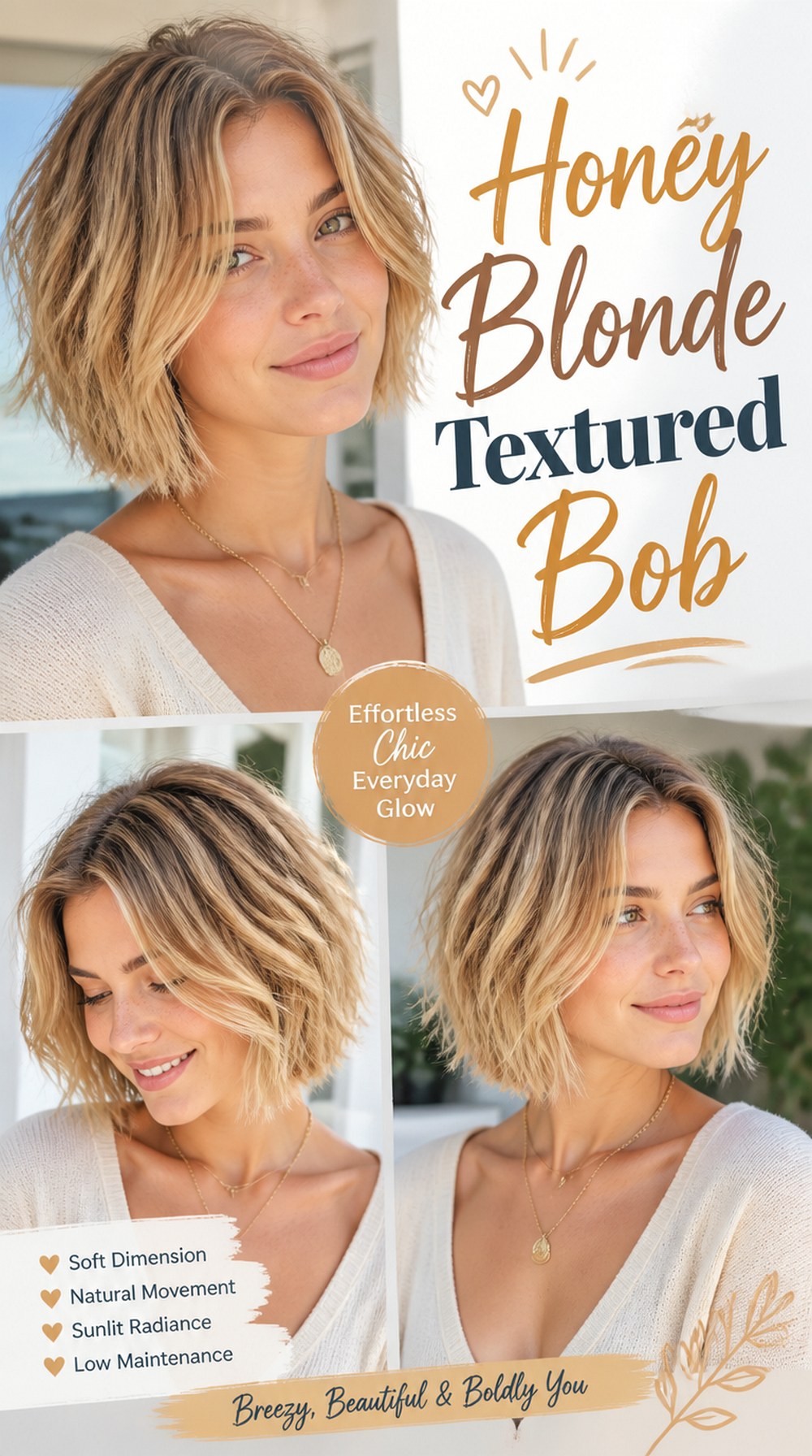
A textured bob keeps honey blonde hair around chin to jaw length with enough light layering to create separation rather than a perfectly solid edge. It is a useful option for straight or naturally wavy hair that needs movement, especially at medium density. Fine hair should keep more weight around the perimeter, while very thick hair may benefit from careful internal bulk removal. Styling can be quick: work in texturizing spray, lightweight mousse, and a small amount of smoothing serum depending on your natural finish. The shape generally needs regular salon trims because shorter cuts lose their outline sooner. Ask for visible texture without heavily thinning the ends.
Pro tip: If your hair is fine, keep the bottom inch relatively dense and create texture higher in the cut so the ends do not look sparse.
Honey Blonde Root Melt
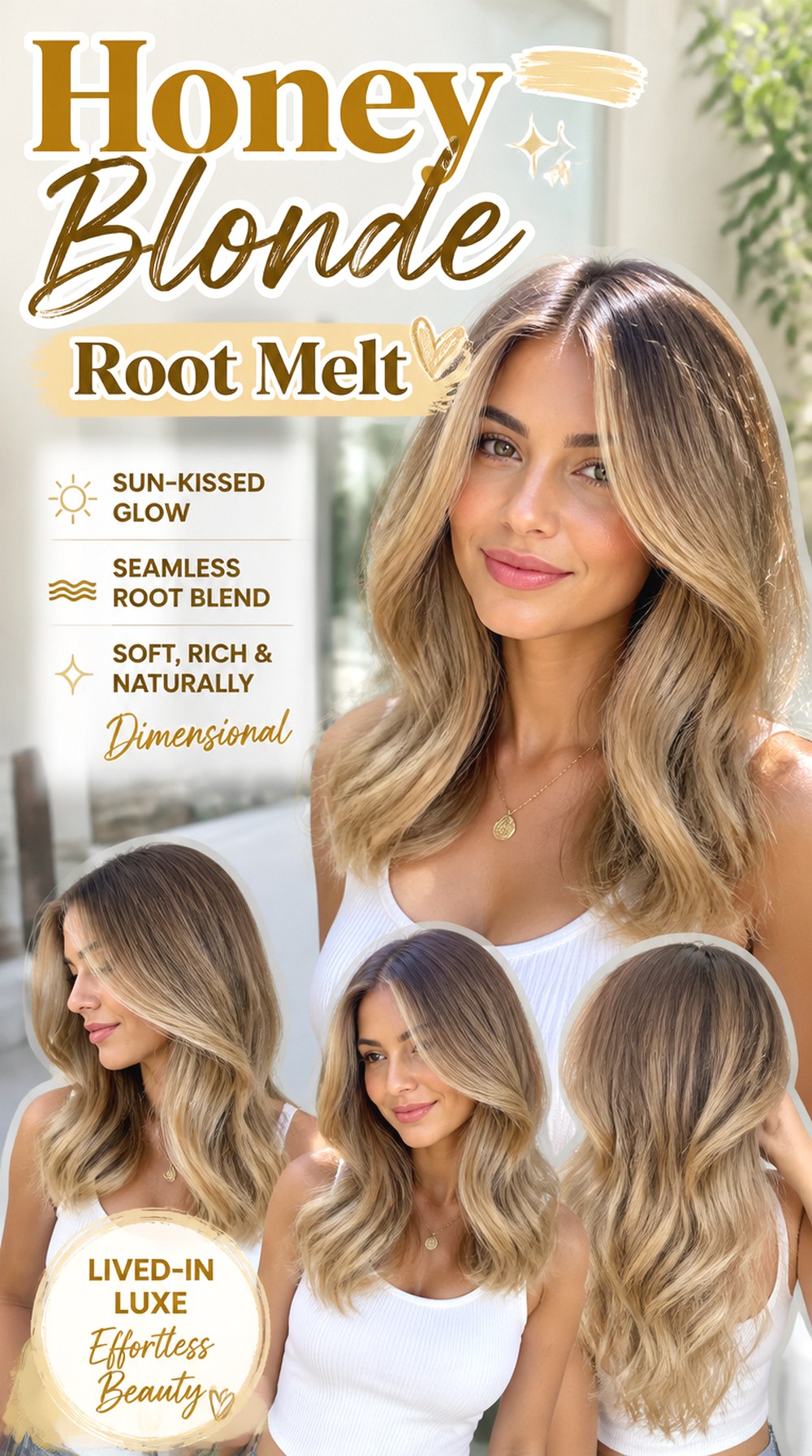
A root melt transitions a slightly deeper root into honey blonde mid-lengths and ends, creating a softer boundary than bright color placed directly against the scalp. It can be especially practical for naturally darker blondes or light brunettes who want less obvious regrowth between color appointments. Straight, wavy, and curly textures can all show the gradual color shift, while medium and thick hair provide plenty of surface area for dimension. Daily styling can remain minimal because the technique is mainly about color placement. Use leave-in conditioner, heat protectant, and smoothing serum to keep lightened lengths conditioned. At your appointment, discuss how dark and how long you want the root transition to be.
Pro tip: Keep the root melt only a few levels deeper than the blonde if you want noticeable depth without creating a harsh contrast line.
Honey Blonde Soft Curls

Soft curls give honey blonde shades plenty of movement, allowing darker and lighter ribbons to appear throughout the shape rather than sitting in flat sections. Shoulder-length or longer cuts usually benefit from rounded layers that support the curl pattern without creating excessive bulk near the bottom. This option works best when layering is adapted to natural curl type and density. Styling time ranges from quick to moderate depending on whether curls are natural or heat-created. For natural texture, use leave-in conditioner, curl cream, and a diffuser. Explain your typical curl shrinkage to your stylist before cutting, especially if you normally wear your hair curly rather than stretched.
Pro tip: Ask for layers to be judged in relation to your dry curl pattern so the shortest sections do not spring higher than expected.
Honey Blonde Shag Layers

A honey blonde shag uses noticeable layering through the crown, sides, and ends to create a lighter, more broken-up silhouette. The haircut can include a soft fringe or shorter face-framing pieces, while the warm blonde color helps emphasize each separate layer. Naturally wavy hair often works especially well because texture adds movement without extensive heat styling. Medium and thick densities can handle stronger layering, whereas fine hair usually needs a softer version to preserve fullness. Styling is generally quick with texturizing spray, lightweight mousse, and a diffuser or simple scrunching. At the salon, specify how much crown volume you want because that determines how short the upper layers should be.
Pro tip: Avoid taking the crown excessively short if your hair expands in humidity, since extra-short layers can create more volume than you intended.
Honey Blonde Blunt Lob

A blunt lob keeps the perimeter strong and relatively even, usually finishing between the collarbone and shoulders. Honey blonde dimension stops the simple shape from appearing flat, particularly when subtle lighter strands are placed through the front and surface. The fuller baseline makes this haircut especially useful for fine to medium hair, although thick hair may need hidden internal weight removal. Straight textures showcase the clean edge clearly, while gentle waves soften it. Styling is quick to moderate with heat protectant, a paddle brush, and smoothing serum. Trims are important for preserving the crisp outline. Ask your stylist to keep visible layering minimal if the solid shape is your main priority.
Pro tip: For finer hair, avoid heavy thinning shears through the ends; a strong perimeter gives the lob its fuller appearance.
Honey Blonde Dimensional Highlights
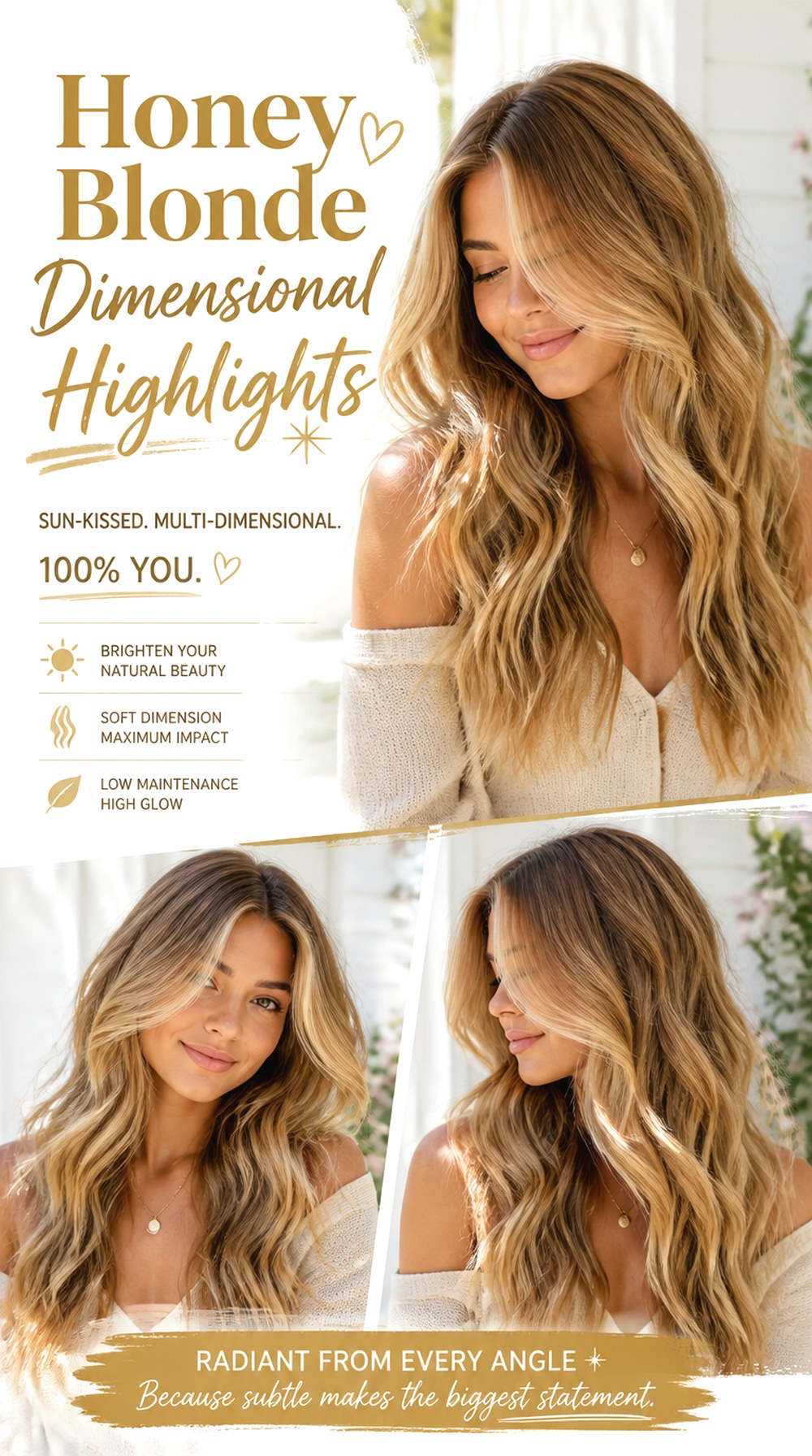
Dimensional highlights mix several honey blonde values instead of using one uninterrupted shade. Fine golden pieces, richer honey sections, and a slightly deeper base can create visible depth from roots to ends. The technique works across many lengths and textures, but placement should follow how the hair naturally falls so the contrast remains balanced. Fine hair may look fuller with delicate highlights, while thick or curly hair can usually carry slightly wider sections. Styling itself is flexible and may be very quick. Use color-safe leave-in conditioner, heat protectant, and lightweight shine spray to care for highlighted lengths. Ask the colorist to preserve some natural depth rather than lightening every strand.
Pro tip: Save reference photos that show both the brightness and the amount of darker hair you want left between highlights.
Honey Blonde Half-Up Waves

Half-up waves combine loose honey blonde lengths with the upper section gently pulled away from the face. The arrangement exposes lighter and darker color placement from several angles, making it useful for dinners, parties, weddings, or everyday fall outfits. Medium to long hair works best because enough length remains below the gathered section, and straight or wavy hair can both be styled into the shape. Expect moderate styling time if you curl the lengths first. Helpful supplies include heat protectant, a wide-tooth comb, and flexible-hold hairspray. For the haircut underneath, ask for long layers that maintain enough density for full-looking waves and an easy half-up section.
Pro tip: Leave two soft face-framing pieces outside the gathered section if you want the front to connect with layered or highlighted sections.
Honey Blonde Low-Maintenance Layers
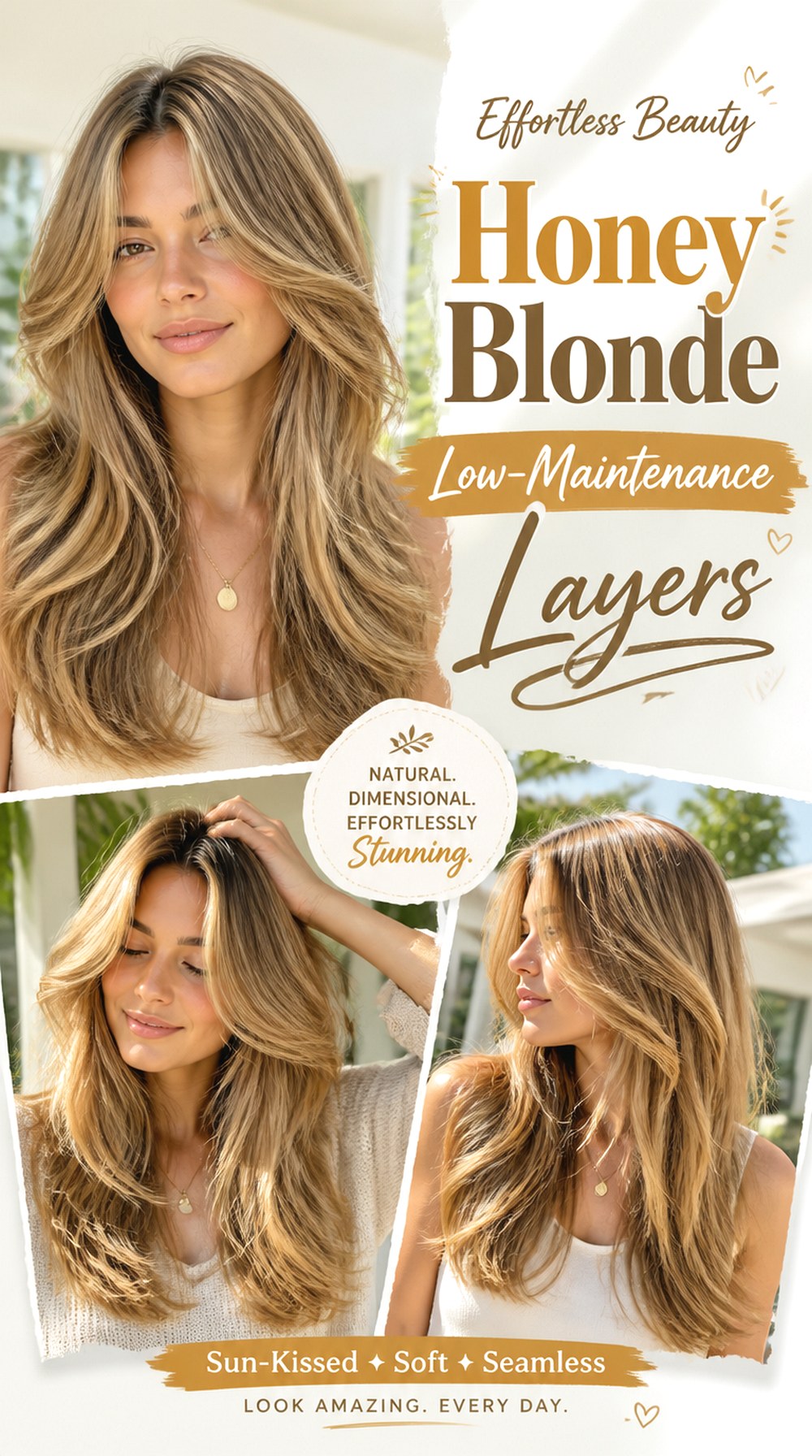
Low-maintenance layers keep the shortest pieces relatively long, allowing honey blonde hair to move without demanding a detailed blowout every morning. Layers may begin below the chin or around the collarbone and gradually blend through the rest of the length. The restrained shape works well for straight, wavy, and moderately curly hair, particularly for anyone who prefers to air-dry often. Medium and thick hair can use internal layering for weight control, while fine hair should retain a fuller baseline. Styling is usually quick with leave-in conditioner, a wide-tooth comb, and lightweight smoothing cream. Ask your stylist for layers that still fall neatly when the hair is not heat-styled.
Pro tip: Keep the shortest layer long enough to tuck back or tie into a ponytail if easy everyday styling is important to you.
Conclusion
Honey blonde fall hair can be adapted far beyond a single color formula or haircut. The overall result can be brighter around the face, deeper at the roots, softly blended through balayage, or layered with several golden tones for extra dimension. Length can range from a textured bob to long waves, while density, layers, bangs or fringe, volume, texture, parting, and finish can all be adjusted. Some options need regular heat styling and shaping, while others are designed for easier air-drying and softer grow-out. The best choice depends on your face shape, natural hair texture, density, existing color, maintenance preference, and daily routine. Choose the details that work with your hair rather than copying every feature of one reference photo.
CTA
Choose one or two favorite ideas and save clear photos showing the details you actually want. When you visit your stylist, discuss your face shape, natural texture, hair density, preferred length, maintenance comfort, and normal styling routine. Point out the exact layers, fringe length, highlight placement, root depth, volume, or finished texture you like in each reference so your stylist can adapt the idea to your own hair.
FAQs
Is Honey Blonde Fall Hair Suitable For Fine Hair?
Yes, but the haircut and color placement matter. Fine hair often benefits from a fuller perimeter, limited layering, and delicate dimensional highlights rather than excessive thinning or very heavy bleaching.
How Often Does Honey Blonde Hair Need Color Maintenance?
Timing varies with the technique. Rooted balayage and root melts usually grow out more softly, while brighter highlights near the scalp may need more frequent refreshing. Toner or gloss appointments can also help maintain the intended honey tone.
Does Honey Blonde Work On Naturally Dark Hair?
It can, although darker starting colors may require gradual lightening to reach a clear honey blonde. Keeping a deeper root or using balayage can create a more blended transition and reduce the contrast of new growth.
How Can I Keep Honey Blonde Hair From Looking Too Brassy?
Use color-safe hair care, limit unnecessary heat, and follow your colorist’s recommended toning routine. Honey blonde is intentionally warm, so the goal is usually to preserve balanced golden warmth rather than remove every warm tone.