18 Long Layer Hairstyles
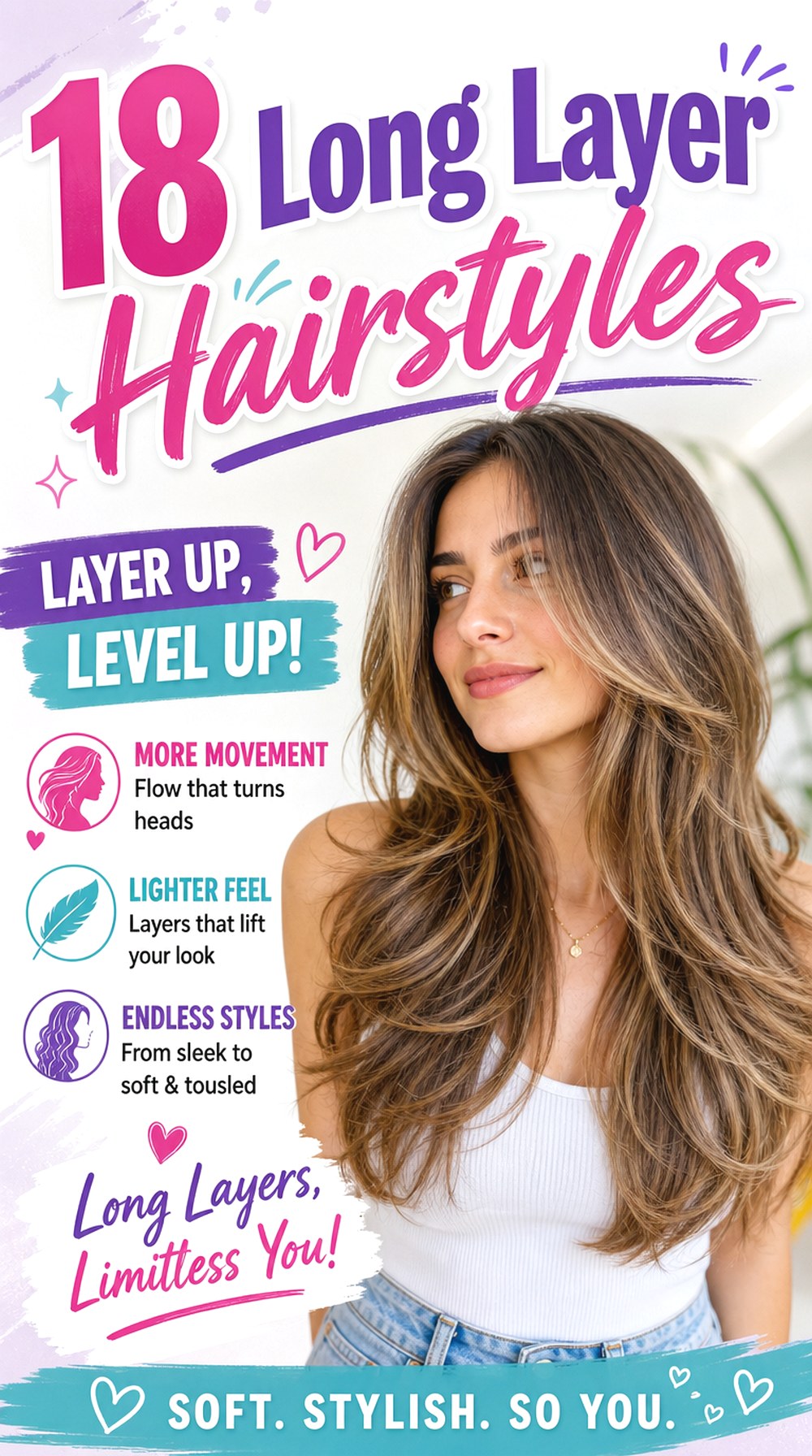
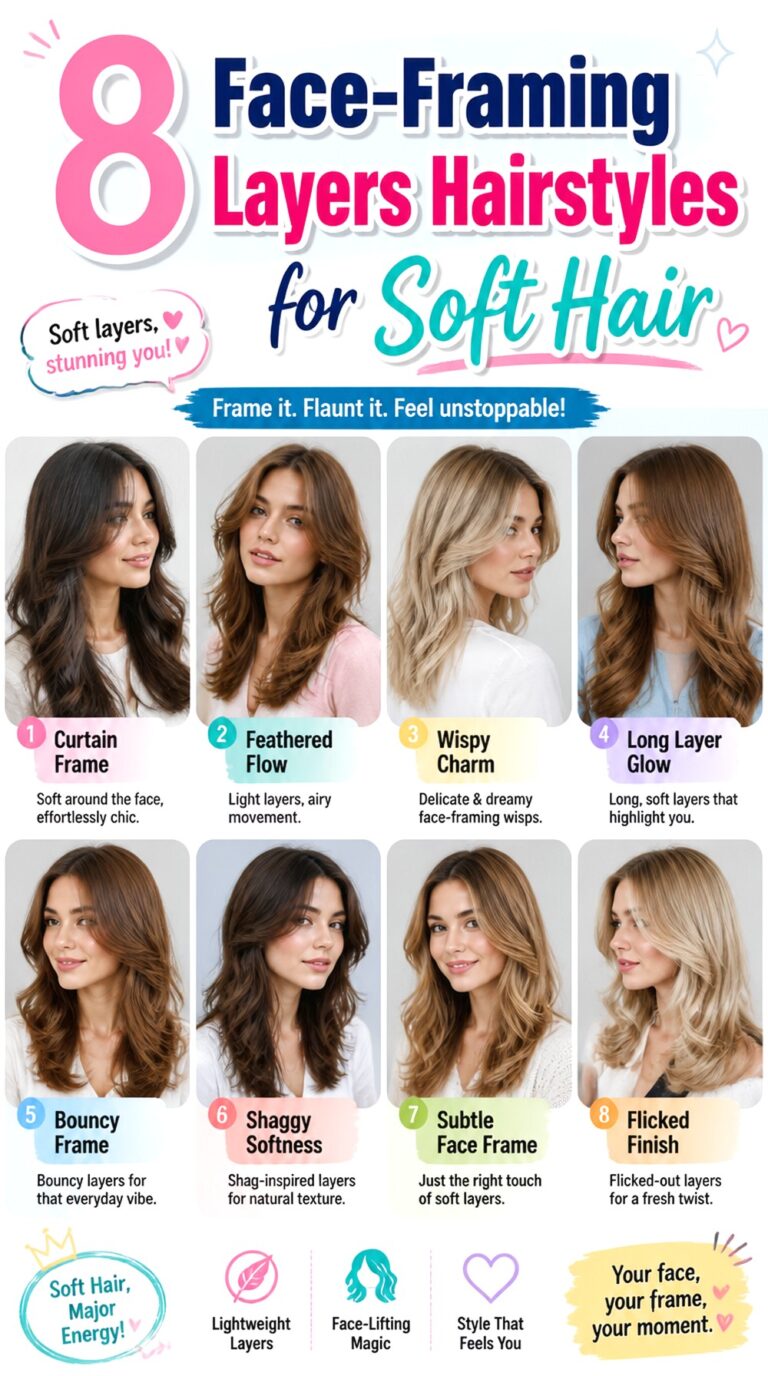
Long layer hairstyles keep most of the overall length while removing weight and creating movement through the mid-lengths and ends. Instead of one heavy line around the bottom, carefully placed layers help hair fall in softer sections. They can be subtle and blended or noticeably shorter around the face. The finished shape depends on where the first layer begins, how much density is removed, and whether the ends are feathered, rounded, textured, or left relatively full.
Long layers can work with straight, wavy, and curly textures, although the cutting approach should change with each hair type. Fine hair usually benefits from fewer layers and stronger ends, while thick hair can often handle more internal weight removal. Face-framing pieces can also be adjusted around the cheekbones, jaw, or collarbone to complement different face shapes without taking too much length away.
Daily styling can range from a quick air-dry to a full round-brush blowout. Most shapes need a salon refresh every few months, while bangs require more frequent trims. Before choosing long layers, think about your natural texture, density, preferred styling effort, and how much fullness you want to keep at the ends.
Quick List
- Long Layers with Curtain Bangs
- Face-Framing Long Layers
- Butterfly Long Layers
- Long Layers with Wispy Bangs
- Long Layers for Straight Hair
- Long Layers for Wavy Hair
- Long Layers for Curly Hair
- Long Layers with Side-Swept Bangs
- U-Shaped Long Layers
- V-Shaped Long Layers
- Long Feathered Layers
- Long Shaggy Layers
- Long Layers with Middle Part
- Long Layers with Deep Side Part
- Long Layers with Voluminous Blowout
- Long Layers with Soft Curls
- Long Layers with Textured Ends
- Long Layers with Rounded Ends
Long Layers with Curtain Bangs

Curtain bangs bring attention to the cheekbones while long, blended layers keep movement through the rest of the hair. The fringe usually opens around the center and gradually connects into longer face-framing pieces. This combination works especially well with medium to thick straight or wavy hair, although finer hair can wear it with lighter layering. Styling is moderate because the bangs normally need a little direction each morning. A round brush, heat protectant, and light-hold hairspray help maintain the sweep. Ask your stylist to blend the outer corners of the bangs into the front layers rather than leaving a visible step. The longer lengths can usually be refreshed every 10–14 weeks.
Pro tip: Keep the shortest part of the curtain fringe near the cheekbone or upper cheek if you want it to grow out smoothly into the surrounding layers.
Face-Framing Long Layers
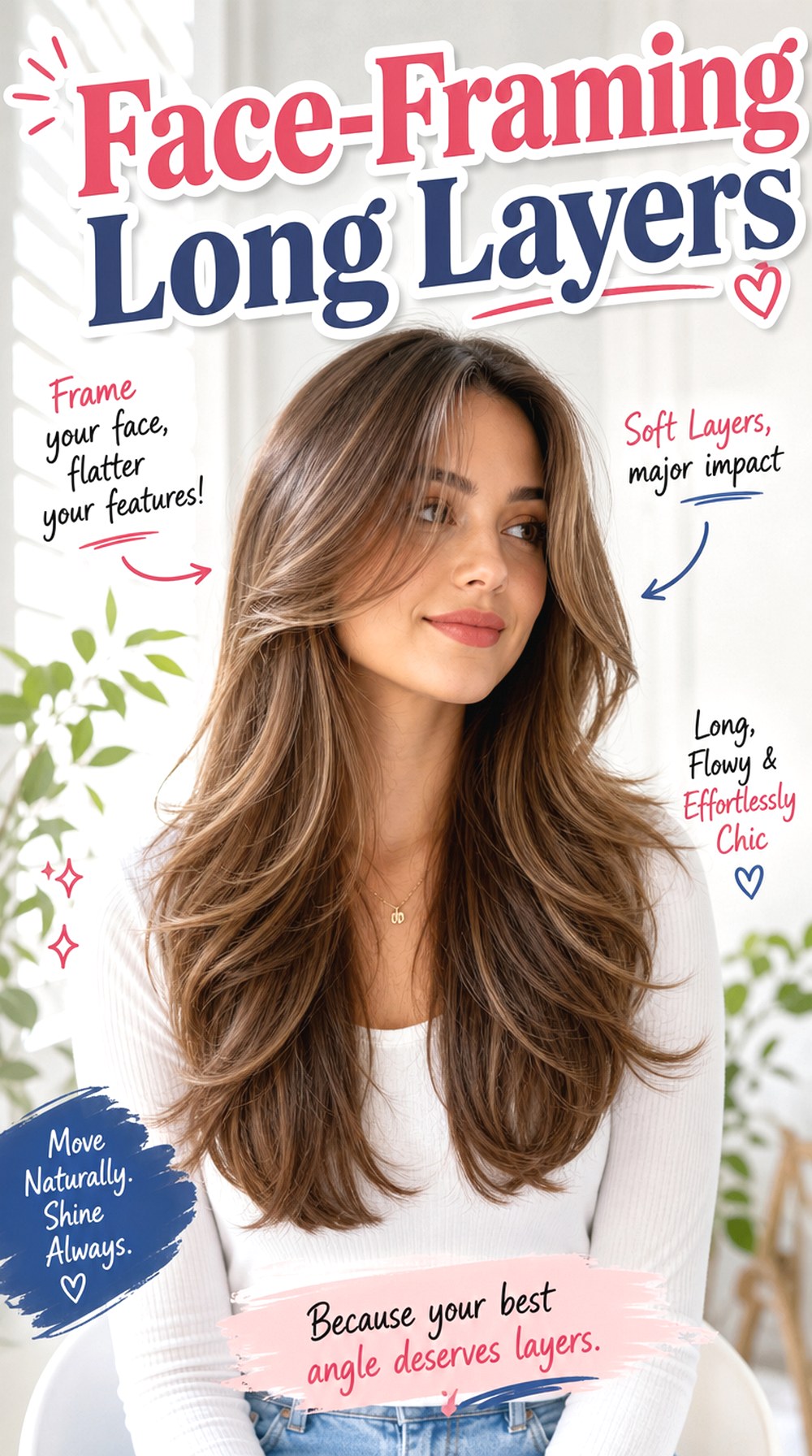
Face-framing long layers place most of the visible movement around the front while leaving the back comparatively full. Shorter sections can begin near the chin, jaw, or collarbone depending on how much change you want. The cut suits straight, wavy, and softly curly textures and is particularly useful when you want dimension without heavily layering all of the hair. Fine hair should keep enough density through the perimeter. A smoothing serum, round brush, and heat protectant are useful for turning the front pieces away from the face. Styling is fairly quick once the cut sits correctly. Tell your stylist exactly where you want the shortest front piece to fall when the hair is dry.
Pro tip: For a softer transition, ask for at least two or three gradually longer face-framing sections rather than one short piece followed by full-length hair.
Butterfly Long Layers
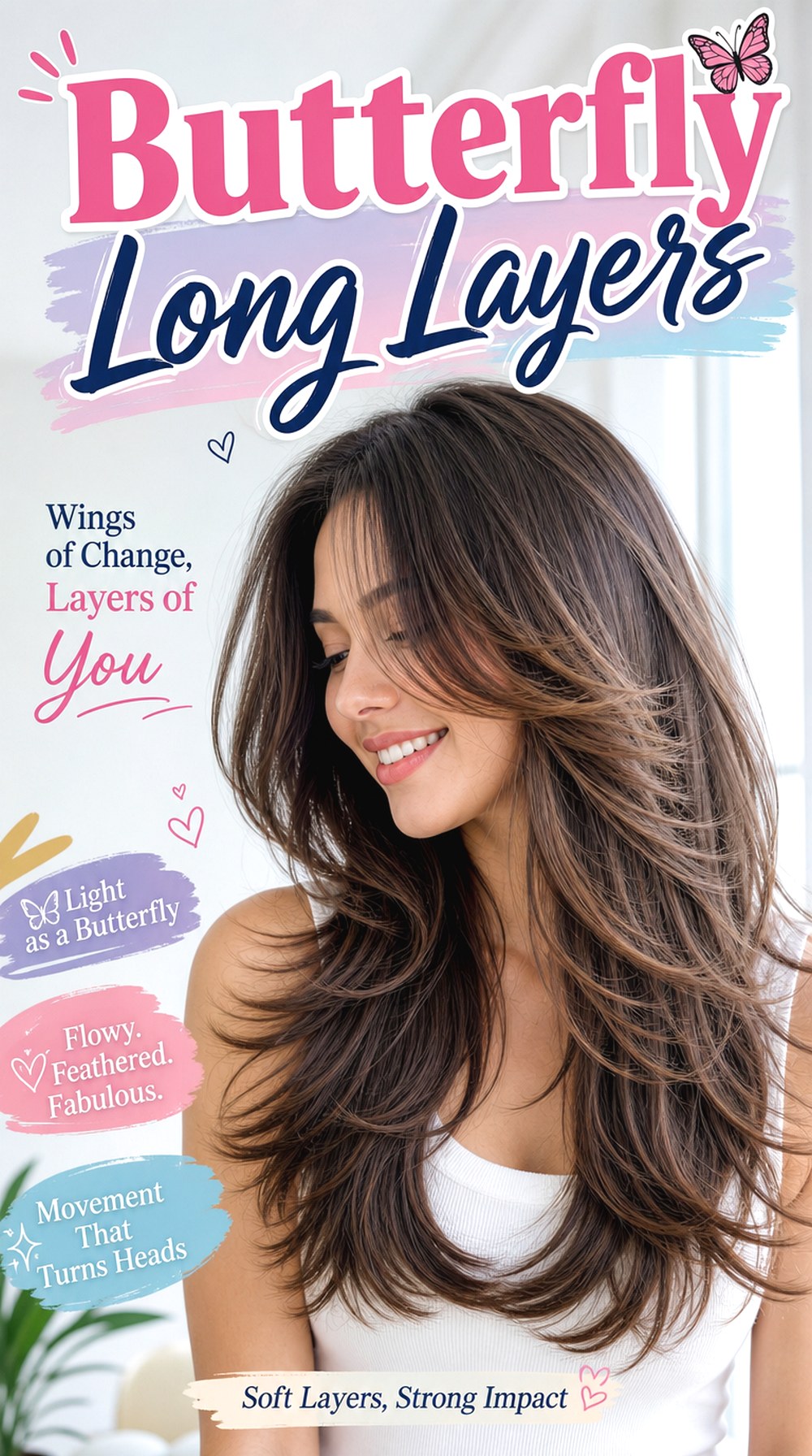
Butterfly layers combine shorter, airy sections around the face and crown with noticeably longer lengths underneath. When blown out, the upper layers lift and sweep away from the face while the lower hair keeps the appearance of length. This cut usually shows best on medium or thick hair because there needs to be enough density to support multiple layer levels. Straight and wavy textures are especially easy to shape with a blow-dryer. Volumizing spray, a large round brush, and heat protectant are useful supplies. Expect moderate styling time if you want the full bouncy finish. In the salon, ask for connected upper layers rather than short pieces that look disconnected from the bottom.
Pro tip: If your hair is fine, start the shortest butterfly layers lower—around the chin or collarbone—to avoid making the ends appear too sparse.
Long Layers with Wispy Bangs

Wispy bangs soften the front of long layered hair without creating the dense weight of a full fringe. Small, separated pieces usually sit across the forehead and blend into light face-framing sections near the temples. They work well on fine to medium hair and can suit straight or slightly wavy textures. The long layers should remain soft enough to echo the lightness of the fringe while keeping fullness around the bottom. A small round brush, dry shampoo, and light-hold hairspray help keep bangs fresh without making them stiff. Daily styling is generally quick, although the fringe may need trimming every four to six weeks. Show your stylist how much forehead you want visible through the bangs.
Pro tip: Ask your stylist to keep wispy bangs slightly longer at the outer edges so they blend naturally into the first face-framing layer.
Long Layers for Straight Hair

Straight hair makes the outline of long layers especially visible, so clean blending is important. Subtle layers through the lower half can prevent long hair from looking heavy while still preserving a strong perimeter. This approach can work with fine, medium, or thick hair, but the amount of layering should match density. Fine strands usually need shallow layers, while thicker straight hair can handle more movement and interior weight removal. A paddle brush, heat protectant, and lightweight smoothing serum help create a polished finish. Daily styling can be quick if the hair naturally dries straight. Ask the stylist to check the cut after drying so any uneven steps are visible. Trims around every 10–14 weeks help protect the ends.
Pro tip: If your straight hair tends to look thin at the bottom, request longer layers concentrated below the shoulders rather than short crown layers.
Long Layers for Wavy Hair
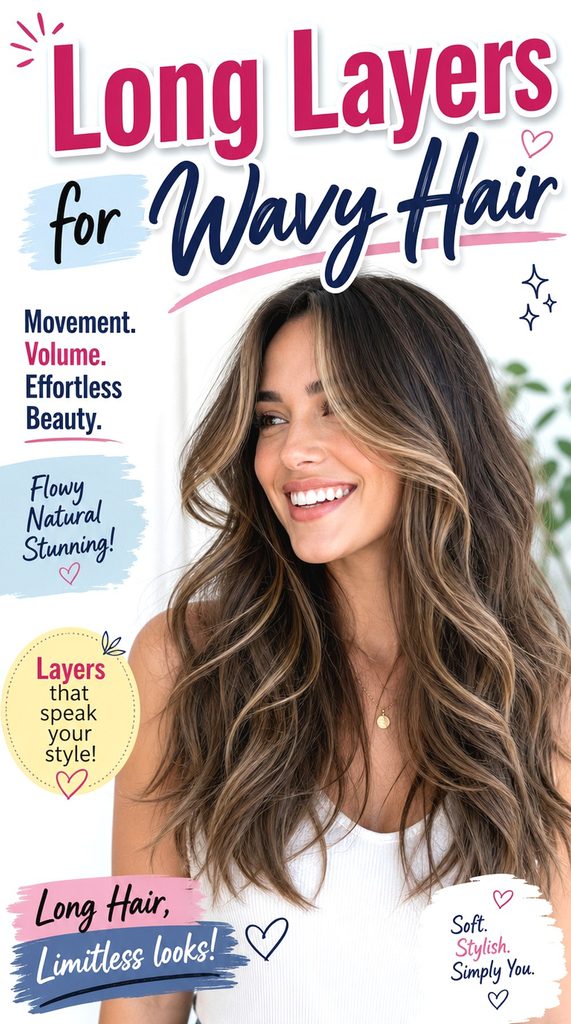
Long layers can give naturally wavy hair more definition by removing enough weight for the bends to form freely. The best placement depends on the wave pattern: loose waves may need only a few long layers, while stronger waves can usually support more shaping through the middle. Medium and thick densities often respond especially well. Styling can stay fairly low-maintenance if the cut works with the natural pattern. Use a wide-tooth comb, lightweight curl cream, and diffuser when you want controlled definition. Humidity may increase volume, so avoid removing too much weight if your hair expands easily. Ask your stylist to consider the wave shrinkage before setting the shortest layer.
Pro tip: Have your stylist place the first major layer where your natural wave already bends; this can encourage movement instead of creating an awkward shelf.
Long Layers for Curly Hair

Curly long layers are designed to distribute volume while preserving enough length for the curl pattern to hang naturally. Strategic shorter sections can prevent the bottom from becoming overly triangular, but cutting too many layers can create excessive width. Medium to thick curly hair often has enough density for this shape, while fine curls usually need fewer, carefully placed layers. A leave-in conditioner, curl cream, and diffuser support definition without flattening the texture. Styling time varies depending on whether you air-dry or diffuse. Because curls shrink differently from straight hair, discuss your dry length with the stylist before cutting. A curl-aware dry check can help balance any areas that spring up more strongly.
Pro tip: Ask for the layers to be assessed in your natural curl pattern so the shortest curls do not jump significantly higher than expected after drying.
Long Layers with Side-Swept Bangs

Side-swept bangs create an angled front section that flows naturally into long layers. They can soften a strong center part and add movement around the forehead without requiring the commitment of a short, blunt fringe. Straight and wavy hair are easiest to direct into the side sweep, while medium density gives the bang enough fullness without making it heavy. A round brush, volumizing spray, and light hairspray help hold the shape. Styling normally takes only a few extra minutes, though the fringe may need refreshing every five to eight weeks. Ask your stylist to cut the bangs according to the side you actually wear them on and connect their longest edge into the cheek or jaw layers.
Pro tip: Avoid cutting the side fringe too short if your hair has a strong cowlick; a little extra length gives you more control over its direction.
U-Shaped Long Layers

A U-shaped cut keeps the back perimeter softly rounded, with the center remaining slightly longer than the sides. Long layers can then follow that curve to create movement without producing a sharp point. The result works particularly well when you like hair to look full from behind. Fine to medium hair can benefit from the stronger outline, while thick hair may need some internal weight removed so the shape does not feel bulky. A paddle brush, smoothing serum, and large round brush are useful for a soft finish. Styling effort is usually light to moderate. At the salon, ask for a visible but gentle U rather than a dramatic curve if maintaining density is important.
Pro tip: Keep the lowest layers close to the perimeter when your hair is fine; this preserves the rounded outline instead of making it look see-through.
V-Shaped Long Layers
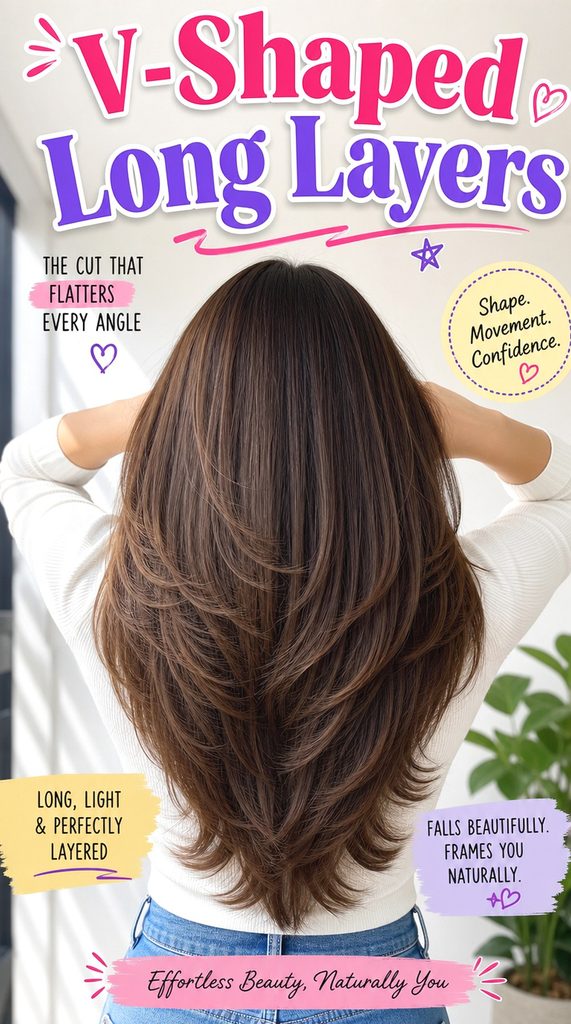
V-shaped long layers create a more dramatic taper toward the center back, producing a pointed outline when the hair falls straight. This silhouette works well for very long, medium-to-thick hair because the length makes the V easy to see. Layers through the sides can strengthen the cascading effect, but too much thinning can leave the point looking narrow. Straight and wavy textures display the shape clearly. Use heat protectant, a smoothing brush, and a lightweight shine serum when you want the outline to look polished. Styling takes little time if your natural texture is smooth. Ask your stylist how deep the V should be before cutting, since a dramatic point removes more length from the sides.
Pro tip: Choose a shallow V if you frequently wear braids or ponytails; it keeps more even density through the side lengths.
Long Feathered Layers

Feathered layers have soft, tapered ends that sweep away from the face instead of falling in one solid line. The technique gives long hair a lighter appearance and works particularly well with straight or slightly wavy textures. Medium and thick hair can usually support more feathering, while fine hair should keep the effect concentrated around the face to protect fullness. A round brush, heat protectant, and flexible hairspray help create the outward bend. A full blowout needs moderate styling time, although the cut can also be worn straighter. Tell your stylist whether you want subtle feathering or a more noticeable retro-inspired sweep, since the amount of graduation changes the overall shape.
Pro tip: Ask for feathering to begin around the cheekbones or jaw rather than high at the crown if you want movement without losing too much density.
Long Shaggy Layers

Long shaggy layers use more noticeable separation, texture, and movement than a classic blended layered cut. Shorter pieces may appear around the crown and face, while longer lengths keep the hairstyle from becoming a short shag. Wavy hair and medium-to-thick density work particularly well because natural texture emphasizes the uneven movement. Straight hair can also wear it with extra styling. Texturizing spray, lightweight mousse, and a diffuser or rough blow-dry help create an undone finish. Daily styling can be quick if you embrace natural texture, though the shape benefits from regular trims. Ask your stylist to keep enough weight at the perimeter so the long ends do not become overly thin.
Pro tip: For a softer grow-out, request longer crown layers instead of very short ones; you will still get texture without creating a difficult transition later.
Long Layers with Middle Part
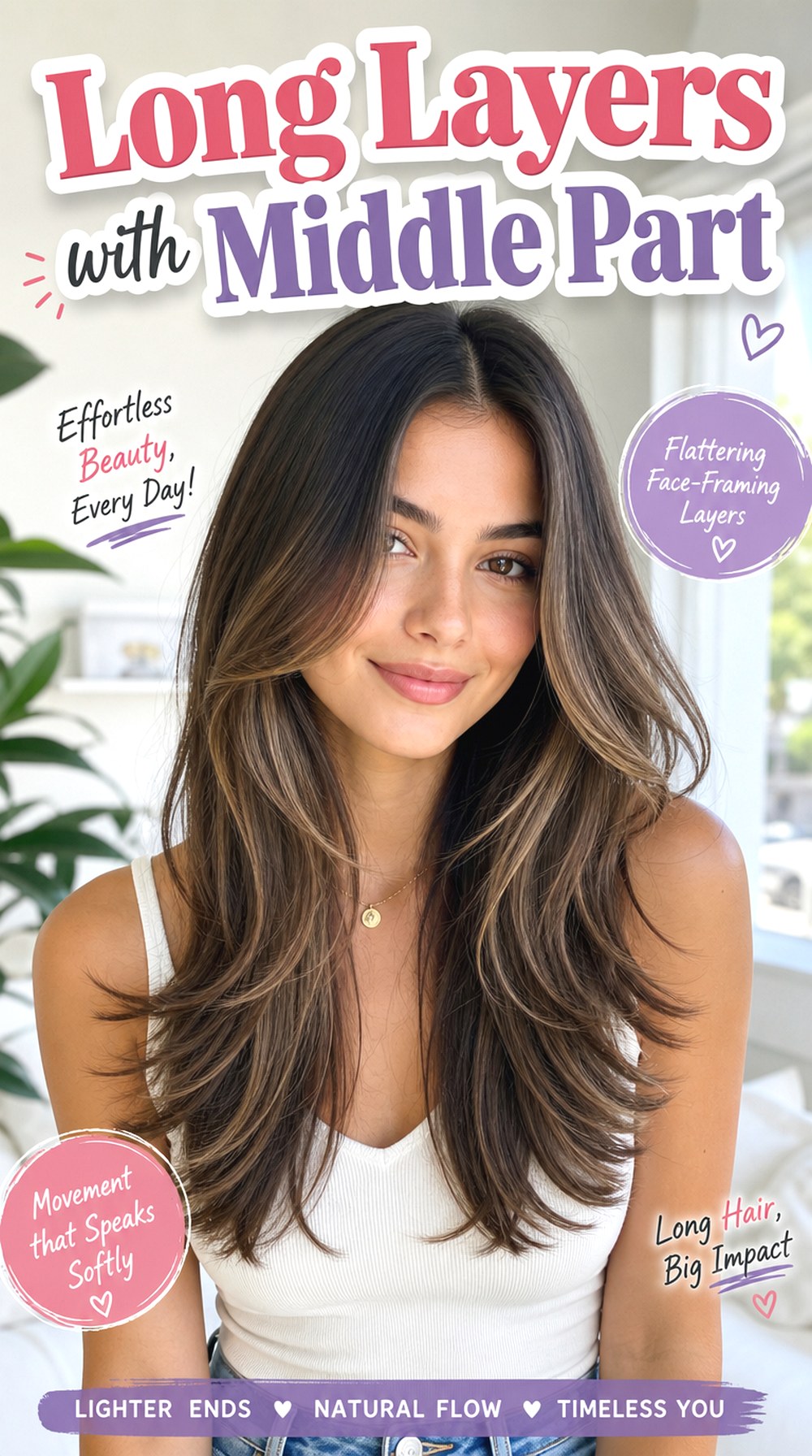
A middle part creates balanced framing on both sides of the face, allowing long layers to fall in a symmetrical shape. Front sections can start around the cheekbones, chin, or collarbone, depending on how strongly you want them to frame the features. Straight and wavy hair display the even shape clearly, while fine hair benefits from keeping the back layers minimal. A tail comb, lightweight volumizing spray, and round brush are useful for keeping the roots from falling flat around the part. Styling is generally quick to moderate. Ask your stylist to cut the front layers while considering your natural center part so they fall evenly when styled at home.
Pro tip: If the middle part feels flat, direct the roots briefly away from their usual position while blow-drying, then return the hair to the center once dry.
Long Layers with Deep Side Part
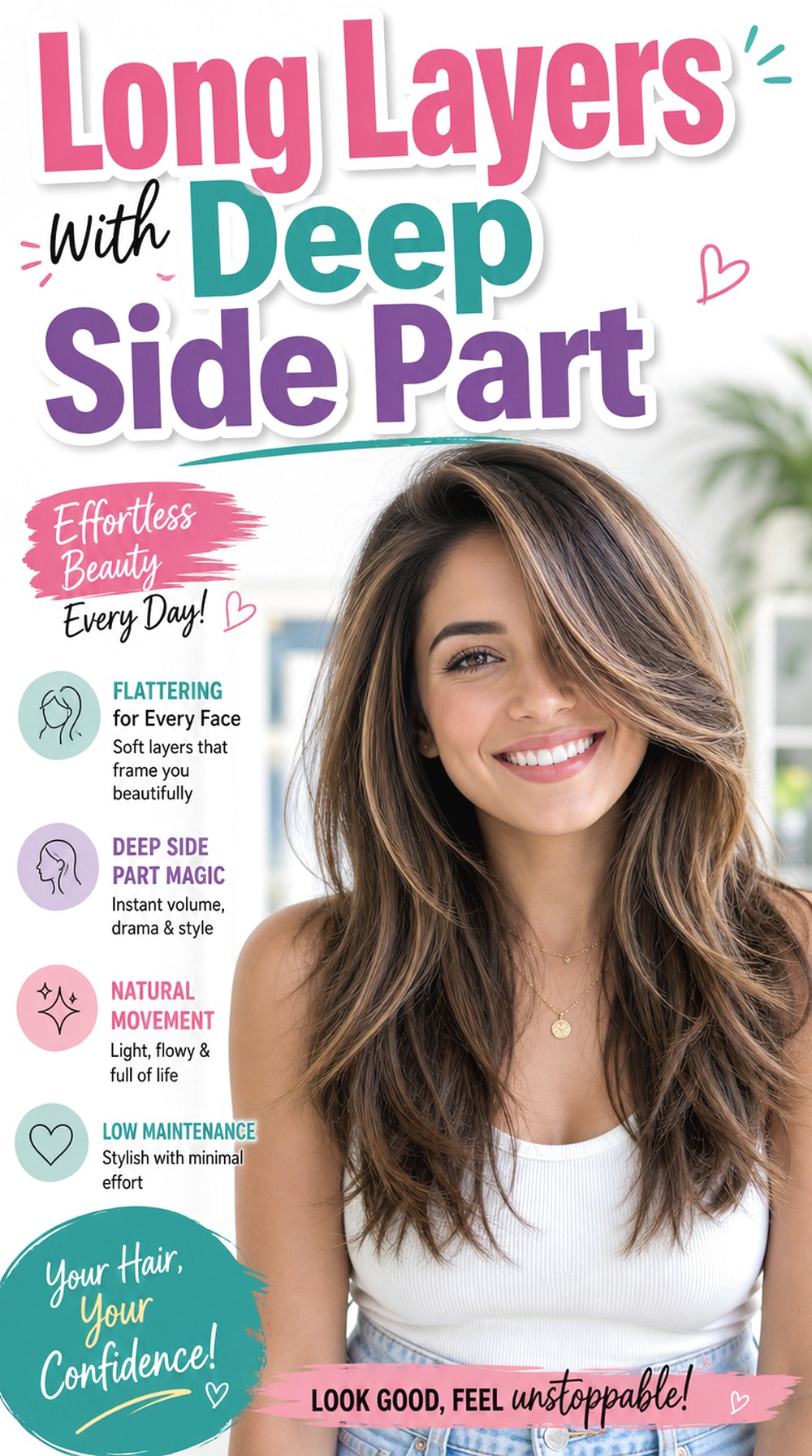
A deep side part shifts more hair to one side, creating extra lift at the crown and an asymmetrical sweep through long layers. It is useful for people who prefer visible volume without adding short layers over the entire head. Straight, wavy, and loosely curly textures can wear the shape, though the part will sit most naturally when it works with your growth pattern. A root-lifting spray, round brush, and light-hold hairspray can support the elevated side. Styling is moderate if you regularly blow-dry for volume. In the salon, explain where you normally place the part because face-framing pieces need to be balanced for that direction rather than cut as if you wear a center part.
Pro tip: Have the stylist check both sides after your hair is moved into its normal deep part; this helps prevent one front section from appearing noticeably shorter.
Long Layers with Voluminous Blowout

Long layers are especially noticeable in a voluminous blowout because each section lifts, bends, and overlaps instead of hanging flat. The shape typically includes shorter face-framing pieces and gradual layers through the body, with enough length left at the bottom to maintain fullness. Medium and thick hair hold this type of movement well, while fine hair should keep the layers longer. Volumizing mousse, heat protectant, and a large round brush are the most useful styling tools. Expect more styling time than with an air-dried finish, particularly on very long hair. Ask for connected layers that can roll smoothly around a brush rather than heavily texturized ends that separate too much.
Pro tip: Let each round-brushed section cool in its curved position before releasing it; cooling helps the bend and root lift last longer.
Long Layers with Voluminous Blowout

Soft curls add visible dimension to long layers by showing where each length begins and ends. Rather than creating tight ringlets, the finish uses loose curves through the mid-lengths and ends, with face-framing sections bent away from the face. Straight or naturally wavy medium-density hair is especially easy to style this way, though thicker hair can hold the finish well with proper sectioning. Use heat protectant, a medium-barrel curling iron, and flexible hairspray. Styling takes moderate time because individual sections need to be curled and cooled. Ask your stylist to preserve enough weight through the ends so the curls look full rather than wispy. Longer layers also make this finish easier to brush into soft waves.
Pro tip: Alternate the curl direction through the back but turn the front layers away from the face to keep the finish soft instead of overly uniform.
Long Layers with Textured Ends
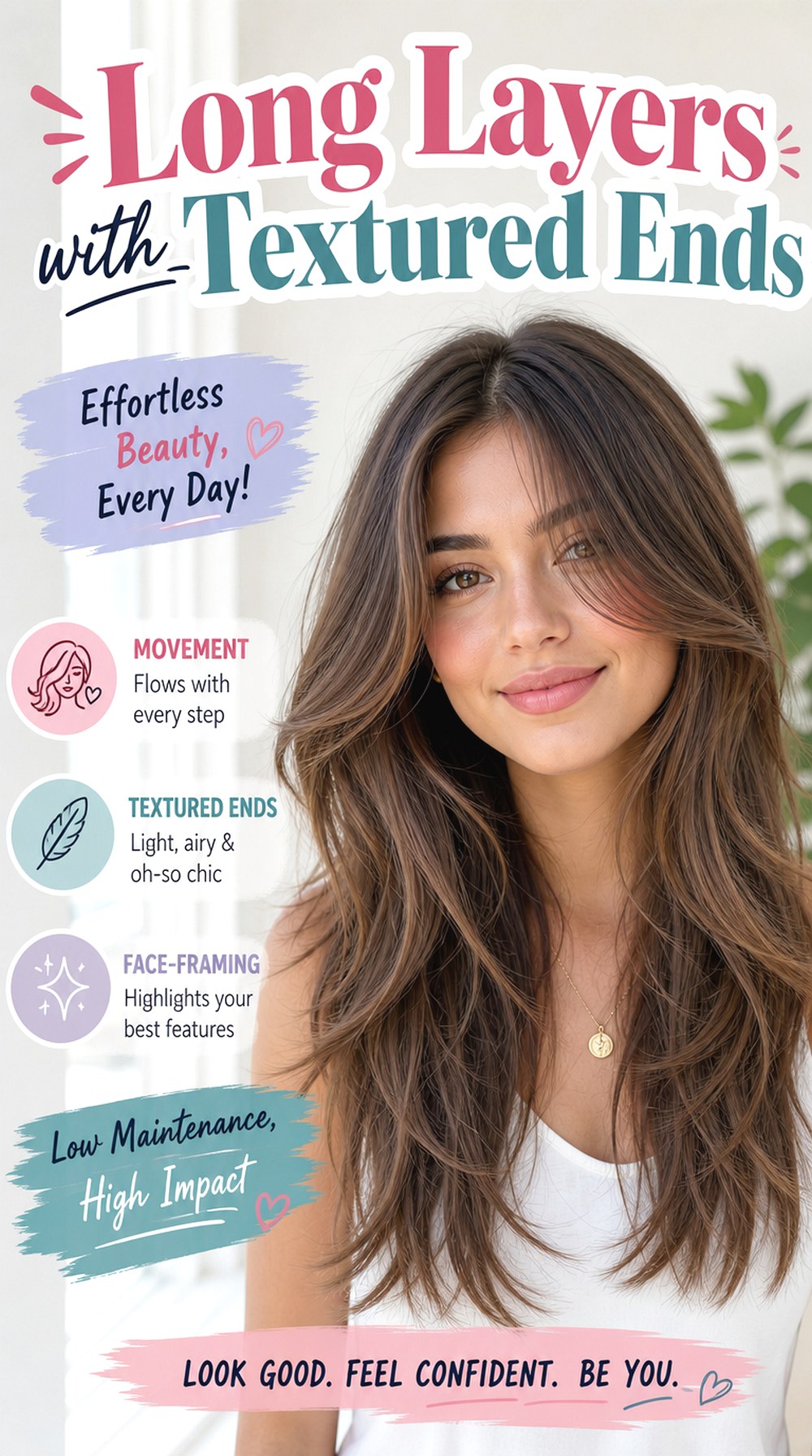
Textured ends remove some heaviness from the bottom of long layered hair and create a less solid finish. Small amounts of point cutting or controlled texturizing can help thick or medium-density hair move more freely, especially when the natural texture is straight or wavy. Fine hair requires a lighter approach because aggressive texturizing can reduce visible density. A texturizing spray, lightweight leave-in conditioner, and wide-tooth comb work well for a separated finish. Styling can be quick, particularly if you prefer an air-dried result. Tell your stylist you want movement at the ends without losing the overall perimeter. The distinction matters because thinning and texturizing are not the same as simply cutting more layers.
Pro tip: Ask the stylist to leave the bottom edge stronger around the front if your ends already feel fine, concentrating extra texture only where the hair is dense.
Long Layers with Rounded Ends
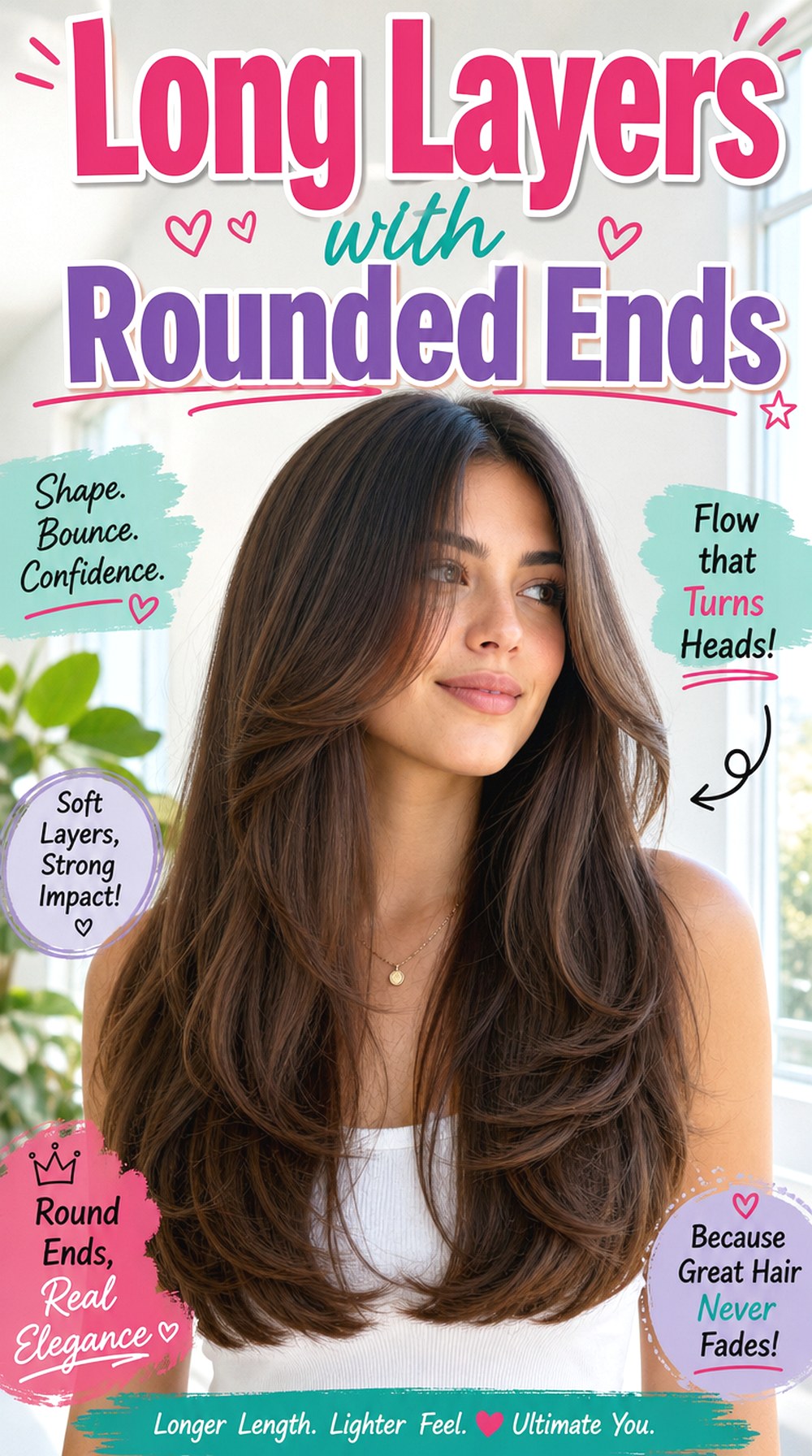
Rounded ends give long layers a polished, full appearance by curving the bottom sections inward or outward rather than leaving them completely straight. The layering is usually smooth and blended, while the perimeter retains enough density to create a substantial finish. Straight and gently wavy hair show the rounded shape especially well, and it can be a good option for fine or medium hair that looks thin with heavily textured ends. A smoothing serum, large round brush, and heat protectant make the curved finish easier to create. Styling takes moderate time with a blow-dryer but requires little extra work between washes. Ask your stylist to keep the perimeter strong and avoid excessive thinning near the last few inches.
Pro tip: Request long, subtle layers through the lower half if fullness is your priority; the rounded ends will look stronger when the base is not over-layered.
Conclusion
Long layer hairstyles can be adjusted far more than a single haircut name might suggest. You can keep the layers low and subtle, add stronger face-framing pieces, introduce bangs or fringe, change the parting, or build more volume through the crown and sides. Length and hair density also determine how much layering the ends can support without looking thin. Straight, wavy, and curly textures each need slightly different placement to maintain a balanced shape.
The best choice depends on your face shape, natural hair texture, density, styling routine, and maintenance preference. Before committing, decide whether you want polished movement, natural texture, strong volume, or an easy air-dried finish. That gives your stylist a much clearer direction for creating layers that work beyond the salon.
CTA
Choose one or two favorite ideas and save clear photo references before your appointment. Talk with your stylist about your face shape, natural hair texture, density, preferred length, maintenance level, and usual styling routine. In each reference photo, point out the exact layer placement, fringe length, face-framing pieces, volume, perimeter, or finish you want to copy. It is equally useful to explain what you do not want, especially if you prefer thicker ends or minimal daily heat styling.
FAQs
What hair type works best with long layer hairstyles?
Long layers can work with straight, wavy, and curly hair. Medium and thick hair can usually support more layering, while fine hair often looks fuller with fewer layers and a stronger perimeter.
How often should long layers be trimmed?
A general refresh every 10–14 weeks can help maintain the shape and remove damaged ends. Cuts with bangs or shorter face-framing pieces may need attention sooner.
Can long layers work on fine hair?
Yes. The key is avoiding excessive layering or thinning. Keeping the shortest layers lower and preserving weight through the ends can create movement without making fine hair appear sparse.
Do long layers require daily heat styling?
Not necessarily. Well-placed layers can air-dry naturally on wavy or curly textures. Blow-drying, round brushing, or curling mainly becomes necessary when you want a smoother, bouncier, or more defined finish.