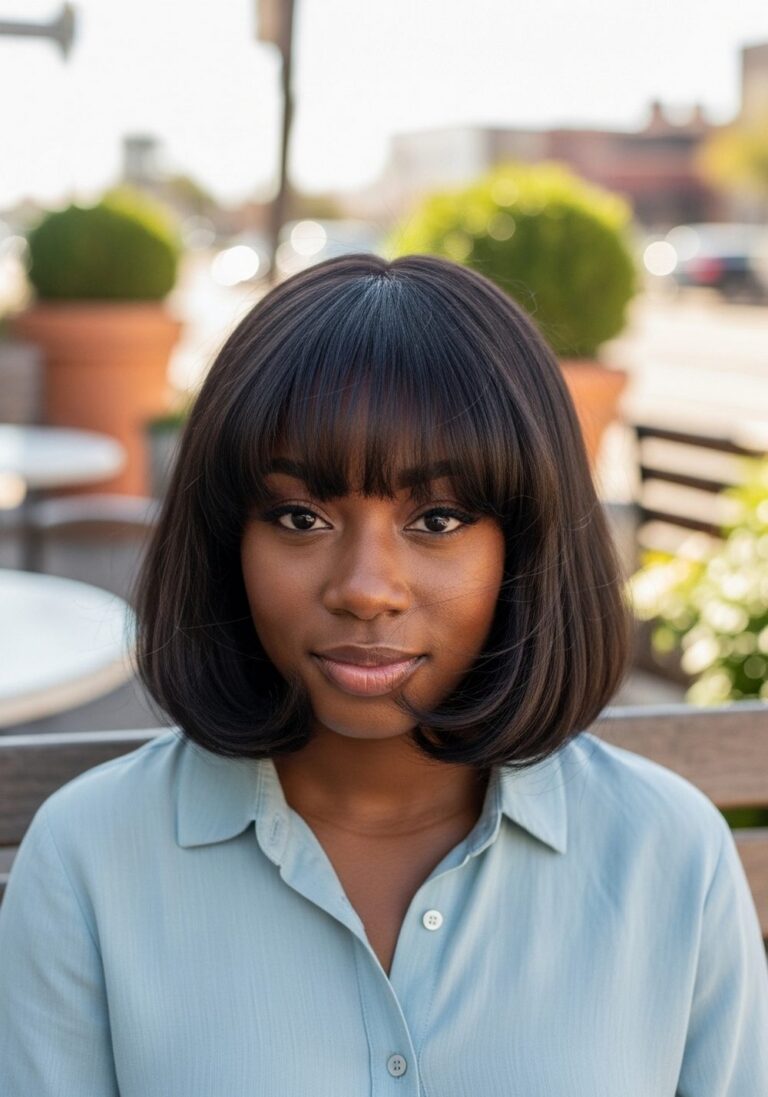
10 New Years Eve Hairstyles

New Years Eve hairstyles usually need to do more than look polished for the first hour. A good party hairstyle should keep its shape through dinner, photos, dancing, and changing weather without feeling overly stiff. Depending on your outfit and hair length, that might mean structured Hollywood waves, a smooth ponytail, a secure low bun, loose curls, or a textured updo.
The right shape depends heavily on your natural texture and density. Fine hair often benefits from controlled volume and lightweight styling products, while thick hair may need extra pins or some hidden weight removal. Straight hair can create sharp, glossy finishes, whereas naturally wavy or curly hair works especially well for textured updos and softer shapes. Face-framing pieces, side parts, crown height, and fringe placement can also be adjusted to balance round, oval, square, heart, and longer face shapes.
Consider how much styling time you want before choosing your look. Some party hairstyles take 10–15 minutes, while curled or pinned designs may require considerably longer. If you are getting a haircut beforehand, discuss layers, fringe length, and your intended hairstyle with your stylist so the finished cut supports the look rather than fighting it.
Quick List
- Old Hollywood Waves
- Sleek High Ponytail
- Pearl-Pinned Low Bun
- Half-Up Voluminous Curls
- Side-Swept Glam Curls
- Braided Crown Updo
- Wet-Look Slicked-Back Bob
- Bubble Ponytail With Face-Framing Pieces
- Twisted Low Ponytail
- Textured Top Knot With Wispy Bangs
Old Hollywood Waves

Large, polished waves create a smooth S-shaped pattern that works especially well on medium to long hair. A deep side part adds structure, while keeping the roots relatively controlled allows the wave pattern to become the main feature. Medium to thick hair usually holds this finish well, although fine hair can wear it with lightweight volumizing preparation. Expect moderate styling time because each section needs to be curled in the same direction and brushed into shape. Heat protectant, a large-barrel curling iron, and light-hold hairspray are useful here. For salon preparation, ask for long layers that preserve enough weight through the ends to create a continuous wave rather than a heavily feathered finish.
Pro tip: Keep the shortest face-framing layer around chin level or longer if you want the front wave to form a smooth curve without short pieces separating from it.
Sleek High Ponytail

A high ponytail gives long hair a clean, lifted shape while keeping the lengths away from the face and neckline. The smooth root area contrasts with the moving ponytail, which can be worn straight, softly waved, or curled at the ends. Medium and thick hair create natural fullness, while finer hair may benefit from a little volumizing spray through the ponytail rather than at the slicked roots. Daily-style effort is moderate and mostly involves smoothing the hair securely without creating bumps. Use a smoothing serum, boar-bristle brush, and flexible hairspray. If you are having your hair cut before the event, tell your stylist you regularly wear high ponytails so very short crown layers are kept under control.
Pro tip: Position the ponytail by following an imaginary diagonal line from your cheekbone toward the crown; it usually creates lift without placing the ponytail too far forward.
Pearl-Pinned Low Bun
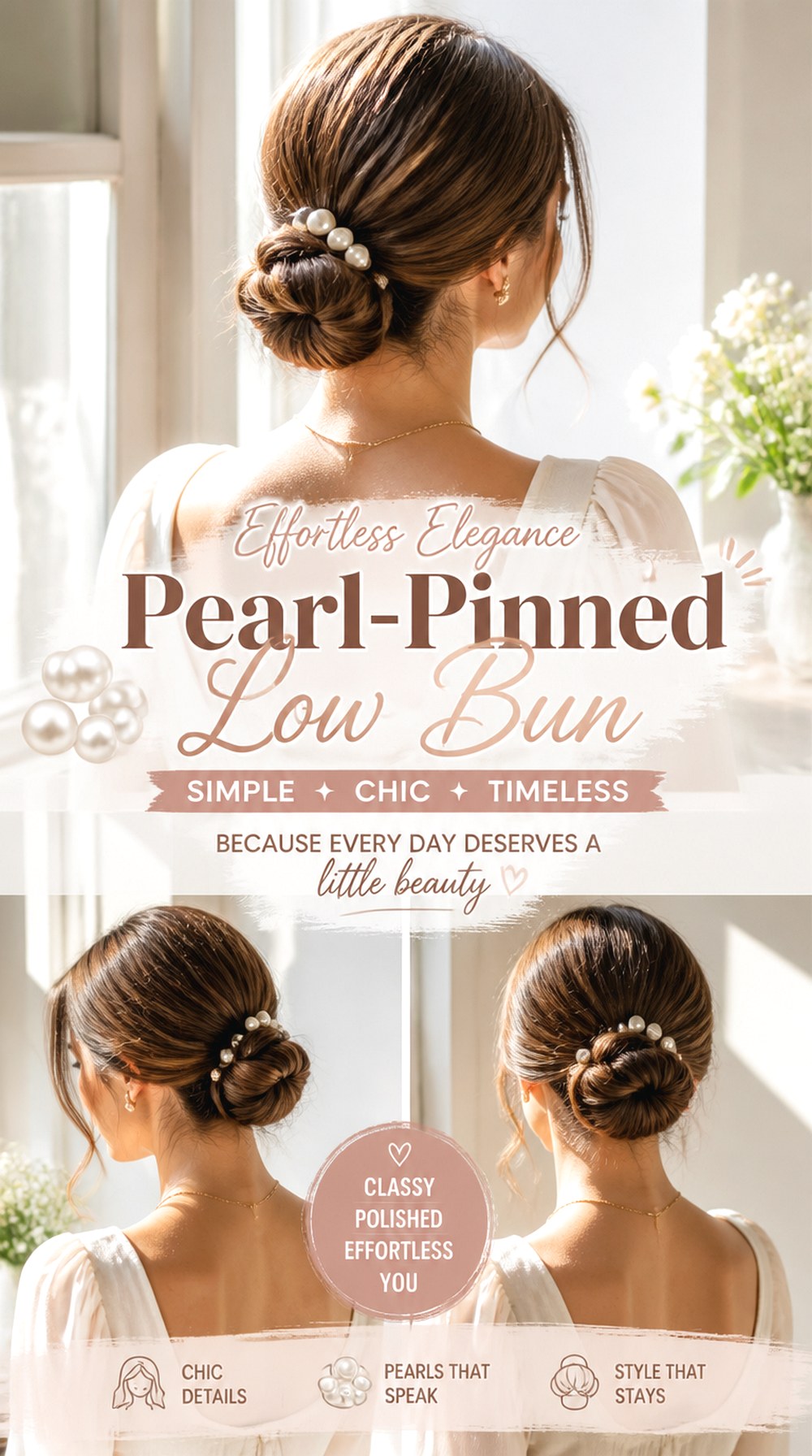
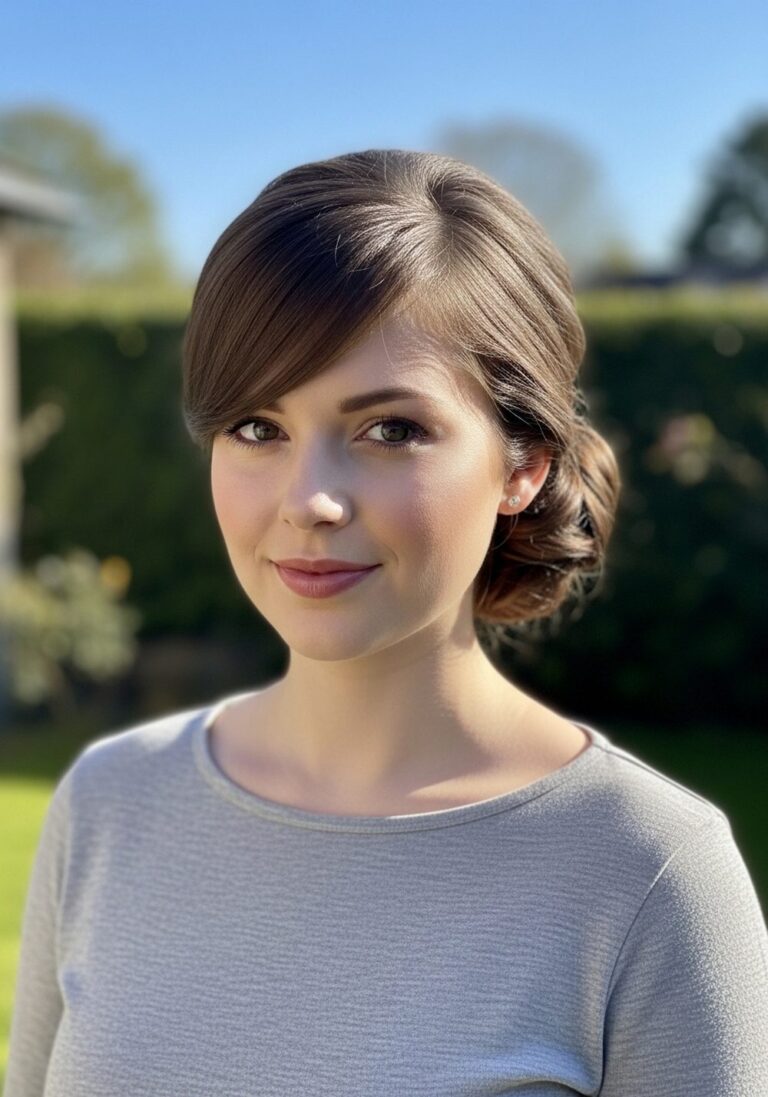
A low bun positioned near the nape gives party hair an elegant shape without adding much height. Decorative pearl pins can be placed through one side of the bun rather than covering the entire style, which keeps the finish refined. Straight, wavy, and lightly curly textures can all work, and medium to thick density provides enough hair to build a fuller bun. Fine hair can create a similar silhouette with gentle root texture and loose wrapping. Styling takes moderate time because the bun needs secure anchoring. A texturizing spray, strong bobby pins, and smoothing serum are practical supplies. Ask your stylist to keep enough length around the perimeter if low updos are important to you, especially around the nape.
Pro tip: Cross two hidden bobby pins underneath the bun before adding decorative pins; the decoration should not be responsible for holding the main weight of the hairstyle.
Half-Up Voluminous Curls

Half-up curls combine lifted crown volume with loose movement through the lower lengths. Pulling only the upper section back leaves softness around the face and makes this option useful for anyone who likes wearing hair down but wants extra structure. Long hair and medium-to-thick density hold the shape particularly well, although fine hair can gain fullness from carefully placed curls. Round faces may benefit from slightly more crown lift, while longer faces can keep the top flatter and build width through the sides. Allow moderate styling time for curling and pinning. Heat protectant, volumizing mousse, and a medium-barrel curling iron work well. At the salon, request blended long layers rather than very short crown layers if you want the curls to look full at the ends.
Pro tip: Take the half-up section from just above the temples rather than directly across the widest part of the head to keep the shape soft instead of boxy.
Side-Swept Glam Curls
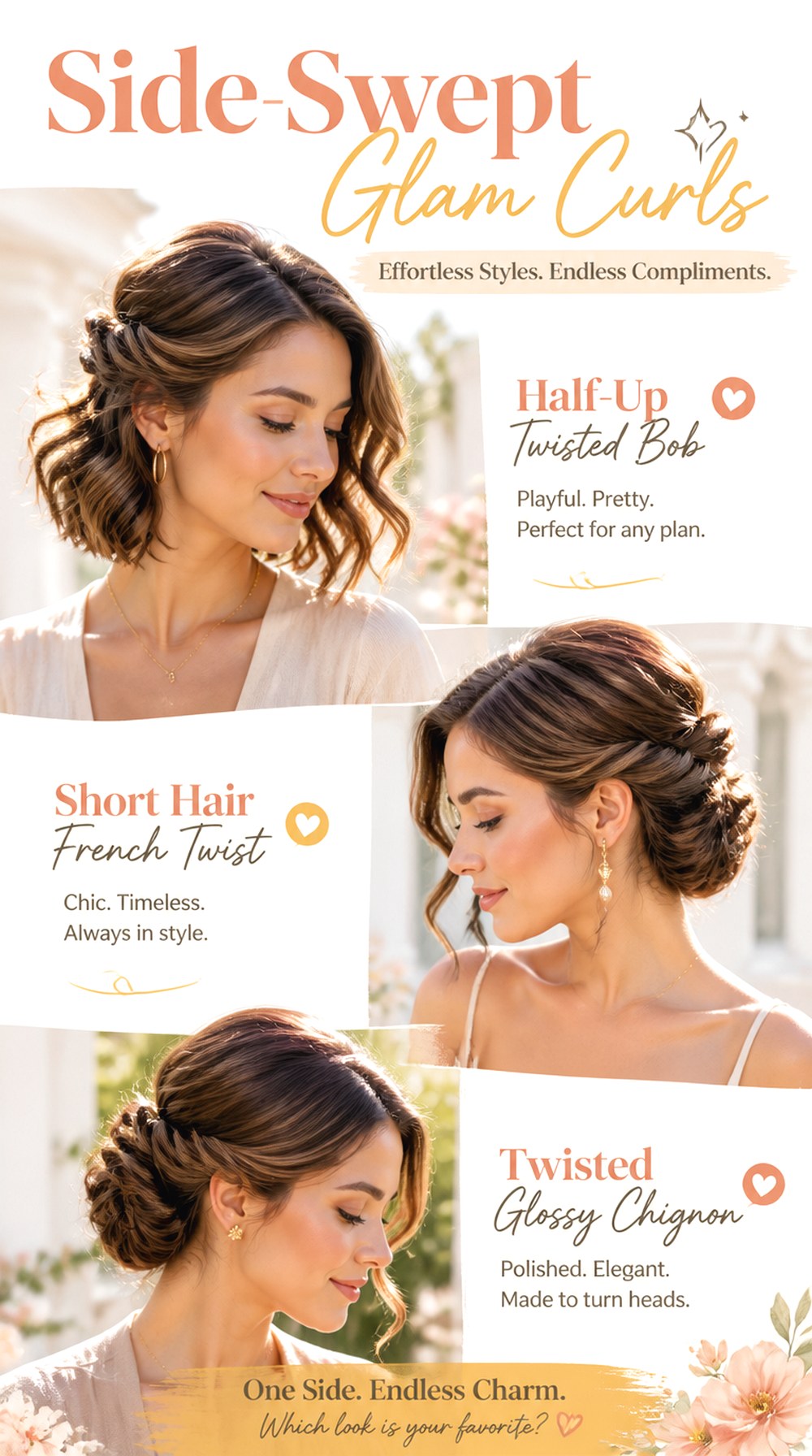
Side-swept curls place most of the length over one shoulder, giving long or medium-long hair a dramatic but wearable party shape. The exposed side can be tucked smoothly behind the ear or secured discreetly with pins, while the opposite side carries fuller curls. It suits medium and thick density particularly well because the concentrated hair creates visible volume, though finer hair can use smaller sections for better curl retention. Styling requires moderate to higher effort because the curl direction and pin placement matter. Use heat protectant, a curling wand, and humidity-resistant hairspray. Before a salon visit, show where you want your shortest face-framing layer to fall so it still blends into the swept side.
Pro tip: Curl the front sections away from the face before moving everything to one shoulder; this keeps the hair open around the cheekbone instead of falling forward.
Braided Crown Updo

A braided crown wraps braided sections around the head and pins the remaining lengths into a soft updo. It works especially well for medium to long hair and can accommodate straight, wavy, or curly texture. Medium and thick hair give the braid more presence, while fine hair can be gently loosened after braiding to create width. The hairstyle is useful when you want a secure option that keeps hair off the neck, although it requires more styling time than a simple ponytail. A dry texturizing spray, clear elastics, and strong bobby pins help the braid stay in place. If you have layered hair, ask your stylist not to make the front sections excessively short because they may slip from the braid.
Pro tip: Loosen only the outer edge of each braid loop after it is pinned. Pulling both sides can weaken the structure and make shorter layers escape.
Wet-Look Slicked-Back Bob

A slicked-back bob creates a sharp, glossy finish by directing the hair away from the forehead while keeping the sides close to the head. The clean shape works especially well on chin- to shoulder-length cuts with relatively solid ends. Straight and softly wavy textures are easiest to control, while curly hair may need more preparation if a smooth finish is desired. Styling is fairly quick once the hair is dry, although humidity can cause unwanted expansion around the roots. A strong-hold gel, wide-tooth comb, and shine serum are useful supplies. At your haircut appointment, ask for a clean perimeter and avoid excessive short layering if you want the slicked-back silhouette to stay compact.
Pro tip: Apply most of the holding product from the hairline to just behind the crown, then use much less on the ends so they retain movement instead of looking heavily coated.
Bubble Ponytail With Face-Framing Pieces

A bubble ponytail uses small elastics spaced down a long ponytail, with each section gently expanded to create rounded shapes. Leaving a few face-framing pieces out keeps the front softer and can make the design feel less severe. Medium to long hair works best because it provides enough length for several bubbles, while medium or thick density creates the fullest effect. Fine hair can still work if each section is expanded carefully rather than pulled aggressively. The style takes moderate time but requires little heat. Use clear elastics, texturizing spray, and a light smoothing cream. Ask your stylist for face-framing pieces that begin around the cheekbone or jaw rather than very short layers if you want them to blend easily.
Pro tip: Measure the spaces between elastics before expanding each bubble; consistent spacing makes the ponytail look intentional even when the texture is soft.
Twisted Low Ponytail

A twisted low ponytail is a useful middle ground between a basic ponytail and a full updo. Side sections are twisted toward the nape and wrapped around the ponytail base, creating detail while leaving most of the hair loose. It suits medium to long hair and works especially nicely with natural waves because a little texture helps the twists stay together. Fine through thick densities can wear it, although very thick hair may need extra pins beneath the wrapped section. Styling is relatively quick, particularly if you keep the ponytail naturally textured. Leave-in conditioner, texturizing spray, and sturdy bobby pins are good choices. Ask your stylist to preserve adequate length around the temples if twisted hairstyles are part of your regular routine.
Pro tip: Twist the side pieces firmly near the scalp but loosen them slightly after pinning; this creates softness without sacrificing the hold at the base.
Textured Top Knot With Wispy Bangs
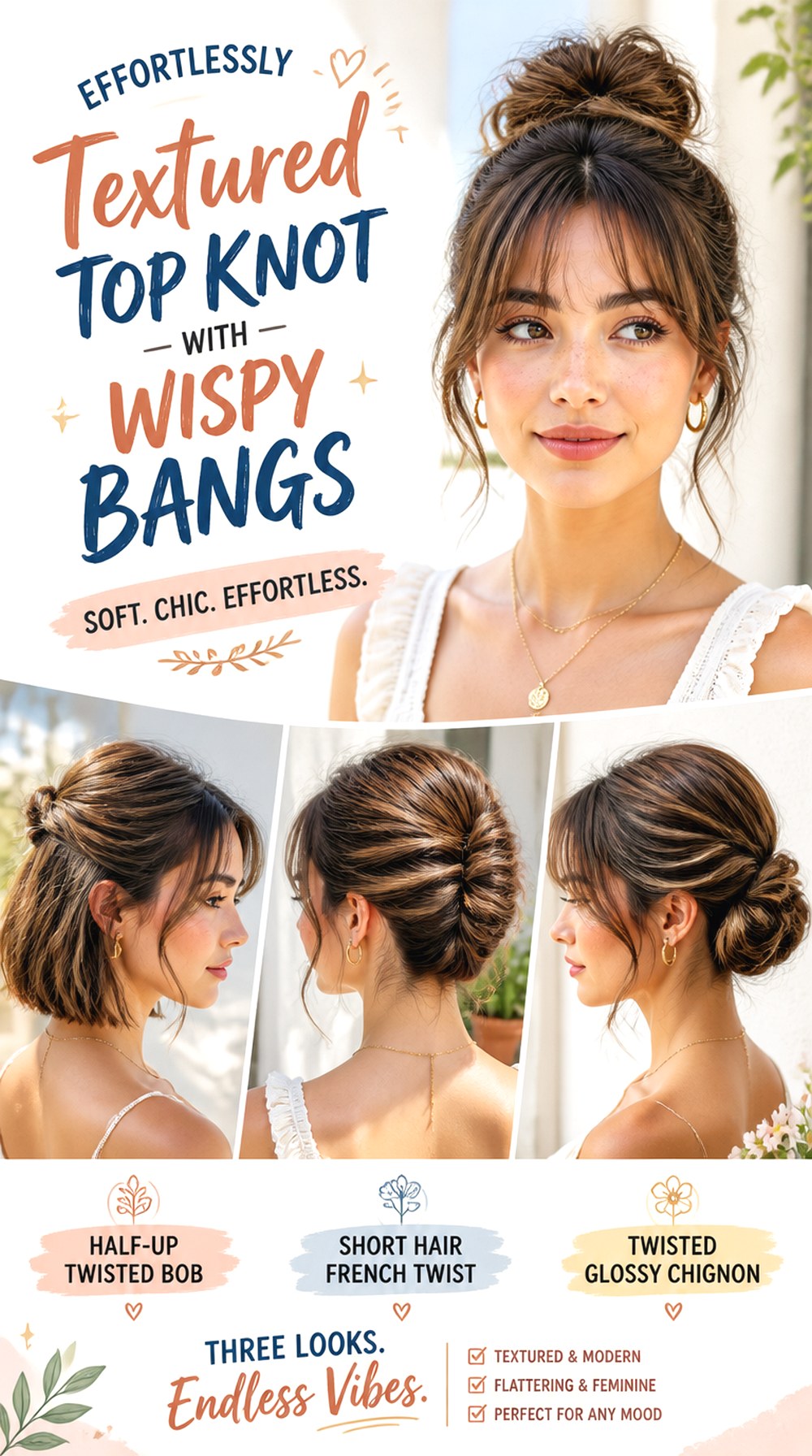
A textured top knot places the bun high on the crown while leaving wispy bangs or fine face-framing pieces around the forehead. Unlike a tightly wrapped ballerina bun, the texture can remain slightly airy, making it useful for wavy hair or layered lengths that naturally create movement. Medium and thick hair give the knot plenty of body, while fine hair can use root texture to improve grip. Styling is moderate and does not require perfectly smooth sections. Dry texture spray, flexible hairspray, and bobby pins are useful for creating and holding the shape. If you wear bangs, salon maintenance may be needed every three to five weeks depending on their length and growth. Ask for a fringe that remains light rather than heavily cut across the forehead.
Pro tip: Keep a little width in the bun instead of making it extremely tall; balanced width prevents the top knot from visually elongating an already long face shape.
Conclusion
These New Years Eve Hairstyles show how much the final result can change through small adjustments rather than choosing one fixed party formula. A curled style can be softer or more structured, while ponytails and buns can shift from polished to textured simply by changing the volume, parting, or finish. Length and density also influence how large an updo or braid appears, and bangs or face-framing layers can completely change the front view.
The best choice depends on your face shape, natural hair texture, density, maintenance preference, and the amount of styling you actually want to do. Think beyond the finished photograph and consider how the hairstyle will hold throughout the evening. A slightly simpler design that works naturally with your hair is often easier to maintain than one requiring constant touch-ups.
CTA
Choose one or two favorite ideas and save clear photo references before your salon appointment or event. Discuss your face shape, natural texture, hair density, preferred length, maintenance level, and usual styling routine with your stylist. In each reference photo, point out exactly what you like—whether that is the layer placement, fringe length, ponytail height, amount of crown volume, curl size, parting, or overall finish. Those details make it much easier to adapt the inspiration to your own hair.
FAQs
Which New Years Eve hairstyle is easiest for fine hair?
Half-up curls, a textured top knot, and a bubble ponytail can help fine hair appear fuller without requiring extremely dense hair. Lightweight mousse or texture spray can add grip without flattening the strands.
How can I make a New Years Eve hairstyle last through the night?
Start with properly prepped hair, use products suited to your texture, and secure pinned hairstyles with enough hidden support. Humidity-resistant hairspray can be particularly useful for curls and smooth finishes.
Which party hairstyles work without much heat styling?
A braided crown, twisted low ponytail, bubble ponytail, and textured top knot can often be created with little or no heat, especially when you work with your natural texture.
Should I wash my hair on the day of the event?
It depends on your hair type and chosen hairstyle. Fine or oily hair may look best freshly washed and properly dried, while very soft hair sometimes holds braids and updos better with added texture spray. Clean hair can still be styled successfully when the right grip and hold products are used.
ccc