
10 Textured Boyfriend Bob Hairstyle Ideas
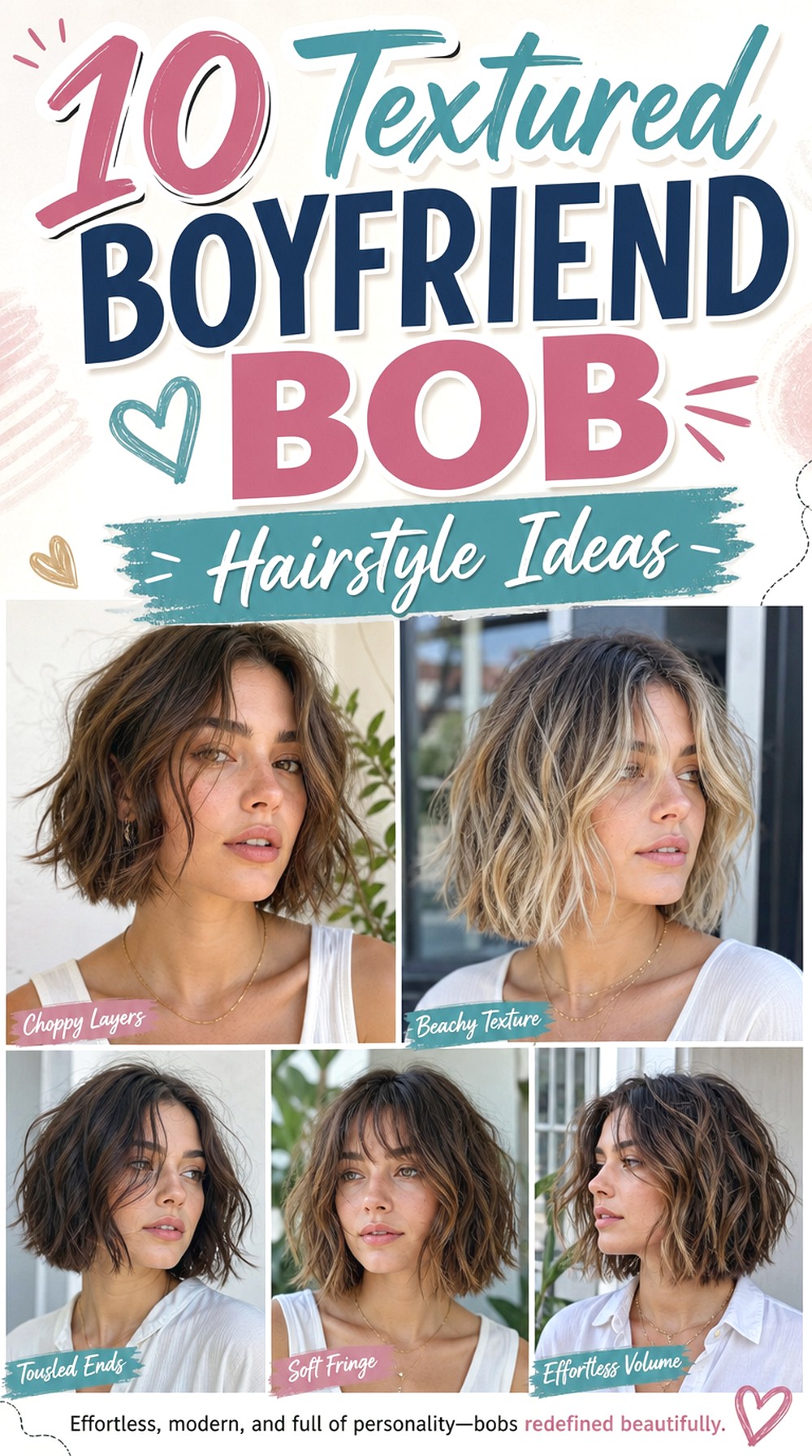
The way a boyfriend bob is parted or paired with bangs can completely change how the cut frames the face. A center part makes the shape feel balanced and graphic, while a deep side part adds stronger movement and volume through one side. Softer side parts are easier to wear casually, and a no-part finish creates a loose, brushed-back effect. Even something as simple as tucking one or both sides behind the ears can make the same jaw-length bob look cleaner and more structured.
These variations generally work well on straight and wavy hair, although curly textures can also be adapted by adjusting length, density, and shrinkage. Fine hair may benefit from strategic parting that creates lift, while thick hair often needs some internal weight removal so the sides sit comfortably around the jaw.
Bangs add another layer of customization. Curtain, bottleneck, wispy, and blunt fringes each change the balance around the forehead and cheekbones. Before choosing one, consider your natural part, cowlicks, styling routine, hair density, and how often you are willing to trim the fringe.
Quick List
- Center-Part Boyfriend Bob
- Deep Side-Part Boyfriend Bob
- Soft Side-Part Boyfriend Bob
- No-Part Boyfriend Bob
- Tucked-Behind-Ears Boyfriend Bob
- One-Side-Tucked Boyfriend Bob
- Curtain-Bang Boyfriend Bob
- Bottleneck-Bang Boyfriend Bob
- Wispy-Bang Boyfriend Bob
- Blunt-Bang Boyfriend Bob
Center-Part Boyfriend Bob

A center-part boyfriend bob creates a balanced silhouette by dividing the hair evenly on both sides of the face. The strongest versions usually sit around the jaw or slightly below it, with a clean perimeter and only enough layering to prevent the sides from feeling heavy. Straight and softly wavy hair show the symmetry especially well, while medium-density hair tends to hold the shape without looking too flat or bulky. Fine hair may need a little root lift around the part. A lightweight volumizing spray, heat protectant, and flat brush are useful for styling. Daily effort is usually quick to moderate. At the salon, ask for equal front lengths and a balanced outline on both sides.
Pro tip: Have your stylist check the haircut while your hair is naturally center-parted, because even a small difference in front length is easier to notice with a symmetrical part.
Deep Side-Part Boyfriend Bob

A deep side part shifts most of the hair toward one side, creating stronger volume through the top and a more directional shape around the face. It pairs especially well with a jaw-length boyfriend bob because the compact perimeter keeps the added volume from becoming too wide. Straight, wavy, fine, and medium-density hair can all work with this variation. Fine hair often benefits from the extra lift created by moving the part away from its usual position. Use volumizing mousse, a round brush, and light-hold hairspray to keep the roots elevated. Styling is moderate if you want the part to stay defined. Tell your stylist which side you normally prefer before the haircut is shaped.
Pro tip: Do not place the part too far toward the temple if your hair naturally falls back toward the center; a slightly less extreme part will stay in place more easily.
Soft Side-Part Boyfriend Bob

The soft side-part boyfriend bob gives the haircut gentle asymmetry without creating the dramatic volume of a very deep part. The part usually sits just off center, allowing one side to sweep naturally across the forehead while both sides retain similar fullness. It works well for straight, wavy, fine, and medium-density hair and is especially practical if you frequently change your part. A lightweight mousse, wide-tooth comb, and smoothing serum can help create natural movement without making the bob overly polished. Daily styling is usually quick. At the salon, ask for a flexible perimeter and front sections that still sit well if the part moves slightly from day to day.
Pro tip: Keep face-framing pieces long enough to work on either side of the part if you like changing your hair direction regularly.
No-Part Boyfriend Bob
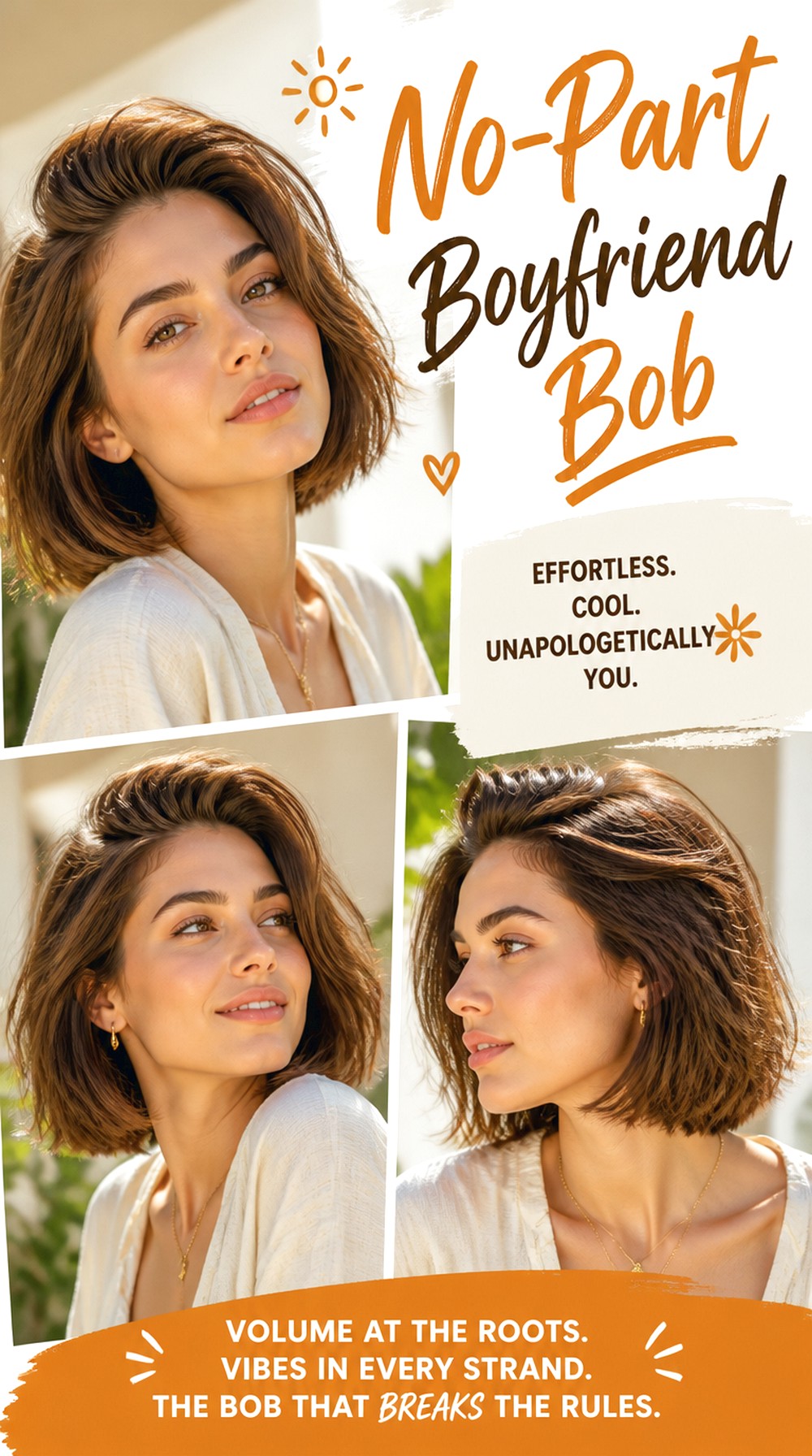
A no-part boyfriend bob is brushed loosely away from the forehead so there is no obvious dividing line through the top. The finish can look relaxed and slightly airy while the lower edge remains compact and structured. It suits straight and wavy hair particularly well and can help fine hair appear fuller around the crown when the roots are lifted rather than separated into a fixed part. Medium and thick hair may need some internal weight removal to prevent excess bulk. A volumizing spray, blow-dry brush, and light-hold hairspray are useful for directing the roots backward. Styling takes moderate effort. Ask your stylist to avoid cutting the front around one permanent parting.
Pro tip: Blow-dry the roots forward first and then redirect them backward; this usually creates more lift than drying the hair straight away from the face.
Tucked-Behind-Ears Boyfriend Bob
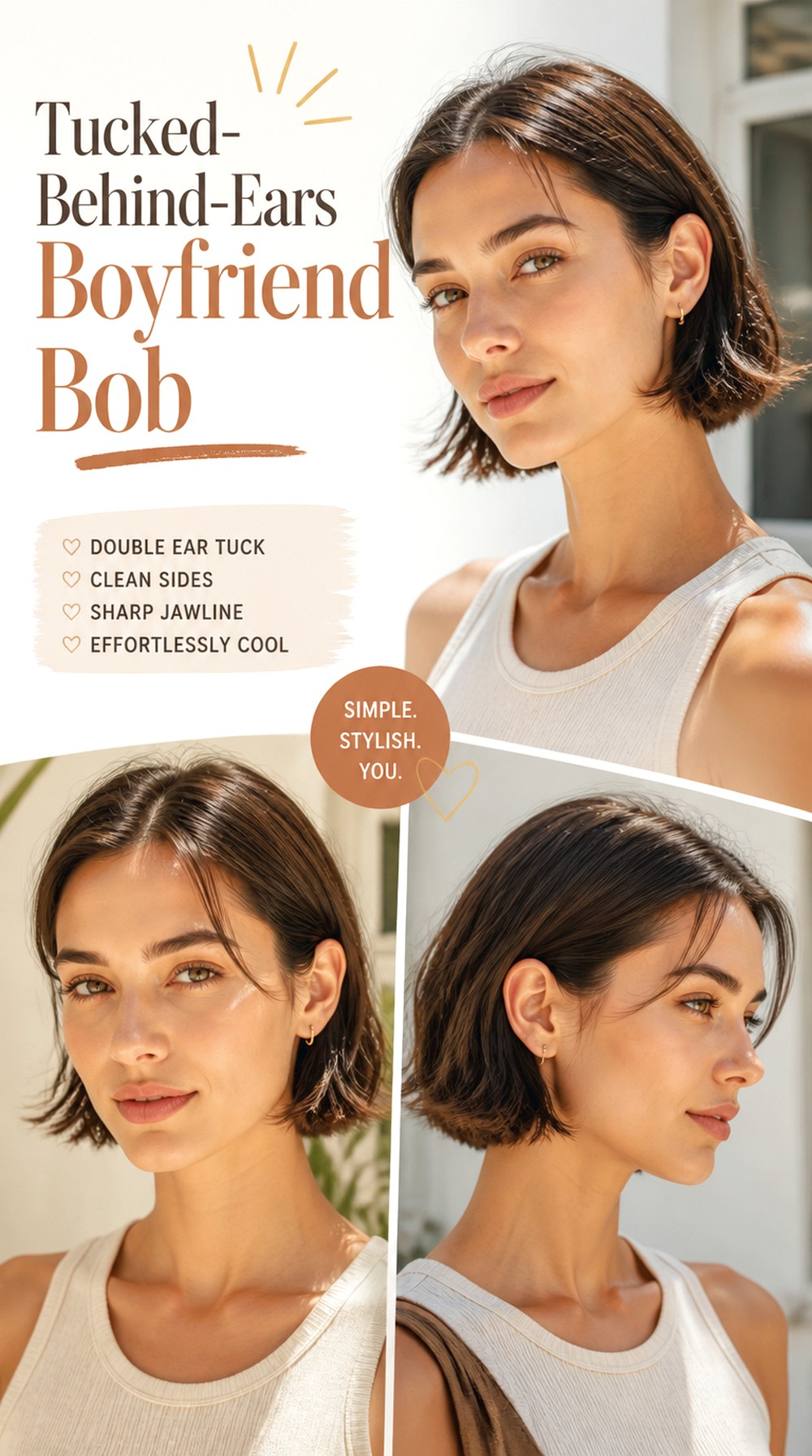
Tucking both sides behind the ears exposes more of the cheekbones, jaw, and neckline while making the boyfriend bob appear cleaner and more compact. The front sections need enough length to sit comfortably behind the ears without constantly slipping forward. Straight and gently wavy textures work particularly well, although fine-to-medium hair is often easiest to keep tucked. Thick hair may require discreet internal thinning near the sides. Smoothing serum, a flat brush, and light-hold styling cream can control flyaways without making the hair greasy. Styling is quick once the cut is shaped correctly. Tell your stylist that you regularly wear the bob tucked so the side lengths and weight can be checked in that position.
Pro tip: Avoid heavy face-framing layers directly around the ears if you want a secure tuck; shorter pieces tend to spring forward throughout the day.
One-Side-Tucked Boyfriend Bob

The one-side-tucked boyfriend bob creates intentional asymmetry by leaving one side loose while placing the other behind the ear. It is a simple way to change the silhouette without changing the haircut itself. The loose side can remain blunt, softly textured, or slightly curved toward the jaw, giving the face a stronger frame on one side. Straight and wavy hair usually hold the contrast best, while fine-to-medium density keeps the tucked section manageable. Use texturizing spray, smoothing cream, and a wide-tooth comb for controlled separation. Styling is very quick. At the salon, explain which side you normally tuck so the front section can retain enough length and density to sit neatly behind the ear.
Pro tip: Keep the untucked side slightly fuller through the ends; that weight helps balance the exposed side of the face.
Curtain-Bang Boyfriend Bob
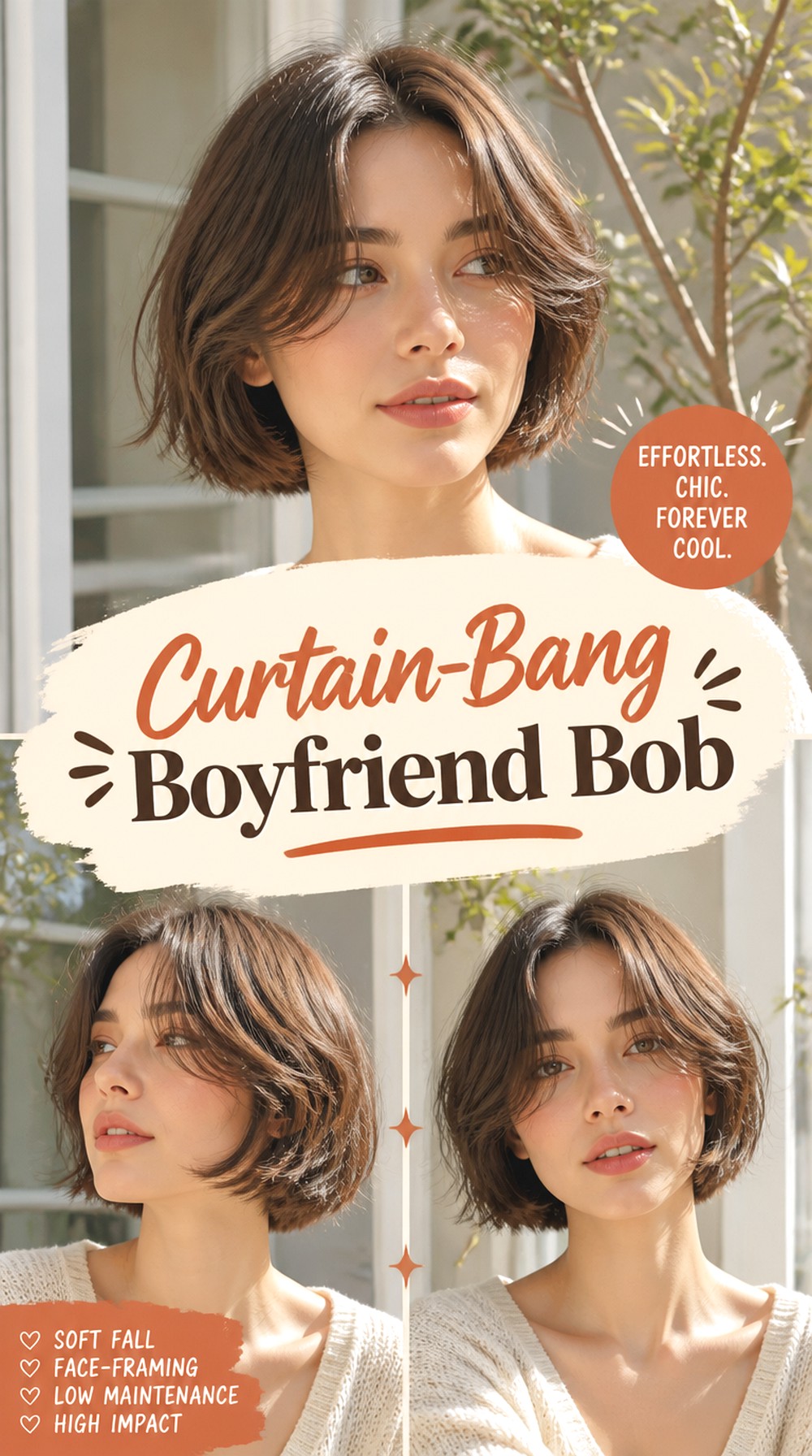
Curtain bangs soften the stronger perimeter of a boyfriend bob by opening through the center and blending gradually into the sides. The shortest part of the fringe usually sits around the brows or upper cheekbones, while the outer sections lengthen toward the cheek or jaw. Straight and wavy hair work especially well, and medium-density hair tends to give the bangs enough body without making them overly thick. A round brush, heat protectant, and light-hold hairspray help create the outward sweep. Styling is moderate because curtain bangs usually need some morning reshaping. At the salon, ask for the fringe to blend smoothly into the bob rather than ending as a separate, disconnected section.
Pro tip: Let the outer pieces reach at least the upper cheekbone if you want the bangs to grow out smoothly into face-framing layers.
Bottleneck-Bang Boyfriend Bob
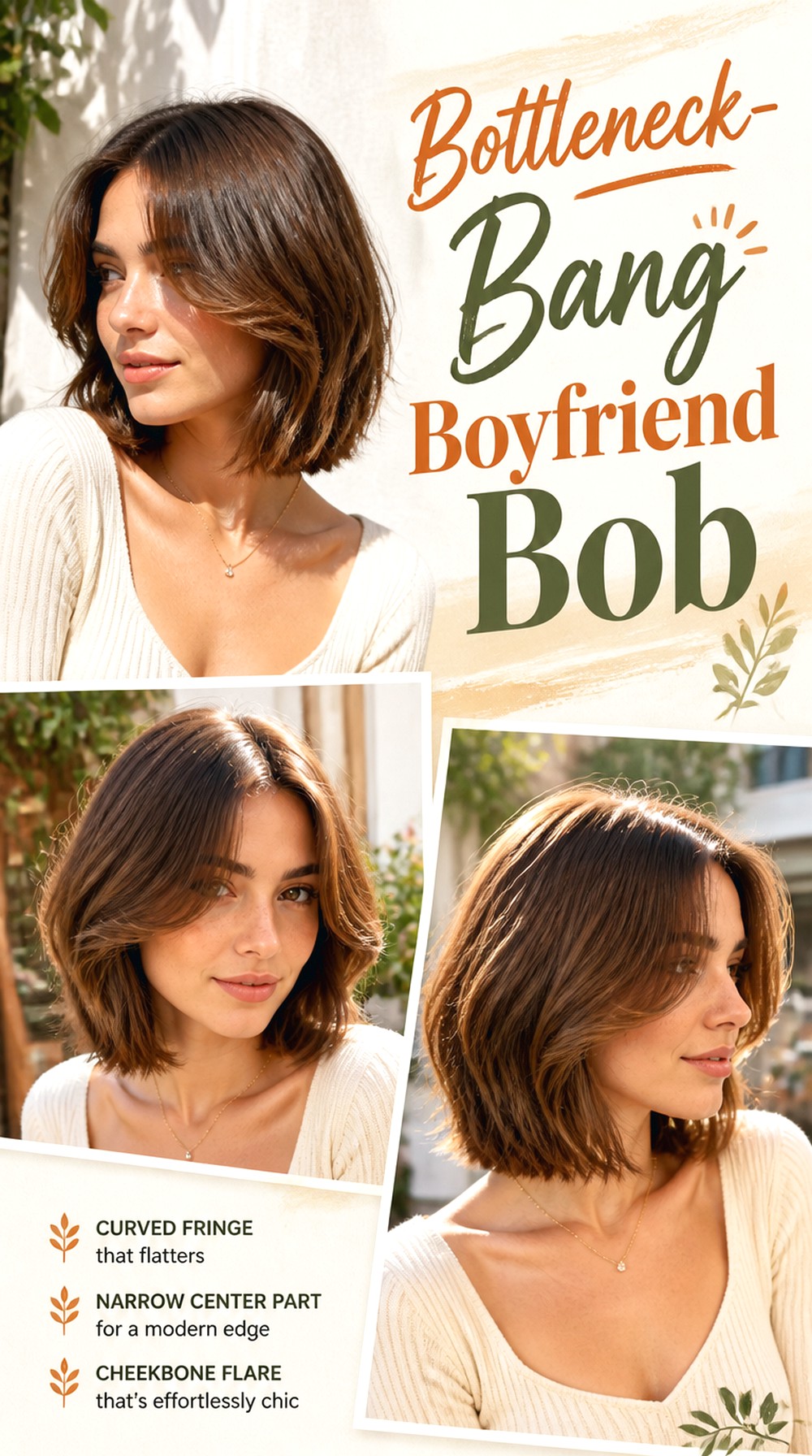
Bottleneck bangs begin narrower and shorter near the center of the forehead, then gradually widen and lengthen toward the cheekbones. Paired with a boyfriend bob, they add softness around the face without hiding the strong jaw-length outline. They work particularly well on straight and wavy medium-density hair, although fine hair can wear a lighter version. A small round brush, lightweight mousse, and heat protectant help shape the center while keeping the longer sides curved away from the face. Styling takes moderate effort because the fringe needs some direction after sleeping or washing. Tell your stylist how short you want the central section before cutting, as that detail strongly affects the final look.
Pro tip: Keep the middle slightly longer if you have a strong cowlick; very short central pieces can be harder to control each morning.
Wispy-Bang Boyfriend Bob

Wispy bangs create a lighter frame across the forehead, making them a useful contrast to the fuller perimeter of a boyfriend bob. They are usually cut with visible spacing and soft ends rather than forming one dense horizontal line. Fine-to-medium straight or softly wavy hair tends to suit this fringe best because the lighter density remains noticeable without becoming too heavy. A small round brush, dry texturizing spray, and light-hold hairspray can keep the pieces separated and airy. Daily styling is generally quick, although oily roots may require refreshing between washes. Ask your stylist for a soft fringe with intentional gaps while preserving enough density at the sides to blend into the bob.
Pro tip: Do not over-thin the fringe at the roots; keeping some density near the top allows the ends to look wispy rather than sparse.
Blunt-Bang Boyfriend Bob

A blunt-bang boyfriend bob combines two strong lines: a compact bob perimeter and a fuller fringe across the forehead. The result looks more graphic than soft, especially when the hair is straight and the ends are kept dense. Medium and thick hair usually provide enough density for a substantial fringe without removing too much hair from the rest of the bob. Fine hair can still wear it with a narrower bang section. A small flat iron, heat protectant, and smoothing serum help maintain the clean finish. Styling is moderate, and the fringe normally needs more frequent trims than the bob itself. Ask your stylist to determine the bang width and depth before cutting.
Pro tip: Keep the outer corners of the bangs slightly longer if you want the fringe to blend more naturally into the sides instead of ending abruptly.
Conclusion
Boyfriend bob hairstyles can change noticeably through parting, tucking, or fringe placement without altering the basic jaw-to-neck length. A center part creates stronger balance, side parts introduce movement, and tucked finishes expose more of the face. Bangs can also shift the character of the cut, from light and wispy to structured and blunt.
The best version depends on your face shape, natural hair texture, density, growth patterns, preferred length, and daily routine. You can adjust the parting, fringe thickness, layers, volume, texture, perimeter, and finish to make the haircut easier to maintain. Pay particular attention to cowlicks and your natural part before committing to bangs, because these details influence how much styling the front section will need.
Choose one or two favorite ideas and save clear photo references before your appointment. Discuss your face shape, natural hair texture, density, preferred length, maintenance level, and normal styling routine with your stylist. Point out the exact part placement, bang length, fringe density, face-framing pieces, volume, and finish you like in each photo so the haircut can be adapted rather than copied without considering your hair.
FAQs
Which part works best with a boyfriend bob?
Center parts create a balanced, structured finish, while side parts can add volume and softer asymmetry. The easiest choice is usually one that works with your natural growth pattern.
How often do boyfriend bob bangs need trimming?
Blunt or shorter bangs may need refreshing every three to five weeks. Curtain, bottleneck, and wispy bangs can often go longer because their softer shapes are easier to grow out.
Can fine hair wear a boyfriend bob with bangs?
Yes. Wispy bangs, lighter curtain bangs, and carefully sized blunt bangs can work well on fine hair. Avoid taking an overly deep bang section, since that can remove too much density from the rest of the bob.
Are curtain or bottleneck bangs easier to grow out?
Both are relatively easy to transition into face-framing layers because their sides are already longer. Curtain bangs are often especially forgiving as they grow because the center can gradually be redirected into a side or middle part.


