14 90s Banana Clip Blowout Hairstyle Ideas

A 90s banana clip blowout combines a vertically lifted ponytail shape with the rounded roots, airy layers, and curved ends associated with a full blowout. Instead of gathering hair into one tight elastic point, the long curved clip closes around a section running up the back of the head. That placement lets the lengths fan outward, so medium and long layers can look fuller while the crown stays lifted. Fringe may remain loose, and center, side, or brushed-back front sections can all work.
Straight and wavy hair can show the feathered blowout shape clearly, while curly hair can keep more of its natural pattern and use the clip mainly for vertical lift. Fine strands may need a lighter clip and moderate section size, whereas dense hair often benefits from a larger clip that closes comfortably without forcing excess bulk between the teeth. Face-framing layers can stay outside the clip when they naturally fall forward.
Full wash-day styling usually takes longer because drying, root lift, rounded ends, and clip placement all need attention. A quick refresh can focus on flattened front pieces and the clip anchor. Secure grip should come from suitable clip size and placement rather than uncomfortable squeezing.
Quick List
- Classic 90s Banana Clip Blowout Hairstyle
- High-Crown Banana Clip Blowout Hairstyle
- Center-Swept Banana Clip Blowout Hairstyle
- Side-Swept Banana Clip Blowout Hairstyle
- Feathered-End Banana Clip Blowout Hairstyle
- Layered Volume Banana Clip Blowout Hairstyle
- Curtain Fringe Banana Clip Blowout Hairstyle
- Soft Wave Banana Clip Blowout Hairstyle
- Curly Blend Banana Clip Blowout Hairstyle
- Fine Hair Banana Clip Blowout Hairstyle
- Dense Hair Banana Clip Blowout Hairstyle
- Shorter Length Banana Clip Blowout Hairstyle
- Half-Up Banana Clip Blowout Hairstyle
- Extra-Long Banana Clip Blowout Hairstyle
Classic 90s Banana Clip Blowout Hairstyle

The classic shape uses a long banana clip vertically through the back so the hair fans outward rather than falling from one small ponytail base. Keep the crown softly lifted, brush the sides back above the ears, and let face-framing layers stay loose when they naturally fall toward the cheeks or jaw. Medium and long hair show the shape best because the rounded blowout has enough length to curve through the mids and finish with soft, bouncy ends. The front can stay brushed back or carry a subtle off-center direction.
Use heat protectant before any hot styling, a round brush to build root lift and turn the ends, and a banana clip sized to close comfortably around the gathered hair. A full wash-day version takes longer because the blowout must be completed before clipping, while a quick refresh may only require reshaping a few front sections and reopening the clip. If the accessory slides downward, gather a slightly narrower section rather than squeezing it harder. At a salon styling appointment, explain that you want vertical lift through the back with enough layered movement to fan around the clip, not a tight conventional ponytail.
Pro tip:
Close the clip from the nape upward while keeping the crown slightly lifted. This helps the hair spread evenly instead of bunching at the bottom.
Make It Work for You:
For lower-density hair, use a lighter, narrower banana clip and gather less hair from the sides. The vertical shape remains visible while the lengths keep more fullness.
Watch Out For:
Do not force a clip shut around too much hair. If the teeth strain or the hinge pulls, switch sizes or reduce the gathered section.
High-Crown Banana Clip Blowout Hairstyle

A higher banana clip position shifts the strongest volume toward the upper back of the head. Start the clip near the nape but angle its top closer to the crown, allowing the lengths to spill outward from a higher point. Keep the root area rounded instead of tightly slicked, and direct shorter front layers away from the face so they connect with the lifted back. The ends should remain buoyant and softly curved rather than hanging straight beneath the clip.
Use heat protectant before styling, a round brush to create upward root direction, and a banana clip with enough length to support the raised section. Medium and long hair work well, particularly when there are layers that can fan above and around the clip. A quick refresh generally means restoring the crown lift and reseating the accessory; a full wash-day style takes longer because the roots need to be dried upward before the clip is added. Dense hair may need a larger clip so the elevated position does not feel tight. At a styling appointment, specify where you want the highest visible volume to sit and where the shortest upper layer should fall. Those details make the shape high and airy instead of simply tight.
Pro tip:
Direct the upper crown backward and slightly upward before clipping. Building that root direction first keeps the high placement from collapsing once the lengths settle.
Make It Work for You:
If your hair is very long or heavy, position the clip slightly below the highest crown point. You keep lift while reducing backward pull from the tail.
Watch Out For:
Avoid increasing height by pulling the sides tighter. If the crown looks flat, reshape the roots rather than adding more tension around the temples.
Center-Swept Banana Clip Blowout Hairstyle
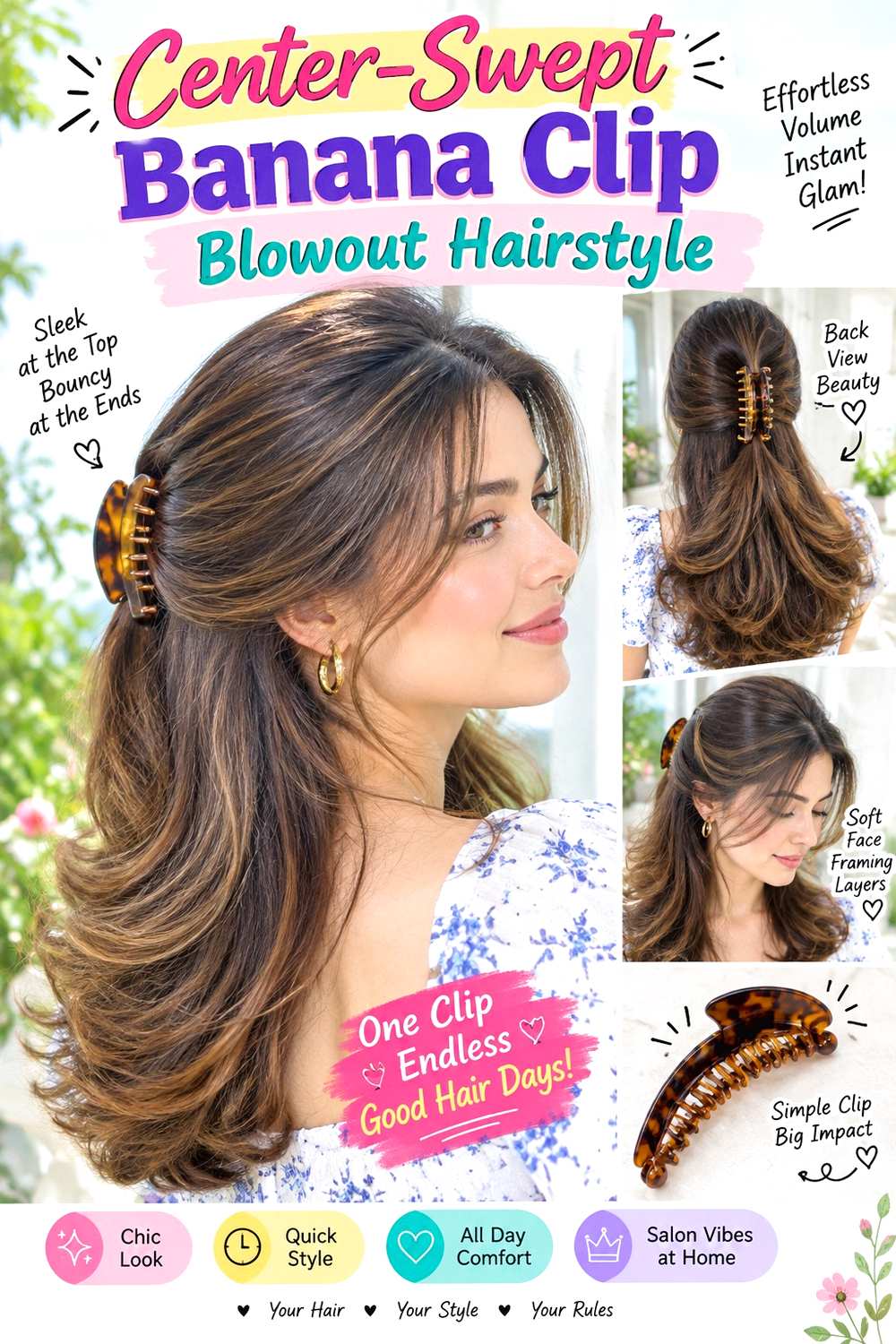
A center-swept front gives the banana clip blowout a balanced frame without creating a sharp exposed part. Guide the front sections backward from the middle, keeping a soft split in their direction, then secure the back vertically with the clip. The crown should remain rounded, while cheekbone- or jaw-length layers curve away from the face before blending into the fuller lengths. Rounded ends keep the finish airy and help the vertical clip shape look intentionally voluminous.
Use heat protectant before hot styling, a round brush to form the center-directed front and curved ends, and a banana clip to create the upright back anchor. Medium and long hair show the symmetry clearly, though lower-density hair should avoid gathering too much from the sides. A quick refresh can focus on the two front sections and clip placement; a complete wash-day blowout takes longer because both sides need balanced root direction. If one side appears flatter, reshape that section instead of tightening the clip. At a salon styling appointment, specify where you want the front pieces to open, where face-framing layers should start, and how much crown height should remain above the clip. Those landmarks help the center sweep look intentional rather than rigid.
Pro tip:
Shape the two front sections separately before gathering the back. Equal root direction is easier to create before the banana clip limits movement through the crown.
Make It Work for You:
For fine hair, keep the center sweep soft and leave more side volume outside the clip. This preserves fullness while maintaining the balanced front shape.
Watch Out For:
Do not press the center sweep completely flat against the scalp. A little root curve keeps the blowout dimensional and prevents an abrupt transition to the fuller back.
Side-Swept Banana Clip Blowout Hairstyle
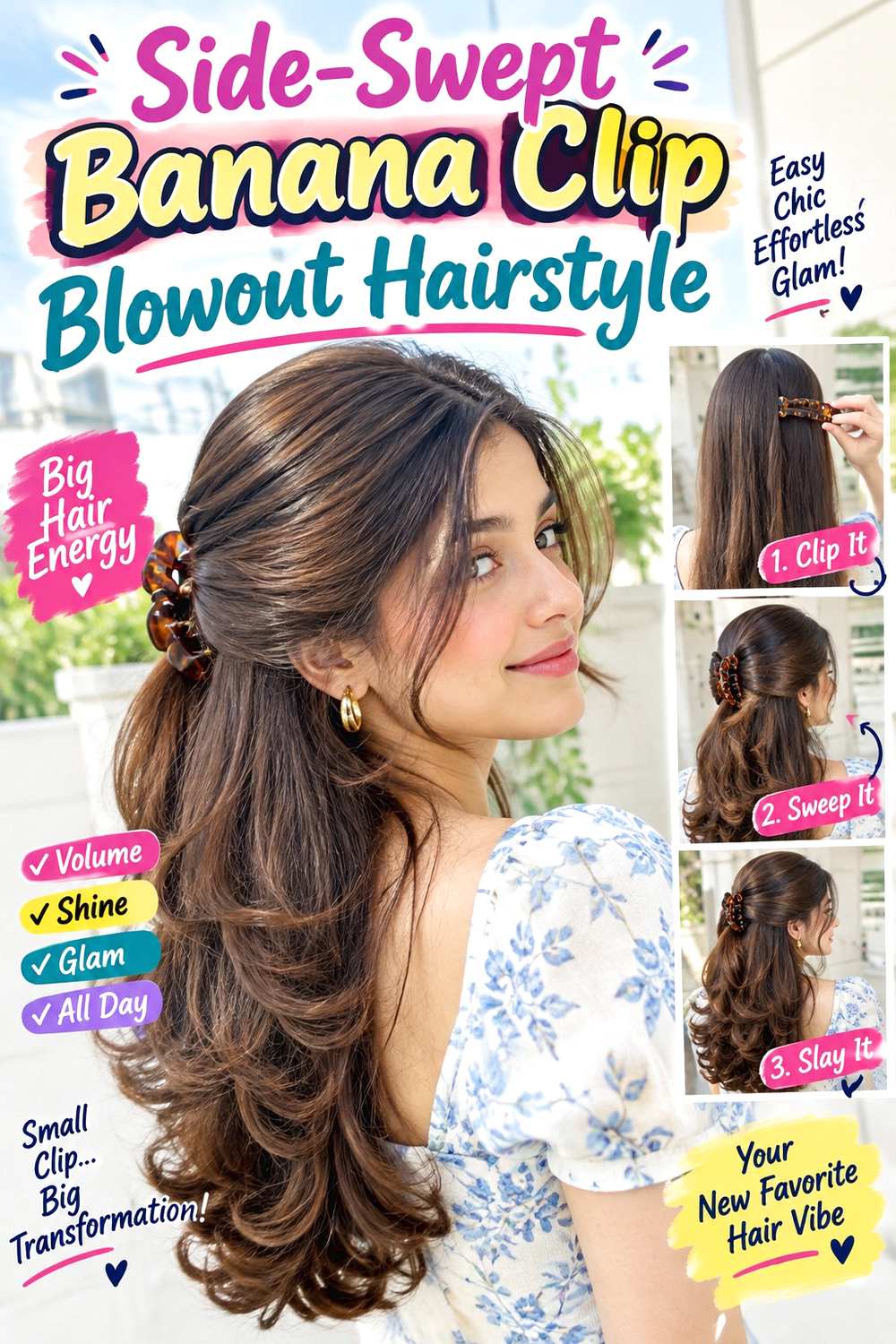
A side-swept front gives the blowout more movement before the hair reaches the vertical banana clip. Start with a soft side direction rather than a hard part, lift the fuller front section away from the face, and guide it backward into the clip. Keep the opposite temple smoother so the asymmetry remains clear. Layers around the cheeks and jaw can curve outward, while the longer back sections fan around the clip with softly rounded ends.
Use heat protectant before styling, a round brush to build the front sweep, and a banana clip to secure the back without flattening the blowout. Medium and long hair provide enough movement for the directional front to blend smoothly into the lifted rear section. A quick refresh often means reshaping only the fuller front section and reseating the clip; a complete wash-day style takes longer because the blowout direction must be recreated from the roots. If the sweep loses height, work on that section instead of pulling the opposite side tighter. At a styling appointment, identify which side should carry the volume and where the front layer should curve away from the face. The clip should sit centrally enough that the back remains balanced even with an asymmetric front.
Pro tip:
Let the fuller front section cool in its swept-back direction before clipping. Setting the curve first helps the front retain height once the back is gathered.
Make It Work for You:
If you have short front layers, keep the sweep closer to the temple and leave the shortest pieces loose. The side direction stays visible without overstretching them.
Watch Out For:
Do not exaggerate the side sweep by flattening the opposite temple painfully tight. Controlled contrast works better than relying on unequal scalp tension.
Feathered-End Banana Clip Blowout Hairstyle
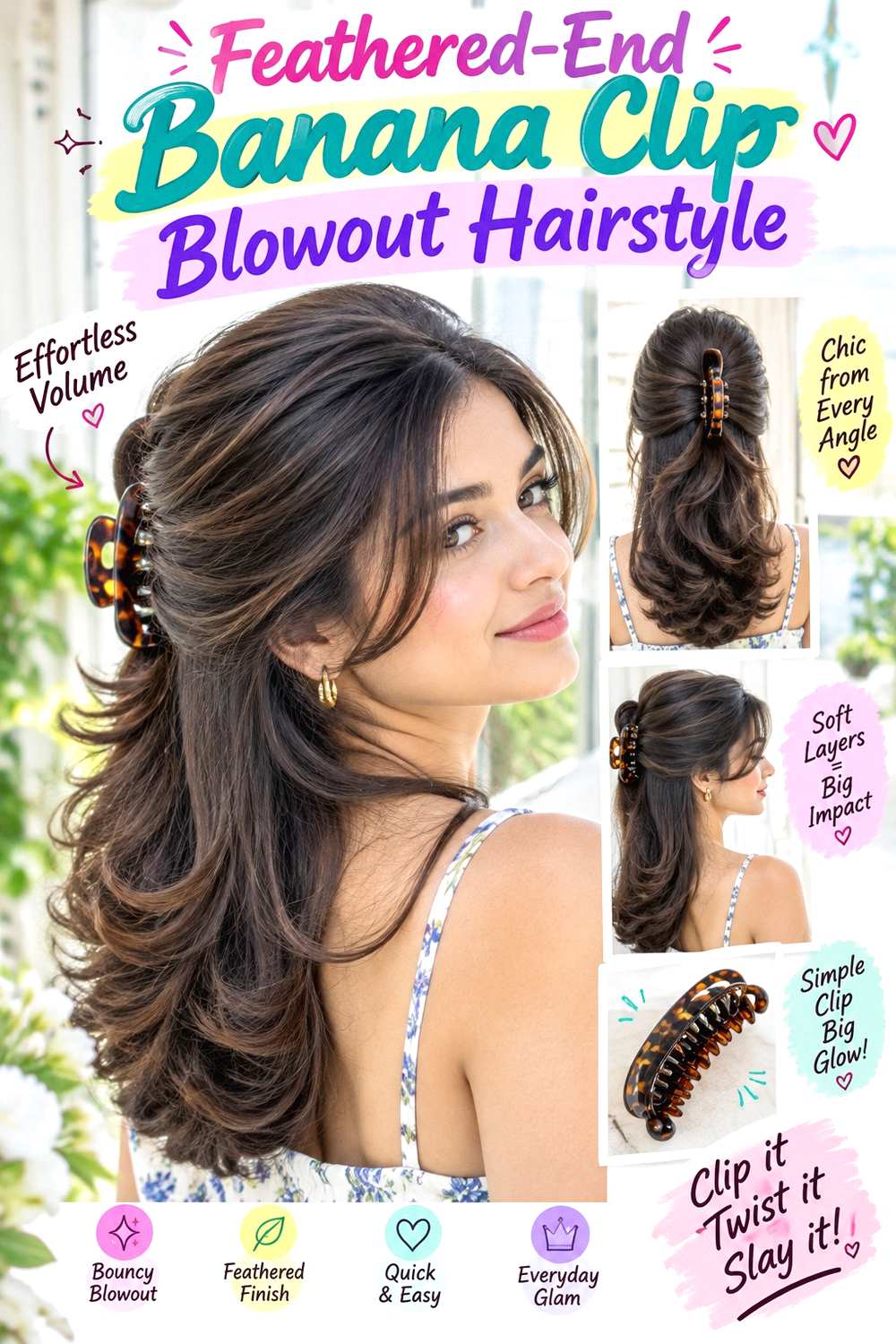
Feathered ends give the banana clip blowout one of its clearest 90s details. Keep the roots rounded and the back vertically lifted, then direct the lower layers outward so the ends flick away in soft, separated curves. Face-framing pieces can feather from the cheekbones or jaw, while longer sections fan around the clip instead of forming one heavy tail. The strongest movement should appear through the final several inches without making the perimeter look thin.
Use heat protectant before styling, a round brush to roll the ends outward, and a banana clip to hold the back in a lifted vertical line. Medium and long layered hair makes the feathering easier to see. Fine or lower-density hair should keep the end separation controlled so the perimeter remains substantial, while dense hair can support more pronounced flicks. A quick refresh usually focuses on the tips because they may lose direction first; a full wash-day blowout takes longer because each layer needs shaping. At a salon appointment, specify where you want the shortest feathered layer to begin and how much weight should remain through the longest ends. That balance matters once the clip lifts and spreads the layers.
Pro tip:
Roll the final few inches outward in smaller sections, then let them cool before separating. This keeps the feathering distinct without needing excessive finishing product.
Make It Work for You:
If your ends are fine, feather mainly the upper layers and keep the longest perimeter less separated. You preserve the 90s movement without weakening bottom fullness.
Watch Out For:
Avoid flipping every layer at exactly the same height. Staggered feathering creates movement, while one horizontal line can make the ends look stiff.
Layered Volume Banana Clip Blowout Hairstyle

Long layers make the banana clip especially effective because each length can fan outward from a different point. Build rounded lift at the roots, shape shorter layers away from the face, and keep the longest pieces full through the lower back. Place the banana clip vertically so the layers stack softly around it rather than collapsing into one narrow tail. The ends can curve under or outward, but the main goal is visible movement at several levels.
Use heat protectant before styling, a large round brush to shape the layers, and a banana clip long enough to support the gathered section without squeezing. Medium to extra-long layered hair works best. Lower-density hair should avoid removing too much perimeter weight, while dense hair can benefit from thoughtful internal bulk placement so the clipped shape does not become excessively wide. A quick refresh can target flattened crown pieces and the shortest layers; full wash-day styling takes longer because every layer needs directional drying. At a salon appointment, point out the shortest layer, the preferred face-frame, and how much weight you want to retain at the bottom. Explain that the layers need to work both loose and lifted inside a vertical clip.
Pro tip:
Shape the shortest layers first, then move downward. Their direction sets the outline, making it easier to keep the longer sections from overwhelming the upper volume.
Make It Work for You:
For dense hair, keep the upper layers controlled and let the lower lengths provide most of the width. This prevents excessive volume around the temples and crown.
Watch Out For:
Do not assume more layers automatically create more attractive volume. Too much removal at the bottom can leave the clipped lengths looking thin and uneven.
Curtain Fringe Banana Clip Blowout Hairstyle
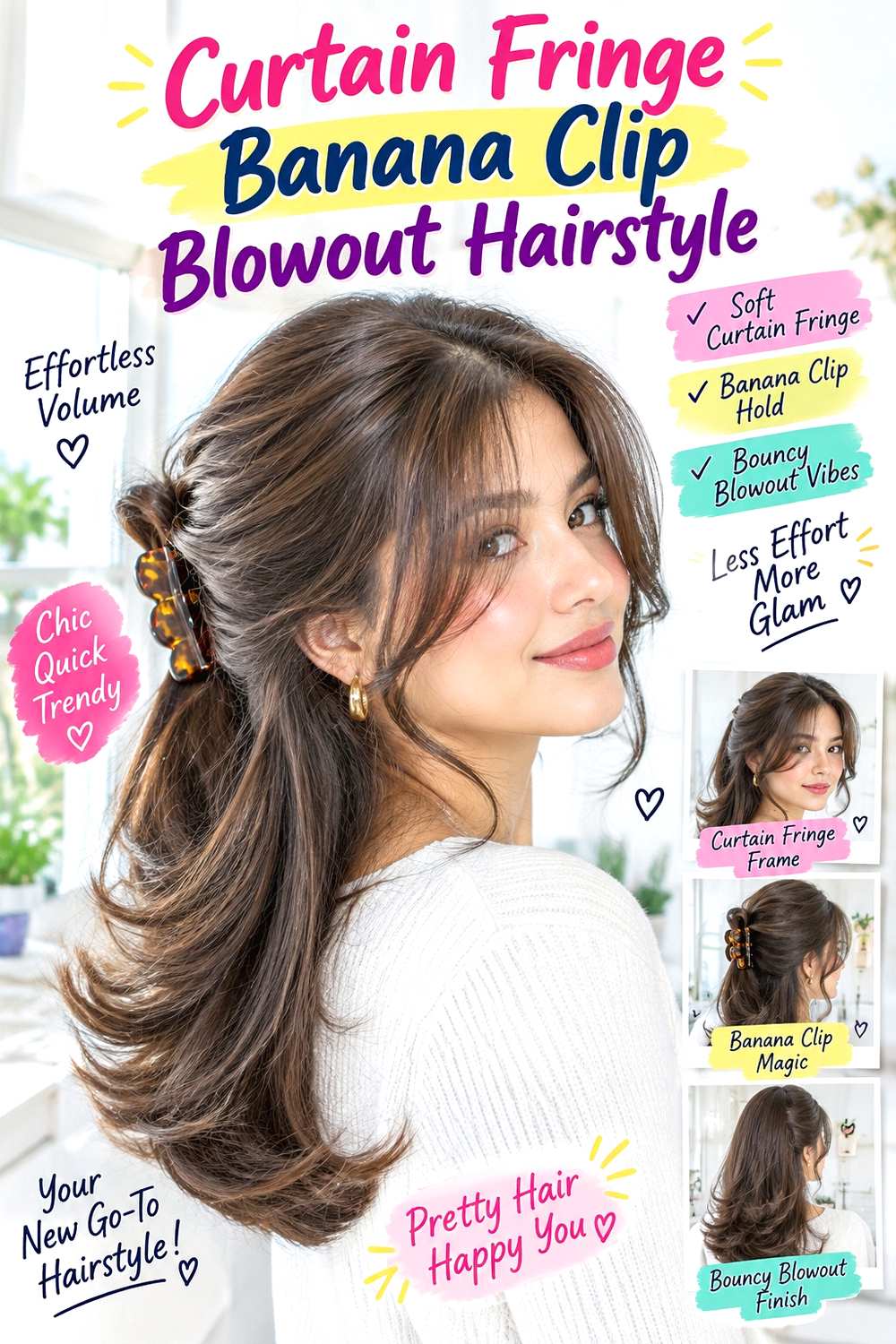
Curtain fringe adds a soft front opening while the banana clip builds lift through the back. Shape the fringe so its shorter center opens away from the forehead and the longer outer sections flow toward the cheekbones or temples. Behind it, keep the crown rounded and secure the hair vertically so the blowout spreads outward. The fringe should remain independent from the clip, while longer layers continue the same backward, feathered direction through the sides.
Use heat protectant before styling, a round brush to curve the fringe and longer layers, and a banana clip to create the lifted back shape. Medium and long hair pair easily with the fringe because there is enough length for the vertical fan effect. A quick refresh usually focuses on the fringe since it can lose direction faster than the clipped back; full wash-day styling takes longer because the front and lengths need different shaping. If the fringe grows into the eyes or stops opening cleanly, reshaping the fringe is separate from daily clip styling. At a salon appointment, discuss finished dry fringe length, outer-corner blending, and where the first side layer should meet the blowout.
Pro tip:
Finish the curtain fringe before inserting the banana clip. Once the front sits correctly, you can adjust the back without repeatedly disturbing the delicate fringe shape.
Make It Work for You:
For naturally wavy fringe, keep its existing bend and use the blowout mainly through the outer corners. The curtain shape stays softer and needs less heat.
Watch Out For:
Do not pull the fringe into the banana clip just to make the front cleaner. Its shorter pieces are designed to frame the face and may spring free.
Soft Wave Banana Clip Blowout Hairstyle

Soft waves make the banana clip blowout fuller through the middle while keeping the ends fluid. Build a rounded blowout first, then let broad bends develop through the mid-lengths before gathering the back vertically. The clip should lift the waves rather than crush them, so keep the clasp on a smoother inner section and allow the curved outer lengths to fan over it. A brushed-back or gently side-directed front both suit the relaxed movement.
Use heat protectant before hot styling, a curling iron to create broad bends, and a banana clip for the upright back anchor. Medium and long hair show the wave pattern most clearly. A quick refresh may involve reshaping only a few flattened outer bends and reseating the clip; a complete wash-day style takes longer because the hair must be dried, waved, cooled, and then gathered. Naturally wavy hair can preserve its existing pattern and reduce heat styling. At a salon styling appointment, specify wave size, clip height, and where the first visible bend should begin. Keeping the clip on the inner support section protects the surface movement and prevents the waves from looking pinched.
Pro tip:
Let heat-shaped waves cool before opening the banana clip around them. Warm bends can flatten under pressure and lose the airy shape you just created.
Make It Work for You:
If your hair is naturally wavy, define the existing pattern and focus your effort on root lift. The banana clip can provide the 90s shape without extra curling.
Watch Out For:
Avoid closing the clip directly over a prominent wave ridge. Position it on a flatter inner section so the outer texture remains smooth and visible.
Curly Blend Banana Clip Blowout Hairstyle

A curly blend keeps natural curl movement while borrowing the lifted crown and feathered front of a blowout. Smooth or stretch only the front and upper crown as much as desired, then gather the back with the banana clip while leaving the curly lengths free to expand. The clip creates vertical lift through the center, and the curls provide volume around it. Shorter curls around the hairline can remain natural instead of being forced backward.
Use heat protectant on any sections that receive heat, lightweight curl gel to define the untouched curls, and a banana clip sized to accommodate the gathered density. A quick refresh may involve redefining a few surface curls and resetting the clip; a full wash-day version takes longer because the curls should reach their usual volume before final placement is judged. Shrinkage can change both clip position and visible length, so assess the balance when dry. At a styling appointment, explain which front sections you want blown out and which curls should remain natural. Also specify how high the clip should sit once the curl volume expands.
Pro tip:
Choose the final clip height after the curls reach their normal dry volume. Placement that looks balanced on stretched hair can shift once the texture contracts.
Make It Work for You:
For tighter curls, blow out only the front frame and keep most of the crown textured. The banana clip still gives vertical lift while preserving more natural pattern.
Watch Out For:
Do not brush through all the curls simply because the front needs a blowout. Treat the smoothed sections and natural texture as separate styling zones.
Fine Hair Banana Clip Blowout Hairstyle
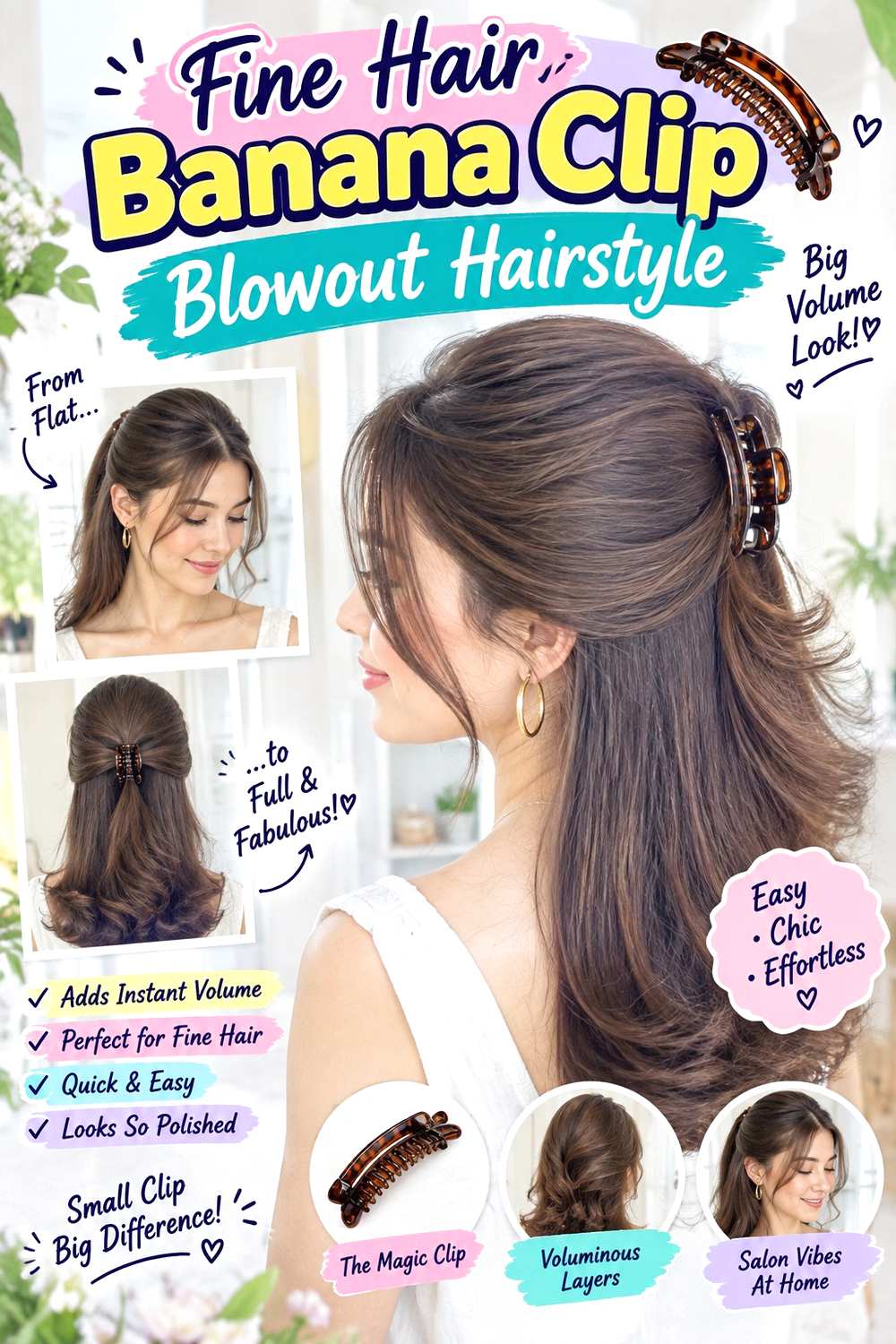
Fine strands can work well with a banana clip when the accessory is lightweight and the blowout creates shape without over-separating the ends. Keep the crown softly lifted, direct the sides backward with minimal tension, and gather only enough hair for the clip to close securely. A medium-height vertical placement lets the lengths fan outward while preserving body. Long face-framing pieces can curve away from the cheeks, and the ends should remain rounded rather than heavily feathered.
Use heat protectant before styling, a medium round brush to create controlled lift, and a lightweight banana clip that does not drag on the base. Fine hair is not automatically low density, so accessory size should reflect the actual amount of hair gathered. A quick refresh usually means restoring crown lift and resetting the clip; a full wash-day blowout takes longer because root direction and end shape need rebuilding. Avoid heavy layers of product that can collapse fine roots. At a salon appointment, ask to preserve enough perimeter weight and show where you want face-framing movement to begin. The goal is visual fullness, not removing extra hair solely to make the clip close.
Pro tip:
Gather a slightly narrower back section if the clip feels loose. A better-fitting section holds more reliably than repeatedly squeezing a large clip around fine strands.
Make It Work for You:
If your fine hair is also lower density, use a smaller clip and keep the perimeter less feathered. The blowout can stay airy without sacrificing visible fullness.
Watch Out For:
Avoid oversized heavy clips simply for dramatic scale. Extra accessory weight can pull the vertical shape downward and flatten the crown you worked to build.
Dense Hair Banana Clip Blowout Hairstyle
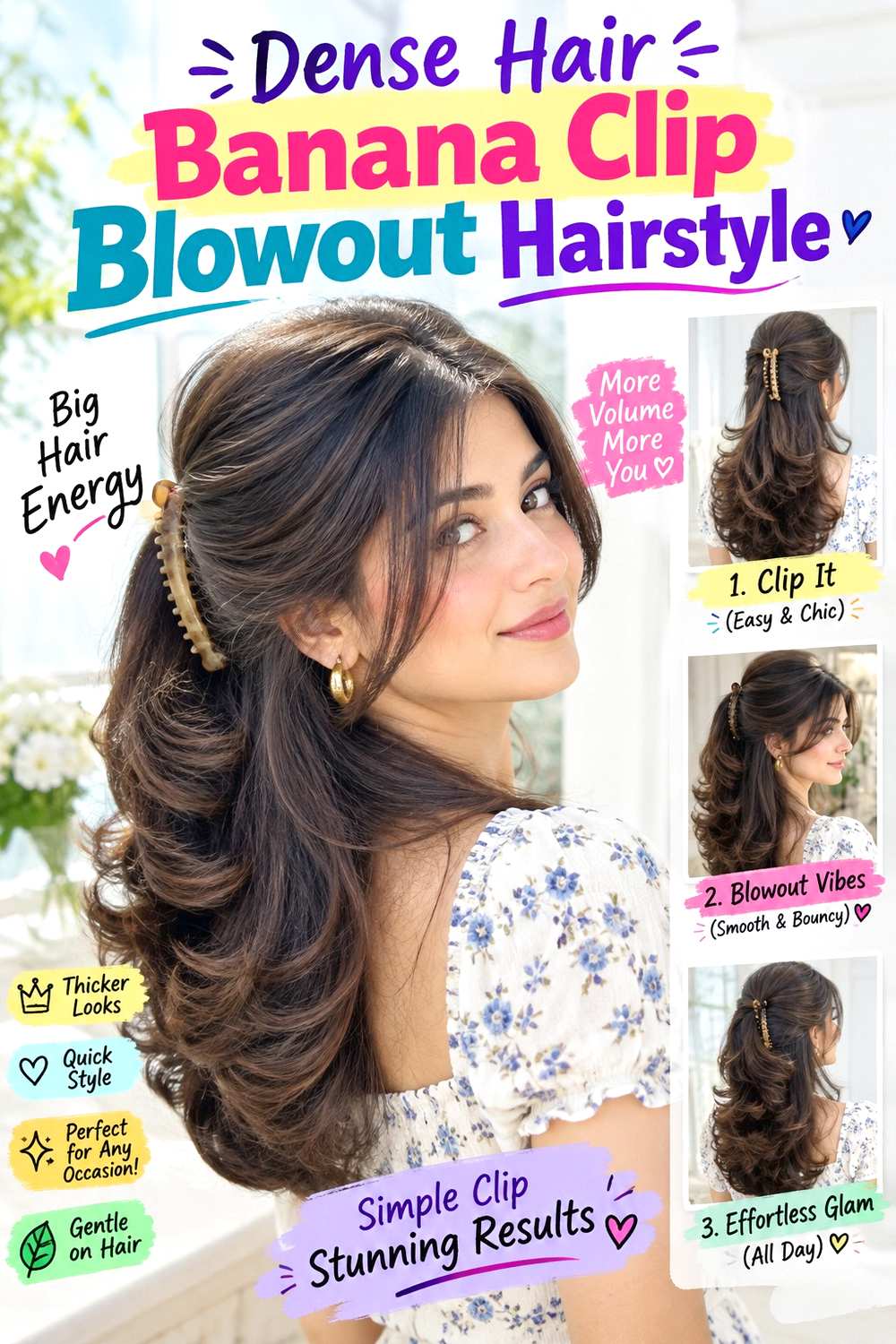
Dense hair can create a dramatic banana clip blowout, but the accessory needs enough capacity to close without pinching. Keep the crown rounded, direct the side sections backward in manageable layers, and use a long sturdy clip that encloses the hair comfortably. The blowout can remain broad through the mids while the ends curve softly outward or under. Longer layers help distribute the fullness so the style does not form one heavy mass around the clip.
Use heat protectant before styling, a large round brush to control sections during the blowout, and a sturdy banana clip suited to the gathered density. A quick refresh usually involves smoothing the outer layers and reseating the clip; a full wash-day style takes longer because drying and shaping dense hair require deliberate sectioning. If the clip springs open or the hinge feels strained, it is too small for that amount of hair. At a salon appointment, discuss where internal weight naturally collects and whether carefully placed layers can improve movement while preserving the perimeter. The goal is not aggressive thinning, but a blowout shape that can fan around the accessory without excessive bulk at one point.
Pro tip:
Close the banana clip around the center-back section first, then check whether the sides still feel comfortable. Adjust the amount gathered before forcing the clasp.
Make It Work for You:
For very dense hair, leave a little more side hair outside the clip and let it blend over the back. This reduces pressure while preserving the full silhouette.
Watch Out For:
Do not use a small clip by squeezing the hair tightly into it. A strained hinge or compressed base is a sign to change accessory size.
Shorter Length Banana Clip Blowout Hairstyle

Shoulder-length hair can create a compact banana clip blowout when the clip is scaled to the available length. Build lift through the crown and curve the ends so they fan outward around the upper back rather than trying to create a long ponytail shape. Gather the sections that naturally reach the center and leave short nape or temple layers free when needed. A smaller clip placed vertically can give the same lifted impression without overwhelming the haircut.
Use heat protectant before styling, a small round brush to shape the shorter layers, and a compact banana clip that closes securely around the reachable back section. A quick refresh may take only a few minutes because there is less length to reshape; a full wash-day version takes longer if the bob or lob first needs drying and root lift. If shorter pieces slip out immediately, move the clip closer to their natural meeting point instead of pulling harder. At a salon appointment, show where you want the shortest layers to sit and explain that you use a banana clip for temporary lift. The haircut should work loose as well as clipped, rather than being altered solely for the accessory.
Pro tip:
Place the clip where the longest side and back sections naturally overlap. That meeting point gives shorter hair a more reliable vertical anchor with fewer escaped pieces.
Make It Work for You:
If your lob has short face-framing layers, leave them outside the clip and shape them with the blowout. The back can stay compact while the front remains soft.
Watch Out For:
Do not stretch short nape pieces upward just to fill the clip. A smaller gathered section looks cleaner and feels more comfortable than forced reach.
Half-Up Banana Clip Blowout Hairstyle

A half-up version uses the banana clip only through the upper back, leaving the lower lengths loose. Build a rounded blowout first, gather shallow sections from above the ears, and place a smaller banana clip vertically at the rear crown. The upper hair should fan upward and outward while the lower lengths continue beneath it, creating layered volume rather than one single tail. Face-framing sections can stay free, and the ends can be rounded or softly feathered.
Use heat protectant before styling, a round brush to create root lift and curved ends, and a compact banana clip to anchor the upper section. Medium and long hair work well because there is enough loose length below the clip to show the contrast. Fine or lower-density hair should gather less of the total volume so the lower section remains substantial. A quick refresh means lifting the crown and reseating the clip; full wash-day styling takes longer because both upper and lower layers need shaping. At a salon appointment, specify the rear-crown clip height and how much hair you want left loose. The anchor should sit securely without trapping the lower lengths underneath.
Pro tip:
Keep the clip teeth within the upper gathered section instead of catching loose hair beneath it. This lets the lower lengths move freely without tugging.
Make It Work for You:
For lower-density hair, gather only narrow sections above the ears. More hair stays loose below, helping the half-up blowout retain body and movement.
Watch Out For:
Do not use an oversized clip for a shallow half-up section. Excess space inside the accessory can make it slide and flatten the crown.
Extra-Long Banana Clip Blowout Hairstyle
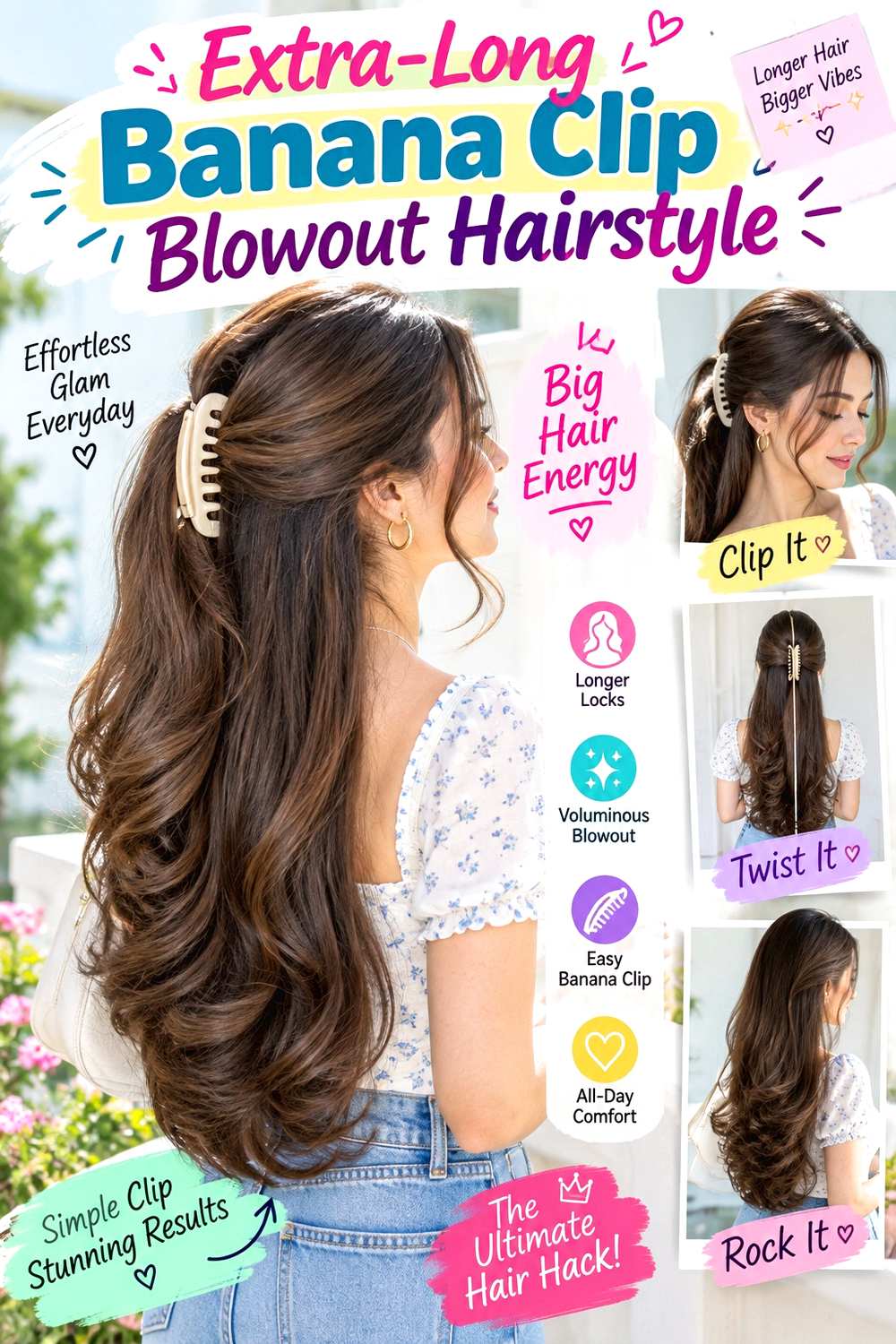
Extra-long hair makes the banana clip shape dramatic, but the weight of the lengths needs to be considered when choosing height and clip size. Keep the roots rounded and gather the hair vertically through the center back, placing the clip slightly below the highest crown point so the length can fall without dragging the front backward. Long layers can fan around the clip, while the final ends remain softly curved rather than heavily separated.
Use heat protectant before styling, a large round brush to build controlled movement through the long sections, and a sturdy banana clip with enough capacity for the gathered hair. A quick refresh may involve restoring crown lift and smoothing the outer lengths; a complete wash-day blowout takes longer because extra-long hair requires more sectioning from roots to ends. If the clip slides, adjust height or the amount gathered rather than tightening the sides. At a salon appointment, discuss maintaining enough perimeter weight while using long layers for movement. Specify the clip position you normally prefer so the stylist understands how the layers will fall when lifted vertically, not only when the hair is worn loose.
Pro tip:
Place the clip slightly lower if the length pulls the crown backward. A modest change in anchor height can improve comfort while preserving the vertical 90s shape.
Make It Work for You:
For very long dense hair, leave some underneath length loose instead of forcing everything into the clip. The visible layers can still create a full lifted silhouette.
Watch Out For:
Avoid extreme high placement when the tail feels heavy. If the crown or nape pulls during movement, lower the anchor and redistribute the gathered weight.
Conclusion
A 90s banana clip blowout can be high and airy, softly centered, side-swept, feathered, waved, curly, or adapted to shorter and extra-long hair. The clip’s vertical placement creates lift through the back, while layers and rounded ends determine how widely the hair fans around it. Fine or lower-density hair often benefits from lighter accessories and preserved perimeter weight, whereas dense hair needs enough clip capacity and thoughtful bulk distribution. Curtain fringe and face-framing layers can remain loose, and natural curls do not need to be completely straightened. When choosing a version, consider clip size, crown volume, texture, length, end shape, and how much heat styling fits your routine. Comfortable grip and balanced volume matter more than forcing the biggest possible blowout.
Before Your Salon Visit
Choose one or two favorite references and point out the exact banana clip height, crown volume, face-framing layers, fringe, end shape, and blowout finish you like. Discuss your natural texture, density, face shape, preferred length, upkeep, and usual heat-styling routine so the look can be adapted realistically. Because banana clip hairstyles are temporary, focus on styling, accessory grip, and comfortable placement rather than requesting a haircut only for the clip. If you already want layers, show exactly where the shortest and longest pieces should fall.
FAQs
What Hair Length Works Best for a 90s Banana Clip Blowout?
Medium and long hair show the vertical fan shape most clearly, but shoulder-length hair can use a smaller clip and compact placement. The practical test is whether enough side and back hair reaches the clip comfortably. Short layers can remain loose instead of being stretched into the accessory.
How Do I Keep a Banana Clip From Sliding Down?
Choose a clip whose size matches the amount and density of hair being gathered, and avoid coating the anchor with excessive smoothing product. If the clip slides, try a smaller gathered section or adjust its vertical position. Forcing the clasp tighter is not a good substitute for appropriate fit.
Do I Need Heat to Create a Banana Clip Blowout?
Heat is common when you want a traditional rounded blowout with curved ends, and heat protectant should be used when hot tools are involved. Natural waves or curls can also provide volume without recreating the entire texture. The banana clip itself works independently of whether the hair was heat-styled.
Can Fine or Dense Hair Wear a Banana Clip Blowout?
Yes, but accessory size matters. Fine or lower-density hair often suits a lighter, narrower clip and controlled layering, while dense hair generally needs more clip capacity and broader weight distribution. The clasp should close comfortably in either case, without pinching, straining the hinge, or creating scalp tension.