18 Soft Shag Haircut Ideas

A soft shag is a layered haircut that keeps the movement and texture of a classic shag without the harsh, disconnected shape. The layers usually blend more smoothly, the ends stay lighter rather than heavily chopped, and face-framing pieces create lift around the cheekbones or jaw. It can be worn short, medium, or long, with straight, wavy, or curly texture.
These soft shag haircut ideas can work especially well on medium-density hair, but the cut can be adjusted for fine or thick hair by changing the amount of layering and weight removal. Round, oval, square, heart, and longer face shapes can all be balanced by moving the fringe, parting, and shortest face frame. Fine hair generally benefits from fewer layers, while dense hair may need internal debulking.
Daily styling can range from a quick air-dry with texture cream to a fuller blowout with a round brush. Most shapes benefit from a trim every eight to twelve weeks, with bangs refreshed sooner. Before choosing one, think about your natural texture, how much volume you want at the crown, and whether you prefer a polished finish or a softer, lived-in result.
Quick List
- Long Soft Shag with Curtain Bangs
- Medium Soft Shag with Wispy Fringe
- Shoulder-Length Soft Shag with Bottleneck Bangs
- Soft Shag Bob with Choppy Ends
- Soft Shag Lob with Side Part
- Wavy Soft Shag with Airy Layers
- Curly Soft Shag with Rounded Layers
- Straight Soft Shag with Feathered Ends
- Fine-Hair Soft Shag with Crown Volume
- Thick-Hair Soft Shag with Debulked Layers
- Soft Shag with Cheekbone Face-Framing
- Soft Shag with Grown-Out Bangs
- Collarbone Soft Shag with Center Part
- Short Soft Shag with Tapered Nape
- Soft Shag with Flipped Ends
- Soft Razor-Cut Shag with Piecey Texture
- Soft Shag with Hidden Internal Layers
- Soft Shag with Side-Swept Fringe
Long Soft Shag with Curtain Bangs

Long layers keep this shag soft and flowing, while curtain bangs split around the forehead and blend into cheekbone-length face-framing pieces. It suits straight to wavy hair with medium density, and it can flatter oval, heart, or longer faces when the fringe length is adjusted. Daily styling is moderate: a round brush and heat protectant help shape the bangs, while a lightweight mousse adds lift without making the lengths stiff. A trim every eight to twelve weeks keeps the layers moving. At the salon, ask for long, blended shag layers with no severe shelf. Styling usually takes about 10 to 15 minutes.
Pro tip: Keep the curtain fringe slightly longer at the outer corners so it connects smoothly with the face frame instead of sitting like a separate set of bangs.
Medium Soft Shag with Wispy Fringe

This medium-length shag sits around the shoulders with airy layers through the crown and a thin, wispy fringe that softens the forehead. It works well for straight or lightly wavy hair, especially fine to medium density that needs movement without losing too much fullness at the ends. A texturizing spray, small round brush, and light-hold hairspray are enough for most days. The fringe may need a quick refresh every four to six weeks, while the overall cut can go longer between trims. Styling is fairly quick at around 10 minutes. Show your stylist a reference with a light fringe and blended layers rather than heavily razored, separated sections.
Pro tip: Ask for fewer strands in the fringe if your hair is fine. A wispy bang looks softer when enough density remains behind it at the crown.
Shoulder-Length Soft Shag with Bottleneck Bangs

Bottleneck bangs start shorter near the center of the forehead and lengthen toward the cheekbones, giving a shoulder-length soft shag a gentle frame. The cut has noticeable movement around the face but keeps enough weight through the lower half to avoid looking thin. It is a useful choice for medium-density straight, wavy, or slightly curly hair and can balance round or square faces by creating vertical lines. Use heat protectant, a round brush, and smoothing serum for a soft bend. Styling takes about 10 to 15 minutes. Bangs need more frequent trims than the layers. Ask your stylist to connect the outer fringe into the face frame without creating a gap.
Pro tip: Point out exactly where you want the shortest center section to sit. Cutting it too high changes the softer bottleneck shape into a much stronger fringe.
Soft Shag Bob with Choppy Ends

Cut between the jaw and upper neck, this shag bob combines soft crown layering with lightly choppy ends for movement without a hard, blunt outline. Fine to medium hair can gain texture from the shorter shape, while thicker hair may need some internal weight removed so the sides do not puff out. A volumizing spray, small flat iron, and texture paste can define selected pieces while keeping the finish light. Styling is moderate and usually takes 10 to 15 minutes. Expect a trim about every six to eight weeks to preserve the bob shape. At the salon, ask for softness around the perimeter and controlled graduation rather than a heavily stacked back.
Pro tip: Keep a little weight behind the ears and through the bottom edge. Removing too much can make a short shag bob look thin rather than softly textured.
Soft Shag Lob with Side Part

A side part shifts the volume of a soft shag lob and gives the face-framing layers an asymmetrical sweep. The length usually falls between the shoulders and collarbone, with subtle crown lift and airy ends instead of dramatic disconnection. It is especially helpful for straight or wavy medium-density hair and can soften angular jawlines when the front pieces begin near the cheekbone. Use a root-lifting mousse, paddle brush, and light-hold hairspray for a smooth but mobile finish. Styling is quick to moderate, around 10 minutes. Refresh the cut every eight to ten weeks. Ask your stylist to build the layers for the side you naturally part on, not a centered template.
Pro tip: Have the haircut checked while wearing your usual side part. Layer balance can change noticeably once more hair is directed to one side.
Wavy Soft Shag with Airy Layers
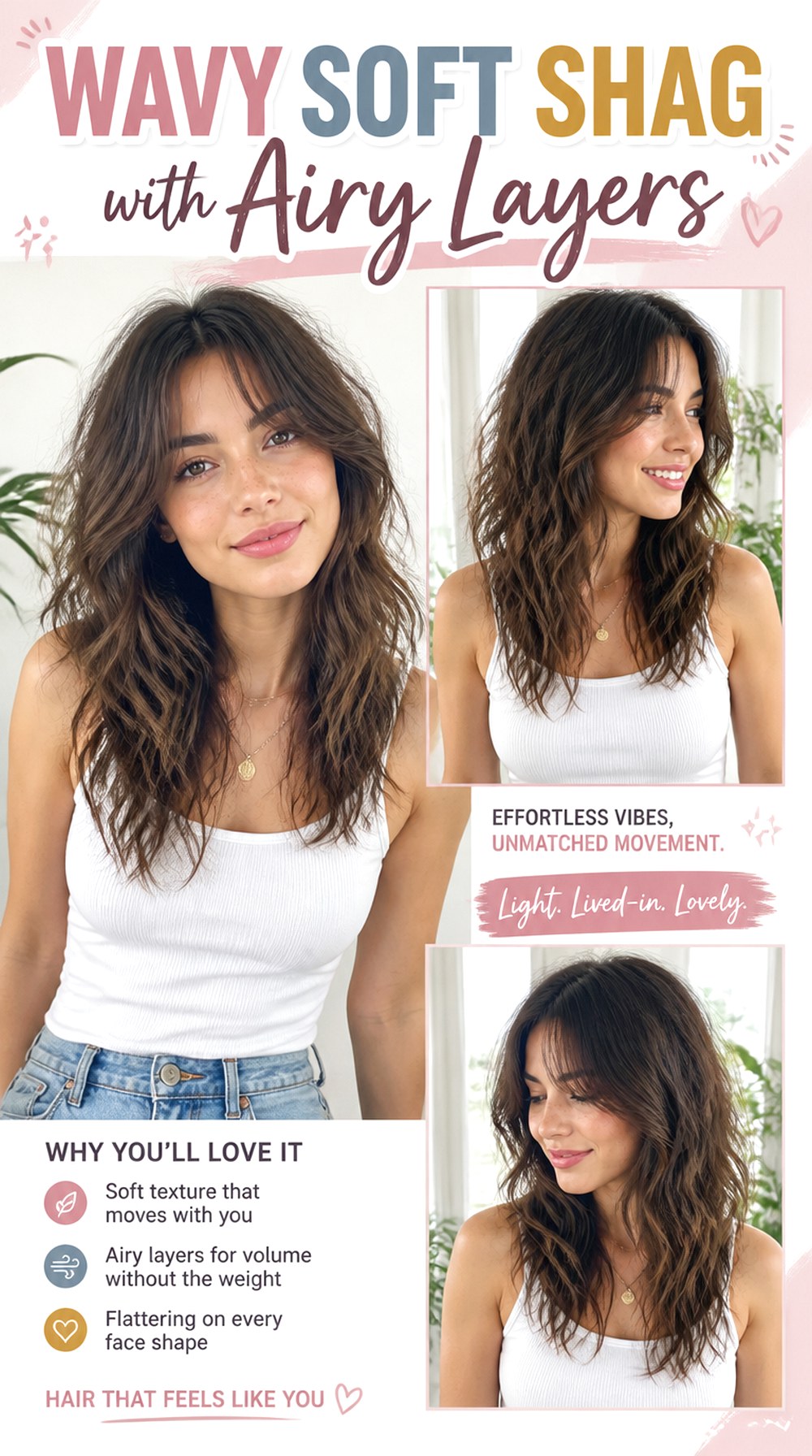
Natural waves give a soft shag easy movement, so the layers can be kept airy and slightly irregular without looking harsh. Shorter pieces around the crown encourage lift, while longer layers through the sides preserve shape and prevent the ends from becoming stringy. This cut is well suited to medium or thick wavy hair and works for many face shapes when the front layers are positioned carefully. Apply leave-in conditioner, lightweight curl cream, and a diffuser if extra definition is needed. Air-drying makes this one relatively quick, while diffusing takes longer. Trim every eight to twelve weeks. Ask for layers that follow your natural wave pattern rather than fighting it.
Pro tip: Let your stylist see your natural waves before the cut if possible. The shortest crown layers should sit where the hair naturally bends rather than interrupting the wave pattern.
Curly Soft Shag with Rounded Layers
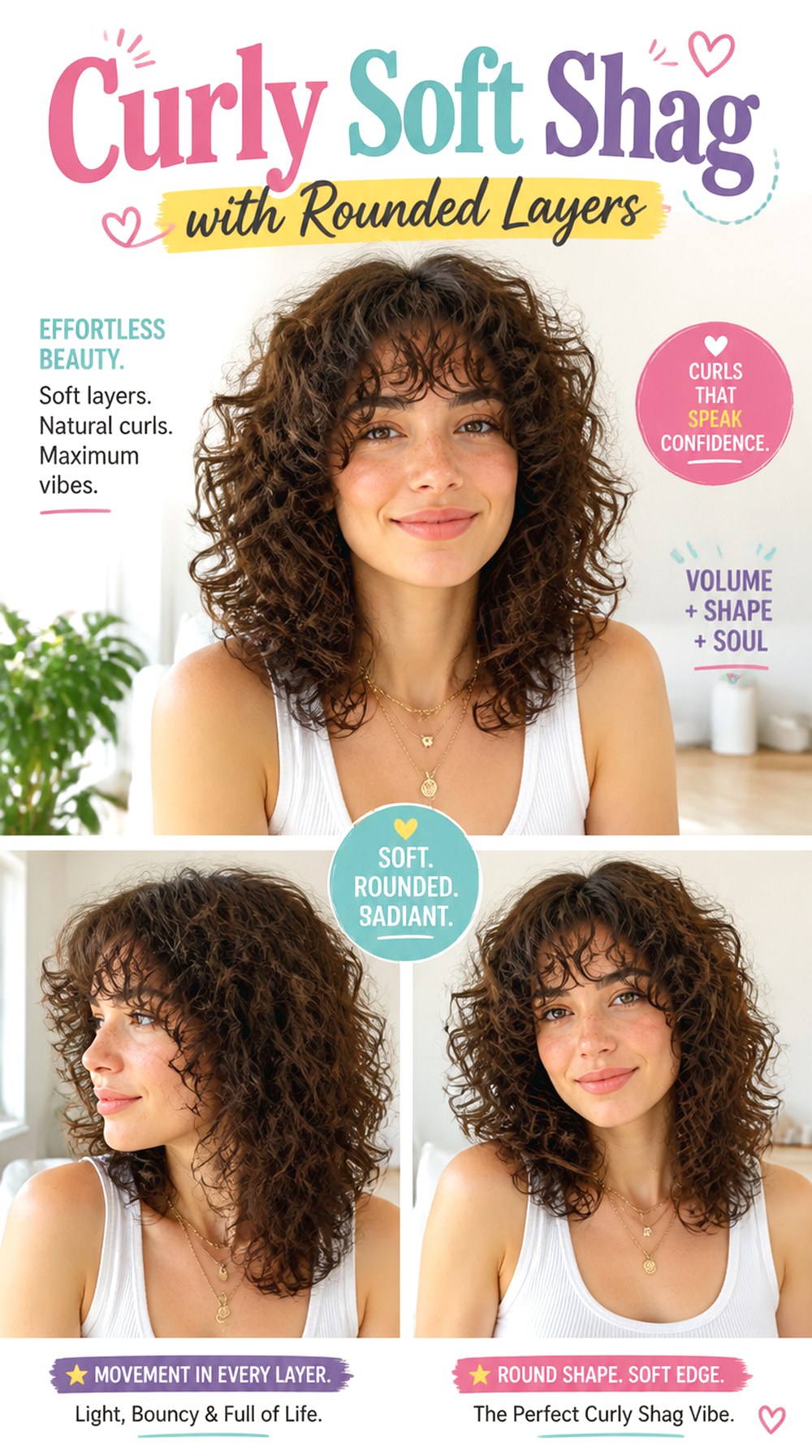
Rounded layers distribute curls through the crown and sides so a curly shag feels full without becoming triangular. The shortest layers should support the curl pattern, while the perimeter keeps enough weight to maintain length and control shrinkage. It works best on naturally curly medium to thick hair, especially when you want volume around the upper sides rather than only at the ends. A wide-tooth comb, curl cream, and diffuser are practical styling tools. Air-drying is low effort; diffusing can take 15 to 25 minutes depending on density. Curly shapes may need refreshing every ten to twelve weeks. Ask your stylist to account for shrinkage and cut the fringe longer than its dry resting point.
Pro tip: Show your stylist where your curls sit completely dry. Shrinkage varies from section to section, so judging the fringe only while wet can make it shorter than planned.
Straight Soft Shag with Feathered Ends
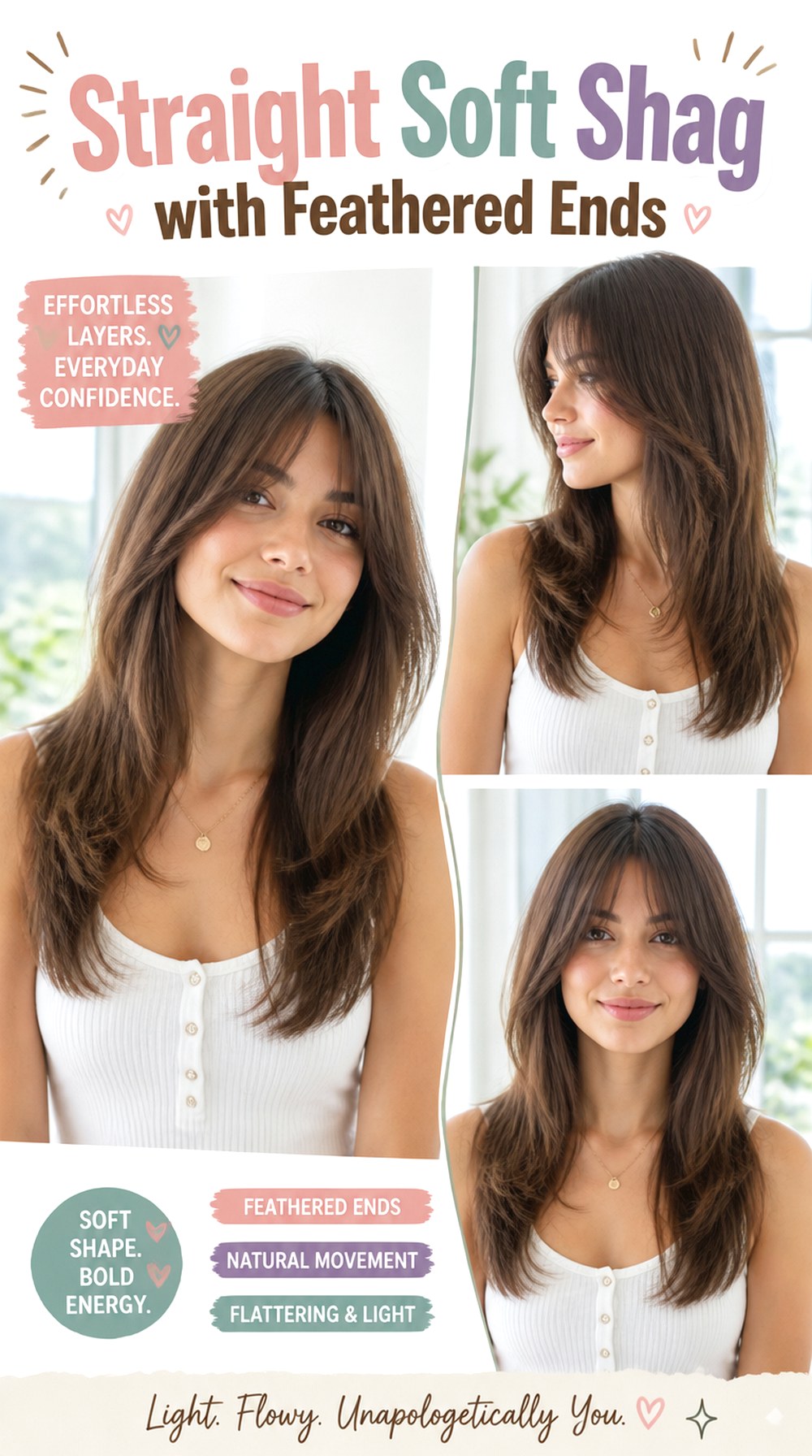
On straight hair, feathered ends make a shag look softer and more polished than sharply choppy layers. The cut can sit anywhere from shoulder to chest length, with blended crown layers and face-framing pieces that turn away from the cheeks. Fine to medium straight hair usually handles this shape well, although very fine hair should keep more density at the perimeter. Heat protectant, a medium round brush, and smoothing serum help create the feathered finish. Styling takes about 15 minutes if blow-dried, but it can be worn straighter with less work. Trim every eight to ten weeks. Tell your stylist you want light feathering through the ends, not aggressive thinning from the roots.
Pro tip: Ask for the face-framing layers to begin no higher than you are willing to style them. Very short pieces on straight hair often need more blow-drying to sit correctly.
Fine-Hair Soft Shag with Crown Volume
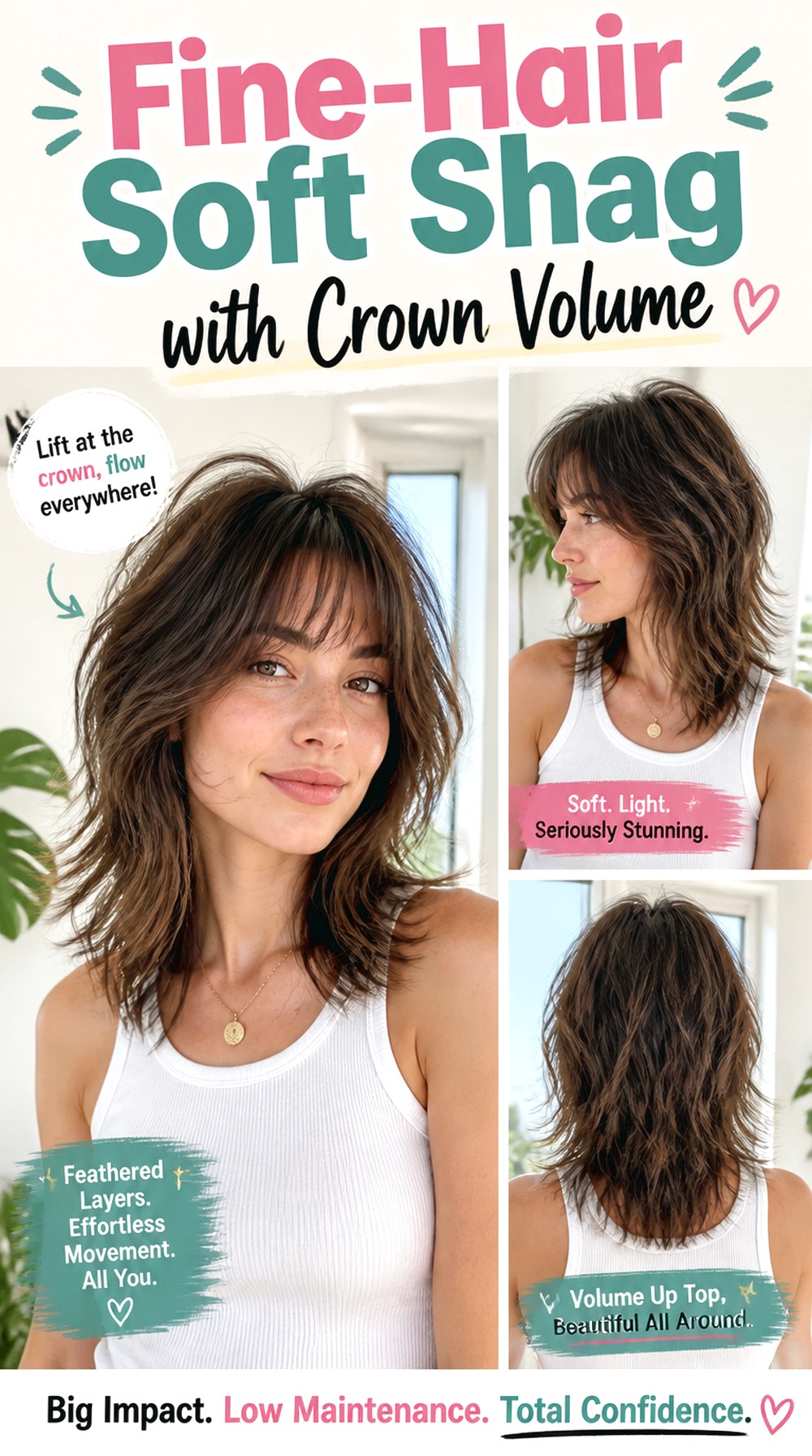
A fine-hair soft shag needs strategic layering rather than lots of removal. The best version keeps the lower perimeter relatively solid while adding shorter, blended pieces near the crown for lift and movement. It suits straight to lightly wavy fine hair and can help a flatter crown look more balanced without sacrificing too much thickness through the ends. Use volumizing mousse, root-lifting spray, and a vent brush for lightweight support. Styling is quick to moderate, usually under 15 minutes. Frequent over-thinning should be avoided, and trims every eight to ten weeks keep the shape fresh. At the salon, ask for minimal razoring and show exactly how much fullness you want to keep at the bottom.
Pro tip: Keep the shortest crown layer longer than you might on dense hair. A little lift is useful, but too many short layers can expose the scalp and weaken the ends.
Thick-Hair Soft Shag with Debulked Layers
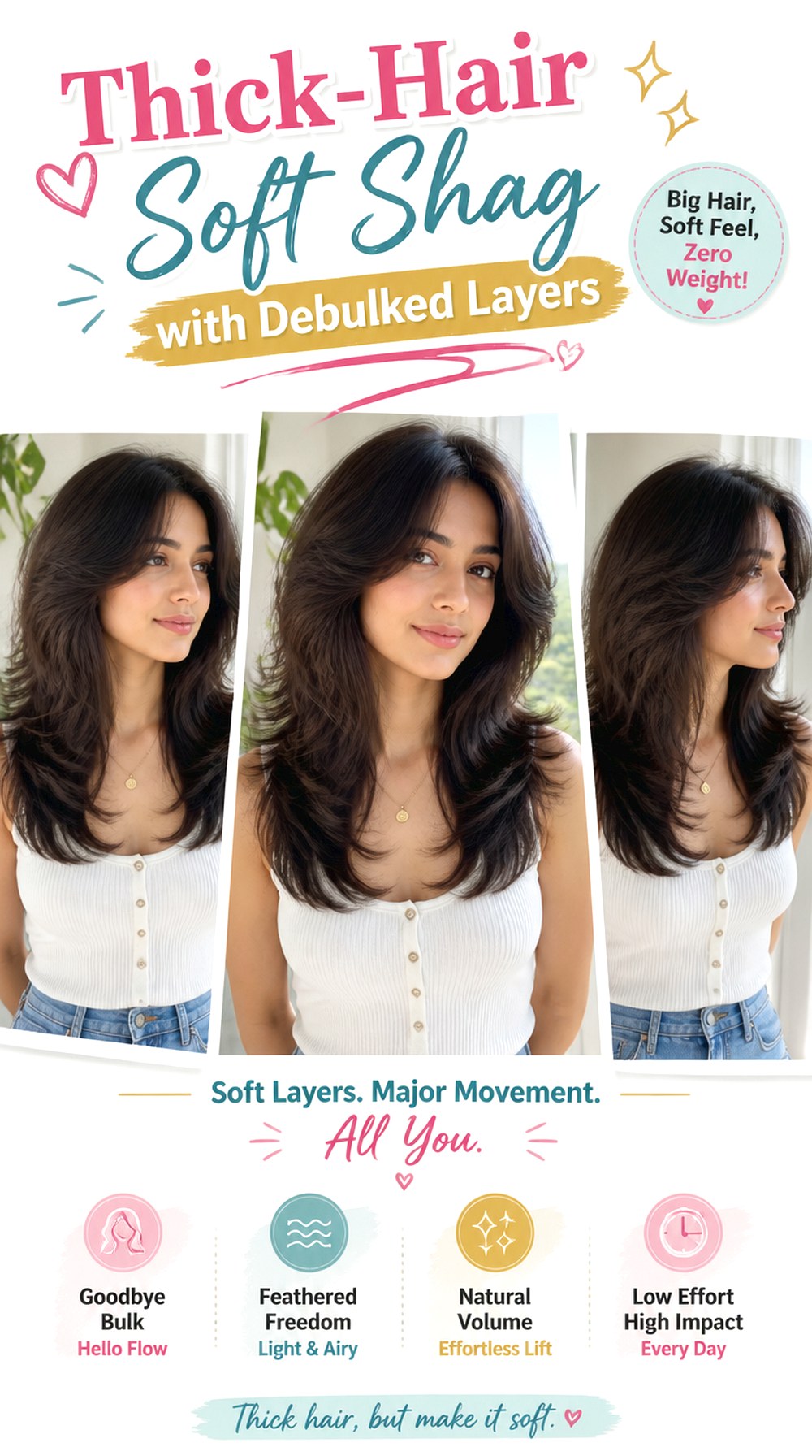
Thick hair can carry a soft shag well when excess weight is removed from the interior rather than simply chopping the surface into short pieces. Long, blended layers reduce bulk through the mids, while face-framing sections keep movement near the cheekbones and jaw. This version works for straight, wavy, or loose-curly thick hair and is useful when the ends tend to feel heavy. A leave-in conditioner, smoothing serum, and wide-tooth comb help control frizz without flattening the layers. Styling time varies, but a full blow-dry may take 20 minutes or more. Ask for internal debulking with a substantial perimeter, and plan on reshaping every ten to twelve weeks.
Pro tip: Ask your stylist to remove bulk where your hair actually expands most rather than thinning every section evenly. That keeps the overall silhouette balanced.
Soft Shag with Cheekbone Face-Framing

Here the main focus is a face frame that begins around the cheekbones and melts into longer shag layers through the sides. That placement brings movement toward the center of the face without requiring a full fringe, making it useful for anyone who wants softness around the front but prefers an open forehead. Straight, wavy, and medium-density hair all suit it well. A round brush, heat protectant, and light texturizing spray help the front pieces curve away naturally. Styling is fairly quick at about 10 minutes. The face frame may need a tidy-up every six to eight weeks. Ask your stylist to keep the shortest pieces at cheekbone level and blend them continuously into the length.
Pro tip: Use a reference photo to point out the exact cheekbone point you like. Moving the shortest layer even an inch lower changes where the haircut draws attention.
Soft Shag with Grown-Out Bangs
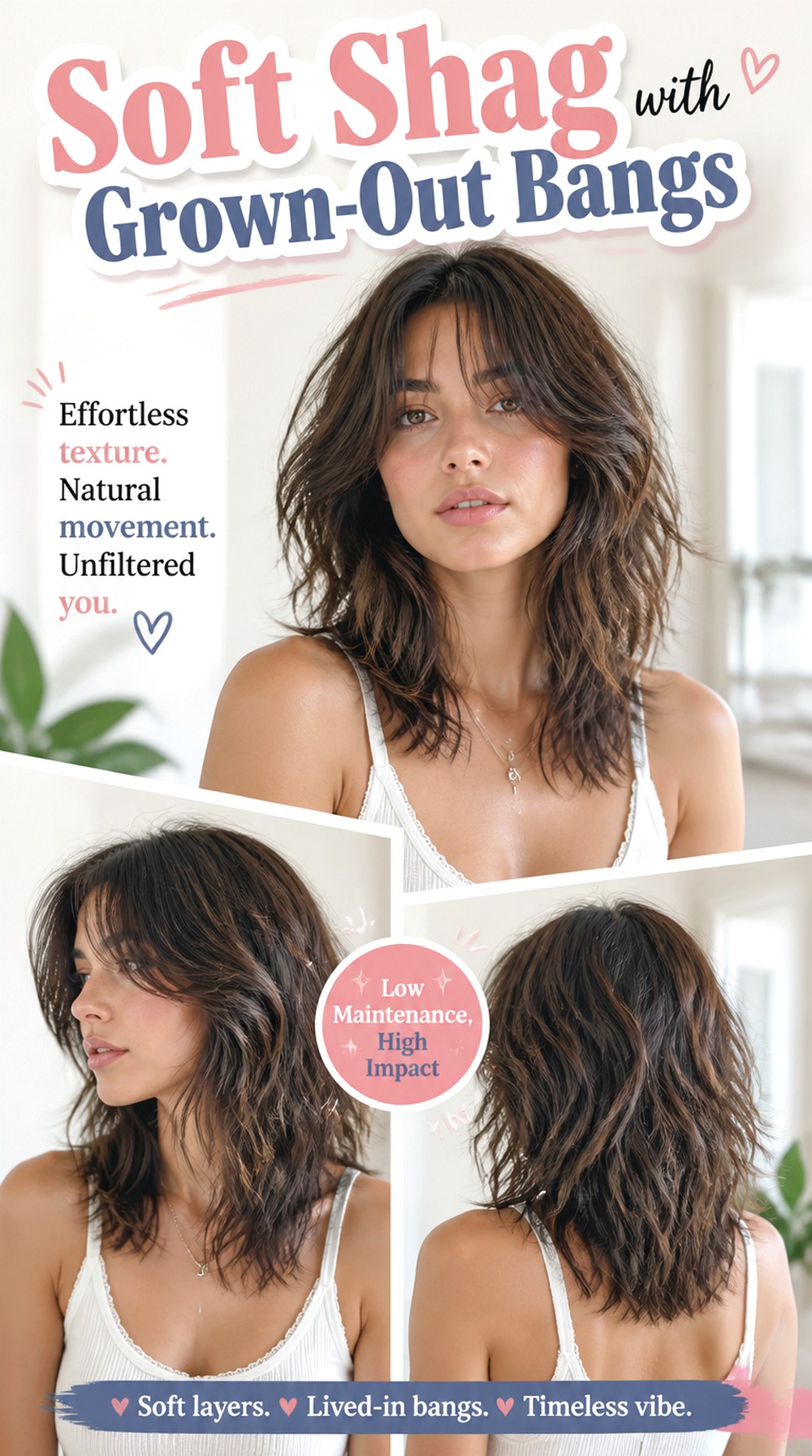
Grown-out bangs give a soft shag a relaxed frame, usually falling from the eyebrow area toward the cheekbones and blending into the side layers. The longer fringe can be center-parted, swept aside, or tucked back, so it is easier to manage than a short bang. This works particularly well for straight or wavy hair and for people who want fringe without frequent salon visits. Use a blow-dry brush, heat protectant, and lightweight hairspray to keep the front pieces controlled. Styling is quick, often around 5 to 10 minutes. Overall trims can be spaced eight to twelve weeks apart. Ask for a fringe long enough to clear the eyes once it settles.
Pro tip: If you want easy grow-out, keep the outer edges noticeably longer than the center. They will blend into the side layers more naturally as the fringe grows.
Collarbone Soft Shag with Center Part

A collarbone-length shag with a center part has balanced volume on both sides and enough length to tie back when needed. Layers begin around the cheekbones or jaw, then continue through the mids for movement while the ends stay softly textured. It suits straight, wavy, and medium-density hair, and the centered shape can be adjusted for round or longer faces by shifting the shortest front pieces. Use a lightweight mousse, large round brush, and heat protectant for a smooth, airy finish. Styling takes about 10 to 15 minutes. Plan trims every eight to ten weeks. Ask your stylist to check the balance with your natural center part before finalizing the face frame.
Pro tip: If your hair naturally falls slightly off-center, do not force a perfectly centered cut. Have the face frame balanced around the part you can realistically maintain every day.
Short Soft Shag with Tapered Nape
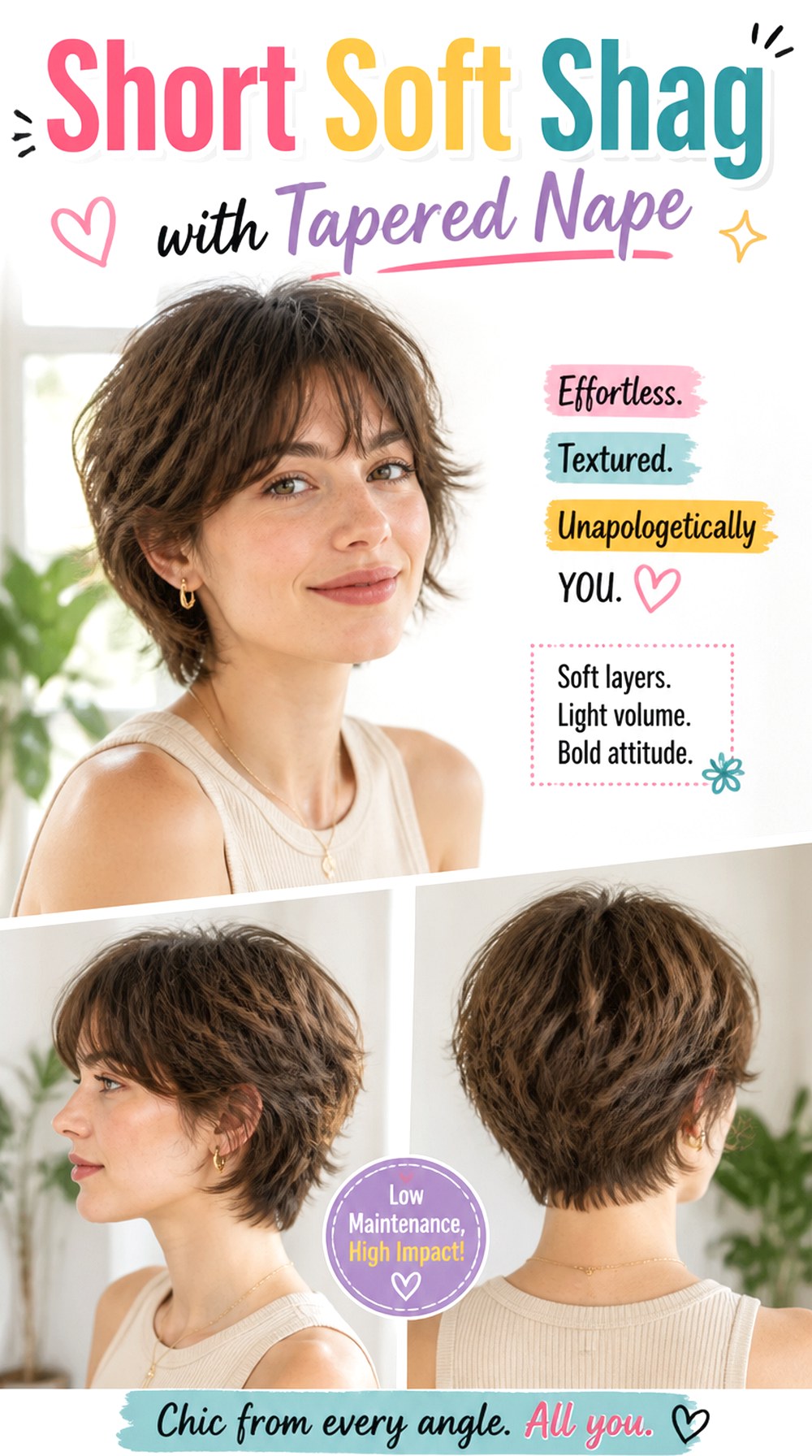
This short shag keeps texture through the crown and sides while the nape is gently tapered for a cleaner outline. The contrast creates shape without pushing the cut into a harsh mullet silhouette, and longer pieces near the temples can soften the face. It is a strong option for straight, wavy, or fine-to-medium hair and works well for someone comfortable with a shorter neckline. A texturizing cream, small flat iron, and light-hold spray can separate the layers. Styling is quick, usually under 10 minutes, but the nape may need trimming every five to seven weeks. Ask your stylist for a soft taper with enough length left around the ears to keep movement.
Pro tip: Decide how exposed you want the ears and neckline before cutting. Leaving slightly more length around those areas makes the short shape softer and easier to grow out.
Soft Shag with Flipped Ends
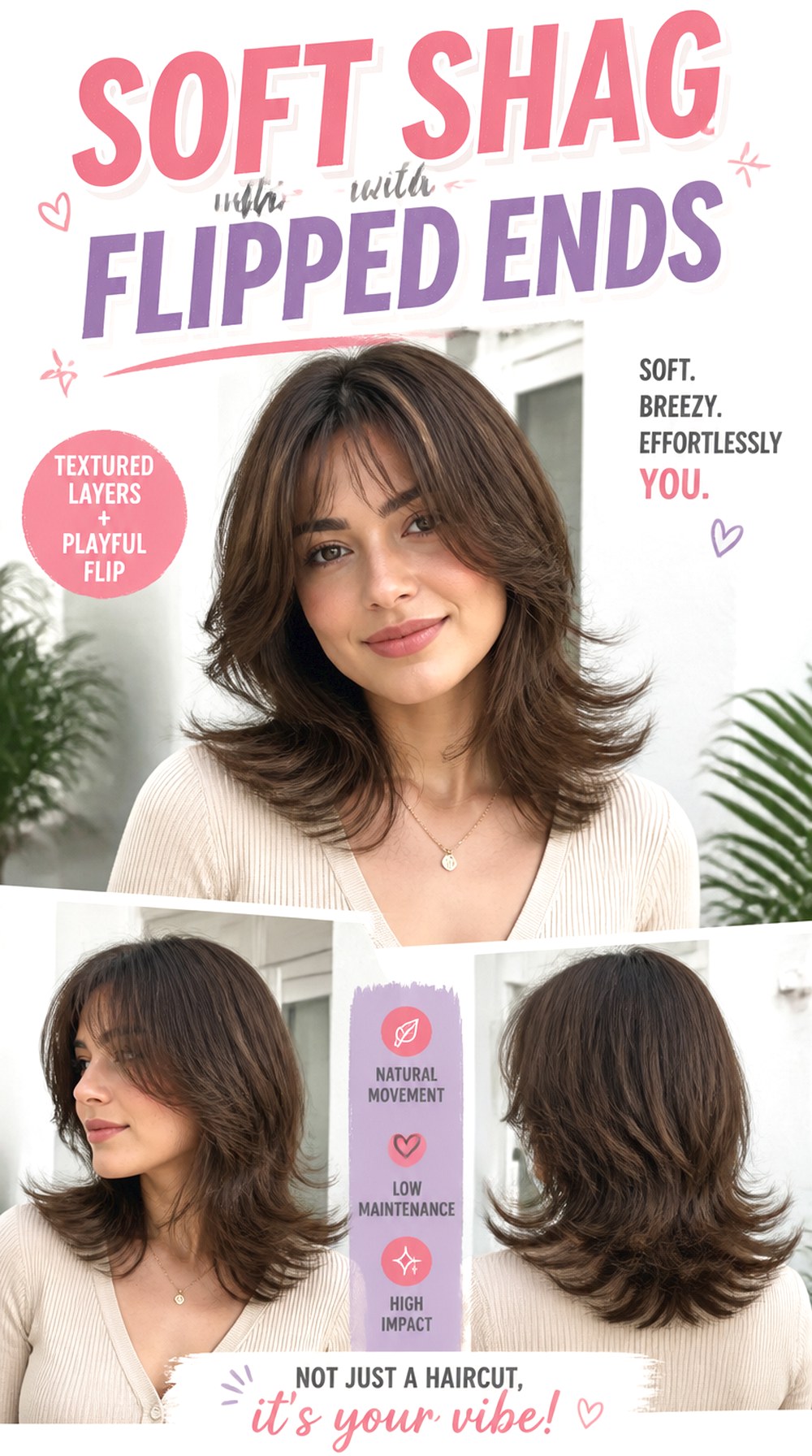
Flipped ends give a soft shag a playful outward bend while the layered interior keeps the shape light. The effect works especially well from shoulder to collarbone length, where the ends can turn away without creating excessive width. Straight to wavy hair with medium density is easiest to style this way, though fine hair can use a little extra root lift. Apply heat protectant, use a medium round brush, and finish with flexible hairspray. A full styled finish takes about 15 minutes, while natural wear is lower maintenance. Trim every eight to ten weeks to stop the ends becoming heavy. Ask for layered ends that are long enough to wrap around a brush.
Pro tip: Keep the strongest flip around the lower perimeter rather than every layer. Too many outward bends through the sides can create more width than you intended.
Soft Razor-Cut Shag with Piecey Texture

A controlled razor cut can give a soft shag light, piecey texture through the ends without making the whole haircut look shredded. It is best on straight to wavy hair with medium or thicker density and generally needs more caution on very fine, fragile, or highly frizz-prone hair. The layers should move freely while the perimeter still looks intentional. Use texturizing spray, lightweight styling cream, and a wide-tooth comb to keep separation soft. Styling takes around 5 to 10 minutes on naturally textured hair. Recut every eight to twelve weeks. At the salon, ask whether your hair is suitable for razor work and request soft, controlled carving rather than aggressive thinning.
Pro tip: In your reference photo, point out how solid you want the bottom edge to remain. Piecey texture should not automatically mean removing density from the entire perimeter.
Soft Shag with Hidden Internal Layers

Hidden internal layers create movement inside the haircut while leaving the outer surface smoother and the perimeter relatively full. This is a useful soft shag option for someone who likes the idea of layering but does not want obvious short pieces all over the crown. It works particularly well on medium to thick straight or wavy hair, where internal weight can make the shape feel heavy. A smoothing serum, paddle brush, and lightweight volumizing spray keep the finish controlled. Styling is quick to moderate, around 10 to 15 minutes. Trims every ten to twelve weeks are usually enough. Ask your stylist to remove weight underneath while preserving visible length and density on the surface.
Pro tip: Ask to keep internal layers away from areas that become frizzy or expand in humidity. Weight removal is most useful where your hair naturally feels dense or bulky.
Soft Shag with Side-Swept Fringe
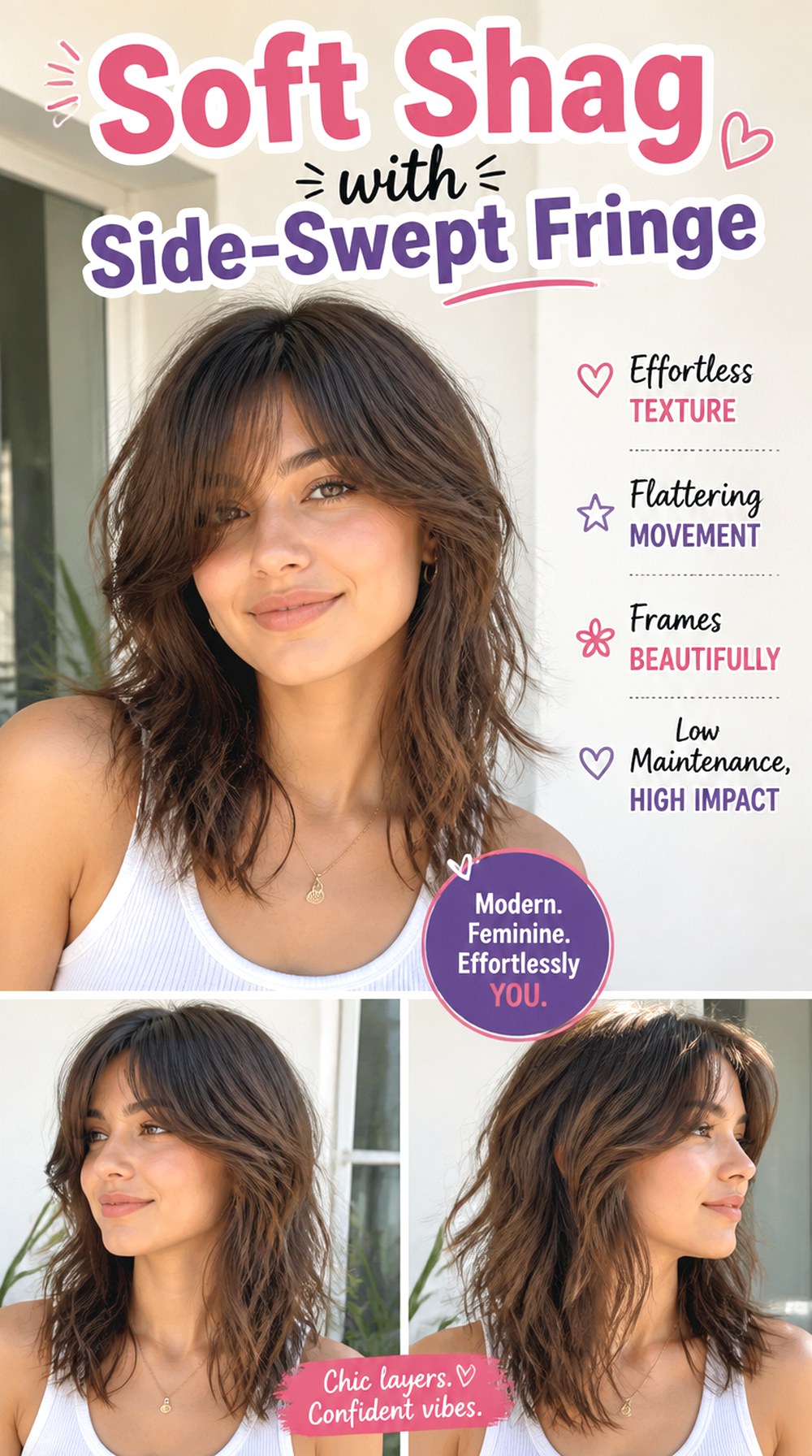
A side-swept fringe adds direction to a soft shag and blends naturally into layered lengths around the temple and cheek. It is less demanding than a blunt straight-across bang and can be adjusted to expose more or less forehead. Straight and wavy hair with fine to medium density responds well, and the diagonal line can soften a square jaw or add movement to a rounder face. Use a small round brush, heat protectant, and dry shampoo for lift at the fringe. Daily styling is quick, usually 5 to 10 minutes. Fringe trims may be needed every four to six weeks. Ask your stylist to cut the fringe for your natural part and cowlick pattern.
Pro tip: Do not flatten a strong cowlick before the haircut. Let your stylist see where the fringe naturally lifts so the length can be adjusted around it.
Conclusion
Soft shag haircut ideas are flexible because the core shape is built around movement rather than one fixed length or fringe. You can keep the haircut short, collarbone-length, or long, then adjust the density of the layers, bangs, crown volume, parting, texture, and finish. A fine-haired version may need a stronger perimeter, while thick or curly hair may benefit from careful internal weight removal. Styling effort can also range from an air-dried, lived-in finish to a polished round-brush blowout. The best choice depends on your face shape, natural hair texture, hair density, maintenance preference, and daily routine. Focus on the placement of the shortest layers first, because that detail changes both the silhouette and how easily the cut grows out.
CTA
Choose one or two favorite ideas and save clear photo references before your appointment. Discuss your face shape, natural hair texture, hair density, preferred length, maintenance comfort, and usual styling routine with your stylist. In each reference, point out the exact layers, fringe, length, volume, parting, or finish you want—and mention anything you do not want copied.
FAQs
What hair type works best with a soft shag haircut?
Straight, wavy, and curly hair can all work with a soft shag. Fine hair usually needs fewer layers and a stronger perimeter, while thick hair can handle more internal weight removal.
Can soft shag haircut ideas work for fine hair?
Yes. The key is keeping enough density through the ends and using shorter layers selectively around the crown rather than thinning the entire haircut.
How often should a soft shag be trimmed?
Most soft shags hold their shape for around eight to twelve weeks. Short versions may need earlier trims, while bangs or fringes often need refreshing every four to six weeks.
Does a soft shag require heat styling every day?
Not necessarily. Wavy and curly versions can often be air-dried with curl cream or leave-in conditioner. Straighter feathered shapes and styled fringes may need a quick blow-dry or light heat styling for more definition.