18 Zero-Part High Ponytail Hairstyle Ideas
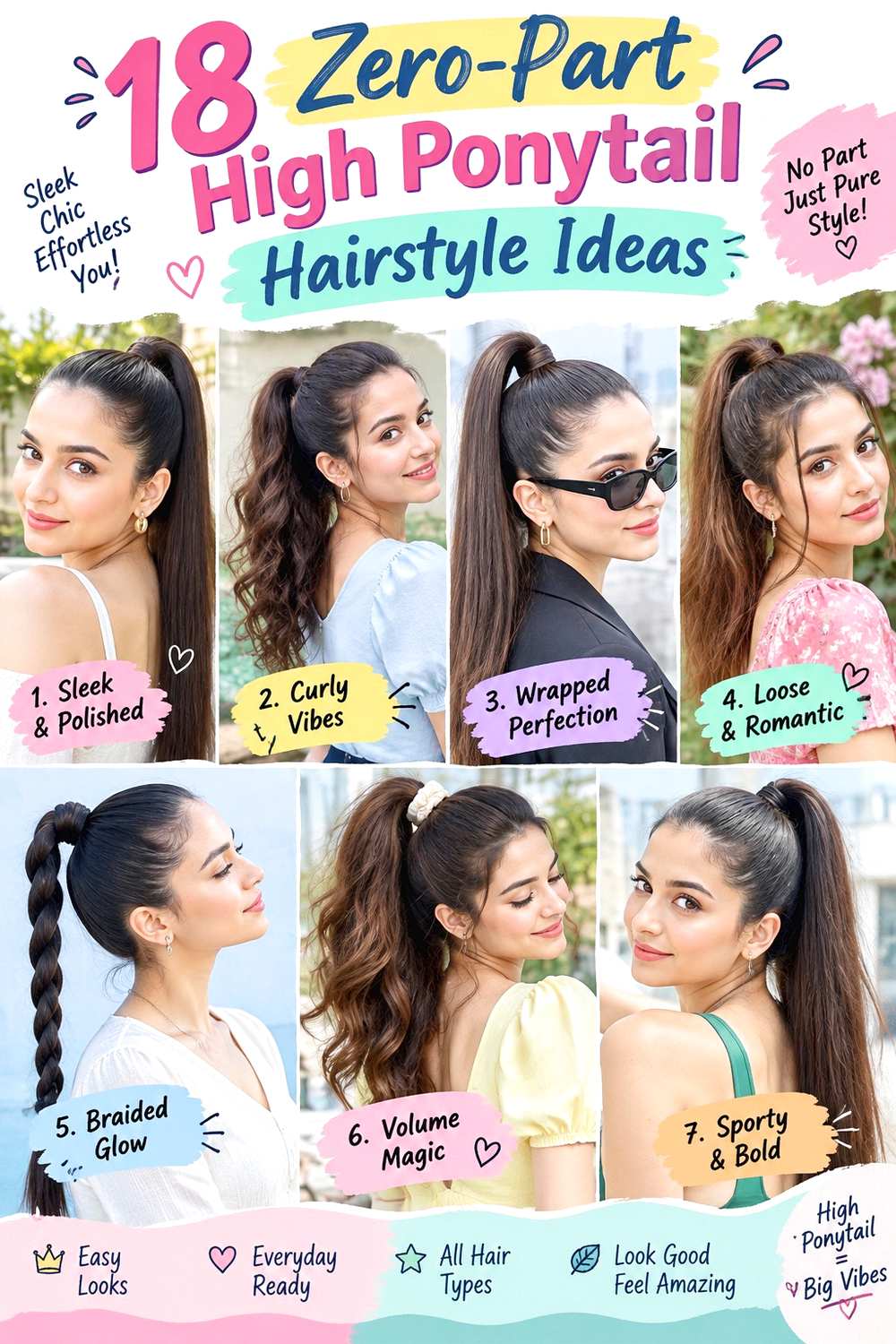
Zero-part high ponytail hairstyles sweep the hair straight back from the front hairline without leaving a visible center or side division. The defining shape combines a continuous crown surface with a ponytail anchored near the crown, while the tail itself can stay straight, wavy, curly, coily, braided, or segmented. Crown height, face-framing pieces, layers, fringe length, root smoothness, tail volume, and the direction of the ends all change how the style reads.
Medium and long hair provide the easiest reach for a high anchor, though some shoulder-length cuts can work when enough back and side sections comfortably reach the crown. Straight, wavy, curly, and coily textures can all support the style. Fine strands do not automatically mean low density, while dense hair often benefits from a strong base and thoughtful weight distribution. Short fringe may stay softly controlled rather than being stretched backward.
A quick refresh usually means smoothing the crown, rebuilding a loose base, or reshaping the tail. A complete wash-day style takes longer when the ponytail also needs waves, curl definition, stretching, or a polished finish. Comfortable anchoring matters more than pulling the hairline as tightly as possible.
Quick List
- Classic Zero-Part High Ponytail Hairstyle
- Slicked-Back Zero-Part High Ponytail Hairstyle
- Rounded Crown Zero-Part High Ponytail Hairstyle
- Flat Crown Zero-Part High Ponytail Hairstyle
- Wrapped Base Zero-Part High Ponytail Hairstyle
- Voluminous Tail Zero-Part High Ponytail Hairstyle
- Soft Wave Zero-Part High Ponytail Hairstyle
- Curly Zero-Part High Ponytail Hairstyle
- Coily Puff Zero-Part High Ponytail Hairstyle
- Braided Tail Zero-Part High Ponytail Hairstyle
- Bubble Tail Zero-Part High Ponytail Hairstyle
- Twisted Base Zero-Part High Ponytail Hairstyle
- Fine Hair Zero-Part High Ponytail Hairstyle
- Dense Hair Zero-Part High Ponytail Hairstyle
- Face-Framing Zero-Part High Ponytail Hairstyle
- Shorter Length Zero-Part High Ponytail Hairstyle
- Glossy Zero-Part High Ponytail Hairstyle
- Accessory-Ready Zero-Part High Ponytail Hairstyle
Classic Zero-Part High Ponytail Hairstyle
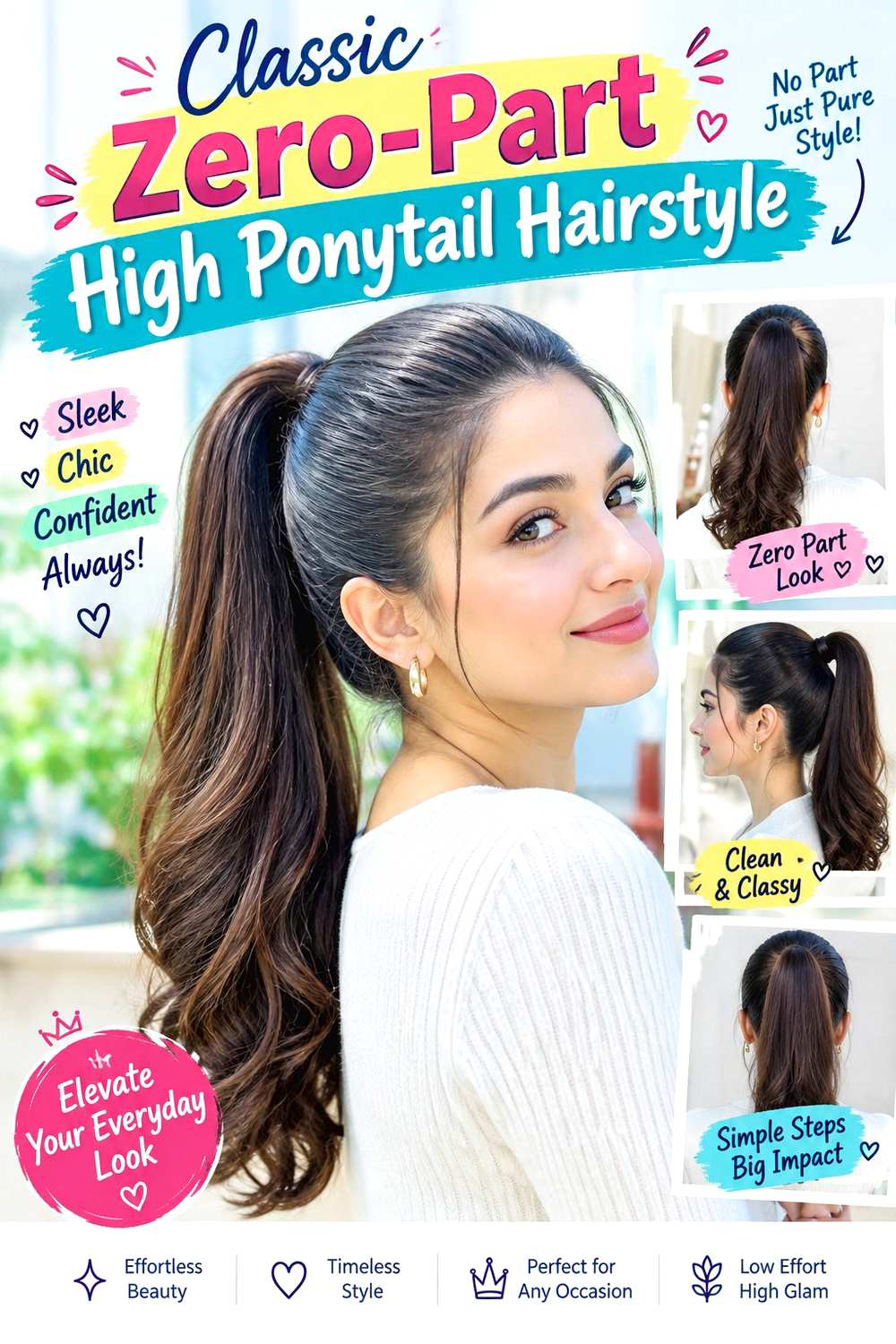
The classic version gathers every reachable section toward a centered high base without leaving a visible part. Brush the front backward so the crown follows the natural curve of the head, then anchor the ponytail near the crown rather than directly on top. The tail can fall straight or keep its natural movement, while very short fringe or temple pieces may remain softly controlled near the hairline. Keep the ends mobile so the high placement does not feel overly rigid.
Use a boar-bristle brush to guide the surface, a fabric-covered elastic to create the main anchor, and lightweight styling cream only where flyaways need control. Medium and long hair are easiest because the nape sections can reach the crown without excessive pulling. A quick refresh usually means resetting the elastic and smoothing the upper surface; a full wash-day version takes longer if the tail also needs drying or texture definition. If the ponytail begins to sag, rebuild the base instead of pulling the front tighter.
At a styling appointment, specify the exact ponytail height and how closely you want the sides to follow the head. A comfortable base should remain stable without relying on extreme tension around the temples or nape.
Pro tip:
Secure the ponytail with your head upright, then gently turn side to side before finishing. This reveals pulling at the nape or temples before styling is complete.
Make It Work for You:
For lower-density hair, keep the base moderately high rather than extreme and preserve more crown curve. The tail can appear fuller when the anchor does not overstretch it.
Watch Out For:
Do not tighten the elastic repeatedly when the ponytail drops. Rebuild the gathered base once so the front hairline does not absorb unnecessary extra tension.
Slicked-Back Zero-Part High Ponytail Hairstyle
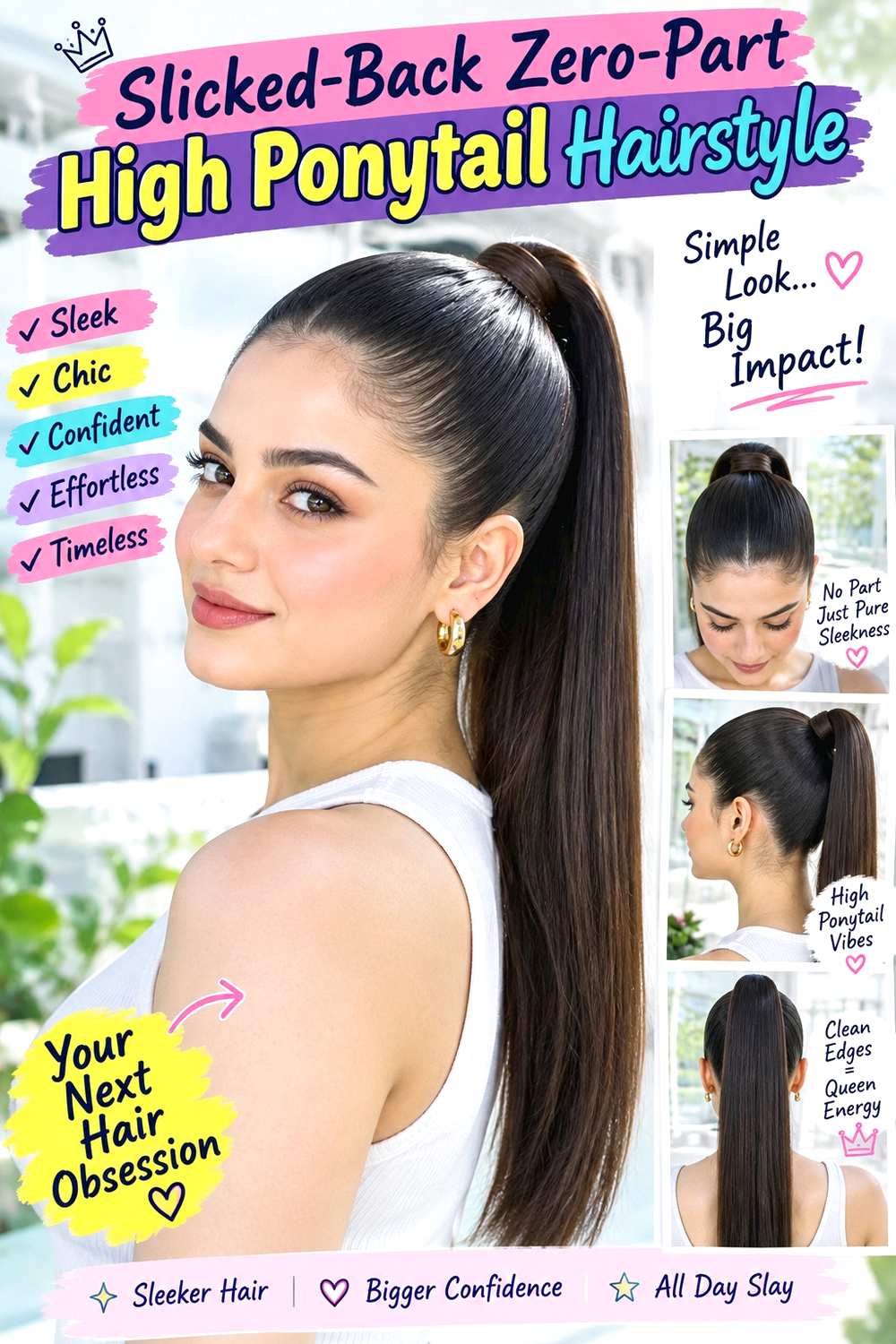
A slicked-back version keeps the roots close to the head from the forehead through the crown, making the uninterrupted zero-part surface the main feature. Gather the hair high and centered, keeping the sides smooth around the ears and the nape clean. The tail can remain sleek, softly textured, or naturally full, but the contrast works best when the upper surface is controlled. Short fringe that cannot reach should be managed gently instead of being forced into the ponytail.
Use styling gel in a thin layer for surface hold, a fine-tooth comb to direct the hair backward, and a fabric-covered elastic for the high base. Medium and long hair work well, while curly and coily textures can keep natural movement in the tail rather than being straightened. A quick refresh involves smoothing lifted flyaways and checking the anchor; a complete wash-day style takes longer when the upper surface needs additional drying or stretching first. If the hairline feels sore, loosen and rebuild the base rather than adding more gel.
At a styling appointment, specify how flat you want the crown and whether the tail should sit directly on the crown or slightly behind it. Sleekness should come from controlled smoothing, not maximum tension.
Pro tip:
Apply gel in light layers and refine each section backward before adding more. Thin application gives control without making the anchor unnecessarily slippery or heavily coated.
Make It Work for You:
For curly or coily hair, smooth only the gathered surface and keep the ponytail naturally textured. The zero-part shape stays sharp without requiring complete straightening.
Watch Out For:
Do not use extra gel to compensate for a loose base. Product controls the surface, while the ponytail itself still needs a dependable elastic anchor.
Rounded Crown Zero-Part High Ponytail Hairstyle
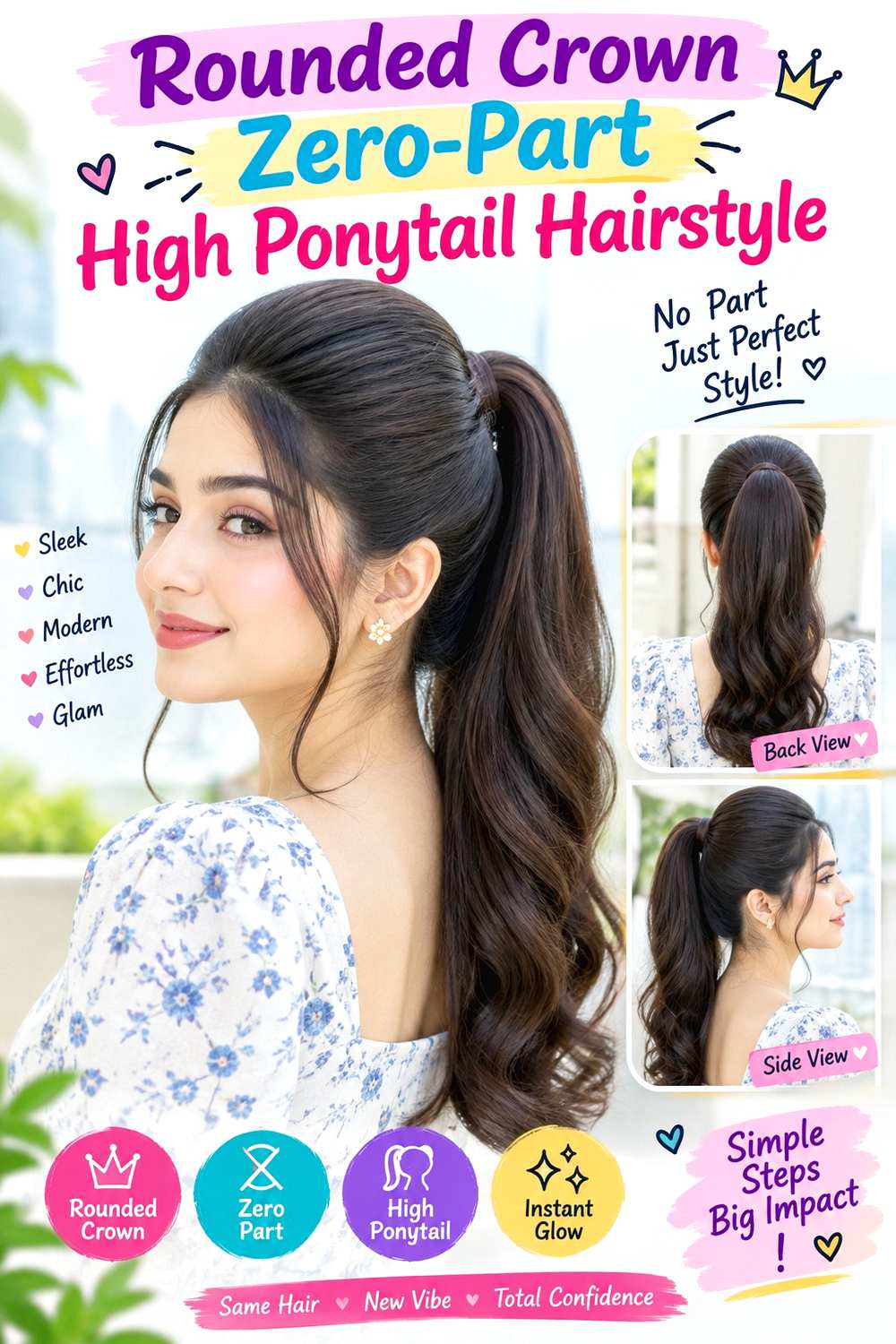
A rounded crown keeps the front partless while allowing a subtle rise through the upper back of the head before the ponytail begins. Brush the hair straight back from the forehead, but avoid pressing the crown completely flat. Create a soft curve behind the top of the head, then place the ponytail just behind that highest point. The tail can stay straight, wavy, curly, or coily, and the slightly lifted crown prevents the high base from looking sharply pulled.
Use root-lift spray through the crown, a boar-bristle brush to smooth only the outer surface, and a fabric-covered elastic to secure the ponytail. Fine hair can benefit from modest lift, while dense hair should keep the rise controlled so the overall shape does not become top-heavy. A quick refresh generally means restoring the crown curve and resetting the base; a full wash-day style takes longer if root direction must be rebuilt. If the crown falls, lift that section rather than tightening the temples.
At a styling appointment, identify exactly where you want the crown height to peak and how far behind it the ponytail should sit. The small gap between lift and anchor makes this version different from a fully flat slick-back.
Pro tip:
Smooth only the outer layer after creating crown lift. Brushing deeply through the section can remove the rounded profile and leave the ponytail looking flatter than intended.
Make It Work for You:
For fine hair, keep the rise subtle and avoid an oversized ponytail base. Moderate crown height can add shape without making the tail look comparatively thin.
Watch Out For:
Do not create crown volume by tightening the sides. The lift should come from root direction and section placement, not added pressure around the temples.
Flat Crown Zero-Part High Ponytail Hairstyle

A flat-crown high ponytail creates the most streamlined zero-part silhouette. Direct the hair straight backward from the forehead, keep the top close to the head, and place the ponytail near the crown without leaving bumps or a visible dividing line. The sides should follow the head smoothly, while the tail can stay straight, curled, or naturally textured. This version works especially well when you want the high ponytail base to look clean and compact.
Use lightweight smoothing cream for flyaway control, a fine-tooth comb for the partless surface, and a strong fabric-covered elastic for the anchor. Straight and wavy hair may settle quickly, while curly or coily hair can keep its natural tail texture. A quick refresh means smoothing the crown and resetting the base if it has slipped; full wash-day styling takes longer when the preferred crown finish requires more preparation. Flat should not mean painfully stretched. If the temples feel tight, regather the hair with less tension and refine the surface afterward.
At a styling appointment, specify how close you want the crown to sit and whether the ponytail should be high at the crown or slightly behind it. The correct anchor position helps maintain a clean profile without excessive pulling.
Pro tip:
Comb backward in short controlled strokes instead of repeatedly dragging from the hairline to the base. This smooths the surface while limiting unnecessary tension.
Make It Work for You:
For naturally textured hair, smooth the visible crown while keeping texture through the tail. The flat upper outline remains clear without requiring every strand to be straightened.
Watch Out For:
Avoid treating scalp tightness as proof that the style is secure. Rebuild the anchor if needed so hold comes from placement rather than discomfort.
Wrapped Base Zero-Part High Ponytail Hairstyle
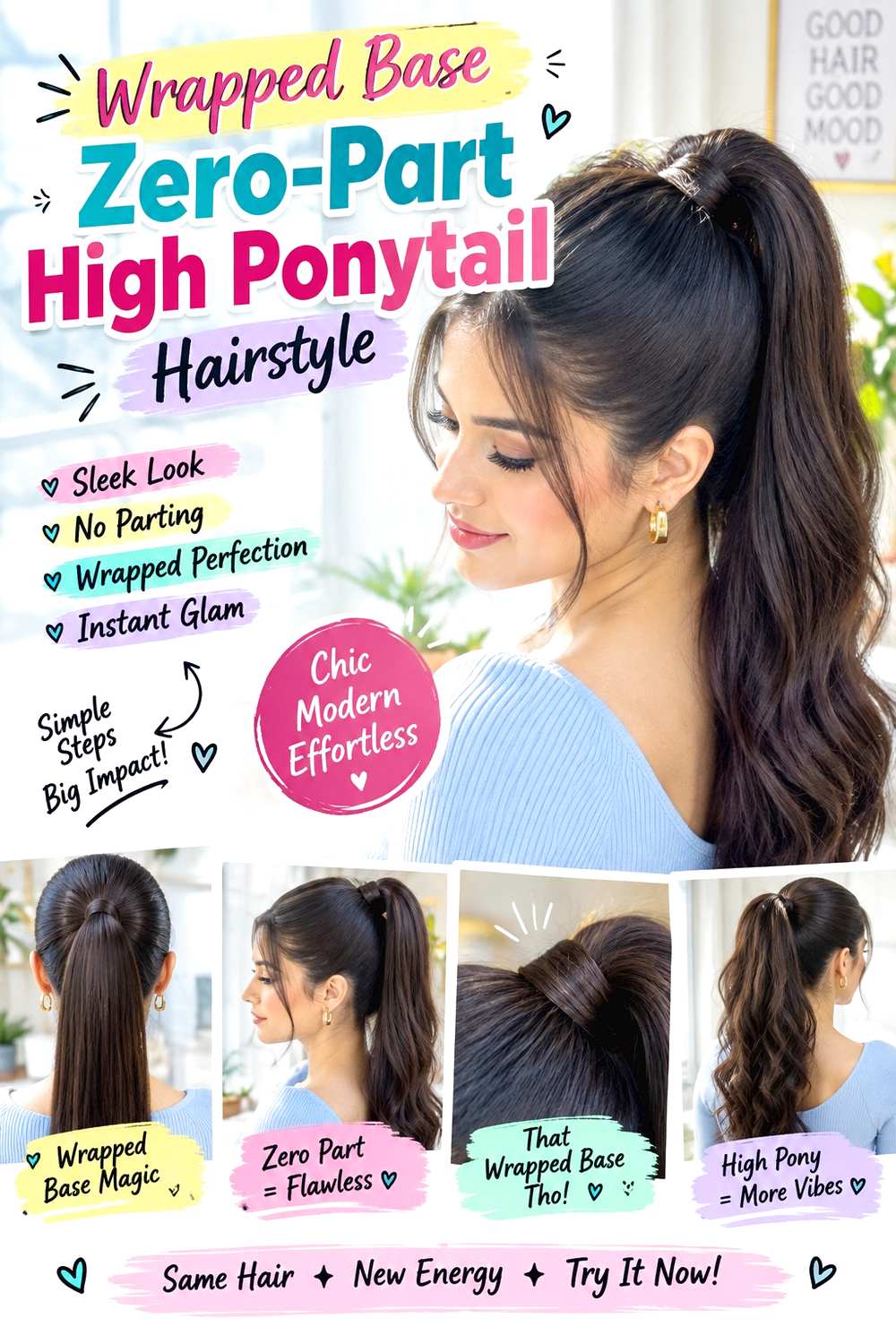
A wrapped base hides the elastic and makes the transition from smooth crown to high ponytail look more continuous. Gather the hair backward with no part, secure the ponytail near the crown, and reserve one slim section from the underside of the tail. Wrap that section flat around the elastic, then pin its end underneath. The remaining ponytail can stay straight, waved, curly, or coily, while the covered base creates a cleaner finish from every angle.
Use a fabric-covered elastic for dependable support, lightweight smoothing cream on the wrapping section, and one bobby pin to secure the hidden end. Medium and long hair are easiest because there is enough tail length to spare a section without reducing overall fullness noticeably. A quick refresh may involve retucking the wrap and smoothing the crown; a full wash-day style takes longer when the tail also needs shaping. If the wrap loosens, reset it independently rather than tightening the whole ponytail.
At a styling appointment, specify how thick you want the covered base and whether the wrap should look narrow and discreet or broader and more sculptural. The structural elastic should continue carrying the ponytail’s weight underneath.
Pro tip:
Keep the wrapping section flat as it travels around the base. Twisting it creates a rope-like ridge and can make the covered elastic look bulkier.
Make It Work for You:
For lower-density hair, reserve only a narrow underside section so most of the ponytail remains available to create visible fullness and movement.
Watch Out For:
Do not rely on the wrapped section to hold the ponytail. The hidden elastic should provide the support so the finishing piece stays decorative.
Voluminous Tail Zero-Part High Ponytail Hairstyle
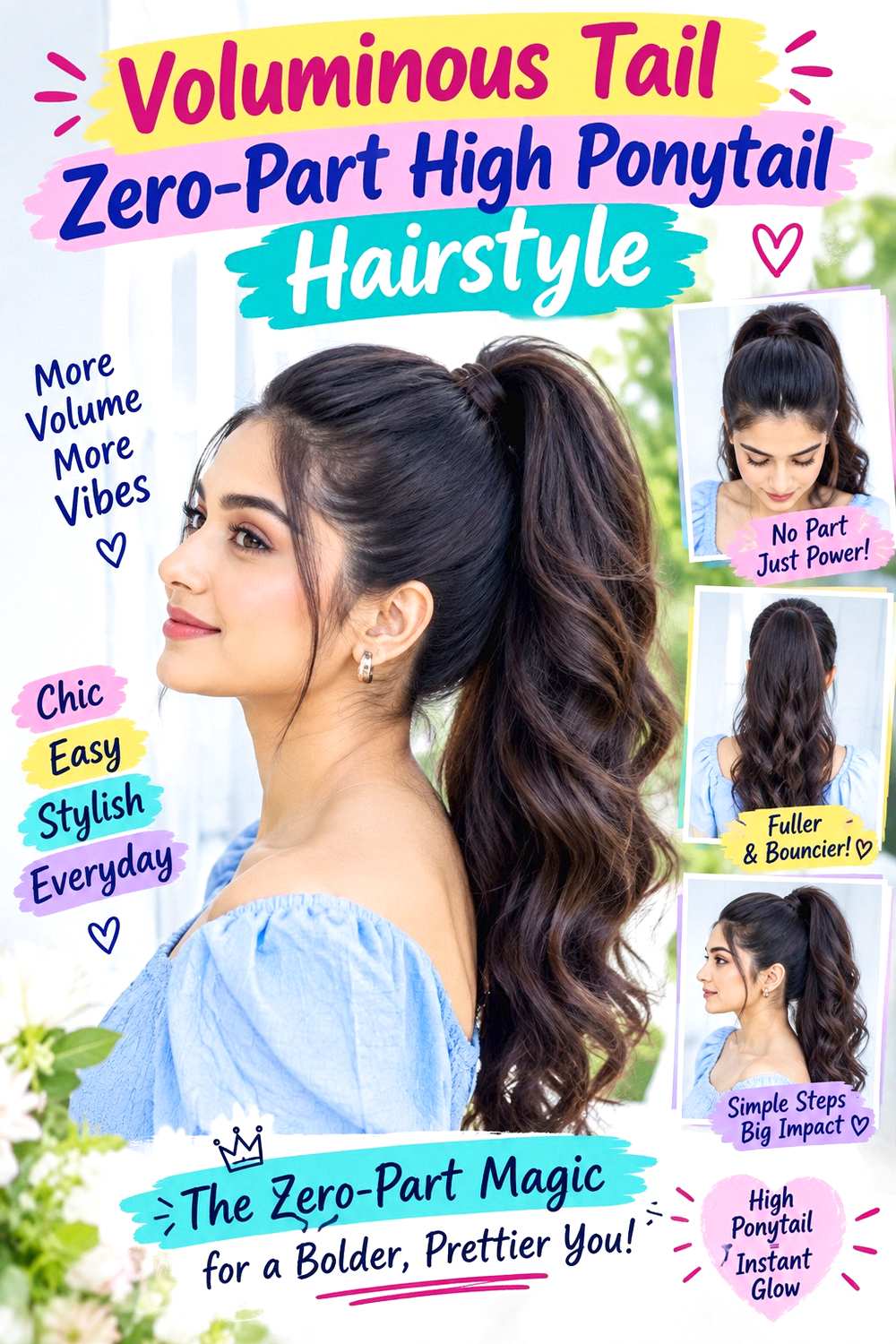
This variation keeps the crown controlled while making the ponytail itself noticeably fuller. Sweep the hair backward without a part and place the anchor high enough for the tail to fall freely behind the crown. Keep the upper surface smooth and relatively compact, then allow the ponytail to expand through soft waves, natural texture, or gentle separation. The ends should retain enough weight that the volume feels balanced rather than wispy.
Use a fabric-covered elastic for the base, light texturizing spray through the tail for grip, and a wide-tooth comb for controlled separation. Medium and long hair show the contrast between compact roots and expanded lengths most clearly. Fine strands can gain visual fullness, but lower-density hair should avoid excessive teasing or separation. A quick refresh may mean lifting the tail with your fingers and resetting a flattened upper section; full wash-day styling takes longer when volume needs to be built from drying onward. If the tail feels heavy, strengthen the anchor instead of tightening the hairline.
At a styling appointment, specify how much crown smoothness and tail width you want. The contrast should come from volume placement, not from making the ponytail base uncomfortably tight.
Pro tip:
Build volume through the middle of the tail and leave the lowest ends less expanded. This keeps the ponytail full without making the perimeter look overly airy.
Make It Work for You:
For fine or lower-density hair, create moderate rather than extreme fullness and keep the ends more defined. A controlled tail often looks denser than an overexpanded one.
Watch Out For:
Avoid backcombing directly at the ponytail base if it makes the anchor unstable. Add volume farther down the tail so the elastic remains dependable.
Soft Wave Zero-Part High Ponytail Hairstyle
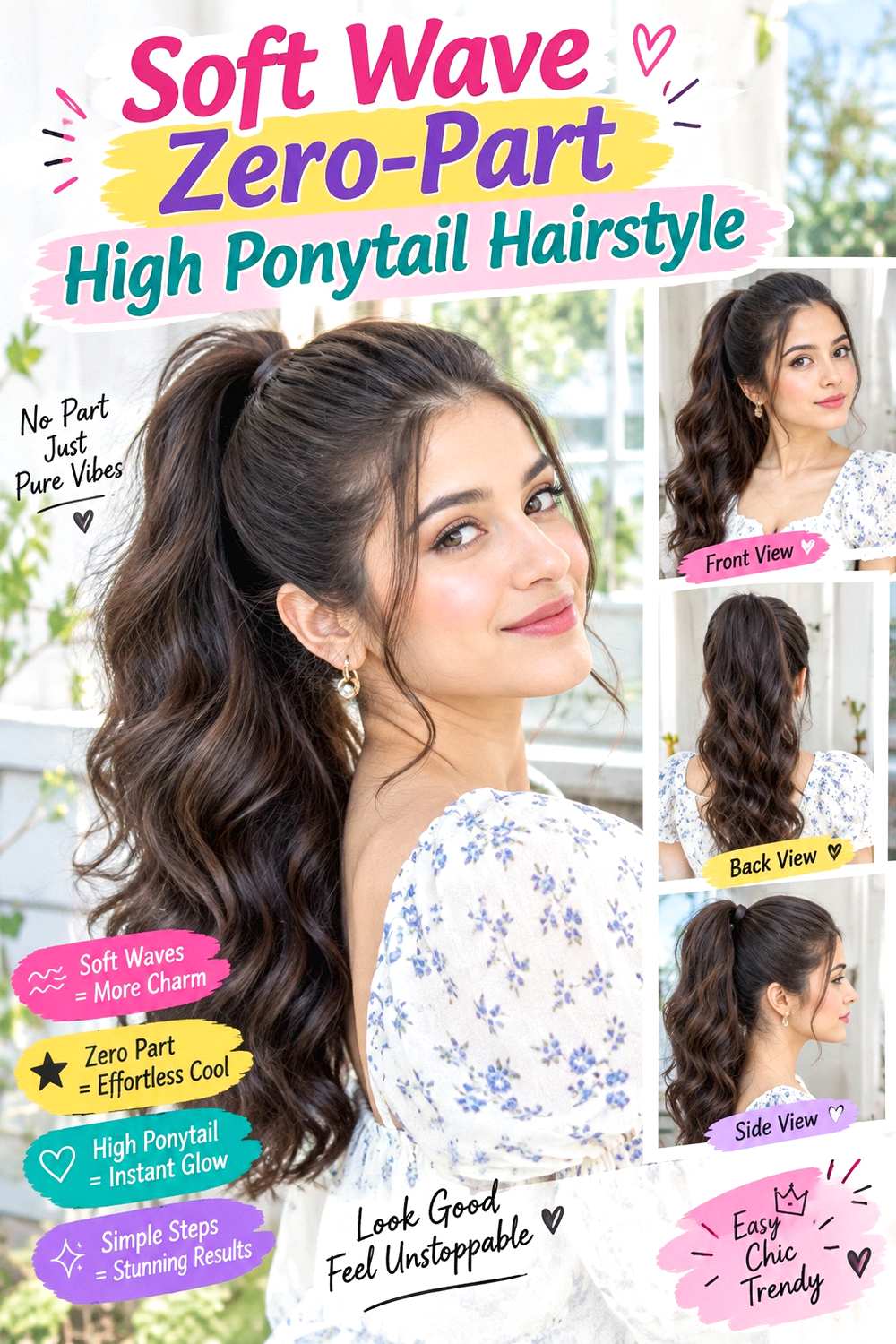
Broad waves give a high ponytail movement while the front remains smooth and partless. Gather the hair first or shape the waves beforehand, depending on your routine, then place the ponytail at the crown. Keep the roots controlled and begin visible bends below the base so the upper section stays clean. The waves should open into soft curves through the middle and finish with lightly rounded ends instead of tight spirals.
For heat styling, use heat protectant before a curling iron, and secure the ponytail with a fabric-covered elastic once the texture has cooled. Medium and long hair show the broad wave pattern most clearly. A quick refresh usually requires reshaping only a few flattened tail sections and smoothing the crown; full wash-day styling takes longer because the hair must be dried, waved, cooled, and gathered. Natural waves can be preserved instead of recreated with heat. If the ponytail becomes heavy after styling, reset the base once rather than pulling the front tighter.
At a styling appointment, specify ponytail height, wave size, and where you want the first visible bend to begin. Keeping the wave below the base preserves the defining zero-part crown.
Pro tip:
Let heat-shaped waves cool before securing or brushing them. Cooling helps the bends keep their form once the tail begins moving from the high anchor.
Make It Work for You:
If your hair is naturally wavy, preserve that movement and concentrate styling on the smooth crown. You can achieve the contrast without adding unnecessary heat.
Watch Out For:
Do not curl large sections while they are tightly stretched from the ponytail base. Give the tail enough slack to shape the waves without tugging the scalp.
Curly Zero-Part High Ponytail Hairstyle
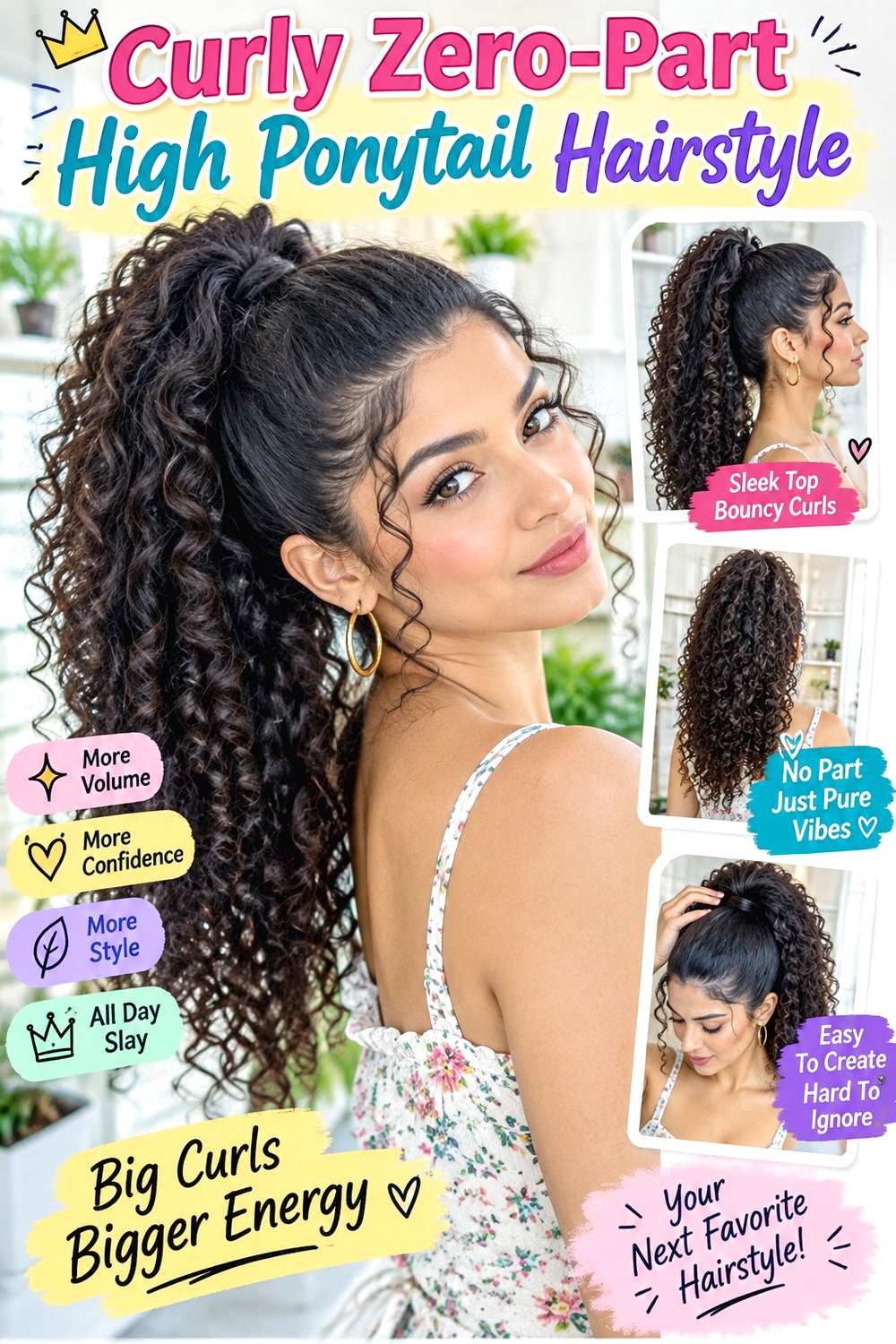
Curly hair can create a strong contrast between a directed partless crown and a full textured tail. Gather the hair backward with your fingers or a smoothing tool, preserving curl groups through the ponytail instead of brushing the entire length into a uniform surface. Place the base near the crown and let the curls fall outward and downward naturally. Shorter curls around the hairline can remain free if pulling them into the base would create tension.
Use lightweight curl gel to define the gathered and loose curls, a fabric-covered elastic for the anchor, and a wide-tooth comb only where gentle sectioning is needed. A quick refresh may involve redefining a few outer curls and resetting the base; a full wash-day style takes longer because the curls should reach their normal dry volume before final tension is judged. Shrinkage can make a high ponytail feel tighter after drying, so check comfort again. If the base pulls, rebuild it with more slack rather than stretching the hairline.
At a styling appointment, specify the ponytail height on dry hair and how much curl volume you want through the tail. The zero-part effect comes from backward direction, not from flattening every curl.
Pro tip:
Choose the final ponytail height after the curls reach their usual dry volume. This makes both tail shape and root tension easier to judge accurately.
Make It Work for You:
For tighter curls, use a slightly broader high base and keep more texture at the crown. The style stays partless without compressing the natural curl pattern.
Watch Out For:
Do not judge tension only while curls are damp or stretched. Recheck the base after drying and loosen it if shrinkage creates noticeable pulling.
Coily Puff Zero-Part High Ponytail Hairstyle
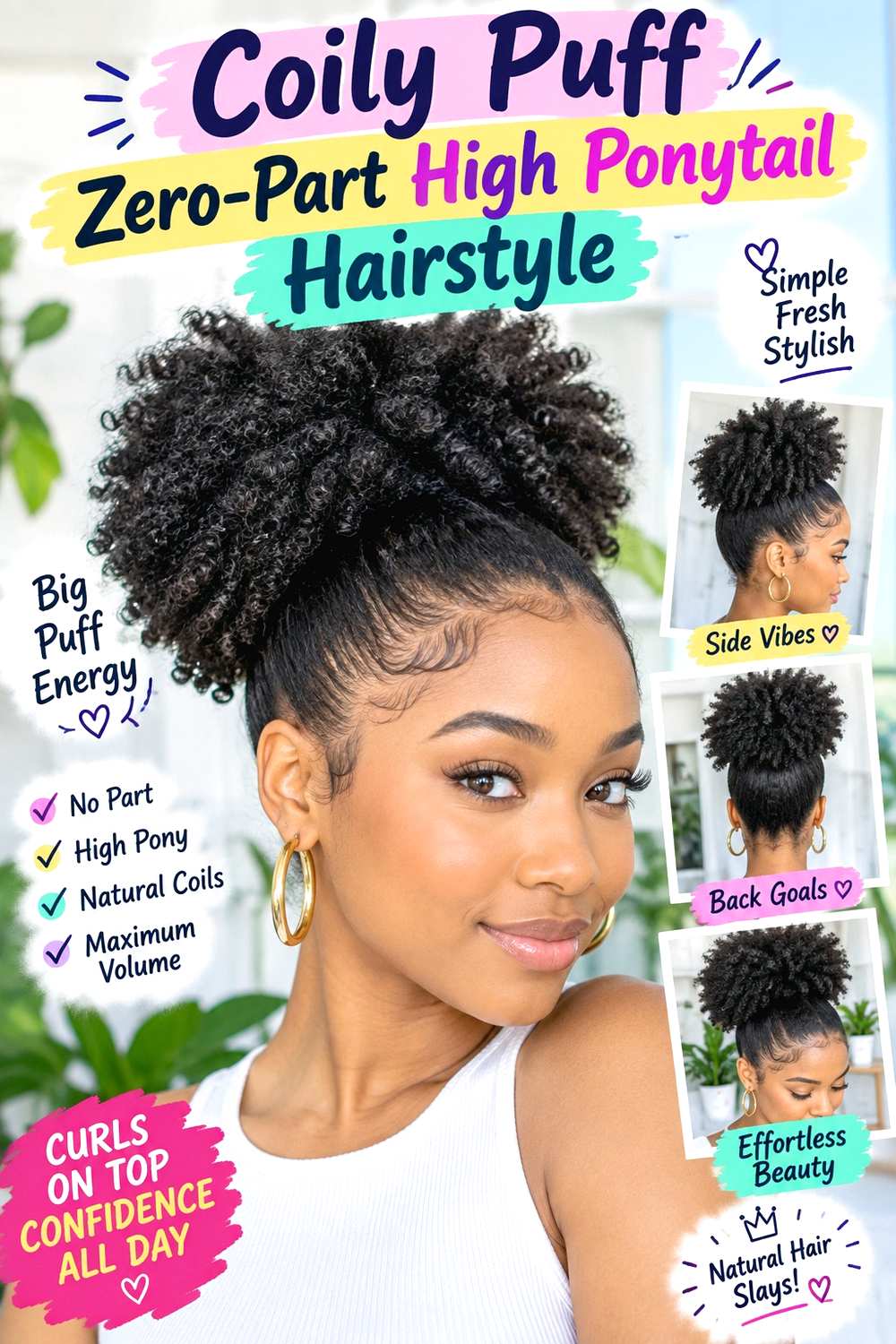
A coily puff version keeps the front directed backward without a visible part while letting the gathered texture expand fully at the crown. Guide the hair upward with moderate tension, keeping some natural height through the top rather than brushing the surface completely flat. Secure the base high, then shape the coils outward so the puff looks broad and balanced. Shorter coils around the nape or hairline can stay free when they do not reach comfortably.
Use moisturizing leave-in conditioner for pliability, a fabric-covered elastic for the high anchor, and lightweight edge gel only where extra surface control is wanted. A quick refresh may involve reshaping the puff and smoothing the front; full wash-day styling takes longer because shrinkage and final volume should be considered before the anchor is finalized. Dense coils may need a larger base or fewer elastic wraps to remain comfortable. If the puff leans backward, reposition the base rather than tightening the hairline.
At a styling appointment, specify how high you want the puff and how smooth or textured the crown should remain. The zero-part direction can stay clear while the coil pattern remains visible and full.
Pro tip:
Shape the puff only after the base feels comfortable. Adjusting the volume afterward is easier than correcting tension once the coils have been arranged.
Make It Work for You:
For very dense coils, use a broader high anchor with moderate hold and let the puff expand naturally. This distributes volume without concentrating pressure at one point.
Watch Out For:
Do not force short nape or temple coils into the high base. Leave them softly controlled rather than stretching them until the style becomes uncomfortable.
Braided Tail Zero-Part High Ponytail Hairstyle
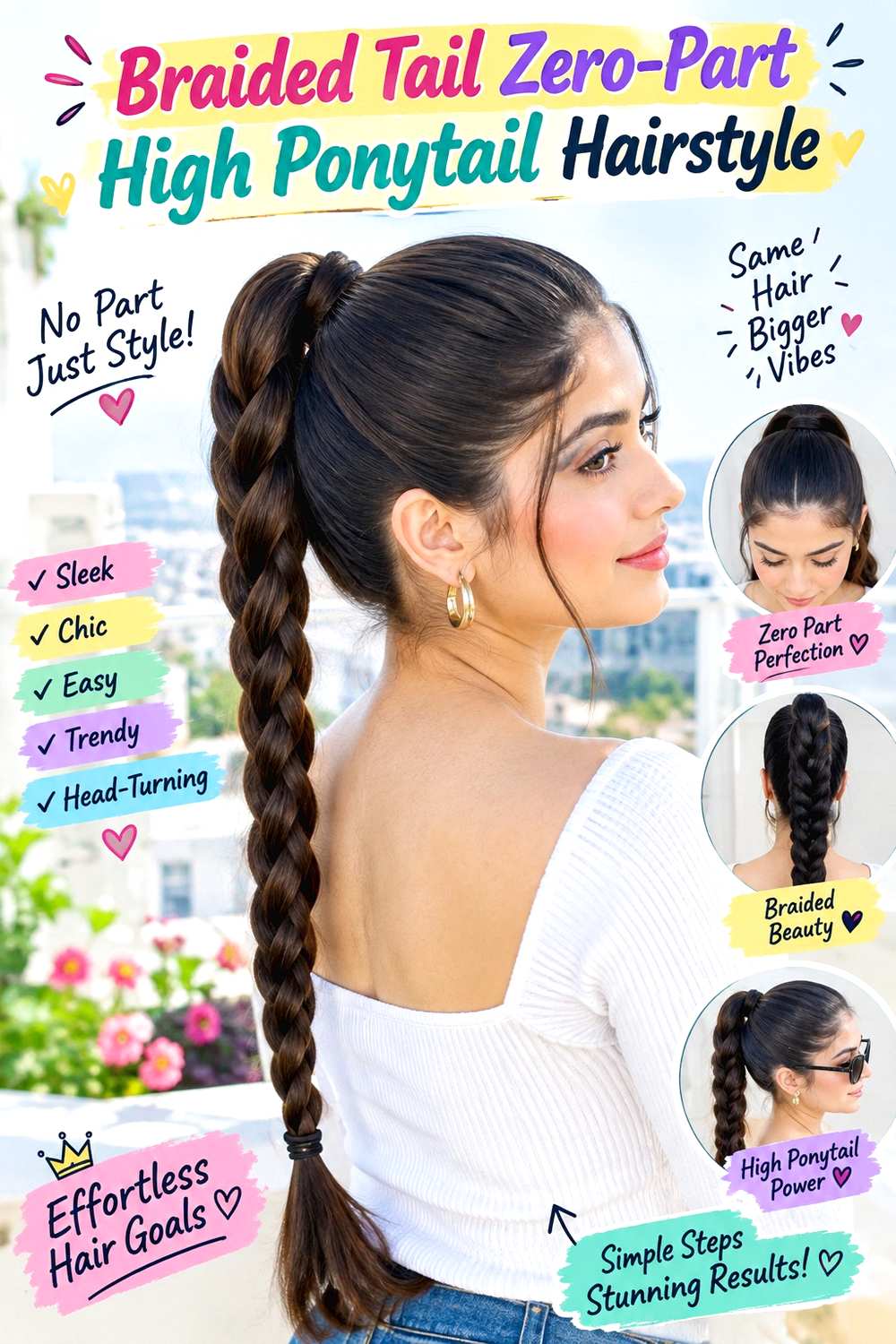
A braided tail keeps the crown sleek and turns the ponytail length into one structured line. Sweep the hair backward without a part, secure the base high at the crown, and create a three-strand braid through the tail. Keep the braid firm near the base so it does not rotate, then loosen the middle edges slightly if you want more width. The lower end should remain compact enough to support the finishing elastic securely.
Use a fabric-covered elastic for the high ponytail base, a mini elastic at the braid end, and light texturizing spray through the tail for grip. Medium and long hair work best because braiding shortens the visible length. A quick refresh usually means smoothing the crown and tightening only the braid end if needed; full wash-day styling takes longer when the hair first requires drying or texture preparation. If the braid pulls backward on the scalp, reduce its weight or lower the anchor slightly rather than tightening the front.
At a styling appointment, specify ponytail height, braid width, and whether you want a compact or gently expanded braid. Structural support should remain at the ponytail base rather than coming from an excessively tight braid.
Pro tip:
Finish the entire braid before expanding its edges. Working afterward lets you compare the width from top to bottom without disturbing the high ponytail anchor.
Make It Work for You:
For lower-density hair, keep the braid compact through the ends and add width mainly in the middle. This preserves a fuller-looking lower section.
Watch Out For:
Do not loosen the braid aggressively near its base. Excess movement there can rotate the tail and place uneven pressure on the high ponytail anchor.
Bubble Tail Zero-Part High Ponytail Hairstyle
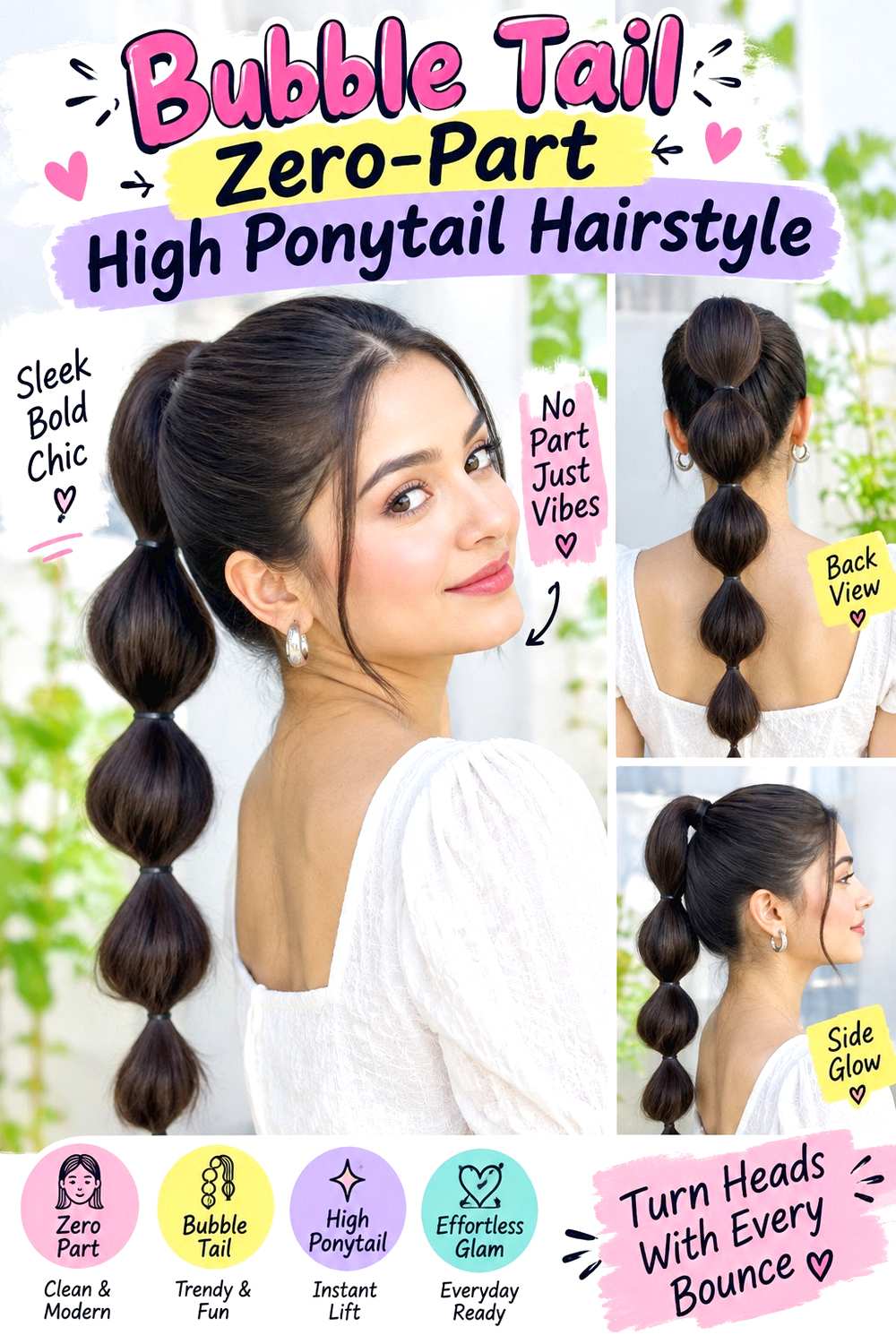
A bubble tail adds repeated rounded sections below a clean zero-part crown. Gather the hair high and smooth the front backward, then secure the main ponytail before adding small elastics down the length at even intervals. Gently expand each section between elastics to form rounded bubbles, keeping the lowest bubble slightly smaller so the ends remain substantial. The ponytail base should stay stable while the shaping happens farther down the tail.
Use a fabric-covered elastic for the main high anchor, small clear elastics for the bubbles, and light texturizing spray to give the tail enough grip for shaping. Long hair creates the clearest repeated pattern, while medium length can support fewer bubbles. A quick refresh means reshaping flattened sections and checking the small elastics; full styling takes longer because the entire tail must be segmented again. If the bubbles pull the ponytail backward, reduce their size instead of tightening the crown.
At a styling appointment, specify the high-base position, bubble spacing, and how full you want each section. Even proportions usually create a cleaner result than making every bubble as large as possible.
Pro tip:
Install all the small elastics before expanding any bubbles. Once the spacing is set, adjust each rounded section gradually from the top downward.
Make It Work for You:
For medium-length or lower-density hair, create fewer bubbles with closer spacing. The segmented effect remains visible without stretching the tail too thin.
Watch Out For:
Do not overexpand the lowest bubbles. The ends naturally contain less hair, so excessive widening can make the bottom look sparse and unstable.
Twisted Base Zero-Part High Ponytail Hairstyle
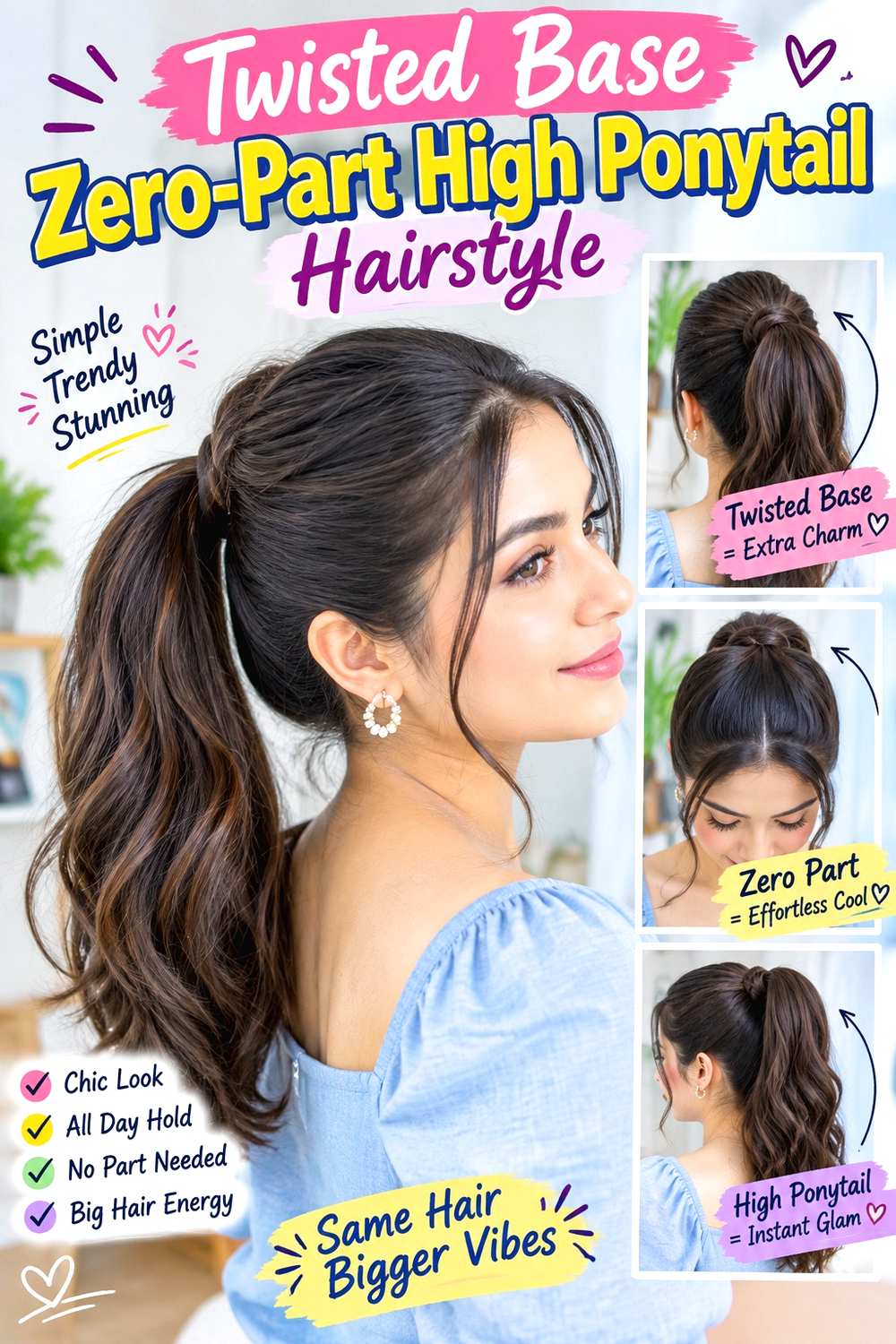
A twisted base adds subtle structure immediately around the ponytail anchor while keeping the front completely partless. Sweep the hair backward and secure a high ponytail, then take two small underside sections and twist them around the elastic in opposite directions. Pin the ends beneath the base so the twists create a narrow textured collar. The tail can remain straight, waved, curly, or coily, while the crown stays clean and uninterrupted.
Use a fabric-covered elastic for the high base, lightweight styling cream to keep the twists neat, and bobby pins to secure their hidden ends. Medium and long hair provide enough tail length to spare two small sections without reducing fullness noticeably. A quick refresh may involve retwisting one base section and smoothing the crown; a full wash-day version takes longer when the tail also needs texture preparation. If the twisted collar starts slipping, reset it rather than tightening the main ponytail.
At a styling appointment, specify how wide you want the twisted base and whether the two sections should overlap visibly or form a smooth narrow wrap. The twists should remain decorative, while the elastic underneath carries the tail’s weight.
Pro tip:
Wrap the two twists in opposite directions and pin underneath. Balanced tension around the base helps the decorative collar stay centered rather than rotating to one side.
Make It Work for You:
For fine hair, use very narrow twisting sections so most of the ponytail remains free. The base still gains detail without sacrificing visible tail density.
Watch Out For:
Do not tighten the twists enough to change the main ponytail position. They should finish the anchor, not become a second source of scalp tension.
Fine Hair Zero-Part High Ponytail Hairstyle
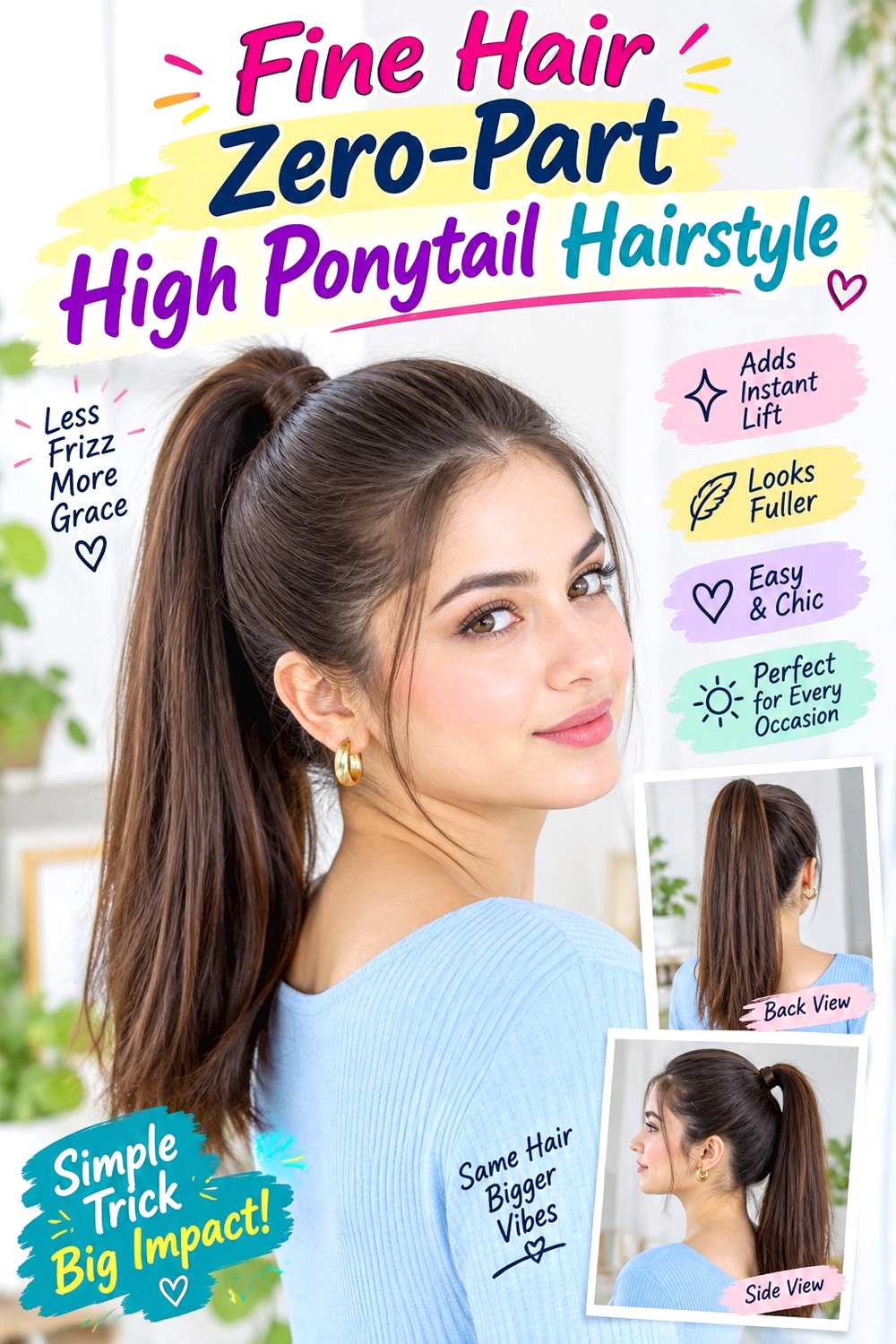
Fine strands benefit from a high ponytail that preserves movement without relying on heavy product or extreme smoothing. Direct the hair backward with no visible part, keep a slight curve through the crown, and place the base high enough for lift without overstretching the tail. Leave the ends softly mobile rather than separating them aggressively. If the hair is also lower density, a moderate rather than extreme ponytail height can make the tail appear more substantial.
Use lightweight styling mousse for controlled body, a boar-bristle brush to smooth the crown, and a fabric-covered elastic for the anchor. Fine hair is not automatically sparse, so the amount gathered and tail fullness should be judged separately. A quick refresh may involve restoring crown lift and resetting the base; a full wash-day style takes longer if the hair needs blow-drying for extra body first. Avoid layering heavy serum or gel around the roots because fine strands can collapse quickly. If the tail looks thin, adjust the styling rather than repeatedly tightening the base.
At a styling appointment, specify that you want a partless high ponytail with preserved crown shape and minimal product weight. Temporary styling should not require extra cutting solely to create fullness.
Pro tip:
Keep the ponytail ends less separated than the middle. Preserving definition at the bottom can make fine strands look fuller while the tail still moves freely.
Make It Work for You:
If your fine hair is also low density, choose a slightly lower high anchor and keep the crown softly rounded. The tail can retain more visible substance.
Watch Out For:
Avoid heavy gloss products directly at the roots. Excess weight can flatten fine hair and make the zero-part crown look oily rather than polished.
Dense Hair Zero-Part High Ponytail Hairstyle
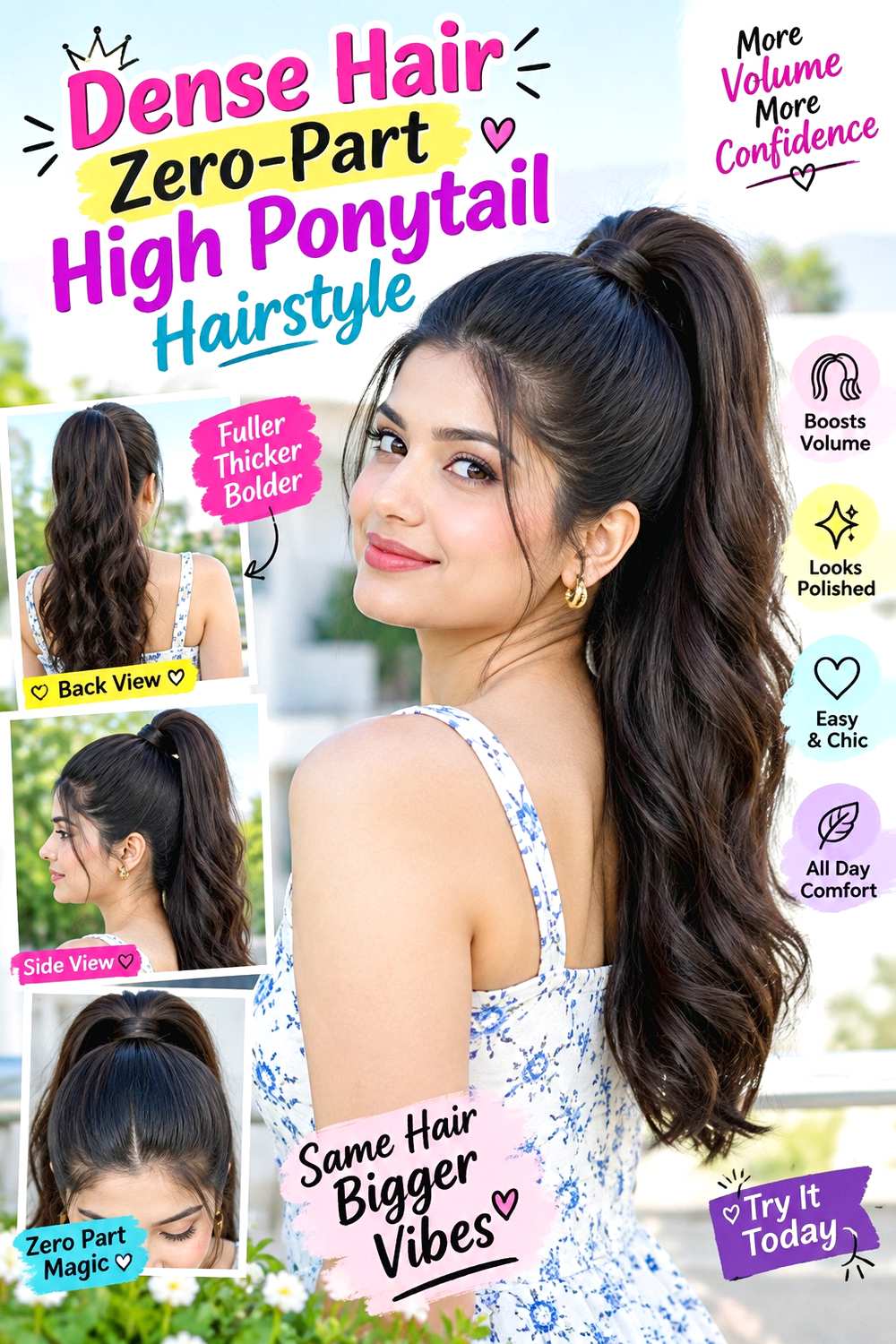
Dense hair can create a dramatic high ponytail, but the anchor needs to distribute weight rather than concentrate it at one tight point. Sweep the hair backward with no visible part, maintain a small amount of crown curve, and position the ponytail high enough for lift without forcing every section vertically upward. Keep the tail broad and allow its natural density to provide volume. A slightly wider base often feels more comfortable than an extremely compact one.
Use a strong fabric-covered elastic for the primary anchor, bobby pins beneath the base for additional support if needed, and lightweight styling cream on the visible crown. A quick refresh usually means correcting the support under the base and smoothing the top; a full wash-day version takes longer because drying and gathering dense hair are separate commitments. If the tail pulls backward, lower the anchor slightly or distribute support rather than tightening the elastic repeatedly. Dense hair does not automatically need aggressive thinning for temporary styles.
At a styling appointment, specify the preferred high point, how much crown softness you want, and whether the tail should fall directly back or slightly upward. Comfortable weight distribution matters more than achieving the smallest possible base.
Pro tip:
Support the underside of a heavy ponytail with discreet pins if needed rather than adding elastic wraps. Distributed support can reduce concentrated tension at the crown.
Make It Work for You:
For very dense hair, place the ponytail just behind the highest crown point. This keeps a lifted profile while reducing the vertical pull from the nape.
Watch Out For:
Do not solve ponytail weight by tightening the hairline. Adjust anchor position and support so the scalp does not carry unnecessary extra tension.
Face-Framing Zero-Part High Ponytail Hairstyle
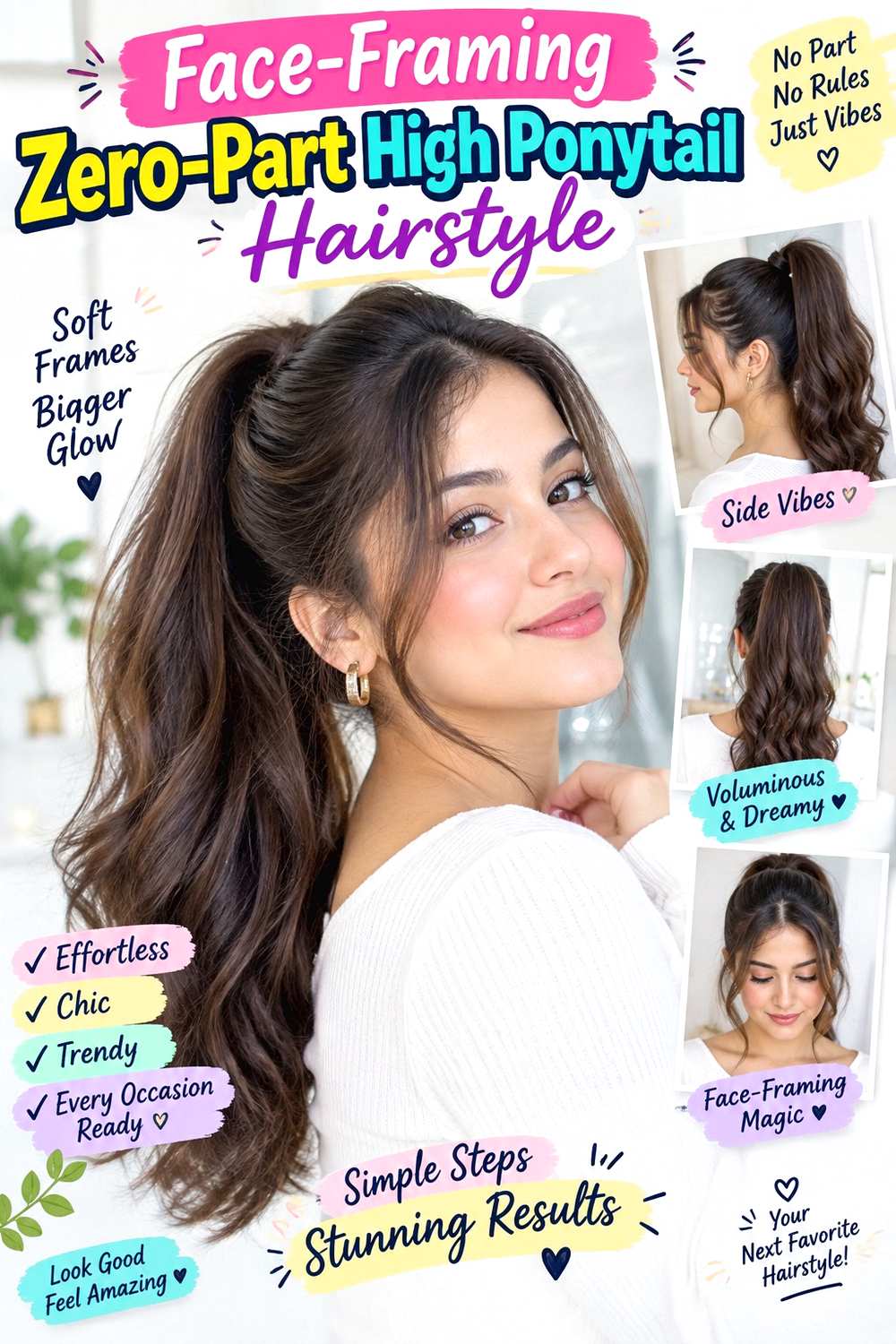
A zero-part ponytail can still have softness when selected face-framing pieces remain loose around the temples. Separate those sections before brushing the rest of the hair backward, then secure the ponytail high at the crown. The main surface stays continuous with no visible part, while the loose pieces curve toward the cheekbones, jaw, or collarbone. Keep the tail straight, wavy, curly, or coily depending on your preferred finish.
Use lightweight smoothing cream on the gathered hair, a fine-tooth comb to direct the crown backward, and a fabric-covered elastic to secure the ponytail. Medium and long hair work easily, and existing layers can provide natural framing without requiring a new cut. A quick refresh generally means smoothing the crown and reshaping the two front sections; full wash-day styling takes longer if those pieces need separate curl or wave definition. If they repeatedly fall into the eyes, change their direction rather than tightening the ponytail.
At a styling appointment, identify exactly which front sections should remain loose and where they should finish. The framing should look deliberate, while the zero-part crown behind it stays smooth and structurally independent.
Pro tip:
Separate the framing pieces before creating the ponytail. Pulling them free afterward can disturb the smooth crown and loosen the carefully balanced high anchor.
Make It Work for You:
For curly or wavy front layers, preserve their natural bend instead of smoothing them to match the crown. The contrast can make the style feel softer.
Watch Out For:
Do not release random strands once the ponytail is finished. Choose the front pieces deliberately so the zero-part shape stays clean and balanced.
Shorter Length Zero-Part High Ponytail Hairstyle
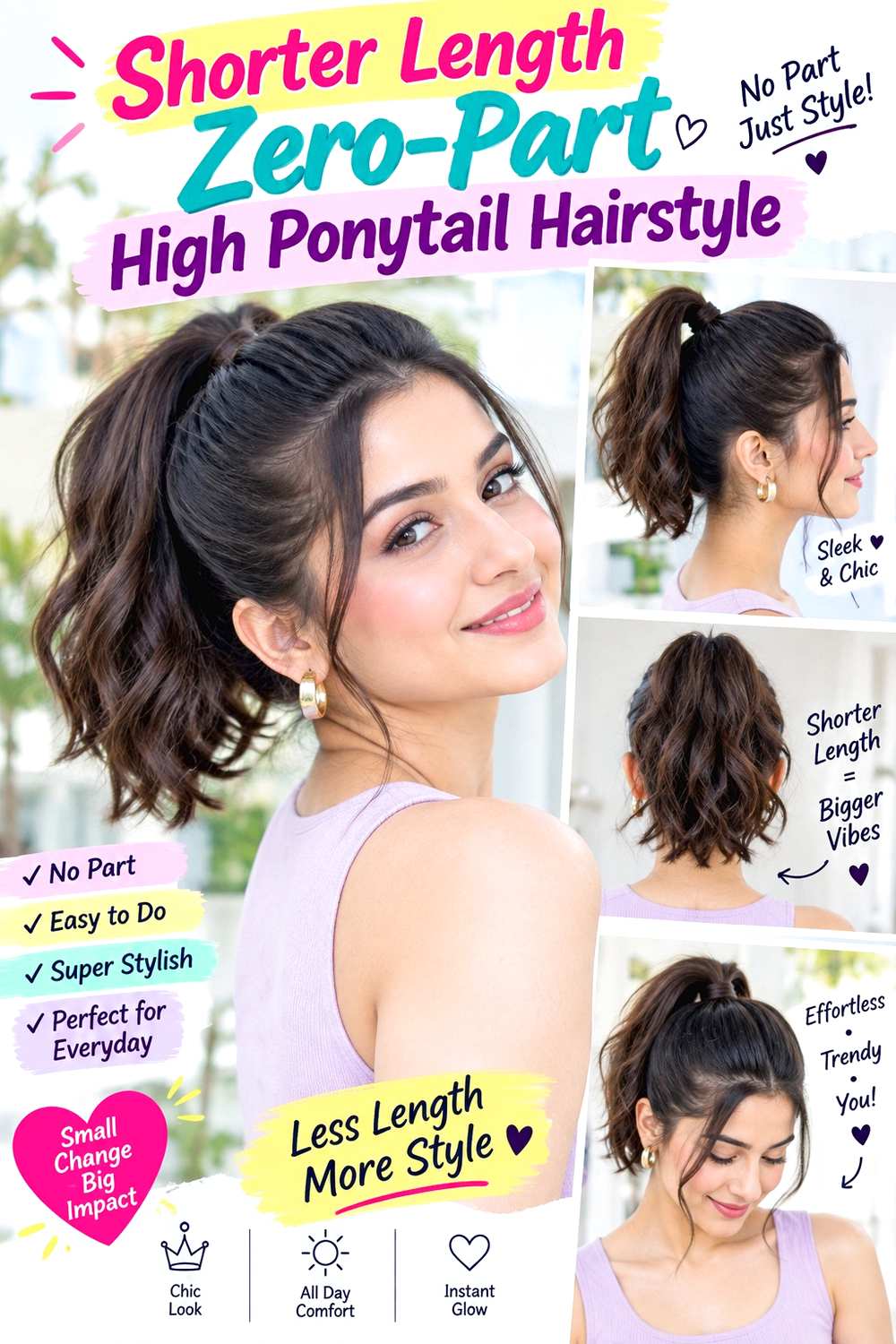
Shoulder-length or layered hair can form a high ponytail when the anchor is positioned where the back sections comfortably reach. Sweep the hair backward without a part and gather it near the upper back of the head rather than forcing the base to the very top. Let short nape or temple pieces remain softly controlled when they cannot reach naturally. The tail will be shorter and more compact, which keeps the high shape intentional rather than overstretched.
Use light texturizing spray for grip, a fabric-covered elastic for the base, and bobby pins only where short sections need targeted support. A quick refresh may take a few minutes because the tail is compact; full wash-day styling takes longer only if the haircut first needs its normal drying or texture routine. If short layers repeatedly fall out, move the anchor slightly lower instead of tightening the gathered hair. Straight, wavy, curly, and coily shoulder-length hair can all use this approach when reach is realistic.
At a styling appointment, identify the shortest pieces you want included and the highest comfortable point they can reach. The temporary ponytail should adapt to the current haircut rather than requiring a cut specifically for the style.
Pro tip:
Choose the anchor by testing where the nape sections reach without strain. A slightly lower high ponytail often looks cleaner than one held up by excessive pins.
Make It Work for You:
If your haircut has short temple layers, leave them softly controlled around the hairline while gathering the longer back sections into the main high base.
Watch Out For:
Do not stretch short nape pieces upward until they pull. Lower the base slightly or leave those sections free so the hairstyle remains comfortable.
Glossy Zero-Part High Ponytail Hairstyle

A glossy version uses smooth directional styling and restrained shine to make the uninterrupted crown especially noticeable. Brush the hair backward without a part, keep the sides polished, and secure a centered high ponytail near the crown. The tail can remain sleek or carry soft texture, but the visible roots should have an even sheen rather than a heavily coated wet appearance. A small natural crown curve keeps the surface from looking pasted down.
Use lightweight shine serum sparingly on the outer layer, a boar-bristle brush to distribute the surface smoothly, and a fabric-covered elastic for the high anchor. A quick refresh usually means touching only areas where flyaways have appeared and checking the base; full wash-day styling takes longer if the preferred smooth finish requires blow-drying first. Too much serum can increase slip and reduce root body. If the ponytail begins to move, rebuild the elastic rather than adding more product.
At a styling appointment, specify the level of shine you want, from softly reflective to very polished, and identify the exact ponytail height. Gloss and hold are separate jobs, so the base should remain secure without relying on product saturation.
Pro tip:
Apply shine product mainly to the outermost surface after the ponytail is secure. This adds reflection without making the gathered interior unnecessarily slippery.
Make It Work for You:
For wavy or curly hair, keep the tail textured and limit gloss to the crown. The contrast emphasizes the zero-part surface without flattening natural movement.
Watch Out For:
Avoid repeatedly adding serum when flyaways appear. Target individual areas instead so the crown stays reflective without becoming heavy, greasy, or difficult to anchor.
Accessory-Ready Zero-Part High Ponytail Hairstyle
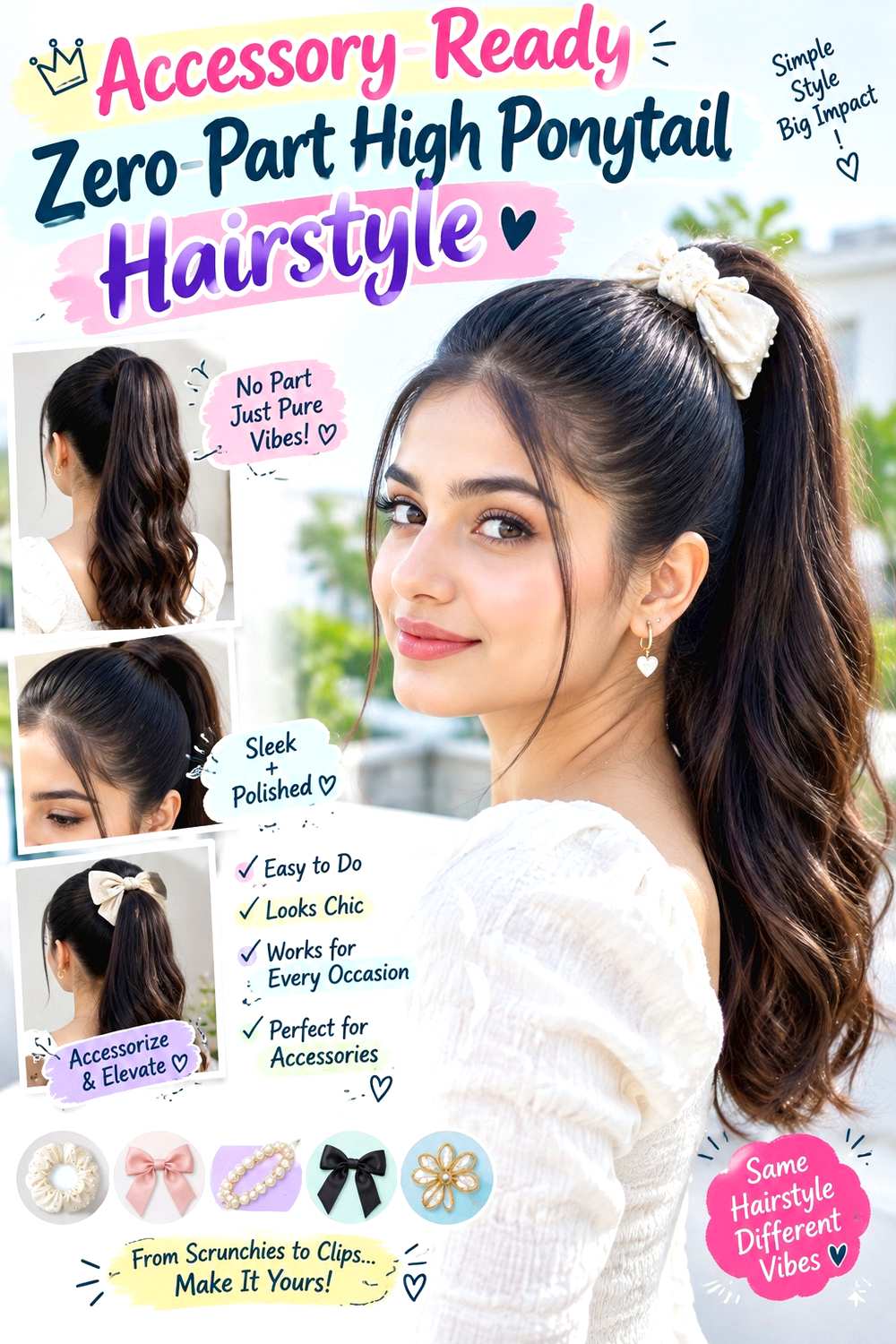
An accessory-ready ponytail keeps a clean area around the base for a cuff, ribbon, barrette, bow, or decorative pin. Sweep the hair backward without a visible part, establish a secure high ponytail first, and leave the surface around the elastic uncluttered by extra structural hardware. The tail can remain straight, waved, braided, curly, or coily. Choose accessory placement so it does not interfere with the moving tail or press into the scalp.
Use a fabric-covered elastic for the main support, lightweight smoothing cream for the crown, and the chosen accessory as the finishing detail. A quick refresh may involve correcting the accessory angle and smoothing the top; a full wash-day version takes longer if the tail also needs texture preparation. If the accessory slips, give it a separate shallow anchor rather than tightening the ponytail base. Heavier pieces should not be expected to support the full tail.
At a styling appointment, bring or describe the accessory and specify whether it should sit above, beneath, or around the elastic. The ponytail needs to remain structurally secure before decoration is added, especially when the accessory has weight or protruding hardware.
Pro tip:
Finish the high ponytail completely before attaching decoration. A stable base lets you reposition an accessory without changing the crown tension or ponytail height.
Make It Work for You:
For a heavier cuff or clip, attach it around a small supported section near the base rather than asking it to grip the entire ponytail.
Watch Out For:
Do not use decorative hardware to repair a slipping ponytail. Reset the structural elastic first so the accessory remains ornamental and comfortable.
Conclusion
Zero-part high ponytail hairstyles can range from ultra-sleek crowns to rounded roots, wrapped bases, waves, curls, braids, bubbles, and full coily puffs. Medium and long hair give the easiest reach, while shorter lengths often need a slightly lower high anchor. Fine hair may benefit from lighter products and preserved tail density, whereas dense hair usually needs stronger support and thoughtful weight distribution. Face-framing pieces can soften the hairline without creating a visible part, and natural texture can remain through the tail. The best version depends on crown contour, tail volume, texture, preferred finish, and how much tension feels comfortable. A secure base should come from good anchoring rather than repeatedly tightening the hairline.
Before Your Salon Visit
Choose one or two favorite references and point out the exact ponytail height, crown contour, hairline finish, tail volume, texture, face-framing pieces, and base detail you like. Discuss your natural texture, density, face shape, current length, upkeep, and normal styling routine so the look can be adapted realistically. Because high ponytails are temporary styles, focus on comfortable anchoring, zero-part direction, and secure support rather than requesting a haircut solely for the style. If you plan to add a cuff, bow, or clip, bring that reference too.
FAQs
How Do You Make a High Ponytail Look Partless?
Brush or guide the hair backward from the entire front hairline without creating a center or side division. Work in sections so the roots meet smoothly at the crown. A partless effect comes from consistent direction, not extreme tension, so regather any uneven areas instead of simply pulling the elastic tighter.
Can Curly or Coily Hair Wear a Zero-Part High Ponytail?
Yes. Curly and coily hair can keep its natural tail texture while the crown is directed backward. Consider dry volume and shrinkage when setting the anchor, and avoid stretching short hairline or nape sections excessively. A broader, well-supported base can be more comfortable for dense natural texture.
How Do I Keep a High Ponytail From Sagging?
Start with a strong base positioned where the hair naturally reaches, and use an elastic suited to the ponytail’s weight. Dense or very long hair may benefit from discreet support beneath the base. If the ponytail drops, rebuild the anchor rather than repeatedly tightening the front and sides.
Is a Zero-Part High Ponytail Suitable for Shorter Hair?
It can work on shoulder-length or layered hair if enough sections reach a high anchor comfortably. The base may need to sit slightly lower than it would on long hair, and short nape or temple pieces can remain softly controlled instead of being stretched or heavily pinned upward.