16 Hairstyles With Newsboy Caps for Cute Autumn Outfits
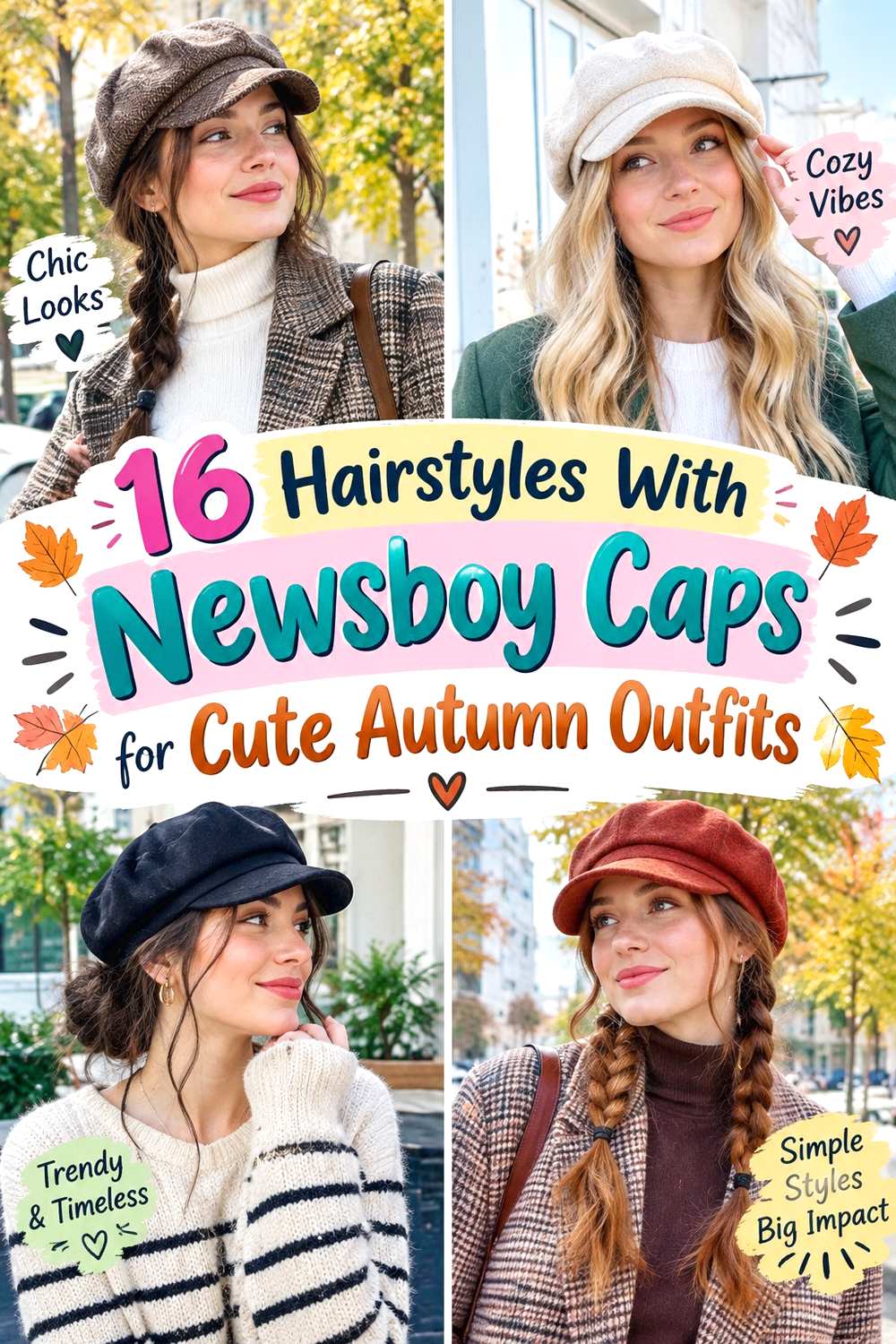
Newsboy caps sit low over the crown and frame the forehead with a short brim, so the most practical hairstyles keep bulky volume away from the top of the head. Soft waves, low ponytails, braids, bobs, curls, and nape-level buns leave more of the design visible around the cheeks, jaw, shoulders, and neckline. A center or side part can change the balance, while face-framing pieces or fringe help soften the structured shape of the cap.
Texture and density affect how each option behaves. Straight and wavy hair can use smooth finishes or broad bends, while curly and coily hair needs room for its natural pattern and shrinkage. Fine strands may benefit from a fuller bottom edge and lighter products, while dense hair often feels better when bulk is placed below the cap instead of directly underneath it. Face-framing sections can finish near the cheekbone, jaw, or chin depending on your preferred proportion.
Styling effort ranges from a brief braid or ponytail refresh to a longer wash-day curl routine or heat-styled wave set. Wool and tweed caps can create friction, static, or dents, so secure anchors and targeted touch-ups matter. Most options are temporary and do not require a haircut; comfort, hat fit, and low placement usually matter more.
Quick List
- Soft Side-Parted Waves With Newsboy Cap Hairstyle
- Low Ponytail With Tweed Newsboy Cap Hairstyle
- Curtain Bangs With Centered Newsboy Cap Hairstyle
- Loose Side Braid With Newsboy Cap Hairstyle
- Tucked Blunt Bob With Newsboy Cap Hairstyle
- Natural Curls With Slouchy Newsboy Cap Hairstyle
- Low Chignon With Wool Newsboy Cap Hairstyle
- Straight Lob With Newsboy Cap Hairstyle
- Twin Low Braids With Newsboy Cap Hairstyle
- Half-Up Twist With Newsboy Cap Hairstyle
- Low Bubble Ponytail With Newsboy Cap Hairstyle
- Textured Midi Layers With Newsboy Cap Hairstyle
- Soft Coily Puff With Back-Set Newsboy Cap Hairstyle
- Sleek Low Braid With Newsboy Cap Hairstyle
- Loose Low Pigtails With Newsboy Cap Hairstyle
- Side-Swept Curls With Newsboy Cap Hairstyle
Soft Side-Parted Waves With Newsboy Cap Hairstyle
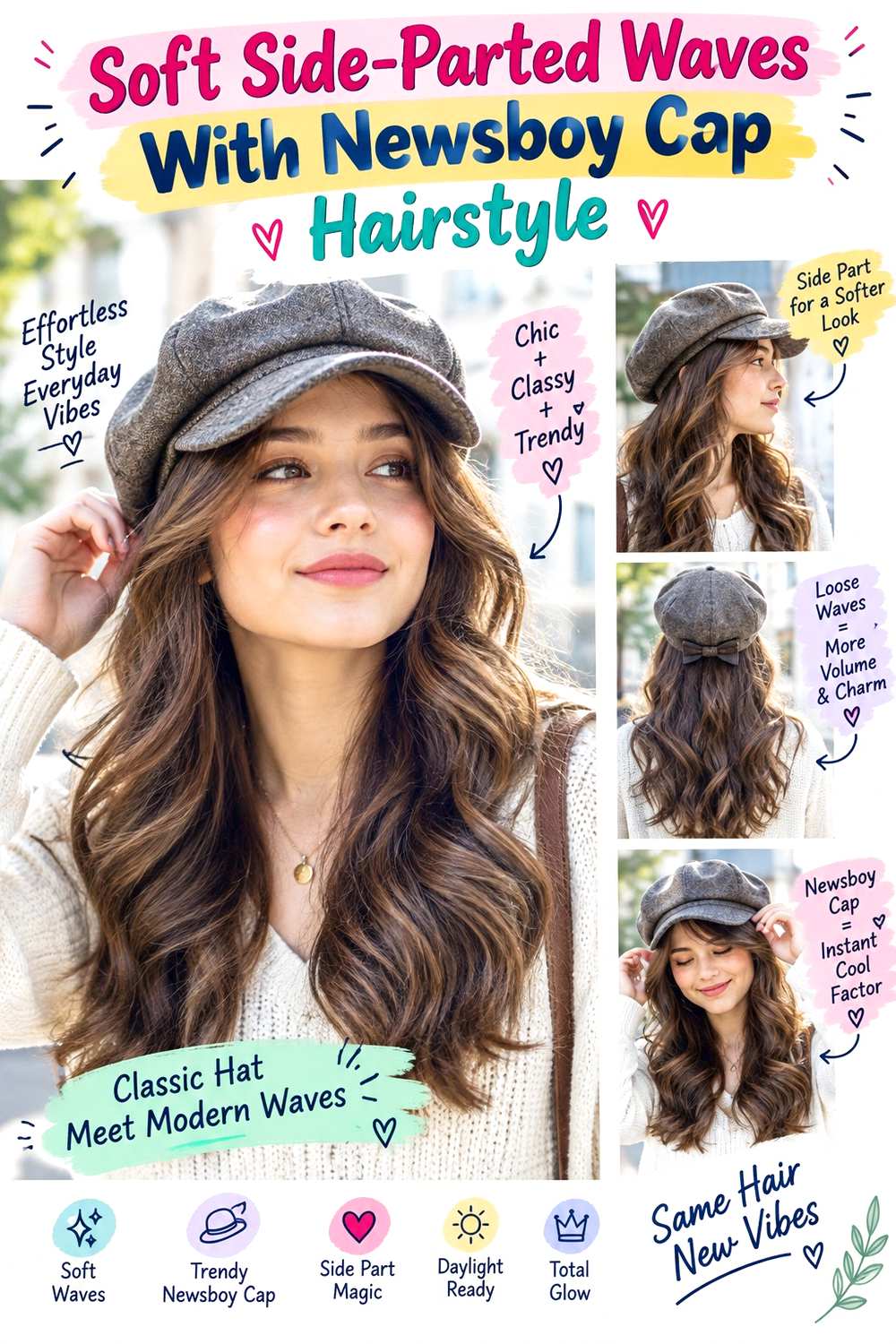
A side part gives a newsboy cap an easy asymmetry, especially when the fuller side falls forward beside the brim. Keep the crown relatively smooth, then form broad bends from around cheekbone level through the mid-lengths. Leaving the final inch or two a little straighter keeps the finish relaxed instead of overly curled. Shoulder-length and longer hair shows the movement best, while a tucked side can keep the hat line clean around one ear.
Straight and wavy textures usually reach this finish with the least work, though other textures can use it when heat styling fits the routine. Apply heat protectant before using a large-barrel curling iron, then add flexible hairspray for light hold. A quick refresh between washes may mean reshaping only the front wave and any section flattened by the cap; a full wash-day set takes longer, especially on dense or long hair.
If the waves lose shape, restyle only the visible pieces rather than reheating everything. For salon styling, show where you want the side part and where the strongest front bend should begin. That helps keep volume below the cap instead of creating height where the crown needs to sit.
Pro tip:
Shape the front wave away from the face and let it cool before touching it. Place the cap afterward so the bend stays visible beside the brim instead of folding underneath.
Make It Work for You:
For fine strands, use fewer broad bends and keep the lower edge fuller. Concentrating movement around the face preserves softness without making the ends look overly separated.
Watch Out For:
Do not build strong root lift beneath the cap. Extra height can make the hat unstable and leave a hard dent, so keep most volume from cheek level downward.
Low Ponytail With Tweed Newsboy Cap Hairstyle
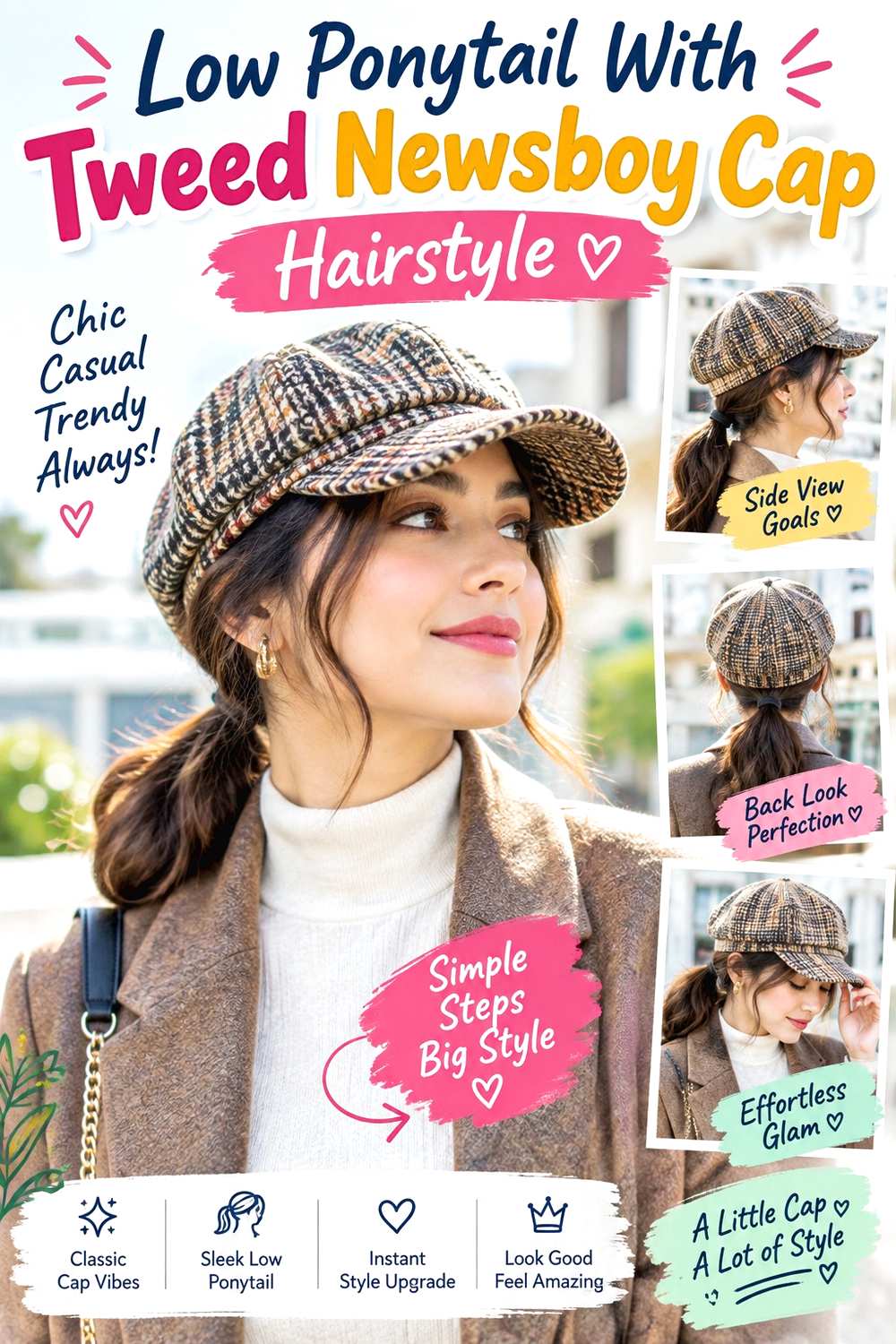
A low ponytail keeps the rounded crown of a tweed newsboy cap free from bulky anchors. Choose a center, side, or natural part, smooth the hair toward the nape, and secure the ponytail below the cap’s back edge. The lengths can remain straight, wavy, curly, or coily, while narrow face-framing pieces may stay loose around the cheeks. The low placement also keeps the hair from bunching awkwardly beneath a scarf or high coat collar.
This structure works across textures and is especially practical on busy days when the lengths are already styled. Use a soft-bristle brush to direct the surface, a fabric-covered elastic for a comfortable base, and light styling cream to control flyaways. A quick refresh usually takes only a few minutes if the ponytail stays intact; a full wash-day version depends on drying time and whether you change your natural texture.
If the ponytail drops, reset the elastic rather than tightening the hat. For professional styling, bring the cap and show where its rear edge sits. Ask for the base to clear that line and explain how much tension feels comfortable around your temples and ears so the style stays secure without feeling strained.
Pro tip:
Try the cap on once before fixing the ponytail position. Mark where the back edge falls, then secure the elastic just below that point for easier removal.
Make It Work for You:
If you want to keep curls or coils visible, smooth only the crown as much as needed and leave the ponytail texture natural. The low structure still works.
Watch Out For:
A very tight ponytail plus a snug cap can create uncomfortable pressure. Loosen the base slightly and let the elastic provide security rather than pulling harder.
Curtain Bangs With Centered Newsboy Cap Hairstyle
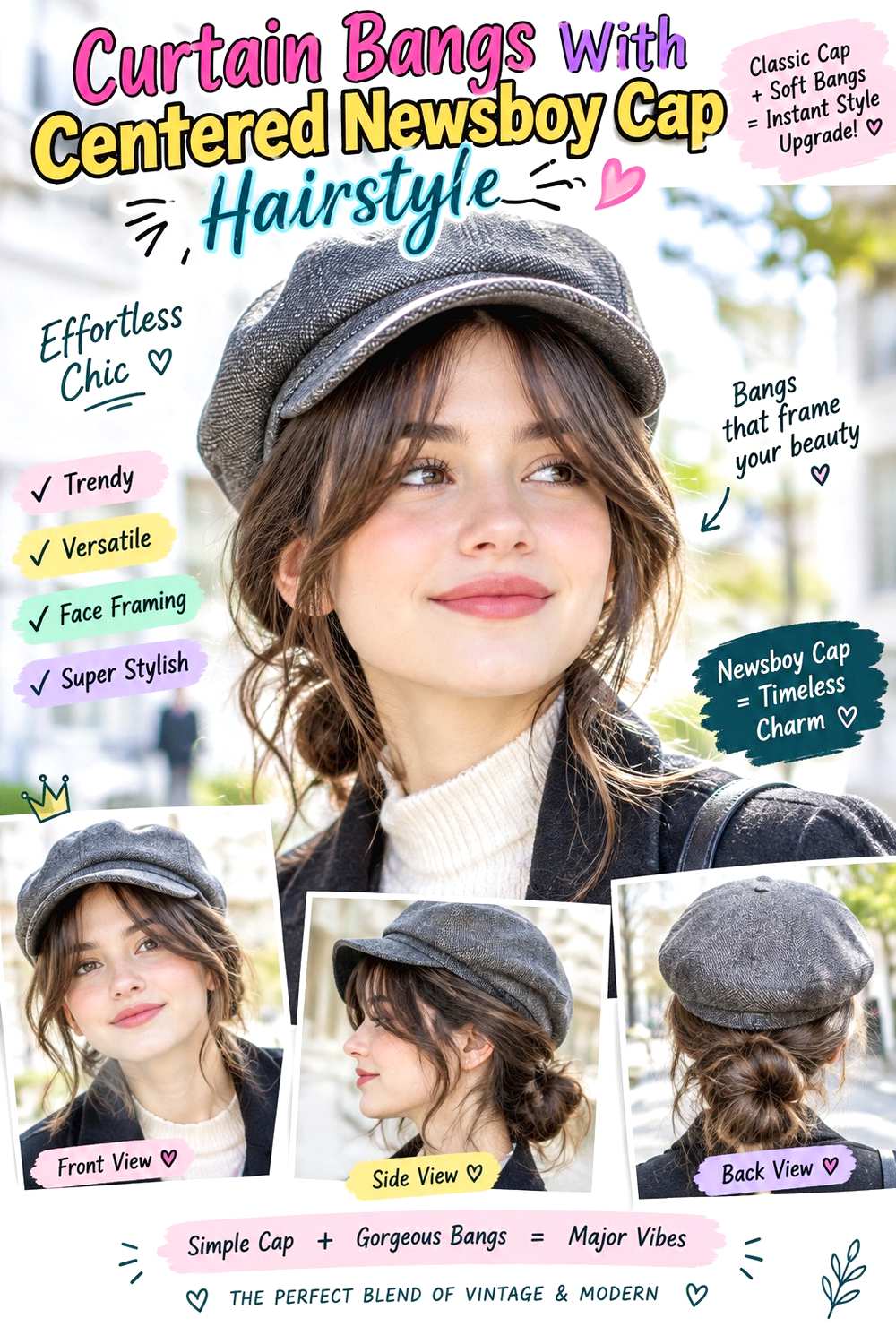
Curtain bangs stay visible when a newsboy cap sits just behind the fringe instead of directly over it. The center should open naturally, with the shortest section skimming around the brows or upper cheekbones and the outer corners extending toward the temples. Keep the crown smooth under the cap, while the remaining length can be straight, waved, or softly curled. The split fringe becomes the main face-framing detail and helps balance the cap’s short brim.
This option is easiest when the bangs already cooperate with a center opening, although growth direction may need a brief daily reset. Use heat protectant before warm styling, a small round brush to direct each side away from the face, and flexible hairspray for movable hold. A fringe-only refresh is quick, while styling the entire head after washing takes longer based on texture, length, and density.
Fringe upkeep is separate from the rest of the haircut. When the center falls into the eyes or the outer corners stop blending, the shape may need reshaping. At the salon, specify the dry finished length through the middle and sides, and mention that the cap sits behind the bangs rather than holding them in place.
Pro tip:
Direct each half of the fringe outward while it is slightly damp, then let the roots settle before positioning the cap just behind the bangs.
Make It Work for You:
For wavy hair, keep some natural bend through the fringe instead of forcing a perfectly smooth curtain. Preserve the center opening and longer outer corners.
Watch Out For:
Do not pull the cap directly over freshly styled fringe roots. The pressure can flatten one side or widen the center split more than you intended.
Loose Side Braid With Newsboy Cap Hairstyle
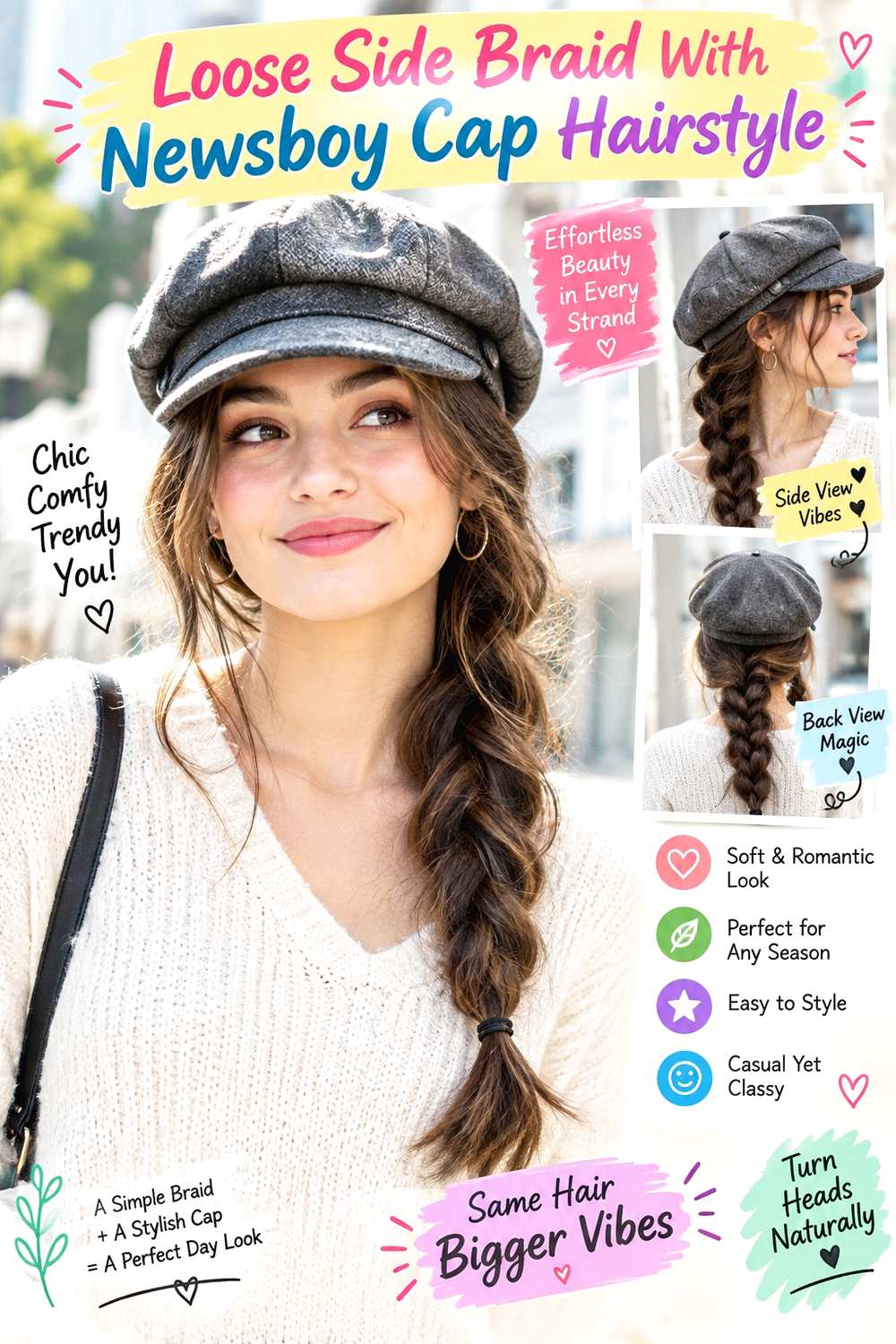
A loose side braid keeps long hair controlled while placing most of the visible texture over one shoulder. Start with an off-center or side part, gather the hair behind one ear, and braid downward with moderate tension. Keep the first crossings compact near the nape, then gently widen the lower sections for a softer finish. A few face-framing pieces can stay free around the jaw, while the crown remains smooth enough for the cap to settle without a ridge.
Medium to long hair works best, and dense hair often creates a fuller braid without much pulling apart. Use light styling cream to manage flyaways and a small fabric-covered elastic to secure the end. A quick refresh may involve tightening the first crossings or redoing the final inches; a full wash-day version takes longer only if drying or detangling is needed first.
If the braid loosens near its base, correct that section instead of tightening the whole style. For salon or event styling, say which shoulder you want the braid to fall over and how wide it should appear. The upper braid should begin below the cap edge with comfortable tension around the ear.
Pro tip:
Keep the braid firm until it passes the shoulder, then loosen selected outer loops. This keeps the upper section stable while adding softness where it stays visible.
Make It Work for You:
For medium-length or layered hair, begin the braid slightly farther back and keep it narrower. Compact sections are less likely to release shorter pieces comfortably.
Watch Out For:
Over-loosening the braid near its base can create a bulky ridge beneath the cap. Keep the first crossings controlled and soften only the lower length.
Tucked Blunt Bob With Newsboy Cap Hairstyle
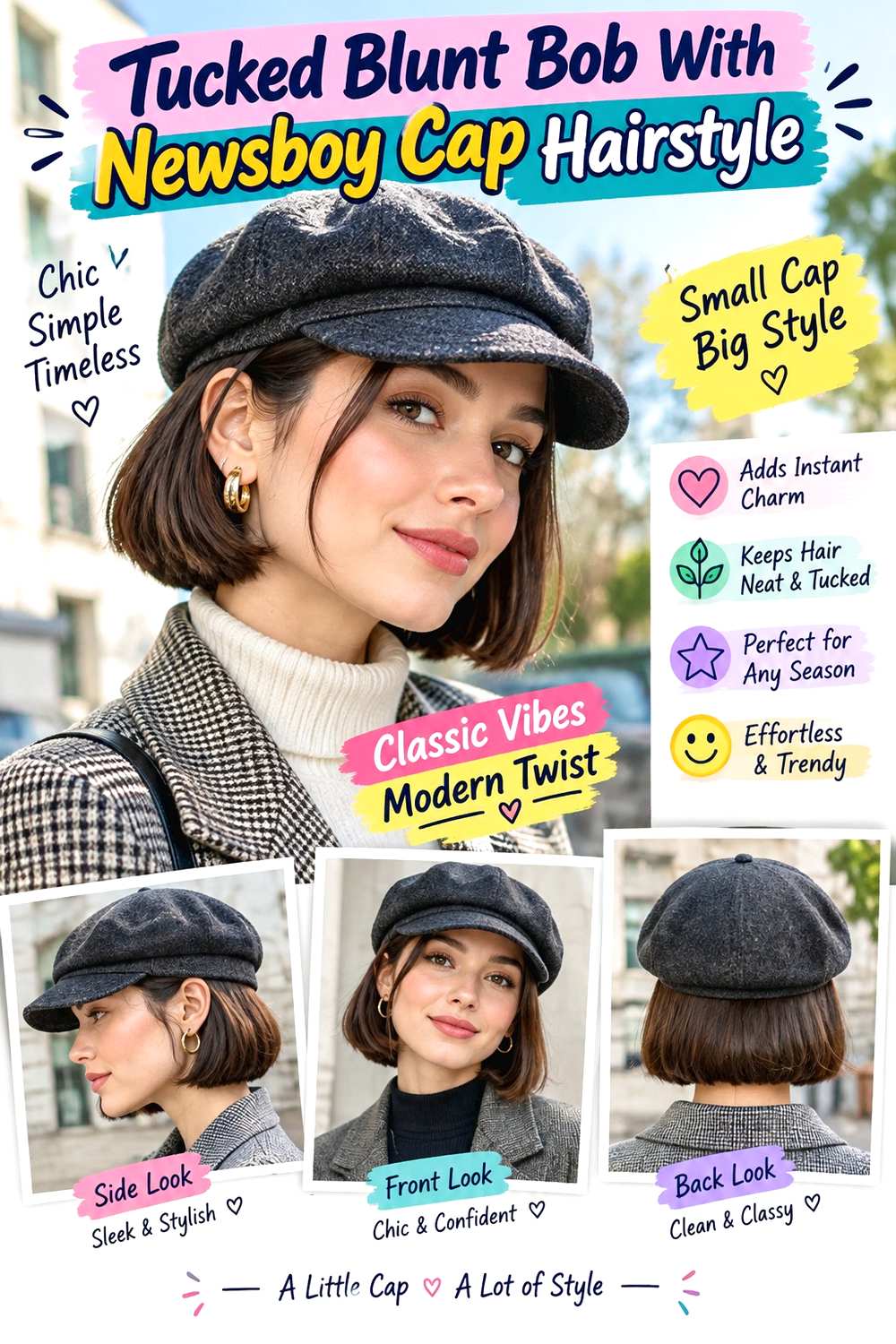
A blunt bob creates a clean outline beneath a newsboy cap because the perimeter remains visible around the jaw or upper neck. Part the hair in the center or slightly to one side, tuck one side behind the ear, and leave the opposite section forward beneath the brim. Keep the bottom edge substantial rather than overly feathered, while the crown stays smooth enough for the cap to sit close to the head.
Straight and softly wavy bobs are simple to arrange this way, while curly versions can use the same asymmetry without forcing the texture flat. Apply a light serum to control the visible ends and use a small grip clip behind the ear if the tucked side slips. A quick refresh takes only a few minutes when the bob is already shaped; wash-day effort depends on whether you smooth, wave, or define natural texture.
Cut upkeep becomes noticeable when the perimeter grows beyond the jaw or neck point you prefer. At the salon, show the exact dry finished length and explain which side you normally tuck under the cap. If you want internal movement, ask the stylist to preserve enough weight at the bottom edge so the bob still looks intentional when worn uncovered.
Pro tip:
Tuck the chosen side before placing the cap, then position the edge so it does not sit directly on the ear. This keeps the tuck cleaner and more comfortable.
Make It Work for You:
For a curly bob, tuck only the curls that naturally reach behind the ear and leave shorter pieces free. The blunt outline can still remain the focus.
Watch Out For:
Forcing a short front section behind the ear can make it spring forward repeatedly. Let that piece frame the face and secure only hair that reaches comfortably.
Natural Curls With Slouchy Newsboy Cap Hairstyle
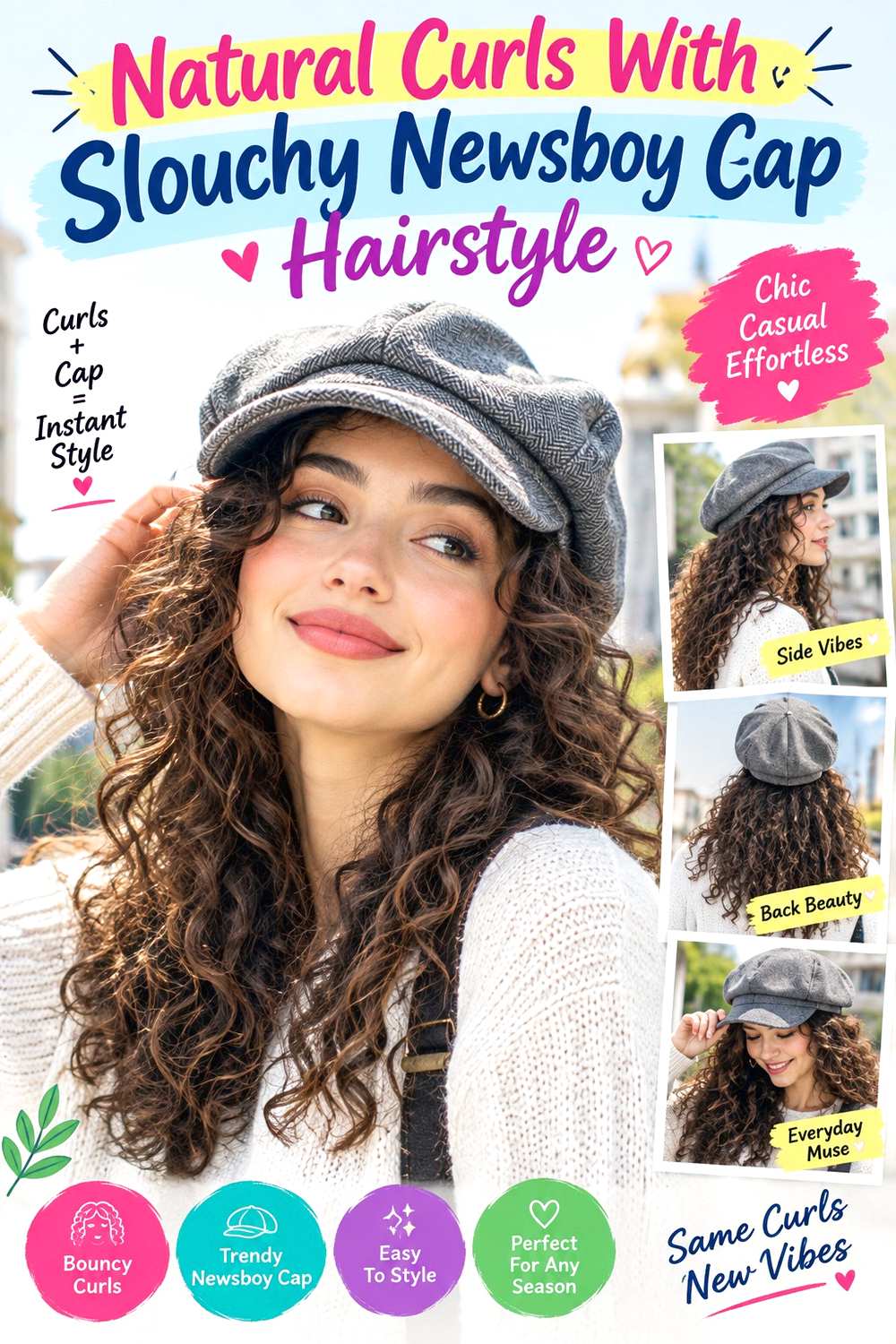
A slightly slouchy newsboy cap can work with natural curls when it rests lightly over the crown and leaves the lower pattern visible. Let the part follow the way your curls naturally separate, arrange the front pieces before putting on the hat, and keep most of the volume around the cheeks, ears, and shoulders. The goal is not a perfectly flat top; it is enough control beneath the cap for a comfortable fit while the visible curls keep their definition.
Curly hair of different densities can use this idea, though very dense hair may need a roomier cap. Apply lightweight leave-in conditioner for moisture, curl gel for definition, and use a diffuser when you want to dry without roughing up the pattern. A quick refresh between washes may involve dampening only the flattened curls; a full wash-day routine takes longer according to density, length, and drying time.
Avoid brushing the whole head dry after cap wear. For salon shaping, explain that you regularly wear caps and show where you want the visible width and face-framing curls to sit. Ask the stylist to judge the dry shape and your usual shrinkage instead of relying only on stretched length.
Pro tip:
Arrange the curls you want visible before lowering the cap gently from above. This reduces the need to drag the hat through the finished curl pattern.
Make It Work for You:
For lower-density curls, wear the cap slightly farther back so more front texture remains visible. Keep separation restrained to preserve definition and apparent fullness overall.
Watch Out For:
Repeatedly fluffing beneath the cap can create frizz without useful shape. Adjust only the curls around the temples, ears, and lower edge when they need attention.
Low Chignon With Wool Newsboy Cap Hairstyle
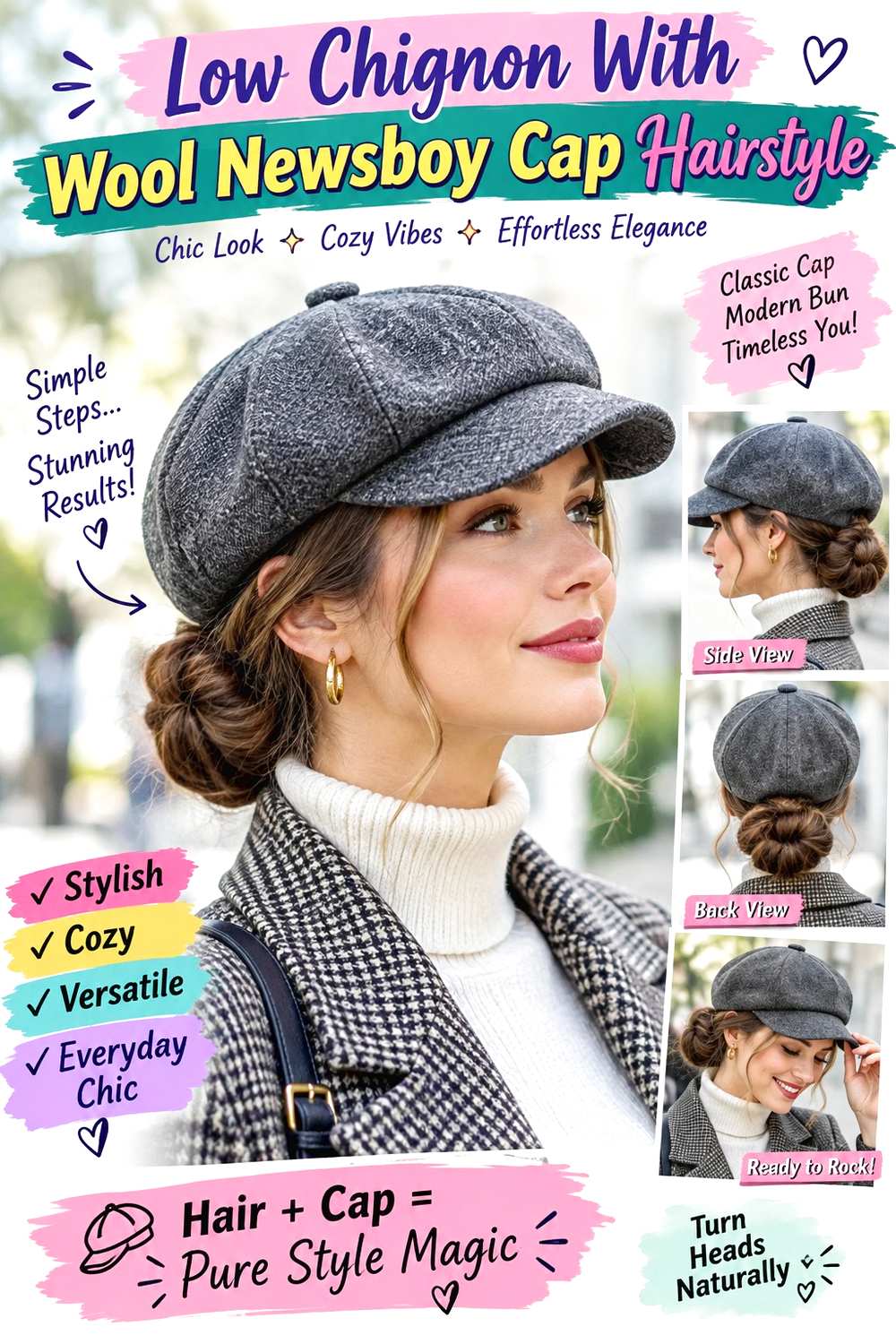
A low chignon keeps the crown clear and places the entire structure beneath the back of a wool newsboy cap. Start with a center or side part, guide the hair smoothly toward the nape, and fold or coil the length into a compact bun. Keep the chignon wider rather than tall so it does not push against the cap. Narrow pieces around the temples can stay loose if you prefer a softer frame beside the brim.
Medium to long hair is easiest to secure this way, while dense hair may feel more comfortable when the coil spreads horizontally. Use a fabric-covered elastic to create the base, bobby pins to hold the folded sections, and flexible hairspray to manage surface flyaways. A quick refresh usually means replacing one loose pin and smoothing the part. A full wash-day version takes longer if the hair also needs drying or polishing first.
If the whole chignon begins to sag, rebuild the base instead of adding random pins around the outside. For salon styling, bring the cap and show exactly where its rear edge sits. Ask for the bun to clear that line with comfortable tension, and specify whether you want the front sleek or softly framed.
Pro tip:
Test the cap before inserting the final outer pins. Turn your head from side to side and lower the chignon if its upper edge touches the hat.
Make It Work for You:
For very dense hair, spread the chignon wider across the nape rather than building it outward. The polished shape stays intact with less projection behind the head.
Watch Out For:
A chignon positioned too high can push the cap forward and strain the nape. Lower the anchor instead of trying to force the hat over the bun.
Straight Lob With Newsboy Cap Hairstyle
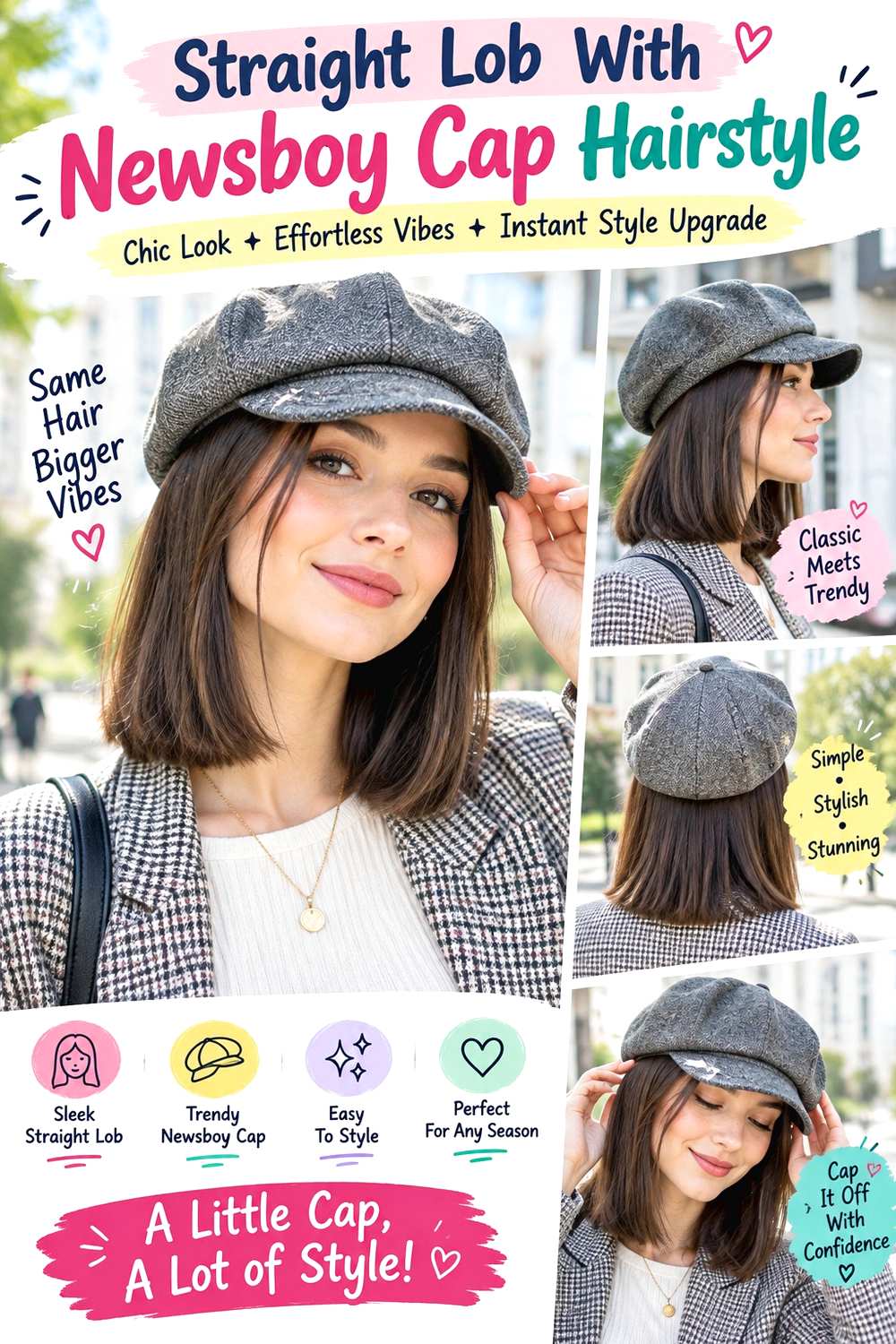
A straight lob gives a newsboy cap a simple frame because the collarbone-length perimeter stays visible below the ears and brim. Keep the part centered or slightly off-center, smooth the crown, and let the lengths fall in a clean line toward the shoulders. The ends can stay blunt or carry a very slight inward bend, but avoid building strong root lift where the cap needs to rest. Face-framing pieces can remain outside the hat if they fall naturally beside the cheeks.
Naturally straight hair may need very little styling. If you create the finish with heat, use heat protectant first, a flat iron for controlled passes, and a light anti-frizz serum on the ends. A quick refresh should target only sections bent by the cap; a full straightening routine takes longer on wavy, curly, dense, or very long hair.
Cut upkeep matters when the lob grows beyond the collarbone point you prefer or the bottom edge loses its intended weight. At the salon, identify the exact finished length and discuss how much perimeter fullness you want retained. Mention that you wear newsboy caps so any face-framing pieces can be assessed both tucked and left visible beneath the brim.
Pro tip:
Smooth only the lengths that remain visible after the cap is on. If the covered crown already lies flat, avoid making unnecessary extra heat passes there.
Make It Work for You:
For fine strands, keep the bottom edge relatively solid and limit heavy layering through the ends. A slight bend can add movement without reducing visual density.
Watch Out For:
Do not keep reheating a temporary cap dent throughout the day. Reset the part and smooth the section first, then use heat only if it still needs correction.
Twin Low Braids With Newsboy Cap Hairstyle
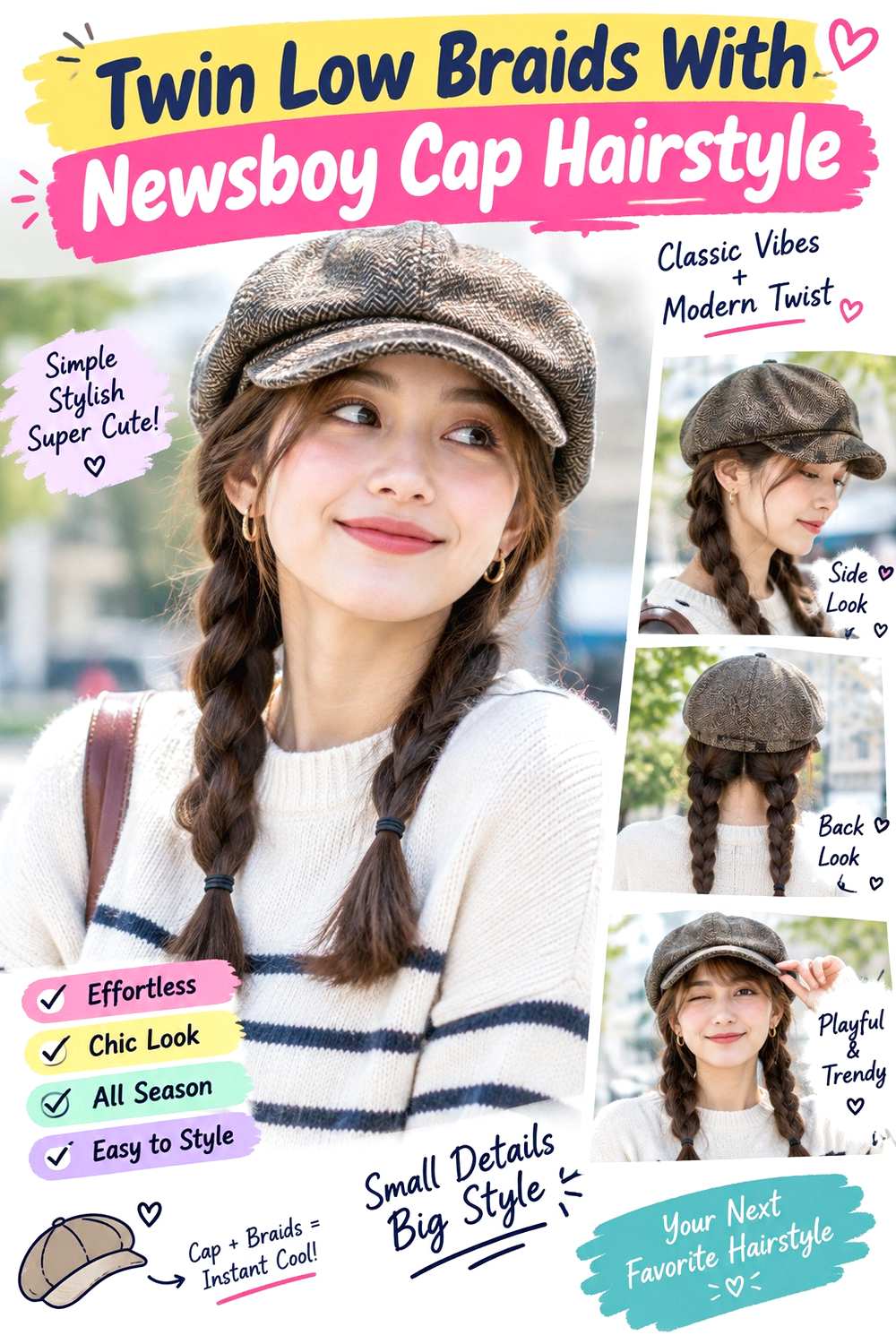
Twin low braids divide the hair evenly and keep long lengths contained beneath a newsboy cap without creating crown bulk. Make a center part from the forehead through the back, then begin each braid just behind or below the ears. Keep the first crossings fairly firm and compact, letting the braids fall forward over both shoulders. Shorter pieces can remain loose around the face if they do not reach comfortably into the braid.
Medium to very long hair suits the design, and splitting dense hair into two sections can feel lighter than wearing one heavy braid. Use two fabric-covered elastics to secure the ends and a lightweight leave-in conditioner to reduce static and friction. A quick refresh may mean redoing one fuzzy braid or smoothing the part; a full wash-day version depends on drying and detangling time.
If one braid hangs lower, compare the section sizes rather than tightening one side harder. For salon or event styling, specify the braid width, starting point, and amount of visible looseness you want. Ask for comfortable tension around the ears because the cap can add pressure over an already tight base during longer wear.
Pro tip:
Check both braid bases in a mirror before completing the lengths. Matching their starting height first makes the finished pair look more balanced beneath the cap.
Make It Work for You:
For layered hair, leave a few short pieces intentionally free and start the braids farther back. This captures more usable length without pulling at the temples.
Watch Out For:
Uneven sectioning can make one braid heavier and shift the overall balance. Repart the back before tightening either braid instead of compensating with extra tension.
Half-Up Twist With Newsboy Cap Hairstyle
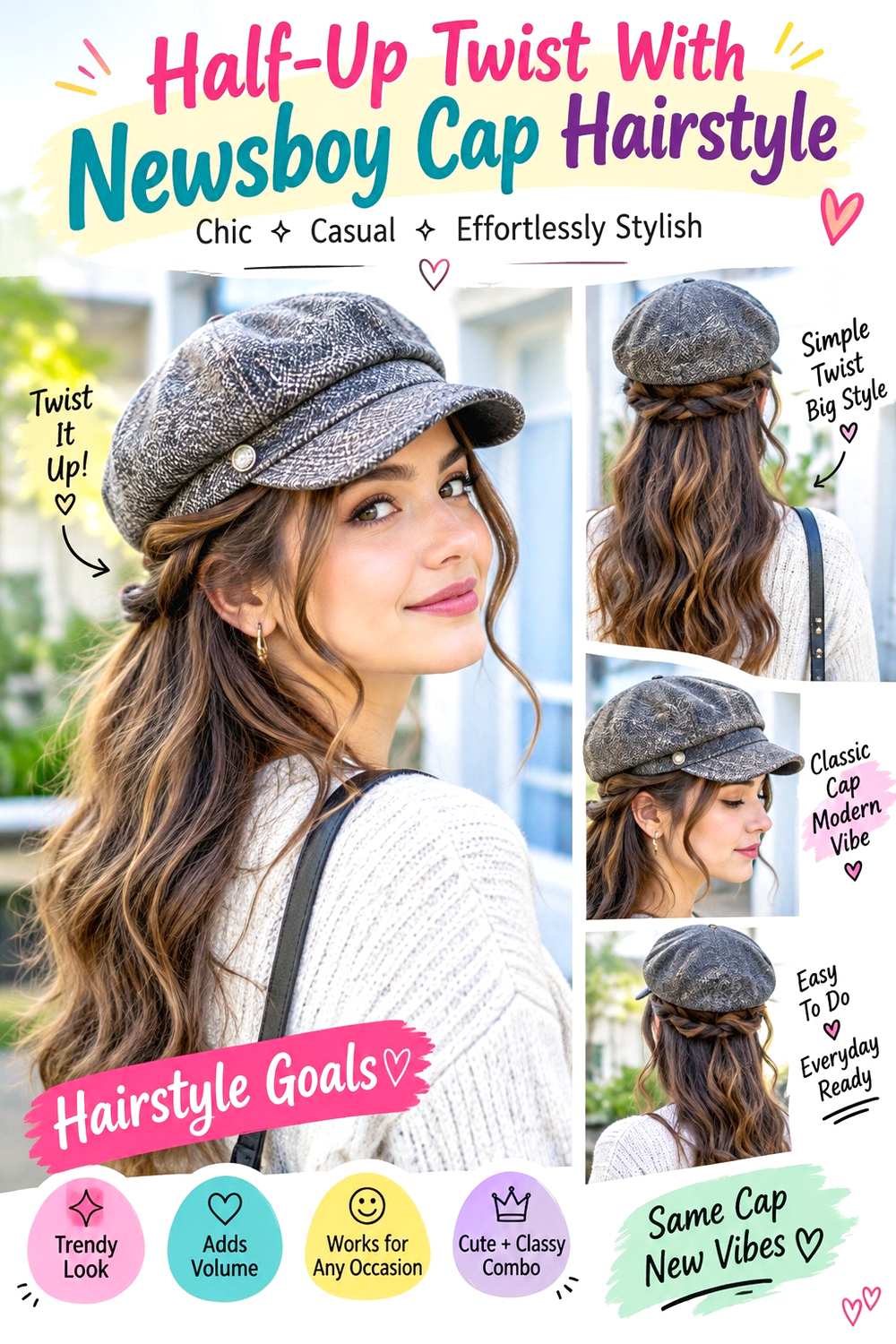
A half-up twist controls the front sections while leaving the lower hair loose enough to show beneath a newsboy cap. Take a small section from above each ear, twist both backward, and connect them low behind the head so the fastening point sits below the cap. The remaining hair can be straight, wavy, or naturally curly, while the crown stays smooth. Narrow face-framing pieces can remain loose if they help balance the short brim.
Medium to long hair works best because the lower length provides most of the visible movement. Use a small grip clip to secure the twists and light texturizing spray to add traction if silky hair slips. A quick refresh usually means tightening one twist or resetting the clip; a full wash-day version takes longer if you also set waves or define curls.
The hat should not be responsible for holding the twist in place. If the anchor slips, rebuild it independently rather than pushing the cap down harder. For salon or occasion styling, bring the hat and show where its back edge falls. Ask for the twist connection to stay below that point and specify how much hair you want left around the face.
Pro tip:
Cross the two twisted sections slightly before fastening them. The overlap gives the low anchor more grip without creating a large bump beneath the cap.
Make It Work for You:
For fine hair, gather smaller side sections so more density remains through the loose lengths. Keep the twists narrow and let the lower hair provide movement.
Watch Out For:
A clip positioned too high can lift the cap at the back. Move the fastening point toward the nape rather than trying to compress the bump underneath.
Low Bubble Ponytail With Newsboy Cap Hairstyle
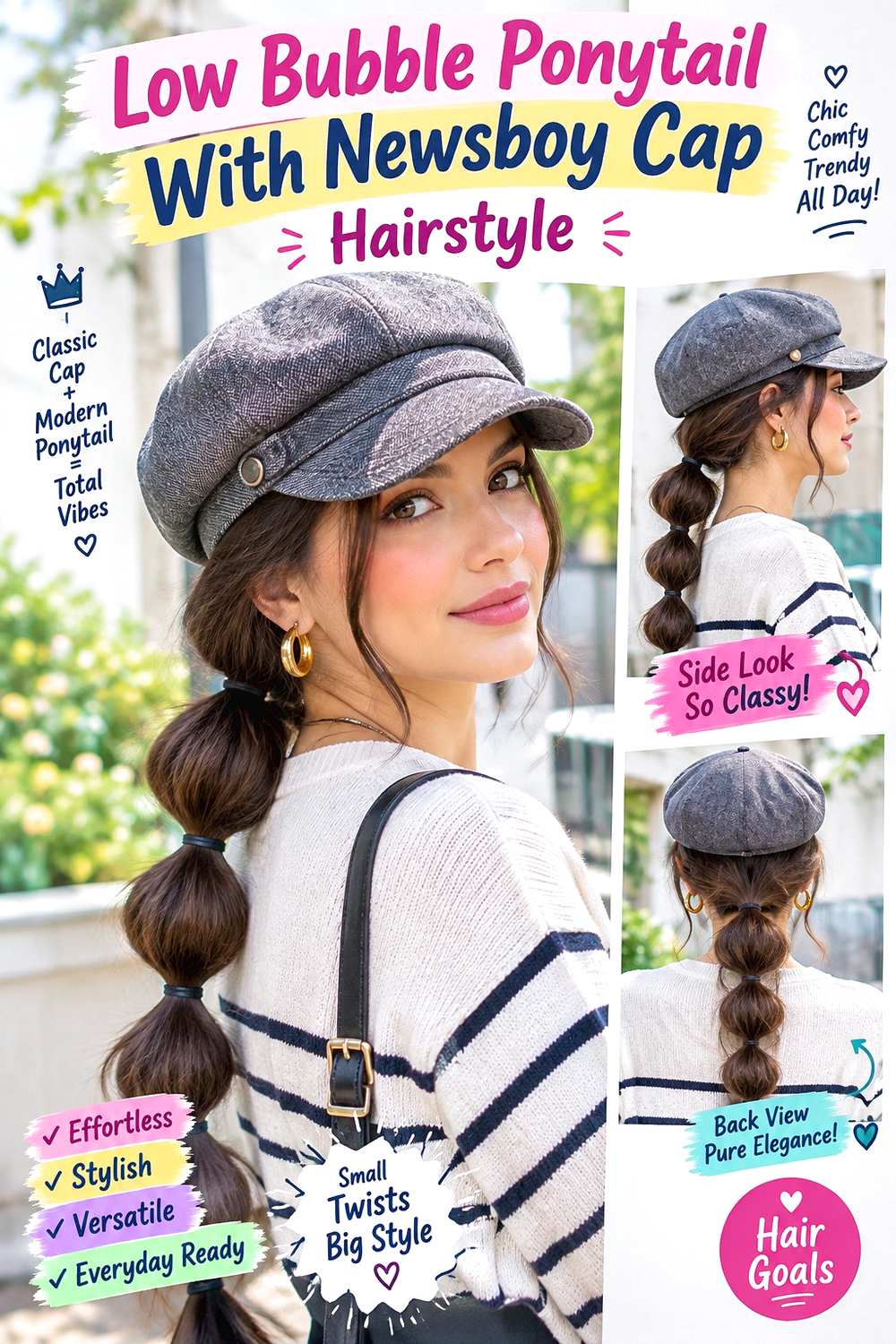
A low bubble ponytail adds repeated shape below a newsboy cap while keeping the crown free of bulky styling. Smooth the hair toward the nape, secure the first ponytail below the cap, then add small elastics at even intervals down the length. Gently expand each section between the elastics to create rounded bubbles. A center or side part can work, and a few narrow face-framing pieces may stay loose beside the brim.
Medium to long hair gives enough space for several bubbles, while medium or high density usually creates fuller sections with less pulling. Use snag-free elastics for the repeated anchors and light styling cream to control flyaways near the crown. A quick refresh means tightening a slipped elastic and reshaping one bubble; a full wash-day version takes longer only if drying, smoothing, or detangling is needed first.
Replace stretched elastics when the spacing begins to collapse instead of pulling the base tighter. For professional styling, show where the rear cap edge sits and ask for the first bubble to begin below it. Specify the bubble size you prefer and request even, comfortable tension so the hairstyle does not become increasingly tight toward the nape.
Pro tip:
Test the cap first, then place the next elastic below its rear edge. Build the remaining bubbles from there so every rounded section stays visible.
Make It Work for You:
For finer hair, make smaller bubbles with closer spacing. Gradual expansion creates the repeated shape without stretching each section until the hair looks sparse overall.
Watch Out For:
Pulling every bubble out aggressively can loosen the base and make the spacing uneven. Expand each section gradually, comparing it with the previous one before continuing.
Textured Midi Layers With Newsboy Cap Hairstyle
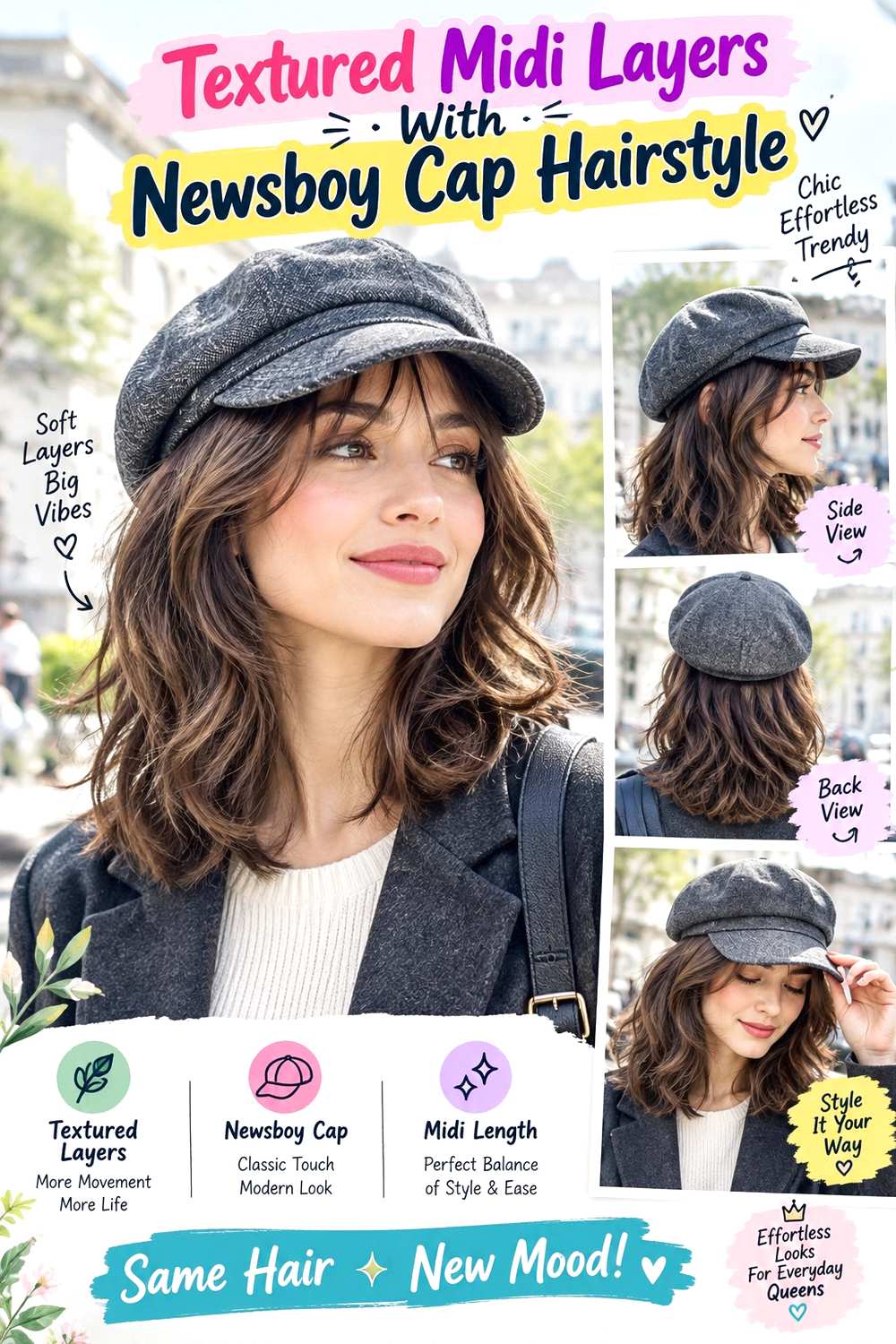
Textured midi layers give a newsboy cap movement through the visible mid-lengths instead of depending on crown volume. Keep the overall cut around the shoulders or upper chest, with face-framing pieces beginning near the cheekbones, jaw, or chin. Additional layers can create separation through the middle of the hair while the ends retain enough weight to avoid looking overly thin. A center or relaxed side part works well beneath the rounded cap.
Naturally wavy or lightly curly hair often shows this layered shape with minimal manipulation. Use lightweight mousse to support movement and a wide-tooth comb to distribute product through damp hair without breaking up the pattern. A quick refresh may involve dampening only the flattened sections and reshaping them with your hands; a full wash-day routine takes longer depending on density and drying method.
Cut maintenance matters once the layers stop connecting or the perimeter grows past the midi length you prefer. At the salon, identify the exact starting point for the shortest face-framing layer and how much fullness you want at the ends. Explain that you wear caps often, so crown layers should not be shortened solely to create height that will usually be covered.
Pro tip:
Encourage separation through the visible mid-lengths instead of fluffing the crown. The layered shape will still read clearly while the cap stays closer to the head.
Make It Work for You:
For fine strands, preserve more weight through the perimeter and use fewer internal layers. Concentrate the textured movement around the front and upper mid-lengths instead.
Watch Out For:
Too many short crown layers can puff beneath the cap while leaving the ends sparse. Ask for movement where it remains visible rather than removing weight everywhere.
Soft Coily Puff With Back-Set Newsboy Cap Hairstyle
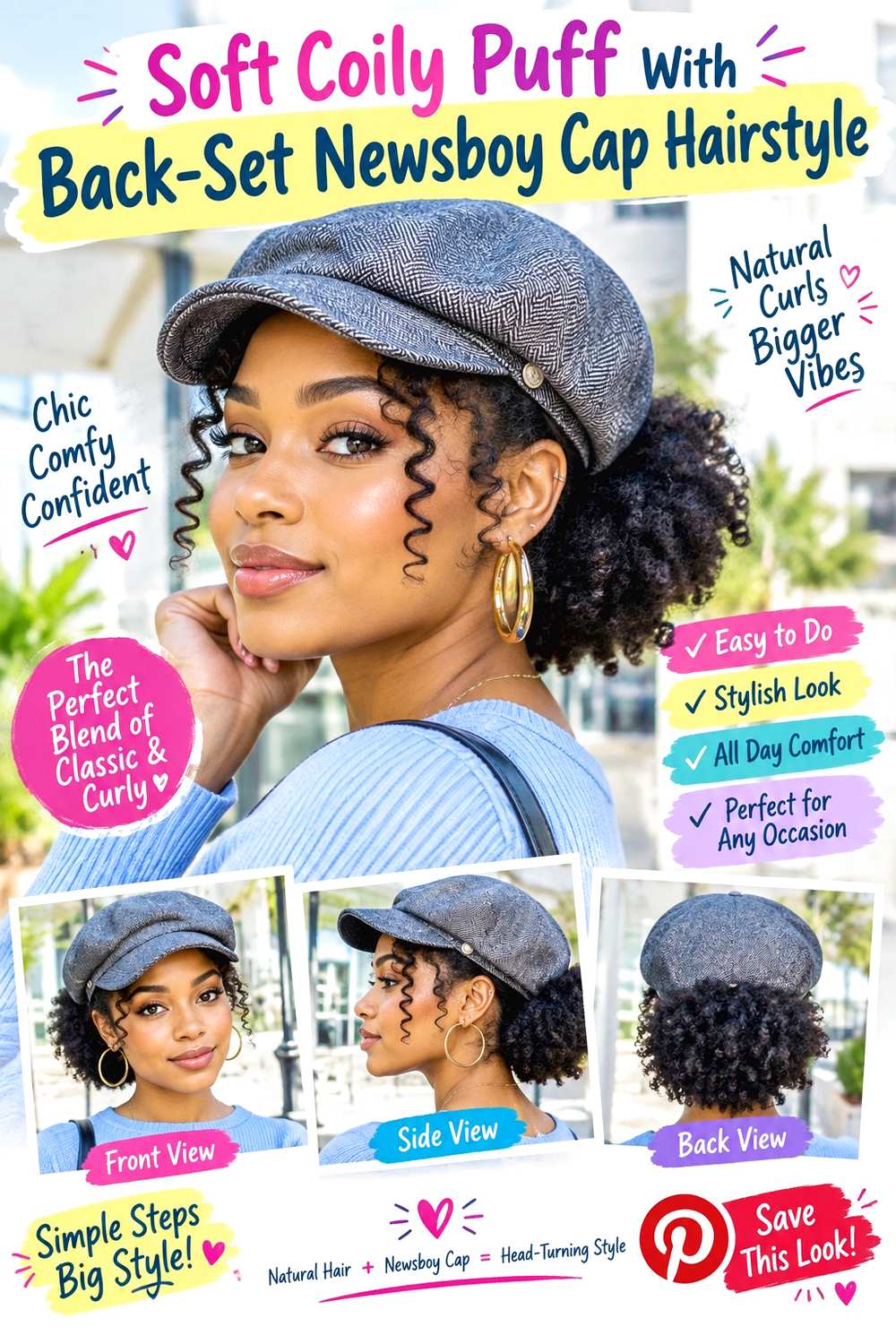
A soft coily puff can sit behind a back-set newsboy cap when the anchor stays low enough to avoid pushing the hat forward. Guide the front and sides back with comfortable tension, secure the base toward the lower crown or nape, and allow the puff to expand behind the cap. Small coils around the temples can remain visible, while the front follows your natural hairline rather than being forced perfectly flat. The contrast between a controlled base and visible texture gives the shape its definition.
Coily hair with enough length to gather can use this design without straightening. Apply moisturizing leave-in conditioner for softness, use a fabric-covered elastic to form the base, and add curl gel to define visible coils. A quick refresh may mean reshaping the puff and front coils; a full wash-day routine takes longer according to density, shrinkage, detangling, and drying time.
Do not tighten the puff simply because the cap shifts. For salon or occasion styling, bring the hat and show where its back edge should rest relative to the puff. Ask for comfortable perimeter tension and room for your normal shrinkage and volume rather than stretching the hair solely to make the puff appear larger.
Pro tip:
Secure the puff before placing the cap, then settle the hat gently in front of the anchor. Adjust exposed coils only after the cap feels stable.
Make It Work for You:
If your hair shrinks strongly, keep the puff compact and emphasize coil definition around the visible edge. The shape does not need stretched length to stay distinct.
Watch Out For:
Do not tighten the puff painfully to stop the cap from moving. Reposition the hat independently and reduce tension if the hairline or temples feel strained.
Sleek Low Braid With Newsboy Cap Hairstyle
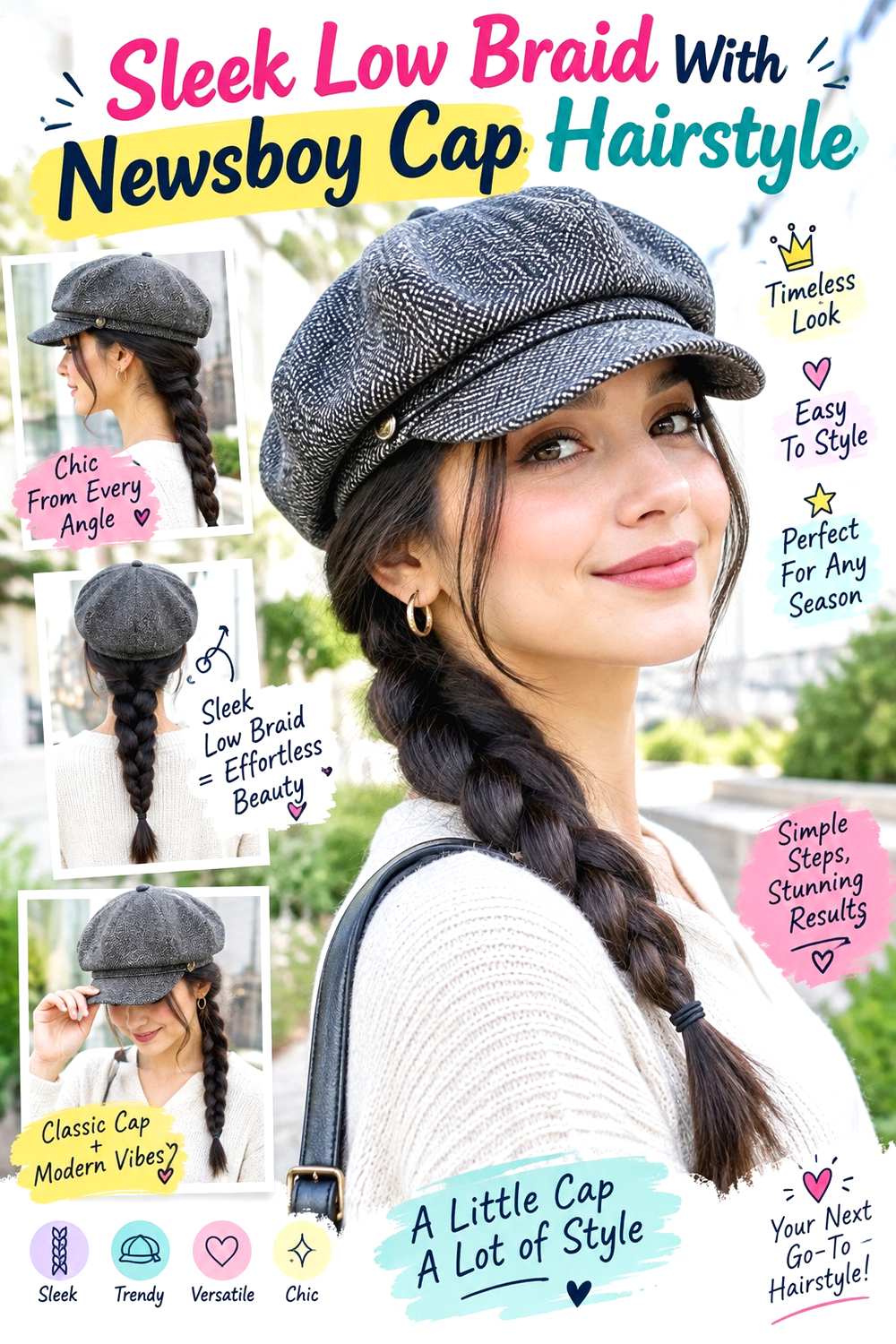
A sleek low braid creates one clean line below the cap while keeping the entire crown controlled. Choose a center or side part, guide the hair close to the head, and start the braid at the nape so the woven section clears the back edge of the newsboy cap. Keep the crossings even and fairly compact rather than pulling them outward. The ends can remain neat and narrow, while a small front section may be left loose if you want softer framing.
Medium to long hair works well, especially when you want dense lengths contained under a coat. Use a soft-bristle brush to smooth the upper sections, light styling cream to control flyaways, and a small fabric-covered elastic to secure the end. A quick refresh usually means smoothing the crown or rebuilding the last few crossings; full wash-day styling takes longer if drying or detangling comes first.
The braid should feel secure without pulling at the scalp. If it loosens from the base, redo the anchor instead of tightening the cap. For professional styling, specify braid width, whether you want it centered or over one shoulder, and exactly where the nape anchor should sit beneath the hat edge.
Pro tip:
Keep the first several braid crossings compact at the nape. This gives the cap a smoother base and prevents a raised woven section directly beneath the back edge.
Make It Work for You:
For very dense hair, use slightly larger braid sections instead of tightening harder. The braid stays defined while requiring less time and tension to contain the length.
Watch Out For:
Pulling the braid too tightly near the scalp can become uncomfortable once the cap adds pressure. Reduce tension at the base while keeping lower crossings neat.
Loose Low Pigtails With Newsboy Cap Hairstyle
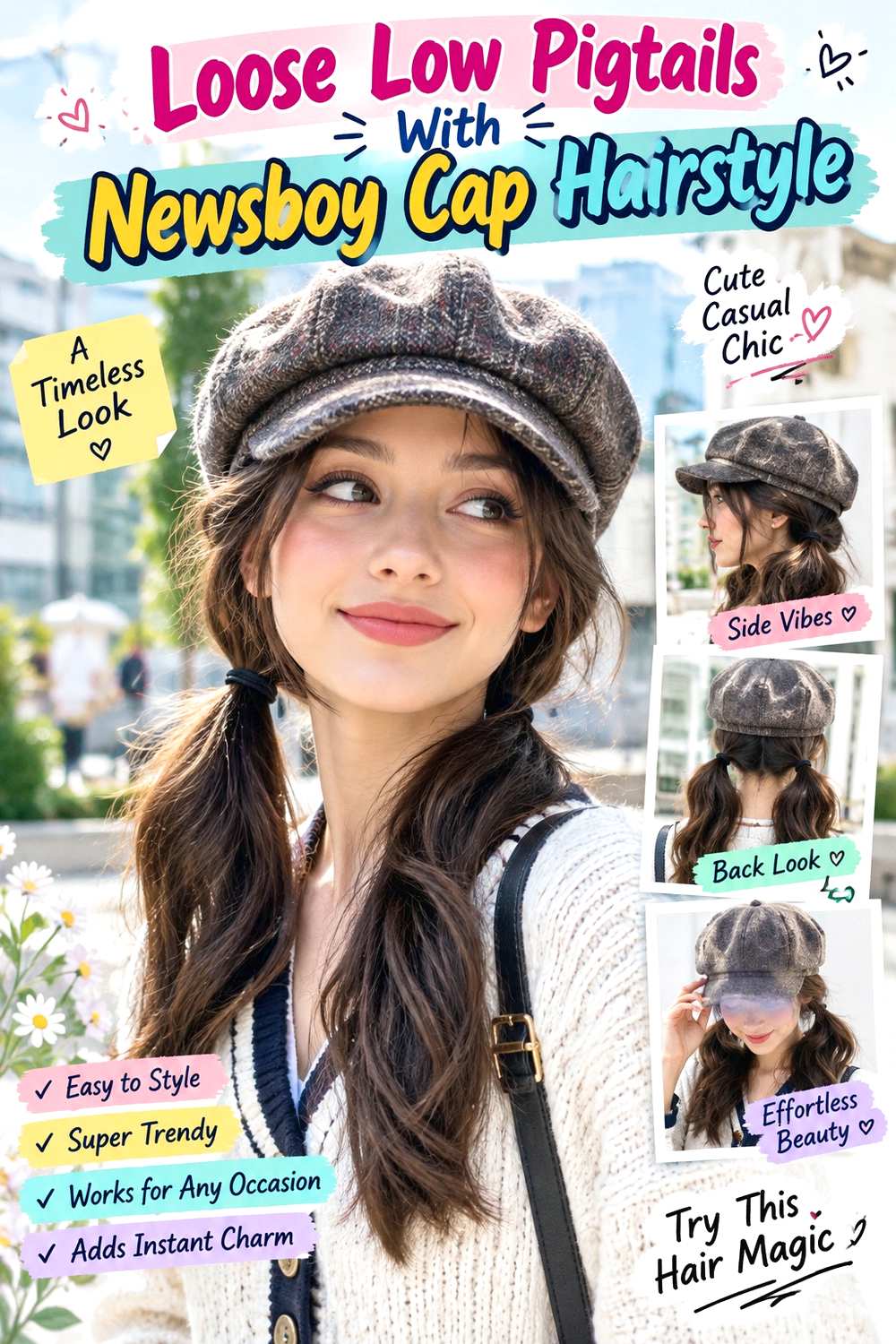
Loose low pigtails create an easy symmetrical frame beneath a newsboy cap without adding bulk at the crown. Make a center part, divide the hair evenly, and secure each side below the ears or closer to the nape. Keep the ties low enough that the cap clears them comfortably. The lengths can stay straight, wavy, curly, or naturally textured, and a few face-framing pieces can remain free around the short brim.
Medium and long hair work best, especially layered hair that may release shorter pieces from one central ponytail. Use two fabric-covered elastics to secure the sections and a lightweight leave-in conditioner to reduce static where the hair rubs against wool or scarves. A quick refresh means smoothing the part and resetting one tie; full wash-day effort can remain minimal when you keep your natural texture.
If one side drops lower, redistribute the sections instead of tightening only that elastic. For professional styling, bring the cap and show where you want each pigtail base in relation to the ears and rear edge. Specify how loose the finish should feel and which shorter pieces you want intentionally left around the face rather than forced backward.
Pro tip:
Try the cap on before fixing the final tie positions. Both pigtail bases should sit fully below its lower edge rather than creating hidden bumps near the ears.
Make It Work for You:
For shorter layers, position the bases closer to the nape so more hair reaches each elastic. Let selected front pieces stay loose instead of forcing them backward.
Watch Out For:
Uneven sectioning can make one pigtail visibly heavier even when the ties match. Recheck the center part and redistribute the hair before tightening either side.
Side-Swept Curls With Newsboy Cap Hairstyle
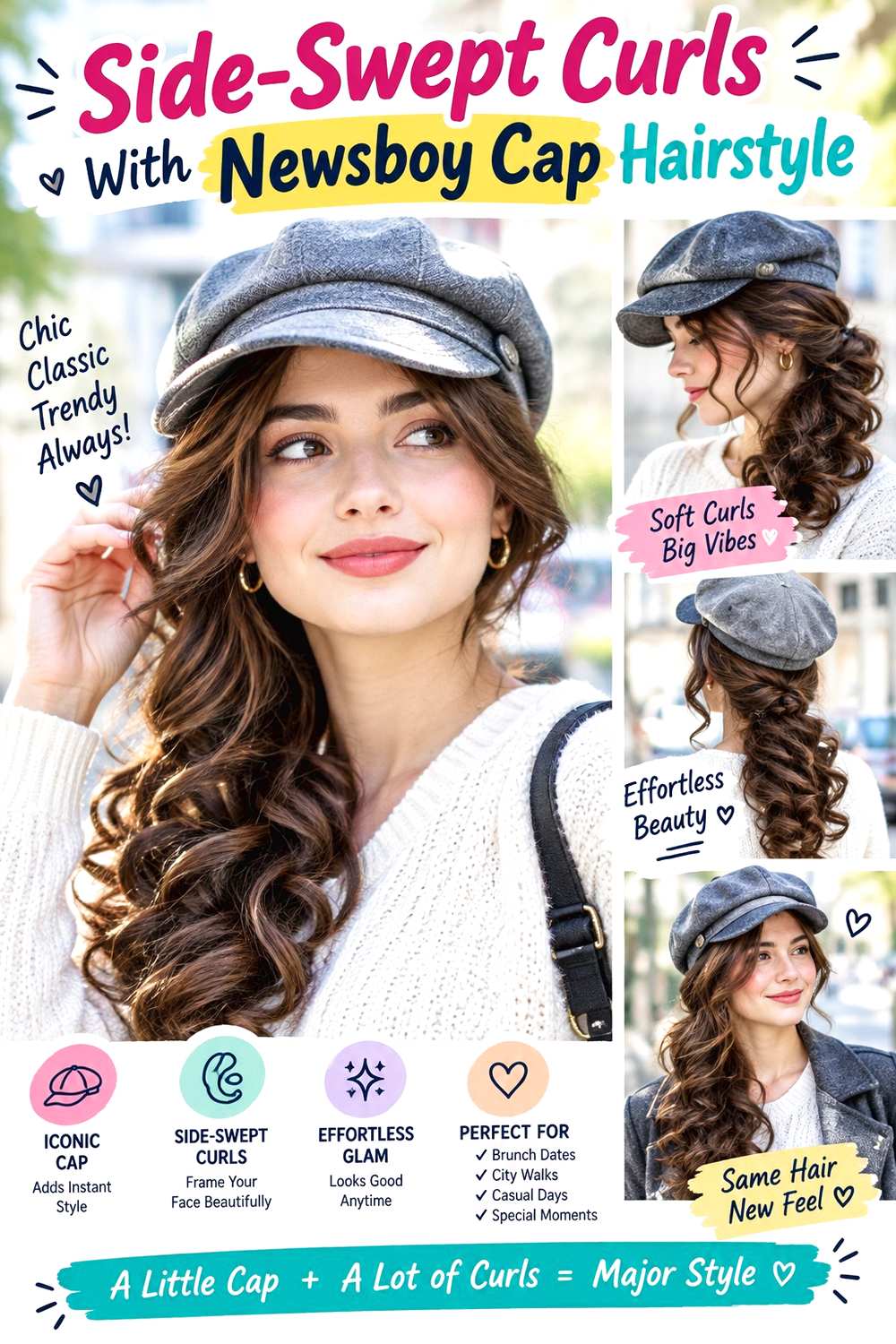
Side-swept curls create a fuller visible section on one side of a newsboy cap while keeping the opposite side cleaner around the ear. Start with a deep or moderate side part, direct most of the curls toward one shoulder, and tuck the smaller side if the length allows. Keep the crown controlled enough for the cap to settle while letting volume build from the cheekbones downward. The ends should retain defined curl groups rather than being brushed into a wide, indistinct shape.
Naturally curly hair can use lightweight mousse for flexible support, curl gel for definition, and a diffuser for controlled drying. A quick refresh between washes may involve dampening only the front curl groups that flattened under the cap; a complete wash-day routine takes longer based on density, length, and drying time. Avoid disturbing unaffected curls simply to recreate volume.
For salon shaping, explain which side you normally part and how much curl you want visible around the jaw and shoulder. Ask the stylist to assess any shorter face-framing curls in their dry state because shrinkage changes their finished position. The strongest volume should sit below the cap rather than underneath its crown.
Pro tip:
Shape the front curl groups before positioning the cap, then lower it gently behind them. This keeps the most visible curls directed beside the brim.
Make It Work for You:
For dense curls, concentrate more width around the ears and shoulders while keeping the covered crown calmer. The texture remains full without making the cap unstable.
Watch Out For:
Dragging the cap repeatedly across finished curls can roughen the surface and disturb the part. Lift the hat completely, reset the hair, and place it down again.
Conclusion
Hairstyles with newsboy caps are easiest to choose by deciding how much hair you want visible and how much daily styling fits your routine. Bobs and lobs emphasize a clean perimeter, while waves and midi layers add softer movement below the brim. Braids, ponytails, and low buns control longer or denser hair without crowding the crown. Curtain bangs draw attention forward, while curls and coils can keep their natural texture when the cap leaves enough room. A center part creates symmetry, whereas a side part can balance a fuller section or tilted hat. Consider density, shrinkage, face-framing preferences, finish, and upkeep together so the hairstyle stays comfortable and still looks intentional after the cap comes off.
Before Your Salon Visit
Choose one or two favorites and save references that clearly show both the hairstyle and newsboy cap placement. Discuss your natural texture, density, face shape, preferred length, usual upkeep, and realistic styling routine. Point out the exact fringe length, layer starting point, braid width, bun height, curl volume, or finish you like. For temporary braids, ponytails, pigtails, buns, and puffs, focus on comfortable tension and secure placement rather than asking for a haircut you would not otherwise choose.
FAQs
Can I wear a newsboy cap with curly or coily hair?
Yes. Keep most of the volume around or below the cap instead of packing it directly underneath the crown. Choose a cap with enough room for your texture, work with normal shrinkage, and refresh only compressed curls or coils after removal rather than automatically stretching or straightening them.
How do I stop a newsboy cap from flattening my hairstyle?
Keep strong root lift below the cap line and choose low anchors that do not create hidden bumps. Waves, face-framing layers, and curls can preserve movement around the sides. After taking the cap off, reset the part and refresh only flattened sections instead of restyling the whole head.
Which newsboy cap hairstyles work well for fine hair?
Fuller bobs and lobs, broad waves, compact braids, and low ponytails can all preserve visual density. Keep products lightweight and avoid separating the ends too aggressively. A comfortable cap fit also matters because excessive compression can make already fine strands sit flatter around the crown.
Do I need a haircut to wear these hairstyles with a newsboy cap?
Usually not. Ponytails, braids, buns, pigtails, waves, curls, and puffs are temporary styling choices. A haircut only becomes relevant if you specifically want features such as curtain bangs, a blunt bob, or face-framing layers. Choose those changes based on how you also wear your hair without the cap.