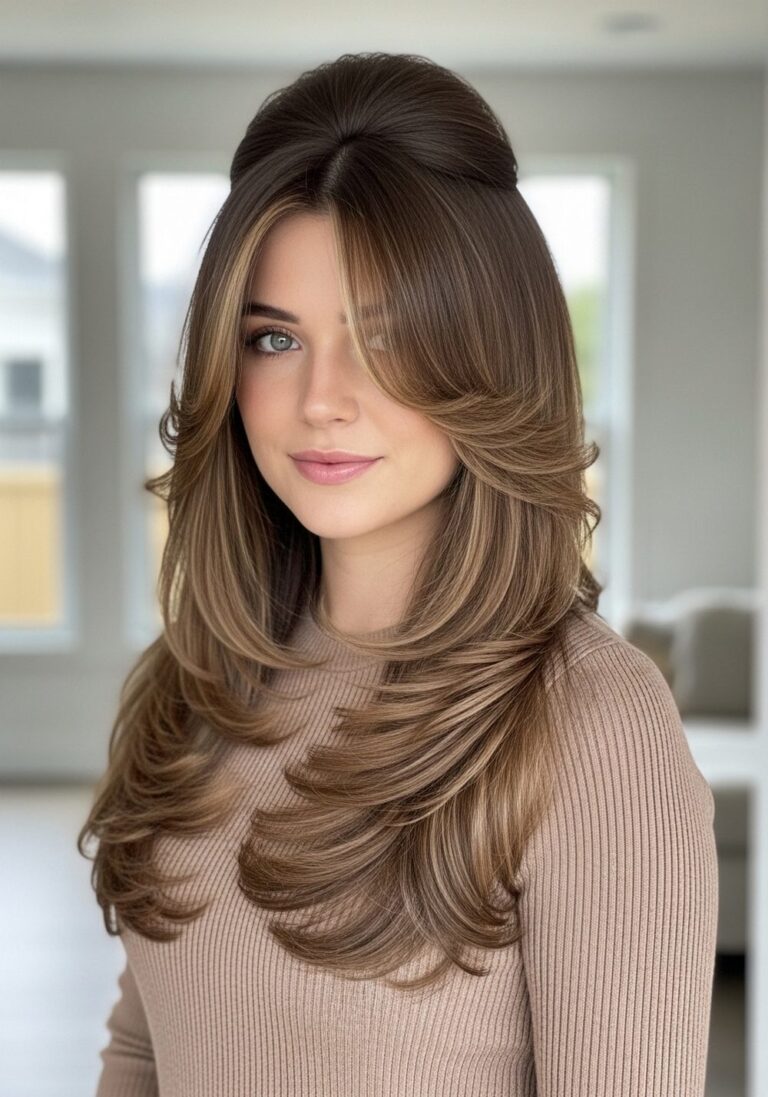
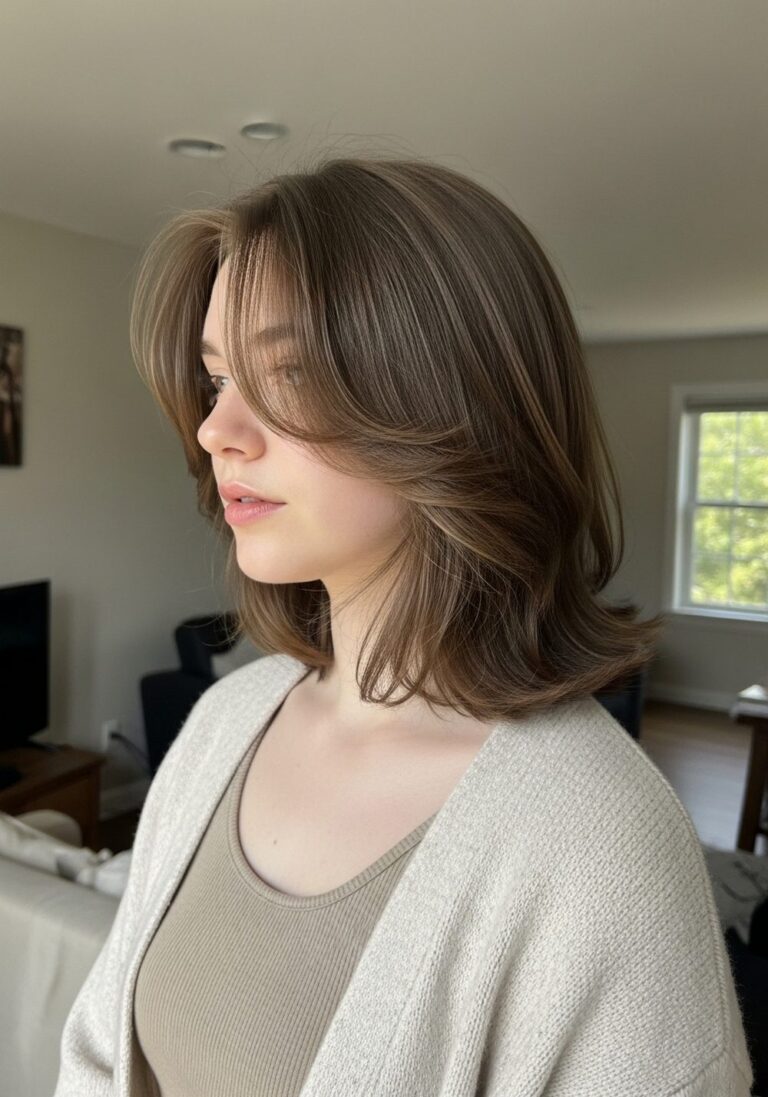
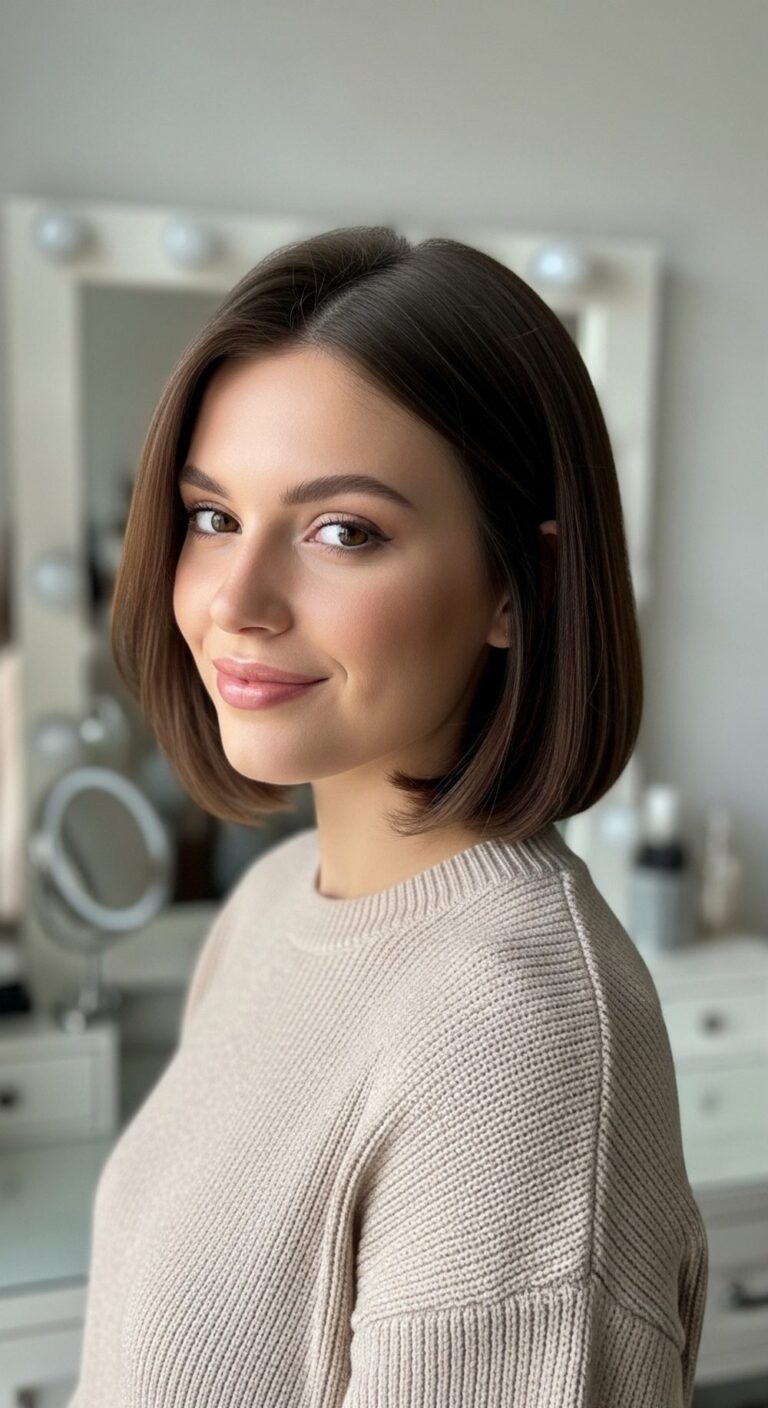
19 Side Part Bob Hairstyles

Side part bob hairstyles use an off-center division to shift weight, volume, and movement toward one side of a short haircut. That simple change can make a blunt chin-length bob look more asymmetric, give waves extra lift, or let a longer front section sweep across the forehead. Bob length can sit at the jaw, chin, or slightly below, while the perimeter may be blunt, rounded, graduated, or softly layered. Fringe is optional because the heavier front section can provide its own side-swept effect.
Texture and density influence how strongly the part changes the silhouette. Straight hair can emphasize a crisp perimeter, while waves, curls, and coils create more visible fullness on the heavier side. Fine strands may benefit from preserving weight through the bottom, whereas dense hair may need carefully placed internal shaping. The part can also move slightly to accommodate natural growth direction.
Styling effort depends on the intended finish. An air-dried bob may need only a quick part reset, while a sleek or rounded blow-dry takes more work. Cut maintenance depends on how precise the perimeter, fringe, graduation, and layer placement need to remain.
Quick List
- Blunt Side Part Bob Hairstyle
- Chin-Length Side Part Bob Hairstyle
- Jawline Side Part Bob Hairstyle
- Layered Side Part Bob Hairstyle
- Side-Swept Fringe Bob Hairstyle
- Sleek Side Part Bob Hairstyle
- Wavy Side Part Bob Hairstyle
- Curly Side Part Bob Hairstyle
- French Side Part Bob Hairstyle
- Stacked Side Part Bob Hairstyle
- Inverted Side Part Bob Hairstyle
- Rounded Side Part Bob Hairstyle
- Flipped-Ends Side Part Bob Hairstyle
- Tousled Side Part Bob Hairstyle
- Tucked Side Part Bob Hairstyle
- Fine-Hair Side Part Bob Hairstyle
- Dense-Hair Side Part Bob Hairstyle
- Coily Side Part Bob Hairstyle
- Air-Dried Side Part Bob Hairstyle
Blunt Side Part Bob Hairstyle

A strong bottom edge gives this bob its structure, while the side part prevents the outline from looking completely symmetrical. The length can finish around the chin or slightly below, with little visible layering and a heavier sweep on one side. Keeping the ends substantial makes the perimeter especially noticeable on straight or softly wavy hair and can also help hair with lower-density ends appear more cohesive.
For a polished finish, apply heat protectant before heated drying and use a flat iron only where extra smoothing is necessary. A lightweight serum can control flyaways without separating the blunt edge. A quick refresh between washes may involve resetting the part and smoothing the heavier front section; styling the complete bob from wet hair naturally takes longer.
At the salon, discuss exactly where you want the bottom edge to fall and whether the front should remain level with the back. Also show where you normally wear the side part, since shifting the hair changes how the perimeter appears from each angle. As the bob grows, its clean line becomes longer and less compact. Reshape it when that change interferes with the precise silhouette you originally wanted.
Pro tip:
Set the side part while the roots are still responsive after washing. Dry the heavier front section in its intended direction first so you need less repeated manipulation once the hair is dry.
Make It Work for You:
If your ends have lower density, keep the perimeter solid and avoid unnecessary layering through the bottom. The side part already provides movement, so the cut does not need extensive weight removal.
Watch Out For:
Repeatedly smoothing the heavier side can make it noticeably flatter than the opposite section. Refine the surface, but preserve a little root movement so the asymmetric part remains visible.
Chin-Length Side Part Bob Hairstyle

Chin length gives a side-parted bob a clear, compact boundary. The heavier side can sweep toward the cheek or tuck partially behind the jaw, while the opposite side exposes more of the face. Minimal layering keeps attention on the length itself, although subtle front shaping can prevent the heavier section from falling as one solid block. Straight, wavy, and softly curly textures can each interpret the outline differently.
A round brush can guide the ends into a gentle bend, while heat protectant is appropriate for heated drying. Lightweight mousse provides support near the roots without making the short lengths stiff. A morning refresh can focus on the part and front sweep, but a complete wash-day blow-dry requires more time when the natural texture differs from the intended smooth finish.
The chin is a useful visual landmark, so show your stylist whether you want the perimeter directly at it, slightly above it, or just below. A small difference changes how the bob interacts with the jaw and neck. As the hair grows, it quickly moves away from that compact proportion. Reshaping is useful when the ends begin sitting substantially below the target rather than according to one universal trim schedule.
Pro tip:
Check the dry length with your head in a neutral position. Tilting your chin while assessing the perimeter can make one side appear shorter or longer than it actually sits during normal wear.
Make It Work for You:
For naturally wavy hair, allow a little extra finished length if the wave pattern lifts the ends. This preserves the chin-level impression without requiring you to straighten the texture every day.
Watch Out For:
Do not choose the length from wet hair alone when your texture shrinks or bends significantly. Discuss the dry result you want so the final bob does not finish unexpectedly high.
Jawline Side Part Bob Hairstyle

A jawline bob is shorter and more graphic than many chin-length versions, making the side part especially noticeable. One front section crosses farther over the top before falling beside the cheek, while the lighter side can sit neatly around the ear. A firm perimeter keeps the shape compact, and limited layering prevents the lower edge from becoming too feathered.
Use lightweight mousse for root support and a round brush to direct the heavier side without creating excessive curl. Add heat protectant when the routine includes significant heat. Straighter textures can emphasize the clean line, while waves can create a softer interpretation. A quick refresh is mainly about restoring the part and front direction; a complete smooth finish after washing requires more time.
Short bobs reveal growth quickly because even a modest increase in length changes where the perimeter sits. At the salon, point to the exact jaw landmark you want the cut to follow and discuss whether the front should remain level or extend slightly lower. If you regularly tuck the lighter side, mention that too. Reshaping becomes useful when the bob loses its jaw-level position or the front sweep becomes too heavy to sit as intended.
Pro tip:
Dry the lighter side in the direction you normally wear it before tucking it. Establishing that path first helps the section sit closer to the head without needing excessive product or tension.
Make It Work for You:
If a jaw-length cut feels too short for your curl pattern, preserve a little more dry length while keeping the same side-parted proportion. The compact shape can remain without ignoring shrinkage.
Watch Out For:
Avoid assuming both sides must look identical from the front. The side part deliberately redistributes hair; focus on a balanced perimeter and intentional sweep rather than equal visible volume.
Layered Side Part Bob Hairstyle
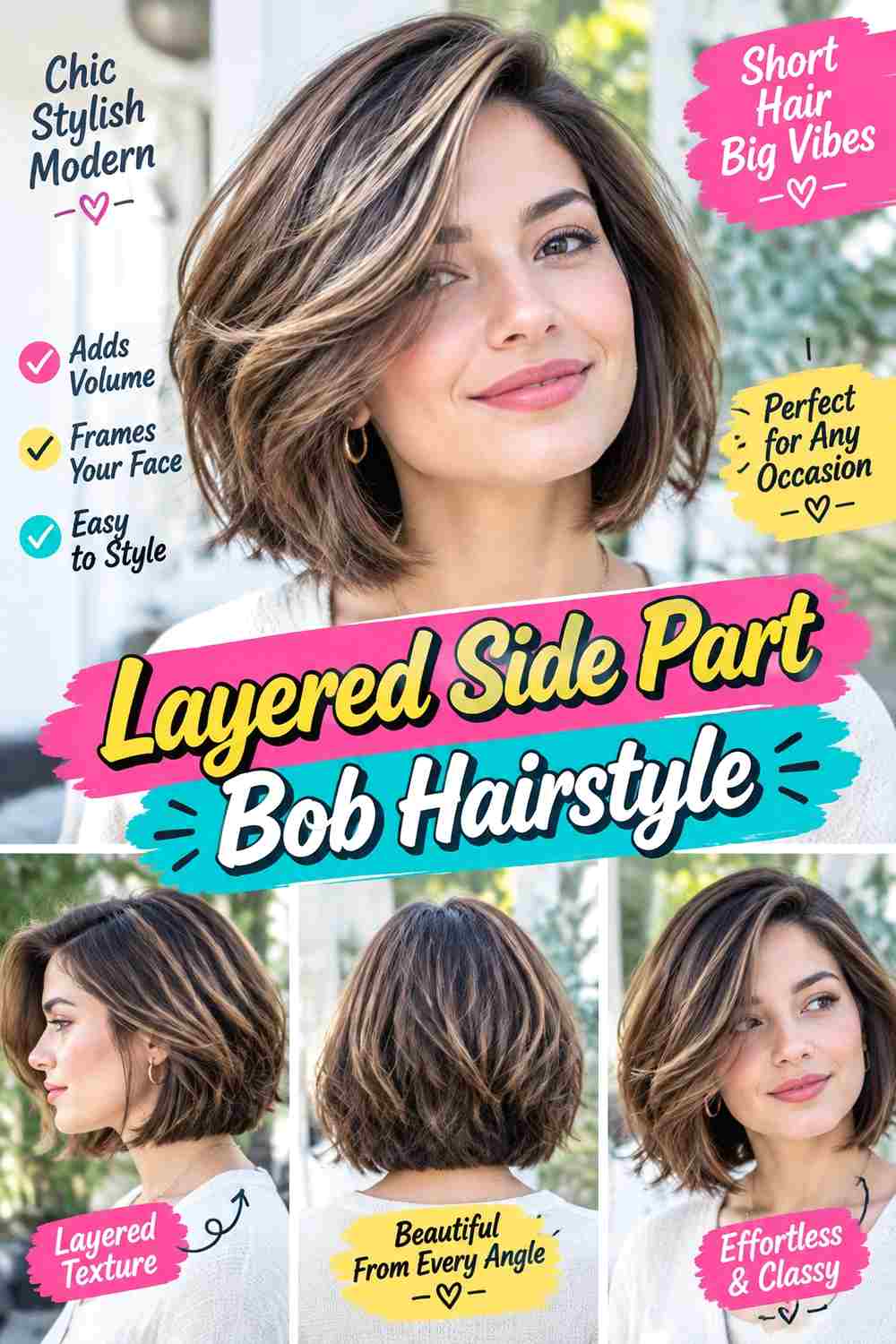
Layers give a side-parted bob more movement through the upper and front sections while the bottom remains clearly bob length. The shortest layers might begin around the cheekbones or jaw, then blend into a chin-to-neck-length perimeter. The heavier side gains extra separation from those graduated pieces, and the opposite side can sit flatter or tuck behind the ear.
A lightweight mousse can support the layers, while a round brush directs them during drying. Include heat protectant when using substantial heat. This shape can work for straight and wavy textures and may help dense hair move more freely when layer placement is controlled. A small refresh may involve only the upper layers; styling the complete cut from wet hair takes longer.
Ask your stylist where the shortest visible layer will begin and how much weight will remain at the bottom edge. Those details matter more than simply requesting a “layered bob.” Fine or lower-density ends may need fewer layers, while dense hair can sometimes accommodate more internal shaping. As the layers grow, they merge into the perimeter and movement becomes less obvious. A reshape can restore separation without necessarily making the entire bob dramatically shorter.
Pro tip:
Dry the upper layers separately from the bottom rather than wrapping all the hair around the brush together. Giving them their own direction makes the layered movement easier to see.
Make It Work for You:
For finer ends, concentrate the strongest layering near the front and upper surface. Keeping more of the lower perimeter intact preserves fullness while the side part supplies additional movement.
Watch Out For:
Too many short layers can make a bob appear rounder or thinner than expected. Identify where you actually want movement and keep the remaining perimeter substantial enough to support the shape.
Side-Swept Fringe Bob Hairstyle

A defined side fringe extends the effect of the part across the forehead. The fringe begins from the heavier side and sweeps diagonally toward the opposite temple, with longer outer pieces blending into a chin- or jaw-length bob. The remaining perimeter can stay relatively blunt so the angled fringe remains the most obvious feature rather than competing with extensive layering.
Heat protectant should precede heated styling, while a small round brush can guide the fringe across the forehead. Flexible hairspray offers light control without making the front rigid. Refreshing the fringe can be a short daily task, whereas styling the whole bob after washing takes longer. Hairline growth direction strongly affects how easily the fringe stays swept, so some readers may need more root redirection than others.
Fringe upkeep happens sooner than perimeter maintenance because the front enters the eyes as it grows. Tell your stylist where you want the shortest point to sit when dry and how the outer edge should blend into the bob. Avoid relying on a generic fringe measurement, particularly with waves or curls. If the fringe repeatedly separates, reassess its drying direction and product amount before assuming it needs to be cut shorter.
Pro tip:
Dry the fringe briefly in both directions before sweeping it into its final position. This loosens a strongly established part line and can make the diagonal movement easier to control.
Make It Work for You:
If you want less fringe upkeep, keep the shortest point longer and blend the outer edge near the cheekbone. You retain the side sweep while allowing more room for comfortable grow-out.
Watch Out For:
Heavy styling cream can cause a side fringe to separate into oily-looking pieces. Keep richer products away from the forehead and use light control only where the sweep genuinely needs support.
Sleek Side Part Bob Hairstyle

Smooth texture makes the asymmetric weight of a side part easy to see. The bob can finish at the chin or slightly lower, with a controlled surface, straight ends, and minimal visible layering. One side falls in a clean sweep from the part, while the lighter side can remain close to the head or tuck behind the ear. The finish emphasizes precision rather than fluffy volume.
Apply heat protectant before heated styling, use a flat iron where additional smoothing is required, and finish with a lightweight serum for surface control. Naturally straight hair may need only a short refresh between washes. Recreating the same sleek result on curly or coily hair involves considerably more styling, so the finish should be treated as an optional choice rather than a requirement of the haircut.
At your appointment, explain how much perimeter weight you want and where you normally place the part. A sleek surface can reveal uneven or overly thinned ends more readily than a textured finish. As the bob grows, the ends may begin interacting with the shoulders or neck differently. Reshape when the length no longer supports the clean outline you want, rather than repeatedly relying on heat to force the perimeter into place.
Pro tip:
Smooth manageable sections instead of making repeated passes over large areas. Controlled sectioning lets you refine the surface more evenly and reduces unnecessary heat on lengths that are already straight.
Make It Work for You:
If sleek styling is only occasional, ask for a bob that also works with your natural texture. You can keep the side-parted structure without committing to straightening every time you wear it.
Watch Out For:
Do not press the heavier side completely flat at the roots. A sleek surface can still retain subtle root movement; removing all lift may make the part look limp instead of deliberately asymmetric.
Wavy Side Part Bob Hairstyle

Broad waves give a side-parted bob extra width and movement, particularly on the heavier side. The roots can remain relatively relaxed, with bends beginning around the cheekbones or mid-lengths and the tips staying somewhat straighter. A chin-to-neck-length perimeter keeps the waves compact, while subtle layering can prevent dense hair from forming one triangular block.
For heat-shaped waves, use heat protectant, a curling iron, and flexible hairspray. Naturally wavy hair may need much less manipulation and can follow its existing bend pattern. A refresh between washes should target flattened sections rather than recreating every wave. Styling the complete pattern from straight, freshly washed hair is a longer process because both drying and wave formation require attention.
At the salon, discuss how your bob is usually worn—wavy, straight, or both—because layer placement can behave differently across finishes. Specify where you want the perimeter to land and how much weight you prefer through the ends. As layers grow, the wave pattern may appear heavier and sit lower. Reshaping can restore movement, but removing more weight is not automatically the answer; the stylist should assess where the shape is actually becoming bulky.
Pro tip:
Start waves at slightly different heights instead of creating a matching row of bends. The irregular placement keeps the texture loose and prevents the side-parted bob from looking overly set.
Make It Work for You:
If your natural waves already provide fullness, concentrate styling on the flatter side and front sweep. Preserving the existing pattern can shorten the routine while keeping the asymmetric volume visible.
Watch Out For:
Avoid curling every section tightly from root to tip. Too much uniform curl can obscure the bob perimeter; keep the roots calmer and allow the bottom edge to remain visually clear.
Curly Side Part Bob Hairstyle
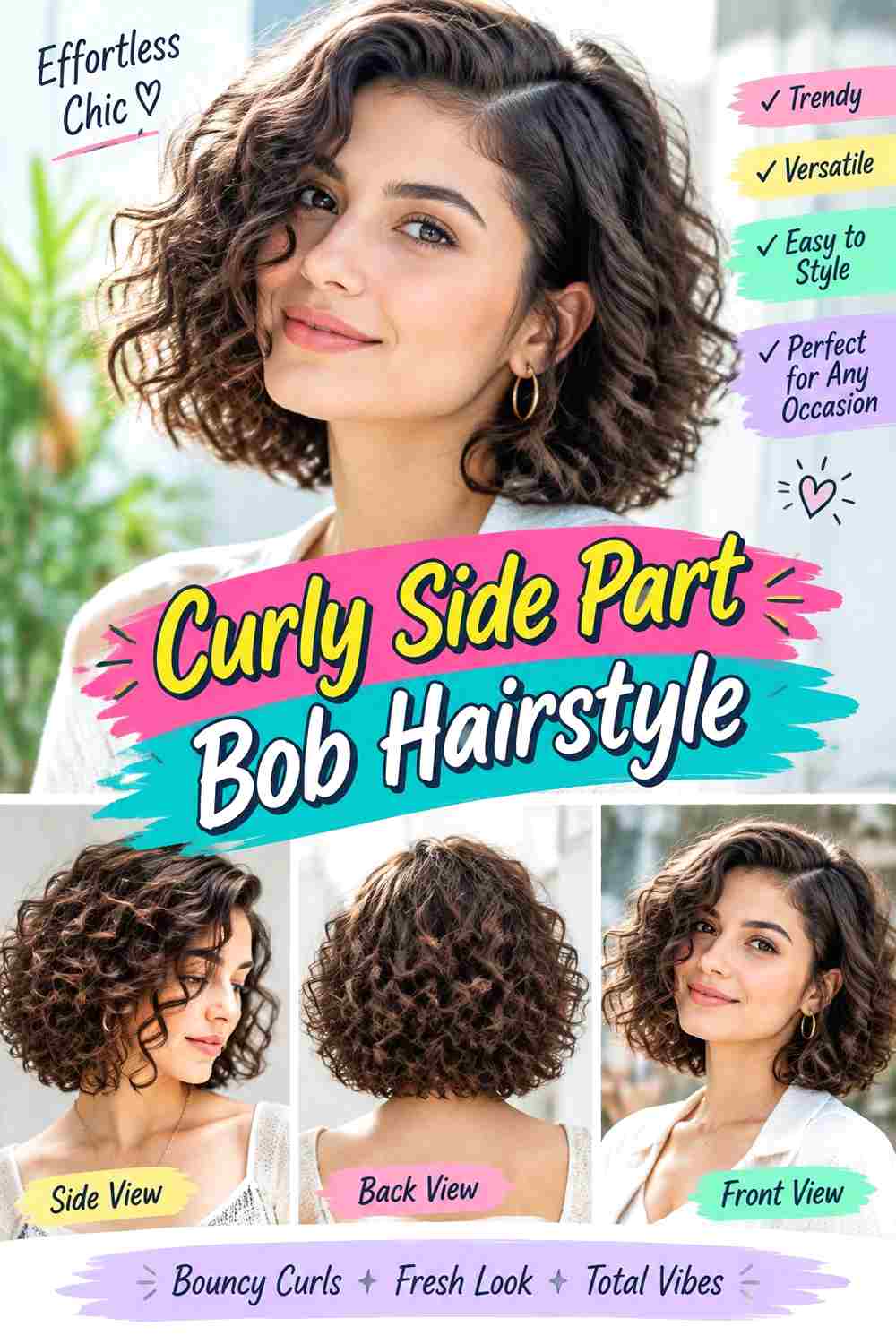
Curls make the side part a tool for redistributing volume rather than simply creating a smooth sweep. Moving the division away from center places more curl groups on one side, producing fullness around the upper cheek and temple while the opposite side becomes lighter. The finished bob can sit around the chin or lower, with shaping that prevents all the width from collecting at the bottom.
A lightweight leave-in conditioner supports slip, curl gel encourages grouping, and a diffuser can dry the shape with less disruption. Between washes, a quick refresh may focus on curls flattened near the part. A complete wash, product application, and drying session requires more time, especially with dense hair. The bob should work with the natural curl pattern rather than depend on straightening to reveal its structure.
At the salon, discuss the desired dry length, shrinkage, and where you want the widest point of the silhouette. Show your usual side-part position so the stylist can assess volume with the hair arranged realistically. The front may need different shaping from a center-parted curly bob. Reshape when the curls no longer distribute as intended or the lower outline becomes heavier than you prefer.
Pro tip:
Establish the part while the curls are damp, then encourage curl groups on either side without repeatedly combing through them. Less disruption helps the finished division remain clear while preserving definition.
Make It Work for You:
If your curls naturally resist a deep side part, move the division only slightly away from their preferred position. You can create asymmetry without forcing the roots into an uncomfortable direction.
Watch Out For:
Do not compare curly bob length while pulling sections straight. Shrinkage can vary around the head, so judge the final balance with the curls dry and sitting in their natural pattern.
French Side Part Bob Hairstyle

A compact bob with a softly imperfect finish gives this version its character. The perimeter usually sits around the jaw or chin, while a side part introduces a relaxed sweep rather than a rigidly symmetrical front. The ends can retain a substantial outline with slight natural bends, and restrained layering keeps the shape movable without turning it into a heavily graduated cut.
A lightweight styling cream can control surface flyaways, while a wide-tooth comb helps arrange the lengths without polishing away every bit of texture. If you use heated drying to refine the shape, heat protectant should be the third supply. Straight and wavy textures can wear this compact finish with limited manipulation. A refresh can be brief because slight irregularity suits the design; a full smooth blow-dry is optional rather than essential.
At the salon, describe the exact jaw-to-chin length and how solid you want the bottom edge. Also show how deep you intend to wear the side part. The defining feature is the combination of compact length and understated movement, not a specific cutting technique. As the perimeter grows lower, the shape becomes less cropped and may lose its intended proportion, providing a practical cue for reshaping.
Pro tip:
Let a few natural bends remain instead of correcting every section into the same direction. Controlled irregularity keeps the compact bob movable and prevents the finish from becoming unnecessarily stiff.
Make It Work for You:
If your hair is very straight, preserve the solid perimeter and use the side part itself for movement. You do not need extensive layering merely to make the short bob feel less symmetrical.
Watch Out For:
Avoid using “French bob” as the only salon instruction because interpretations vary. Specify your preferred dry length, fringe choice, perimeter weight, part placement, and finish so the practical details are clear.
Stacked Side Part Bob Hairstyle
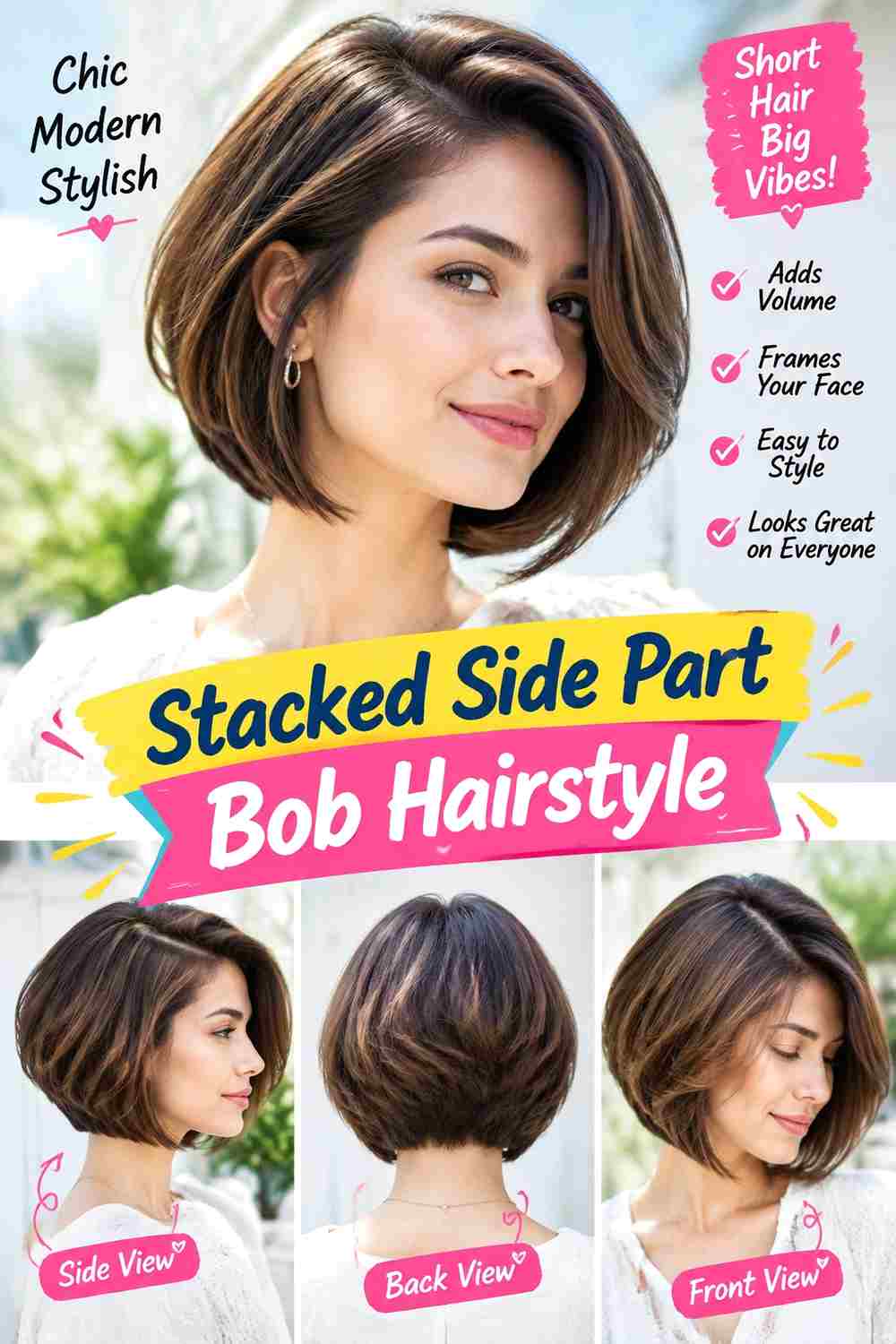
Graduation through the back gives a stacked bob more height behind the crown while the front remains longer and smoother. The side part adds another layer of asymmetry, placing extra weight through one front section. Shorter back sections build the rounded structure, while the sides can descend toward the chin. The result has more deliberate architecture than a one-length bob.
Use root-lift spray around the upper back, a round brush for the rounded shape, and heat protectant when using substantial heat. A quick refresh can focus on crown lift and the heavier front section. A complete blow-dry takes longer because the graduated back needs direction as well as smoothing. Straight and softly wavy hair can show the stacked structure clearly, while other textures require an adapted finish.
At the salon, discuss how high you want the graduation to begin and how much weight should remain at the front. A higher stack creates a more pronounced rounded back; a lower one produces a subtler transition. Growth gradually softens the graduation and lowers the volume. Reshaping is useful when the back no longer holds its intended contour, even if the front length still feels comfortable.
Pro tip:
Direct the upper back sections upward during drying before allowing them to curve into place. Root lift in that specific area supports the stack more effectively than adding volume uniformly around the head.
Make It Work for You:
If you want a softer stacked effect, keep the graduation lower and the front closer to the back length. The side part can provide enough visual drama without an aggressively elevated nape.
Watch Out For:
Removing too much weight from the back can leave the graduation looking thin instead of rounded. Discuss the desired fullness as well as the angle rather than focusing only on shortness.
Inverted Side Part Bob Hairstyle

A longer front and shorter back create the defining angle of an inverted bob. The side part emphasizes that forward length by placing a larger section across one cheek, while the lighter side reveals more of the graduated line. The back can sit around the nape and the front extend toward the chin or lower, depending on how dramatic you want the angle.
Heat protectant and a round brush can smooth the angled perimeter, while lightweight serum controls flyaways without weighing down the front. A quick refresh usually focuses on the longer front pieces and part. A complete blow-dry takes more time because the back and front need different directional control. Straight and wavy textures can reveal the angle clearly, although the cut can be adapted for other patterns.
Tell your stylist exactly how much length difference you want between the nape and front. A subtle angle behaves very differently from a sharply elongated version. Also discuss how the side part changes the amount of hair falling across the longer side. As the cut grows, the back loses its compact placement and the angle becomes softer. Reshape when that proportion no longer matches the silhouette you prefer.
Pro tip:
Check the side profile as well as the front when evaluating an inverted bob. The defining length transition is easier to judge from the side, where the nape-to-front progression becomes clearly visible.
Make It Work for You:
For a lower-maintenance grow-out, choose a gentler angle with less difference between front and back. The side part still creates asymmetry while the perimeter changes less dramatically as it lengthens.
Watch Out For:
Avoid requesting an extreme front angle without considering your normal routine. Very long front pieces may require more directional styling and can behave differently when tucked behind the ear.
Rounded Side Part Bob Hairstyle
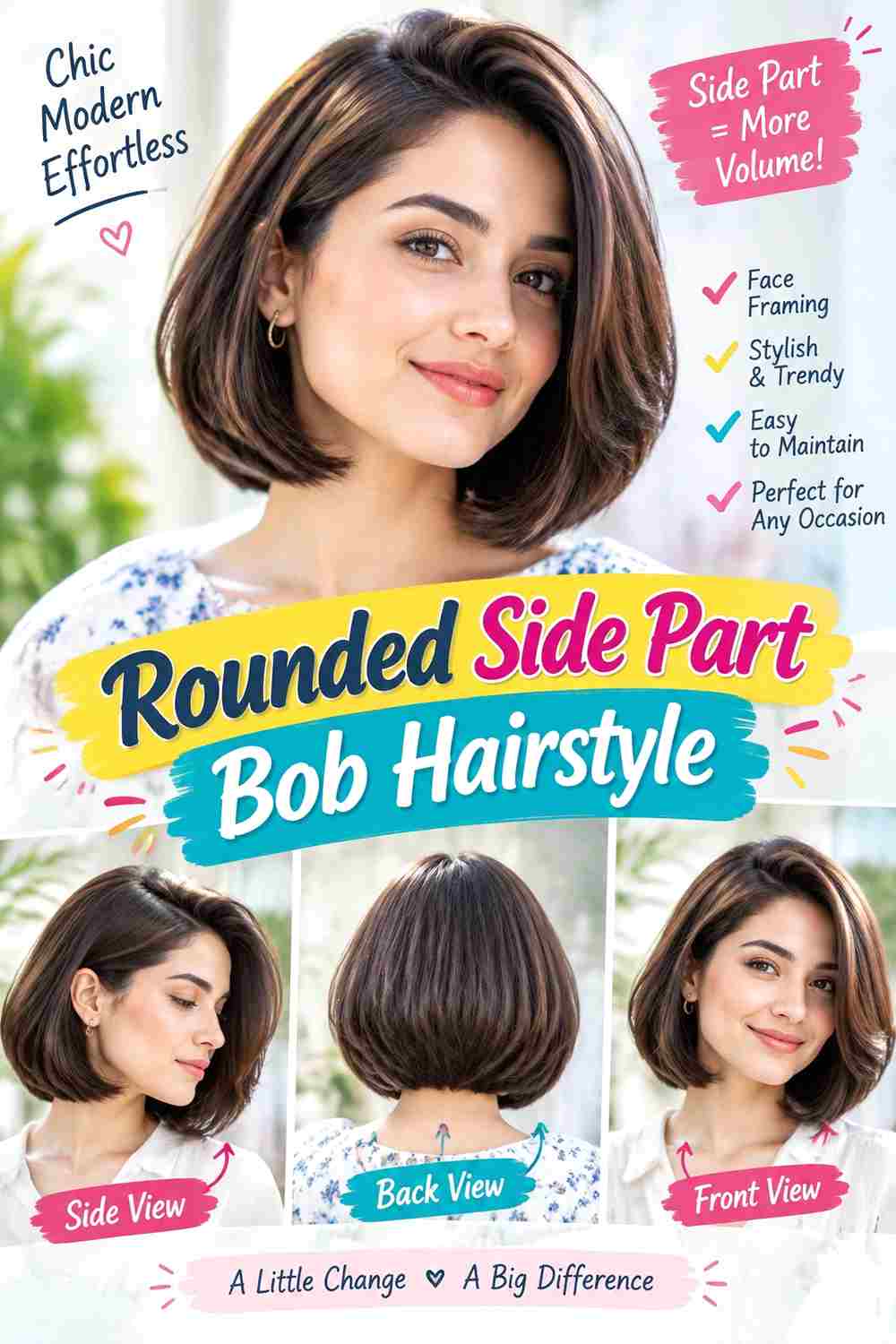
An inward-curving perimeter gives this bob a softer silhouette than a straight blunt cut. The length can sit around the chin or just below, while the ends bend gently toward the neck. A side part places more fullness through one upper section, and subtle internal shaping can help dense hair form the curve without creating obvious surface layers.
Use heat protectant before heated drying, then a round brush to guide the lower lengths inward. Lightweight mousse can provide enough support for the shape without stiffening the ends. A morning refresh may involve resetting only sections that flipped outward overnight. Creating the entire rounded finish from wet hair requires more time, especially when the natural texture does not already bend in that direction.
At the salon, discuss how full you want the bottom edge and whether the curve should be compact or softly expanded. Dense hair may benefit from controlled internal weight adjustment, while lower-density hair may need a stronger perimeter. The side part should also be considered when balancing upper volume. As the bob grows, the inward curve may become harder to maintain because the ends interact differently with the neck and shoulders.
Pro tip:
Concentrate round-brush rotation through the lower lengths rather than curling each section from the roots. This preserves natural movement at the top while placing the rounded bend where it matters.
Make It Work for You:
For finer strands, keep the perimeter relatively full and use only modest inward shaping. The side part can supply upper movement without requiring numerous layers that reduce visible end density.
Watch Out For:
Over-rolling the ends can create a pronounced under-curl instead of a gentle rounded bob. Use a broad bend and release each section once the bottom follows the intended direction.
Flipped-Ends Side Part Bob Hairstyle
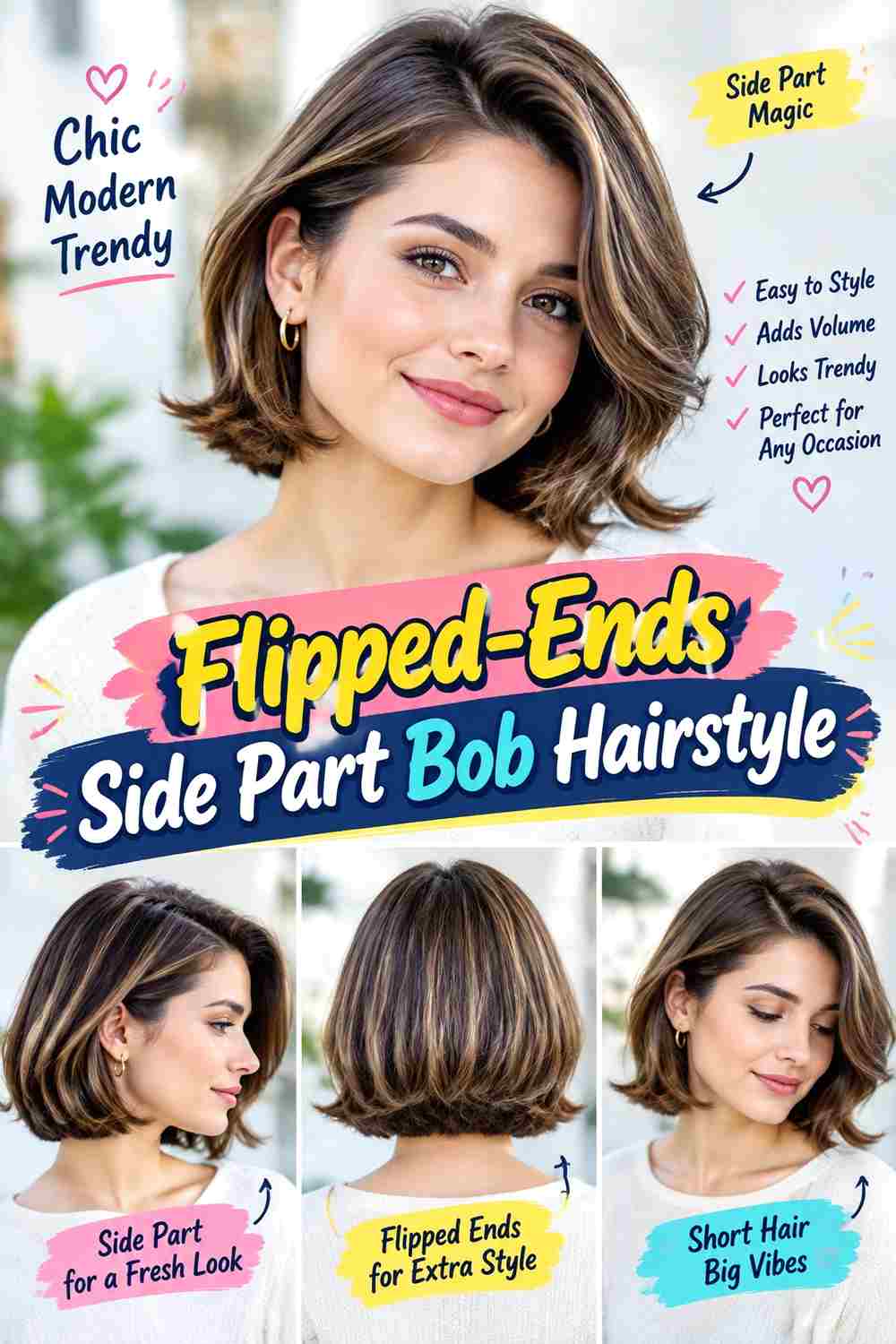
Outward-turning ends bring movement to the lower edge while the side part creates a fuller sweep above. The bob can finish near the chin or slightly below, with relatively smooth upper lengths and a visible kick through the final inches. Minimal layering helps the flip appear deliberate rather than scattered, and the heavier side can carry a slightly stronger outward bend.
Apply heat protectant before styling and use a round brush to direct the ends away from the neck. Flexible hairspray can support the flip while allowing movement. A refresh between washes may involve only the sections that have bent inward overnight. A full wash-day finish takes longer because the perimeter needs to be directed consistently around the head.
This design can be particularly practical when a growing bob naturally begins turning outward as it approaches the shoulders. At the salon, explain how much of the lower length you want to flip and whether you prefer a subtle kick or a more noticeable curve. Keep the perimeter substantial enough for the direction to read clearly. As the bob grows, the flip may become stronger or occur at a different point, changing the intended proportions.
Pro tip:
Create the outward bend only through the bottom portion rather than starting near the roots. Keeping the upper bob smoother makes the flipped perimeter look intentional and easier to distinguish.
Make It Work for You:
If your natural waves already push some ends outward, refine only the sections that bend in the opposite direction. A little variation can preserve texture while maintaining the overall flipped finish.
Watch Out For:
Do not flip different sections from dramatically different heights. Inconsistent starting points can make the perimeter appear uneven; keep most directional movement concentrated near the lower edge.
Tousled Side Part Bob Hairstyle

Loose, irregular movement makes a side part feel less formal while still creating visible asymmetry. The bob sits between the jaw and lower chin, with shallow bends, straighter tips, and subtle lift near the heavier side of the part. Long, restrained layers can add separation, but the bottom edge should retain enough weight to keep the hairstyle recognizably bob-shaped.
Use heat protectant and a curling iron if your hair needs added bends, then apply a light texturizing spray for separation. Naturally wavy hair may require only the texturizing product and finger adjustment. A quick refresh should target flat sections rather than rebuilding the whole pattern. Starting from straight, wet hair takes longer because both drying and texture creation are involved.
At the salon, discuss how much layering you want through the surface and where the shortest pieces should begin. Too much removal can make the tousled finish look sparse rather than airy. The side part itself provides useful lift, so extensive crown layering may not be necessary. As the layers grow, movement becomes heavier and the shape more compact. A reshape can restore separation while protecting the perimeter.
Pro tip:
Leave several sections almost straight when adding bends. Contrast between smoother pieces and loose waves creates a more relaxed texture than curling every strand into the same repeated pattern.
Make It Work for You:
For fine or lower-density ends, keep most texture through the surface and front rather than heavily layering the entire bob. You gain movement while protecting a fuller-looking bottom edge.
Watch Out For:
Too much texturizing product can make short ends clump together. Begin with a small amount through the mid-lengths, then add more only if the finished bob genuinely needs extra separation.
Tucked Side Part Bob Hairstyle

Tucking the lighter side behind the ear emphasizes the imbalance created by a side part. The heavier section remains loose across the opposite cheek, while the tucked side exposes the ear and makes the perimeter easier to see. A jaw- or chin-length bob works particularly well because the front pieces are long enough to tuck while remaining compact.
A lightweight styling cream can control the front surface, while a fine-tooth comb helps refine the part. A discreet bobby pin can secure slippery hair behind the ear if necessary. The daily refresh is usually quick because most of the visual effect comes from placement rather than elaborate texture. Full wash-day effort depends on whether the remaining bob is worn natural, waved, or smooth.
At your salon appointment, explain that you regularly tuck one side so the front pieces can be assessed in both positions. Very short face-framing sections may repeatedly escape behind the ear, while a fuller front can stay more securely placed. The haircut does not require special layers solely for tucking. As the bob grows, the arrangement generally remains usable, although the heavier side may become more substantial and need reshaping to preserve balance.
Pro tip:
Place a bobby pin underneath the tucked surface section rather than visibly across it. The hidden anchor can improve hold while preserving the clean contrast between the exposed and fuller sides.
Make It Work for You:
For curls or waves, tuck a complete natural grouping instead of pulling individual strands tightly backward. This keeps the texture intact while maintaining the defining open area around one side.
Watch Out For:
Do not force pieces behind the ear if they are too short to stay comfortably. Leave them loose or secure them gently rather than repeatedly tightening and disturbing the surrounding hair.
Fine-Hair Side Part Bob Hairstyle

Fine strands can benefit from the side part because shifting more hair to one side creates visible movement without requiring extensive layering. A blunt or lightly graduated perimeter around the chin helps retain end weight, while restrained front shaping prevents the heavier section from looking completely solid. Fine hair can also be dense, so the actual amount of hair should guide the structure rather than strand thickness alone.
Lightweight mousse can provide root support, and a round brush helps direct the heavier front section. Use heat protectant when blow-drying with substantial heat. A short refresh may focus on the roots around the part, while full wash-day styling requires more time. Avoid loading the ends with rich products when maintaining movement is the priority.
At the salon, discuss both strand thickness and overall density. If the ends already look sparse, preserve a strong perimeter and keep layering minimal. If fine hair is dense, there may be more flexibility for subtle internal shaping. Specify where you wear the part so the stylist can assess how weight shifts between sides. Reshape when the perimeter loses the fullness or compact length that makes the bob work for your routine.
Pro tip:
Apply volumizing product mainly near the roots instead of coating the whole bob. Keeping the ends lighter helps them move while the side part receives support exactly where additional lift is useful.
Make It Work for You:
If your fine hair is naturally wavy, use that bend instead of smoothing it completely. Gentle natural movement can add visible body while a fuller perimeter keeps the ends from appearing overly separated.
Watch Out For:
Avoid assuming fine hair automatically needs many short layers for volume. Excessive removal can reduce perimeter fullness; use the part, drying direction, and selective shaping before sacrificing substantial end weight.
Dense-Hair Side Part Bob Hairstyle
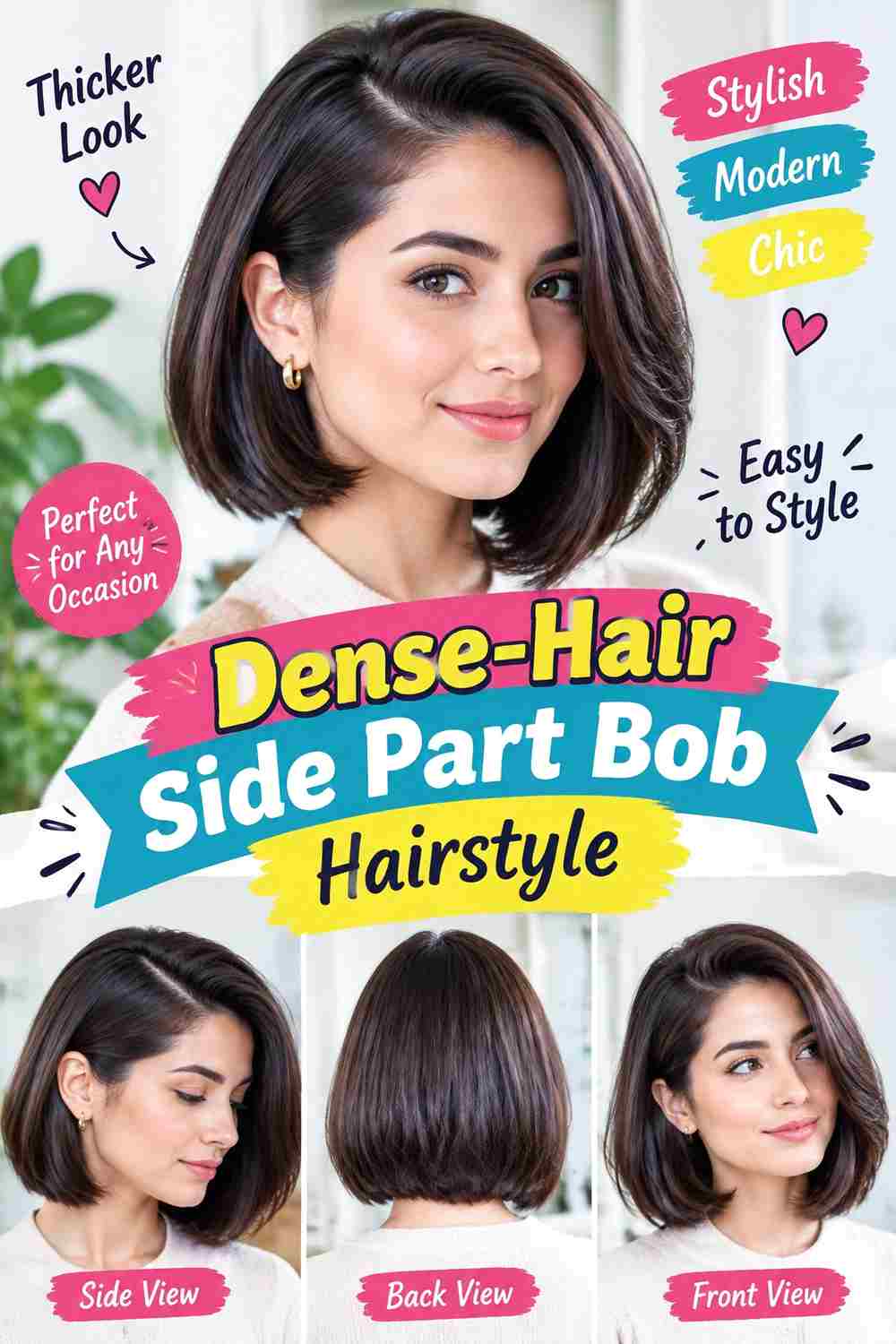
Dense hair gives a side-parted bob plenty of substance, but the heavier side can become bulky if weight distribution is ignored. A chin-to-neck-length perimeter provides structure, while controlled internal shaping can reduce excess width without turning the surface into numerous short layers. The lighter side may tuck neatly, allowing the fuller sweep to become the main visual feature.
A lightweight leave-in conditioner can make the lengths easier to manage, while a round brush guides broad sections during a smooth blow-dry. Include heat protectant if significant heat is used. A quick refresh may focus on the part and front; fully drying dense hair takes considerably longer. Natural or air-dried styling can reduce active work even though total drying time remains substantial.
At the salon, show where the bob becomes too wide or heavy rather than requesting thinning everywhere. The stylist can assess whether internal weight removal is useful in those specific areas while preserving the visible perimeter. Also discuss how deep you wear the side part, since that shifts a considerable amount of dense hair. As the cut grows, bulk may return through the lower sides before the perimeter looks especially long, signaling that reshaping could help.
Pro tip:
When drying, work in manageable sections so internal lengths receive enough airflow and direction. Repeatedly heating only the outer surface can leave the underneath bulky while overworking the visible hair.
Make It Work for You:
If you enjoy a substantial bob, retain more weight through the perimeter and adjust only the areas that spread too widely. Dense hair does not need to be made dramatically lighter.
Watch Out For:
Aggressive thinning can create short internal pieces that expand unpredictably. Address specific bulk placement instead of removing weight everywhere, especially when you want a smooth, substantial outer outline.
Coily Side Part Bob Hairstyle
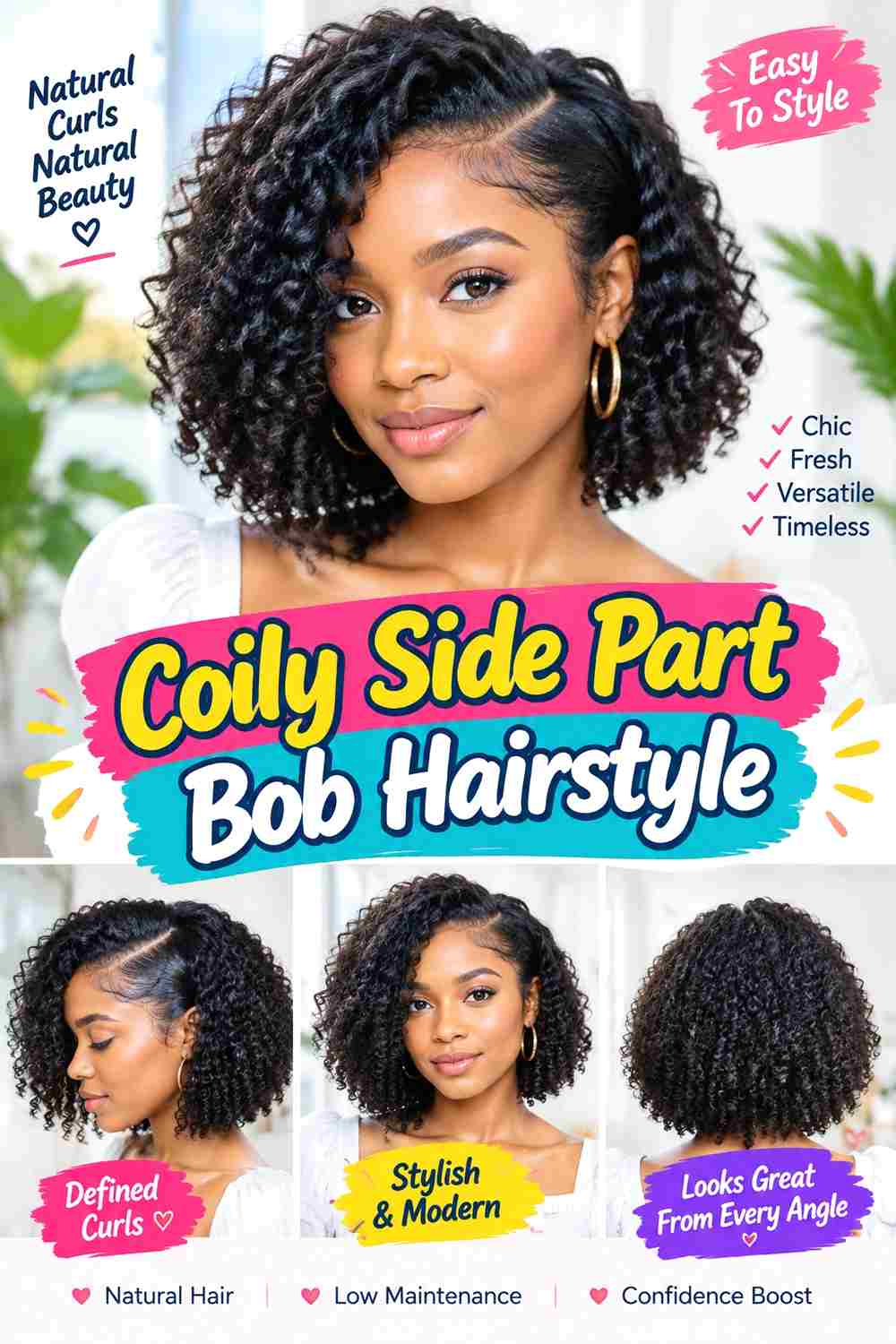
A side part can shift the balance of a coily bob without reducing its natural volume. More coils gather on the heavier side, creating an asymmetric rounded shape, while the opposite side sits closer to the temple. The finished length should be considered in its dry, shrunken state, whether the silhouette sits near the jaw, chin, or slightly lower.
Lightweight leave-in conditioner supports slip, curl gel helps selected coil groups stay defined, and a diffuser can assist with drying while preserving texture. A quick refresh may involve reshaping compressed coils around the part and outer perimeter. A full detangling, styling, and drying session takes longer and varies considerably with density and length. The haircut should not depend on straightening to reveal its intended outline.
For salon planning, discuss where you want the bob to finish when dry and how much volume you prefer on each side of the part. Shrinkage may vary between sections, so stretched measurements alone cannot establish the final balance. The stylist should also assess where bulk supports or overwhelms the silhouette. Reshape when the dry outline loses the intended bob proportion or when the side-parted volume no longer distributes comfortably.
Pro tip:
Arrange the side part while the hair is damp, then lift individual coil groups at the root once dry. This can restore volume without combing through and disrupting the established pattern.
Make It Work for You:
If your coils strongly favor another part position, shift only slightly from their natural direction. A modest off-center division can still create the side-part effect while respecting how the roots settle.
Watch Out For:
Do not choose the bob length by stretching coils straight. The released shape can finish considerably higher, and different areas may shrink differently, so evaluate the intended perimeter in its dry state.
Air-Dried Side Part Bob Hairstyle

An air-dried bob uses the side part to organize natural movement rather than depending on a polished heat-created finish. The perimeter can sit at the jaw, chin, or lower, while existing bends, waves, curls, or slight irregularities remain visible. Minimal or carefully placed layering allows the texture to move without removing the strong outline that identifies the haircut.
A lightweight leave-in conditioner can help with slip and surface control, while an air-dry cream encourages cohesion. A wide-tooth comb can distribute product where appropriate for your texture. Active styling time can be fairly short, although dense hair may still take a long time to dry completely. Between washes, refreshing only flattened areas around the part is often more practical than wetting the whole bob again.
Tell your stylist that air-drying is your normal routine and show where your natural part sits. Layer placement should be judged around the texture you actually wear, not solely from a smooth reference. Discuss where the perimeter should finish once natural bends or shrinkage are present. As the cut grows, weight can shift toward the bottom and reduce movement around the part. Reshape when that natural silhouette no longer falls the way you prefer.
Pro tip:
Arrange the part and major texture groups while the hair is still damp, then limit unnecessary handling. Frequent touching during drying can disturb grouping and increase surface frizz around the visible part.
Make It Work for You:
If your texture varies across the head, let each side retain some natural difference. The side part already creates intentional asymmetry, so every wave or curl does not need to match.
Watch Out For:
Do not choose layers based only on how the bob looks after a smooth blow-dry if you rarely style it that way. Natural drying can change volume, shrinkage, and perimeter placement.
Conclusion
Side part bob hairstyles can change dramatically through length, texture, layers, and perimeter shape even though the parting remains off center. A blunt or sleek bob emphasizes a strong edge, while waves, curls, coils, and tousled finishes add more movement. Stacked and inverted shapes alter the back-to-front balance, whereas fringe makes the front sweep more defined. Fine or lower-density ends may benefit from retaining perimeter weight, while dense hair can sometimes use carefully placed internal shaping. Consider how your natural texture behaves, where your preferred part sits, how much daily styling you want, and whether you prefer precise or flexible grow-out before choosing the bob shape.
Before Your Salon Visit
Choose one or two favorites and save references that clearly show the features you want. Discuss your natural texture, density, face shape, preferred bob length, normal side-part position, upkeep, and everyday styling routine. Point to the exact perimeter, fringe length, layer starting point, graduation, front angle, volume placement, or finish you like. If you want the length from one reference but the parting and texture from another, explain those preferences separately so the desired result is easier to understand.
FAQs
Does a side part work with fine-hair bobs?
Yes. Moving the part off center can create visible root lift and place more hair on one side without requiring heavy layering. Fine strands may benefit from a fuller perimeter, particularly when the ends are lower in density. Product amount should remain light enough to preserve movement.
How deep should the side part be on a bob?
There is no universal position. A subtle off-center part creates gentle asymmetry, while a deeper part produces a stronger sweep and more concentrated volume. Natural growth direction matters too, so choose a placement that gives the effect you want without requiring excessive daily redirection.
Can curly or coily hair wear a side part bob?
Yes. The part shifts curl or coil volume toward one side and can create a rounded asymmetric silhouette. Plan the haircut around dry length, shrinkage, and natural grouping rather than stretched measurements. A stylist should assess how the part affects volume before finalizing the shape.
How often does a side part bob need reshaping?
It depends on the bob. A precise jaw-length perimeter, short fringe, or pronounced graduation will show growth sooner than a softer layered or air-dried shape. Instead of following one fixed schedule, consider reshaping when the perimeter, fringe, volume, or front-to-back balance stops behaving as intended.