11 Slicked Back Bob Hairstyle Ideas

Slicked back bob hairstyle ideas combine a short or medium bob perimeter with hair directed away from the forehead. The defining detail is the open front, but the finish can vary considerably. Roots may lie flat for a glossy wet effect, lift gently before sweeping backward, or follow a deep side direction. Length can stop near the chin, skim the jaw, or extend toward the collarbone. Layers are usually restrained when a strong perimeter matters, although texture through the ends can add movement.
Straight and wavy hair can be directed backward easily with the right hold, while curly hair can keep its natural pattern through the lengths as the front stays controlled. Density affects product quantity and volume placement. Fine strands may need lighter formulas near the roots, while dense hair can require stronger section-by-section control. An ear tuck can also reduce side width without changing the cut.
Styling effort depends on how different the finish is from your natural texture. A next-day root refresh may be short, while a polished wash-day set requires more preparation and drying. Cut upkeep is separate: reshape the bob when its perimeter loses the intended length or weight.
Quick List
- Classic Chin-Length Slicked Back Bob Hairstyle
- Wet-Look Slicked Back Bob Hairstyle
- Voluminous Slicked Back Bob Hairstyle
- Ear-Tucked Slicked Back Bob Hairstyle
- Wavy Slicked Back Bob Hairstyle
- Curly Slicked Back Bob Hairstyle
- Deep Side Slicked Back Bob Hairstyle
- Blunt Slicked Back Bob Hairstyle
- Textured Slicked Back Bob Hairstyle
- Collarbone Slicked Back Bob Hairstyle
- Soft Root-Lift Slicked Back Bob Hairstyle
Classic Chin-Length Slicked Back Bob Hairstyle

A chin-length perimeter keeps this version compact, while directing the entire front backward opens the forehead and emphasizes the clean bob shape. The roots can sit relatively close without appearing pasted down, and the ends remain straight or softly bent near the jaw. Minimal layering preserves weight through the bottom edge. With no visible fringe or fixed center part, the backward direction becomes the main styling feature.
Straight and softly wavy textures are particularly manageable at this length, though density determines how much control the roots need. Fine strands generally benefit from avoiding excessive product, while dense hair may need styling in smaller sections. Use a lightweight styling gel to establish backward direction, a wide-tooth comb to distribute it without creating overly fine lines, and flexible hairspray to reinforce the finished position. A next-day root adjustment can be brief; resetting the whole style after washing takes longer.
At the salon, identify exactly where you want the dry perimeter to meet the chin and how much weight you want retained at the ends. This matters because a strong bottom edge supports the clean silhouette. Reshaping becomes useful when growth pulls the perimeter below your preferred landmark or the ends lose their deliberate line.
Pro tip:
Comb the front backward while it is still slightly damp, then use your fingers to soften any overly perfect comb tracks. This keeps the direction controlled without making the surface appear unnecessarily rigid.
Make It Work for You:
If your hair is lower density, keep the perimeter relatively full and apply styling product sparingly near the roots. The open-front effect remains clear without sacrificing useful volume through the short bob.
Watch Out For:
Too much gel at the crown can make the bob look flatter than intended. Start near the front hairline, distribute a small amount backward, and add more only where individual sections resist the direction.
Wet-Look Slicked Back Bob Hairstyle

A glossy surface and clearly grouped sections distinguish the wet-look bob from a simply brushed-back finish. The hair moves directly away from the forehead, usually without a visible fringe, while the sides follow the head before releasing into a chin- or jaw-length perimeter. Roots stay controlled and close, but the ends can remain slightly separated so the entire bob does not look like one solid piece.
Straight, wavy, and curly textures can all interpret the finish differently. The important point is creating shine and grouping without keeping the hair physically wet. A moisturizing leave-in conditioner helps maintain pliability, strong-hold gel establishes the slick direction, and a wide-tooth comb distributes product through selected areas. A quick refresh can target flyaways and the front hairline; recreating the complete finish after washing requires more careful product distribution and drying time.
At your salon appointment, discuss the underlying bob separately from the styling finish. Specify whether you want a jaw-level or chin-level perimeter and how much weight should remain through the ends. A wet effect cannot permanently disguise an unsuitable cut shape. Maintain the haircut when the bottom edge becomes too long or uneven for the compact silhouette you want.
Pro tip:
Apply gel to evenly damp hair, then establish the front direction before leaving it to set. Once the surface begins drying, repeated combing can disturb the grouped finish and encourage unwanted frizz.
Make It Work for You:
For fine strands, keep most of the strong-hold product near the hairline and upper surface rather than saturating every length. You can retain the glossy direction without making the bob appear unnecessarily thin.
Watch Out For:
Do not repeatedly rewet the style simply to maintain a wet appearance. Let the hair dry normally after shaping and rely on the styling finish for gloss and definition rather than persistent moisture.
Voluminous Slicked Back Bob Hairstyle

Instead of lying close to the scalp, this bob rises at the front before sweeping backward. The extra root height creates an open, curved shape above the forehead, while the sides settle closer and the ends remain around jaw or chin level. A softly rounded crown connects the lifted front to the bob perimeter. Keeping the ends relatively full prevents the upper volume from overpowering the lower shape.
Straight and wavy textures can support the swept-back lift, particularly when the hair already has some body. Dense hair may need less added volume than fine hair, which can benefit from concentrating support at the roots rather than coating the lengths. Use root-lift spray at the front, heat protectant before heated drying, and a round brush to direct the roots upward and backward. A dry refresh may involve only the front; rebuilding the volume after washing requires a longer blow-dry.
Tell your stylist where you want the perimeter to finish and whether you prefer weight concentrated at the bottom rather than extensive layering. The styling creates most of the height, so layers do not need to do all the work. Reshape the cut when growth makes the ends feel too heavy or changes the intended bob proportion.
Pro tip:
Lift the front roots while drying, but gradually lower the brush direction as you move toward the crown. This creates a smooth transition instead of leaving one isolated bump immediately above the forehead.
Make It Work for You:
If your hair is dense, use less root-lift product and concentrate it only where the front needs support. Natural fullness can provide the rest without creating excessive width through the crown.
Watch Out For:
Avoid lifting every section equally. Too much volume at the sides can turn the compact bob into a broad shape; concentrate height above the forehead and upper crown while keeping side volume controlled.
Ear-Tucked Slicked Back Bob Hairstyle

Tucking both sides behind the ears gives a slicked-back bob a particularly clean outline. The front travels backward with minimal fringe separation, then the side sections are secured naturally behind the ears before the ends fall toward the jaw. The tuck exposes more of the temples and reduces visible width at the sides, while a full perimeter below keeps the haircut recognizable as a bob.
Straight and wavy textures are easy to position this way, though slippery hair may need extra hold around the ears. Fine hair can benefit from keeping the lengths relatively untouched so they retain movement. Use lightweight styling cream to guide the front, a fine-tooth comb for controlled placement around the hairline, and flexible hairspray to reinforce the tucked areas. A morning retuck can take moments; creating a smooth finish from freshly washed hair requires more time.
At the salon, explain that you frequently want the sides to sit behind the ears and identify the preferred perimeter length when tucked. This helps determine whether the front sections need enough length to stay securely in position. Cut maintenance becomes useful when the ends extend beyond the intended jaw-level shape or shorter pieces repeatedly escape from behind the ears.
Pro tip:
Guide the side sections backward before tucking them rather than pulling them sharply from the front. This keeps the surface smoother and reduces unnecessary tension around the temples and hairline.
Make It Work for You:
If your hair slips forward easily, keep enough length around the temples to reach comfortably behind the ears. A slightly longer bob can preserve the same clean placement while making the tuck more secure.
Watch Out For:
Do not force short side pieces behind the ears with excessive tension. If they continually spring free, soften the placement or allow them to grow rather than repeatedly pulling the hairline backward.
Wavy Slicked Back Bob Hairstyle

Controlled roots and moving lengths create the key contrast in this bob. The hair is directed away from the forehead, but broad bends begin around the temples or upper sides and continue through the jaw-length ends. Leaving some tips straighter prevents the waves from becoming overly formal. The crown can stay softly lifted while the front remains open, creating movement without a fringe.
Naturally wavy hair can make this finish relatively practical because only the root direction may need resetting. Straight hair requires more work to build the bends. Use heat protectant before thermal styling, a medium curling iron for loose waves, and flexible hairspray to maintain both the swept roots and moving lengths. Refreshing one or two flattened waves may be brief, whereas creating the full pattern from freshly washed straight hair takes considerably longer.
At the salon, ask for enough perimeter length to support a broad bend without making the bob appear much shorter once styled. Point out whether you want the ends full or lightly textured. Maintenance becomes useful when growth moves the waves below the intended jaw area or the bottom edge stops supporting the shape.
Pro tip:
Begin the waves below the slicked root area rather than curling directly from the scalp. Keeping those zones distinct makes the backward direction readable while allowing the lower bob to retain soft movement.
Make It Work for You:
If your natural waves are irregular, refine only the sections that interrupt the overall silhouette. Matching every bend is unnecessary; preserving the smooth front and balanced perimeter matters more than perfect uniformity.
Watch Out For:
Tight curls can shorten the visible bob and add unexpected side width. Use broad bends with relaxed ends when you want to preserve the jaw-level length and controlled proportions of this design.
Curly Slicked Back Bob Hairstyle

A controlled front paired with naturally defined curls through the lengths gives this bob two distinct textures without requiring the curls to be straightened. The roots move away from the forehead and stay relatively compact around the temples, while curls expand through the sides and ends. The perimeter can sit near the jaw when dry, with enough layering to encourage movement without removing excessive weight.
Curly hair is the natural starting point, but shrinkage needs to guide both length and layer placement. Dense curls may require thoughtful bulk distribution, whereas lower-density curls often benefit from retaining a fuller outer shape. Use lightweight leave-in conditioner to support softness, curl gel to define the lengths and control the front, and a diffuser to dry without flattening the curl pattern. A root-only refresh can be short; resetting and fully drying the entire bob takes longer.
At the salon, describe both the desired dry bob length and how far backward you want the front to sit. Ask where the shortest layers will fall after shrinkage. This prevents excessive volume from collecting at an unintended level. Reshape when the perimeter becomes too long or growth changes the relationship between the controlled roots and fuller curly sides.
Pro tip:
Smooth the front backward first, then scrunch the lengths separately. Treating these zones differently lets you maintain a controlled hairline without stretching or disturbing the curl definition you want below it.
Make It Work for You:
If your curls shrink significantly, keep additional cutting length through the perimeter. The bob can still finish near the jaw while leaving enough hair for complete curl formation and natural movement.
Watch Out For:
Avoid combing gel continuously through the curls after they begin forming. Overworking the lengths can stretch their pattern and create frizz; limit combing to the root area that actually needs slick control.
Deep Side Slicked Back Bob Hairstyle
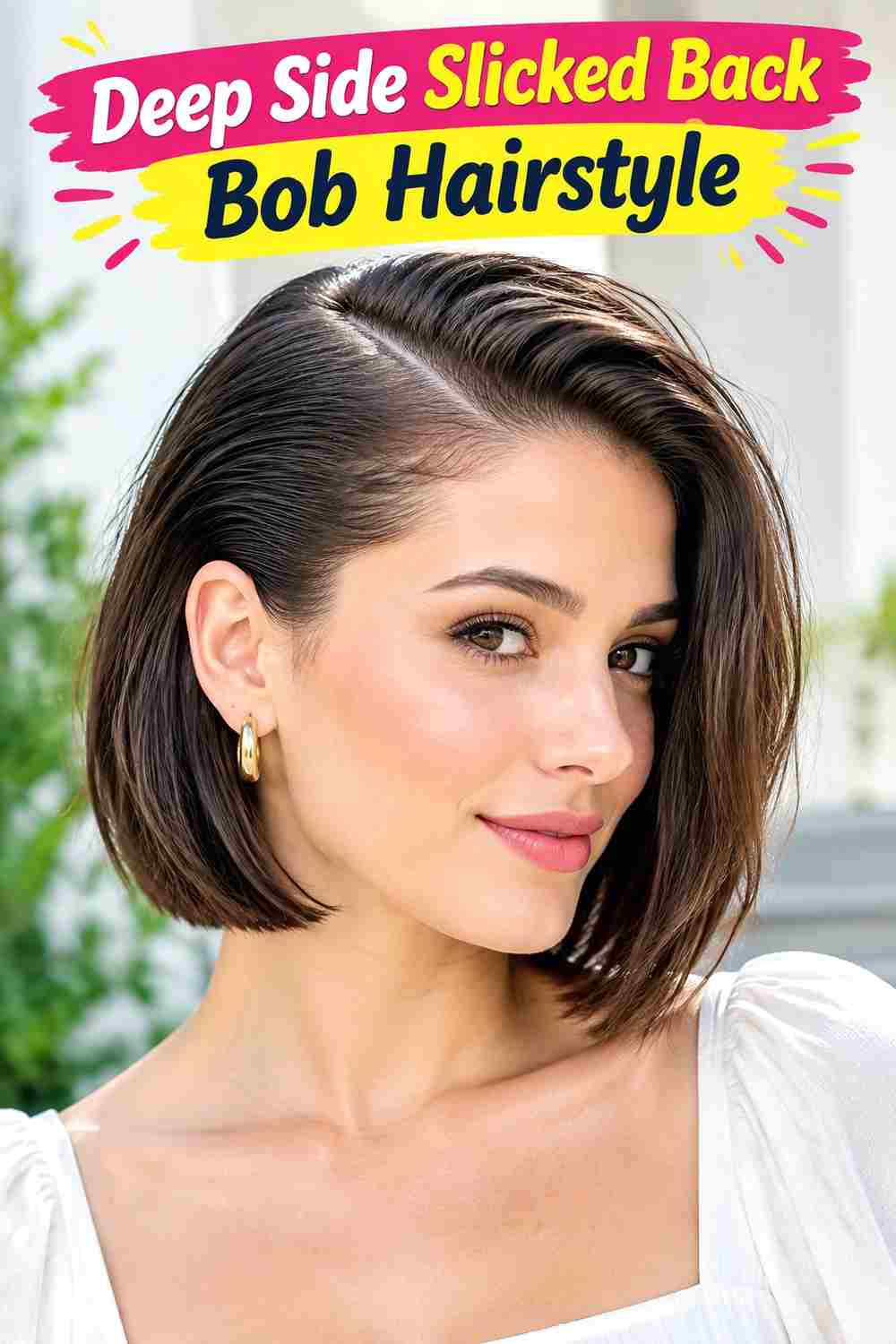
A deep side direction gives the slicked-back bob asymmetry without bringing hair forward over the forehead. The heavier section sweeps up and backward from one side, while the opposite temple stays closer to the head. A chin- or jaw-length perimeter balances the directional roots, and the ends can remain smooth or carry a slight bend. The part itself provides structure even though both sides travel backward.
Straight and wavy hair can hold the directional finish well, especially when the natural part already favors one side. Dense hair may require more sectioning through the heavier area, while fine strands should avoid excessive product at the roots. Use lightweight styling gel for direction, a heat protectant before heated drying, and a round brush to establish the sweep. A dry root refresh can be relatively quick; resetting a stubborn part after washing takes longer.
Tell your stylist where you normally place the deep part and whether one side is intended to tuck behind the ear. That information helps with front length and weight distribution. Reshape the bob when growth makes the heavier side collapse or when the perimeter no longer supports the deliberate asymmetry.
Pro tip:
Create the part on damp hair before applying strong hold. Establishing the root direction first means you need less product to force the heavier section backward once the hair begins to dry.
Make It Work for You:
If your natural part resists an extreme side position, move it only slightly farther over than usual. You can create directional asymmetry while reducing the daily effort required to retrain the roots.
Watch Out For:
Too much product on the heavier side can collapse its root movement and make the asymmetry look accidental. Use enough hold for direction while preserving a little space above the scalp.
Blunt Slicked Back Bob Hairstyle

A dense, straight bottom edge gives this version its strongest visual feature. The hair is swept cleanly away from the forehead, leaving the face open, while the perimeter forms a deliberate line near the jaw. Layers are minimal so the ends retain maximum visible weight. Roots can be moderately sleek rather than completely flat, allowing the blunt edge to remain the main geometric detail.
Straight and softly wavy textures show the perimeter clearly, though the design can be adapted to other patterns with a different finish. Fine strands may particularly appreciate retaining end weight, while very dense hair may need carefully considered internal adjustment. Use heat protectant before heated drying, a paddle brush to create a smooth surface, and lightweight smoothing serum to refine the ends. A root touch-up between washes may be quick; producing the entire polished finish from wet hair takes longer.
At the salon, specify the exact dry perimeter landmark and explain that you want the bottom edge to remain visually full. Internal weight changes should not accidentally weaken that line. Cut upkeep matters when growth makes the perimeter sit below its intended position or uneven sections interrupt the blunt finish.
Pro tip:
When drying, direct the lengths backward but let the final few inches fall naturally toward the perimeter. Pulling every section tightly back can make the ends kick outward instead of settling into a clean line.
Make It Work for You:
For dense hair, ask whether internal weight can be adjusted while keeping the visible bottom edge intact. This can reduce excessive bulk without sacrificing the blunt perimeter that defines the design.
Watch Out For:
Avoid over-thinning the ends to make the bob feel lighter. Sparse tips weaken the strongest feature of this variation; address unwanted bulk inside the shape rather than automatically removing perimeter density.
Textured Slicked Back Bob Hairstyle

Piecey ends and a controlled but imperfect surface make this bob less formal than the sleek versions. The front still moves backward, but a few subtle separations can remain around the roots rather than forming a glassy sheet. Through the lengths, light layers or textured ends create movement around the jaw. A little crown volume keeps the finish relaxed while the open forehead maintains the slicked-back identity.
Straight and wavy hair adapt easily to the separated finish, while loose curls can create a softer interpretation. Lower-density hair should keep enough perimeter weight so texturing does not leave the ends sparse. Use lightweight mousse for flexible body, a vent brush to establish backward root direction, and texturizing spray on dry lengths for separation. A morning refresh can involve reshaping only the front and several ends; a complete wash-day reset naturally takes longer.
At the salon, explain where you want visible texture concentrated—through the surface, ends, or selected layers—and how full the bottom edge should remain. This prevents “textured” from becoming indiscriminate thinning. Reshape when the layers stop moving independently or the perimeter grows beyond the intended bob length.
Pro tip:
Apply texturizing spray mainly through dry mid-lengths and ends, then separate a few pieces with your fingertips. Keeping it away from heavily styled roots prevents the backward direction from becoming rough or unstable.
Make It Work for You:
If your hair is fine, preserve a fuller bottom line and create most of the piecey effect through styling rather than extensive cutting. The bob keeps substance while still appearing relaxed.
Watch Out For:
Too much texture at both the roots and ends can make the style look undefined. Keep the front controlled and introduce separation lower down so the slicked-back structure remains easy to recognize.
Collarbone Slicked Back Bob Hairstyle

Extra length gives the slicked-back bob more movement and makes it easier to tuck or sweep behind the shoulders. The perimeter reaches toward the collarbone, while the front travels backward from an open forehead. A centerless brushed-back direction keeps the style clean, and restrained long layers can add movement without turning the cut into a heavily layered shape. The ends may sit straight or bend softly outward near the shoulders.
Straight, wavy, and curly textures can all adapt to this longer interpretation. Dense hair has more room for controlled weight distribution, while fine hair may benefit from maintaining a strong perimeter. Use lightweight styling cream to control the front, a heat protectant before heated drying, and a paddle brush for smooth backward direction. A root refresh can be brief, but washing and drying collarbone-length hair naturally requires more time than a chin-length bob.
At the salon, specify where you want the perimeter to sit relative to the collarbone and whether it should clear the shoulders or touch them. This matters because shoulder contact can make ends flip. Maintain the cut when growth changes that relationship or makes the perimeter feel more like a long one-length cut than your preferred bob.
Pro tip:
If the ends naturally flip against your shoulders, allow a small amount of movement instead of repeatedly forcing them straight. The open slicked front can remain polished while the perimeter responds naturally to its length.
Make It Work for You:
For thick or dense hair, ask whether controlled internal weight adjustment could improve movement while preserving the outer edge. Longer length provides room to manage bulk without heavily layering the entire shape.
Watch Out For:
Do not overlook shoulder contact when choosing the final length. A perimeter sitting directly on the shoulders may turn outward, so decide whether you like that movement before selecting the exact landmark.
Soft Root-Lift Slicked Back Bob Hairstyle
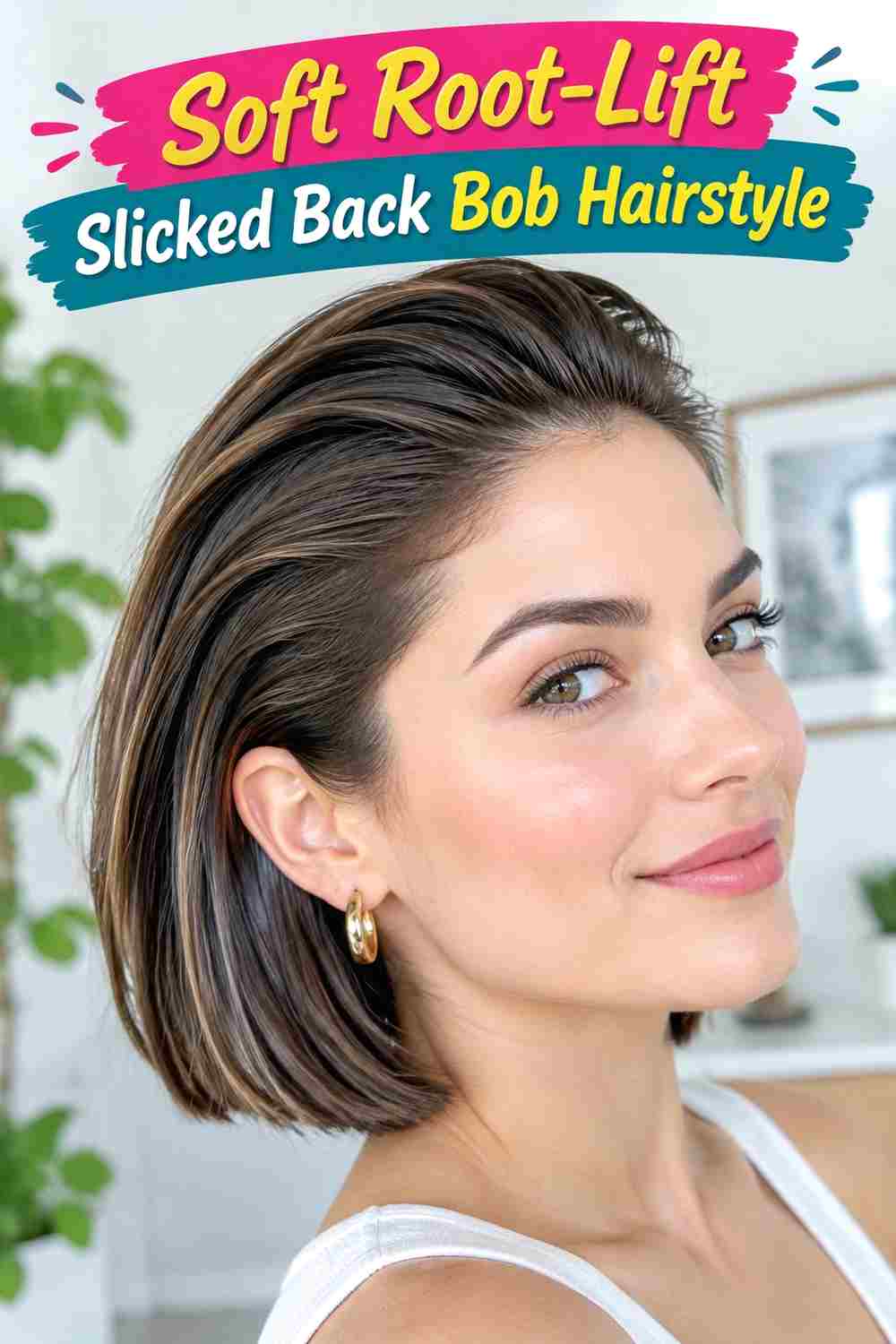
Gentle height at the hairline creates a softer alternative to a flat slicked-back finish. The roots rise slightly before flowing backward, with the crown settling naturally into a jaw-length bob. Unlike the high-volume version, the lift is restrained and evenly blended rather than dramatic. The sides stay smooth without being tightly pressed down, and a full perimeter gives the style a balanced lower edge.
Straight and wavy textures can achieve the controlled lift readily, while other textures can adapt it according to their natural volume. Fine strands may appreciate modest root support, whereas dense hair often needs only directional drying. Use root-lift spray sparingly at the front, heat protectant before heated drying, and a round brush to create the gentle backward curve. A next-day refresh can focus on the hairline for a few minutes; rebuilding the shape after washing takes longer.
At the salon, explain that you want enough front length to sweep backward without depending on a fringe. Also discuss where the perimeter should sit and how much weight should remain through the ends. Reshape when the front becomes too long to hold its gentle lift or the bottom edge loses the compact bob proportion.
Pro tip:
Lift the front only slightly above its final position while drying, then let it settle backward as it cools. This creates natural-looking root space without producing an exaggerated bump above the forehead.
Make It Work for You:
If your hair naturally has plenty of volume, skip extra root-lift product and focus on directing the hair backward. Preserving controlled height rather than adding more keeps the finish soft and balanced.
Watch Out For:
Do not press the sides completely flat while lifting the front. An abrupt difference can make the crown look disconnected; keep a small amount of natural side volume so the transition remains smooth.
Conclusion
Slicked back bob hairstyle ideas can range from compact chin-length cuts to collarbone shapes, with the biggest differences coming from root volume, texture, parting, and finish. A blunt perimeter emphasizes density, while textured ends create more movement. Flat wet-look roots produce stronger definition; soft lift feels less rigid. Waves and curls can keep their natural texture through the lengths instead of being straightened, while ear tucks and deep side direction change volume placement without requiring a new cut. Consider how your natural texture responds to backward styling, how much hold you enjoy using, and whether you prefer quick root refreshes or a more polished wash-day routine. The underlying bob should still work when it is not slicked back.
Before Your Salon Visit
Choose one or two favorite references and save clear views of both the slicked-back styling and underlying bob. Discuss your natural texture, density, face shape, preferred dry length, upkeep, and usual styling routine. Point to the exact perimeter, root lift, parting, ear placement, waves, or glossy finish you want. If you like one reference primarily for its styling rather than its haircut, say so clearly; a slicked-back finish can often be changed without requiring a different cut.
FAQs
Does a slicked back bob need to be straight?
No. Curly and wavy bobs can keep visible natural texture through the lengths while the front is directed backward. The amount of control needed at the roots depends on your growth pattern and desired finish. A slicked front does not require straightening the entire haircut.
How do I keep a slicked back bob from looking flat?
Concentrate a small amount of lift at the front or crown instead of pressing every root tightly against the scalp. Product quantity also matters, especially on fine strands. If you want volume, use directional drying and lighter root application while keeping the sides controlled.
Can I slick back a bob without using heat?
Yes, depending on your natural texture and the finish you want. Styling gel or cream can establish backward direction on damp hair, followed by air-drying. Heat may make a polished or lifted finish quicker to create, but it is not required for every slicked-back bob.
How can I maintain the style as my bob grows out?
Watch both the front and perimeter. Longer front sections may need stronger direction as they grow, while the bottom edge can gradually lose its intended bob proportion. Small styling adjustments can extend wear, but reshaping is useful once growth noticeably changes the length, weight, or movement you originally wanted.