15 Tousled French Bob Hairstyles for Fall 2026

A tousled French bob is a short haircut that usually sits between the cheekbones and chin, with a compact perimeter softened by natural bends, broken-up ends, or light layering. Unlike a highly polished bob, the tousled version relies on texture and movement. Bangs can be wispy, micro, curtain-shaped, or skipped completely, while the part can sit in the center or sweep to one side. The result should feel relaxed without losing the strong short-bob outline.
Hair density changes how the cut should be built. Fine hair often needs a fuller perimeter and restrained layering, while thick hair may benefit from internal bulk removal so the sides do not become overly wide. Wavy hair naturally supports the undone texture, while straight hair can use a few heat-shaped bends. Curly hair works well when the length accounts for shrinkage.
Daily styling can be surprisingly quick when the haircut works with the natural texture. Still, a French bob needs regular perimeter reshaping, especially around the jaw, bangs, and nape. Choosing the right fringe density, layer placement, and finish makes the cut much easier to maintain.
Quick List
- Classic Tousled French Bob Hairstyle
- Tousled French Bob With Wispy Bangs Hairstyle
- Wavy Jaw-Length French Bob Hairstyle
- Curly Tousled French Bob Hairstyle
- Side-Part Tousled French Bob Hairstyle
- Center-Part Tousled French Bob Hairstyle
- Tousled French Bob With Curtain Bangs Hairstyle
- Fine-Hair Airy French Bob Hairstyle
- Thick-Hair Textured French Bob Hairstyle
- Tousled French Bob With Micro Fringe Hairstyle
- Chin-Length French Bob With Flipped Ends Hairstyle
- Razor-Cut Tousled French Bob Hairstyle
- Soft Shaggy French Bob Hairstyle
- Tousled French Bob With Face-Framing Pieces Hairstyle
- Low-Maintenance Air-Dried French Bob Hairstyle
Classic Tousled French Bob Hairstyle

A classic tousled French bob keeps the perimeter around jaw level while allowing the surface to move rather than sit perfectly smooth. Light bends through the mid-lengths break up the blunt outline, and a soft fringe can skim the brows or be pushed slightly apart. Straight, wavy, and medium-density hair are especially suited to this balance because the cut retains enough weight while still showing texture. Fine hair can wear it too if the ends are not heavily thinned. Use heat protectant, a small curling iron, and dry texturizing spray to create only a few irregular bends rather than curling every section. Styling takes moderate effort after washing but becomes an easy morning refresh once the texture is established. The perimeter usually needs reshaping when it starts dropping below the jaw. At the salon, ask for a strong jaw-length baseline with subtle point-cutting through the ends rather than extensive layering through the entire head.
Pro tip: Curl only selected sections and alternate their direction; too many identical bends can make a tousled bob look overly styled.
Tousled French Bob With Wispy Bangs Hairstyle

Wispy bangs give a French bob a lighter front while the jaw-length perimeter keeps the haircut substantial. The fringe should fall in narrow pieces around the brows, with slightly longer sections near the temples so it blends into the sides instead of forming a hard line. Fine and medium-density straight or wavy hair work particularly well because the bangs stay airy without needing heavy thinning. Apply lightweight mousse at the roots, use a small round brush to redirect the fringe, and add flexible hairspray only if the front separates too widely. Styling is quick and usually focuses on the bangs while the rest can remain naturally textured. The fringe may need a trim sooner than the bob itself, especially once it begins reaching the eyes. At the salon, request a light fringe with preserved temple density and a jaw-skimming perimeter. Avoid taking too much hair into the bangs, which can reduce fullness through the sides.
Pro tip: Blow-dry wispy bangs from side to side before placing them forward; this helps soften stubborn splits without adding too much lift.
Wavy Jaw-Length French Bob Hairstyle

Natural waves soften the compact shape of a jaw-length French bob, creating movement through the sides without needing much added layering. The perimeter should remain clear enough to read as a bob, while the waves introduce uneven bends and subtle volume around the cheeks and jaw. Medium-density wavy hair is particularly easy to manage, though thicker waves may need internal weight removal to stop the sides from becoming too wide. Fine waves usually benefit from keeping the ends fuller. Use leave-in conditioner, wave-enhancing mousse, and a diffuser to encourage the natural pattern without making the finish crunchy. Styling is easy on most mornings because the haircut can be refreshed with water and a small amount of product. Humidity may increase width, so heavy surface layering is not always helpful. At the salon, ask for the final length to be checked once the waves are dry and keep the lower perimeter substantial enough to maintain the French bob silhouette.
Pro tip: Have the stylist assess the bob after your waves have sprung into place; damp hair can make the finished jaw length difficult to judge accurately.
Curly Tousled French Bob Hairstyle
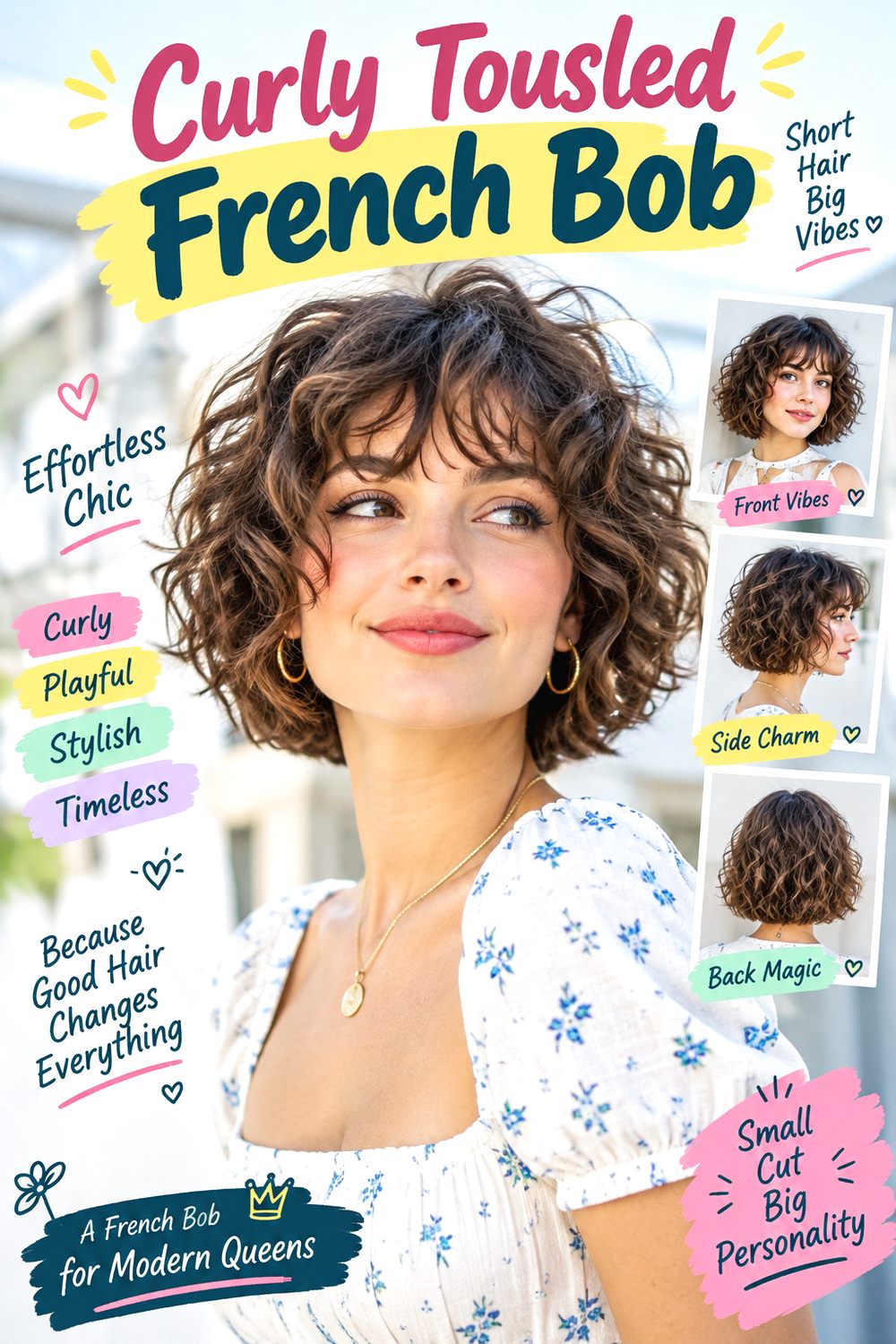
Curls give a short French bob natural fullness, so the haircut should focus more on balance than added volume. The sides can remain softly rounded, while the perimeter lands around the jaw when dry and a curly fringe can sit near the brows or upper cheekbones. Medium and thick curly hair usually support the shape naturally, while finer curls benefit from fewer layers so the ends remain dense. A moisturizing leave-in conditioner, curl cream, and diffuser help define the pattern without stretching it flat. Wash-day styling takes more time, but daily refreshing is often quick with a little water and finger shaping. Shrinkage is the biggest maintenance consideration because even a small trim can noticeably change the finished length. At the salon, ask for the bob to be evaluated in its natural dry curl pattern and preserve enough weight near the lower sides so the haircut does not become too round through the crown.
Pro tip: Choose your desired jaw length while the curls are fully dry; wet measurements can leave a curly French bob much shorter than expected.
Side-Part Tousled French Bob Hairstyle

A side part changes the balance of a French bob by creating more volume and movement on one side while the opposite side sits closer to the head. The heavier front section can sweep across the forehead before blending into jaw-length ends, giving the bob a softer asymmetry without changing the actual perimeter. Straight and wavy medium-density hair respond especially well, while fine hair can use the deeper part for extra root lift. Start with root-lifting spray, shape the heavier front with a medium round brush, then add texturizing spray through selected ends. Styling takes moderate time at first but becomes quicker once the roots are trained into the preferred direction. The part should be established before the final haircut is checked. At the salon, ask for the front to retain enough density on the heavy side and keep the opposite side neat around the ear rather than excessively thinned.
Pro tip: Decide on your everyday side part before the haircut; changing the part later can make one side of a short bob appear longer than the other.
Center-Part Tousled French Bob Hairstyle

A center part gives a tousled French bob a balanced outline while keeping the forehead open. The front sections fall evenly toward each cheek, and irregular bends through the sides keep the haircut from looking overly geometric. Straight and softly wavy hair are easiest to style this way, while medium density provides enough weight for the perimeter to stay clear. Fine hair can gain subtle lift with root spray instead of additional short layers. Use heat protectant, a flat iron or small curling iron for a few loose bends, and lightweight texture spray for separation. Styling is quick to moderate because the bob does not depend on a fringe, but cowlicks near the center may need extra blow-drying. At the salon, wear your normal center part during the final dry check and ask for both front corners to meet the jaw evenly. Keep the ends softened without turning the perimeter wispy.
Pro tip: Create bends mainly through the mid-lengths and leave the tips slightly straighter; that keeps the bob relaxed while preserving a clean jawline edge.
Tousled French Bob With Curtain Bangs Hairstyle

Curtain bangs create a softer transition from the forehead into the short sides of a French bob. The fringe opens near the center, with shorter pieces around brow level and longer sections curving toward the cheekbones before meeting the jaw-length perimeter. Straight and wavy medium-density hair hold the shape easily, while thick hair may need hidden bulk removal through the outer fringe. Use heat protectant, a medium round brush, and flexible hairspray to create a gentle curve without making the bangs stiff. Styling is moderate because the fringe often needs more attention than the rest of the haircut, although later-day refreshes are simple. The curtain shape also grows out more smoothly than a blunt fringe. At the salon, specify the shortest center length and ask for a gradual connection into the bob rather than separate bang and side sections. The perimeter should stay strong enough to balance the lighter front.
Pro tip: Dry curtain bangs forward first and divide them only when nearly dry; this prevents an exaggerated gap at the center.
Fine-Hair Airy French Bob Hairstyle

Fine hair can carry a tousled French bob well when the haircut protects density through the lower edge. This version keeps the perimeter close to one length while adding only small amounts of surface texture for movement. A light fringe or open forehead both work, but removing too much hair from the front can make the sides appear sparse. Use volumizing mousse at the roots, a small round brush for lift, and a dry texture spray used sparingly through the mid-lengths. Styling is quick because the shorter length dries easily and only a few bends are needed for a tousled finish. Heavy creams and oils can flatten the shape, so keep products lightweight. As the bob grows, the crown may start losing lift before the perimeter looks untidy. At the salon, ask for a dense jaw-length baseline, minimal thinning, and only subtle texture through the upper surface rather than short layers throughout.
Pro tip: Keep most texture above the ends; a fuller bottom edge makes fine hair appear more substantial even when the surface is deliberately airy.
Thick-Hair Textured French Bob Hairstyle

Thick hair needs weight control for a French bob to feel tousled rather than bulky. The perimeter can remain strong around the jaw while internal sections are lightened beneath the surface, allowing the sides to move without expanding into a triangular shape. Straight, wavy, and coarse hair can all benefit from this approach. Apply anti-frizz cream before drying, use a vent brush or diffuser depending on texture, and finish with a lightweight styling paste on selected ends. Styling takes moderate time because dense hair generally needs longer to dry, but good internal shaping reduces the need for excessive heat afterward. As the hidden layers grow, the bob may begin feeling heavy before it appears obviously overgrown. At the salon, ask for internal weight removal around the widest side sections while preserving the visible perimeter. Avoid aggressive thinning through the ends, which can leave thick hair puffy above a weak lower edge.
Pro tip: Show the stylist where your bob becomes widest after air-drying so bulk can be removed precisely instead of thinning the entire haircut evenly.
Tousled French Bob With Micro Fringe Hairstyle

A micro fringe gives the tousled French bob a more graphic front while the rest of the haircut stays relaxed. The bangs sit clearly above the brows, creating contrast with jaw-length sides that are softly bent or textured rather than perfectly straight. Straight and lightly wavy medium-density hair show the fringe most clearly. Fine hair should keep the bang section relatively narrow, while thick hair may need careful reduction underneath so the fringe does not feel too dense. Use lightweight mousse, a small styling brush, and matte texture paste to shape the short front and separate the bob ends. Daily styling is quick, but the micro fringe shows growth sooner than longer bangs and may need more frequent reshaping. At the salon, have the fringe length checked once the hair is dry and keep slightly longer pieces near the temples. The main bob perimeter should remain full enough to balance the short front.
Pro tip: Start the fringe a little longer than your final goal if your roots naturally lift; even slight spring can make micro bangs appear much shorter.
Chin-Length French Bob With Flipped Ends Hairstyle
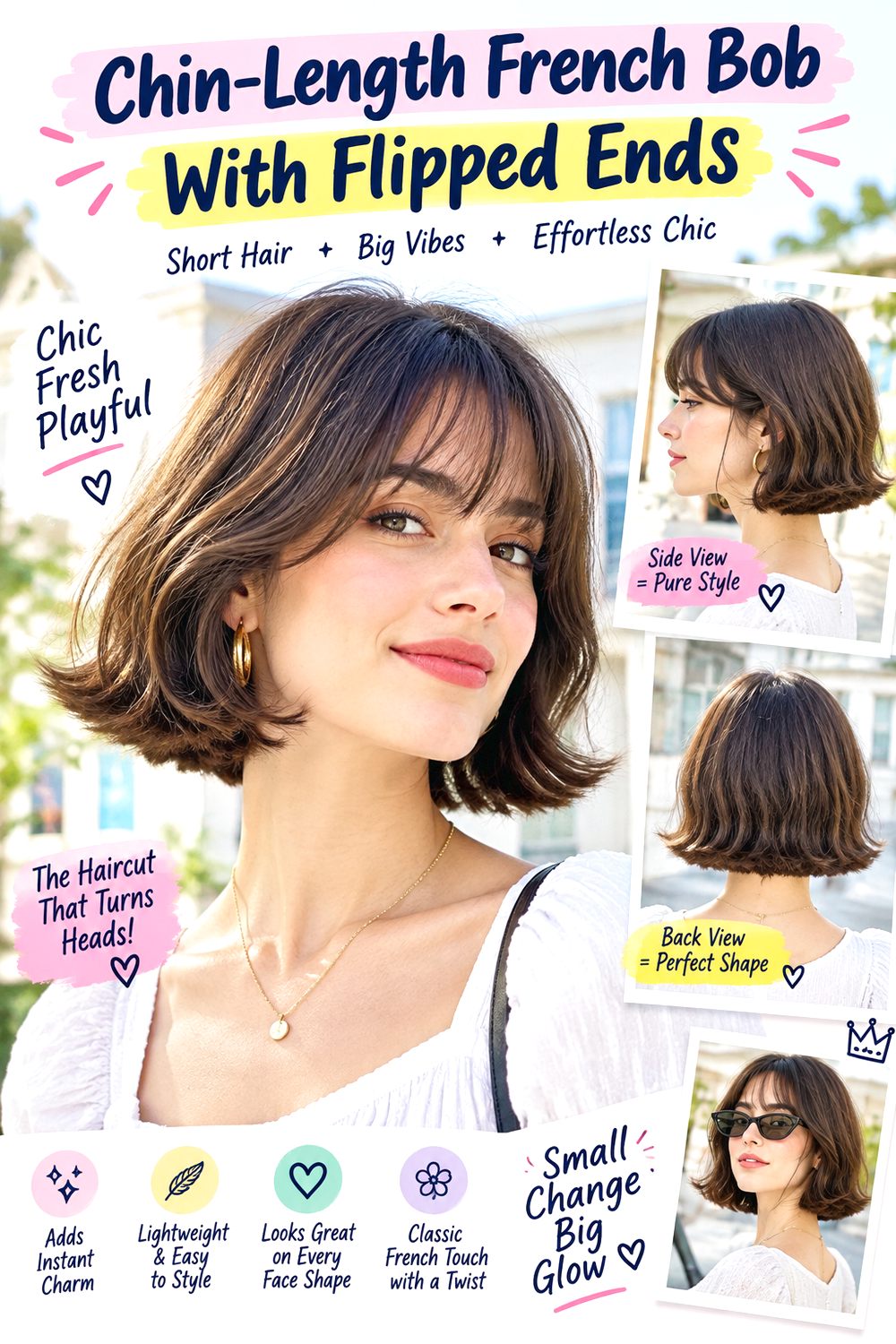
Flipped ends give a chin-length French bob movement without requiring layers throughout the whole haircut. The perimeter stays compact and relatively full, while the final inch turns outward around the jaw and sides. Straight and softly wavy medium-density hair are easiest to shape into this finish, though fine hair can use the flip to create visible movement without losing end density. Apply heat protectant, use a small round brush during the blow-dry, and finish with light-hold hairspray so the ends stay turned without becoming stiff. Styling takes moderate time after washing but is quick to refresh the next day by reworking only the bottom sections. The haircut itself needs regular reshaping because extra length can cause the flip to sit too low. At the salon, ask for the perimeter to touch the chin when dry and keep the ends full enough to form a controlled outward bend rather than thin feathered tips.
Pro tip: Flip only the last inch of hair; beginning the bend too high can create too much width beside the cheeks.
Razor-Cut Tousled French Bob Hairstyle

Razor cutting can give a French bob softer, tapered edges that separate easily into a tousled finish. Instead of one heavy blunt line, selected ends become narrower and more mobile while the basic jaw-length silhouette remains intact. Straight and gently wavy medium-density hair usually display razor texture best. Fine hair needs restraint because too much tapering can make the perimeter appear sparse, while very coarse or fragile hair may respond better to scissor texturizing. Use a moisturizing leave-in conditioner, heat protectant, and light texture cream to define the ends without drying them out. Styling is quick because the haircut already has built-in separation, and natural bends often look better than a highly polished finish. At the salon, ask for razor work mainly through the surface and selected ends while keeping enough solid hair underneath. The goal is soft texture, not a completely feathered perimeter.
Pro tip: If your ends are already dry or fragile, ask for razor texture only on a few visible surface sections instead of throughout the whole bob.
Soft Shaggy French Bob Hairstyle

A shaggy French bob adds more layering through the crown and sides than a classic version, creating extra movement above the jaw. A broken fringe can sit near the brows while shorter surface layers lift slightly around the crown and blend into the compact perimeter. Wavy medium-density hair carries the shape naturally, while thick hair may need internal bulk removal. Fine hair should keep the shortest layers limited so the bottom edge does not lose density. Use volumizing mousse, a diffuser or rough-dry technique, and dry texture spray to encourage an undone finish. Styling takes moderate time on wash day but usually gets easier on the second day because the cut benefits from lived-in texture. The crown will need reshaping once it starts collapsing into the sides. At the salon, ask for shag layers that remain connected to the jaw-length perimeter rather than turning the haircut into a short mullet.
Pro tip: Keep the shortest crown layers long enough to bend rather than spike; softer movement preserves the French bob shape while adding shag texture.
Tousled French Bob With Face-Framing Pieces Hairstyle

A few shorter face-framing pieces can soften a French bob without adding a full fringe. The shortest sections may begin around the cheekbones and gradually connect into the jaw-length perimeter, leaving the forehead open while creating movement near the front. Straight, wavy, fine, and medium-density hair can all wear this approach because only a small amount of hair needs to be shortened. Use heat protectant, a small round brush to curve the front away from the face, and lightweight texture spray through the rest of the bob. Styling is quick, especially when the back is allowed to remain naturally tousled. The face frame also grows out gently and can eventually blend into a one-length bob. At the salon, specify exactly where the shortest front piece should land and keep the framing section narrow. Taking it too far back toward the ears can remove more side density than necessary.
Pro tip: Keep the cheekbone pieces slightly longer if you frequently tuck the bob behind your ears; they will stay easier to control throughout the day.
Low-Maintenance Air-Dried French Bob Hairstyle
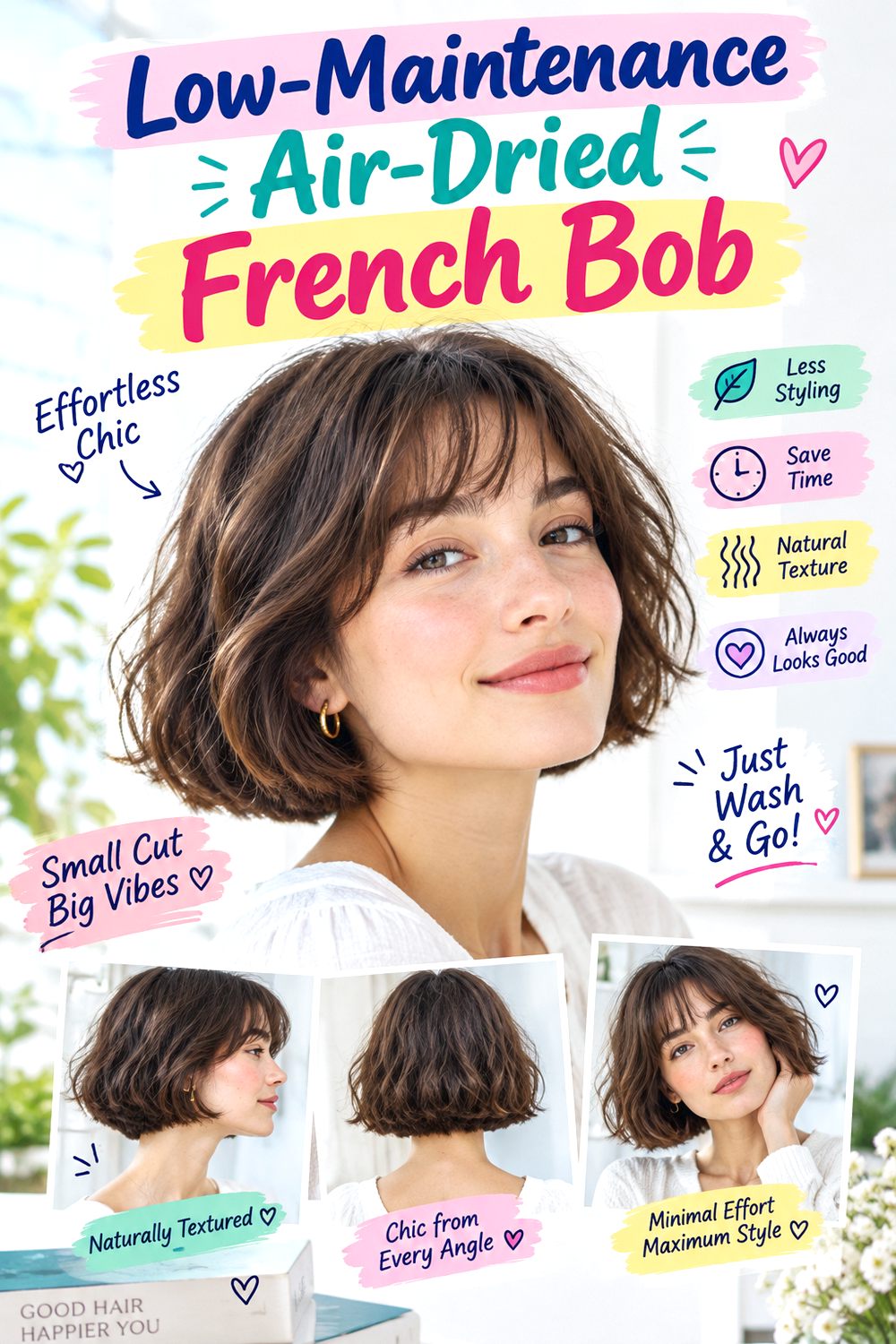
An air-dried French bob works best when the cut follows the hair’s natural bends instead of depending on a round brush or curling iron. The perimeter can sit between the lower cheek and jaw, while subtle internal shaping prevents the sides from becoming too bulky as the hair dries. Naturally wavy and softly textured medium-density hair need the least effort, though straight hair can use a little mousse for separation. Apply leave-in conditioner, lightweight styling mousse, and a wide-tooth comb while the hair is damp, then let the texture settle with minimal touching. Styling is easy and usually requires only a small refresh the next morning. Humidity may change the amount of volume, so the haircut should not be over-layered. At the salon, ask the stylist to evaluate your natural dry texture before finalizing the perimeter and remove bulk only where the hair consistently expands. Keep enough weight at the bottom for a recognizable French bob outline.
Pro tip: Take a photo of your usual air-dried hair to the appointment; it helps the stylist design the bob for your real texture instead of a blowout reference.
Conclusion
Tousled French Bob Hairstyles for Fall 2026 can range from nearly blunt jaw-length cuts to curly, shaggy, razor-softened, or fringe-heavy versions. The perimeter determines the basic bob shape, while bangs, parting, layer placement, end texture, and volume control decide how relaxed or structured the finished haircut feels.
The best version depends on face shape, natural texture, density, preferred length, maintenance tolerance, and daily styling effort. Fine hair often benefits from fuller ends, while thick hair may need hidden bulk removal. Waves and curls can reduce heat needs, and straight hair can create a tousled finish with only a few strategic bends. Choose the perimeter length first, then adjust fringe, texture, and volume around how your hair naturally behaves.
Before Your Salon Visit
Choose one or two favorite ideas and save clear photo references from the front, side, and back. Discuss your face shape, natural texture, density, preferred length, maintenance level, and usual styling routine with your stylist. Point out the exact jaw or chin length, fringe shape, layer placement, side volume, parting, and end finish you like. If your reference has waves or curls, explain whether that texture is natural or heat-styled. A French bob changes noticeably with even a small shift in perimeter length, so being specific about where you want the ends to sit is especially useful.
FAQs
Does a tousled French bob work on fine hair?
Yes. Fine hair usually benefits from a fuller jaw-length perimeter, minimal thinning, and lightweight texture rather than many short layers.
Can curly hair wear a French bob?
Yes. Curly hair can create a naturally full French bob, but shrinkage needs to be considered carefully. The final perimeter should be judged when the curls are dry.
How much daily styling does a tousled French bob need?
It depends on texture. Wavy or curly hair may need only a quick refresh, while straight hair might use a curling iron or flat iron on a few sections for loose bends.
How often does a French bob need reshaping?
Short bobs show growth relatively quickly because the perimeter shifts away from the jaw or chin. Fringe and nape areas may also need attention before the rest of the haircut feels overgrown.