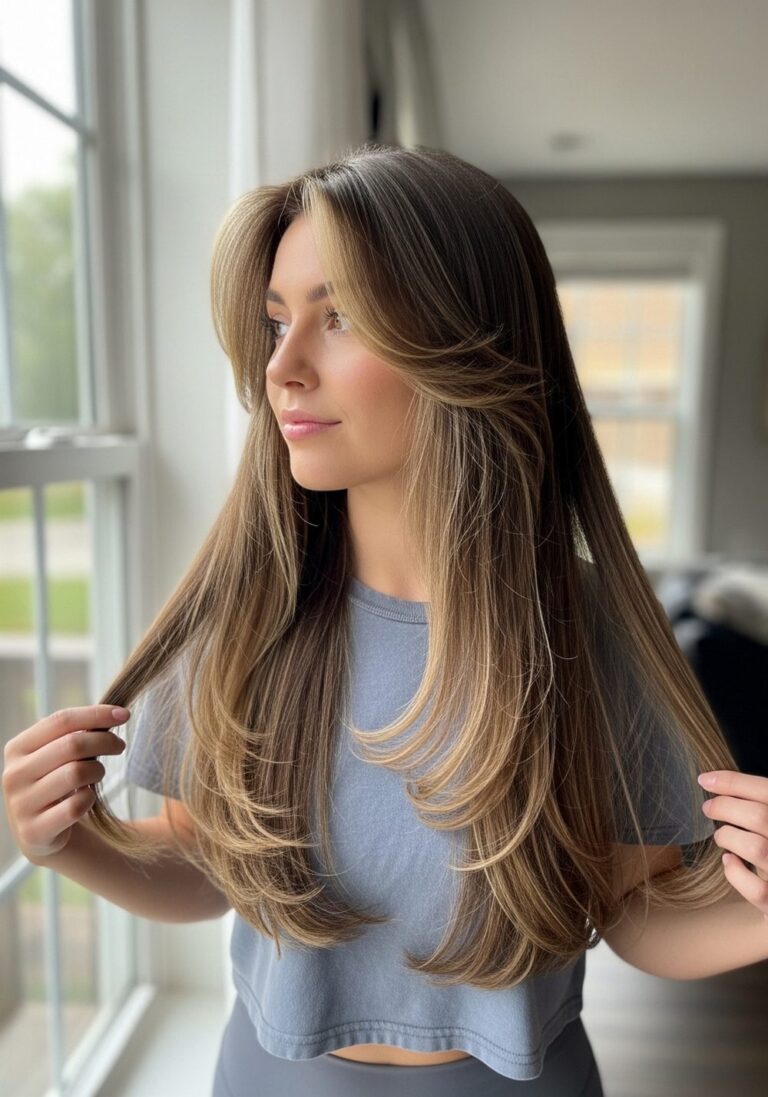
16 Italian Midi Haircut Ideas

The Italian midi is a medium-length haircut built around fullness, movement, and a polished but touchable shape. It usually sits somewhere between the shoulders and collarbone, although the exact length can shift slightly. Rather than relying on lots of short, visible layers, many versions keep enough weight through the perimeter to create that recognizable rounded, expensive-looking finish. Face-framing pieces, sweeping bangs, flipped ends, or a smooth blowout can change the mood without losing the basic silhouette.
These Italian Midi Haircut Ideas can work on straight, wavy, and some curly textures, but the cutting technique should match the hair’s density. Fine hair often benefits from a stronger perimeter and restrained layering, while thick hair may need hidden weight removal so the shape does not become triangular. Oval, round, square, heart, and longer face shapes can all be accommodated by changing the parting, fringe, and placement of the front layers.
Daily styling ranges from a quick air-dry on naturally wavy hair to a more deliberate round-brush blowout. Before choosing your version, consider how much volume you want, how often you use heat, whether you enjoy styling bangs, and how frequently you are willing to refresh the shape at the salon.
Quick List
- Classic Italian Midi With Rounded Ends
- Italian Midi With Face-Framing Layers
- Italian Midi With Curtain Bangs
- Italian Midi With Side-Swept Fringe
- Sleek Center-Part Italian Midi
- Voluminous Side-Part Italian Midi
- Wavy Italian Midi With Soft Layers
- Curly Italian Midi With Rounded Shape
- Italian Midi With Flipped Ends
- Italian Midi With Bottleneck Bangs
- Italian Midi With Long Internal Layers
- Blunt Italian Midi With Soft Bevel
- Italian Midi For Fine Hair With Crown Lift
- Italian Midi For Thick Hair With Hidden Weight Removal
- Shoulder-Skimming Italian Midi
- Collarbone Italian Midi With Polished Blowout
Classic Italian Midi With Rounded Ends
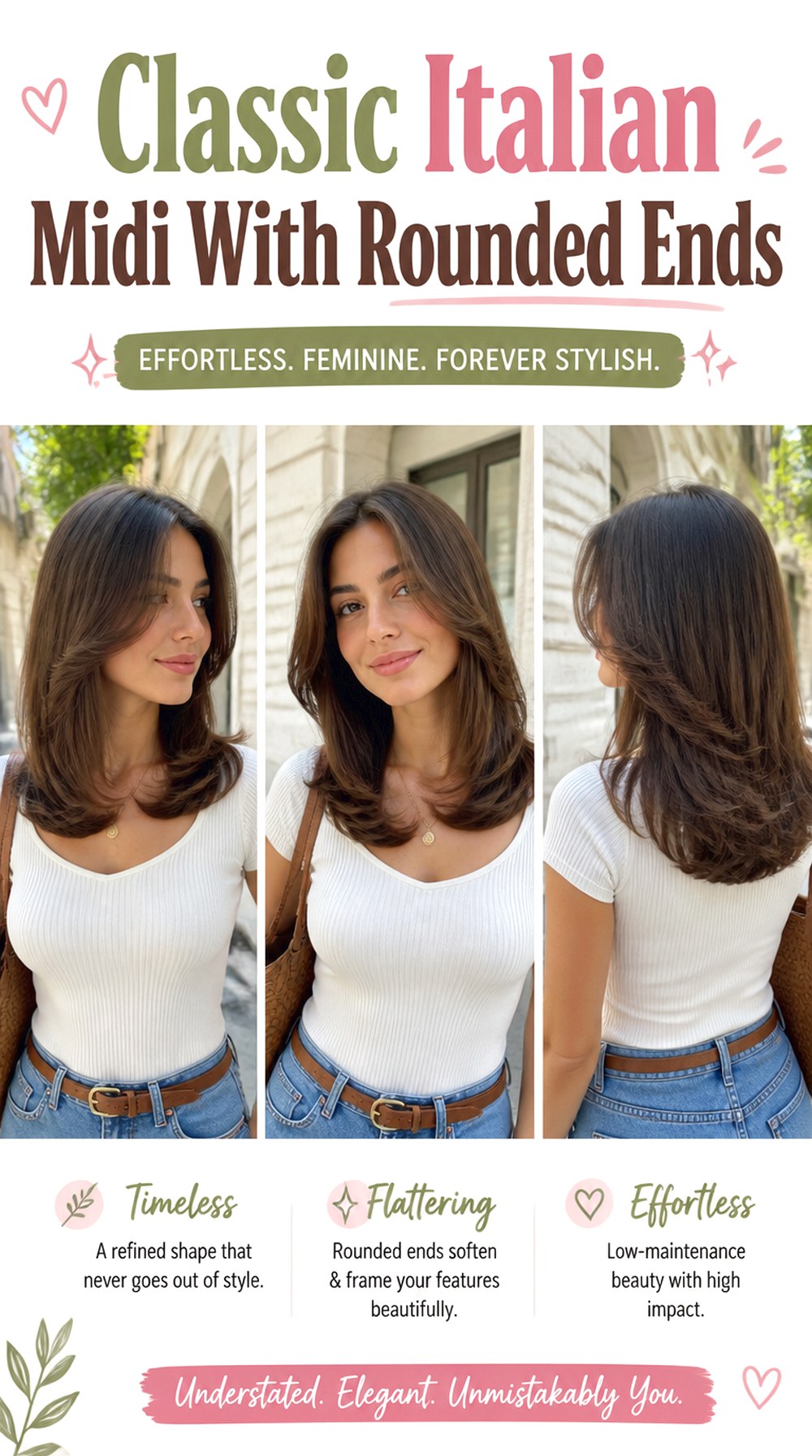
The classic version falls around the collarbone with a substantial perimeter and soft, rounded ends that turn gently inward. Layers are kept long so the hair still looks full, while subtle movement around the face prevents the cut from feeling heavy. Medium-density straight or softly wavy hair handles this shape especially well, and the balanced outline can be adapted to most face shapes. A round-brush blow-dry gives the strongest finish, so styling is moderate rather than completely wash-and-go. Use heat protectant, a medium round brush, and light-hold hairspray. Refresh the overall length about every eight to ten weeks. At the salon, request a weighty perimeter with long, blended layers rather than heavily feathered ends.
Pro tip: Keep the shortest layers below the cheekbones if you want the ends to remain dense and rounded instead of wispy.
Italian Midi With Face-Framing Layers
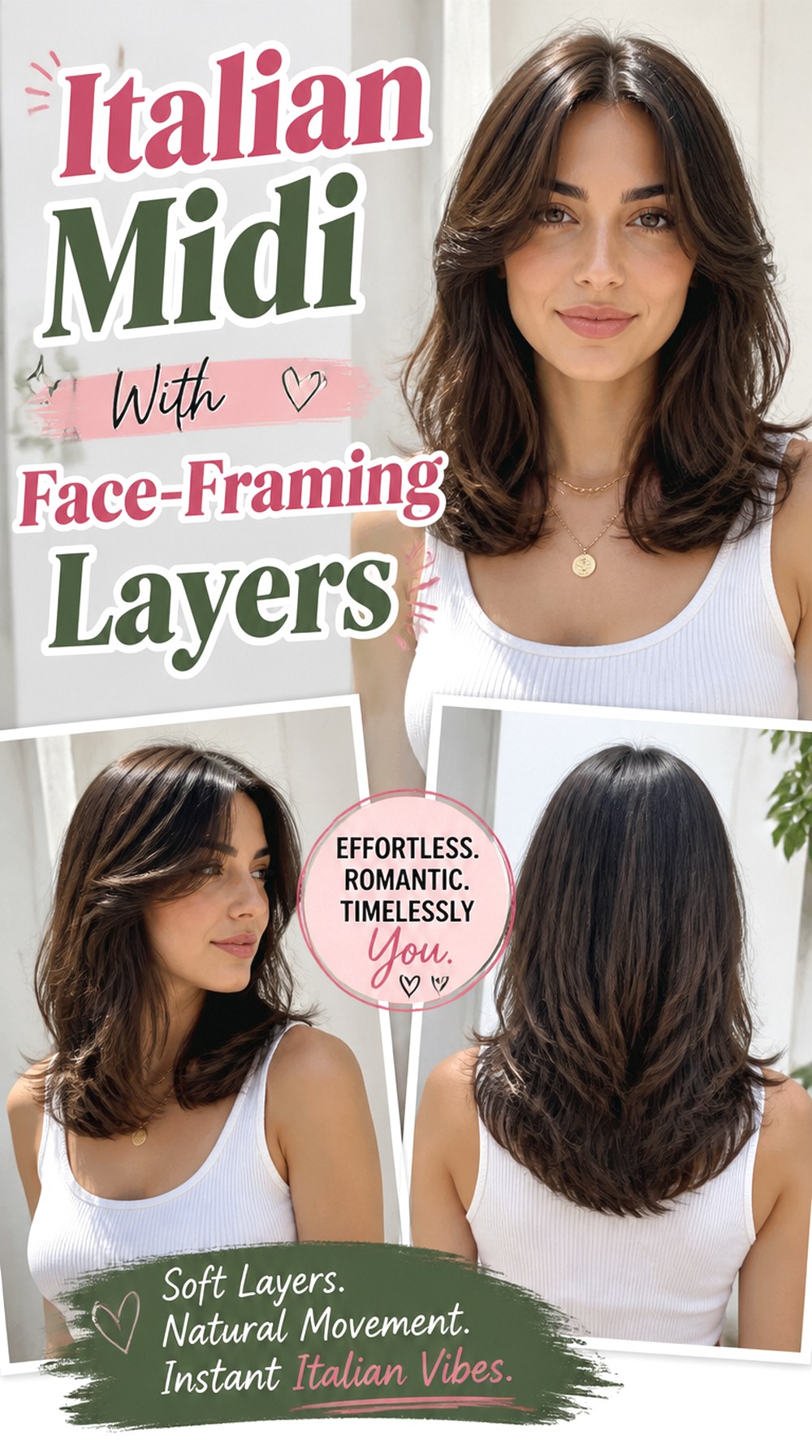
Long face-framing sections bring more movement to an Italian midi without sacrificing its full lower edge. The front layers can begin near the cheekbones or jaw, then blend gradually into the shoulder-to-collarbone length. This is useful for medium or thick straight and wavy hair, especially when a one-length cut feels too solid around the face. Styling takes a moderate amount of time because the front pieces look best when directed away from the face. Try volumizing spray, a round brush, and heat protectant. The front may need reshaping slightly sooner than the back. Show your stylist where you want the shortest face frame to land and ask for a seamless transition into the perimeter.
Pro tip: For a softer outline around a rounder face, start the most noticeable framing below the widest part of the cheeks.
Italian Midi With Curtain Bangs
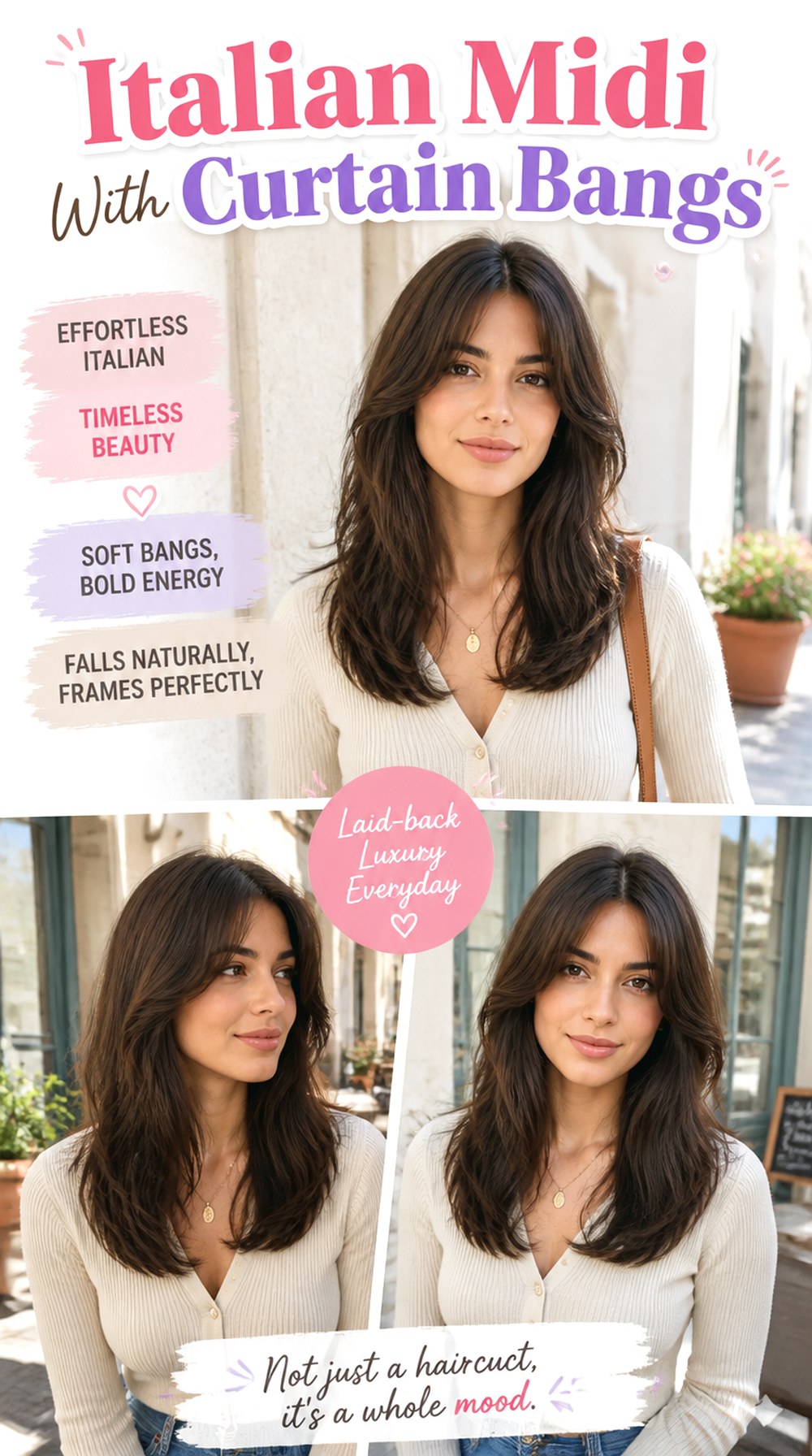
Curtain bangs give the midi cut a soft center opening and extra movement through the front. The fringe is shorter around the center and gradually lengthens toward the cheekbones, where it blends into longer layers. It suits straight or wavy hair particularly well and can add width around the upper face, which makes placement important for longer or heart-shaped faces. Bangs usually need a little more maintenance than the rest of the haircut, including regular blow-drying and trims every few weeks. Useful tools include a small round brush, heat protectant, and light texturizing spray. Styling is moderate but becomes quicker with practice. Ask for airy curtain bangs rather than a heavy block of fringe.
Pro tip: Have the outer edges of the bangs finish near your cheekbones so they blend naturally instead of sitting separately from the haircut.
Italian Midi With Side-Swept Fringe
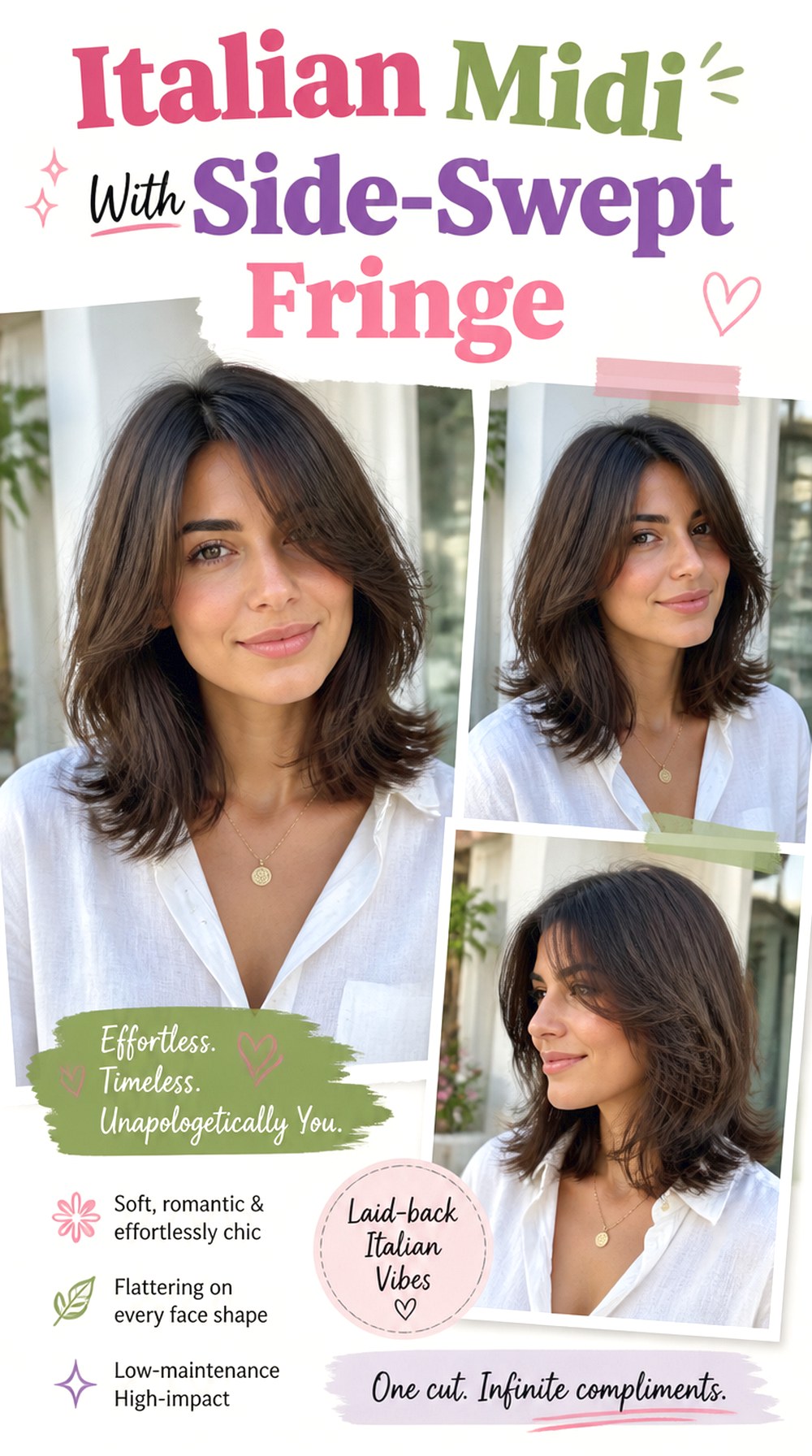
A side-swept fringe changes the balance of the Italian midi by directing movement across the forehead and toward one cheek. The main length stays dense and softly layered, while the fringe creates an asymmetrical focal point that works nicely with oval, square, and some round face shapes. Straight to loose-wavy textures are easiest to direct, although a strong natural cowlick should be considered before cutting. Daily styling is moderate because the fringe may need resetting after sleep or humidity. Keep lightweight mousse, a vent brush, and light-hold hairspray nearby. Fringe trims may be needed more often than full haircut appointments. Tell your stylist which side you naturally part your hair on before deciding the fringe direction.
Pro tip: Keep the side fringe long enough to tuck toward the temple if you want an easier grow-out between appointments.
Sleek Center-Part Italian Midi
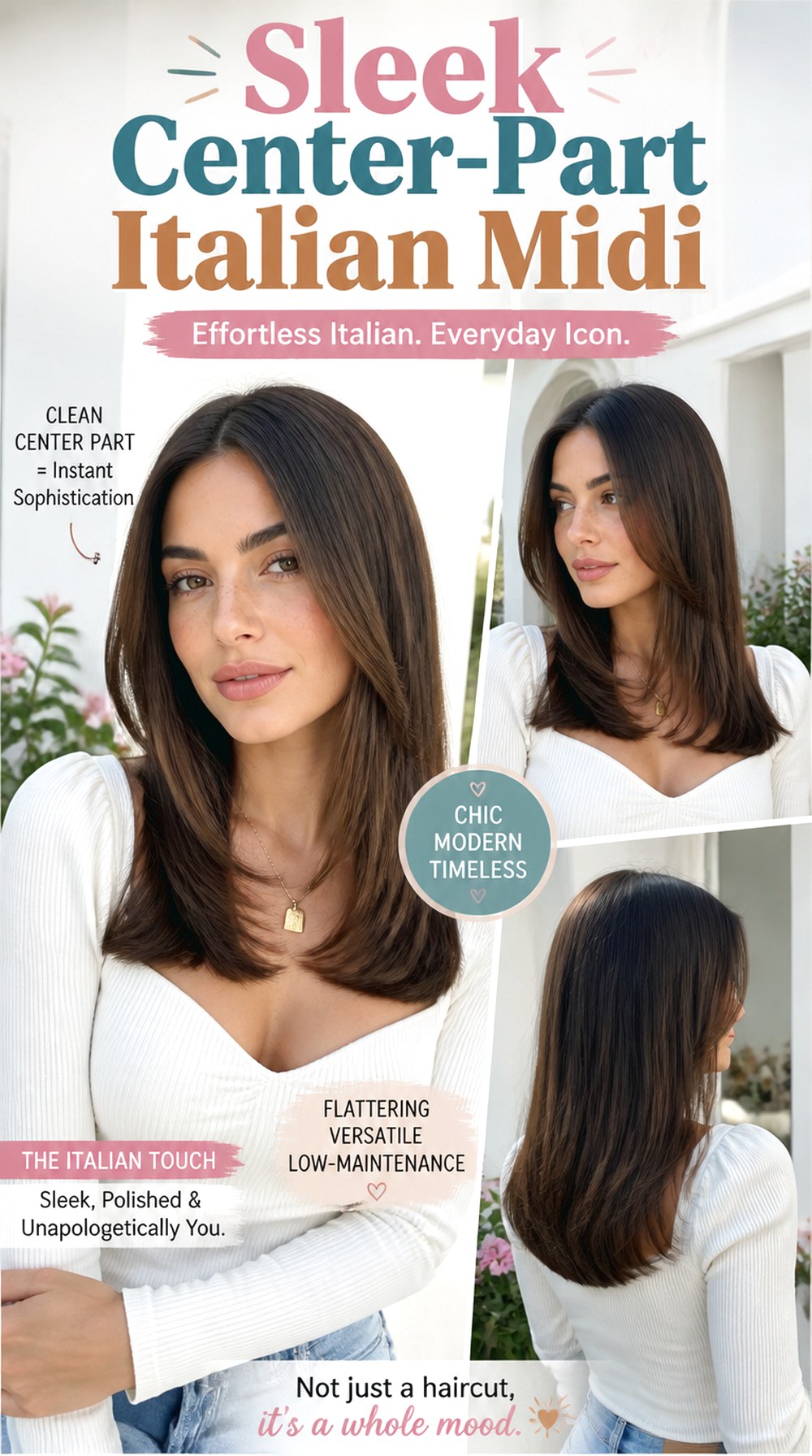
For a cleaner interpretation, a center part and smoother finish place the focus on the cut’s thick perimeter and controlled shape. The length usually falls around the collarbone with minimal visible layering, although subtle internal shaping can prevent the hair from feeling flat. Straight and slightly wavy medium-density hair works particularly well, and the symmetry can complement oval, heart, and balanced face shapes. This finish needs more heat styling if your natural texture is curly or strongly wavy. Use smoothing serum, heat protectant, and a paddle brush for a refined surface without making the ends stiff. Styling time is moderate. At the salon, request clean ends with only enough internal movement to stop the shape from becoming bulky.
Pro tip: Avoid excessive thinning at the perimeter—the dense lower edge is what gives a sleek Italian midi its polished silhouette.
Voluminous Side-Part Italian Midi
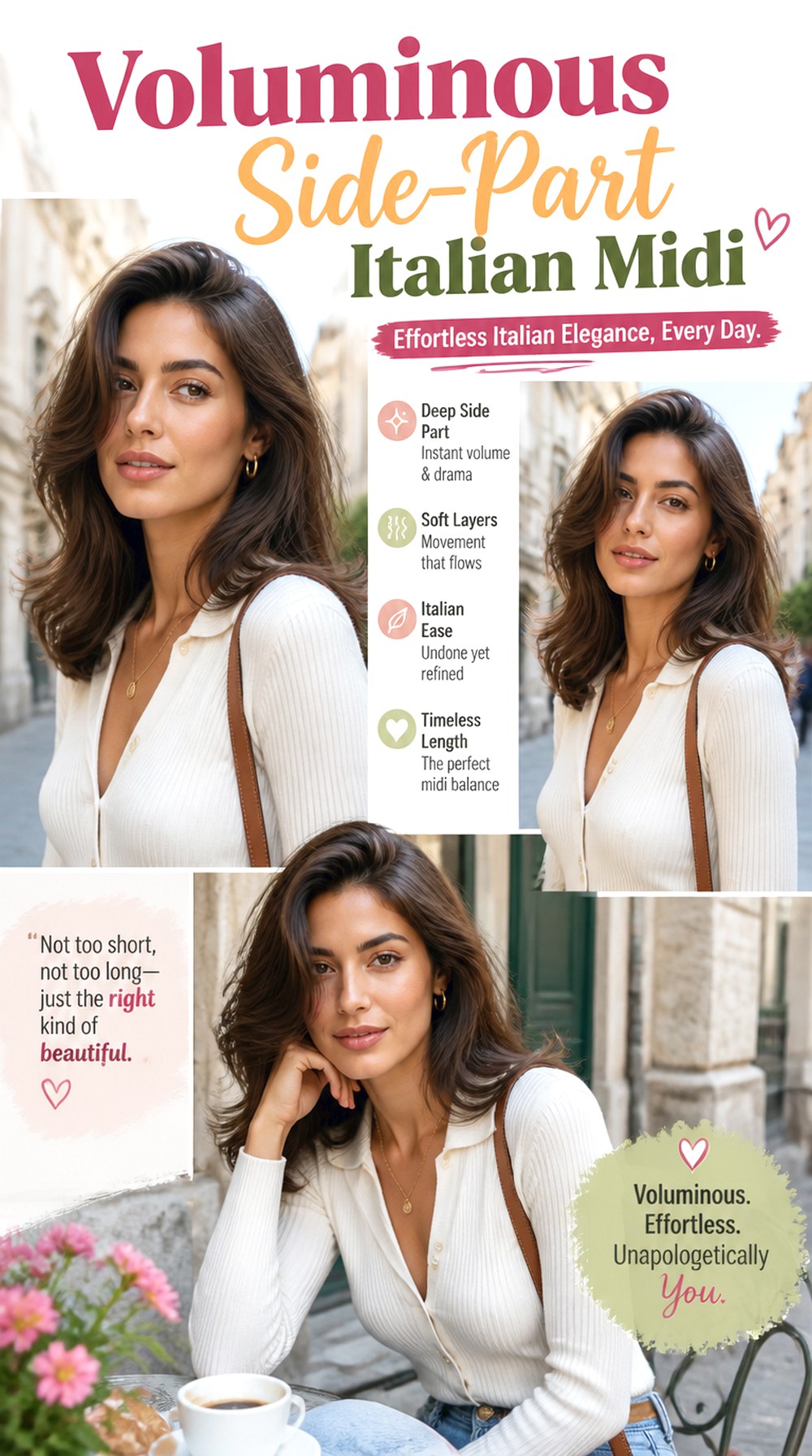
A deep or softly offset side part creates immediate lift at the roots and gives the Italian midi a more sweeping silhouette. Long layers encourage movement without removing too much fullness from the ends, while the heavier side can curve away from the face during a blowout. Medium to thick hair holds this shape especially well, though fine hair can also benefit from strategic root lift. Styling is moderately involved because the volume needs to be built during drying. Try volumizing mousse, a large round brush, and flexible hairspray. The cut itself can usually be maintained every eight to ten weeks. Ask your stylist to assess your natural part and crown growth before placing the layers.
Pro tip: Concentrate volume above the temple and crown rather than making every section equally large; this keeps the shape lifted instead of overly wide.
Wavy Italian Midi With Soft Layers
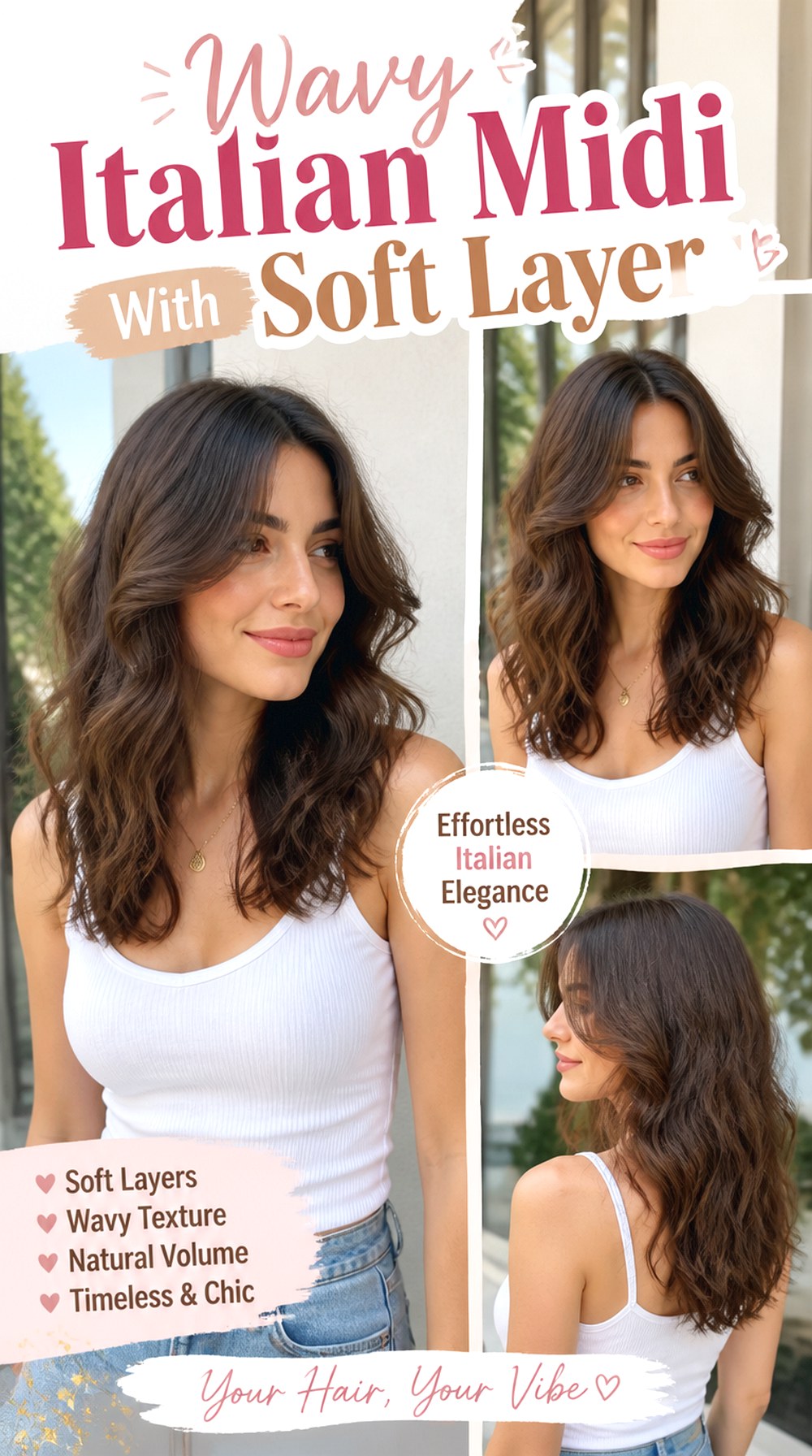
Natural waves give an Italian midi a looser, more relaxed finish while the weighted perimeter keeps the haircut looking intentional. Soft layers through the lower half help individual bends form without creating a heavily shagged outline. This option is well suited to medium or thick wavy hair and can be adjusted for various face shapes by changing the face frame. Daily styling can be fairly quick if you work with your natural pattern instead of straightening it first. Use leave-in conditioner, curl cream, and a diffuser when extra definition is needed. Humidity may increase volume, so avoid over-layering. At the salon, explain how much your waves shrink when dry and where they normally become fuller.
Pro tip: Ask for conservative layering when the hair is wet because wavy sections can spring higher and appear shorter once fully dry.
Curly Italian Midi With Rounded Shape
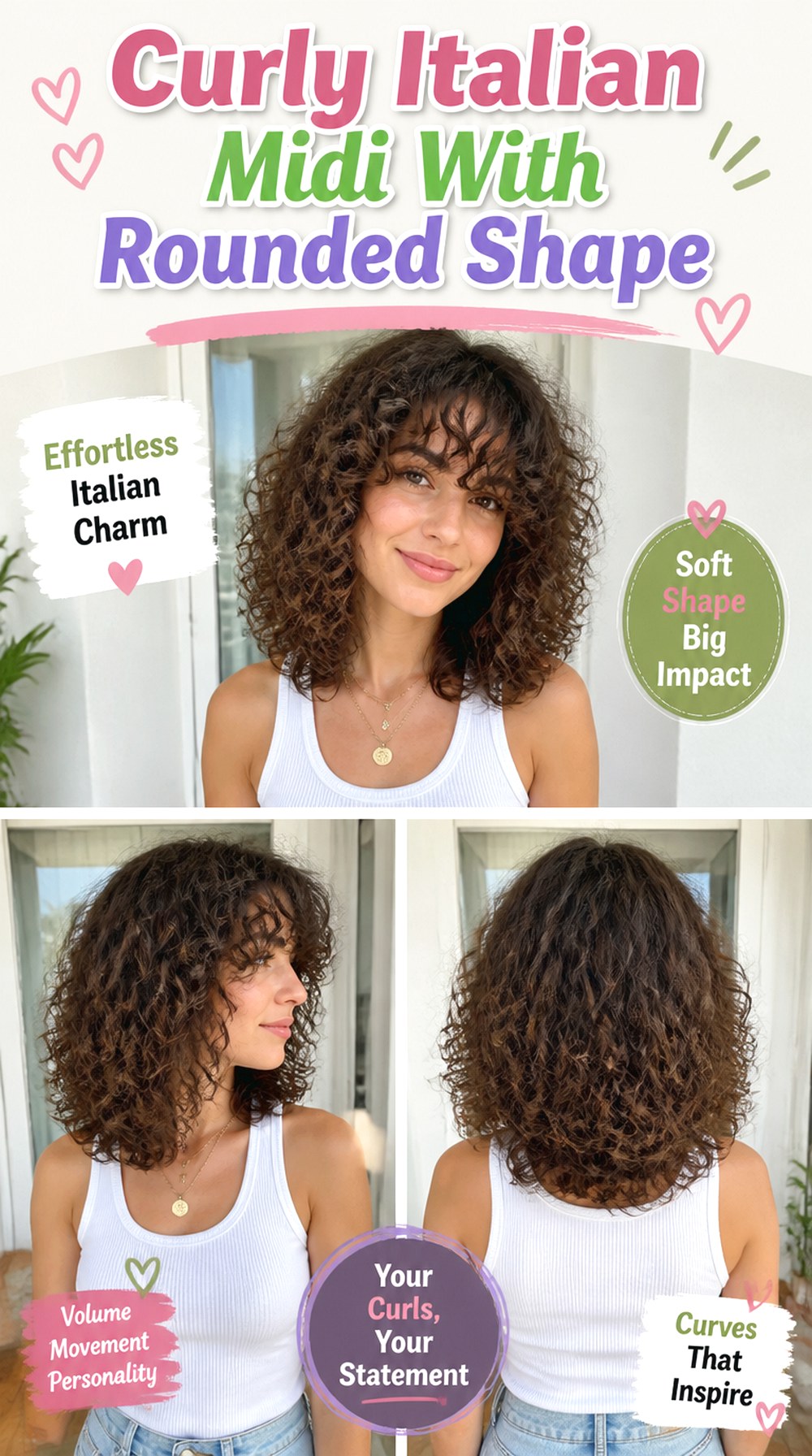
The curly Italian midi keeps enough length around the shoulders to show the curl pattern while using carefully placed layers to create a rounded outline. The goal is controlled fullness rather than a narrow top with excessive bulk at the bottom. Medium and thick curly hair may respond particularly well, though the exact shape depends heavily on curl tightness and shrinkage. Styling can be quick to moderate when curls are worn naturally. Helpful supplies include leave-in conditioner, curl cream, and a diffuser. Heat straightening is not necessary for the intended finish. Salon maintenance depends on how quickly the shape expands or loses balance. Ask for curl-aware layering and discuss shrinkage before any significant length is removed.
Pro tip: Keep enough weight around the lower perimeter to anchor the curls, especially if your texture tends to expand strongly in humidity.
Italian Midi With Flipped Ends
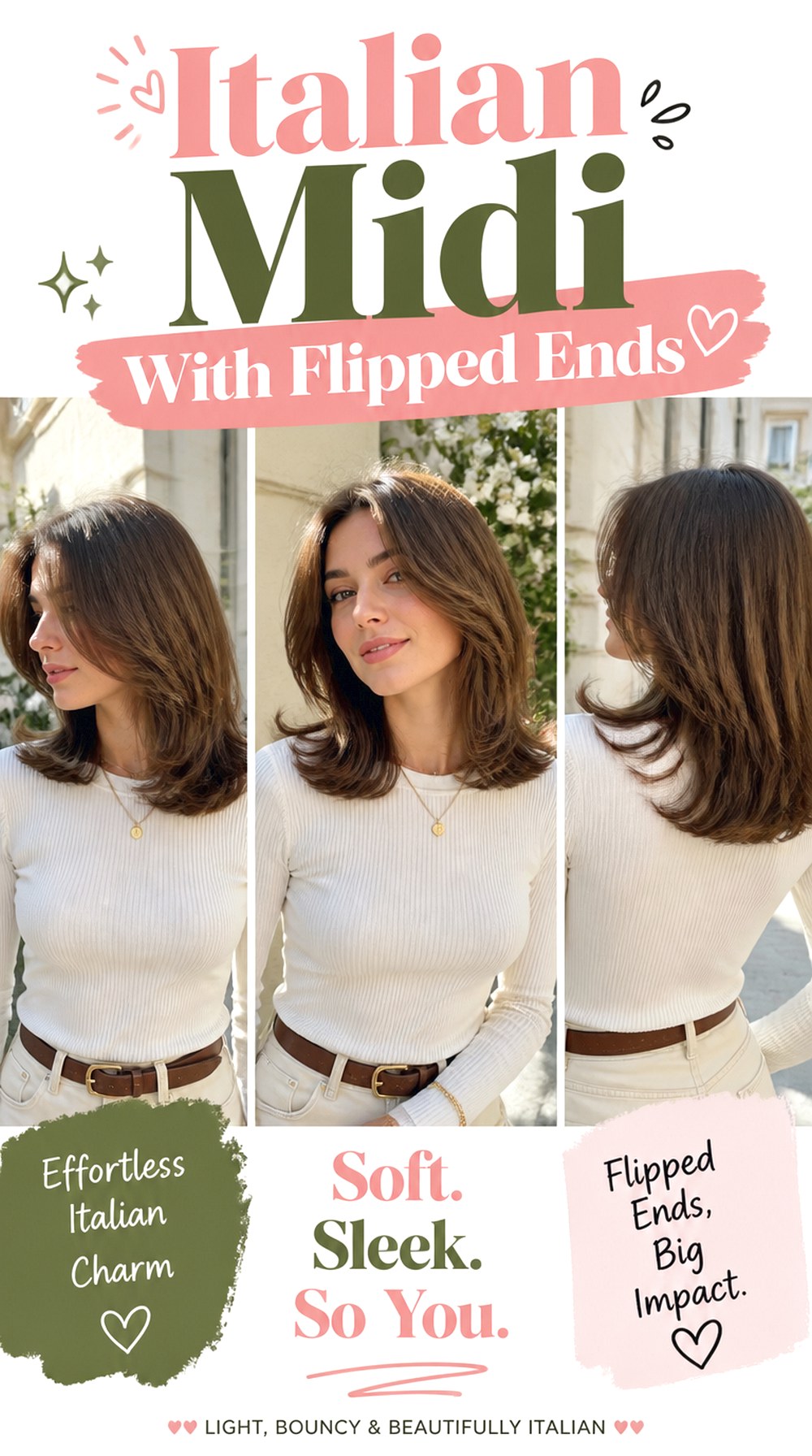
Flipped ends give the midi a playful outward curve while keeping the upper portion smooth and relatively controlled. The haircut works best around shoulder or collarbone length because that placement gives the ends enough room to turn outward without looking too short. Straight and loose-wavy hair can recreate the finish most easily, particularly at medium density. It requires moderate styling since the flip usually needs heat to stay consistent. Use heat protectant, a round brush, and flexible hairspray. The perimeter should be trimmed regularly enough to keep the outward bend looking crisp rather than uneven. Ask your stylist to preserve density through the ends and avoid very short layers around the bottom.
Pro tip: Direct only the final few inches outward during blow-drying; flipping too far up the hair can make the whole silhouette look overly wide.
Italian Midi With Bottleneck Bangs
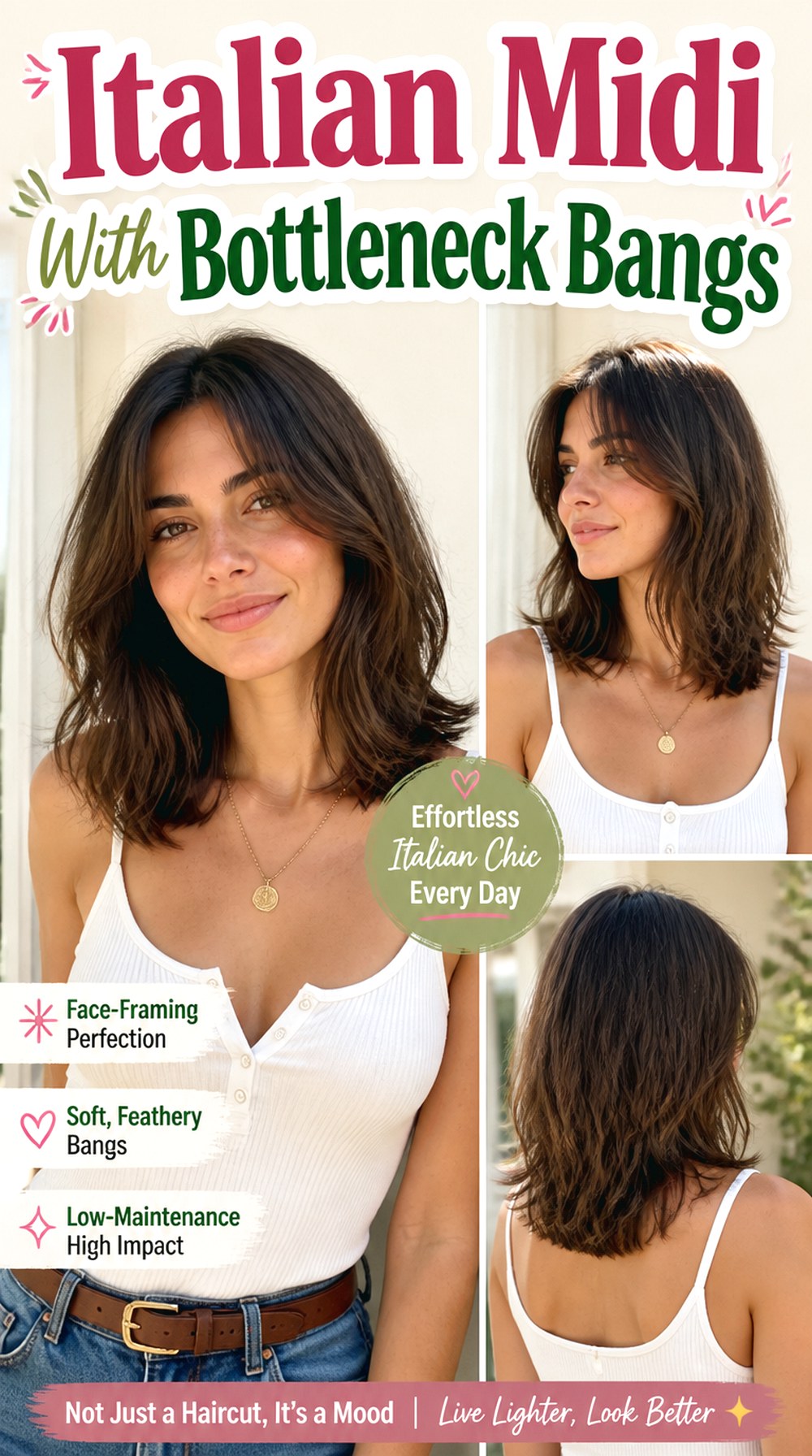
Bottleneck bangs combine a shorter center with longer, curved sides that narrow around the forehead and open near the cheekbones. Paired with an Italian midi, they add detail to the front while leaving the rest of the cut soft and full. They work particularly well with straight or slightly wavy hair and can be adjusted to suit oval, heart, and longer faces by changing the center length. Expect moderate maintenance because the shortest part of the fringe may need refreshing every four to six weeks. Use a small round brush, dry shampoo, and light-hold hairspray. Full-cut appointments can be spaced farther apart. Ask your stylist to connect the outer fringe seamlessly into your face-framing layers.
Pro tip: Leave the sides of the bangs noticeably longer than the center so the bottleneck shape remains visible even as the fringe grows.
Italian Midi With Long Internal Layers
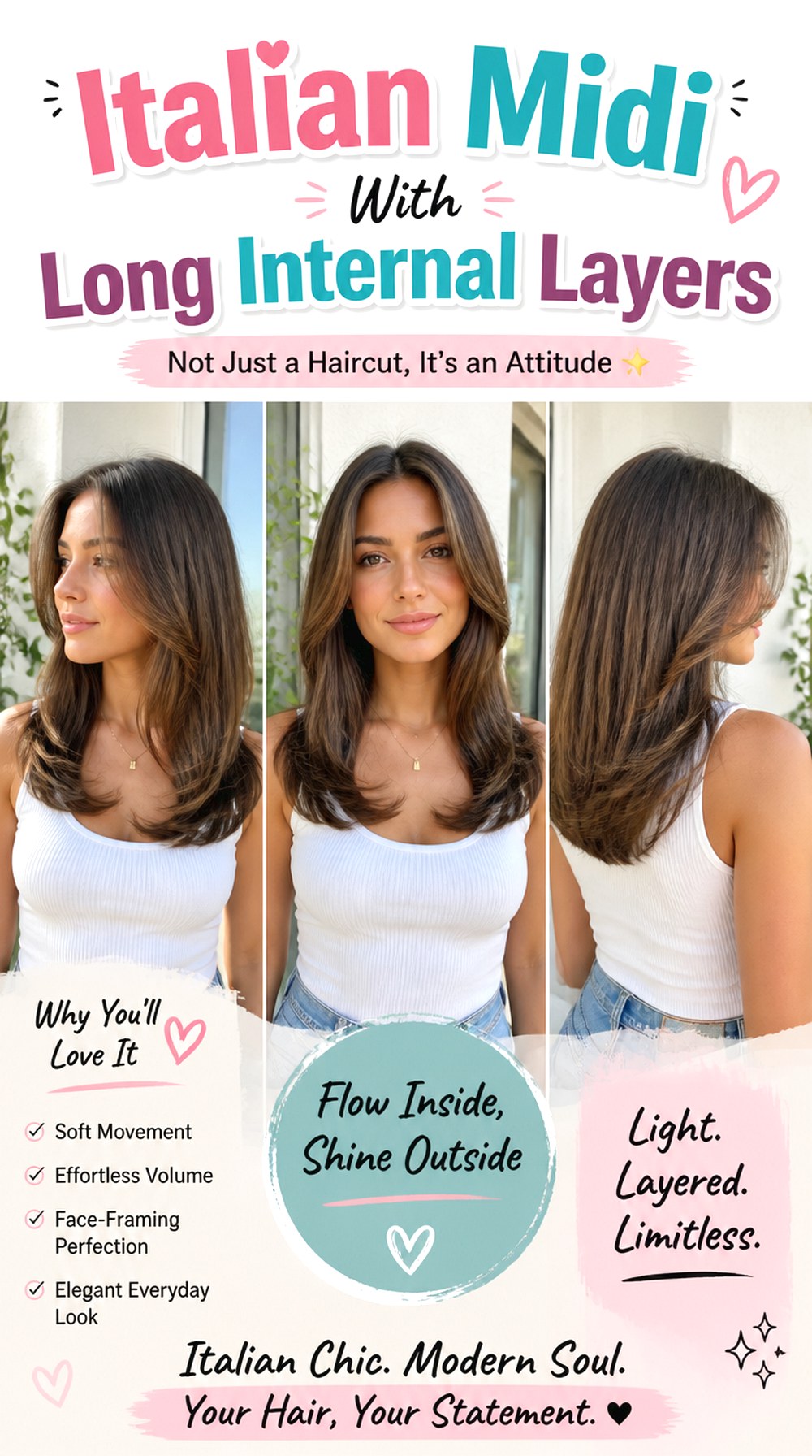
Internal layers remove selected weight from inside the haircut while allowing the outer surface and perimeter to remain relatively solid. On an Italian midi, this creates movement without the obvious stepped layers seen in more heavily textured cuts. It is especially useful for medium or thick straight and wavy hair that tends to feel bulky through the mid-lengths. Daily styling can stay fairly simple because the cut already has hidden movement. Use leave-in conditioner, a wide-tooth comb, and lightweight smoothing serum. A blow-dry is optional unless you want a polished finish. Salon visits every eight to twelve weeks can maintain the structure. Ask specifically for internal weight removal rather than aggressive thinning at the ends.
Pro tip: Keep internal layers away from the very bottom few inches when preserving a dense, substantial perimeter is your priority.
Blunt Italian Midi With Soft Bevel

A blunt Italian midi creates a strong lower line, but a subtle inward bevel stops the cut from looking rigid. There may be very little visible layering, making it a useful choice for fine or medium hair that benefits from the appearance of denser ends. Straight hair shows the clean perimeter most clearly, while gentle waves produce a softer variation. Styling is moderate if you want a smooth salon-style bend and quicker if you prefer natural texture. Use heat protectant, a paddle brush, and smoothing serum. Because precision matters, the baseline may need refreshing every six to eight weeks. Ask your stylist for a blunt-looking edge with just enough internal softness to let the tips curve.
Pro tip: Avoid heavy razor work through fine ends; maintaining a compact baseline helps the lower portion look fuller.
Italian Midi For Fine Hair With Crown Lift
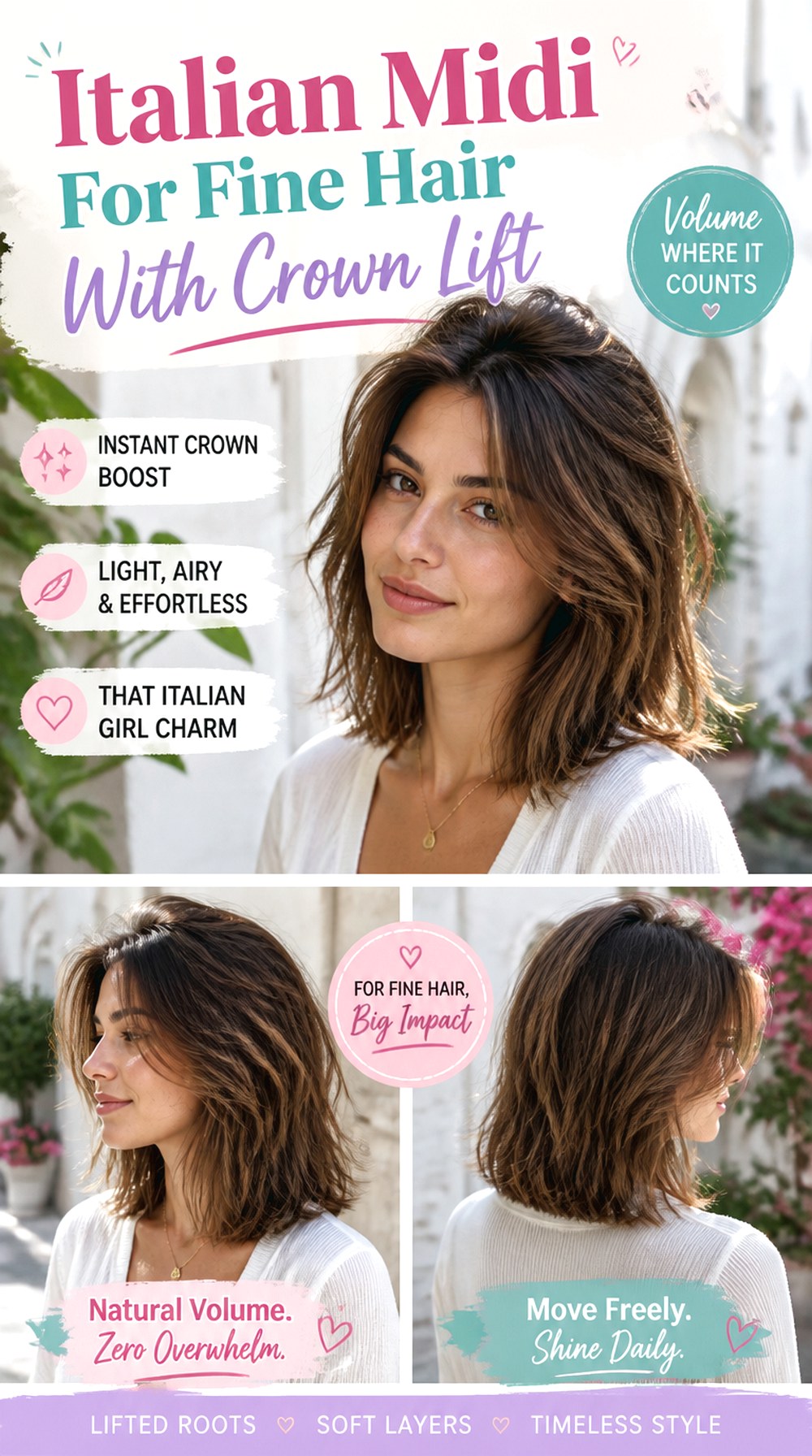
Fine hair can wear an Italian midi successfully when the perimeter stays strong and the layering is carefully limited. This version keeps most of the density around the collarbone while using subtle shaping near the crown to prevent the cut from lying completely flat. Straight and soft-wavy fine hair are good candidates, especially when the goal is airy movement rather than dramatic layering. Styling is quick to moderate and works best with lightweight products that do not coat the hair. Choose root-lifting spray, lightweight mousse, and a medium round brush. Regular trims help prevent thin-looking ends. At the salon, request minimal removal through the bottom and restrained crown layers rather than aggressive texturizing.
Pro tip: Keep crown layers long enough to overlap the lower length; very short layers can separate and make fine hair appear less dense.
Italian Midi For Thick Hair With Hidden Weight Removal

Thick hair needs enough internal shaping to keep an Italian midi from becoming excessively wide around the shoulders. Hidden weight removal can reduce bulk beneath the surface while the exterior keeps its smooth, substantial appearance. Straight, wavy, and some loose-curly textures can all benefit when the technique is adapted to the natural pattern. Styling time is moderate because thick hair usually takes longer to dry, even when the cut itself moves well. Useful supplies include leave-in conditioner, a large round brush, and smoothing serum. Salon maintenance every eight to ten weeks helps keep bulk controlled. Ask your stylist to remove weight internally instead of heavily thinning the outermost layers and ends.
Pro tip: Focus weight removal around the dense mid-length areas, not automatically at the perimeter, so the cut keeps its recognizable full finish.
Shoulder-Skimming Italian Midi

This shorter midi sits directly around the shoulders, giving the ends a natural opportunity to bend, flick, or curve depending on how they meet the body. The shape can remain mostly one length or include long face-framing layers for extra movement. It is useful for straight and wavy hair and can suit fine through thick densities when the amount of layering is adjusted. Styling is generally quick to moderate, although the shoulder placement may cause some sections to flip unpredictably. Use heat protectant, a round brush, and texturizing spray when you want controlled movement. A trim every six to eight weeks keeps the length intentional. Ask your stylist to account for how the ends sit against your shoulders.
Pro tip: Decide whether you want the ends turned inward or naturally flipped before the cut; that choice can influence exactly where the baseline should land.
Collarbone Italian Midi With Polished Blowout

A collarbone-length midi paired with a polished blowout emphasizes the haircut’s softness, bounce, and controlled volume. Long layers help the hair move around the face while the lower edge stays dense enough to look substantial. Medium and thick straight or wavy hair usually holds the rounded blowout especially well, though fine hair can recreate it with lighter products. This option requires more styling time than an air-dried version, particularly if you want consistent root lift and curved ends. Use volumizing spray, heat protectant, and a large round brush. Regular trims prevent the shape from becoming bottom-heavy. At the salon, request long blended layers designed to move during a round-brush blow-dry.
Pro tip: Let the longest layers remain close to the perimeter so the blowout gains movement without losing the thick, polished ends that define the shape.
Conclusion
Italian midi cuts can move from smooth and structured to wavy, curly, softly layered, or full of blowout volume without losing their medium-length foundation. That flexibility is what makes Italian Midi Haircut Ideas useful as reference points rather than one fixed haircut. You can change the overall length, preserve more or less density, add layers, introduce bangs or fringe, adjust the parting, increase volume, or choose a more natural texture and finish.
The best combination depends on your face shape, natural hair texture, density, maintenance preferences, and normal daily routine. Instead of copying every detail from one reference photo, identify the elements that matter most to you—such as a heavy perimeter, cheekbone framing, airy bangs, or rounded ends—and build the cut around them.
CTA
Choose one or two favorite ideas and save clear photo references before your salon appointment. Discuss your face shape, natural texture, hair density, preferred length, maintenance expectations, and usual styling routine with your stylist. In each photo, point out the exact layers, fringe placement, perimeter length, amount of volume, parting, and finish you like. Being specific about those details makes it much easier to adapt an Italian midi to your own hair rather than expecting one reference cut to behave exactly the same on every texture.
FAQs
What hair type works best with an Italian midi haircut?
Straight and wavy hair naturally show the rounded, polished shape, but curly hair can also wear an Italian midi when the layers account for shrinkage and volume. Fine hair usually needs a stronger perimeter, while thick hair may benefit from internal weight removal.
How often should an Italian midi be trimmed?
Around six to ten weeks works for many versions. Precision fringes or blunt perimeters may need earlier maintenance, while longer layered shapes can often go slightly longer between appointments.
Does an Italian midi need daily heat styling?
No. A smooth rounded blowout normally requires heat, but naturally wavy or curly versions can be styled with curl products and air-drying or diffusing. The amount of work depends on your natural texture and desired finish.
Which face shapes can wear an Italian midi?
The cut can be adapted for oval, round, square, heart, and longer face shapes. Face-framing length, bangs, volume placement, and parting are the most useful details to customize rather than relying on one fixed silhouette.