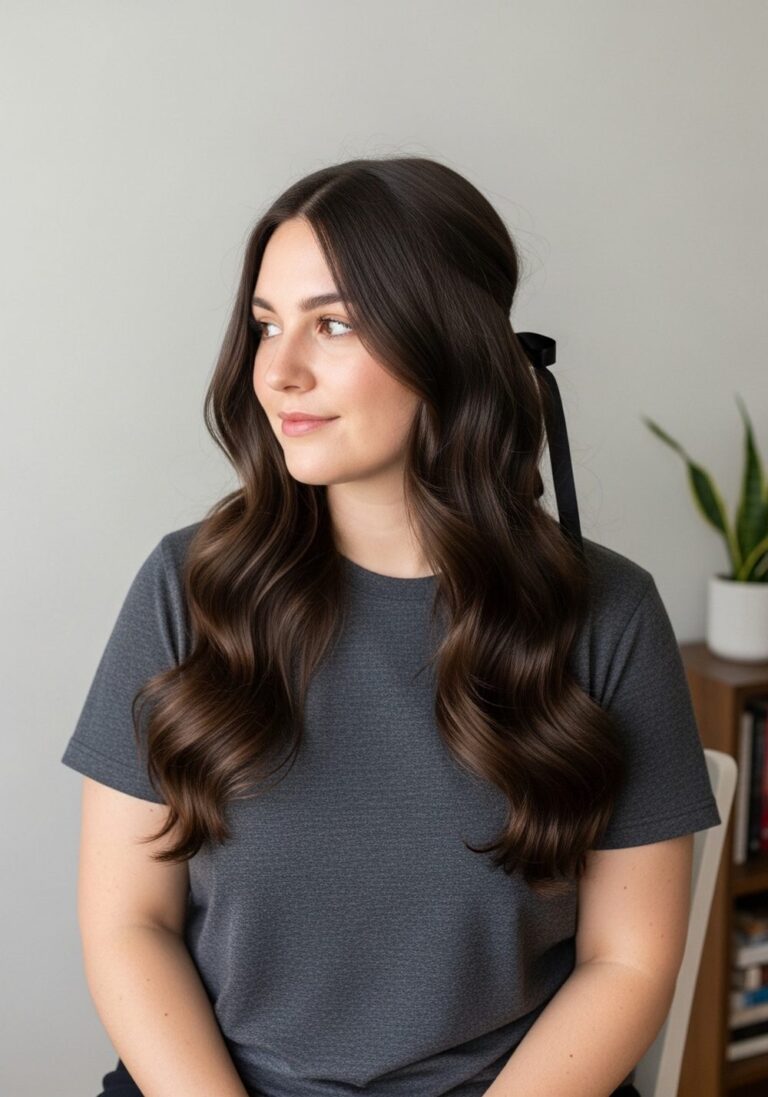
14 Messy Textured Fringe Hairstyle Ideas

A messy textured fringe is designed to look separated, airy, and slightly undone rather than smooth and perfectly arranged. The fringe can be short, brow-skimming, wispy, curly, thick, or blended into longer face-framing layers. Small differences in cutting technique change the overall shape: point-cut ends create separation, soft layering removes weight, while longer pieces at the sides help connect the fringe to the rest of the haircut.
These messy textured fringe hairstyle ideas can work with straight, wavy, or curly hair, although the exact cut should respect natural texture and density. Fine hair often benefits from a lighter fringe that keeps enough weight to avoid looking sparse. Thick hair may need internal weight removal so the bangs move instead of sitting heavily across the forehead. Length and side pieces can also be adjusted around oval, round, square, heart, or longer face shapes.
Daily styling ranges from a quick finger-style to a short blow-dry or curl refresh. Most fringes need more frequent trimming than the rest of the haircut, usually because the front grows into the eyes first. Before committing, consider your natural growth pattern, cowlicks, humidity, heat-styling habits, and how often you are comfortable visiting the salon.
Quick List
- Soft Choppy Textured Fringe
- Wispy Messy Fringe With Layers
- Shaggy Textured Fringe
- Curtain-Inspired Messy Fringe
- Piecey Textured Fringe
- Curly Messy Textured Fringe
- Wavy Tousled Fringe
- Short Cropped Textured Fringe
- Long Brow-Grazing Textured Fringe
- Side-Swept Messy Textured Fringe
- Feathered Textured Fringe
- Thick Full Messy Fringe
- Micro Textured Fringe
- Face-Framing Textured Fringe With Shag Layers
Soft Choppy Textured Fringe
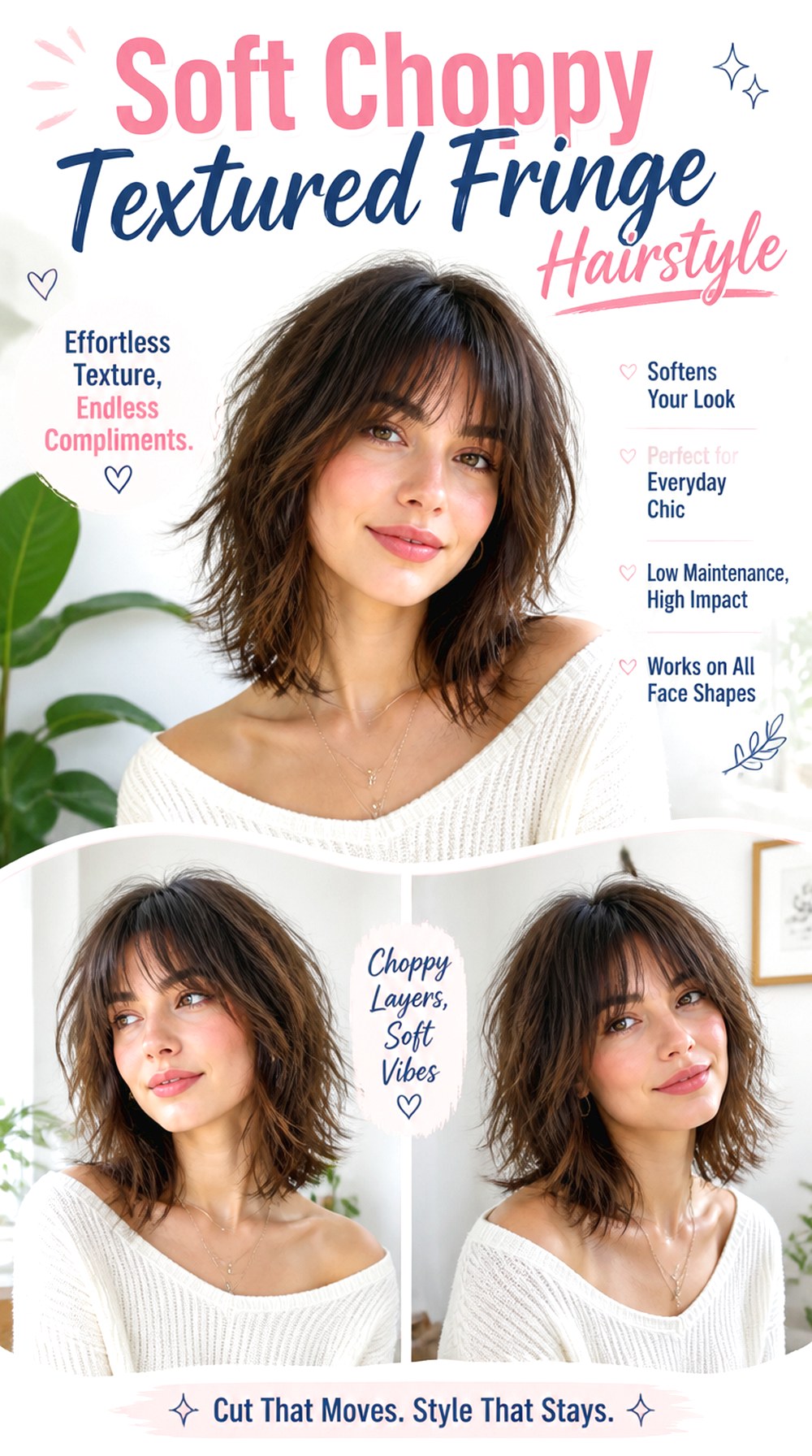
A soft choppy fringe combines uneven-looking separation with enough weight to keep the front from appearing thin. The ends are usually point-cut rather than cut into one blunt horizontal line, creating small pieces that move naturally across the forehead. It works especially well on straight to softly wavy, fine-to-medium hair and can soften angular or longer face shapes when the outer corners are slightly longer. Styling is fairly quick: use a lightweight mousse, small round brush, and a little texturizing spray for separation. A light blow-dry usually does the job. Ask your stylist for controlled choppiness rather than heavily thinned ends, with the fringe blending gradually toward the temples.
Pro tip: Keep slightly more density through the center and remove weight mainly from the ends. Over-thinning near the roots can make a fine fringe difficult to control.
Wispy Messy Fringe With Layers
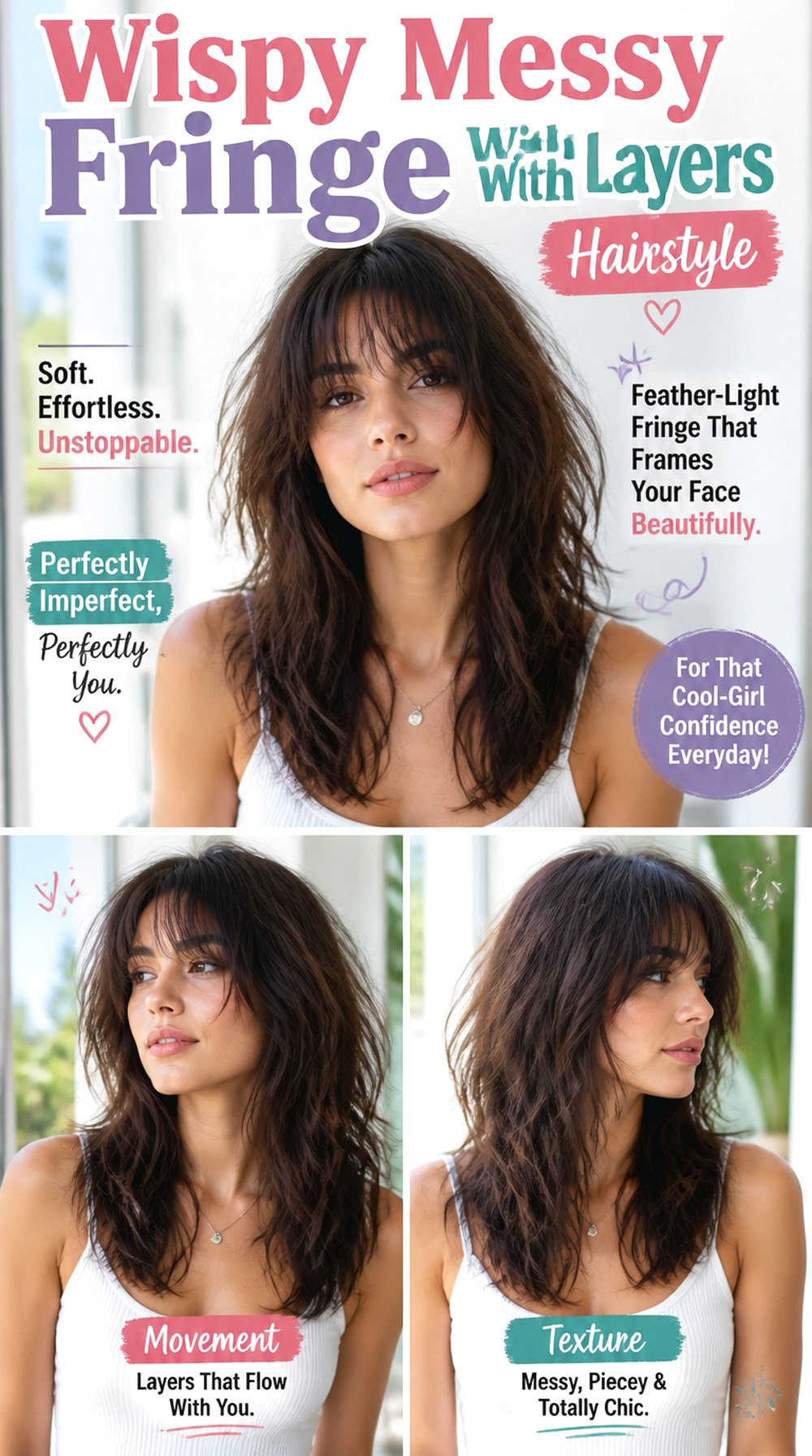
Fine, separated pieces give a wispy fringe its soft appearance, while surrounding layers stop the bangs from looking disconnected from the haircut. This approach suits straight and slightly wavy hair particularly well and can be useful for someone who wants forehead coverage without a thick, solid fringe. Fine and medium densities are usually easiest to manage, although thick hair can achieve the effect with careful weight removal. Use volumizing spray, a vent brush, and light-hold hairspray to keep the front airy. Daily styling takes only a few minutes, but the fringe may need refreshing after sleep or humidity. At the salon, request light face-framing layers beginning near the cheekbones to connect naturally with the wispy ends.
Pro tip: Avoid making every section equally thin. Leaving a few slightly denser pieces gives the fringe more dimension and keeps it from appearing stringy.
Shaggy Textured Fringe
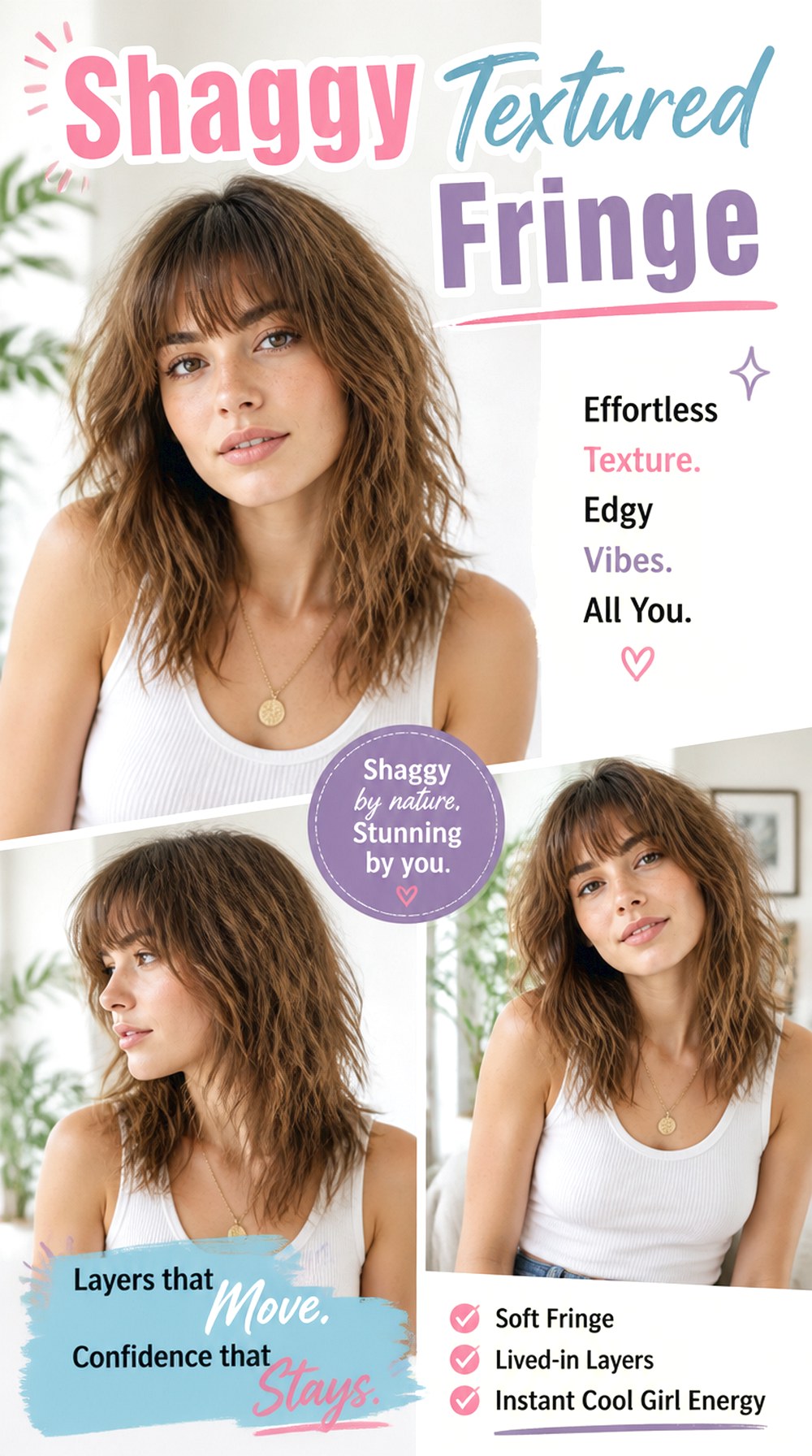
A shaggy fringe has deliberately uneven movement and blends naturally into short-to-medium layers around the face. Instead of sitting separately from the haircut, the bangs become part of the overall shag shape, usually with shorter pieces through the center and longer sections toward the sides. Wavy and naturally textured hair tends to work especially well because a little irregularity improves the finish. Medium or thick hair may need some internal bulk removed. Styling is moderate rather than demanding: try curl cream, texturizing spray, and a diffuser if you want to emphasize natural bends. Regular trims keep the fringe from becoming too heavy. Ask for connected, feathered layering rather than an isolated block of bangs.
Pro tip: Have the shortest face-framing layer meet the outer edge of the fringe. That connection is what gives a shaggy cut its continuous, lived-in shape.
Curtain-Inspired Messy Fringe

Curtain-inspired messy bangs keep the center slightly shorter while allowing the outer pieces to sweep toward the cheekbones. Unlike a polished curtain fringe, this version has more visible texture and softer separation, so it does not need to sit symmetrically all day. It suits straight, wavy, and moderately curly textures and is particularly practical for someone who likes changing between a center and slightly off-center part. Medium density provides easy movement, while thick hair may need weight removed underneath. Use a heat protectant, medium round brush, and dry texturizing spray. Styling usually takes five to ten minutes. Tell your stylist where you naturally part your hair so the fringe is cut to fall correctly.
Pro tip: Keep the outer corners long enough to reach roughly the upper cheekbone if you want the fringe to grow out gracefully into face-framing layers.
Piecey Textured Fringe
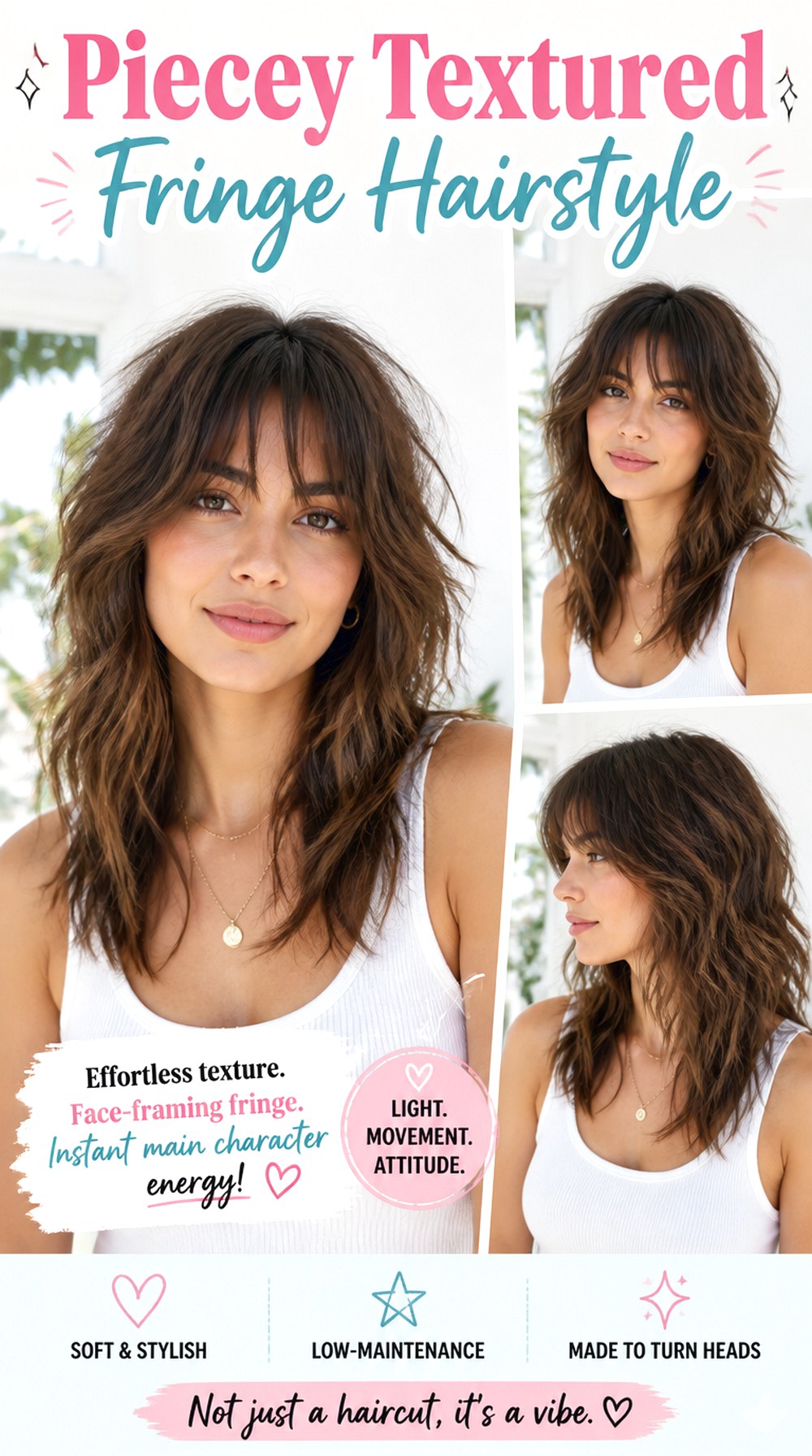
A piecey fringe is defined by visible sections rather than one continuous curtain of hair. Small strands separate across the forehead, creating texture without requiring extreme layering. Straight and softly wavy hair show the separation most clearly, and the style can work on fine, medium, or thick density when the amount of hair used for the fringe is adjusted properly. It is relatively fast to style. Work a small amount of light styling paste between your fingertips, add heat protectant before any hot tools, and use a small flat iron only where bends need correcting. Maintenance mainly involves keeping the ends shaped. Ask the stylist to use point cutting so the fringe separates naturally without appearing jagged or overly thin.
Pro tip: Apply styling paste only to the final inch of the fringe. Product near the roots can collapse volume and make separated pieces look oily.
Curly Messy Textured Fringe
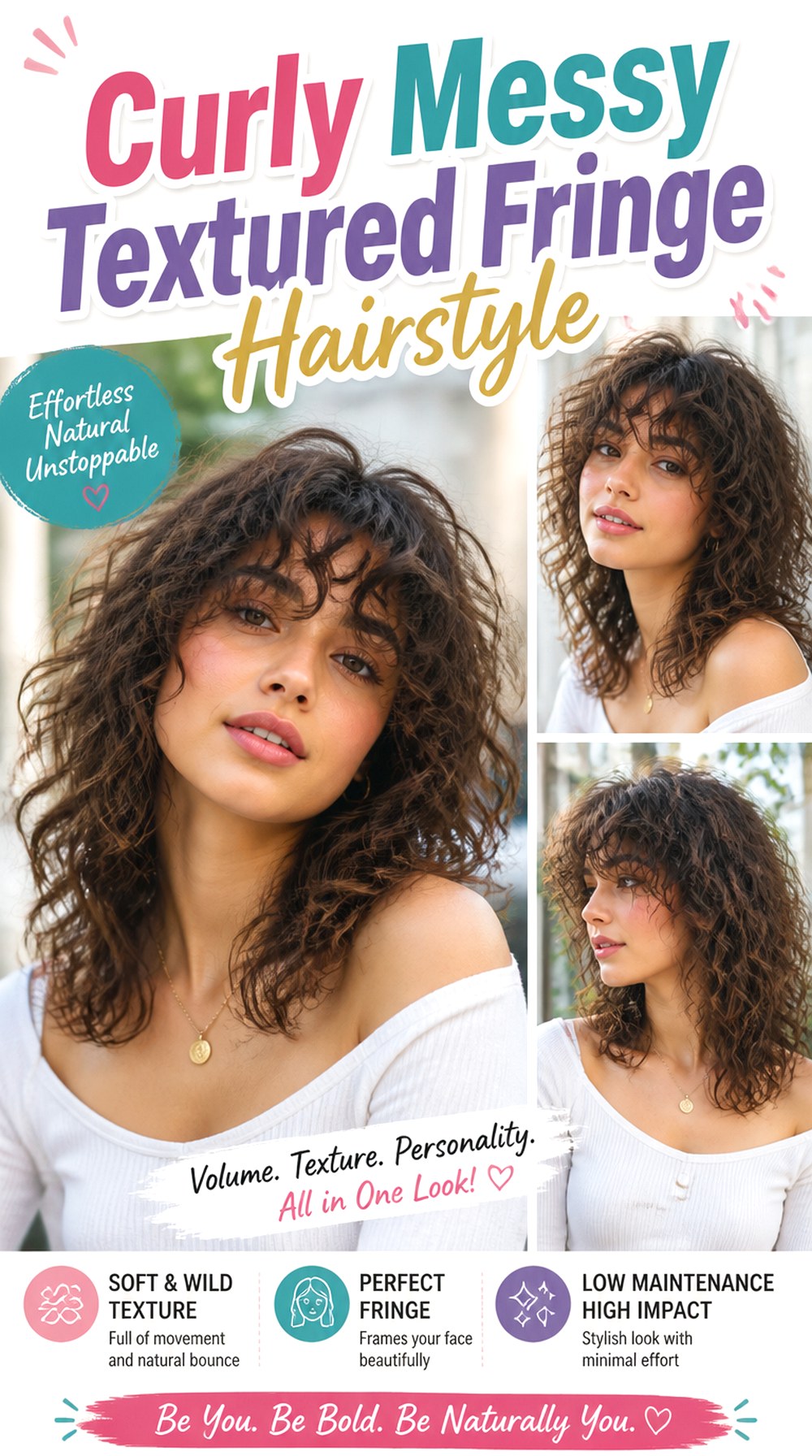
Curly textured bangs let natural coils or curls form the fringe instead of forcing them into a straight shape. The length often varies slightly because individual curl patterns shrink differently, giving the front a naturally messy finish. This option works best when the stylist cuts with shrinkage and curl direction in mind. Medium and thick curly hair can carry a fuller fringe, while finer curls may look better with fewer pieces brought forward. Styling typically involves leave-in conditioner, curl cream, and a diffuser used on low airflow. Daily effort is usually light if curls refresh well with water. Ask for the fringe to be checked in its dry, naturally curled state before the final length is decided.
Pro tip: Choose the shortest finished curl position rather than the stretched length when discussing your reference photo. That helps prevent the fringe from springing much shorter than expected.
Wavy Tousled Fringe
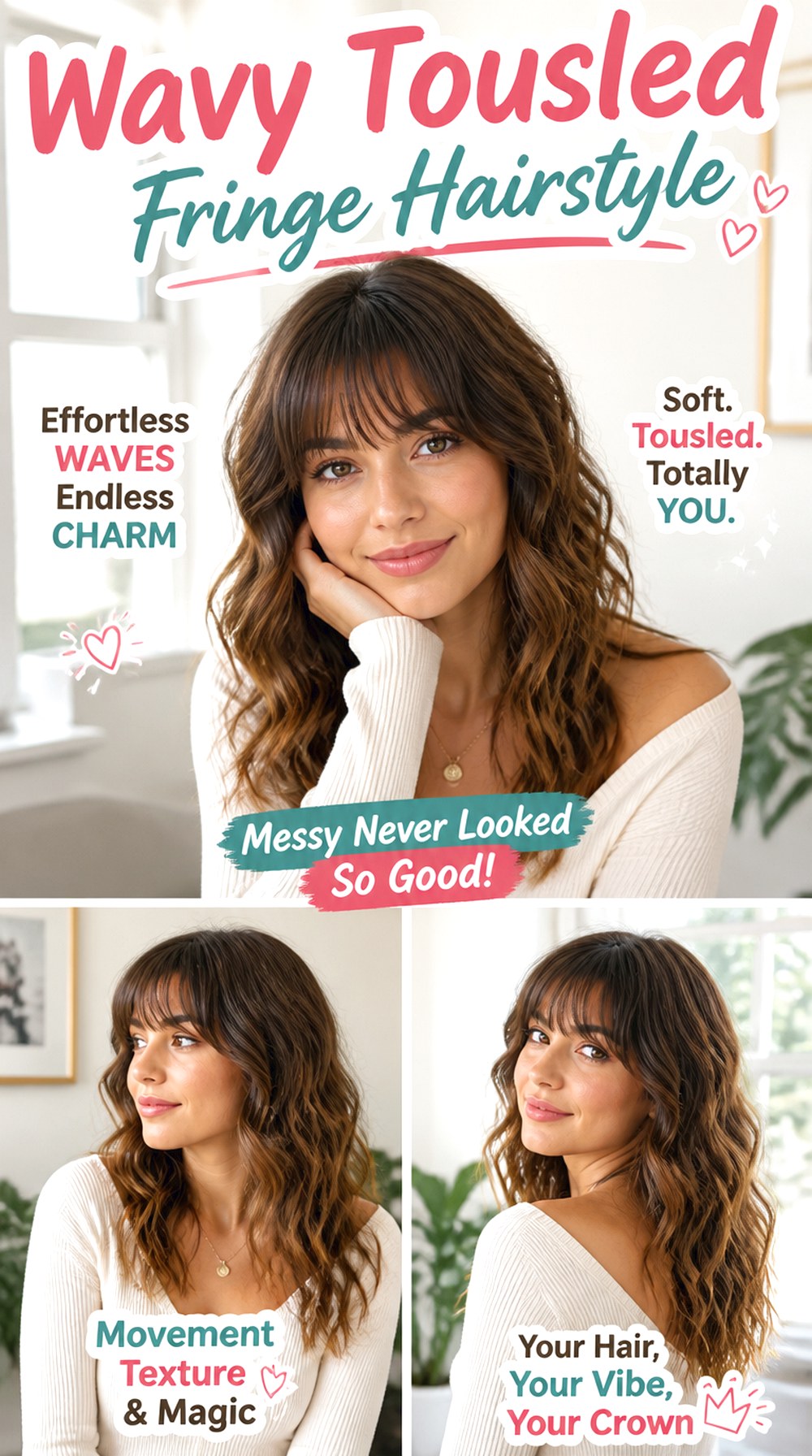
Loose bends give a tousled fringe a relaxed shape that looks best when it is not overly brushed into place. The front can skim the brows or sit slightly above them, with longer corners blending into soft face-framing pieces. Naturally wavy hair is ideal, although straight hair can recreate the effect with a quick bend from a flat iron. Fine-to-medium density usually produces airy movement without much bulk. Keep sea-salt spray, heat protectant, and a wide-tooth comb nearby for styling. The routine is quick to moderate depending on natural texture. At your haircut, ask for enough length to allow the fringe to bend without bouncing too far above the brows.
Pro tip: If your waves shrink as they dry, have the fringe cut slightly longer than your ideal finished point and refine it only after the natural pattern settles.
Short Cropped Textured Fringe
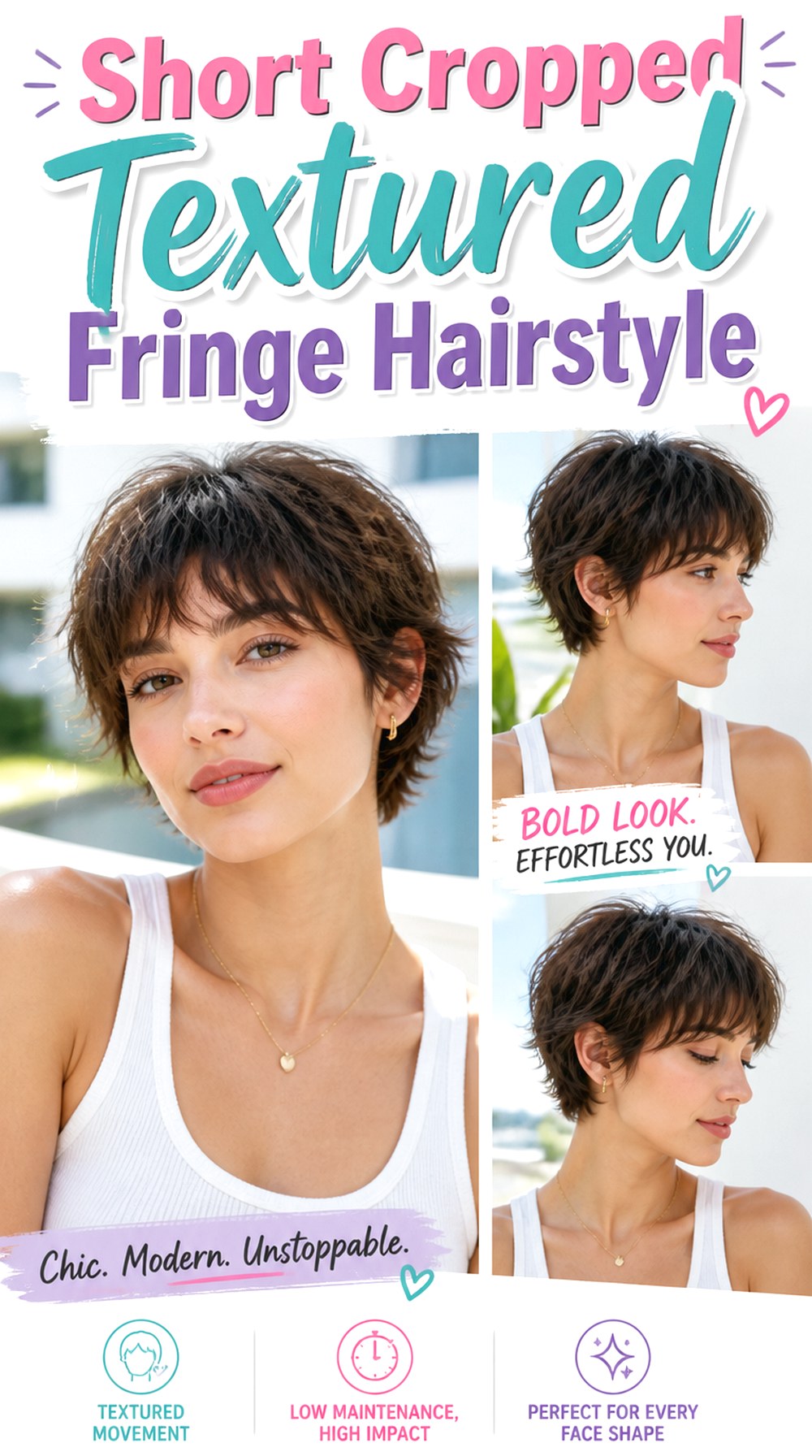
A short cropped fringe sits clearly above the eyebrows and uses irregular, softened ends to avoid a severe straight-across effect. Because more forehead is exposed, the precise length makes a noticeable difference to facial proportions. Straight and lightly wavy textures are usually easiest to control, while dense hair may need careful debulking so the fringe lies close rather than projecting outward. Styling can be very quick with lightweight wax, a fine-tooth comb, and light-hold hairspray for small areas that need direction. The main commitment is regular trimming because a short fringe changes shape quickly as it grows. Ask your stylist to establish the shortest point conservatively before adding additional texture.
Pro tip: Leave the side edges a touch longer than the center if you want a softer transition into the temples rather than a sharp cropped line across the entire forehead.
Long Brow-Grazing Textured Fringe
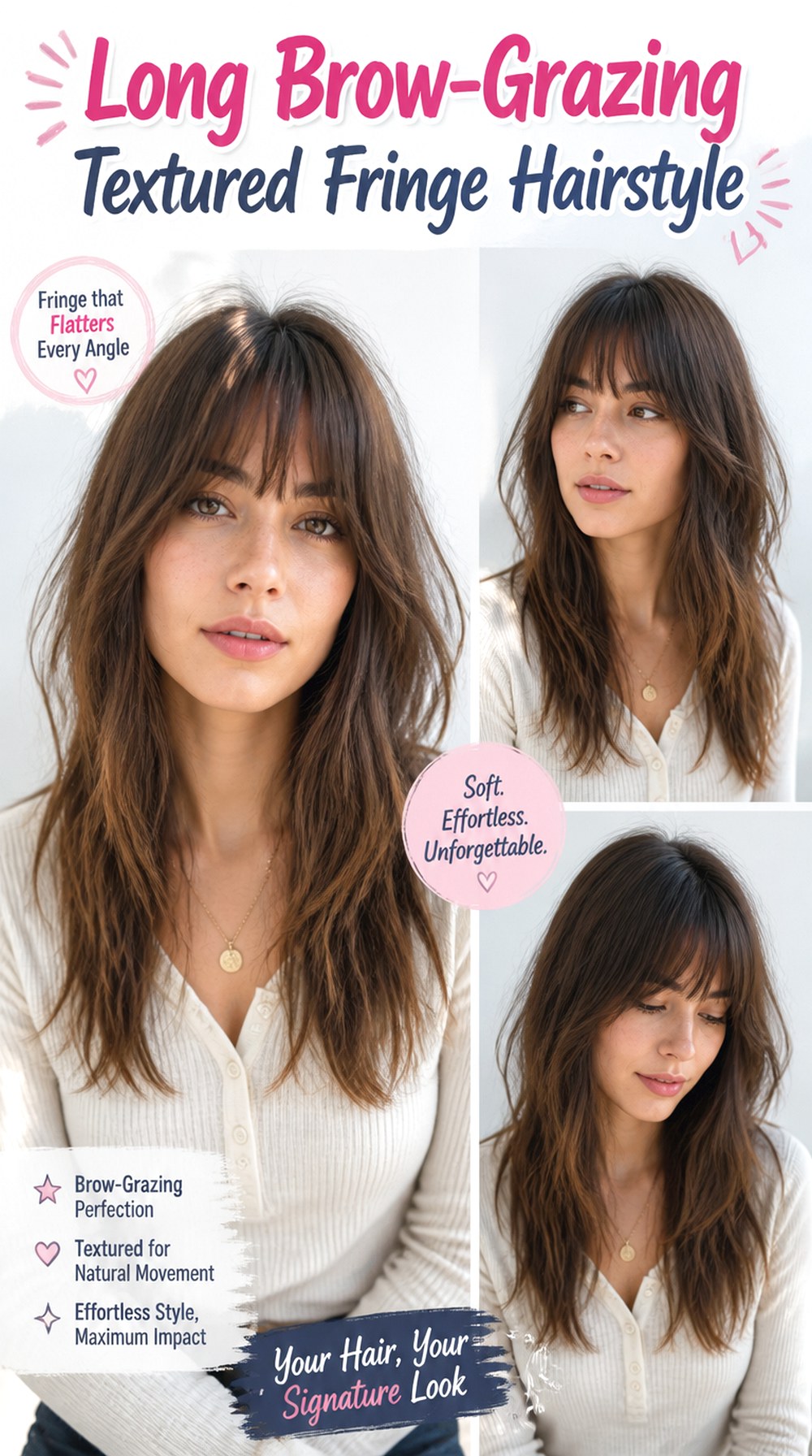
A brow-grazing fringe provides more coverage and movement than a short bang, with textured ends that sit around the eyebrows instead of forming a heavy line. Longer pieces can fall slightly between the brows and then sweep aside when needed, making this a useful choice for someone unsure about committing to very short bangs. Straight, wavy, and soft curly textures can work, although thick hair benefits from strategic internal weight removal. Use a round brush, smoothing serum, and dry shampoo for freshness between washes. Styling takes a few minutes, but trimming may be needed once the fringe starts falling into the eyes. Tell your stylist your preferred dry length rather than judging the fringe while wet.
Pro tip: Ask for the ends to alternate subtly around the brow line instead of being cut at one exact length. That irregularity helps create the messy texture without looking accidental.
Side-Swept Messy Textured Fringe
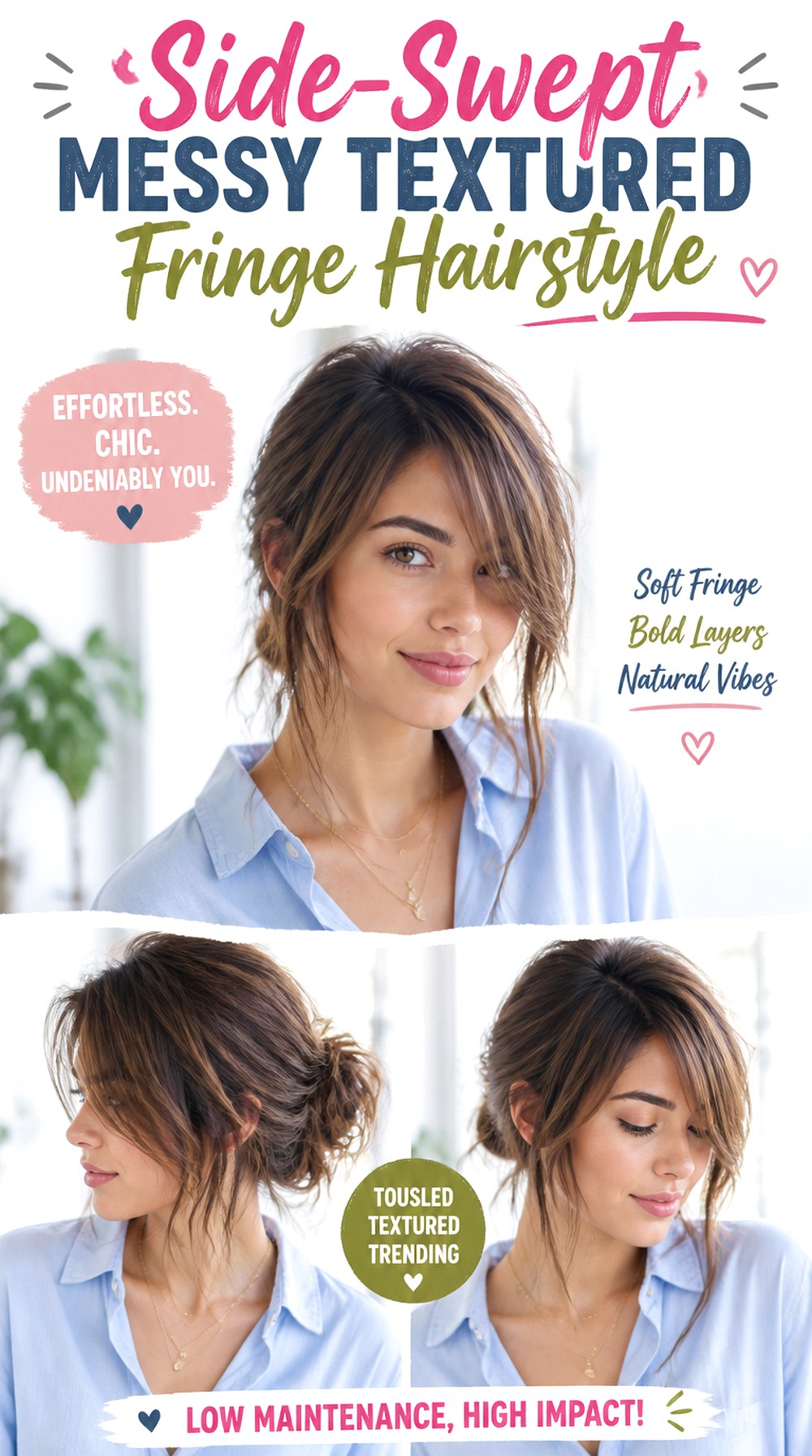
A side-swept textured fringe moves diagonally across the forehead and blends into longer hair near one temple. The finish is softer and less structured than a traditional side bang because individual pieces are encouraged to separate. It can help balance round, square, and heart-shaped faces depending on the length and sweep, but the natural growth direction should guide which side works best. Straight and wavy hair are usually easy to style. Try volumizing mousse, a paddle brush, and flexible-hold hairspray. The routine is quick after the fringe learns its direction. At the salon, explain where you normally part your hair and ask for gradual length through the sweeping edge.
Pro tip: Blow-dry the fringe briefly in the opposite direction first, then sweep it back into place. This can prevent the roots from lying too flat against the forehead.
Feathered Textured Fringe
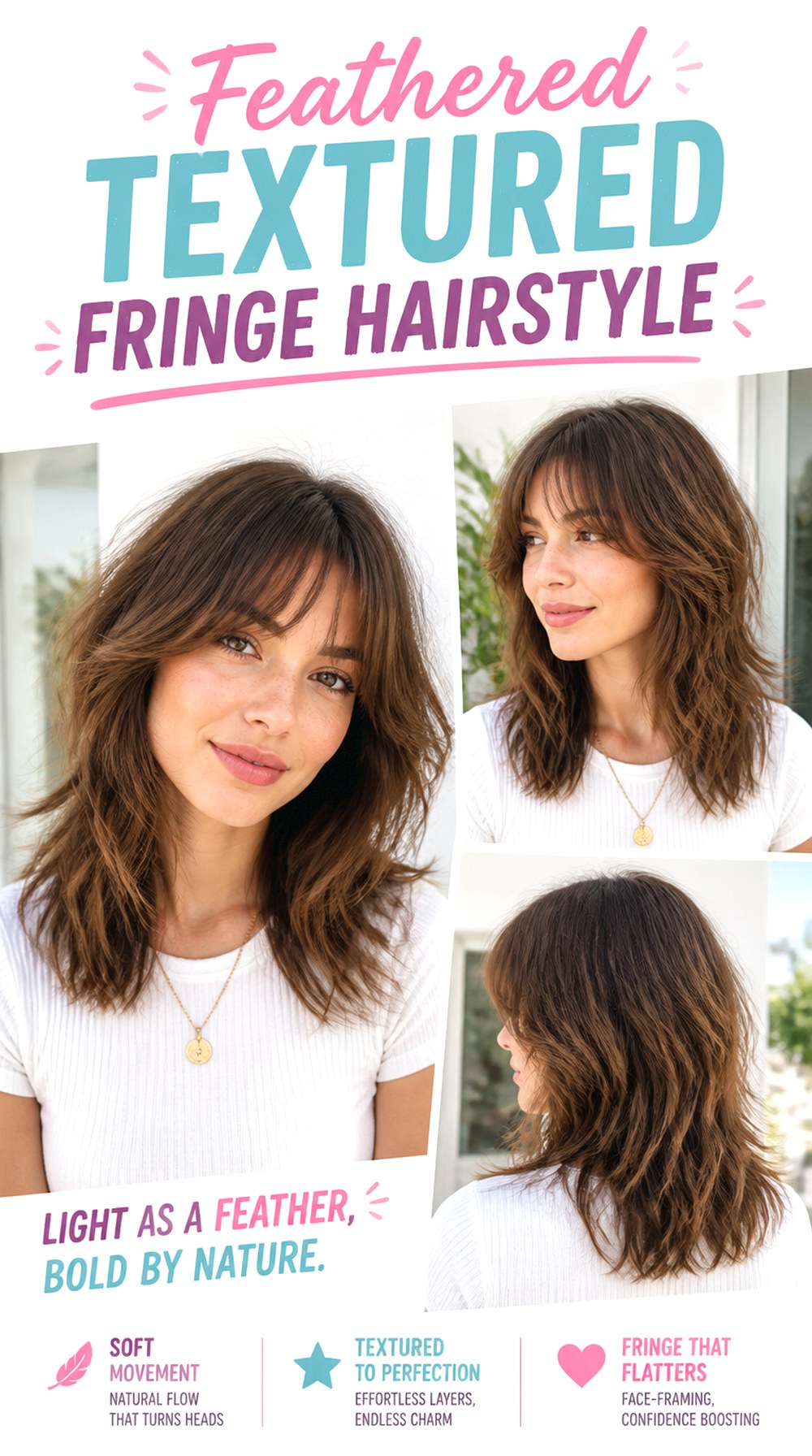
Feathered bangs have light, tapered ends that move away from the face rather than sitting heavily against it. The texture is softer than a strongly choppy fringe, with subtle layers providing lift and movement around the temples. Straight and wavy hair respond particularly well, and medium density gives enough hair for feathering without creating excessive bulk. Fine hair should be textured carefully so the ends do not become transparent. Use root-lifting spray, a round brush, and light-hold hairspray to direct the sides outward. Styling usually takes five to ten minutes with a blow-dryer. Request soft tapering through the final section of the fringe instead of thinning aggressively from the roots.
Pro tip: Start the feathering near the outer third of the fringe rather than across the whole front. This preserves density in the center while creating movement around the face.
Thick Full Messy Fringe
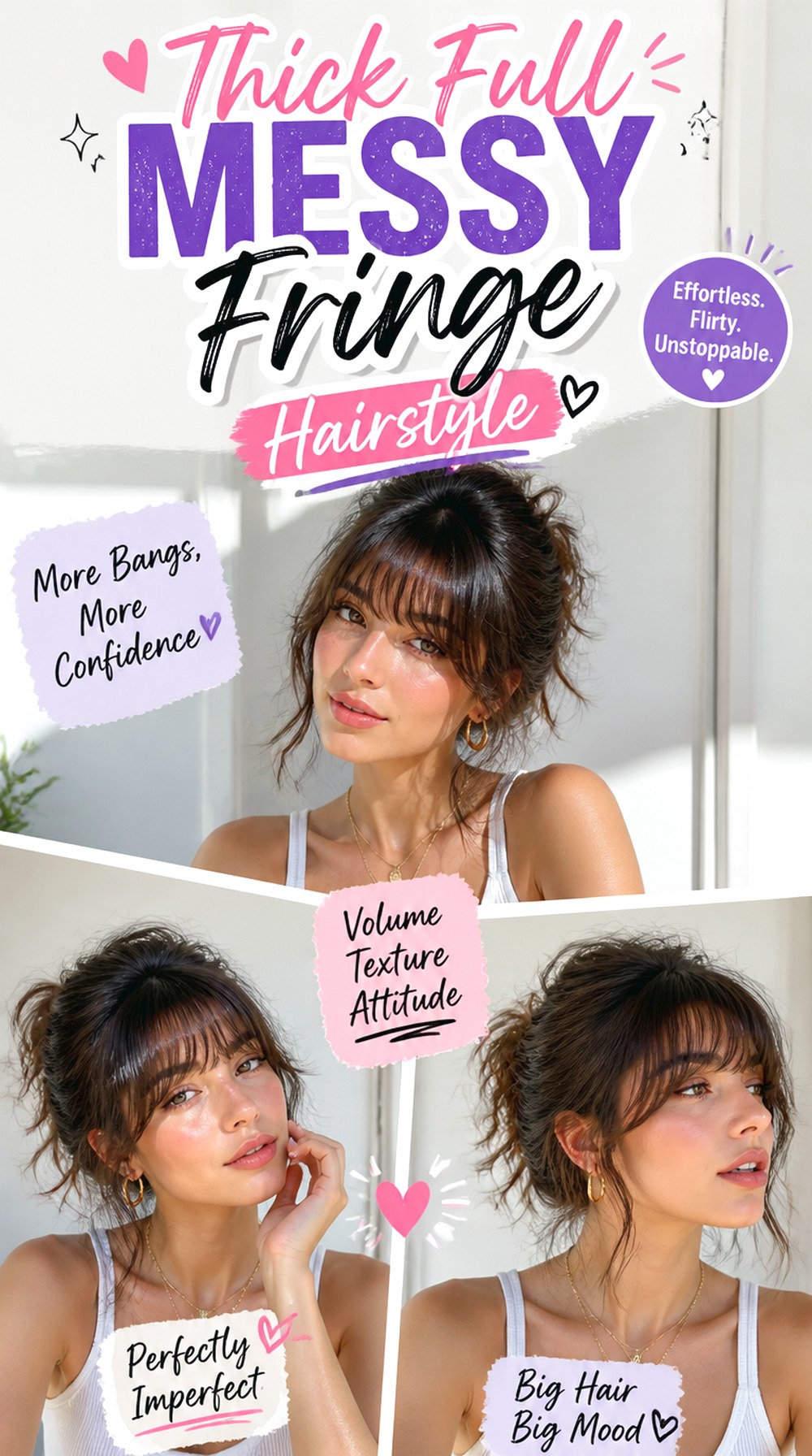
A thick messy fringe keeps noticeable density across the forehead but avoids looking rigid through broken-up ends and subtle internal texture. It is particularly suitable for medium-to-thick hair because enough density is available to create fullness without borrowing too much hair from the crown. Straight and wavy textures are the easiest to shape, though strong cowlicks may require more daily blow-drying. Useful tools include a heat protectant, paddle brush, and texturizing powder used sparingly at the roots. Styling is moderate, and frequent fringe trims help prevent the weight from overwhelming the face. Ask the stylist to preserve a substantial baseline while removing bulk internally rather than thinning every visible end.
Pro tip: If your hair is very dense, ask for hidden weight removal beneath the top layer. The surface can still look full while the fringe moves more easily.
Micro Textured Fringe
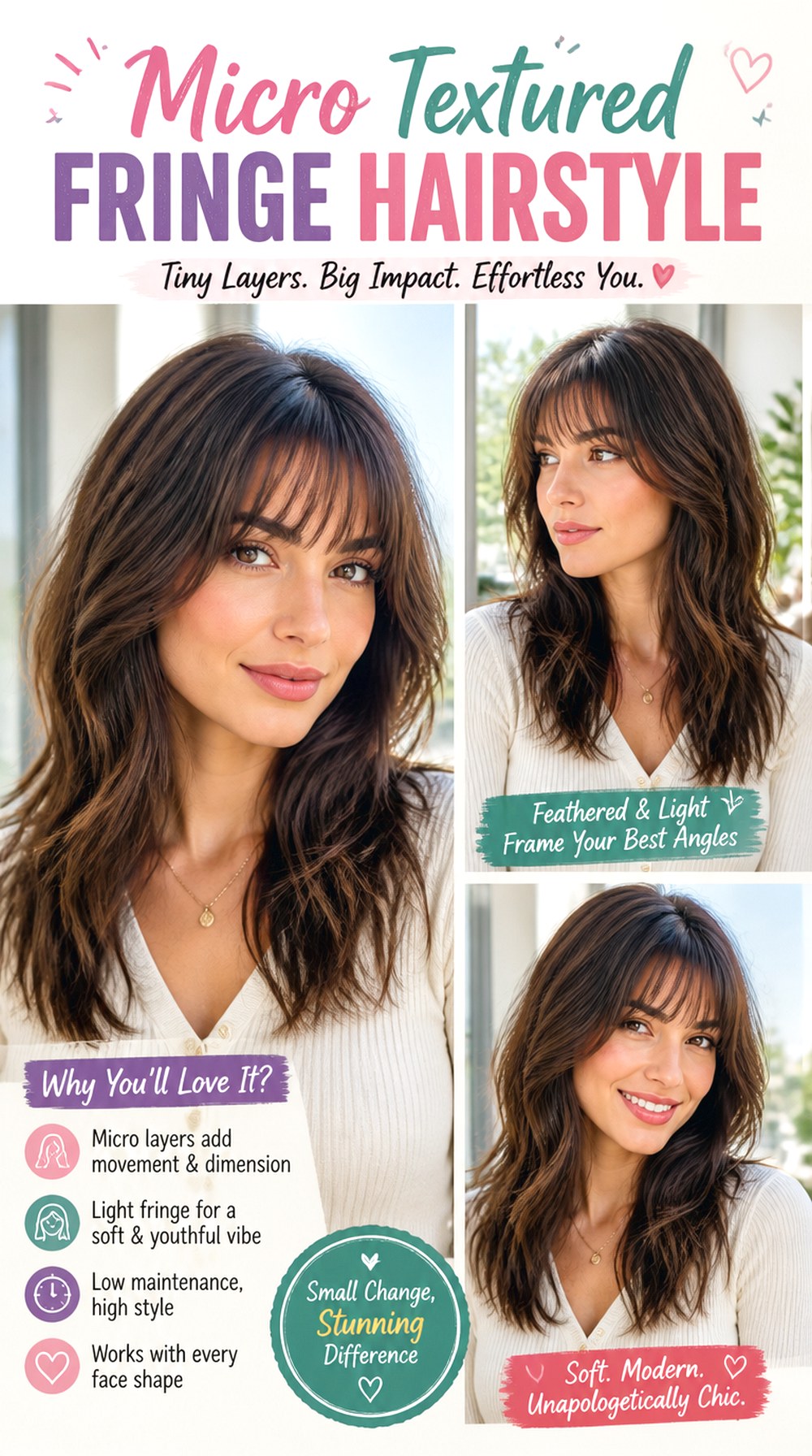
A micro textured fringe sits well above the brows and uses tiny variations in length to create an intentionally broken edge. Because the fringe is short and exposes more of the forehead, it creates a stronger visual statement than longer messy bangs. Straight or lightly wavy hair tends to give the cleanest result, and fine-to-medium densities make the texture easier to control. Styling is usually very fast with a mini flat iron, heat protectant, and a touch of matte styling cream. Salon upkeep is more frequent because even a small amount of growth changes the proportions. Show your stylist the exact distance you want between the fringe and eyebrows before cutting begins.
Pro tip: Start slightly longer at the first appointment. A micro fringe can always be shortened, while correcting one that was cut too high mainly requires growing it out.
Face-Framing Textured Fringe With Shag Layers
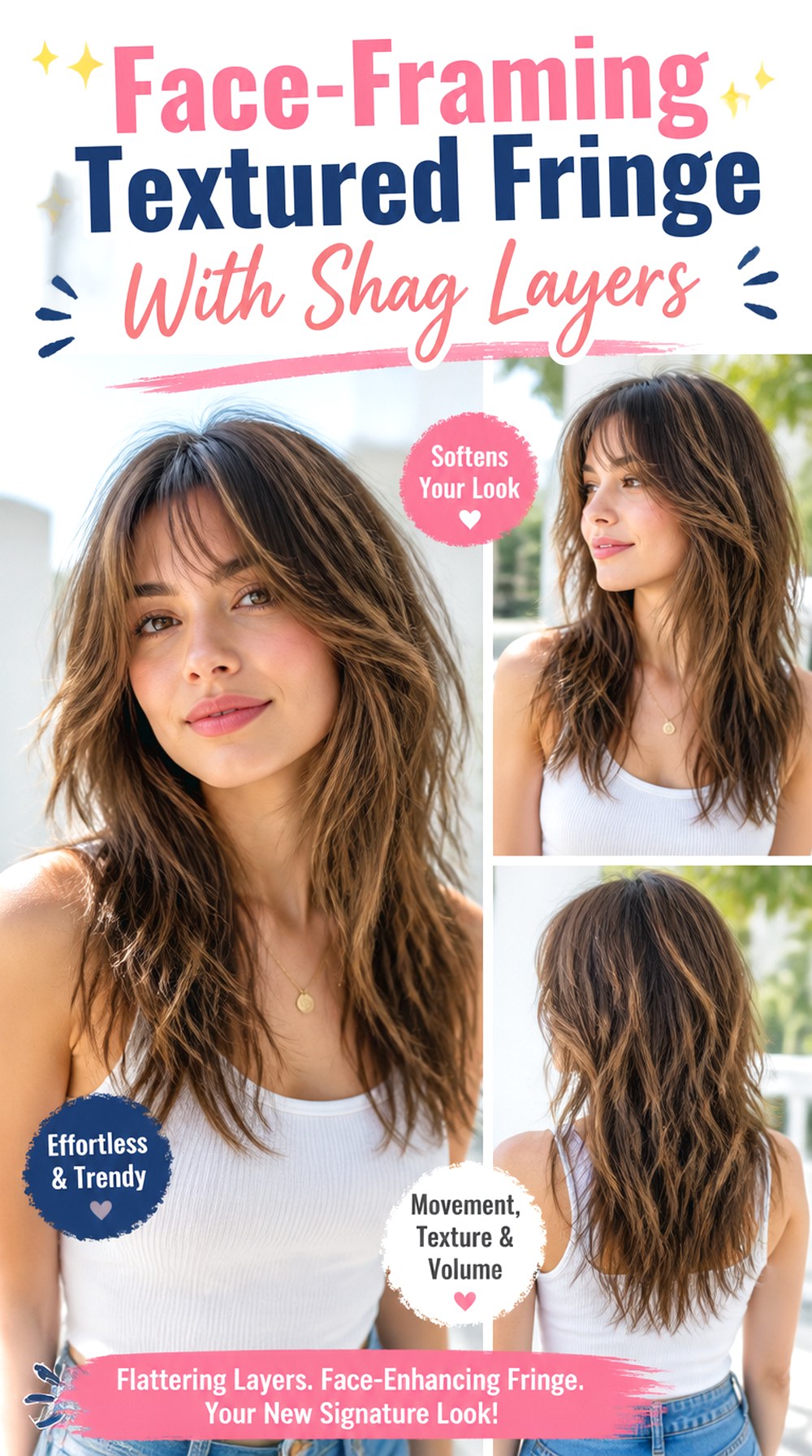
This cut combines a messy fringe with layered pieces that continue from the temples through the cheekbones, jawline, and longer lengths. The connected shape creates plenty of movement without making the bangs look separate from the rest of the haircut. It suits wavy and textured hair especially well, though straight hair can gain similar movement through carefully placed layers. Medium and thick densities can handle stronger layering; fine hair usually needs more weight left through the ends. Use texturizing spray, lightweight mousse, and a diffuser or blow-dryer depending on texture. Styling is moderate. Ask your stylist to map where the fringe transitions into each face-framing layer instead of cutting the sections independently.
Pro tip: For a balanced shag shape, keep the shortest cheek-framing pieces connected to the longest fringe pieces. Visible gaps between them can make the haircut appear disconnected.
Conclusion
Messy textured fringe hairstyles can be adapted far beyond one standard bang shape. A fringe may be cropped, brow-length, wispy, thick, curly, side-swept, or blended into shaggy layers, and each variation changes how much weight and movement appear around the face. Length, density, layering, fringe thickness, volume, natural texture, parting, finish, and required styling effort can all be adjusted before the cut is finalized.
The best option depends on your face shape, natural hair texture, hair density, growth patterns, maintenance preferences, and normal daily routine. Instead of choosing a fringe only because you like one photograph, look closely at the details that make it work. Matching those details to how your own hair naturally behaves usually leads to a more manageable result.
CTA
Choose one or two favorite ideas and save clear photo references before your appointment. Discuss your face shape, natural texture, hair density, preferred length, maintenance comfort, and normal styling routine with your stylist. In each reference photo, point out exactly what you like—the fringe length, amount of separation, layer placement, side pieces, volume, or messy finish—so your stylist can adapt those details rather than simply copying a cut that may behave differently on your hair.
FAQs
What Hair Type Works Best With A Messy Textured Fringe?
Straight, wavy, and curly hair can all wear textured bangs. The cutting method should match the natural pattern: straight hair may need more visible texturizing, while curly hair needs enough length to account for shrinkage.
How Often Does A Textured Fringe Need Trimming?
Many fringes benefit from a refresh every four to eight weeks, depending on their starting length and how quickly the hair grows. Short micro or cropped bangs usually need attention sooner than longer curtain-inspired pieces.
Can Fine Hair Wear A Messy Textured Fringe?
Yes, but excessive thinning should be avoided. Fine hair often looks fuller when the stylist preserves density near the roots and creates separation mainly through the ends.
Does A Messy Fringe Need Heat Styling Every Day?
Not always. Naturally wavy or curly fringes may only need water and styling product to refresh them. Straight fringes with cowlicks or a specific directional shape may need a brief blow-dry, while others can simply be finger-styled.