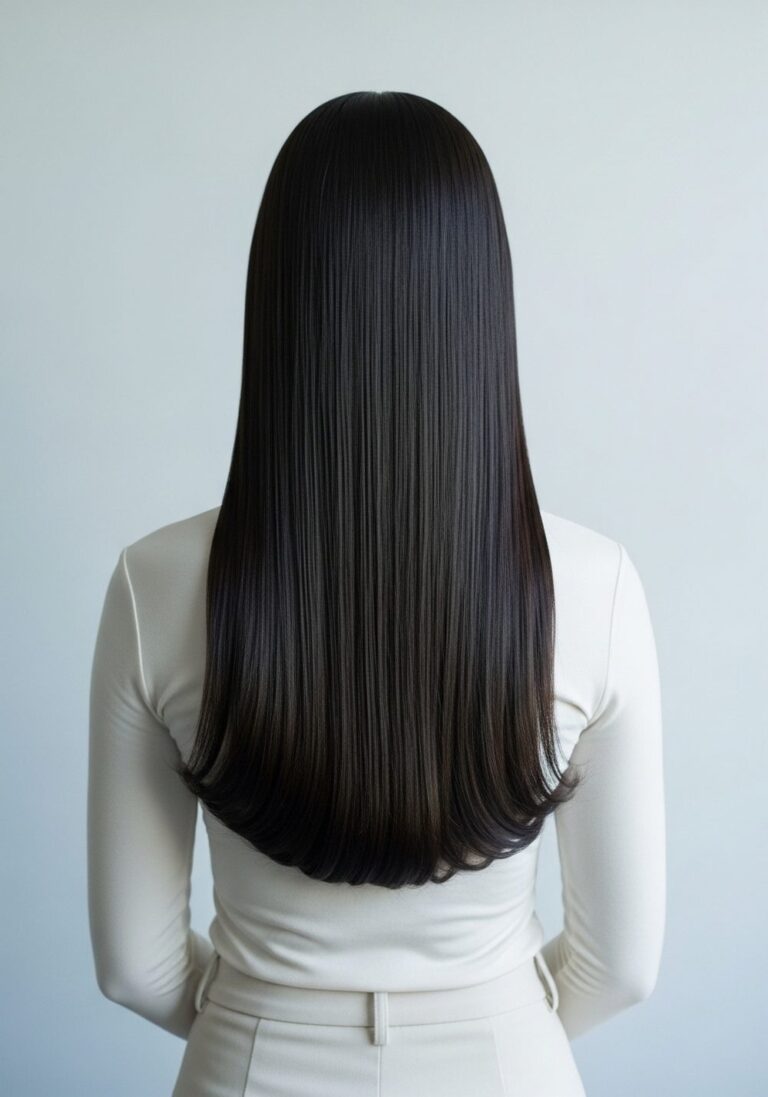
22 Bixie Haircut Ideas For Women

A bixie sits between a pixie and a short bob, combining the lightness of a cropped haircut with enough length to create movement around the ears, nape, and face. These bixie haircut ideas for women can look soft and rounded, tousled and piecey, sleek and polished, or naturally curly depending on the cutting technique. Most versions use short-to-medium layers, with the longest sections often falling around the ears, cheekbones, or upper neck.
The haircut can work with fine, medium, or thick density, although the layering should change with the hair type. Fine hair usually benefits from keeping more weight through the perimeter, while dense hair may need internal weight removal. Straight hair shows the shape clearly, while waves and curls can give a bixie more volume and natural movement. Bangs, parting, and face-framing pieces can also be adjusted for different face shapes.
Daily styling ranges from a quick air-dry to a more polished blowout. Most bixies benefit from salon reshaping about every six to eight weeks, though softer grown-out versions can go longer. Before committing, consider how short you want the nape, how much styling you enjoy, and whether you want structured or relaxed texture.
Quick List
- Soft Layered Bixie
- Textured Tousled Bixie
- Sleek Straight Bixie
- Wavy Bixie
- Curly Bixie
- Bixie With Curtain Bangs
- Bixie With Side-Swept Bangs
- Bixie With Wispy Bangs
- Shaggy Bixie
- Asymmetrical Bixie
- Side-Parted Bixie
- Center-Parted Bixie
- Tapered-Nape Bixie
- Stacked Bixie
- Voluminous Crown Bixie
- Fine-Hair Bixie
- Thick-Hair Bixie
- Ear-Tucked Bixie
- Rounded Bixie
- Razored Bixie
- Grown-Out Bixie
- Low-Maintenance Air-Dried Bixie
Soft Layered Bixie

Soft layers give the bixie a gentle shape without making the ends look overly choppy. The length can skim the ears while longer pieces around the cheekbones soften the face. It works particularly well on straight or softly wavy hair with fine-to-medium density, and the face-framing can be adjusted for round, oval, or longer faces. Styling is usually quick to moderate: a short blow-dry is enough when the cut is balanced. A lightweight mousse, round brush, and light-hold hairspray help create airy movement without stiffness. Ask your stylist for blended layers rather than heavily disconnected sections, and plan on reshaping the haircut every six to eight weeks.
Pro tip: Keep some weight through the bottom edge if your hair is fine; cutting every layer too short can make the perimeter appear thinner.
Textured Tousled Bixie

A textured tousled bixie has separated ends, loose movement, and an intentionally relaxed finish. Shorter layers through the crown create lift, while slightly longer pieces near the ears keep the haircut from becoming a traditional pixie. Medium-density straight or wavy hair tends to hold this shape especially well, although thick hair can wear it with careful weight removal. It usually takes only a few minutes to refresh after drying. Texturizing spray, a small amount of lightweight styling paste, and heat protectant are useful when adding bends with a flat iron. In the salon, ask for controlled piecey texture rather than aggressive thinning, particularly around the crown and hairline.
Pro tip: Concentrate texture through the mid-lengths and ends; too much thinning at the roots can create unwanted flyaways instead of soft separation.
Sleek Straight Bixie
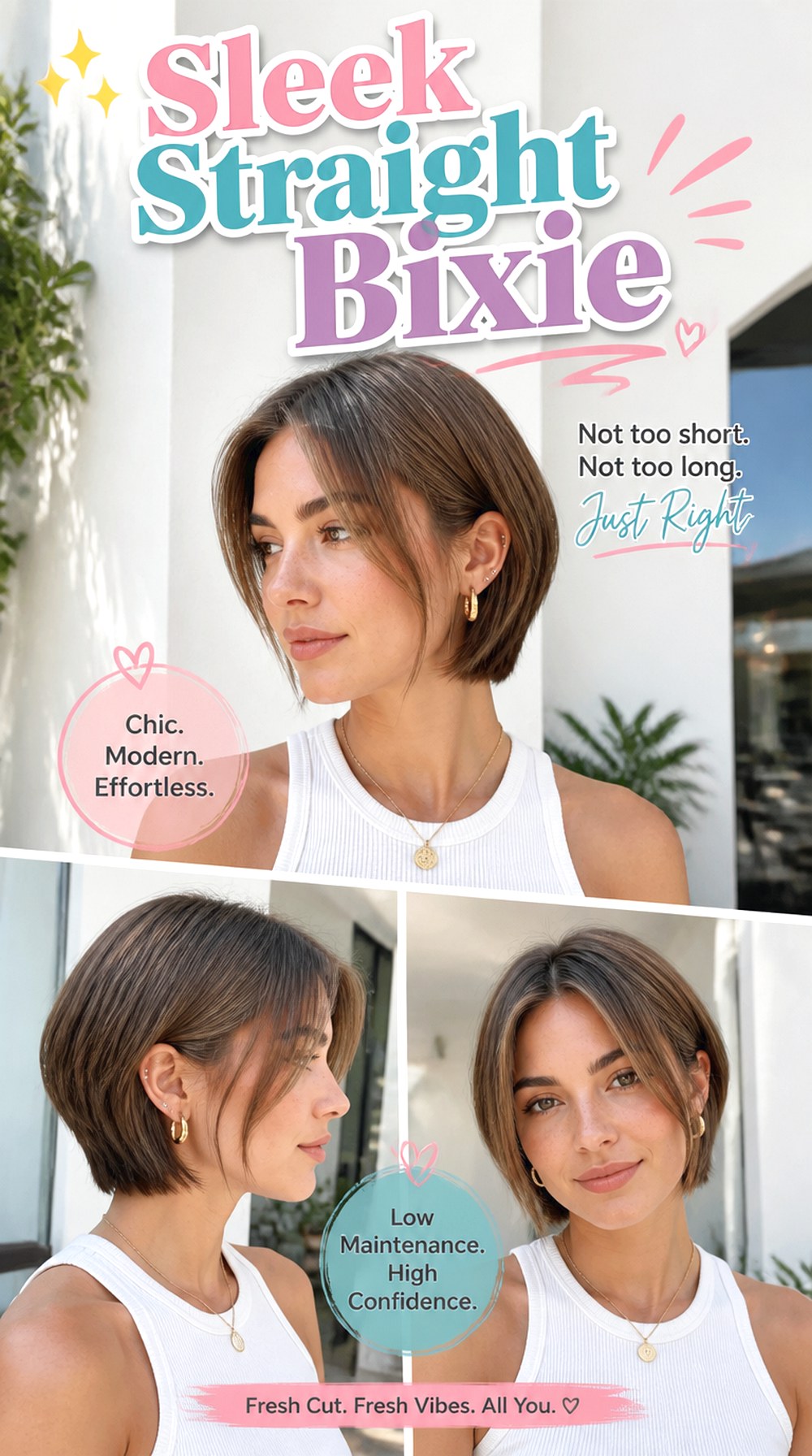
Clean lines make a sleek straight bixie feel more structured than heavily tousled versions. The sides normally sit close to the head, the crown stays smooth, and longer front pieces can fall toward the cheekbones or jaw. Naturally straight, fine-to-medium hair is easiest to maintain this way, although wavy hair can achieve the finish with additional heat styling. A smoothing serum, heat protectant, and small flat iron help control bends and polish the surface. Styling takes moderate effort if the natural texture is not straight. Ask your stylist to preserve enough density around the perimeter for a defined outline and to avoid excessive razoring if your ends are prone to frizz.
Pro tip: Flat-iron only the sections that need refinement rather than pressing every piece completely straight; a little natural lift keeps a bixie from looking flat.
Wavy Bixie
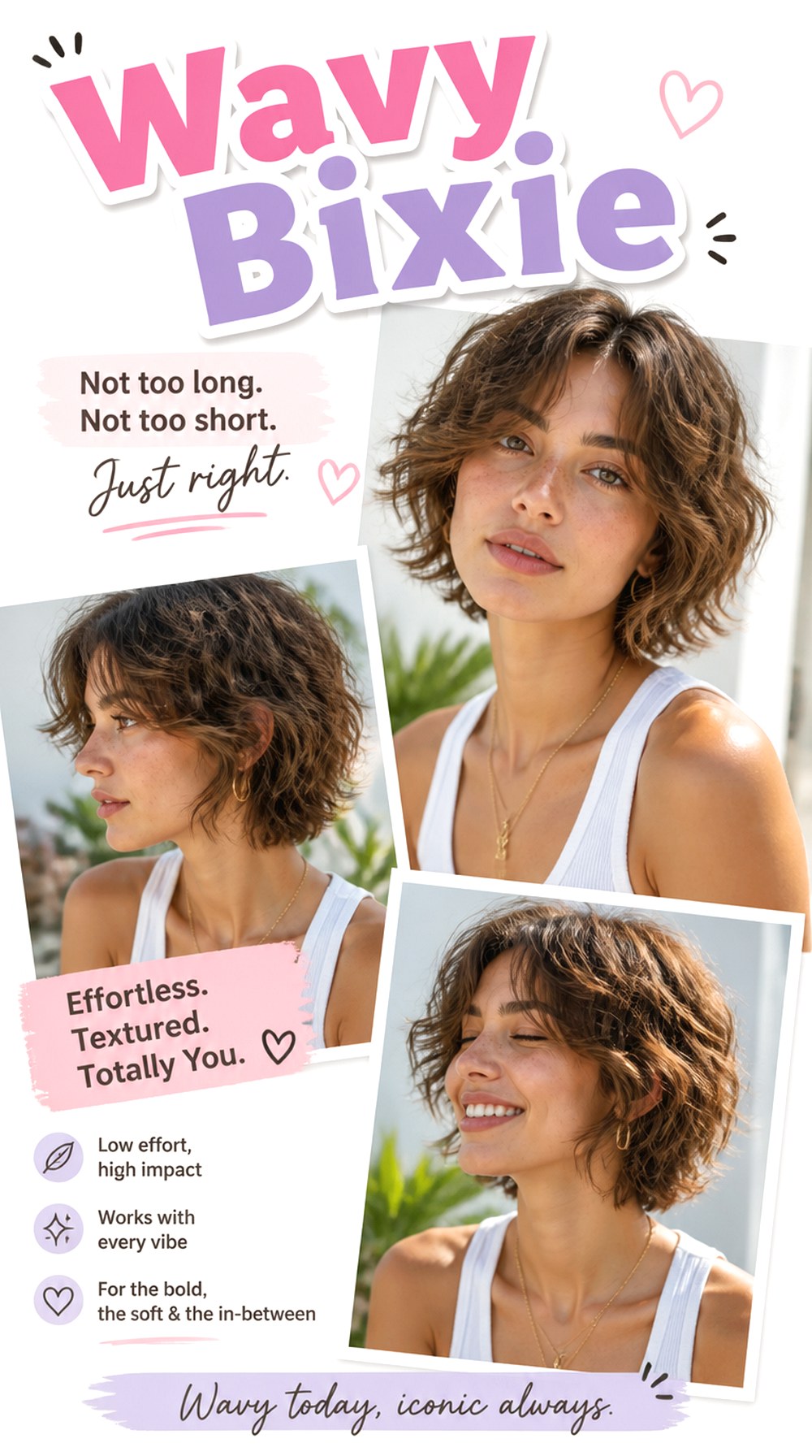
Natural waves give a bixie soft bends and volume without requiring a perfectly polished finish. Layers can be placed through the crown and sides to encourage movement while keeping enough length for the wave pattern to form. This shape is particularly useful for medium-density wavy hair and can be adjusted with longer front pieces for round or square faces. Daily styling is usually light: apply curl cream or lightweight mousse, then air-dry or use a diffuser on low heat. A wide-tooth comb is helpful before drying but can disturb definition afterward. Tell your stylist where your waves naturally shrink and bend so the final length is judged when dry.
Pro tip: Avoid making every layer equally short. Leaving a few longer sections around the ears helps waves form instead of puffing outward.
Curly Bixie
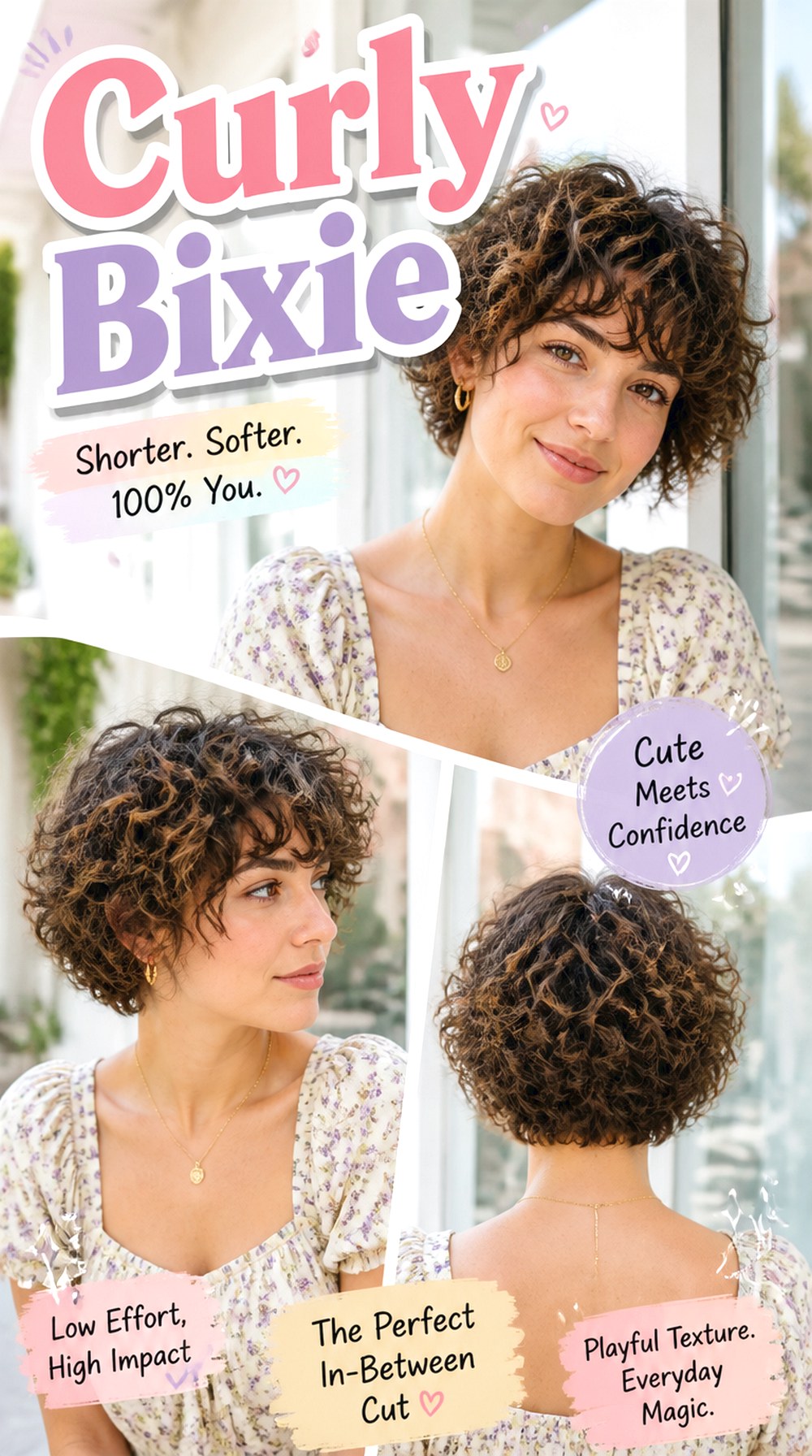
A curly bixie combines cropped structure with enough length for individual curls to take shape. The crown can stay slightly shorter for lift while curls around the forehead and ears create a softer outline. It suits naturally curly hair across several densities, but dense curls often need internal shaping rather than aggressive thinning. Styling can be quick once the haircut works with the curl pattern. Curl cream, leave-in conditioner, and a diffuser are useful for definition and moisture while limiting frizz. Salon visits may be needed every six to ten weeks depending on how quickly the shape expands. Ask for a curl-aware cut that accounts for shrinkage before shortening the fringe or nape.
Pro tip: Decide on fringe length when your curls are dry or close to dry; wet curls can spring considerably higher after styling.
Bixie With Curtain Bangs

Curtain bangs add a longer, face-framing front to the compact proportions of a bixie. The fringe usually parts near the center and opens around the eyebrows or cheekbones, blending into side layers rather than sitting as a separate block. Straight and wavy hair with fine-to-medium density can carry this shape well, while longer curtain pieces are useful if you prefer an easy grow-out. Styling is moderate because the fringe often needs directing after washing. Use heat protectant, a small round brush, and lightweight volumizing spray. Ask the stylist to connect the bangs gradually into the sides so there is no sudden step between the fringe and the rest of the haircut.
Pro tip: Have the shortest point of the curtain fringe placed where you want the face to open—usually around the brow or upper cheekbone rather than directly at the widest point of the cheeks.
Bixie With Side-Swept Bangs

Side-swept bangs create an angled front that can make a bixie feel softer and less symmetrical. The fringe is normally left longer on one side and blended into the temple and ear area, while the crown retains enough layering for movement. Straight, wavy, and fine-to-medium hair can all work well with this design. It is also practical for anyone who prefers keeping some forehead coverage without maintaining a short blunt fringe. A round brush, heat protectant, and light-hold hairspray help direct the bangs without making them rigid. Expect moderate styling and occasional fringe trims. At the salon, specify which side you naturally part your hair before the fringe is cut.
Pro tip: Keep the side-swept section light enough to move but not so heavily thinned that it separates into a few stringy pieces during humid weather.
Bixie With Wispy Bangs
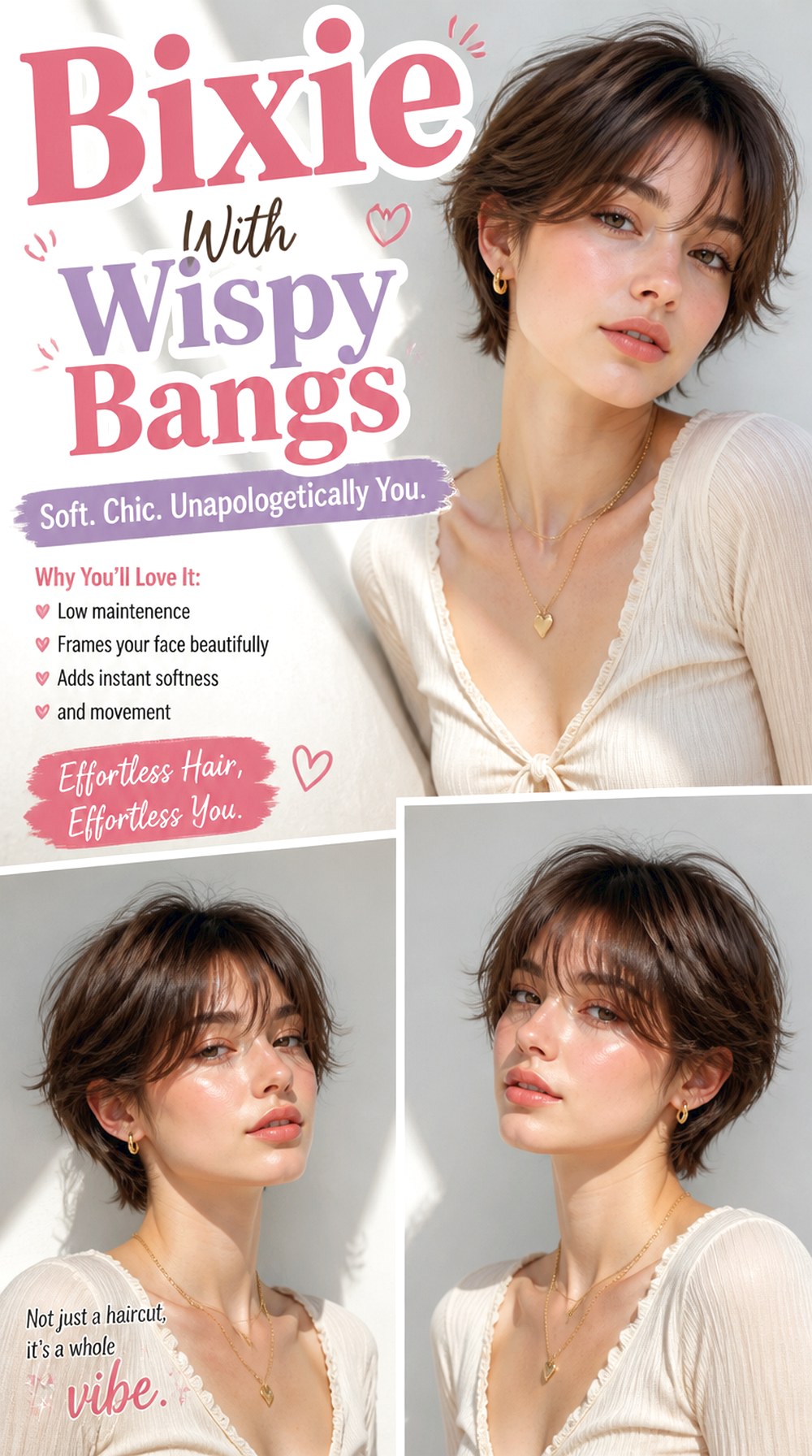
Wispy bangs bring light forehead coverage to a bixie while maintaining an airy overall shape. Rather than forming a dense line, the fringe is softly separated and can sit around the brows with slightly longer pieces at the temples. Fine or medium hair often suits this approach because the bangs do not require a large section of hair to be removed from the crown. Styling is fairly quick, although bangs may need refreshing after sleep or humidity. A small round brush, dry shampoo, and light-hold hairspray are useful for keeping them fresh without heavy buildup. Ask your stylist for a narrow, softly textured fringe section that connects gently with the face-framing layers.
Pro tip: Start with fewer hairs in the fringe. More can always be added later, while an overly thick bang section takes much longer to grow out.
Shaggy Bixie

A shaggy bixie uses irregular layers, broken-up ends, and plenty of visible movement. The crown is usually shorter and more lifted, while the sides and nape stay slightly longer to create the relaxed outline associated with shag-inspired cuts. Wavy or straight medium-density hair tends to respond well, and thicker hair can benefit from carefully placed internal texture. Daily styling can be quick because the finish does not need to be perfectly smooth. Try texturizing spray, lightweight mousse, and a diffuser or finger-drying technique. Salon maintenance is usually needed when the crown loses lift or the nape becomes too heavy. Ask for soft disconnection while keeping enough perimeter length to preserve the bixie shape.
Pro tip: Show your stylist exactly how much separation you like at the ends; “shaggy” can mean anything from subtle texture to very short, disconnected crown layers.
Asymmetrical Bixie

An asymmetrical bixie deliberately leaves one side or front section longer than the other, creating a more directional silhouette. One side may tuck neatly behind the ear while the opposite side falls toward the cheekbone or jaw. Straight and softly wavy textures display the imbalance clearly, and medium density gives enough hair to maintain the longer section. Styling takes moderate effort if you want a smooth, deliberate finish. Useful supplies include heat protectant, smoothing serum, and a small flat iron. Maintenance is slightly more frequent because uneven growth can weaken the intended shape. Tell your stylist exactly where you want the longest point to finish and how dramatic you want the difference between sides.
Pro tip: Choose the longer side based on your natural part and preferred face-framing direction rather than selecting it only from a front-facing reference photo.
Side-Parted Bixie
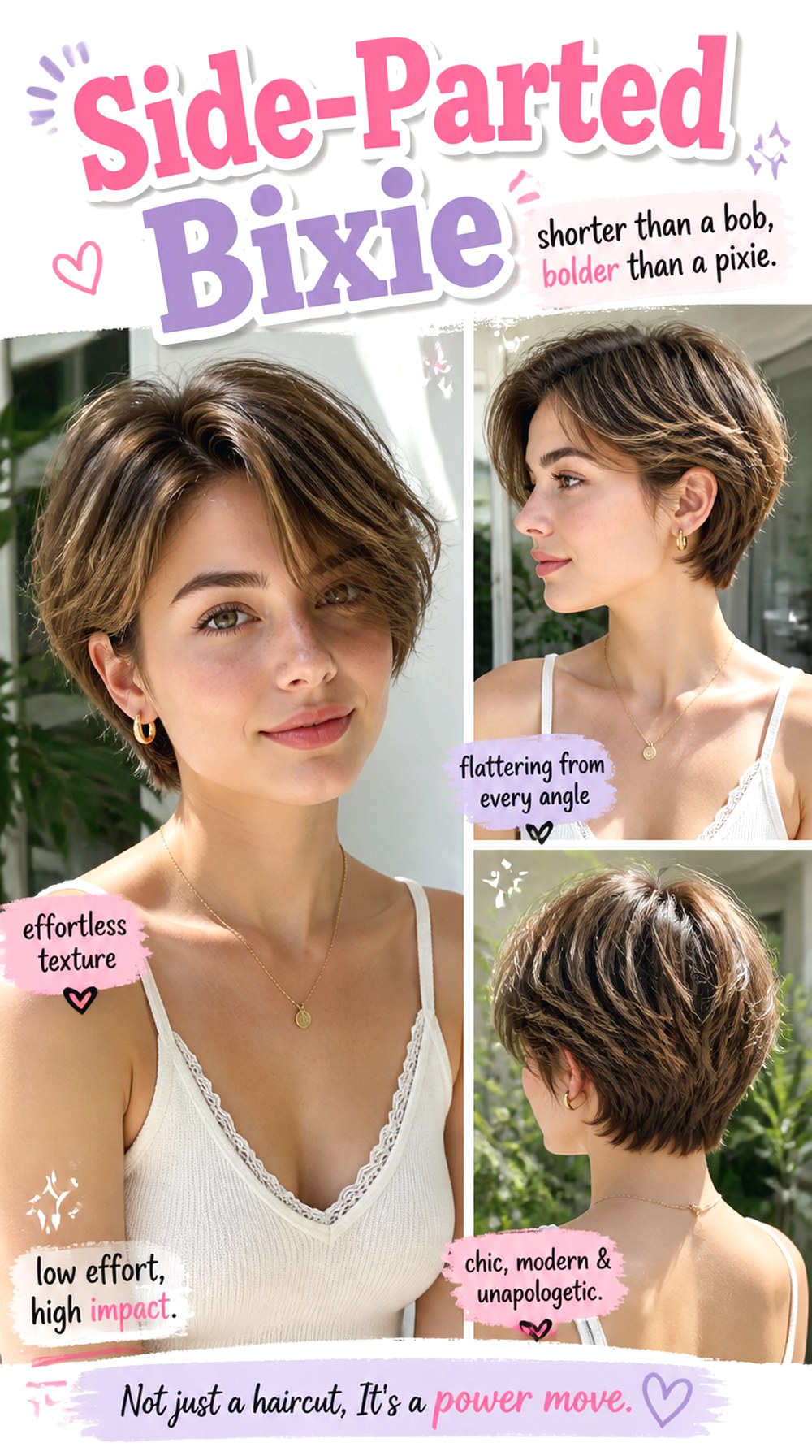
A deep or moderate side part gives a bixie natural lift on one side while creating a smoother, closer shape on the other. Longer top layers can sweep across the forehead, with shorter layers underneath preventing excess bulk. It is useful for straight, wavy, fine, or medium-density hair and offers an easy way to adjust where volume sits around the face. Styling is generally quick to moderate. Volumizing spray, a vent brush, and light-hold hairspray help maintain direction while allowing movement. Ask your stylist to cut the shape around the part you wear most often rather than assuming the hair will be switched from side to side. Regular six-to-eight-week trims keep the balance controlled.
Pro tip: If your hair naturally falls into a strong side part, avoid over-thinning the fuller side; that density is what helps create the sweep and crown lift.
Center-Parted Bixie
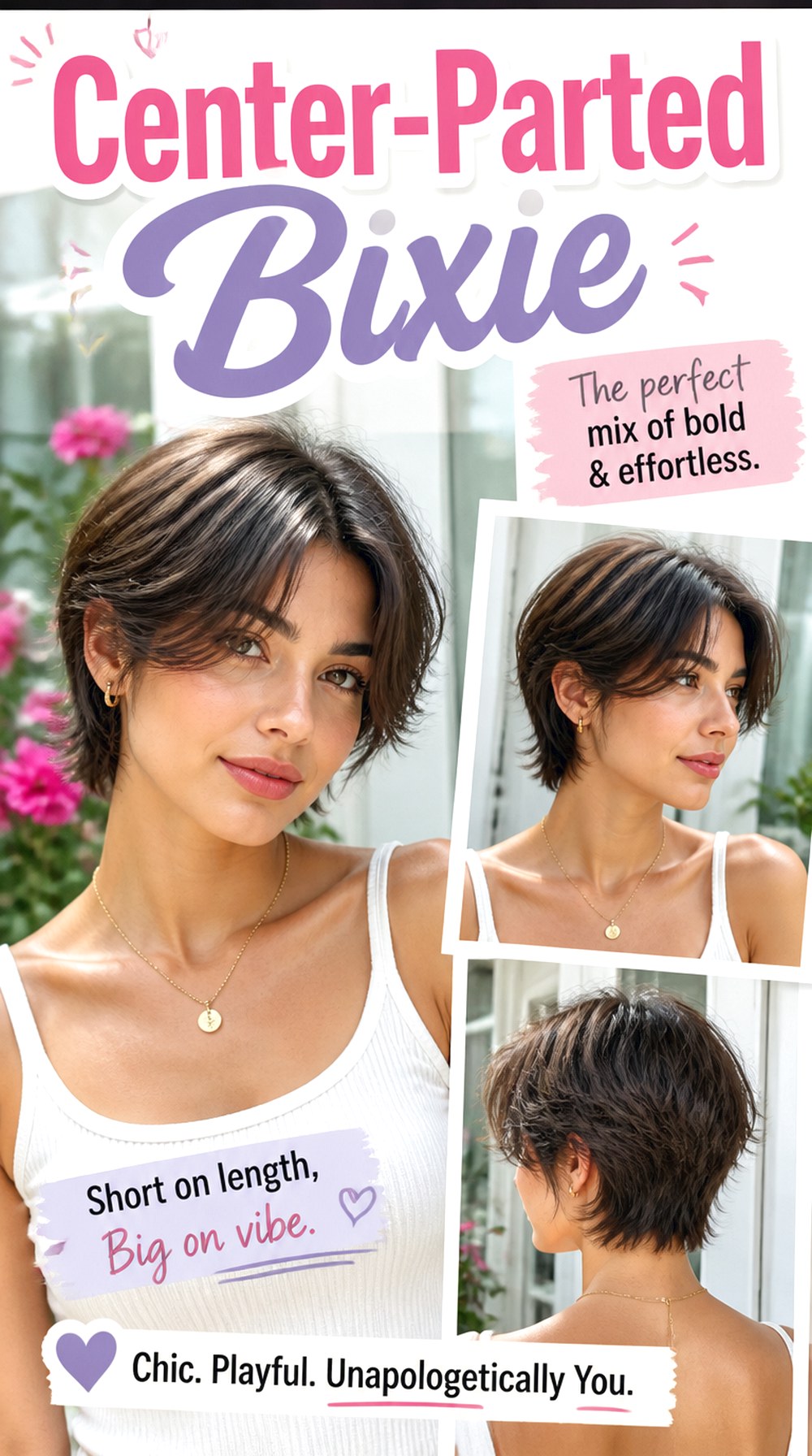
A center-parted bixie keeps the front balanced, often with longer pieces falling on both sides of the face. The symmetry gives the haircut a cleaner outline while still allowing layered movement through the crown and nape. Straight or loose wavy hair works especially well because both sides can fall consistently, and medium density provides enough weight to prevent the front from looking sparse. Styling takes moderate effort if your natural part sits strongly off-center. A lightweight mousse, paddle brush, and smoothing serum can help redirect the roots. Ask your stylist to check the haircut with the part sitting naturally in the middle and to balance both front sections visually before finishing.
Pro tip: If you have a cowlick near the hairline, keep the front slightly longer so there is enough weight to encourage the center part to stay in place.
Tapered-Nape Bixie

A tapered-nape bixie becomes gradually shorter toward the neckline while preserving more length through the crown, sides, and front. The close finish at the back creates a clean outline without requiring the entire haircut to be pixie-short. It works well for medium or thick hair that tends to become bulky at the nape and can also make hot-weather styling easier. Daily styling is usually quick, although the neckline needs regular salon attention. A lightweight styling cream, vent brush, and texturizing spray are enough for most finishes. Ask your stylist for a soft scissor taper if you want a subtle result or a closer clipper-assisted finish if you prefer stronger definition.
Pro tip: A close nape can lose its shape sooner than the longer top, so expect neckline cleanups before the rest of the haircut necessarily needs major reshaping.
Stacked Bixie

A stacked bixie builds graduated layers through the back to create a rounded shape and visible lift at the crown. The front and sides stay longer, keeping the haircut in bixie territory rather than turning it into a short graduated bob. Straight or slightly wavy hair shows the stacked structure clearly, and fine-to-medium density can benefit from the extra visual fullness at the back. Styling takes moderate effort when a smooth curve is desired. Use volumizing spray, a small round brush, and heat protectant. The graduation should be carefully balanced in the salon, so explain how much height you want at the crown and whether you prefer a softly blended or more defined stacked line.
Pro tip: Keep the lowest graduation soft if you want an easier grow-out; a very steep stack becomes noticeably heavier as the back gains length.
Voluminous Crown Bixie

Extra crown lift gives a bixie a fuller top while the sides stay relatively controlled. Short-to-medium layers around the crown encourage elevation, with longer front sections balancing the height and preventing the cut from appearing too round. Fine or flat straight hair can benefit from this placement, while dense hair may need bulk removed underneath before extra crown layers are added. Styling is moderate and often requires root direction during blow-drying. Volumizing mousse, a round brush, and dry texture spray are useful without adding excessive weight. Ask your stylist to concentrate the shortest layers around the crown rather than cutting the entire top short, especially if you want movement at the front.
Pro tip: Direct the crown hair opposite its natural fall while blow-drying, then place it back into position once cool for lift that looks softer than heavy teasing.
Fine-Hair Bixie

A bixie for fine hair should create movement without removing so much density that the ends become transparent. A slightly fuller perimeter around the ears and nape can make the haircut appear more substantial, while a few strategic crown layers provide lift. Straight and softly wavy fine hair are both suitable, and the shape is often manageable with a short daily blow-dry. Lightweight mousse, root-lifting spray, and a small round brush give body without coating the strands heavily. Trims every six to eight weeks help maintain the outline. In the salon, request restrained layering and minimal thinning, especially if your hair already has low density around the temples or hairline.
Pro tip: Ask to see the perimeter before extra texturizing is added. Fine hair usually benefits more from strategic layering than from repeated use of thinning shears.
Thick-Hair Bixie
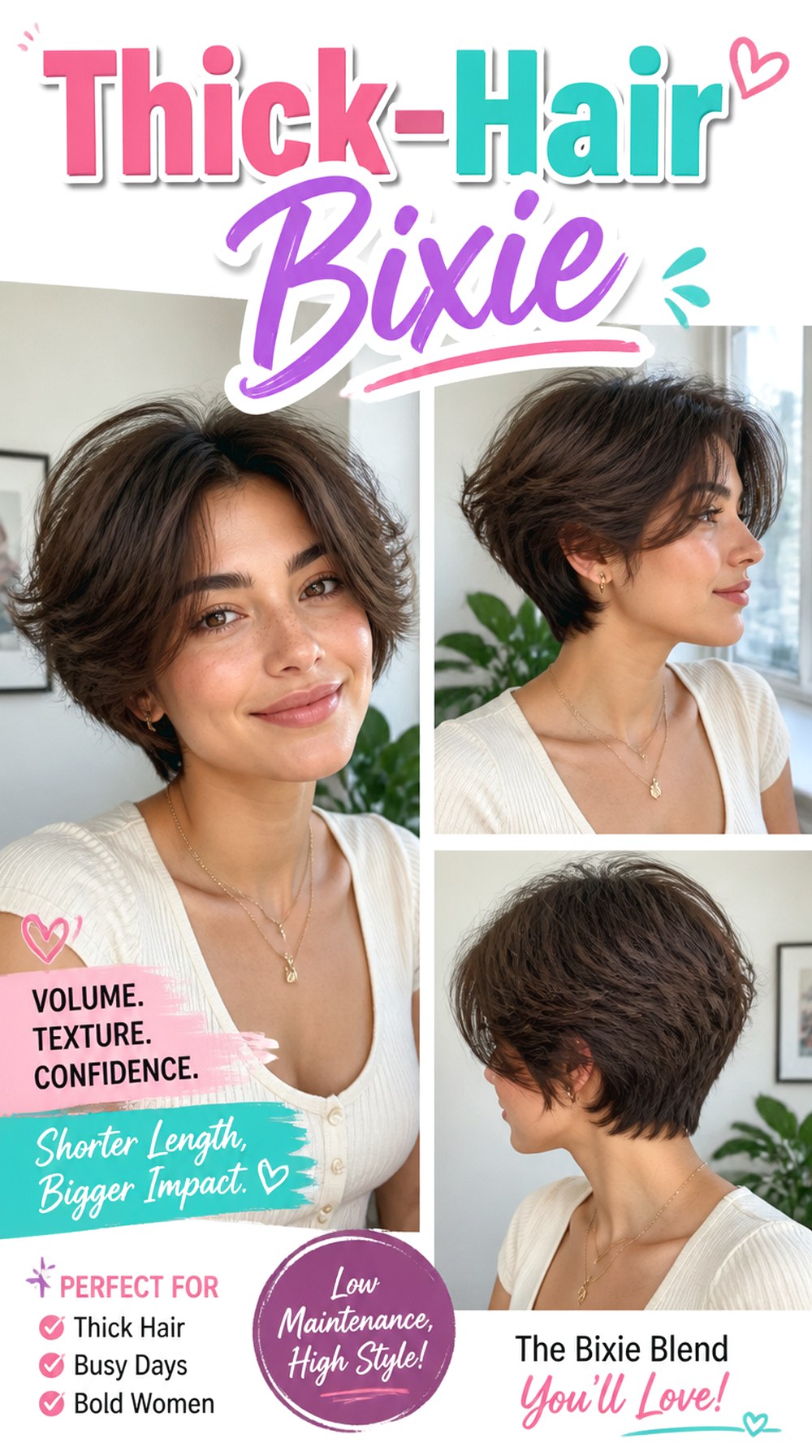
Thick hair can carry a bixie well when bulk is removed from the right places. The goal is to maintain a clear outer shape while reducing excess weight underneath the crown, behind the ears, and through the nape. Straight, wavy, or loose curly textures can all work, but the layering should respect natural movement and growth patterns. Styling ranges from quick to moderate depending on texture. Smoothing cream, heat protectant, and a vent brush can control volume without flattening the haircut completely. Ask for internal weight removal rather than simply shortening every layer, and discuss how much fullness you want to retain. Salon reshaping helps prevent the silhouette from becoming triangular as it grows.
Pro tip: Keep some density at the outer ends even when removing bulk inside; overly thin ends can expand and frizz instead of lying neatly.
Ear-Tucked Bixie
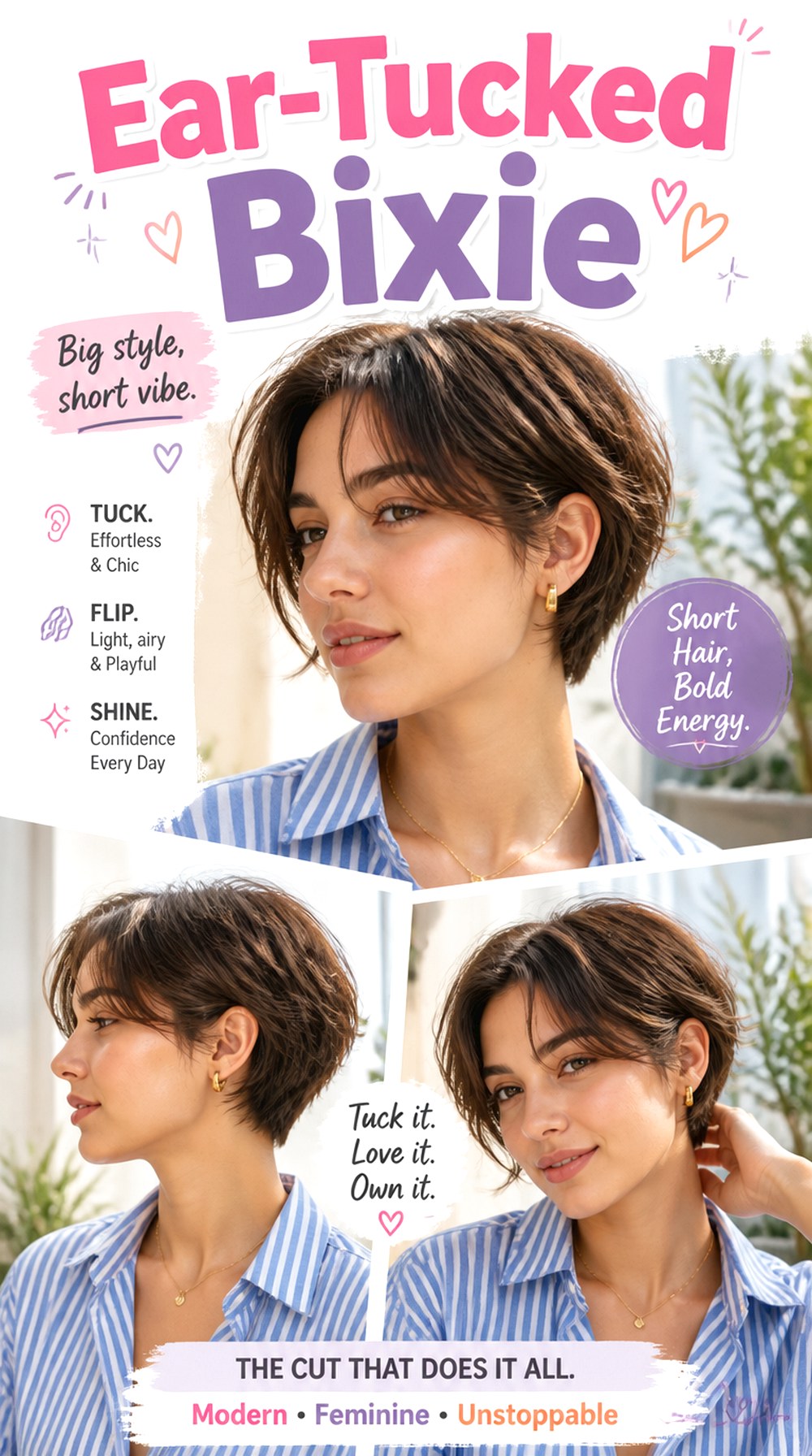
An ear-tucked bixie leaves enough length through the sides to slip comfortably behind one or both ears. The front can remain softly layered or slightly longer, while the exposed ear creates a neat contrast with the fuller crown and nape. Straight and wavy hair with fine-to-medium density are especially easy to style this way. It is practical for workdays or anyone who regularly wants hair away from the face. Styling is quick with leave-in conditioner, a lightweight texture spray, and a small amount of smoothing serum. Ask the stylist to avoid cutting the side sections above the ear if tucking is important, and check their length after the hair is completely dry.
Pro tip: The side pieces should extend slightly beyond the ear when untucked; cutting them exactly to ear length often makes them pop forward instead of staying secured.
Rounded Bixie
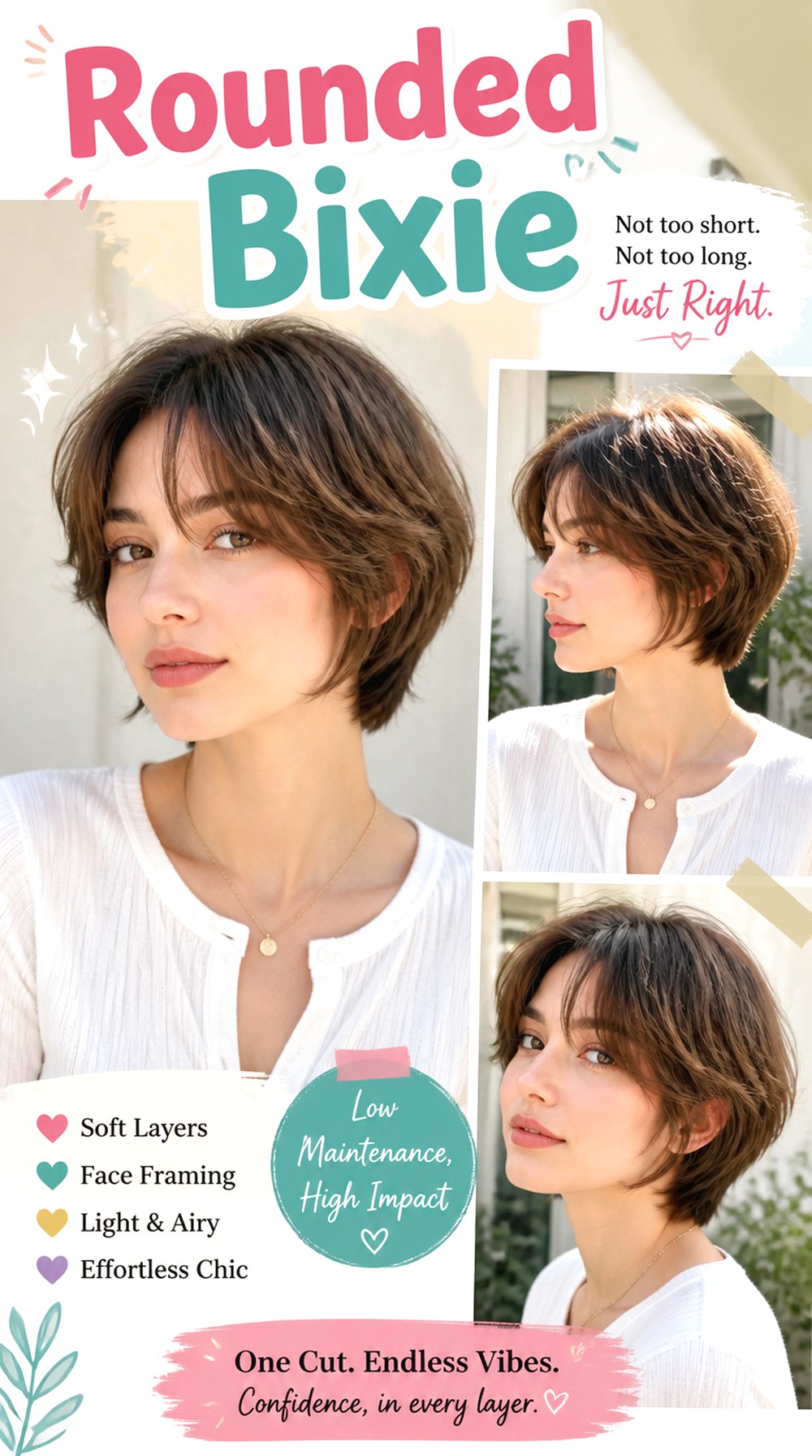
A rounded bixie follows the shape of the head with softly curved layers and a fuller silhouette around the crown and sides. Unlike a highly textured bixie, the ends are blended so the surface looks smooth and connected. Straight to gently wavy hair is easiest to shape this way, especially at medium density. The cut can be adapted with longer face-framing pieces if you want to reduce fullness near the cheeks. Styling usually takes moderate effort with a round brush, heat protectant, and lightweight smoothing cream. Ask your stylist for soft graduation and blended crown layers rather than sharp disconnection. Regular trims are useful because the rounded outline can become bulky as the lower sections grow.
Pro tip: Keep volume slightly higher on the head if your face is round; too much width directly beside the cheeks can make the overall silhouette feel wider.
Razored Bixie

A razored bixie has feathered, tapered ends that create visible movement and a lighter outline. Razor cutting can work particularly well on straight or loose wavy hair with medium-to-thick density when a softer edge is preferred. Hair that is very fine, fragile, or highly frizz-prone may be better suited to scissors because excessive razoring can make the ends feel sparse. Styling is generally quick once the right texture is established. Use leave-in conditioner, texturizing spray, and a light styling cream to enhance separation. Ask your stylist whether your texture responds well to a razor and request controlled softness rather than thinning throughout every section. Maintenance is usually needed every six to eight weeks.
Pro tip: Keep razor work concentrated where movement is needed most; the hairline and finer temple areas often require more weight than the thicker interior sections.
Grown-Out Bixie
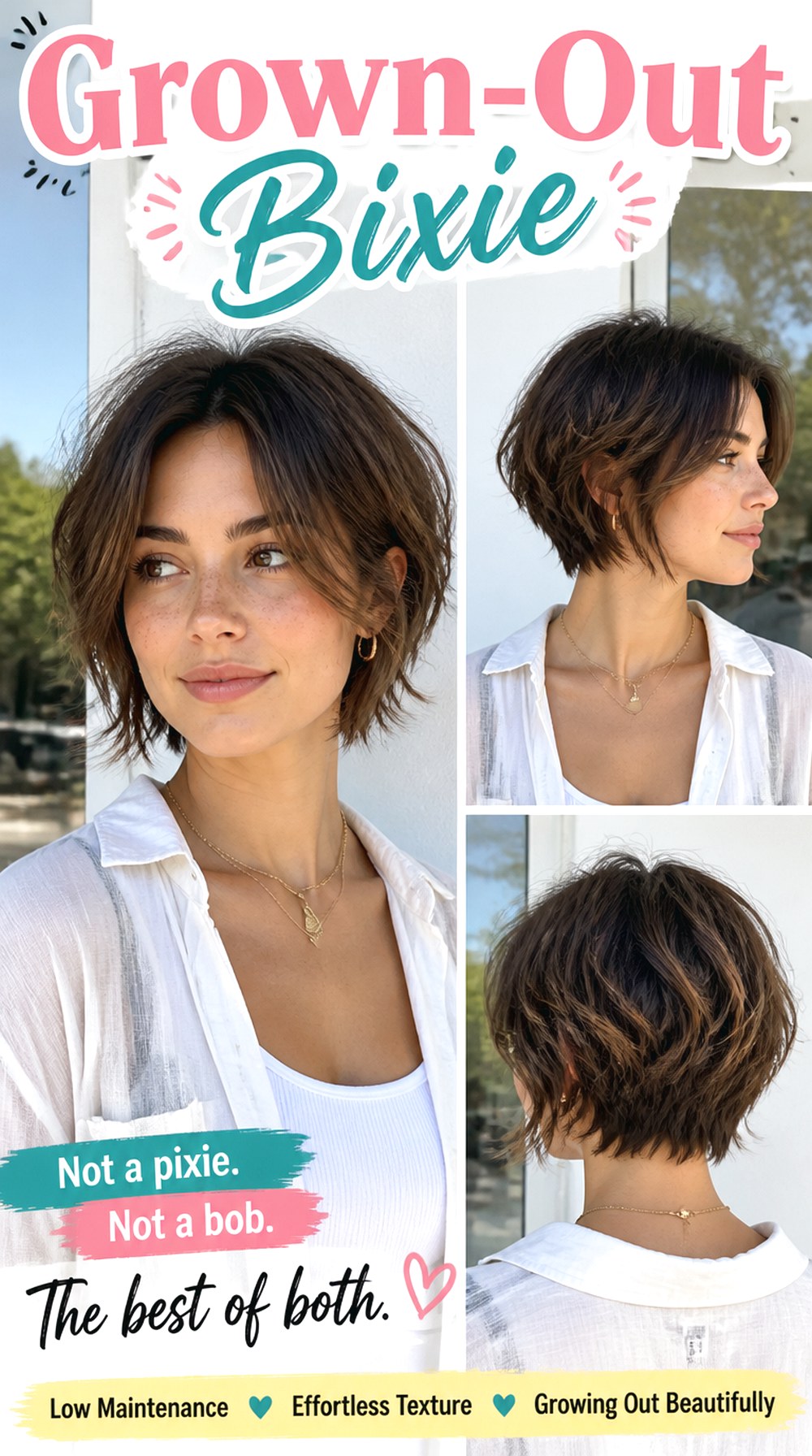
A grown-out bixie keeps the relaxed proportions that appear as a shorter cut begins moving toward bob length. The nape becomes softer, the sides extend past the ears, and longer layers create more swing around the face. It suits anyone who prefers less frequent trimming or is deliberately transitioning from a pixie to a bob. Straight, wavy, and loose curly textures can all work, and medium density makes the gradual shape easy to balance. Styling is usually light with leave-in conditioner, texturizing spray, and a wide-tooth comb. Instead of cutting everything shorter, ask your stylist to remove only bulky areas and lightly reshape the face frame so the haircut grows without awkward shelves.
Pro tip: During the grow-out stage, trim the nape and heavy corners more selectively than the top; preserving upper length helps the haircut reach bob proportions faster.
Low-Maintenance Air-Dried Bixie
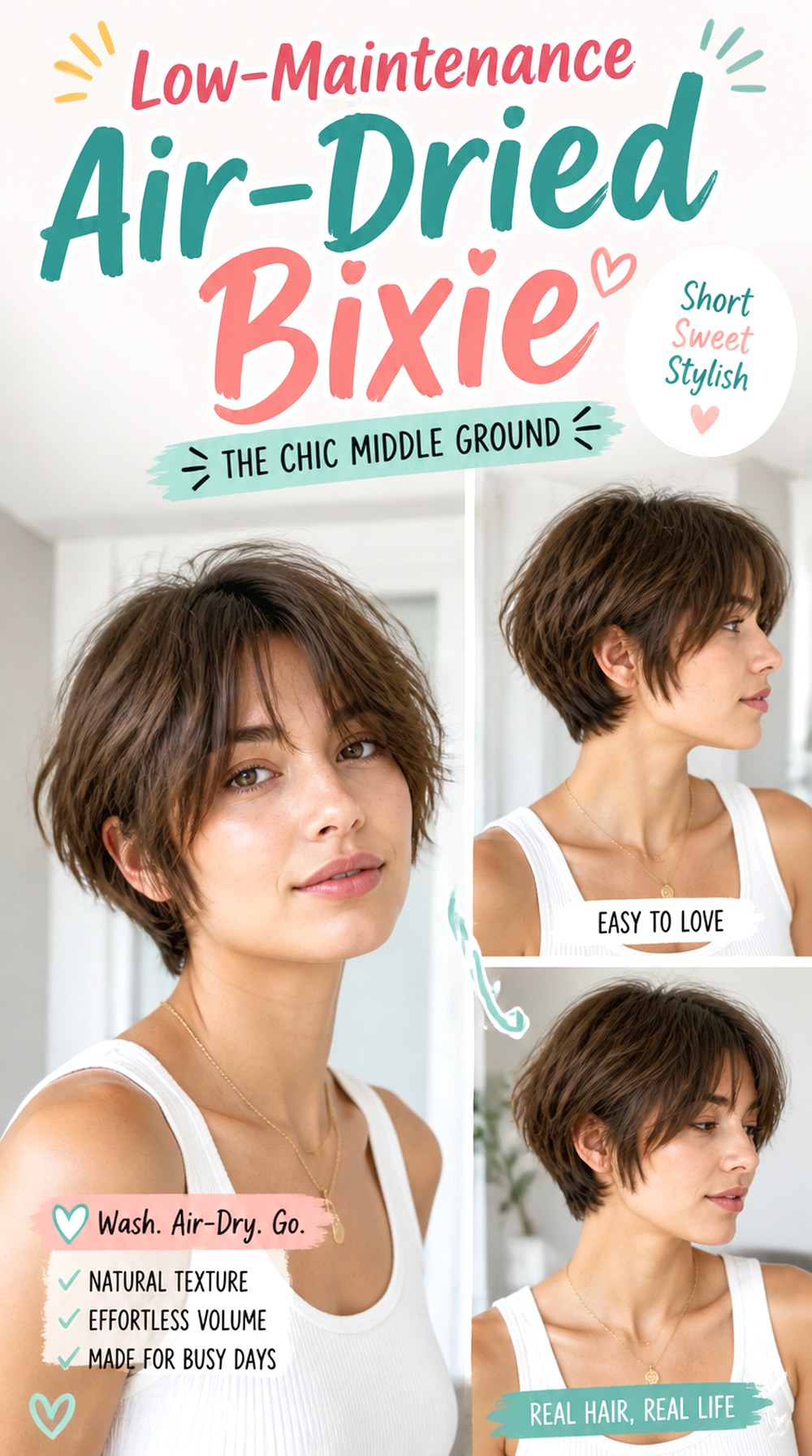
An air-dried bixie is cut to follow natural texture instead of depending on daily heat styling. Layers are placed according to the way the hair bends, waves, or curls, while enough weight is retained to prevent unwanted puffiness. It is especially practical for wavy or loose curly hair, though straight hair with natural body can also wear it well. Daily styling is quick: apply leave-in conditioner and a small amount of curl cream or lightweight mousse, arrange the shape with your fingers, and let it dry. Salon maintenance can be spaced around six to ten weeks depending on how softly it grows. Ask your stylist to evaluate your natural drying pattern before deciding where layers should finish.
Pro tip: Bring a reference photo showing the haircut in its natural texture, not only a heat-styled version, so your stylist can see the finish you actually want day to day.
Conclusion
These 22 bixie haircut ideas for women show how much the basic pixie-bob shape can change through small adjustments. A bixie can be cropped closely at the nape, left longer around the ears, layered for movement, or kept fuller for a smoother finish. Bangs can be wispy, side-swept, or curtain-shaped, while the parting can shift where volume sits around the face. Texture also makes a major difference, from sleek straight finishes to air-dried waves and defined curls.
The best version depends on your face shape, natural hair texture, density, preferred length, and willingness to style it each morning. Before cutting, decide which details matter most to you—especially fringe length, crown volume, nape shape, and how often you are comfortable returning to the salon.
CTA
Choose one or two favorite bixie ideas and save clear photo references before your appointment. Discuss your face shape, natural hair texture, density, preferred length, maintenance schedule, and usual styling routine with your stylist. In each reference photo, point out the exact layers, fringe length, nape shape, volume, parting, or finish you like instead of asking for the entire haircut without adjustments. That gives your stylist much clearer information for adapting the bixie to your own hair.
FAQs
What hair type works best for a bixie haircut?
Straight, wavy, and curly hair can all work with a bixie. Fine hair generally needs more perimeter weight, while thick hair may need careful internal weight removal to prevent excess bulk.
How often does a bixie haircut need trimming?
A structured bixie usually benefits from reshaping every six to eight weeks. Softer, longer versions may comfortably grow for eight to ten weeks, while a very short tapered nape can need earlier cleanup.
Can a bixie haircut work with a round face?
Yes. Longer face-framing pieces, side-swept bangs, and extra height near the crown can adjust the proportions. Keeping excessive volume away from the widest part of the cheeks may also help balance the outline.
Does a bixie require daily heat styling?
Not necessarily. Straight or polished versions may need a quick blow-dry or flat-iron touch-up, but wavy, curly, shaggy, and air-dried bixies can often be styled with lightweight products and little or no heat.