16 Whiskey Copper Hair Color Ideas for Fall
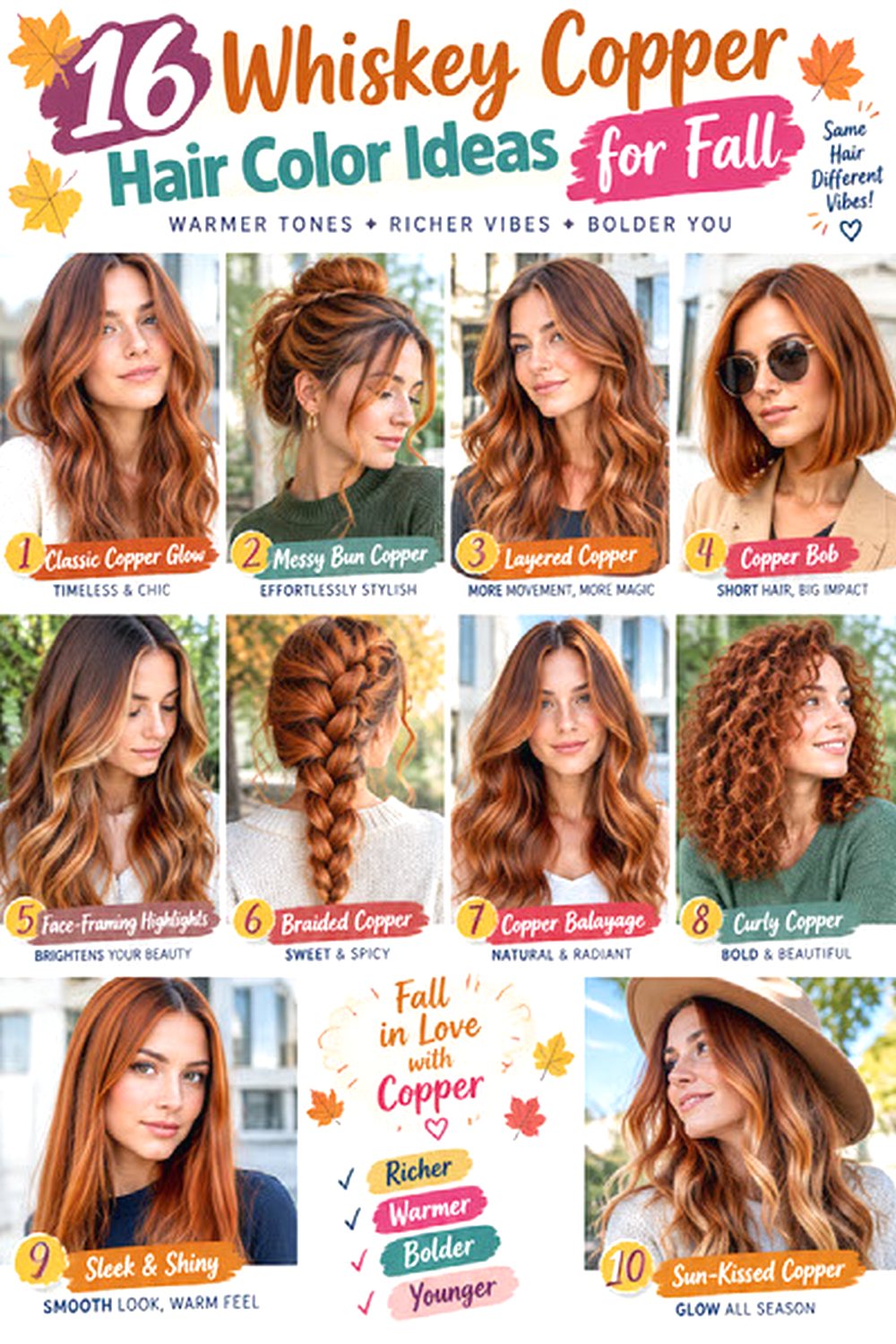
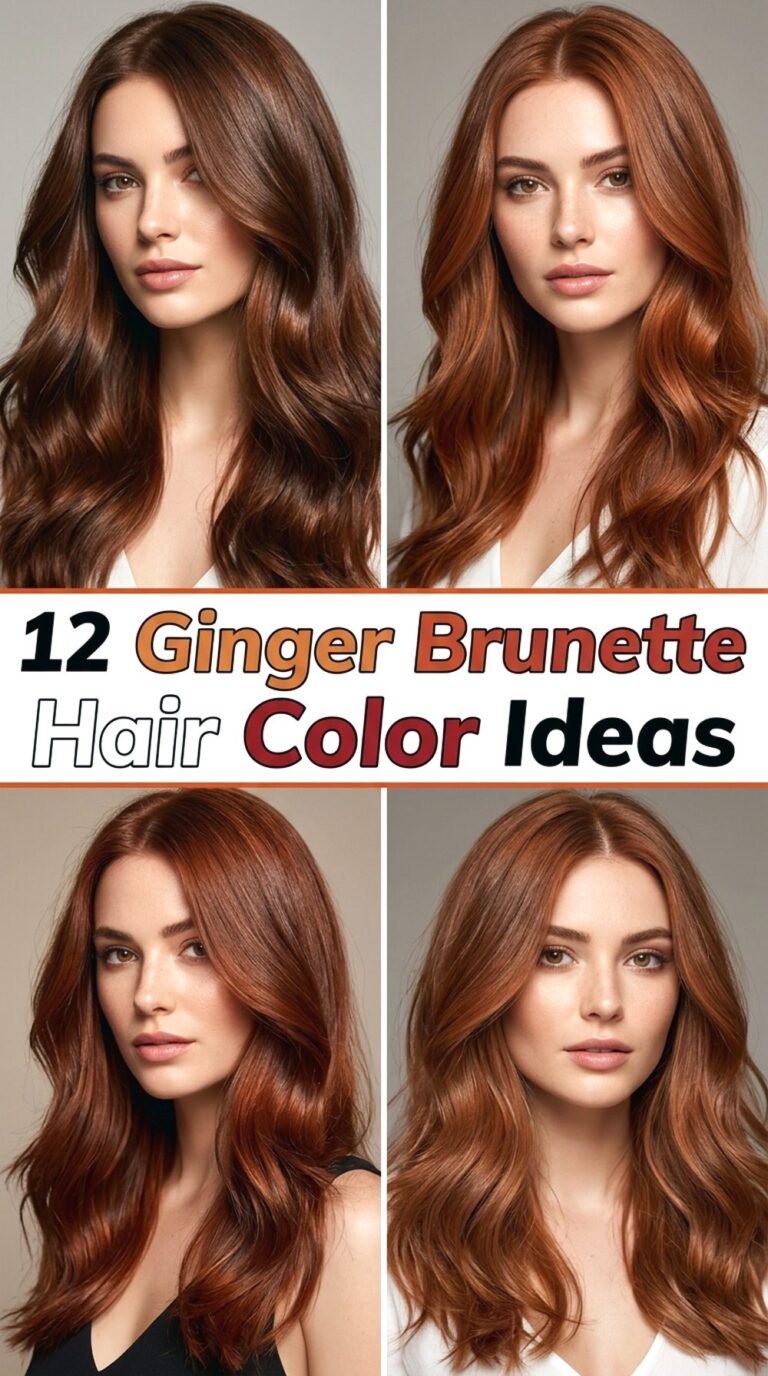
Whiskey copper hair color combines the depth of brown with copper, amber, and softly red undertones, creating a richer finish than bright orange copper. Some versions lean toward auburn or cinnamon, while others keep a strong brunette base with whiskey-toned ribbons catching the light. The color can be worn as an all-over shade, balayage, ombré, face frame, or subtle highlight pattern. Layers and waves reveal more tonal variation, while blunt cuts and straight styling make the finish look smoother and more concentrated.
The shade can be adapted for fine, medium, or thick hair because color placement matters more than density alone. Fine hair often benefits from delicate highlights and a fuller haircut perimeter, while thick hair can carry wider ribbons and multiple levels of depth. Straight hair shows glossy tonal transitions clearly, whereas waves and curls make copper dimension more visible through movement.
Maintenance depends on how far the finished shade sits from your natural base. Rooted blends and balayage usually grow out more softly than bright all-over copper. Warm pigments can also fade between appointments, so color-safe care and occasional glossing may be useful. Before choosing a version, consider your starting color, natural texture, preferred length, maintenance tolerance, and how bright or brunette you want the whiskey copper finish to appear.
Quick List
- Whiskey Copper Balayage Waves
- Dark Brunette With Whiskey Copper Ribbons
- Glossy Whiskey Copper Bob
- Whiskey Copper Money Piece
- Whiskey Copper Auburn Melt
- Rooted Whiskey Copper Long Layers
- Whiskey Copper Highlights on Chocolate Brown
- Whiskey Copper Curly Hair
- Whiskey Copper Lob With Face-Framing Layers
- Muted Whiskey Copper Brunette
- Bright Whiskey Copper Blend
- Whiskey Copper Ombré
- Whiskey Copper Pixie With Textured Fringe
- Whiskey Copper With Cinnamon Lowlights
- Whiskey Copper Shag With Wispy Bangs
- Deep Espresso Whiskey Copper Melt
Whiskey Copper Balayage Waves
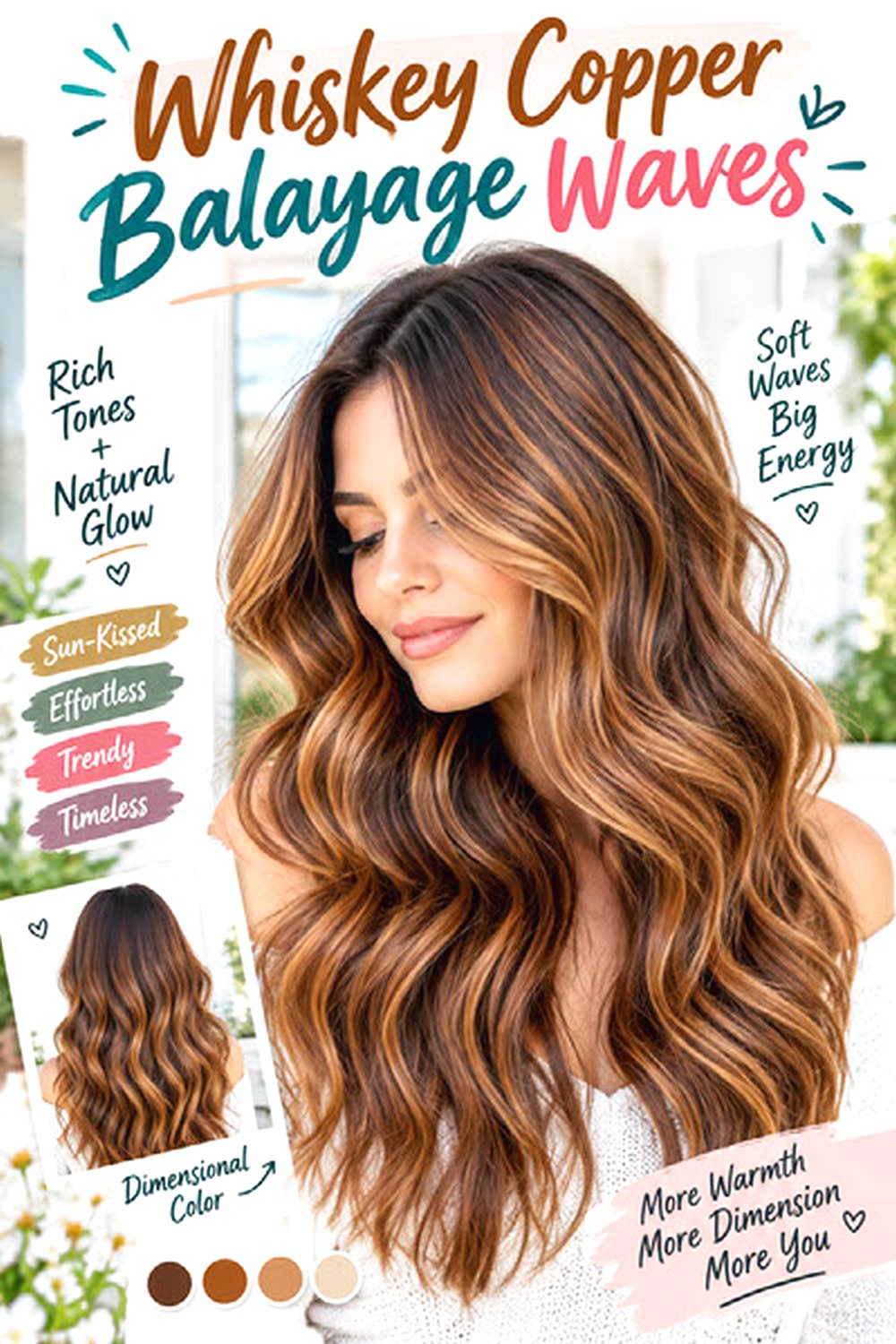
Balayage gives whiskey copper a gradual, dimensional finish rather than covering every strand with the same warm tone. A deeper brunette root can flow into amber-copper ribbons through the mid-lengths, with brighter pieces appearing around the face and ends. Loose waves make the placement especially visible because each bend catches light differently. Medium and thick hair can support broader painted sections, while fine hair usually looks more balanced with narrower ribbons and plenty of natural depth left between them. Use heat protectant, a medium-barrel curling iron, and lightweight texture spray to create relaxed movement without making the finish dry. Styling takes moderate time on wash day, but later refreshes can focus on the front and top sections. Balayage offers relatively soft grow-out, although the copper tone may need periodic glossing. At the salon, ask for hand-painted whiskey copper beginning below the root with brighter face-framing sections and enough untouched brunette underneath to preserve contrast.
Pro tip: Keep some darker strands between the brightest balayage pieces so the copper reads as dimensional rather than uniformly orange.
Dark Brunette With Whiskey Copper Ribbons
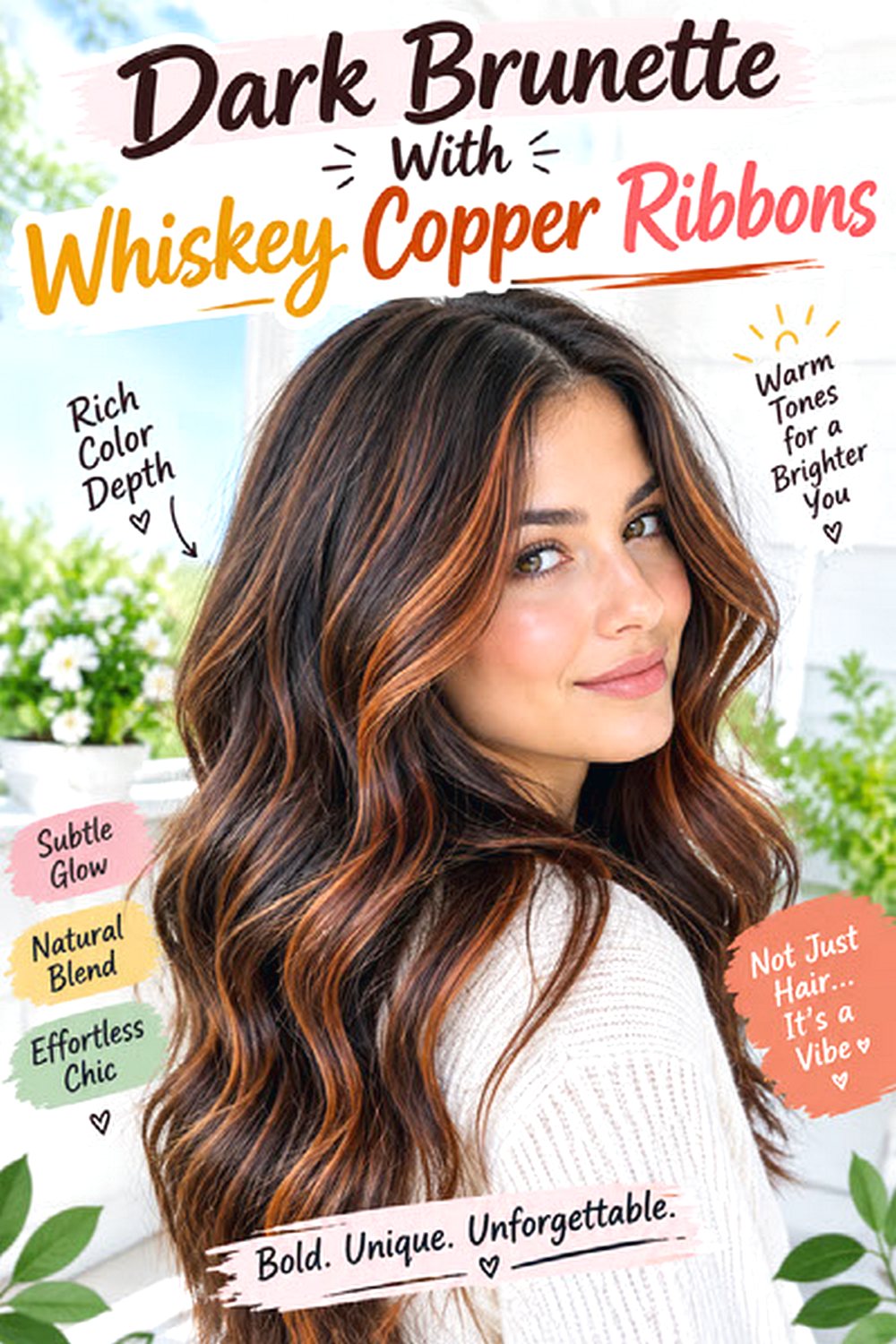
A dark brunette foundation makes whiskey copper ribbons stand out without requiring an all-over color change. The warmer pieces can weave through long layers, concentrating around the face and upper surface where they catch natural light. This placement is useful for medium to thick hair because there is enough density to maintain visible dark sections between the copper ribbons. Fine hair can also wear it when the highlights stay slim and blended. Straight styling shows the exact color placement, while loose waves soften the contrast. A large round brush, heat protectant, and lightweight shine serum help create a polished finish that reflects both tones. Styling effort is moderate, and maintenance can be easier than full copper because the darker base remains intentional as the hair grows. At the salon, request whiskey-copper ribbons rather than dense traditional highlights, with the deepest brunette preserved at the roots and through parts of the interior for a richer, more dimensional result.
Pro tip: Decide on ribbon width before coloring; broad sections create a bolder striped effect, while finer placement blends more naturally into brunette hair.
Glossy Whiskey Copper Bob
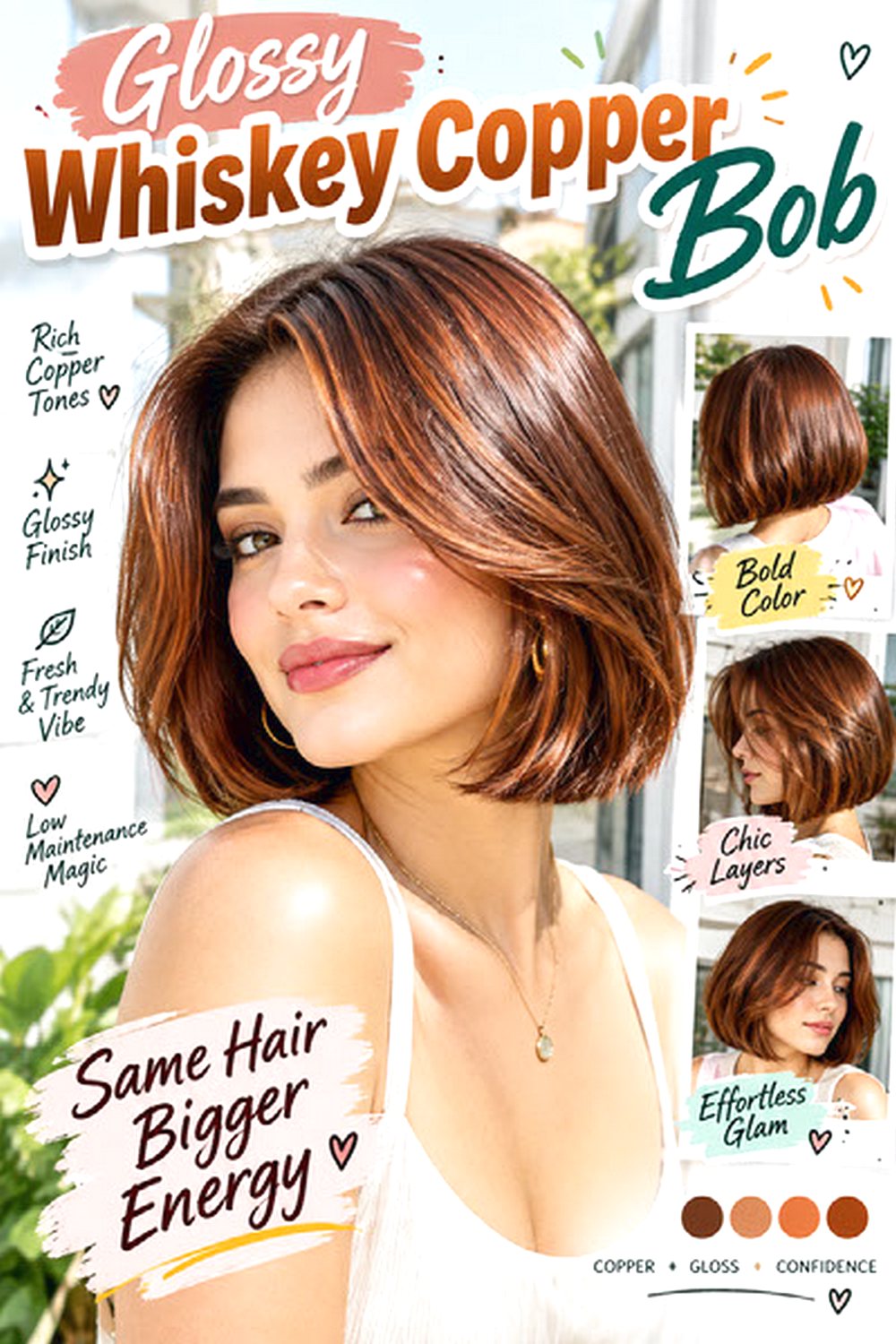
A blunt or softly beveled bob concentrates whiskey copper color into a compact shape, making shine and tonal richness especially noticeable. Jaw-length and chin-length versions can look dense because the perimeter stays strong, while the warm brown-copper shade gives the surface more depth than a single flat brunette. Fine and medium-density hair often benefit from this clean outline. Very thick hair may need internal weight removed so the sides do not flare outward. Use heat protectant, a paddle brush, and a lightweight gloss serum to emphasize the smooth finish without coating the roots. Styling is fairly quick for naturally straight hair and takes more effort on strong waves or curls. The short perimeter may need regular reshaping, and copper warmth can be refreshed with a salon gloss as it softens. At the salon, ask for a whiskey copper shade that keeps noticeable brown depth, along with a solid perimeter and minimal surface layering so the glossy color remains the main feature.
Pro tip: If your hair is dense, ask for internal bulk removal instead of heavily thinned ends; a strong bottom line makes a copper bob look fuller and more polished.
Whiskey Copper Money Piece
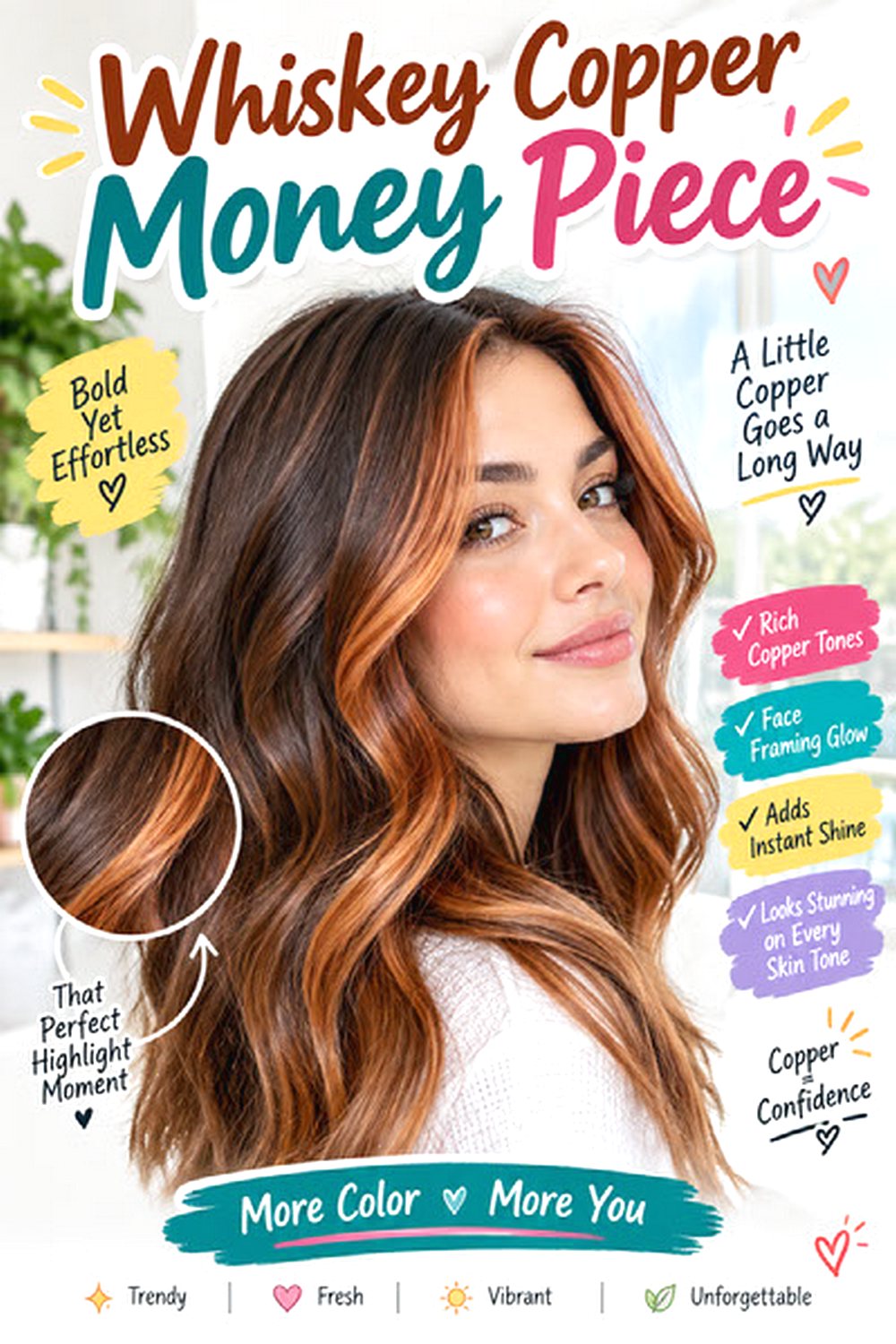
A whiskey copper money piece adds warmth around the face while leaving most of the hair closer to its natural brunette depth. Instead of using an extremely light front section, this version keeps the brightness within a warm amber-copper range so it blends smoothly into brown hair. Fine hair generally suits a narrower section, while thicker hair can support a wider face frame without looking disconnected. Straight, wavy, and curly textures can all carry the placement because the color follows the front pieces rather than depending on one finish. Style with a small round brush, heat protectant, and flexible hairspray to direct those sections away from the face. Daily styling is quick because only the front needs deliberate shaping. Root maintenance depends on how high the brightness starts. At the salon, ask for a softly blended whiskey copper money piece that becomes brighter through the lengths instead of beginning as a harsh stripe directly at the scalp.
Pro tip: Starting the brightest copper slightly below the root makes regrowth less obvious while still keeping the face-framing effect visible.
Whiskey Copper Auburn Melt
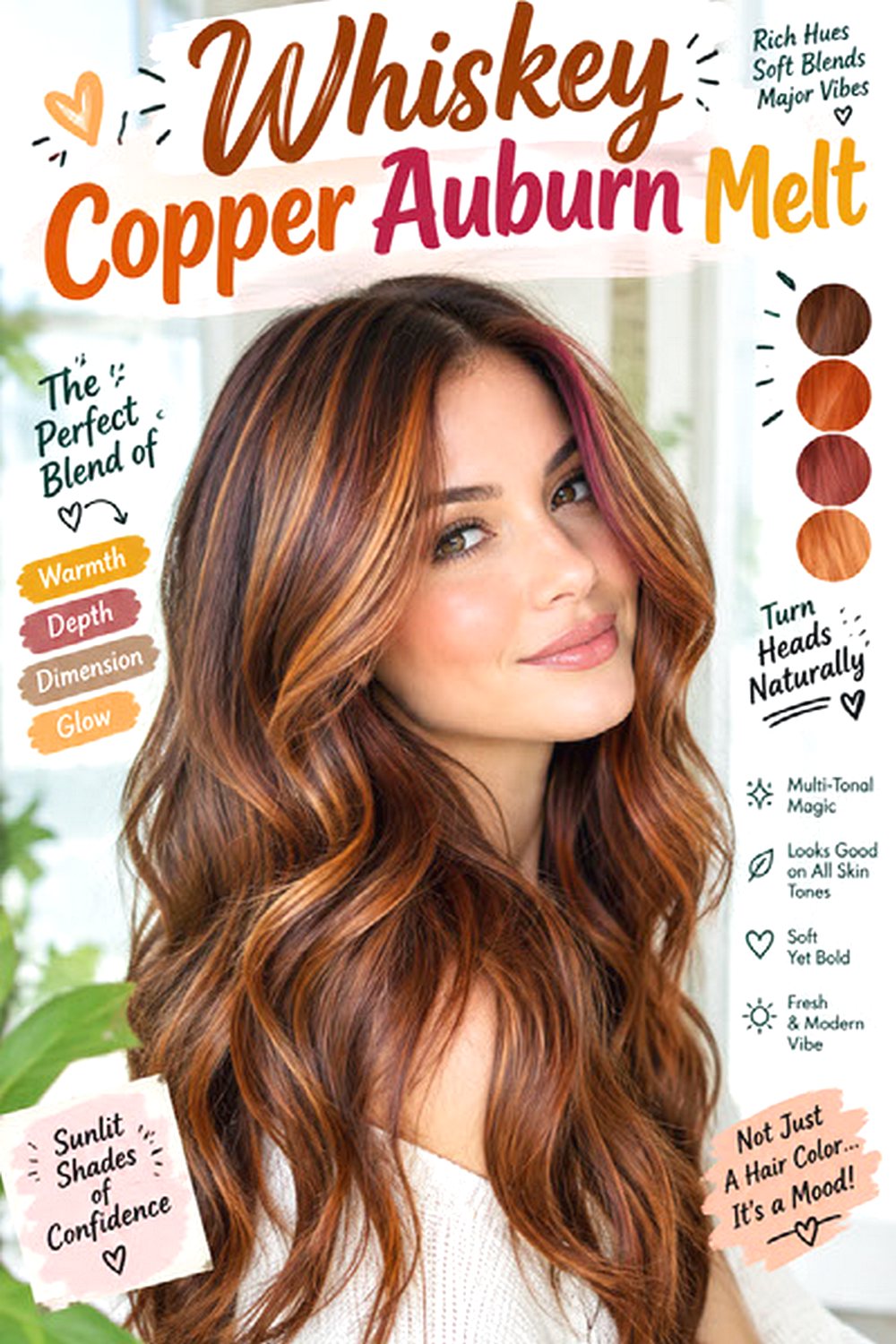
An auburn melt pushes whiskey copper toward a deeper red-brown finish, making it useful for someone who wants warmth without a vivid orange result. The root can stay brunette or dark auburn before gradually moving into copper-rich mid-lengths and ends. Long layers help the transition show because overlapping pieces reveal slightly different shades when the hair moves. Medium and thick hair can carry several tonal levels easily, while fine hair often looks stronger with a simpler two-tone transition. Use smoothing cream, heat protectant, and a large round brush to create broad movement and reflective shine. Wash-day styling takes moderate time, though the color itself remains noticeable without daily heat. Auburn and copper pigments may fade gradually, so a gloss or color-refreshing treatment can help maintain depth. At the salon, ask for a seamless melt rather than obvious bands, and specify that the result should stay auburn-brown at the root before becoming more copper through the lower lengths.
Pro tip: Check the chosen auburn tone in daylight because red undertones can appear stronger outdoors than they do under warm salon lights.
Rooted Whiskey Copper Long Layers
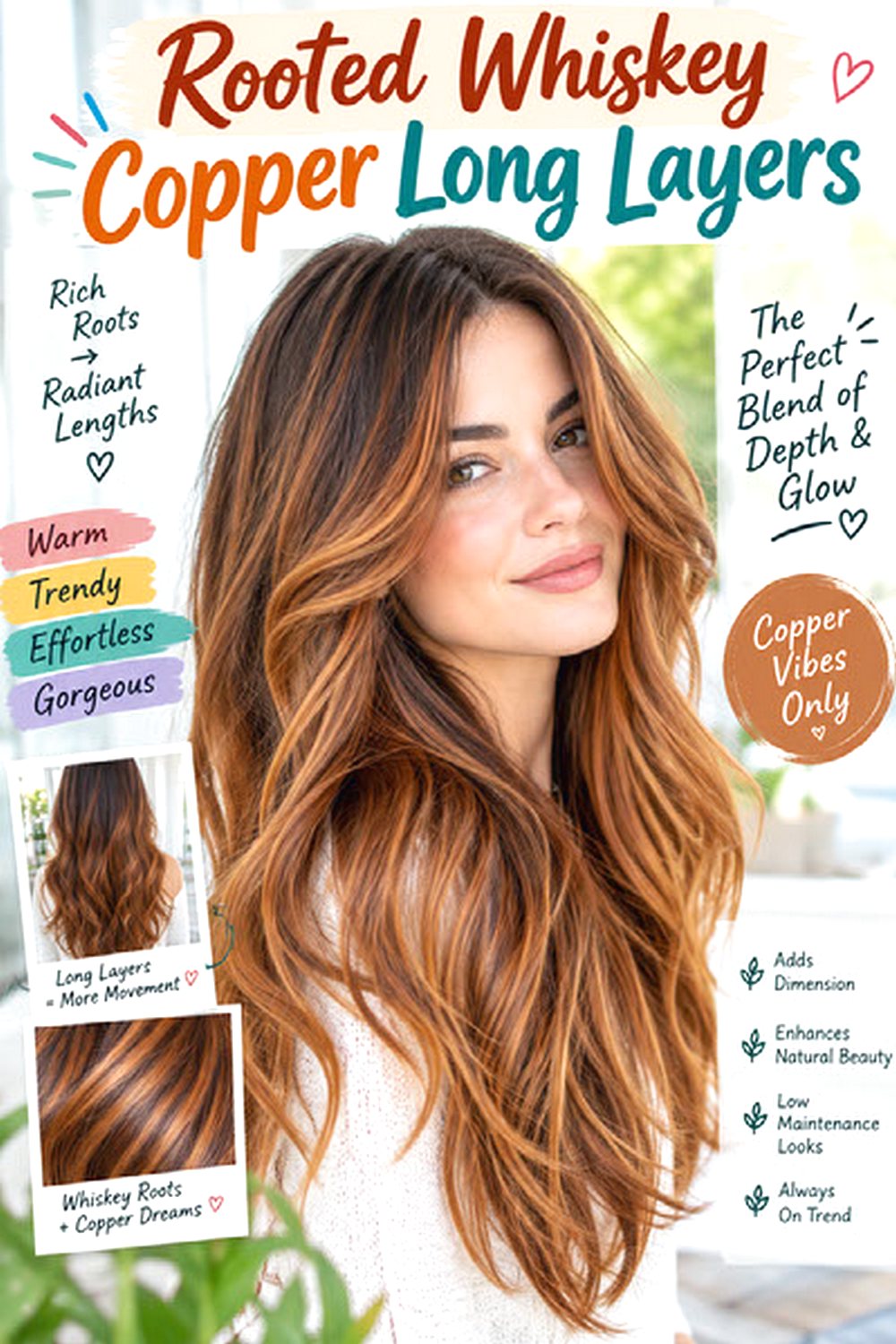
Long layers give rooted whiskey copper enough movement to show both the darker crown and warmer lengths. Keeping the roots close to a natural brunette shade creates a softer grow-out, while copper and amber tones can become gradually more noticeable below the cheekbones and through the ends. Medium-density hair carries the layered transition easily, and thick hair can use long internal layers to prevent the shape from feeling heavy. Fine hair should keep fewer layers so the perimeter remains substantial. A volumizing spray, large round brush, and heat protectant can create a smooth blowout with lift around the front. Styling takes moderate time because of the length, but the rooted color does not require elaborate daily finishing. Periodic glossing can restore warmth when the lower sections start looking dull. At the salon, ask for the darkest shade to stay close to your natural root and for the shortest layers to begin below the chin rather than removing too much density near the face.
Pro tip: A root shade within one or two levels of your natural color usually gives a softer transition than an intentionally much darker shadow root.
Whiskey Copper Highlights on Chocolate Brown
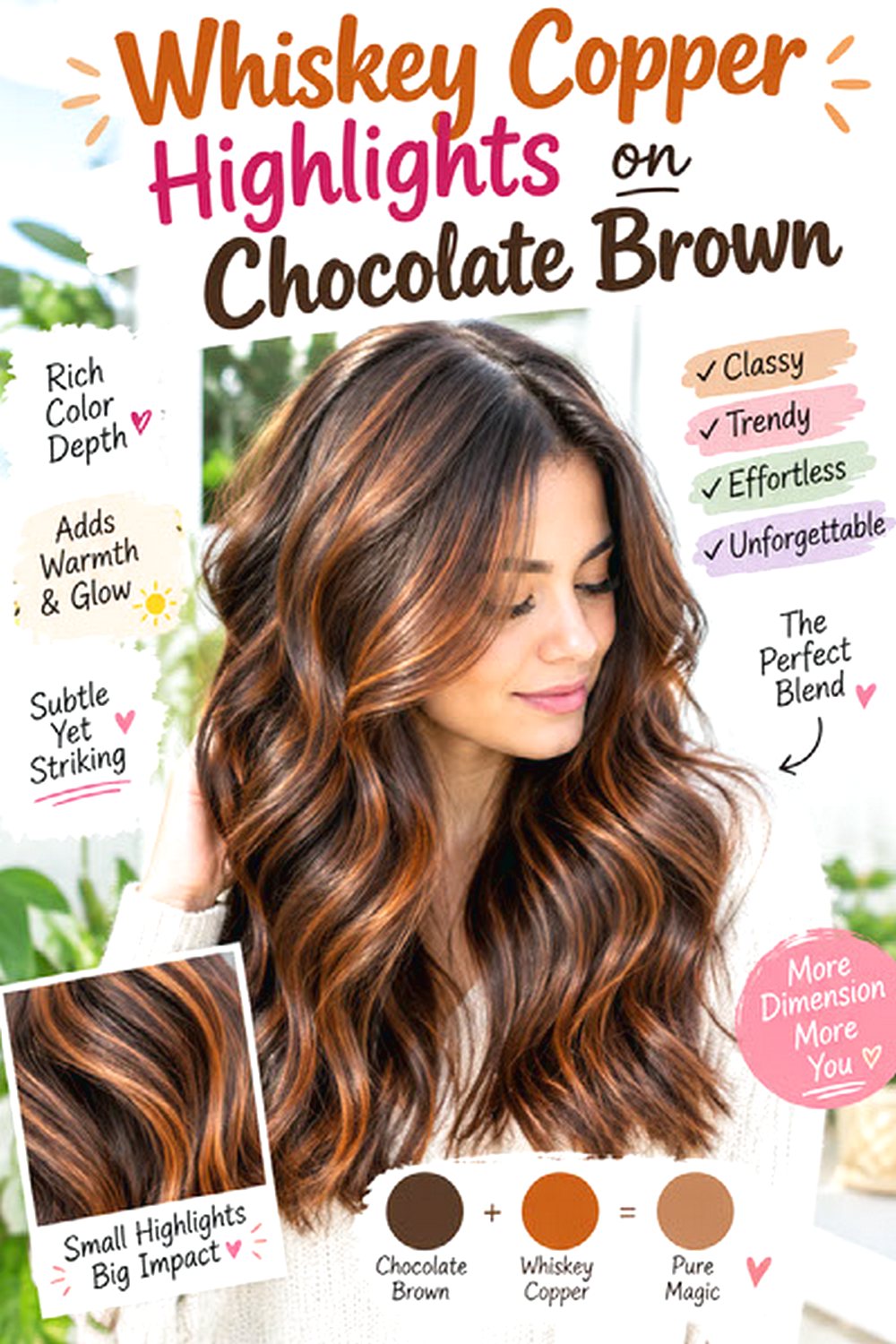
Chocolate brown provides a deep base that keeps whiskey copper highlights looking warm and dimensional instead of overly bright. The highlights can be woven through the crown, around the face, and along selected ends, leaving plenty of brown visible between them. Medium-density hair handles this balance especially well, while fine hair benefits from delicate highlights that do not create too much striping. Thick hair can carry broader sections without losing brunette depth. Loose waves soften the placement, while straight hair reveals the individual ribbons more clearly. Use heat protectant, a wide-barrel curling iron, and lightweight serum to keep the highlighted sections reflective. Styling takes moderate time when waves are added, but the color works equally well with a simpler straight finish. Root upkeep can remain manageable when the highlights start slightly away from the scalp. At the salon, request warm whiskey copper highlights over chocolate brown, with less density near the roots and slightly brighter placement through the front and lower lengths.
Pro tip: Ask for some highlights to stop before the ends; varying the placement keeps the finished color from looking uniformly light through the entire perimeter.
Whiskey Copper Curly Hair
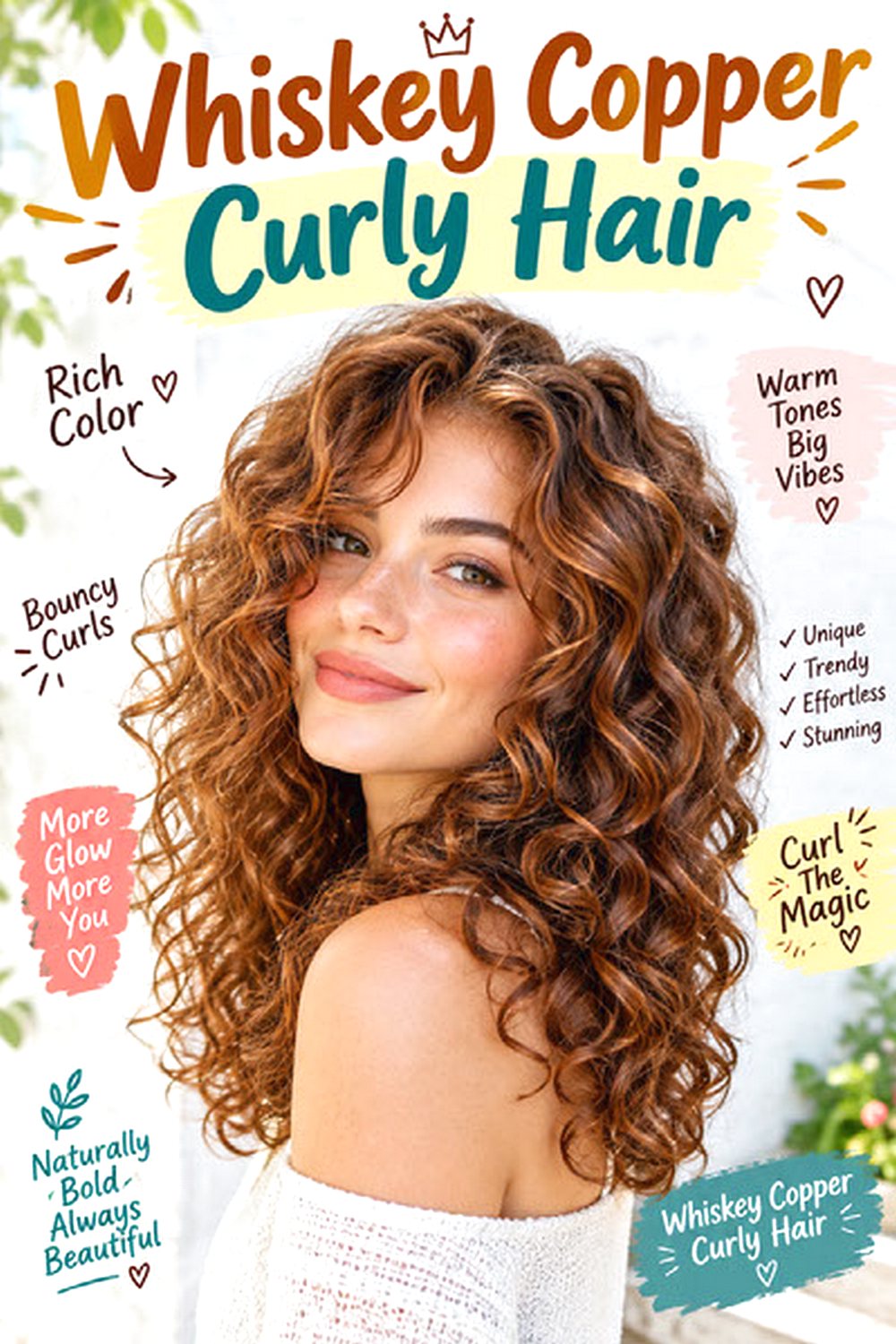
Curly hair naturally exposes different surfaces of each strand, allowing whiskey copper color to appear dimensional without relying on extremely bold highlights. A deeper root with selected copper sections through visible curls can emphasize the pattern while keeping the overall finish grounded in brunette depth. Medium and thick curls can support more tonal variation, while fine curls usually benefit from softer contrast so the shape still looks full. The haircut should account for shrinkage, especially around the fringe and face-framing layers. For styling, use leave-in conditioner, curl cream, and a diffuser on low heat to define the natural pattern rather than stretching it straight. Wash-day styling may take more time, but daily refreshes can focus on individual flattened curls. Colored curls may also need extra moisture as the tone is maintained. At the salon, ask for the whiskey copper placement to be planned on your natural dry curl pattern so the brightest sections sit where they remain visible after shrinkage.
Pro tip: Arrive at the color consultation with your curls in their usual shape; stretched hair can hide which coils naturally sit on the surface.
Whiskey Copper Lob With Face-Framing Layers
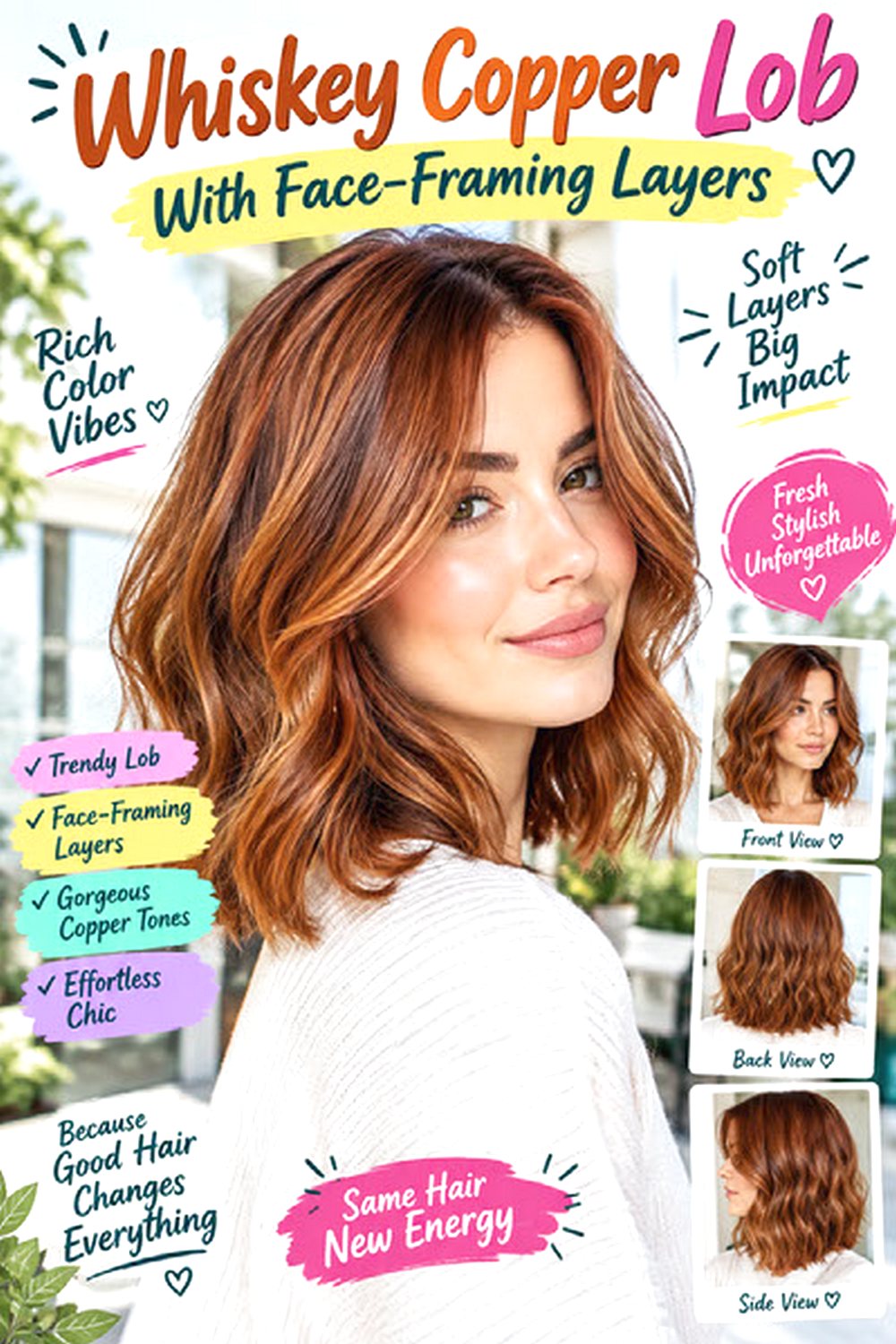
A collarbone-length lob gives whiskey copper color enough room for dimension without the weight of very long hair. Face-framing layers beginning around the cheekbones or jaw can carry slightly brighter copper tones, while the back remains deeper and more grounded. Fine hair usually benefits from a strong perimeter and limited internal layering. Medium-density hair can support more movement, while thick hair may need subtle bulk removal underneath. A blow-dry brush, heat protectant, and lightweight volumizing spray are enough to create a soft bend through the front pieces. Styling is relatively quick, especially on straight or softly wavy hair, and the length still works for simple ponytails. Color maintenance stays moderate when brighter sections begin away from the scalp. At the salon, ask for a collarbone perimeter that keeps visible end weight, with whiskey copper concentrated along the face frame and subtle pieces through the rest of the haircut rather than uniform lightening everywhere.
Pro tip: Line up the brightest copper sections with the shortest face-framing layers so color and haircut movement reinforce each other.
Muted Whiskey Copper Brunette
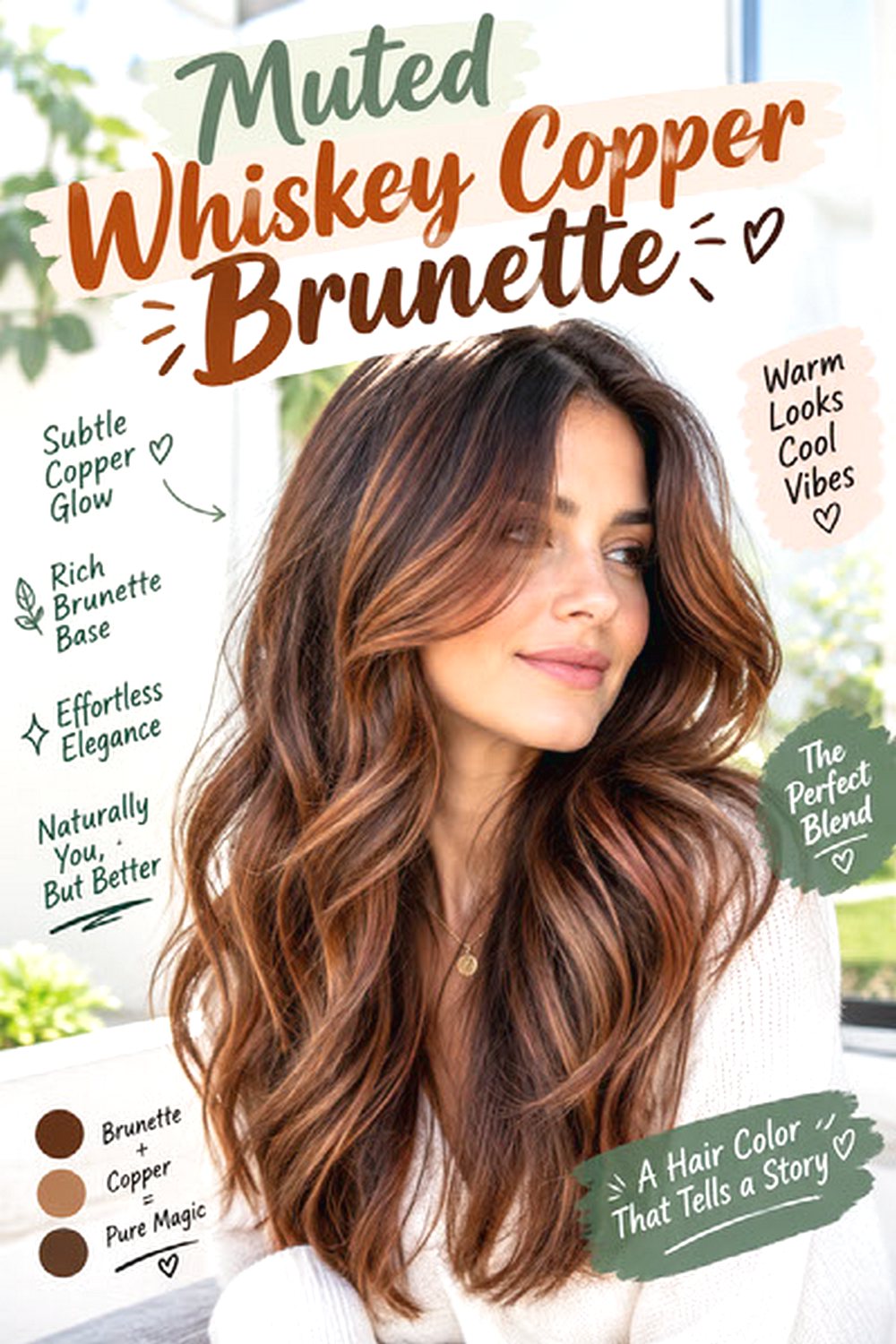
A muted whiskey copper brunette keeps brown as the dominant color and lets copper appear mainly as an undertone or soft reflective warmth. It is a good direction for someone who likes autumn color but does not want an obviously red or orange result. Straight hair shows the subtle sheen clearly, while natural waves reveal slightly more tonal variation. Fine, medium, and thick densities can all wear this approach because it does not require dense highlighting. A softly layered cut provides enough movement for the warmth to catch the light without changing the overall depth. Use leave-in conditioner, a paddle brush, and lightweight shine serum for a smooth finish. Daily styling can be low effort, particularly if the natural texture already lies softly. Maintenance is also gentler than vivid copper, though a gloss can restore the warm undertone as it fades. At the salon, describe the target as brunette first and copper second, with muted whiskey warmth instead of a bright ginger or red finish.
Pro tip: Bring reference photos taken in natural daylight because understated copper-brown shades can look much redder under warm indoor lighting.
Bright Whiskey Copper Blend
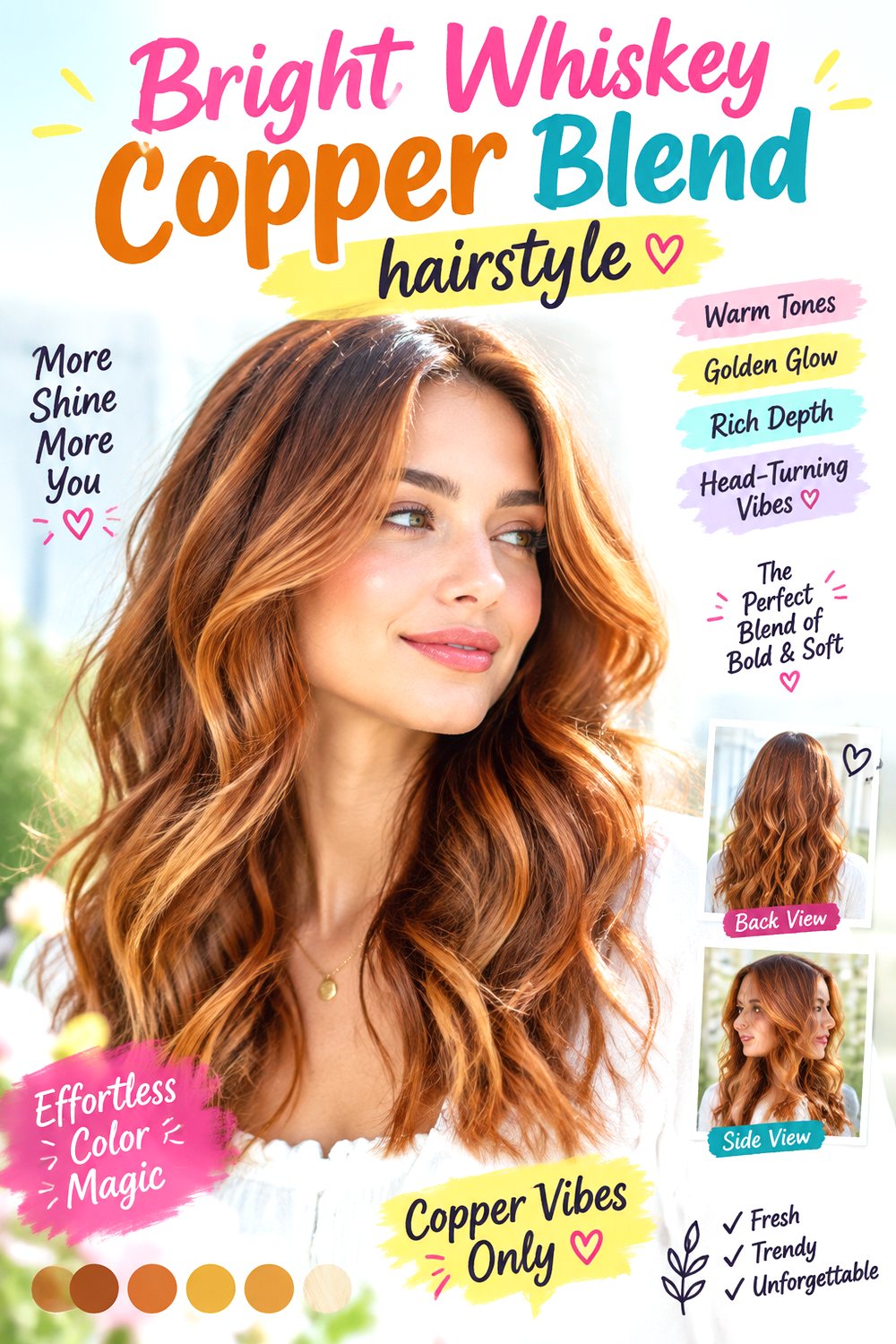
A brighter whiskey copper blend increases the amber and copper content while keeping enough brown underneath to give the color depth. The most vivid pieces can sit around the face, top layers, and ends, with darker sections left inside the haircut to prevent a flat all-over orange effect. Medium and thick hair can display several warm shades at once, while fine hair generally looks cleaner with fewer tonal changes. Loose waves bring out the blend particularly well because the brighter sections move over the deeper base. Use heat protectant, a large-barrel curling iron, and color-safe shine spray to keep the finish reflective. Styling takes moderate time when waves are created, although the color remains noticeable on straight hair too. Brighter copper usually needs more tonal upkeep as it fades. At the salon, ask how much lift your current base requires and request a whiskey copper formula that remains brown-based even at its brightest points.
Pro tip: Ask your colorist what the shade will look like after several washes; the faded tone matters almost as much as the fresh salon result with bright copper.
Whiskey Copper Ombré

Ombré places the deepest shade near the scalp and builds increasingly noticeable whiskey copper toward the mid-lengths and ends. The result feels more directional than scattered highlighting because the lower portion carries most of the brightness. Medium and long hair give the transition enough space to develop smoothly. Thick hair can support a strong gradient, while fine hair often looks fuller with a softer change in depth and fewer heavily lightened ends. Waves show the progression especially well, though a straight finish makes the fade from brunette to copper easy to see. Style with heat protectant, a wide curling iron, and smoothing serum. The daily effort is moderate when waves are added, but root maintenance is relatively low because natural depth remains part of the design. The lighter lower sections may need extra conditioning. At the salon, ask for the transition to begin gradually below the upper lengths, with no hard horizontal line between the brunette and whiskey copper tones.
Pro tip: If your ends are already porous or heavily lightened, choose a gentler ombré lift so they retain enough strength and visual density.
Whiskey Copper Pixie With Textured Fringe
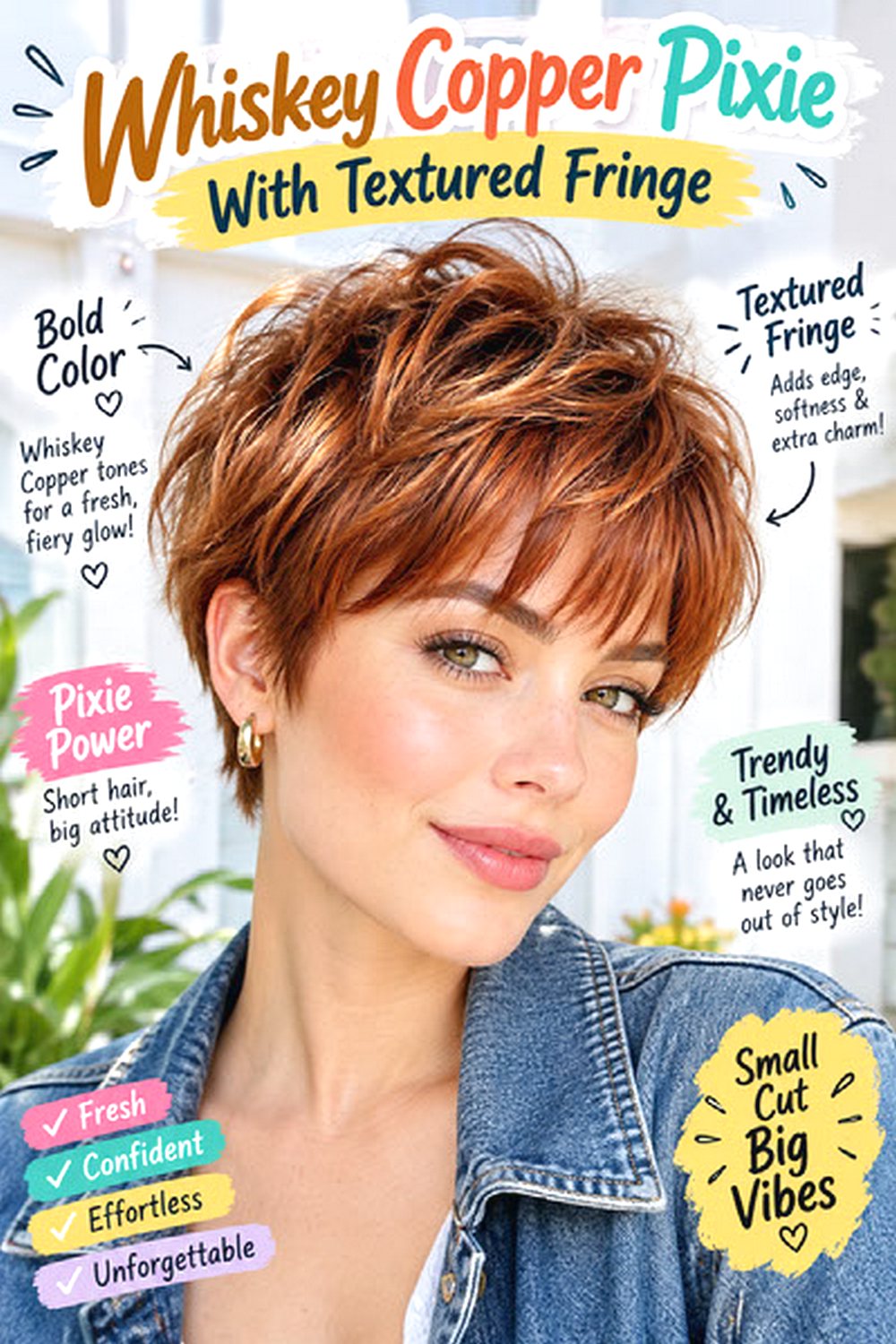
A pixie makes small differences in whiskey copper placement very visible because the hair is short and the color sits close to the face. Keeping the cropped sides slightly deeper while brightening the longer top and fringe creates dimension without needing highlights across every section. Fine hair often benefits from this approach because both color variation and texture can create the impression of more movement. Thick hair may need bulk removed beneath the crown so the top does not become overly wide. Use heat protectant, a mini flat iron, and matte texture paste to separate the fringe and create controlled lift. Daily styling is quick, although the haircut itself usually needs more frequent reshaping than longer styles. Root growth will also appear sooner on short hair if the color differs greatly from your natural base. At the salon, ask for brighter whiskey copper through the longest top pieces and fringe, with deeper tonal support around the sides and back.
Pro tip: Keeping the shortest areas slightly darker can make the longer textured crown stand out without requiring extra teasing or heavy styling product.
Whiskey Copper With Cinnamon Lowlights
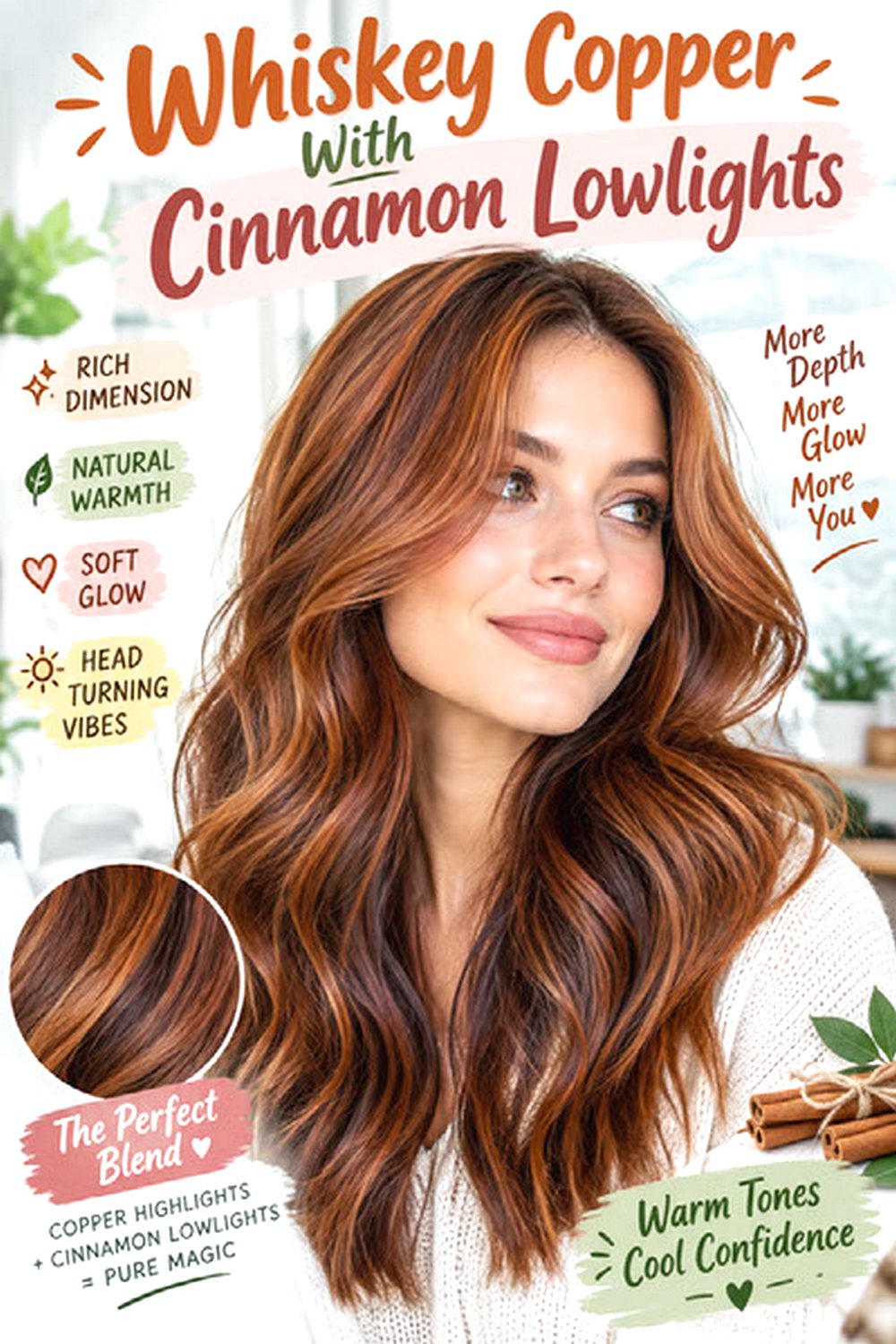
Cinnamon lowlights add depth to whiskey copper hair by weaving slightly darker red-brown sections through the warmer base. Instead of brightening the entire head, this method creates shadow between copper pieces, which can make waves and layers appear more dimensional. Medium and thick hair handle visible lowlights especially well, while fine hair usually benefits from narrower sections that do not make the overall shade look too dark. Long waves, lobs, and layered cuts all show the alternating tones clearly. Use a medium-barrel curling iron, heat protectant, and lightweight smoothing cream for soft movement with controlled shine. Styling takes moderate time if you create waves, but natural wavy texture can shorten the routine. Lowlights can also make grow-out feel less obvious because several depths are already present. At the salon, ask for cinnamon-brown lowlights placed beneath and between the brighter whiskey copper sections rather than across the entire surface.
Pro tip: Keep some lowlights away from the hairline if you want the face to remain brighter while still gaining depth through the interior.
Whiskey Copper Shag With Wispy Bangs
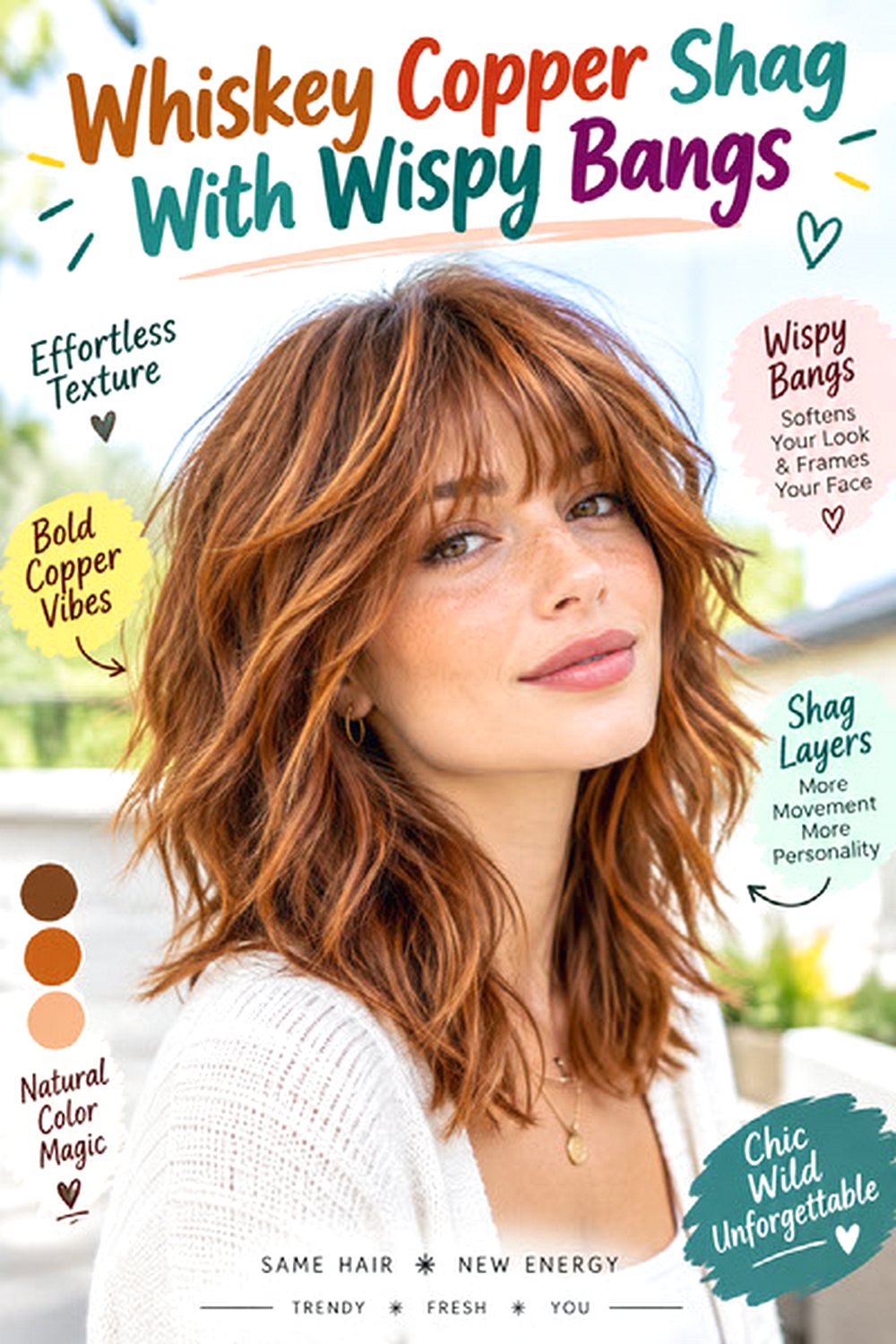
A shag pairs naturally with whiskey copper because the broken layers expose multiple parts of the color as the hair moves. Wispy bangs can stay slightly softer and lighter around the forehead, while crown layers create texture and longer ends preserve some perimeter weight. Naturally wavy medium-density hair is particularly suited to the shape because it can follow the cut with limited heat. Fine hair needs controlled layering so the ends do not become sparse, while very thick hair may benefit from internal bulk removal. Style with lightweight mousse, texture spray, and a diffuser if your natural movement already fits the shag. Wash-day effort is moderate, but later refreshes are quick because the finish does not need to look perfectly uniform. The fringe may require reshaping before the longer layers do. At the salon, ask for airy bangs, shorter crown movement, and whiskey copper placement that follows the visible layers instead of creating evenly spaced highlights.
Pro tip: Keep the brightest copper away from very thin ends; concentrating warmth through stronger mid-length sections helps the shag retain visual fullness.
Deep Espresso Whiskey Copper Melt
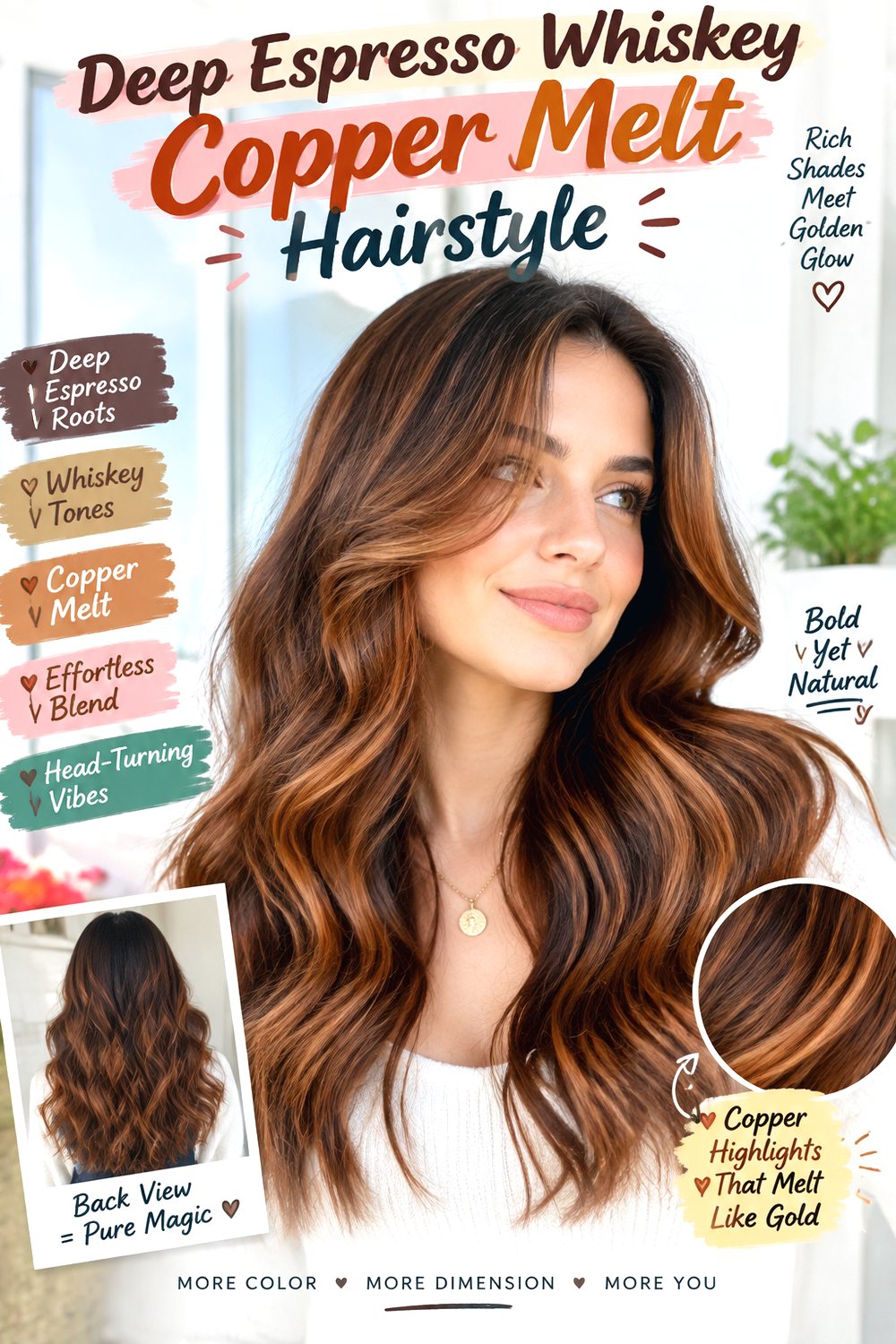
An espresso-to-whiskey-copper melt offers one of the deepest options in this color family. The roots remain dark brown, then transition through warm chestnut before reaching richer amber-copper through the lower lengths. Because the change happens gradually, it works especially well for naturally dark brunettes who want warmth without giving up their deeper base. Medium and thick hair can carry several transition shades, while fine hair may look stronger with fewer levels and a simpler melt. A large round brush, heat protectant, and gloss serum help emphasize the seamless tonal shift. Styling takes moderate time on long hair, but the color also reads clearly with a simple straight finish. Root maintenance is relatively forgiving because espresso depth remains intentional; the copper lengths may still need gloss refreshes. At the salon, ask for a long transition zone from espresso into whiskey copper rather than a short band of intermediate color.
Pro tip: Keep the darkest espresso close to your natural root depth if easy grow-out matters; going dramatically darker can create a new maintenance line at the scalp.
Choosing Whiskey Copper Hair Color Ideas for Fall
Whiskey copper hair color ideas for fall can range from muted brown with amber undertones to brighter copper blends with obvious warmth. Balayage, ombré, rooted melts, ribbons, and money pieces allow the color to be adjusted without treating every strand the same. Hair length and texture also change the effect: long layers show gradients, bobs emphasize shine, and curls reveal several tones at once. Fine hair often benefits from subtle placement and fuller ends, while thick hair can carry broader ribbons and deeper lowlights. The right version depends on your natural base, face shape, texture, density, preferred length, maintenance tolerance, and styling routine. Decide first how bright you want the copper to appear, then choose placement that gives you a realistic grow-out plan.
CTA
Choose one or two favorite ideas and save clear photo references taken in natural-looking light. Discuss your face shape, natural texture, density, preferred length, maintenance comfort, and daily styling routine with your stylist. Point out the exact features you want, such as darker roots, brighter face framing, ribbon width, layer placement, copper intensity, fringe length, perimeter weight, or glossy versus textured finish. Color terms can mean different things from one person to another, so showing the exact balance of whiskey brown, copper, amber, auburn, and brunette depth you like can make your consultation much more useful.
FAQs
Is whiskey copper hair more brown or orange?
Whiskey copper usually keeps a brown or auburn foundation with copper and amber warmth. It can be adjusted deeper or brighter depending on your starting shade and how noticeable you want the copper to be.
Can dark brunette hair be colored whiskey copper?
Yes. Dark brunette hair can keep natural-looking root depth while whiskey copper is added through balayage, ribbons, ombré, or a color melt. Brighter results may require more lightening than deeper copper-brown versions.
How often does whiskey copper color need refreshing?
It depends on the formula and placement. Bright copper tones may need glossing sooner as they fade, while rooted brunette blends usually allow more time between major color appointments.
Can whiskey copper work without daily heat styling?
Yes. Choose a cut and color placement that complement your natural texture. Wavy and curly hair can show whiskey copper dimension without straightening, while naturally straight hair can display the shade with simple air-drying or a basic blow-dry.