14 Halo Hair Color Ideas for Fall 2026
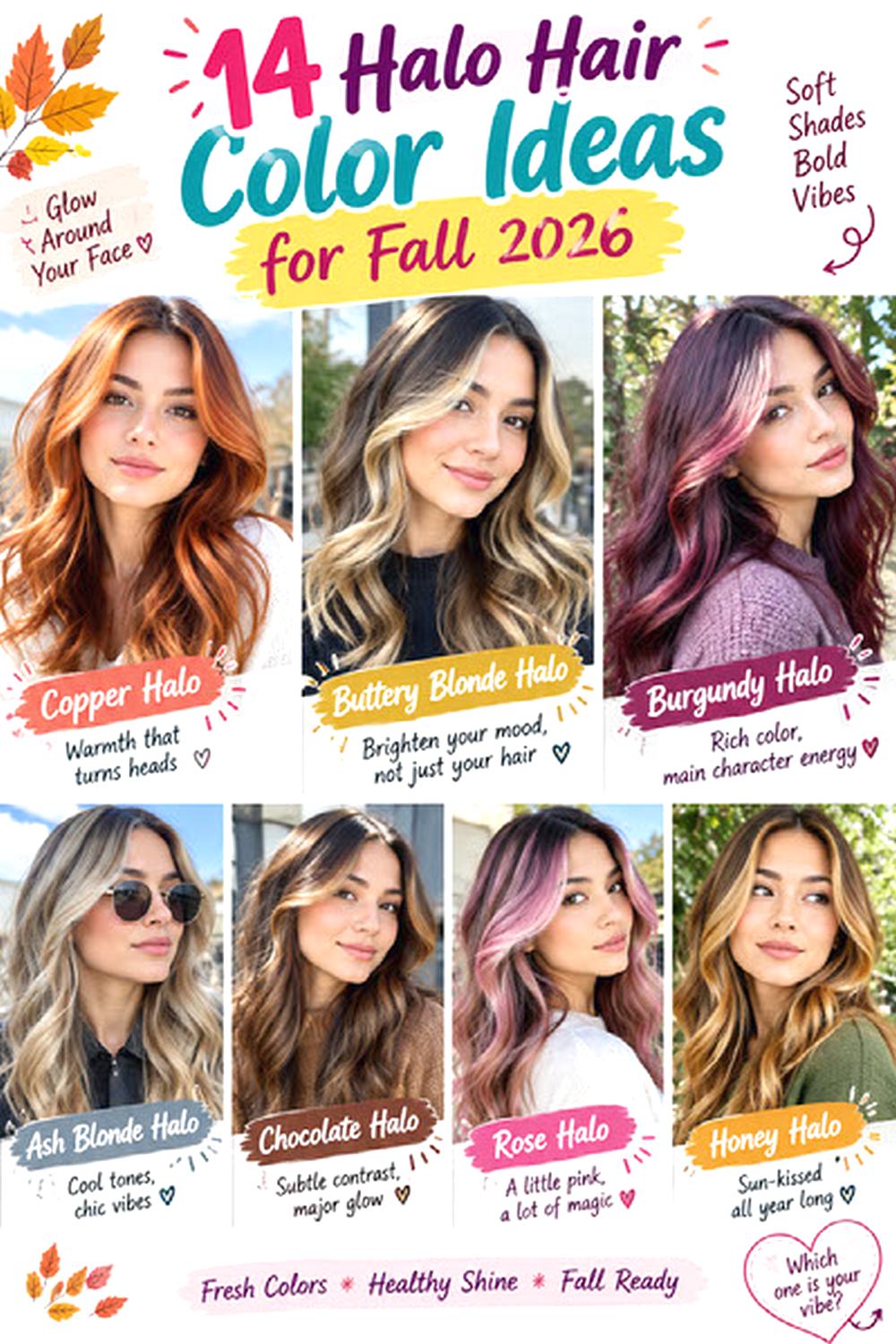
Halo hair color uses strategically brighter or contrasting sections around the face and hairline to create a noticeable ring of dimension without coloring every strand. Depending on the placement, the halo can be soft and blended or intentionally bold. Face-framing sections may start near the roots, melt from a shadowed base, or become brightest around the cheekbones and ends. Waves, curls, long layers, bobs, and smooth blowouts can all reveal the placement differently.
For Fall 2026, halo color can move beyond bright summer blonde into caramel, cinnamon, auburn, mocha, amber, copper, and muted beige shades. Brunettes can keep most of their natural depth while adding a lighter frame, while blondes can use champagne, vanilla, or smoky tones for contrast. Fine hair often benefits from narrow, carefully spaced highlights, while thick hair can support wider sections without the color overpowering the overall shape.
Maintenance depends heavily on contrast. A halo close to your natural base generally grows out more softly, while pale blonde or vivid red sections require more toning and refreshing. Before choosing a shade, consider your starting color, hair condition, natural texture, preferred parting, heat routine, and how often you are willing to visit the salon.
Halo Hair Color Ideas for Fall 2026: Quick List
- Golden Blonde Face-Framing Halo Hairstyle
- Caramel Brunette Halo Hairstyle
- Cinnamon Copper Halo Hairstyle
- Honey Beige Halo Hairstyle
- Mocha Brown With Toffee Halo Hairstyle
- Auburn Halo on Dark Brown Hairstyle
- Mushroom Brunette Halo Hairstyle
- Champagne Blonde Halo Hairstyle
- Cherry Cola Halo Hairstyle
- Maple Copper Halo Hairstyle
- Smoky Ash Halo Hairstyle
- Espresso With Amber Halo Hairstyle
- Rose Gold Halo Hairstyle
- Soft Vanilla Halo on Bronde Hairstyle
Golden Blonde Face-Framing Halo
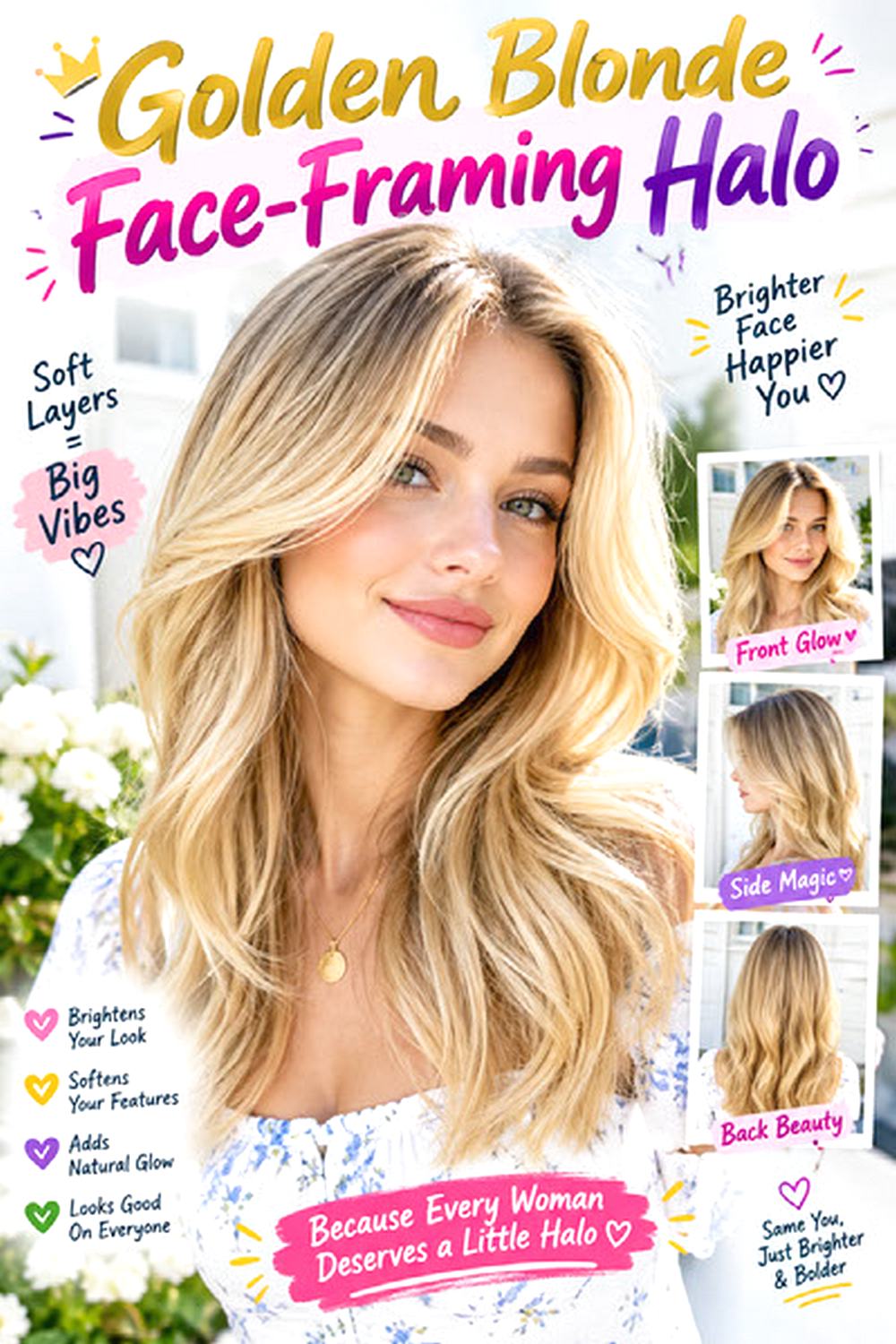
Golden blonde around the front hairline creates a clear halo while leaving deeper blonde or light brunette through the rest of the hair. The brightest sections can begin near the temples and continue through cheekbone-length layers, making the color especially visible with loose waves or a center part. It suits medium and thick hair well, although fine hair can carry it with narrower highlight sections. A color-safe shampoo, heat protectant, and lightweight shine serum help keep the blonde reflective without weighing down the face frame. Styling is moderate when you want polished waves, but the placement still shows on naturally straight hair. Bright front sections may need occasional toning as warmth develops, while a soft root melt keeps grow-out less obvious. At the salon, ask for brightness concentrated around the hairline rather than evenly distributed highlights, with enough natural depth left behind the halo to maintain contrast.
Pro tip:
Show your stylist how you normally part your hair. Halo placement planned around your real part will stay visible without needing to restyle the front every morning.
Caramel Brunette Halo
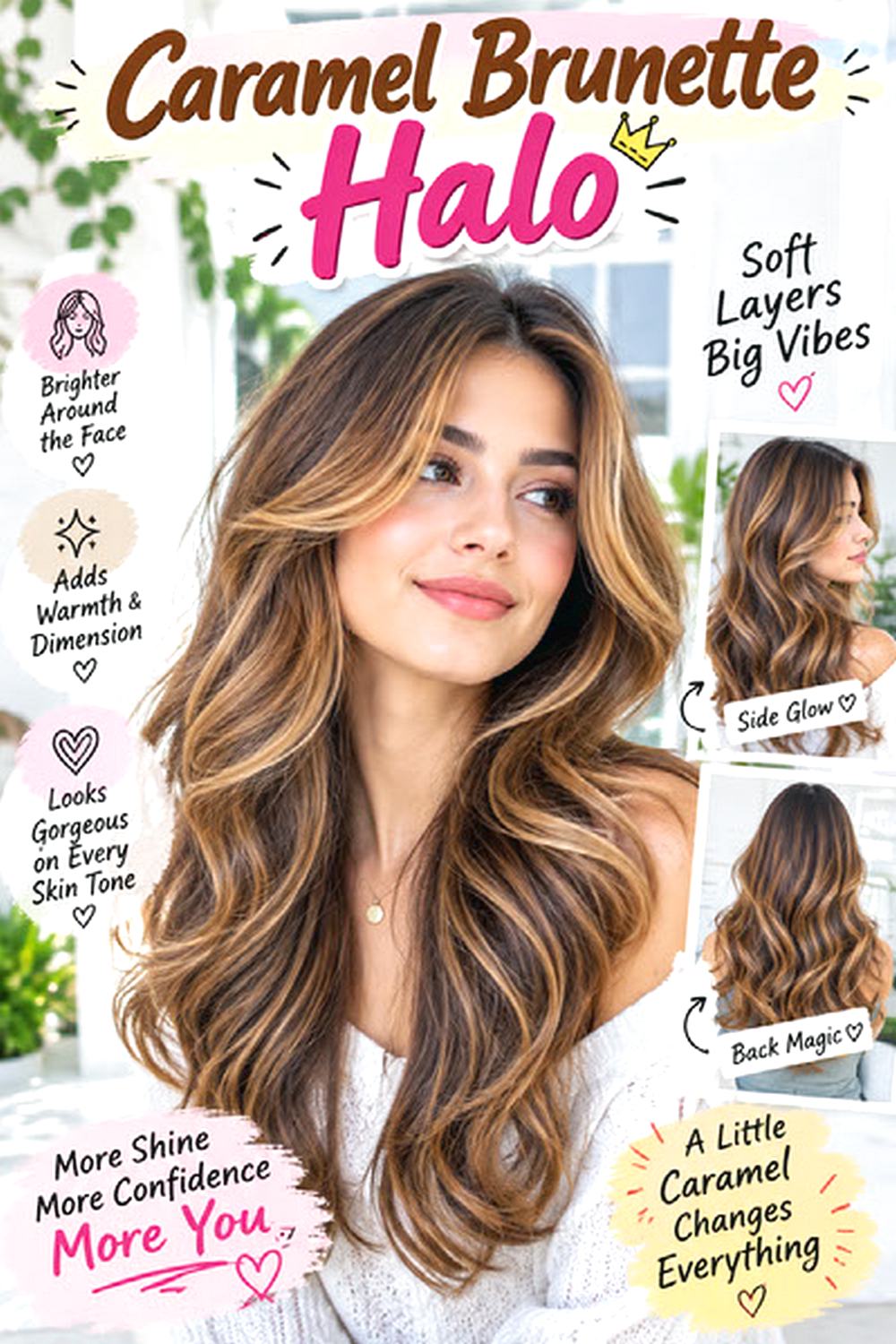
Caramel is a practical way to brighten brunette hair for fall without pushing the halo into very pale blonde territory. The warm ribbons can sit around the temples, sweep through the front layers, and become slightly brighter toward the ends. Medium-to-dark brown bases create enough contrast for the placement to show while still feeling blended. Straight, wavy, and loose-curly textures all work, and thicker hair can support slightly wider caramel pieces. Keep the tone glossy with a sulfate-free shampoo, nourishing color mask, and heat-protective cream. Daily styling can stay simple; a quick blowout or loose bend makes the dimensional sections easier to see. Because the caramel sits closer to brunette than blonde, maintenance can be gentler than a high-contrast halo, though gloss appointments help refresh warmth. Ask your colorist for a softly melted root and caramel brightness focused within the first few inches around the face.
Pro tip:
If you want easier grow-out, keep the caramel one or two tonal steps closer to your base near the roots and let it brighten gradually toward the cheekbones.
Cinnamon Copper Halo
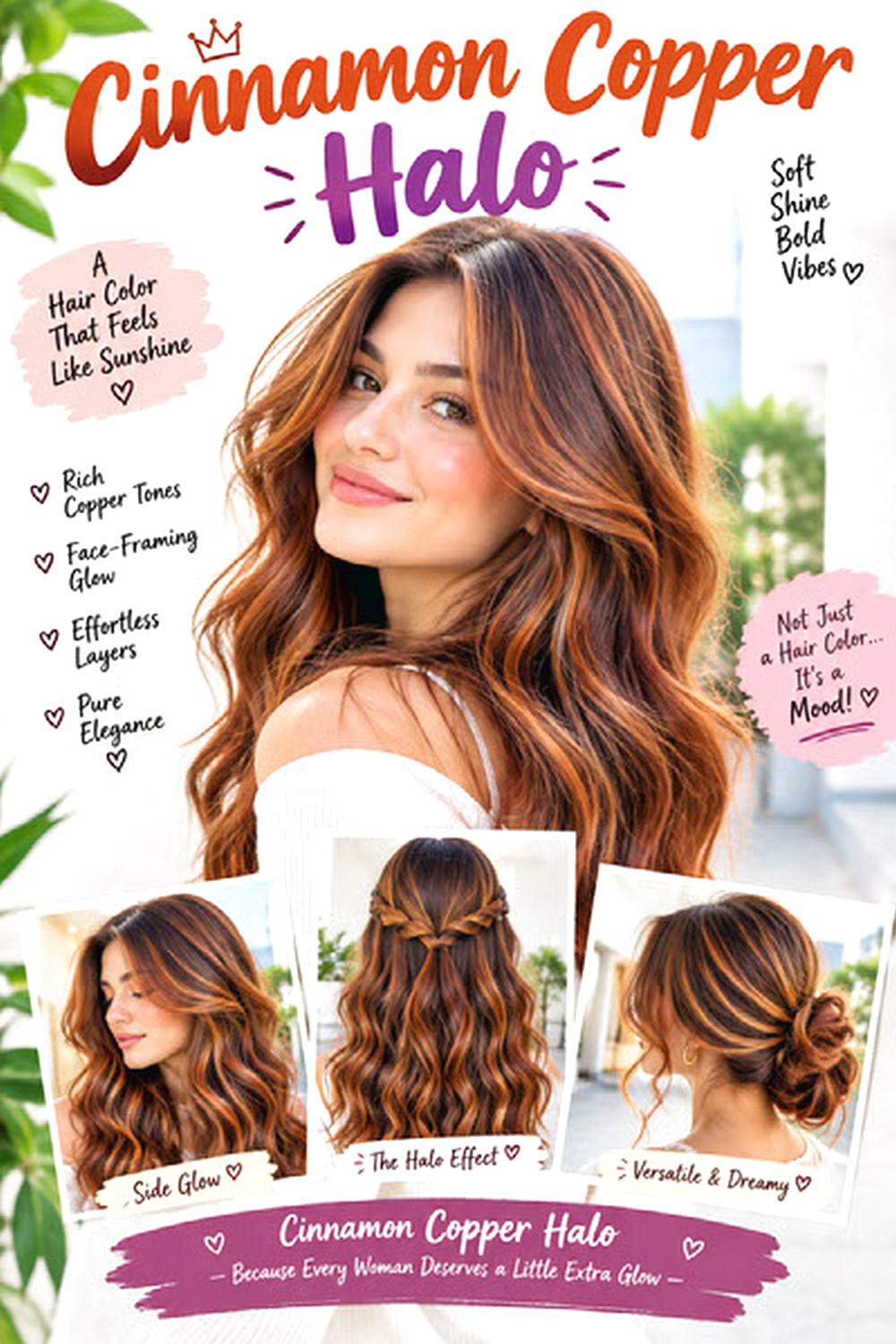
Cinnamon copper adds a reddish-gold halo around a brunette or auburn base, giving the front more warmth while preserving darker depth underneath. Instead of coloring the entire head copper, the brighter tone can trace the hairline and move into selected face-framing layers. Wavy and curly textures show the different copper tones particularly well because each bend catches the light differently. Medium and thick hair can support a stronger color panel, while fine hair often looks balanced with slimmer ribbons. Red shades fade faster than many brunette tones, so use color-safe shampoo, a copper-depositing mask, and heat protectant. Styling itself can be quick if natural movement already reveals the halo. Hot tools should be kept at a sensible temperature to limit unnecessary fading. At the salon, ask for cinnamon rather than orange copper and specify whether you want the halo brightest at the roots, cheekbones, or ends.
Pro tip:
Take a daylight reference photo to your appointment. Indoor lighting can make copper shades look much redder or more orange than they actually are.
Honey Beige Halo

Honey beige sits between warm gold and neutral blonde, making it useful when you want a halo that brightens the face without creating a strong yellow or icy finish. It pairs naturally with dark blonde, bronde, and light brown bases. Fine to medium hair can benefit from delicate face-framing ribbons because the color adds visible dimension without requiring heavy layering. On thick hair, the halo can extend farther behind the temples so it does not disappear inside the density. Use a moisturizing color-safe shampoo, lightweight conditioner, and thermal protectant before blow-drying. Styling is fairly quick because even a smooth finish shows the tonal difference, although soft waves reveal more depth. A beige toner may need refreshing if the blonde becomes too warm between salon visits. Ask your colorist for a neutral-honey result with a blurred transition at the roots and brightness concentrated around the upper cheekbones and front ends.
Pro tip:
Avoid overusing purple shampoo on honey beige hair. Too much violet pigment can mute the warm-neutral balance that makes this shade soft.
Mocha Brown With Toffee Halo

A mocha base with a toffee halo keeps most of the hair deep and glossy while introducing warm brown-gold light around the face. The contrast is softer than blonde against brunette, so it works well for someone who wants visible dimension without a dramatic color change. Long layers and shoulder-length cuts both show the placement well, especially when the front sections curve away from the face. This combination suits medium-to-thick brunette hair, while fine hair can use fewer, strategically placed ribbons to preserve depth. Maintain the finish with color-safe shampoo, a hydrating gloss treatment, and a large round brush for styling. A blow-dry takes moderate time, but naturally wavy hair may only need a quick refresh. Toffee tones usually grow out more gently than pale highlights. At the salon, request a mocha base with narrow toffee ribbons around the hairline and enough dark hair between sections to keep the halo dimensional.
Pro tip:
Ask your colorist not to over-lighten the toffee pieces. Keeping some brown pigment in the halo creates a richer result and usually requires less toning.
Auburn Halo on Dark Brown

Dark brown hair gains subtle seasonal contrast when auburn is placed around the face rather than through every section. The red-brown halo becomes most visible in daylight, where the warm ribbons separate from the deeper base without looking neon. It can work beautifully with straight, wavy, or curly textures, and medium-to-thick density gives the color enough space to show depth between sections. Use a red-safe shampoo, color-depositing conditioner, and anti-frizz serum to support shine and reduce premature fading. Styling can remain quick because the color itself provides dimension; a few loose bends through the front simply make it more visible. Auburn pigments gradually soften, so glossing is useful when the red begins looking dull. At the salon, ask for a true red-brown rather than bright copper, with the strongest halo placed around the temples and cheekbone sections while preserving dark brown underneath.
Pro tip:
Rinse with lukewarm rather than very hot water when possible. Red pigments can fade noticeably faster when hair is frequently exposed to high heat.
Mushroom Brunette Halo

Mushroom brunette creates a cooler halo using taupe, beige-brown, and muted ash tones instead of traditional caramel. The effect works especially well on neutral or cool medium-brown bases where warm highlights tend to become too golden. Face-framing ribbons can begin softly below the root, then become more noticeable around the cheekbones and ends. Straight and softly wavy hair show the muted tonal shifts clearly, while thicker hair may need several fine sections rather than one wide panel. Maintain the coolness with a blue-toning shampoo used occasionally, a moisturizing mask, and heat protectant. Styling is easy to moderate; smooth bends or a blowout reveal the taupe dimension without requiring strong curls. Cool brunette tones can drift warm over time, so periodic glossing may be useful. Tell your colorist you want mushroom or taupe-brown brightness around the face while keeping the root area soft and avoiding an overly gray finish.
Pro tip:
Bring reference photos taken in natural light. Cool brunette can look much ashier under salon lighting, which makes visual references particularly important.
Champagne Blonde Halo

Champagne blonde brings pale, balanced brightness around the face with a mix of soft beige and pearly tones. Against a darker blonde or light brunette base, the halo becomes a strong focal point without requiring an all-over blonde transformation. The color shows clearly on long layers, lobs, and smooth blowouts, while loose waves make the contrast appear more dimensional. Medium-density hair can take a noticeable face frame, but fine hair often looks better with narrower sections so the front stays soft. Use a bond-supporting treatment, purple shampoo only when needed, and thermal protectant to care for lightened pieces. Styling requires moderate effort if you want a polished finish, although the color remains visible on straight hair. Pale front pieces generally need more toning than caramel or brunette halos. At the salon, ask for a champagne tone rather than icy platinum and request a subtle root shadow for a less abrupt grow-out line.
Pro tip:
Keep toning products focused mainly on the lightest sections. Applying strong purple products everywhere can change the depth and character of the darker base.
Cherry Cola Halo
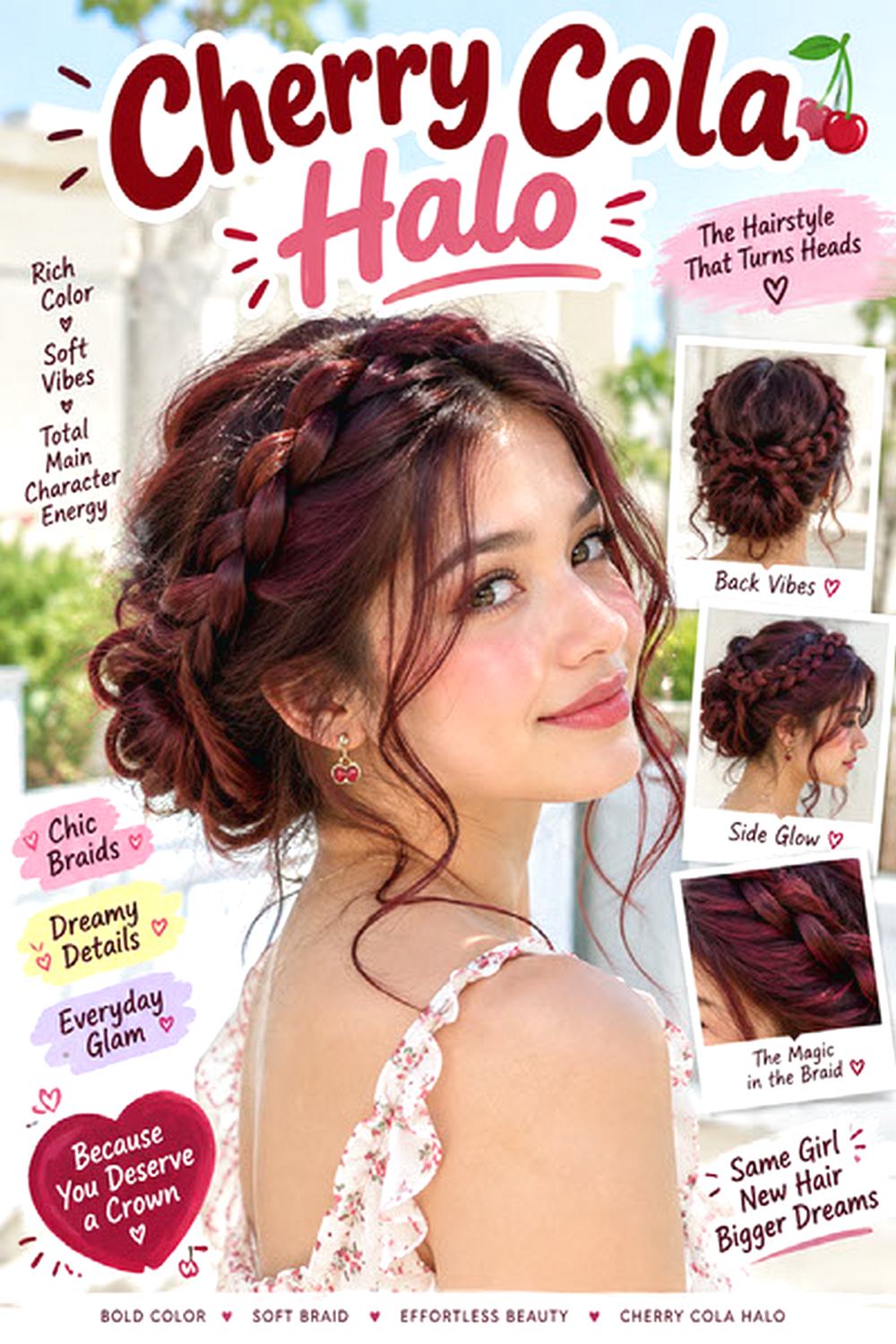
Cherry cola combines deep brunette with burgundy-red halo pieces that become brighter when they catch daylight. It offers more drama than auburn without moving into vivid fashion red across the entire head. The color works especially well on dark brown hair and can be adapted from narrow wine-toned ribbons to a wider halo around the temples. Wavy and curly hair reveal multiple red-brown tones as the sections move, while smooth hair gives the placement a cleaner graphic effect. A color-preserving shampoo, red-depositing mask, and shine serum help maintain richness. Daily styling can be quick, but limiting repeated high heat will help protect the red tone. Burgundy pigments need refreshing once they lose their depth. Ask your colorist for a brown-based cherry shade rather than pure red and specify how visible you want the halo when your hair is worn straight.
Pro tip:
If you prefer subtle color indoors, choose a deeper burgundy formula. It can read brunette in lower light while revealing cherry tones outdoors.
Maple Copper Halo

Maple copper sits between golden copper and soft auburn, giving the halo a warm burnished quality that pairs naturally with medium brown, warm brunette, or darker copper bases. The brightest pieces can surround the hairline while deeper copper remains through the lengths, creating a layered color effect. It is particularly effective on wavy hair because movement shows the difference between maple highlights and the richer base. Fine hair benefits from slim ribbons, while thick hair can support broader sections around the temples. Keep copper reflective with sulfate-free shampoo, a copper color mask, and lightweight smoothing cream. Natural waves can make styling quick; straighter textures may need a few loose bends to emphasize the placement. Warm copper shades still require color refreshing as they fade. At the salon, request maple-toned copper with golden-brown depth rather than very orange highlights and keep the transition near the roots softly blended.
Pro tip:
Ask to see swatches or reference photos that show both copper and brown. Maple works best when neither the orange nor red component dominates the result.
Smoky Ash Halo
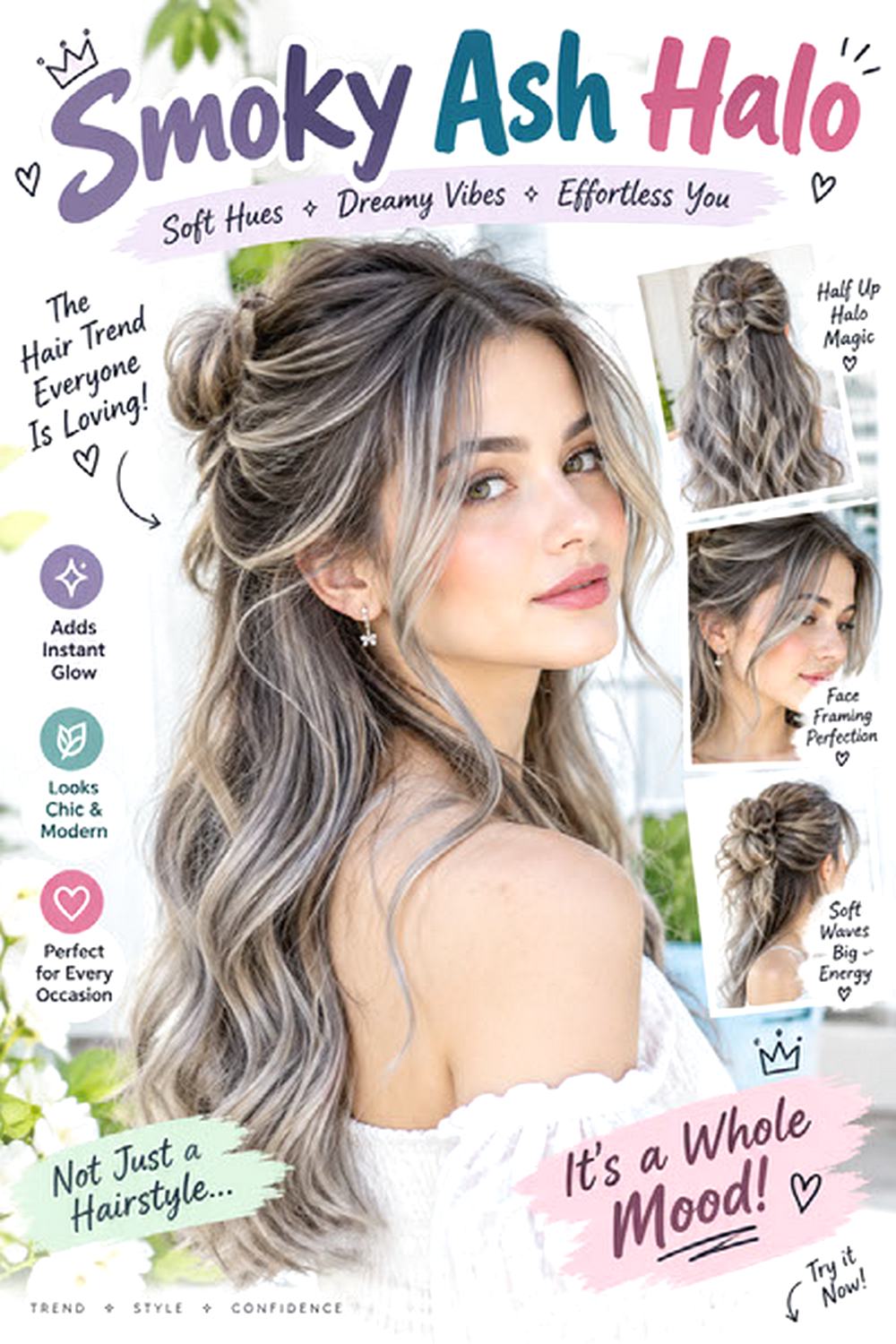
A smoky ash halo creates contrast through cool beige, gray-brown, or soft ash sections rather than brightness alone. It is a strong option for medium brunette or dark blonde hair when you prefer muted color over caramel warmth. The halo can sit slightly away from the root for an intentionally shadowed effect, then become brighter through cheekbone-length pieces. Straight and lightly wavy textures display the smoky gradient most clearly. Because cool lightened tones can become dry or brassy, use a blue-violet toning product occasionally, a rich moisture mask, and heat protectant. Styling is moderate if you want a smooth, reflective finish, but the placement also works with a natural bend. Toner maintenance matters more than frequent root coloring. Ask your stylist for ash-beige rather than flat gray and keep enough deeper natural color between the halo pieces to prevent the entire front from appearing washed out.
Pro tip:
Use toning shampoo only when unwanted warmth appears. Continuous heavy toning can make porous ends look duller or more violet than the healthier root area.
Espresso With Amber Halo

An espresso base makes amber halo pieces look especially rich because the warm golden-brown sections stand against deep brunette without becoming pale blonde. Placement around the temples, front hairline, and lower face-framing sections creates a controlled band of brightness. This combination works well for thick or medium-density dark hair because the darker interior preserves depth even when the front is visibly lighter. Curly and wavy textures add extra dimension, while straight hair gives the amber ribbons a bolder outline. Use a moisturizing color-safe cleanser, shine-enhancing serum, and heat-protective spray. Styling time can stay short if your natural texture already creates separation between sections. Amber is generally easier to maintain than very light blonde, though a gloss helps restore richness when it becomes dull. Tell your colorist to keep the amber golden-brown rather than yellow and to leave enough espresso near the root for a smooth transition.
Pro tip:
Keep the brightest amber sections close to the face instead of spreading them evenly through the back. Concentrated placement preserves the halo effect and dark depth.
Rose Gold Halo
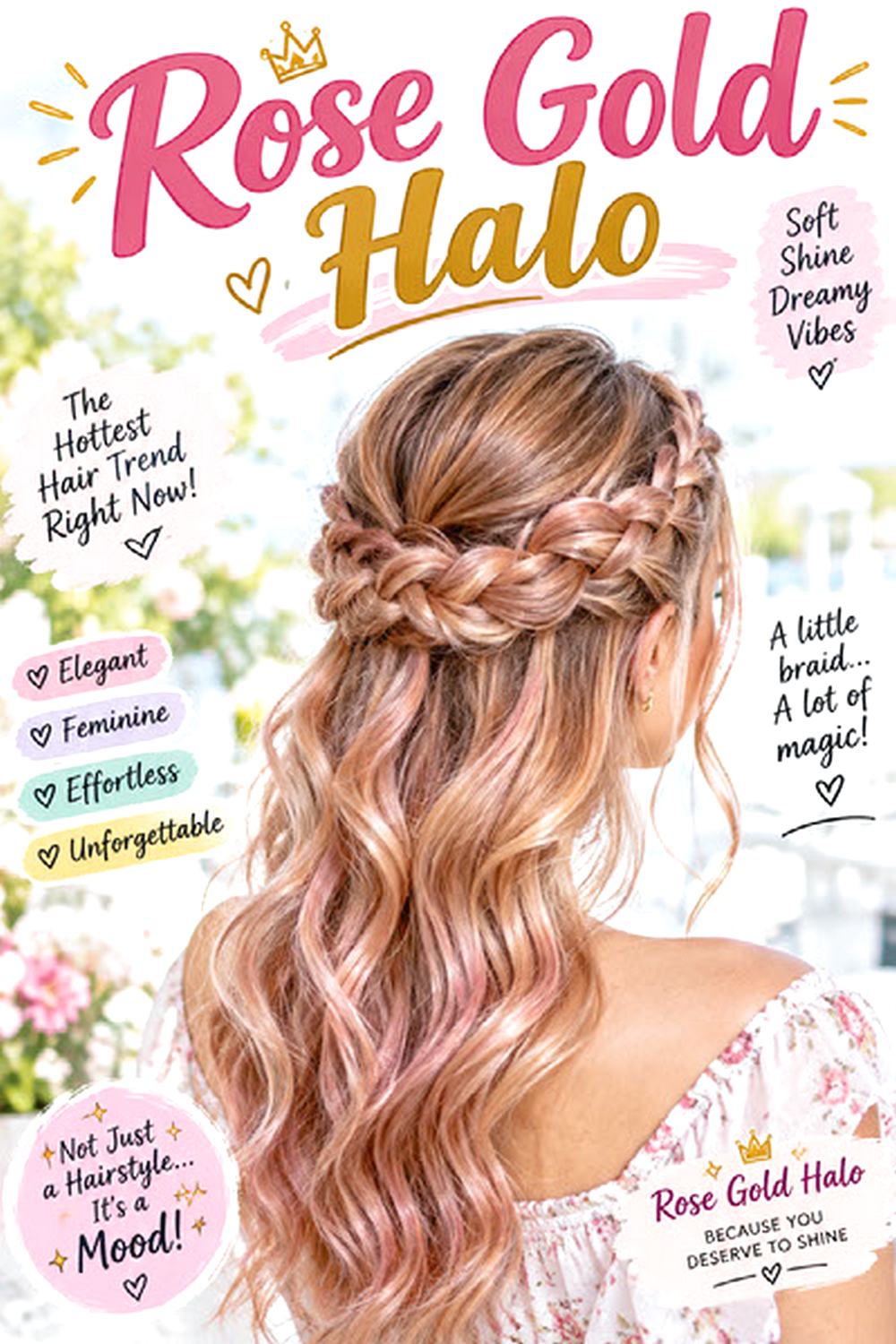
Rose gold gives the halo a softer fashion-color direction by combining blonde brightness with blush pink and peach tones. It shows most clearly on pre-lightened blonde or light brown sections, so the starting level of the hair matters. A halo placement keeps the pastel concentrated around the face, which can be easier to manage than coloring the whole head. Straight, wavy, and lightly curled hair all show the shade, while loose waves make the pink-gold variations more noticeable. Use a gentle color-safe shampoo, rose-toned depositing conditioner, and heat protectant to slow fading. Styling itself can be quick, but maintaining the color takes more attention because pastel pigments usually soften relatively fast. At the salon, decide whether you want pink, peach, or gold to dominate before the toner is mixed. Ask for the rose gold to stay concentrated around the front while the rest remains deeper or more neutral.
Pro tip:
Take a photo of the exact rose-gold balance you want. “Rose gold” can range from barely pink champagne to noticeably peach or dusty rose.
Soft Vanilla Halo on Bronde
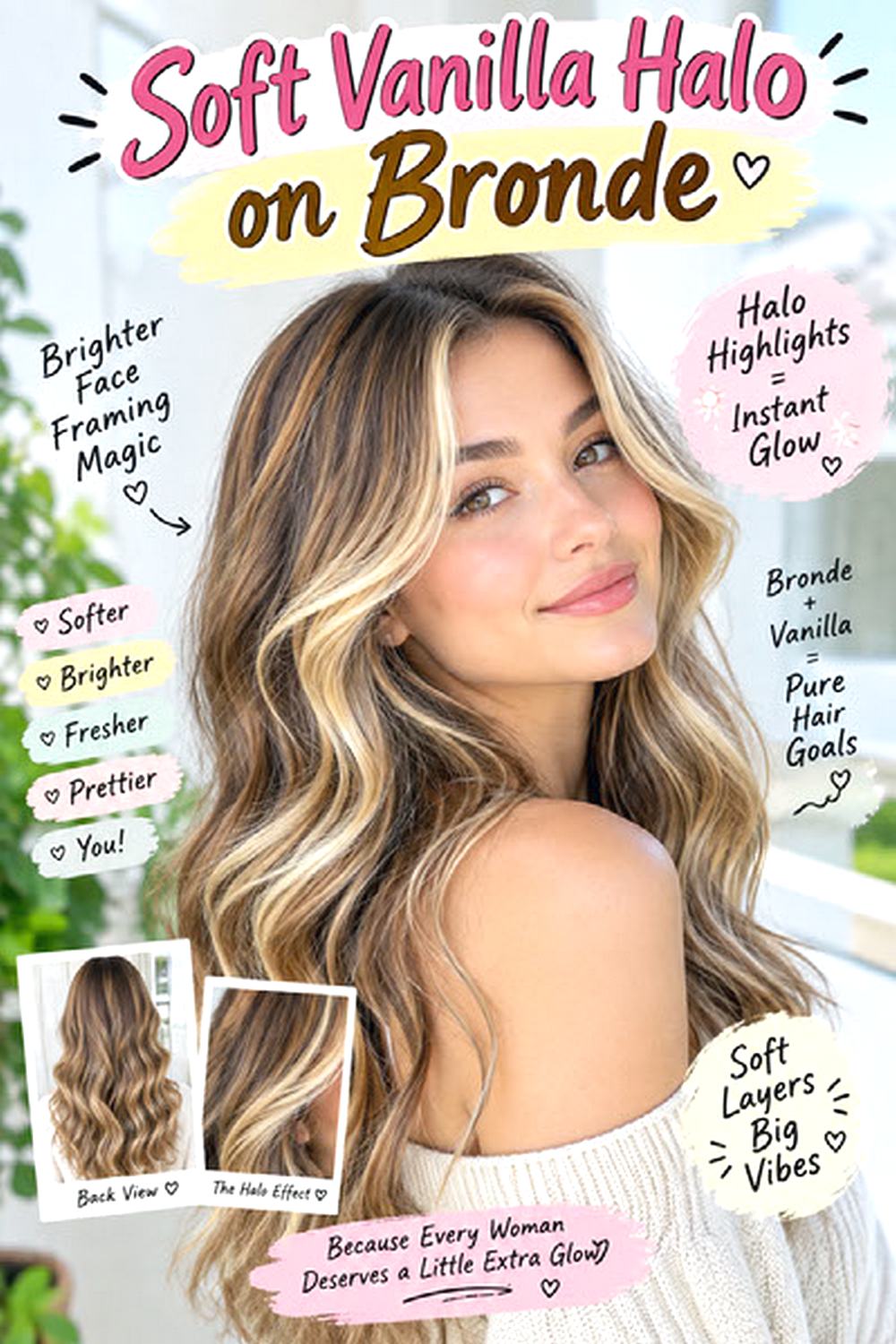
A bronde base with a soft vanilla halo offers noticeable brightness without making the entire head blonde. Creamy face-framing sections can start with a shadowed root and become lighter around the cheekbones, creating a smooth transition into beige-brown lengths. The combination works particularly well on medium and long hair because there is enough space for the color gradient to develop. Fine hair can use delicate ribbons to create dimension, while thick hair may need several layered placements so the vanilla does not disappear underneath darker sections. Use a bond-care treatment, gentle purple shampoo as needed, and thermal protectant before styling. Loose waves take moderate time but reveal the halo especially well; straight hair gives a softer, more blended result. Vanilla pieces may require toner refreshes as they warm. At the salon, request creamy neutral blonde rather than icy white and keep the surrounding bronde visible near the temples and underneath.
Pro tip:
Ask for a few fine transitional pieces between the vanilla halo and bronde base. They prevent the front from looking like two solid blocks of color.
Conclusion
The best halo hair color ideas for Fall 2026 range from low-contrast caramel and amber to brighter champagne, vanilla, copper, and rose gold. What changes the result most is not only the shade but also the width of the halo, root depth, face-frame placement, brightness level, and how much natural base remains visible. Fine hair often benefits from finer ribbons, while thick hair can support broader or layered color placement. Natural waves and curls reveal dimension easily, while straight hair can make contrasting sections look more graphic. Choose your version according to your starting color, density, texture, preferred parting, hair condition, styling routine, and willingness to maintain toner or gloss.
Choose one or two favorite ideas and save clear photo references in lighting that shows the color accurately. Discuss your face shape, natural texture, density, preferred length, maintenance level, and everyday styling routine with your stylist. Point out exactly where you want the halo to begin, how wide the face-framing sections should be, how much root depth you prefer, and whether you want a soft blended finish or stronger contrast.
FAQs
What is halo hair color?
Halo hair color concentrates lighter, brighter, or contrasting sections around the hairline and face rather than distributing the same color evenly across the entire head.
Which halo shades are easiest for brunettes to maintain?
Caramel, toffee, amber, auburn, and warm brown halos usually require less dramatic lifting than pale blonde shades, especially when they stay relatively close to the natural base.
How often does halo hair color need salon maintenance?
It depends on contrast, toner, and root placement. A softly rooted brunette halo may grow out gradually, while pale blonde, pastel, copper, or red sections often need more frequent toning or gloss refreshing.
Can fine hair have a strong halo color?
Yes. Fine hair often looks more balanced with narrow, carefully positioned sections rather than very wide panels. Keeping some natural depth around and behind the halo can also make the hair appear more dimensional.