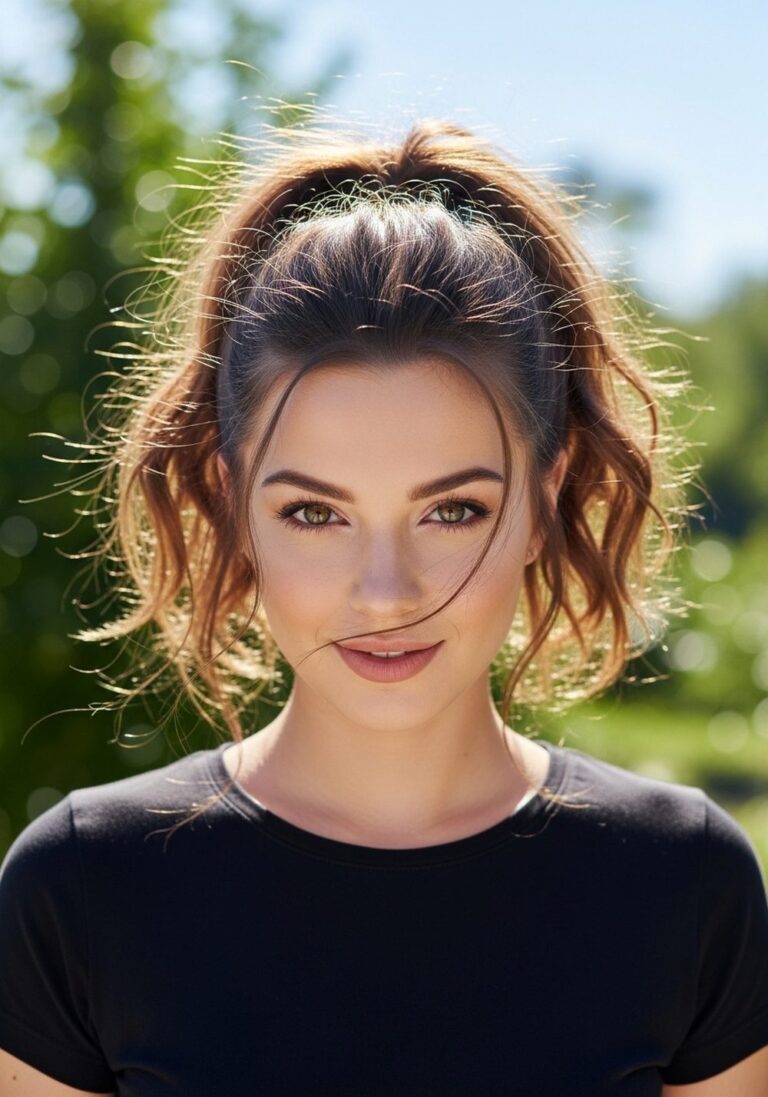
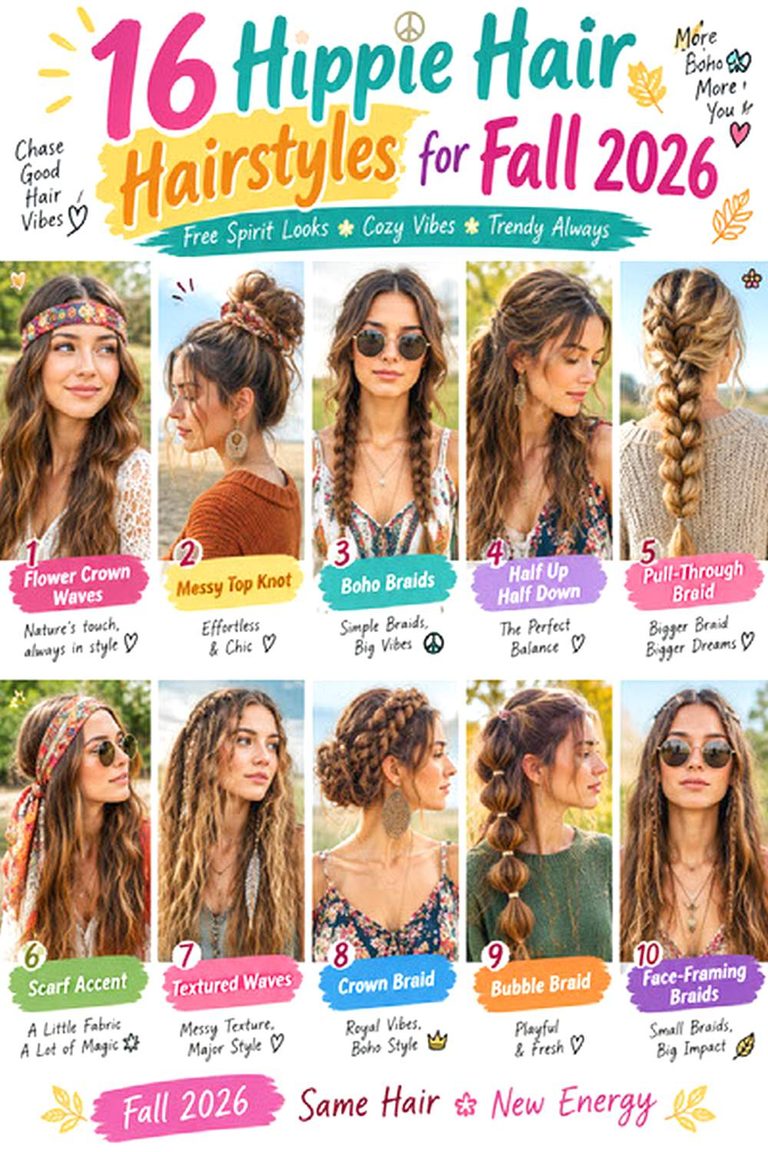
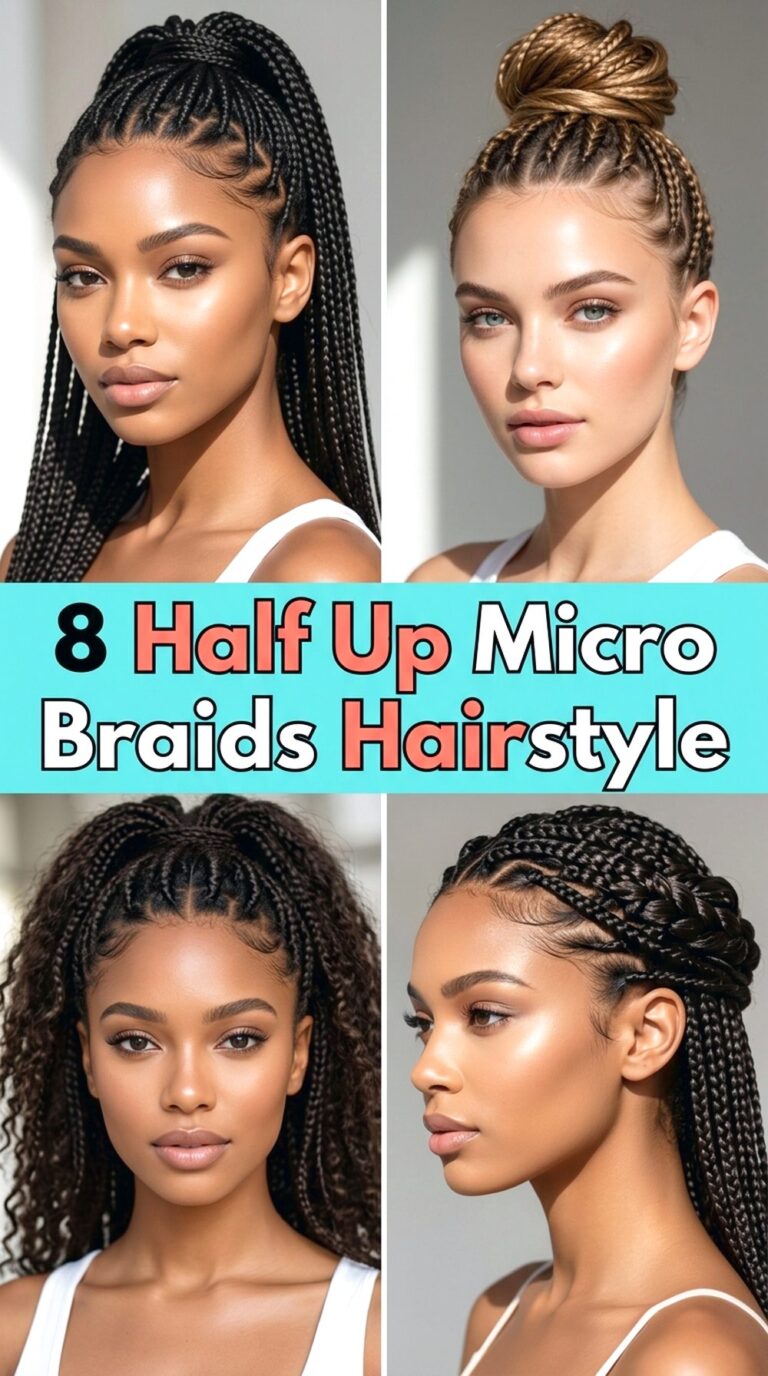
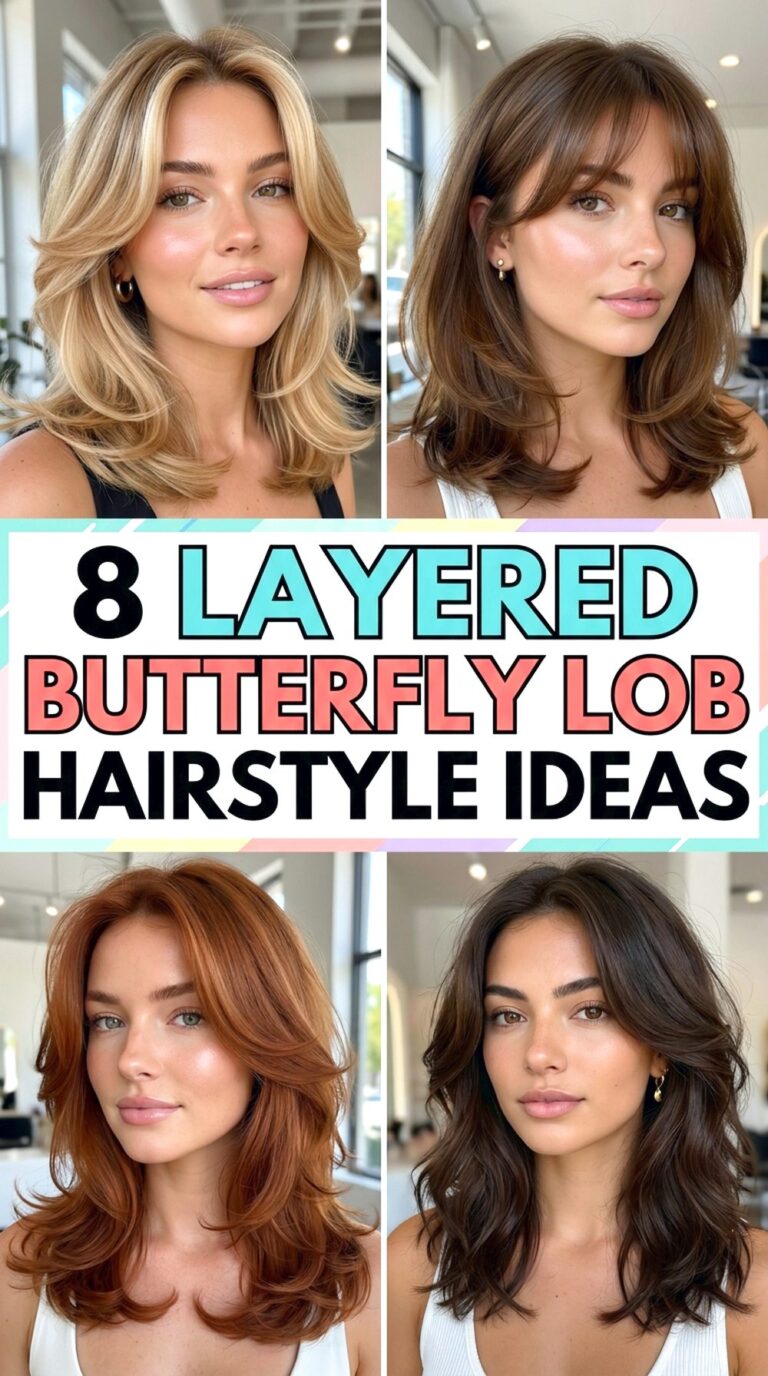
15 Two Fluffy Ponytail Hairstyles for Fall 2026
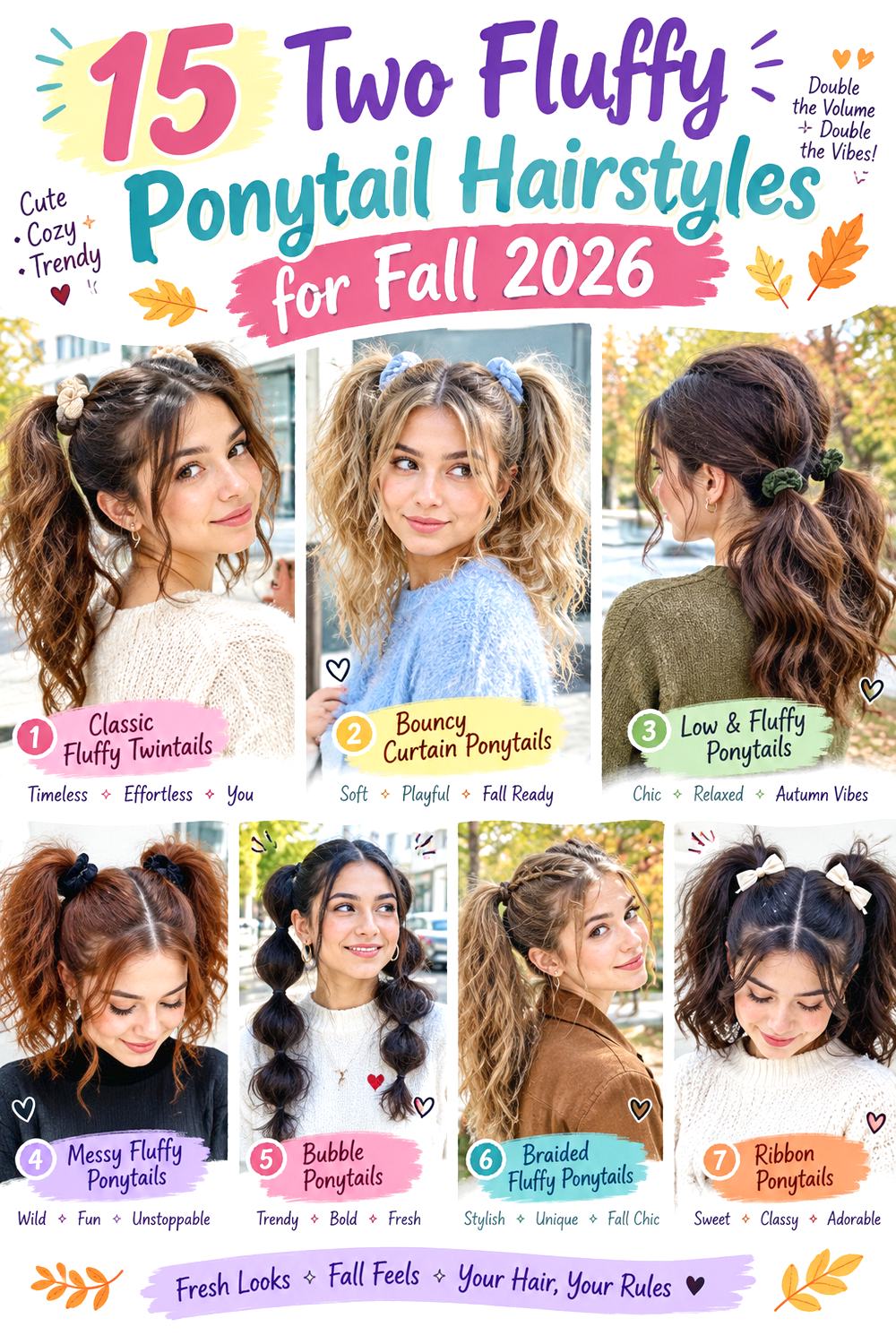
15 Two Fluffy Ponytail Hairstyles for Fall 2026 can take several different directions even when the basic theme stays the same. Texture, parting, front detail, and the amount of structure in the finish all influence how each look feels once it moves beyond the photo itself. Some versions lean neat and controlled, while others rely on softness or a little irregular movement to keep the style from looking too set. As you move through the ideas below, it helps to notice how much prep each one seems to need, what sort of hair length or density supports it best, and whether the look depends on hold, shine, or texture to read clearly.
Quick List
- High Fluffy Twin Ponytails Hairstyle
- Low Fluffy Ponytails with Middle Part Hairstyle
- Curly Fluffy Twin Ponytails Hairstyle
- Fluffy Ponytails with Curtain Bangs Hairstyle
- Braided Base Fluffy Ponytails Hairstyle
- Half up Fluffy Twin Ponytails Hairstyle
- Bubble Fluffy Ponytails Hairstyle
- Coily Fluffy Twin Ponytails Hairstyle
- Fluffy Ponytails with Face Framing Tendrils Hairstyle
- Side Part Fluffy Twin Ponytails Hairstyle
- Wavy Fluffy Ponytails with Flipped Ends Hairstyle
- Slick Front Fluffy Ponytails Hairstyle
- Extra Long Fluffy Twin Ponytails Hairstyle
- Voluminous Fluffy Ponytails with Wispy Bangs Hairstyle
- Twisted Fluffy Twin Ponytails Hairstyle
High Fluffy Twin Ponytails Hairstyle
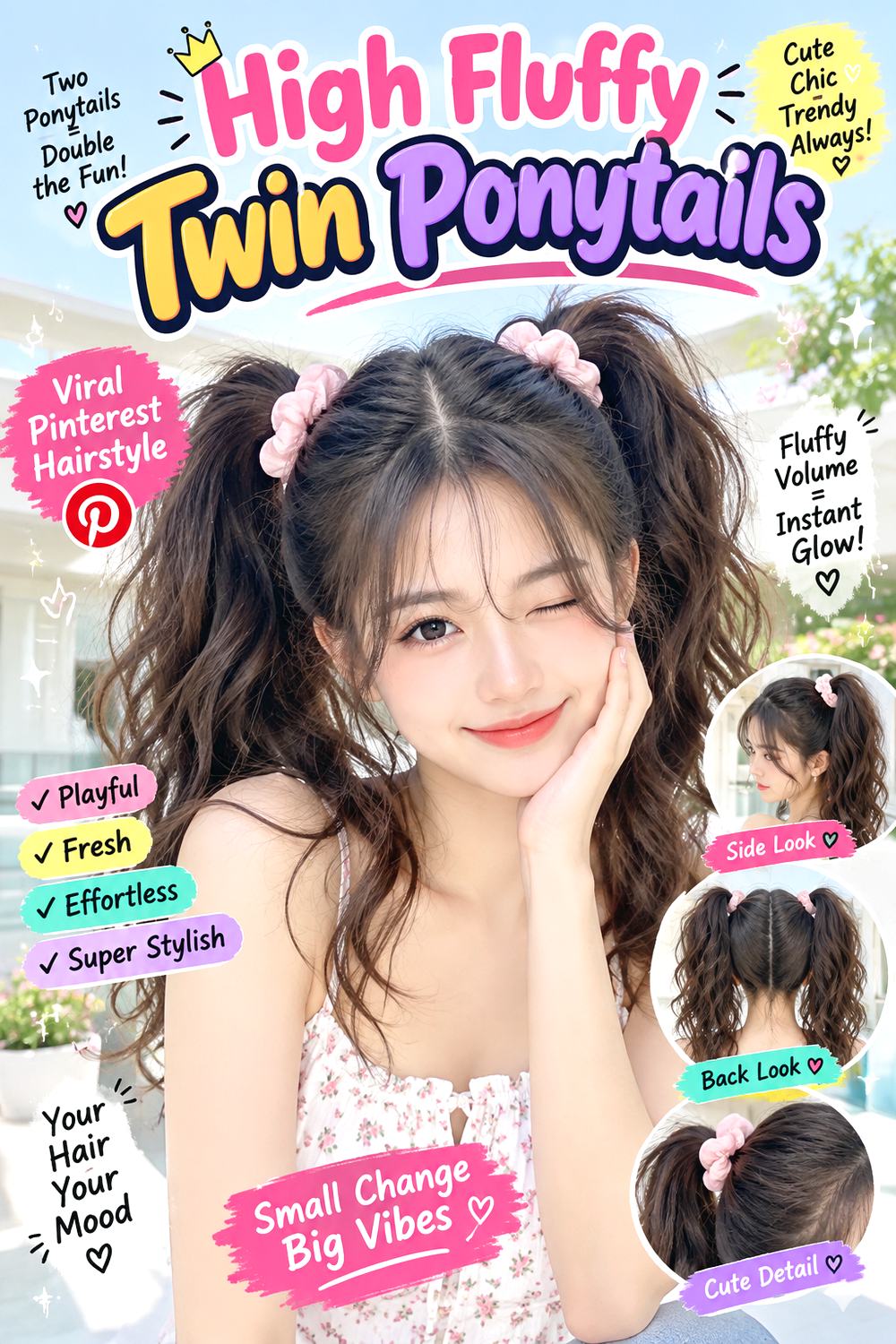
The look of High Fluffy Twin Ponytails Hairstyle usually comes together when the volume, parting, and surface detail all support the same mood. The placement through the front, crown, or ends decides where the eye goes first, which means even a small change in parting or lift can shift the feel of the style noticeably. Straight hair tends to show the outline more clearly, while waves and curls soften the finish and add natural variation to the shape. Styling tends to go better when the shape is built first and only then refined with smoothing, texture, or a little extra hold where needed. The maintenance side depends on how exact you want the finish to remain. Smoother styles usually need more touch-up discipline, while softer looks can tolerate a little movement as the day goes on. If you want a stylist to recreate it, point out the feature that matters most to you, whether that is the front framing, the crown height, the smoothness, or the texture through the ends.
Pro tip: If one detail is the main reason you saved the image, point that out first; stylists usually get closer to the result when they know exactly what must stay intact.
Low Fluffy Ponytails with Middle Part Hairstyle
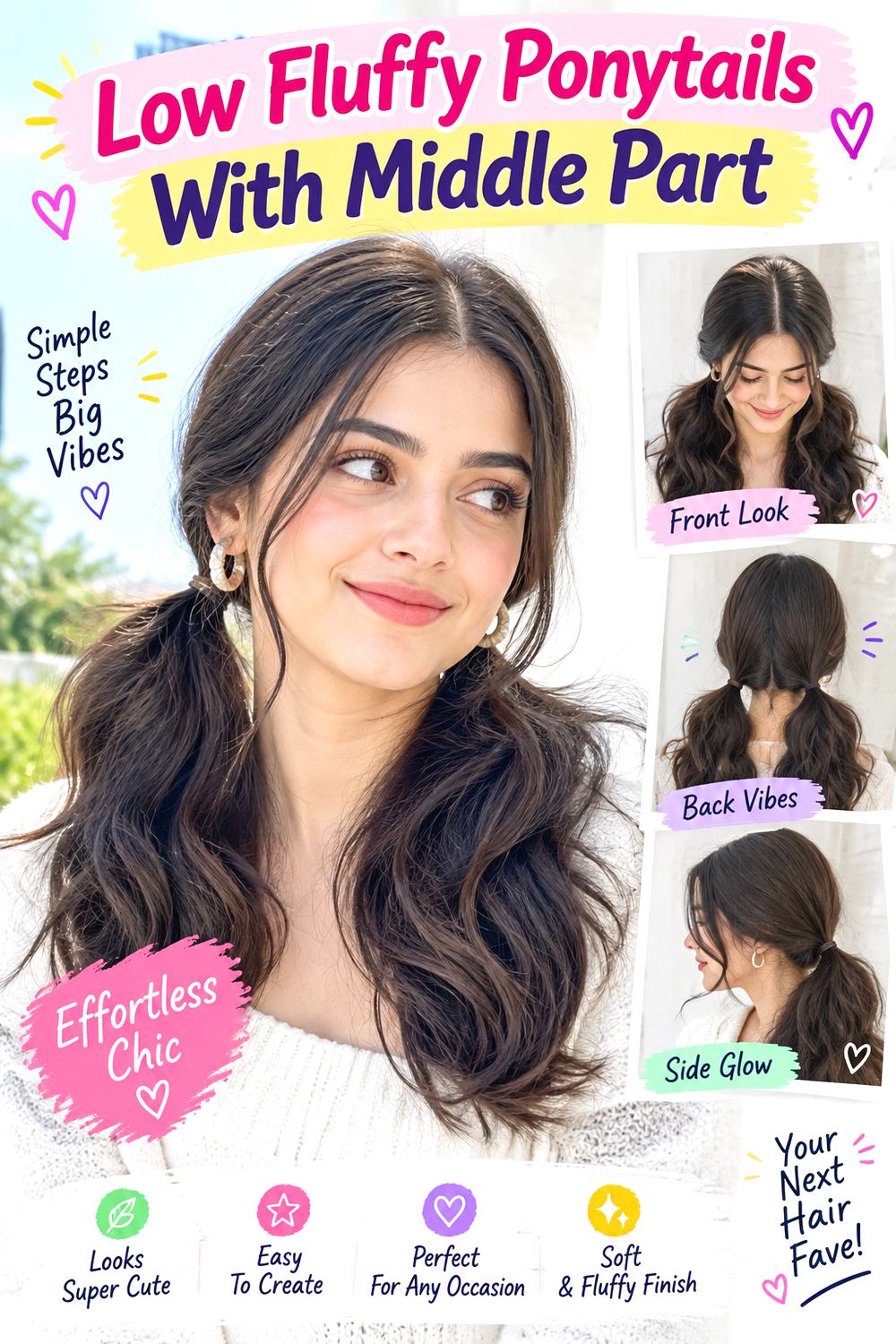
What makes Low Fluffy Ponytails with Middle Part Hairstyle distinctive is not only the silhouette but also the way the front detail and texture support the finished look. The placement through the front, crown, or ends decides where the eye goes first, which means even a small change in parting or lift can shift the feel of the style noticeably. Straight hair tends to show the outline more clearly, while waves and curls soften the finish and add natural variation to the shape. A prep product, the right brush or hot tool for your texture, and one flexible finishing product are usually enough to build the style without overloading it. The maintenance side depends on how exact you want the finish to remain. Smoother styles usually need more touch-up discipline, while softer looks can tolerate a little movement as the day goes on. If you want a stylist to recreate it, point out the feature that matters most to you, whether that is the front framing, the crown height, the smoothness, or the texture through the ends.
Pro tip: If one detail is the main reason you saved the image, point that out first; stylists usually get closer to the result when they know exactly what must stay intact.
Curly Fluffy Twin Ponytails Hairstyle

Curly Fluffy Twin Ponytails Hairstyle stands out through its finish and movement, so the overall effect depends on more than the basic shape alone. The placement through the front, crown, or ends decides where the eye goes first, which means even a small change in parting or lift can shift the feel of the style noticeably. Hair density matters too, because fuller hair can make the silhouette appear larger while finer strands may need more support to hold the intended shape. Styling tends to go better when the shape is built first and only then refined with smoothing, texture, or a little extra hold where needed. The maintenance side depends on how exact you want the finish to remain. Smoother styles usually need more touch-up discipline, while softer looks can tolerate a little movement as the day goes on. If you want a stylist to recreate it, point out the feature that matters most to you, whether that is the front framing, the crown height, the smoothness, or the texture through the ends.
Pro tip: Take a quick photo after styling from the angle you like most, because the side or three-quarter view often shows shape details that are easy to forget later.
Fluffy Ponytails with Curtain Bangs Hairstyle
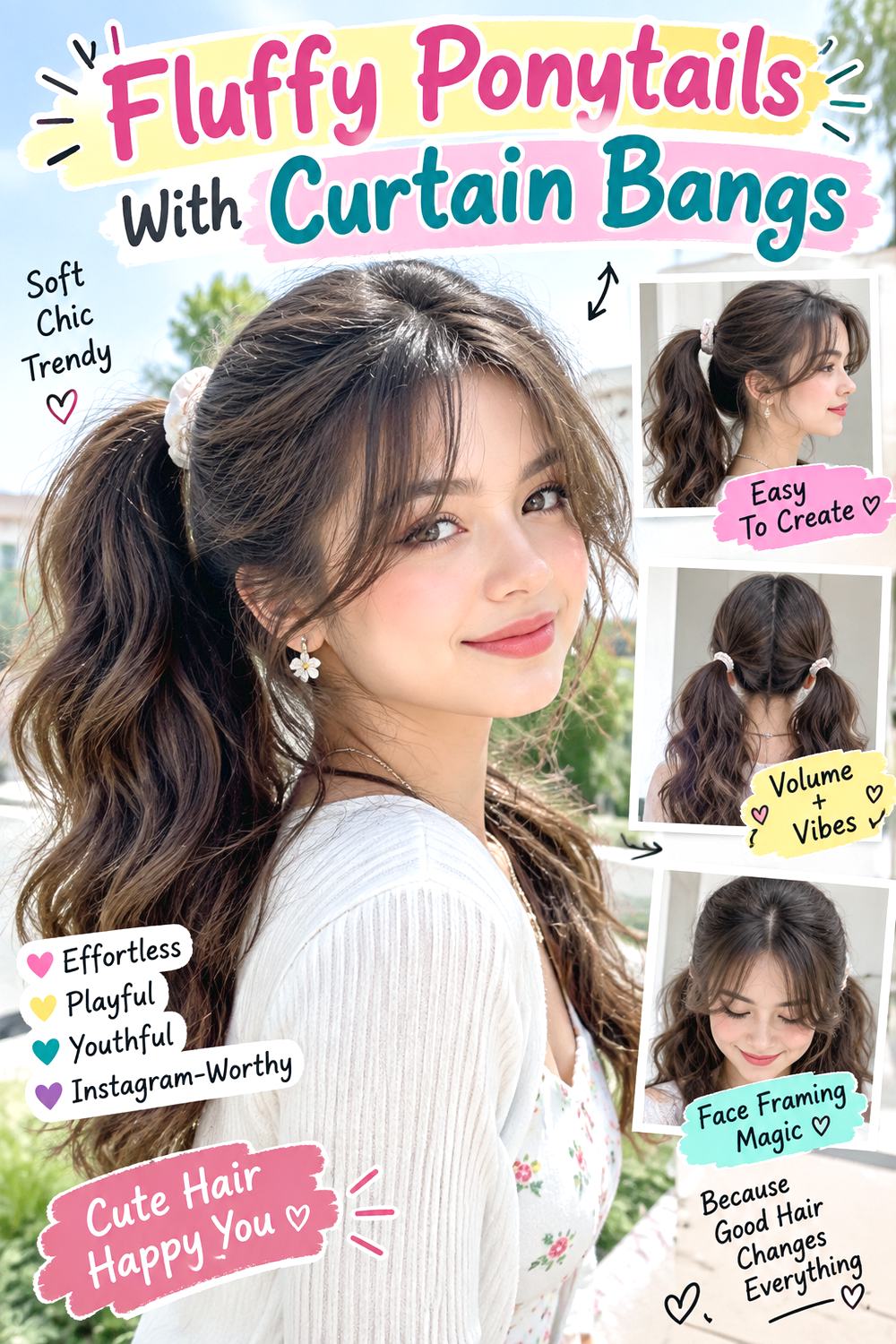
What makes Fluffy Ponytails with Curtain Bangs Hairstyle distinctive is not only the silhouette but also the way the front detail and texture support the finished look. The placement through the front, crown, or ends decides where the eye goes first, which means even a small change in parting or lift can shift the feel of the style noticeably. Hair density matters too, because fuller hair can make the silhouette appear larger while finer strands may need more support to hold the intended shape. Most versions improve with a little support before drying and a light finishing product afterward so the shape stays in place without turning stiff. The maintenance side depends on how exact you want the finish to remain. Smoother styles usually need more touch-up discipline, while softer looks can tolerate a little movement as the day goes on. If you want a stylist to recreate it, point out the feature that matters most to you, whether that is the front framing, the crown height, the smoothness, or the texture through the ends.
Pro tip: Take a quick photo after styling from the angle you like most, because the side or three-quarter view often shows shape details that are easy to forget later.
Braided Base Fluffy Ponytails Hairstyle
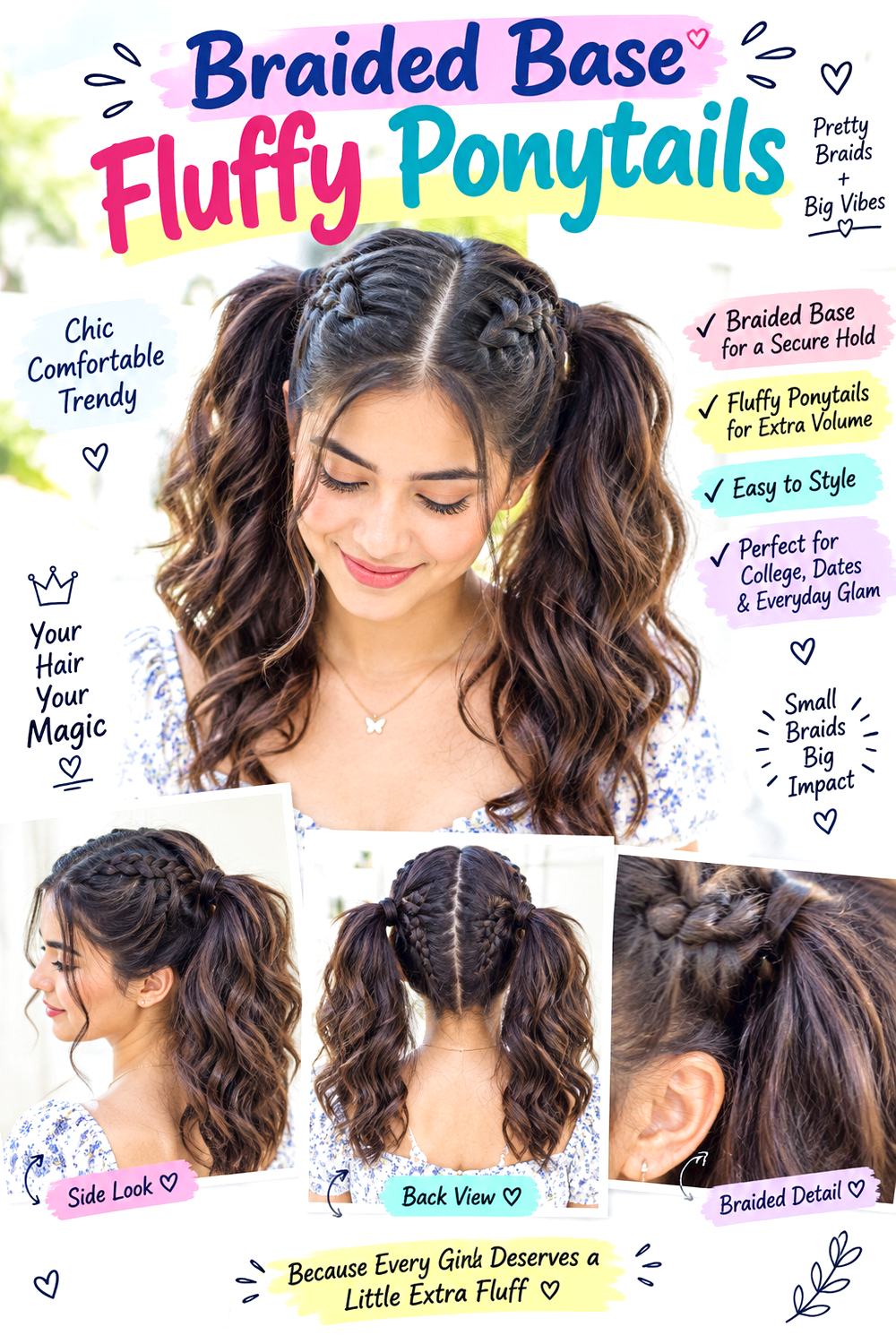
Braided Base Fluffy Ponytails Hairstyle stands out through its finish and movement, so the overall effect depends on more than the basic shape alone. The placement through the front, crown, or ends decides where the eye goes first, which means even a small change in parting or lift can shift the feel of the style noticeably. Natural texture changes how much effort this style needs. When the look already matches your pattern, it is usually quicker to recreate and easier to refresh. Styling tends to go better when the shape is built first and only then refined with smoothing, texture, or a little extra hold where needed. The maintenance side depends on how exact you want the finish to remain. Smoother styles usually need more touch-up discipline, while softer looks can tolerate a little movement as the day goes on. If you want a stylist to recreate it, point out the feature that matters most to you, whether that is the front framing, the crown height, the smoothness, or the texture through the ends.
Pro tip: Choose your finishing product by the result you want at the end; too much hold on the wrong style can flatten movement instead of preserving it.
Half up Fluffy Twin Ponytails Hairstyle

What makes Half up Fluffy Twin Ponytails Hairstyle distinctive is not only the silhouette but also the way the front detail and texture support the finished look. The placement through the front, crown, or ends decides where the eye goes first, which means even a small change in parting or lift can shift the feel of the style noticeably. Straight hair tends to show the outline more clearly, while waves and curls soften the finish and add natural variation to the shape. Styling tends to go better when the shape is built first and only then refined with smoothing, texture, or a little extra hold where needed. The maintenance side depends on how exact you want the finish to remain. Smoother styles usually need more touch-up discipline, while softer looks can tolerate a little movement as the day goes on. If you want a stylist to recreate it, point out the feature that matters most to you, whether that is the front framing, the crown height, the smoothness, or the texture through the ends.
Pro tip: Take a quick photo after styling from the angle you like most, because the side or three-quarter view often shows shape details that are easy to forget later.
Bubble Fluffy Ponytails Hairstyle
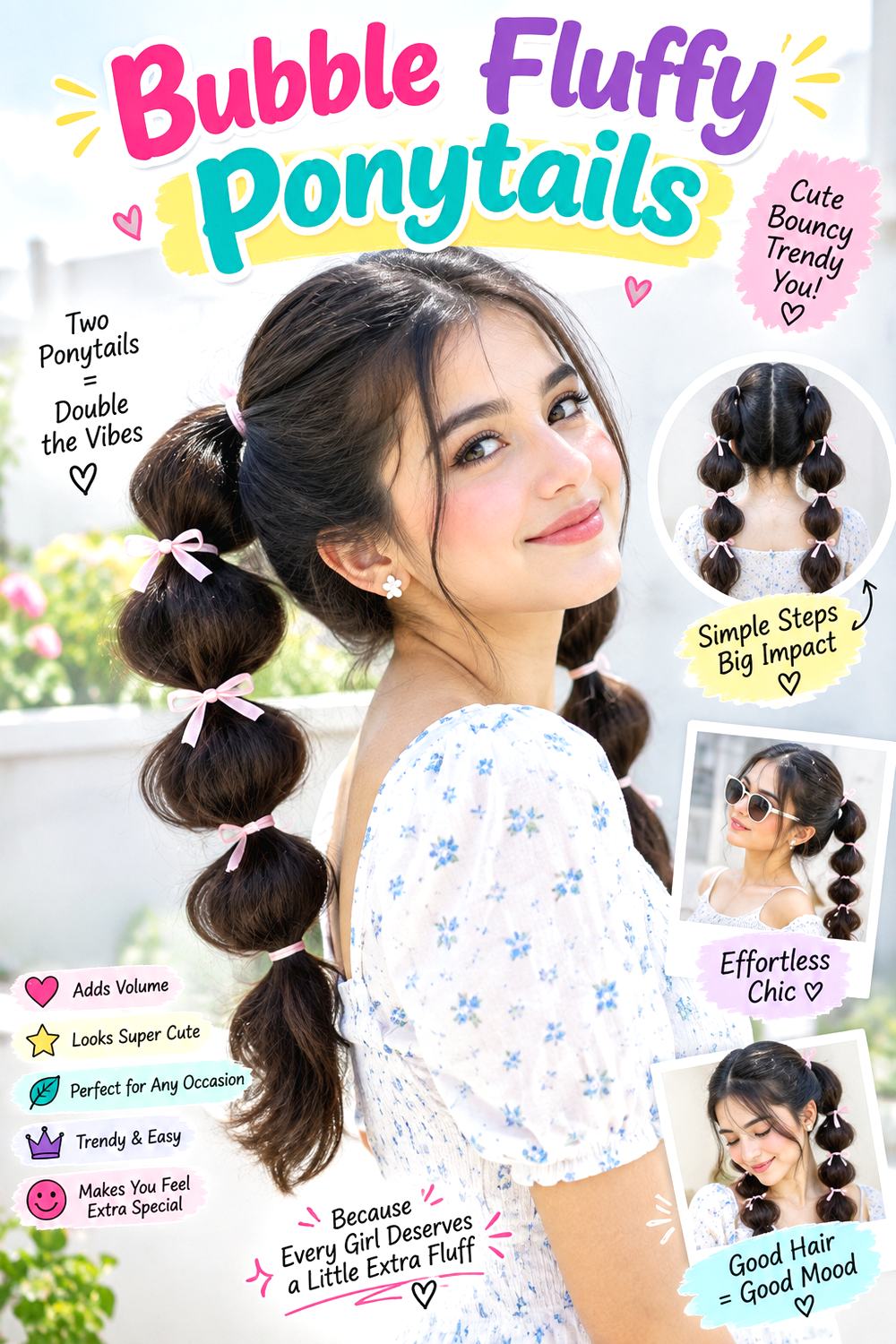
The look of Bubble Fluffy Ponytails Hairstyle usually comes together when the volume, parting, and surface detail all support the same mood. The placement through the front, crown, or ends decides where the eye goes first, which means even a small change in parting or lift can shift the feel of the style noticeably. Natural texture changes how much effort this style needs. When the look already matches your pattern, it is usually quicker to recreate and easier to refresh. Most versions improve with a little support before drying and a light finishing product afterward so the shape stays in place without turning stiff. The maintenance side depends on how exact you want the finish to remain. Smoother styles usually need more touch-up discipline, while softer looks can tolerate a little movement as the day goes on. If you want a stylist to recreate it, point out the feature that matters most to you, whether that is the front framing, the crown height, the smoothness, or the texture through the ends.
Pro tip: If one detail is the main reason you saved the image, point that out first; stylists usually get closer to the result when they know exactly what must stay intact.
Coily Fluffy Twin Ponytails Hairstyle
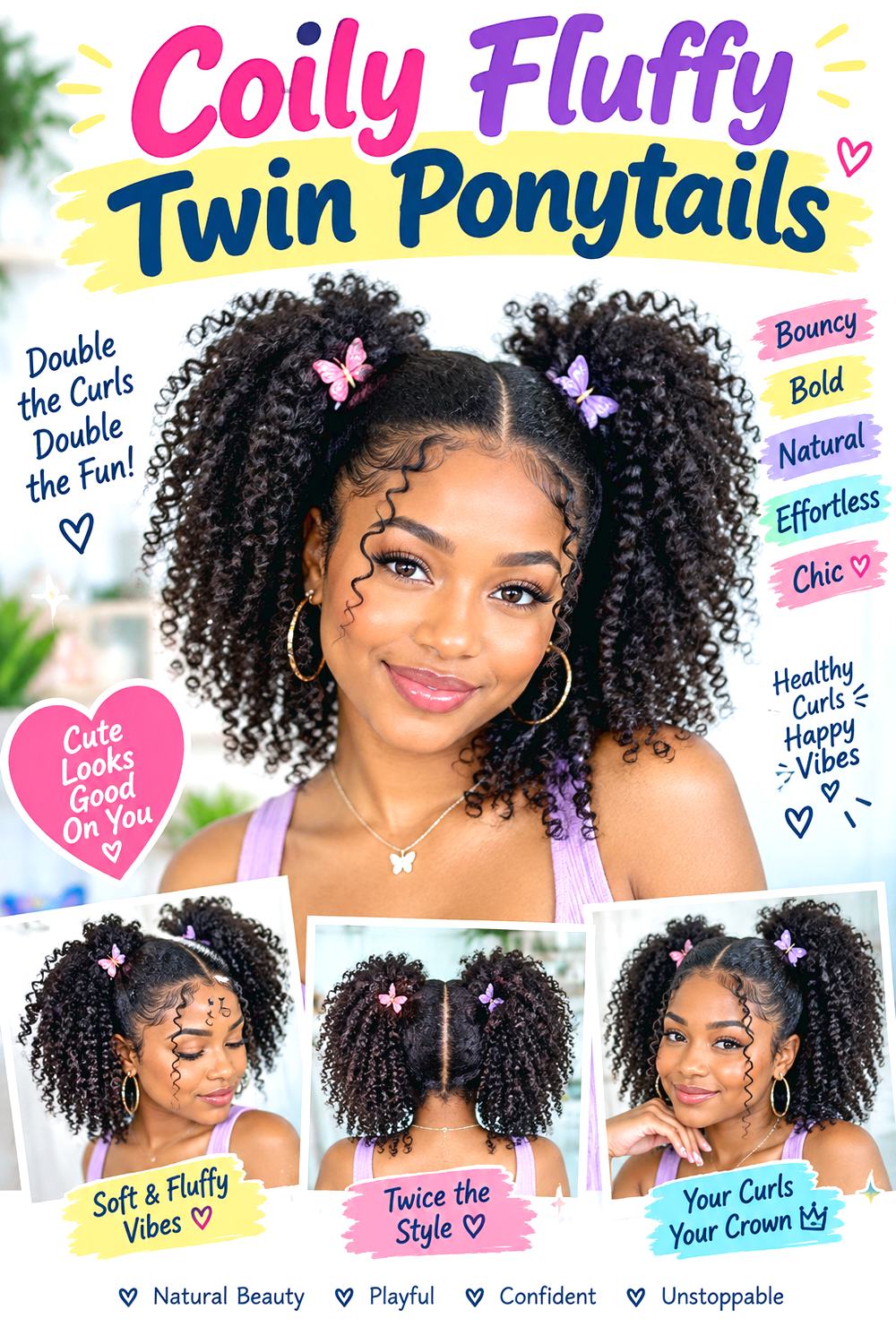
What makes Coily Fluffy Twin Ponytails Hairstyle distinctive is not only the silhouette but also the way the front detail and texture support the finished look. The placement through the front, crown, or ends decides where the eye goes first, which means even a small change in parting or lift can shift the feel of the style noticeably. Natural texture changes how much effort this style needs. When the look already matches your pattern, it is usually quicker to recreate and easier to refresh. Most versions improve with a little support before drying and a light finishing product afterward so the shape stays in place without turning stiff. The maintenance side depends on how exact you want the finish to remain. Smoother styles usually need more touch-up discipline, while softer looks can tolerate a little movement as the day goes on. If you want a stylist to recreate it, point out the feature that matters most to you, whether that is the front framing, the crown height, the smoothness, or the texture through the ends.
Pro tip: Take a quick photo after styling from the angle you like most, because the side or three-quarter view often shows shape details that are easy to forget later.
Fluffy Ponytails with Face Framing Tendrils Hairstyle
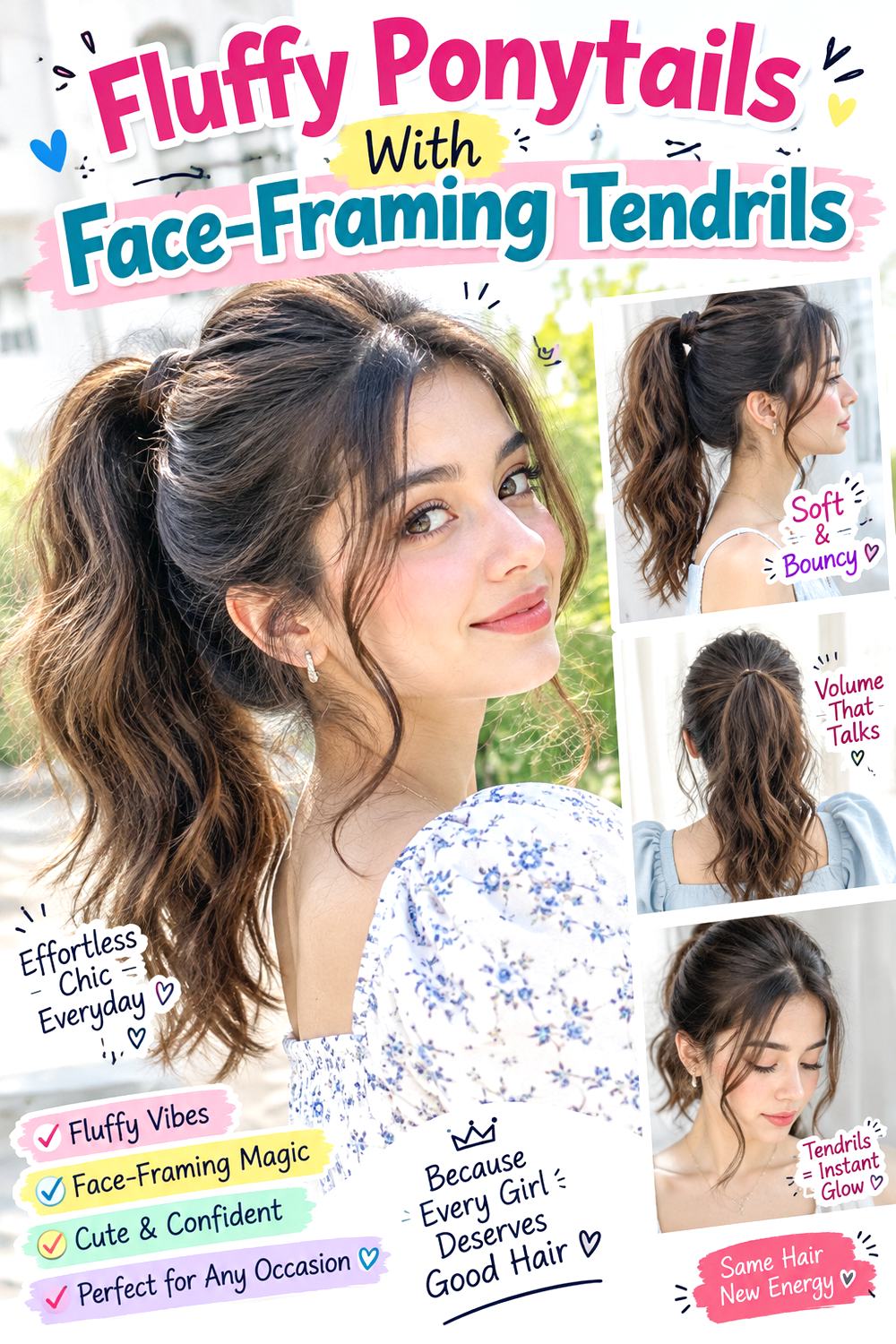
The look of Fluffy Ponytails with Face Framing Tendrils Hairstyle usually comes together when the volume, parting, and surface detail all support the same mood. The placement through the front, crown, or ends decides where the eye goes first, which means even a small change in parting or lift can shift the feel of the style noticeably. Natural texture changes how much effort this style needs. When the look already matches your pattern, it is usually quicker to recreate and easier to refresh. Styling tends to go better when the shape is built first and only then refined with smoothing, texture, or a little extra hold where needed. The maintenance side depends on how exact you want the finish to remain. Smoother styles usually need more touch-up discipline, while softer looks can tolerate a little movement as the day goes on. If you want a stylist to recreate it, point out the feature that matters most to you, whether that is the front framing, the crown height, the smoothness, or the texture through the ends.
Pro tip: Choose your finishing product by the result you want at the end; too much hold on the wrong style can flatten movement instead of preserving it.
Side Part Fluffy Twin Ponytails Hairstyle
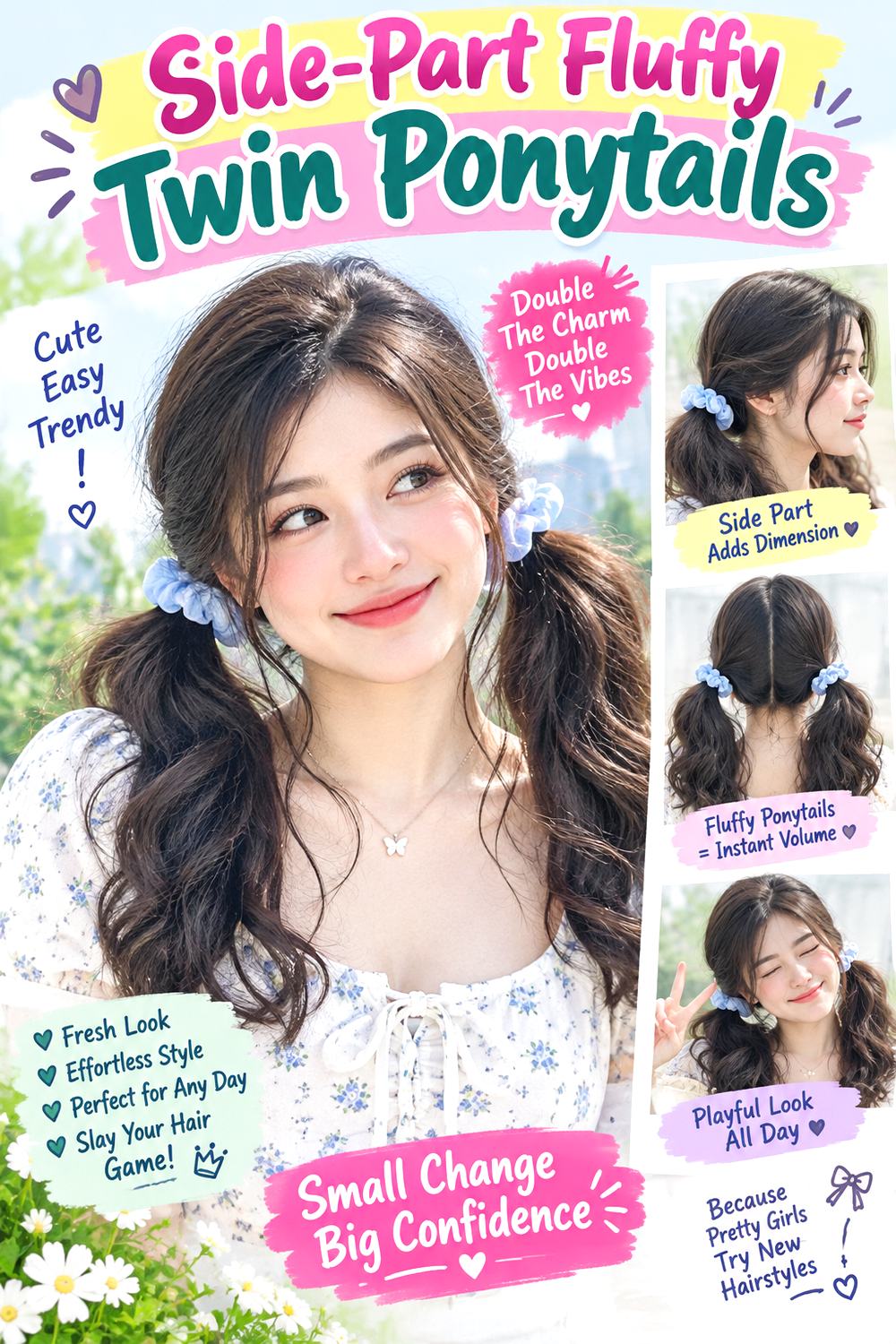
Side Part Fluffy Twin Ponytails Hairstyle stands out through its finish and movement, so the overall effect depends on more than the basic shape alone. The placement through the front, crown, or ends decides where the eye goes first, which means even a small change in parting or lift can shift the feel of the style noticeably. Straight hair tends to show the outline more clearly, while waves and curls soften the finish and add natural variation to the shape. Most versions improve with a little support before drying and a light finishing product afterward so the shape stays in place without turning stiff. The maintenance side depends on how exact you want the finish to remain. Smoother styles usually need more touch-up discipline, while softer looks can tolerate a little movement as the day goes on. If you want a stylist to recreate it, point out the feature that matters most to you, whether that is the front framing, the crown height, the smoothness, or the texture through the ends.
Pro tip: Choose your finishing product by the result you want at the end; too much hold on the wrong style can flatten movement instead of preserving it.
Wavy Fluffy Ponytails with Flipped Ends Hairstyle
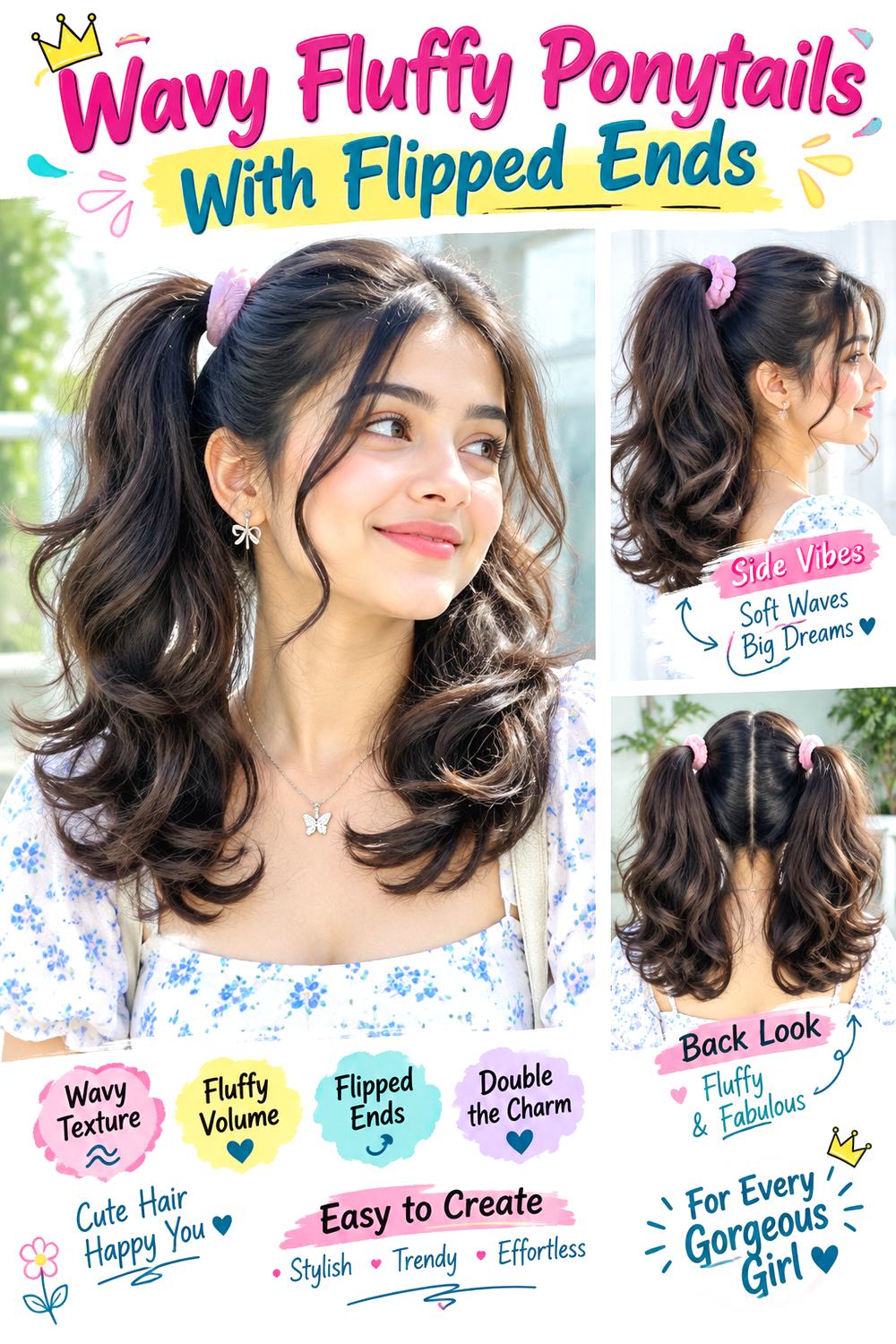
The look of Wavy Fluffy Ponytails with Flipped Ends Hairstyle usually comes together when the volume, parting, and surface detail all support the same mood. The placement through the front, crown, or ends decides where the eye goes first, which means even a small change in parting or lift can shift the feel of the style noticeably. Hair density matters too, because fuller hair can make the silhouette appear larger while finer strands may need more support to hold the intended shape. Styling tends to go better when the shape is built first and only then refined with smoothing, texture, or a little extra hold where needed. The maintenance side depends on how exact you want the finish to remain. Smoother styles usually need more touch-up discipline, while softer looks can tolerate a little movement as the day goes on. If you want a stylist to recreate it, point out the feature that matters most to you, whether that is the front framing, the crown height, the smoothness, or the texture through the ends.
Pro tip: If one detail is the main reason you saved the image, point that out first; stylists usually get closer to the result when they know exactly what must stay intact.
Slick Front Fluffy Ponytails Hairstyle
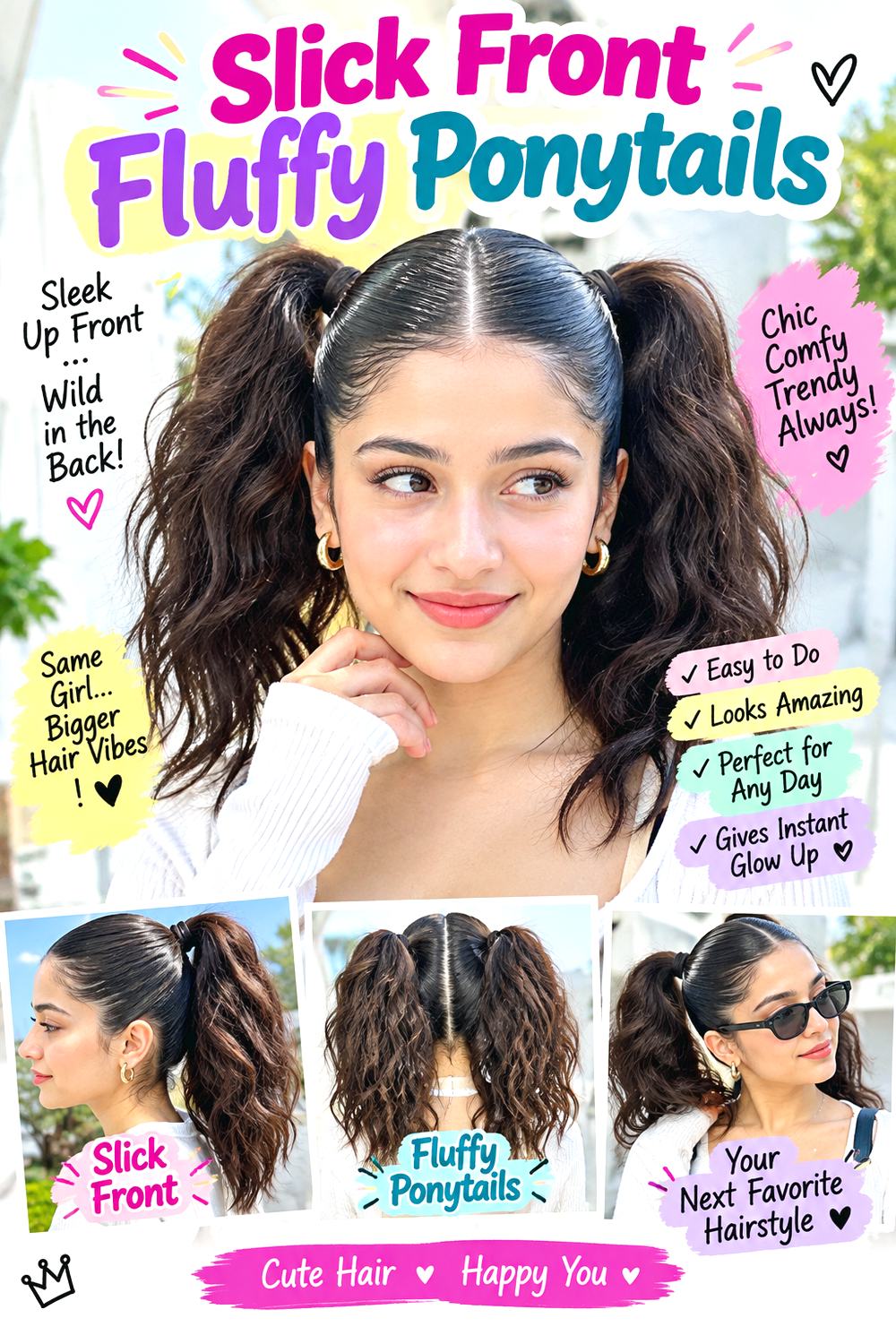
Slick Front Fluffy Ponytails Hairstyle stands out through its finish and movement, so the overall effect depends on more than the basic shape alone. The placement through the front, crown, or ends decides where the eye goes first, which means even a small change in parting or lift can shift the feel of the style noticeably. Straight hair tends to show the outline more clearly, while waves and curls soften the finish and add natural variation to the shape. A prep product, the right brush or hot tool for your texture, and one flexible finishing product are usually enough to build the style without overloading it. The maintenance side depends on how exact you want the finish to remain. Smoother styles usually need more touch-up discipline, while softer looks can tolerate a little movement as the day goes on. If you want a stylist to recreate it, point out the feature that matters most to you, whether that is the front framing, the crown height, the smoothness, or the texture through the ends.
Pro tip: Choose your finishing product by the result you want at the end; too much hold on the wrong style can flatten movement instead of preserving it.
Extra Long Fluffy Twin Ponytails Hairstyle

The look of Extra Long Fluffy Twin Ponytails Hairstyle usually comes together when the volume, parting, and surface detail all support the same mood. The placement through the front, crown, or ends decides where the eye goes first, which means even a small change in parting or lift can shift the feel of the style noticeably. Hair density matters too, because fuller hair can make the silhouette appear larger while finer strands may need more support to hold the intended shape. Most versions improve with a little support before drying and a light finishing product afterward so the shape stays in place without turning stiff. The maintenance side depends on how exact you want the finish to remain. Smoother styles usually need more touch-up discipline, while softer looks can tolerate a little movement as the day goes on. If you want a stylist to recreate it, point out the feature that matters most to you, whether that is the front framing, the crown height, the smoothness, or the texture through the ends.
Pro tip: Take a quick photo after styling from the angle you like most, because the side or three-quarter view often shows shape details that are easy to forget later.
Voluminous Fluffy Ponytails with Wispy Bangs Hairstyle
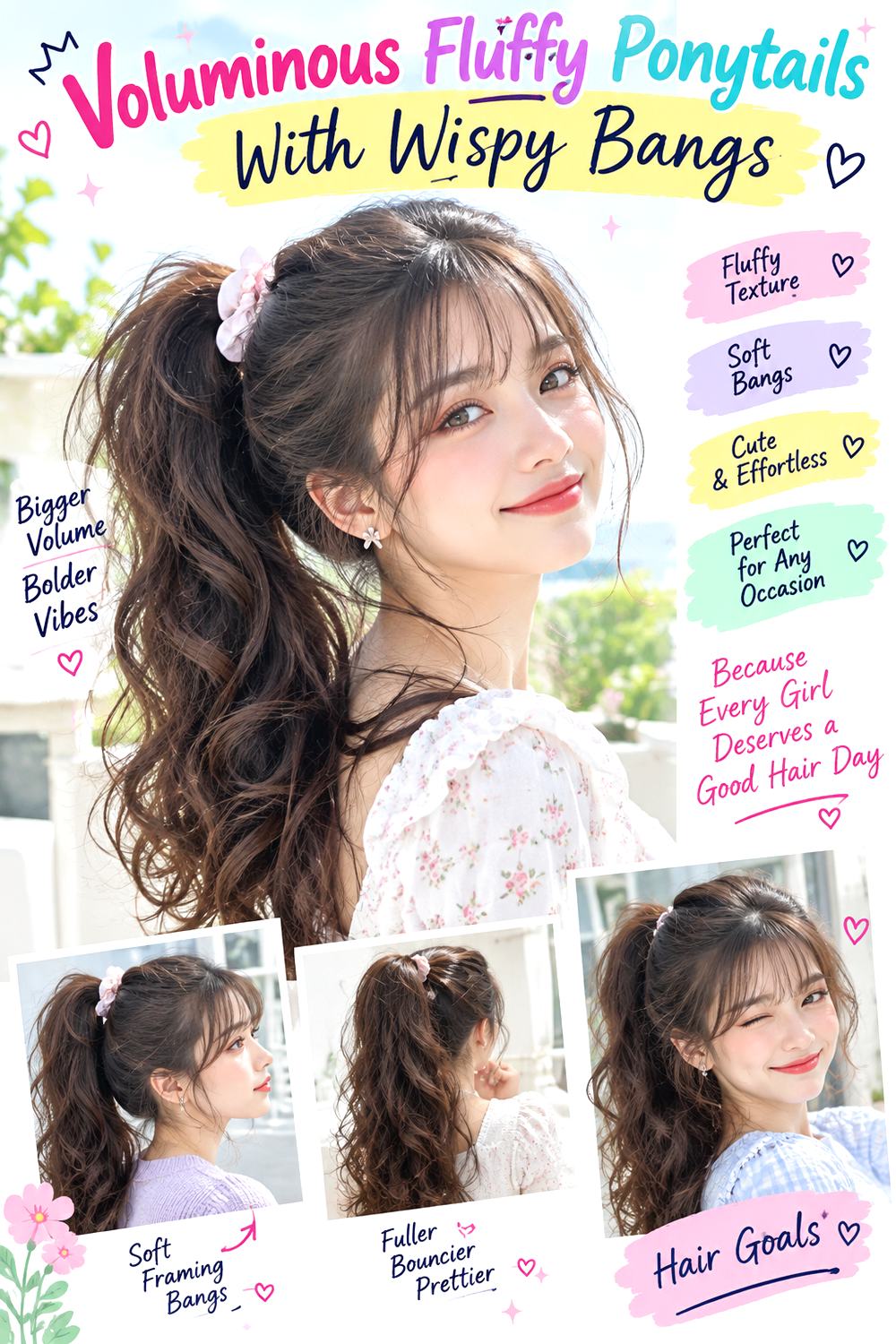
The look of Voluminous Fluffy Ponytails with Wispy Bangs Hairstyle usually comes together when the volume, parting, and surface detail all support the same mood. The placement through the front, crown, or ends decides where the eye goes first, which means even a small change in parting or lift can shift the feel of the style noticeably. Straight hair tends to show the outline more clearly, while waves and curls soften the finish and add natural variation to the shape. Most versions improve with a little support before drying and a light finishing product afterward so the shape stays in place without turning stiff. The maintenance side depends on how exact you want the finish to remain. Smoother styles usually need more touch-up discipline, while softer looks can tolerate a little movement as the day goes on. If you want a stylist to recreate it, point out the feature that matters most to you, whether that is the front framing, the crown height, the smoothness, or the texture through the ends.
Pro tip: Choose your finishing product by the result you want at the end; too much hold on the wrong style can flatten movement instead of preserving it.
Twisted Fluffy Twin Ponytails Hairstyle
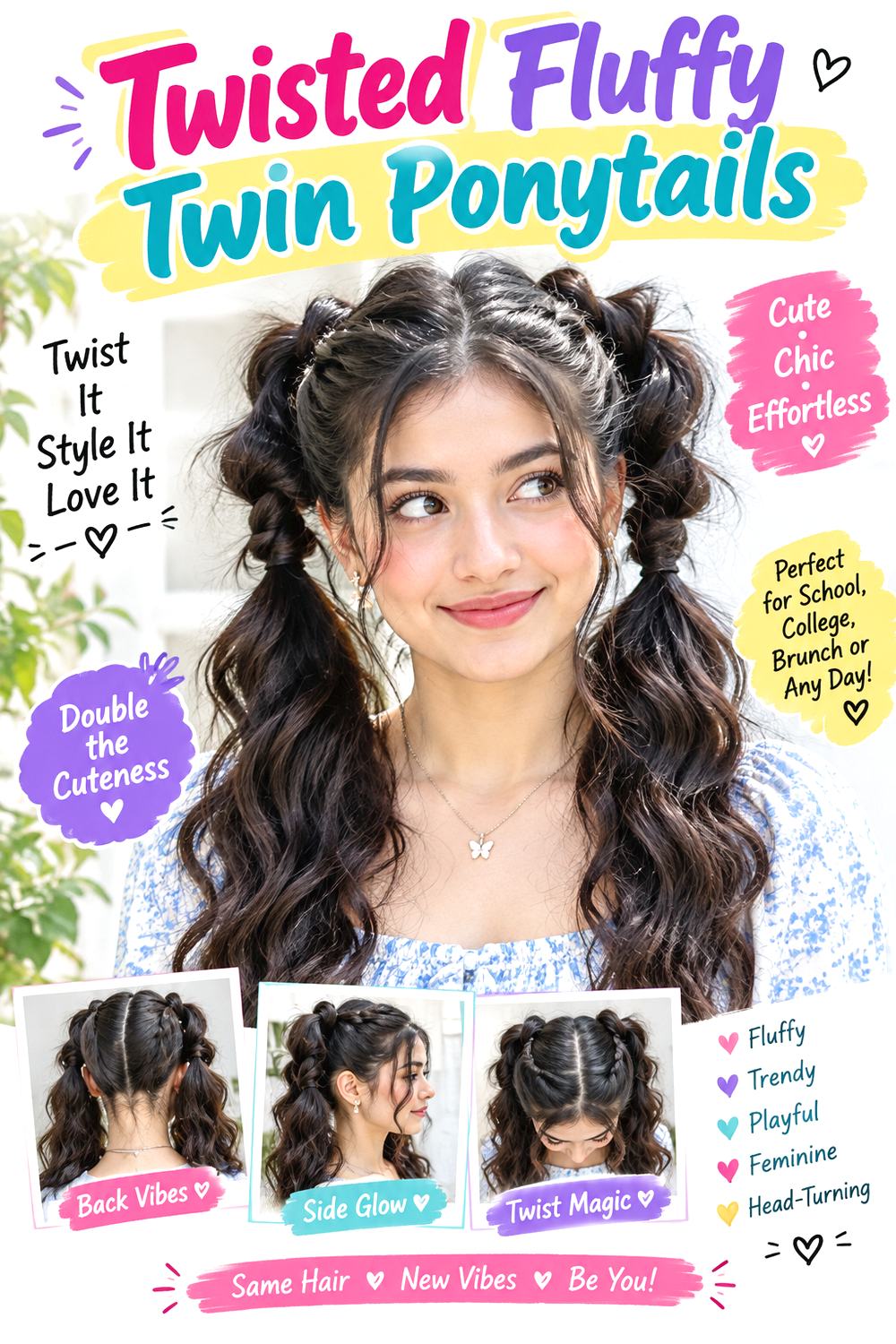
Twisted Fluffy Twin Ponytails Hairstyle stands out through its finish and movement, so the overall effect depends on more than the basic shape alone. The placement through the front, crown, or ends decides where the eye goes first, which means even a small change in parting or lift can shift the feel of the style noticeably. Natural texture changes how much effort this style needs. When the look already matches your pattern, it is usually quicker to recreate and easier to refresh. Styling tends to go better when the shape is built first and only then refined with smoothing, texture, or a little extra hold where needed. The maintenance side depends on how exact you want the finish to remain. Smoother styles usually need more touch-up discipline, while softer looks can tolerate a little movement as the day goes on. If you want a stylist to recreate it, point out the feature that matters most to you, whether that is the front framing, the crown height, the smoothness, or the texture through the ends.
Pro tip: Take a quick photo after styling from the angle you like most, because the side or three-quarter view often shows shape details that are easy to forget later.
Conclusion
The images in 14 Two Fluffy Ponytail Hairstyles for Fall 2026 may sit under the same theme, yet they do not all ask for the same hair type, styling effort, or maintenance routine. Shape, finish, and texture shift the result more than a style name alone ever could. Choosing between them becomes much easier once you know which details matter most to you in real everyday wear.
Before Your Salon Visit
Before your appointment or styling session, decide which visual detail matters most to you: the front framing, the overall shape, the amount of volume, or the finish. Mention your hair texture, density, and how much time you usually spend styling. That practical context helps the stylist adapt the image in a way that still looks good once you are back in your normal routine.
FAQs
How do I know which of these styles will suit my texture best?
Start by comparing the finish of the image with your natural pattern. Styles that already align with your texture usually need less correction and tend to hold their look more naturally through the day.
Do these styles need a lot of daily upkeep?
Some do and some do not. Smoother, more deliberate finishes usually need more touch-ups, while softer looks can often tolerate a bit of movement as the hours pass.
What should I tell a stylist if I want one of these looks?
Point out the exact details you care about most, such as the front framing, the amount of volume, the finish, or the placement. Clear priorities are more helpful than a broad description.
Can I adapt the same idea for thicker or finer hair?
Usually yes. The stylist may simply change how much weight is left, how much texture is added, or how strongly the shape is supported so the idea still works on your density.
Why do some styles look different on me than in the photo?
Natural texture, density, growth pattern, and even how you part your hair can all change the final result. A reference image works best as a guide rather than as a promise of identical behavior.