12 Silk Scarf Hairstyles for Fall 2026

Silk scarves add color and movement to fall hairstyles without requiring a complicated haircut or permanent change. They can be tied around a ponytail, woven into a braid, wrapped around a bun, or folded into a headband. The smooth fabric creates a softer finish than many structured accessories, while different scarf sizes can change the overall shape. Long scarves produce flowing tails, smaller squares create compact knots, and wider folds make stronger headband-style accents around the crown.
These silk scarf hairstyles for Fall 2026 can be adapted to straight, wavy, curly, and coily hair. Fine hair often works best with lighter scarves and smaller knots so the accessory does not overpower the hairstyle. Thick hair can support larger scarves, broader wraps, and fuller buns. Face-framing layers, curtain bangs, and loose curls can remain visible when you want a softer outline around the face.
Most scarf styles are quick once the tying method feels familiar, although woven braids and carefully wrapped buns take more time. Before choosing one, consider your hair length, density, natural texture, scarf size, grip, and daily routine. Smooth silk may slide, so secure the hairstyle underneath before adding the scarf.
Quick List
- Silk Scarf Low Ponytail hairstyle
- Silk Scarf High Ponytail hairstyle
- Silk Scarf Braided Ponytail hairstyle
- Silk Scarf Wrapped Low Bun hairstyle
- Silk Scarf Half-Up Hairstyle with Loose Waves hairstyle
- Silk Scarf Headband with Curtain Bangs hairstyle
- Silk Scarf Headband with Natural Curls hairstyle
- Silk Scarf French Braid hairstyle
- Silk Scarf Messy Bun hairstyle
- Silk Scarf Wrapped Bob hairstyle
- Silk Scarf Side Braid hairstyle
- Silk Scarf Bun with Face-Framing Pieces hairstyle
Silk Scarf Low Ponytail hairstyle

A low ponytail gives a silk scarf a clean base and allows the fabric tails to fall alongside the hair. Position the ponytail at the nape, secure it with an elastic first, then tie the scarf around the base rather than relying on the scarf to hold everything. Straight and wavy hair create the simplest silhouette, while curly hair adds more volume beneath the knot. Fine hair suits a smaller scarf with narrow tails; thick hair can carry a wider square or longer wrap without losing proportion. Use lightweight smoothing cream, a snag-free elastic, and a paddle brush for a neat crown. Styling is quick and easy to refresh during the day. If the scarf slips, tighten the hidden elastic rather than pulling the fabric harder. At the salon, ask for side and nape layers long enough to reach a low ponytail cleanly if you prefer a polished finish without many escaping pieces.
Pro tip:
Tie the scarf over the elastic with one firm knot before making the bow or tails; this helps slippery silk stay centered.
Silk Scarf High Ponytail hairstyle
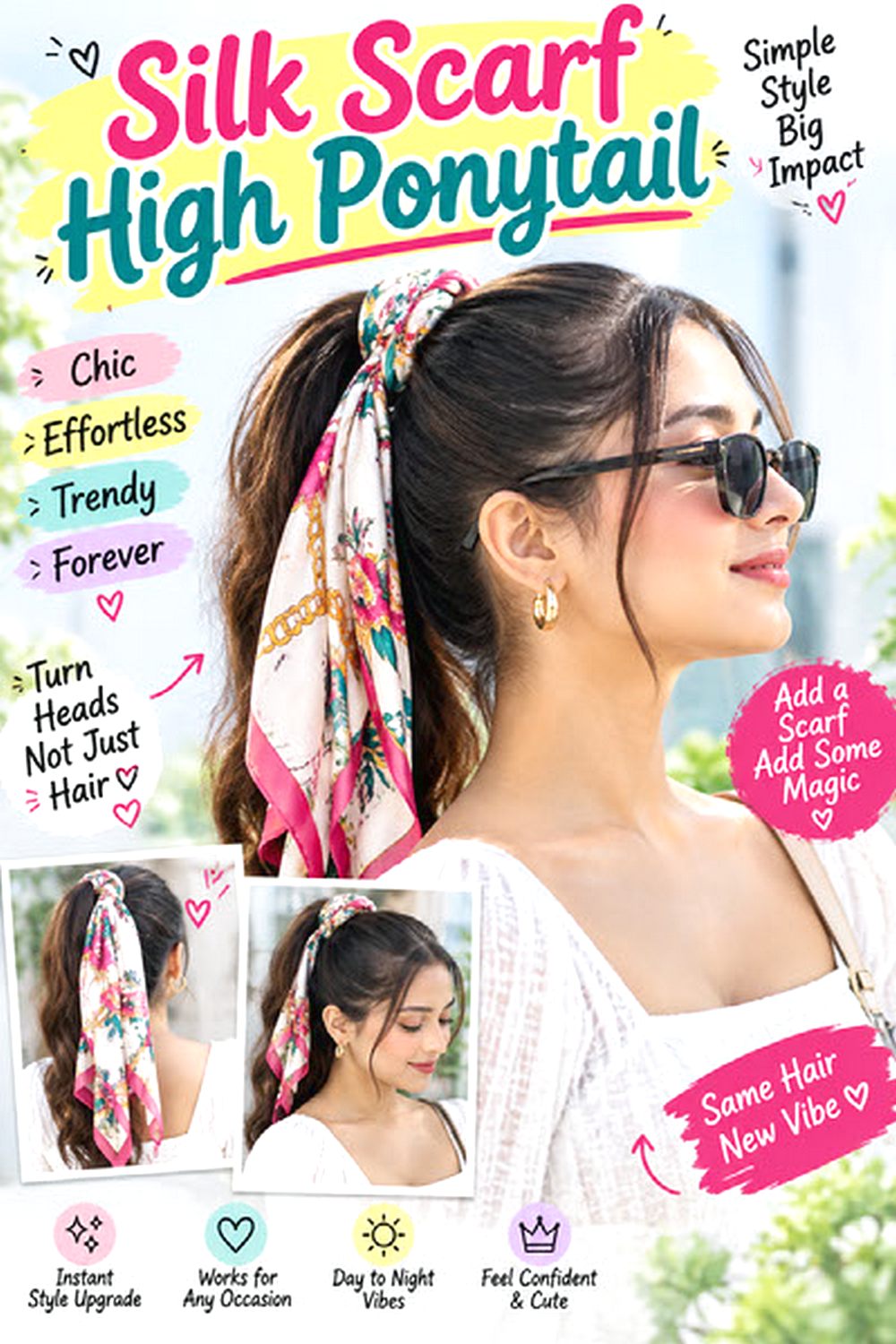
A high ponytail gives a silk scarf more movement because the fabric falls from a higher point and moves with the hair. The ponytail can stay sleek at the roots or have a little crown volume, depending on how polished you want the finish. Long and medium hair show the scarf tails best. Fine hair benefits from light root lift and a narrower scarf, while thick hair needs a strong elastic underneath the fabric. Straight, wavy, and loosely curled textures all work well. Prep with volumizing spray, use a secure snag-free elastic, and add flexible hairspray around the hairline if short pieces tend to escape. Styling is quick when you keep your natural texture and moderate if you curl the ponytail first. Avoid tying the scarf so tightly that it pulls against the elastic. At the salon, ask to keep back layers long enough to reach the high ponytail if you want fewer loose nape pieces.
Pro tip:
Position the scarf knot slightly underneath the ponytail base so the bow does not compete with the hair’s height from the front.
Silk Scarf Braided Ponytail hairstyle

A braided ponytail lets the scarf become part of the hairstyle instead of sitting only at the base. Secure a low or mid-height ponytail, attach the scarf around the elastic, then use one scarf tail as part of a three-strand braid. Long hair shows the woven fabric most clearly, while medium hair creates a shorter, compact version. Fine hair can gently widen the braid after securing it, and thick hair may need broader sections so the scarf remains visible. Use light styling mousse for grip, two snag-free elastics, and a narrow silk scarf that is long enough to reach the bottom. Styling takes moderate time but requires little heat. If the braid loosens, adjust the hair sections rather than pulling hard on the silk. At the salon, ask to preserve perimeter density and avoid excessive thinning through the ends if you frequently wear braids and want them to stay full.
Pro tip:
Anchor the scarf around the ponytail elastic before braiding; silk woven in without a secure starting point can slowly slide downward.
Silk Scarf Wrapped Low Bun hairstyle

Wrapping a silk scarf around a low bun creates a defined accessory line without covering the whole hairstyle. Build the bun first, pin it securely, and then circle the scarf around its base so the fabric acts as decoration rather than structural support. Medium to long hair works best, while thick hair creates a fuller bun naturally. Fine hair can make a softer, wider coil instead of twisting tightly. Straight and wavy textures are easy to smooth, but curly hair can keep more texture around the crown. Use styling cream, strong bobby pins, and a small-to-medium silk scarf. Styling is moderate because the bun needs to feel stable before wrapping. Smooth silk may rotate on a very polished bun, so a discreet hidden pin can help. At the salon, keep nape layers long enough to reach the bun and request a strong perimeter if you want the chignon to look substantial.
Pro tip:
Pin one hidden corner of the scarf underneath the bun before wrapping; it keeps the fabric from rotating as you tie the final knot.
Silk Scarf Half-Up Hairstyle with Loose Waves hairstyle
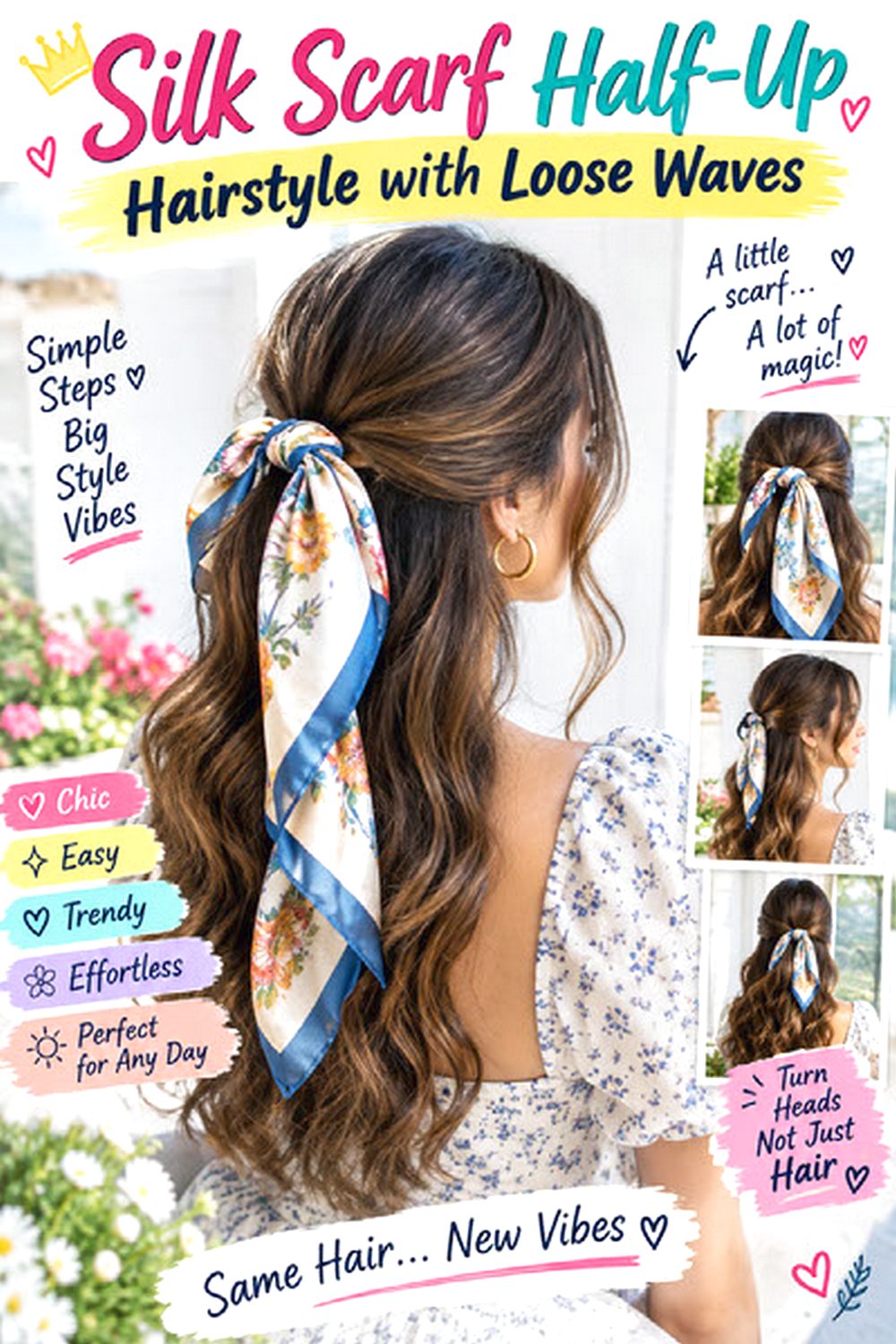
A half-up scarf style keeps most of the hair loose, making it useful when you want to show waves and length while adding a small fall accessory. Gather sections from above the temples, secure them at the back, and tie the scarf over the attachment point. Medium and long hair give the waves enough space to move beneath the scarf. Fine hair benefits because most density stays down, while thick hair should gather a smaller top section so the style does not become bulky. Use heat protectant, a large-barrel curling iron, and a small clear elastic or barrette beneath the silk. Styling takes moderate time when waves are created from scratch but is quick on naturally wavy hair. Keep the scarf light enough that it does not pull the half-up section downward. At the salon, ask for long face-framing layers that blend through the loose lengths without removing too much perimeter weight.
Pro tip:
Secure the half-up section before tying the scarf; asking the silk to hold the hair alone can flatten the crown and make the knot slide.
Silk Scarf Headband with Curtain Bangs hairstyle

Folding a silk scarf into a headband leaves curtain bangs visible while controlling the hair behind them. Place the scarf just behind the fringe, then tie it underneath the hair or at the nape for a cleaner finish. The shortest curtain pieces can curve around the cheekbones, while longer sides blend toward the jaw. Straight and wavy textures are easy to shape; curly hair needs enough bang length to account for shrinkage. Fine hair often suits a narrower folded scarf, while thick hair can balance a broader band. Use heat protectant, a medium round brush, and flexible hairspray for the fringe. Styling is quick to moderate because the bangs need separate attention. If silk slips on very smooth hair, a little dry texture spray behind the scarf can add grip. At the salon, specify the shortest bang point and where the curtain sections should blend into the face-framing layers.
Pro tip:
Style curtain bangs completely before putting on the scarf so the fabric does not flatten their root direction or widen the center split.
Silk Scarf Headband with Natural Curls hairstyle

A silk scarf folded into a headband can hold curls away from the face while leaving the crown and lengths full. Position the band behind the front curl pattern instead of dragging it tightly across the hairline. Medium and thick curls can support a wider scarf, while finer curls often look balanced with a narrower fold that leaves more texture visible. The style works especially well when the curls are already defined from wash day. Use leave-in conditioner, curl cream, and a spray bottle for small refreshes before placing the scarf. Styling is quick once the curls are dry, though wash-day preparation naturally takes longer. Avoid tying the scarf too tightly at the nape because pressure can flatten curls beneath it. At the salon, discuss shrinkage and layer placement so volume stays balanced around the crown. Keep enough length near the temples if you want front curls to remain visible beside the scarf.
Pro tip:
Let curls dry fully before adding the scarf; damp roots can stretch under the band and dry flatter than the surrounding texture.
Silk Scarf French Braid hairstyle

A French braid with silk woven through it creates a continuous accessory detail from the crown toward the ends. Begin with a narrow scarf attached near the starting section, then include one scarf tail with a strand as you add hair into the braid. Medium to long hair gives the fabric more room to show, while straight and wavy textures are easiest to section neatly. Fine hair should keep the braid slightly loose for width; thick hair may need larger sections so the scarf does not disappear inside the weave. Use dry texturizing spray, a tail comb, and a small elastic to finish the braid. Styling takes moderate to longer time because the scarf tension needs to stay even. Short layers may require light hairspray. At the salon, ask for connected layers through the crown and sides if you regularly wear braids and want fewer pieces escaping from the weave.
Pro tip:
Keep the scarf slightly taut while braiding but use softer tension on the hair; this makes the fabric visible without flattening the braid.
Silk Scarf Messy Bun hairstyle

A messy bun paired with a silk scarf works best when the bun is secure underneath and the looseness is added afterward. Gather the hair at mid-height or near the crown, twist it into a soft bun, and secure it with an elastic and pins before wrapping a scarf around the base. Wavy and curly hair naturally create more texture, while straight hair can gain grip from dry spray. Fine hair benefits from gently expanding the bun instead of heavy teasing, and thick hair may need several pins to control the weight. Use dry texturizing spray, a strong elastic, and lightweight bobby pins. Styling is quick and easy to refresh, making it practical for second-day hair. Avoid pulling out too many random strands. At the salon, ask for intentional face-framing pieces if you like softness around the front rather than relying on uneven broken layers.
Pro tip:
Loosen the crown before adding the scarf; adjusting root volume afterward can pull against the knot and shift the bun.
Silk Scarf Wrapped Bob hairstyle
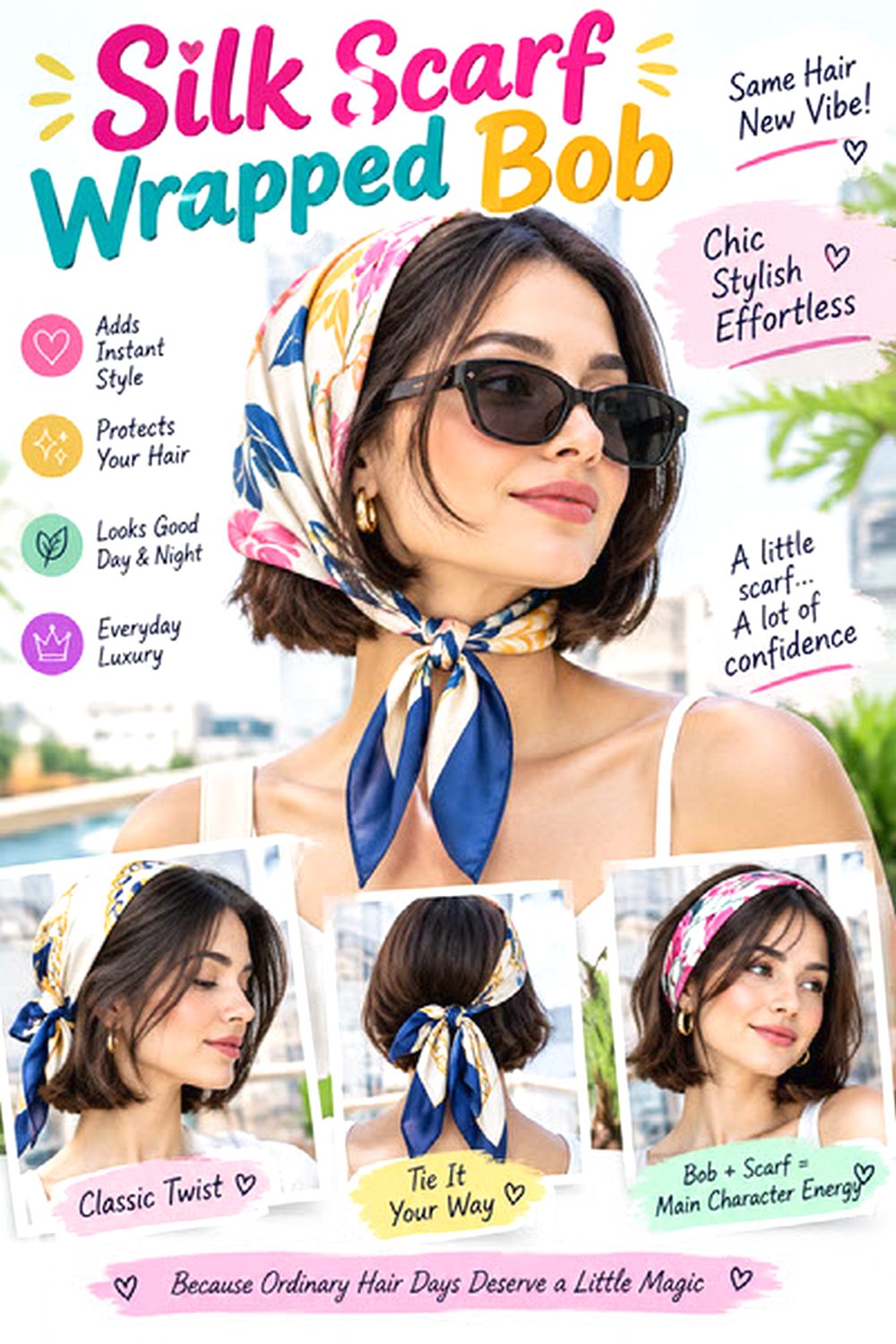
A bob does not need enough length for a ponytail or bun to work with silk. Fold the scarf into a medium-width band and tie it around the head, leaving the bob ends loose underneath. Chin- to shoulder-length cuts work especially well because the accessory creates structure while the perimeter remains visible. Fine hair benefits from a strong baseline and a lighter scarf that does not flatten the crown. Thick bobs may need internal weight removal so the sides stay balanced beneath the band. Use volumizing spray, a small round brush, and lightweight anti-frizz serum for the ends. Styling is quick to moderate depending on how polished you want the bob. A scarf can also disguise second-day roots without hiding the haircut. At the salon, request a clean perimeter with restrained layering if you want full-looking ends to remain visible below the scarf.
Pro tip:
Place the scarf slightly behind the highest point of the crown instead of directly across it; this preserves more root lift in a short bob.
Silk Scarf Side Braid hairstyle
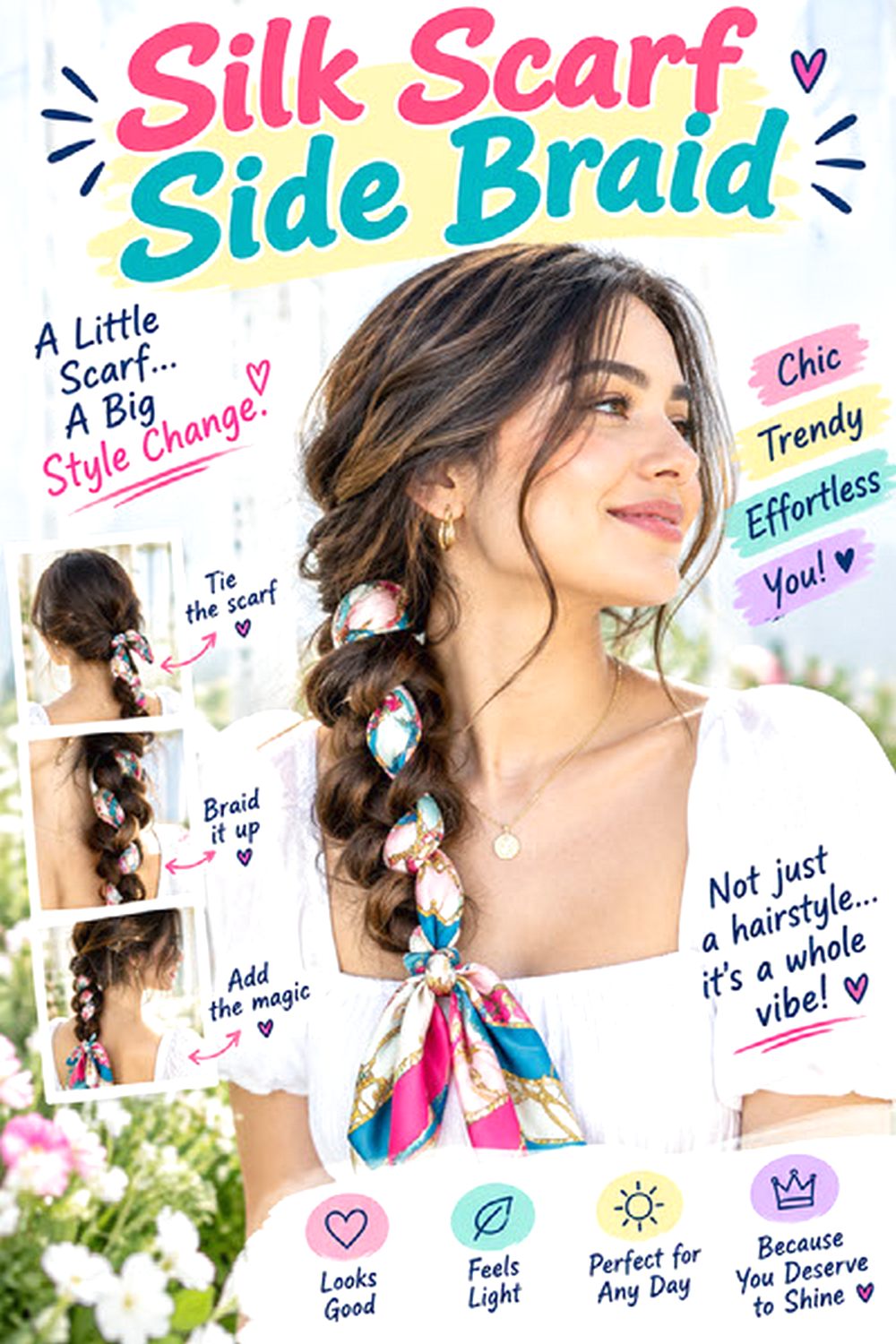
A side braid lets both the hair and scarf fall over one shoulder, creating a relaxed shape with visible movement. Sweep the hair to one side, secure or anchor the scarf near the nape, then weave it through a loose three-strand or simple rope braid. Long hair displays the fabric best, while medium hair creates a shorter, compact braid. Wavy texture adds natural grip, and straight hair can use a little dry texture spray before braiding. Fine hair should gently widen the braid after securing it, while thick hair may need a medium-width scarf to remain visible. Use texturizing spray, a small elastic, and a soft silk scarf with enough length for a finished tail. Styling is moderate and easy to refresh if the braid loosens. At the salon, ask for long blended layers so the side braid remains full instead of breaking into many short pieces.
Pro tip:
Anchor the braid slightly behind the ear instead of directly underneath it; this helps the scarf and braid drape naturally over the shoulder.
Silk Scarf Bun with Face-Framing Pieces hairstyle
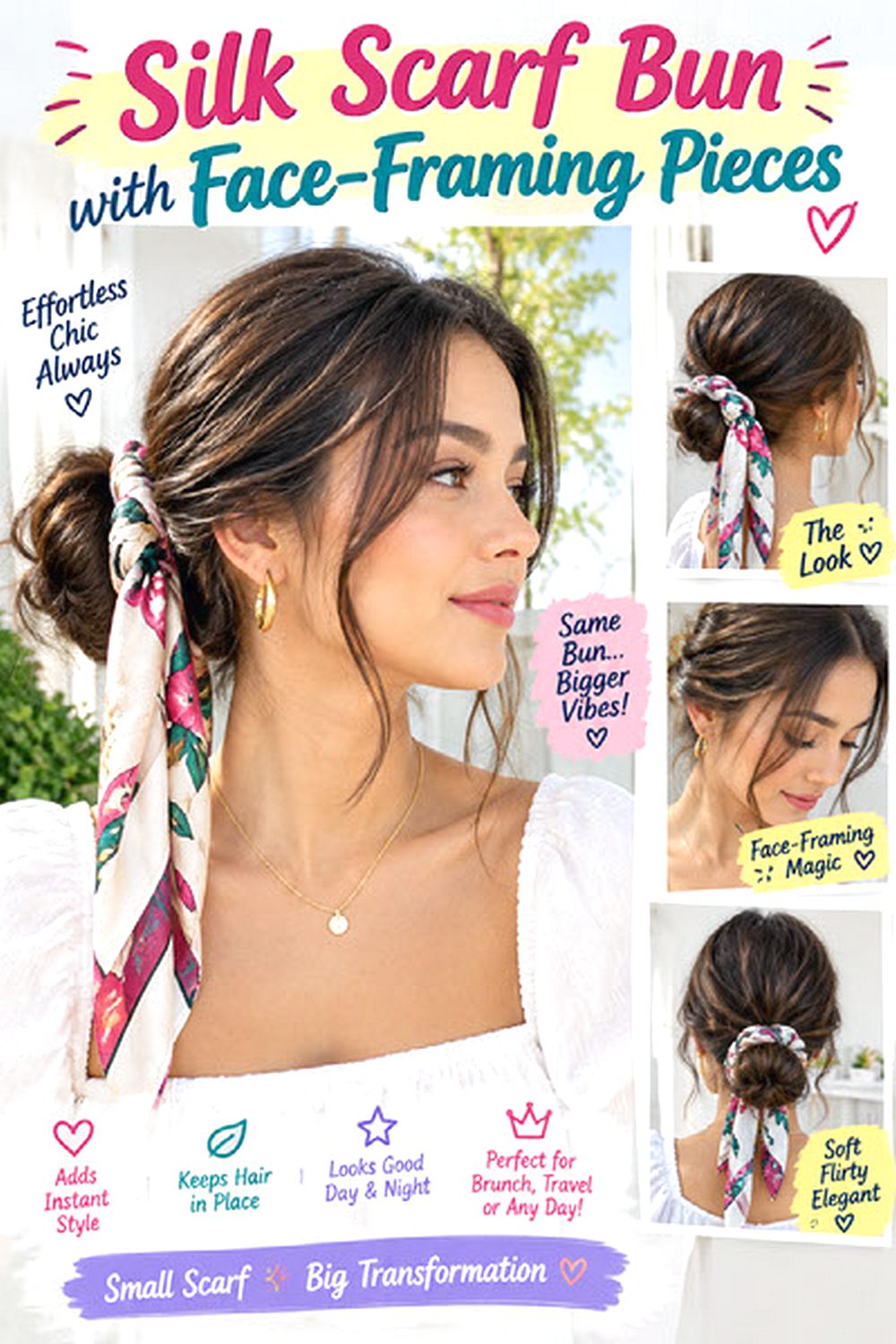
A scarf-wrapped bun with face-framing pieces combines a structured back with softer movement around the front. Separate the temple sections first, gather the remaining hair into a low or mid-height bun, and tie the silk around the base. The loose pieces can fall near the cheekbones, jaw, or collarbone depending on the haircut. Medium and thick hair creates a fuller bun, while fine hair can use a loose folded shape instead of a tight coil. Use lightweight mousse, a curling wand for the front pieces, and strong pins underneath the scarf. Styling takes moderate time because the face frame needs separate shaping. In humid weather, use a small amount of anti-frizz cream on those exposed strands. At the salon, show the exact face-framing length you prefer and ask for enough perimeter weight to keep the bun from looking thin.
Pro tip:
Curl the front pieces after the bun and scarf are secure; you can then match their bend to the finished updo without disturbing the back.
Choosing Silk Scarf Hairstyles for Fall 2026
The best silk scarf hairstyles for Fall 2026 depend on your length, density, texture, face-framing, and preferred styling effort. Longer hair gives you more options for braids, buns, and flowing scarf tails, while bobs can use folded scarf headbands to keep the haircut visible. Fine hair usually pairs best with smaller scarves and lighter knots, while thick hair can support broader wraps and fuller shapes. Straight hair creates a cleaner scarf contrast, whereas waves, curls, and coils add natural texture and volume. Bangs, parting, layers, and scarf placement can all change the balance around the face. Because silk is smooth, secure the hairstyle underneath before adding the fabric. The most practical version is one that fits your natural hair type, maintenance preferences, and normal routine.
Choose one or two favorite ideas and save clear photo references that show the scarf placement as well as the hairstyle underneath. Discuss your face shape, natural texture, density, preferred length, maintenance level, and styling routine with your stylist. Point out the exact layers, fringe, face-framing pieces, bun or ponytail height, crown volume, and scarf finish you like. Clear references help your stylist shape the haircut so your favorite scarf styles are easier to recreate without relying on excessive heat or complicated daily styling.
FAQs
Do silk scarves work well on fine hair?
Yes. Choose a lighter, smaller scarf and secure the hairstyle with an elastic or pins first. A little dry texture spray can also help smooth silk stay in place.
How can I stop a silk scarf from slipping out of my hair?
Anchor it over an elastic, bun, braid, or textured section instead of tying it over very smooth loose hair. Hidden bobby pins can also secure the scarf discreetly.
Can I wear silk scarf hairstyles with curly or coily hair?
Yes. Fold or tie the scarf without excessive tension, preserve natural crown volume, and avoid dragging the fabric repeatedly through curls or coils.
Do silk scarf hairstyles require heat styling?
No. Braids, buns, ponytails, and curly headband styles can all work without heat. Heat is mainly useful when you want polished waves, shaped bangs, or deliberately curved face-framing pieces.