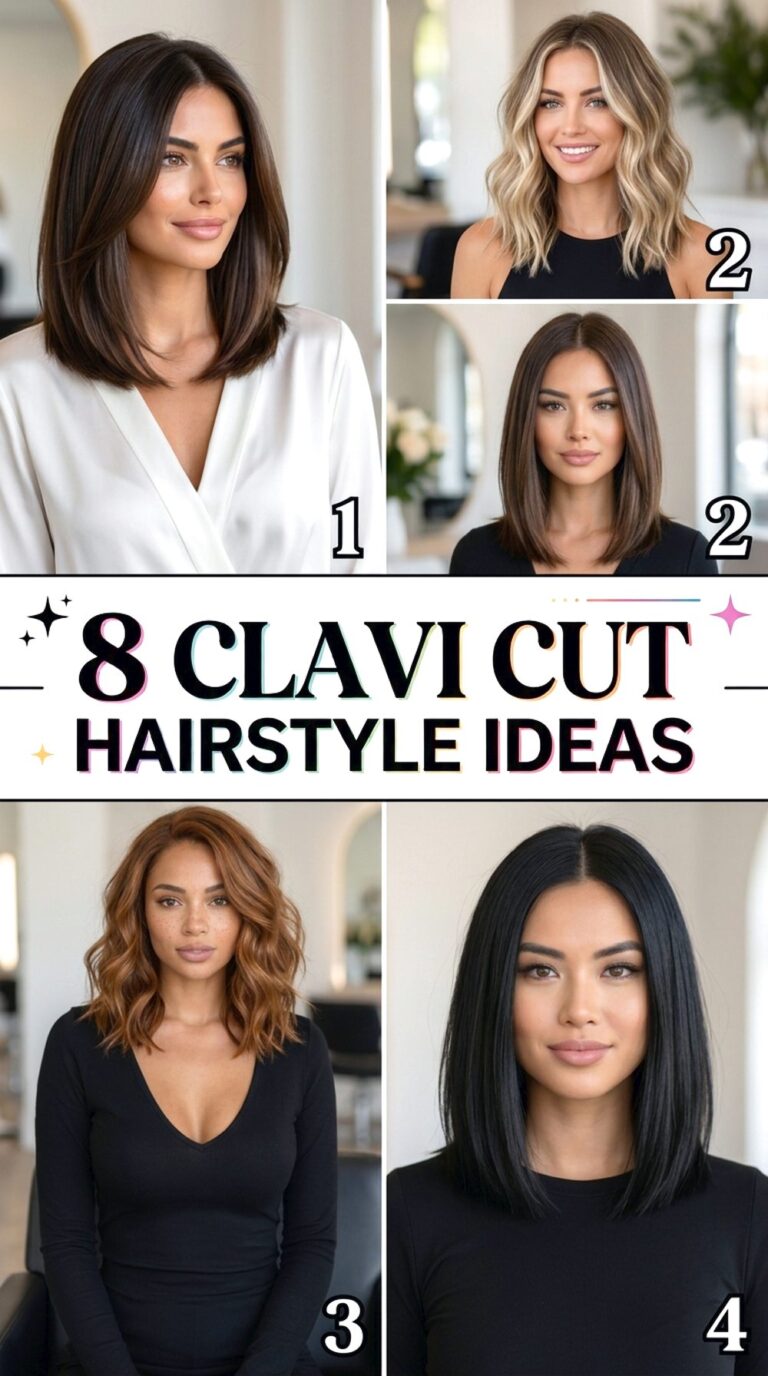
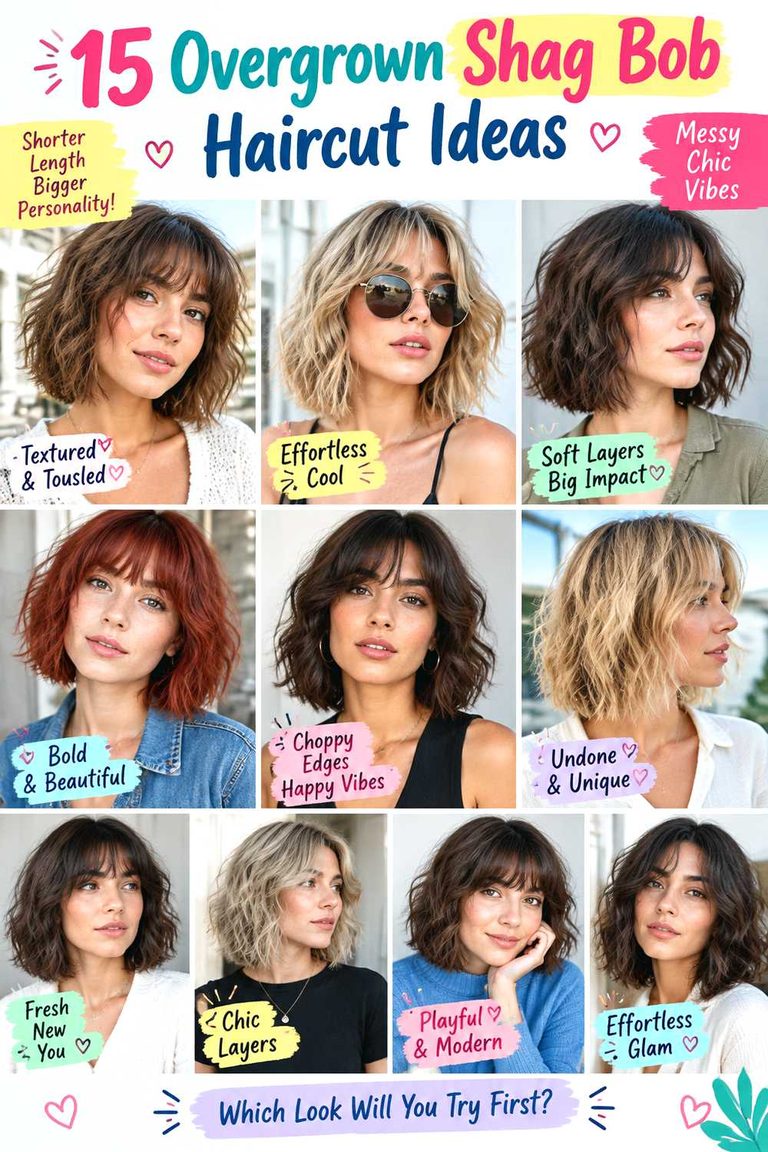
12 Collarbone Lob Haircut Ideas for Fall 2026

A collarbone lob sits around the collarbone, giving a long bob enough length to move while keeping a clear, intentional outline. The shape can be blunt, softly layered, curled, waved, or paired with fringe, but the defining feature is a medium-length perimeter that stays close to the shoulders. Small changes in layer placement, parting, and front pieces can make the cut feel fuller, lighter, straighter, or more textured without changing its basic length.
Straight and wavy textures can show the line clearly, while curly and coily hair can wear the same family of cut with extra attention to shrinkage and dry shape. Density matters too: sparse ends often benefit from a stronger bottom edge, while dense hair may need controlled bulk reduction inside the shape. Face-framing can start at the cheekbone, jaw, or chin depending on how open or enclosed you want the front to feel.
Styling effort ranges from an air-dried finish to a polished blowout or shaped bend. Quick refreshes may take only a few minutes, while full wash-day styling depends on texture, density, and drying time. Cut upkeep is separate: reshape when the perimeter loses its intended line, layers stop blending, or fringe begins to interfere with your preferred finish.
Quick List
- Blunt Collarbone Lob Hairstyle
- Softly Layered Collarbone Lob Hairstyle
- Curtain Bangs Collarbone Lob Hairstyle
- Side-Parted Collarbone Lob Hairstyle
- Air-Dried Wavy Collarbone Lob Hairstyle
- Polished Bend Collarbone Lob Hairstyle
- Face-Framing Collarbone Lob Hairstyle
- Full Fringe Collarbone Lob Hairstyle
- Curly Collarbone Lob Hairstyle
- Dense-Hair Sculpted Collarbone Lob Hairstyle
- Fine-Hair Full-Edge Collarbone Lob Hairstyle
- Flipped-End Collarbone Lob Hairstyle
Blunt Collarbone Lob Hairstyle

A strong bottom edge is the main feature here. The lob finishes close to the collarbone with minimal visible layering, a center or softly off-center part, and front sections that stay near the overall length. Straight styling makes the perimeter look especially crisp, while a slight natural bend keeps it from feeling rigid. Because the ends carry most of the visual weight, movement comes from the hair swinging as one clean shape rather than from short layers.
This cut can suit straight, wavy, fine, or medium-density hair when the goal is to preserve fullness through the ends. Dense hair may need weight adjusted inside the shape so the sides do not become too wide. For a polished finish, use heat protectant to reduce heat exposure, a round brush to guide the ends, and a lightweight smoothing serum to control flyaways without flattening the perimeter. A quick between-wash refresh is shorter than a full wash-day blowout, which varies with density and starting texture.
Ask your stylist to show where the finished bottom edge will sit when dry and to keep the perimeter visibly substantial. Reshape when the collarbone line starts looking uneven or the ends no longer sit together cleanly.
Pro tip: After blow-drying, let the ends cool in their finished position before touching them. This helps the collarbone line stay smoother without adding extra product.
Make It Work for You: If your natural wave makes a perfectly blunt edge kick unevenly, keep the strong perimeter but allow a tiny amount of interior movement so the cut settles more naturally.
Watch Out For: Over-thinning the lower edge can make this design lose its main feature. Ask for bulk control inside the shape instead of removing weight indiscriminately from the ends.
Softly Layered Collarbone Lob Hairstyle
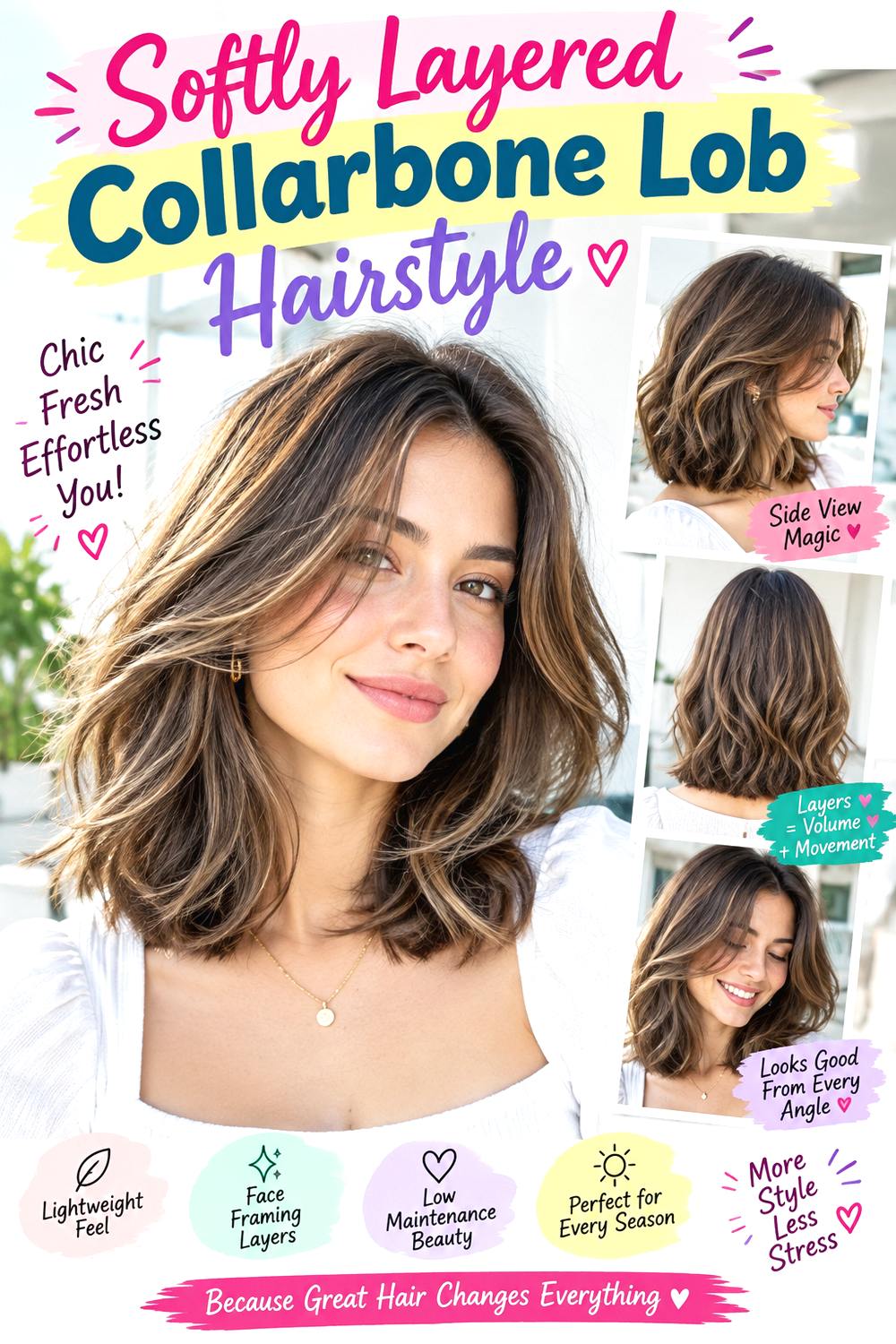
Soft layers break up the solid lob outline without turning the cut into a heavily feathered shape. The length still meets the collarbone, but shorter pieces begin around the jaw or just below it and blend into the mid-lengths. A center part keeps the movement balanced, and broad bends through the lower half can make the layers visible while leaving the ends softly separated rather than sharply flipped.
This option works well for medium to dense hair that feels bulky in a one-length lob, and it can also suit wavy texture when the layers follow the natural pattern. Fine or lower-density ends need more restraint so the bottom edge does not become see-through. For heat styling, apply heat protectant first, use a large-barrel curling iron to form loose bends, and finish with flexible hairspray so the layers move instead of setting stiffly. A small morning reshaping is quicker than a full wash-day set, especially on naturally straight or gently wavy hair.
At the salon, point to the exact place you want the shortest layer to begin and ask to preserve enough weight at the collarbone. Trim or reshape when the layers stop linking together and the outline begins to look uneven rather than softly graduated.
Pro tip: Direct the front layers slightly away from the face while they cool, then loosen them with your fingers. That keeps separation visible without turning the whole cut into curls.
Make It Work for You: If your ends are sparse, keep most layering around the front and upper mid-lengths while preserving a denser collarbone edge. You still get movement without sacrificing the outline.
Watch Out For: Starting every layer too high can create unwanted width around the sides. Keep the shortest point deliberate and let the remaining layers lengthen gradually into the perimeter.
Curtain Bangs Collarbone Lob Hairstyle

Curtain bangs give the collarbone lob a shorter focal point around the eyes while keeping the sides open. The fringe is shortest near the center, with longer outer corners blending toward the cheekbones, and the rest of the cut sits near the collarbone with light face-framing. A middle part supports the split fringe, while soft bends through the mid-lengths echo the outward sweep at the front.
The design can suit straight, wavy, and softly curly textures, but the fringe needs to be judged by its finished dry position because growth direction and shrinkage change where it lands. Medium density gives room for a visible fringe without taking too much hair from the sides; lower density may benefit from a narrower bang section. Use heat protectant before styling, a small round brush to direct the fringe away from the face, and light mousse at the roots for flexible lift. A fringe refresh can be brief, while a full wash-day blowout takes longer depending on texture and density.
Ask your stylist to keep the outer fringe corners long enough to blend into the face-frame rather than cutting a separate short band. Fringe upkeep is usually triggered when the center starts falling into the eyes or no longer splits where you want it.
Pro tip: Style the center of the fringe first, then sweep the outer corners away from the face. Working in that order helps the split look intentional rather than forced.
Make It Work for You: For curly hair, preserve the curtain shape by making the center slightly shorter than the sides, but judge every section dry so shrinkage does not leave unexpected gaps.
Watch Out For: Do not cut the fringe based only on stretched or wet length. The center can spring much shorter, so confirm its dry resting point before removing more hair.
Side-Parted Collarbone Lob Hairstyle

A deep or moderate side part changes the balance of a collarbone lob without requiring dramatic layering. One side gains more sweep and root lift, while the lighter side can tuck behind the ear or sit closer to the cheek. The perimeter remains near the collarbone, with subtle front pieces beginning around the chin so the heavier side moves instead of collapsing into one block.
Straight and wavy hair show the asymmetric balance clearly, while curly hair can use the same parting idea with the natural curl pattern left intact. It is especially useful for readers who like changing volume placement without maintaining bangs. For a shaped blow-dry, use heat protectant to limit heat exposure, a root-lift spray only near the heavier side, and a round brush to encourage lift at the part. A quick dry-hair reset of the part is much shorter than washing and restyling the full lob.
Tell your stylist which side you normally part on and ask that the front layers still connect when worn that way. The cut needs reshaping when one side begins to look noticeably heavier at the ends or the face-frame stops blending into the collarbone length.
Pro tip: Switch the part while the roots are slightly damp, then dry them in the new direction. This gives the heavier side more lift than moving a fully dry part.
Make It Work for You: If your hair is very dense, keep the side sweep but ask for controlled internal weight reduction where it puffs widest, not aggressive thinning around the front edge.
Watch Out For: A side part that is pushed too far over can expose awkward separation or collapse quickly. Move it slightly closer to center and build lift gradually instead.
Air-Dried Wavy Collarbone Lob Hairstyle
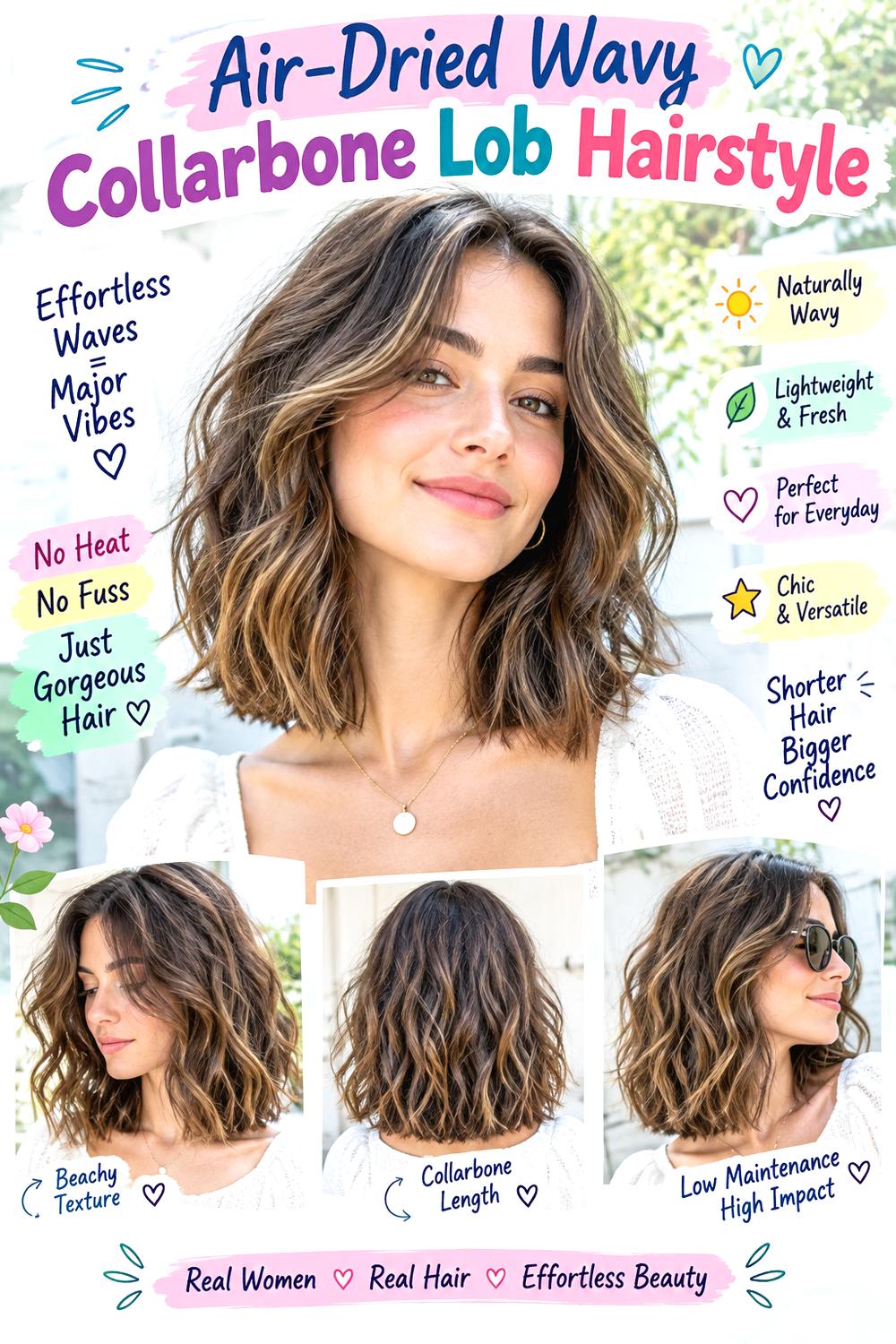
Natural wave is allowed to define the surface of this lob, so the cut depends more on balanced shape than on a perfectly smooth finish. The length lands around the collarbone, with long layers starting below the chin and enough weight left at the ends to keep the outline from becoming wispy. A relaxed center or off-center part works well, while irregular S-bends create movement from the mid-lengths downward.
Wavy hair is the most direct fit, though loose curls can use the same approach if shrinkage is considered when choosing finished length. Dense hair may need carefully placed internal weight reduction; lower density often benefits from fewer layers and a fuller edge. Apply a lightweight leave-in conditioner for slip, work in curl cream to support wave grouping, and use a microfiber towel to remove excess water without roughing up the surface. Wash-day drying takes as long as your texture and density require, but later refreshes can be brief with lightly dampened sections.
At the salon, explain that you want the shape to work in its air-dried state and show where the shortest layer should sit when the wave contracts. Reshape when the bottom starts forming a triangle or the wave groups no longer fall evenly around the shoulders.
Pro tip: Arrange the front wave groups while hair is still damp, then leave them alone as they dry. Repeated touching can break the pattern and create unnecessary surface frizz.
Make It Work for You: If your waves are loose and your ends are sparse, reduce the number of layers and keep movement mainly around the face so the collarbone edge stays visibly full.
Watch Out For: Applying too much cream near the roots can flatten the shape before it dries. Concentrate product through the mid-lengths and ends, then reassess after the hair is dry.
Polished Bend Collarbone Lob Hairstyle
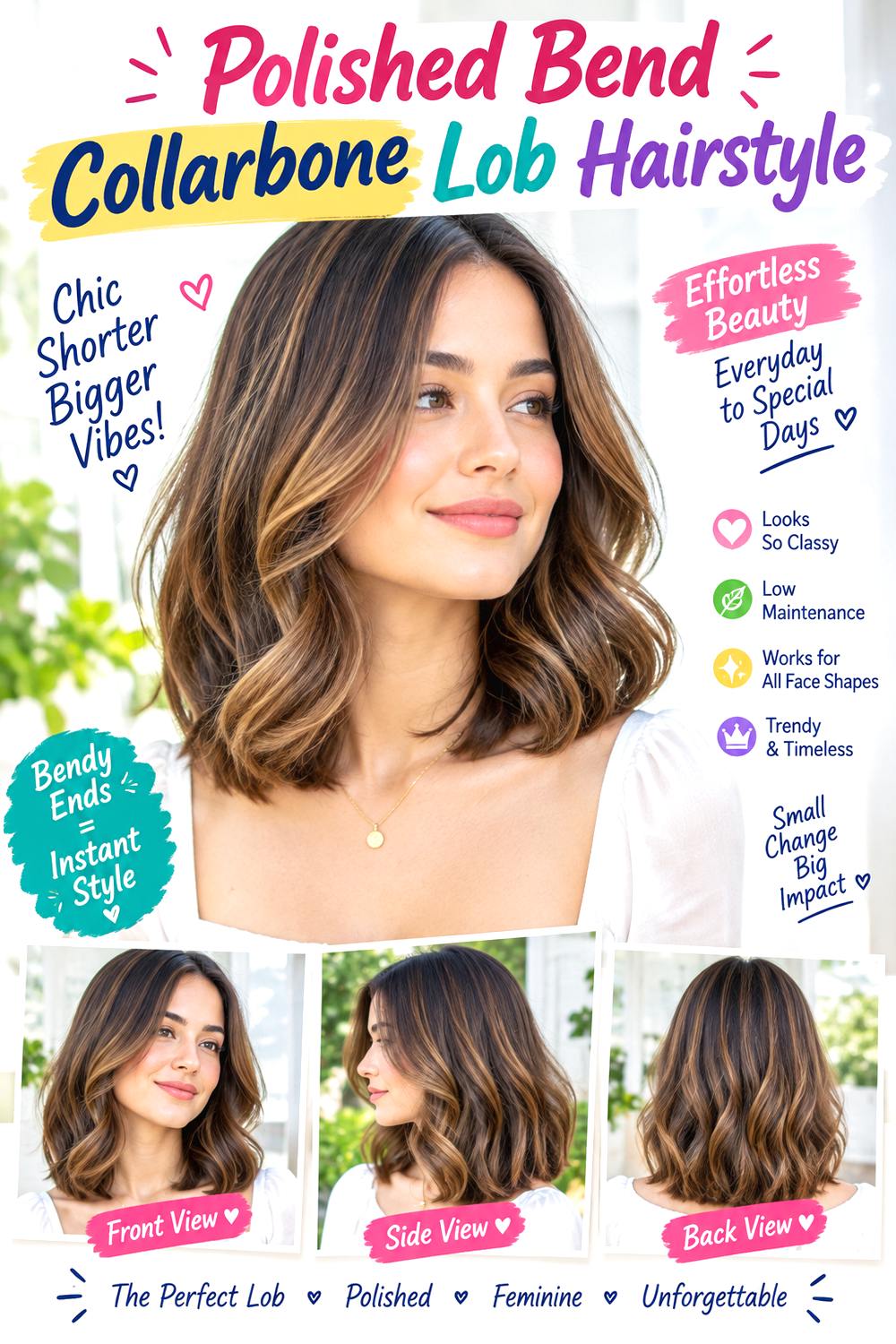
The defining detail is a smooth lob with one broad bend through the lower half rather than repeated curls. The cut sits at the collarbone with a clean perimeter, long face-framing beginning around the jaw, and a center part that keeps the shape even. Roots stay relatively sleek, the mid-lengths arc gently outward or inward, and the ends remain controlled for a polished but movable finish.
Straight and wavy textures can reach this shape with moderate styling, while curly or coily hair may require a longer smoothing routine if you want to temporarily change the natural pattern. Medium to dense hair can hold the bend well, but fine strands may need lighter product quantities. Apply heat protectant before any heated work, use a large-barrel curling iron to create one loose bend, and mist flexible hairspray through the mid-lengths for soft hold. A dry-hair touch-up can be quick; a full wash, smooth, and bend set takes longer according to texture and density.
Ask your stylist to keep the lower perimeter strong enough that the bend reads as intentional rather than feathery. Maintenance is less about daily perfection than keeping the ends healthy-looking and reshaping the cut when the collarbone line loses its clean balance.
Pro tip: Create the bend in larger sections and let each one cool before loosening it. Smaller sections can turn the intended broad curve into multiple obvious curls.
Make It Work for You: If your hair is fine, keep the same single-bend finish but use less holding product and preserve a stronger bottom line so the ends do not separate too much.
Watch Out For: Repeatedly reheating a section to perfect the bend increases exposure without guaranteeing better shape. Let it cool, assess it, then adjust only the pieces that truly need it.
Face-Framing Collarbone Lob Hairstyle

Long face-framing pieces give this lob movement around the front without creating full bangs. The main length rests at the collarbone, while the shortest visible pieces start around the cheekbone or jaw and lengthen gradually toward the shoulders. A middle or soft side part changes where those pieces open, and loose bends can direct them away from the face while the back stays comparatively simple.
This shape is useful for straight or wavy hair and can be adapted to curls by choosing the front length after accounting for shrinkage. Medium and dense hair can support several graduated pieces; fine or lower-density hair may look fuller with fewer front sections and a stronger bottom edge. For heat styling, use heat protectant to reduce heat exposure, a medium round brush to guide the front pieces, and lightweight styling cream to keep the ends together without making them greasy. Refreshing only the face-frame is usually much faster than restyling the full lob after washing.
At your appointment, point to where the shortest front piece should finish when dry and ask for a smooth connection into the collarbone length. Revisit the shape when those pieces stop framing distinctly or begin merging into the rest of the cut without visible graduation.
Pro tip: Style the shortest front pieces first because they cool fastest and set the direction of the frame. Guide them away from the cheek before blending the longer sections.
Make It Work for You: For curly hair, keep the same graduated frame but choose the shortest point after seeing the curl dry. A longer starting point can preserve the intended cheek or jaw emphasis.
Watch Out For: Too many short front sections can leave the sides looking thin. Keep the frame selective and connect each piece gradually into the collarbone length instead of carving out a separate zone.
Full Fringe Collarbone Lob Hairstyle

A full fringe creates a strong horizontal detail across the forehead while the lob stays long enough to brush the collarbone. The bangs can skim the brows with slightly softer outer corners, while the body of the cut remains blunt or lightly layered through the lower third. Keeping the part hidden behind the fringe makes the front feel continuous, and a soft bend at the ends prevents the overall silhouette from becoming too boxy.
Straight and gently wavy textures make the fringe easiest to control, though curls can wear a fuller bang when finished length and shrinkage are assessed dry. A dense fringe uses more hair from the front section, so lower-density hair may need a narrower version to protect fullness at the temples. Use heat protectant before reshaping, a small round brush to control the fringe direction, and dry shampoo between washes to reduce oiliness at the roots. Bang refreshes can be short, while washing and restyling the whole lob takes longer based on texture and density.
Ask your stylist to define the fringe width and finished dry length before cutting too much. Maintenance is triggered quickly when the bangs enter the eyes, separate heavily, or lose their intended edge, even if the rest of the lob still looks balanced.
Pro tip: Dry the fringe soon after washing rather than letting it set in random directions. Guiding the roots early makes the finished edge easier to control with less restyling.
Make It Work for You: If your density is lower, keep the fringe full in appearance but narrow its section slightly. That protects temple fullness while preserving the strong front detail.
Watch Out For: Cutting the outer corners as short as the center can make the fringe feel disconnected. Leave them a little longer so they blend into the side sections.
Curly Collarbone Lob Hairstyle
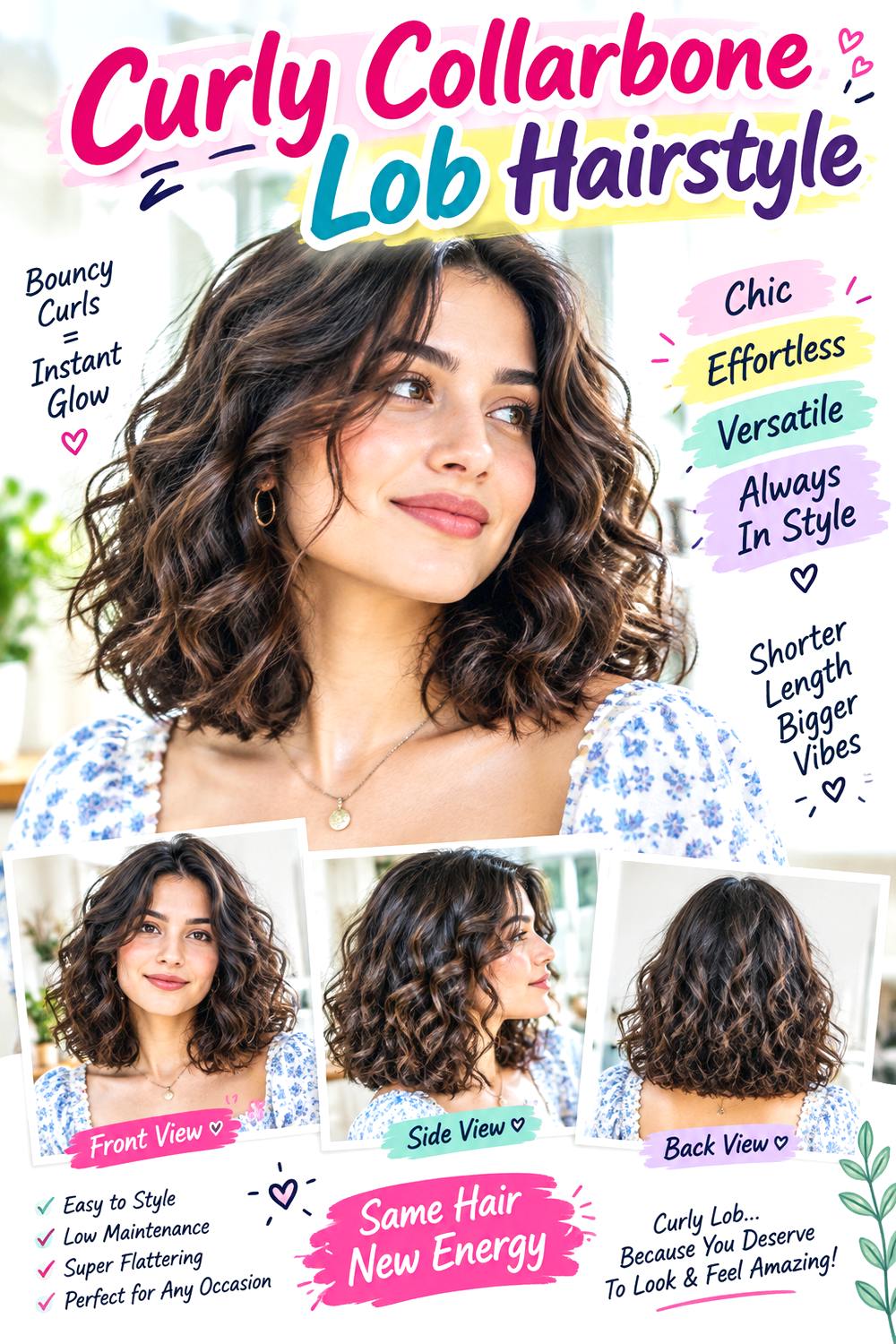
Curly texture gives the collarbone lob a rounded, springy outline with movement built into the curl groups. The finished length should sit around the collarbone when dry, not simply when stretched, and layers can begin around the jaw or lower to prevent too much bulk from collecting at the bottom. A center or side part can shift volume, while face-framing curls should be long enough to settle naturally after shrinkage.
This cut works best when the stylist evaluates the actual curl pattern and density rather than assuming one shrinkage rate. Dense curls may need carefully controlled internal bulk reduction, while lower-density curls often benefit from retaining more perimeter weight. Use a lightweight leave-in conditioner for moisture and slip, curl gel for definition and hold, and a diffuser to dry without disturbing curl groups. Full wash-day styling can be lengthy depending on density and drying time; later refreshes may only involve selected curls that have lost shape.
At the salon, discuss the desired dry collarbone length and where the widest part of the silhouette should sit. Reshaping becomes useful when the lower outline spreads too far, the layers stack unevenly, or the front curls no longer connect smoothly with the overall shape.
Pro tip: Refresh only the curls that have stretched or frizzed instead of reworking the whole head. Targeted reshaping protects the overall pattern and keeps daily effort reasonable.
Make It Work for You: If your curls shrink strongly, plan the cut around the dry collarbone target rather than the wet length. Keeping more length initially gives the stylist room to refine the shape.
Watch Out For: Removing too much bulk from the ends can create a hollow lower outline. Keep weight where the curls need support and reduce excess only where the silhouette actually spreads.
Dense-Hair Sculpted Collarbone Lob Hairstyle
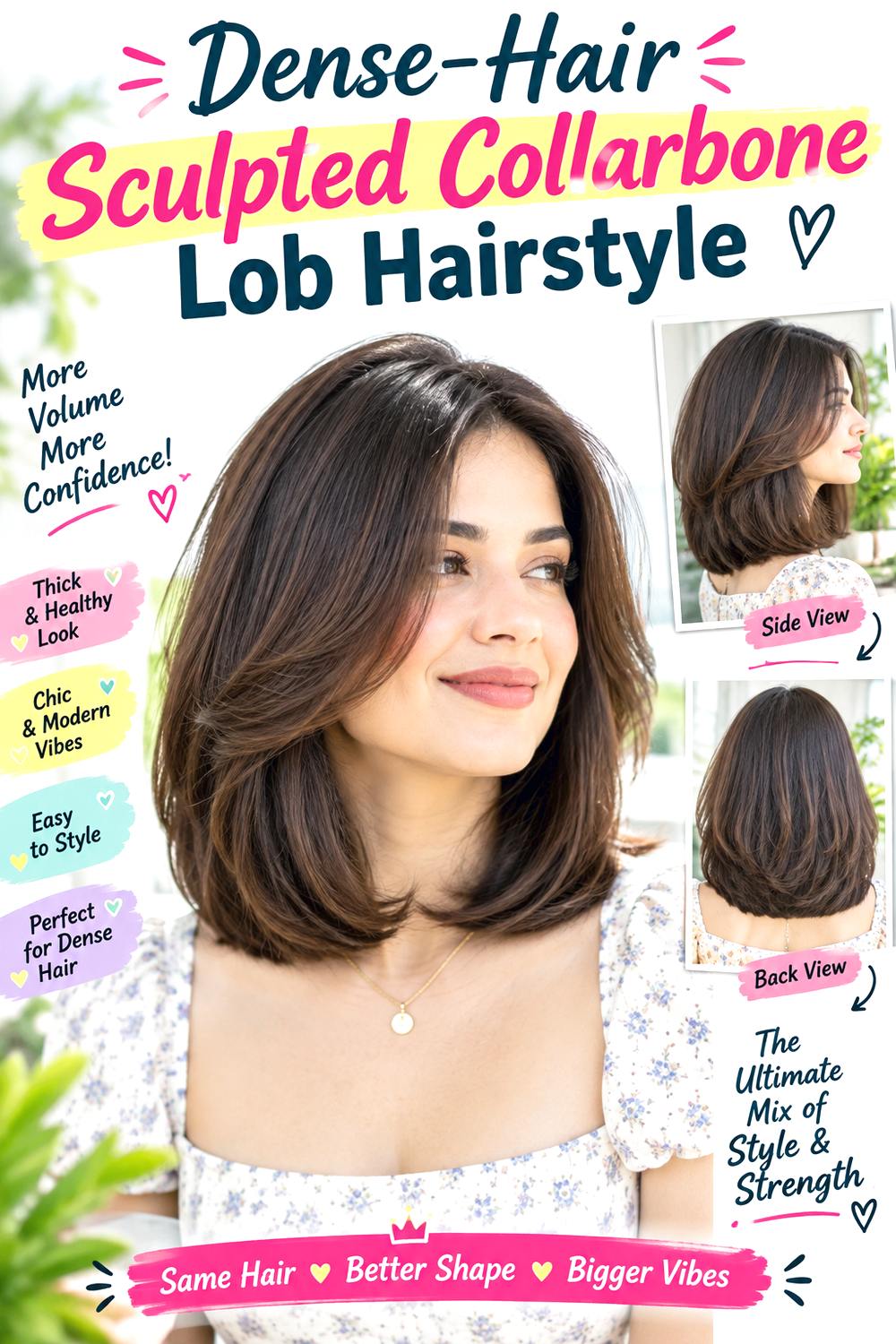
Dense hair can make a collarbone lob look substantial, but the key is controlling where that weight sits. This version keeps a visible, full perimeter at the collarbone while reducing excess bulk inside the shape rather than thinning the ends indiscriminately. Long layers start below the chin, a center or side part can be used, and broad movement through the mid-lengths prevents the sides from forming one heavy triangle.
The cut is designed for high-density hair across straight, wavy, or gently curly textures, though the exact weight removal should follow the natural pattern. Readers who prefer minimal daily styling may want fewer short layers so the shape settles predictably after washing. Use heat protectant before blow-drying, a paddle brush to smooth and direct the bulk, and lightweight smoothing cream through the lower lengths for control without coating the roots. A small refresh can focus on the surface; full wash-day drying is naturally more time-consuming when there is more hair.
Ask your stylist to preserve the outer perimeter and identify the exact zones where internal weight makes the lob widen. The cut needs reassessment when bulk begins collecting at the sides again or the layers stop moving as a connected shape.
Pro tip: After drying, check the widest point from the front and side rather than judging only the ends. That reveals whether internal bulk is still distorting the intended outline.
Make It Work for You: If you prefer air-drying, keep the internal shaping conservative and let the longest layers carry more weight. The lob will settle more predictably without depending on a polished blowout.
Watch Out For: Heavy thinning at the perimeter can turn dense hair into wispy ends while leaving bulk higher up. Ask for weight removal where the shape expands, not where it needs structure.
Fine-Hair Full-Edge Collarbone Lob Hairstyle
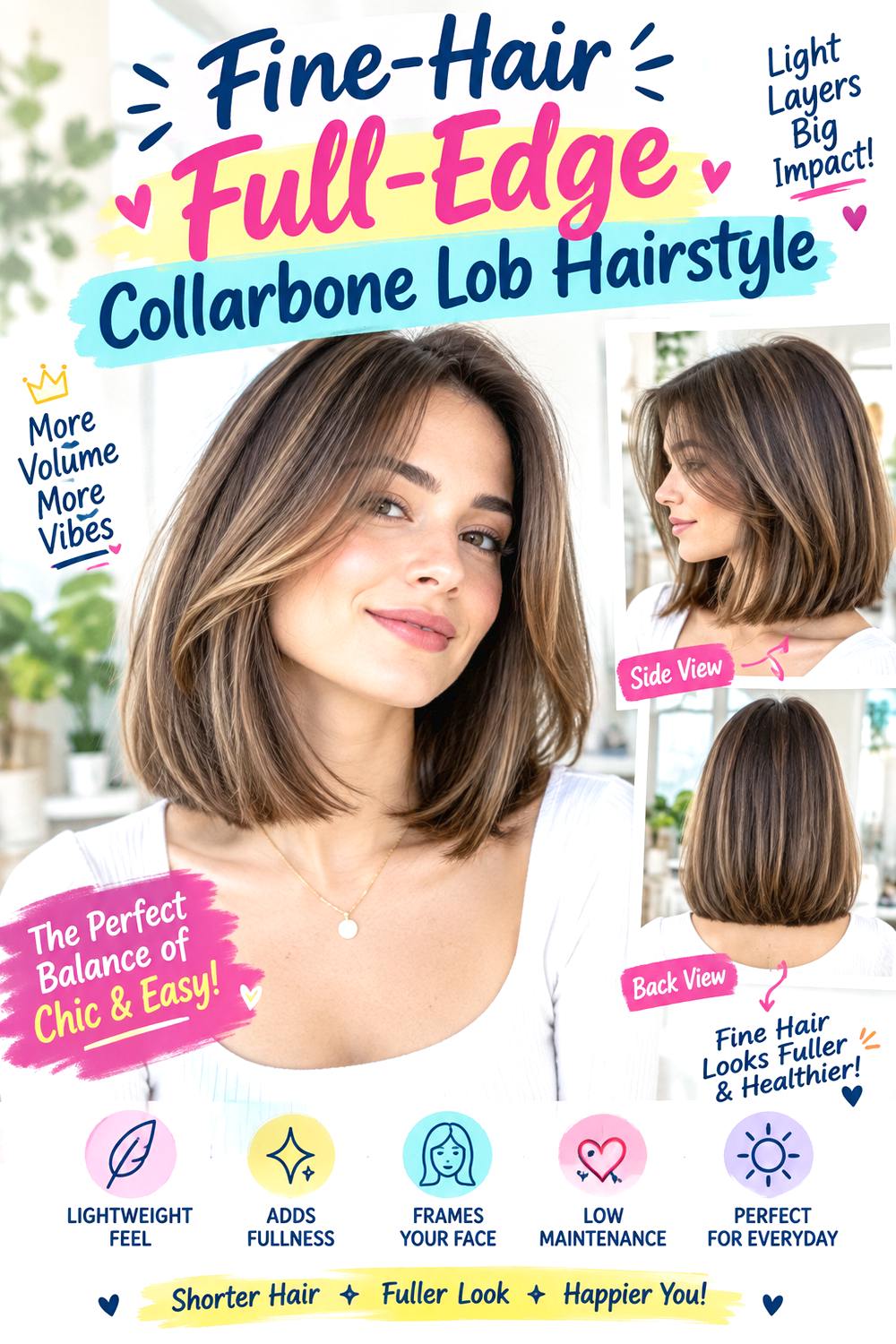
A fuller bottom edge helps fine strands look organized at collarbone length without relying on heavy layering. The cut stays mostly one length through the back, with only a few long face-framing pieces beginning around the chin. A center or slight side part keeps the surface simple, while a gentle bend through the ends adds movement without separating the perimeter into thin-looking pieces.
Fine hair can be dense or sparse, so the important salon decision is how much hair is available at the bottom line. Lower-density ends usually benefit from minimal internal removal, while denser fine hair may tolerate a little more shaping. Use heat protectant before heated styling, a lightweight mousse at the roots for support, and a round brush to build controlled lift without roughing up the ends. A quick root refresh between washes can be short; a full wash-day blowout will vary with length, density, and how much polish you want.
Ask your stylist to keep the collarbone edge visibly solid and to limit face-framing so it does not steal too much weight from the sides. Reshape when the bottom begins to look uneven or the front pieces become disconnected from the stronger overall line.
Pro tip: Keep volumizing product concentrated near the roots and mid-lengths, then leave the last inch relatively light. That helps the ends stay grouped instead of splitting into airy pieces.
Make It Work for You: If you have fine strands but high density, a few longer internal layers can add movement while the collarbone edge stays full. Fine does not automatically mean one-length only.
Watch Out For: Overloading the cut with oil or heavy cream can collapse the root lift and separate the ends. Start with less product and add only where the surface needs control.
Flipped-End Collarbone Lob Hairstyle

A controlled outward flip gives the collarbone lob a distinct finish while leaving the upper half relatively smooth. The cut falls close to one length at the shoulders, with subtle long layers only if needed for movement. A middle or side part can work, but the visual focus stays on the last few inches, where the ends curve away from the neck in a clean, repeated direction.
Straight and softly wavy hair make the flip straightforward, while other textures can wear it as an occasional heat-styled finish if the extra smoothing effort fits the routine. Medium density helps the ends read clearly; very sparse ends may need a stronger perimeter and a softer turn. Apply heat protectant before styling, use a round brush to roll the ends outward during the finish, and add flexible hairspray underneath the flipped section for hold without a hard shell. A morning end refresh can be brief, whereas a full wash-day blowout depends on natural texture and density.
Tell your stylist you want enough weight at the collarbone for the flip to look deliberate, not feathered. Reassess the cut when the ends become too uneven to turn together or when overgrown layers cause the lower edge to separate in conflicting directions.
Pro tip: Work on the flip only after the upper lengths are smooth. Turning the ends too early can create random bends higher up and weaken the clean repeated curve.
Make It Work for You: If your ends are fine, make the outward turn softer and keep the bottom line stronger. A subtle flip can show the idea without exposing every separated strand.
Watch Out For: Rolling each section in a different direction makes the finish look accidental. Keep the curve consistent around the perimeter, then loosen only enough to avoid a stiff edge.
Conclusion
The best collarbone lob haircut is the one that matches how your hair naturally sits and how much styling you want to do. A blunt or full-edge shape preserves density and gives the perimeter more presence, while layered, face-framing, and curly versions create more visible movement. Fringe changes upkeep most noticeably, and a side part can shift volume without adding bangs. Wavy, flipped, and polished finishes may share the same basic length but demand different amounts of heat and refresh work. Consider shrinkage, end density, preferred parting, and how often you want to reshape the cut. For fall, the practical advantage of collarbone length is its balance: enough movement to style several ways, but still short enough to keep the outline clear.
Before Your Salon Visit
Choose one or two favorites before your salon visit and save clear references that show the exact length, fringe, layers, volume, parting, or finish you like. Explain your natural texture, density, usual styling routine, and how much upkeep you are comfortable with. If you like the length from one reference and the face-frame from another, say that directly. Ask how the proposed collarbone position will behave with your face shape, shrinkage, and everyday parting before the cut begins.
FAQs
Is a Collarbone Lob a Good Choice for Fine or Lower-Density Hair?
It can be, especially when the bottom edge stays fairly full. Fine strands and low density are not the same thing, so ask your stylist to assess how much weight your ends can support. Heavy layering may reduce fullness, while selective front pieces can add movement without weakening the perimeter.
How Often Does a Collarbone Lob Need Reshaping?
There is no single schedule that fits every lob. Book a reshape when the bottom edge loses its intended line, layers stop connecting, or fringe starts interfering with your preferred finish. Blunter cuts often show uneven growth sooner, while softer layers may tolerate a longer grow-out.
Can Curly Hair Wear a Collarbone Lob Without Being Straightened?
Yes. A curly collarbone lob can be shaped around the natural pattern without straightening it. The key is choosing the finished dry length with shrinkage in mind and placing layers where they support the silhouette. Curl density and grouping should guide how much internal weight is removed.
Do I Need Heat Styling to Make a Collarbone Lob Look Polished?
No. Air-dried waves, curls, and naturally straight textures can all look intentional when the cut is balanced for their pattern. Heat is mainly useful when you want a temporary smooth bend, flip, or blowout. If you use it, include heat protectant and avoid unnecessary repeated passes.