18 Wispy Cloud Bangs Hairstyle Ideas for Fall

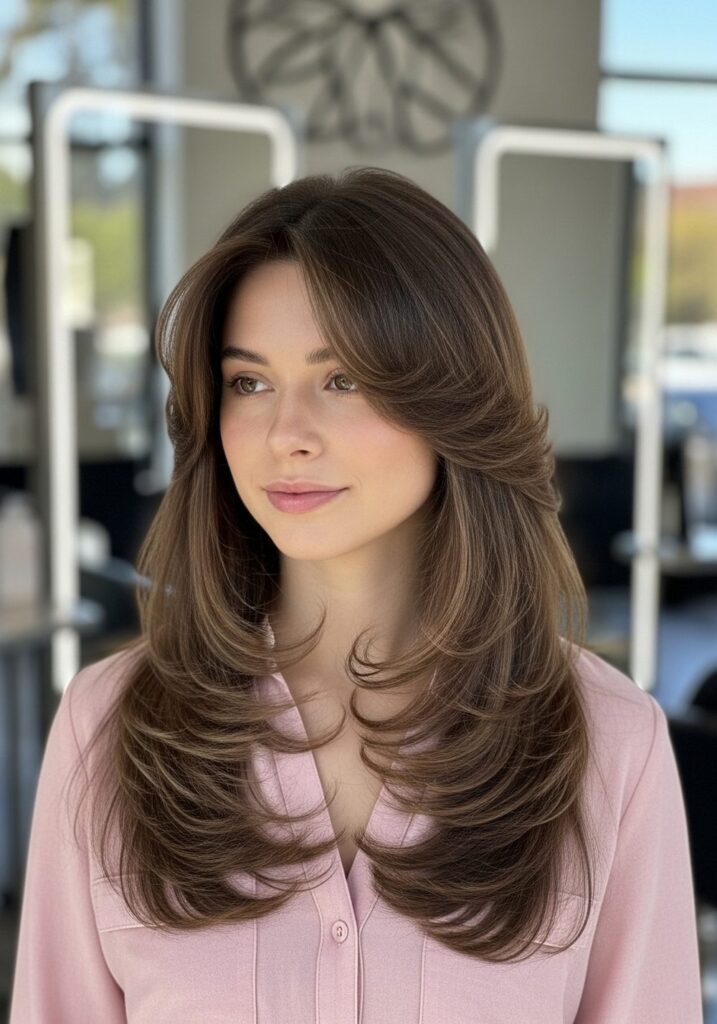
Wispy cloud bangs are an airy fringe with a lightly curved or separated center and softer outer pieces that blend toward the temples. The defining feature is not heavy coverage but controlled lightness: enough fringe to shape the forehead while allowing small gaps between strands. Finished length can skim the brows, sit slightly lower, or stretch toward the cheekbones at the outer corners. Long layers, bobs, lobs, curls, and waves all change how the fringe connects to the rest of the haircut.
Texture and density matter because an airy fringe behaves differently on straight, wavy, curly, and coily hair. Fine strands do not automatically mean low density, so the width and amount of hair taken into the fringe should be planned separately from strand thickness. Curly and coily bangs also need their dry shrinkage and grouping assessed rather than relying on one wet measurement.
For fall, cloud bangs can work with loose waves, smooth blowouts, natural curls, hats, scarves, and collar-heavy outfits without requiring one fixed finish. A fringe refresh may take only a few minutes, while full wash-day styling can be much longer. Growth direction, separation, frizz, and finished length usually matter more than rigid trim schedules.
Quick List
- Airy Brow-Skimming Cloud Bangs Hairstyle
- Long Feathered Cloud Bangs Hairstyle
- Center-Split Cloud Bangs Hairstyle
- Curly Wispy Cloud Bangs Hairstyle
- Soft Wave Cloud Bangs Hairstyle
- Cheekbone Cloud Bangs Hairstyle
- Piecey Micro Cloud Bangs Hairstyle
- Long Layered Cloud Bangs Hairstyle
- Side-Swept Cloud Bangs Hairstyle
- Rounded Cloud Bangs Bob Hairstyle
- Cloud Bangs Shag Hairstyle
- Cloud Bangs Lob Hairstyle
- Fine Hair Cloud Bangs Hairstyle
- Dense Hair Cloud Bangs Hairstyle
- Coily Cloud Bangs Hairstyle
- Soft Curtain Cloud Bangs Hairstyle
- Tousled Fall Cloud Bangs Hairstyle
- Glossy Cloud Bangs Hairstyle
Airy Brow-Skimming Cloud Bangs Hairstyle
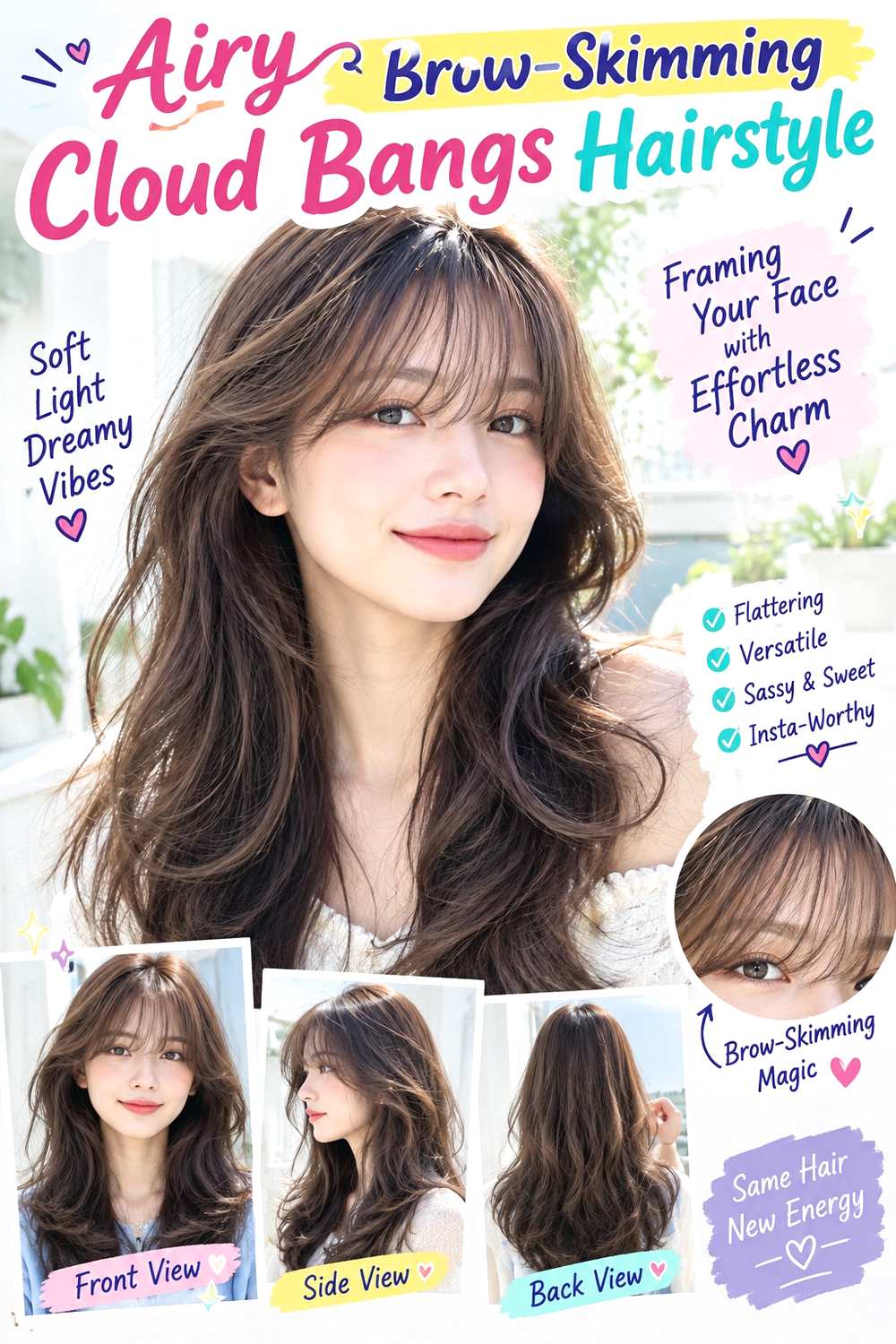
A brow-skimming fringe gives cloud bangs their lightest classic shape. The center sits close to the brows with visible separation between small sections, while the outer corners lengthen gently toward the temples. Keep the fringe narrow enough that it does not remove unnecessary density from the sides, and pair it with shoulder-length or longer hair for an easy contrast between the airy front and fuller lengths. A center or soft off-center part can work, depending on natural growth direction.
Straight and softly wavy textures usually need only light reshaping, while hair with stronger bends may require more morning adjustment if you want the fringe to sit close to the brows. Use heat protectant before heat styling, a small round brush to direct the fringe, and flexible hairspray for light hold. A dry fringe refresh can be brief; washing, drying, and styling all the hair is a separate, longer task.
At the salon, point to the exact finished center length you want when the fringe is dry and explain how transparent you want the section to appear. Trim or reshape when the center starts falling into the eyes or the outer corners stop blending cleanly.
Pro tip:
Dry the fringe from side to side before settling it forward. Changing direction at the roots helps reduce stubborn splits without creating a heavy rounded bend.
Make It Work for You:
If your forehead growth pattern pushes the fringe sideways, keep the center slightly longer and allow a soft off-center fall instead of forcing perfect symmetry every morning.
Watch Out For:
Avoid taking too wide a fringe section just to create more coverage. That can remove density from the temples and make the result less wispy.
Long Feathered Cloud Bangs Hairstyle

Long feathered cloud bangs sit below the brows at the center and stretch farther toward the cheekbones at the edges. The tips stay lightly separated rather than forming a solid curtain, creating a fringe that can move between forward and parted styling. Pair the shape with medium or long hair and begin the surrounding face frame near the cheekbones or jaw so the transition from fringe to length feels gradual. A center part makes the outer corners equally visible.
This version suits readers who like a softer grow-out because the longer fringe can eventually blend into face-framing layers. Straight, wavy, and loosely curly textures can all support it, though the amount of daily shaping depends on natural growth direction. Use heat protectant for heated styling, a medium round brush to create a gentle outward bend, and lightweight mousse near the roots for soft lift. A quick refresh can focus only on the fringe; a full wash-day blowout takes much longer.
At the salon, show where you want the center to finish dry and where the outer corners should meet the cheekbone or side layers. The long fringe should still look intentional when it begins to grow, so avoid making the difference between center and sides too abrupt.
Pro tip:
Roll the outer corners away from the face only slightly. Too much bend can turn a feathered cloud fringe into a full curtain-bang shape.
Make It Work for You:
For lower-density hair, keep the fringe section narrower and preserve more hair at the temples, while maintaining the longer outer corners that define the feathered effect.
Watch Out For:
Do not over-layer the front simply because the bangs are long. Too many short pieces can weaken the smooth connection into the rest of the haircut.
Center-Split Cloud Bangs Hairstyle

A center split gives wispy cloud bangs a visible opening while keeping enough short pieces near the middle to frame the forehead. The central fringe can sit around the brows, then gradually lengthen toward the temples so the split looks soft rather than sharply divided. Medium or long hair works especially well because the outer pieces can merge into face-framing layers around the cheekbones or jaw. Keep the crown relatively smooth so the fringe remains the focus.
This is useful for anyone whose bangs naturally separate near the middle, because the style works with that movement instead of constantly fighting it. Straight and wavy textures usually need minimal resetting, while curls can use the same idea with a wider, curl-defined opening. Use a lightweight mousse for root support, a small round brush to guide both sides, and heat protectant if heat is involved. Reopening the center after sleep can be a short refresh; a full wash-day style takes longer.
At the salon, point to the exact width of the center opening you prefer and where the shortest pieces should sit when dry. Fringe maintenance becomes necessary when the middle no longer separates cleanly or the outer corners merge too heavily into the sides.
Pro tip:
Dry each half toward the opposite side first, then return it to place. That root redirection can create a softer center split without over-rounding the fringe.
Make It Work for You:
If your natural part sits slightly off-center, keep the cloud-bang opening a little uneven rather than forcing a perfect middle split that needs constant correction.
Watch Out For:
Avoid creating the center opening by removing too much hair from the middle. Keep short wisps there so the fringe still reads as cloud bangs.
Curly Wispy Cloud Bangs Hairstyle

Curly cloud bangs use separated curl groups rather than straight, feathered strands to create the wispy effect. The center can finish around the brows when dry, while the outer curls lengthen gradually toward the temples or cheekbones. A rounded shoulder-length shape or longer curly cut keeps the fringe connected to the rest of the hair without requiring straightened edges. The most important visual detail is space between curls, not perfectly even individual lengths.
This version works best when the fringe is planned according to shrinkage, curl grouping, and the direction each front section naturally springs. A lightweight leave-in conditioner adds slip, curl gel helps small fringe groups hold together, and a diffuser supports controlled drying. Refreshing two or three front curls between washes can be quick; complete detangling, product application, and drying is a much longer wash-day task.
At the salon, explain where you want the center curls to sit when fully dry and how much forehead you want visible between them. Ask for the outer fringe to blend into the face frame without removing unnecessary bulk from the temples. Maintenance is triggered when the curls start falling into the eyes or no longer connect comfortably with the surrounding shape.
Pro tip:
Define the fringe in smaller curl groups than the back, then leave them alone while drying. Repeated touching can separate the wisps into unwanted frizz.
Make It Work for You:
If your curls shrink strongly, keep the first cut conservatively longer and assess the fringe dry before deciding whether the center needs additional shortening.
Watch Out For:
Do not choose curly fringe length from wet hair alone. Shrinkage can move the finished bangs significantly higher than the same section appears when stretched.
Soft Wave Cloud Bangs Hairstyle

Soft waves give cloud bangs a relaxed finish by pairing an airy fringe with broad bends through the longer hair. Keep the bangs lightly curved rather than tightly curled, with the center near the brows and outer corners tapering toward the temples. The waves can begin below the cheekbones so the upper hair stays calm while the mid-lengths gain movement. A center or slightly off-center part both work, provided the fringe still falls loosely across the forehead.
This pairing is especially manageable for naturally wavy hair because the longer texture already echoes the fringe movement. Straight hair can recreate it with heat, while strongly curly hair can adapt the idea using larger natural curl groups. Use heat protectant before heated styling, a large-barrel curling iron for broad bends, and flexible hairspray to maintain movement. Redefining the fringe and two front waves can be a short refresh; setting the whole head after washing takes longer.
At the salon, describe the fringe center length and how long you want the outer corners to remain before they blend into the face frame. Ask to preserve enough perimeter weight if your ends are fine. Bang upkeep should follow when the center enters the eyes or the outer pieces lose their soft connection.
Pro tip:
Style the fringe first and the long waves second. This keeps you from repeatedly moving finished bangs while arranging larger sections around the face.
Make It Work for You:
For fine strands, keep the wave pattern broad and the fringe relatively narrow so the overall shape gains movement without sacrificing too much visible density.
Watch Out For:
Avoid curling the fringe with the same large bend used on the lengths. Too much lift can make cloud bangs look bulky instead of light.
Cheekbone Cloud Bangs Hairstyle
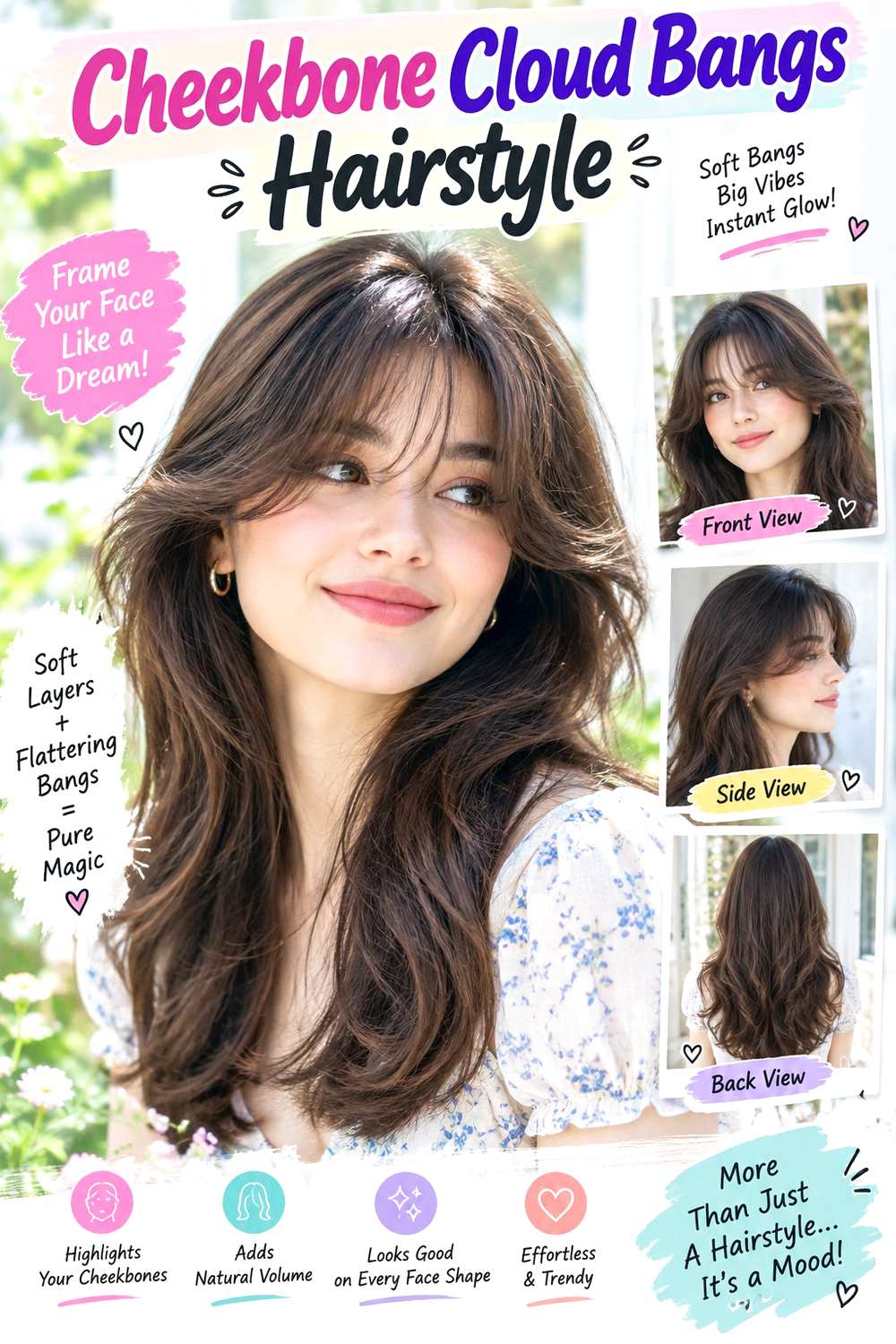
Cheekbone cloud bangs are longer and more face-framing than a traditional brow-length fringe. The shortest center pieces can sit below the brows, while the outer corners reach toward the upper cheekbones and blend into longer layers. The result leaves more forehead visible and gives the fringe a soft draped shape rather than a straight line. Medium to long hair supports the transition especially well, and a center part keeps the two sides balanced.
This version suits readers who want less frequent short-fringe maintenance or prefer bangs that can be tucked away as they grow. Straight, wavy, and loose curly textures can all wear it, though growth direction determines how easily the center stays open. Use a lightweight root-lift spray for gentle front movement, a medium round brush to turn the ends away from the face, and heat protectant when heat is used. A brief morning refresh can focus only on the front; a full wash-day blowout is a larger task.
At the salon, point to the cheekbone area where the outer corners should finish when dry. Ask for a gradual connection into the face frame rather than a sharp jump in length. Reshape when the center becomes too heavy or the outer corners stop sitting where you prefer.
Pro tip:
Direct the outer corners diagonally away from the face rather than straight back. That keeps them visible beside the cheekbones instead of disappearing into the side layers.
Make It Work for You:
If you prefer less forehead coverage, make the fringe section narrower but retain the same cheekbone-length outer corners, preserving the cloud shape with more openness.
Watch Out For:
Do not thin the ends until they become stringy. The fringe should be airy, but each outer section still needs enough substance to blend into the sides.
Piecey Micro Cloud Bangs Hairstyle

Piecey micro cloud bangs shorten the airy fringe so the center sits clearly above the brows, but the tips remain soft and irregular rather than forming a blunt micro line. Slightly longer outer pieces soften the jump toward the temples, and a compact bob, shag, or shoulder-length cut can balance the shorter front. The small gaps between fringe sections are essential because they keep the result light instead of dense and graphic.
This is a higher-upkeep option because even modest growth changes the relationship between the fringe and brows. Straight and softly wavy textures make the piecey separation easiest to see, while curly hair needs extra allowance for shrinkage. Use a lightweight texturizing spray for separation, a mini flat iron for targeted reshaping when necessary, and heat protectant before any hot-tool work. A quick dry refresh can be very short; styling the full haircut takes longer depending on texture.
At the salon, show the exact dry point where you want the shortest center pieces to stop and how much longer the corners should remain. Ask for controlled separation rather than aggressive thinning. Maintenance becomes relevant as soon as the fringe loses its above-brow proportion or starts grouping into heavier sections.
Pro tip:
Separate the fringe with fingertips after styling rather than repeatedly combing it. Small, irregular sections keep the micro shape soft instead of overly precise.
Make It Work for You:
For higher-density hair, keep the fringe section shallow and control its width so the micro length stays airy rather than turning into a thick short block.
Watch Out For:
Avoid cutting the whole fringe to one very short line. Keep the outer edges longer so the micro center still connects naturally to the temples.
Long Layered Cloud Bangs Hairstyle
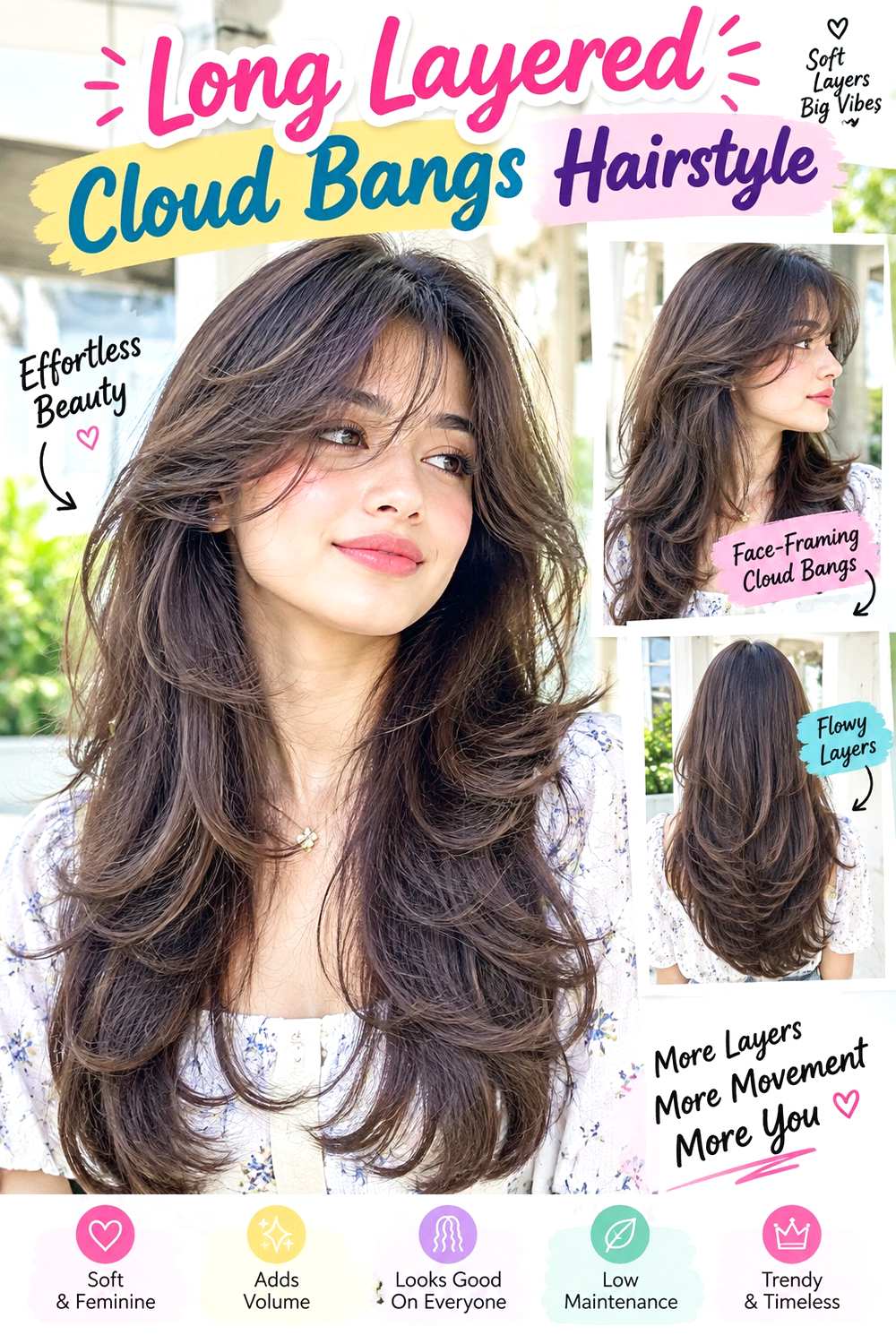
Long layered hair gives cloud bangs plenty of room to fade into the rest of the cut. Keep the fringe center near the brows, then lengthen the outer corners toward the cheekbones before connecting them to face-framing layers that begin around the jaw. The longer body can carry broad movement through the mid-lengths while the ends remain substantial. A center part makes the transition symmetrical, though a soft off-center part can suit natural growth direction better.
Medium to dense hair can support several long layers, while fine or lower-density hair may benefit from fewer layers and more perimeter weight. Use heat protectant before heated styling, a medium round brush to shape the fringe and face frame, and lightweight mousse near the roots for controlled lift. Resetting only the bangs and front pieces can be quick; a full wash-day blowout on long hair is significantly more time-consuming.
At the salon, specify where the shortest face-framing layer should begin after the outer fringe ends. That landmark determines whether the cloud bangs look connected or isolated. Trim the fringe when it enters the eyes, but reshape the long layers only when their movement or bottom-line balance no longer suits your preference.
Pro tip:
Shape the fringe and first face-frame layer as one sequence during styling. Their bends should relate to each other rather than pointing in completely different directions.
Make It Work for You:
For sparse ends, keep the long layers minimal and concentrate most movement around the front, preserving a fuller bottom line while still supporting cloud bangs.
Watch Out For:
Avoid stacking too many short layers immediately behind the fringe. Excess removal can make the front feel disconnected from the stronger length through the back.
Side-Swept Cloud Bangs Hairstyle
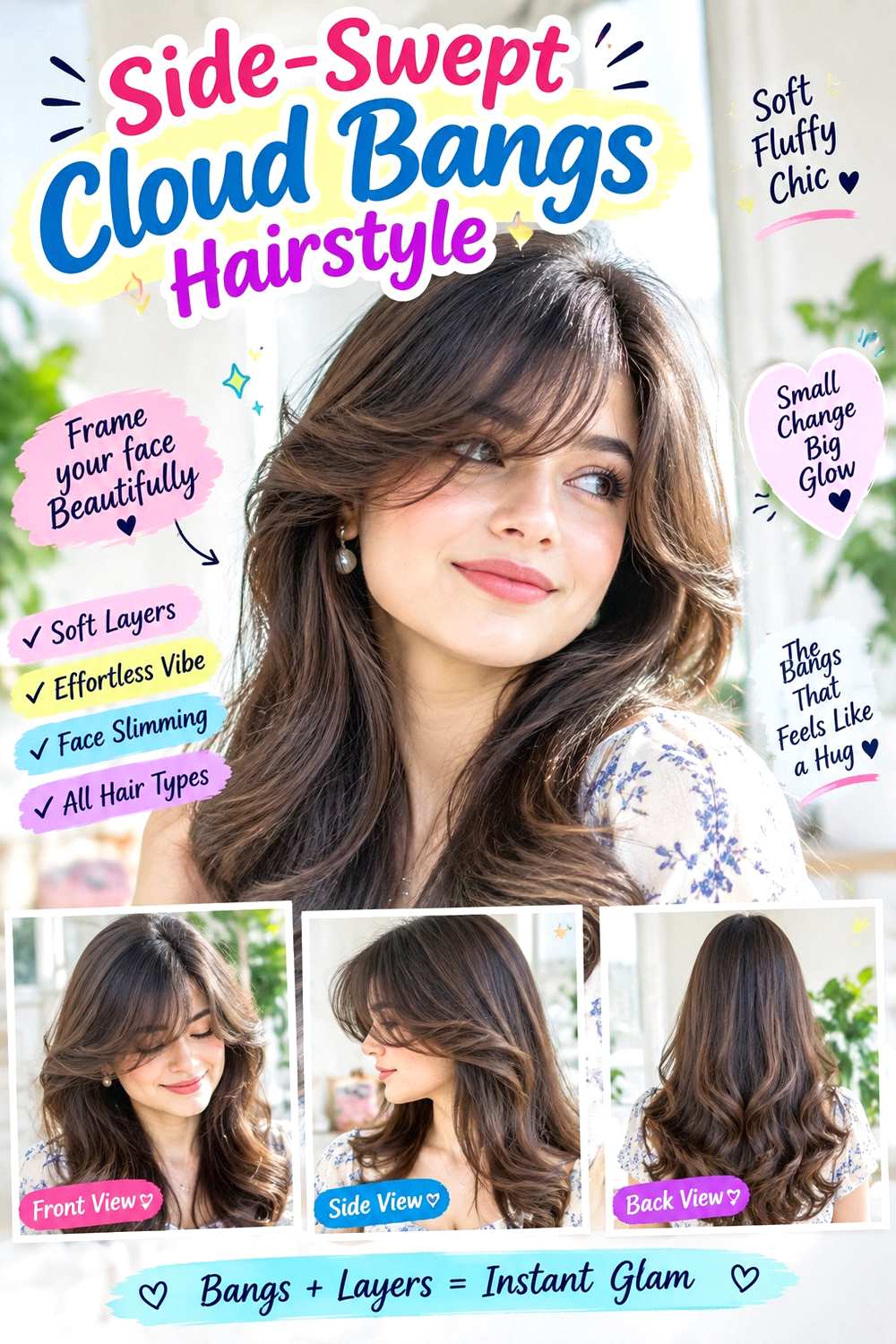
Side-swept cloud bangs keep the same airy density but let most of the fringe fall diagonally rather than splitting in the center. The shortest section can sit near one brow, with progressively longer pieces traveling toward the opposite temple. A soft side part supports the direction, while the outer corner blends into cheekbone or jaw-length framing. The rest of the hair can stay straight, softly waved, or naturally textured without changing the defining asymmetric front.
This version is useful when your growth pattern already pushes the fringe to one side. Straight and wavy hair may need only a quick directional reset, while curly textures can adapt the diagonal using separated curl groups. Use a small round brush to guide the sweep, lightweight mousse for root control, and heat protectant if heat is used. Refreshing the front can be brief; a full wash-day style takes longer depending on length and texture.
At the salon, explain which direction you normally wear your part and where the shortest dry piece should land. Ask the stylist to preserve longer outer pieces so the diagonal still blends into the side. Reshape when the fringe begins falling into the eye or the sweep becomes too heavy to move naturally.
Pro tip:
Dry the fringe briefly against its final direction first, then sweep it back across. That root reset can create movement without forcing a stiff side curve.
Make It Work for You:
If your fringe naturally splits in two places, keep the section slightly longer and embrace a softer irregular sweep instead of trying to create one perfectly solid diagonal.
Watch Out For:
Do not compensate for a stubborn growth pattern by cutting the fringe extremely short. Better root direction usually matters more than removing extra length.
Rounded Cloud Bangs Bob Hairstyle

A rounded bob pairs especially well with wispy cloud bangs because the fringe adds lightness to an otherwise compact silhouette. Keep the bob between jaw and chin length, with a fuller lower edge and gentle internal shape rather than heavy visible layering. The bangs can skim the brows in the center, then stretch toward the temples with separated tips. A center part is optional because the fringe can fall softly forward while the bob curves around the head.
Straight and softly wavy hair can achieve the rounded outline with relatively little effort, while dense hair may need controlled internal bulk adjustment. Use heat protectant for heated shaping, a small round brush to direct the fringe, and a larger round brush to curve the bob ends. A quick fringe refresh may take only a few minutes; rebuilding the entire rounded finish after washing takes longer.
At the salon, specify both the dry bob perimeter and the exact center fringe length. Ask to retain enough weight at the bottom so the cut stays full rather than over-layered. Bang trims may be needed before the bob itself requires reshaping, so treat fringe upkeep and overall cut maintenance as separate decisions.
Pro tip:
Dry the bangs first, then shape the bob. Fringe roots set quickly, while the lower curve can be refined afterward without repeatedly disturbing the front.
Make It Work for You:
For dense hair, ask about discreet internal weight adjustment through the bob while keeping the fringe airy and the outer perimeter visually full.
Watch Out For:
Avoid using the same strong round curve on both bangs and bob. Too much bend in the fringe can make the front look heavy and helmet-like.
Cloud Bangs Shag Hairstyle

A shag gives cloud bangs a more undone setting by surrounding the airy fringe with shorter crown layers and broken face framing. Keep the fringe center around the brows with fine gaps between pieces, then let the outer corners merge into cheekbone-level layers. The crown can carry soft lift while the longer perimeter stays irregular and mobile. A slightly off-center part or loose center split works, depending on how the fringe naturally falls.
Wavy and curly textures can make the layered movement easy to maintain, while straight hair may need more styling to separate the pieces. Dense hair can support stronger layering; lower-density hair usually benefits from keeping the lower perimeter more substantial. Use lightweight mousse for crown movement, heat protectant if heat is used, and a diffuser attachment when encouraging natural wave or curl. Refreshing the crown and bangs can be brief; a full wash-day reset takes longer.
At the salon, point to where you want the shortest crown layer and the outer fringe corner to finish. Those two landmarks control the transition from bangs into shag. Reshape when the fringe loses its airy opening or the crown layers stop sitting with the intended movement, rather than cutting everything on the same schedule.
Pro tip:
Refresh the fringe and crown separately from the long ends. Restoring movement at the top can bring back the shag shape without restyling every section.
Make It Work for You:
If your ends are naturally sparse, keep the lower layers longer and put most of the shag movement around the crown and face, preserving more perimeter weight.
Watch Out For:
Avoid aggressive thinning throughout the whole cut. Too much removal can make both the fringe and the longer ends look stringy instead of softly separated.
Cloud Bangs Lob Hairstyle

A collarbone-length lob gives wispy cloud bangs a balanced frame without requiring the layered movement of a shag. Keep the perimeter relatively full and the visible layers long, with the fringe center around the brows and the outer corners tapering toward the temples. A slight bend through the mid-lengths can soften the strong bottom edge, while a center or gentle side part changes how the fringe opens at the front.
Fine strands can benefit from the lob’s fuller perimeter, while dense hair may need controlled internal weight adjustment so the shape does not widen too much. Use heat protectant before heat styling, a small round brush to shape the fringe, and flexible hairspray for light hold through the front. Resetting just the bangs and ends can be a short refresh; a complete wash and polished lob finish takes longer.
At the salon, specify the dry collarbone length you want and how transparent the fringe should appear. Ask where the outer corners should merge into the front rather than requesting generic “wispy bangs.” Fringe upkeep may become noticeable sooner than the lob perimeter, especially when the center reaches the eyes, so maintain each part according to its own shape.
Pro tip:
Keep the lob roots relatively smooth and give the fringe only a small lift. This prevents competing volume from making the overall shape appear too rounded.
Make It Work for You:
For naturally wavy hair, leave the lob’s movement intact and reshape only the fringe when needed, reducing the amount of full-head heat styling in your routine.
Watch Out For:
Do not over-layer the front simply to connect the bangs. A few deliberate longer pieces can blend the fringe while keeping the lob’s perimeter visually strong.
Fine Hair Cloud Bangs Hairstyle

Fine strands can wear cloud bangs successfully when the fringe section stays controlled and enough density remains through the sides. Keep the center light and brow-skimming, with longer temple pieces that blend into the front rather than taking a wide triangular section from far back on the head. A shoulder-length or collarbone cut with a fuller perimeter can balance the airy fringe, while gentle bends create movement without breaking the ends into too many sections.
Because fine describes strand thickness rather than overall density, the fringe amount should be based on how much hair is actually available at the front. Use lightweight mousse near the roots for support, a small round brush to direct the fringe, and heat protectant if heat is used. A quick dry refresh should require little product; a full wash-day style takes longer but can remain simple if the base cut follows your natural texture.
At the salon, ask to preserve density at the temples and explain how much forehead you want visible through the bangs. The finished dry length matters more than a generic “wispy” label. Reshape when the fringe becomes stringy, overly long, or difficult to keep separated.
Pro tip:
Apply root product sparingly and mainly beneath the fringe. Too much product through the tips can make fine strands separate into overly thin, oily-looking pieces.
Make It Work for You:
If your fine hair is also dense, you can use a slightly fuller fringe section while still keeping the tips separated and the temple corners longer.
Watch Out For:
Do not assume fine hair needs no layers at all. The issue is excessive removal; carefully placed front movement can still work while preserving the perimeter.
Dense Hair Cloud Bangs Hairstyle

Dense hair can make cloud bangs look fuller, so the key is controlling the fringe section without thinning it into fragile pieces. Keep the center around the brows, but use visible separation so the forehead is not covered by one solid block. The outer corners should lengthen gradually toward the temples, while the rest of the hair can stay medium or long with controlled layers. A center split or lightly forward fall both work depending on the natural root direction.
Because density creates more bulk, the stylist may need to assess where weight sits behind the fringe rather than simply taking more hair out everywhere. Use a lightweight smoothing cream to control surface frizz, a small round brush to direct the fringe, and heat protectant whenever heat styling is used. A quick fringe reset can be brief; drying and shaping the full head of dense hair may take considerably longer.
At the salon, show how transparent you want the fringe to appear and ask that bulk adjustment be targeted to the areas that actually need it. The outer corners should retain enough weight to connect into the sides. Maintain the fringe when its center becomes heavy or enters the eyes, rather than repeatedly thinning the whole front.
Pro tip:
Divide the fringe into two thin styling layers instead of drying one thick section at once. This gives better root control without forcing a large rounded shape.
Make It Work for You:
If you prefer less daily styling, keep the fringe slightly longer so its natural density can settle softly instead of needing constant separation into very tiny pieces.
Watch Out For:
Avoid aggressive thinning throughout the fringe. Excess removal can leave short hairs that spring outward, making a dense section harder rather than easier to control.
Coily Cloud Bangs Hairstyle

Coily cloud bangs interpret the airy fringe through separated coils and intentional negative space rather than straight, feathered tips. The center coils can finish around the brows or slightly lower when dry, while the outer pieces lengthen toward the temples and connect into the surrounding shape. A rounded cut, tapered silhouette, or shoulder-length coil pattern can all support the idea. The defining detail is a soft, breathable front with visible grouping instead of one compressed fringe block.
Shrinkage and growth direction are central to planning, because coily bangs can sit very differently dry than stretched. Use a lightweight leave-in conditioner to support moisture and slip, a curl-defining gel to encourage consistent grouping, and a diffuser for controlled drying when desired. Refreshing a few front coils can be short; full detangling, styling, and drying is a longer wash-day process.
At the salon, describe the finished dry position you want for the shortest center coils and the amount of forehead you prefer visible. Ask for the outer fringe to connect into the overall silhouette without removing unnecessary bulk. Maintenance becomes useful when the front coils begin covering the eyes or the shape no longer feels balanced with the sides.
Pro tip:
Style the fringe in complete coil groups and let them dry before separating further. Breaking them apart too early can replace intentional wisps with diffuse frizz.
Make It Work for You:
If shrinkage varies across your front section, allow slightly different cut lengths so the finished dry fringe can sit more evenly without forcing identical measurements.
Watch Out For:
Do not trim coily bangs based only on stretched length. Assess their dry resting point first, especially around the center where even small changes are visually obvious.
Soft Curtain Cloud Bangs Hairstyle
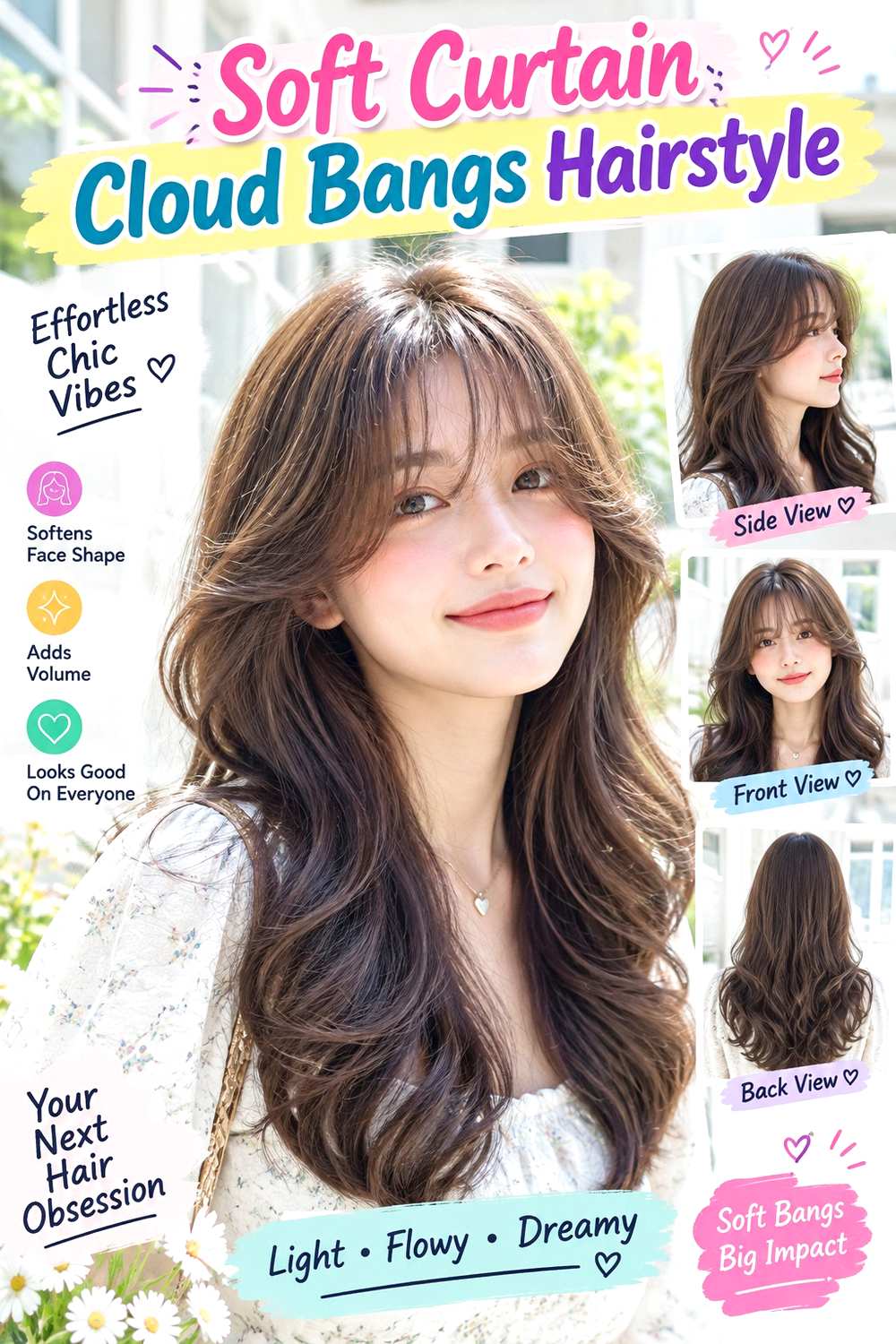
Soft curtain cloud bangs sit between a full curtain fringe and traditional wispy bangs. The center remains light enough to fall partly across the forehead, while the outer pieces open gradually toward the cheekbones. Instead of a completely empty middle, keep a few brow-length wisps in the center so the style still reads as cloud bangs. Long waves, straight lengths, or a collarbone cut can all support the softly divided front.
This shape works well if you like flexibility because it can be worn more forward one day and more open the next. Straight and wavy hair usually need only modest reshaping, while curly textures can interpret the curtain using grouped curls and longer outer sections. Use heat protectant when heat is used, a medium round brush to shape the sides, and lightweight mousse for root movement. A fringe-only refresh can be quick; full wash-day styling depends on the rest of the haircut.
At the salon, show how much center coverage you want and where the outer corners should finish when dry. Ask to preserve those central wisps rather than cutting a wide empty gap. Reshape when the opening becomes too broad or the center starts hanging into the eyes.
Pro tip:
Shape the center pieces forward first, then turn only the outer corners away. This keeps the cloud-bang softness instead of converting the whole fringe into curtain wings.
Make It Work for You:
For a wider natural center part, keep slightly more short hair near the middle so the fringe still has visible wisps even when the sides open naturally.
Watch Out For:
Avoid over-flipping the outer corners. A large dramatic bend can overpower the light center and make the fringe look more like conventional curtain bangs.
Tousled Fall Cloud Bangs Hairstyle

A tousled version keeps cloud bangs airy while pairing them with relaxed movement that works easily around fall layers, scarves, and jackets. The fringe can skim the brows with unevenly separated tips, while the outer corners blend toward the temples. Shoulder-length or longer hair can carry loose bends from the cheekbones downward, with straighter ends for a less polished finish. A soft center part keeps the front balanced without requiring every strand to sit perfectly.
Wavy hair can often reach this texture with minimal manipulation, while straight hair may need a little shaping and curly hair can adapt the idea through looser natural grouping. Use heat protectant before heated styling, a texturizing spray through the mid-lengths for separation, and a large-barrel curling iron for broad bends. Reworking only the bangs and front pieces after wearing a hat can be quick; a complete wash-day set takes longer.
At the salon, point to the finished fringe length and ask for longer outer corners that still tuck easily if needed. This is useful when fall hats or hoods push the front out of place. Maintain the fringe when the center becomes difficult to reset or begins sitting directly in the eyes.
Pro tip:
After removing a hat, dampen only the fringe roots lightly and reset their direction. Restoring the root position usually matters more than restyling every tip.
Make It Work for You:
If your natural texture already has irregular bends, keep them and focus styling effort on the fringe, preserving the tousled effect without creating a full artificial wave set.
Watch Out For:
Too much texturizing spray near the fringe can make the wisps stiff or separated. Keep most texture product through the longer mid-lengths instead.
Glossy Cloud Bangs Hairstyle

Glossy cloud bangs combine a light fringe with a smoother, more polished overall finish. Keep the center near the brows, the outer corners slightly longer, and the tips softly separated so shine does not turn the fringe into a dense sheet. The rest of the hair can be shoulder-length or longer with minimal visible layering, a center part, and smooth movement through the ends. A slight inward curve near the perimeter adds shape without competing with the airy front.
Straight and softly wavy hair can reach this finish with less work, while stronger textures may require more styling if you want a very smooth surface. Use heat protectant before heat styling, a paddle brush to smooth the lengths, and a small amount of lightweight shine serum on the finished mid-lengths and ends. Resetting the fringe can be a quick morning task; a full polished wash-day finish takes longer depending on density and starting texture.
At the salon, specify how transparent you want the fringe and where the dry center should land. Ask to retain enough weight through the perimeter if you prefer a sleek, substantial outline. Maintain the bangs when growth changes their position, and treat surface frizz or dullness as styling issues rather than reasons to remove more hair.
Pro tip:
Keep shine serum away from the fringe roots. Apply the smallest amount through longer sections first, then use only residue on fingertips if the bang tips need smoothing.
Make It Work for You:
If your hair is naturally wavy, smooth the fringe and top while leaving a controlled bend through the lower lengths, reducing the amount of full-head heat styling.
Watch Out For:
Do not use extra cutting to solve temporary puffiness. First reassess product weight, drying direction, and humidity control before removing more density from the fringe.
Conclusion
Wispy cloud bangs can range from short and piecey to long, cheekbone-skimming, curly, or softly curtain-like, but the defining feature remains a light fringe with visible separation. Brow-length centers need more frequent shaping than longer feathered versions, while bobs and lobs emphasize a cleaner outline and shags create more movement. Fine strands may need a narrower fringe section; dense hair may need controlled bulk placement rather than aggressive thinning. Curly and coily textures require dry-length planning because shrinkage changes the finished position. For fall, consider how hats, scarves, moisture, and your usual styling routine affect the front. Choose the version whose parting, volume, texture, fringe length, and upkeep fit your natural hair and daily effort.
Before Your Salon Visit
Choose one or two favorites and save references that clearly show the fringe from the front and side. Discuss your texture, density, face shape, preferred overall length, natural growth direction, and realistic upkeep routine. Point to the exact center fringe length, outer-corner length, amount of forehead coverage, layer starting point, volume, and finish you like. If you want the fringe from one reference but the length from another, say so directly, and ask how the proposed shape will sit on your hair when dry.
FAQs
How often do wispy cloud bangs need trimming?
There is no single schedule because growth rate and preferred finished length vary. Brow-skimming bangs usually need attention once they begin entering the eyes or losing their airy separation. Longer cheekbone versions may grow out more softly. Use the visual shape as your trigger rather than following a rigid calendar.
Can wispy cloud bangs work on curly or coily hair?
Yes. The fringe can be created with separated curl or coil groups instead of straight wisps. The important part is assessing shrinkage and finished dry length before removing too much hair. Outer pieces can stay longer so the fringe connects naturally into the surrounding curls or face-framing shape.
Do cloud bangs require heat styling every day?
Not necessarily. Some straight or wavy textures may need only a damp root reset, while curls and coils can be refreshed with their normal defining method. If heat is used, include heat protectant. Choosing a fringe that follows your natural growth direction can reduce the amount of daily reshaping.
What should I do if my cloud bangs keep splitting?
First look at root direction, product buildup, and where your natural growth pattern pushes the hair. Dampening the roots and drying them from side to side can help reset the fringe. If the split remains strong, a slightly longer or off-center version may work better than repeatedly forcing a perfectly even fall.