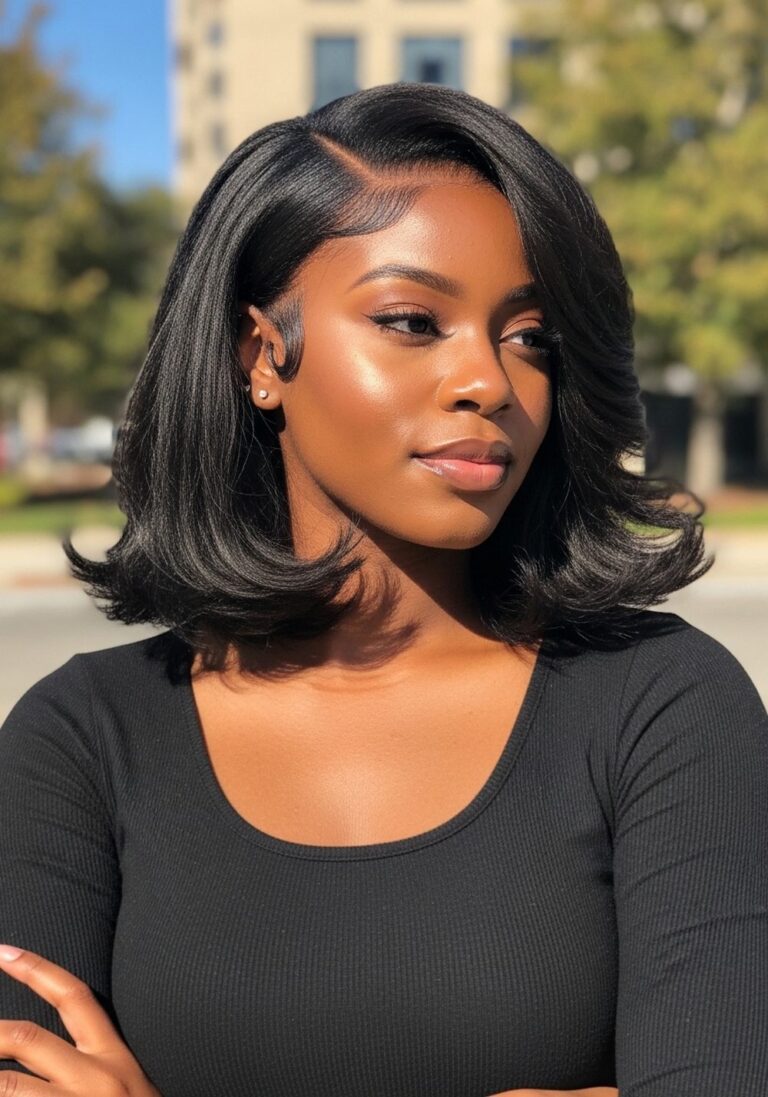
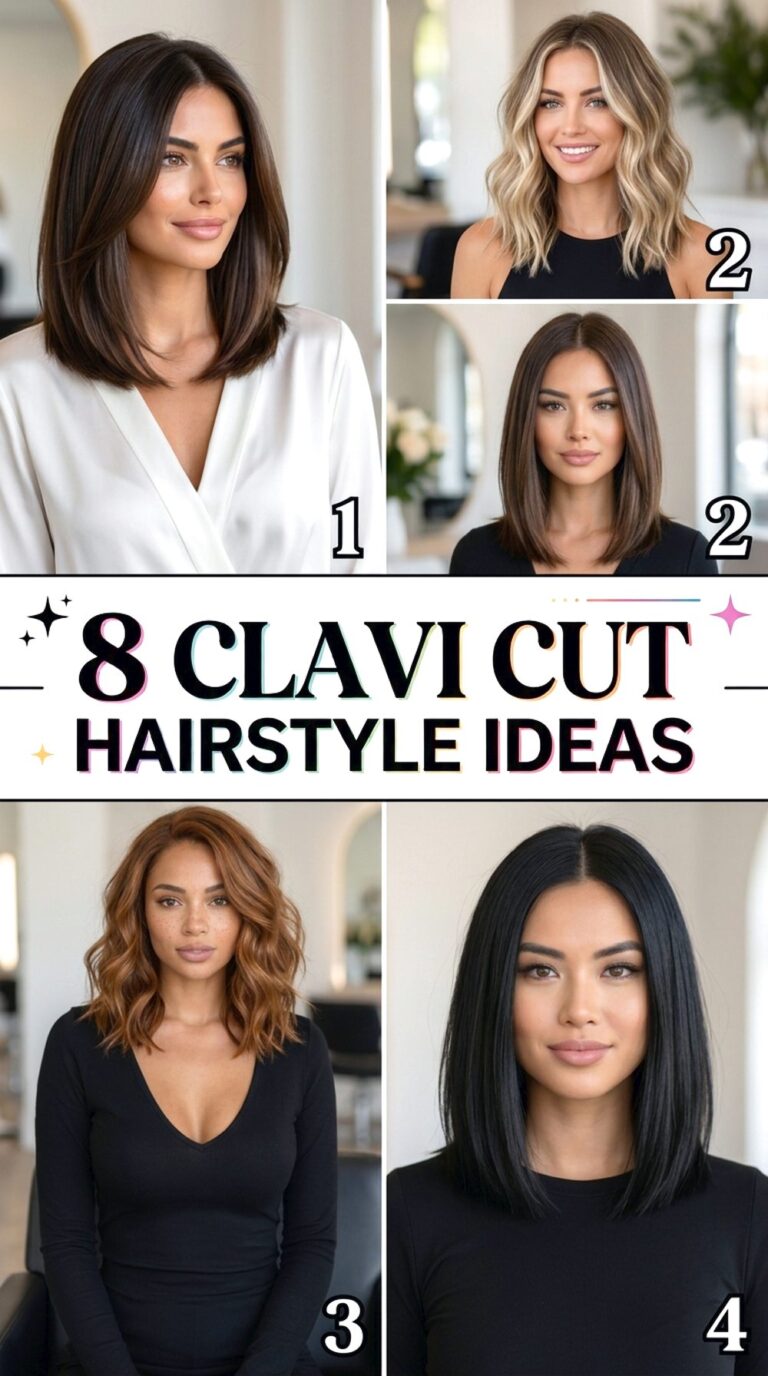
15 Overgrown Shag Bob Haircut Ideas

An overgrown shag bob sits between a traditional bob and a longer, looser shag. Instead of a sharp one-length perimeter, it usually has broken-up layers, face-framing pieces, textured ends, and enough extra length to brush the jaw, neck, or collarbone. Some versions include full bangs or wispy fringe, while others use curtain pieces that blend into the sides. These overgrown shag bob haircut ideas show how much the shape can change through layer placement, texture, volume, and length.
Straight and fine hair can wear this haircut with restrained layering so the ends keep density. Medium or thick hair often benefits from more internal movement and selective bulk removal. Naturally wavy or curly textures can work especially well because the cut already encourages separation and movement, although shrinkage should be considered when deciding fringe and layer lengths.
Daily styling can range from a quick air-dry refresh to a more polished blowout. Bangs may need attention sooner than the rest of the haircut, while the overall shaggy shape usually grows out more softly than a precise bob. Before choosing one, consider how much fringe upkeep, heat styling, texture control, and salon reshaping fit your routine.
Quick List
- Soft Curtain Fringe Overgrown Shag Bob
- Wispy Bangs Overgrown Shag Bob
- Wavy Collarbone Overgrown Shag Bob
- Choppy Ends Overgrown Shag Bob
- Curly Overgrown Shag Bob
- Fine Hair Volume Overgrown Shag Bob
- Thick Hair Debulked Overgrown Shag Bob
- Side-Parted Overgrown Shag Bob
- Center-Parted Overgrown Shag Bob
- Face-Framing Overgrown Shag Bob
- Air-Dried Texture Overgrown Shag Bob
- Polished Blowout Overgrown Shag Bob
- Razored Overgrown Shag Bob
- Soft Wolf-Inspired Overgrown Shag Bob
- Low-Maintenance Grown-Out Overgrown Shag Bob
Soft Curtain Fringe Overgrown Shag Bob

A softly divided curtain fringe gives the grown-out bob an easy transition into longer cheekbone pieces rather than creating a heavy line across the forehead. The remaining length can sit around the lower neck, with loose layers giving the sides movement while the perimeter stays substantial enough to avoid looking thin. Medium-density straight or wavy hair is especially easy to work with here, although fine hair can keep the same shape with fewer interior layers. Adjusting the curtain opening also helps the cut work with different face shapes. Blow-dry the fringe first so it does not dry flat or separate awkwardly, then refresh only the front pieces between wash days. A small round brush, lightweight mousse, and flexible hairspray are useful without making the fringe stiff. Styling is fairly quick once the front is trained. At the salon, ask for the shortest curtain pieces around brow level, blending gradually toward the cheekbones instead of cutting a disconnected fringe.
Pro tip:
Direct each half of the curtain fringe forward while drying, then sweep it outward only at the end. This keeps the roots lifted without making the bangs flare too widely.
Wispy Bangs Overgrown Shag Bob

Wispy bangs bring a lighter feel to an overgrown shag bob because small sections of forehead remain visible between the fringe. The bangs can skim the brows while thin temple pieces connect them to softly layered sides and a neck-grazing length. This approach is useful for fine to medium hair because a dense fringe could take too much hair away from the perimeter. Straight hair may need only a quick bend, while slightly wavy strands can be allowed to separate naturally. The trade-off is that thin bangs show oil and uneven bends quickly, so they may need refreshing more often than the longer layers. Use dry shampoo, a mini flat iron, and light texturizing spray to reset individual pieces without adding heavy product. Morning styling is usually easy and focused mainly on the fringe. When speaking to a stylist, ask for a deliberately low-density bang section and enough fullness left around the temples so the sides do not appear sparse.
Pro tip:
Avoid applying serum directly to wispy bangs. Smooth any leftover product from your hands onto the ends instead, which helps the fringe stay separated and light.
Wavy Collarbone Overgrown Shag Bob

Extra length changes the shag bob noticeably when the ends reach the collarbone. Loose waves have more room to form through the mid-lengths, while long layers prevent the shape from becoming triangular or heavy around the shoulders. Keeping the bottom edge relatively full makes this option useful for medium-density hair and for finer wavy hair that can look sparse when over-layered. Naturally wavy texture can often be refreshed without restyling the whole head; straight hair will need more deliberate bending if you want the same movement. Work with heat protectant, a large-barrel curling iron, and smoothing serum, alternating a few wave directions rather than curling every section identically. Styling takes moderate time on wash day but usually needs only a few front pieces refreshed afterward. Because collarbone hair can flip where it touches clothing, a soft irregular finish works better than a perfectly uniform wave. At the salon, request long layers beginning below the chin while preserving noticeable weight through the bottom perimeter.
Pro tip:
Leave the last inch of each section out of the curling iron. Straighter ends keep the waves relaxed and help the haircut read as a shag rather than a formal curl set.
Choppy Ends Overgrown Shag Bob

Choppy ends put the emphasis on separation rather than polished curves. The bob can fall slightly below the jaw or into the upper neck, with irregular texture at the perimeter and shorter pieces scattered through the lower layers. Straight to softly wavy medium-density hair shows this detail clearly, while very fine hair should keep the choppiness subtle so the edge does not lose too much fullness. Thick hair can take stronger separation, provided bulk is removed internally rather than simply thinning every end. A texture spray, lightweight styling paste, and blow-dryer with concentrator nozzle are enough for a piecey finish. Styling is quick: dry the hair with loose movement, then pinch a little paste onto selected ends instead of coating the whole cut. The texture may need reshaping once the edge begins to grow into a heavier line. At the salon, show exactly how fragmented you want the perimeter and ask for softness without turning the bottom two inches into thin, wispy strands.
Pro tip:
Apply styling paste to only five or six visible end sections around the front and surface. Too much separation everywhere can make choppy layers look stringy rather than intentional.
Curly Overgrown Shag Bob
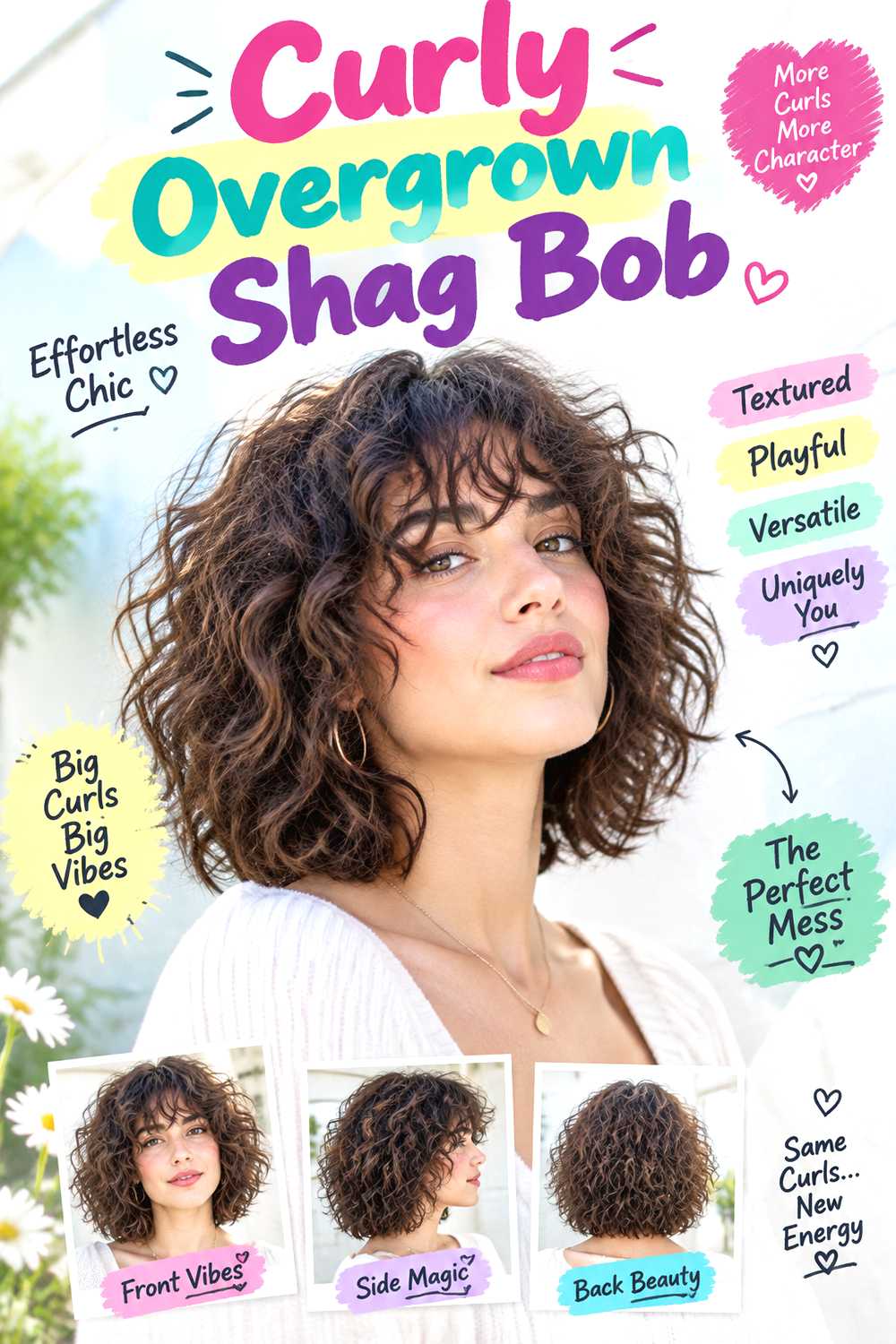
Natural curls give an overgrown shag bob its own volume, so the cutting pattern should follow where the curls actually spring rather than copying a straight-hair shag. Shorter crown layers can create lift, while gradually longer sections around the sides and nape keep the silhouette balanced. A curly fringe can sit around the brow when dry, but it often needs to be cut longer initially to allow for shrinkage. Medium and thick curly hair can carry more layering; finer curls usually benefit from maintaining extra density at the ends. Styling takes more time after washing but can be easy to refresh on following days. Use leave-in conditioner, curl cream, and a diffuser to encourage definition without brushing the pattern apart. Frizz control matters in humid weather, especially around the fringe. For the salon, ask the stylist to assess the haircut in its naturally dry curl pattern and explain how much shrinkage you normally see before agreeing on bang length.
Pro tip:
Take a reference photo of your hair fully dry on a typical day, not only freshly styled. It gives the stylist a more useful guide for fringe shrinkage and everyday curl volume.
Fine Hair Volume Overgrown Shag Bob

Fine hair needs a restrained version of the shag so movement does not come at the cost of visible density. Here, the bob sits around the neck with subtle crown layers, light face-framing, and a fuller bottom edge. Most of the volume is created above the ears and at the roots rather than by removing large amounts of hair through the ends. Straight or slightly wavy fine hair can hold this shape well with a light blow-dry, and moving the part a little off center can create extra lift without adding another layer. Choose volumizing spray, a medium round brush, and lightweight dry texture powder rather than heavy creams. Styling is moderate after washing and usually takes only a short root refresh the next morning. Too many short shag layers can expose the scalp or leave the perimeter weak, so communicate clearly at the salon. Ask for minimal thinning and keep the lower edge visibly solid, with the shortest crown layers long enough to overlap the sections beneath them.
Pro tip:
Concentrate volumizing product at the root area instead of spraying it through the ends. Fine shaggy hair looks fuller when the perimeter stays flexible and product-free.
Thick Hair Debulked Overgrown Shag Bob
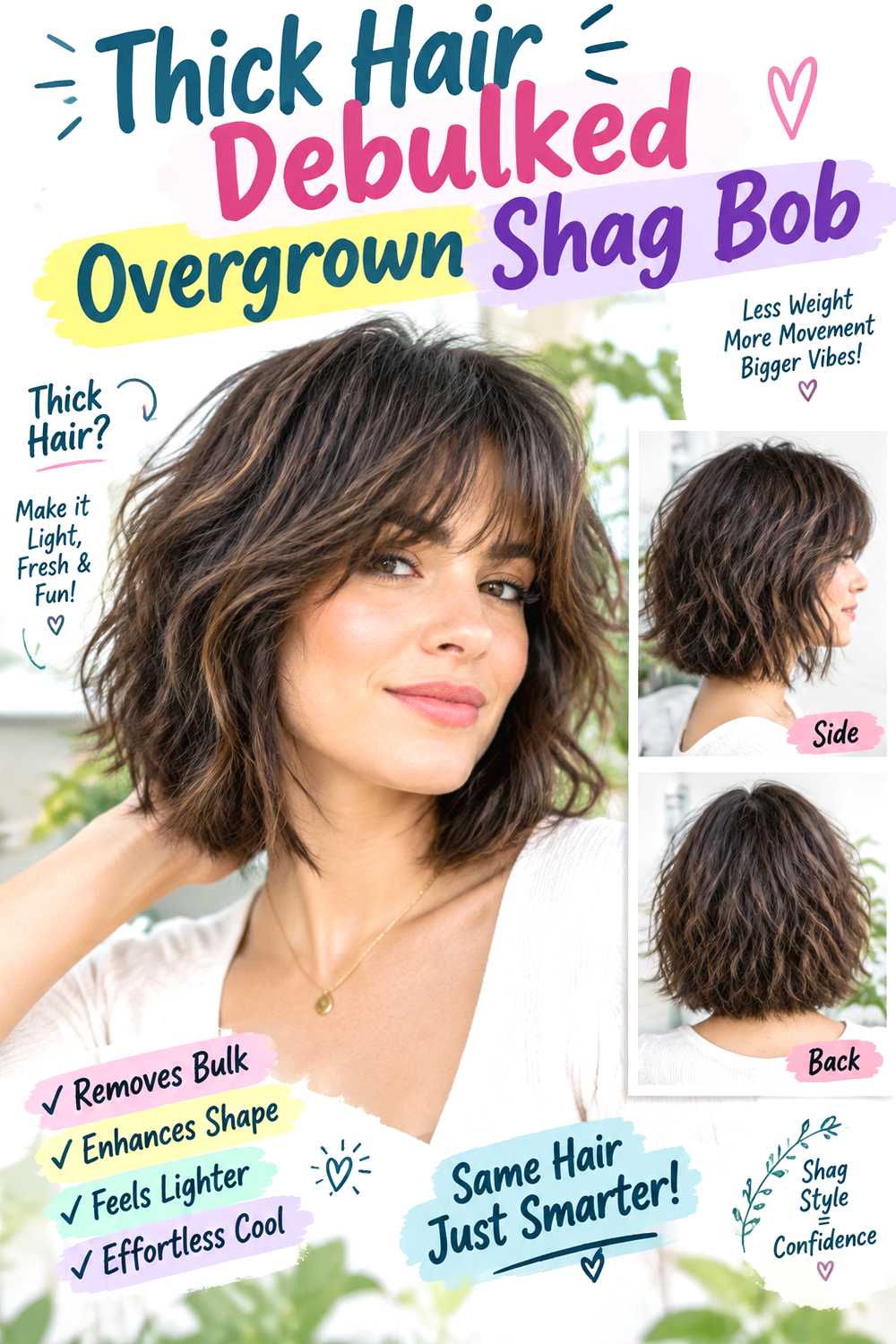
With thick hair, an overgrown bob can become wide and heavy unless some density is removed from inside the shape. This variation keeps a strong outer perimeter while using internal layers to release bulk through the mid-lengths. The visible ends still look substantial, but the haircut moves more freely when turned or tucked behind the ears. Straight, wavy, and coarse textures can all use this approach, although strongly wavy hair needs enough length to account for expansion after drying. Anti-frizz cream, a wide-tooth comb, and a paddle brush help smooth the surface without flattening every layer. A controlled blow-dry takes moderate time, while naturally textured hair can use a simpler air-dry routine. Maintenance becomes noticeable when hidden weight grows back and the sides start feeling dense again. At your appointment, ask for internal bulk removal rather than aggressive thinning at the perimeter, and specify that the bottom edge should remain strong. That distinction helps prevent thick hair from turning fluffy or overly tapered.
Pro tip:
If your hair expands in humidity, keep the shortest side layers below the widest point of the head. Removing too much length there can create extra width instead of controlling it.
Side-Parted Overgrown Shag Bob

A deeper side part shifts the volume of an overgrown shag bob and creates a sweeping front section that can replace traditional bangs. One side naturally gains more root height, while the heavier front piece can curve across the forehead and blend into jaw-length face-framing. This is useful for straight, wavy, and medium-density hair, especially when you prefer fringe movement without committing to a short bang. Thick hair may need some hidden weight removed from the heavier side so it does not collapse toward the face. Style with root-lifting spray, a vent brush, and flexible-hold hairspray, directing the front section away from its usual fall before placing it into the side part. The routine is quick once the root direction is trained, although the part may need resetting after sleep. In the salon, ask for the face-frame to be cut according to the intended side part rather than centered. The heavier side should still connect smoothly into the surrounding layers.
Pro tip:
For longer-lasting side volume, dry the heavy front section briefly toward the opposite side first. Flip it back only after the roots have cooled.
Center-Parted Overgrown Shag Bob

A center part makes the face-framing structure of an overgrown shag bob especially visible. Matching front sections can begin around the cheekbones or jaw and flow into longer side layers, while the ends remain loose rather than forming a sharp bob line. Medium-density straight and wavy hair tends to fall into this shape easily. Fine hair should keep the front pieces relatively long so too much density is not removed near the hairline, while thicker textures may need internal softening behind the face-frame. Use heat protectant, velcro rollers, and a light finishing spray when you want a gentle bend rather than defined curls. Styling takes moderate effort after washing but is simple to refresh by resetting only the two front sections. Because a middle part highlights differences in length from side to side, precision in the front matters. Tell the stylist where you normally wear your part and ask for balanced face-framing that meets at the same point on both sides when dry.
Pro tip:
Set the front pieces on rollers away from the face and let them cool fully before removing them. The bend will sit softer and last longer without excessive hairspray.
Face-Framing Overgrown Shag Bob

Face-framing can provide most of the movement in a shag bob without requiring short layers throughout the entire haircut. In this version, front pieces step from around the cheekbones toward the jaw and neck, while the back remains longer and relatively full. It is a useful choice for someone who wants visible layering around the face but worries about thin ends or difficult grow-out. Fine and medium-density hair can keep the interior layers minimal, whereas thick hair may support a few extra sections farther back. Straight hair benefits from a soft blow-dried curve; natural waves can create enough movement with very little heat. A round brush, heat-protectant cream, and lightweight serum suit the polished front without weighing down the rest. Styling is quick because only the face-frame needs deliberate shaping. As the cut grows, these pieces can blend into longer layers smoothly. At the salon, identify the exact point where the shortest front layer should hit rather than simply requesting “face-framing.”
Pro tip:
Use your reference photo to point to the shortest front piece specifically. Cheekbone, lip, and jaw-length framing produce noticeably different shapes once the hair moves.
Air-Dried Texture Overgrown Shag Bob
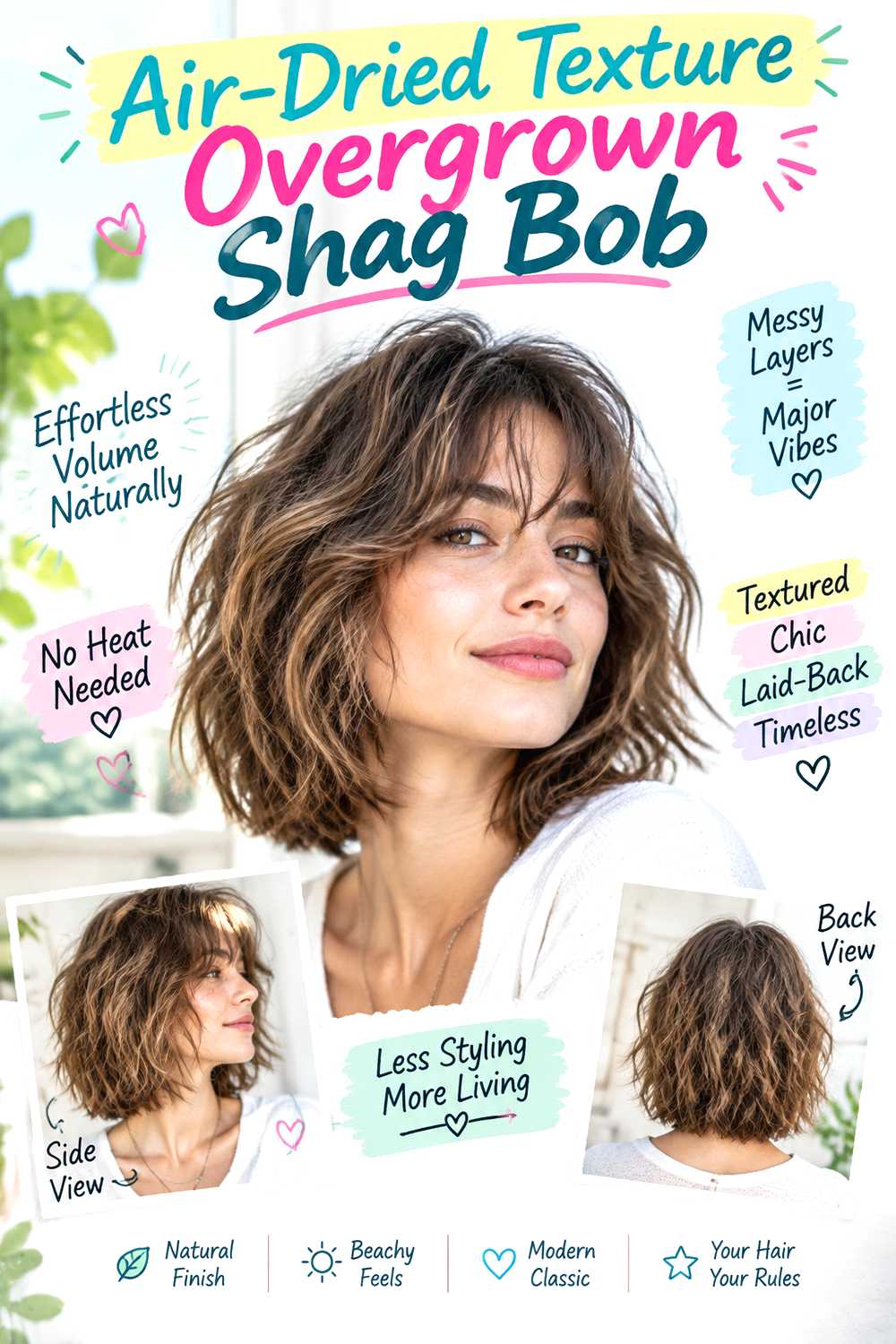
An air-dried overgrown shag bob works best when the cut supports the hair’s existing bends instead of relying on heat to create texture afterward. Layers should sit where natural waves want to form, with enough perimeter weight to stop the ends from expanding into a fuzzy triangle. Wavy hair is the most straightforward match, although loose curls can use a similar shape with added shrinkage allowance. Straight hair may air-dry smoothly but will not automatically develop the same visible movement. After washing, use leave-in conditioner, light curl foam, and a microfiber towel to reduce frizz and encourage separation without flattening the roots. Wash-day styling takes only a few active minutes, but the hair then needs time to dry without constant touching. A water mist can reactivate uneven sections on later days. Salon communication matters because natural texture changes when wet. Ask the stylist to check how the layers settle after drying and to keep enough end weight for your normal wave pattern.
Pro tip:
Once you have scrunched the waves into place, stop handling them until the hair is mostly dry. Repeated touching while damp is a common reason an air-dried shag loses definition.
Polished Blowout Overgrown Shag Bob
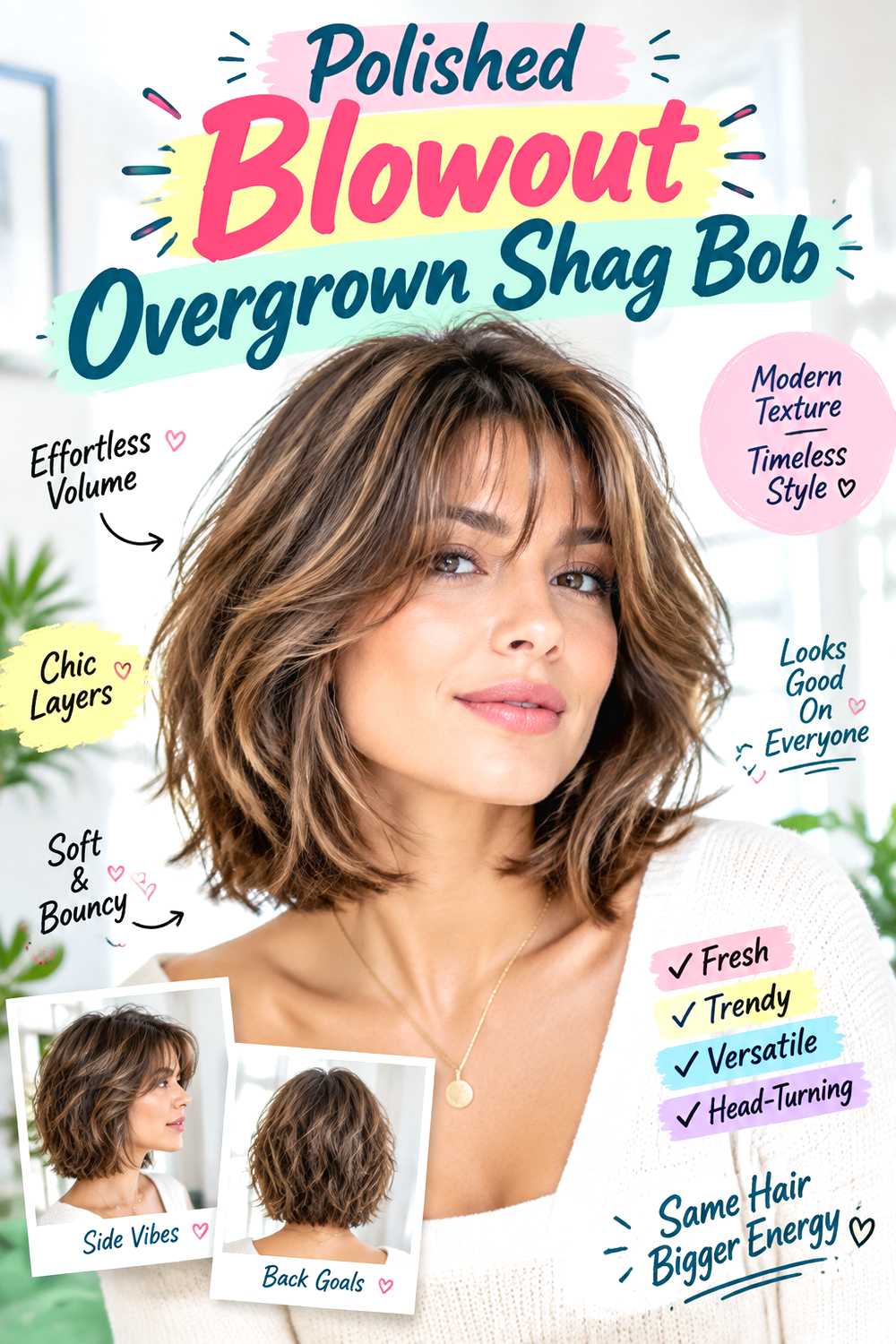
A polished blowout shows the structure of an overgrown shag without removing its layered character. The crown has controlled lift, the face-framing pieces curve away from the cheeks, and longer ends turn softly rather than breaking into rough texture. Medium to thick straight hair can create this smooth shape readily, while wavy hair may need more tension during drying. Fine hair can also wear it if the stylist avoids excessive layers and keeps the perimeter full. Work with heat protectant, a large round brush, and smoothing serum, drying in sections so the roots and ends set in different directions. This option needs more styling time than an air-dried shag, particularly on wash day, though the shape can often last for several days with a light front-piece refresh. Excessively short crown layers may stick up during a blowout, so salon placement is important. Ask for enough length at the crown to roll smoothly around a large brush while still creating visible elevation.
Pro tip:
Let each round-brushed section cool in its curved position before releasing it. Cooling is what helps the movement hold without repeatedly applying extra heat.
Razored Overgrown Shag Bob
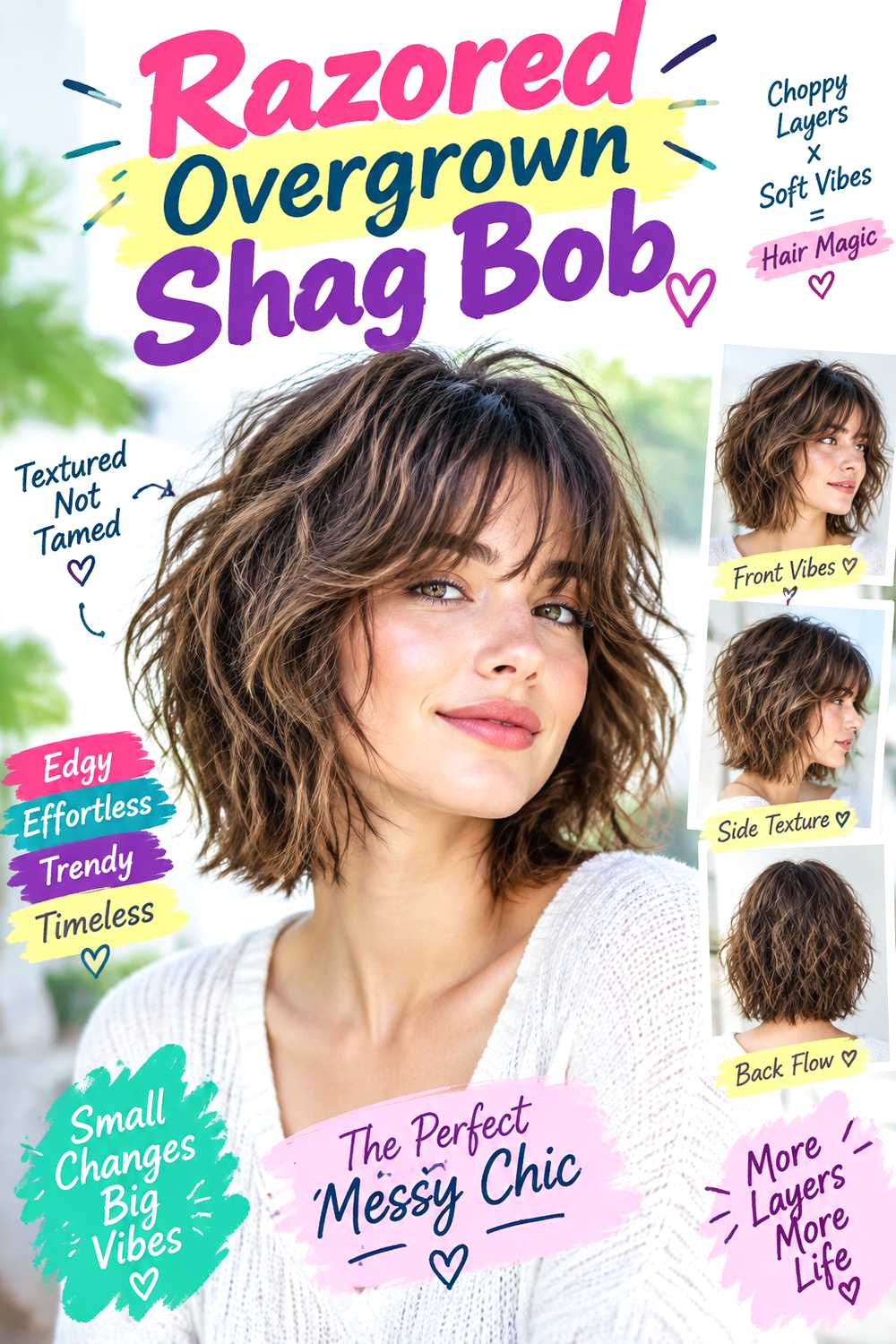
Razor cutting can create a softer, more feathered edge than blunt scissors, giving an overgrown shag bob noticeable separation through the ends. The effect works particularly well on straight to gently wavy medium or thick hair that can support a tapered finish without appearing sparse. Very fine hair or hair that frays easily may need a more conservative approach because too much razor work can reduce visible density at the bottom. The shape can fall from jaw to neck length with sliding face-framing pieces and light movement around the crown. Use light styling cream, texture spray, and a blow-dryer with diffuser attachment for a soft, tousled finish. Styling is relatively quick because the cut supplies much of the separation itself. The edges may start to lose definition as they grow, so occasional reshaping keeps the texture visible. At the salon, discuss where razor work will be used and ask to preserve more weight at the perimeter if your ends tend to look thin.
Pro tip:
If your hair is prone to frizz, keep razor texture concentrated on selected outer sections instead of every layer. Too much tapering can make the surface harder to smooth.
Soft Wolf-Inspired Overgrown Shag Bob

A wolf-inspired shag bob carries more contrast between its upper and lower layers, but keeping that contrast soft makes the haircut easier to live with. The crown has noticeable movement, front layers can begin around the temples or cheekbones, and the nape stays a little longer so the silhouette does not finish like a classic rounded bob. Medium to thick wavy hair handles the layered structure particularly well. Fine hair can use the same idea with fewer crown sections to avoid losing end density. Styling with volumizing mousse, diffuser, and dry texturizing spray encourages lift near the top while allowing the longer pieces to stay relaxed. Wash-day styling takes moderate effort, but the irregular shape is forgiving between refreshes. Because too much short layering can turn the result into a much stronger mullet shape, explain the degree of contrast you want. Ask the stylist to keep the crown layers blended and the nape length clearly connected rather than sharply disconnected.
Pro tip:
Compare the crown-to-nape contrast in your reference photo before cutting. That single detail determines whether the finish feels softly shaggy or strongly wolf-cut inspired.
Low-Maintenance Grown-Out Overgrown Shag Bob

Longer, blended layers make this the most forgiving option for anyone who does not want frequent reshaping. The haircut can sit at the base of the neck or just above the shoulders, with face-framing starting below the cheekbones and no very short crown pieces competing with the natural fall. Straight, wavy, fine, and medium-density hair can all adapt well because the structure relies more on length changes than aggressive thinning. Thick hair may need discreet internal weight removal to stop the bottom from feeling bulky. A leave-in spray, wide-tooth comb, and lightweight anti-frizz cream are enough for most daily styling, especially when natural texture already provides some movement. The routine is quick, and uneven growth is less obvious than it would be with a short fringe or strongly chopped layers. At the salon, request long transitions between layers and a softly textured but substantial perimeter. Keeping the shortest pieces long is what allows the haircut to grow without developing awkward gaps.
Pro tip:
If low maintenance matters most, keep the shortest face-frame long enough to tuck behind the ear. That gives you an easy option when the layers are between shapes.
Conclusion
These overgrown shag bob haircut ideas can move from softly polished to noticeably textured depending on how the length, layers, fringe, parting, and ends are handled. Fine hair usually benefits from more perimeter weight and fewer short layers, while thick hair may need internal bulk removal to keep the shape moving. Natural waves and curls can reduce daily heat styling when the haircut follows their real pattern, while straighter textures may need a blow-dry or bend for added movement. The best choice depends on your face shape, natural texture, density, preferred length, styling tolerance, and maintenance routine. Before cutting, focus on the details you can clearly identify in a reference photo rather than relying on the word “shag” alone.
CTA
Choose one or two favorite ideas and save clear photos that show both the front and overall silhouette. When you meet with your stylist, discuss your face shape, natural texture, hair density, preferred length, maintenance expectations, and normal styling routine. Point out the exact fringe length, face-framing position, layer placement, volume, perimeter weight, or finish you want. Those specific details make a reference photo much more useful than simply asking for an overgrown shag bob.
FAQs
1. Can fine hair wear an overgrown shag bob without looking thin?
Yes. Keep the perimeter fuller, limit aggressive thinning, and use longer or lighter layers instead of removing too much density through the ends.
2. Does an overgrown shag bob work with naturally curly hair?
It can. The fringe and layers should be adjusted for curl shrinkage, and the stylist should consider how the shape sits when the hair is dry.
3. How often does an overgrown shag bob need salon maintenance?
The overall shape generally grows out softly, but short bangs or highly textured layers may need attention sooner. Longer blended versions can usually go longer between reshaping appointments.
4. Do I need heat styling every day with this haircut?
Not necessarily. Naturally wavy or curly hair may only need suitable leave-in or curl products, while straight hair may need occasional blow-drying or bending if you want stronger shaggy movement.
Article structure and caption guidance follow the supplied hairstyle depth and variation framework and the supplied human-writing and reader-value guidance.