16 Butterfly Bob Haircut Ideas

A butterfly bob combines a short bob outline with airy face-framing layers that open away from the face and create visible lift through the upper shape. The name is informal, so exact layer lengths can vary between references. The exact bob length can sit around the jaw or slightly below it, while shorter front pieces usually begin near the cheekbones or jaw and blend into longer sections. A center part shows the layered symmetry clearly, but side parts, fringe, waves, and curls can change where the volume sits and how soft the perimeter feels.
Straight, wavy, curly, and coily textures can all support the idea, but the layers should respond to density and shrinkage rather than follow one fixed formula. Fine strands may need fewer lower layers and a stronger bottom edge, while dense hair can benefit from selective internal weight removal. Curly versions need the finished dry length checked so the front does not spring shorter than intended. Face-framing can also start lower if you prefer less width near the cheeks.
Styling ranges from a quick front-layer refresh to a full blowout or curl routine. The haircut itself needs reshaping when the face frame stops separating, the crown loses lift, or the perimeter no longer supports the airy layered effect.
Quick List
- Face-Framing Butterfly Bob Hairstyle
- Curtain Bang Butterfly Bob Hairstyle
- Wispy Fringe Butterfly Bob Hairstyle
- Center-Part Voluminous Butterfly Bob Hairstyle
- Side-Part Swept Butterfly Bob Hairstyle
- Wavy Butterfly Bob Hairstyle
- Curly Butterfly Bob Hairstyle
- Fine-Hair Butterfly Bob Hairstyle
- Dense-Hair Butterfly Bob Hairstyle
- Blunt-End Butterfly Bob Hairstyle
- Rounded Butterfly Bob Hairstyle
- Shaggy Butterfly Bob Hairstyle
- Sleek Butterfly Bob Hairstyle
- Flipped-End Butterfly Bob Hairstyle
- Soft A-Line Butterfly Bob Hairstyle
- Air-Dried Textured Butterfly Bob Hairstyle
Face-Framing Butterfly Bob Hairstyle
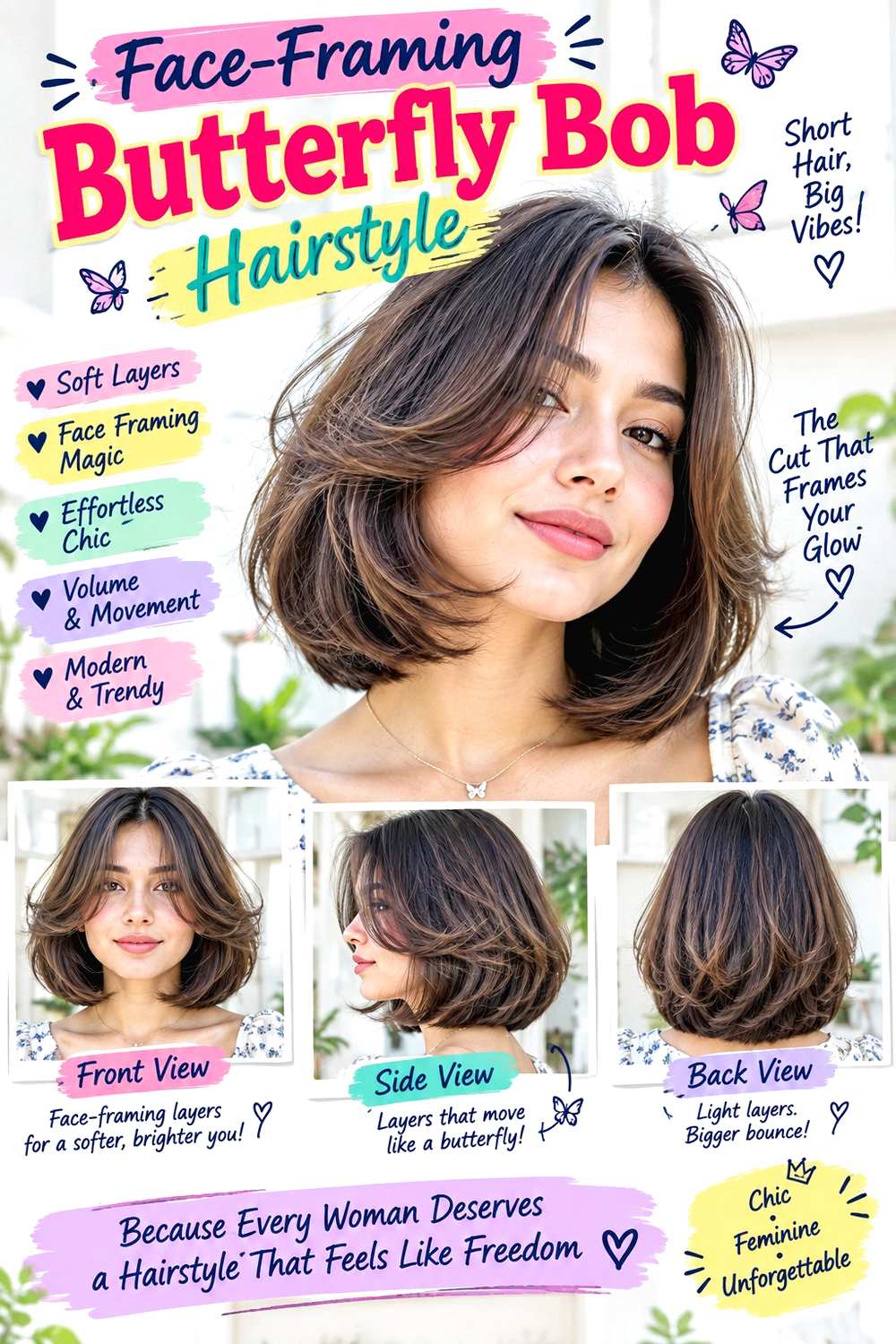
The defining feature here is a clear face frame that starts around the cheekbones and sweeps back into a bob finishing near the jaw. The shortest front pieces stay light, while longer layers through the sides preserve enough weight for the perimeter to look connected. A center or soft off-center part works well, and broad bends make the stepped layers easy to see without turning the cut into a shag. Straight and wavy hair can show the shape clearly, while looser curls can use the same structure with more room for spring.
For styling, apply heat protectant before using a round brush to direct the front layers away from the face, then add root-lift spray at the crown for support. A quick refresh can focus on the two front sections and roots; a full wash-day blowout takes longer, especially on dense hair. At the salon, point to the exact spot where you want the shortest face-framing layer to finish and ask how it will connect with the jaw-length perimeter. Reshape the cut when those front pieces stop separating or begin blending into one heavy section. If you usually air-dry, keep the face frame long enough to follow your natural movement rather than relying on daily heat.
Pro tip:
Shape the two front sections first, then let them cool before touching them. Setting those pieces early keeps the butterfly sweep visible after the rest of the bob is styled.
Make It Work for You:
If your hair is naturally curly, keep the face-framing pieces slightly longer and judge their position when dry. The outward framing can remain while allowing room for spring and shrinkage.
Watch Out For:
Do not cut every front piece to the same short point. A gradual transition into the jaw-length perimeter keeps the layers connected instead of creating a shelf.
Curtain Bang Butterfly Bob Hairstyle

Curtain bangs make the butterfly effect more obvious by adding a shorter center section that opens into longer cheekbone pieces. The bob itself finishes around the jaw, with light upper layers that continue the outward sweep through the sides. A center part supports the split fringe, while the lower perimeter stays fairly full so the haircut does not look overly feathered. Straight and wavy textures can create the cleanest separation, but curly hair can adapt the shape with a longer finished fringe that accounts for shrinkage.
Use heat protectant before shaping the bangs and front layers with a round brush, then mist flexible hairspray lightly over the cooled sections to hold the sweep. A fringe refresh can be brief between washes, while styling the full layered bob takes longer depending on density and natural texture. At the salon, show where you want the shortest center pieces and the longer outer corners to finish, because that transition controls whether the bangs blend smoothly into the butterfly layers. Maintain the fringe when it begins falling into the eyes or losing its opening, while the rest of the cut needs reshaping when the upper layers become too long to lift. Keep the perimeter stronger if your ends are low density.
Pro tip:
Dry the center of the fringe forward before sweeping the outer corners away. That sequence keeps the opening controlled while preserving the broader butterfly movement through the sides.
Make It Work for You:
For a lower-maintenance routine, keep the curtain bangs longer so they can blend into the cheekbone layers as they grow. You will retain the split front with fewer precise trims.
Watch Out For:
Avoid making the fringe and side layers equally short. Without a length progression, the front can look blocky and lose the soft opening that defines the design.
Wispy Fringe Butterfly Bob Hairstyle

A narrow wispy fringe gives the butterfly bob a lighter front while the main face-framing layers still sweep outward. The bangs skim the brows in separated pieces, with longer outer corners blending into cheekbone or jaw-level layers. The bob ends around the jaw and keeps a reasonably full lower edge, so the fine fringe does not make the whole haircut feel thin. A soft center part behind the bangs helps distribute the layers evenly. This shape can suit fine strands well when the fringe section remains narrow and the lower perimeter is protected.
Apply heat protectant before guiding the fringe with a small round brush, then work a little lightweight mousse through the upper layers for lift and separation. A quick morning refresh may involve only the bangs and front sections; a complete blow-dry after washing takes longer. At the salon, ask for a narrow fringe section with longer outer corners and specify where the first face-framing layer should land. The fringe will show growth sooner than the bob, so reshape it when it reaches the eyes or starts clumping into heavier sections. If your hairline naturally splits, keeping the fringe slightly longer can make daily styling easier while preserving the airy effect.
Pro tip:
Use only a small amount of product on the fringe and style it while slightly damp. Fine separated pieces usually hold better when they are not weighed down.
Make It Work for You:
If your hairline has a strong cowlick, keep the wispy section narrower and slightly longer. The fringe can still look airy without forcing the roots into an unnatural direction.
Watch Out For:
A fringe section that is too deep can remove useful density from the temples. Keep the bangs light and preserve longer side pieces for the butterfly frame.
Center-Part Voluminous Butterfly Bob Hairstyle
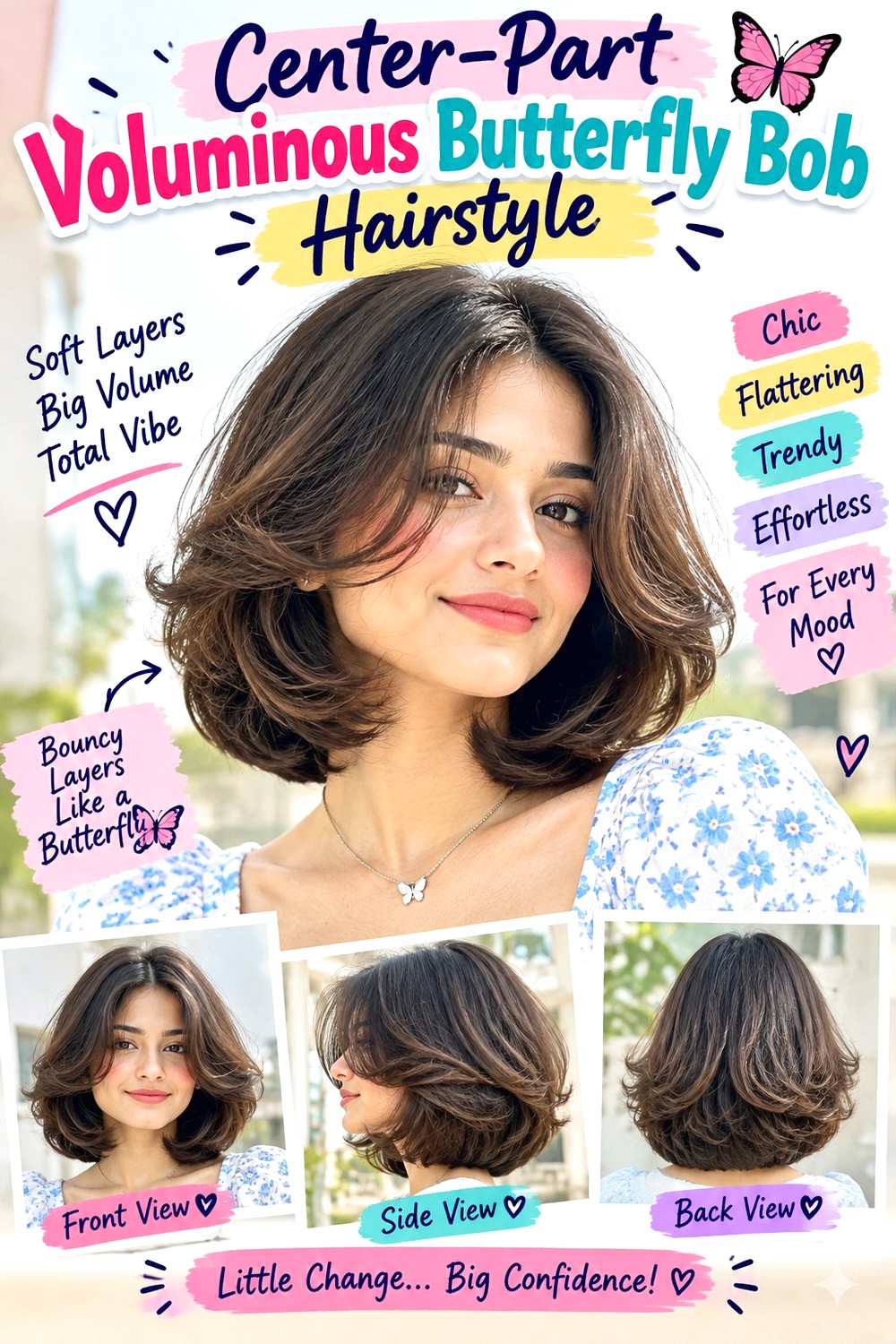
A strong center part makes both sides of the butterfly layering visible and places the main lift around the crown and upper cheeks. The bob sits around the jaw or just below it, while shorter layers sweep outward from the cheekbone area and longer pieces curve into the perimeter. The roots stay lifted, but the ends remain controlled so the shape looks airy rather than wide. This version works especially well for straight or wavy hair that holds a blowout, although dense hair may need selective internal weight removal to keep the sides from expanding.
Use root-lift spray at the crown, apply heat protectant through the lengths, and shape the layers with a round brush. A quick refresh can focus on lifting the roots and redirecting the two front sections, while a full wash-day blowout requires more time. At the salon, ask where the shortest upper layers will sit and make clear that you want crown height rather than extra bulk beside the jaw. Reshape the cut when the upper layers stop holding separation or the perimeter starts feeling heavy. If your hair is fine, keep the number of layers conservative and rely more on root direction for volume so the ends retain visual density.
Pro tip:
Lift the roots upward rather than outward when drying the crown. Vertical lift keeps the butterfly silhouette airy while preventing the sides from becoming unnecessarily wide near the jaw.
Make It Work for You:
For fine strands, reduce the number of short layers and create volume mostly through root direction. This preserves a stronger perimeter while keeping the centered butterfly shape visible.
Watch Out For:
Too much mousse or spray at the roots can flatten the very lift you want. Keep product light near the scalp and add more only if needed.
Side-Part Swept Butterfly Bob Hairstyle
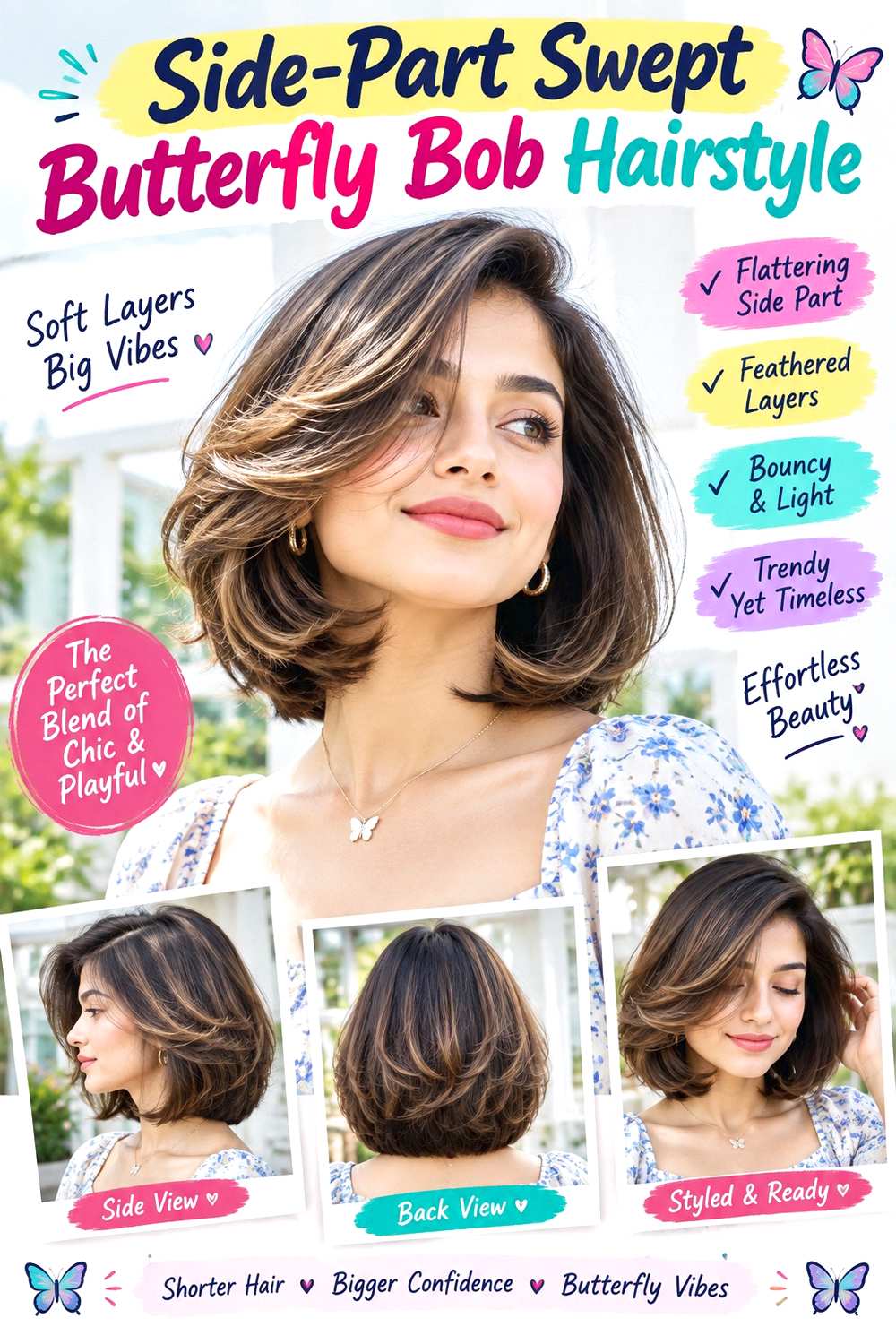
A side part shifts the butterfly layers into a more directional shape, with one front section sweeping strongly away from the face and the lighter side sitting closer to the head. The bob ends near the jaw, while cheekbone-to-jaw layers create movement without removing too much perimeter weight. Broad bends through the heavier side help the layers fan outward, and the opposite side can stay smoother for balance. Straight and wavy textures suit this version well, especially if your natural growth pattern already favors one side.
Apply heat protectant before shaping the heavier front section with a round brush, then use root-lift spray sparingly along the part for support. A quick refresh may only involve resetting the roots and front sweep; a full blow-dry takes longer depending on density. At the salon, establish your usual part before choosing the shortest layer, because moving the part later can change how that layer falls. Ask for enough length at the lighter side to keep the bob balanced rather than overly exposing the temple. Maintenance becomes useful when the sweep drops flat or the layers stop separating. If you switch parts often, keep the front layers a little longer so the shape remains flexible.
Pro tip:
Set the part before drying the front so the shortest layer falls in its intended direction. Reparting afterward can make one side look unexpectedly short or bulky.
Make It Work for You:
If you often change your part, keep the shortest front layer closer to the jaw. The sweep will be softer, but the cut will adapt more easily to either side.
Watch Out For:
Do not remove too much weight from the lighter side. It may look sparse next to the fuller sweep, especially when the hair is tucked or moved behind the ear.
Wavy Butterfly Bob Hairstyle
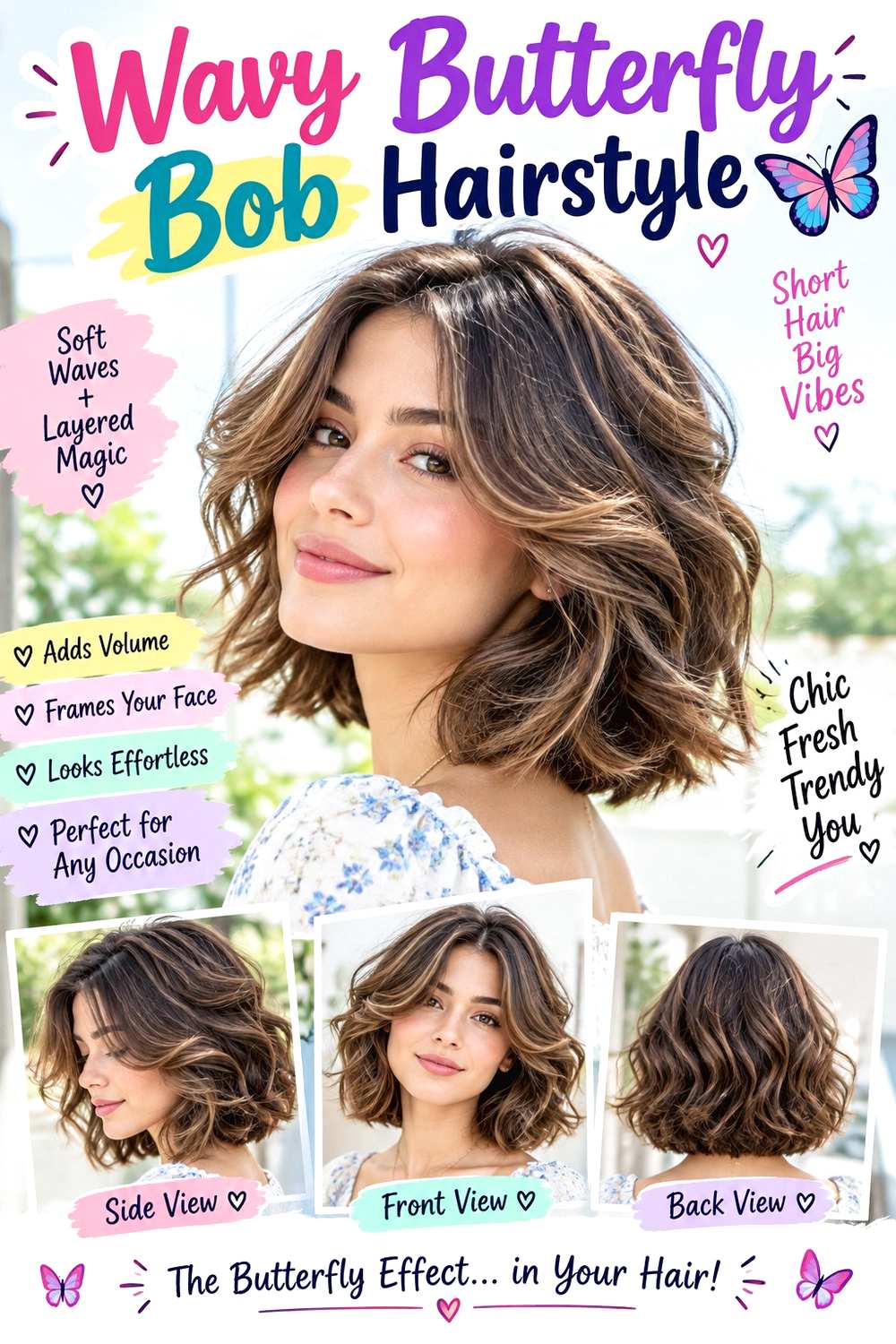
Soft waves make the butterfly bob feel less polished while still showing its outward face-framing movement. The bob finishes around the jaw, with layers beginning near the cheekbones and continuing through the upper sides so bends appear at different heights. The perimeter stays connected and slightly fuller, while the ends can remain straighter to stop the silhouette from becoming too round. An off-center or center part both work. Naturally wavy hair may need only light encouragement, while straighter hair requires more deliberate shaping to create the same movement.
Use a lightweight leave-in conditioner for slip, apply curl-enhancing mousse through the mids, and use a diffuser on a cool setting if you want stronger definition. A quick refresh can target flattened front sections with a little water, while a full wash-day routine takes longer. At the salon, ask for the shortest layers to begin where your waves naturally bend and keep enough lower weight for the jaw-level outline to remain visible. Reshaping becomes useful when movement collects only at the ends or the upper layers start lying flat. If your waves are strong, keep the face frame slightly longer so it springs into the intended position instead of sitting too high.
Pro tip:
Refresh only the flattened wave sections instead of soaking the entire bob. Targeted reactivation preserves existing definition and keeps the layered shape from becoming overworked.
Make It Work for You:
If your waves are loose and inconsistent, keep the shortest layers lower and use the face frame as the main butterfly feature. This makes the shape less dependent on uniform texture.
Watch Out For:
Too many short layers can make wavy hair spread sideways. Keep enough weight near the jaw so the bob stays compact beneath the upper movement.
Curly Butterfly Bob Hairstyle
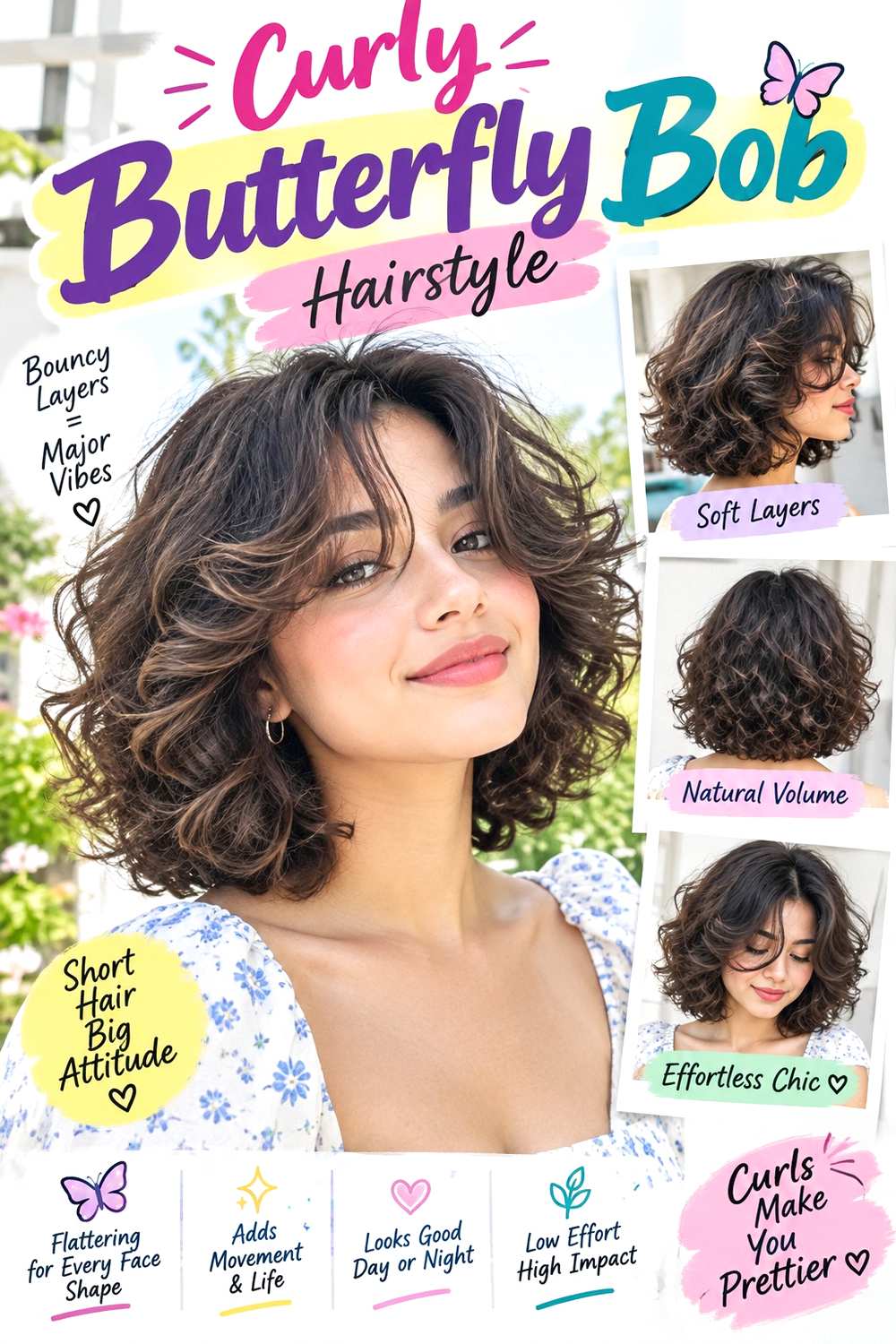
Curly texture turns the butterfly bob into a rounded, lifted shape with shorter curls framing the face and longer curls supporting the jaw-level perimeter. The front layers can begin around the cheekbones, but their exact dry length should reflect shrinkage and curl grouping rather than a fixed wet measurement. A center or soft side part works, and the crown can stay lightly layered so volume rises upward instead of collecting only at the sides. This approach can suit loose curls through tighter coils when the finished silhouette is planned in the hair’s natural state.
Apply a lightweight leave-in conditioner for slip, add curl gel for definition, and use a diffuser on a cool setting if you want more controlled drying. A quick refresh may involve reactivating only flattened front curls, while a full wash-day routine naturally takes longer. At the salon, discuss the desired dry jaw length and show where you want the shortest face-framing curl to finish. Ask the stylist to assess bulk where the shape widens rather than removing weight evenly everywhere. Reshape the cut when the crown loses lift or the front curls stop separating from the lower shape. Tighter coils may need longer starting layers to preserve the butterfly effect after shrinkage.
Pro tip:
Check the front curls completely dry before deciding they need shortening. A small change in shrinkage can move a cheekbone layer much higher than it appeared while damp.
Make It Work for You:
For tighter coils, preserve extra length through the face frame and crown. You can still create the lifted butterfly outline while keeping the finished bob near the intended jaw level.
Watch Out For:
Avoid thinning every dense area evenly. Curly shapes need some fullness for balance, so remove bulk only where the dry silhouette actually becomes too wide.
Fine-Hair Butterfly Bob Hairstyle

Fine strands need a butterfly bob that creates movement without sacrificing too much weight at the bottom. The bob sits near the jaw with a compact perimeter, while only a few longer face-framing layers begin around the cheekbones or lower. The crown can receive subtle lift, but the lower sides stay mostly intact so the ends look fuller. A center or soft side part works, and gentle outward bends can show the layering without making the shape overly feathered. Fine hair can be low or high density, so the amount of layering should reflect both strand thickness and how much hair is present.
Use root-lift spray lightly at the crown, apply heat protectant before styling, and shape the front with a round brush. A quick refresh can focus on root direction and the face frame; a full blow-dry takes longer depending on density and starting texture. At the salon, ask to preserve a strong jaw-level perimeter and keep most layering above the last few inches. Avoid adding extra short layers simply because the crown feels flat, since styling direction may create lift without reducing density. Reshape when the front loses separation or the bottom edge becomes uneven. Keep product amounts light so the airy movement does not collapse.
Pro tip:
Create root lift before deciding the haircut needs more layers. Changing the drying direction can add height without sacrificing the density that keeps the perimeter looking full.
Make It Work for You:
If your fine strands are also high density, you can support a few more internal layers. Keep the lowest edge compact so the added movement does not weaken the bob outline.
Watch Out For:
Do not confuse fine strands with low density. Removing too much hair based on strand thickness alone can leave the lower shape thinner than necessary.
Dense-Hair Butterfly Bob Hairstyle
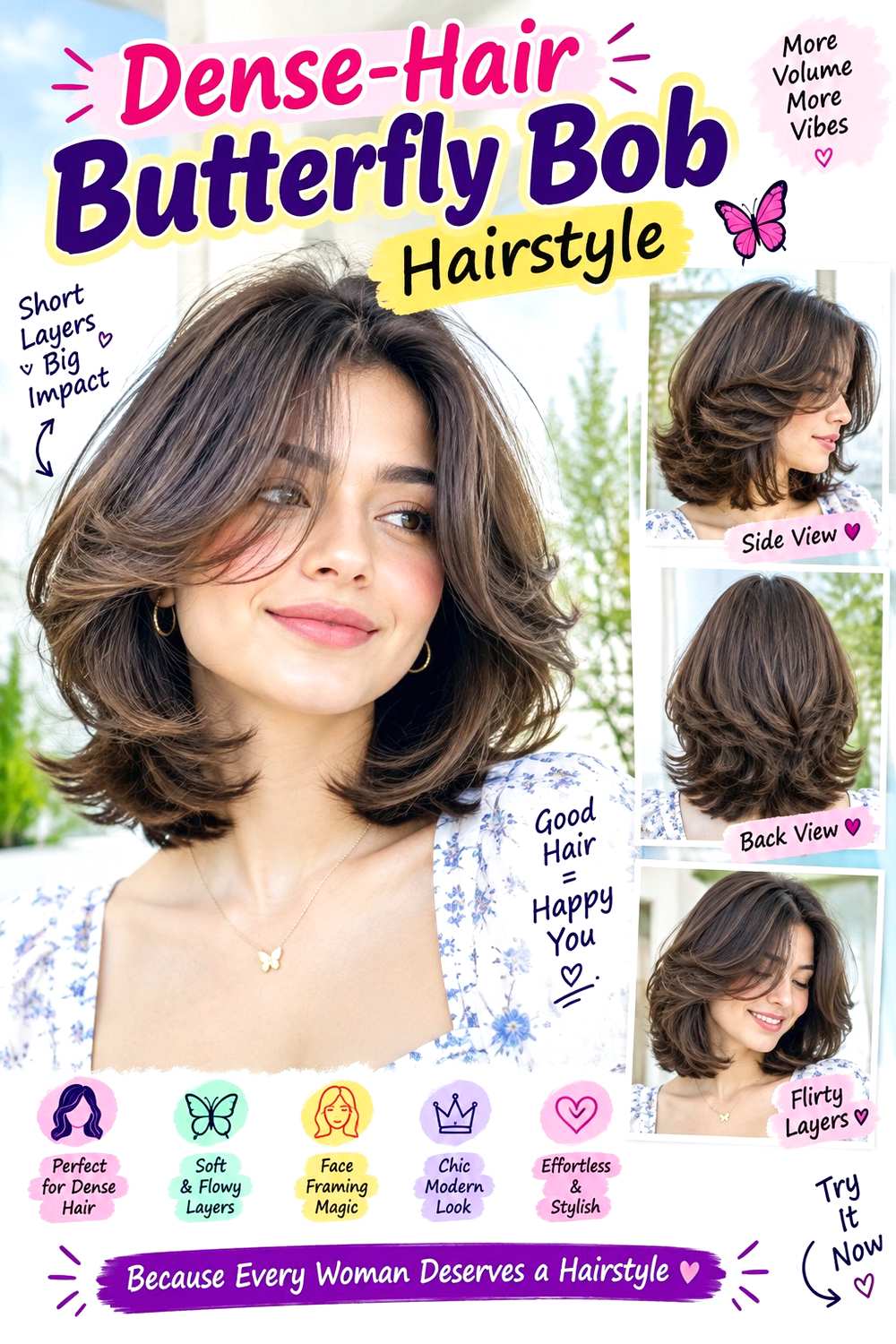
Dense hair can support a dramatic butterfly shape, but the key is controlling where the fullness sits. The bob ends around the jaw, with face-framing layers starting near the cheekbones and longer internal layers reducing heaviness through the mids. The perimeter should remain substantial, while selective internal weight removal prevents the sides from becoming overly wide. A center or side part can work, and broad outward bends show the different layer lengths clearly. The goal is movement and lift rather than simply removing as much hair as possible.
Apply heat protectant before shaping the layers with a large round brush, then use lightweight styling cream through the mids and ends to control expansion without flattening the roots. A quick refresh can focus on the front and crown, while a full blow-dry on dense hair is the longer task. At the salon, point out where the dry shape becomes widest and ask for targeted weight reduction in those areas while preserving the outer edge. Maintenance becomes useful when bulk starts collecting around the jaw or the layers stop moving independently. If your dense hair is naturally wavy or curly, let that texture provide much of the movement rather than relying on a polished heat-set finish.
Pro tip:
Let the hair settle after drying before judging where it feels bulky. Freshly lifted layers can relax, and removing weight too early may leave the shape uneven.
Make It Work for You:
If your dense hair is curly, keep the butterfly layers longer and let curl grouping provide lift. Internal weight reduction should support the pattern rather than break it apart.
Watch Out For:
Blanket thinning can create short internal pieces that push outward and increase frizz. Target only the areas that make the dry bob feel too wide.
Blunt-End Butterfly Bob Hairstyle

A blunt lower edge gives the butterfly bob a stronger base, creating contrast with the airy movement through the upper layers. The bob finishes around the jaw in a solid line, while cheekbone and upper-side layers sweep outward without cutting deeply into the last few inches. A center part makes the contrast easy to see, and broad bends through the face frame soften the otherwise compact outline. This version can suit fine strands or lower-density ends because the perimeter retains visual weight even though the top feels layered.
Apply heat protectant before using a round brush on the upper sections, then smooth the lower edge with a flat iron only where needed. A quick refresh can focus on the face frame and perimeter; a full wash-day finish takes longer if your natural texture differs from the intended shape. At the salon, ask for a visibly strong bottom edge and keep internal layering above it so the ends do not become feathery. Reshape the cut when the perimeter starts looking uneven or the upper layers stop lifting away from it. If your hair is dense, selective internal weight removal can reduce bulk without sacrificing the blunt line that defines the design.
Pro tip:
Style the upper layers first and inspect the perimeter last. Keeping those jobs separate helps you preserve the strong bottom line while still creating an airy butterfly sweep.
Make It Work for You:
For very dense hair, maintain the blunt edge but reduce weight inside the middle of the shape. The bob can feel lighter without losing its solid visual base.
Watch Out For:
Do not texturize heavily through the last inch. A feathered bottom edge removes the contrast between the blunt perimeter and the lighter layers above it.
Rounded Butterfly Bob Hairstyle

This version turns the butterfly bob into a softer, rounded silhouette by combining outward front layers with controlled fullness through the crown and sides. The bob lands near the jaw, while the shortest layers begin around the cheekbones and blend into longer sections that curve toward the perimeter. The ends can turn slightly inward, creating a smooth base beneath the airy face frame. A center or gentle side part works, and the shape suits straight, wavy, or loosely curly hair that can support a curved outline without becoming too wide.
Apply heat protectant before shaping the hair with a round brush, then use lightweight mousse near the roots to support lift without coating the ends. A quick refresh can focus on the crown and front layers; a full blow-dry takes longer depending on density and natural texture. At the salon, ask where the upper layers should start and how much fullness you want around the jaw so the curve stays balanced. Dense hair may need selective internal weight adjustment, while finer hair usually needs fewer layers. Reshape when the crown flattens or the sides lose their smooth progression. Keep the strongest lift near the top instead of directly beside the jaw.
Pro tip:
Direct the crown upward and the side sections slightly downward while drying. That combination creates lift on top without making the rounded shape too wide beside the jaw.
Make It Work for You:
If your hair is loosely curly, let the natural pattern form the rounded base and style only the front layers outward. This reduces heat while preserving the butterfly frame.
Watch Out For:
Too much volume directly beside the cheeks can overpower the rounded outline. Keep stronger lift at the crown and allow the lower sides to settle closer.
Shaggy Butterfly Bob Hairstyle

A shaggy butterfly bob uses more obvious layering through the crown and face while keeping enough length at the bottom to remain a bob. The shortest pieces can begin around the cheekbones, with additional layers through the upper sides creating separation and lift. The jaw-level perimeter looks lighter and more broken than a blunt version, and an off-center or relaxed middle part suits the informal movement. Wavy textures often carry this shape naturally, while straight hair can create the same effect with selective bends rather than a uniform curl pattern.
Use lightweight mousse near the roots for lift, apply heat protectant before shaping the face frame, and work with a round brush to direct the front outward. A quick refresh can focus on the crown and two front sections; a complete blow-dry takes longer if your natural hair lies very flat. At the salon, ask where the shortest crown layer will sit and how much weight will remain through the jawline perimeter. Fine strands may need fewer lower layers to avoid sparse ends. Reshape the cut when the crown collapses or the layers merge into one heavy section. Keep the shaggy effect strongest above the jaw rather than removing weight everywhere.
Pro tip:
Lift the crown sections before separating the ends with your fingers. Building the upper shape first helps the shaggy layers look intentional rather than simply messy at the perimeter.
Make It Work for You:
For low-density hair, keep the shag influence strongest around the crown and face. Fewer lower layers will preserve a fuller jawline while still giving the top visible movement.
Watch Out For:
Over-layering below the jaw can leave the bob looking stringy. Keep the boldest separation higher and protect enough bottom weight to maintain a recognizable bob shape.
Sleek Butterfly Bob Hairstyle

A sleek finish makes the butterfly layering look controlled rather than fluffy. The bob ends near the jaw with a clean perimeter, while long face-framing pieces begin around the cheekbones and sweep back in a smooth curve. Internal layers stay subtle, so the cut moves without looking heavily chopped. A center part emphasizes symmetry, and the roots can remain softly lifted while the mids and ends lie close to the head. Straight or gently wavy hair reaches this finish most easily, though other textures can wear the same cut without straightening it daily.
Apply heat protectant before smoothing the lengths with a flat iron, then use a lightweight serum through the mids and ends for polish. A quick refresh can focus on the front curve and outer surface; a full sleek finish from curly or strongly wavy hair takes longer. At the salon, ask for long layers that preserve the bottom edge and specify exactly where the shortest face frame should finish. Reshape when the front stops separating or the perimeter loses its clean line. If you want less heat, keep the same layer placement and wear your natural texture through the body, smoothing only the front when you want a more polished effect.
Pro tip:
Smooth only the sections that actually need correction and let the face frame cool in its outward curve. This preserves movement instead of flattening every layer into one sheet.
Make It Work for You:
If you prefer minimal heat, wear your natural texture through the body and smooth only the front pieces when desired. The haircut can stay butterfly-shaped without a full straightening routine.
Watch Out For:
Heavy serum at the roots can erase the airy separation. Keep smoothing product below the mids so the crown and front layers retain some lift.
Flipped-End Butterfly Bob Hairstyle

An outward flip at the perimeter gives the butterfly bob extra movement without adding more short layers. The bob sits at or just below the jaw, with cheekbone-level face framing that sweeps backward and longer layers through the sides. The final inch of the perimeter turns outward, echoing the lifted front and making the shape feel lighter. A center or side part can work, and straight or softly wavy hair usually holds the flip most easily. The lower edge should stay connected so the ends move together instead of scattering.
Apply heat protectant before using a round brush to shape both the face frame and outward ends, then mist flexible hairspray lightly over the cooled perimeter. A quick refresh can involve only the front and final inch, while a full blow-dry after washing takes longer. At the salon, ask to keep the lowest layers long enough for the perimeter to flip as one shape and show where you want the shortest face-framing section. Reshape when the ends stop turning together or the bob grows past the length where the flip sits cleanly. If your hair naturally bends inward, use a softer outward curve rather than forcing a sharp reversal.
Pro tip:
Shape the face frame first, then turn the perimeter outward in the same general direction. Coordinating those two movements makes the flip feel connected to the butterfly layers.
Make It Work for You:
If your hair naturally curves inward, keep the flip subtle and concentrate it at the front corners. The outward detail will still show without fighting the entire perimeter.
Watch Out For:
A very sharp flip can create a shelf at the ends. Build the curve gradually through the last inch or two so the movement stays soft.
Soft A-Line Butterfly Bob Hairstyle
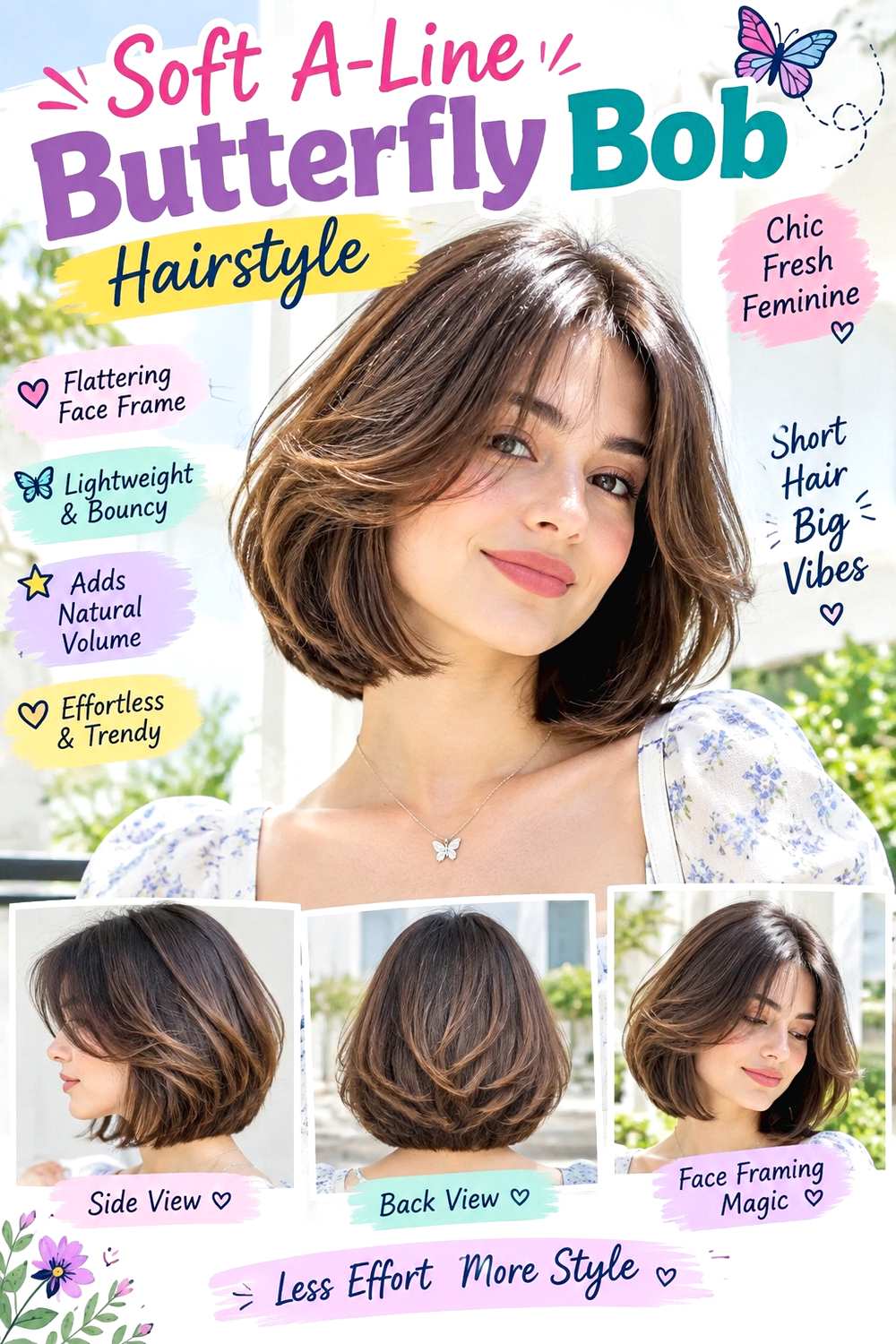
A gentle A-line gives the butterfly bob slightly more length through the front while keeping the back compact. The back sits around the jaw, and the front corners extend a little lower, providing space for cheekbone-to-jaw butterfly layers to sweep into the longer outline. The perimeter stays fairly solid, while upper layers create lift without turning the back into a stacked shape. A center or soft side part works, and smooth bends reveal the forward angle clearly. This version can suit straight and wavy hair particularly well.
Apply heat protectant before shaping with a round brush, then use lightweight styling cream on the ends to keep the angle controlled. A quick refresh can focus on the front corners and upper layers; a full blow-dry takes longer depending on density and starting texture. At the salon, agree on the exact difference between the back and front lengths and ask for the butterfly layers to connect gradually into that line. Reshape when growth makes the angle disappear or the front layers begin falling as one heavy section. Dense hair may need controlled internal weight reduction near the back, but the outer perimeter should remain strong enough to show the soft A-line.
Pro tip:
Check the side profile after styling because the forward angle is easiest to judge there. The face-framing layers should flow into the longer front instead of ending abruptly.
Make It Work for You:
For wavy hair, keep the soft A-line perimeter and let the upper layers follow your natural bends. The angle can remain visible without requiring a polished blowout.
Watch Out For:
Avoid shortening the back too aggressively. A dramatic graduation can turn the cut into a stacked bob and distract from the softer butterfly movement at the front.
Air-Dried Textured Butterfly Bob Hairstyle

This butterfly bob is planned to work with natural texture rather than depend on a polished blowout. The main length sits around the jaw, while face-framing layers begin near the cheekbones or lower and follow the hair’s natural bends, waves, or loose curls. The perimeter remains connected, and the crown gets enough layering for lift without becoming overly short. A relaxed center or off-center part suits the finish, and the ends can dry with small variations instead of matching perfectly. This approach is useful when you want visible movement but prefer a lower-heat routine.
Apply a lightweight leave-in conditioner for slip, use curl-enhancing mousse for flexible definition, and let the hair air-dry without repeatedly disturbing the front sections. A quick refresh can involve dampening only flattened pieces, while a full wash-day set takes longer because natural drying depends on density and environment. At the salon, show where you want the shortest face-framing layer to sit when fully dry and ask that the cut preserve enough perimeter weight for your density. Reshape when the upper layers stop separating or the lower edge becomes too heavy. If your pattern varies across the head, allow small asymmetries in movement rather than forcing every section into the same bend.
Pro tip:
Arrange the front layers while they are damp, then leave them alone as they dry. Repeated touching can disrupt natural clumps and make the butterfly frame less defined.
Make It Work for You:
If your pattern is straighter at the crown, keep the upper layers longer and rely on the face frame for movement. The cut will still read airy without forced root volume.
Watch Out For:
Do not judge the final shape while the hair is still damp. Natural texture can shrink, expand, or settle differently, changing where the layers appear to finish.
Conclusion
Butterfly bob haircut ideas can range from polished and symmetrical to curly, shaggy, or air-dried, but the common thread is shorter face-framing movement above a compact bob perimeter. A blunt bottom edge preserves density, while stronger layering adds lift and separation. Curtain or wispy fringe changes the front, and side parts shift volume away from perfect symmetry. Straight finishes show the layer pattern clearly; waves and curls soften it and may need shrinkage considered. Fine hair often benefits from fewer lower layers, while dense hair may need targeted internal weight control. Choose the version that suits your natural texture, face-framing preference, styling time, and willingness to refresh shorter layers. The most practical butterfly bob is one whose volume and grow-out match your normal routine.
Before Your Salon Visit
Choose one or two favorites and save clear references that show the bob length, shortest face-framing layer, and finish you like. At the salon, discuss your natural texture, density, face shape preferences, usual part, upkeep tolerance, and everyday styling routine. Point to the exact fringe, layer starting point, perimeter weight, crown volume, or outward sweep you want. If different references show different features you prefer, explain that clearly so the haircut plan reflects your priorities rather than copying one image completely.
FAQs
Can a butterfly bob work for fine hair?
Yes, but the layer amount matters. Fine strands often benefit from a stronger bottom edge and fewer short lower layers. If overall density is also low, concentrate movement around the face and crown instead of removing weight throughout the perimeter.
How should curly hair be cut into a butterfly bob?
Plan the shape around the finished dry curl pattern, especially the face-framing pieces. Shrinkage varies, so a fixed wet measurement can be misleading. Keeping the front layers slightly longer and checking the dry silhouette helps preserve both lift and the intended bob length.
Does a butterfly bob need a daily blowout?
No. A blowout makes the outward layers very visible, but natural waves, curls, or air-dried bends can also show the shape. If your preferred finish differs greatly from your natural texture, expect more styling time and use heat protectant when hot tools are involved.
How often does a butterfly bob need reshaping?
There is no single schedule for every version. Reshaping becomes useful when the face frame stops separating, crown layers lose lift, fringe falls into the eyes, or the perimeter no longer supports the intended bob shape. Shorter, more dramatic layers usually show growth sooner than long ones.