14 Butterfly Bob Haircut Ideas

A butterfly bob combines the light, flowing layers of a butterfly haircut with the shorter outline of a bob. Instead of sitting as one solid block, the shape usually has shorter face-framing pieces that blend into longer layers, creating movement around the cheeks, jaw, and sides. Depending on the cut, the length can sit near the chin, jaw, shoulders, or collarbone, while the ends may remain full or become softly feathered.
The haircut can be adapted for straight, wavy, and curly textures. Fine hair generally benefits from fewer, carefully placed layers so the perimeter keeps enough density, while thicker hair can handle more internal weight removal. Fringe choices also change the effect: curtain bangs create a softer opening around the face, wispy bangs add light coverage, and a longer front section makes the grow-out easier. Face shape can be balanced by changing the part, layer height, fringe width, or amount of side volume.
Daily styling ranges from a quick texture refresh to a full round-brush blowout. Before choosing among these Butterfly Bob Haircut Ideas, consider your natural texture, preferred length, heat-styling routine, humidity, and how often you want the layers or bangs reshaped.
Quick List
- Soft Layered Butterfly Bob
- Curtain Bang Butterfly Bob
- Face-Framing Butterfly Bob
- Wavy Butterfly Bob
- Sleek Butterfly Bob
- Voluminous Blowout Butterfly Bob
- Wispy Bang Butterfly Bob
- Side-Parted Butterfly Bob
- Chin-Length Butterfly Bob
- Collarbone Butterfly Bob
- Curly Butterfly Bob
- Fine Hair Butterfly Bob
- Thick Hair Butterfly Bob
- Flipped Ends Butterfly Bob
Soft Layered Butterfly Bob

Soft layering gives the butterfly bob its signature movement without making the outline look heavily chopped. Here, shorter pieces around the cheeks blend gradually into a fuller bob perimeter, while the ends stay light enough to move during a blow-dry. It works especially well on straight or softly wavy medium-density hair, although fine hair can wear it when the stylist avoids excessive thinning. Styling is moderate rather than demanding: a round brush can create the curved front pieces, while heat protectant and a lightweight texturizing spray help hold separation without stiffness. Between wash days, the face-framing sections usually need only a quick refresh. Plan to reshape the layers when they begin losing their airy movement rather than trimming every section equally. At the salon, ask for graduated face-framing with the shortest layer around the cheekbone and enough weight left through the bottom edge. That detail keeps the cut soft without creating thin-looking ends.
Pro tip: Direct the front layers away from the face while blow-drying, then let them cool before separating them with your fingers so the curve lasts longer.
Curtain Bang Butterfly Bob

Curtain bangs make the butterfly shape more noticeable because the fringe opens through the center and flows directly into the front layers. A brow-to-cheekbone transition creates a soft sweep rather than a separate block of bangs, giving the cut movement around the eyes and sides of the face. Medium and thick hair usually hold this shape easily, while finer hair benefits from keeping the fringe relatively narrow so too much density is not removed from the front. A small round brush, lightweight mousse, and flexible hairspray are useful for shaping the bangs without making them rigid. Most mornings require only a quick fringe refresh, although the rest of the bob may need a moderate blow-dry after washing. Curtain bangs can grow out smoothly, but their center opening becomes less defined as they lengthen. Tell your stylist where you want the shortest point to fall and ask for the outer fringe to blend into cheekbone-level layers instead of ending abruptly.
Pro tip: Blow-dry the fringe forward first, then split it and direct each side backward; this prevents the center part from becoming too flat.
Face-Framing Butterfly Bob

For someone who wants butterfly movement without committing to bangs, face-framing layers can create the same soft opening around the features. The shortest pieces may begin near the cheekbones or jaw, then blend through the sides while the main bob keeps a stronger perimeter. This placement is useful for medium-density straight or wavy hair because it creates visible movement without requiring heavy layering throughout the back. Face shape can be adjusted by moving the shortest layer higher or lower rather than changing the entire cut. Styling is fairly quick: use a heat protectant, medium round brush, and light smoothing serum to curve the front pieces away from the face while keeping the ends polished. The front layers may need reshaping before the back loses its length. When speaking with your stylist, specify exactly where the shortest face-frame should begin and request a gradual transition into the perimeter. Avoid taking the front section too thin if you want the sides to remain full.
Pro tip: Compare reference photos by checking the shortest front layer, not just the overall bob length; a two-inch difference can noticeably change the finished shape.
Wavy Butterfly Bob

Natural waves add separation between butterfly layers, making the cut appear airy even without a polished blowout. A slightly longer bob works particularly well because the wave pattern has enough room to bend through the mid-lengths before reaching the ends. The perimeter can stay fairly full while selected layers release weight around the face and sides. Wavy medium or thick hair often needs minimal heat, while finer waves should keep layering restrained so the ends do not become sparse. Apply leave-in conditioner and a light curl cream, then use a diffuser only where extra definition or root lift is needed. Wash-day styling may take more time, but later refreshes can be quick with water or a small amount of product. Humidity may expand the shape, so the cut should allow natural volume rather than depend on a perfectly smooth finish. Ask the stylist to cut with your dry wave pattern in mind and avoid over-thinning the perimeter.
Pro tip: Let the waves settle before deciding whether more layers are needed; hair that looks heavy when wet can spring up and separate once fully dry.
Sleek Butterfly Bob

A sleeker butterfly bob keeps the layered construction but replaces fluffy volume with a smoother, more controlled finish. The front sections curve subtly away from the face, while the body lies closer to the head and the perimeter remains clean. Straight and slightly wavy hair usually require the least effort for this finish; coarse or very textured hair may need more heat preparation if worn smooth. Heat protectant, a paddle or round brush, and a small amount of smoothing serum are enough for most styling routines. The process takes moderate time after washing, though daily touch-ups can be limited to the front pieces and ends. Because a sleek finish reveals the haircut clearly, uneven or overly wispy ends are more noticeable than they would be in a tousled style. At your salon appointment, request blended layers with a strong bottom line and controlled internal movement rather than heavy texturizing. Keeping density around the lower edge helps the bob look polished from every angle.
Pro tip: Use serum only from the mid-lengths downward; applying too much near the roots can flatten the light lift that keeps butterfly layers visible.
Voluminous Blowout Butterfly Bob

The blowout variation places volume at the roots, crown, and curved front layers, giving a butterfly bob a fuller silhouette. Longer layers sweep away from the face while the bottom edge bends inward or outward depending on the brush direction. Medium to thick hair can support the rounded shape naturally, while fine hair may need less layering plus extra root support to avoid losing fullness through the ends. Use volumizing spray at the roots, a large round brush, and light-hold hairspray to build lift without making the bob stiff. This option takes more styling time than an air-dried finish, especially after washing, but the shape can often be revived the next morning by reworking only the crown and front. Salon maintenance matters when the layers grow long enough to stop lifting. Ask for the crown layers to remain long and blended rather than cut short, and show your stylist how much perimeter density you want preserved below them.
Pro tip: Lift each crown section upward while drying instead of pulling it backward; upward tension builds height without creating a flattened back section.
Wispy Bang Butterfly Bob

Wispy bangs add a lighter fringe to the butterfly bob, with small pieces resting around the brows instead of forming a dense horizontal line. The fringe should merge softly into longer temple sections so the transition into the layered bob feels intentional. This approach can work especially well for fine to medium hair because it does not require removing a large section from the front, although very sparse hair should keep the bang area narrow. Styling is usually quick. A small round brush, lightweight mousse, and flexible hairspray can give the fringe shape while allowing individual strands to move. Bangs may need more frequent attention than the rest of the haircut because even slight growth changes where the wispy ends fall. Oily roots may also require a quick fringe refresh between wash days. At the salon, ask for an airy fringe with visible separation and enough density left at the temples. Specify brow length when dry, particularly if your hair has any natural bend.
Pro tip: Avoid putting heavy serum or oil directly on wispy bangs; use any product left on your hands instead so the pieces stay separated rather than clumping together.
Side-Parted Butterfly Bob
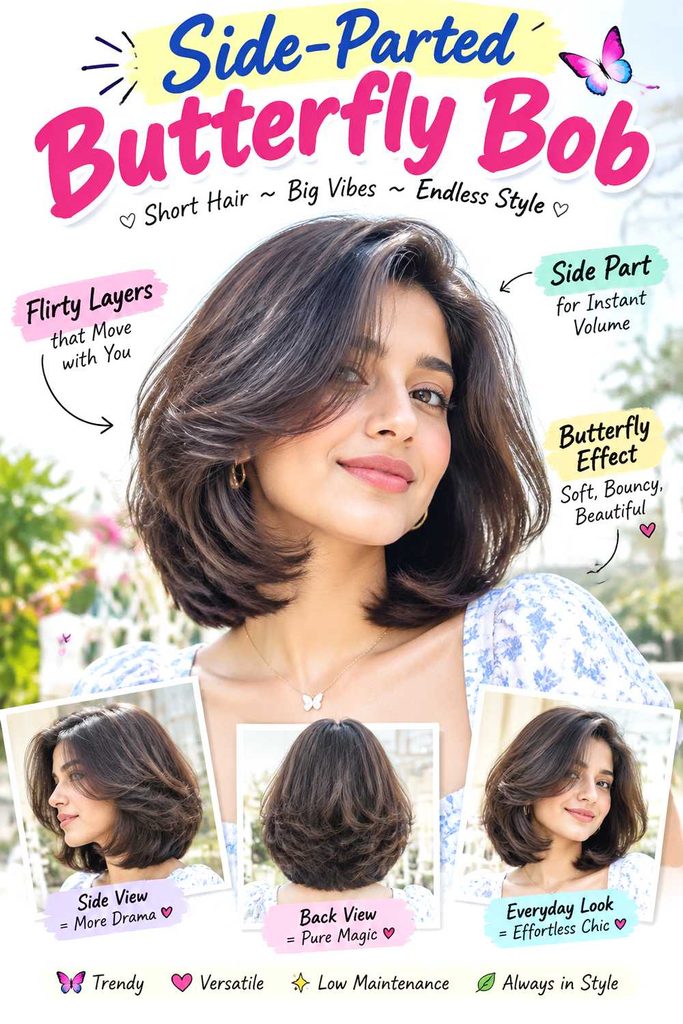
A side part shifts the butterfly bob’s volume toward one side, creating a stronger sweep through the front rather than the balanced opening of a center part. Longer face-framing pieces work well here because they can lift at the root and fall across the forehead without behaving like short bangs. Straight, wavy, and medium-density hair can all carry the shape, and fine hair may gain useful visual lift by moving the part away from its usual position. Styling is generally moderate: apply a root-lifting spray, dry the front with a round brush, and finish with flexible hairspray where the sweep needs support. The part can be changed between wash days, although hair with a strong natural growth pattern may need heat or dampening first. If one side becomes bulky, internal weight removal may help. Tell your stylist which side you normally part your hair on and ask for face-framing that still falls correctly when swept across rather than cut symmetrically around a center line.
Pro tip: Dry the front section briefly in the opposite direction of the final part before flipping it back; this creates root lift without aggressive teasing.
Chin-Length Butterfly Bob

At chin length, the butterfly bob becomes more compact, so layer placement needs extra control. The perimeter sits near the jaw while shorter front pieces create movement without leaving the bottom too thin. Straight and slightly wavy hair are especially easy to shape at this length, though thicker hair may need internal bulk removal to prevent the sides from expanding. Because there is less length to weigh everything down, natural volume tends to appear more quickly around the cheeks and crown. A heat protectant, medium round brush, and texturizing spray can shape the curve and add separation. Styling is relatively quick, but short layers may show bedhead more clearly and need a morning reset. Regular reshaping keeps the bob sitting near the intended chin line. At the salon, ask to preserve visible weight around the perimeter while keeping the shortest butterfly layers long enough to blend into the sides. Avoid overly short crown layers if you prefer a smoother, less rounded silhouette.
Pro tip: Check where the bob lands when your head is upright during the consultation; chin-level cuts can appear noticeably shorter once the hair dries and lifts.
Collarbone Butterfly Bob
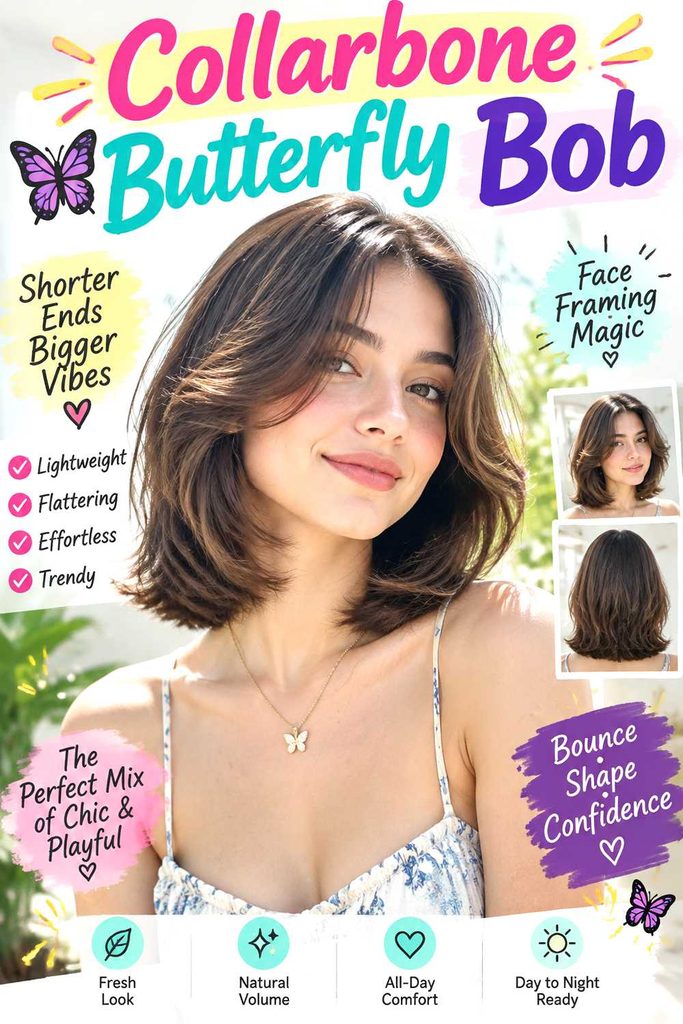
A collarbone-length butterfly bob offers more room for sweeping layers and is a useful option for someone who wants movement without going very short. The front pieces can begin around the cheekbones or jaw, then flow into longer sections that brush the shoulders. Medium and thick hair benefit from the extra space for layering, while fine hair should keep the lower perimeter reasonably solid. Natural waves also work well because the added length allows a softer bend rather than a compact puff. Styling can be easy to moderate depending on texture. Use a wide-tooth comb, lightweight leave-in conditioner, and large-barrel curling iron only where the front pieces need definition. The longer length tends to grow out more forgivingly than a chin bob, although the layers eventually lose their distinct separation. Ask your stylist to begin the longer layers below the chin and maintain enough weight at the collarbone. This prevents the ends from becoming feathery before the butterfly shape has room to develop.
Pro tip: If you often wear your hair tied back, keep the shortest side layers long enough to tuck or reach your ponytail instead of cutting them purely for the front view.
Curly Butterfly Bob

Curly texture gives butterfly layering a more sculpted appearance because each shorter section can spring into a different level of the shape. Instead of relying on a blowout, the haircut uses curl placement to create movement around the forehead, cheeks, and sides. Medium to thick curls often benefit from carefully distributed layers that reduce a heavy triangular outline, while finer curls need enough density left through the ends. Styling usually takes more attention on wash day but can be simple afterward. Apply leave-in conditioner and curl cream, then use a diffuser at low or moderate airflow to protect definition. Refresh individual face-framing curls rather than soaking the whole bob every morning. Shrinkage is especially important when choosing fringe or cheekbone pieces, since wet length can be misleading. At the salon, explain where you want the shortest curls to sit after drying and request bulk removal only where necessary. The perimeter should still look deliberate rather than overly thinned.
Pro tip: Bring a reference showing dry curl length and volume, not only wet or stretched hair, so your stylist can judge shrinkage before placing the shortest layers.
Fine Hair Butterfly Bob

Fine hair can wear a butterfly bob successfully when the layering is selective rather than excessive. A fuller bottom edge creates the appearance of density, while a few face-framing pieces add movement where it is most visible. Layers through the back should usually remain longer so the perimeter does not become transparent or stringy. Straight and softly wavy fine hair are particularly suited to this restrained approach, and a shorter-to-medium bob length can help prevent the roots from being pulled flat. Lightweight mousse, volumizing spray, and a medium round brush provide lift without coating the strands heavily. Styling is fairly quick because less hair needs drying, although too much product can make the shape collapse sooner. Regular trims help maintain the stronger outline as fine ends become worn. At the salon, ask for minimal internal thinning and show how much density you want kept along the bottom. The butterfly effect should come mainly from strategic front layers rather than layers everywhere.
Pro tip: Keep the shortest face-framing section slightly longer if your temples are fine; preserving hair there prevents the front edge from looking separated from the bob.
Thick Hair Butterfly Bob

With thick hair, the goal is to create butterfly movement without letting the bob become excessively wide at the sides. Internal layering can remove bulk beneath the surface while leaving the outer shape and perimeter looking substantial. A medium or slightly longer bob gives dense hair enough length for the layers to fall smoothly, particularly when the natural texture is straight or wavy. Coarse hair may also benefit from a softer end finish so individual sections do not stack too heavily. Anti-frizz cream, a wide-tooth comb, and a powerful blow-dryer with a concentrator are useful for controlling the shape. Styling may take more time on wash day because of density, but a well-balanced cut should reduce daily correction. Salon reshaping becomes useful when weight begins collecting around the lower sides. Ask specifically for internal bulk removal rather than aggressive thinning at the ends, and keep a firm perimeter so the bob maintains structure as the layers move above it.
Pro tip: Ask your stylist to show where bulk will be removed before cutting; taking too much from the outer layers can create short pieces that expand in humid weather.
Flipped Ends Butterfly Bob

Flipped ends give the butterfly bob a more defined finish by turning the perimeter and selected layers outward instead of curling everything under. The effect works especially well on straight or slightly wavy hair with enough length for the ends to bend cleanly. A chin-to-shoulder bob can carry the flip, while face-framing layers sweep backward to connect with the outward movement. Medium-density hair is easy to balance; fine hair should keep the layers limited so the flipped ends still look full. Use heat protectant, a round brush or flat iron, and light-hold hairspray to shape the bend. Styling needs moderate effort because the direction of each end matters, although the front and perimeter are usually the only sections that need refreshing later. At the salon, request softly textured ends without making them wispy and keep the perimeter strong enough to show the flip. Slightly longer layers also make this finish easier to control as the cut grows.
Pro tip: Turn only the final inch or two outward rather than curling the whole section; a smaller bend keeps the bob light and prevents an overly rounded silhouette.
Conclusion
Butterfly bob haircut ideas can look quite different depending on where the length falls and how much movement is cut into the front, sides, and crown. A chin-length shape gives a compact finish, while collarbone versions allow longer, flowing layers. Fine hair usually benefits from fewer layers and a stronger perimeter, whereas thick hair can use hidden bulk removal to improve movement. Bangs, face-framing, center or side parts, natural waves, curls, blowout volume, and sleek finishes can all change the character of the cut. The most useful choice is the one that works with your face shape, natural texture, density, preferred maintenance level, and normal styling routine rather than relying on a single reference photo.
Choose Your Favorite
Choose one or two favorite ideas and save clear photos showing the front, sides, and overall length. When you meet your stylist, discuss your face shape, natural texture, density, preferred length, maintenance tolerance, and normal styling routine. Point directly to the layers, fringe placement, volume, perimeter, or end finish you want to copy. It is equally useful to explain what you do not want, especially if you prefer fuller ends, limited layering, less daily heat, or an easier grow-out.
FAQs
Is a butterfly bob suitable for fine hair?
Yes, but fine hair usually needs fewer layers. Keeping a stronger perimeter and concentrating shorter pieces around the face can create movement without making the ends look sparse.
Can a butterfly bob work with naturally curly hair?
It can. Layer length should be chosen according to the curl pattern and expected shrinkage. A stylist may also adjust the amount of internal weight removal to keep the shape balanced when dry.
How much daily styling does a butterfly bob need?
It depends on the finish. Natural waves or curls may need only a quick refresh, while a rounded blowout or flipped-end version takes more heat styling. Front layers often need more attention than the back.
How often should butterfly bob layers be reshaped?
The best timing depends on length, bangs, texture, and how quickly your hair grows. Fringe may need attention sooner, while longer layers can usually grow for longer before their movement starts to collapse.
Editorial guidance for image-specific caption depth and practical hairstyle variation was followed throughout. Natural SEO, reader-value, maintenance, and human-writing guidance was also applied.