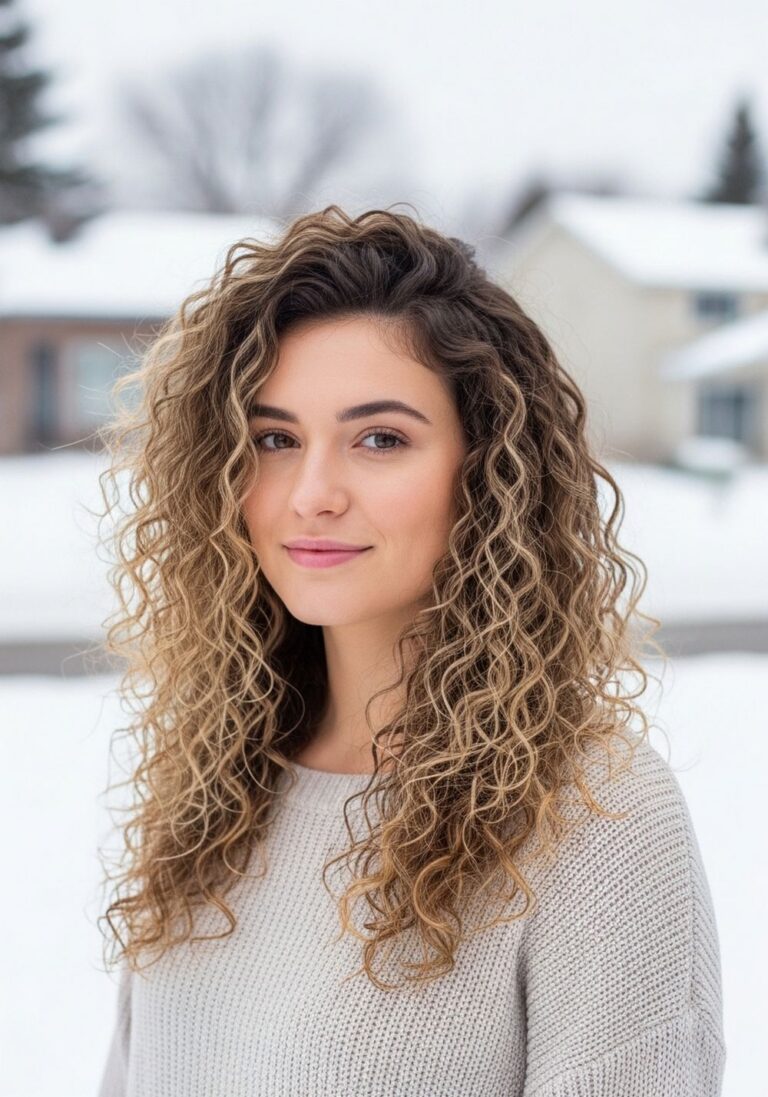
16 Cloud Bangs Bob Haircut Ideas

Cloud bangs bring a soft, lifted fringe to the clean outline of a bob. The defining shape is usually a brow-skimming or slightly longer center section with outer pieces that curve into the sides instead of stopping as a hard horizontal line. Pairing that fringe with chin-, jaw-, or collarbone-length hair creates plenty of room to vary the perimeter, layers, parting, and finish while keeping the front airy and mobile rather than flat.
Straight and wavy textures can show the curved fringe easily, while curly or coily hair can interpret the same idea with separated, springy front pieces and careful attention to dry length. Density matters too: a fuller bottom edge can support sparse ends, while dense hair may benefit from controlled bulk reduction inside the bob rather than heavy thinning everywhere. Face framing can start at the cheekbone, jaw, or below the chin depending on how much openness you prefer around the face.
A cloud bangs bob haircut can be quick to refresh between washes, but a polished version may take longer after a full shampoo and dry. Fringe upkeep is usually more frequent than reshaping the bob because the front reaches the eyes sooner. Growth direction, humidity, and natural texture also affect how often the bangs need redirecting, smoothing, or trimming.
Quick List
- Chin-Length Rounded Cloud Bangs Bob Hairstyle
- Jaw-Length Blunt Cloud Bangs Bob Hairstyle
- Soft A-Line Cloud Bangs Bob Hairstyle
- French Bob With Airy Cloud Bangs Hairstyle
- Wavy Cloud Bangs Textured Bob Hairstyle
- Curly Cloud Bangs Bob Hairstyle
- Sleek Split Cloud Bangs Bob Hairstyle
- Side-Swept Cloud Bangs Bob Hairstyle
- Cheekbone-Layered Cloud Bangs Bob Hairstyle
- Full-Perimeter Cloud Bangs Bob Hairstyle
- Tousled Shaggy Cloud Bangs Bob Hairstyle
- Collarbone Long Bob With Cloud Bangs Hairstyle
- Tucked-Behind-Ear Cloud Bangs Bob Hairstyle
- Voluminous Blowout Cloud Bangs Bob Hairstyle
- Soft Flip-End Cloud Bangs Bob Hairstyle
- Asymmetrical Cloud Bangs Bob Hairstyle
Chin-Length Rounded Cloud Bangs Bob Hairstyle

A chin-length bob gives cloud bangs a compact, rounded base. Keep the fringe light through the center, with longer outer corners that melt toward the cheekbones. The bob can sit close to the jaw with subtle curved movement through the ends rather than a sharp flip. A soft center or near-center part supports the airy shape, while gentle crown lift keeps the silhouette from widening only at the sides.
This option suits straight or softly wavy textures and works especially well for readers willing to shape the front more often than the rest. Fine strands can keep a stronger bottom edge, while dense hair may need carefully placed internal weight reduction. For styling, use a heat protectant before blow-drying, a small round brush to direct the fringe up and away from the face, and a lightweight mousse at the roots for controlled lift.
A quick dry-fringe refresh can take only a few minutes, while full wash-day styling takes longer depending on density and starting texture. Ask your stylist to keep the outer fringe corners long enough to blend into the cheekbone area. Reshape the bangs when they begin falling into the eyes, and smooth humidity-related frizz by redirecting only the front instead of restyling the entire bob.
Pro tip: Dry the fringe from side to side first, then lift the center gently at the roots; this helps neutralize a stubborn split before creating the rounded bend.
Make It Work for You: If your ends are sparse, keep the chin-length perimeter relatively solid and concentrate most of the softness around the fringe so the bob still looks substantial.
Watch Out For: Too much round-brush curl can turn the ends under heavily and make the bob look bulbous. Use only a slight bend through the lower edge.
Jaw-Length Blunt Cloud Bangs Bob Hairstyle

The blunt version keeps attention on a strong jaw-length bottom line while the cloud bangs supply softness above it. The fringe should feel lighter than the perimeter, with a slightly shorter center and longer side pieces that curve toward the temples. Minimal layering through the body preserves the crisp outline, and a center part or barely offset part keeps the contrast between airy front and solid ends clear.
Straight hair shows the geometry most directly, but a smooth wavy finish can work if the ends remain visually full. It is a useful choice for fine strands or lower density because the perimeter is not heavily broken up. A heat protectant shields during styling, a paddle brush helps smooth the bob without adding too much curl, and flexible hairspray gives the fringe light hold without freezing its movement.
Between washes, a short fringe refresh is often enough; a full smooth finish takes longer when natural texture is more pronounced. Ask your stylist to protect the perimeter weight and avoid unnecessary thinning near the bottom edge. Trim or reshape the fringe when its center starts covering the eyes, while the bob itself can usually grow a little longer before its blunt line feels noticeably different.
Pro tip: After smoothing, let the front sections cool in their lifted direction before touching them. The brief set helps the cloud shape last without heavy product.
Make It Work for You: For naturally wavy hair, keep a little bend through the mid-lengths but smooth only the outermost ends enough to maintain the blunt visual line.
Watch Out For: Over-thinning the lower half can make the strong perimeter disappear. Ask for softness above the edge rather than removing density directly from the ends.
Soft A-Line Cloud Bangs Bob Hairstyle

A soft A-line bob sits slightly shorter at the back and lengthens toward the front, giving cloud bangs a clean frame without creating an extreme angle. The fringe can skim the brows in the middle and stretch toward the cheekbones at the sides. Keep the crown controlled, add only subtle movement through the front lengths, and let the forward perimeter create most of the visual direction.
This shape works on straight, wavy, and gently textured hair, especially for someone who likes a bob with movement but not many visible layers. Dense hair may need internal bulk reduced where it collects behind the ears, while finer hair often benefits from keeping the front corners intact. Use heat protectant before any hot styling, a flat iron for a slight bend rather than pin-straight ends, and a light smoothing serum to reduce flyaways along the angled perimeter.
A quick fringe reset can be brief; recreating a smooth A-line after washing takes more time with thicker or curlier starting texture. At the salon, point out how much longer you want the front to sit than the back. Maintain the shape when the angle begins disappearing, and keep the fringe airy by avoiding heavy product close to its roots.
Pro tip: Direct the front side pieces slightly forward while drying, then let them fall back naturally; this makes the longer A-line corners read clearly without looking stiff.
Make It Work for You: If you prefer less length near the face, keep the A-line difference very subtle and let the longer outer bang pieces provide the framing instead.
Watch Out For: An exaggerated back-to-front angle can overpower the soft fringe. If the front feels too pointed, ask for a gentler graduation at the next reshaping.
French Bob With Airy Cloud Bangs Hairstyle

This compact French-inspired bob finishes around the lips to chin, with an airy cloud fringe breaking up the shorter silhouette. Keep the bangs narrow enough to feel light, with separated tips across the brow and longer outer corners near the temples. The body can stay softly rounded with modest movement rather than obvious stacked layers, and a slightly imperfect part keeps the finish relaxed instead of overly precise.
Straight and loose-wavy textures can style this shape quickly, while curls can adapt it if the finished dry length is planned carefully. Because the overall cut is short, readers who prefer frequent shape maintenance may find it easier than those who like long grow-out periods. A lightweight mousse adds body without coating the fringe, a vent brush helps direct the roots during drying, and a light finishing cream can separate the ends without making them greasy.
A between-wash refresh may focus only on the bangs and front edge, while full wash-day shaping depends on density and texture. Ask your stylist exactly where the bob should finish when dry, since a few centimeters noticeably change a short silhouette. Refresh the fringe once it loses separation or sits in the eyes, and reshape the perimeter when it starts dropping below the intended compact line.
Pro tip: Apply finishing cream only to the very tips after the fringe is dry; keeping it away from the roots preserves the airy spacing between bang sections.
Make It Work for You: If your natural curl shrinks noticeably, choose the finished dry bob and fringe lengths first, then let your stylist account for shrinkage during shaping.
Watch Out For: Cutting the fringe too wide can crowd a short bob around the temples. Keep the outer corners controlled so the sides still have visible breathing room.
Wavy Cloud Bangs Textured Bob Hairstyle

Broad, loose bends give this bob its texture, while cloud bangs keep the front lifted and open. Let the length land between the jaw and chin, with light layers beginning around the lower cheek or jaw so the waves stack without becoming triangular. The fringe can separate through the center and curve outward, while the ends remain softly broken rather than uniformly curled.
Natural waves make this version especially practical because the body does not need to be smoothed first. Straighter hair can create the shape with heat, but that raises styling effort on full wash days. Use a heat protectant before hot work, a medium curling iron to place alternating bends through the mid-lengths, and flexible hairspray to keep movement without a hard shell. Leave the last section of each end less curled for a looser finish.
A quick refresh can mean reshaping only two or three flattened bends and the fringe; resetting the whole bob takes longer. Ask your stylist where the shortest layers should begin so they support wave movement without hollowing the perimeter. Frizz can be controlled by handling the waves less once set, and the cut should be reshaped when the layers stop grouping cleanly or the fringe loses its curved outline.
Pro tip: Alternate the direction of a few mid-length bends but keep the face-framing pieces moving away from the face; the contrast prevents the texture from looking uniform.
Make It Work for You: If your hair is low density, use fewer interior layers and let wave placement create movement while a fuller bottom edge protects the bob’s visual weight.
Watch Out For: Curling every section from roots to ends can create too much width. Start most bends lower and keep the crown comparatively soft and controlled.
Curly Cloud Bangs Bob Hairstyle

Curly cloud bangs reinterpret the airy fringe as springy front pieces that sit above or around the brows when dry, with longer curls opening toward the temples. A jaw-to-chin bob gives the curls enough room to form rounded movement, and layers can begin around the cheek or lower depending on shrinkage. The aim is a buoyant outline with visible curl groups, not a uniformly thinned halo.
This version suits naturally curly hair when the fringe length is planned in its finished state. Dense curls may need weight adjusted inside the shape, while lower density often benefits from protecting the bottom edge and avoiding excessive short layers. Use a lightweight leave-in conditioner for slip, a curl gel for definition and hold, and a diffuser to dry with less disruption. Keep product amounts modest around the fringe so it stays mobile.
A morning refresh may involve reactivating only the front curls and a few flattened sections, whereas wash-day styling takes longer because the whole bob must dry and set. Ask your stylist to assess the cloud fringe dry or with shrinkage considered rather than relying on one wet measurement. Reshape when the front curls fall into the eyes or the bob starts widening in places where the layer balance has grown out.
Pro tip: Arrange the fringe curl by curl while damp, then avoid separating it repeatedly as it dries; preserving small groups helps the front stay airy without turning fuzzy.
Make It Work for You: For tighter coils, keep the same open cloud shape but allow more finished length at the front so shrinkage does not pull the fringe shorter than intended.
Watch Out For: Stretching the bangs straight before deciding their length can mislead the finished result. Judge the front where it naturally springs once dry.
Sleek Split Cloud Bangs Bob Hairstyle

A clean center split changes cloud bangs from a continuous fringe into two soft wings that lift away from the forehead. Pair that front with a jaw-length bob, minimal layering, and ends that sit smooth with only a slight inward bend. The roots stay relatively flat through the body, so the main volume appears at the bang roots and outer corners rather than across the entire crown.
Straight and gently wavy textures can achieve the sleek finish with less daily work, while curlier starting textures may require a longer wash-day routine if worn smooth. Use heat protectant before styling, a flat iron to refine the bob and shape a controlled bend through the fringe, and a lightweight serum on the ends for polish. Keep the serum away from the bang roots so the split does not collapse.
A brief refresh usually means redirecting the two front panels and smoothing isolated dents; a full reset is more involved after washing. At the salon, ask for the outer bang corners to reach far enough to connect with the side lengths instead of ending abruptly. Maintain the fringe when the split becomes heavy over the eyes, and preserve the sleek line by trimming the bob when the ends begin losing their even placement.
Pro tip: Shape each half of the fringe away from the center while it is still warm, then let it cool before combing so the split keeps its soft lift.
Make It Work for You: If you prefer less forehead exposure, leave a few lighter center pieces unsplit while keeping the longer outer panels curved back into the bob.
Watch Out For: Too much serum near the roots can separate the fringe into oily-looking pieces. Use polish only from mid-lengths downward and keep the front light.
Side-Swept Cloud Bangs Bob Hairstyle

Instead of opening evenly in the center, this version lets the cloud fringe drift to one side while keeping softness and root lift. The bob can sit around the jaw with a subtle off-center part, light face-framing near the cheekbone, and a mostly full perimeter. The longer side of the fringe should arc across the forehead without becoming a dense, flat side bang.
An off-center direction is useful for straight or wavy hair that naturally prefers one growth pattern at the front. It can also reduce the daily fight against a strong cowlick if the part follows rather than opposes it. Use a root-lift spray to support the fringe, a round brush to sweep it diagonally while drying, and heat protectant before any heated blow-dry or touch-up. Keep the bob ends softly bent, not tightly curled.
A short refresh focuses on the fringe’s root direction; wash-day styling takes longer because the part and body must be reset together. Tell your stylist which side you actually wear the fringe toward and where you want its shortest point to sit. Reshape the front when it starts dropping into the eyes, and use lighter product near the part if the lift begins collapsing between washes.
Pro tip: Start drying the fringe briefly against its final direction, then sweep it back to the preferred side; that small reversal can create lift at the base.
Make It Work for You: If your front growth pattern is strong, shift the part only slightly off center and preserve the airy curve instead of forcing a dramatic side sweep.
Watch Out For: Pulling all the fringe tightly to one side can flatten the cloud effect. Keep some root height and let the outer edge curve rather than stick.
Cheekbone-Layered Cloud Bangs Bob Hairstyle

Cheekbone-level layers connect cloud bangs directly into the bob, creating a more sculpted face frame than a mostly one-length cut. Keep the center fringe near the brows, extend the outer corners toward the cheekbones, and let the shortest side layers begin around that same landmark. A jaw-length perimeter can stay reasonably full so the movement remains concentrated around the face instead of making every end wispy.
This layout works well for straight and wavy textures that benefit from visible front movement. Dense hair can carry a stronger layered transition, while lower density may need fewer side pieces so the perimeter keeps its weight. Use a heat protectant before hot styling, a round brush to curve the cheekbone sections away from the face, and a light styling cream through the ends to define separation without stiff hold.
A quick refresh usually targets the fringe and two front layers; a full blow-dry takes longer after washing, especially on dense hair. Ask your stylist to show where the shortest face-framing layer will finish when dry, because moving it higher changes the whole outline. Maintain the front when those layers stop blending into the bangs, and avoid overloading them with product if they begin falling flat against the cheeks.
Pro tip: Roll the cheekbone pieces away from the face only through their middle section, leaving the tips looser so the frame looks connected rather than curled under.
Make It Work for You: If your ends are fine or sparse, limit the cheekbone layers to the front corners and keep the back and lower sides more solid.
Watch Out For: Starting too many layers above the cheekbone can create unwanted width near the temples. Keep the shortest pieces targeted to the planned face frame.
Full-Perimeter Cloud Bangs Bob Hairstyle

A full-perimeter bob keeps almost all of its visual weight at the bottom edge, allowing the cloud bangs to provide softness without thinning the rest of the cut. Aim for a chin-to-jaw length, a mostly one-length body, and a light fringe with curved outer corners. The part can stay central or slightly offset, while the ends remain smooth, dense-looking, and only gently beveled.
This is a practical direction for fine strands, low-density ends, or anyone who dislikes visibly layered bobs. Straighter textures show the solid outline easily, though gentle waves can still work if they do not break up the lower edge too much. Use a lightweight mousse near the roots for lift, a heat protectant before blow-drying, and a paddle brush to keep the body smooth while avoiding excessive roundness.
Between washes, the fringe may need only a brief root reset; full wash-day styling is usually more about smoothing than creating multiple layers or curls. Ask your stylist to preserve the bottom line and place any bulk reduction above it rather than carving into the ends. Reshape the fringe when it crowds the eyes, and revisit the bob when the perimeter loses the crisp, full placement that defines this version.
Pro tip: When drying, keep the brush movement mostly downward through the lower half and add lift only near the roots; this preserves the strong bottom edge.
Make It Work for You: If your hair is dense, ask for controlled internal weight reduction where the bob feels bulky while keeping the outside perimeter visually intact.
Watch Out For: Heavy texturizing at the ends can undo the main feature. If the edge starts looking feathery, preserve more weight at the next reshaping.
Tousled Shaggy Cloud Bangs Bob Hairstyle

A shaggy bob gives cloud bangs more texture through the crown and sides, but the fringe should still keep its soft, lifted identity. Let the length fall around the jaw, with shorter layers starting near the cheekbones and additional movement through the crown. The ends can look broken and piecey rather than blunt, while a relaxed center split keeps the fringe from turning into a heavy shag bang.
Wavy hair and naturally textured movement make this option easier to maintain because the cut is designed to look loose rather than perfectly smooth. Straight hair can still wear it, though creating texture may add wash-day work. Use a lightweight mousse for airy root support, a texture spray through the mid-lengths for separation, and a diffuser to encourage bends without pressing the hair flat.
A morning refresh can be as simple as reworking the fringe and scrunching a few flattened layers; full styling is longer when the natural pattern needs rebuilding after washing. Tell your stylist how much crown lift you want and where the shortest layer should begin, since too much removal can hollow the sides. Reshape when the layers stop separating cleanly or the fringe grows heavy enough to lose its open curve.
Pro tip: Concentrate texture spray through the middle of the bob rather than at the fringe roots; this keeps the cloud front light while adding separation elsewhere.
Make It Work for You: For lower-density hair, keep the crown layers longer and fewer, then create a tousled effect with styling rather than removing large amounts of weight.
Watch Out For: Over-scrunching the fringe can make it frizzy and obscure its shape. Arrange the front first, then leave it mostly untouched while the rest dries.
Collarbone Long Bob With Cloud Bangs Hairstyle

A collarbone-length long bob offers more swing than the shorter options while keeping cloud bangs as the focal point. The fringe can skim the brows and lengthen toward the temples, while soft layers begin around the jaw or below so the front blends into the longer body. A center or slightly off-center part works, and the ends can stay substantial with gentle bends rather than tight curls.
This length suits readers who want a bob feeling without exposing the full jawline or committing to frequent perimeter reshaping. Straight, wavy, and loosely curly textures can all adapt it, with denser hair often benefiting from thoughtful internal weight placement. Use a heat protectant before hot styling, a large round brush to build broad movement, and flexible hairspray to hold the fringe and lengths without removing their swing.
A quick refresh may involve only the bangs and front bend, while a full wash-day blowout can take noticeably longer because there is more hair to dry. Ask your stylist to keep the shortest face-framing layer at or below the jaw if you want the length to remain dominant. Trim the fringe when it begins covering the eyes, and reshape the lob when the ends stop sitting cleanly around the collarbone.
Pro tip: Direct the front lengths away from the face while drying, but stop the bend around the jaw so the longer perimeter keeps its relaxed swing.
Make It Work for You: If you air-dry most days, keep the layers modest and let your natural texture supply movement while styling only the fringe when needed.
Watch Out For: Too many short layers can make a long bob lose its heavier swing. Keep most movement below the jaw if collarbone length is the priority.
Tucked-Behind-Ear Cloud Bangs Bob Hairstyle

Tucking one or both sides behind the ears changes how a cloud bangs bob frames the face without altering the basic cut. Keep the bob near jaw length, the fringe soft and brow-skimming, and the outer bang corners long enough to bridge into the side sections. The visible ear tuck makes the front feel lighter, while a mostly full perimeter keeps the bob from looking too wispy once the sides are pulled back.
This option is practical for straight, wavy, or softly curled hair that can stay tucked without constant slipping. It also suits readers who want a work-friendly or accessory-ready finish. Use a light styling cream to smooth the side panels, a small round brush to lift the fringe, and heat protectant if you use heated drying to set the front. Keep the ends curved so they settle neatly behind the ears.
A quick refresh may take only a few minutes because the side placement does much of the work; wash-day styling takes longer if the roots need reshaping. Ask your stylist to retain enough length around the temples for a comfortable tuck and smooth blend. Maintain the fringe when it blocks the eyes, and avoid overloading the side panels with product if they begin separating into stiff pieces.
Pro tip: Tuck the side only after the front has cooled and settled; doing it too early can pull the fringe flat and weaken the airy curve.
Make It Work for You: If short temple pieces escape easily, keep those corners slightly longer so they can join the tuck without needing constant pinning or extra tension.
Watch Out For: Forcing a very short side section behind the ear can make it spring forward repeatedly. Preserve enough temple length for the placement you actually wear.
Voluminous Blowout Cloud Bangs Bob Hairstyle

This version builds volume at the roots and through the mid-lengths, giving the bob a rounded blowout shape while cloud bangs open softly at the front. A chin-to-jaw length works well with subtle layers around the cheeks and crown, but the ends should still hold enough weight to look polished. The fringe curves up and outward rather than lying flat, with movement concentrated around the brow and cheekbones.
Straight and wavy hair may reach the finish faster, while curly or coily hair can wear it too if the reader is comfortable with the extra smoothing work. Use a root-lift spray for support, heat protectant before heated drying, and a round brush to shape the body and fringe. Full wash-day styling can take considerably longer than a simple natural-texture routine, especially on dense hair.
A morning refresh usually targets the crown and bangs rather than rebuilding the whole blowout. Ask your stylist to keep crown layers long enough to support volume without creating a stacked helmet shape. Refresh the front when it collapses or separates, and reshape the cut once the layers stop lifting together. Reducing heavy product near the roots also helps when the volume starts disappearing too quickly.
Pro tip: Lift the fringe and crown upward while drying instead of pulling them straight forward; that root direction creates height before you shape the outward curve.
Make It Work for You: If your hair is very dense, keep the perimeter strong but ask for bulk control inside the widest areas so the blowout does not balloon at the sides.
Watch Out For: Rolling every section tightly under can create a stiff, overly round silhouette. Use broad bends and let some ends fall straighter for movement.
Soft Flip-End Cloud Bangs Bob Hairstyle

A soft outward flip at the ends gives the bob a playful change of direction while the cloud bangs stay rounded and lifted near the face. Keep the length around the jaw or slightly below, with minimal layering through the body so the flipped perimeter reads clearly. The fringe can split lightly at the center, and the face-framing pieces should curve back before the ends turn outward.
Straight and softly wavy textures make the finish easier to recreate because the flip only needs a controlled bend near the lower edge. Fine hair can benefit from the visual width at the ends, while dense hair may need weight balanced so the sides do not become too broad. Use heat protectant before styling, a flat iron to flick the last few centimeters outward, and flexible hairspray for light hold.
A between-wash refresh can focus on a few flattened end sections and the fringe; a complete set after washing takes longer. Ask your stylist to keep the perimeter even enough that the flip forms at a consistent height around the bob. Reshape the fringe when it reaches the eyes, and trim the lower edge when uneven growth starts making the flipped line look irregular rather than intentional.
Pro tip: Create the outward bend only in the final section of each end, then release immediately; starting too high makes the whole bob kick out instead of softly flip.
Make It Work for You: If your hair already turns outward naturally at the shoulders or jaw, use that growth pattern and keep the fringe polished rather than forcing every end identical.
Watch Out For: A sharp crease from the flat iron can make the flip look rigid. Keep the tool moving and use one smooth wrist turn near the ends.
Asymmetrical Cloud Bangs Bob Hairstyle

An asymmetrical bob pairs a balanced cloud fringe with deliberately uneven side lengths, creating contrast between a soft front and a stronger perimeter. One side can sit near the jaw while the other drops slightly lower, with minimal layering so the difference remains obvious. Keep the bangs brow-skimming in the center and longer at both outer corners, and use a subtle part that does not compete with the angled outline.
Straight and gently wavy textures show the asymmetry most clearly, though curls can adapt it when both sides are judged at their dry finished lengths. The shape suits someone comfortable maintaining a visible design detail rather than letting the cut grow unchecked. Use heat protectant before hot styling, a paddle brush for a smooth directional finish, and a lightweight serum on the ends to keep the perimeter readable.
A quick refresh usually means smoothing the fringe and the longer front side; full wash-day work depends on natural texture. At the salon, specify the exact side you want longer and how noticeable the difference should be when dry. Rebalance the perimeter once growth makes the asymmetry look accidental, and keep fringe trims separate so the cloud shape is not shortened simply because the bob needs reshaping.
Pro tip: Style the longer side slightly forward before letting it fall naturally; this makes the deliberate length difference visible without exaggerating the angle.
Make It Work for You: If you want a softer commitment, keep the side-to-side difference small and let the airy cloud fringe remain the strongest feature of the cut.
Watch Out For: Switching your part after the cut can make the asymmetry sit differently than planned. Choose your usual part before discussing the final side lengths.
Conclusion
Choosing between these cloud bangs bob haircut ideas comes down to how much structure, movement, and daily styling you want. A blunt or full-perimeter bob keeps density at the ends, while cheekbone layers, waves, or a shaggy finish create more motion. Shorter French and chin-length shapes need closer attention to perimeter growth; a collarbone bob offers more room between reshaping appointments. Fuller cloud bangs require more frequent fringe control, while split or side-swept versions can feel more open. Natural curls need dry-length planning and shrinkage awareness, whereas sleek or blowout finishes may demand more heat and time. Pick the length, parting, fringe density, and volume pattern that work with your real texture and routine.
Before Your Salon Visit
Before your appointment, choose one or two favorites and save clear references that show the fringe and bob shape you actually want. Point out the finished bang length, outer corners, layer starting point, perimeter weight, volume placement, or end finish that matters most to you. Discuss your natural texture, density, face-framing preference, usual part, preferred overall length, upkeep tolerance, and how often you realistically style with heat. A stylist can then adapt the idea without losing its defining cloud-bang shape.
FAQs
Can Cloud Bangs Work on Fine or Low-Density Hair?
Yes, but the cut should protect enough weight at the bottom. Fine strands and low density are different concerns, so avoid assuming one solution fits both. A lighter fringe, fewer internal layers, and a fuller bob perimeter can preserve shape while still giving the front its airy curve.
How Often Does a Cloud Bangs Bob Haircut Need Trimming?
The fringe usually needs attention before the bob because it reaches the eyes first. Trim timing varies with growth rate, finished bang length, and how open you want the front to stay. Reshape the bob when its perimeter, angle, or layers stop sitting in the intended position rather than following one fixed calendar.
Do Cloud Bangs Require Heat Styling Every Day?
No. Straight or softly wavy hair may need only a quick root redirect, while curly hair can form the fringe with its natural pattern. Heat becomes more useful when you want a polished bend that differs from your texture. If you use hot tools, apply heat protectant and keep touch-ups targeted.
How Should Curly Hair Be Cut for Cloud Bangs?
Plan the fringe by its dry, finished position because curl shrinkage varies from person to person and even across the head. The center can stay airy while longer outer curls open toward the temples. Ask your stylist to consider how each front section springs before deciding the final length or removing bulk.