12 Cloud Bangs Hairstyle Ideas
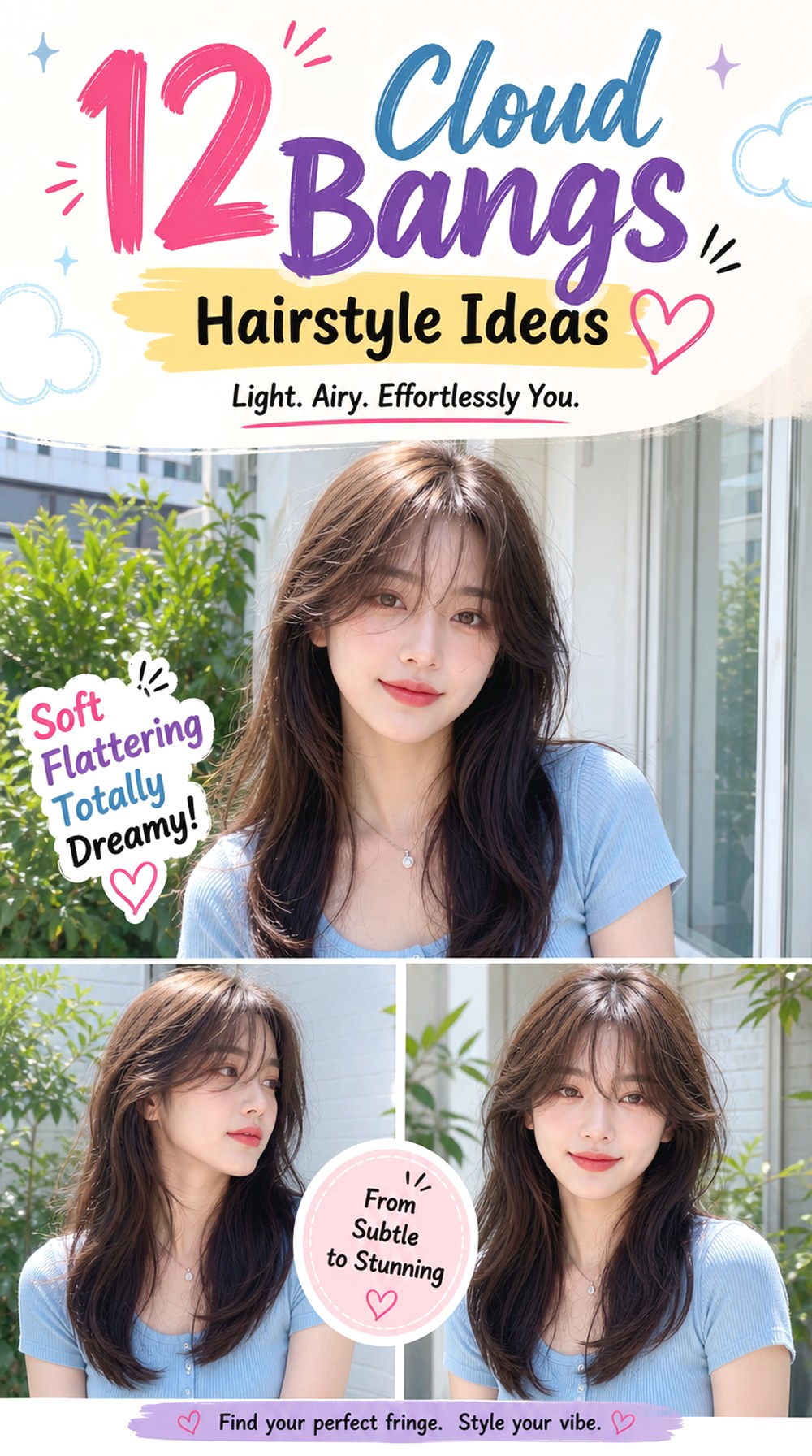
Cloud bangs are a soft, airy type of fringe shaped with gentle lift rather than a heavy, flat line across the forehead. They usually have a rounded bend, light movement, and slightly longer pieces around the sides, which helps the fringe blend into the rest of the haircut. These 12 cloud bangs hairstyle ideas show how that soft shape can work with everything from short bobs to long layers, waves, curls, and smoother finishes.
The amount of fullness can be adjusted to suit different hair types. Fine hair often benefits from a lighter fringe that keeps enough density through the center, while thick hair may need careful weight removal so the bangs do not become bulky. Straight and wavy textures are generally easy to shape with a quick blow-dry, while curly hair can create its own softer interpretation of the rounded silhouette.
Cloud bangs can also be adapted for oval, round, square, heart, and longer face shapes by changing the width, length, and position of the side pieces. Most versions need a few minutes of daily refreshing and fringe trims every few weeks. Before choosing one, consider your natural growth pattern, humidity, preferred parting, and how often you are willing to style your bangs.
Quick List
- Soft Layered Cloud Bangs
- Wispy Cloud Bangs With Long Layers
- Curtain Cloud Bangs
- Cloud Bangs With Shoulder-Length Hair
- Cloud Bangs Bob
- Wavy Cloud Bangs
- Curly Cloud Bangs
- Cloud Bangs For Fine Hair
- Cloud Bangs For Thick Hair
- Face-Framing Cloud Bangs
- Cloud Bangs With A Rounded Lob
- Sleek Cloud Bangs
Soft Layered Cloud Bangs

Soft layered cloud bangs combine a rounded fringe with gradual layers that continue around the cheeks and through the rest of the hair. The result has movement without making the ends look thin. This shape works especially well on medium-density straight or softly wavy hair and can be adjusted for oval, round, or heart-shaped faces by changing where the face-framing pieces begin. Styling is usually moderate: blow-dry the fringe forward before sweeping it slightly outward. A small round brush, heat protectant, and lightweight mousse help build lift without stiffness. Fringe trims are useful every four to six weeks. At the salon, ask for a soft center with longer edges that connect naturally to the layers.
Pro tip: Keep the shortest layers below the cheekbone if you want the fringe to remain the main focal point rather than competing with too many short pieces.
Wispy Cloud Bangs With Long Layers
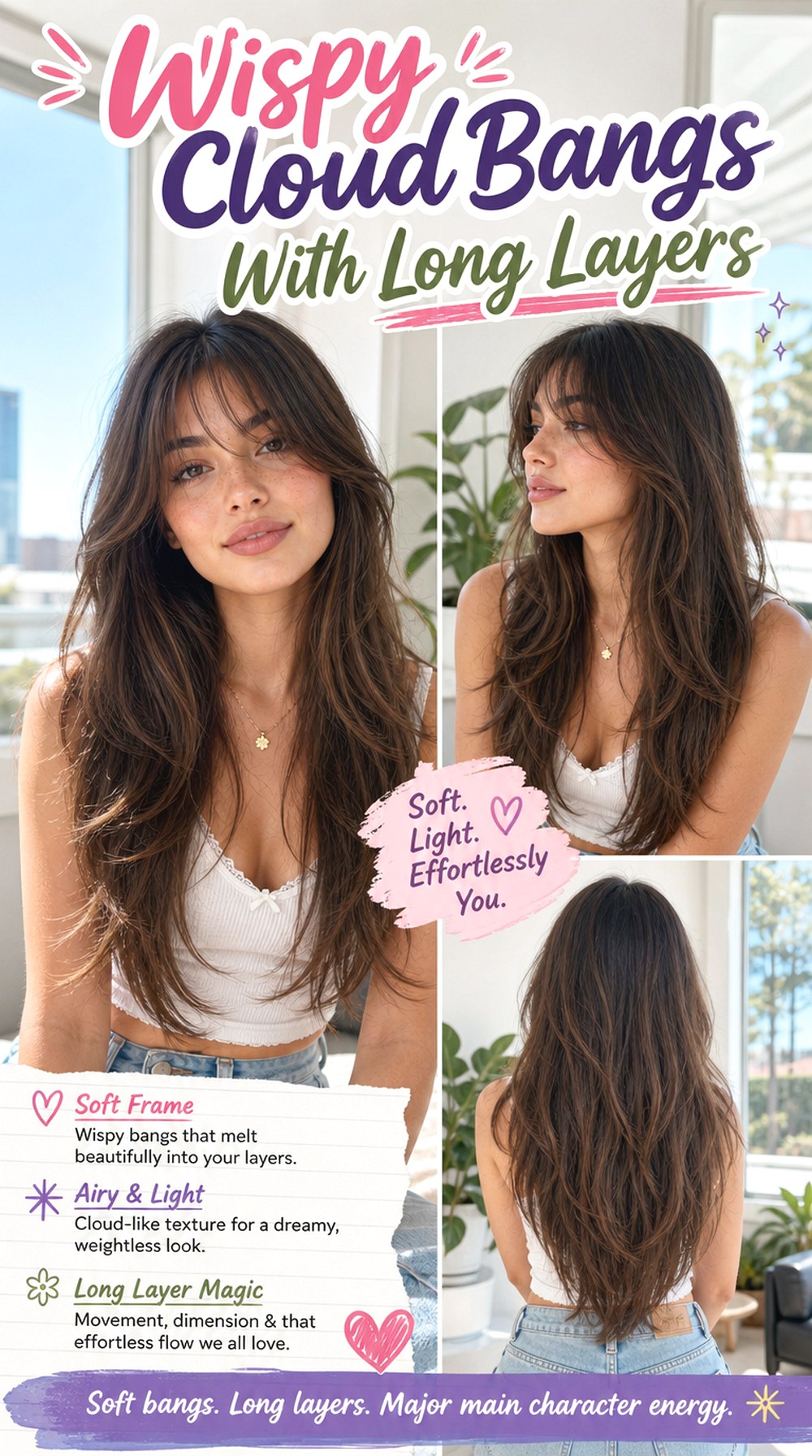
Wispy cloud bangs make the airy quality of the fringe more noticeable by leaving small spaces between the strands. Paired with long layers, they create movement around the face while preserving plenty of length through the ends. This option is useful for fine to medium hair because an overly dense fringe can remove too much hair from the front. Straight hair and gentle waves tend to show the wispy separation clearly. Daily styling is fairly quick with a blow-dryer, a small round brush, and a light texturizing spray. Avoid heavy oils directly on the bangs because they can collapse the airy finish. Ask your stylist to keep the fringe softly feathered rather than heavily thinned.
Pro tip: Request the longest fringe pieces near the outer brow or upper cheek area so they can blend into the first long layer without creating a visible gap.
Curtain Cloud Bangs
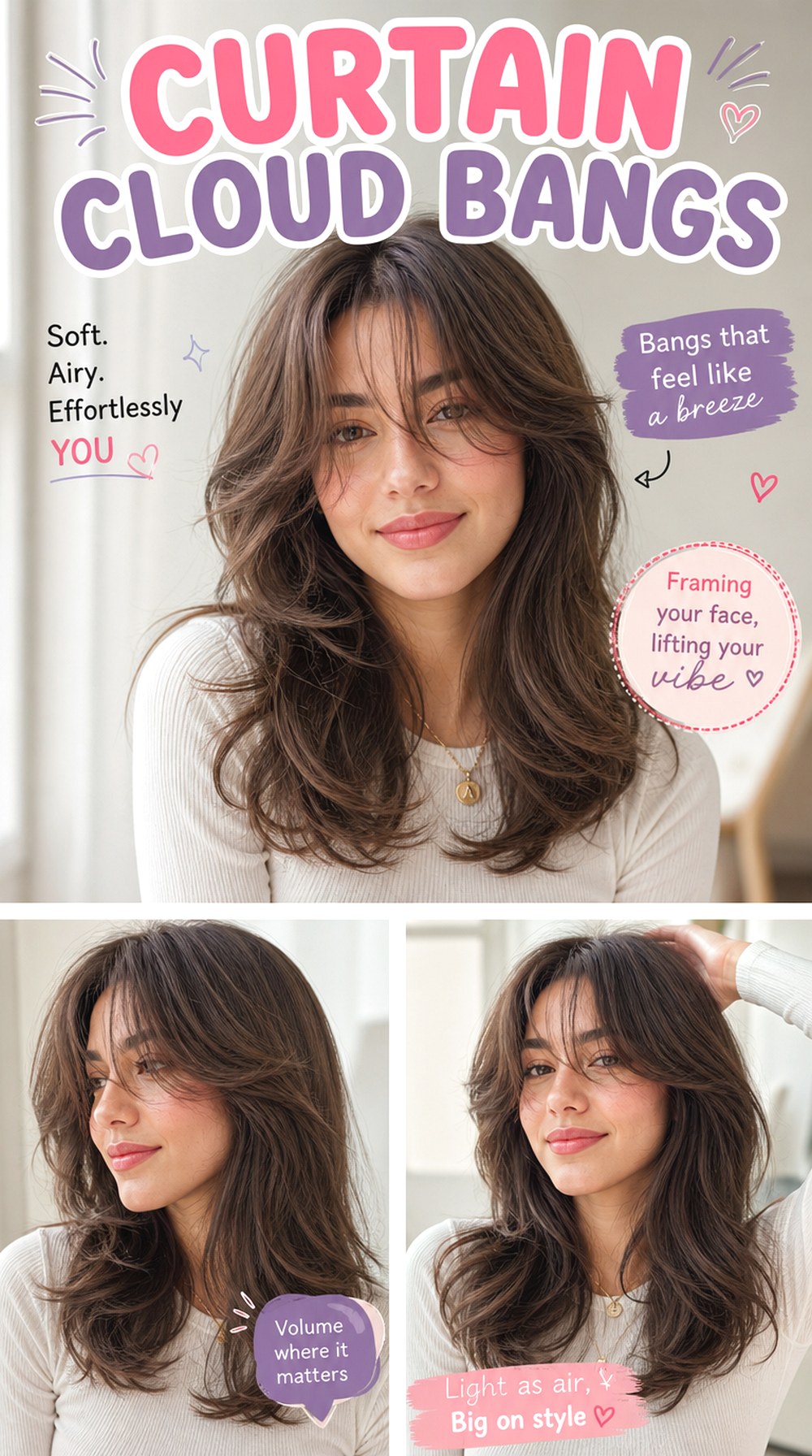
Curtain cloud bangs combine the rounded lift of cloud bangs with a center or slightly off-center split. The middle pieces remain shorter while the sides gradually lengthen toward the cheekbones, giving the fringe an open, face-framing shape. It can work well for medium to thick straight or wavy hair, especially for someone who wants bangs without keeping the entire forehead covered. The styling routine is moderate and usually involves directing the fringe forward first, then brushing each side away from the face. Use heat protectant, a medium round brush, and light-hold hairspray. The shape can grow out relatively smoothly because the sides already blend into longer hair. Show your stylist where you normally part your hair before cutting.
Pro tip: Keep the center section slightly fuller than a traditional wispy curtain bang if you want to maintain the soft “cloud” shape when the fringe separates.
Cloud Bangs With Shoulder-Length Hair

Shoulder-length hair gives cloud bangs enough length underneath to create a balanced silhouette without requiring long layers. A softly rounded fringe adds fullness near the forehead, while subtle layers around the shoulders prevent the lower half from looking too heavy. This pairing is particularly practical for medium-density straight or wavy hair and can be adjusted for several face shapes by moving the side pieces higher or lower. Styling generally takes a moderate amount of time. A volumizing spray, round brush, and smoothing serum can create lift at the fringe while keeping the ends polished. Plan to refresh the bangs every four to six weeks. At the salon, ask that the fringe connect smoothly with pieces near the cheekbones or jaw.
Pro tip: If your hair tends to widen around the shoulders, keep the lower layers slightly longer so volume stays concentrated around the face rather than at the ends.
Cloud Bangs Bob
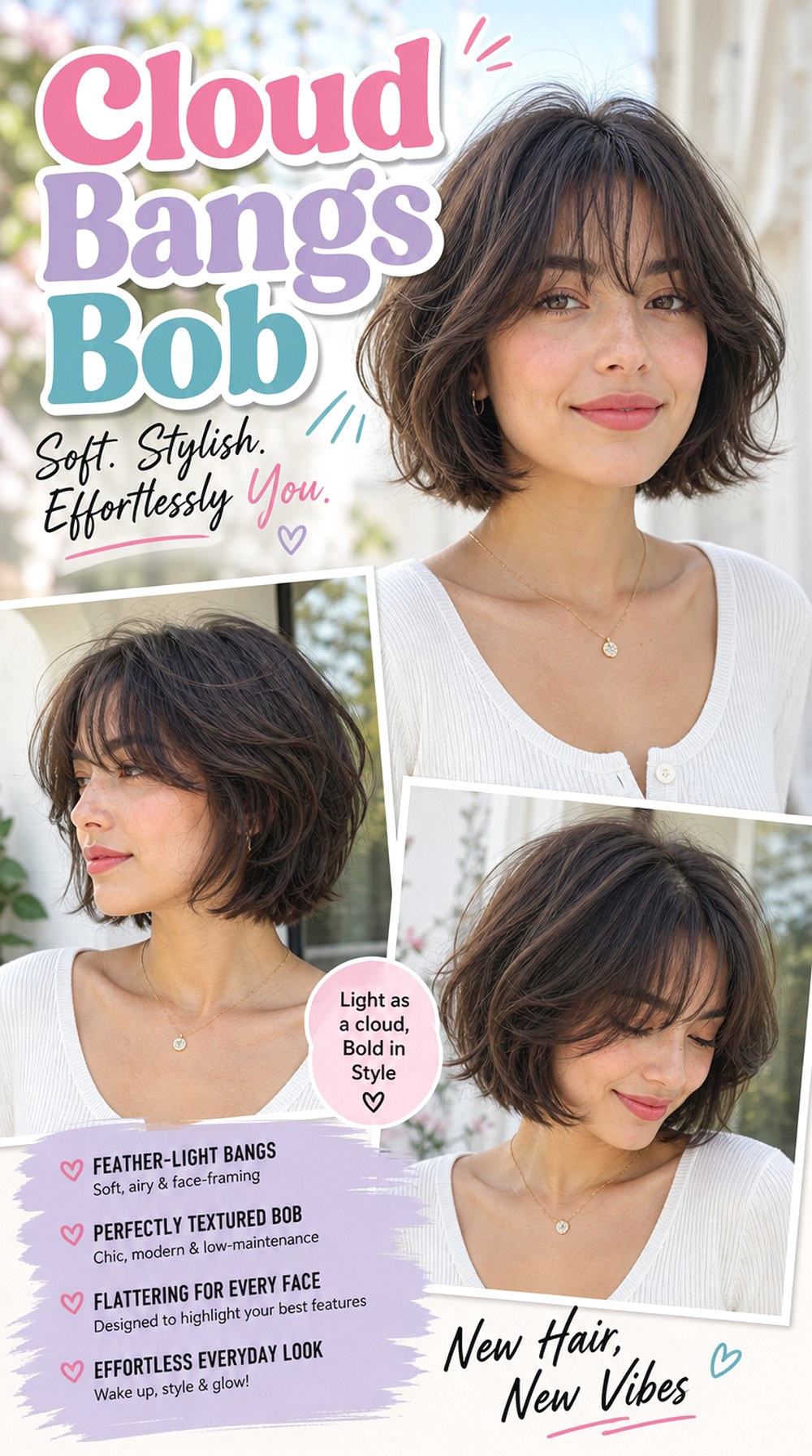
A cloud bangs bob creates a compact shape with softness around the forehead. The fringe can sit near the eyebrows with a light bend, while the bob ends around the chin or just below it. Keeping a little movement through the perimeter stops the haircut from appearing overly rigid. Medium-density straight and slightly wavy hair often holds this shape well, while thick hair may benefit from discreet internal weight removal. Styling can be fairly quick once the cut is established. Use heat protectant, a small round brush, and a light smoothing cream to shape both the bangs and ends. Bob lengths usually need regular salon trims to keep the outline clean. Ask for soft rather than blunt transitions around the temples.
Pro tip: Have your stylist check the bob and fringe together from the side; too much volume in both areas can create a rounder silhouette than you intended.
Wavy Cloud Bangs

Wavy cloud bangs allow natural bends and texture to soften the fringe instead of forcing every strand into a smooth curve. The bangs may sit around eyebrow length when dry, with longer pieces flowing into wavy layers beside the face. This approach suits naturally wavy medium or thick hair particularly well and can make daily styling less demanding if the fringe follows its natural pattern. A curl cream, diffuser, and wide-tooth comb are useful for encouraging definition without creating a stiff finish. Humidity may increase volume, so avoid removing too much weight from the fringe during the initial cut. Styling is usually quick to moderate depending on the wave pattern. Ask your stylist to cut with your natural shrinkage and movement in mind.
Pro tip: Let the fringe dry close to its natural shape before deciding it is too long; waves can lift noticeably once the hair loses its wet weight.
Curly Cloud Bangs

Curly cloud bangs interpret the airy rounded shape through natural curl rather than a smooth blowout. Individual curls can fall across the forehead at slightly different lengths, while longer curls near the temples connect the fringe to the rest of the haircut. This option works best when the bangs are cut according to the curl pattern and expected shrinkage instead of relying only on wet length. Medium and thick curly hair can carry the shape especially well. Styling usually involves a leave-in conditioner, curl cream, and diffuser, with minimal touching as the fringe dries. Trimming frequency depends on curl growth and shape rather than a rigid schedule. Ask your stylist to leave enough length for the curls to spring upward safely.
Pro tip: Bring a reference showing curly bangs in their fully dry state so your stylist can see the amount of forehead coverage and shrinkage you actually want.
Cloud Bangs For Fine Hair
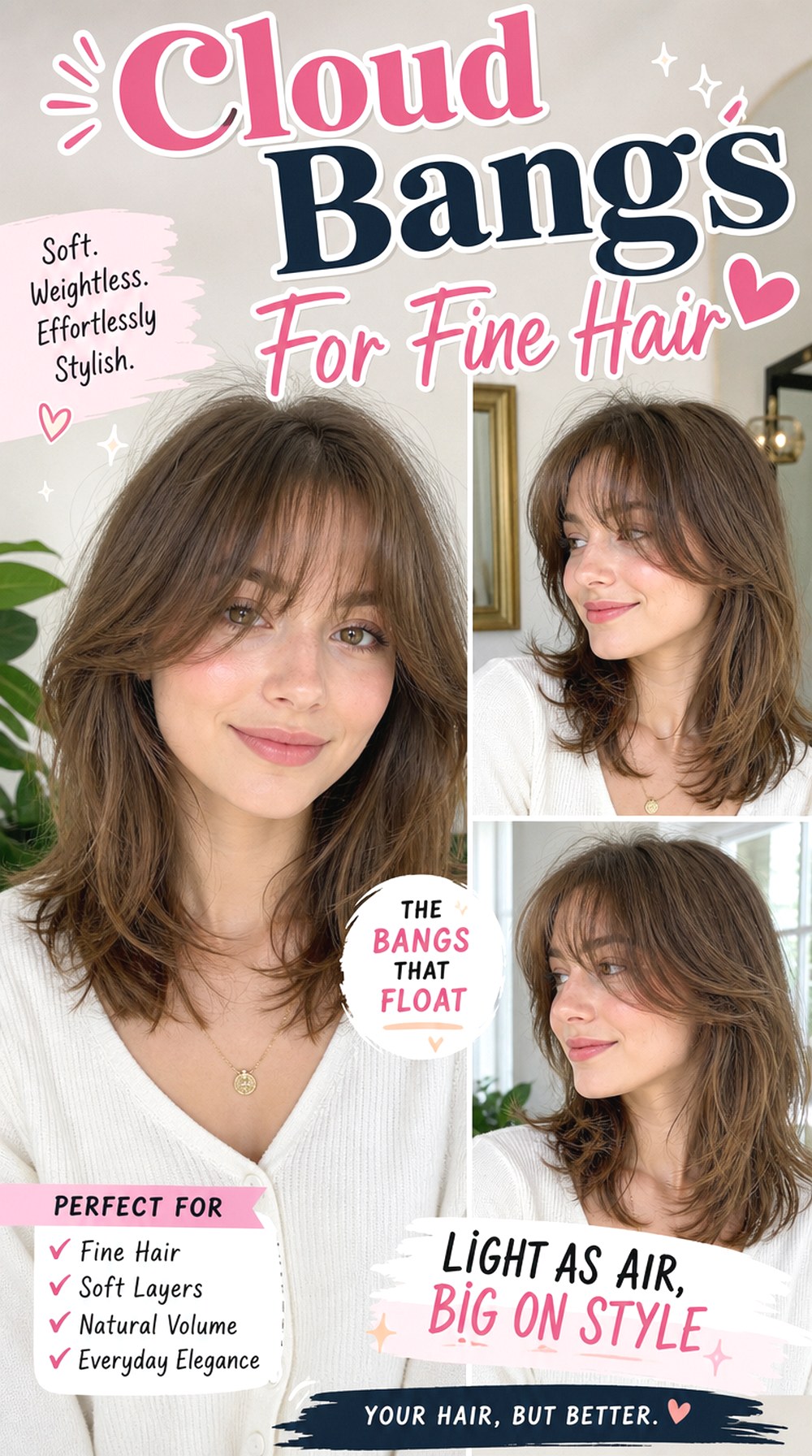
Cloud bangs can work with fine hair when the fringe is kept light but not excessively thinned. A slightly fuller center gives the bangs enough presence, while soft outer pieces create the airy effect without making the hairline appear sparse. Keeping the surrounding layers subtle can also preserve density through the overall haircut. This approach suits straight or gently wavy fine hair and is relatively quick to style. Apply a small amount of lightweight mousse near the roots, use a small round brush for lift, and finish with a fine mist of volumizing spray if needed. Heavy waxes and oils can make fine fringe separate too much. Ask your stylist to use controlled point cutting rather than aggressive thinning through the entire section.
Pro tip: Avoid taking the bang section too far back on the head; a very deep fringe can remove valuable fullness from the sides and lengths of fine hair.
Cloud Bangs For Thick Hair

Thick hair gives cloud bangs plenty of body, but the fringe needs thoughtful shaping so it stays airy rather than dense and heavy. A stylist can keep enough weight along the surface for smooth movement while removing controlled bulk underneath or around the outer edges. Longer temple pieces help the fringe blend into thick layers without creating a sudden step. This approach suits straight, wavy, and some loose curly textures. Styling takes moderate effort, particularly if the hair naturally pushes forward strongly. Heat protectant, a vented round brush, and smoothing serum help control the shape without flattening it. Fringe trims every few weeks can prevent excess weight from returning. Ask specifically for internal weight reduction rather than dramatically thinned ends.
Pro tip: Keep some density along the bottom edge of the bangs; removing too much from the tips can cause thick hair to puff outward instead of falling into a controlled curve.
Face-Framing Cloud Bangs

Face-framing cloud bangs emphasize the transition from fringe to longer pieces around the cheeks. The center stays soft and rounded, while the outer sections gradually extend toward the cheekbones, jaw, or longer layers. Adjusting those transition points makes the idea useful for different face shapes. Longer side pieces can visually lengthen a rounder face, while softer cheek-level framing can complement oval or longer proportions. Straight and wavy medium-density hair usually shows the graduated shape clearly. Use a round brush, heat protectant, and flexible hairspray for a controlled but touchable finish. Styling is moderate, especially when the surrounding pieces are also blow-dried. Tell your stylist exactly where you want the shortest face-framing layer to land.
Pro tip: Point to the specific cheekbone, jaw, or lip level in your reference photo rather than simply requesting “face framing,” because that placement changes the entire effect.
Cloud Bangs With A Rounded Lob

A rounded lob paired with cloud bangs creates soft volume from the fringe through the mid-lengths. The lob usually falls between the jaw and shoulders, with gentle shaping that curves around the head instead of ending in a sharply blunt perimeter. Cloud bangs repeat that rounded movement near the forehead, making the haircut feel connected from top to bottom. Medium to thick straight or softly wavy hair is well suited to the silhouette, although fine hair can wear a less layered variation. Expect moderate styling with a large round brush, volumizing spray, and heat protectant. The lob itself can grow out easily, while the fringe needs more regular attention. Ask your stylist to keep enough weight in the ends for a full outline.
Pro tip: If you want volume without a mushroom-like shape, concentrate lift at the crown and fringe while keeping the widest point of the lob below the cheekbones.
Sleek Cloud Bangs

Sleek cloud bangs keep the fringe airy and curved while giving the rest of the hair a smoother, more controlled finish. The contrast works particularly well on straight or straightened hair because the soft bend in the bangs prevents the overall shape from looking too flat. The fringe can sit near the brows with lightly tapered sides, while the remaining hair stays minimally layered or softly face-framed. Medium and thick hair often holds the polished finish well, though fine hair can use a lighter version. Styling takes moderate effort and may require heat protectant, a small flat iron, and smoothing serum. Regular fringe trims keep the line neat. Ask for softness at the ends rather than a dense, sharply cut edge.
Pro tip: Curve a flat iron only slightly through the bangs instead of turning it strongly inward; too much bend can make the fringe look rolled rather than softly lifted.
Conclusion
These cloud bangs hairstyle ideas show how much the same airy fringe concept can change depending on the surrounding haircut. The length can be short, shoulder-length, or long, while density can range from wispy to noticeably fuller. Layers, bangs, volume, texture, parting, and finish can all be adjusted to create a softer or more structured result. Some versions need a regular blow-dry, while naturally wavy or curly interpretations may need only a light refresh.
The best choice depends on your face shape, natural hair texture, density, maintenance preference, and normal styling routine. Focus less on copying every detail from one photo and more on identifying the fringe length, amount of fullness, side-piece placement, and finish that will work with your own hair.
CTA
Choose one or two favorite ideas and save clear photo references before your salon appointment. Discuss your face shape, natural hair texture, hair density, preferred length, maintenance level, and usual styling routine with your stylist. In each reference, point out the exact details you like—such as where the layers begin, how thick the fringe appears, where the side pieces fall, how much volume sits at the roots, and whether the finish is smooth, wavy, curly, or softly separated. Those details give your stylist much more useful direction than the hairstyle name alone.
FAQs
Are Cloud Bangs Suitable For Fine Hair?
Yes, they can work on fine hair when the bang section is not cut too deeply or thinned excessively. Keeping a little density through the center helps the fringe look full while softly tapered edges provide the airy finish.
How Often Do Cloud Bangs Need Trimming?
Many people will need the fringe refreshed about every four to six weeks, although growth rate and preferred length vary. Longer curtain-style versions can usually go longer between trims.
Do Cloud Bangs Need Daily Heat Styling?
Not always. Straight hair may need only a short blow-dry, while naturally wavy or curly versions can often follow their own texture. Strong cowlicks or very smooth finishes may require more regular heat styling.
Which Face Shapes Work With Cloud Bangs?
Cloud bangs can be adjusted for several face shapes because their width, center length, side pieces, and parting are flexible. A stylist can change where the outer sections fall to better balance round, oval, square, heart-shaped, or longer faces.