20 French Comb Twist Hairstyle Ideas

French comb twist hairstyle ideas use a curved or decorative comb to secure hair that has been swept, rolled, folded, or twisted against the back of the head. A classic version forms a vertical roll, but the same accessory can hold low knots, side twists, compact folds, and half-up shapes. Length, parting, fringe, texture, loose face-framing pieces, and crown volume determine whether the result feels sleek, softly structured, or deliberately relaxed.
Medium and long hair provide the easiest length for full twists, although shoulder-length cuts can support smaller folds when the shortest pieces reach the anchor. Straight, wavy, curly, and coily textures can all work. Dense hair may need a broader twist or discreet secondary support, while lower-density hair often suits a smaller comb and compact roll. Natural texture does not need to be flattened to create a secure style.
Styling effort depends on the finish. A simple nape twist can be a quick dry-hair reset, whereas a smooth sculpted roll takes longer to balance. Maintenance is mainly about keeping the comb anchored, preserving comfortable tension, controlling loose ends, and rebuilding the twist if it begins to rotate rather than simply pushing the comb deeper.
Quick List
- Classic Vertical French Comb Twist Hairstyle
- Low Nape French Comb Twist Hairstyle
- High Crown French Comb Twist Hairstyle
- Side-Swept French Comb Twist Hairstyle
- Loose Textured French Comb Twist Hairstyle
- Sleek Center-Part French Comb Twist Hairstyle
- Soft Side-Part French Comb Twist Hairstyle
- Braided French Comb Twist Hairstyle
- Double Roll French Comb Twist Hairstyle
- Curly French Comb Twist Hairstyle
- Coily French Comb Twist Hairstyle
- Short-Hair Mini French Comb Twist Hairstyle
- Low Chignon French Comb Twist Hairstyle
- Figure-Eight French Comb Twist Hairstyle
- Asymmetrical French Comb Twist Hairstyle
- Rope Detail French Comb Twist Hairstyle
- Bouffant Crown French Comb Twist Hairstyle
- Half-Up French Comb Twist Hairstyle
- Messy French Comb Twist Hairstyle
- Sculpted Fold French Comb Twist Hairstyle
Classic Vertical French Comb Twist Hairstyle

A long vertical roll is the most recognizable way to use a French comb. Sweep medium or long hair toward the center back, turn the length inward from the nape, and tuck the ends down inside the roll. A center or side part can remain visible, while short fringe and temple pieces may stay loose. Keep the roll narrow enough to show a clean vertical line but broad enough that it does not feel tightly compressed against the scalp.
Light texturizing spray can give slippery hair more grip, bobby pins can establish the first swept side if necessary, and the French comb becomes the final anchor. Insert the teeth against the direction of the twist, catch a shallow section, flip the comb toward the scalp, and slide it into the denser base rather than pushing straight through. A quick refresh means smoothing the outside and reseating the comb; rebuilding the roll after wash-day styling takes longer. Straight and wavy hair can create a smooth surface, while textured hair may keep more visible movement. If the twist sags, remake the inner fold instead of forcing the comb deeper. At a styling appointment, specify the roll width, finished height, and how much crown volume you want.
Pro tip:
Catch only a shallow outer section before flipping the comb into the base. Too much hair at the first pass can prevent the teeth from sliding securely.
Make It Work for You:
If your hair is very dense, build a broader vertical roll and keep the center slightly hollow. This distributes bulk without changing the defining upright silhouette.
Watch Out For:
Do not push the comb straight downward through the twist. Catching, flipping, and reversing its direction usually creates a more dependable anchor.
Low Nape French Comb Twist Hairstyle
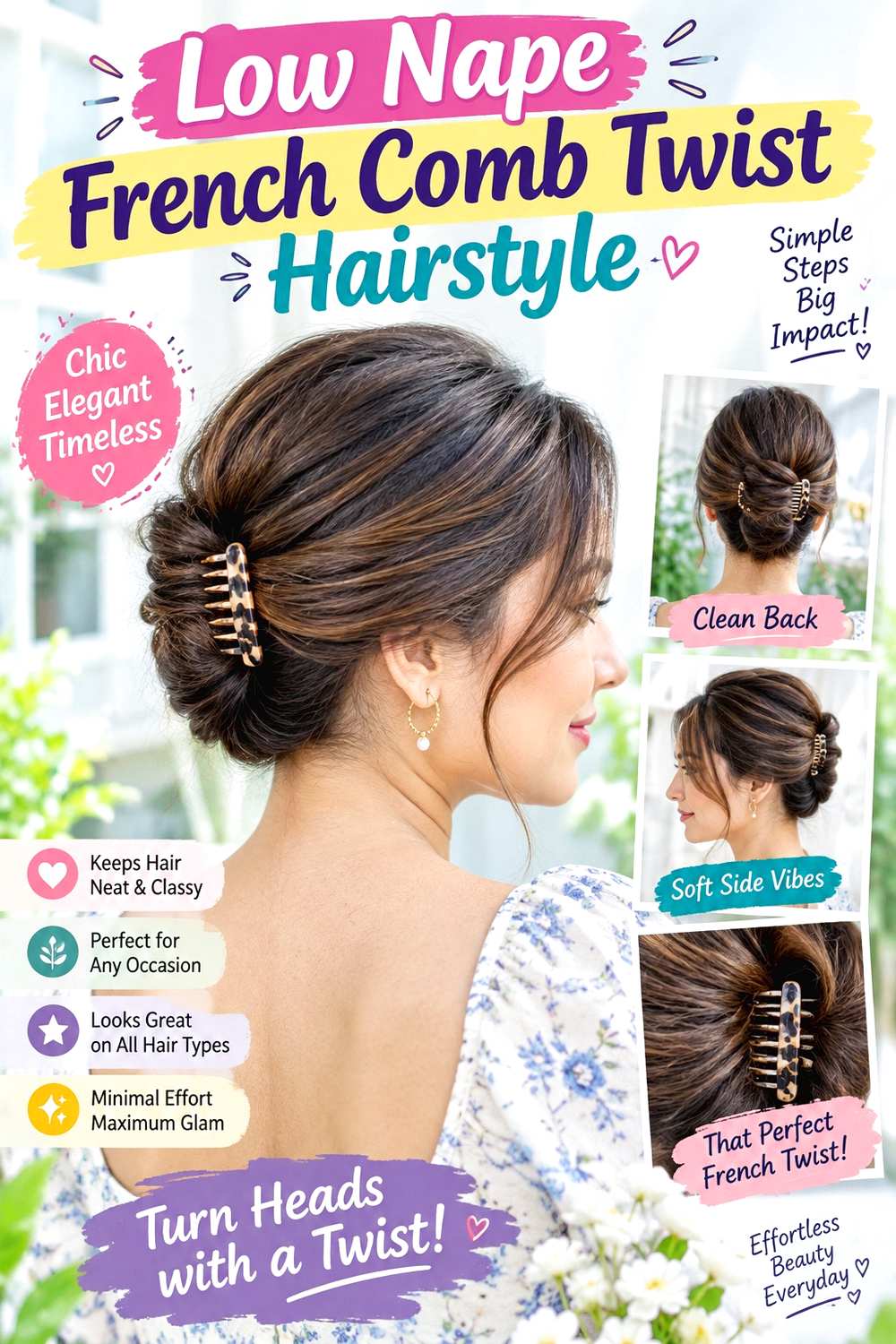
A low nape twist shifts the structure downward, creating a compact roll that sits just above the neckline. Sweep the hair back with a center, side, or hidden part, twist the length inward horizontally or on a slight diagonal, and tuck the ends inside near the nape. Keep the crown relatively natural and allow a few face-framing pieces to remain free if desired. The low placement works particularly well when you prefer less height at the back of the head.
Use light styling cream to control flyaways, a French comb to secure the folded center, and one bobby pin only if a short end needs extra support. Medium to long hair is easiest, although shoulder-length hair can form a smaller version. A quick dry-hair refresh may involve retucking the ends and repositioning the comb; full wash-day styling takes longer if the hair first needs drying or curl definition. Dense hair often feels more comfortable in a wider low roll instead of a tightly packed fold. If the comb rubs the neck, angle it upward slightly rather than raising the whole style. At a styling appointment, show exactly how low you want the twist and whether it must clear a collar, scarf, or other neckline.
Pro tip:
Angle the French comb slightly upward as it enters the low twist. This helps the teeth stay away from the neck while supporting the roll’s weight.
Make It Work for You:
For shoulder-length hair, keep the roll short and tuck the ends immediately at the nape. A compact fold needs less overlap and usually holds more securely.
Watch Out For:
Avoid placing the comb so low that its teeth touch the neckline. Friction from clothing can push the accessory upward and loosen the twist.
High Crown French Comb Twist Hairstyle
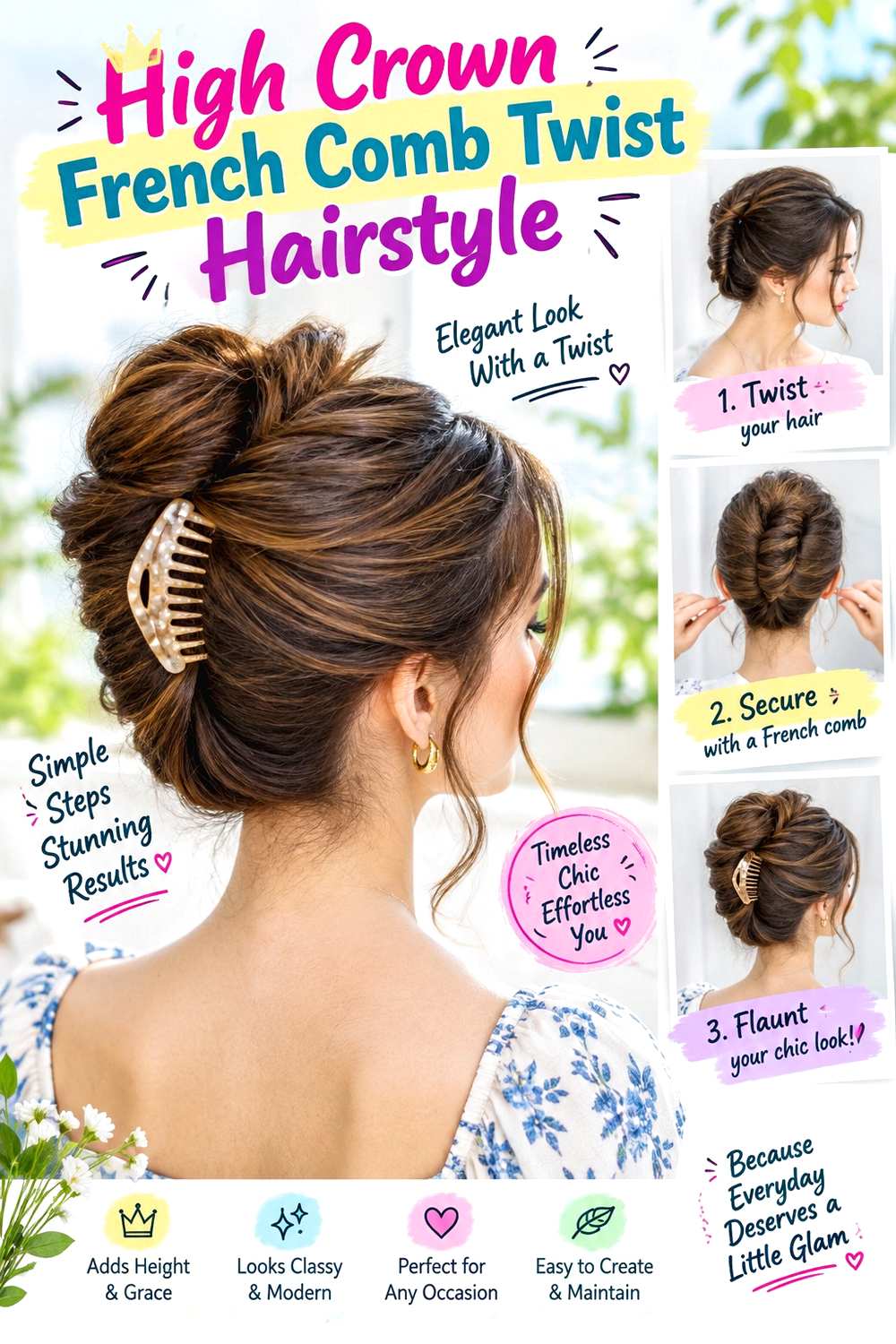
A high twist places the fullest part of the roll closer to the crown, giving the back a longer, lifted profile. Sweep the hair upward from the nape before turning it inward, then tuck the ends into the upper fold. Keep the sides smooth or softly textured, and allow fringe or short temple layers to remain loose instead of pulling everything tightly backward. The twist should rise through the center back without becoming a narrow, uncomfortable column.
Light texturizing spray can provide grip, bobby pins can support the lower foundation, and a French comb can secure the upper fold. Longer hair gives the easiest reach, while dense hair may need a wider roll so the weight is not concentrated high on the scalp. A quick refresh usually means restoring the crown shape and resetting the comb; a full rebuild takes longer because the vertical balance has to be recreated from nape to crown. If the lower hairline starts pulling, move the twist slightly down instead of adding tension. At a styling appointment, identify the highest point you want the roll to reach and how much volume should remain above it. Those details determine whether the final shape feels elongated, rounded, or overly tall.
Pro tip:
Build the lower twist firmly before shaping the upper height. A stable nape foundation helps the crown section stay lifted without relying entirely on the comb.
Make It Work for You:
For thick or very long hair, widen the upper roll rather than stacking all the length vertically. The height remains visible while the weight spreads more comfortably.
Watch Out For:
Do not keep raising the twist if the nape begins to pull. Lowering the center slightly can preserve the lifted effect with noticeably better comfort.
Side-Swept French Comb Twist Hairstyle

A side-swept twist moves the roll away from the center, making the French comb and curved fold visible from a three-quarter angle. Start with a side or off-center part, guide the hair diagonally toward one back corner, and twist the length inward behind the ear. Keep the roll broad and softly curved, with the opposite side swept cleanly across the back. Short face-framing pieces can remain free if they help the front feel less tightly pulled.
This placement suits medium and long hair and works with straight, wavy, curly, or coily textures. Use light texturizing spray for grip, one bobby pin for the far-side sweep if needed, and a French comb through the central fold. A quick refresh may require smoothing the diagonal section and reseating the comb; full styling takes longer when the hair also needs drying or texture definition. If the roll slowly rotates toward the center, remake the diagonal base instead of pushing the comb harder. At a styling appointment, specify which side should carry the twist, how low it should sit, and whether the comb should be partly visible or hidden inside the roll. Comfortable clearance behind the ear is an important placement detail.
Pro tip:
Insert the comb on the same diagonal as the twist rather than forcing it horizontally. Matching the structure helps the side roll stay in its intended position.
Make It Work for You:
If you have shorter layers on one side, place the twist closer to that side. Those pieces travel less distance, making the directional roll easier to secure.
Watch Out For:
Avoid positioning the comb directly behind the ear if it presses during movement. Shift the roll slightly back or change the insertion angle.
Loose Textured French Comb Twist Hairstyle

Visible bends and soft irregularity make this twist feel relaxed without sacrificing the secure inner structure. Gather the hair toward the center back, twist the length upward once or twice, and tuck the ends loosely into the fold. Keep natural wave, curl, or slight separation on the surface rather than smoothing every strand. A soft side or center part can remain visible, and selected temple pieces can stay loose while the crown holds moderate volume.
Light texturizing spray can increase grip, a French comb can secure the central twist, and one bobby pin can control a short end that refuses to tuck. Wavy and naturally textured hair suit the finish particularly well, but straight hair can work when the inner twist is kept firm. A quick refresh may simply require rebuilding the fold and loosening the outer surface again; a full wash-day version takes longer if texture needs defining first. Do not create looseness by weakening the anchor itself. At a styling appointment, specify how much crown softness and face framing you want, plus where the twist should stop. If the whole style shifts when you move your head, remake the central twist instead of pulling out more sections to disguise the movement.
Pro tip:
Secure the inner twist before loosening the surface. Small adjustments at the crown and edges create softness without disturbing the comb’s actual anchor.
Make It Work for You:
For very silky hair, keep the internal fold tighter and concentrate the relaxed texture around the crown and outer edges. The style stays soft but supported.
Watch Out For:
Do not mistake a sliding twist for intentional looseness. If the entire roll moves, rebuild the anchor before adjusting any face-framing or crown pieces.
Sleek Center-Part French Comb Twist Hairstyle

A precise center part and smooth sides give the French comb twist a clean, controlled finish. Divide the hair evenly at the front, guide both sides toward the back without adding much crown lift, then roll the length vertically or slightly diagonally. Tuck the ends inside so the outer surface stays uninterrupted. Existing fringe can be incorporated only if it reaches comfortably; shorter pieces can remain separated rather than being plastered backward.
Use lightweight smoothing cream to control surface flyaways, bobby pins to establish a stable swept base, and a French comb to lock the finished roll. Straight or gently wavy textures may reach the sleek finish quickly, while curly or coily hair can keep a smoother gathered surface without needing to be straightened. A dry-hair refresh usually involves smoothing the front and reseating the comb, whereas a full wash-day routine takes longer when the hair must first be dried into the chosen finish. Too much product near the anchor can make the comb slip. At a styling appointment, specify how flat you want the crown, the width of the center part, and whether the twist should sit directly in the middle or slightly lower. Those proportions determine the polished silhouette.
Pro tip:
Keep smoothing product light around the twist itself. The comb needs enough natural grip at the anchor even when the visible front and sides look polished.
Make It Work for You:
For curly or coily hair, smooth only the gathered surface and leave some natural texture within the twist. The center-part shape stays defined without requiring complete straightening.
Watch Out For:
Avoid coating the anchor with too much smoothing cream. A slick surface can make the comb slide even when the twist initially feels firm.
Soft Side-Part French Comb Twist Hairstyle
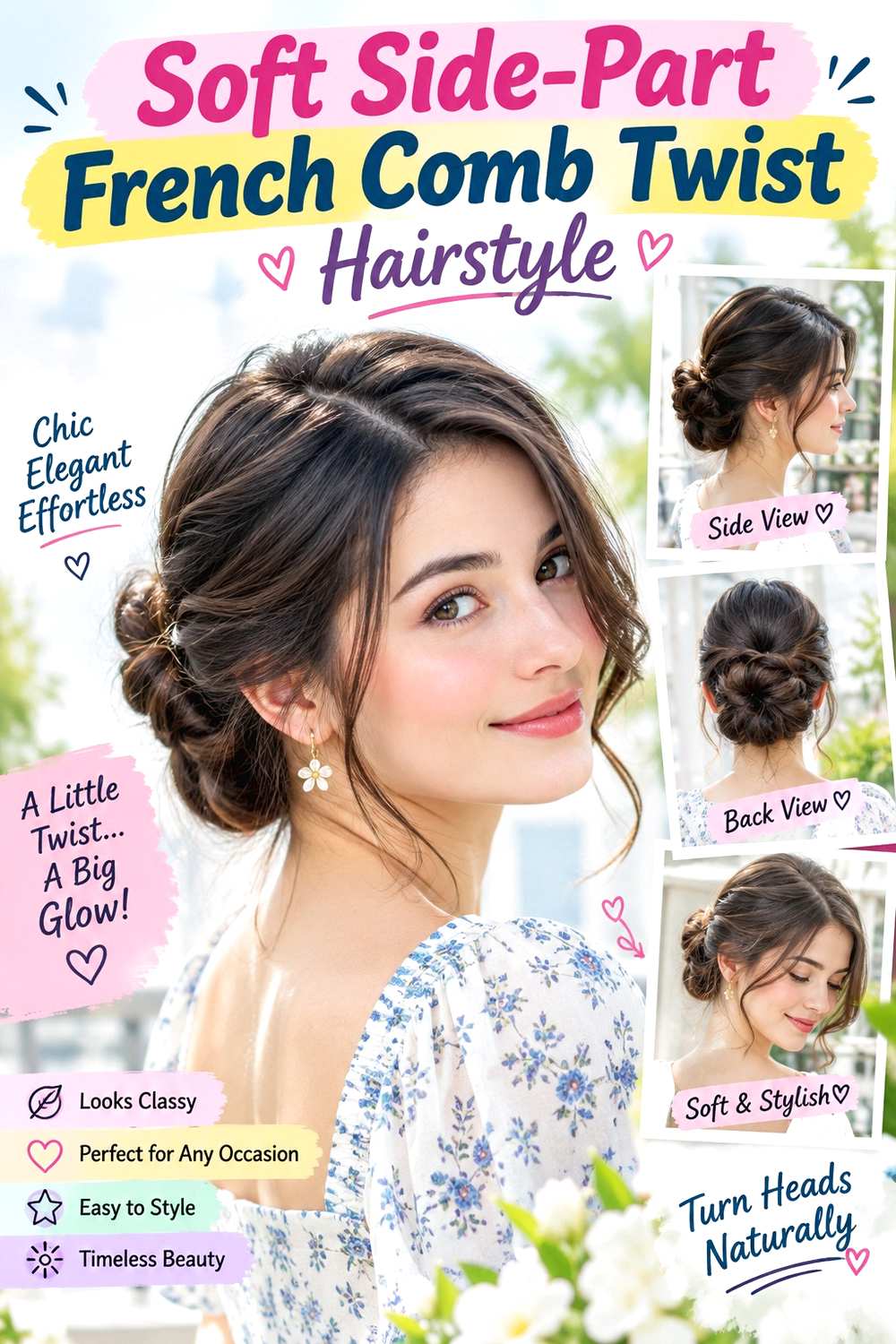
A soft side part creates more movement across the front while keeping the twist centered at the back. Let the fuller side sweep gently over the temple, guide both sections toward the rear, and roll the length inward from the nape. Keep a little crown lift so the side part flows into the twist rather than ending in a flat transition. Short fringe or layers can remain free on the heavier side if they naturally fall forward.
Use light texturizing spray for grip, a French comb for the main anchor, and one bobby pin to secure the lighter side if it tends to slip. Medium and long hair give the easiest fold, while straight, wavy, curly, and coily textures can all support the arrangement. A quick refresh may mean resetting the part and tightening the central roll; full wash-day styling takes longer if the front sweep also needs drying or definition. If the fuller side begins to sag, rebuild its route into the twist instead of clamping the comb tighter. At a styling appointment, point out how deep you want the part, how much front volume should remain, and the exact twist height. Those choices control the softness of the front more than extra product does.
Pro tip:
Follow the natural growth direction on the fuller side when sweeping it back. Working with that direction helps prevent bumps and reduces unnecessary tension near the temple.
Make It Work for You:
If your front layers are short, leave them around the heavier side rather than forcing them into the twist. The side-part balance remains clear and softer.
Watch Out For:
Do not flatten the fuller front section simply to make it reach the back. Reduce the gathered amount or allow intentional face framing instead.
Braided French Comb Twist Hairstyle

A braid can supply texture along one edge of the twist while the French comb secures the folded length. Begin with a narrow three-strand braid near one temple or along the side, guide it toward the back, then combine it with the remaining hair before rolling everything inward. Keep the braid visible along the outer fold instead of burying it inside. A center or side part can work, and loose fringe may remain untouched.
Use light texturizing spray to give the braid grip, a mini elastic to secure its end before incorporation, and a French comb to hold the completed twist. Medium and long hair work best because the braid consumes some usable length. A quick refresh usually means smoothing a fuzzy braid edge and reseating the comb; a complete restyle takes longer because both the braid and twist must be reconstructed. Lower-density hair benefits from a narrower braid that does not take too much hair away from the roll. At a styling appointment, identify where the braid should begin, its width, and whether you want it visible along the top or side of the twist. If the braided edge keeps disappearing, change its placement rather than pulling it excessively wide.
Pro tip:
Position the braid on the outside of the fold before inserting the comb. This keeps its woven texture visible after the rest of the hair is tucked.
Make It Work for You:
For fine or lower-density hair, use a slim braid and keep its edges compact. More hair remains available for a fuller-looking central twist.
Watch Out For:
Do not widen the braid after the twist is anchored. Pulling its edges can disturb the fold and loosen the section the comb is gripping.
Double Roll French Comb Twist Hairstyle

Two inward rolls create a symmetrical or nearly symmetrical back shape with a defined center seam. Divide the hair vertically into left and right sections, roll each toward the middle, and let their curved edges meet through the center back. A center part naturally supports the balance, although the front can stay softly side-parted. Keep both rolls broad enough to show their shape without packing excessive bulk into the seam.
Use light styling cream to control flyaways, a few bobby pins to stabilize the lower edges, and a French comb across the central meeting point. Medium and long hair work best, especially when both sides have enough length to overlap slightly. A quick refresh may involve rebuilding only the looser roll and reinserting the comb; full styling takes longer because both sides need to be balanced again. Dense hair usually benefits from flatter rolls rather than narrow cylinders. At a styling appointment, specify whether you want equal rolls or a subtly asymmetric pair and how wide the center seam should appear. If one side repeatedly opens, redistribute hair between the sections instead of tightening the opposite roll, which can shift the entire shape.
Pro tip:
Shape both rolls before adding the French comb, then anchor across their shared center. Comparing them first makes it easier to correct uneven width.
Make It Work for You:
For dense hair, make both rolls broader and flatter against the head. The comb can then catch the two bases without forcing excessive bulk together.
Watch Out For:
Do not tighten one roll merely because the other is loose. Rebuild the weaker side so the shared center remains balanced and comfortable.
Curly French Comb Twist Hairstyle
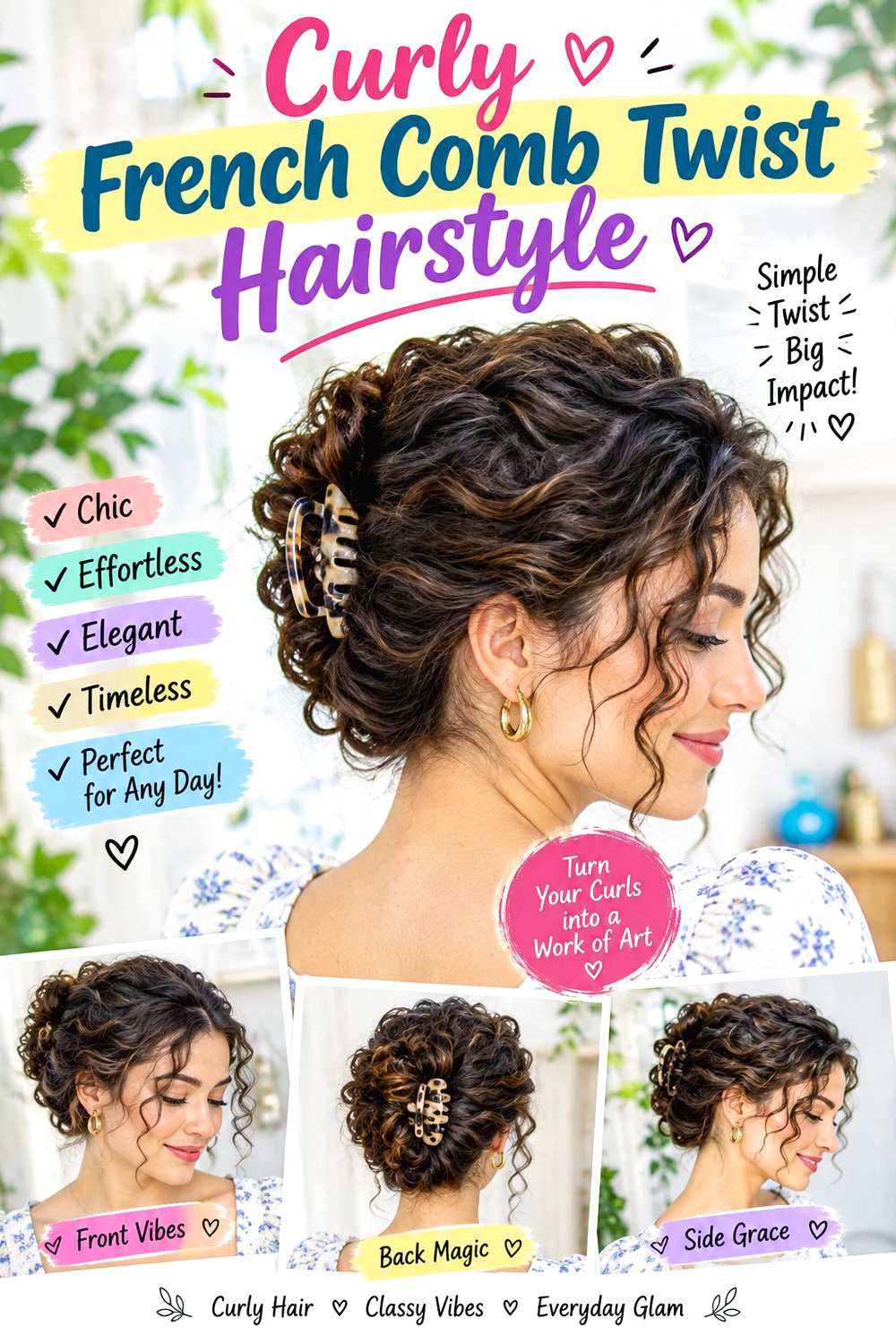
Natural curls can stay visible throughout a French comb twist instead of being brushed into a smooth shell. Gather the curls loosely at the back, preserve several curl groups, and fold the length upward into a rounded vertical or diagonal shape. Let the crown retain its natural lift, and leave shorter curls around the forehead or temples if preferred. The comb should pass through the denser inner fold rather than gripping only a few surface curls.
Use lightweight curl gel to define the sections being gathered, one bobby pin for a short curl that needs targeted support, and a French comb as the main anchor. Shrinkage affects the finished twist height, so judge placement after the curls have reached their usual dry shape. A quick refresh can involve redefining a few outer curls and reseating the comb; full wash-day styling takes longer because the texture should settle before final anchoring. If the style feels tighter as the curls contract, rebuild it with more slack rather than tolerating pulling. At a styling appointment, specify the desired height on dry hair and how much crown volume should remain. A broader twist may be more comfortable than compressing dense curls into a narrow roll.
Pro tip:
Choose the final comb position after the curls reach their normal dry volume. This gives a more accurate picture of both height and comfortable tension.
Make It Work for You:
For tighter curls or strong shrinkage, use a shorter, broader twist and keep more texture visible at the crown. The comb still anchors a clear fold.
Watch Out For:
Do not catch only a few outer curls with the comb. Anchor into the denser inner fold so individual curl groups are not carrying the weight.
Coily French Comb Twist Hairstyle
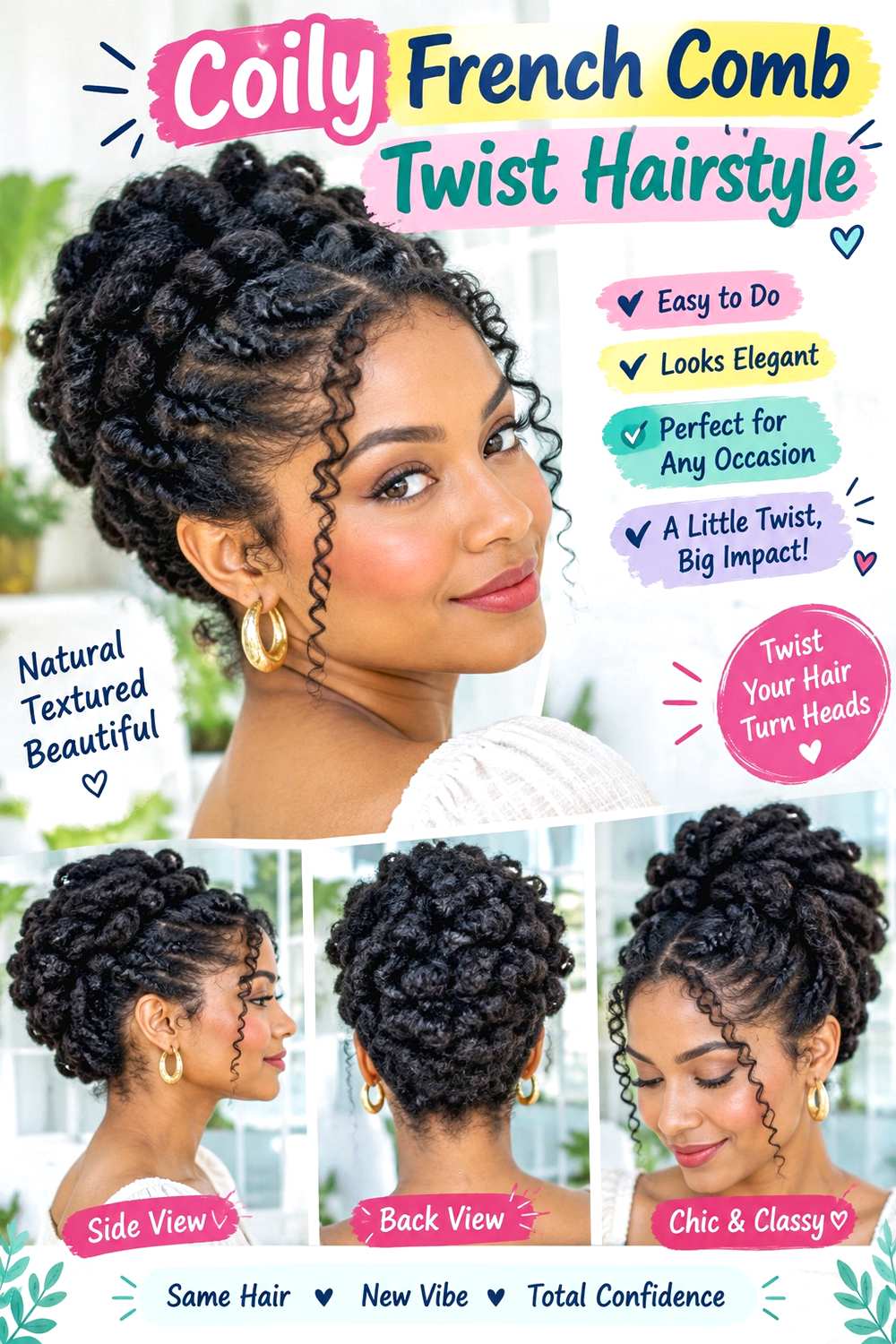
A coily twist can retain fullness and texture while using the French comb to secure a broad tucked shape. Gather the hair toward the center back without flattening the crown, roll the lower length upward, and tuck the ends into the middle. Keep the roll wider rather than forcing all the density into a narrow vertical column. Short coils around the hairline can remain loose, and the front can be center-parted, side-parted, or softly swept back.
Use moisturizing leave-in conditioner for pliability, a fabric-covered elastic if a hidden gathering point helps, and a French comb to lock the central fold. Final dry volume and shrinkage matter more than the temporary length seen while damp or stretched. A quick refresh may involve reshaping the outside and resetting the comb; full wash-day styling takes longer because the hair should settle before the final anchor is judged. If contraction makes the twist tighter, reopen it with more slack. At a styling appointment, explain how much crown volume you want preserved, how wide the finished fold should be, and whether the ends should disappear completely. Those decisions help create security without unnecessary compression.
Pro tip:
Recheck the comb once the hair has settled into its finished dry shape. Shrinkage can alter both the twist size and the pressure at the anchor.
Make It Work for You:
For very dense coils, create a broad fold across the center back rather than a narrow roll. The larger base spreads volume and gives the comb grip.
Watch Out For:
Avoid flattening the crown just to make the twist smaller. Adjust the fold width instead so the style remains secure without adding root tension.
Short-Hair Mini French Comb Twist Hairstyle
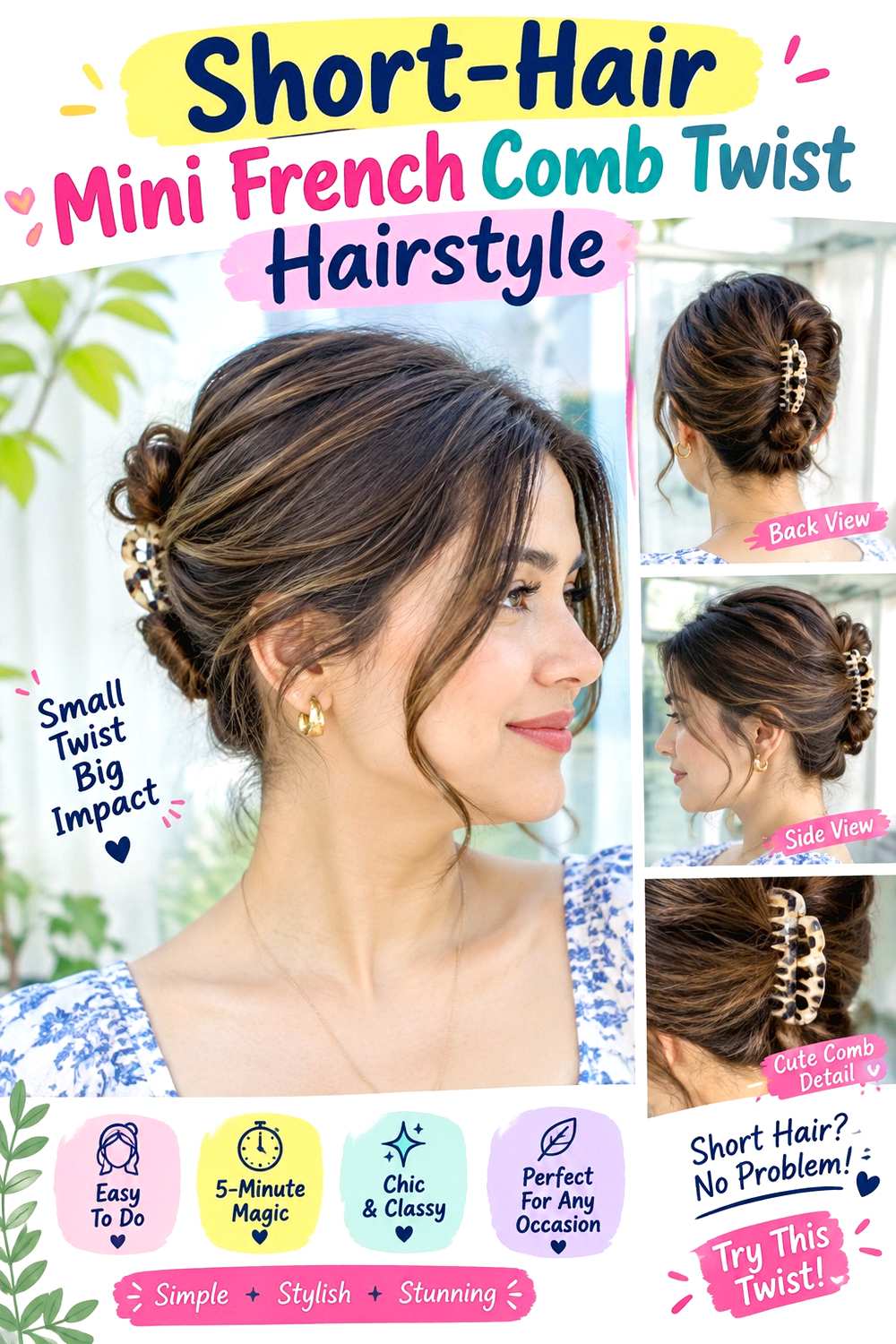
Shoulder-length hair can support a compact French comb twist when the design respects where the shortest pieces naturally end. Sweep the back sections toward the center, twist them inward once, and tuck the ends immediately instead of building a tall roll. Leave short layers near the temples or nape free when they cannot comfortably reach the anchor. The finished shape should look intentionally small, with the comb positioned close to the fold rather than spanning an oversized section.
Use light texturizing spray for extra grip, bobby pins to secure pieces that stop before the center, and a small French comb through the main folded section. A quick dry-hair refresh may take only a few minutes because the roll is short; full wash-day styling takes longer if the bob or lob first needs its usual drying routine. If strands repeatedly escape, move the twist toward their natural meeting point rather than pulling harder. At a styling appointment, identify the shortest pieces you want included and the exact nape or mid-back height of the twist. This is a temporary style, so the anchor should adapt to the haircut rather than requiring extra layers to be trimmed or reshaped.
Pro tip:
Build the mini twist where the longest back sections already overlap. That natural meeting point gives the small comb more hair to catch securely.
Make It Work for You:
If you have a layered lob, leave the shortest front pieces loose and form the twist from the back sections only. The compact shape stays intentional.
Watch Out For:
Do not stretch short layers toward a distant center anchor. Bring the twist closer to their reach or let those pieces stay free instead.
Low Chignon French Comb Twist Hairstyle

This version begins as a twist but finishes in a rounded chignon at the nape. Sweep the hair back, turn the length inward once to establish a compact central twist, then coil the remaining ends around its base. Keep the bun low and broad, with a center or side part at the front and optional face-framing pieces near the temples. The French comb can sit along the upper edge where the twist flows into the chignon.
Use a fabric-covered elastic only if you want an invisible starting base, flexible hairspray to control surface flyaways, and a French comb to secure the transition between twist and bun. Medium and long hair provide enough length for both structures. A quick refresh may mean retucking a loose coil and reseating the comb; a full wash-day version takes longer because the chignon must be rebuilt after the hair is prepared. Dense hair can feel more comfortable in a flatter bun that spreads along the nape. At a styling appointment, specify the chignon width, how low it should sit, and where you want the comb visible. If the bun sags, rebuild the coil itself rather than relying on the comb to carry its weight.
Pro tip:
Anchor the comb where the twist meets the upper edge of the chignon. That junction provides more structure than clipping only through the soft outer coil.
Make It Work for You:
For very dense hair, shape a wider, flatter chignon instead of stacking the coil outward. The lower profile distributes weight and keeps the twist visible.
Watch Out For:
Do not use the decorative comb as the sole support for a heavy bun. Rebuild the coil if the chignon shifts as a complete unit.
Figure-Eight French Comb Twist Hairstyle

A figure-eight arrangement creates two connected loops instead of one continuous roll. Gather the hair low, twist the length enough to control it, form one loop to the left and a second to the right, then tuck the ends into the shared center. The finished outline can sit horizontally at the nape or slightly higher for a more vertical shape. A simple center or side part keeps attention on the double-loop structure.
Use light texturizing spray for grip, a French comb across the center connection, and one bobby pin only if an end needs extra support. Long hair makes it easier to create two full loops, while medium length works with smaller overlapping shapes. A quick refresh may require retucking the center and replacing the comb; full wash-day styling takes longer if the hair first needs drying or texture definition. If one loop repeatedly drops, redistribute the length rather than driving the comb deeper. At a styling appointment, specify whether both loops should be equal or whether one can be larger, plus how close to the nape the shape should sit. Balance matters because uneven weight can make the entire figure eight rotate.
Pro tip:
Form both loops completely before placing the French comb. Comparing their size first lets you correct the balance without disturbing an already secured center.
Make It Work for You:
For medium-length hair, make smaller overlapping loops instead of stretching for a wide figure eight. The defining double shape remains visible and easier to anchor.
Watch Out For:
Do not leave one loop carrying most of the hair. Unequal weight can rotate the style even when the comb initially feels firmly inserted.
Asymmetrical French Comb Twist Hairstyle
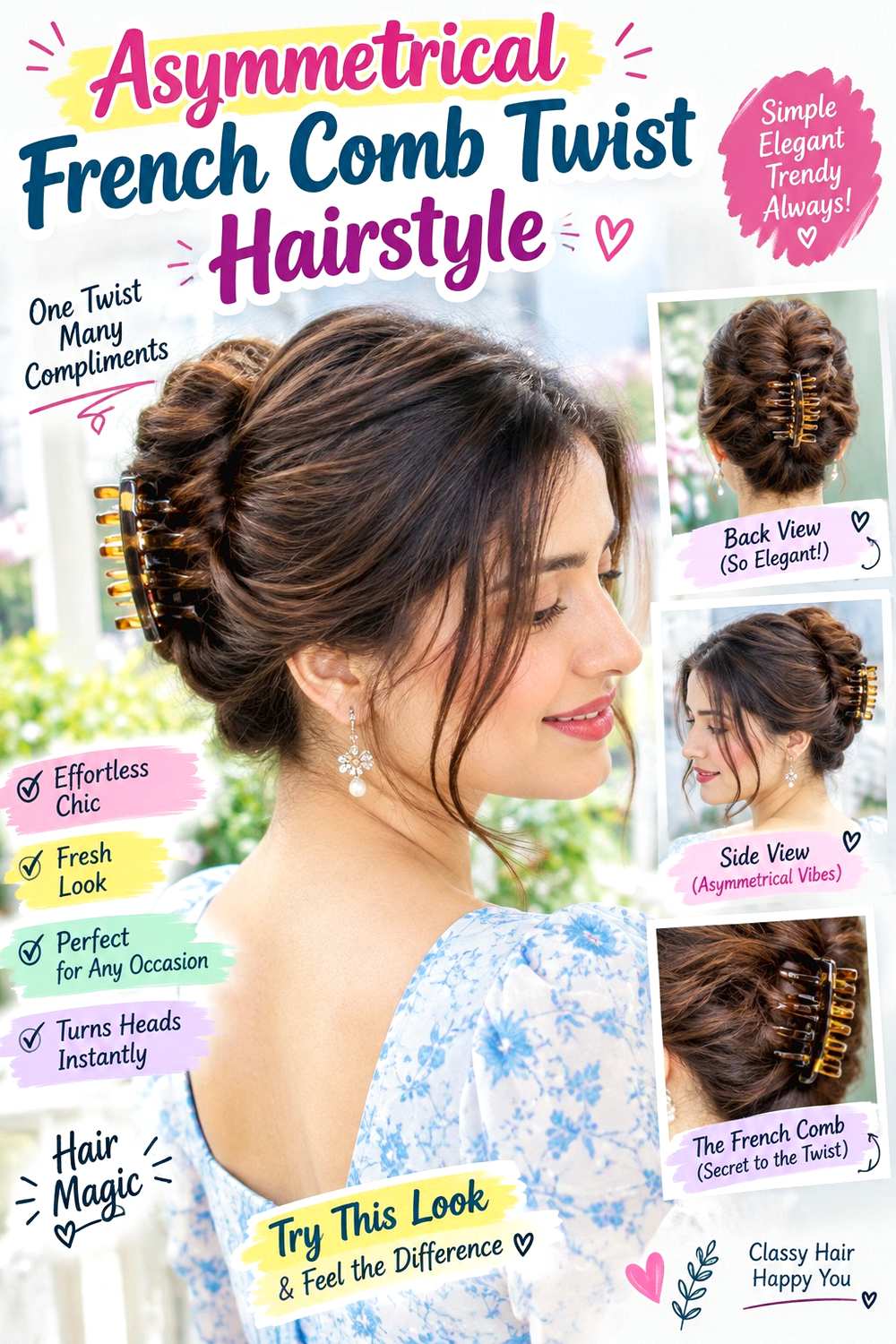
An asymmetrical twist places the main fold behind one side of the head instead of running directly through the center. Begin with a deep or soft side part, sweep the hair diagonally across the back, and roll it inward near the opposite lower corner. Keep the outer curve broad, with the fuller front side flowing naturally into the sweep. Face-framing layers can remain loose rather than being stretched across the head.
Use light texturizing spray for grip, one bobby pin to establish the diagonal sweep, and a French comb to secure the rolled section. Medium and long hair give enough length for the directional fold, while different textures can remain visible on the surface. A quick refresh usually means smoothing the sweep and resetting the comb; full styling takes longer if the loose texture needs preparation first. If the twist creeps toward the center during wear, rebuild the diagonal base rather than tightening the accessory. At a styling appointment, specify which side should carry the roll, the height of its fullest point, and how much volume should remain on the opposite side. Those placement choices create intentional asymmetry without relying on uncomfortable tension.
Pro tip:
Insert the French comb on a diagonal that follows the roll. Matching the accessory angle to the structure helps keep the off-center twist from rotating.
Make It Work for You:
If one side has shorter layers, place the twist closer to that side. Those pieces travel less distance while the sweeping asymmetry remains easy to see.
Watch Out For:
Avoid pulling the long sweep tightly just to reach a distant anchor. Move the twist slightly inward if necessary to preserve comfort and stability.
Rope Detail French Comb Twist Hairstyle
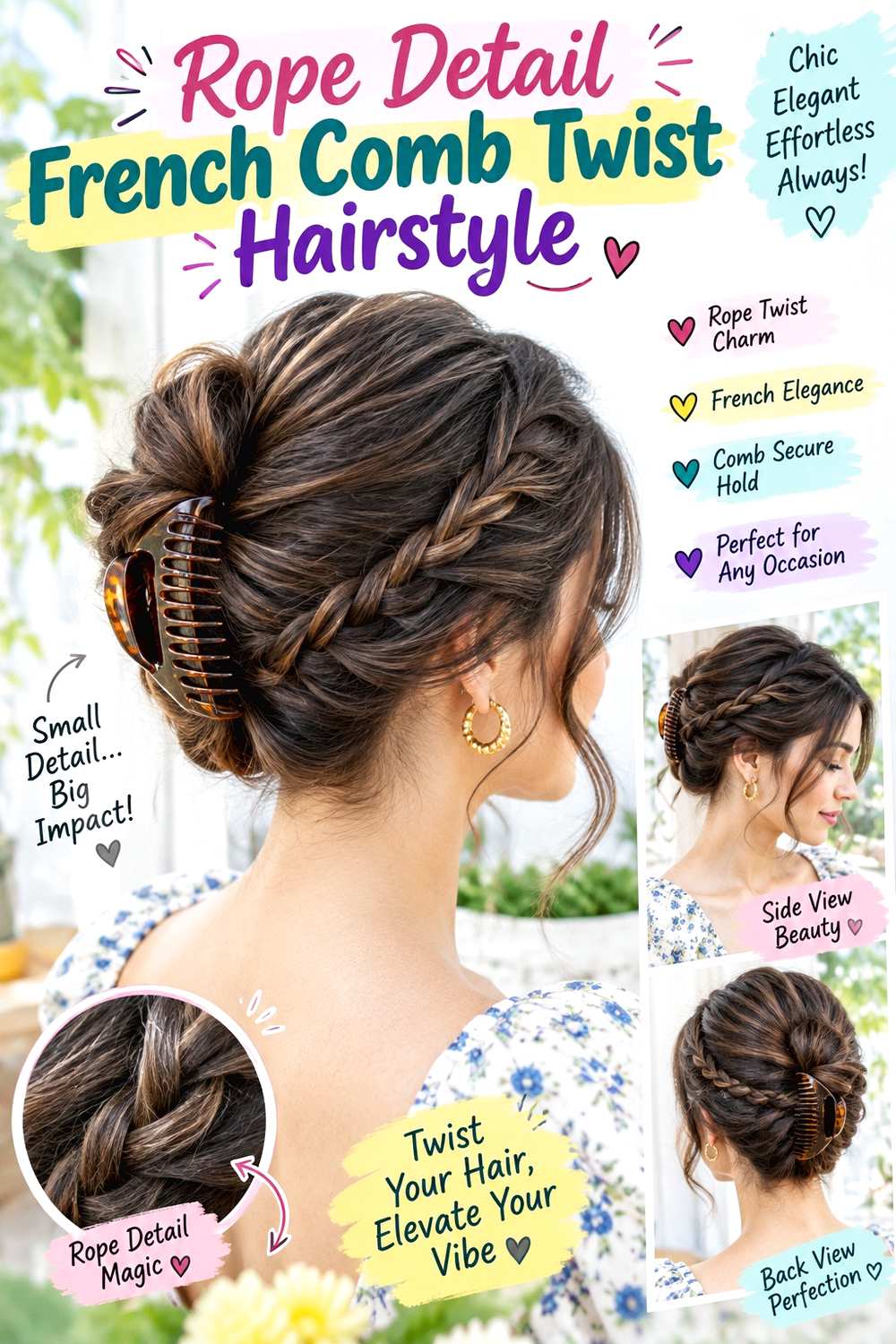
Rope twists add a raised texture along the sides before the hair folds into a central French-comb twist. Take one section from each temple, divide each into two strands, and form a rope twist toward the back. Join those sections with the remaining length, then roll everything inward vertically or diagonally. Keep the rope texture visible along the outer edge and let fringe or short front layers stay loose if they do not reach comfortably.
Use light styling cream to keep the rope surfaces defined, a mini elastic to join them discreetly, and a French comb to secure the final fold. Medium and long hair work best because the side twists use some of the available length. A quick refresh may involve rebuilding one rope section and reseating the comb; a full wash-day version takes longer when the loose texture needs drying first. If one rope loosens repeatedly, make its section slightly smaller rather than twisting harder at the scalp. At a styling appointment, specify the thickness of each rope, where they should meet, and the width of the central roll. Balanced rope placement gives the comb a flatter, more reliable base.
Pro tip:
Join the two rope sections before rolling the remaining length. A stable meeting point prevents one side from unraveling as the French comb enters the fold.
Make It Work for You:
For wavy or curly hair, allow some natural texture to remain on the rope surfaces. They still read clearly without requiring every strand to lie smooth.
Watch Out For:
Do not twist tightly at the temples just to sharpen the rope pattern. Use slightly larger sections if you need definition with less concentrated tension.
Bouffant Crown French Comb Twist Hairstyle
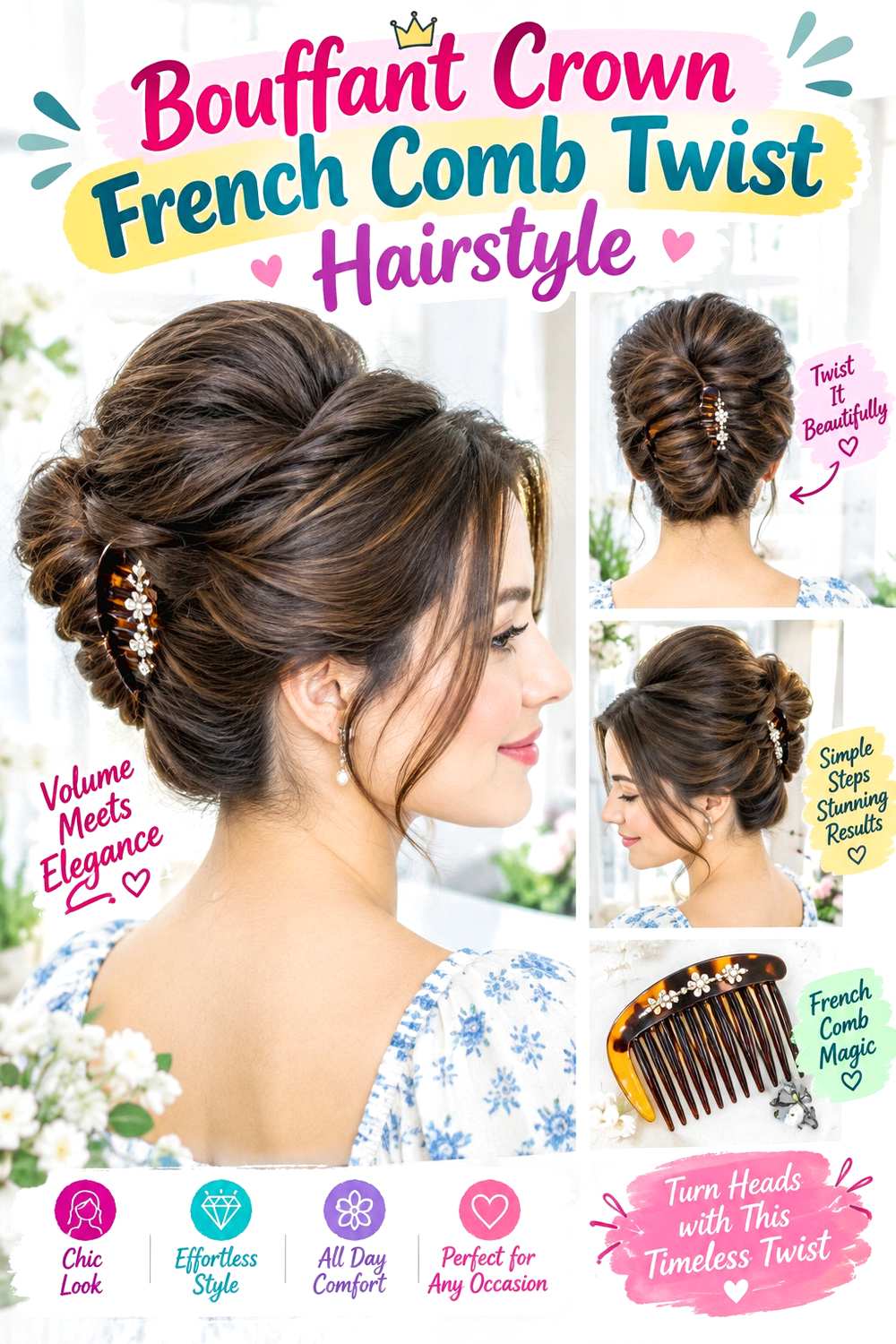
A softly raised crown adds height above the French comb twist without changing the basic vertical roll. Build gentle fullness through the upper back of the head, smooth only the visible surface, then gather the remaining length into a centered twist below it. The crown should rise gradually rather than forming a separate rounded bump. A side or center part can remain visible, and fringe may stay loose if it suits the front.
Use root-lift spray to support the crown, bobby pins to establish the twist base, and a French comb to secure the finished roll. Medium and long hair provide enough length for the lower twist, while fine strands often need only modest crown height to create a noticeable change in profile. A quick refresh may involve lifting the crown with your fingers and reseating the comb; full wash-day styling takes longer because root volume has to be recreated. If the crown collapses, rebuild that section instead of tightening the sides. At a styling appointment, specify where the lift should begin and how high you want it relative to the twist. Keeping the volume behind the top of the head helps avoid unnecessary width around the temples.
Pro tip:
Create the crown lift before securing the twist, then smooth only the outer layer. Pressing down after anchoring can collapse the height you intended to keep.
Make It Work for You:
For fine or lower-density hair, keep the bouffant compact and concentrate lift behind the crown. This creates shape without spreading the twist too widely.
Watch Out For:
Do not create height by pulling the side sections extremely tight. That can flatten the temples and make the crown look disconnected from the twist.
Half-Up French Comb Twist Hairstyle
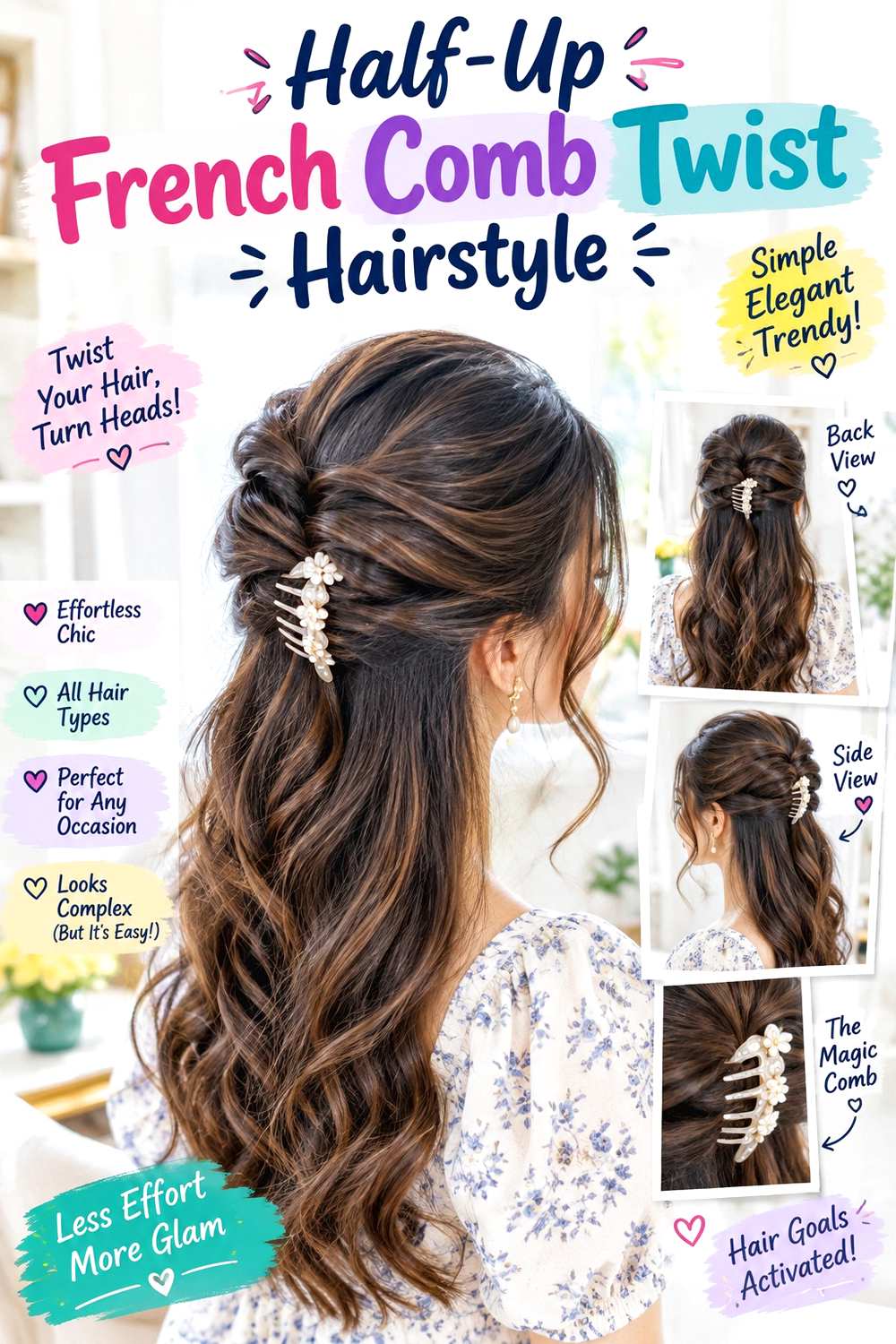
A half-up version uses the French comb on only the upper portion of the hair, leaving the lower lengths loose. Gather sections from above the ears, twist them together at the rear crown, and fold the short tail underneath before inserting the comb. Keep the lower hair straight, wavy, curly, or coily according to its natural or styled texture. A center part creates symmetry, while a side part gives the front more directional movement.
This option suits medium and long hair and can also work on a lob when the upper sections reach comfortably. Use light texturizing spray for grip, a mini elastic if the upper twist needs a hidden base, and a small French comb to secure the fold. A quick refresh may take only a few minutes because the lower lengths remain untouched; a full wash-day version takes longer if those loose lengths also need drying or definition. If the comb slides, reduce the gathered amount rather than pulling more hair into the twist. At a styling appointment, specify the rear-crown height, how much hair should remain loose, and whether the comb should be visible. Those proportions determine how light or structured the half-up shape feels.
Pro tip:
Keep the upper twist shallow enough that the comb teeth can pass through the base without grabbing a large amount of loose hair underneath.
Make It Work for You:
For lower-density hair, gather smaller temple sections and leave more length free below. A compact upper twist preserves body while still showing the French comb clearly.
Watch Out For:
Do not let the comb catch deeply into the loose lower hair. That can create pulling whenever the free lengths move, so keep the anchor separate.
Messy French Comb Twist Hairstyle

A messy twist should have a secure center with deliberate softness around it, rather than relying on a loose comb to create the undone effect. Gather the hair at the center back, twist upward once, and tuck the ends unevenly into the fold. Let the crown stay airy, release a few selected face-framing pieces, and allow small bends or natural texture to remain visible. The main roll can be slightly irregular while still holding a recognizable vertical or diagonal line.
Use light texturizing spray to provide grip, a French comb to anchor the central fold, and one bobby pin for a short end that needs specific control. Wavy and naturally textured hair often reaches this finish quickly, while straight hair may need a firmer inner twist. A quick refresh can be brief: rebuild the center, then soften the edges again. Full wash-day styling takes longer only when you also need to create or define texture. If several sections fall together, the base is failing rather than becoming attractively messier. At a styling appointment, specify how much crown looseness, face framing, and visible ends you want so the softness remains intentional.
Pro tip:
Move your head gently after securing the central fold. If the twist stays stable, loosen only the outer sections you want to appear soft and casual.
Make It Work for You:
For fine hair, keep the actual twist compact and create softness mostly at the crown and temples. This adds movement without making the roll look sparse.
Watch Out For:
Do not disguise a slipping anchor by pulling out more hair. If the entire twist shifts, rebuild the center before recreating the relaxed finish.
Sculpted Fold French Comb Twist Hairstyle

A sculpted fold replaces the narrow roll with a broad, clean panel of hair curved back over itself. Sweep the length toward the center, fold it upward, then bend the top portion inward so the ends disappear through the middle. The finished outline can be oval, fan-shaped, or softly rectangular depending on length and density. Keep the crown controlled and the sides balanced so the broad fold remains the main feature.
Use light styling cream to smooth the visible surface, bobby pins to support the lower corners when necessary, and a French comb through the central overlap. Medium to long hair works best, with dense hair often producing a wider silhouette. A quick refresh involves reshaping the upper curve and resetting the comb; full styling takes longer because the fold has to be balanced before anchoring. If the center collapses, reduce the fold size rather than forcing the comb through more bulk. At a styling appointment, specify the desired width, upper curve, and how fully the ends should disappear. Naturally textured hair can keep some surface movement; the important feature is the controlled folded shape, not absolute smoothness.
Pro tip:
Shape the broad fold completely before inserting the French comb. Once the outline looks balanced, anchor through the center without flattening the outer curved edge.
Make It Work for You:
For very dense hair, build a wider, shallower fold rather than stacking the length outward. The comb can pass through a manageable base while preserving the sculpted shape.
Watch Out For:
Never force the comb through a fold that feels too thick. Reduce the bulk or add targeted hidden support instead of risking uncomfortable pressure.
Conclusion
French comb twist hairstyle ideas can range from narrow vertical rolls to low nape folds, textured twists, half-up shapes, braided details, and broad sculpted finishes. Longer hair offers more material for loops and high rolls, while shoulder-length cuts often work better with compact anchors. Density influences how wide the twist should be, and natural texture can remain visible rather than being smoothed away. A center part creates stronger symmetry, while side parts and diagonal rolls add direction. Crown volume can stay flat, softly raised, or deliberately full. When choosing a version, consider where the weight sits, how securely the comb can catch the base, and whether your routine favors a quick relaxed reset or a more carefully shaped finish.
Before Your Salon Visit
Choose one or two favorite references and point to the exact twist height, width, parting, crown volume, loose pieces, comb position, and finish you want. Discuss your natural texture, density, face shape, current length, upkeep, and usual styling routine so the anchor can be adapted realistically. Because French comb twists are temporary styles, focus on comfortable tension and secure placement rather than requesting an unnecessary haircut. Mention whether the twist also needs to fit comfortably with a collar, veil, hat, or other accessory.
FAQs
How Do You Secure a French Comb in a Twist?
Catch a shallow section from the outer edge of the twist with the comb teeth, then flip or reverse the comb toward the scalp and slide it into the denser base. Exact technique varies with comb shape and density. If the twist moves as a whole, rebuild the fold rather than simply pushing harder.
Can French Comb Twists Work on Thick or Dense Hair?
Yes, although dense hair may hold more comfortably in a broader roll, low fold, or wide chignon instead of a narrow twist. A larger base gives the comb more room to anchor without compressing excessive bulk. Some styles may also benefit from discreet secondary support when one comb cannot comfortably carry the weight.
Can Curly or Coily Hair Wear a French Comb Twist?
Yes. Curly and coily texture can remain visible inside the twist, and straightening is not required. Judge the finished height and tension after considering dry volume and shrinkage. Broader folds may work better for dense texture, while shorter curls or coils around the hairline can remain intentionally loose.
What Hair Length Is Best for a French Comb Twist?
Medium and long hair provide the widest range of vertical rolls, loops, and chignons, but shoulder-length hair can support compact nape twists or half-up folds. The useful test is whether enough length overlaps at the anchor. Short sections do not need to be stretched tightly just to reach the comb.