10 Pixie Cut Baddie Hairstyle Ideas

A pixie cut baddie hairstyle combines the short, sculpted shape of a traditional pixie with a sharper, more polished finish. Depending on the cut, that can mean sleek side parts, defined curls, spiky texture, precise edges, shaved sides, or statement bangs. Most versions keep the sides and back fairly close while leaving enough length on top to control volume, movement, and styling direction.
The haircut can work with straight, wavy, curly, or coily hair, but the cutting technique should match the natural texture. Fine hair often benefits from lightweight layers and extra lift through the crown, while thick hair may need internal weight removal to prevent the top from becoming bulky. Longer bangs can soften angular features, while height through the crown can help balance rounder or wider face shapes.
Daily styling ranges from a quick five-minute refresh to more detailed smoothing, curling, or edge work. Short hair also shows growth quickly, so many pixies look their sharpest with salon maintenance every four to eight weeks. Before choosing one, consider how often you want trims, whether you enjoy using styling products, and how much natural texture you want to keep visible.
Quick List
- Sleek Side-Parted Pixie
- Textured Spiky Pixie
- Curly Pixie With Defined Edges
- Platinum Blonde Pixie With Dark Roots
- Finger-Wave Pixie
- Pixie With Long Side Bangs
- Tapered Pixie With Shaved Sides
- Tousled Pixie With Volume
- Wet-Look Pixie
- Micro-Fringe Pixie
Sleek Side-Parted Pixie
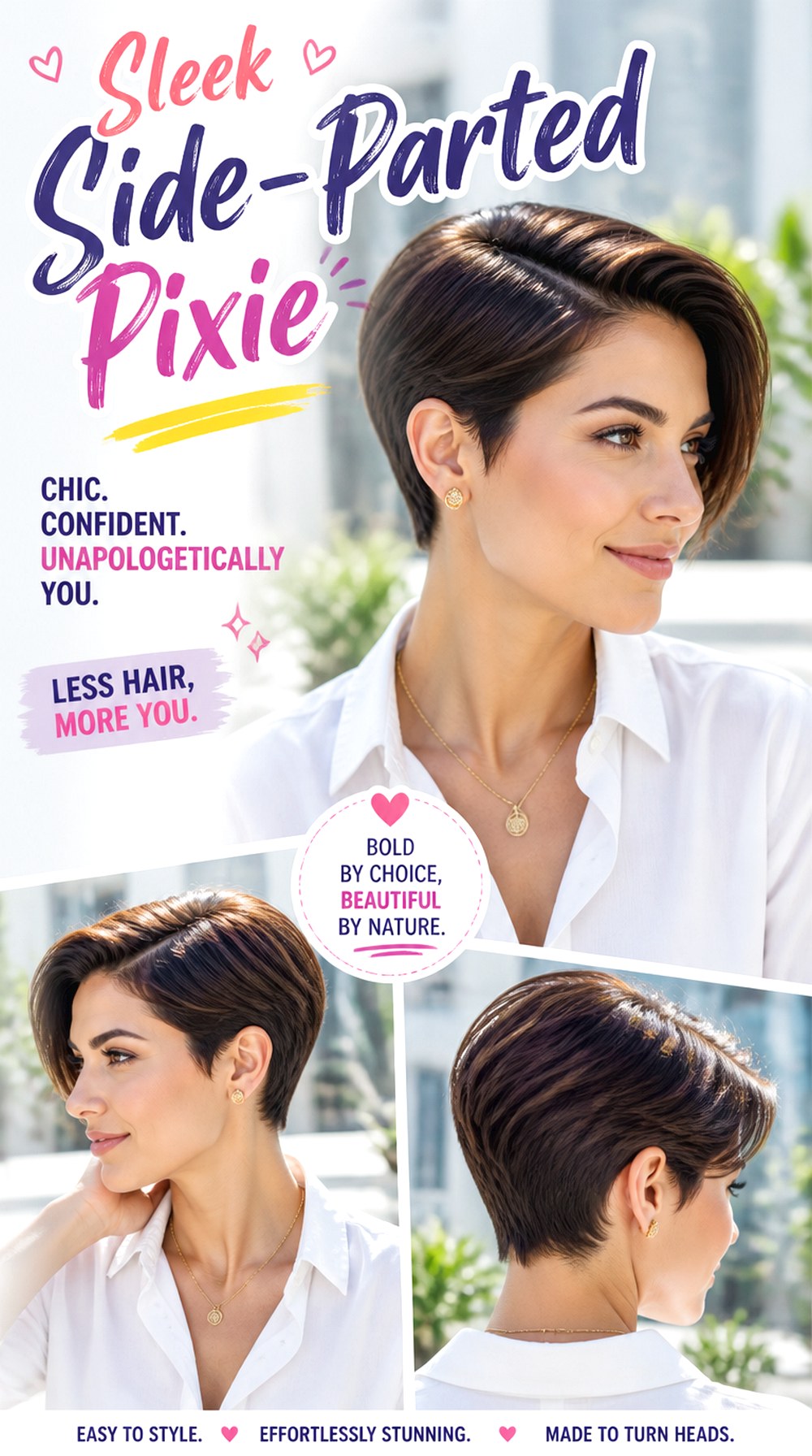
A sleek side-parted pixie keeps the sides neat while leaving slightly more length across the top so the hair can sweep smoothly in one direction. The clean part and glossy finish give the cut its polished shape without needing excessive volume. It works especially well on straight or relaxed hair and can suit fine to medium densities because the controlled surface keeps the silhouette light. Styling is fairly quick once the cut is established, although frequent smoothing may be needed on humid days. A heat protectant, small flat iron, and smoothing serum are useful. Ask your stylist to preserve enough top length for a clear side sweep while keeping the neckline tidy.
Pro tip: Keep the part slightly off-center rather than extremely low if you want lift through the crown without creating too much weight on one side.
Textured Spiky Pixie
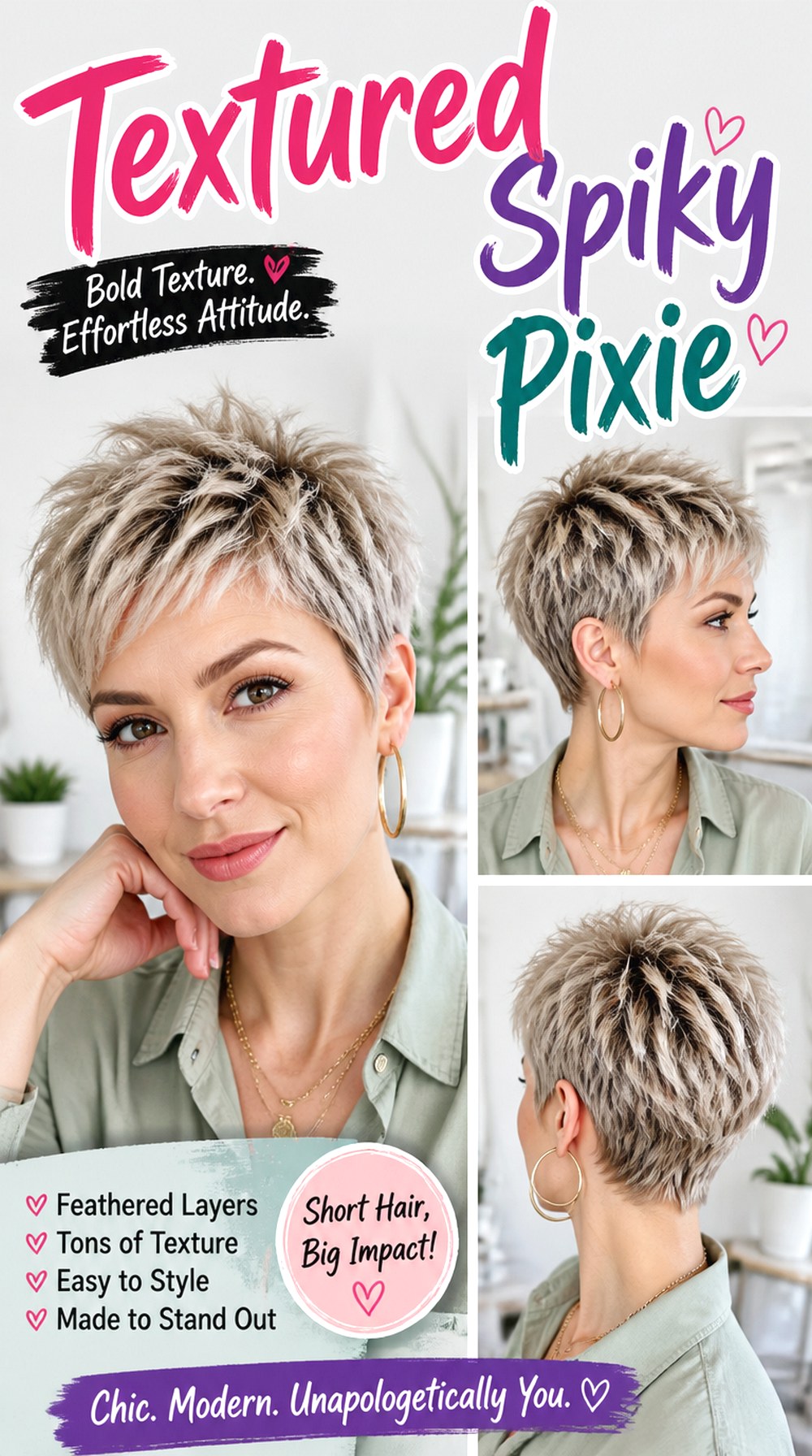
A textured spiky pixie uses short, separated layers through the crown to create height and visible definition. Instead of a stiff finish, the most wearable version keeps the spikes soft and slightly irregular so the haircut still has movement. Fine and medium hair often holds this texture easily, while thicker hair may need weight removed underneath the top layers. Oval, round, and heart-shaped faces can all be adjusted by changing how much height sits above the forehead. Styling takes about five to ten minutes with texturizing spray, lightweight styling paste, and light-hold hairspray. Maintenance usually means reshaping every four to six weeks. Show your stylist the exact amount of crown length you want left for separation.
Pro tip: Ask for point-cut ends rather than one blunt top layer; the small differences in length make the spikes easier to separate without looking rigid.
Curly Pixie With Defined Edges
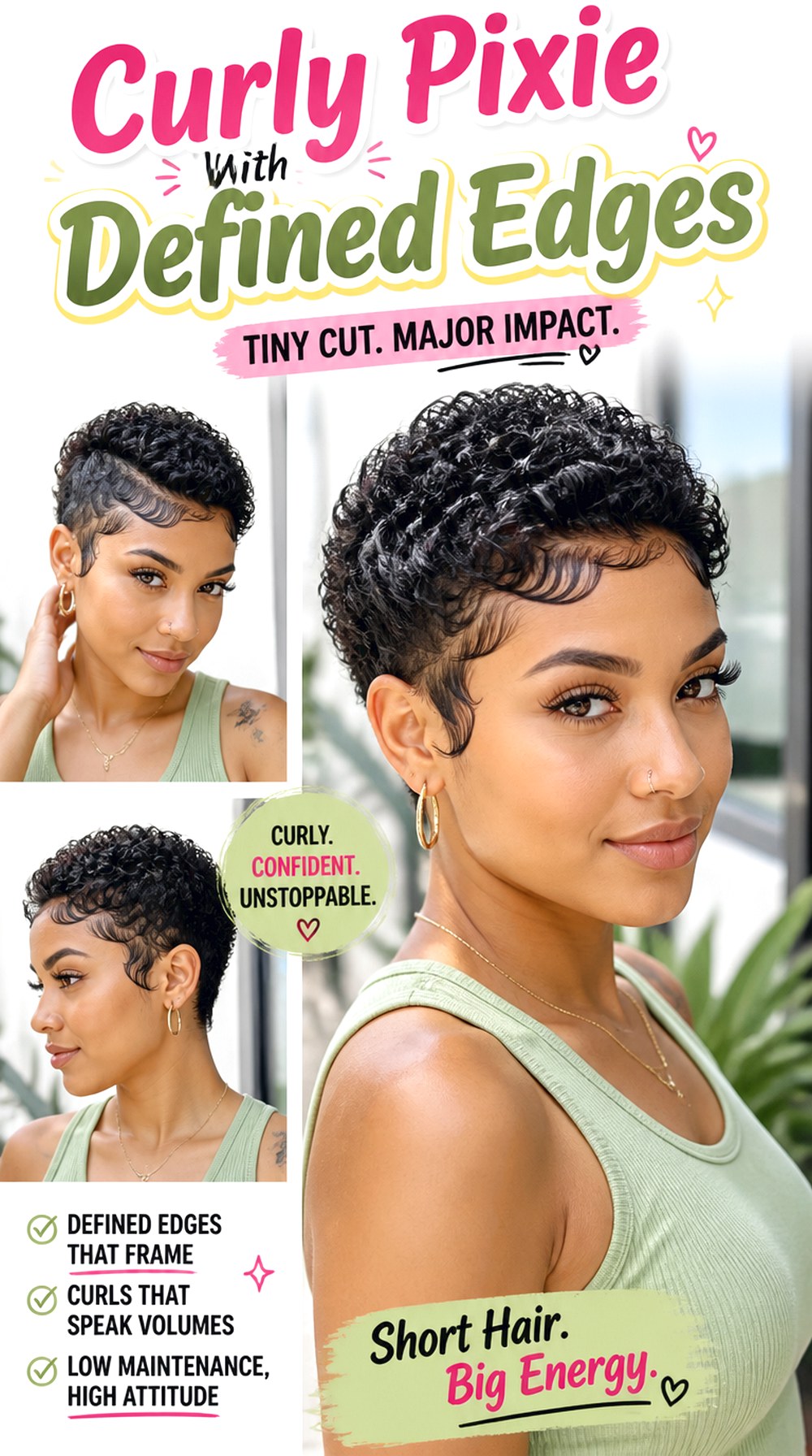
Natural curls bring softness and dimension to a close pixie, while carefully defined edges give the perimeter a more precise finish. Leaving extra curl length on top creates shape and prevents the cut from appearing flat, especially on medium or dense curly and coily hair. The sides can stay tapered rather than completely shaved, making the transition easier to grow out. Daily styling is usually moderate because curls may need moisture and reshaping after sleep. Curl cream, leave-in conditioner, and a small amount of edge-control product can help maintain definition. A diffuser is optional when faster drying is needed. At the salon, ask for the cut to be shaped with your natural curl shrinkage in mind.
Pro tip: Avoid taking the hairline too far back when defining the edges; keeping the natural perimeter intact usually creates a softer and more balanced result.
Platinum Blonde Pixie With Dark Roots

A platinum blonde pixie with darker roots creates strong contrast while keeping the haircut itself short and structured. Slightly longer layers through the top allow the light color to show movement instead of looking like one solid block, while the natural or deliberately shadowed root adds dimension. Straight, wavy, and lightly curly textures can all wear the shape, although previously lightened or fragile hair needs careful handling. Styling may be quick, but color maintenance is higher than the haircut alone. Use heat protectant, a lightweight smoothing serum, and a toning product recommended for your blonde. Salon visits depend on the desired root depth and hair condition. Tell your stylist whether you want a soft root melt or a clearly visible dark-root contrast.
Pro tip: Leave enough length around the crown to show the transition between the dark root and platinum ends rather than cutting every section equally short.
Finger-Wave Pixie
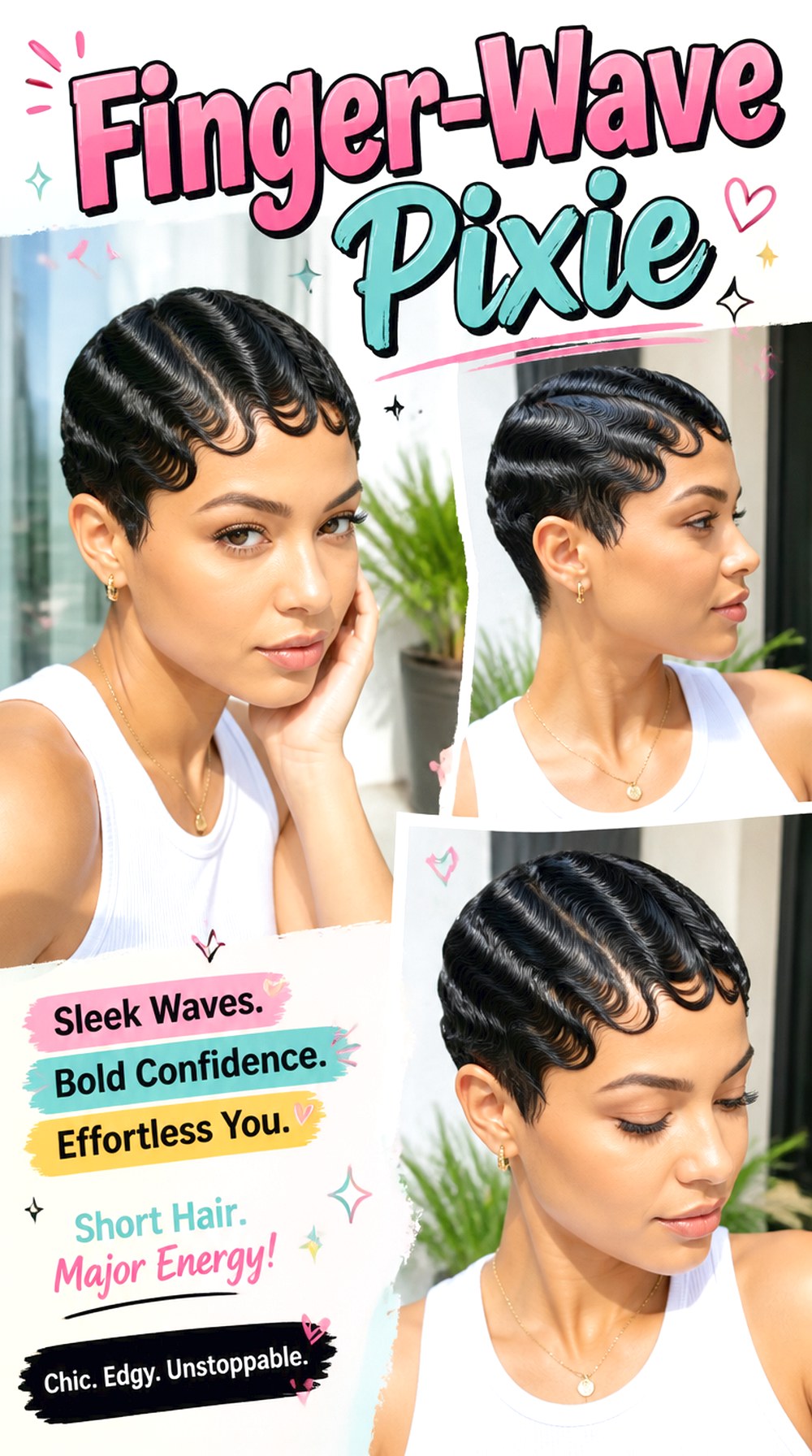
A finger-wave pixie shapes short hair into smooth S-curves that sit close to the head, creating a controlled finish with very little height. The wave pattern can cover the entire top or concentrate around the front and sides depending on the length available. It works particularly well on relaxed hair, naturally flexible short textures, and hair that can hold a molded shape. Styling takes more precision than a tousled pixie, but the finished style can stay neat with careful nighttime protection. Useful supplies include setting mousse, a fine-tooth comb, and light-hold finishing spray. Ask your stylist to leave enough length through the top and temple area for complete wave ridges instead of cutting everything extremely close.
Pro tip: Form the first wave according to your natural parting direction; forcing the hair against a strong growth pattern can make the front lift instead of lying smoothly.
Pixie With Long Side Bangs
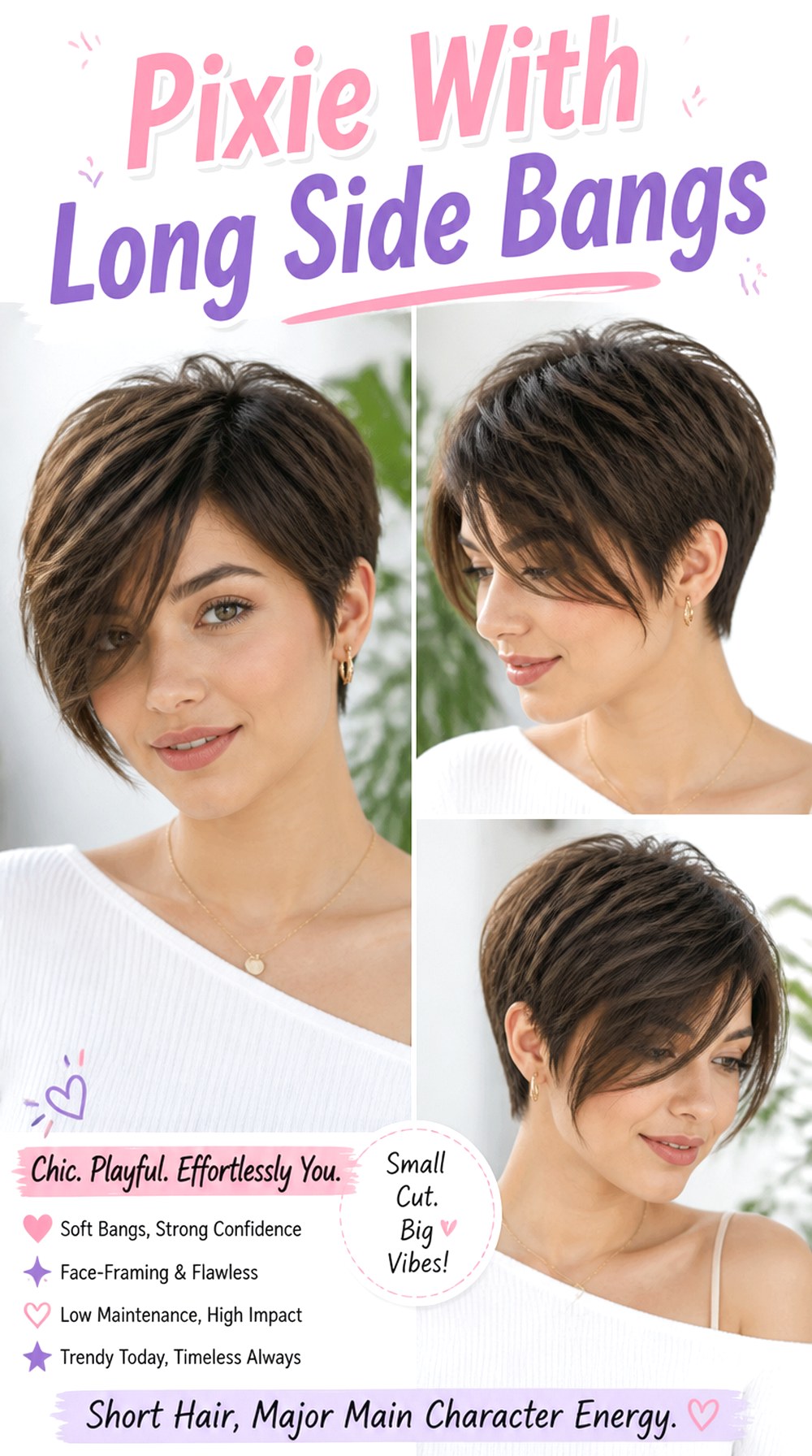
Keeping long side bangs changes the proportions of a pixie by creating a soft diagonal line across the forehead while the sides and back remain short. The fringe may finish near the cheekbone or jaw, giving the haircut more movement and styling flexibility than a uniformly cropped pixie. Straight and wavy hair handle the sweep particularly well, while thick hair may need gentle thinning inside the fringe. The longer front can also be useful for balancing round, square, or heart-shaped faces. Styling takes around five to fifteen minutes with heat protectant, a round brush, and light-hold hairspray. Bangs may need more frequent trims than the crown. Tell your stylist exactly where you want the longest front piece to finish.
Pro tip: Keep some weight at the ends of the side bangs so they sweep as one soft section rather than separating into thin, stringy pieces.
Tapered Pixie With Shaved Sides
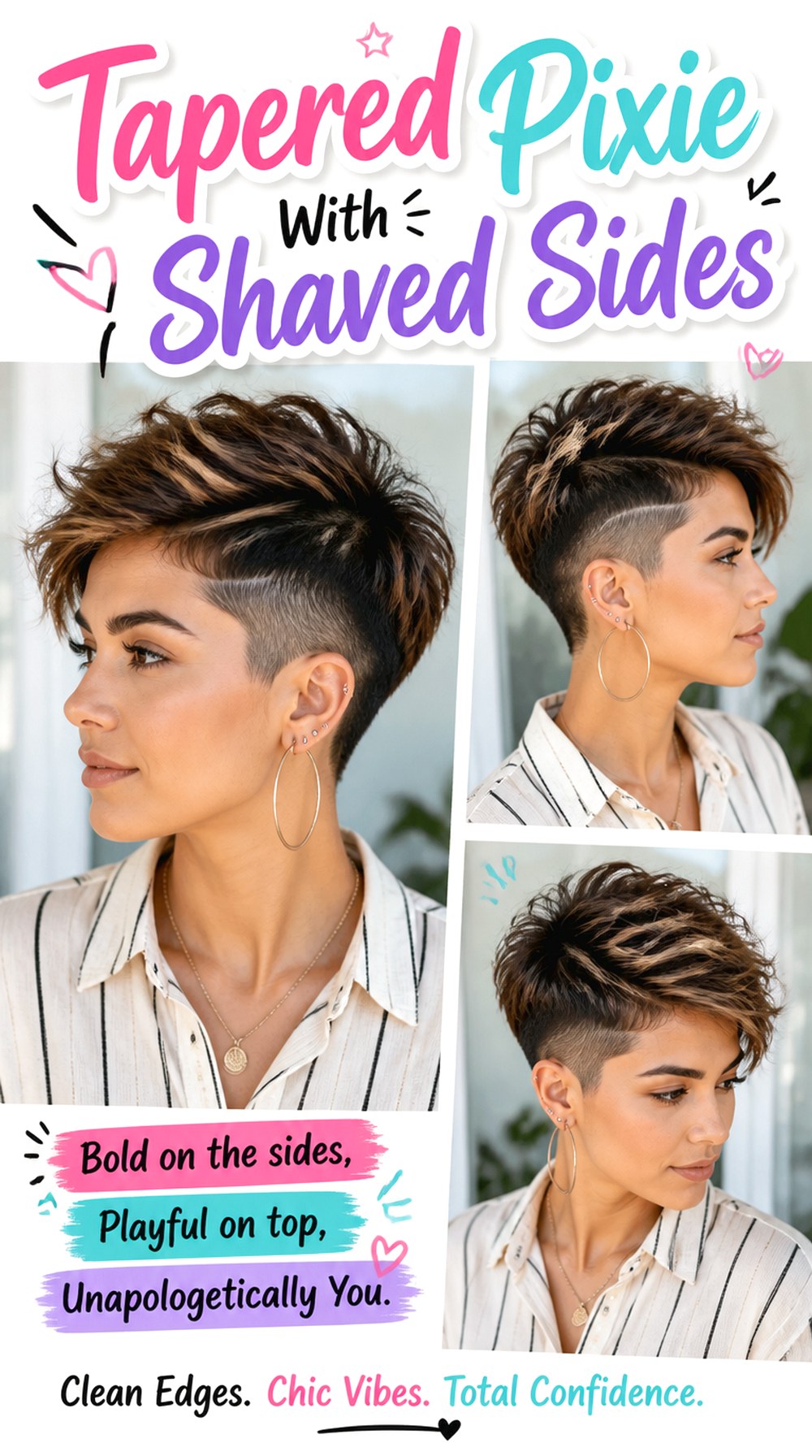
A tapered pixie with shaved sides creates a noticeable difference between the close perimeter and the longer hair through the top. The strong outline puts more attention on crown texture, facial features, and the shape around the temples. It can work with straight, curly, or coily hair, especially when the top is cut to complement the natural texture rather than being forced into one finish. Dense hair often benefits from the reduced bulk around the sides. Daily styling can be quick, using volumizing spray, texture paste, or curl cream depending on the top texture. The shaved sections usually need frequent cleanup to remain sharp. Ask your barber or stylist to agree on the guard length and exact transition point before cutting.
Pro tip: If you want an easier grow-out, choose a soft taper instead of taking the sides down to skin; the transition will look less abrupt as the hair gets longer.
Tousled Pixie With Volume
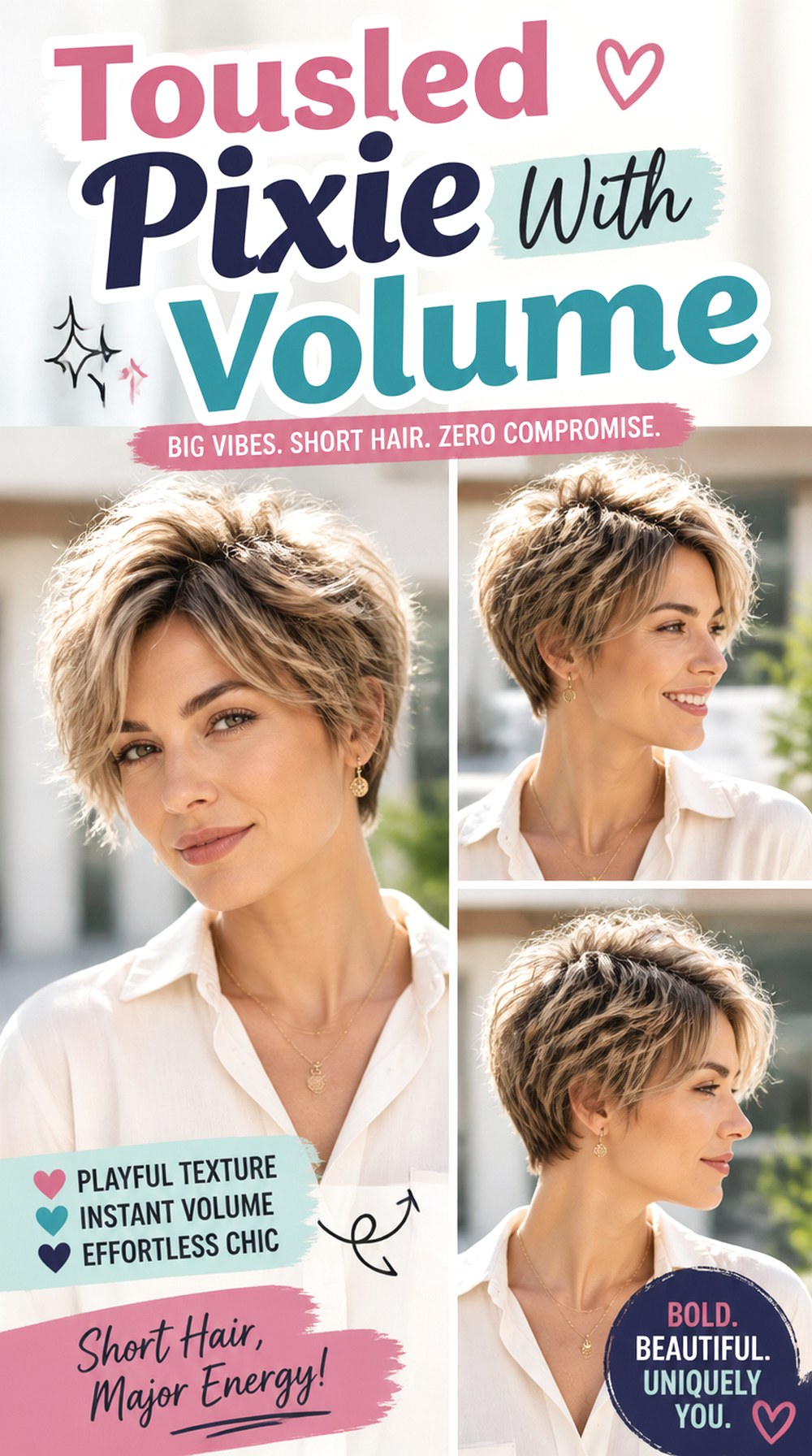
A tousled pixie keeps more length through the crown and uses uneven, airy layers to create soft volume instead of a perfectly smooth surface. The slightly undone finish is useful for fine or medium hair because separation can make the overall shape appear fuller without heavy teasing. Naturally wavy hair often needs only light product, while straight hair may require a little blow-drying or finger styling to create movement. A lightweight mousse, texturizing spray, and small round brush are practical choices. Styling usually takes five to ten minutes, and the layers can grow out more softly than a very precise crop. At the salon, request crown layers that lift without removing too much density from the ends.
Pro tip: Keep the shortest volume-building layers near the crown rather than directly above the forehead so the haircut gains height without becoming excessively spiky.
Wet-Look Pixie

The wet-look pixie uses a glossy, closely controlled finish to emphasize the shape of a short haircut. Hair can be combed straight back, pushed diagonally from a side part, or shaped into subtle bends around the hairline. Medium-density straight or wavy hair is especially easy to direct this way, although curls can also be slicked while keeping some texture through the top. The style itself is quick, but product amount matters: too much can make fine hair collapse. Use a lightweight styling gel, wide-tooth comb, and shine serum for controlled definition. Regular trims keep the perimeter neat. When discussing the cut with your stylist, explain the direction you plan to slick the top so enough length remains for that movement.
Pro tip: Apply gel to damp rather than soaking-wet hair, then add only a small amount of shine product after shaping to keep the finish glossy instead of greasy.
Micro-Fringe Pixie
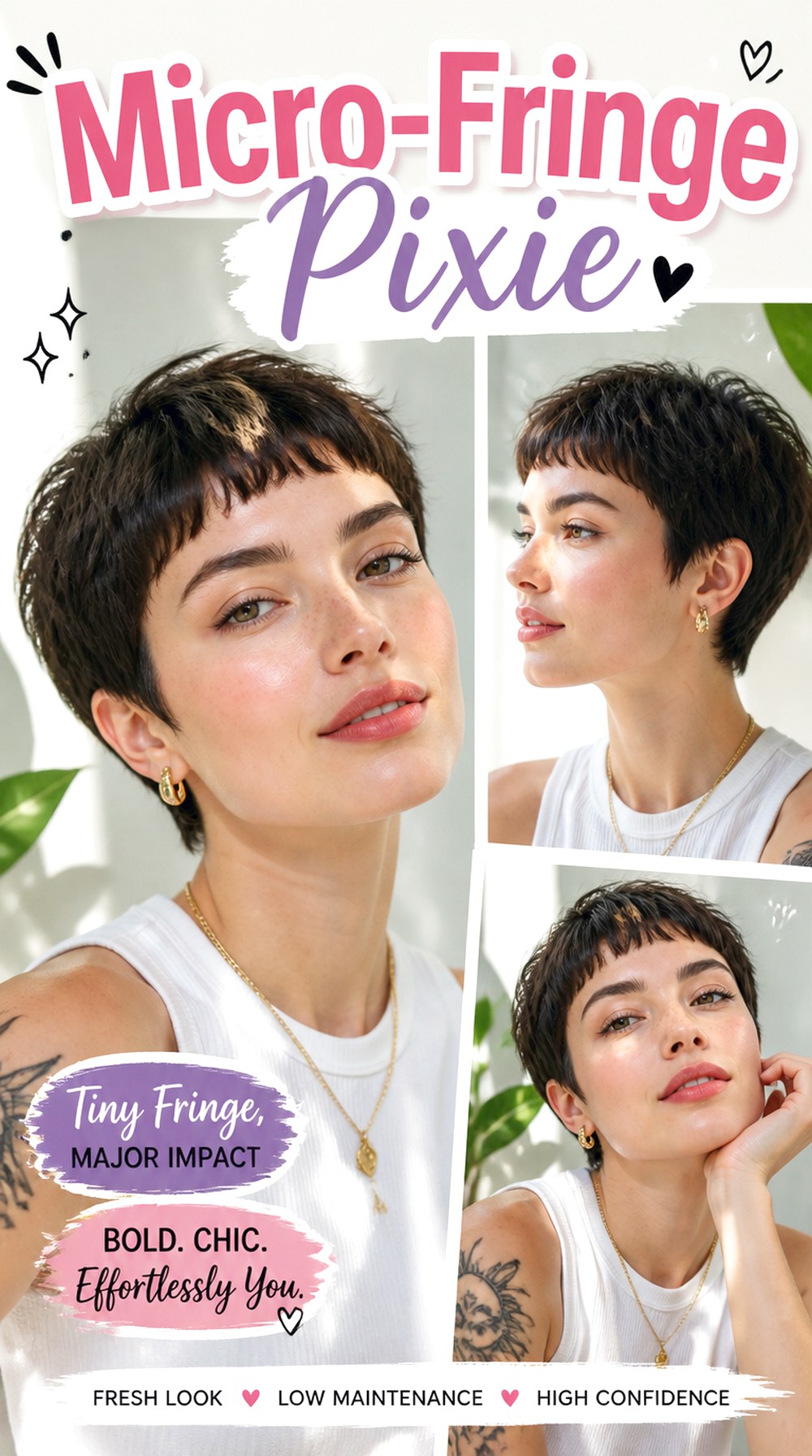
A micro-fringe pixie pairs a short fringe with cropped sides and textured or smooth layers through the crown. Because the bangs sit well above the brows, they create a strong horizontal detail and make the front of the haircut especially noticeable. Straight and softly wavy hair usually make the fringe easiest to control, while dense hair may need careful weight removal so the bangs do not look too heavy. Styling is generally quick with a small flat iron, lightweight texture spray, and heat protectant. The fringe may require trims every few weeks even if the rest of the pixie can go longer between appointments. Show your stylist both the fringe length and the amount of softness you want around its edges.
Pro tip: Start slightly longer than your final micro-fringe goal at the first appointment; short bangs can spring upward once dried, especially when the hair has natural bend or cowlicks.
Conclusion
These pixie cut baddie hairstyle ideas show how much variety can fit into a very short haircut. The same basic pixie shape can become sleek, curly, spiky, softly tousled, closely tapered, or highly polished simply by adjusting the cutting and styling details. Length can stay concentrated on top or through the fringe, while density can be preserved or reduced depending on how much volume you want. Layers, bangs, texture, parting, and finish can all change the overall effect. The most suitable version depends on your face shape, natural hair texture, density, maintenance preference, and daily routine. Choose the shape first, then decide how much styling effort and salon upkeep you realistically want.
CTA
Choose one or two favorite ideas and save clear photo references before your appointment. Discuss your face shape, natural hair texture, hair density, preferred length, maintenance schedule, and normal styling routine with your stylist. In each reference photo, point out the exact fringe length, crown layers, side shape, volume, texture, or finish you want rather than asking for the entire haircut without adjustments.
FAQs
What Hair Types Work Best With A Pixie Cut Baddie Hairstyle?
Straight, wavy, curly, and coily hair can all work with a pixie, but the layering, tapering, and top length should be adjusted for the natural texture and density.
How Often Does A Pixie Cut Need A Salon Trim?
A sharply shaped pixie often needs refreshing every four to eight weeks. Shaved sides, micro bangs, and very precise edges may require more frequent maintenance.
Can Fine Hair Wear A Baddie Pixie Cut?
Yes. Fine hair often benefits from lightweight crown layers, texturizing products, and avoiding excessive thinning at the ends. Strategic volume can help the haircut hold a fuller shape.
Do Pixie Cuts Require Heat Styling Every Day?
Not necessarily. Curly, tousled, tapered, and textured pixies can often be refreshed with product and finger styling. Sleek bangs or polished finishes may need occasional blow-drying or flat-ironing.