19 Soft Textured Bob Hairstyle Ideas

Soft textured bob hairstyle ideas keep the recognizable bob perimeter while replacing a rigid finish with movement, separation, or gentle bends. Length can stop at the chin or jaw, skim the neck, or extend toward the collarbone. Some versions retain a nearly blunt bottom edge with texture concentrated at the surface, while others use restrained layers to create more movement. Fringe can be wispy, curtain-shaped, or omitted, and the parting can noticeably change how volume sits around the face.
Straight hair can gain texture through subtle layers or styling, while naturally wavy hair often needs less work to create separation. Curly bobs require enough length for shrinkage and thoughtful bulk placement. Fine or lower-density hair usually benefits from retaining more perimeter weight; dense hair can often support additional internal movement without making the ends sparse. Face framing can begin around the cheekbones or jaw depending on how much front movement is wanted.
Daily effort varies with the finish. Air-dried texture can be simple when it works with the natural pattern, while deliberately created bends take longer. Cut maintenance is separate: reshaping is useful when the perimeter loses its intended landmark or layers stop moving distinctly.
Quick List
- Tousled Chin-Length Soft Textured Bob Hairstyle
- Wavy Soft Textured Bob Hairstyle
- Curly Soft Textured Bob Hairstyle
- Wispy Fringe Soft Textured Bob Hairstyle
- Curtain Fringe Soft Textured Bob Hairstyle
- Side-Parted Soft Textured Bob Hairstyle
- Center-Parted Soft Textured Bob Hairstyle
- Jaw-Length Soft Textured Bob Hairstyle
- Collarbone Soft Textured Bob Hairstyle
- Feathered Soft Textured Bob Hairstyle
- Shaggy Soft Textured Bob Hairstyle
- Blunt-Edge Soft Textured Bob Hairstyle
- Fine-Hair Soft Textured Bob Hairstyle
- Dense-Hair Soft Textured Bob Hairstyle
- Air-Dried Soft Textured Bob Hairstyle
- Piecey-End Soft Textured Bob Hairstyle
- Face-Framing Soft Textured Bob Hairstyle
- Rounded Soft Textured Bob Hairstyle
- Loose Bend Soft Textured Bob Hairstyle
Tousled Chin-Length Soft Textured Bob Hairstyle
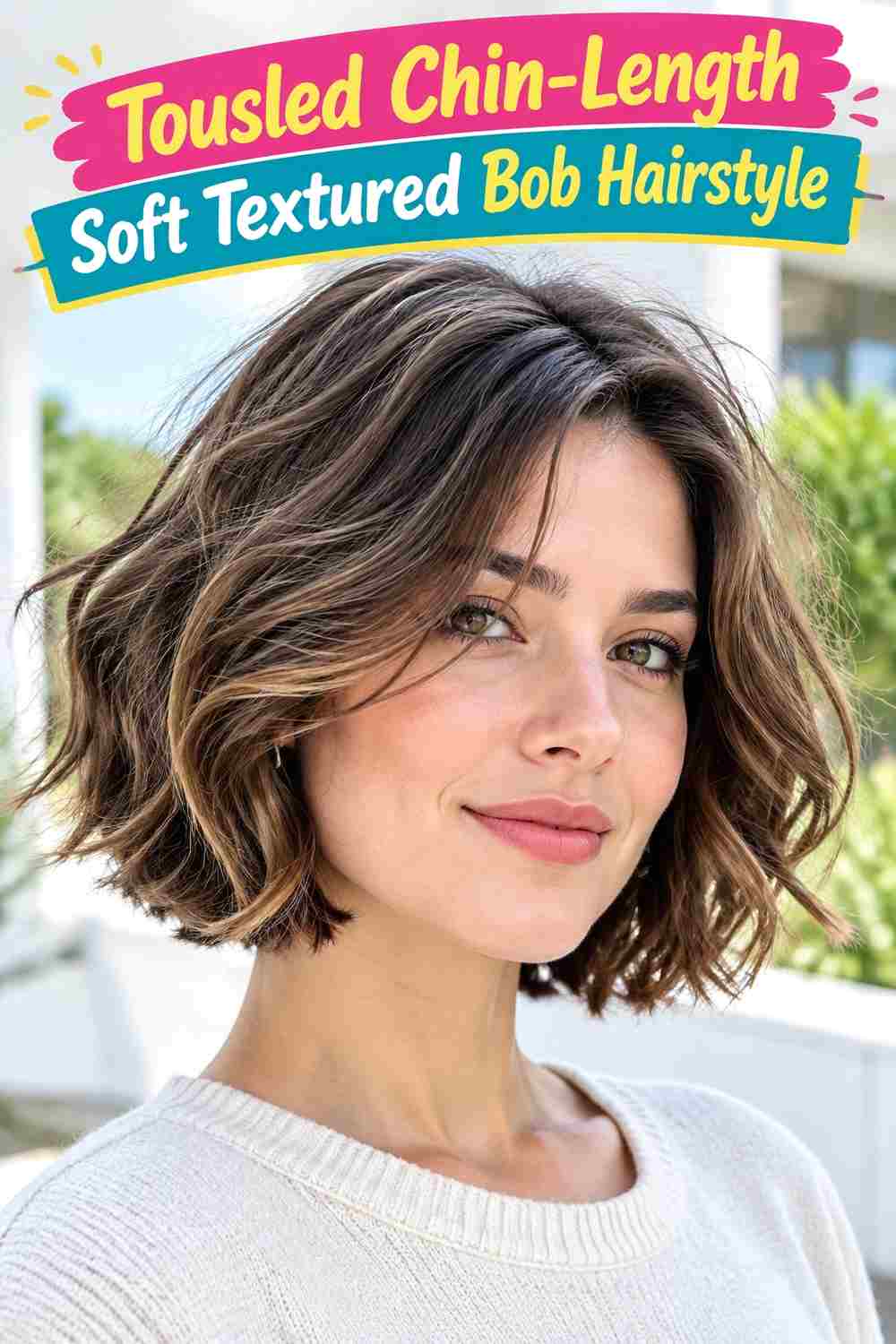
A chin-length perimeter keeps this bob compact, while irregular bends prevent the outline from appearing rigid. The front can fall from a relaxed center or off-center part, with a few shorter pieces around the cheekbones connecting into the sides. Instead of curling every section identically, some ends stay straighter and others turn slightly outward. Moderate crown lift completes the deliberately loose finish.
Straight and wavy textures can both support the design. Natural waves may need only selective reshaping, while straight hair requires more styling to establish movement. Use heat protectant before thermal styling, a medium curling iron for occasional bends, and texturizing spray to separate dry pieces. A next-day refresh may take only a few minutes because only flattened sections need attention; building the entire texture after washing takes longer.
At the salon, specify exactly where you want the dry perimeter to meet the chin and ask how much weight will remain through the bottom edge. Texture should not automatically mean a heavily thinned perimeter. Reshape when growth pulls the bob below the preferred chin landmark or when the internal movement begins merging into a heavier outline.
Pro tip:
Curl selected sections through the middle while leaving the final inch relatively relaxed. Mixing bent and straighter ends creates believable tousled movement and keeps the chin-length perimeter from looking overly styled.
Make It Work for You:
If your hair is lower density, keep most texture on the surface and preserve a fuller bottom edge. The irregular finish remains visible without removing valuable weight from the compact perimeter.
Watch Out For:
Avoid curling every section in the same direction. Repeated identical bends can turn loose texture into a formal wave set; vary placement and leave several pieces closer to their natural shape.
Wavy Soft Textured Bob Hairstyle

Broad natural-looking waves create movement from around the temples through a jaw- or neck-length perimeter. The roots remain relatively relaxed, while the mid-lengths carry the strongest bends. Some ends can remain straight or turn in different directions, preventing the waves from becoming too uniform. A center or subtle side part works well, and restrained layering helps individual sections move without weakening the bottom line.
Naturally wavy hair can make this bob relatively low effort because the cut supports existing movement. Straight hair can recreate the pattern, but full styling takes longer. Use heat protectant before thermal work, a medium curling iron to refine selected sections, and flexible hairspray to maintain movement. Between washes, correcting two or three flattened waves can be quick; recreating the entire pattern on straight hair is a longer routine.
At the salon, discuss where your natural wave begins and how full you want the perimeter to remain. If the shortest layers begin too high, the bob can gain more side width than expected. Ask for enough length to accommodate the wave’s spring. Reshape when growth drags the pattern downward or makes the perimeter sit below the intended jaw or neck position.
Pro tip:
Alternate several wave directions through the sides but keep the pattern broad. This prevents the bob from forming one solid wave while preserving enough consistency for the overall silhouette to look balanced.
Make It Work for You:
If your natural waves are uneven, refine only the flatter or awkward sections. Matching every bend is unnecessary; the soft textured finish works well when natural variation remains visible throughout the bob.
Watch Out For:
Starting strong waves directly at every root can create unwanted width. Keep the root area softer and concentrate more obvious bends through the mid-lengths, especially when the bob already has natural volume.
Curly Soft Textured Bob Hairstyle

Defined curl groups give this bob texture without requiring a deliberately messy finish. The dry perimeter can sit near the jaw or upper neck, with shorter curls through the crown and face frame encouraging movement. A natural part works well because perfect symmetry is unnecessary. The ends form a rounded but broken outline, with individual curls extending slightly beyond one another rather than creating a straight edge.
Curly and coily textures need careful allowance for shrinkage, and density influences where layers should sit. Dense curls may need purposeful bulk distribution, while lower-density curls usually benefit from retaining more perimeter coverage. Use lightweight leave-in conditioner for softness, curl gel for grouping, and a diffuser on gentle airflow to dry without flattening the pattern. Refreshing several front curls can be brief; a complete wash, definition, and dry takes considerably longer.
At the salon, describe the desired dry perimeter rather than relying only on wet or stretched length. Also identify where you want the shortest crown curls to finish after shrinkage. This helps avoid unexpected height or width. Reshaping becomes useful when growth pulls crown volume downward or causes the lower curls to collect into a heavier outline.
Pro tip:
Define the face-framing curls slightly away from the face while damp, then leave the groups intact until dry. Separating them afterward gives softer volume without disturbing the curl pattern too early.
Make It Work for You:
If your curls shrink strongly, retain additional cutting length around the perimeter and crown. The bob can still finish near the jaw once dry while giving each curl enough space to form.
Watch Out For:
Do not judge curly bob length by stretching sections downward. Recoil can change the finished position significantly, so assess the natural dry shape before deciding that additional length needs to be removed.
Wispy Fringe Soft Textured Bob Hairstyle

A light fringe adds movement across the forehead while keeping the bob airy. The center pieces can skim the brows, with small gaps between strands and slightly longer sections toward the temples. Below them, the bob finishes near the jaw with soft bends and a lightly broken perimeter. Minimal crown layering keeps the overall shape balanced so the fringe remains the lightest feature.
Straight and softly wavy hair can show the wispy front clearly. Fine strands may naturally create separation, while dense hair needs an intentionally narrow fringe section rather than excessive thinning. Use lightweight mousse for flexible support, heat protectant before heated drying, and a small round brush to shape the fringe. A fringe-only refresh may take a few minutes, whereas resetting the entire textured bob after washing requires more time.
At the salon, specify the dry length and width of the fringe section as well as the bob perimeter. Ask how the outer fringe pieces will connect into the sides without removing too much weight. Fringe maintenance may be needed sooner than the rest of the cut once the center begins falling into the eyes or loses its light separation.
Pro tip:
Dry the fringe before the heavier bob lengths because it loses moisture quickly. Once dry, separate it with your fingertips instead of repeatedly brushing so the small intentional gaps remain visible.
Make It Work for You:
For lower-density hair, use a shallower fringe section and keep the sides relatively full. You can gain soft forehead movement without borrowing too much hair from the bob’s perimeter.
Watch Out For:
Heavy styling cream can join wispy strands into thick pieces. Keep richer products away from the fringe and use minimal lightweight support there so the intended separation remains clear.
Curtain Fringe Soft Textured Bob Hairstyle
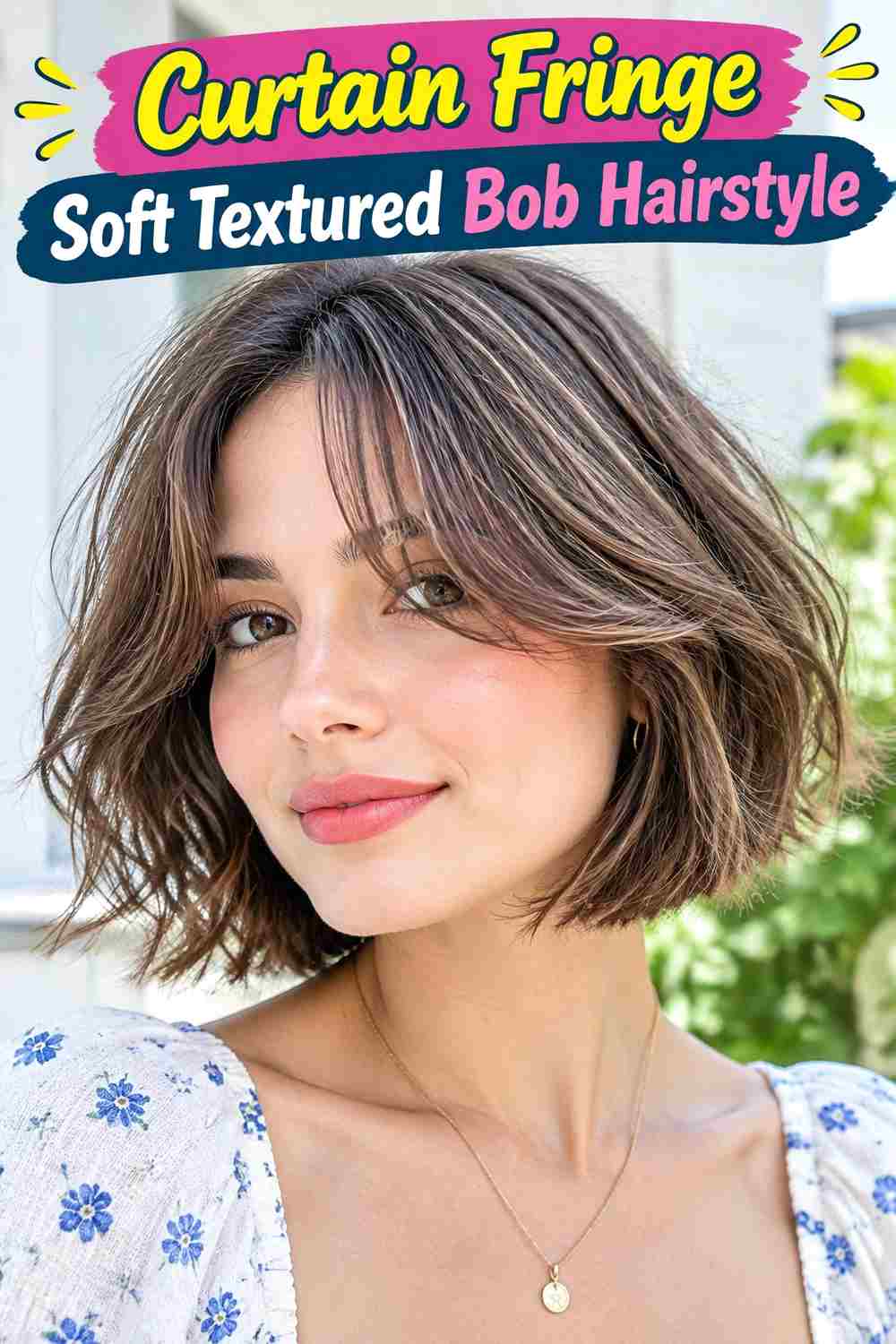
A center-opening curtain fringe creates a clear transition from shorter forehead pieces into a textured bob. The middle can finish near the brows, while longer outer corners sweep toward the cheekbones and blend into jaw-level sides. Soft bends through the bob echo that outward movement. The perimeter remains substantial enough to balance the shorter front, and a little crown lift prevents the fringe from looking disconnected.
Straight and wavy textures are practical for this shape, while curls need additional length for shrinkage. Medium or dense hair can support a fuller curtain section; lower-density hair generally benefits from keeping it narrower. Use heat protectant before heated drying, a round brush to shape the fringe outward, and flexible hairspray for light hold. Refreshing the front can be quick, but styling the complete bob takes longer.
At the salon, discuss the dry center length and the exact position of the outer corners. Those longer pieces should connect gradually into the bob rather than forming a visible step. Fringe reshaping may be useful before the bob itself needs cutting because small amounts of growth can change how the center opens.
Pro tip:
Dry the fringe forward first to settle the roots, then divide it and guide each half outward. This creates a softer opening than pulling both sides away from the face from the beginning.
Make It Work for You:
If you prefer less daily fringe work, keep the outer corners long enough to tuck behind the ears. The curtain shape remains available while giving you a practical alternative between styling days.
Watch Out For:
A fringe section extending too far toward the crown can become heavy and reduce side density. Keep the section proportionate to your hair density and desired amount of forehead coverage.
Side-Parted Soft Textured Bob Hairstyle

A side part shifts volume toward one side, giving a textured bob natural asymmetry without requiring an uneven perimeter. The heavier front section sweeps across and away from the face, while the lighter side can sit closer or tuck behind the ear. Loose bends begin below the roots and continue toward a jaw- or neck-length edge. Subtle layers keep the heavier side mobile.
Straight and wavy textures can adapt easily, particularly when the natural growth direction already favors one side. Fine hair may gain useful root lift from the part, while dense hair often needs less added volume. Use heat protectant before heated drying, a round brush to direct the front, and texturizing spray through dry mid-lengths. Refreshing the part and several front pieces can be quick; complete wash-day styling takes longer.
At the salon, show where you normally place the side part and explain whether you often tuck the lighter side. This affects front length and weight distribution. Keep the perimeter full enough that the asymmetric styling does not make one side appear sparse. Reshape when growth causes the heavier front to collapse or the bottom edge moves beyond your preferred landmark.
Pro tip:
Establish the side part while the roots are damp, then dry the heavier front section backward before letting it settle. Early directional control reduces how much product you need for the final sweep.
Make It Work for You:
If your roots resist a deep part, use a smaller offset from center. You can still create asymmetric volume without spending extra time forcing the hair against its natural growth direction.
Watch Out For:
Do not add equal root volume to both sides. The side part already creates deliberate imbalance, so concentrate lift on the heavier section and keep the opposite side softer for contrast.
Center-Parted Soft Textured Bob Hairstyle

A center part gives this bob balanced framing while the texture prevents the shape from feeling severe. Both sides fall toward the jaw at similar lengths, with broad bends beginning around the cheekbones or mid-lengths. The ends remain softly separated rather than forming a perfectly solid edge. Light internal movement can prevent the sides from hanging as two dense blocks while keeping the surface smooth.
Straight, wavy, and loose curly textures can interpret the balanced shape differently. Fine hair benefits from restrained layering and a substantial perimeter, while dense hair may need more internal movement. Use heat protectant before heated styling, a medium round brush for broad bends, and lightweight styling cream to control separation. A front refresh can take only a few minutes; rebuilding the complete shape after washing requires more time.
At the salon, show where your natural center part falls and specify the dry perimeter. If one side naturally carries more density, the internal weight does not need to be perfectly identical for the visible shape to appear balanced. Reshape when growth makes the ends heavy or the face-framing movement drops below its intended position.
Pro tip:
Set the center part while the hair is damp, but keep the line relaxed rather than drawing it sharply far back. A softer division complements the bob’s movement and avoids unnecessary rigidity.
Make It Work for You:
If your natural part sits slightly off center, follow it instead of forcing symmetry. Similar movement on both sides can preserve the balanced effect while respecting how your roots naturally fall.
Watch Out For:
Avoid curling both sides into identical, tight shapes. The center part already provides symmetry; slightly varied bends keep the overall result soft rather than making the bob appear overly arranged.
Jaw-Length Soft Textured Bob Hairstyle

A perimeter aligned near the jaw creates a compact bob with enough length for subtle movement. Texture can come from shallow layers, irregular bends, or softly separated ends rather than heavy graduation. The front may remain fringe-free with a center or side part, and cheekbone-level pieces can be added sparingly. Moderate volume keeps the jawline perimeter visible instead of allowing the sides to expand excessively.
Straight and wavy textures make this short length easy to read, while curls require shrinkage allowance. Fine hair often benefits from a fuller lower edge, whereas dense hair can use controlled internal weight adjustment. Use heat protectant before heated drying, a paddle brush to establish the basic shape, and texturizing spray for dry separation. A next-day refresh may take several minutes; a polished wash-day reset naturally takes longer.
At the salon, point to the exact dry jaw landmark rather than describing the bob only as short. Also explain whether you want a strong perimeter or a more broken edge. Small amounts of growth are noticeable at this length, so reshaping becomes useful once the bob sits below the intended jaw position or the texture loses its compact proportions.
Pro tip:
Keep the strongest bends above the final inch of hair. Leaving the tips relatively relaxed preserves the jaw-length outline while giving the mid-lengths enough movement to prevent a rigid finish.
Make It Work for You:
For a fuller-looking perimeter, keep layering shallow and concentrate texture on the surface. The bob can still move without sacrificing the substantial bottom edge that supports its compact shape.
Watch Out For:
Too many short layers can make a jaw-length bob expand around the sides. Keep bulk placement controlled so the texture creates movement rather than turning the silhouette unnecessarily wide.
Collarbone Soft Textured Bob Hairstyle

A collarbone-length bob offers more movement than a compact jaw cut while retaining a clear perimeter. Long layers can begin around the jaw and continue subtly through the lower lengths, allowing broad bends to separate without creating obvious steps. The ends may touch the collarbone or sit just above it. A center or side part works equally well, depending on preferred front volume.
Straight, wavy, and loose curly textures can use the extra length effectively. Fine hair generally benefits from a strong lower perimeter, while dense hair can support more internal movement where bulk gathers. Use heat protectant before heated styling, a large round brush to create broad curves, and flexible hairspray for light control. Refreshing the front may be quick, but washing and styling the longer bob requires more time than a chin-length version.
At the salon, specify where the dry perimeter should sit relative to the collarbone and shoulders. Contact with the shoulders can encourage outward flips, so decide whether that movement fits your preferred finish. Reshape when growth changes that interaction or the internal layers stop separating from the main length.
Pro tip:
Use larger sections when shaping the lower lengths. Broad bends complement the extra length and preserve the bob’s flowing movement better than numerous small curls, which can make the perimeter appear shorter.
Make It Work for You:
If you mostly air-dry, ask for subtle layering that supports your natural fall. The collarbone bob should retain useful movement even when you skip the round-brush finish and leave the ends relaxed.
Watch Out For:
Do not overlook shoulder contact when choosing length. A perimeter sitting directly against the shoulders may flip outward, so place it intentionally rather than assuming it will fall perfectly straight.
Feathered Soft Textured Bob Hairstyle

Feathered ends give a soft bob directional movement away from the face. The perimeter can sit near the jaw or upper neck, while light face-framing layers begin around the cheekbones and connect into the sides. The ends sweep outward in broad sections rather than forming tight flips. A little crown lift supports the feathering, and an open center or side part keeps the front uncluttered.
Straight and softly wavy hair can show the separated feathered sections clearly. Fine hair needs enough perimeter weight to prevent the tips from looking sparse, while dense hair can usually support additional internal movement. Use heat protectant before heated drying, a round brush to direct the layers outward, and flexible hairspray for movable hold. Refreshing the front sections can take several minutes; creating the full feathered blowout after washing takes longer.
At the salon, identify where the shortest face-framing layer should begin and how much bottom-edge weight you want retained. Feathering should come from purposeful layer placement and styling rather than excessive thinning. Reshape when the front layers grow too long to create movement around the cheeks or the perimeter loses its compact bob proportion.
Pro tip:
Let each front section cool while curved away from the face before loosening it. This helps the feathered direction last while keeping the finish softer than a sharply flipped or heavily sprayed style.
Make It Work for You:
If your hair is fine, keep feathering concentrated near the face and surface while preserving the lower edge. You can achieve outward movement without making the entire bob feel overly light.
Watch Out For:
Avoid turning every end strongly outward. Large repeated flips can overwhelm the soft texture; use a few clearer feathered sections and allow neighboring pieces to settle into gentler movement.
Shaggy Soft Textured Bob Hairstyle

Shorter crown layers and a broken perimeter give this bob more obvious movement than the smoother versions. The overall length can sit between the jaw and upper neck, while irregular face-framing pieces begin near the cheekbones. A wispy or open front works equally well. Crown volume remains loose, and the ends move in several directions rather than following one polished bend.
Straight and wavy textures can show the shaggy separation clearly. Dense hair may support substantial layering, while fine or lower-density hair needs more restraint through the bottom. Use lightweight mousse for flexible body, a vent brush to establish basic drying direction, and texturizing spray to separate dry pieces. A morning refresh can be brief because only selected layers need repositioning; a full wash and dry takes longer.
At the salon, specify the shortest crown layer and the desired perimeter length. These two landmarks prevent the cut from drifting into a pixie or a longer shag. Ask for enough bottom weight to maintain a recognizable bob. Reshape when the crown loses lift or the broken layers grow into a heavier, more uniform outline.
Pro tip:
Apply texturizing spray to selected dry pieces rather than coating the entire bob. Pinching only a few crown and end sections creates definition while leaving enough softer hair to maintain movement.
Make It Work for You:
If your hair is lower density, keep the shortest shag layers mostly around the crown and face. A fuller lower perimeter can preserve substance while the upper sections provide the broken texture.
Watch Out For:
Excessive thinning can turn shaggy movement into sparse ends. Ask for intentional layers and controlled separation rather than assuming that removing more hair will automatically create better texture.
Blunt-Edge Soft Textured Bob Hairstyle
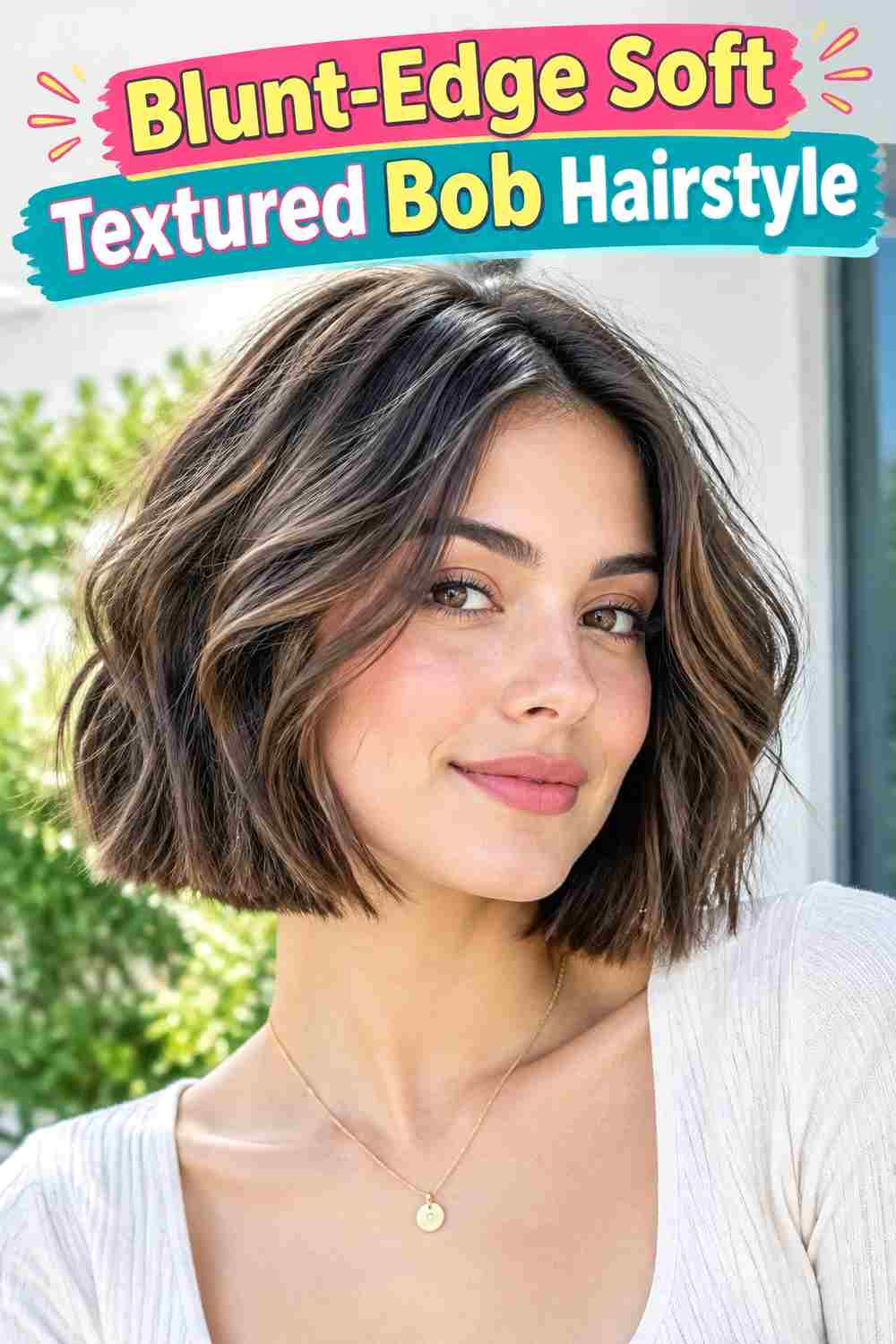
A strong bottom edge and moving surface create the defining contrast in this bob. The perimeter sits around the chin or jaw and remains visually full, while subtle bends and light internal shaping prevent the lengths from looking rigid. Layers are restrained so the edge stays noticeable. A center or off-center part keeps the front simple, allowing the texture through the mid-lengths to provide interest.
Straight and wavy hair can show the combination particularly well. Fine strands may benefit from the substantial perimeter, while dense hair can use selective internal weight adjustment without weakening the edge. Use heat protectant before thermal styling, a medium curling iron for loose bends, and lightweight styling cream to soften the ends. Refreshing several sections can be quick; creating the complete texture from freshly washed straight hair takes longer.
At the salon, emphasize that the visible perimeter should remain blunt even if internal weight needs adjustment. Specify the exact dry length and ask where any hidden shaping will occur. Reshape when growth makes the edge uneven or pulls it below the intended landmark. Styling can change daily, but the strong perimeter should remain evident underneath.
Pro tip:
Create bends through the middle of selected sections while leaving the final tips comparatively straight. This exposes the blunt edge instead of curling it under and hiding the haircut’s strongest structural feature.
Make It Work for You:
For dense hair, discuss internal weight adjustment while keeping the outer perimeter untouched. This can improve movement without sacrificing the solid edge that gives the bob its deliberate shape.
Watch Out For:
Do not heavily point-cut or thin the entire bottom edge if you want a blunt finish. Create softness through styling and internal placement while preserving visible density at the perimeter.
Fine-Hair Soft Textured Bob Hairstyle

A fuller perimeter helps fine strands maintain substance while small amounts of texture create movement. The bob can sit around the chin or jaw with minimal layering through the lower edge. Soft face-framing pieces may begin near the cheekbones or stay longer near the jaw. Gentle bends through selected surface sections create separation without requiring extensive weight removal.
Fine hair refers to strand diameter rather than overall density, so the amount of layering should reflect how much hair is present. Fine, dense hair can support more internal movement than fine, lower-density hair. Use lightweight mousse for root support, heat protectant before heated drying, and a round brush for soft bends. A quick front refresh may take only a few minutes; complete styling time depends on length and density.
At the salon, ask to preserve a substantial perimeter and explain whether your main concern is flatness, limited movement, or sparse ends. Avoid using thinning as the default solution. The bob needs reshaping when growth weakens its intended length or the front layers stop separating, not simply because the texture looks different on an unstylized day.
Pro tip:
Concentrate mousse near the roots and use only leftover product through the ends. Fine strands can become stringy when overloaded, so lighter application helps preserve both movement and visible perimeter fullness.
Make It Work for You:
If your fine hair is also low density, keep face framing narrow and layering shallow. Most of the textured effect can come from styling while the cut retains valuable weight through the sides.
Watch Out For:
Do not assume fine strands automatically need extensive thinning. Removing too much weight can make the perimeter look sparse without adding useful volume; consider strand thickness and total density separately.
Dense-Hair Soft Textured Bob Hairstyle

Dense hair gives a textured bob plenty of substance, but weight placement determines whether it moves or expands. The perimeter can sit near the jaw or neck while subtle internal layers release bulk through selected areas. Surface sections remain long enough to keep the shape connected. Gentle bends create separation, and the crown needs only moderate lift because the hair already carries natural fullness.
Straight, wavy, and some curly textures can use this structure, although each needs different bulk placement. The aim is not maximum hair removal. Use lightweight smoothing cream for surface control, heat protectant before heated styling, and a large round brush for broad movement. A front refresh may be brief, but fully drying dense hair can make wash-day styling a longer process.
At the salon, show where your bob tends to become widest or heaviest and discuss internal adjustment in those specific zones. Keep the desired perimeter weight separate from the decision about internal bulk. Maintenance becomes useful when new growth makes the same areas heavy again or the texture stops moving independently. The outer edge should still retain enough density to read clearly as a bob.
Pro tip:
Style dense hair in larger sections when you want soft movement. Broad bends help the bob flow as a connected shape and reduce the temptation to create excessive texture through every individual piece.
Make It Work for You:
If your dense hair is naturally wavy, let the wave pattern create much of the visible texture. Internal shaping can focus on controlling bulk rather than making the cut depend on frequent heat styling.
Watch Out For:
Avoid indiscriminate thinning throughout dense hair. Random weight removal can create expansion, short flyaways, or weak tips; target the specific zones where bulk interferes with the intended bob silhouette.
Air-Dried Soft Textured Bob Hairstyle

An air-dried bob works with natural bends, slight irregularities, and existing volume instead of forcing every section into a polished shape. The perimeter can sit around the jaw or neck, with subtle layers helping the hair separate as it dries. A natural part keeps root direction easy, while the ends may turn inward, outward, or remain straighter in different areas. That variation is part of the finish.
Wavy and softly curly textures can be particularly practical for this approach, though straight hair with natural bends can also work. Density determines how much product is useful. Use lightweight leave-in conditioner for softness, a wide-tooth comb for damp distribution, and flexible styling gel to encourage definition without a rigid cast. Active styling time is short, although drying itself may take much longer depending on density and conditions.
At the salon, explain that you plan to air-dry regularly and show how your hair behaves without heat. Ask for a perimeter and layer placement that support that natural movement. Reshape when growth makes the lower edge heavy or when layers stop helping the natural pattern separate. The cut should not depend on a blowout to look intentional.
Pro tip:
Arrange your part and front pieces while the hair is evenly damp, then reduce handling as it dries. Repeated touching can disrupt natural grouping and create more frizz than useful texture.
Make It Work for You:
If one side dries flatter, change the root position slightly while damp rather than restyling the entire bob. Small directional adjustments can balance volume while preserving the low-effort air-dried approach.
Watch Out For:
Do not expect heavy product to create natural-looking movement. Too much gel or cream can stretch soft texture and join sections together; begin with a modest amount and add only where needed.
Piecey-End Soft Textured Bob Hairstyle
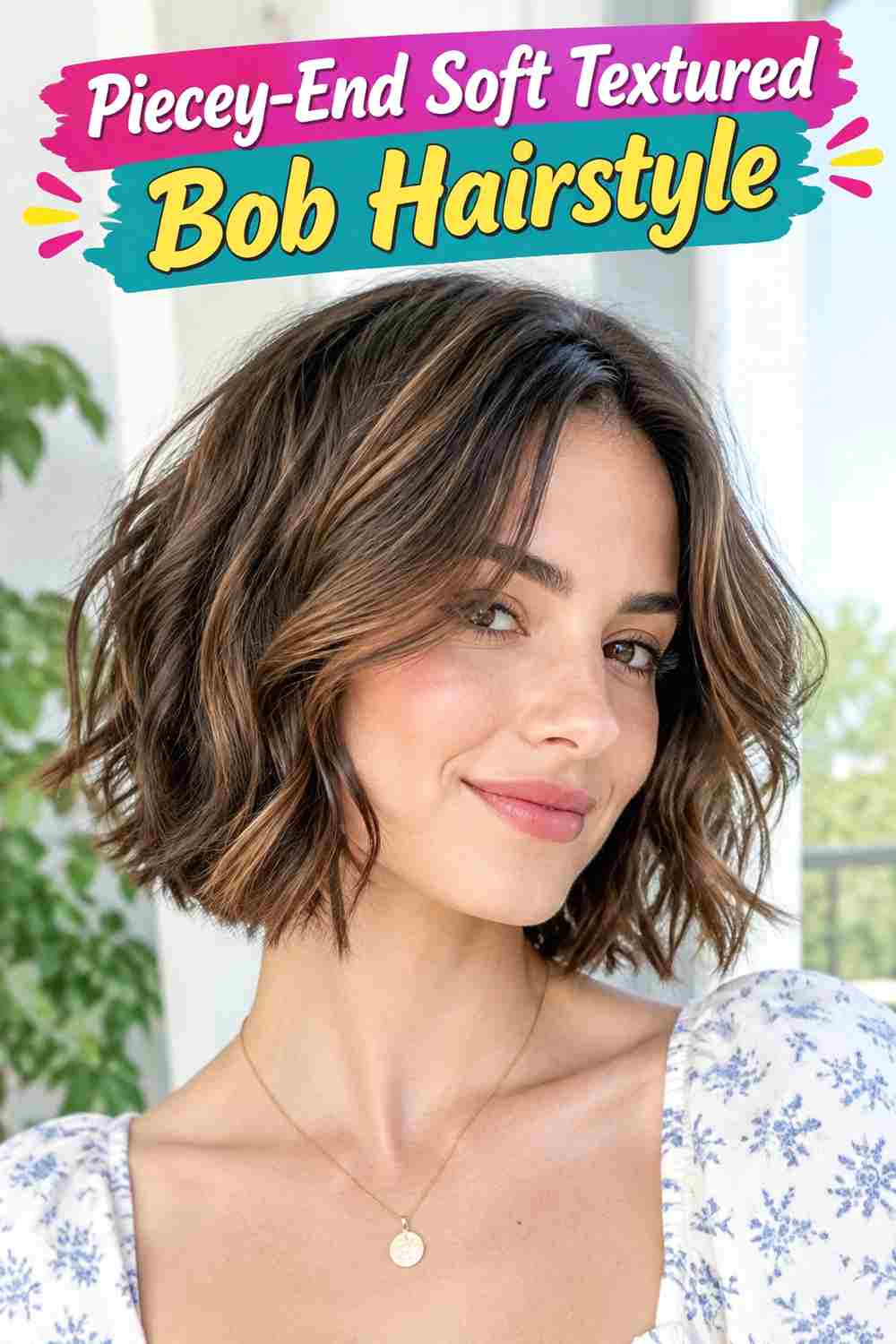
Separated tips make the lower edge of this bob look lighter without requiring the entire perimeter to become thin. The length can sit around the jaw or upper neck, with minimal surface layering and small groups of ends moving independently. Roots remain soft, and the strongest texture appears through the lower half. A relaxed center or side part keeps the attention on the piecey finish.
Straight and wavy hair can show the end separation clearly. Fine hair needs restraint so the tips retain enough density, while dense hair may support more controlled texturing inside the perimeter. Use lightweight mousse for flexible body, a vent brush for basic drying direction, and texturizing spray to separate selected dry ends. A quick refresh may involve only pinching a few pieces back into place; a full wash-day style naturally takes longer.
At the salon, explain that you want visible separation at the ends without a uniformly thinned bottom edge. Ask how the perimeter can remain substantial while selected sections gain movement. Reshape when the ends lose their deliberate separation or growth changes the jaw- or neck-level outline. Product can emphasize the effect, but the cut should still retain useful density.
Pro tip:
Spray texturizer lightly onto your fingertips before touching selected ends. This gives more control than saturating the entire perimeter and helps create separation exactly where the bob needs visible definition.
Make It Work for You:
If your ends are naturally sparse, create most of the piecey effect through styling instead of additional cutting. Keeping the perimeter fuller protects density while still allowing selected tips to separate.
Watch Out For:
Over-thinning the bottom can turn deliberate piecey ends into an uneven sparse edge. Keep enough solid perimeter between textured sections so the bob retains its recognizable shape and weight.
Face-Framing Soft Textured Bob Hairstyle

Shorter front layers give this bob visible movement around the cheekbones and jaw while the back remains comparatively simple. The perimeter can finish near the jaw or upper neck, with the face frame gradually connecting into the sides. Soft bends direct the shortest pieces away from the face, and the ends remain lightly separated. A center part creates balance, while an off-center part produces a softer asymmetry.
Straight and wavy textures show the graduated front clearly. Fine hair benefits from keeping the face-framing section narrow, while dense hair can support a broader connection through the sides. Use heat protectant before heated styling, a round brush to direct the front outward, and flexible hairspray for light control. Refreshing only the face frame may take a few minutes; resetting the entire bob after washing takes longer.
At the salon, point to the exact dry landmark for the shortest front piece—such as the cheekbone or jaw—and explain how gradually it should connect into the perimeter. This prevents a disconnected shelf. Reshape when those pieces grow long enough to merge into the sides and the front loses its distinct movement.
Pro tip:
Style the shortest face-framing pieces before the rest of the bob because they dry quickly. Establishing their direction first helps you judge how much additional texture the longer side sections actually need.
Make It Work for You:
If you frequently tuck your hair behind your ears, keep enough length in the outer face frame to reach comfortably backward. The shorter front can remain visible while the sides stay practical.
Watch Out For:
Avoid cutting a thick block of hair to one short front length. A gradual connection from cheekbone or jaw into the perimeter creates softer movement and protects density through the bob’s sides.
Rounded Soft Textured Bob Hairstyle

A gently curved silhouette gives this bob fullness without making it rigid. The perimeter can sit between the chin and jaw, while subtle internal layers allow the sides to round naturally toward the ends. The crown carries moderate volume, and the surface remains smooth with a few soft separations. A fringe is optional; an open part keeps the rounded outline easy to see.
Straight and wavy hair can support the controlled curve, while dense hair may need selective internal weight adjustment to prevent the lower sides from becoming too bulky. Fine hair should retain enough perimeter weight for the round shape to hold. Use heat protectant before heated drying, a round brush to create the curve, and lightweight smoothing cream to refine the surface. A quick refresh may target the crown and ends; rebuilding the full shape from wet takes longer.
At the salon, identify the dry perimeter and explain where you want the bob to appear fullest. Internal shaping should support that location rather than remove weight indiscriminately. Reshape when growth pulls the fullness downward or the lower edge extends beyond the intended chin-to-jaw area.
Pro tip:
Use the round brush to create a broad curve rather than tightly rolling the ends under. A gentler bend preserves the rounded silhouette while keeping the finish soft and contemporary rather than overly set.
Make It Work for You:
If your hair is dense, ask whether internal weight can be adjusted above the perimeter while preserving the outer edge. This can maintain the rounded shape without excessive bulk at the bottom.
Watch Out For:
Turning the ends too tightly inward can make the bob appear shorter and more rigid. Keep the curve broad so the texture and perimeter remain visible instead of forming one solid tucked-under line.
Loose Bend Soft Textured Bob Hairstyle

A few broad bends create texture without turning the bob into a fully wavy style. The perimeter can sit around the jaw or neck, while the roots stay mostly straight and relaxed. Movement appears through selected mid-length sections, with several ends left straight for contrast. Minimal layering preserves a connected shape, and either a center or side part can work depending on preferred volume.
Straight hair is an especially practical base because the bends create visible texture while retaining much of the natural sleekness. Wavy hair can use the same idea by refining only selected sections. Use heat protectant before thermal styling, a large-barrel curling iron for loose bends, and flexible hairspray for light hold. Refreshing several pieces can take only a few minutes; styling the complete bob from freshly washed hair takes longer.
At the salon, request enough perimeter weight that the haircut still looks intentional when worn straight. If subtle layers are added, identify where they should begin and how much movement you want. Reshape when growth makes the perimeter heavy or moves the bends below their most useful placement. The styling should enhance the cut rather than compensate for an unclear outline.
Pro tip:
Wrap only the middle portion of each selected section around the iron and leave the ends out. This creates a relaxed bend that preserves length and avoids turning the bob into defined curls.
Make It Work for You:
If your hair already has slight natural bends, style only the straighter areas. Blending a few refined sections with existing movement reduces heat exposure and keeps the finish intentionally soft rather than uniform.
Watch Out For:
Using a small barrel or holding each section too long can create tight curls that shorten the bob visually. Keep the bends broad and relaxed so the perimeter remains easy to see.
Conclusion
Soft textured bob hairstyle ideas can range from compact jaw-length cuts to collarbone versions with broader movement. A blunt edge preserves density, while shaggy or feathered layers create more separation. Wispy and curtain fringe change forehead coverage; center and side parts alter balance and root volume without changing the perimeter. Fine or lower-density hair often benefits from restrained layering, while dense hair can use targeted internal weight adjustment. Waves and curls can provide natural texture, whereas straight hair can gain movement through loose bends or a blow-dry. Consider your natural texture, face shape, preferred length, volume, finish, and daily effort together. A practical bob should keep its intended shape even when you choose a simpler styling routine.
Before Your Salon Visit
Choose one or two favorite references and save clear images showing both the perimeter and texture. Discuss your natural texture, density, face shape, preferred length, upkeep, and realistic styling routine. Point to the exact fringe, face-framing layer, parting, volume placement, perimeter weight, and end finish you like. If a reference depends heavily on waves or a blowout, separate those styling details from the haircut itself so your stylist can assess how the underlying bob will behave on lower-effort days.
FAQs
Can fine or low-density hair have a soft textured bob?
Yes, but fine strands and low density are different characteristics. Lower-density hair often benefits from a fuller perimeter and restrained layering, while fine but dense hair may support more internal movement. Texture can also come from styling, so substantial weight does not always need to be removed from the cut.
Does a soft textured bob work with curly hair?
Yes. Curly versions use curl grouping, layer placement, and natural volume to create texture rather than relying on loose heat-styled bends. Shrinkage should guide the finished length, especially around the face and perimeter. Discuss the desired dry shape instead of choosing length only from stretched hair.
How often should a textured bob be reshaped?
There is no single schedule that suits every bob. Use the shape as your guide. Reshaping may be useful when the perimeter drops below its intended landmark, crown or face-framing layers lose movement, or unwanted bulk returns and makes the bob behave differently from the original cut.
Does a soft textured bob require heat styling every day?
No. Natural waves, curls, and air-dried bends can provide plenty of texture without daily heat. Straighter hair may need thermal styling for a specific wave or feathered finish, but between washes you can often refresh only selected pieces. When using heated tools, apply heat protectant and avoid unnecessary repeated passes.