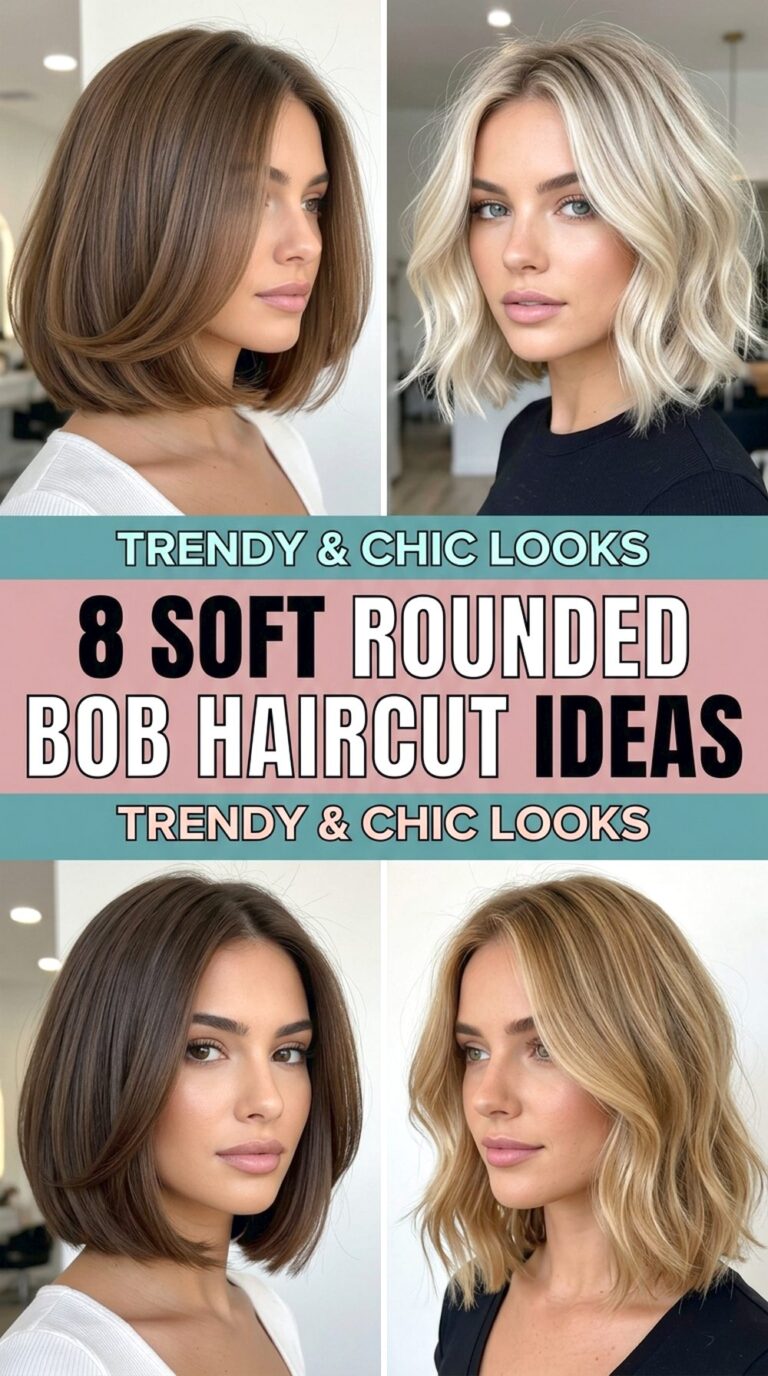
14 Weekend Bob Haircut Ideas for Fall 2026

Weekend bob haircuts are less about one strict shape and more about creating a short-to-medium cut that feels easy to wear when you want your hair polished without spending much of the day styling it. For fall 2026, that can mean a chin-skimming blunt bob, loose waves, a softer layered shape, airy fringe, or a collarbone-length cut with enough movement to work under jackets and scarves. The right balance of perimeter weight, face-framing, and texture keeps the haircut intentional rather than overly done.
Hair type matters when choosing between these Weekend Bob Haircut Ideas for Fall 2026. Fine hair often benefits from fuller ends and restrained layering, while thick hair can move better when bulk is removed inside the shape. Naturally wavy or curly hair can rely more on its existing texture, though shrinkage should be considered before cutting bangs or short layers.
Daily effort can range from a quick refresh to a full blow-dry. Fringe-heavy shapes usually need attention sooner than the rest of the cut, while longer bobs grow out more quietly. Before choosing one, compare the length, density, parting, texture, heat requirements, and amount of salon upkeep that fit your routine.
Quick List
- Soft Wavy Weekend Bob
- Blunt Chin-Length Weekend Bob
- Layered Bob With Curtain Bangs
- French Bob With Wispy Fringe
- Side-Parted Volume Bob
- Textured Shaggy Weekend Bob
- Sleek Jawline Bob
- Air-Dried Wavy Bob
- Rounded Bob With Soft Ends
- Collarbone Weekend Bob
- Curly Weekend Bob With Face-Framing Layers
- Flipped-End Bob
- Fine-Hair Bob With Crown Lift
- Thick-Hair Bob With Internal Layers
Soft Wavy Weekend Bob

Loose waves give a short bob movement without hiding its clean outline. Keep the length around the jaw or slightly below, then add wide, relaxed bends through the mid-lengths rather than curling every strand from root to tip. Leaving the ends a little straighter helps the haircut look fuller and keeps the finish casual. Medium-density straight or naturally wavy hair handles this shape especially well, while fine hair benefits from keeping layers minimal so the perimeter does not become thin. Styling is moderate on wash day but easy to refresh the next morning by reworking only the front pieces. Use a heat protectant, a medium-barrel curling iron, and a lightweight texturizing spray. A little anti-frizz care may help when fall weather turns damp. At the salon, ask for a strong bob perimeter with only subtle internal movement rather than obvious short layers.
Pro tip:
Alternate the wave direction around the head, but bend the two front sections away from the face so the texture looks loose instead of uniformly curled.
Blunt Chin-Length Weekend Bob

A blunt chin-length bob puts the emphasis on a crisp perimeter and controlled shape. The ends should meet in a strong line close to the chin, with little or no visible layering, so the haircut keeps maximum density. That makes it a useful option for fine to medium hair that can look sparse when heavily layered. Straight textures need the least work, although gently wavy hair can wear it with a softer finish rather than forcing every strand flat. A center part creates symmetry, while a slightly off-center part can adjust how the shape sits around the face. Expect quick styling if your hair dries straight and moderate effort if you need to smooth bends or puffiness. A heat protectant, flat iron, and light smoothing serum are enough for most days. Salon reshaping matters once the baseline begins losing its precision. Ask your stylist to preserve perimeter weight and avoid thinning the last inch of the ends.
Pro tip:
Check the finished cut with your hair falling naturally before leaving the salon; a blunt bob shows small differences in perimeter length more clearly than a layered cut.
Layered Bob With Curtain Bangs
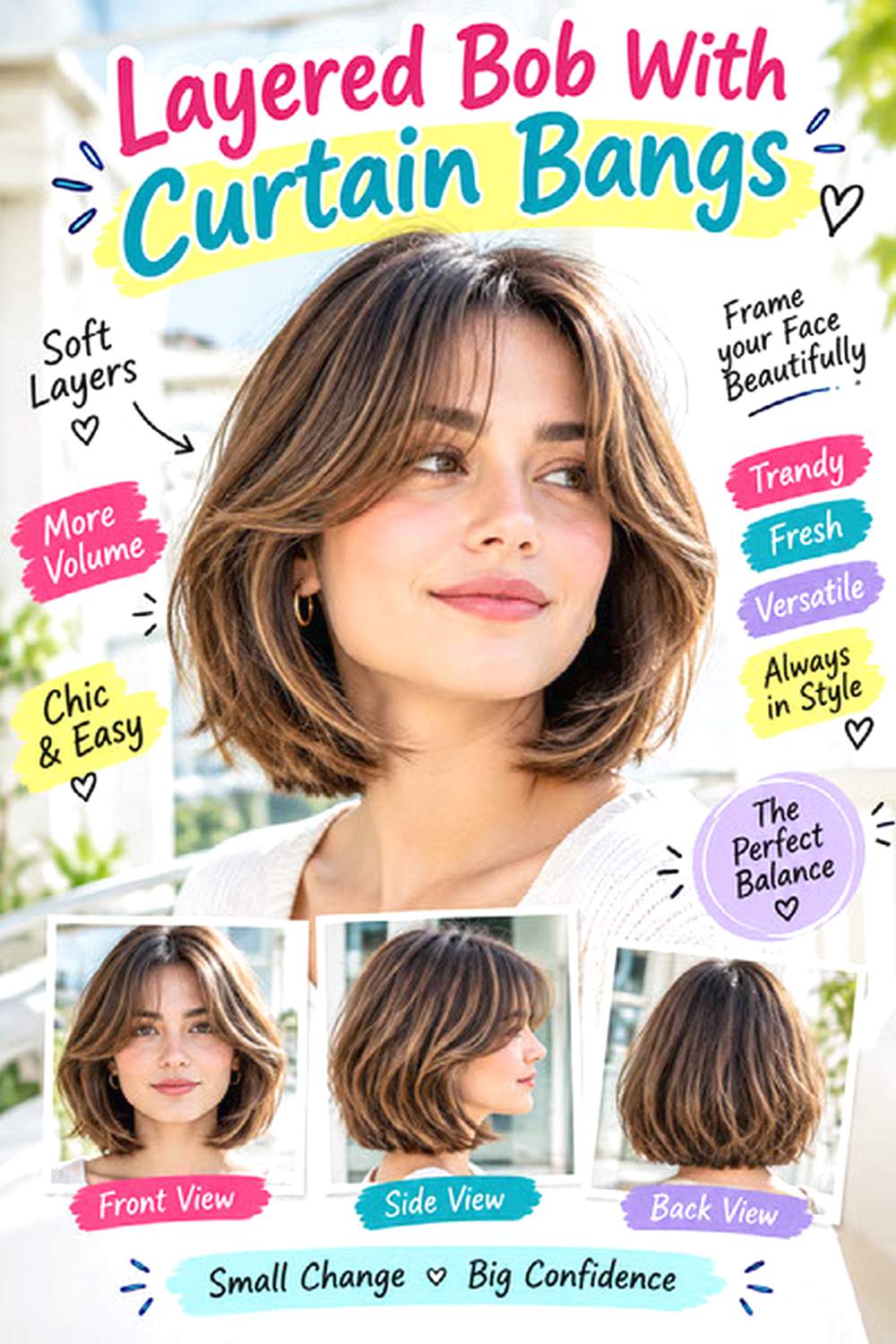
Curtain bangs make a layered bob feel softer around the face because the fringe opens through the center and blends into longer side pieces. The shortest part can sit around the brows, while the outer edges travel toward the cheekbones so there is no hard break between bangs and layers. This works well on medium-density straight or wavy hair, especially when you want movement without removing too much weight from the bottom. Fine hair should keep the interior layering light; thicker hair can take more graduation through the sides. The fringe usually needs a quick morning reset even when the rest of the bob is left alone. Try a small round brush, lightweight volumizing mousse, and flexible hairspray to keep the curtain shape movable. Styling takes about 5–10 minutes for the front after the initial blow-dry. At your appointment, show exactly where you want the shortest center pieces and ask for the fringe corners to blend into cheekbone-level face-framing.
Pro tip:
Blow-dry curtain bangs forward first, then split and sweep them outward. Starting with an immediate center split can make the fringe separate too widely.
French Bob With Wispy Fringe

A French-inspired bob sits higher than many classic bobs, often near the jaw or around the mouth, and a wispy fringe keeps that shorter length from feeling too solid. The bangs should show a little forehead through them rather than forming one dense horizontal strip. Softly broken ends add movement, but the perimeter still needs enough substance to define the cut. Straight and lightly wavy hair are straightforward choices, while stronger waves require extra length to allow for spring after drying. This shorter shape needs more regular reshaping than a collarbone bob because the outline changes noticeably as it grows. For styling, use a leave-in conditioner, a small round brush for the fringe, and a light texture spray through the ends. Daily effort can stay quick if you accept natural movement instead of pursuing a glass-smooth finish. Ask the stylist to keep the fringe airy at brow level and preserve density around the temples.
Pro tip:
Avoid over-thinning a wispy fringe. Fewer carefully placed bang sections usually look softer than aggressively texturized bangs that separate into thin strings.
Side-Parted Volume Bob
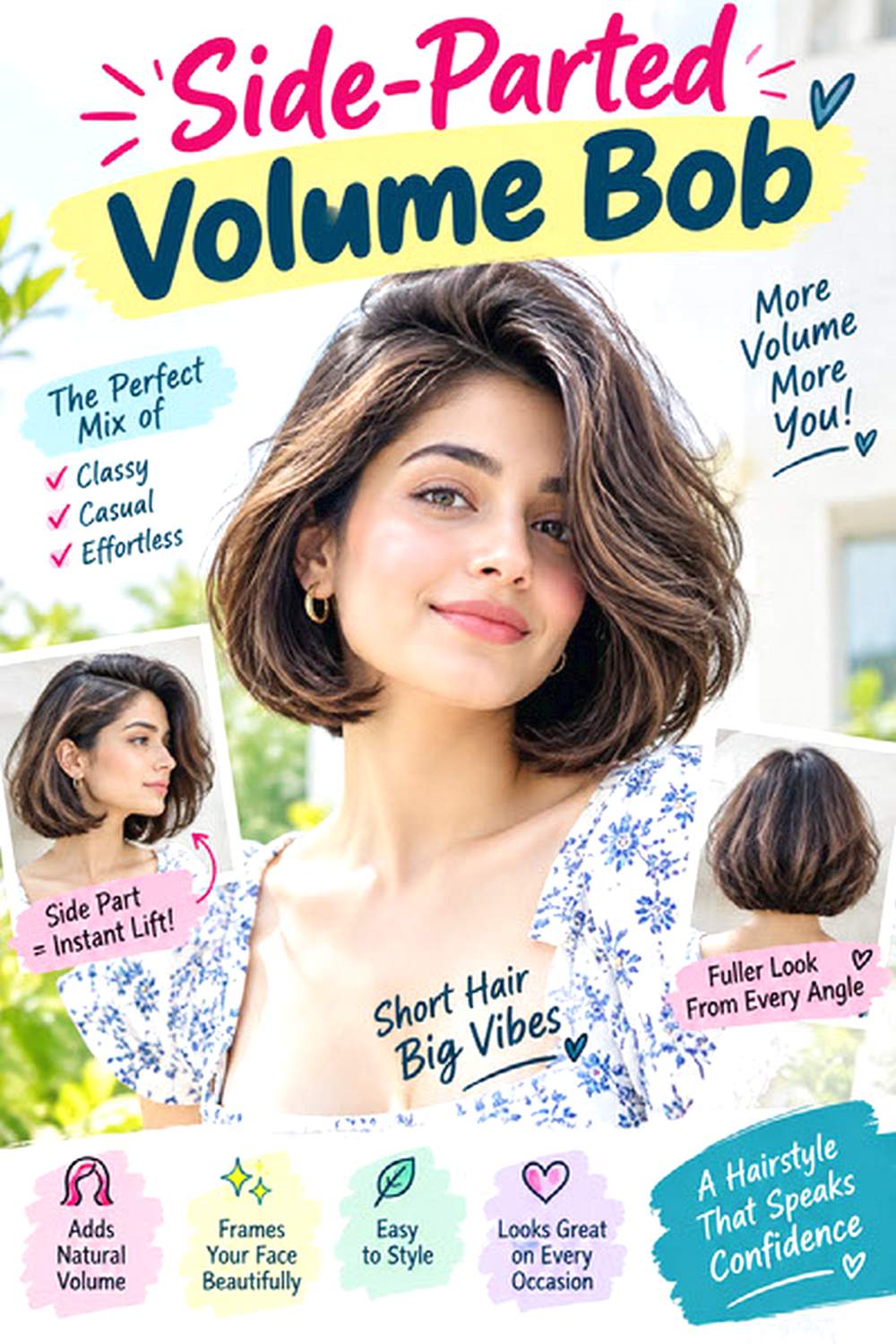
The defining feature here is lift at the front and crown rather than extra layering everywhere. A deep or moderate side part shifts more hair to one side, creating a fuller sweep that works particularly well on straight, softly wavy, or medium-density hair. The bob can sit between the jaw and lower chin, with subtle layers inside the shape to stop the heavier side from collapsing. Fine hair can use the asymmetric volume to appear less flat, while thick hair may need controlled bulk removal near the interior rather than at the ends. Blow-drying takes moderate effort because root direction matters more than curling the lengths. A volumizing spray, medium round brush, and light-hold hairspray help build lift without making the bob stiff. Refresh the front by dampening only the root area and drying it back into position. In the salon, request crown movement while keeping the side perimeter visually full.
Pro tip:
Dry the front section briefly in the opposite direction of your final part before flipping it back; this creates root lift without heavy teasing.
Textured Shaggy Weekend Bob
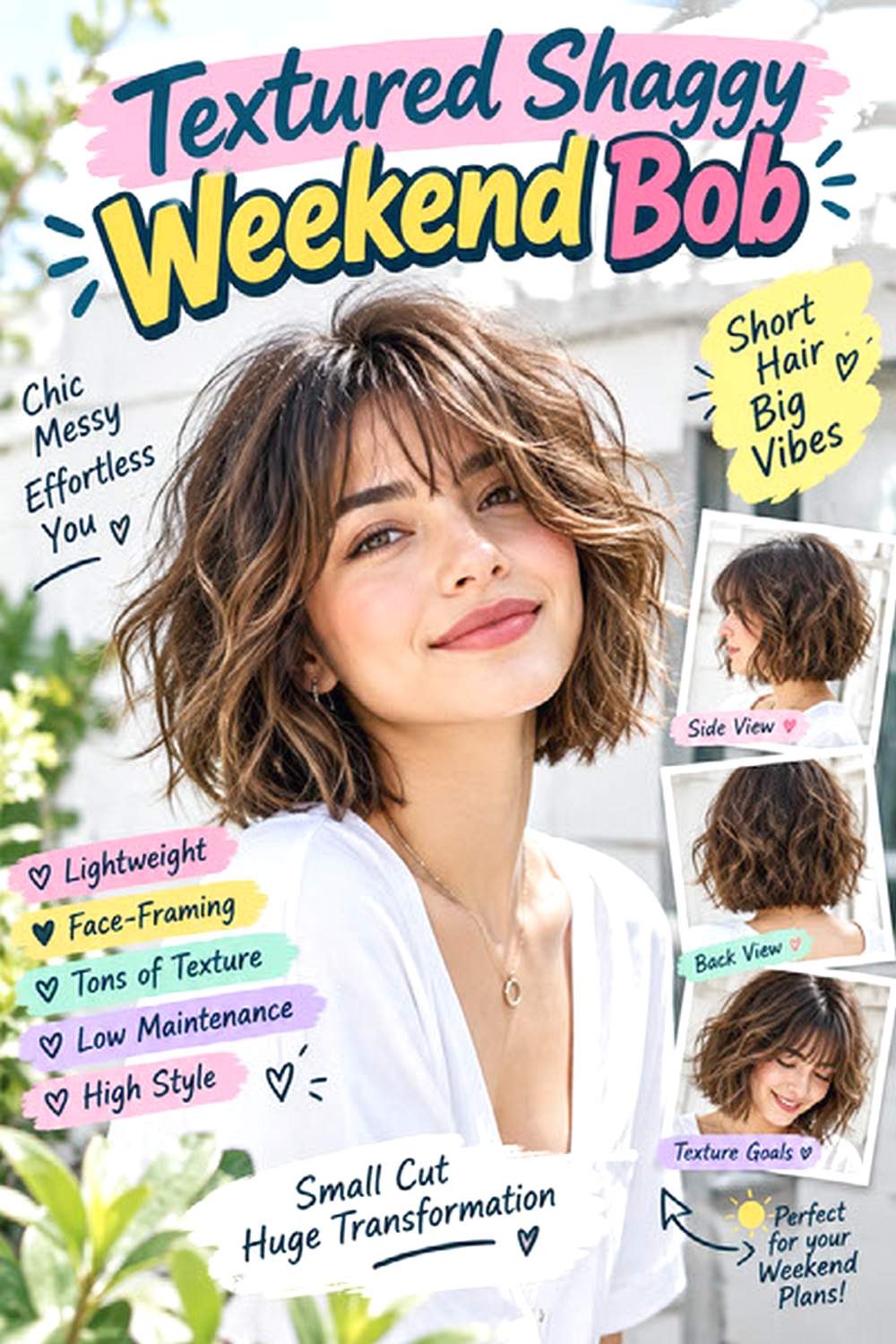
Shorter layers through the crown and sides give a shaggy bob its loose, piecey movement. Unlike a blunt bob, the outline is intentionally less rigid, with broken-up ends and face-framing that can begin around the cheekbones. Naturally wavy medium or thick hair is especially suited to the cut because existing texture helps separate the layers. Fine hair can wear a restrained interpretation, but too many short layers may leave the bottom looking thin. Styling can be low effort when your natural bend already matches the shape; otherwise, a little scrunching or selective heat work may be needed. Use texture mousse, a diffuser, and a dry texturizing spray rather than smoothing everything flat. Humid weather often works better with a small amount of frizz control at the surface while keeping the interior airy. Ask the stylist for crown layers that remain long enough to blend, with softness through the ends rather than aggressive thinning.
Pro tip:
Photograph the crown area of your reference style, not just the front. The exact layer length at the top determines whether the bob looks softly tousled or overly choppy.
Sleek Jawline Bob

A sleek jawline bob relies on precision, shine, and an even fall rather than visible texture. Length landing directly around the jaw makes the outline noticeable, so straightness through the sides and a controlled end finish become part of the design. It is easiest on naturally straight or mildly wavy hair; coarse waves and curls can still wear the cut, but recreating a sleek finish may require more heat and humidity protection. Fine hair benefits from the solid baseline, while very thick hair may need discreet internal weight removal so the shape does not widen around the jaw. Styling is moderate if a full blow-dry and flat-iron pass are required. Reach for heat protectant, a paddle brush, and a lightweight anti-frizz serum. Keep product away from fine roots to avoid flattening them. At the salon, ask for a precise jaw-skimming perimeter and internal bulk control that does not disturb the clean exterior line.
Pro tip:
Flat-iron in small sections and stop before the tips become pin-straight; a barely softened end follows the jaw more naturally than a rigid outward point.
Air-Dried Wavy Bob
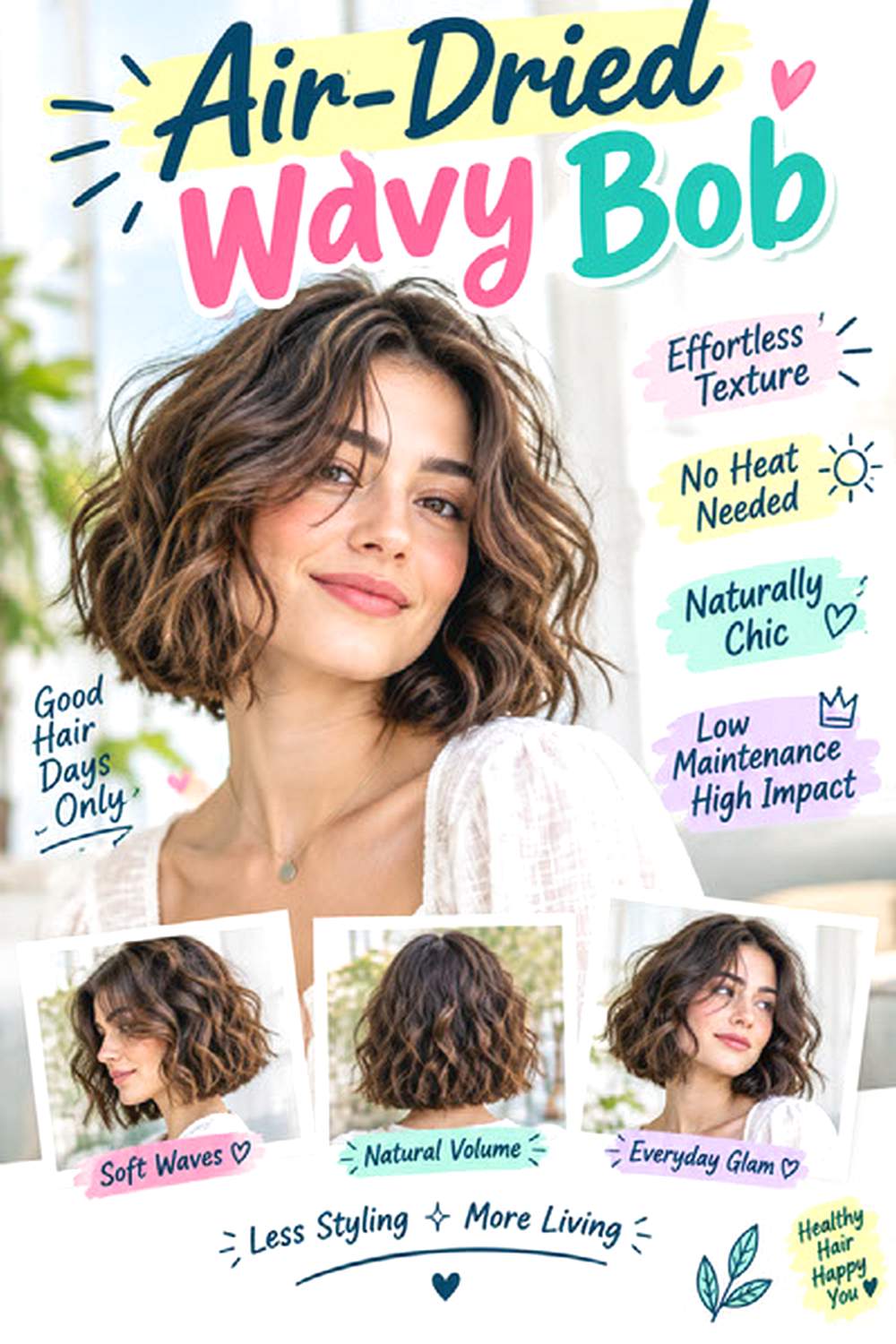
Natural waves are the main feature of this bob, so the haircut should support the existing pattern instead of depending on a curling iron. A jaw-to-neck length gives waves enough space to form while still reading as a bob. Gentle layers can release movement around the sides, but keeping some weight along the perimeter prevents looser wave types from becoming fluffy at the bottom. Wavy medium-density hair is the easiest match, though finer waves may need fewer layers and thicker waves may benefit from targeted bulk removal. Wash-day styling takes a little attention, while the following mornings can be simple refreshes. Apply leave-in conditioner and curl cream to damp hair, then use a wide-tooth comb before scrunching and air-drying. A diffuser is optional when you need faster drying or more root lift. Tell your stylist you intend to wear the cut naturally and ask for the shape to be evaluated after the wave pattern settles.
Pro tip:
Do not keep touching the hair while it dries. Letting the wave cast form first usually creates cleaner definition and less surface frizz.
Rounded Bob With Soft Ends
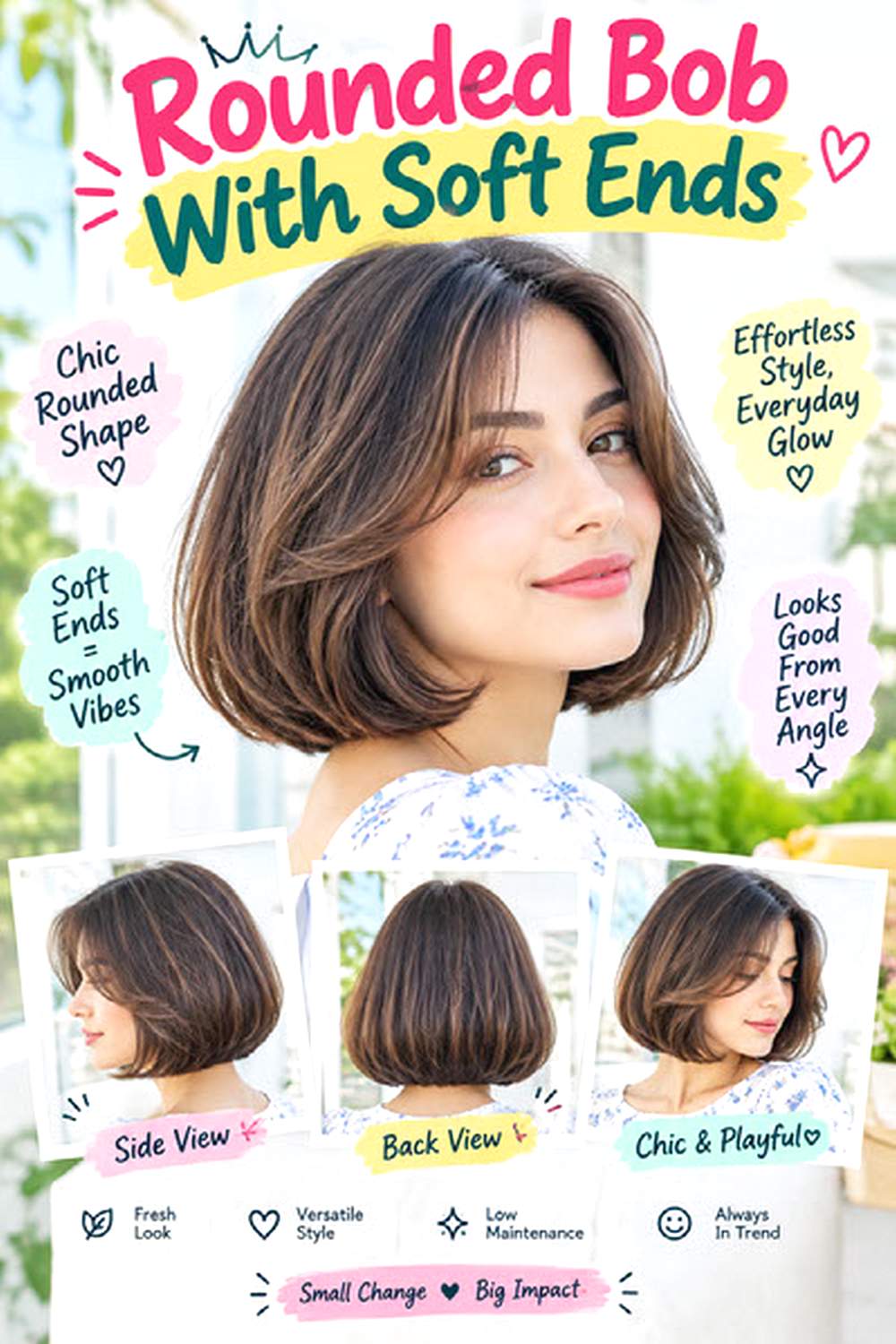
A rounded bob creates fullness through the sides and turns gently inward at the ends rather than finishing with a sharp blunt edge. The shape is usually strongest around chin to neck length, with subtle graduation helping the hair curve toward the face. Straight and slightly wavy medium-density hair can hold the outline easily. Fine hair may enjoy the sense of fullness, but excessive graduation should be avoided because it can reduce density at the bottom. Thick hair needs careful interior control so the rounded silhouette does not become too wide. A blow-dry is the main styling task, making this a moderate-effort option rather than a true wash-and-go cut. Use smoothing cream, a round brush, and a blow-dryer with a concentrator nozzle. Once shaped, the bob can usually be refreshed by brushing the ends inward. Ask the stylist for soft graduation with a substantial perimeter instead of stacked, sharply layered sections.
Pro tip:
Roll the brush only through the last few inches instead of curling from the roots; this keeps the crown smooth while creating the soft inward finish at the bottom.
Collarbone Weekend Bob

A collarbone bob is useful when you like the clean feeling of a bob but are not ready for jaw-length hair. The extra length allows soft movement at the shoulders and makes ponytails or half-up styles more practical. Long layers can begin below the chin to encourage flow without breaking up the perimeter, and a center or side part can be chosen according to how you prefer the front to fall. Straight, wavy, fine, medium, and thick hair can all be adapted to this length because the stylist has more room to manage density. Maintenance is gentler than with a short precision bob, and grow-out tends to look less abrupt. Styling may be quick with natural texture or moderate if you want a polished bend. Use heat protectant, a large round brush, and a lightweight finishing serum. Ask for the ends to remain full at the collarbone with face-framing beginning no higher than your preferred chin area.
Pro tip:
When showing reference photos, point to the exact place where the ends hit the collarbone; even an extra inch can change how the cut flips against clothing.
Curly Weekend Bob With Face-Framing Layers
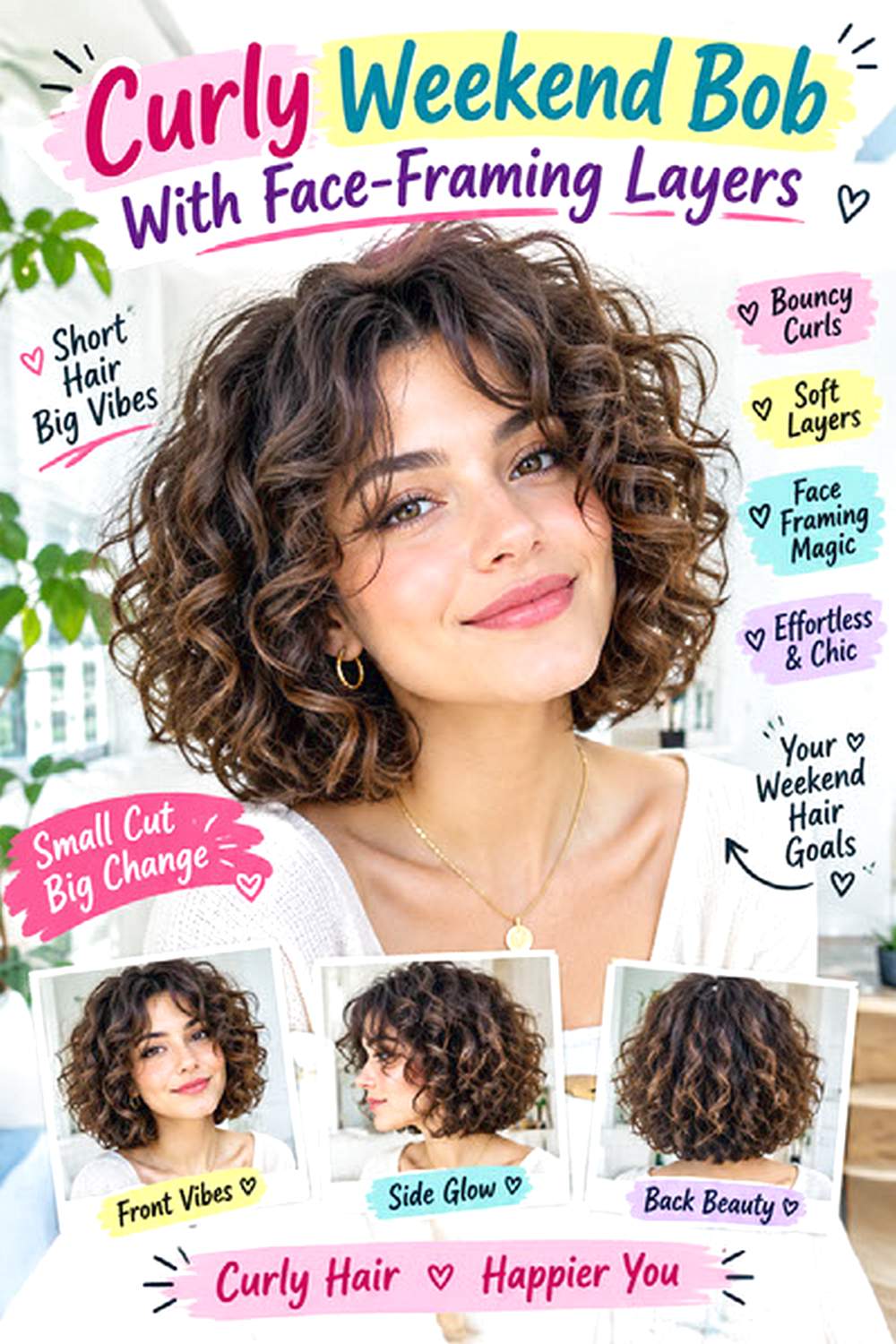
Curly hair gives a bob natural volume, but layer placement controls whether that volume feels balanced or concentrated at the bottom. Face-framing pieces can begin around the cheekbones or jaw, then blend into a rounded bob shape that allows individual curls to spring freely. Medium to thick curls often respond well to selective weight removal, while fine curls usually need more density left through the perimeter. Shrinkage matters, especially near the front, so the final dry length may sit noticeably higher than the wet cutting length. Wash-day styling takes more time, but well-defined curls can often be refreshed for several days with water or a small amount of leave-in product. Use curl cream, a diffuser, and a wide-tooth comb or fingers for detangling. Salon visits should focus on restoring shape rather than simply shortening everything evenly. Ask the stylist to account for your dry curl pattern and keep face-framing long enough to spring into place.
Pro tip:
Show your stylist a reference photo with a curl pattern close to yours, and point out the dry—not stretched—length you want around your face.
Flipped-End Bob
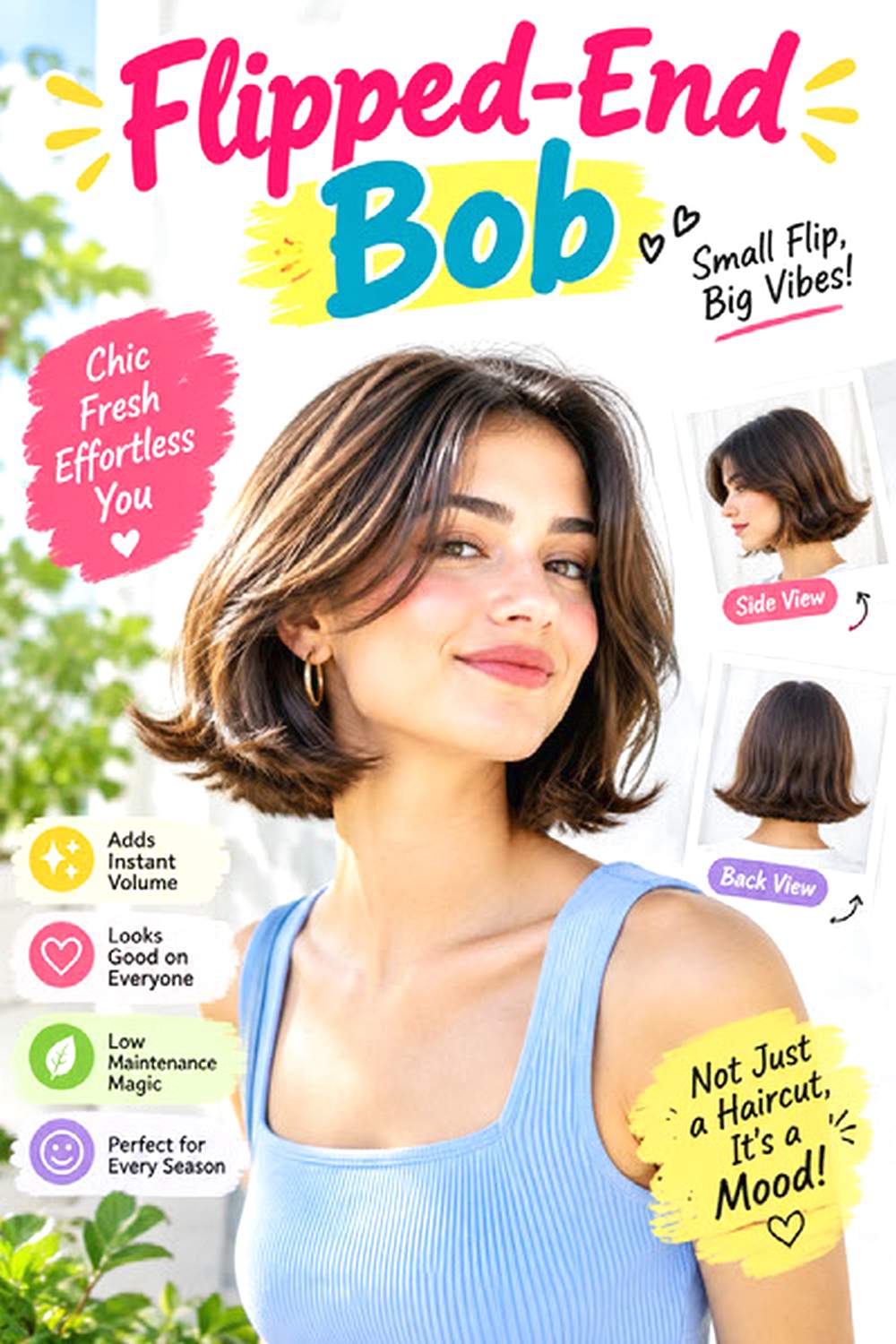
Instead of curving under, the ends of this bob turn outward for a light, graphic finish. The effect works particularly well at lower-chin or neck length, where there is enough hair to create a visible flip without the ends resting heavily on the shoulders. Keep the upper sections relatively smooth so the outward bend remains the focal point. Straight and lightly wavy medium-density hair usually holds the shape most easily, although fine hair can gain visual movement from the flicked perimeter. The flip does require some styling after washing, but refreshing individual sections is quick. A heat protectant, round brush, and flat iron are useful: the brush can establish smoothness, while the iron creates a more controlled outward turn. Avoid heavy oils that pull the ends flat. At the salon, ask for a clean perimeter with enough end density to make the flip visible rather than wispy.
Pro tip:
Turn only the final inch or two outward. Starting the bend too high can create a triangular silhouette instead of a crisp little flip.
Fine-Hair Bob With Crown Lift
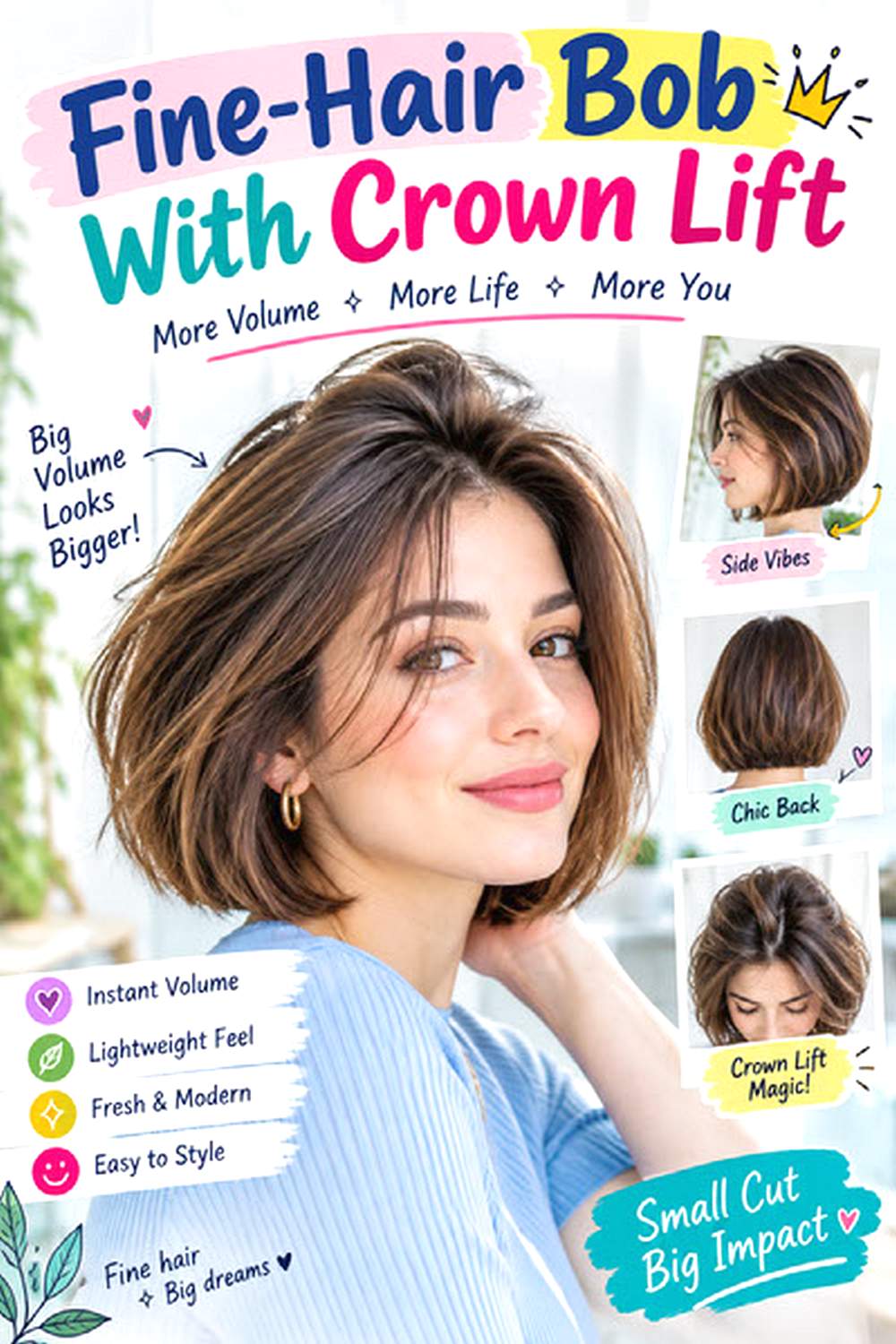
Fine hair often needs strategic lift more than aggressive layering. This bob keeps the bottom line relatively full while using restrained internal shaping near the crown to stop the hair from lying completely flat. A length around the chin or upper neck preserves density, and a slightly off-center part can provide additional root movement without removing hair from the perimeter. Straight and softly wavy fine textures are natural matches, especially for someone willing to spend a few minutes directing the roots after washing. Avoid heavy creams, thick oils, or excessive thinning because they can reduce the sense of fullness. A lightweight volumizing spray, vented brush, and root-lifting mousse provide enough support without stiffness. Styling is fairly quick once you know where you want the crown to sit. The salon instruction matters: request minimal layering, no razor-thinning through fragile ends, and just enough internal elevation to encourage movement at the top.
Pro tip:
Apply root product only through the crown and upper sides instead of coating every strand; concentrated lift keeps the ends lighter and visibly denser.
Thick-Hair Bob With Internal Layers
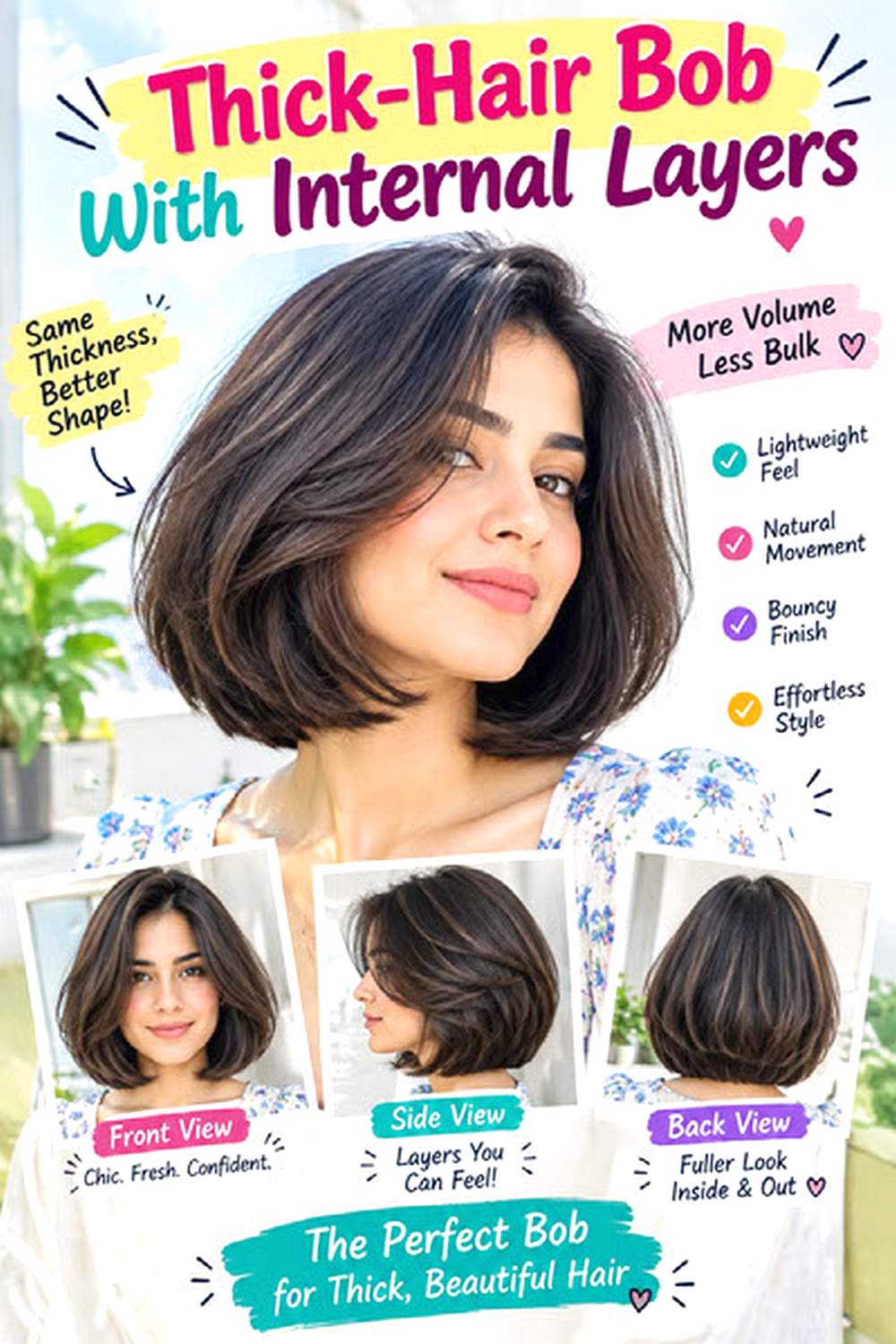
A thick bob can become wide or blocky when every strand is cut to the same length, so hidden internal layers help reduce bulk without sacrificing the solid outline. From the outside, the bob can still appear full at the ends, while shorter sections inside allow the shape to move and sit closer to the head. This approach is useful for dense straight, wavy, or coarse hair, especially around jaw-to-neck length. Naturally wavy hair may need less heat because the internal space lets its pattern move more freely. Straight hair can be smoothed with moderate blow-dry effort. Try an anti-frizz cream, paddle brush, and lightweight serum focused on the outer surface and ends. Maintenance becomes noticeable when the interior grows heavy again rather than simply when the length changes. At the salon, specifically request internal bulk removal while keeping the visible perimeter strong, and avoid excessive thinning shears near the ends if you want a dense finish.
Pro tip:
Ask to see where weight will be removed before cutting. Taking bulk from underneath the shape gives a very different result from thinning the perimeter, which can leave thick hair looking frayed.
Conclusion
These Weekend Bob Haircut Ideas for Fall 2026 show how much a bob can change through relatively small adjustments. A strong blunt perimeter gives fine hair more visual density, while internal layers can make thick hair easier to manage. Bangs may be wispy, curtain-shaped, or skipped completely, and changing the part can shift volume without changing the haircut itself. Length also matters: jaw-level cuts make the outline more noticeable, while collarbone bobs allow easier grow-out and more styling options. Natural texture can reduce heat styling when the cut supports it, whereas sleek or flipped finishes require more regular shaping. The best choice depends on your face shape, density, texture, preferred maintenance level, and how much styling time fits your routine.
Before Your Salon Visit
Choose one or two favorite ideas rather than trying to combine every detail at once. Save clear reference photos that show the front, sides, and overall length, then discuss your face shape, natural texture, hair density, preferred length, maintenance tolerance, and normal styling routine with your stylist. Point to the exact fringe length, face-framing position, layer placement, volume, perimeter weight, or end finish you want. Those details are more useful than simply asking for a “bob,” especially when several versions have similar names but very different shapes.
FAQs
1. Which weekend bob works best for fine hair?
A blunt chin-length bob or fine-hair bob with crown lift can preserve more density. Keep layering controlled so the ends do not become unnecessarily thin.
2. Can naturally wavy or curly hair wear these bob haircuts without daily heat?
Yes. Air-dried wavy and curly layered bobs are designed to work with natural texture. The cut should account for shrinkage, wave pattern, and where volume naturally forms.
3. How often do bob haircuts need salon maintenance?
Precision chin and jaw bobs usually show growth sooner than longer or textured shapes. Bangs may also need reshaping before the overall haircut does.
4. What should I tell my stylist before getting a fall bob?
Discuss your preferred dry length, natural texture, density, parting, daily styling effort, and whether you want full or softened ends. Bring photos showing the specific fringe and layer placement you like.
Editorial structure and hairstyle-specific caption guidance follow the supplied writing references.