18 Wide Headband Hairstyles for Fall 2026

Wide headbands create a stronger frame around the hair than slim bands, so small changes in placement, texture, and volume make a noticeable difference. They can sit behind curtain bangs, sweep hair completely away from the face, or add structure to loose waves, curls, bobs, ponytails, and updos. Satin gives a smoother finish, velvet adds soft texture, and padded or knotted designs create extra height around the crown.
These wide headband hairstyles for Fall 2026 can work across many hair types when the proportions are adjusted. Fine hair usually benefits from light root lift and fuller ends, while thick hair may need internal bulk removal so a broad band does not make the sides appear overly heavy. Straight hair creates a clean backdrop, while wavy, curly, and coily textures bring more movement around the accessory. Fringe width and face-framing layers can also be adapted to different face shapes.
Most styles are easy to refresh, although blowouts, polished waves, and structured updos need more preparation. Before choosing one, consider headband width, pressure behind the ears, natural density, haircut shape, humidity, and how much daily heat styling fits your routine.
Quick List
- Wide Satin Headband with Loose Waves hairstyle
- Wide Velvet Headband with Sleek Straight Hair hairstyle
- Wide Padded Headband with Voluminous Blowout hairstyle
- Wide Headband with Curtain Bangs hairstyle
- Wide Headband with Low Bun hairstyle
- Wide Headband with Natural Curls hairstyle
- Wide Headband with Shoulder-Length Bob hairstyle
- Wide Headband with Half-Up Waves hairstyle
- Wide Headband with High Ponytail hairstyle
- Wide Knotted Headband with Textured Lob hairstyle
- Wide Headband with Soft Braided Ponytail hairstyle
- Wide Headband with French Twist hairstyle
- Wide Headband with Side-Swept Waves hairstyle
- Wide Headband with Messy Chignon hairstyle
- Wide Headband with Long Layers hairstyle
- Wide Headband with Coily Updo hairstyle
- Wide Plaid Headband with Soft Waves hairstyle
- Wide Leather Headband with Sleek Low Ponytail hairstyle
Wide Satin Headband with Loose Waves hairstyle
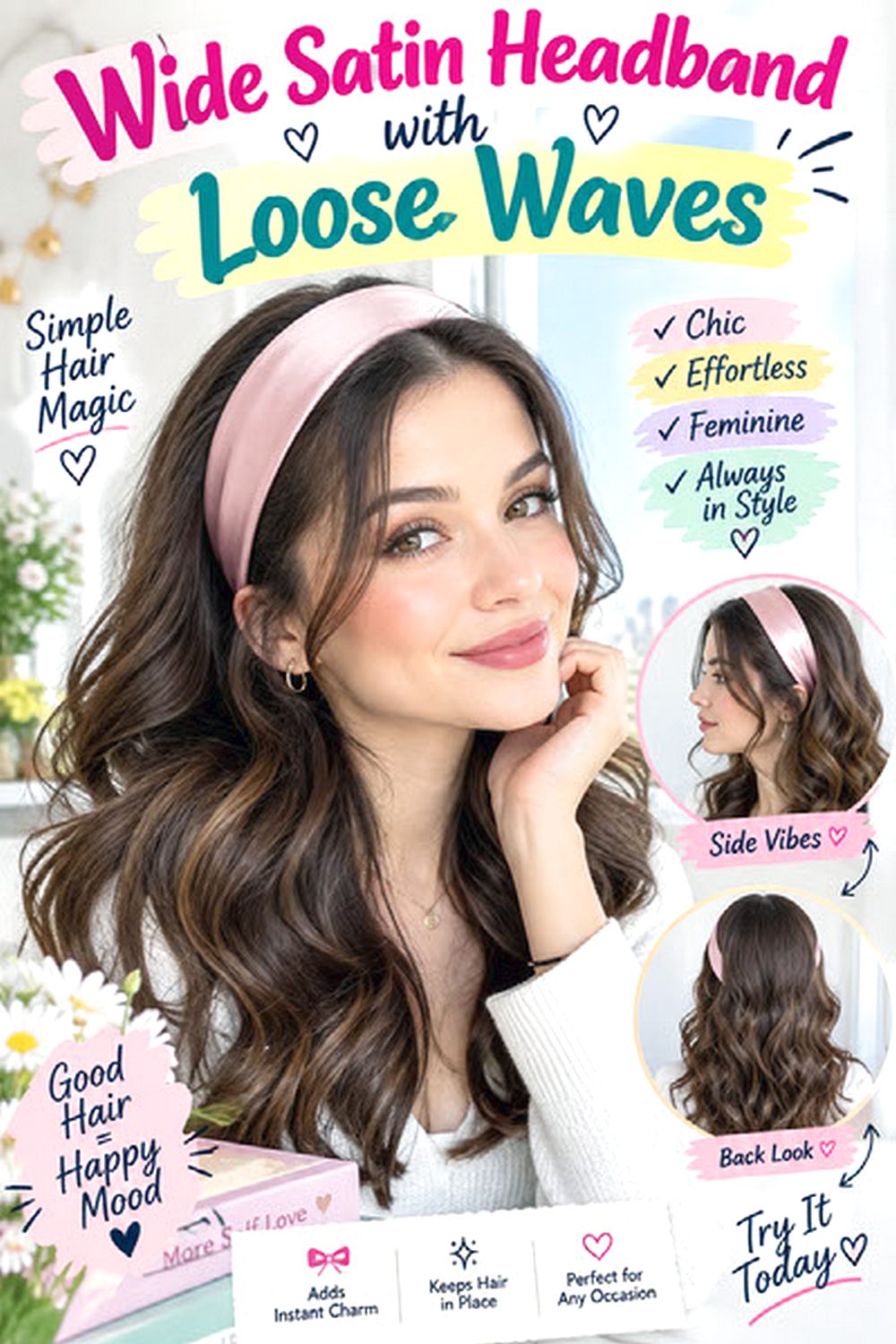
Loose waves keep a wide satin headband from looking too structured because the bends add movement below the smooth band. Medium to long hair gives the wave pattern enough room to open through the mid-lengths, while fuller ends create balance beneath the broad accessory. Straight hair can reach this finish with heat, and naturally wavy hair usually needs only light refinement. Fine hair benefits from keeping the layers long so the lower section does not become sparse; thick hair can handle more internal shaping. Use heat protectant, a large-barrel curling iron, and a wide-tooth comb to loosen the curls after they cool. Styling takes moderate time on wash day, but the following morning often needs only a few front pieces refreshed. Keep oils away from the headband area so satin does not slide. At the salon, ask for long face-framing layers beginning below the chin while preserving a solid-looking perimeter.
Pro tip:
Place the headband after brushing out the waves so you can adjust crown lift without flattening freshly curled roots.
Wide Velvet Headband with Sleek Straight Hair hairstyle
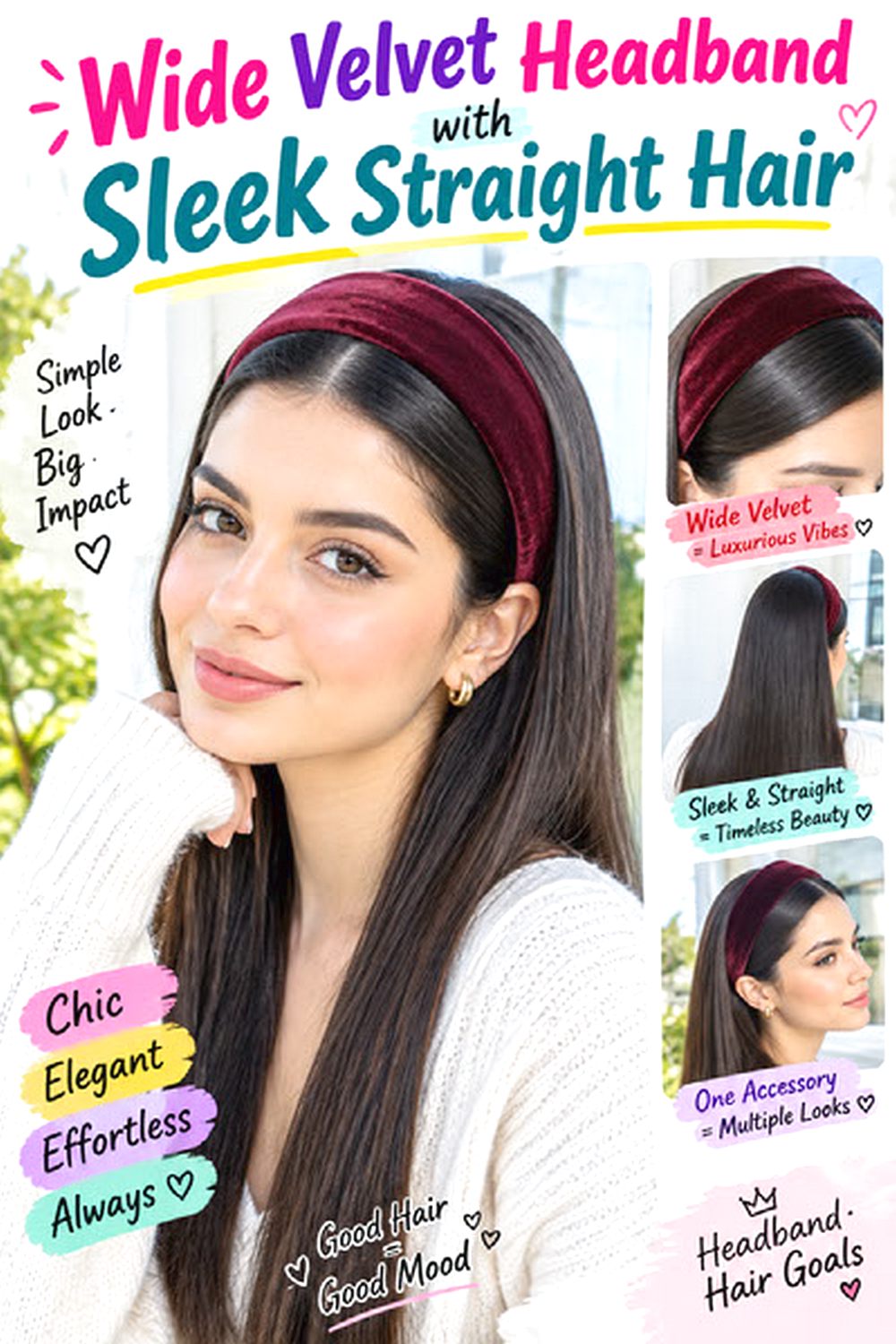
Straight hair gives a wide velvet headband a clean background, letting the soft fabric become the main textural detail. A center or subtle off-center part can remain visible in front of the band, while the lengths fall smoothly from the sides with minimal volume. Naturally straight and slightly wavy hair need the least work. Coarser or curly textures can wear the same finish, but regular heat styling may make it a higher-maintenance choice. Apply heat protectant, blow-dry with a paddle brush, and use a flat iron only on sections that still bend. A tiny amount of serum can finish the ends. Styling is quick for straight hair and moderate to longer for textured hair. Fine hair should avoid excessive layering so the perimeter remains substantial beside the wide band. At the salon, request clean, healthy ends with face-framing pieces long enough to tuck behind the accessory when you want an uninterrupted silhouette.
Pro tip:
Smooth the roots in the direction they will sit before adding the band; flattening them afterward can leave a visible ridge along the velvet edge.
Wide Padded Headband with Voluminous Blowout hairstyle
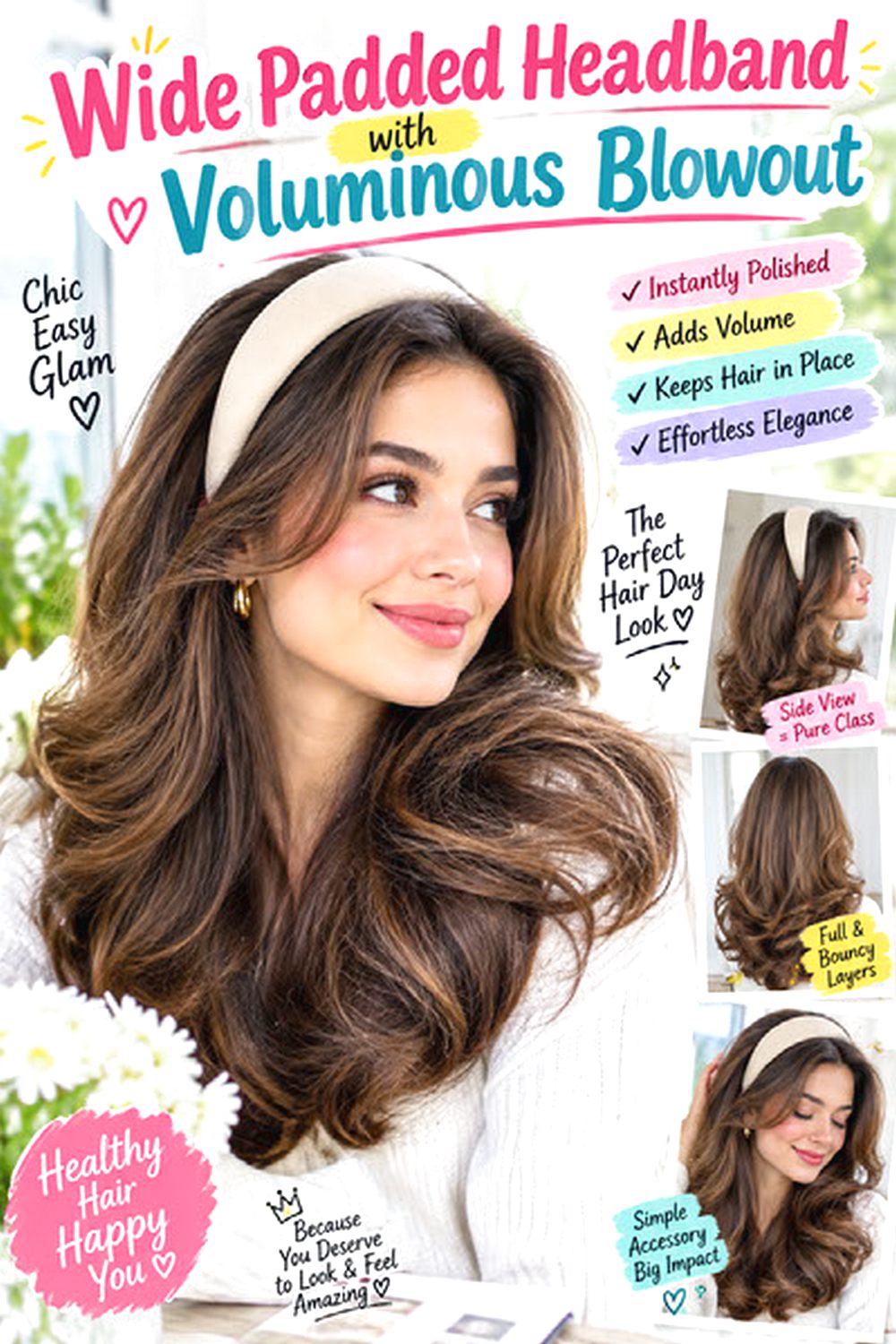
A padded headband already adds visual height, so the surrounding blowout needs balanced volume rather than an oversized crown. The best shape has lift beside and behind the band, sweeping face-framing layers, and rounded movement through the ends. Medium-density hair usually holds this finish easily. Fine hair can gain fullness from careful root styling, while thick hair may need longer layers to prevent the sides from becoming too wide. Prep with volumizing spray and heat protectant, then work through the hair with a large round brush. Oversized rollers can set the front pieces while they cool. This is one of the more time-intensive options on wash day, although a good blowout may need only a short refresh afterward. Salon maintenance centers on keeping the layers moving without thinning the bottom excessively. Ask for the shortest long layer to begin around the chin or collarbone and blend gradually through the length.
Pro tip:
Direct roots upward and slightly backward while blow-drying so the padded band rests against existing lift instead of pressing a flat line into the crown.
Wide Headband with Curtain Bangs hairstyle

Curtain bangs allow some hair to remain in front of a wide headband, creating a softer frame around the forehead and cheekbones. The fringe should separate naturally near the center, with the shortest pieces curving outward and longer sections blending into the haircut. Straight and wavy hair are easy to shape with a blow-dryer, while curly hair needs extra length to allow for shrinkage. Fine hair generally suits a lighter curtain section because a very dense fringe can remove too much fullness from the sides. Use heat protectant, a medium round brush, and flexible hairspray to keep the bend in place without making it stiff. Daily styling usually takes about five to ten minutes because the rest of the hair can remain simple. Bangs may need reshaping sooner than the overall haircut. At the salon, show exactly where you want the shortest curtain piece to hit and how wide you want the fringe section.
Pro tip:
Blow-dry the bangs forward first and sweep them outward only at the end; this keeps the center split from becoming too wide beside the headband.
Wide Headband with Low Bun hairstyle
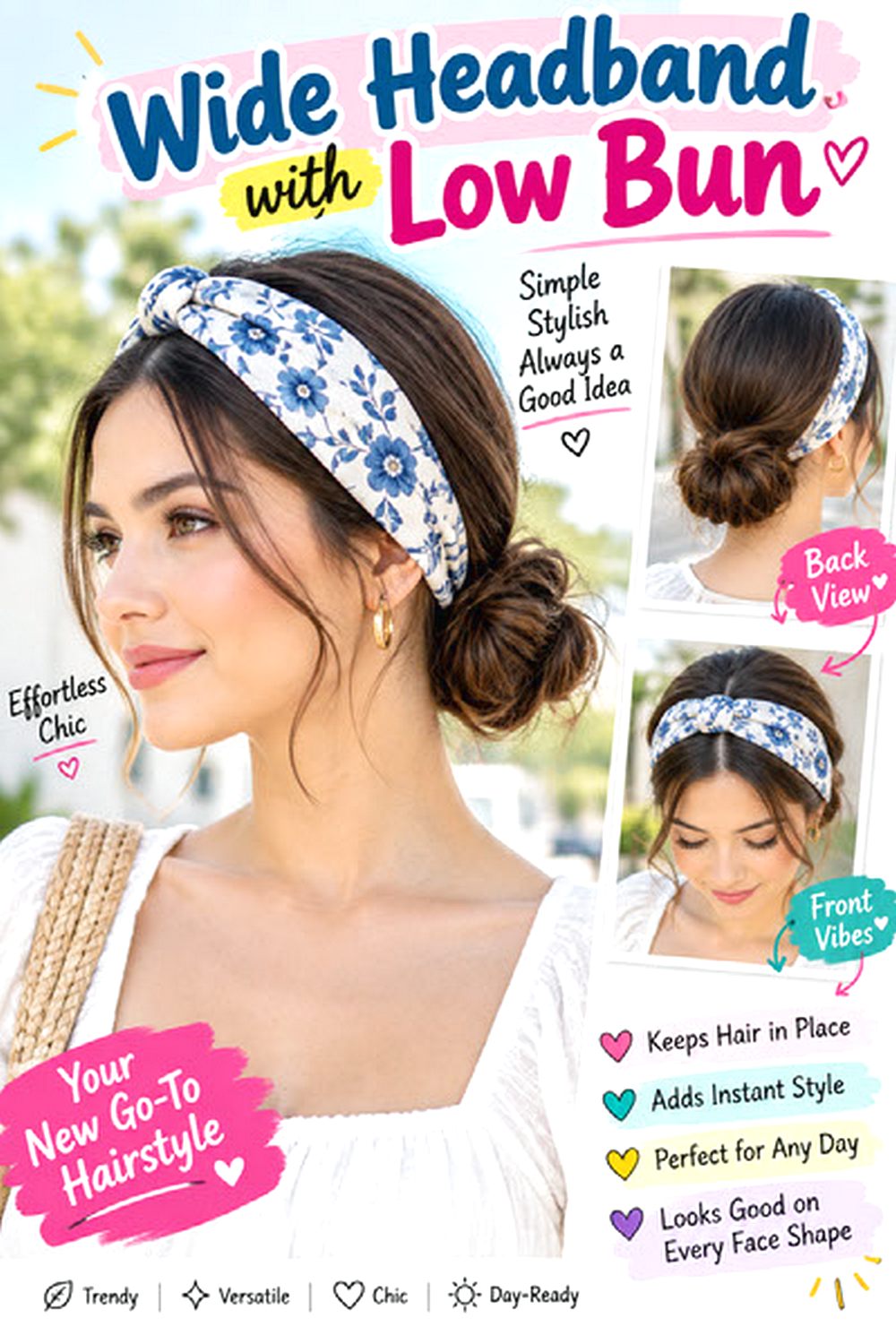
A low bun keeps the neckline clear while a wide headband creates structure across the front of the style. Position the bun close to the nape and decide whether the crown should stay smooth or slightly relaxed before securing it. Medium to long hair is easiest to gather, and medium or thick density naturally creates a fuller bun. Fine hair can still build shape by loosely twisting the length rather than winding it tightly. Use lightweight styling cream, strong hairpins, and flexible hairspray for control. The style is relatively quick and often holds better on second-day hair because freshly washed strands can be slippery. If you prefer loose face-framing pieces, separate them before placing the headband. Short layers around the nape may need extra pins. At the salon, explain that you wear low updos regularly and ask for the back layers to remain long enough to reach the bun without constantly falling free.
Pro tip:
Position the headband before you finish pinning the bun so you can judge whether the crown needs a little more height to balance its width.
Wide Headband with Natural Curls hairstyle

Natural curls create plenty of movement around a wide headband, so the main goal is preserving the curl pattern instead of pressing it flat. Let some volume remain at the sides and crown while positioning the band far enough back that the front curls can sit naturally. Medium and thick curly hair may benefit from graduated layers that distribute weight, while finer curls often look fuller with more density left through the lower shape. Refresh with leave-in conditioner and curl cream, then use a diffuser only where definition has fallen. Styling takes more time on wash day but can be very quick between washes when individual curls are refreshed instead of fully restyled. Avoid dragging a wide band repeatedly through dry curls because friction can encourage frizz. At the salon, ask for layers based on the hair’s dry shape and shrinkage, especially around the crown and temples where the headband will sit.
Pro tip:
Let curls dry completely before placing the headband; damp roots can stretch under the band and change the finished volume once the hair dries.
Wide Headband with Shoulder-Length Bob hairstyle
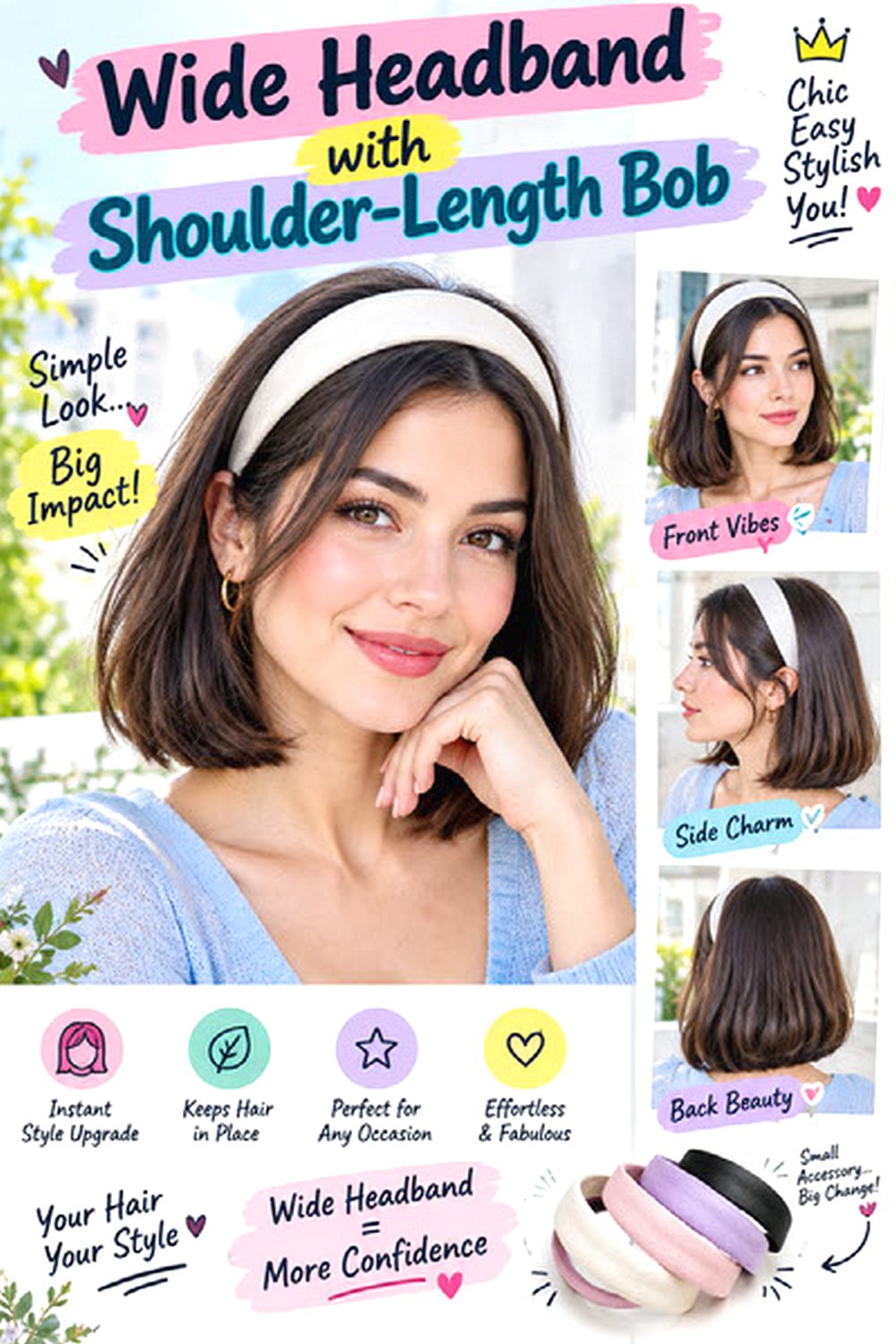
A shoulder-length bob gives a wide headband a compact, balanced outline without needing an updo. The ends can sit straight, curve gently inward, or flip slightly around the shoulders, but keeping the perimeter reasonably full makes the haircut look stronger beneath a broad accessory. Fine hair usually benefits from fewer layers and a denser baseline. Thick hair may need subtle internal weight removal so the sides do not expand underneath the headband. Straight and softly wavy textures are easy to maintain with a round brush, heat protectant, and lightweight anti-frizz cream. Styling takes moderate time after washing but becomes a quick front-and-end refresh on later days. Humidity can make shoulder-length ends turn unpredictably, so light smoothing product helps. At the salon, request a strong perimeter with only enough internal movement to prevent stiffness, and specify whether you prefer tucked-under, straight, or softly flipped ends.
Pro tip:
Style the bob ends before positioning the headband; you can then move the band slightly backward if the sides need more visible lift.
Wide Headband with Half-Up Waves hairstyle
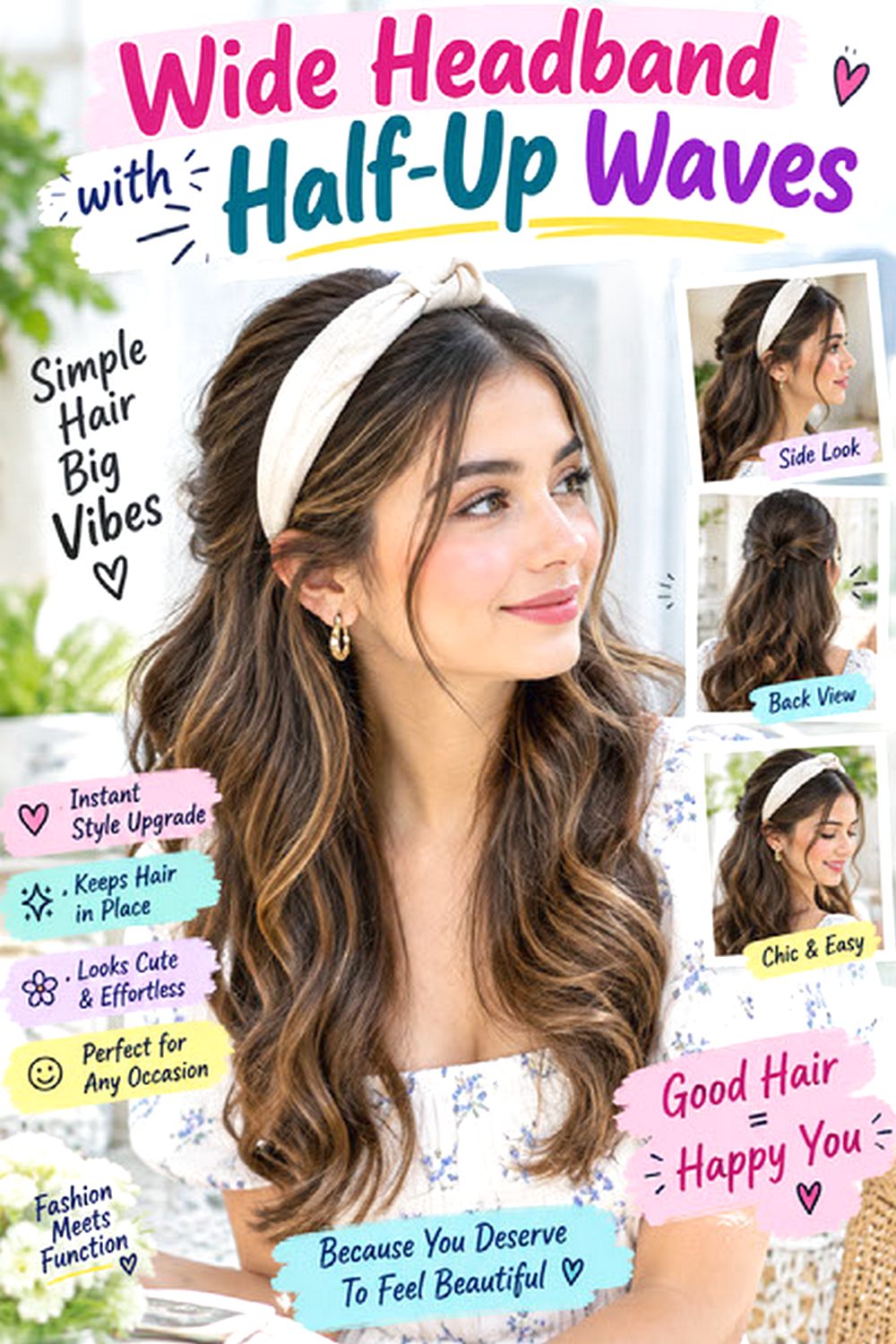
A half-up shape works well with a wide headband when the gathered section creates gentle lift rather than disappearing under the accessory. Leave the lower lengths loose and wavy, then secure a small section from the crown behind the band. Long and medium hair show the separation between the clipped section and flowing ends most clearly. Fine hair can benefit from a little root texture before gathering, while thick hair often looks better when only a narrow top section is pulled back. Use volumizing spray, a large curling wand, and a few discreet pins or a small elastic. Styling is moderate when the waves are created from scratch but easy to refresh on the second day. Too many short crown layers can make the half-up section untidy. At the salon, ask for face-framing layers beginning around the cheekbone or jaw that can remain loose without leaving the back section thin.
Pro tip:
Secure the half-up section after putting on the headband so you can place the gathered hair exactly where it creates the most flattering crown lift.
Wide Headband with High Ponytail hairstyle

A high ponytail adds height behind a wide headband and keeps longer hair away from scarves and coat collars. The ponytail should sit high enough to be visible from the front without pulling the roots painfully tight. Straight, wavy, and loosely curled textures all work, though long layered hair may need extra control around the sides. Thick hair requires a strong elastic, while fine hair can create more movement by adding light bends through the ponytail before gathering it. Use volumizing mousse, a secure snag-free elastic, and flexible hairspray for flyaways. Styling is quick if you keep your natural texture and moderate if you curl the ponytail first. Frequent tight ponytails can stress the hairline, so vary placement and tension. At the salon, ask to keep shorter layers around the back long enough to reach the elastic unless you intentionally want wispy pieces around the nape.
Pro tip:
Lift the ponytail slightly before tightening the elastic; that small adjustment preserves crown volume so the wide band does not make the front look flat.
Wide Knotted Headband with Textured Lob hairstyle

A textured lob balances a wide knotted headband because the broken-up movement through the ends keeps the raised center knot from becoming the only source of volume. Collarbone-length hair works especially well, with loose bends beginning around the cheek or jaw rather than tightly curling from the roots. Fine to medium hair can gain body from this finish, while very thick hair may need internal weight reduction so the lob does not become too triangular. Work with texturizing spray, heat protectant, and a medium curling iron, leaving the final inch of each section less curled. Styling takes moderate time but is easy to refresh because the finish does not need to be perfectly uniform. A trim is useful when the ends stop holding their airy shape. At the salon, ask for a strong lob perimeter with soft internal texture and face-framing that blends around the jaw instead of short, disconnected layers.
Pro tip:
Keep crown volume subtle around a knotted headband; concentrating more texture through the mid-lengths and ends prevents too much height from building at the top.
Wide Headband with Soft Braided Ponytail hairstyle
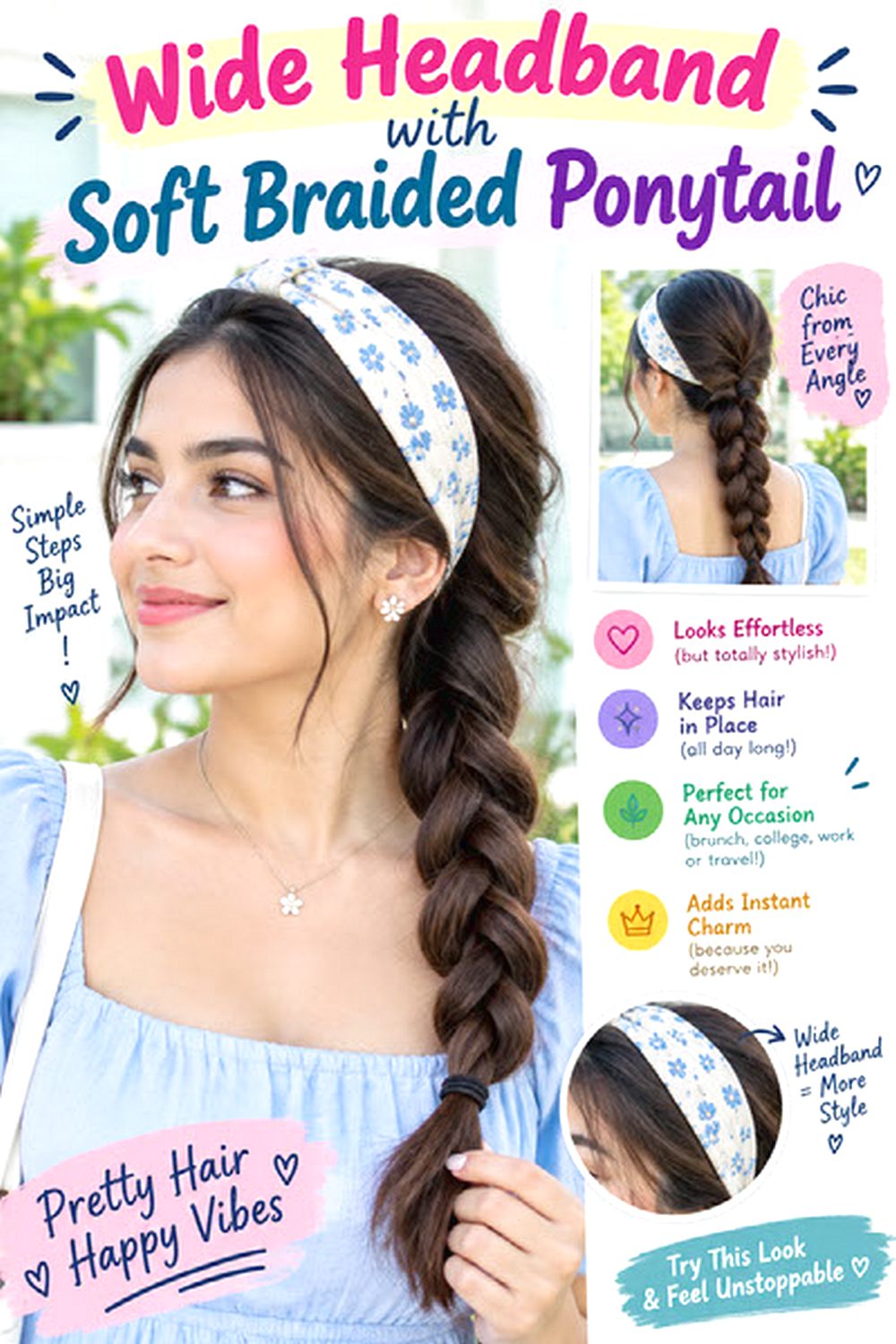
A loose braided ponytail adds visible texture below a wide headband without requiring complicated styling around the crown. Gather the hair low or at mid-height, secure it, then create a three-strand braid and gently widen the loops. Long hair makes the braid more noticeable, while medium lengths produce a shorter, tighter version. Thick hair naturally forms a substantial braid; fine hair can create extra width by gently loosening each section once the end is secured. Use lightweight mousse for grip, two snag-free elastics, and a small amount of serum on dry ends. Styling is easy to moderate and needs little or no heat if your natural texture already has movement. Avoid heavily thinning the lower lengths if braid fullness matters to you. At the salon, request long layers that remain connected through the perimeter so most pieces reach the braid instead of falling out around the back.
Pro tip:
Widen the braid from the bottom upward after securing it; this keeps the upper section close to the ponytail base while giving the lower length controlled fullness.
Wide Headband with French Twist hairstyle

A French twist gives a wide headband a polished updo partner because the hair stays sleek at the sides while the volume rises vertically through the back. Medium to long hair is easiest to roll, and straight or lightly wavy texture usually creates the cleanest surface. Fine hair may need subtle backcombing inside the twist, while thick hair can require several anchor pins before the roll is secured. Prep with dry texturizing spray for grip, use strong hairpins, and finish the visible surface with flexible hairspray. Styling requires more time and technique than a low bun, but the result can stay secure for hours when properly anchored. Highly layered hair may release more pieces around the sides. At the salon, mention that you wear structured updos and want the side and back layers long enough to reach the twist while still keeping movement when worn down.
Pro tip:
Build a vertical row of crossed pins first, then roll the hair over that anchor; the hidden support stops the twist from opening beneath a wide headband.
Wide Headband with Side-Swept Waves hairstyle
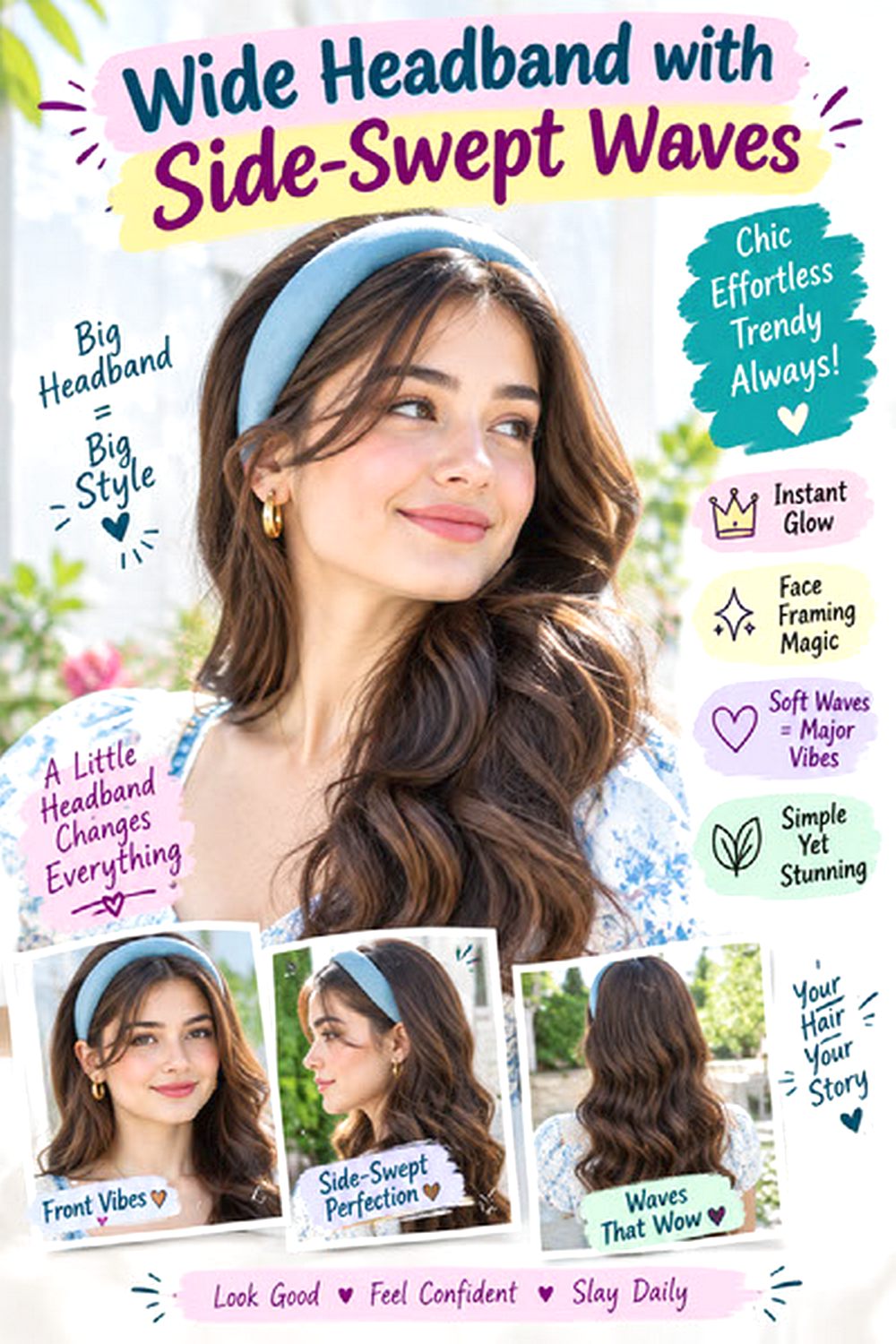
Side-swept waves change the balance of a wide headband by placing more visible volume on one side of the face. A deeper part creates the effect, with the fuller side moving in a broad bend across the temple before falling into loose waves. Medium and long hair display the asymmetry most clearly. Fine hair can use a lighter wave pattern to retain fullness through the ends, while thick hair may need some internal bulk removed so the heavier side does not become dense. Use heat protectant, a large-barrel curling iron, and light-hold hairspray to keep the waves flexible. Styling takes moderate time, though later refreshes can focus only on the front sweep and top layer. Different face shapes can adjust the part depth and side volume rather than changing the entire haircut. At the salon, show the stylist where you normally part your hair and ask for front layers that flow naturally into the swept side.
Pro tip:
Set the wide headband just behind the beginning of the side sweep so the curved front section remains visible instead of being pushed completely away.
Wide Headband with Messy Chignon hairstyle
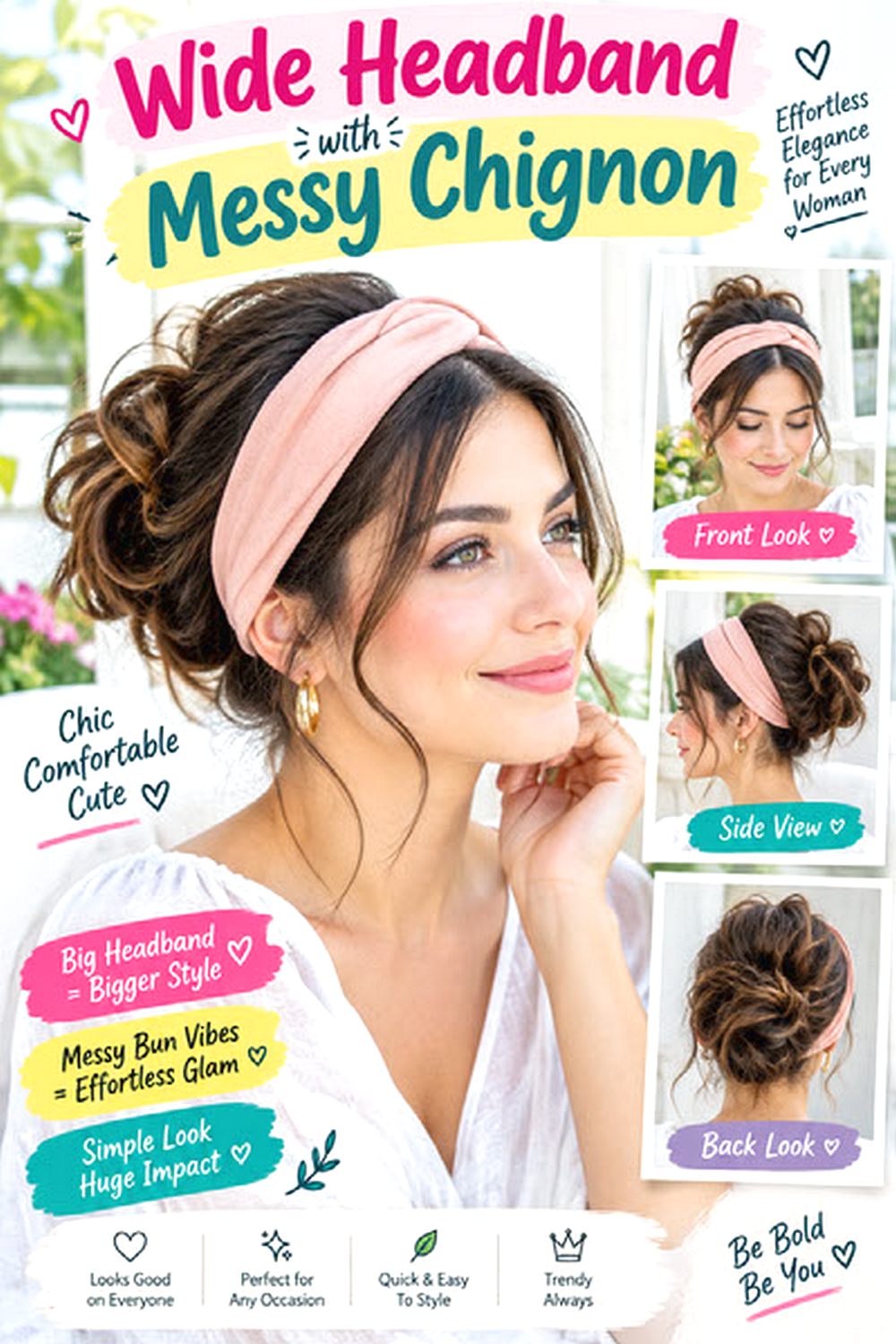
A messy chignon adds softness behind a wide headband without becoming shapeless when the bun is built deliberately. Keep the chignon low, loosen a little crown texture, and leave only a few selected pieces around the temples or ears rather than pulling out random strands. Wavy hair naturally creates the right surface texture, while straight hair may need a little grip before twisting. Medium and thick hair produce a fuller bun; fine hair can gain shape by lightly teasing the hidden interior. Use dry texture spray, bobby pins, and a light mist of hairspray. Styling is moderate because the bun needs enough structure to stay secure even though it looks relaxed. Second-day hair is usually easier to work with than freshly washed lengths. At the salon, ask for front layers that are long enough to curve around the cheekbone or jaw when left loose rather than stopping awkwardly near the ears.
Pro tip:
Loosen the crown before pinning the final section of the chignon; pulling at the roots afterward can disturb the bun and shift the headband.
Wide Headband with Long Layers hairstyle
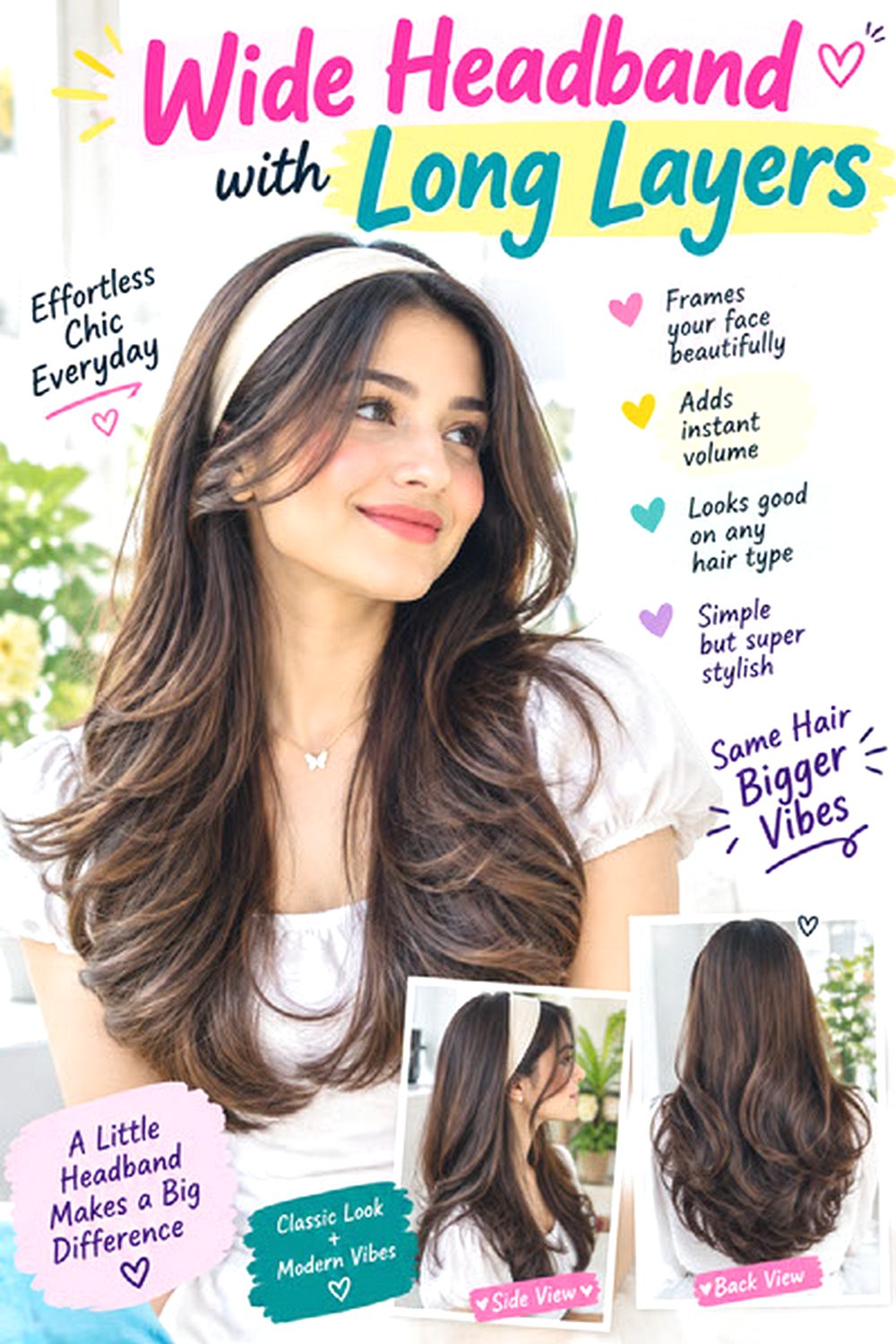
Long layers give a wide headband movement without sacrificing the fullness that very long hair needs through the ends. The shortest front pieces can begin around the chin or collarbone and blend into longer layers that move when the hair is brushed forward or back. Straight hair shows the layer placement clearly, while wavy texture creates more separation. Fine hair should keep the number of layers limited so the perimeter does not become wispy; thick hair can support additional internal shaping to remove weight. Use leave-in conditioner, a large round brush, and lightweight finishing serum for a smooth bend through the ends. Styling takes moderate time on long hair, though the headband quickly controls the front when you do not want a full blowout. Layer maintenance is needed once movement starts to collapse. At the salon, ask for connected long layers and specify exactly how much density you want preserved around the bottom.
Pro tip:
Bring a reference photo that clearly shows where the shortest layer begins; with a wide headband, that first visible layer strongly affects the face-framing shape.
Wide Headband with Coily Updo hairstyle

A coily updo works beautifully with a wide headband when the band supports the shape rather than compressing the texture. Gather the hair upward or toward the back while allowing the coils at the top to remain rounded and visible. Depending on length and density, a loose puff, tucked updo, or pinned coil cluster can create the silhouette. Thick, tightly coiled hair often needs secure pins or a strong hair tie beneath the finished shape, while finer coils may need less tension. Use leave-in conditioner, curl gel, and a wide-tooth comb or fingers for gentle shaping. Wash-day definition takes longer, but the updo itself can be quick once the coils are set. Avoid overly tight bands or constant repositioning along fragile edges. At the salon, discuss shrinkage, coil density, and where you want volume to remain before removing length or bulk around the crown.
Pro tip:
Place the headband behind the most fragile front coils instead of dragging it across the hairline; this keeps the edge area softer and reduces unnecessary friction.
Wide Plaid Headband with Soft Waves hairstyle
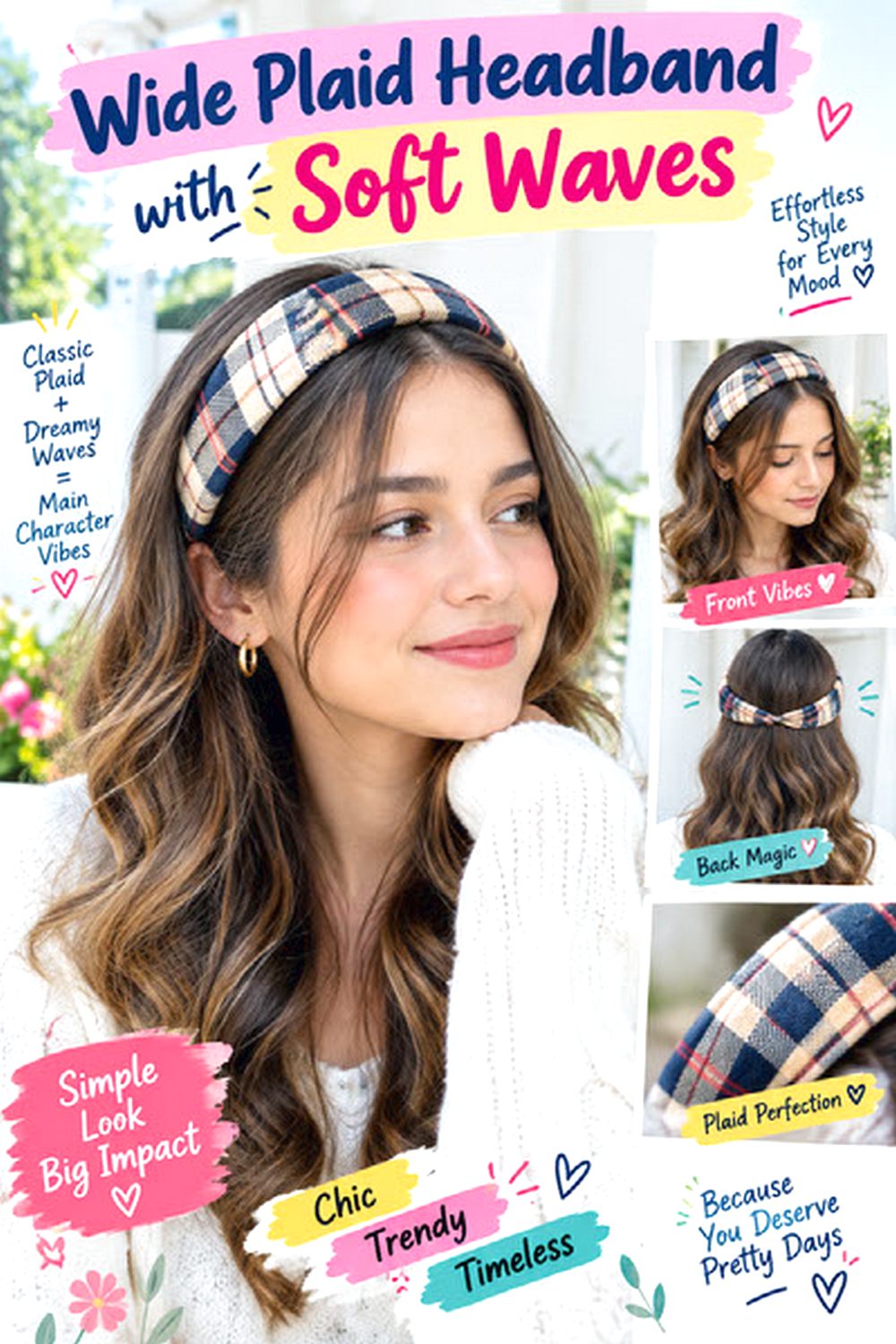
A plaid headband already brings pattern into the hairstyle, so soft waves keep the hair complementary rather than overly busy. Use broad bends through the mid-lengths and leave the ends relatively relaxed for a brushed, wearable finish. Medium to long hair gives the pattern and texture enough visual space, but a shoulder-length cut can create a shorter version. Wavy hair requires minimal heat, while straight hair may need a curling wand or large rollers. Fine hair should keep the waves light and airy to protect end density; thick hair can handle stronger bends with a little bulk removal. Prep with lightweight mousse, use large hot rollers or a curling wand, and finish with a flexible texture spray. Styling takes moderate time but refreshes easily. At the salon, ask for long blended layers rather than heavily feathered ends so the waves retain fullness below the wide patterned band.
Pro tip:
Choose one main wave direction around the front of the face; too many alternating bends near a patterned headband can make the top half of the style look visually crowded.
Wide Leather Headband with Sleek Low Ponytail hairstyle
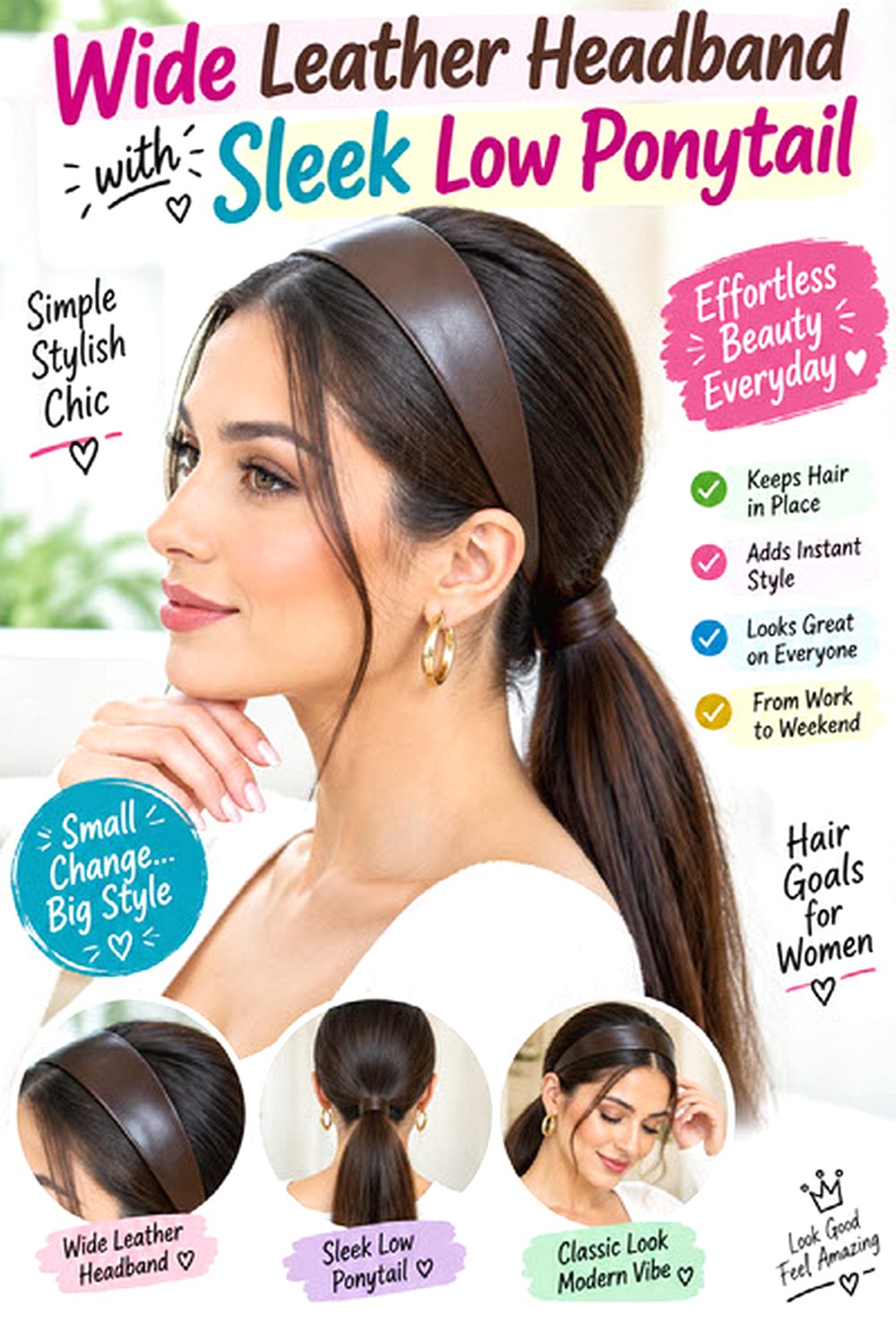
A wide leather headband pairs naturally with a sleek low ponytail because both elements create a clean, controlled silhouette. Keep the roots smooth, choose a center or side part, and secure the ponytail close to the nape so the line stays understated. Straight hair needs little preparation, while wavy or curly textures may require a blow-dry if you want a highly polished finish. Medium to thick hair can carry a strong ponytail shape, while fine hair often looks fuller when the ends remain blunt or lightly layered. Use smoothing cream, a paddle brush, and a strong snag-free elastic. Styling is quick on straight hair and moderate when smoothing natural texture. Avoid saturating the crown with serum, which can make both the hair and headband slippery. At the salon, request clean perimeter weight and long front layers that can reach securely into the low ponytail without leaving unwanted short pieces.
Pro tip:
Apply smoothing product to the brush rather than directly onto the roots; this gives controlled polish without making the headband area greasy or difficult to secure.
How to Choose Wide Headband Hairstyles for Fall 2026
The strongest wide headband hairstyles for Fall 2026 are the ones that balance the width of the accessory with your own length, density, texture, and preferred amount of volume. A padded band can work with a full blowout, while a flatter satin or leather band suits smoother styling. Fine hair may need a smaller amount of layering and extra root lift, whereas thick hair can benefit from internal bulk removal. Curtain bangs, long face-framing pieces, side parts, and center parts all change how much hair remains visible around the face. Natural curls and coils need different placement from sleek straight hair, especially when protecting texture and avoiding friction. Consider daily effort too: loose waves and buns can be easy to refresh, while structured updos and polished finishes require more preparation.
Choose one or two favorite ideas, save clear photo references, and bring them to your stylist. Discuss your face shape, natural texture, density, preferred length, maintenance level, and usual styling routine. Point out the exact layers, fringe, parting, crown volume, end finish, or headband position that caught your attention. Those details are much more useful than simply asking for a general “headband hairstyle,” and they help your stylist adapt the haircut to the way you actually plan to wear it.
FAQs
Do wide headbands work well with fine hair?
Yes. Fine hair usually looks best with some root lift and enough density left through the ends. Avoid taking too much hair out of the perimeter, and choose a headband that is comfortable without being excessively heavy.
Can I wear a wide headband with bangs?
Yes. Curtain bangs, side-swept fringe, and shorter bangs can all stay in front of the band. The key is positioning the headband behind the fringe and shaping the bangs before putting it on.
How do I stop a wide headband from flattening my hair?
Add light root volume first and place the band without pressing it tightly against the crown. Volumizing spray, a round brush, or a small amount of texture product can help maintain lift.
Are wide headband hairstyles suitable for curly and coily hair?
They can be. Choose a comfortable band with a smooth interior, let curls or coils dry before placement, and avoid repeatedly dragging the band through textured hair. Adjust the position to preserve natural crown volume and reduce friction.