12 Wispy Curtain Bangs Hairstyle Ideas

Wispy curtain bangs combine a light fringe with a center-opening shape, usually keeping shorter pieces near the middle and gradually longer sections toward the temples. Unlike a dense curtain fringe, small spaces remain between the strands, allowing some forehead to show. The outer corners can finish near the cheekbones, jaw, or somewhere between, depending on the haircut. Layers through the surrounding hair help those corners blend rather than stopping abruptly beside the face.
Straight and wavy textures can show the separated fringe clearly, while curls need enough finished length to account for shrinkage. Density affects how large the fringe section should be. Lower-density hair often benefits from a narrow section that preserves fullness elsewhere, while dense hair can support more fringe without requiring it to become heavy. Growth direction also matters because a cowlick or strong natural part can influence how easily the center opens.
Wispy curtain bangs can be relatively quick to refresh because only a small front section needs attention. A full wash-day style takes longer, especially if the surrounding haircut is layered. Fringe upkeep is separate from overall cut maintenance: reshaping becomes useful when the center reaches the eyes or the outer corners stop blending naturally.
Quick List
- Brow-Skimming Wispy Curtain Bangs Hairstyle
- Long Cheekbone Wispy Curtain Bangs Hairstyle
- Center-Parted Wispy Curtain Bangs Hairstyle
- Soft Bob Wispy Curtain Bangs Hairstyle
- Wavy Wispy Curtain Bangs Hairstyle
- Curly Wispy Curtain Bangs Hairstyle
- Layered Lob Wispy Curtain Bangs Hairstyle
- Long Layered Wispy Curtain Bangs Hairstyle
- Fine-Hair Wispy Curtain Bangs Hairstyle
- Dense-Hair Wispy Curtain Bangs Hairstyle
- Shaggy Wispy Curtain Bangs Hairstyle
- Air-Dried Wispy Curtain Bangs Hairstyle
Brow-Skimming Wispy Curtain Bangs Hairstyle

The shortest center pieces sit close to brow level, then lengthen gradually toward the temples to create the curtain opening. Small gaps between the strands keep the fringe light instead of forming a continuous band across the forehead. Longer outer corners can reach the upper cheekbone, making them easier to blend into face-framing layers. A soft center part provides structure without needing to look sharply divided.
Straight and gently wavy hair can show this shorter fringe clearly. Because the center sits near the brows, growth direction matters: roots that naturally split or lift may alter the finished position. Use heat protectant before heated styling, a small round brush to establish the outward bend, and flexible hairspray for light control. Refreshing only the fringe may take a few minutes, while washing and styling the complete haircut requires more time.
At the salon, discuss the center length when completely dry and identify where the longer outer corners should finish. This is more precise than asking only for short curtain bangs. Fringe upkeep becomes useful when the middle consistently enters the eyes or loses the visible separation that makes it wispy. The surrounding haircut may need reshaping less frequently.
Pro tip:
Dry the center section forward first, then split it gently and guide each half outward. Settling the roots before creating the curtain opening helps prevent the fringe from separating too widely at the center.
Make It Work for You:
If your hair has a noticeable wave, keep the center slightly longer so the bend does not lift it far above the brows. Preserve the narrow fringe section to maintain its light appearance.
Watch Out For:
Do not trim the fringe while pulling it tightly downward. Tension can make the finished bangs spring shorter once released; assess their natural dry position before deciding whether the center needs additional shortening.
Long Cheekbone Wispy Curtain Bangs Hairstyle

Longer curtain bangs create a softer transition between fringe and face-framing layers. The shortest center pieces can sit below the brows, while the outer sections extend toward the cheekbones. Instead of forming obvious bangs across the entire forehead, the center opens widely and the longer pieces sweep diagonally away from the face. This length also provides more flexibility for tucking or blending the fringe into the rest of the hair.
Straight, wavy, and loose curly textures can adapt well to the extended shape. Lower-density hair may particularly benefit because a narrow fringe section can create movement without taking substantial hair away from the sides. Use lightweight styling cream for control, heat protectant before heated drying, and a round brush to create the outward sweep. A quick morning refresh can focus entirely on the front, whereas resetting long layers after washing requires more time.
Tell your stylist where the shortest center piece and longest outer corner should land when dry. The cheekbone landmark is especially useful because it determines how smoothly the fringe connects with surrounding layers. Upkeep can be more forgiving than with shorter bangs, but reshaping helps once the center no longer opens easily or the outer pieces lose their intended connection.
Pro tip:
Direct the outer corners backward only after establishing the center opening. This keeps the fringe connected across the forehead instead of pushing all the hair toward the temples and losing the curtain shape.
Make It Work for You:
If you prefer minimal daily fringe styling, keep the outer pieces long enough to tuck behind the ears. The bangs retain their wispy curtain effect when worn forward but offer an easy alternative on busy days.
Watch Out For:
Avoid removing too much weight from the long outer corners. Extremely thin ends can disappear into the surrounding hair, making the fringe look accidental rather than like a deliberate center-opening shape.
Center-Parted Wispy Curtain Bangs Hairstyle

A clearly defined middle part gives these bangs a balanced opening, with light sections falling evenly toward both sides. The center pieces remain shorter, while the fringe gradually extends toward the temples and blends into cheekbone- or jaw-level face framing. Small gaps keep the forehead visible. The rest of the hair can be straight, layered, or softly waved because the symmetrical front provides the main structure.
This version works particularly well when the natural part already sits near the center. Straight and wavy textures are easy to direct, while stronger growth patterns may need more root styling. Use lightweight mousse for flexible support, a small round brush to shape the two sides, and heat protectant whenever heated drying is used. Resetting the fringe between washes can be quick; styling the complete haircut naturally requires more time.
At the salon, show how wide you want the fringe section and where you normally place your center part. Also specify the dry length of the shortest middle pieces. Those details affect how much forehead remains visible. Maintain the fringe when growth makes the center pieces merge into the outer corners or causes the opening to fall differently than intended.
Pro tip:
Create the middle part while the roots are damp, but avoid drawing an unnecessarily severe line far back through the fringe. A softer division keeps the curtain opening balanced without making it look rigid.
Make It Work for You:
If your natural part sits slightly off center, follow that position rather than forcing perfect symmetry. The bangs can retain a curtain effect while requiring less daily manipulation of your natural growth direction.
Watch Out For:
A very wide center opening can make the fringe disappear into ordinary face-framing layers. Keep enough shorter hair near the middle so the design still reads as bangs when the sides sweep outward.
Soft Bob Wispy Curtain Bangs Hairstyle

Pairing wispy curtain bangs with a bob creates a compact shape with light movement around the forehead. The bob can finish near the jaw or chin, while the shortest fringe pieces skim the brows and longer corners connect into the sides. A softly weighted perimeter keeps the haircut from becoming overly layered. The bangs provide most of the face framing, leaving the bob itself clean and relatively simple.
Straight and wavy textures can show the contrast between the airy fringe and fuller perimeter clearly. Fine strands may benefit from keeping the bob edge substantial instead of extending short layers throughout the entire cut. Use heat protectant before heated drying, a small round brush for the fringe, and lightweight smoothing cream through the bob ends. A fringe-only refresh can be brief, while polishing both the bangs and perimeter after washing takes longer.
At the salon, specify the finished bob length separately from the fringe landmarks. Ask where the outer bang corners will connect into the sides without weakening the bottom edge. The fringe may require attention sooner than the bob because even modest growth changes its position around the eyes. Reshape the perimeter when it loses the jaw- or chin-level line you chose.
Pro tip:
Style the fringe before working on the bob lengths. The small front section dries quickly, and setting its center opening early makes it easier to judge how much additional movement the surrounding hair actually needs.
Make It Work for You:
If your bob is very fine or lower density, keep most layering confined to the fringe and immediate face frame. A stronger bottom edge preserves fullness while the airy bangs provide softness.
Watch Out For:
Do not blend the fringe by heavily thinning the entire side perimeter. The bob needs enough weight to maintain its shape; connect the outer bang corners gradually without sacrificing the full lower edge.
Wavy Wispy Curtain Bangs Hairstyle

Soft bends make wispy curtain bangs look less structured while preserving their open center. The shortest pieces can sit around brow level, with longer corners curving toward the cheekbones. Through the surrounding hair, broad waves echo that outward movement. The fringe does not need to lie perfectly smooth; a small bend or irregular separation can help it blend naturally into a wavy haircut.
Naturally wavy hair can make this version relatively manageable because the finish works with existing movement. Straight hair can recreate the effect, though that adds styling time. Use heat protectant before thermal styling, a medium curling iron to refine selected bends, and flexible hairspray for light hold. A quick refresh may involve only one or two fringe pieces; creating waves throughout straight hair after washing is a longer routine.
At the salon, discuss how the fringe behaves in its natural dry texture and identify where the center and outer corners should finish. Keeping enough length for the wave is important because bends shorten the visible result. Fringe upkeep becomes useful when the center drops into the eyes or the outer sections grow too long to maintain their intended sweep.
Pro tip:
Match the fringe to the general direction of your waves rather than making it perfectly smooth. Refining only awkward bends creates a more connected finish and reduces unnecessary heat styling at the front.
Make It Work for You:
If your waves become stronger around the hairline, leave additional fringe length and allow some natural bend. The bangs can remain wispy as long as the center opening and longer outer corners stay visible.
Watch Out For:
Avoid creating a tight curl in each fringe section. Strong curls can make the center appear much shorter and produce excessive side volume; use broad bends that support the soft curtain direction.
Curly Wispy Curtain Bangs Hairstyle
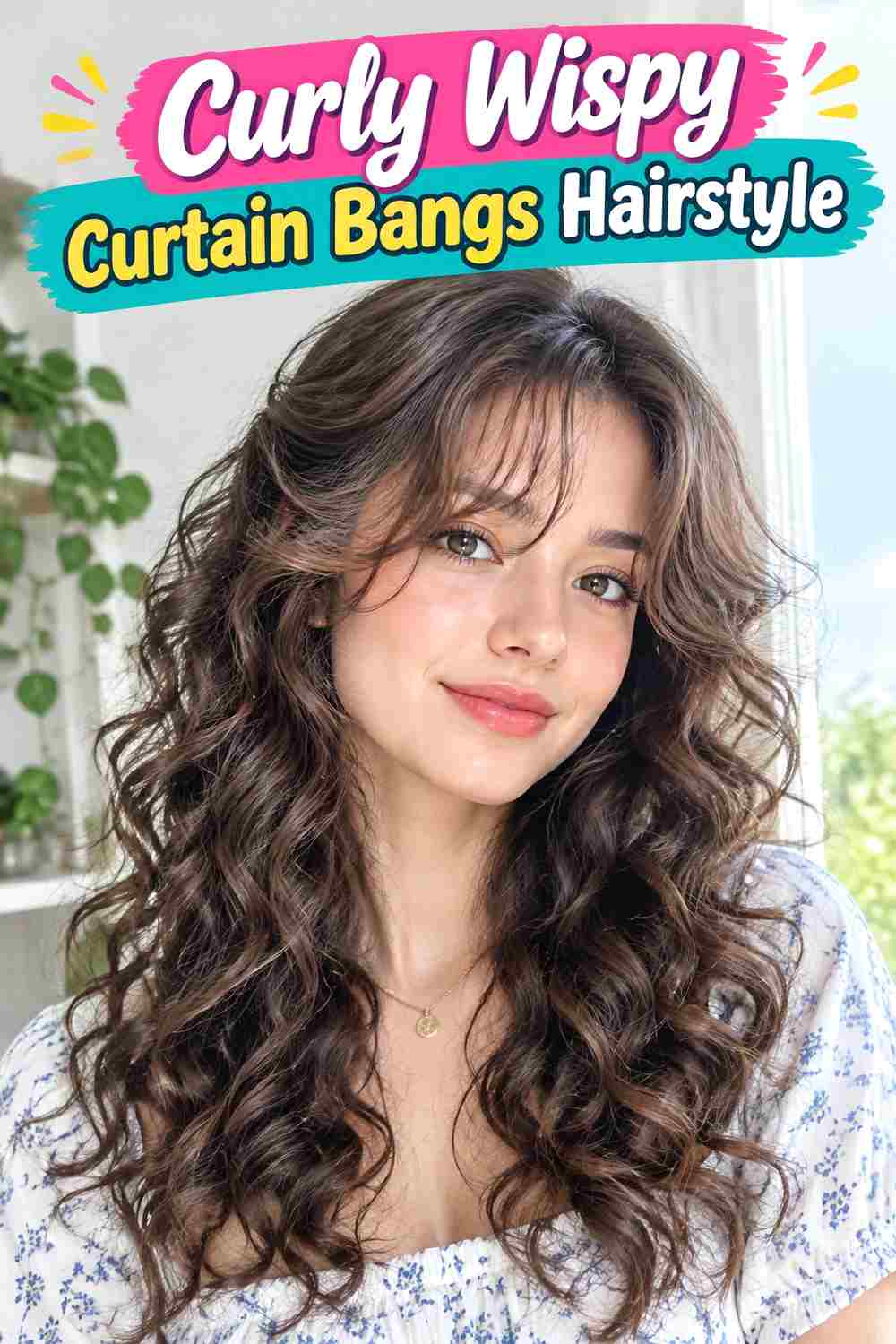
Curly curtain bangs use separated curl groups instead of fine straight strands to create their wispy effect. Shorter curls sit around the forehead, while longer outer pieces travel toward the temples or cheekbones. The center remains partly open, but its width can shift naturally as curls move. Surrounding layers help the fringe merge into the haircut without requiring the curl pattern to be brushed smooth.
Curly hair needs careful allowance for shrinkage because the dry fringe may sit considerably higher than its wet length suggests. Density also matters: a small fringe section can provide enough coverage when curls expand. Use lightweight leave-in conditioner for pliability, curl gel for grouping, and a diffuser to dry the fringe without flattening the surrounding pattern. Refreshing a few front curls may be quick, while a complete wash, definition, and dry takes considerably longer.
At the salon, discuss the finished dry position of the center curls and outer corners. Avoid relying on stretched measurements alone because curl groups can contract differently. Fringe maintenance should follow how the curls actually sit: reshaping becomes useful when they consistently obstruct your preferred sightline or stop connecting smoothly with the side layers.
Pro tip:
Shape the front curl groups slightly away from the center while damp, then leave them to dry before separating. This encourages the curtain opening without repeatedly pulling apart curls and creating unnecessary frizz.
Make It Work for You:
If your curls shrink substantially, keep extra cutting length through both the center and outer corners. You can preserve forehead coverage and still create a light curtain effect once the pattern contracts.
Watch Out For:
Never judge curly fringe length only by stretching a curl downward. Its resting position matters most, and repeated trimming based on stretched length can produce a much shorter fringe after the curl recoils.
Layered Lob Wispy Curtain Bangs Hairstyle

A collarbone-level lob gives wispy curtain bangs enough surrounding length for a gradual blend. The shortest fringe pieces can sit near the brows, while longer corners extend toward the cheekbones and connect into layers beginning around the jaw. The lower perimeter stays substantial, creating a useful contrast with the lighter front. A center or slightly relaxed middle part maintains the curtain shape.
Straight and wavy textures work naturally with this combination, while lower-density hair can benefit from keeping the lob perimeter relatively full. Dense hair may support additional internal movement without requiring heavy surface layering. Use heat protectant before heated drying, a round brush to shape the fringe and face frame, and flexible hairspray for light control. A morning fringe refresh can take only a few minutes; fully styling the collarbone-length layers takes longer.
At the salon, identify three landmarks: the shortest fringe position, the outer corner length, and where the first lob layer should begin. These points determine whether the transition looks continuous. Fringe upkeep may occur independently of the lob. Reshape the longer cut when its layers stop moving or the perimeter grows beyond your preferred collarbone position.
Pro tip:
Shape the outer bang corners and first face-framing layer in the same outward direction. Connecting their movement visually helps the fringe blend into the lob without needing excessive thinning between the two lengths.
Make It Work for You:
For sparse ends, keep the lob perimeter stronger and concentrate layering around the face. The wispy fringe provides softness up front while the longer bottom line maintains more visible density.
Watch Out For:
Too many short layers around the entire lob can weaken the contrast between airy bangs and fuller lengths. Preserve enough perimeter weight so the fringe remains the lightest-looking part of the haircut.
Long Layered Wispy Curtain Bangs Hairstyle

Long hair gives the outer corners of curtain bangs plenty of space to merge into cascading face-framing layers. The shortest center pieces can hover around the brows, then lengthen through the cheekbones and jaw before meeting layers that continue below the shoulders. The fringe stays narrow and separated, while the longer haircut carries broader movement. This creates a gradual transition rather than an abrupt jump from bangs to length.
Straight and wavy hair can display each layer clearly, although curly textures can adapt the structure with shrinkage considered. Long, fine hair often benefits from limiting shorter layers so the lower ends retain substance. Use heat protectant before heated styling, a large round brush to create broad outward movement, and lightweight hairspray to maintain the front. Refreshing only the bangs can be quick; shaping multiple long layers after washing takes considerably more time.
At the salon, point to the shortest fringe piece and where the face frame should reach the jaw. Ask how those sections will connect while preserving density through the longest ends. Maintain the bangs when they stop opening comfortably; reshape the long layers separately when their movement begins to disappear.
Pro tip:
Use a smaller section when shaping the actual fringe and larger sections as you move into the long layers. This keeps the bangs airy while creating broader, softer movement through the surrounding lengths.
Make It Work for You:
If you prefer to wear your hair tied back frequently, keep the outer fringe corners long enough to tuck or blend into a ponytail. The shorter center can still provide visible softness around the forehead.
Watch Out For:
Avoid extending the fringe section too far toward the crown. Borrowing excessive hair for wispy bangs can reduce fullness through the long sides while making the front denser than the intended light finish.
Fine-Hair Wispy Curtain Bangs Hairstyle
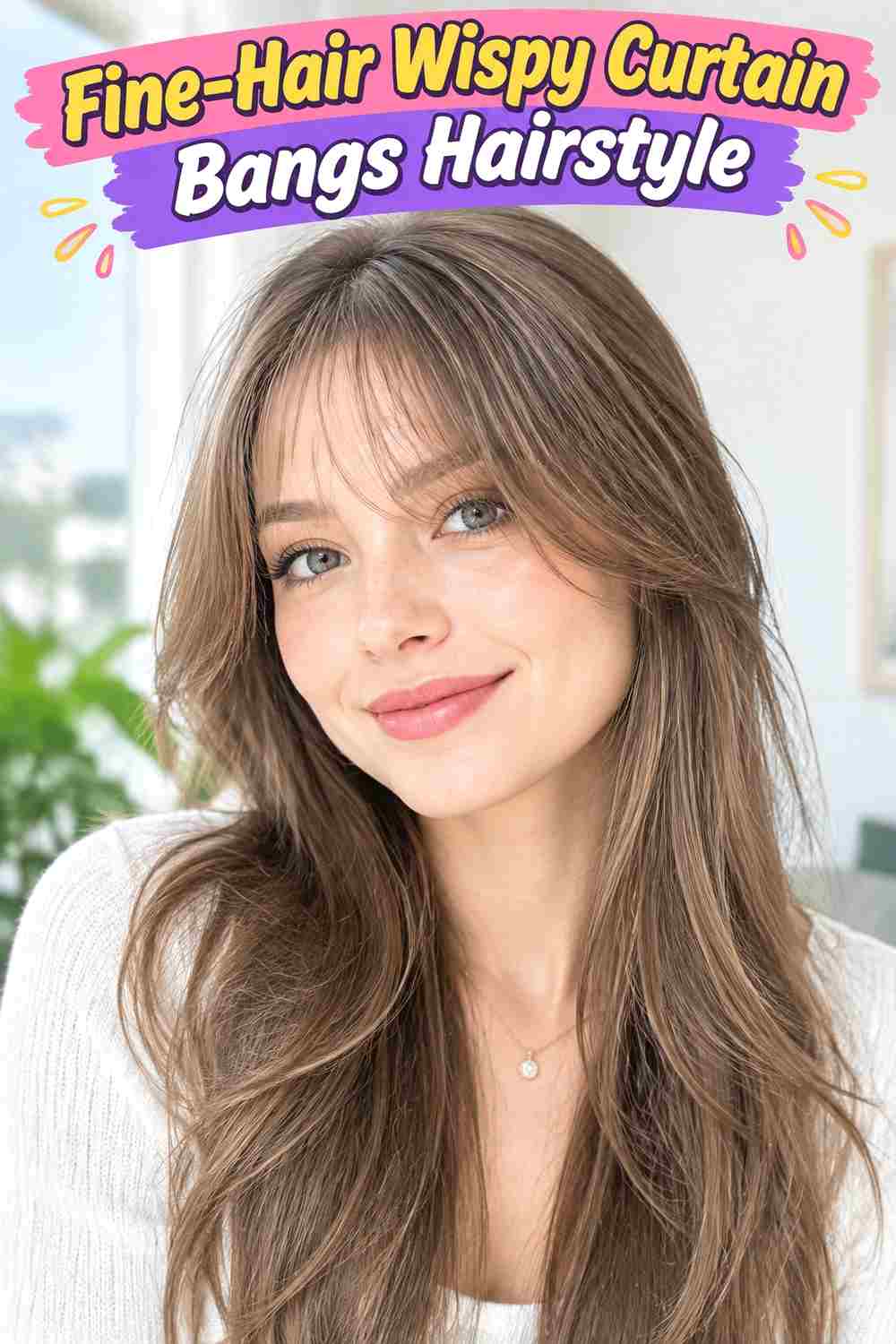
A narrow fringe section makes wispy curtain bangs especially adaptable to fine strands because it limits how much hair is removed from the surrounding lengths. The center can sit around brow level, with longer corners reaching the cheekbones. Visible gaps occur naturally, but the ends should still have enough substance to read as intentional bangs. Keeping the surrounding haircut fuller provides useful contrast.
Fine describes individual strand thickness rather than overall density, so the fringe depth should reflect how much hair you actually have. Dense fine hair may support a slightly fuller section, while fine, lower-density hair often needs a shallower one. Use lightweight mousse for flexible support, heat protectant before heated drying, and a small round brush to shape the fringe. A quick front refresh can be brief; styling the entire haircut takes longer.
At the salon, show exactly how narrow you want the fringe section and ask to preserve density at the temples. Discuss the dry center length rather than relying on a generic bangs description. Upkeep becomes useful when growth makes the fringe collapse into the eyes or causes the light center pieces to merge with the longer corners.
Pro tip:
Use only a small amount of mousse near the fringe roots, then distribute any residue toward the ends. Keeping product light prevents fine strands from joining together and exposing larger unintended gaps.
Make It Work for You:
If your fine strands are high density, you can use a slightly deeper fringe section while still keeping the tips separated. Adjust the amount of hair, not just the finished length, to preserve softness.
Watch Out For:
Do not assume fine hair should automatically be heavily thinned to create wispy bangs. Removing too much can make the ends look sparse; controlled section size can create lightness without unnecessary loss of density.
Dense-Hair Wispy Curtain Bangs Hairstyle
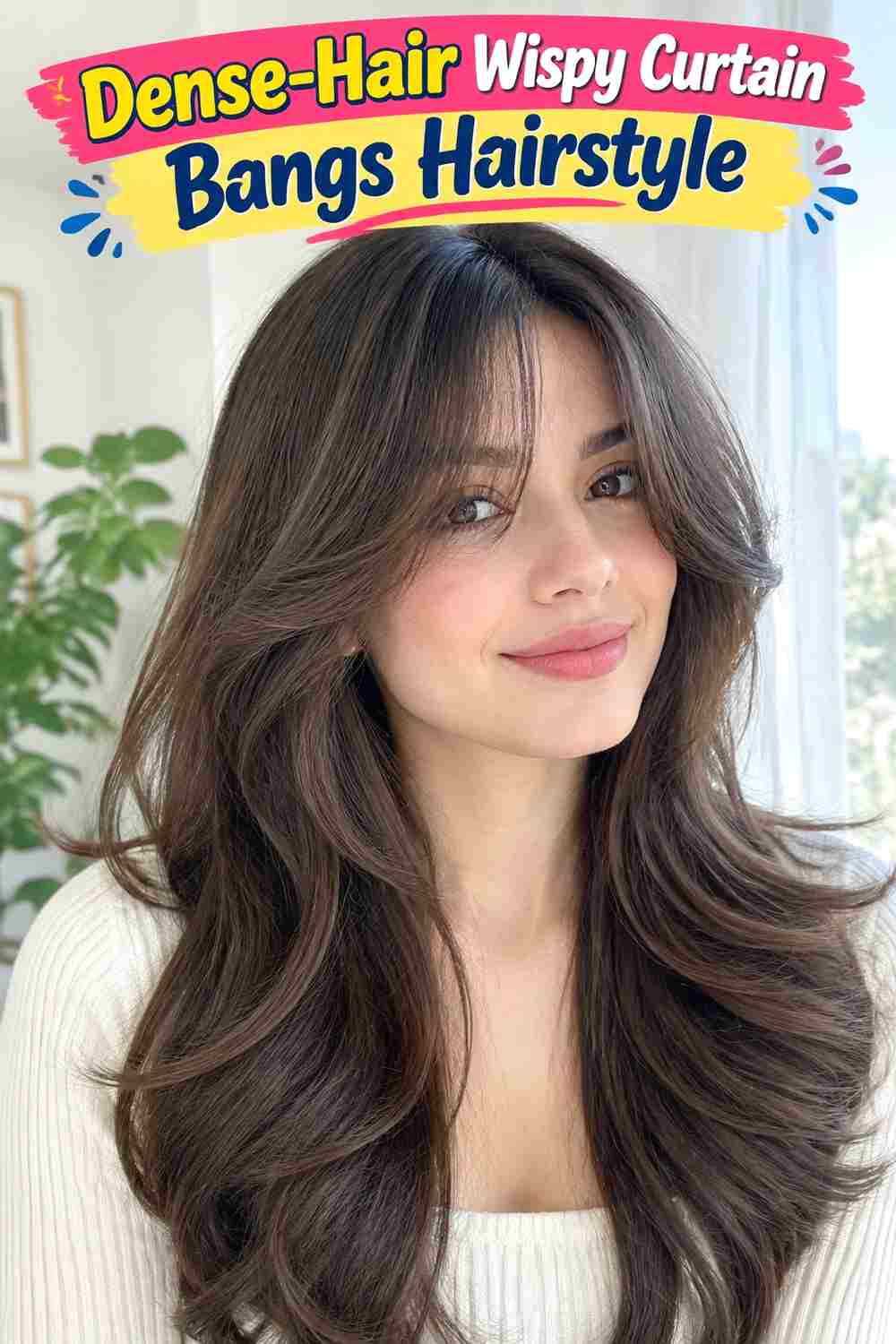
With dense hair, the challenge is creating visible airiness without turning the fringe into a thick curtain. A carefully sized front section can produce brow-level center pieces and longer cheekbone corners while leaving small gaps between them. The surrounding hair may carry face-framing layers to absorb the outer fringe smoothly. Keeping the center light allows the forehead to remain partly visible despite the overall density.
Straight and wavy dense hair can support the shape easily, while curly density needs additional attention to expansion and shrinkage. The goal is controlled placement rather than aggressive thinning. Use lightweight styling cream for separation, heat protectant before heated drying, and a round brush to establish the curtain sweep. A fringe refresh can be short, but washing and drying dense hair naturally takes longer.
At the salon, discuss the depth and width of the fringe section before cutting. Ask to retain enough weight in the outer corners for a smooth blend rather than thinning everything uniformly. Maintenance becomes useful when growth causes the center to become heavy or the longer corners stop opening away from the face.
Pro tip:
Style dense bangs in a few manageable sections instead of one large piece. Directing each section gently away from the center gives better control while preserving the separated, wispy finish you want.
Make It Work for You:
If your dense hair expands around the temples, keep the outer corners slightly longer so they fall into the face frame rather than stopping at the widest area. The fringe stays light while blending smoothly.
Watch Out For:
Avoid aggressive thinning throughout dense bangs. Randomly removing too much can create short pieces that spring outward; control the fringe through section size, purposeful shaping, and careful placement of internal weight.
Shaggy Wispy Curtain Bangs Hairstyle

Broken layers around the crown and face give these curtain bangs a deliberately less polished setting. The fringe opens near the center with short, separated pieces, while irregular outer corners merge into cheekbone- and jaw-level shag layers. Crown volume adds movement above, and the perimeter can remain textured rather than blunt. The result keeps the bangs airy while making their transition into the haircut intentionally loose.
Wavy hair works particularly well because natural bends support the irregular layer pattern. Straight hair can create similar movement with styling, while fine or lower-density hair should retain enough perimeter weight to avoid overly sparse ends. Use lightweight mousse for flexible body, heat protectant before thermal styling, and texturizing spray on selected dry layers. A fringe and crown refresh may be quick; recreating the entire shag texture from wet hair takes longer.
At the salon, identify the dry center fringe length and where the shortest surrounding shag layer should begin. Those landmarks keep the bangs connected to the haircut without making the front excessively heavy. Reshape when the fringe stops opening or crown layers grow long enough to lose their broken movement.
Pro tip:
After drying, separate only a few fringe and crown pieces with your fingertips. Leaving other sections grouped prevents the shaggy finish from becoming overly fragmented and keeps the curtain opening easy to see.
Make It Work for You:
If your ends are lower density, concentrate shaggy layering around the crown and face while keeping the lower perimeter stronger. The wispy bangs still blend naturally without requiring extensive removal throughout the lengths.
Watch Out For:
Too much texturizing at both the fringe and surrounding layers can erase the intended shape. Keep a clear center opening and identifiable outer corners, then add irregular separation around those structural points.
Air-Dried Wispy Curtain Bangs Hairstyle

An air-dried version works with natural bends and growth patterns instead of requiring the fringe to form a perfectly polished sweep. The center remains shorter and lightly separated, while longer outer pieces fall toward the temples or cheekbones. A slightly uneven opening can look natural as long as both sides still move away from the middle. The surrounding hair can remain straight, wavy, or softly textured.
This approach is most manageable when the fringe already cooperates reasonably well with its natural drying direction. Strong cowlicks may still need brief root correction. Use lightweight leave-in conditioner to reduce dryness, a wide-tooth comb to arrange damp hair without over-separating it, and flexible styling gel for gentle hold. Setting the fringe after washing takes little active time, although air-drying itself may take longer depending on density and conditions.
At the salon, explain that you prefer minimal heat styling and want the fringe shaped for its natural dry behavior. Show where the center and outer corners normally settle without tools. Maintain the bangs when growth changes that natural fall enough that they enter the eyes or stop opening comfortably.
Pro tip:
Arrange the fringe while it is evenly damp, then avoid repeatedly touching it as it dries. Letting the roots and ends settle undisturbed gives you a clearer picture of the natural curtain shape.
Make It Work for You:
If one side naturally bends more strongly, allow slight asymmetry rather than forcing both halves to match. Keeping the center opening and wispy separation matters more than producing perfectly mirrored fringe movement.
Watch Out For:
Do not expect air-drying to override a strong growth pattern. If the fringe repeatedly splits too widely or flips upward, adjust its placement or use a brief targeted styling step instead of adding excessive product.
Conclusion
Wispy curtain bangs hairstyle ideas vary most through center length, outer-corner placement, density, texture, and the haircut surrounding them. Brow-skimming centers create clearer fringe definition, while cheekbone-length versions blend more easily into layers. A bob gives the bangs a compact frame; lobs and long layers create a gradual transition. Waves and curls can retain natural movement, provided finished length accounts for bend and shrinkage. Fine or lower-density hair often benefits from a narrower fringe section, while dense hair needs thoughtful weight placement rather than indiscriminate thinning. Consider your natural part, growth direction, preferred forehead coverage, and styling routine before choosing the shape. The easiest version to maintain is usually one that works with how your front hair naturally falls.
Before Your Salon Visit
Choose one or two favorite references and save clear images showing the fringe in its normal resting position. Discuss your texture, density, face shape, natural part, growth direction, preferred length, upkeep, and daily styling routine. Point specifically to the shortest center piece, fringe width, visible forehead space, longer outer corners, and the face-framing layers you like. If you prefer one reference’s bangs but another haircut’s length or volume, explain those elements separately so your stylist can assess the combination.
FAQs
How often do wispy curtain bangs need trimming?
There is no fixed interval because growth rate and starting length vary. Use the fringe position as your guide. When the center consistently enters your eyes, the curtain opening becomes difficult to maintain, or the outer corners stop connecting naturally with your face frame, reshaping may be useful.
Can wispy curtain bangs work with curly hair?
Yes. Curly versions use separated curl groups rather than fine straight pieces to create lightness. The main consideration is shrinkage. Discuss the desired dry fringe position with your stylist and avoid judging length only while curls are wet or stretched, since different front sections may contract differently.
Are wispy curtain bangs suitable for fine or lower-density hair?
They can be, especially when the fringe section stays narrow. Fine strands and low density are different characteristics, so both should be considered. Preserving hair around the temples and keeping a fuller surrounding perimeter can provide light forehead framing without unnecessarily reducing fullness elsewhere.
Do wispy curtain bangs need heat styling every morning?
Not necessarily. If your natural part and growth direction cooperate with the curtain opening, dampening and repositioning the fringe may be enough. Strong cowlicks or a polished outward bend can require more styling. When using heated tools, apply heat protectant and keep the styling targeted to the small front section.