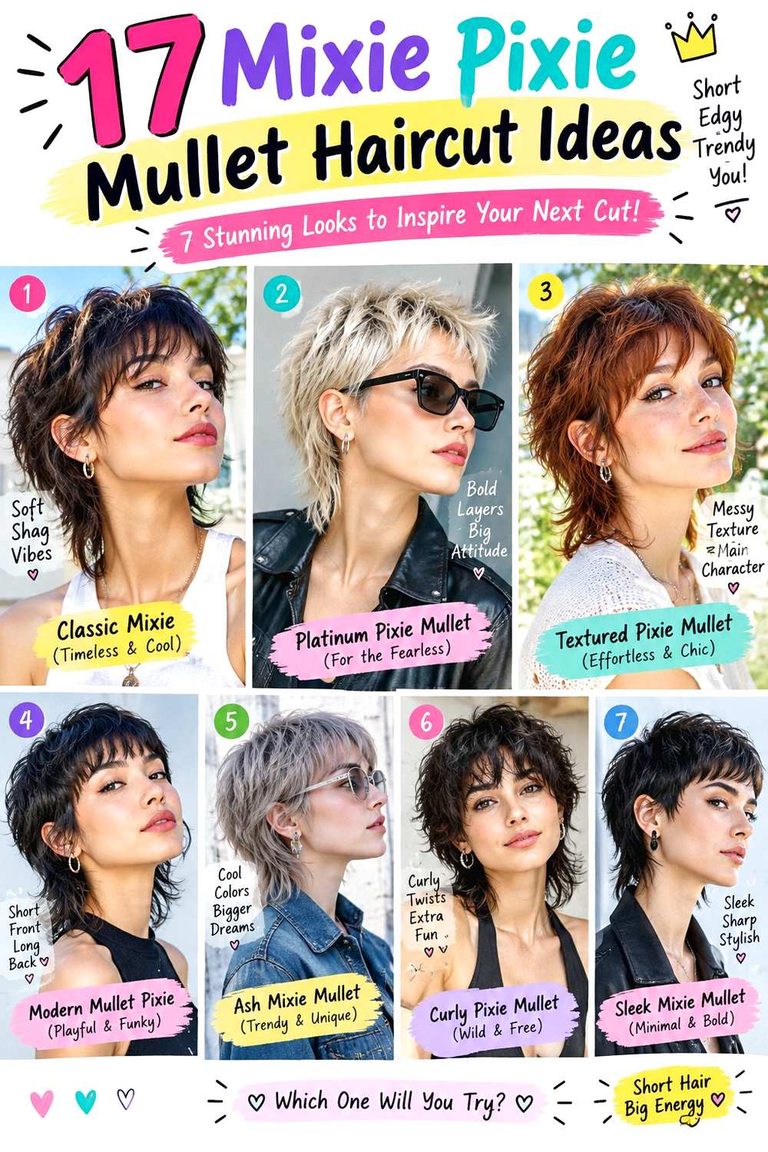
22 Understated Bob Haircut Ideas
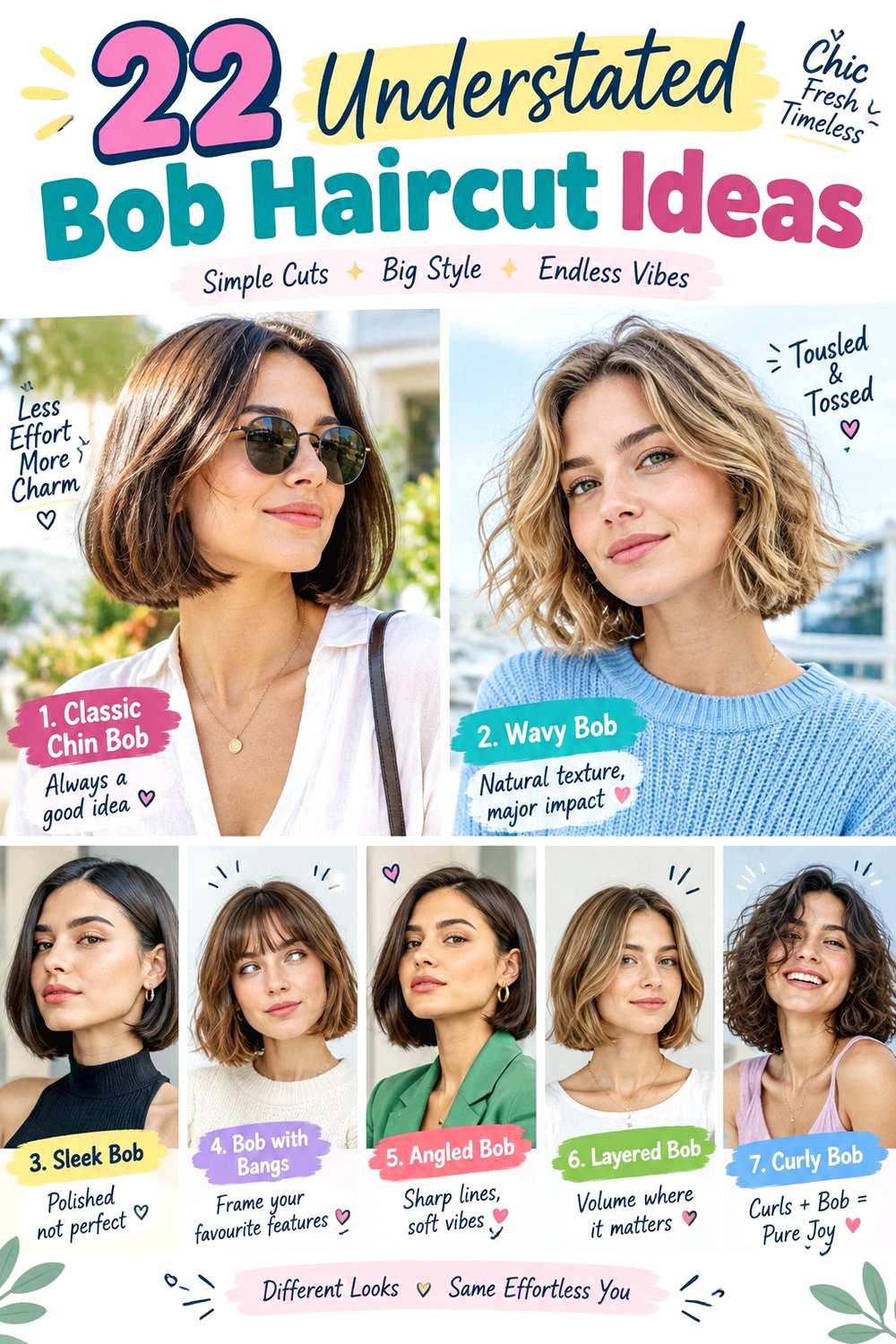
An understated bob relies on proportion, clean movement, and a controlled perimeter rather than dramatic layering or obvious styling tricks. Length can sit at the chin, skim the jaw, or extend toward the collarbone, while the ends stay blunt, softly textured, or lightly rounded. A center part makes the shape feel balanced, a side part shifts the weight, and a subtle fringe can soften the front without becoming the main feature.
Straight, wavy, curly, and coily textures can all support an understated bob haircut when the cut respects density, shrinkage, and natural movement. Fine hair often benefits from keeping more perimeter weight, while dense hair may need selective internal bulk removal instead of aggressive thinning. Face-framing pieces can begin around the cheekbones, jaw, or lower, depending on how much movement you want around the front and how often you prefer to restyle it.
Daily effort can stay modest when the haircut works with your natural texture. Some versions need only a quick part reset and a little end control, while smoother or more rounded finishes take longer on wash day. Fringe upkeep is separate from the rest of the cut, and shorter bobs show grow-out sooner around the jaw and nape. At the salon, focus on finished length, perimeter density, layer starting points, and the amount of crown volume you actually want to maintain.
Quick List
- Soft Center-Part Understated Bob Hairstyle
- Side-Part Understated Bob Hairstyle
- Jaw-Length Understated Bob Hairstyle
- Chin-Length Understated Bob Hairstyle
- Collarbone Understated Bob Hairstyle
- Blunt-Edge Understated Bob Hairstyle
- Soft-Layer Understated Bob Hairstyle
- Tucked-Behind-Ear Understated Bob Hairstyle
- Air-Dried Wavy Understated Bob Hairstyle
- Curly Understated Bob Hairstyle
- Coily Rounded Understated Bob Hairstyle
- Wispy Fringe Understated Bob Hairstyle
- Curtain Fringe Understated Bob Hairstyle
- No-Fringe Understated Bob Hairstyle
- Textured-Ends Understated Bob Hairstyle
- Rounded-Under Understated Bob Hairstyle
- Slightly Flipped Understated Bob Hairstyle
- Asymmetric Understated Bob Hairstyle
- Graduated Nape Understated Bob Hairstyle
- Low-Volume Understated Bob Hairstyle
- Face-Framing Understated Bob Hairstyle
- Minimal Shag Understated Bob Hairstyle
Soft Center-Part Understated Bob Hairstyle

A centered part and a jaw-skimming perimeter give this bob a quiet, balanced shape. Keep the line clean around the sides, with little or no visible stacking at the back, and let the ends fall naturally instead of forcing a sharp curve. The front can stay one length or include very subtle pieces beginning near the jaw. Straight and softly wavy hair show the simplicity clearly, while fine hair often benefits from the fuller edge.
Use a wide-tooth comb to establish the middle part, lightweight smoothing cream to control flyaways, and a vent brush to guide the hair into place while drying naturally or with gentle airflow. A quick refresh usually means resetting the part and smoothing the ends; a full wash-day style takes longer only if you want a more polished surface. As the cut grows, the jaw line will soften first, so reshaping becomes useful when the perimeter starts sitting too low.
At the salon, point to the exact finished jaw landmark and ask for a strong perimeter with minimal internal layering. If your hair bends or shrinks, discuss the dry length rather than relying only on a wet measurement.
Pro tip:
Set the center part while the roots are still damp, then leave it alone as the hair settles so the front develops a clean, natural fall.
Make It Work for You:
For fine hair, keep the face frame minimal and preserve extra weight at the corners, giving the bob movement without sacrificing the fuller bottom edge.
Watch Out For:
Avoid adding short crown layers for unnecessary lift. They can make a deliberately quiet center-part bob feel much more layered than intended.
Side-Part Understated Bob Hairstyle
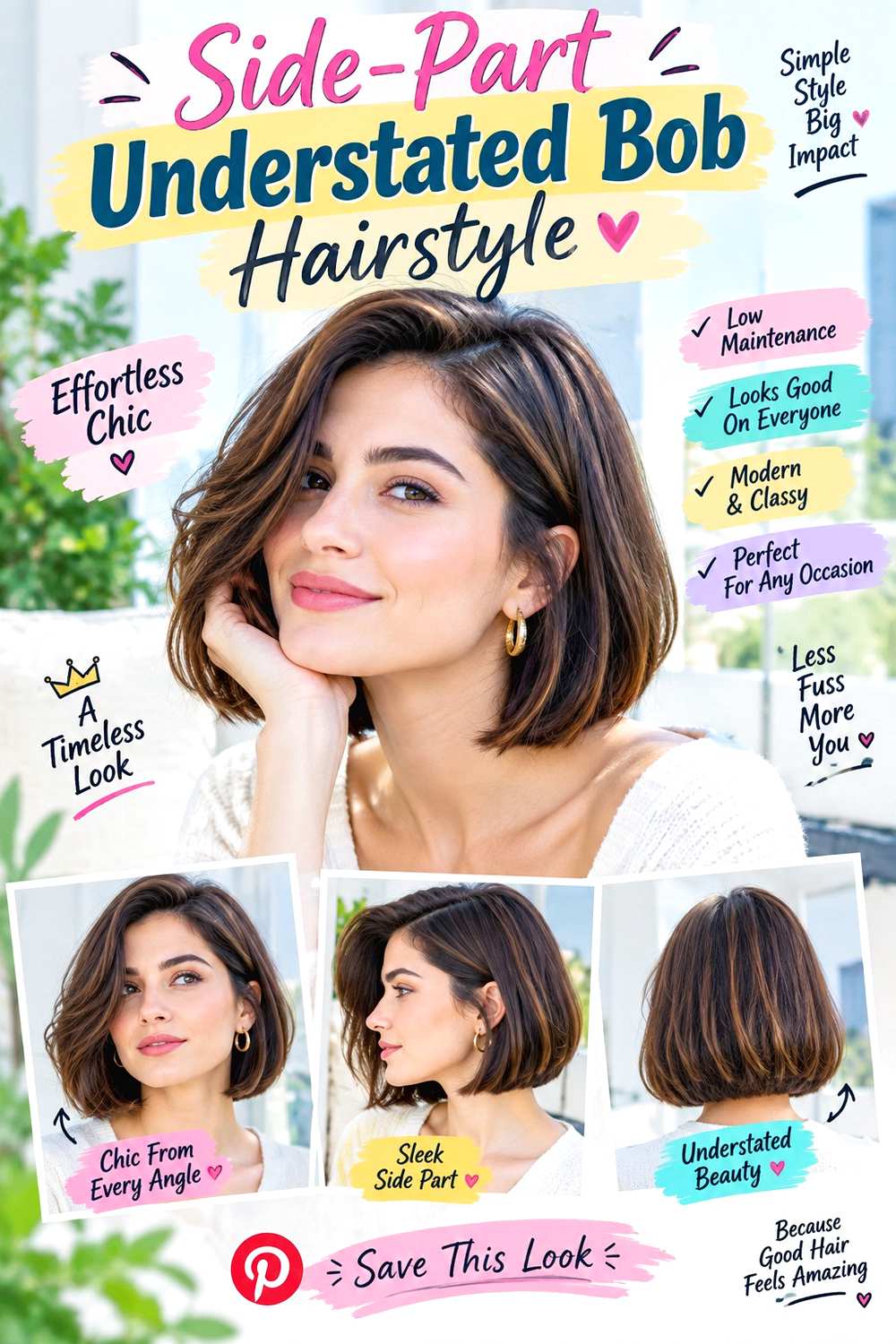
A soft side part gives an understated bob a little asymmetry without turning the haircut into a dramatic sweep. Keep the length around the jaw or just below it, with the heavier side falling smoothly toward the cheek and the lighter side easy to tuck behind the ear. Layers should stay restrained, mainly helping the front sit cleanly. Straight, wavy, and loosely curly textures can all wear the shape, especially when you prefer gentle movement instead of obvious volume.
Use a wide-tooth comb to set the part, lightweight mousse to support the heavier side without stiffness, and smoothing cream on the ends for a tidy perimeter. A quick refresh can focus on the part and one front section, while full wash-day styling may include drying the roots in their preferred direction. When the side begins collapsing or the perimeter grows past its intended point, the cut may need reshaping rather than more product.
For salon detail, show how far off-center you want the part and where the shortest front movement should begin. Ask to keep enough weight on the lighter side so the bob does not look unbalanced when tucked.
Pro tip:
Dry the heavier front section briefly opposite its final direction, then let it fall back over the part for soft lift without building obvious height.
Make It Work for You:
For curly or wavy hair, keep the part less severe and allow a little natural root movement so the cut still feels relaxed rather than tightly controlled.
Watch Out For:
Do not over-layer the lighter side simply because you tuck it often. Too little weight can make that profile look noticeably thinner than the other.
Jaw-Length Understated Bob Hairstyle
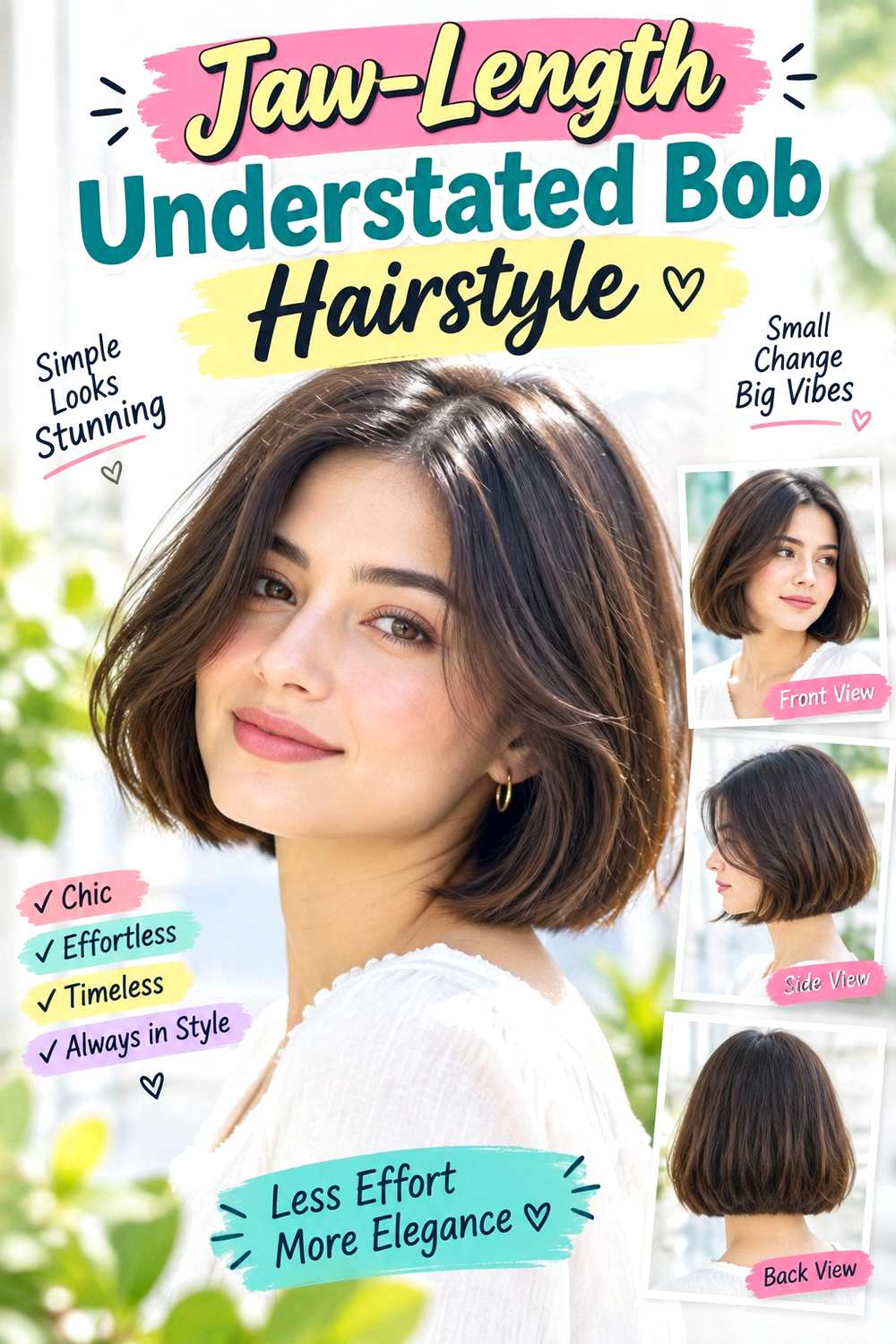
Ending directly around the jaw gives this bob a compact silhouette without needing bold layers or fringe. The perimeter should sit close to one clear landmark, with enough fullness at the bottom to keep the shape calm and deliberate. A center or slight side part can work, and the front may remain nearly one length. Straight, wavy, and softly curly hair can all use this structure, though shrinkage and natural bends should be considered before the final line is set.
Use a vent brush to guide the sides downward, lightweight smoothing cream to keep the ends together, and flexible hairspray only if the front needs gentle hold. A quick refresh usually means correcting an overnight bend at the perimeter; full wash-day styling can stay simple when the cut follows the natural texture. Grow-out becomes visible fairly quickly because even a small length change moves the edge below the jaw.
At the salon, point to the exact finished jaw position with your head neutral and ask for a full bottom edge. If your hair curls or bends, request that the final balance be checked dry so the two sides do not spring to different lengths.
Pro tip:
Check the perimeter with your head naturally upright rather than tilted, because even a small change in head position can distort a short jaw-level line.
Make It Work for You:
For loose curls, leave enough dry length for the perimeter to settle around the jaw after shrinkage instead of cutting to the same stretched landmark.
Watch Out For:
Avoid excessive end thinning on fine hair. Removing too much weight can make a compact jaw-length shape look sparse instead of quietly structured.
Chin-Length Understated Bob Hairstyle
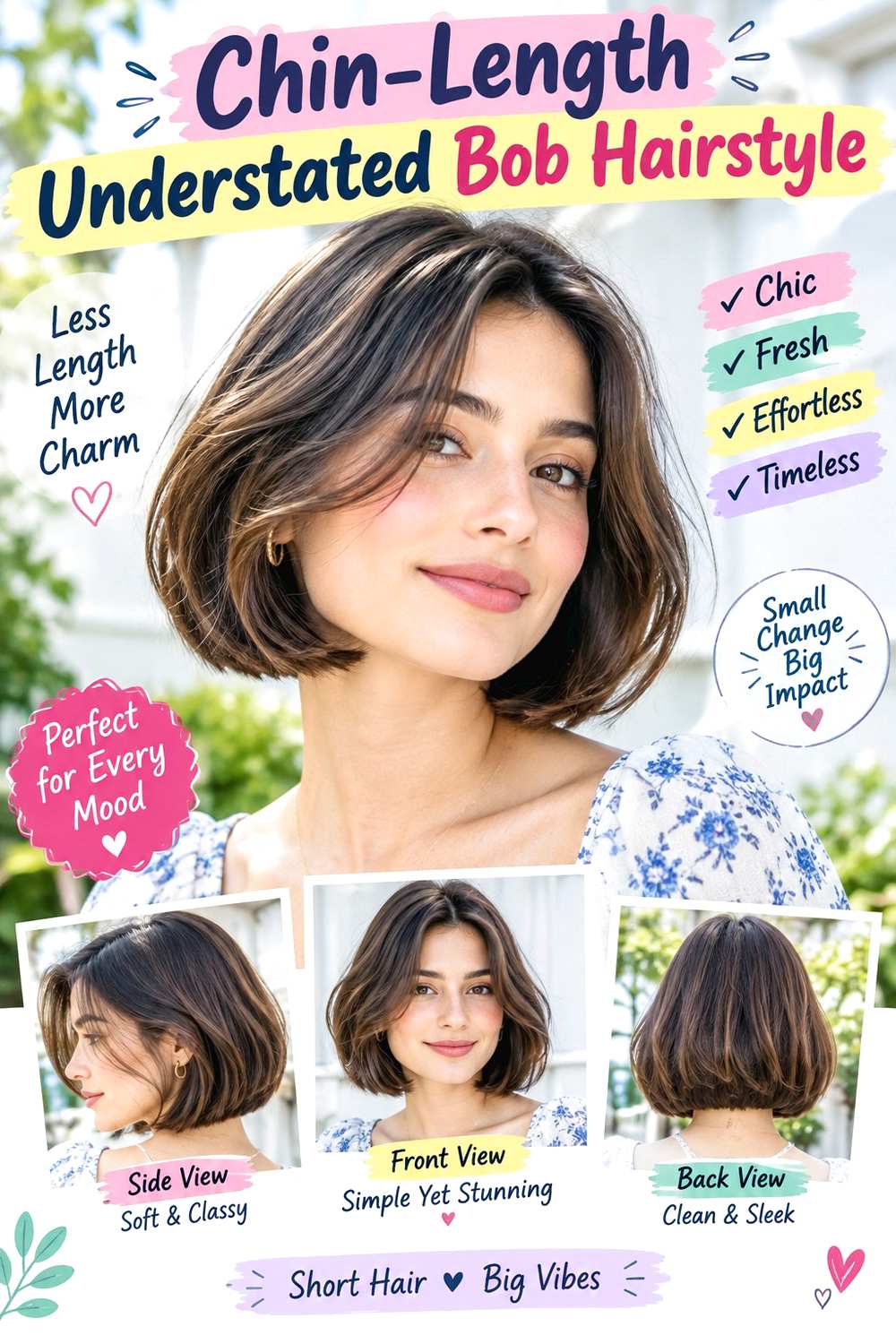
A chin-length bob feels especially quiet when the line is clean and the surface stays soft rather than highly sculpted. Keep the ends landing close to the chin, with subtle internal movement only where the hair needs help settling. The front can remain blunt or angle very slightly longer toward the sides. This shape is useful for straight, wavy, or fine hair because the shorter perimeter can make the bottom edge look fuller without relying on heavy styling.
Use a wide-tooth comb to arrange the part, lightweight mousse at the roots for modest lift, and smoothing cream through the final inch to keep the perimeter neat. A quick refresh may involve only reshaping one side after sleep, while full wash-day styling takes longer if you want a smoother finish. As the cut grows below the chin, it loses some of its compact proportion even if the ends remain healthy.
At the salon, specify the finished chin landmark and how much corner softness you want near the front. Ask the stylist to preserve perimeter density, especially if your ends are fine, rather than texturizing heavily for movement.
Pro tip:
Ask for the final perimeter to be checked after the hair settles naturally, since a chin-length line can look different once bends and growth patterns return.
Make It Work for You:
For thicker hair, keep the outer edge intact but remove bulk selectively inside the shape where the sides expand, preserving the clean chin-level outline.
Watch Out For:
Do not confuse softness with a heavily feathered edge. Too much texturing can erase the compact perimeter that gives this bob its understated shape.
Collarbone Understated Bob Hairstyle

A collarbone bob keeps the understated feeling while giving the hair more swing and a softer grow-out. Let the perimeter skim the collarbone, with long layers beginning no higher than the jaw or lower if you want a fuller edge. A center or loose side part can work, and face-framing pieces should blend gradually instead of creating a sharp layered staircase. Straight, wavy, curly, and coily textures can all adapt to this length with attention to shrinkage.
Use a wide-tooth comb to organize the part, lightweight mousse for gentle body, and smoothing cream on the ends to reduce frizz without flattening movement. A quick refresh can focus on the front and collarbone bends, while full wash-day styling may take longer if your texture needs defining or stretching. Grow-out is forgiving, but the shape can start feeling bottom-heavy when the front layers stop connecting.
At the salon, ask for the finished perimeter to meet the collarbone and identify the exact starting point for any face frame. Fine hair usually benefits from fewer layers, while dense hair can use selective internal weight reduction without weakening the outer line.
Pro tip:
Watch how the ends interact with your shoulders before choosing the exact length, since a collarbone edge may naturally flip where it meets clothing.
Make It Work for You:
For coily or curly hair, choose the perimeter from the dry shape and leave enough length for shrinkage so the cut still reads as collarbone-inspired.
Watch Out For:
Avoid adding short layers simply because the bob is longer. Too many can weaken the calm, continuous shape that separates this from a shag.
Blunt-Edge Understated Bob Hairstyle

A blunt edge makes an understated bob look deliberate without requiring dramatic texture or styling. Keep the perimeter around the jaw or slightly below, with the bottom line visibly full and only minimal internal adjustment for movement. The crown should stay simple, and the front can be center-parted or softly off-center. Straight and gently wavy textures show the blunt line most clearly, while fine hair often benefits from the stronger visual density at the ends.
Use a round brush to keep the perimeter controlled during drying, heat protectant before any heated airflow or smoothing, and lightweight smoothing cream on the final inch. A quick refresh can be limited to correcting flipped ends, while a full wash-day style takes longer if you want the line very polished. The cut needs reshaping when the bottom edge loses its clear position rather than simply when a certain amount of time passes.
At the salon, ask for a strong outer perimeter and explain that you want minimal visible layering. Small internal adjustments may still help dense sections sit correctly, but the edge should remain the defining feature.
Pro tip:
Keep the final bend at the ends subtle when styling so the straight perimeter remains visible instead of disappearing into a strongly rounded-under finish.
Make It Work for You:
For dense hair, preserve the exterior line while allowing selective internal bulk removal where the bob expands, keeping the blunt impression without unnecessary heaviness.
Watch Out For:
Do not ask for aggressive thinning to make the bob lighter. Sparse ends undermine the very perimeter that gives a blunt version its quiet structure.
Soft-Layer Understated Bob Hairstyle

Soft layers can keep a bob moving while still looking restrained when they begin low and blend into the perimeter. Keep the overall length between the jaw and shoulders, with the shortest layers starting around the lower cheek or jaw rather than high at the crown. The ends should stay substantial, and the part can remain flexible. Straight, wavy, and loosely curly textures suit this approach, especially if one-length hair tends to feel heavy around the sides.
Use lightweight mousse to support movement, a vent brush to guide the layers as they dry, and smoothing cream on the ends for definition without stiffness. A quick refresh can focus on the front pieces, while full wash-day styling may include more time shaping the layered sections. When the layers grow long enough to merge into one block, the bob may feel heavier even before the perimeter needs trimming.
At the salon, identify exactly where you want the shortest layer to begin and ask to preserve the bottom edge. Fine hair may need fewer layers, while dense hair can use selective internal reduction rather than aggressive thinning throughout the cut.
Pro tip:
Ask for the shortest layer to connect visibly into the perimeter rather than floating above it, which keeps the movement soft and the outline cohesive.
Make It Work for You:
For lower-density hair, restrict layering to the front and a few upper sections so the ends stay full while the bob still gains natural movement.
Watch Out For:
Avoid requesting “lots of soft layers” without a landmark. Too many short pieces can quickly turn an understated bob into a much shaggier shape.
Tucked-Behind-Ear Understated Bob Hairstyle

Tucking one side behind the ear gives a simple bob a small styling change without altering the haircut’s core shape. Keep the length around the jaw or just below, with a clean perimeter and enough side weight that the tucked section does not look sparse. A soft side part works naturally, though a center part can create a more balanced front. Straight, wavy, and softly curly textures all suit the idea when the ear-side section sits comfortably.
Use a wide-tooth comb to set the part, lightweight styling cream to keep the tucked side neat, and a vent brush to direct the opposite front section. A quick refresh usually means resetting the tuck and smoothing one or two ends; full wash-day styling can stay modest when the cut follows the natural texture. Grow-out is easy until the front becomes too long to tuck cleanly without pushing outward.
At the salon, explain which side you most often tuck and ask for enough density around that temple to keep the profile full. Avoid over-layering the tucked side, especially on fine hair, because removing too much weight can make the asymmetry look accidental.
Pro tip:
Choose the tuck after the hair has settled into its natural part, which helps the side stay neat without forcing strands against their preferred direction.
Make It Work for You:
For thick hair, keep the tucked side dense at the perimeter but reduce hidden bulk only where it bunches behind the ear during normal wear.
Watch Out For:
Do not cut the ear-side section dramatically shorter just to make tucking easier. That can limit styling options once you wear the bob loose.
Air-Dried Wavy Understated Bob Hairstyle
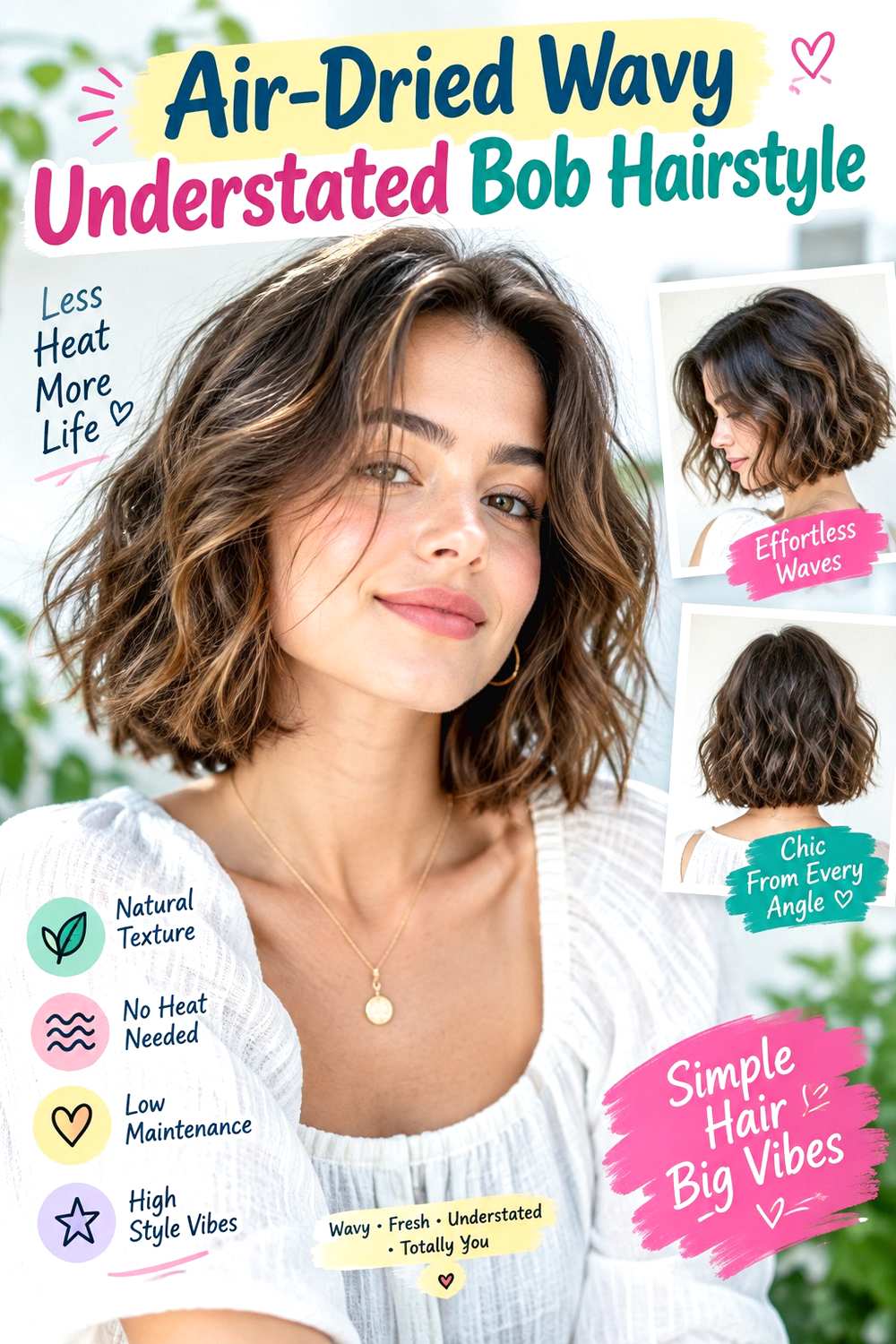
Natural wave pattern can make an understated bob look finished without a highly polished surface. Keep the perimeter between the jaw and shoulders, with restrained layering that lets broad bends form rather than forcing lots of small pieces. A center or loose side part works, and the crown should retain enough weight to avoid becoming overly fluffy. This version suits naturally wavy hair especially well and can also help straighter hair that develops gentle bends as it dries.
Use lightweight mousse to support the wave pattern, a wide-tooth comb to distribute product without breaking up sections, and a diffuser if you want more controlled drying. A quick refresh can focus on re-dampening flattened front waves, while a full wash-day routine takes longer because the entire pattern needs to settle. As the cut grows, the ends may start pulling the waves downward and making the silhouette feel heavier.
At the salon, ask for layers that support your natural bend without removing too much perimeter weight. Show where the first visible movement usually forms and request that the finished shape be checked dry, since wavy sections can sit at slightly different lengths once settled.
Pro tip:
Let the waves dry with minimal touching, then separate only sections that need it so the bob keeps broad, calm movement instead of becoming fluffy.
Make It Work for You:
For fine waves, keep the layers long and sparse, allowing the natural bend to create movement while most of the visual density remains at the perimeter.
Watch Out For:
Avoid correcting every uneven bend with scissors. Wavy hair can sit differently each wash, so judge the overall dry shape before changing the cut.
Curly Understated Bob Hairstyle

A curly bob can stay understated when the shape follows the curl pattern instead of relying on dramatic layering. Keep the finished perimeter around the jaw or upper neck, allow the sides to remain softly rounded, and use only enough layering to prevent the bottom from becoming overly triangular. A center, side, or natural part can work depending on growth direction. This cut suits curly hair best when individual curl groups remain intact and shrinkage is considered before the final length is chosen.
Use lightweight leave-in conditioner for softness, curl gel for definition, and a diffuser for controlled drying. A full wash-day style takes longer because the curls need time to form and dry, while a quick refresh can target only flattened or frizzy sections. Grow-out becomes noticeable when the lower curls feel heavier and the upper shape loses its balance.
At the salon, discuss the finished dry perimeter and where any shorter layers should begin. Ask the stylist to preserve curl groups and avoid indiscriminate thinning. If you want a shorter front section, judge it by its dry shrinkage rather than a stretched measurement so it does not spring much higher than expected.
Pro tip:
Let your curls reach their finished dry position before judging the perimeter, especially near the front where shrinkage can change the apparent bob length most.
Make It Work for You:
For looser curls, keep the upper layers slightly longer so they blend into the sides and maintain the bob’s understated rounded outline as they move.
Watch Out For:
Do not thin curl groups randomly to reduce volume. Uneven weight removal can create gaps and frizz instead of the controlled fullness this bob needs.
Coily Rounded Understated Bob Hairstyle
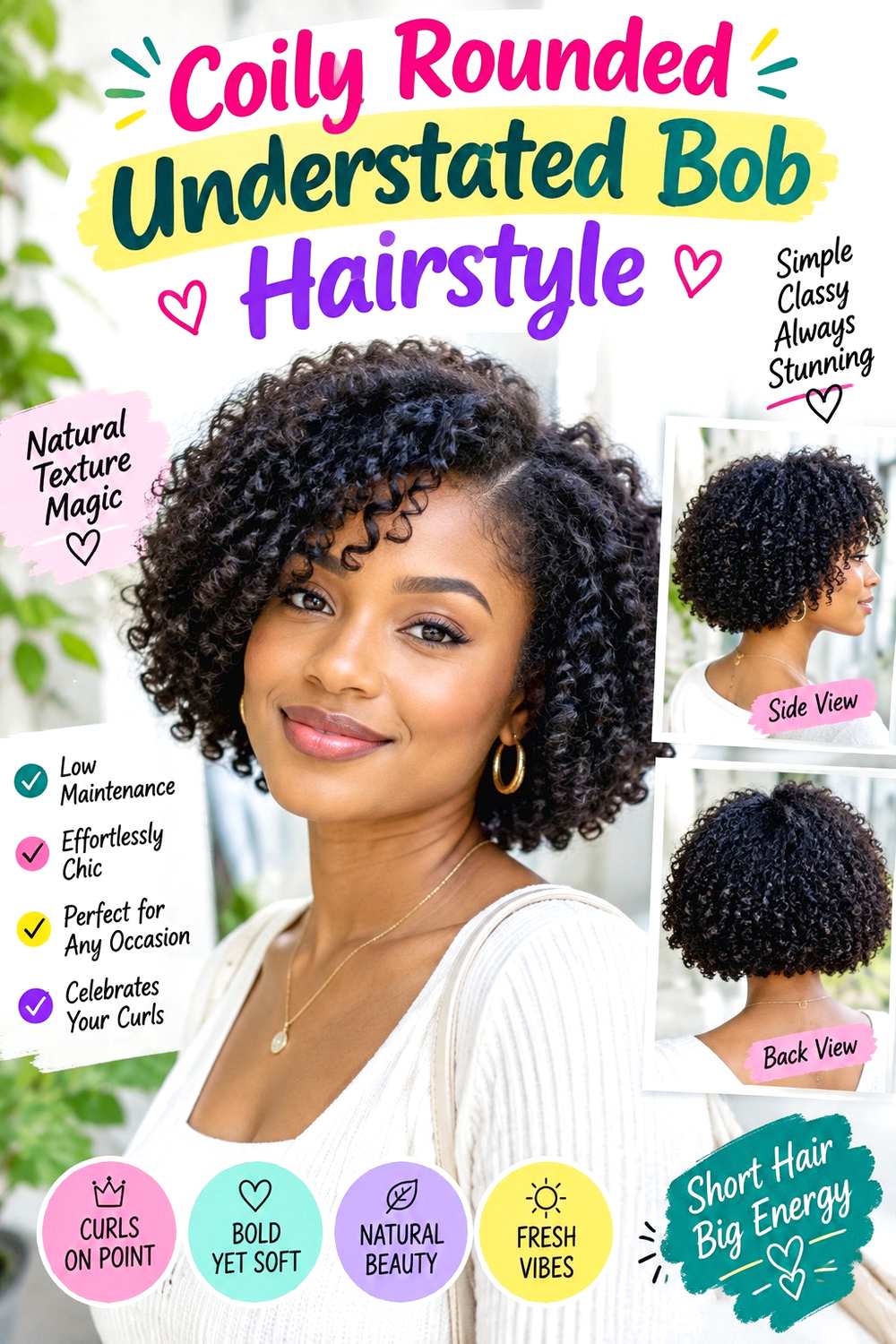
A rounded coily bob keeps natural volume visible while maintaining a calm, compact outline. Let the finished shape sit around the jaw or slightly below, with the sides forming a soft curve and the lower edge retaining enough density to avoid a hollow perimeter. The crown can have modest lift, but the cut should not depend on very short layers. Coily hair works best when the shape is built around natural shrinkage and the way different sections group when fully dry.
Use lightweight leave-in conditioner for slip, curl cream to support coil definition, and a wide-tooth comb only where gentle detangling or distribution is needed. A full wash-day routine takes longer because the coils must be defined and dried before the final silhouette is visible. A quick refresh can focus on compressed outer sections. Grow-out is usually noticeable when the sides widen or the lower edge starts feeling too heavy.
At the salon, discuss the dry finished shape, perimeter fullness, and how much crown height you want. Ask for selective weight adjustment only where density creates bulk, rather than thinning the whole bob and disrupting the coily outline.
Pro tip:
Shape the outer silhouette only after the coils are fully dry, then lift compressed areas gently so the rounded form reflects the hair’s real shrinkage.
Make It Work for You:
For very dense coils, keep the perimeter full while reducing weight selectively inside areas that widen, preserving the rounded outline and natural movement.
Watch Out For:
Avoid stretching the hair just to check symmetry. Compare both sides in their natural dry state so the finished shape reflects how you actually wear it.
Wispy Fringe Understated Bob Hairstyle

A wispy fringe adds softness to an understated bob without making the front feel heavy. Keep the bangs light enough to show some forehead, with the center near brow level and slightly longer corners that blend toward the temples. The bob itself can finish at the jaw or just below, with a fuller perimeter and restrained layering. Straight and wavy textures show the airy fringe clearly, while fine hair may benefit from keeping the bang section relatively narrow.
Use a small round brush to direct the fringe, lightweight styling cream to separate the ends, and flexible hairspray for gentle hold. A quick refresh usually involves the bangs alone, while a full wash-day style takes longer if the entire bob needs smoothing or shaping. Fringe grow-out becomes obvious before the rest of the haircut when pieces start falling into the eyes.
At the salon, specify the finished dry fringe length, width, and longer outer corners. Ask to preserve the bob’s perimeter density so the front softness does not make the whole cut look thin. If your hair has a cowlick, discuss how that growth direction may affect the fringe before it is shortened.
Pro tip:
Dry the fringe before the rest of the bob so its root direction sets first, making it easier to keep the center light and separated.
Make It Work for You:
For sparse fringe density, use a narrower bang section and slightly longer outer corners so the front looks intentional without borrowing too much hair.
Watch Out For:
Do not over-thin the fringe to make it wispy. Controlled section size and light separation create softness without leaving obvious gaps across the forehead.
Curtain Fringe Understated Bob Hairstyle
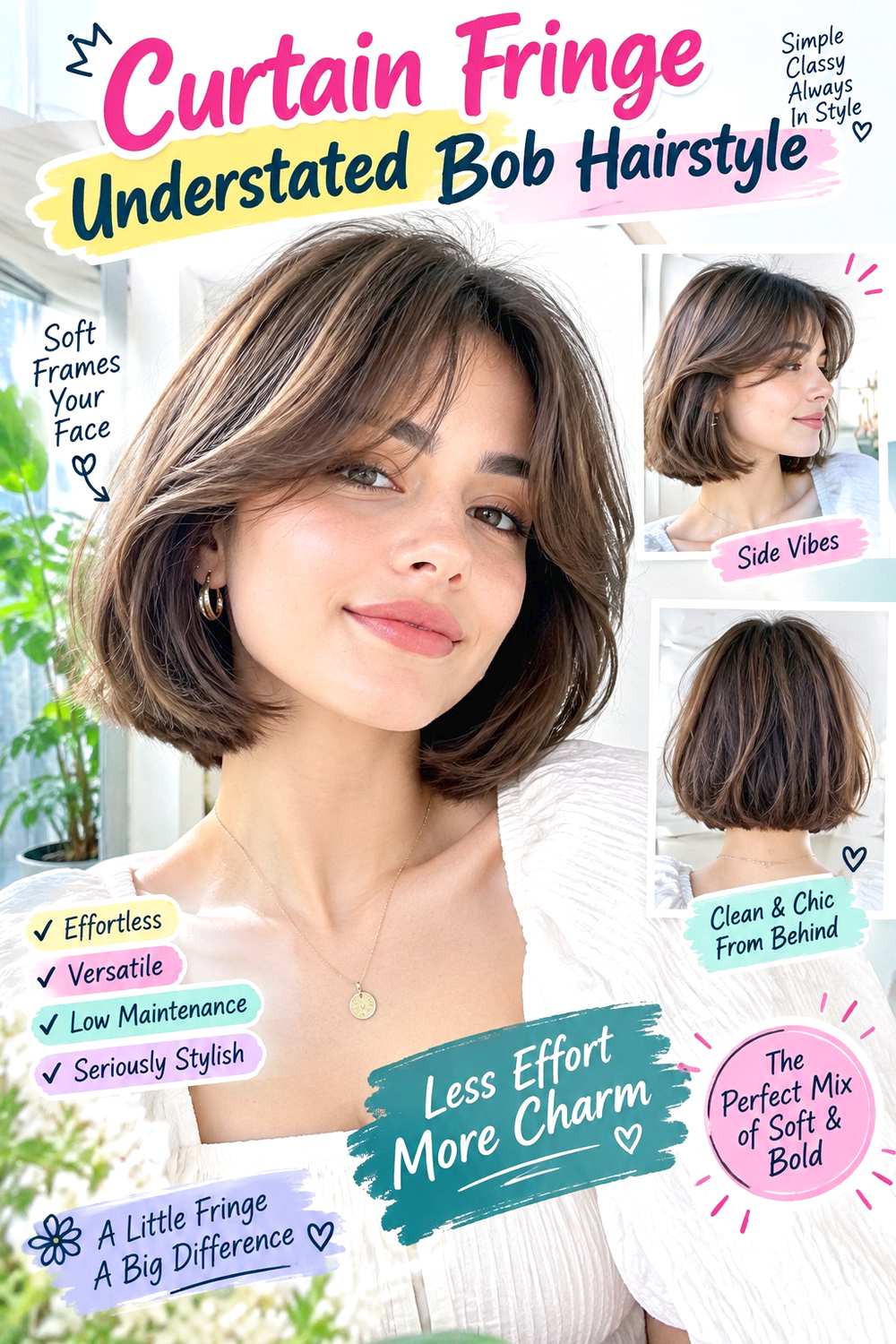
Curtain fringe gives a bob subtle movement around the eyes and cheekbones while keeping the overall shape understated. Let the center open naturally, with the shortest pieces sitting around the brows or upper cheek and the outer sections extending toward the cheekbones or jaw. Keep the bob perimeter full and the crown relatively simple. Straight, wavy, and loosely curly textures can all wear this shape if the fringe length is adapted to natural movement and shrinkage.
Use a round brush to direct each fringe side away from the face, heat protectant before heated drying, and lightweight smoothing cream on the ends. A full wash-day style takes longer when the fringe needs deliberate shaping, while a quick refresh may involve only re-dampening and redirecting the front. Grow-out is relatively forgiving because the longer corners can blend into face-framing layers.
For salon detail, show where you want the shortest center point and the longest outer corner to finish. Ask for enough weight in the fringe that it separates into two soft sections without becoming sparse. If you prefer air-drying, tell the stylist so the front is cut to work with less directional styling.
Pro tip:
Let the two fringe sides cool in their outward direction before loosening them, helping the center opening stay soft instead of collapsing forward immediately.
Make It Work for You:
For wavy hair, keep the curtain pieces slightly longer and let natural bends provide the separation, reducing how much directional styling the fringe needs daily.
Watch Out For:
Avoid making the center too short if you dislike frequent bang maintenance. A longer opening blends into the bob more easily as it grows.
No-Fringe Understated Bob Hairstyle

Skipping fringe keeps the front of an understated bob especially simple and lets the perimeter, part, and natural texture do most of the work. Keep the length around the jaw or just below, with front pieces long enough to tuck or fall cleanly beside the cheeks. A center part creates symmetry, while a side part adds a little movement without changing the cut. Straight, wavy, curly, and coily textures can all use this clean framework.
Use a wide-tooth comb to establish the part, lightweight smoothing cream to control the front, and a vent brush to guide the sides as they dry. A quick refresh may take only a minute or two when the part is cooperative, while full wash-day styling depends on how polished you want the surface. Grow-out is easier than with bangs, though the perimeter still changes character as it moves below the intended jaw or neck landmark.
At the salon, explain that you want the front to remain long enough for easy tucking and ask for minimal shortening around the face. Preserve perimeter weight if your hair is fine, and discuss dry shrinkage if curls or coils make the apparent front length variable.
Pro tip:
Choose the part before the final perimeter check so your stylist can see how the front naturally falls when you wear the bob most often.
Make It Work for You:
For coily or curly hair, keep the front long enough to account for shrinkage and tucking, rather than matching a straight reference length exactly.
Watch Out For:
Do not shorten the front impulsively just because it falls forward one day. Growth direction and part placement may solve the issue without cutting.
Textured-Ends Understated Bob Hairstyle
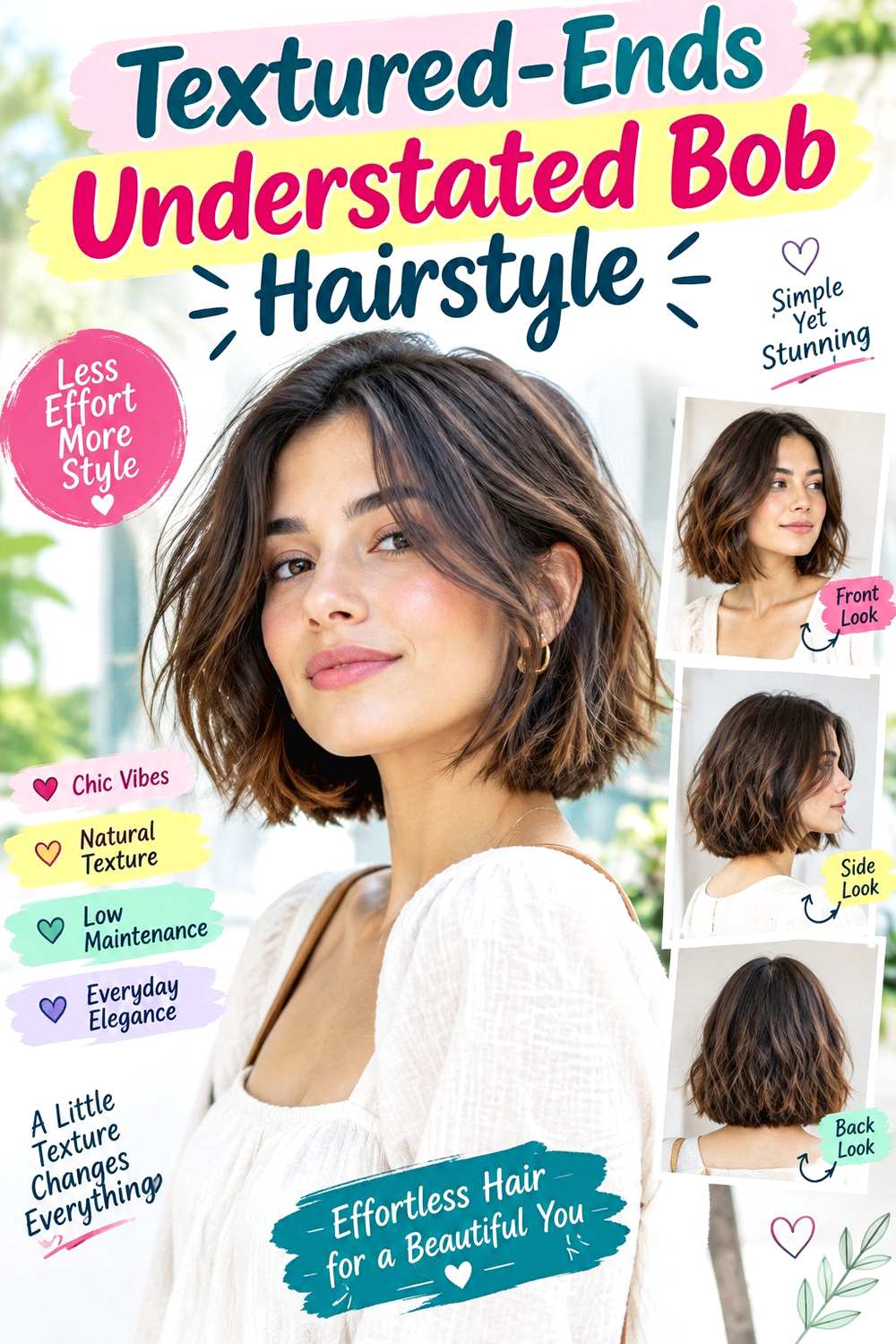
Textured ends make a bob feel lighter without turning it into a heavily layered cut. Keep the main length around the jaw or upper neck, preserve a visible perimeter, and add small variations only through the last inch or so. The crown should stay simple, while the front can be center-parted, side-parted, or lightly face-framed. Straight and wavy hair show the separated tips most clearly, and denser hair may appreciate restrained internal weight adjustment above the edge.
Use lightweight mousse for subtle body, smoothing cream through the mid-lengths, and a small amount of styling paste on selected dry tips. A quick refresh can focus on re-separating the ends, while full wash-day styling remains moderate because the shape does not depend on elaborate layers. As the cut grows, the textured edge can become heavier and lose its deliberate movement.
At the salon, explain that you want texture concentrated at the ends while keeping the perimeter readable. Fine hair should avoid aggressive thinning, since sparse tips can undermine the understated shape. Ask the stylist to show how much weight is being removed before the edge becomes too wispy.
Pro tip:
Separate only a few dry tips after styling instead of breaking apart the entire perimeter, keeping the texture subtle and the bob visually connected.
Make It Work for You:
For fine ends, keep most of the perimeter blunt and concentrate texture near the front, where a little movement can show without reducing overall density.
Watch Out For:
Do not mistake aggressive thinning for texture. Once the edge becomes transparent, the understated bob can lose its clean, substantial outline.
Rounded-Under Understated Bob Hairstyle

A softly rounded-under finish gives a simple bob a controlled curve without making the haircut look overly styled. Keep the length around the jaw or slightly below, with a clean perimeter and minimal layering so the ends can bend together. A center or subtle side part works, and the crown should stay smooth with only modest lift. Straight and softly wavy hair are the easiest starting points, though other textures can wear the cut without the rounded finish.
Apply heat protectant before heated drying, use a round brush to guide the final inches inward, and finish with lightweight smoothing cream to keep the edge together. A full wash-day style takes longer because the curve is created during drying, while a quick refresh can focus on the sections that flipped overnight. Grow-out changes the bend when the ends start resting on the shoulders or collar.
At the salon, ask for a perimeter that supports a soft inward curve without heavy graduation. Point to the finished dry length and explain that you want the bob to look clean even when not styled under. That keeps the haircut practical on lower-effort days.
Pro tip:
Focus the inward bend on only the final inches, leaving the mid-lengths straighter so the bob keeps a modern, restrained silhouette.
Make It Work for You:
For thicker hair, retain enough internal space for the perimeter to curve without ballooning, but keep the outer line intact and visibly full.
Watch Out For:
Avoid creating an extreme inward curl every day. Too much bend can shorten the visual length and make a subtle bob look overly set.
Slightly Flipped Understated Bob Hairstyle

A slight outward flip at the ends gives an understated bob a small amount of movement without changing its basic structure. Keep the perimeter between the jaw and shoulders, with minimal layering and enough weight for the bottom edge to remain visible. The front can stay center-parted or softly off-center, while only the final inches turn outward. Straight and wavy hair show the flip most clearly, and shoulder-skimming lengths often create some of this movement naturally.
Apply heat protectant before heated styling, use a round brush to direct the last inches outward, and finish with flexible hairspray for light hold. A full wash-day style takes longer because the bend is shaped during drying, while a quick refresh can focus only on sections that have fallen flat. As the cut grows, the ends may flip more strongly when they begin meeting the shoulders.
At the salon, explain that you want a clean bob perimeter with enough weight to support a subtle outward bend. Ask for minimal layering through the bottom so the flip reads as a styling detail rather than a shaggy edge. If your hair already bends at the shoulder, choose the finished length around that natural behavior.
Pro tip:
Turn only the final inch or two outward, keeping the rest of the bob smooth so the flip stays subtle rather than becoming the whole hairstyle.
Make It Work for You:
For naturally wavy hair, use the direction your ends already prefer and keep the haircut simple, reducing how much daily styling the flip requires.
Watch Out For:
Do not cut the perimeter solely to force a flip. Shoulder contact and natural growth direction can change how the ends behave from day to day.
Asymmetric Understated Bob Hairstyle

A small length difference from one side to the other can make a bob feel intentional without becoming dramatically asymmetric. Keep the shorter side near the jaw and let the longer side extend only slightly below it, with a smooth transition through the back. The perimeter should remain clean, and layering should stay restrained so the angle is easy to read. Straight and softly wavy hair show the difference most clearly, though loose curls can wear a softer version.
Use a wide-tooth comb to establish the preferred part, lightweight smoothing cream to keep the perimeter clear, and a vent brush to guide the longer side into place. A quick refresh can focus on the front and part, while full wash-day styling may take longer if you want a very polished surface. Grow-out gradually reduces the contrast, so reshaping is useful when the angle becomes too subtle or uneven.
At the salon, specify the exact finished landmark for both sides and how visible you want the difference to be. Ask for the back to connect smoothly rather than creating a sudden step. Fine hair usually benefits from keeping both edges full so the asymmetry looks deliberate instead of sparse.
Pro tip:
Keep the length difference modest if you want a quiet result, using the part and natural fall to emphasize asymmetry rather than a dramatic angle.
Make It Work for You:
For curls, base each side on its dry position and shrinkage so the finished asymmetry looks intentional instead of being exaggerated by uneven spring.
Watch Out For:
Avoid adding heavy layers on top of a subtle asymmetric line. Too many competing shapes can make the controlled length difference difficult to read.
Graduated Nape Understated Bob Hairstyle
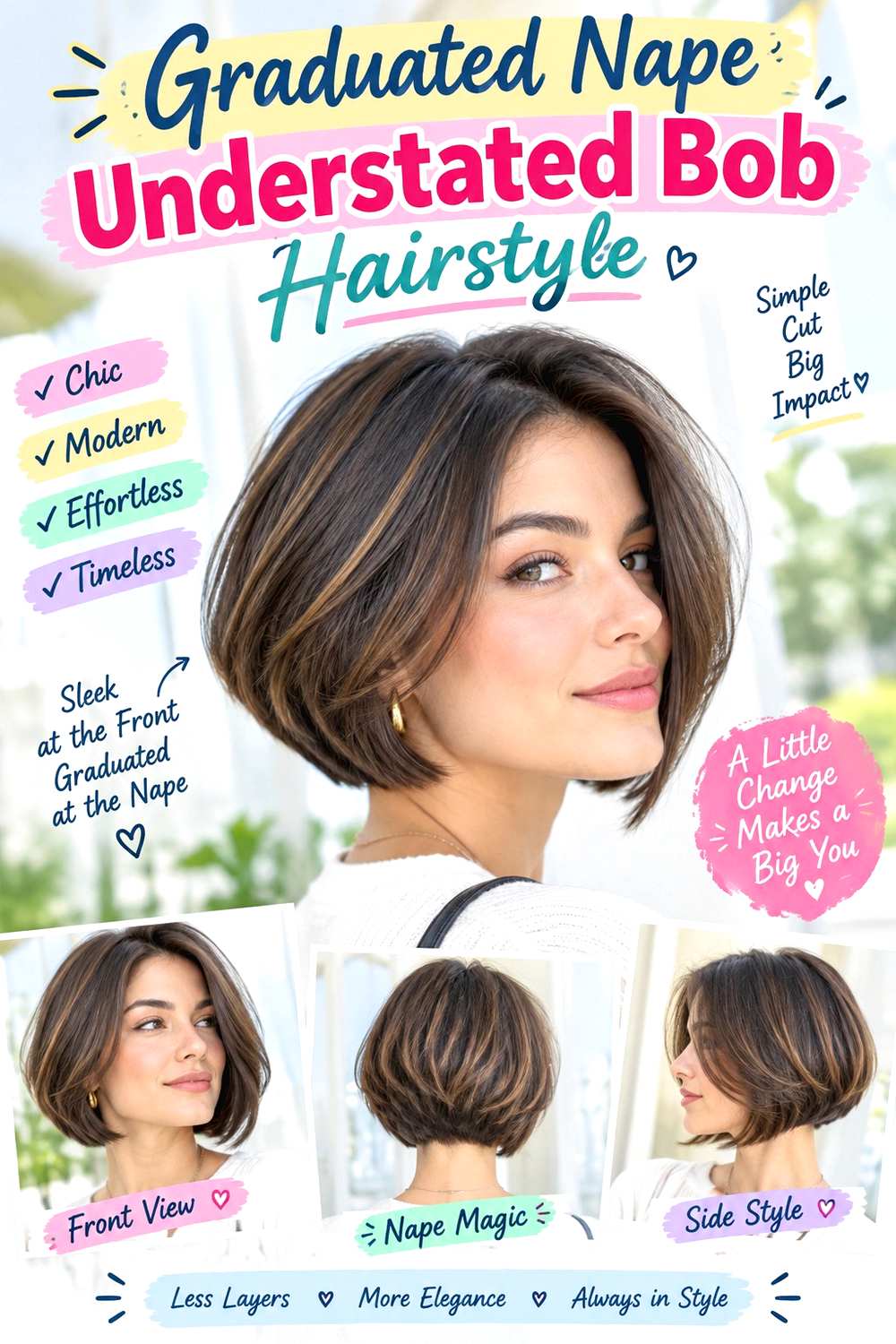
A lightly graduated nape adds shape at the back while keeping the front and sides simple. Let the front finish around the jaw or just below, then build a subtle increase in length toward the sides from a slightly shorter nape. The graduation should stay low and quiet rather than forming a strongly stacked bob. Straight, wavy, and dense hair can all use this structure, especially when the back tends to feel heavy in a one-length cut.
Use a round brush to guide the back under, heat protectant before heated drying, and smoothing cream to keep the perimeter controlled. A full wash-day style takes longer because the back shape benefits from directional drying, while a quick refresh can focus on any nape sections that have flipped. Grow-out becomes noticeable when the graduation loses its clean transition and the back starts sitting heavier.
At the salon, ask for low graduation and specify how short you are comfortable going at the nape. Explain that you want movement without obvious stacking. Dense hair may need selective internal weight reduction, but the outer line should remain soft and continuous so the bob still feels understated from the side.
Pro tip:
Ask to see the side profile before final refinement so you can confirm the graduation looks subtle rather than noticeably stacked behind the ear.
Make It Work for You:
For dense hair, keep the graduation low and remove bulk selectively inside the nape, preserving a smoother outer line and easier grow-out.
Watch Out For:
Avoid raising the graduation too high if you want an understated result. A higher stack creates much stronger back volume and changes the silhouette.
Low-Volume Understated Bob Hairstyle
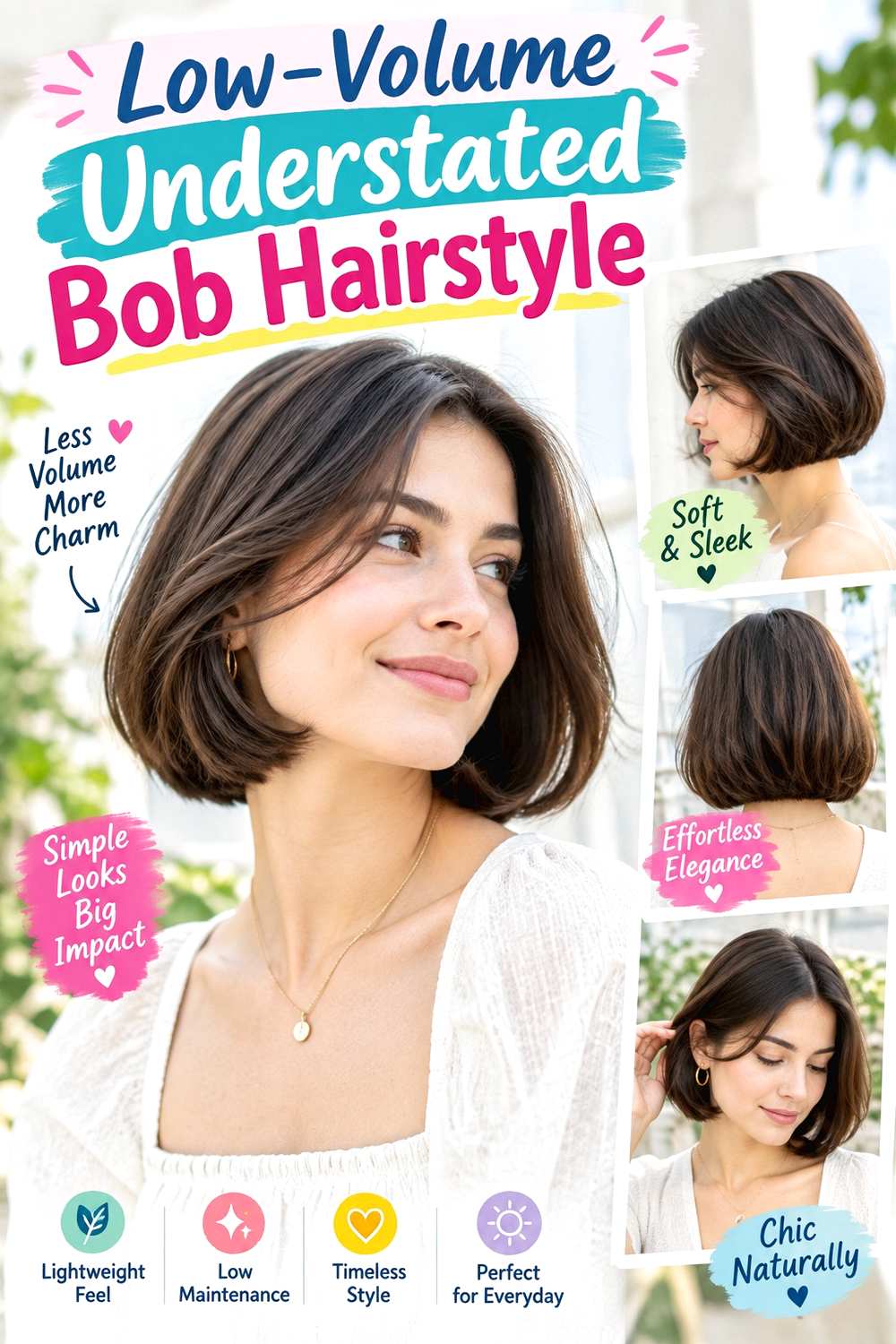
A low-volume bob keeps the crown close to its natural fall and avoids exaggerated lift or heavy texture. The length can sit at the jaw or just below, with a clean perimeter and only enough internal shaping to prevent bulk. A center part reinforces the calm symmetry, while a soft side part can add slight movement. Straight, fine, or naturally smooth hair suits the look especially well, though wavy hair can wear a relaxed version without being flattened completely.
Use a wide-tooth comb to establish the part, lightweight smoothing cream to control flyaways, and a vent brush to guide the sides without creating excess root lift. A quick refresh is usually short and focused on the front and ends, while full wash-day styling remains simple when the cut follows the natural fall. Grow-out becomes noticeable mainly at the perimeter rather than the crown.
At the salon, explain that you prefer restrained crown volume and want the bob to sit close to the head without looking limp. Ask for a strong perimeter and minimal short layering. Fine hair often benefits from preserving that outer weight, while dense hair may need subtle internal adjustment to prevent unwanted width.
Pro tip:
Let the crown dry in its normal direction rather than lifting it aggressively at the roots, keeping the top controlled without looking artificially flattened.
Make It Work for You:
For softly wavy hair, allow a little natural bend through the sides while keeping the crown close, preserving texture without creating unwanted width.
Watch Out For:
Do not use heavy smoothing simply to reduce volume. The goal is controlled shape, not a coated or collapsed surface with no natural movement.
Face-Framing Understated Bob Hairstyle

Subtle face-framing pieces can soften a bob without turning the haircut into a layered style. Keep the main perimeter around the jaw or collarbone, then add only a few front pieces beginning near the cheekbones, jaw, or lower. The rest of the cut can stay relatively one length, with a center or soft side part. Straight, wavy, curly, and coily textures can all use the idea if the front lengths are chosen according to natural movement and shrinkage.
Use a round brush to direct the front pieces, heat protectant before heated drying, and lightweight smoothing cream to keep the ends defined. A full wash-day style takes longer when the face frame needs a polished bend, while a quick refresh can focus only on those front sections. Grow-out is forgiving, but the framing loses its purpose when the shortest piece blends completely into the perimeter.
At the salon, point to the exact finished landmark for the shortest front piece and ask for a gradual connection into the bob. Fine hair should keep the face frame narrow so perimeter density remains strong. Curly hair should be assessed dry to avoid cutting the front shorter than intended after shrinkage.
Pro tip:
Choose one clear starting landmark for the face frame rather than several short tiers, keeping the front movement soft and easy to grow out.
Make It Work for You:
For coily or curly hair, set the shortest front piece according to its natural dry length so shrinkage does not pull the frame unexpectedly high.
Watch Out For:
Avoid taking an overly wide section for face framing on fine hair. Removing too much from the front can weaken the bob’s perimeter density.
Minimal Shag Understated Bob Hairstyle
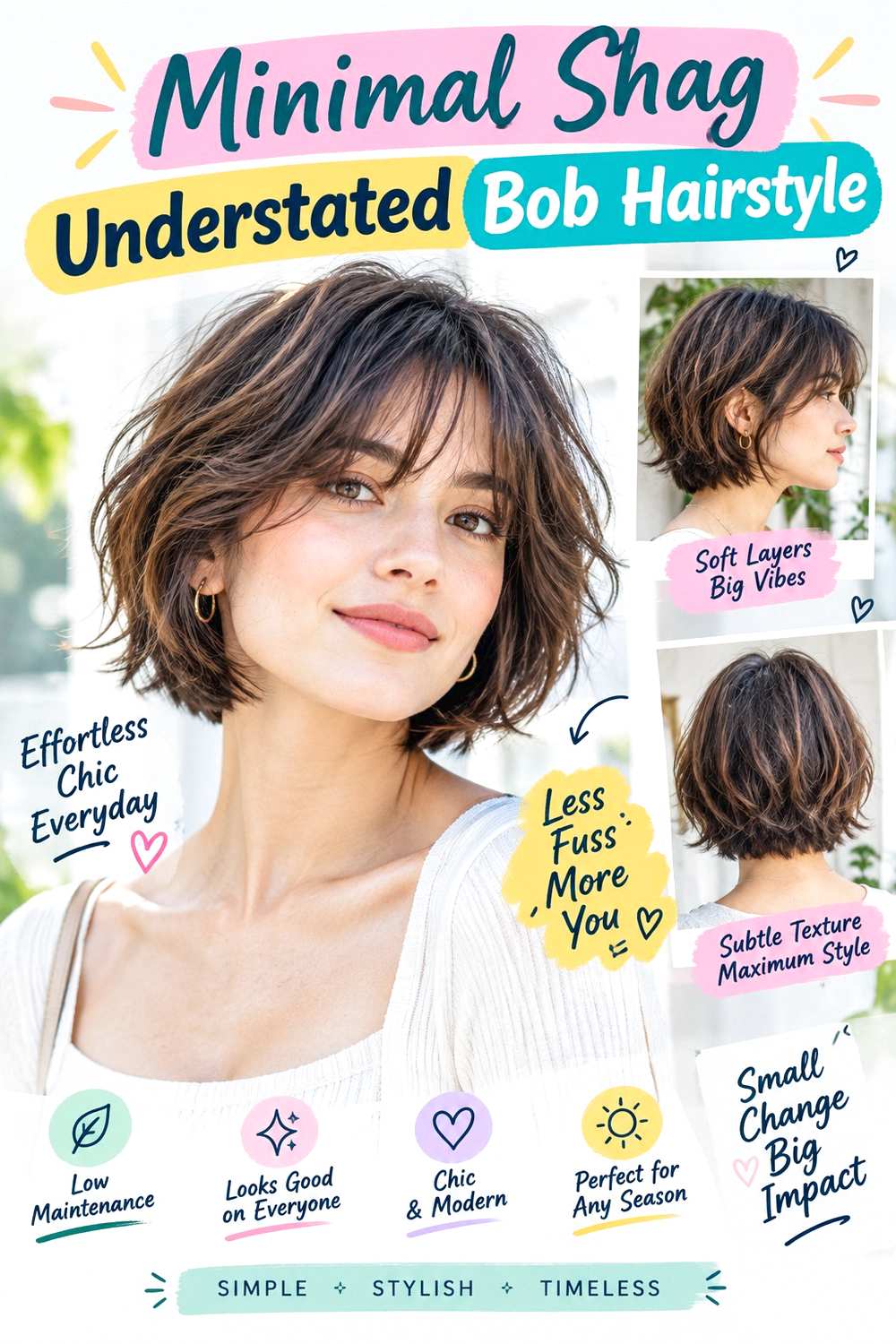
A minimal shag influence gives the bob a little more movement while keeping the overall shape quiet. Let the perimeter finish between the jaw and shoulders, then add restrained crown and face-framing layers rather than a full set of short shag pieces. The ends should still look connected, and the fringe can remain absent or very soft. Wavy and loosely curly hair often shows this understated texture naturally, while straight hair can use gentle styling for separation.
Use lightweight mousse to support the shorter layers, a diffuser to encourage natural movement, and styling paste on a few dry ends for definition. A full wash-day routine takes longer because the layered shape needs to settle, while a quick refresh can target only flattened crown pieces. As the cut grows, the shag influence becomes less visible when the shorter layers merge into the perimeter.
At the salon, specify the shortest crown layer and ask to keep it longer than a traditional shag if you want a quieter result. Preserve enough perimeter weight that the bob still reads as a bob. Fine hair may need only a few strategic layers, while dense hair can support more internal movement without thinning the outer edge excessively.
Pro tip:
Keep the shortest crown layer longer than you would in a full shag, allowing movement without creating a visibly disconnected top section.
Make It Work for You:
For fine hair, use only a few strategic crown and front layers while preserving a strong perimeter, so the shag influence stays subtle and full.
Watch Out For:
Avoid heavily feathering every end. Too much separation can shift the cut away from an understated bob and toward a much more obvious shag.
Conclusion
Understated bob haircut ideas work through small differences in length, perimeter weight, texture, parting, and layer placement rather than dramatic shape changes. Jaw and chin lengths feel compact, while collarbone versions offer softer grow-out. Fine hair often benefits from a fuller edge, whereas dense hair may need selective internal weight reduction. Straight finishes emphasize clean lines, waves add easy movement, and curls or coils need dry-length planning for shrinkage. Fringe changes the upkeep most noticeably, from wispy bangs to curtain pieces or no fringe at all. Choose the version that matches your natural texture, preferred volume, face-framing habits, and realistic styling routine, then use salon references to define the exact length and finish you want.
Before Your Salon Visit
Choose one or two favorites before your salon visit and save clear references showing the front, sides, and back. Discuss your natural texture, density, face shape, preferred length, upkeep, and usual styling routine. Point out the exact perimeter position, fringe length, layer starting point, crown volume, face-framing pieces, and finish you like. If you prefer the length from one reference and the texture from another, say so clearly so your stylist can assess how those details will work together.
FAQs
Can Fine Hair Work With an Understated Bob?
Fine hair can suit an understated bob especially well when the perimeter keeps enough weight. A jaw, chin, or slightly longer blunt edge can preserve visible density, while a few restrained front layers add movement. Avoid assuming heavy texturizing is necessary; the best amount of layering depends on your actual density and strand behavior.
Can Curly or Coily Hair Wear an Understated Bob?
Yes. An understated bob does not require straight hair. Wavy hair can keep broad natural bends, while curls and coils can use a softly rounded perimeter with controlled layering. The important point is to judge the finished dry length, shrinkage, and bulk placement instead of copying measurements from a straighter texture.
How Often Should an Understated Bob Be Reshaped?
There is no single schedule because chin-length bobs, collarbone bobs, fringes, and curly shapes grow differently. Consider reshaping when the perimeter drops below the intended landmark, the fringe starts interfering with vision, or layers stop connecting cleanly. A short fringe may need attention sooner than the rest of the haircut.
Does an Understated Bob Need Heat Styling?
No. Many understated bobs work with air-drying or natural texture. Heat is useful only when you want a finish that differs from your usual pattern, such as a rounded-under edge or polished straight surface. If you use hot tools or heated drying, apply heat protectant and avoid unnecessary repeated passes.