
14 Holiday Chignon Hairstyles for Christmas Parties
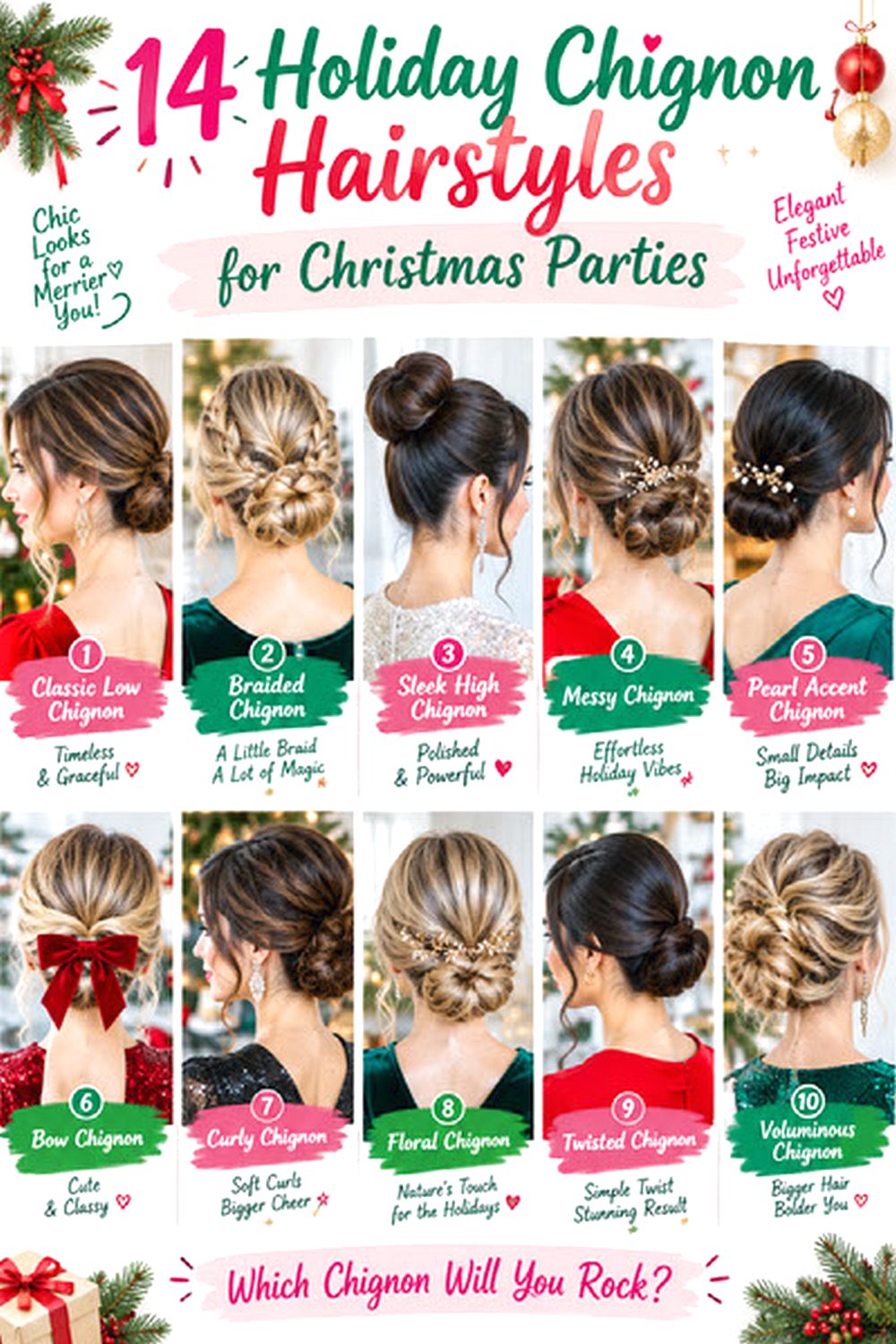
Holiday chignon hairstyles for Christmas parties range from smooth, compact buns at the nape to loose twisted updos with visible texture and face-framing pieces. The defining shape is usually low or mid-height, with the hair folded, rolled, twisted, or braided into a contained bun. Small changes in parting, crown volume, fringe, wave pattern, and accessories can make the same basic hairstyle feel polished, romantic, relaxed, or more decorative for a festive event.
Medium and long hair are easiest to secure into a chignon, although shoulder-length cuts can work when the layers are long enough to reach the bun. Fine hair often benefits from light texture and a slightly expanded shape, while thick hair may need multiple pins and internal sectioning to distribute weight. Curly and wavy hair can provide natural grip, while straight, silky hair usually needs some preparation.
Styling effort varies from a fairly quick sleek bun to a more detailed braided or curled updo. Maintenance during a party mostly involves keeping the nape, crown, and front pieces secure. Before choosing a version, consider hair density, natural texture, face shape, fringe length, accessory weight, and how long the style needs to hold comfortably.
Quick List
- Classic Low Holiday Chignon
- Pearl-Accented Christmas Chignon
- Velvet Ribbon Chignon
- Braided Holiday Chignon
- Soft Twisted Chignon With Face-Framing Pieces
- Sleek Center-Part Chignon
- Side-Swept Chignon With Loose Waves
- Double-Twist Chignon
- Textured Chignon With Wispy Bangs
- Crystal-Pin Chignon
- Low Chignon With French Braid Detail
- Voluminous Crown Chignon
- Curly Holiday Chignon
- Bow-Wrapped Chignon Updo
Classic Low Holiday Chignon
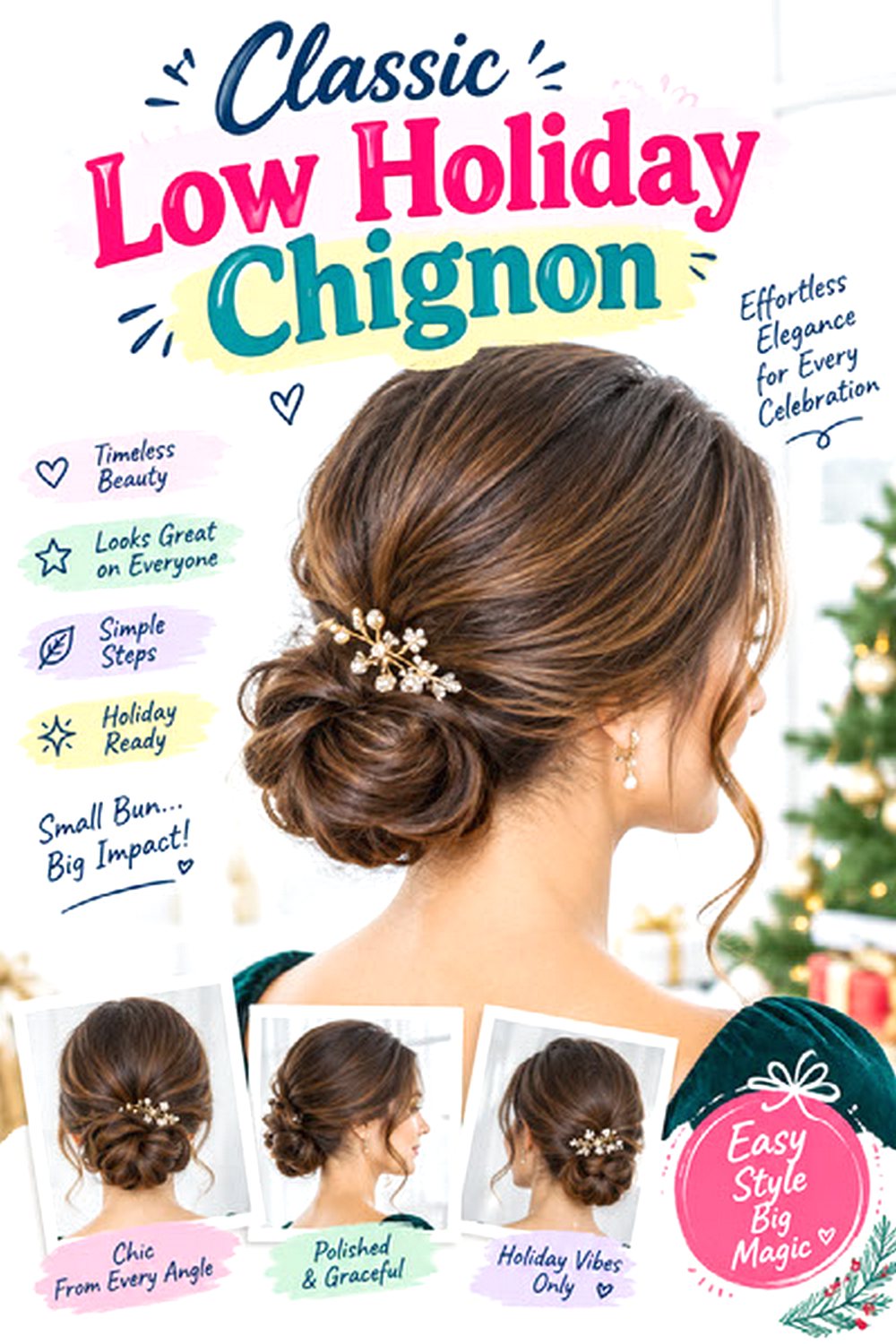
A classic low chignon sits close to the nape with a smooth surface and a softly rounded bun rather than a high, oversized shape. Keeping the front controlled makes it especially useful for formal dinners, office parties, or events where you want the hairstyle to stay neat for several hours. Medium to long straight or softly wavy hair is easiest to manage, while fine hair can gain fullness by lightly backcombing the ponytail before forming the bun. Thick hair may need to be divided into two sections so the weight stays balanced. A smoothing cream, boar-bristle brush, and U-shaped hairpins are the most useful tools. Styling takes moderate time but usually needs little refreshing once secure. At the salon, ask for long enough front and side layers to reach the nape cleanly if you regularly wear updos; very short layers can create flyaways around the ears and crown.
Pro tip: Cross two structural pins underneath the chignon before adding smaller pins around the edges; the hidden anchor keeps the bun from slowly dropping.
Pearl-Accented Christmas Chignon

Pearl pins add a festive detail without changing the basic chignon shape. A softly twisted low bun gives the accessories enough texture to sit between folds instead of looking like they were placed on a completely flat surface. Medium-density hair is particularly easy to work with because the bun has enough substance to hold decorative pins without becoming heavy. Fine hair can use smaller pearl pins, while thick hair should rely on plain structural pins underneath so the accessories do not carry the weight. Prep with lightweight mousse, secure the chignon with sturdy bobby pins, and finish with flexible hairspray. Styling takes moderate time, with accessory placement saved for the final few minutes. Maintenance during the party is usually minimal if the pearls are light. At the salon, ask for face-framing layers that remain long enough to tuck back when needed, especially if you want the option of wearing the chignon with a completely clean front.
Pro tip: Place pearls in small uneven clusters rather than at identical intervals; the arrangement looks more natural against the twists and keeps the bun from feeling overly formal.
Velvet Ribbon Chignon
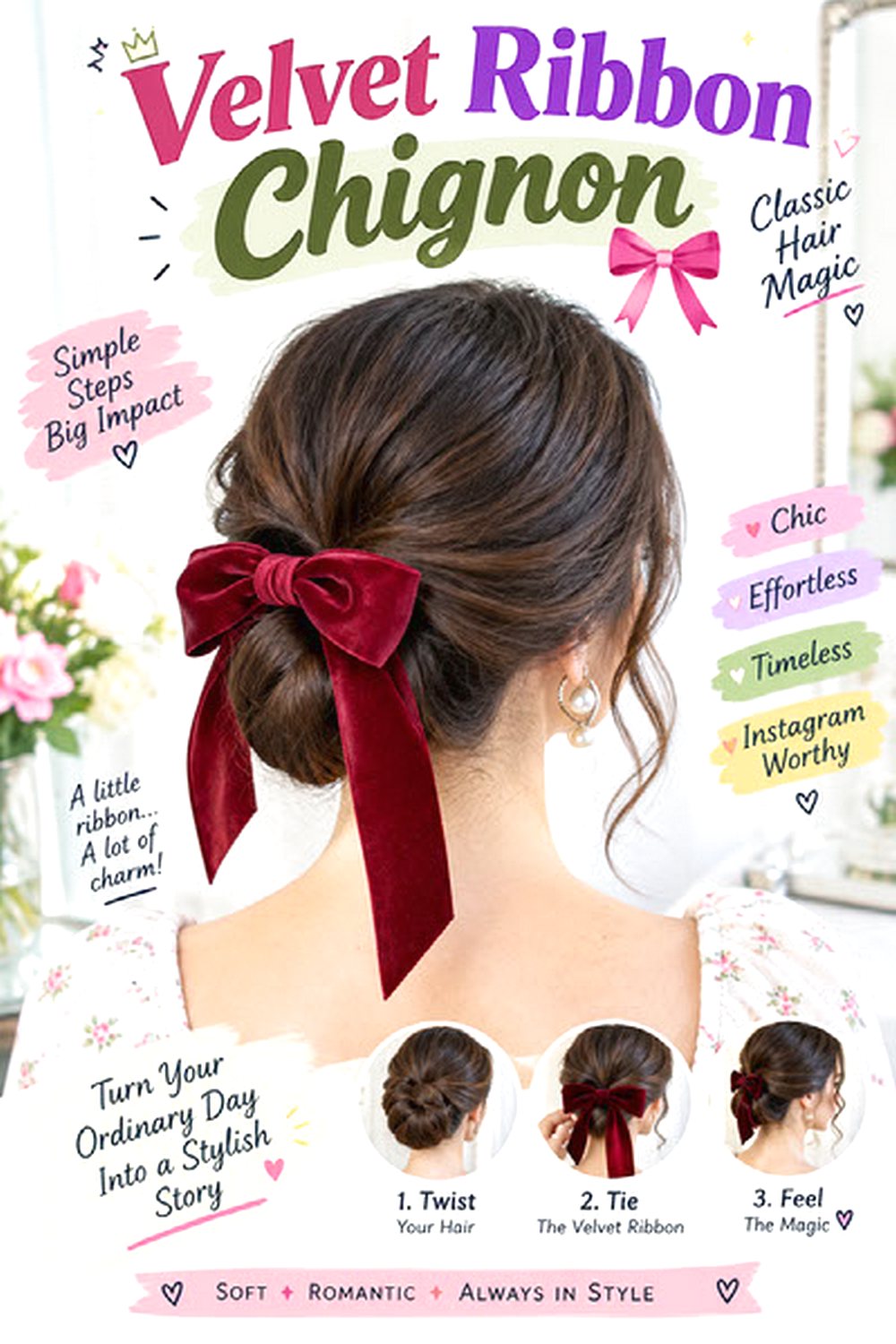
A velvet ribbon turns a simple chignon into a holiday-focused style without adding heavy clips or elaborate braiding. The hair can be rolled into a low bun, then finished with a narrow ribbon tied around the base or formed into a small bow above the chignon. Medium and long hair work best because there is enough length to create a secure bun before the ribbon is added. Fine hair benefits from a little texturizing product for grip, while thick hair should be pinned firmly before tying anything around it. Use dry texture spray, strong hairpins, and a narrow velvet ribbon that will not overwhelm the bun. Styling is fairly quick once the basic chignon technique is familiar. The ribbon may need one adjustment during a long evening if it loosens. At the salon, ask to preserve enough density through the lower lengths, since heavily thinned ends can make a rolled chignon look smaller and less structured.
Pro tip: Secure the ribbon with one hidden pin underneath the bow or knot so it cannot rotate around the chignon while you move.
Braided Holiday Chignon
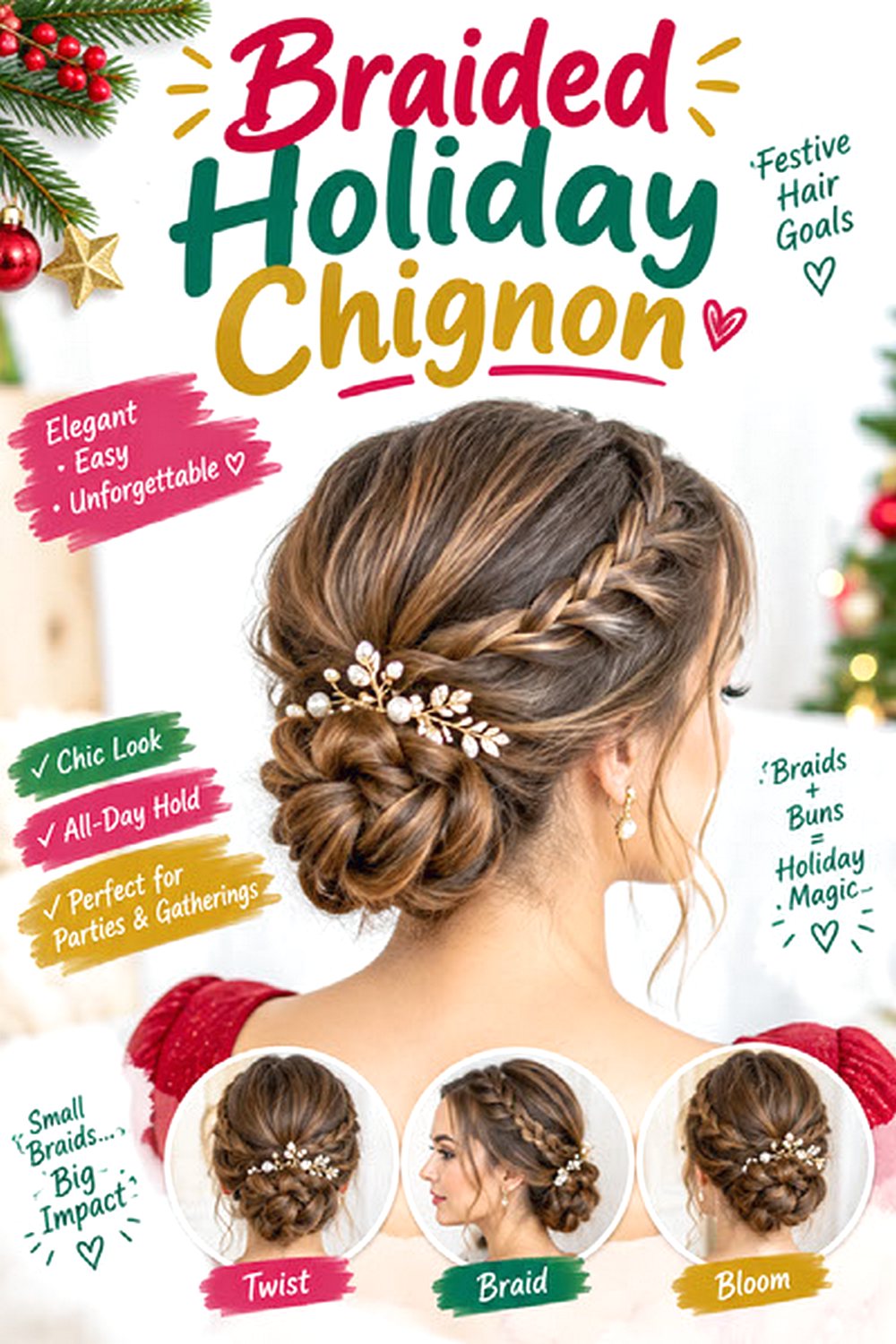
Braiding the ponytail before wrapping it into a chignon creates visible pattern through the bun and gives straight hair more texture without needing curls. Medium to long hair provides enough length for the braid to remain recognizable after it is coiled, while fine hair can look fuller when the outer loops are gently widened before pinning. Thick hair may form a very large bun, so dividing it into two smaller braids can make the shape easier to control. Use texturizing spray for grip, clear elastics on the braid ends, and long U-pins for anchoring. The hairstyle takes moderate time because the braid needs to be balanced before it is wrapped, but it usually holds well through a full party. At the salon, ask for back layers long enough to stay inside a braid rather than short pieces that escape near the nape. A stronger perimeter also helps the final plait retain visible fullness.
Pro tip: Expand the braid before wrapping it, not after; pulling individual loops once the bun is pinned can loosen the entire chignon.
Soft Twisted Chignon With Face-Framing Pieces

Loose twists give a chignon a softer outline, while two deliberate face-framing pieces keep the front from looking overly pulled back. The front sections can fall around the cheekbones or jaw, depending on your haircut and how much movement you want near the face. Wavy and medium-density hair naturally supports the texture, while straight hair can be lightly curled first. Fine hair benefits from the visual volume created by overlapping twists, and thick hair may need the bun divided into several sections for comfortable pinning. A heat protectant, medium curling iron, and flexible hairspray suit this version without making it stiff. Styling takes moderate time but does not require perfectly smooth placement. Refreshing usually means touching up only the loose front pieces. At the salon, ask for face-framing layers long enough to curve around the cheek or jaw but still capable of reaching the bun when you prefer a fully pinned style.
Pro tip: Leave the face-framing strands slightly thicker than you think you need, then reduce them after the chignon is finished; adding hair back into the bun is harder once it is pinned.
Sleek Center-Part Chignon
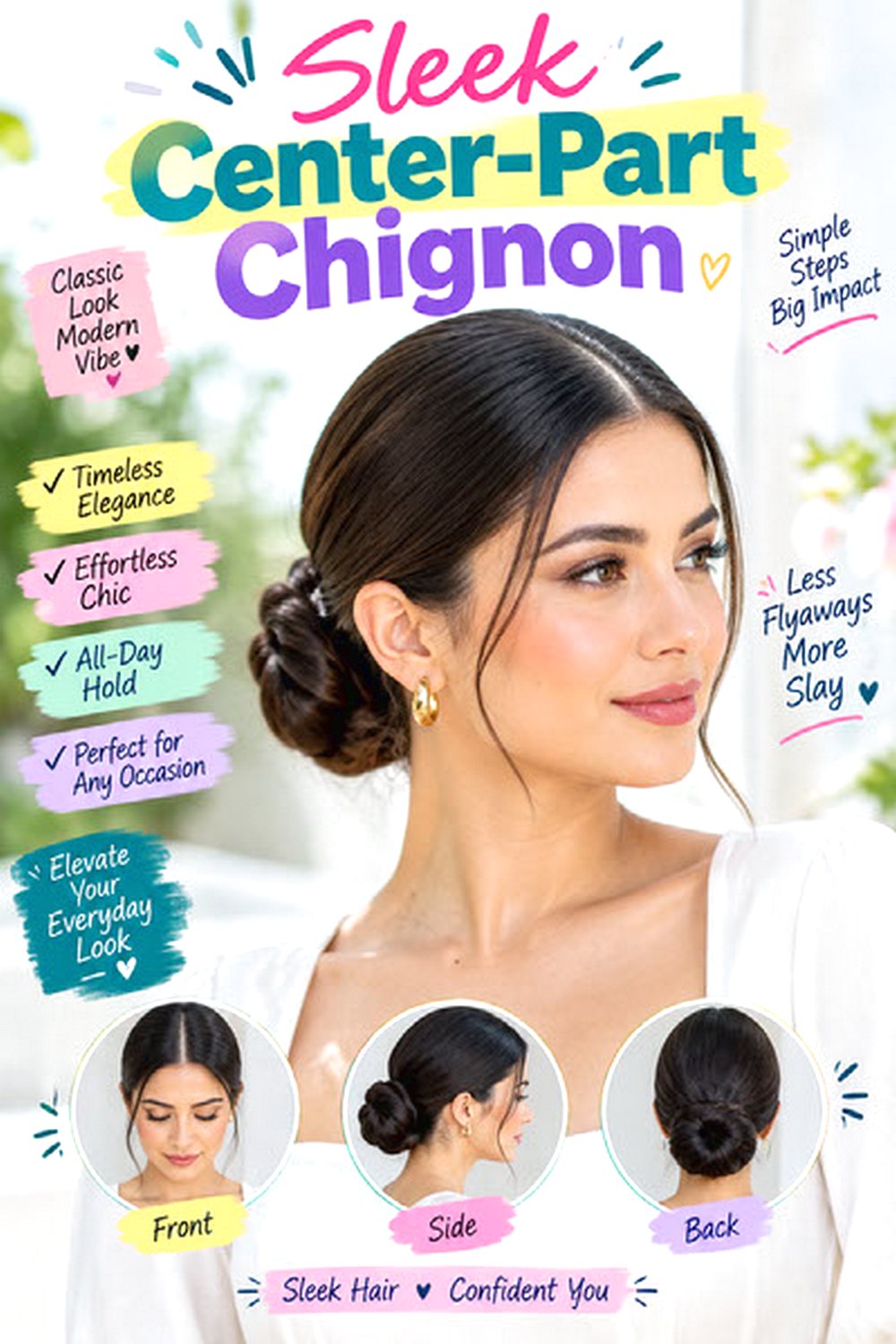
A precise center part and smooth low chignon create a cleaner, more minimal Christmas-party hairstyle. The hair lies close to the head from the part to the nape, so the bun becomes a compact finishing detail rather than the main source of volume. Straight and medium-density hair is easiest to smooth, but wavy or curly hair can wear the style with more preparation. Fine hair suits the controlled silhouette, while very thick hair may need two internal sections so the bun does not become too bulky. Use anti-frizz cream, a fine-tooth comb, and strong-hold hairspray to keep the surface neat without repeatedly brushing it. Styling takes moderate effort, especially if the natural texture is strong, and humidity may require extra attention around the hairline. At the salon, mention that you like sleek updos and ask to avoid excessively short layers around the temples and crown, since they can resist being pulled into the smooth finish.
Pro tip: Create and perfect the center part before applying strong-hold product; once the surface is set, correcting the part can leave visible lines and residue.
Side-Swept Chignon With Loose Waves
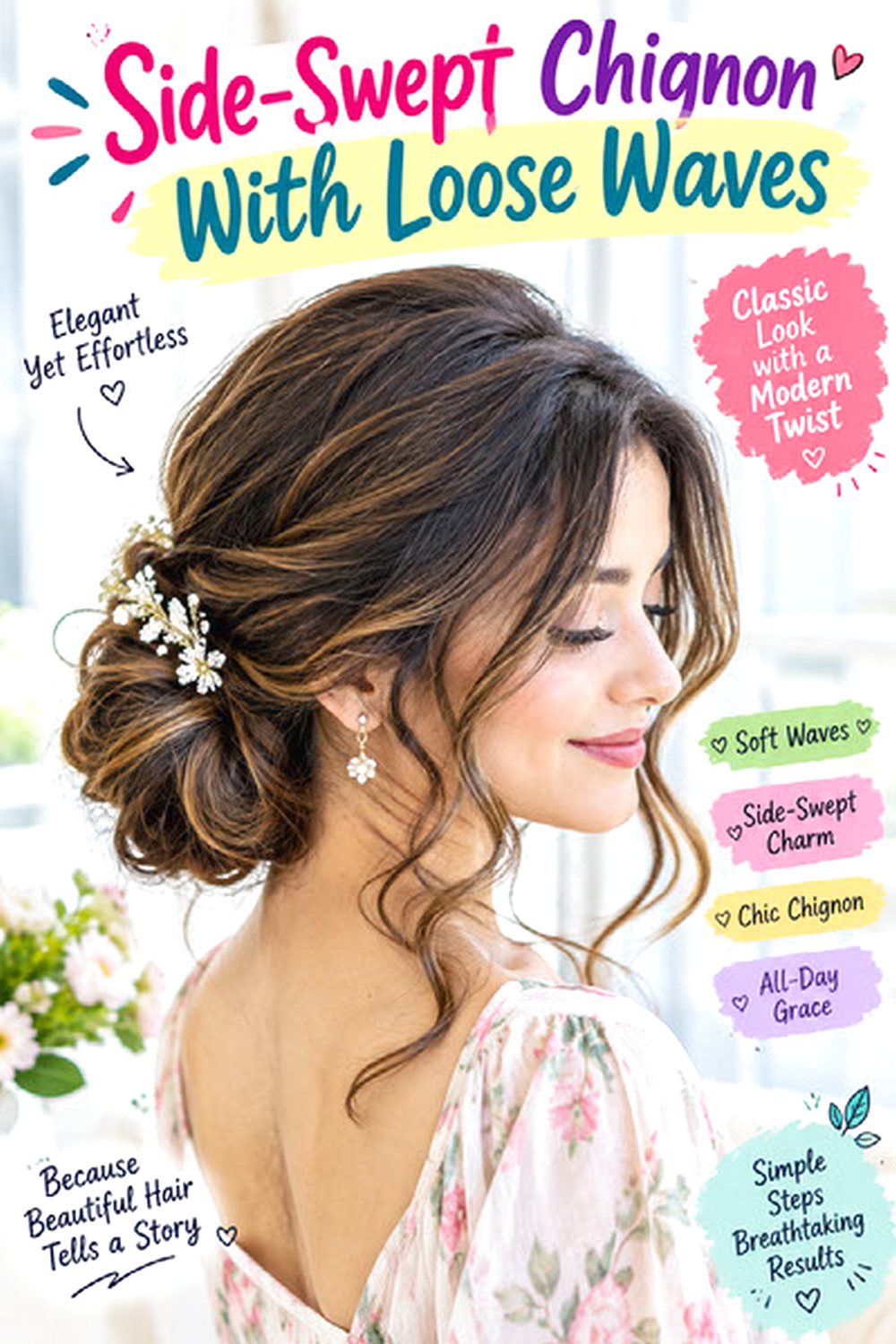
A side-swept front adds asymmetry to a low chignon, especially when a few loose waves are left around one temple. The bun can sit slightly off-center at the nape to follow the direction of the sweep, giving the hairstyle a more flowing shape than a symmetrical chignon. Medium and thick hair carry the volume well, while fine hair can use soft waves to build body without aggressive teasing. A root-lifting spray, large-barrel curling iron, and bobby pins are useful for creating movement and holding the heavier side securely. Styling takes moderate time because the front needs to be shaped before the bun is pinned. The loose waves may need a quick touch-up later if the event is humid. At the salon, ask for longer side layers that can sweep across the forehead and tuck into the back rather than very short pieces that separate from the updo. Keep the perimeter reasonably full for a substantial bun.
Pro tip: Pin the heavier swept side in a hidden crisscross above the ear before forming the chignon; this stops the front section from sliding backward during the evening.
Double-Twist Chignon
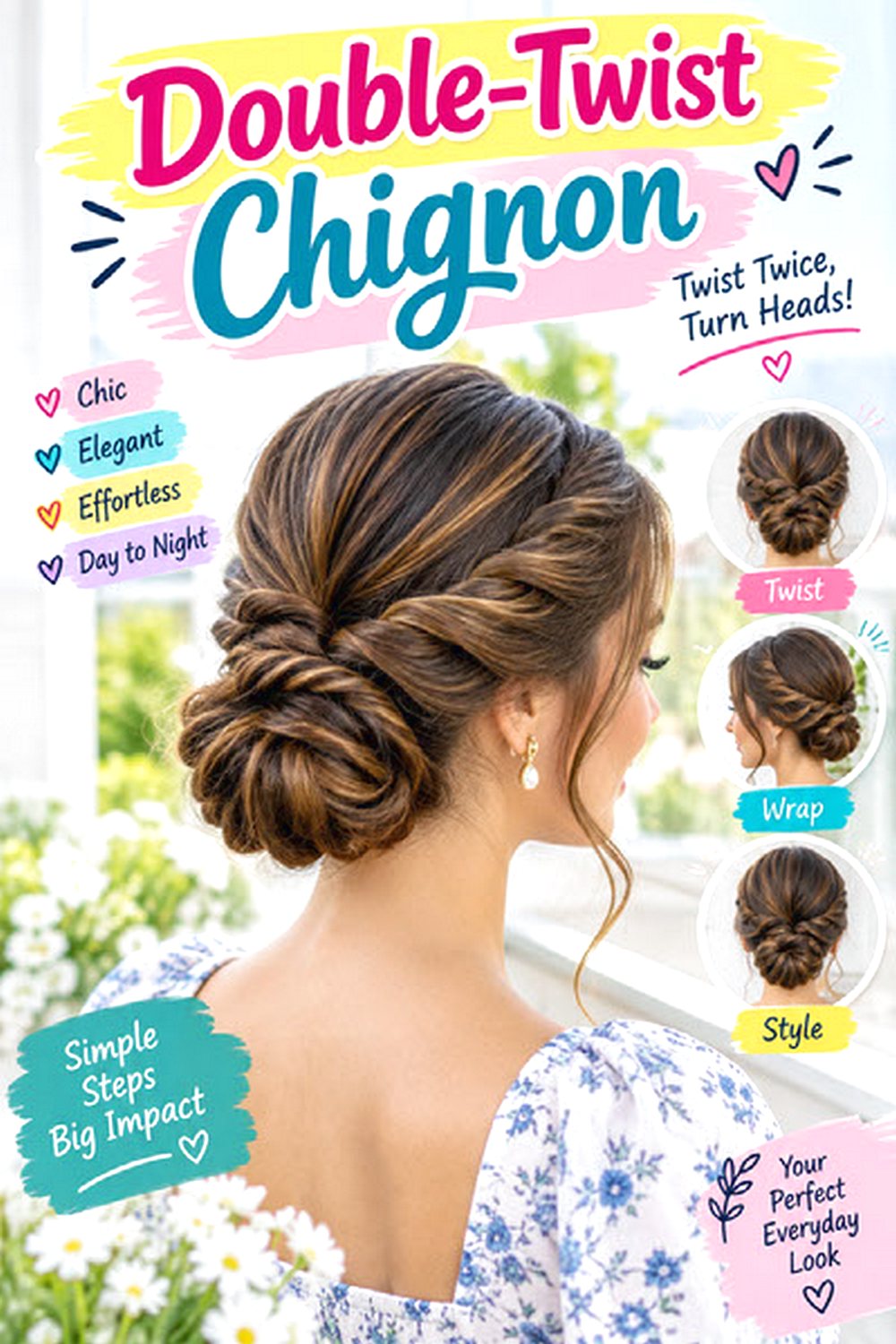
A double-twist chignon divides the hair into two main sections before they meet at the nape, creating a visible twist from each side and a balanced bun in the center. This construction works well for medium to thick hair because the weight is distributed instead of being pulled into one ponytail. Fine hair can use slightly loosened twists to create more apparent width. Straight, wavy, and lightly curly textures all work, provided the sections have enough grip to hold their shape. Use lightweight styling cream, sectioning clips, and long U-pins to control each twist without flattening it. Styling takes moderate time but can be easier than a complicated braid once the two-section technique is familiar. At the salon, ask for side layers that reach at least behind the ears so both twists look continuous. Too many short pieces around the crown can interrupt the smooth lines and require extra pins.
Pro tip: Secure the two twists together at the nape before wrapping the ends; creating that central anchor makes the final bun much easier to balance.
Textured Chignon With Wispy Bangs
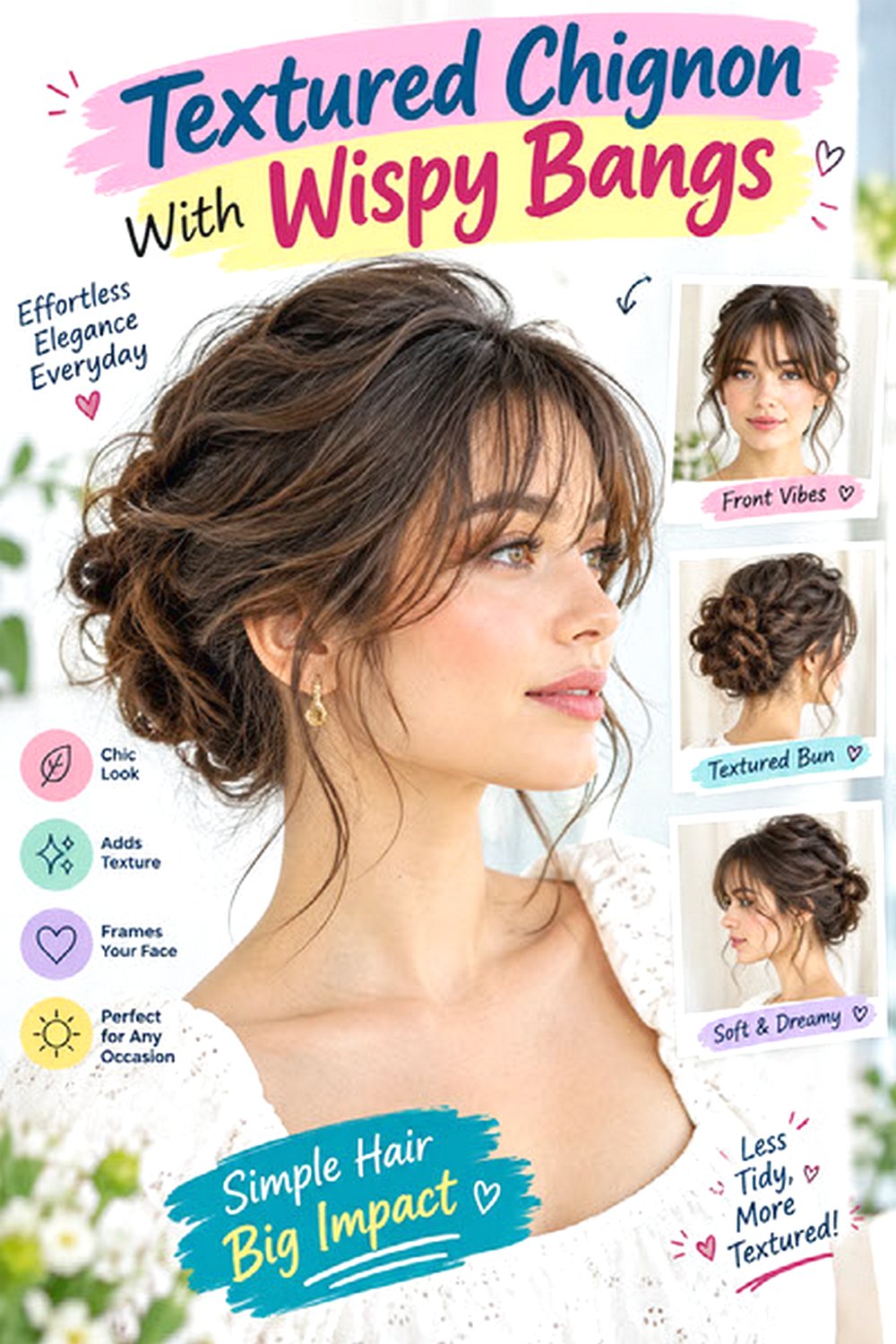
Wispy bangs soften a textured chignon by leaving light movement across the forehead while the rest of the hair is gathered loosely at the back. A little crown lift helps separate the fringe from the bun and keeps the silhouette from looking flat. Fine and medium-density hair can wear this especially well because texture spray adds grip without requiring a very large amount of hair. Wavy hair needs minimal preparation, while straight hair can be bent lightly through the mid-lengths before pinning. Use dry texturizing spray, a small round brush for the bangs, and flexible hairspray. Styling is moderate overall, but the fringe usually needs only a few minutes of daily attention. Bangs may require more frequent trims than the rest of the haircut. At the salon, specify that the fringe should remain airy and brow-skimming rather than dense, and ask for the side pieces to blend gradually toward the temples.
Pro tip: Style the bangs before building the chignon; hot air from a round-brush blow-dry can disturb crown volume and loosen pins if you leave the fringe until last.
Crystal-Pin Chignon
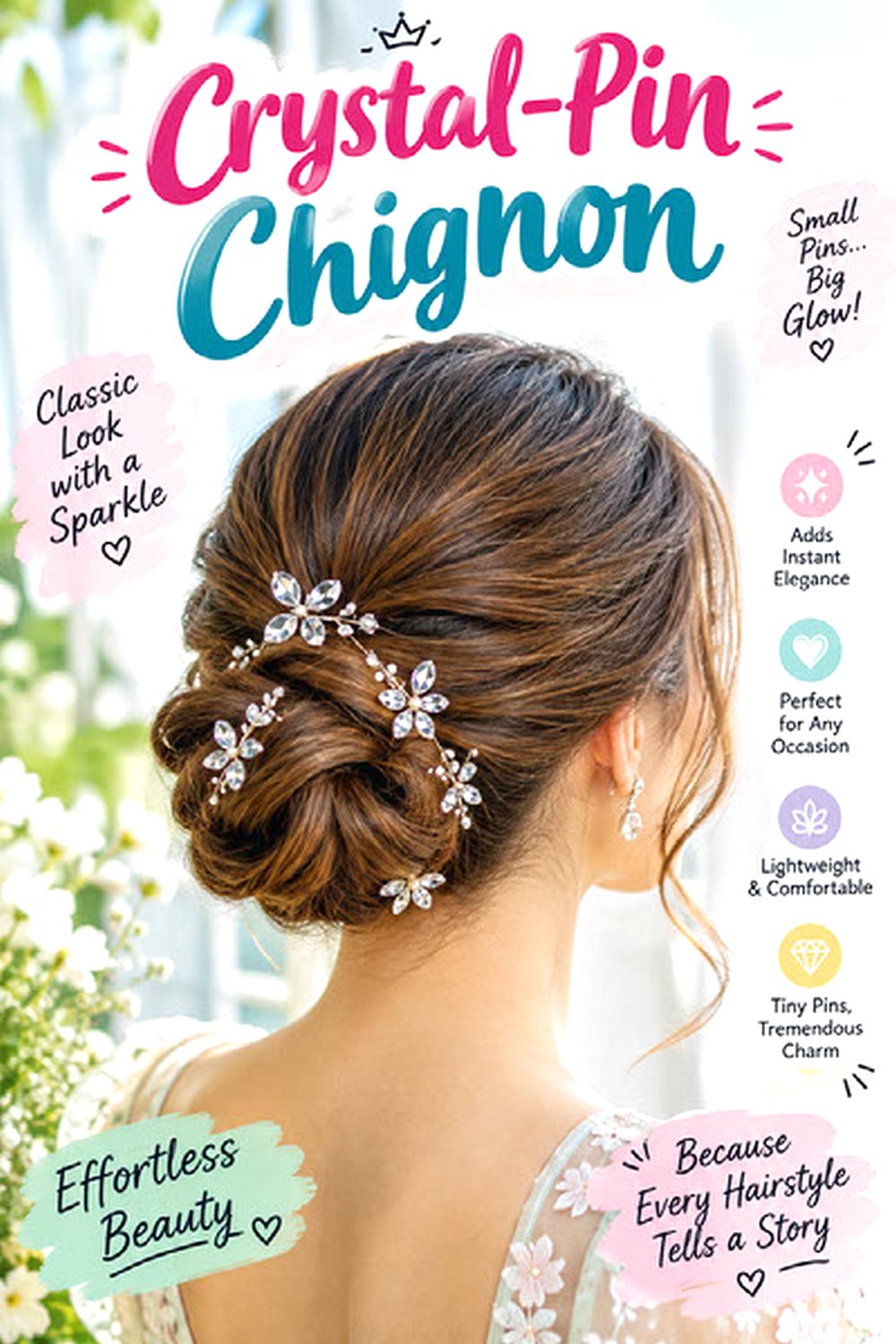
Crystal pins work best when they accent a clear chignon shape rather than becoming responsible for holding the entire updo. A smooth or lightly twisted low bun provides enough surface for a few reflective pieces to catch the light, making this suitable for evening Christmas parties without requiring a large hair accessory. Medium to thick hair supports decorative pins easily, while fine hair should use smaller, lighter pieces to prevent slipping. Smooth the front with a paddle brush, secure the bun with standard bobby pins, then finish with crystal hairpins only after the structure is stable. Styling takes moderate time, but accessory placement is quick. During the event, check that heavier pieces have not shifted. At the salon, ask for enough length around the lower back section to form a substantial chignon and avoid aggressive thinning at the ends if you regularly wear pinned buns.
Pro tip: Insert crystal pins at a shallow diagonal rather than straight into the scalp; they stay more secure and sit visibly along the surface of the chignon.
Low Chignon With French Braid Detail
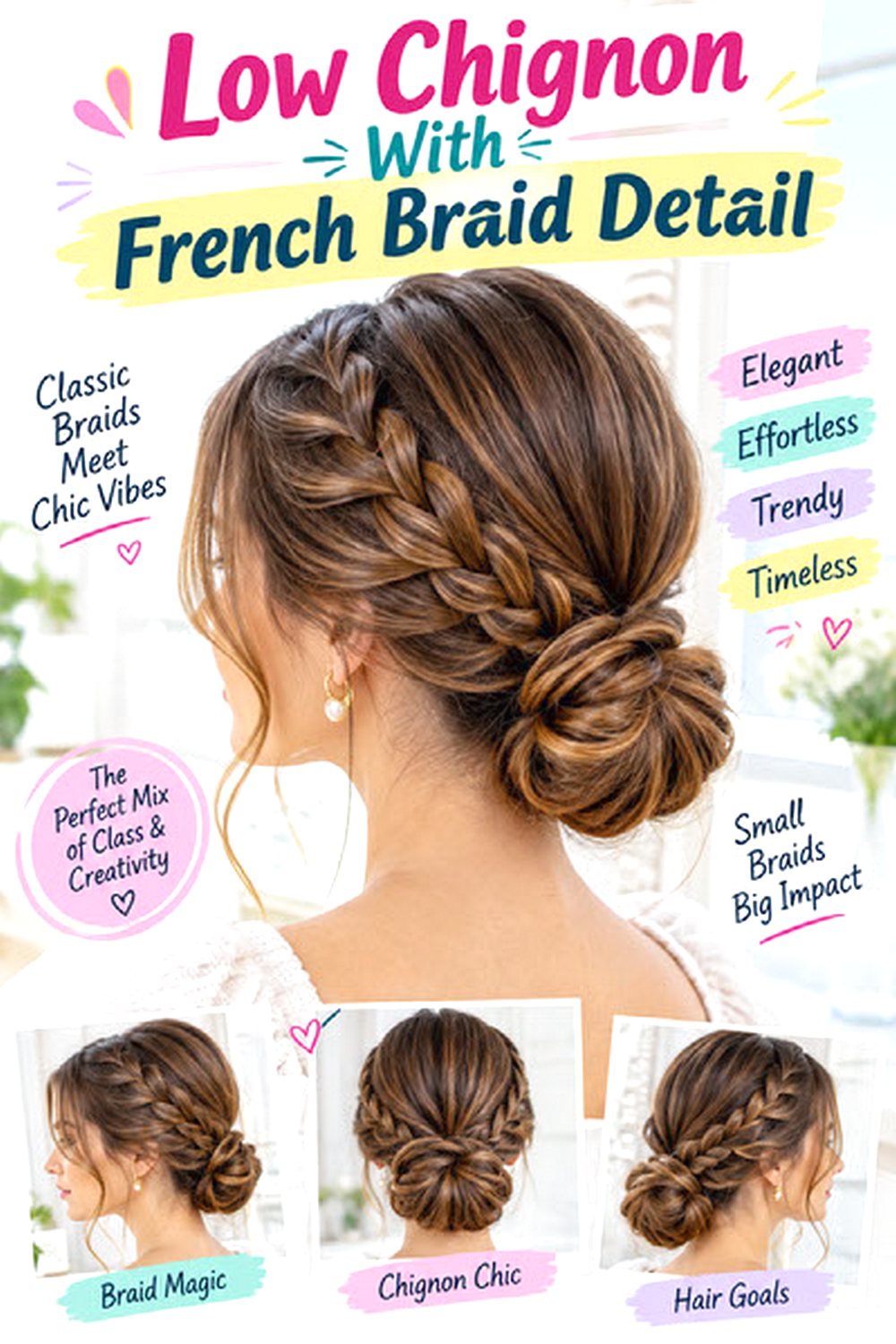
A French braid running from one temple toward the nape gives a low chignon a defined side detail before the hair is gathered into the bun. The braid can stay narrow and neat or be gently widened for a softer finish. Medium to long hair works best because the braid needs enough length to merge into the chignon without creating a short tail. Fine hair benefits from texture spray and a slightly expanded braid, while thick hair can use a broader section without losing fullness in the bun. Prep with lightweight mousse, use a tail comb for clean sectioning, and secure the final shape with U-pins. Styling takes more time than a plain low chignon because the braid should connect smoothly into the back. At the salon, ask for temple and side layers that are long enough to remain inside a French braid. Very short face-framing pieces can be left loose intentionally, but accidental flyaways make the detail less defined.
Pro tip: Angle the French braid toward the exact point where the chignon will sit; a braid that finishes too high creates an awkward break before the bun.
Voluminous Crown Chignon
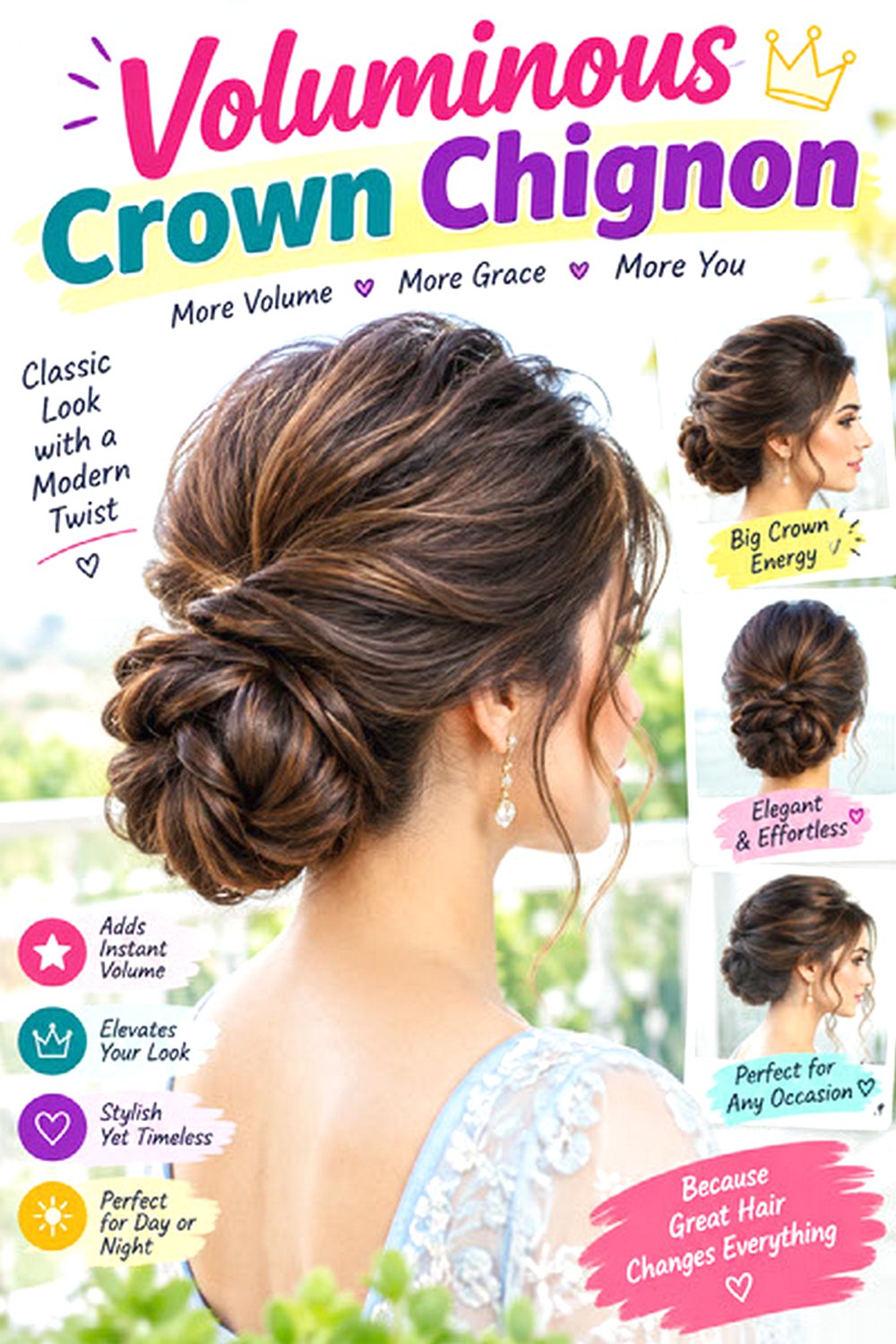
Crown volume changes a low chignon from compact to more dramatic by adding height through the upper back section while keeping the bun anchored near the nape. This works especially well for medium and thick hair, although fine hair can create lift with careful root preparation rather than heavy teasing. The front may stay softly swept away from the face so the crown remains the main volume point. Use volumizing spray, a large round brush, and light-hold hairspray to create support without making the surface stiff. Styling needs more time because the crown should be shaped and cooled before the lower hair is gathered. During the party, avoid repeatedly touching the lifted section because that can collapse the structure. At the salon, request longer crown layers if you wear formal updos frequently; very short layers can create flyaways and make smooth height harder to maintain. Keep enough perimeter weight for a full-looking lower bun.
Pro tip: Build crown lift with blow-dry direction first and backcomb only where necessary; too much teasing can make the surface difficult to smooth without flattening it.
Curly Holiday Chignon
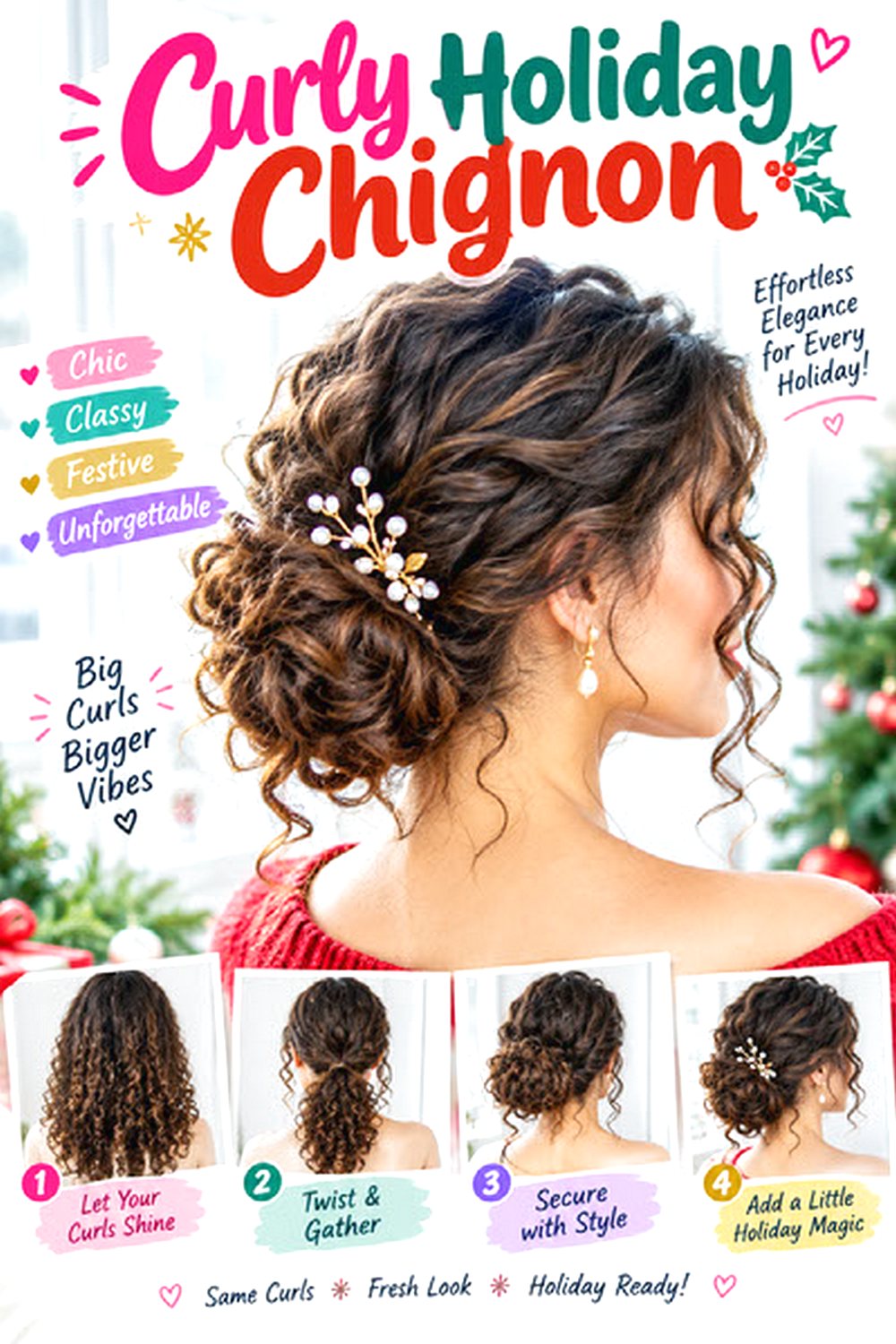
Natural curls can form a chignon with visible spiral texture instead of being straightened into a smooth bun. The curls are gathered loosely at the nape, then pinned in sections so individual bends remain visible across the surface. Medium and thick curly hair creates a naturally full shape, while fine curls can use smaller pinned sections to build volume without flattening the pattern. Shrinkage matters around the front, so decide which tendrils will stay out only after the hair is fully dry. A leave-in conditioner, curl cream, and diffuser provide moisture, definition, and controlled drying before the updo begins. Styling takes more time on wash day but usually requires minimal heat beyond diffusing. During the event, refresh loose curls with a small amount of water if necessary. At the salon, ask for layers that support your natural curl pattern while leaving enough length at the nape and sides to reach comfortably into an updo.
Pro tip: Pin curls individually rather than twisting the entire ponytail into one rope; separate placement preserves more of the natural curl definition across the bun.
Bow-Wrapped Chignon Updo
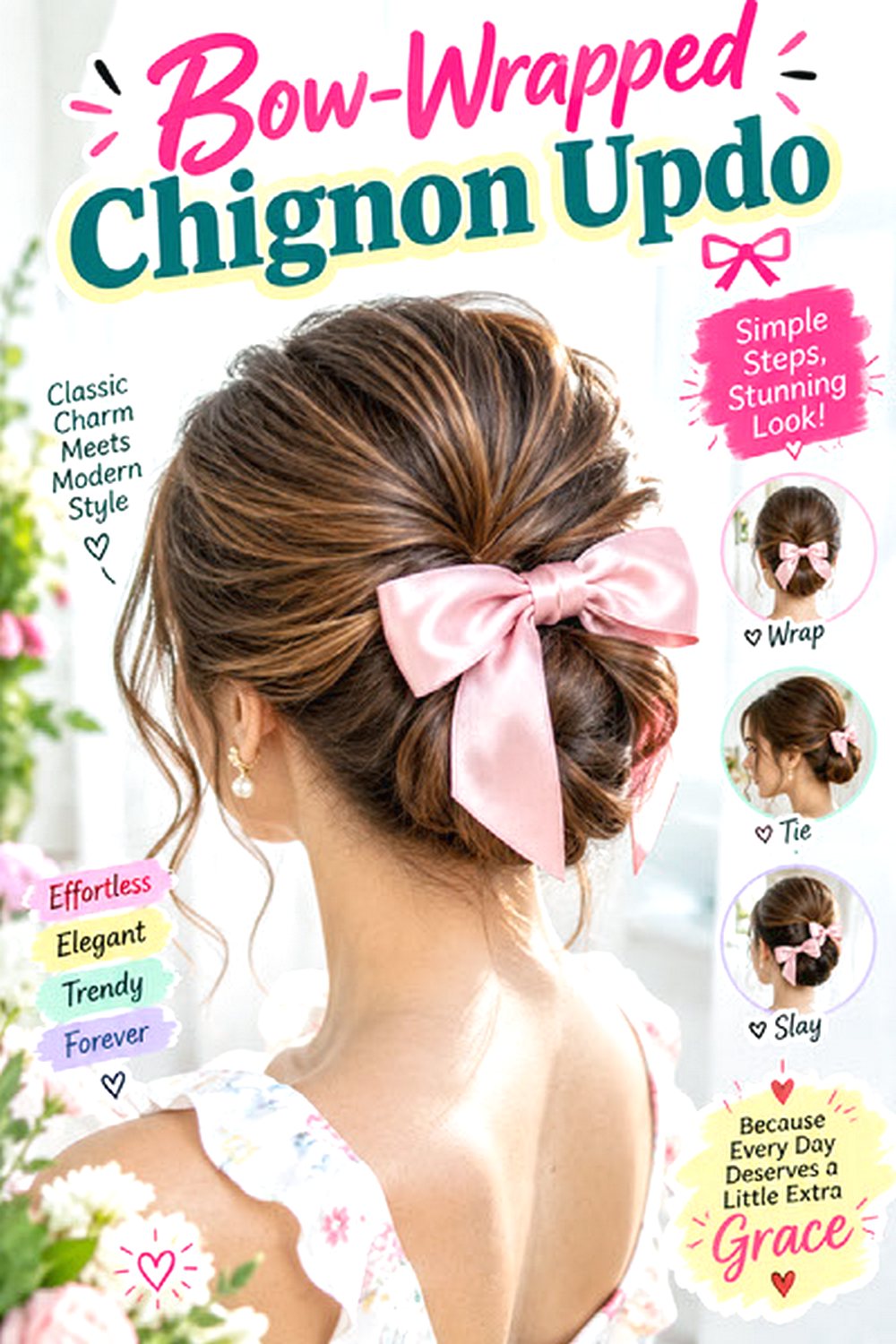
A bow-wrapped chignon uses a ribbon as the finishing frame around a neat low bun, creating a clear Christmas-party detail without requiring glitter or multiple accessories. The chignon itself can stay smooth so the bow becomes the main focal point. Medium and long hair work most easily, while fine hair may benefit from a small amount of padding or gentle backcombing inside the bun. Thick hair should be pinned into a controlled compact shape before the ribbon is added. Use smoothing serum, a fine-tooth comb, and strong U-pins for the structure, then tie the bow only after the hair is completely secure. Styling is moderate and easy to refresh because the bun remains contained. At the salon, ask for enough lower length to create a full chignon and keep short nape layers to a minimum if you want a clean outline. Face-framing pieces can be left out separately if desired.
Pro tip: Tie the bow independently and pin it beneath the chignon if you struggle to make symmetrical loops while the ribbon is already wrapped around the hair.
Choosing Holiday Chignon Hairstyles for Christmas Parties
Holiday chignon hairstyles for Christmas parties can be adjusted through bun height, volume, texture, parting, fringe, braids, twists, and accessories. Sleek center-part styles offer a compact finish, while loose twists, curls, and wispy pieces create more movement. Fine hair can benefit from texture and a slightly expanded bun, whereas thick hair often needs stronger internal anchoring to distribute weight comfortably. Your natural texture also changes the styling routine: curls may need very little heat, while silky straight hair often needs extra grip. The best version depends on face shape, density, length, existing layers, maintenance preference, and how formal the event feels. Choose the shape first, then add ribbons, pearls, crystals, or other details without sacrificing secure construction.
CTA
Choose one or two favorite ideas and save clear photo references showing both the front and back. Discuss your face shape, natural texture, density, preferred length, maintenance comfort, and usual styling routine with your stylist. Point out the exact details you like, whether that is crown volume, fringe length, braid placement, face-framing pieces, bun size, smoothness, twist pattern, or accessory position. If the chignon is for a Christmas party, mention how long you need it to stay secure and whether you will be wearing earrings, a high neckline, scarf, or other accessories near the nape.
FAQs
Can shoulder-length hair be styled into a holiday chignon?
Yes. Shoulder-length hair can usually form a low chignon if the layers are long enough to reach the nape. Extra pins may be needed to control shorter sections.
Which chignon is best for fine hair?
Textured, braided, twisted, and softly expanded chignons can create more visible fullness. Keeping the haircut perimeter reasonably dense also helps the bun look substantial.
How do I keep a chignon secure through a long Christmas party?
Build the hairstyle with structural pins first, especially around the nape and center of the bun. Decorative pearls, ribbons, or crystal pins should be added only after the chignon is stable.
Can curly hair be worn in a chignon without straightening it first?
Yes. Natural curls can be pinned individually into a low bun, preserving their texture and reducing unnecessary heat. Allow for shrinkage when choosing which front pieces to leave loose.


