17 Ribbon Braid Hairstyles for Fall 2026
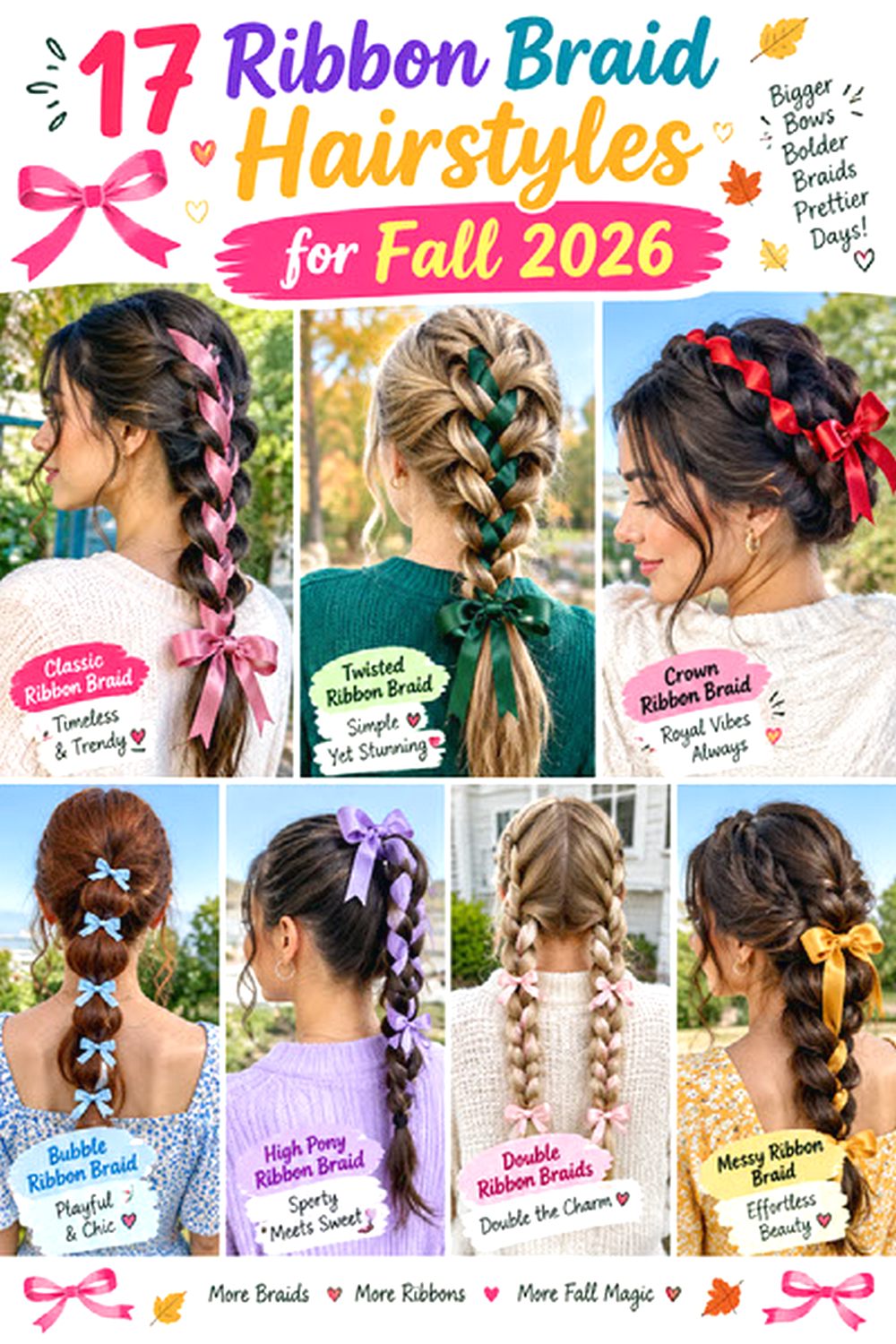
Ribbon braids add color, texture, and definition to braided hair without changing the haircut underneath. The ribbon can be woven directly through a braid, wrapped around its base, tied at the ends, or used as a small accent. For fall, velvet, satin, grosgrain, and plaid ribbons pair especially well with deeper seasonal shades, while the braid itself can stay neat, loose, textured, or softly undone. Length and density affect the finished shape: long hair gives ribbons more room to weave through, while medium hair often works better with compact braids, half-up details, or low ponytails.
These ribbon braid hairstyles for Fall 2026 can be adjusted for straight, wavy, curly, and coily textures. Fine hair often benefits from gently widening the braid instead of adding too many layers, while thick hair may need smaller sections or internal bulk control to keep the braid manageable. Face-framing pieces and fringe can also soften the front without changing the woven detail.
Daily styling effort ranges from a few minutes for a simple ponytail braid to more time for crown or waterfall braids. Before choosing one, consider ribbon grip, hair length, layers, density, weather, and whether you want a polished or relaxed finish.
Quick List
- Classic Ribbon Woven Three-Strand Braid hairstyle
- Velvet Ribbon Dutch Braid hairstyle
- Satin Ribbon French Braid hairstyle
- Ribbon Fishtail Side Braid hairstyle
- Ribbon Braided Low Ponytail hairstyle
- Ribbon Crown Braid hairstyle
- Double Ribbon Pigtail Braids hairstyle
- Ribbon Accent Half-Up Braid hairstyle
- Ribbon Rope Braid Ponytail hairstyle
- Burgundy Ribbon Bubble Braid hairstyle
- Ribbon Braided Bun hairstyle
- Ribbon Waterfall Braid hairstyle
- Ribbon Headband Braid hairstyle
- Ribbon Braid with Curtain Bangs hairstyle
- Ribbon Braid for Natural Curls hairstyle
- Plaid Ribbon Loose Side Braid hairstyle
- Long Ribbon Braid with Bow Finish hairstyle
Classic Ribbon Woven Three-Strand Braid hairstyle
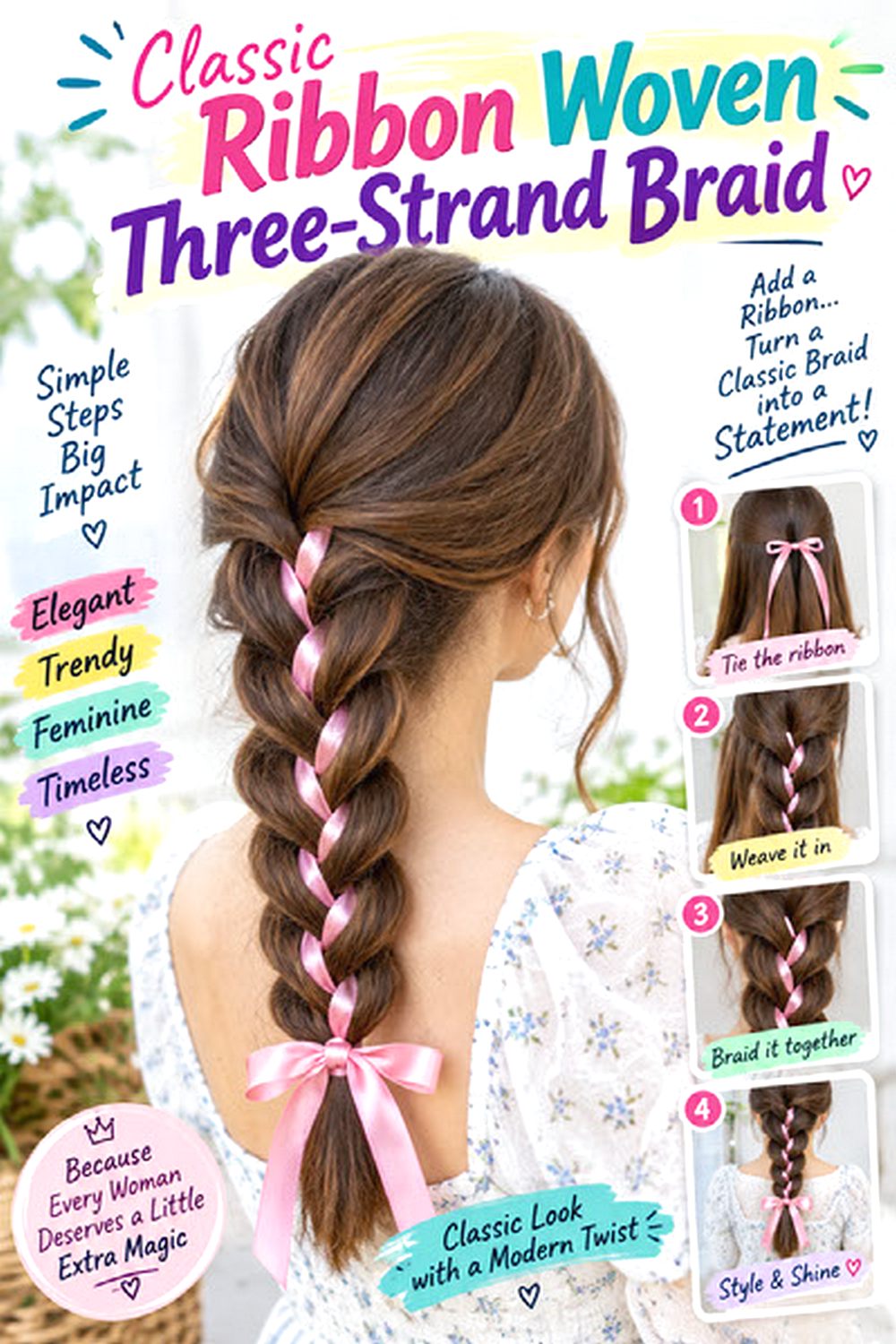
A three-strand braid is one of the easiest places to add ribbon because the fabric can travel with one section from the base to the ends. Medium to long hair shows the woven detail most clearly, especially when the braid is kept slightly loose rather than pulled tight. Straight and wavy hair are easy to control, while curly hair can keep more texture around the crown for a softer finish. Fine hair benefits from gently widening each braid loop after securing the end; thick hair may need smaller starting sections so the braid does not become too heavy. Use lightweight mousse for grip, a snag-free elastic, and a medium-width ribbon that is long enough to reach the bottom. Styling is moderate at first but becomes quick with practice. At the salon, ask to preserve enough density through the perimeter so the braid stays substantial, especially if you wear woven styles often.
Pro tip:
Anchor the ribbon around the starting elastic before braiding so it cannot slowly slide downward as you cross the sections.
Velvet Ribbon Dutch Braid hairstyle
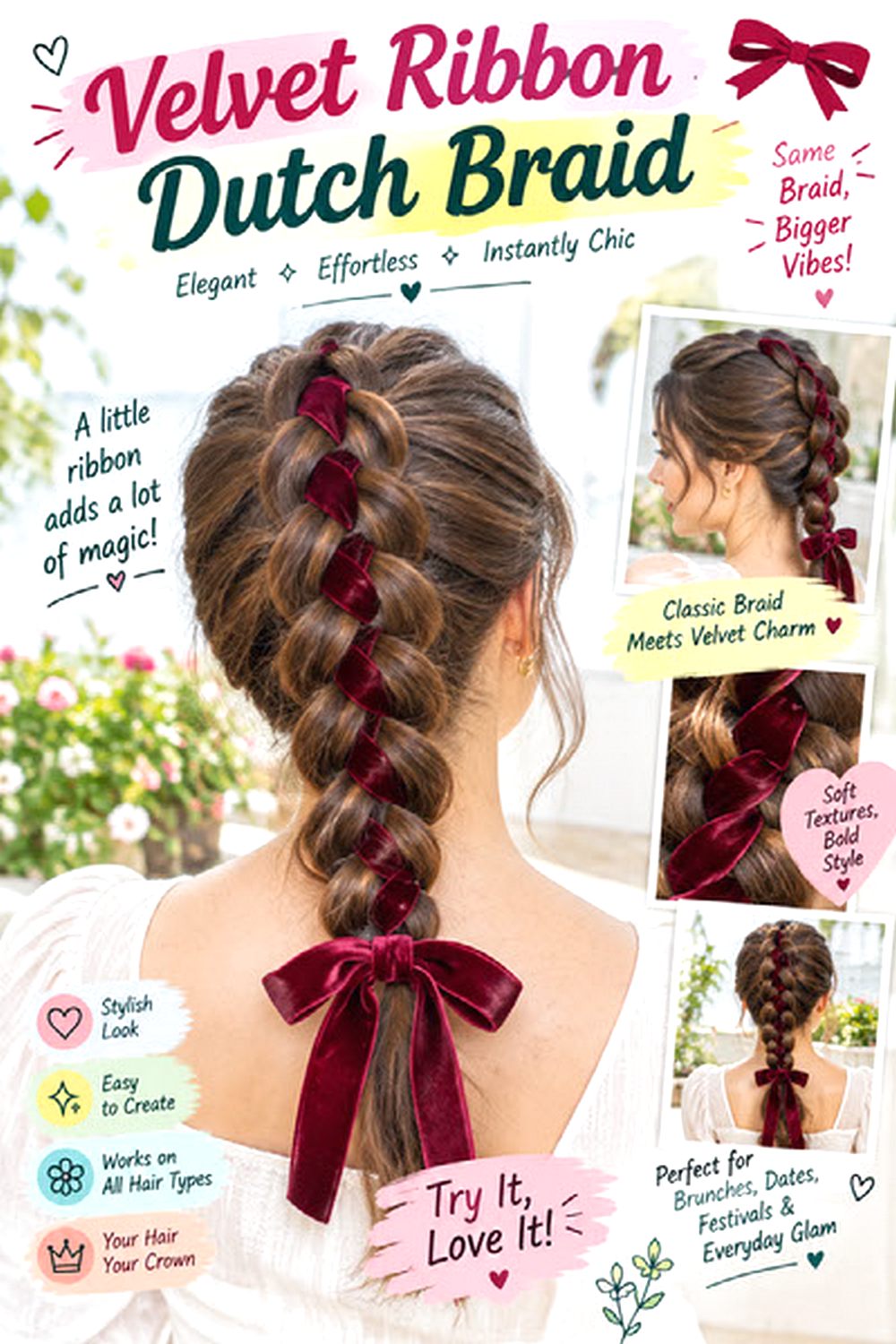
A Dutch braid places each section underneath rather than over the center, creating a raised braid that makes velvet ribbon especially visible. Start near the crown and feed the ribbon through one strand as you add hair down the back. Medium and thick hair usually produce a strong ridge, while fine hair can create more width by loosening the braid after it is secured. Straight, wavy, and lightly curly textures all work, though very silky hair benefits from added grip. Dry texturizing spray, a tail comb, and narrow velvet ribbon are useful because thicker velvet can become bulky inside smaller braid sections. Styling needs moderate time and careful hand placement, particularly at the back of the head. Short layers may escape around the sides, so flexible hairspray can help. At the salon, ask for long, connected layers if you want a cleaner braid with fewer loose pieces along the crown.
Pro tip:
Keep even tension on the ribbon but slightly softer tension on the hair; this preserves the raised Dutch shape without making the velvet bunch.
Satin Ribbon French Braid hairstyle
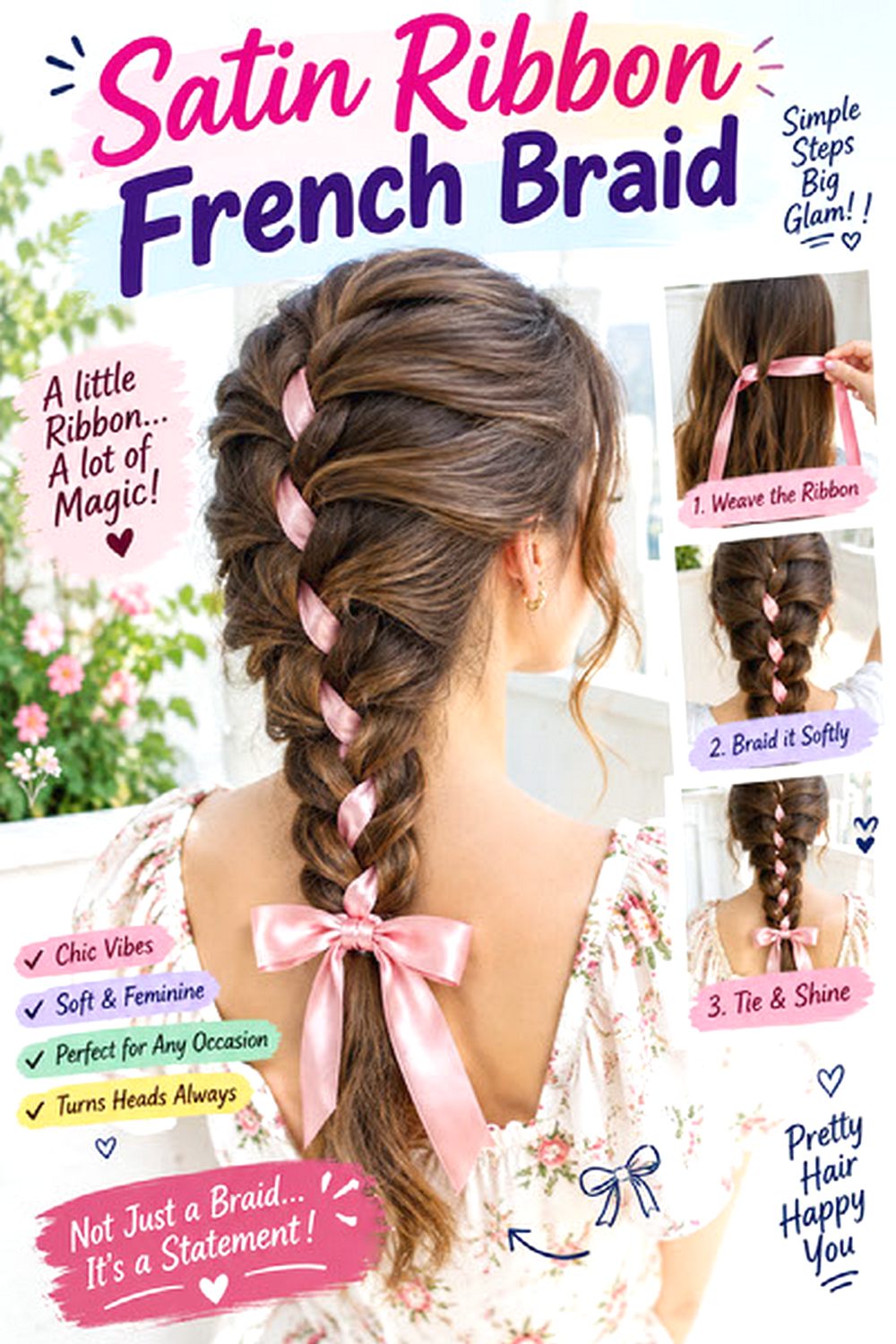
Satin gives a French braid a smoother, more polished finish because the ribbon reflects light between the woven sections. The braid begins close to the crown and gathers hair gradually as it moves down the head, creating a flatter shape than a Dutch braid. Medium to long straight or wavy hair is easiest to control, although curly textures can work when the sections are kept larger. Fine hair should avoid pulling the braid too tight because that can emphasize a narrow shape. Thick hair may be easier to manage when divided cleanly with a comb before each crossover. Use smoothing cream, a tail comb, and a narrow satin ribbon that will not overwhelm the braid. The style takes moderate time and usually holds well once finished. If your haircut has many short layers, some pieces may escape. Ask the stylist to keep crown layers long enough to reach securely into braided styles.
Pro tip:
Choose satin with a little texture rather than an extremely slippery finish if you want the ribbon to stay evenly spaced throughout the braid.
Ribbon Fishtail Side Braid hairstyle

A fishtail braid uses smaller crossed sections, so a narrow ribbon appears in delicate flashes instead of forming one solid line. Sweep the hair over one shoulder, split it into two main sections, and incorporate ribbon as you move small pieces from side to side. Long hair shows the pattern best, while medium hair creates a shorter, compact braid. Fine hair can look fuller when the fishtail is gently pulled apart after securing it. Thick hair makes a substantial braid but takes longer because more sections need to be crossed. Prep with texturizing spray, use a small clear elastic, and choose narrow grosgrain or satin ribbon that is easy to grip. Styling takes more time than a standard braid but can last well throughout the day. At the salon, ask to keep the lower layers connected so the braid does not taper too sharply toward the end.
Pro tip:
Pull out the fishtail loops only after tying the bottom; widening sections while braiding can loosen the ribbon and distort the pattern.
Ribbon Braided Low Ponytail hairstyle
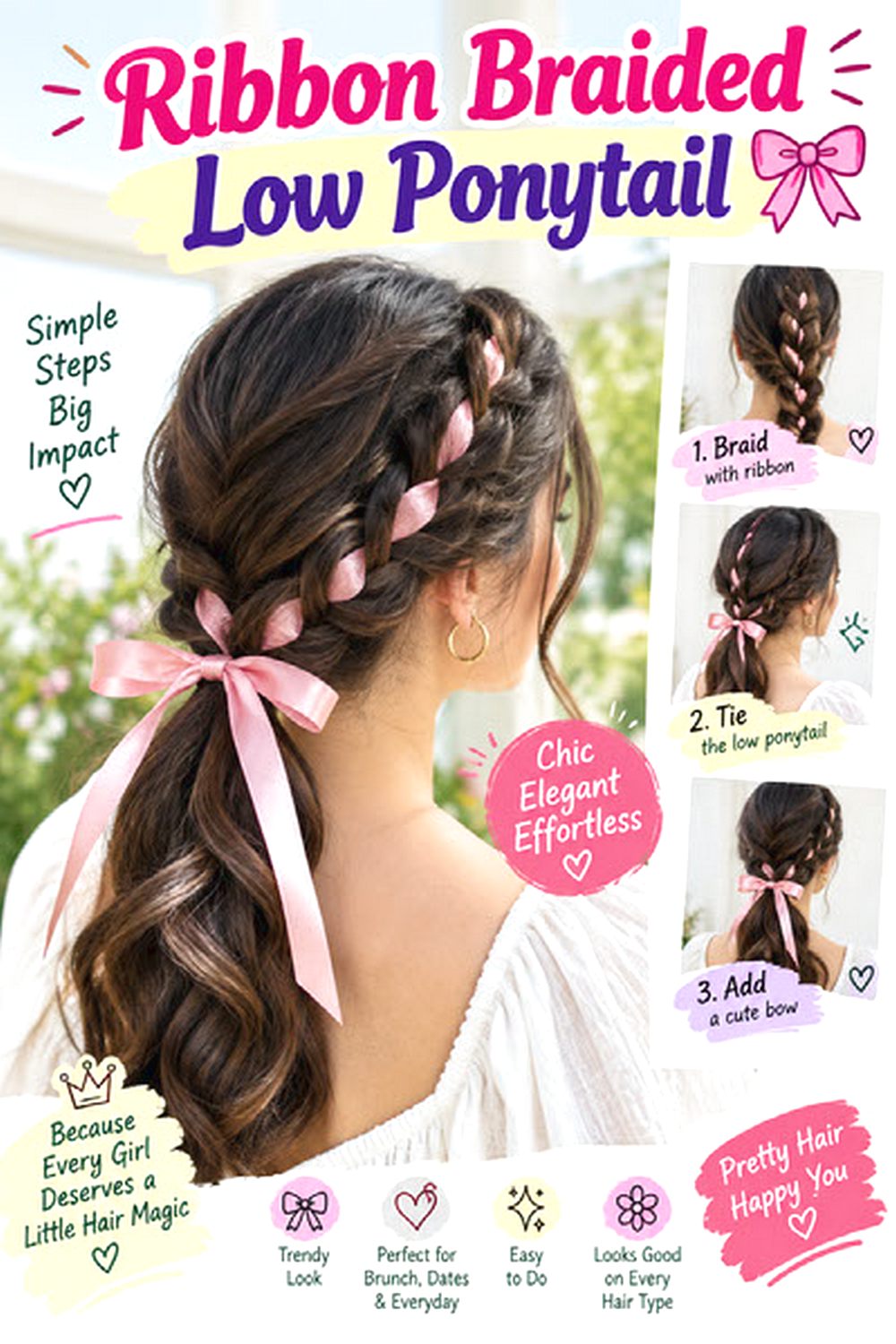
A low ponytail makes ribbon braiding straightforward because the hair is already controlled before the weaving begins. Secure the ponytail at the nape, tie the ribbon around the elastic, and braid it through the length for a clean fall hairstyle that works well with coats and scarves. Medium to long hair is ideal, while straight and wavy textures need very little preparation. Thick hair produces a fuller braid, and fine hair can create more visual width by keeping the weave relaxed. Use smoothing cream at the crown, a strong snag-free elastic, and a medium-width ribbon. Styling is quick to moderate and easier than starting a braid directly at the scalp. Refresh flyaways with a small amount of hairspray rather than coating the braid. For salon maintenance, request a strong perimeter and long layers that can reach the ponytail base instead of falling out around the nape.
Pro tip:
Wrap a short section of ribbon around the ponytail elastic before you start braiding; it hides the elastic and gives the woven length a cleaner starting point.
Ribbon Crown Braid hairstyle
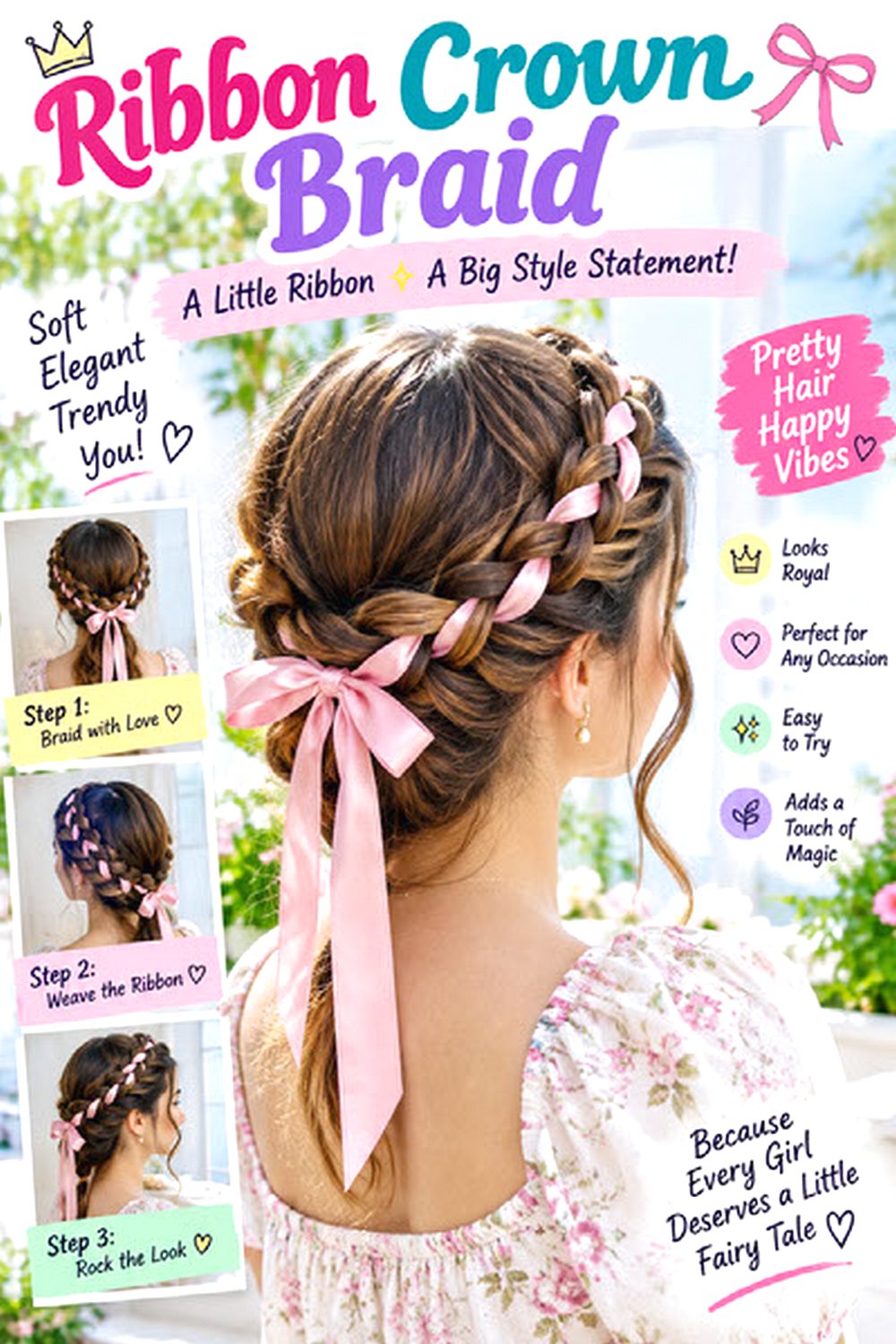
A crown braid places the ribbon around the head like a woven accessory, making it one of the more decorative options in this group. Hair is braided around the perimeter or divided into two braids that are wrapped and pinned across the crown. Medium to long hair provides enough length to complete the shape. Straight and wavy textures are easier to smooth, while curly hair creates a softer, more textured halo. Fine hair can benefit from lightly widening the braid, whereas thick hair may need flatter sections so the crown does not feel heavy. Use texturizing spray for grip, strong hairpins, and narrow ribbon that bends easily around the head. Styling takes more time and usually needs a mirror or careful sectioning. At the salon, ask to keep temple and side layers long enough to braid securely unless you want intentional wisps around the face.
Pro tip:
Pin the crown at several small points instead of relying on one or two large pins; distributing support prevents the braid from shifting under the ribbon weight.
Double Ribbon Pigtail Braids hairstyle

Two ribbon braids create a balanced shape and make the ribbon visible on both sides of the hairstyle. Begin with a clean center part, secure or section one side, then braid matching ribbons through each length. Medium to long hair works best because both braids need enough length for the fabric to show. Straight and wavy textures create the neatest pattern, while curls can be braided with more relaxed tension to preserve softness. Fine hair should keep the braids loose enough to retain width; thick hair benefits from even section sizes so one side does not look heavier. Use a tail comb, lightweight styling cream, and two ribbons cut to matching lengths. Styling is moderate because symmetry takes extra care. At the salon, ask for balanced layers on both sides and avoid overly short pieces around the ears if you prefer clean braids.
Pro tip:
Measure both ribbon lengths before starting; even braids can look uneven if one ribbon ends several inches higher than the other.
Ribbon Accent Half-Up Braid hairstyle
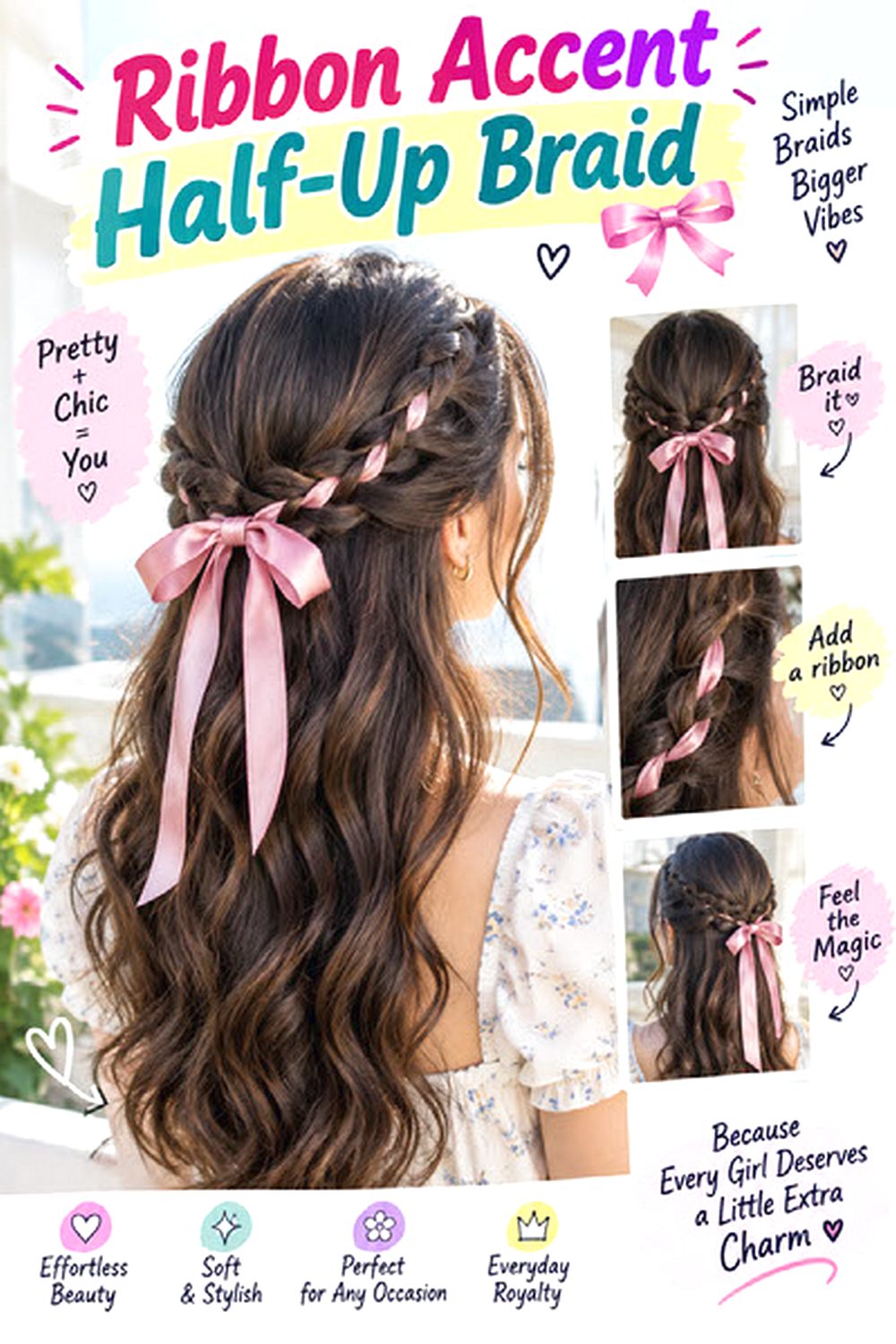
A half-up braid uses ribbon as a smaller detail instead of weaving it through the entire head of hair. Gather a section from each side near the temples, combine them at the back, and braid only that portion while leaving the remaining length loose. This works particularly well on medium and long hair because waves or straight lengths remain visible underneath. Fine hair benefits from the small section size, which leaves most density down, while thick hair can use a slightly wider braid. Use volumizing spray at the crown, a small elastic, and narrow ribbon so the accent does not overpower the half-up shape. Styling is quick, especially if you keep your natural texture. Loose waves can be added when you want more movement. At the salon, ask for face-framing layers that blend around the cheekbone or jaw while leaving enough crown length to reach the half-up braid.
Pro tip:
Attach the ribbon only after the two side sections meet at the back; starting it near the temples can make the front feel too busy.
Ribbon Rope Braid Ponytail hairstyle
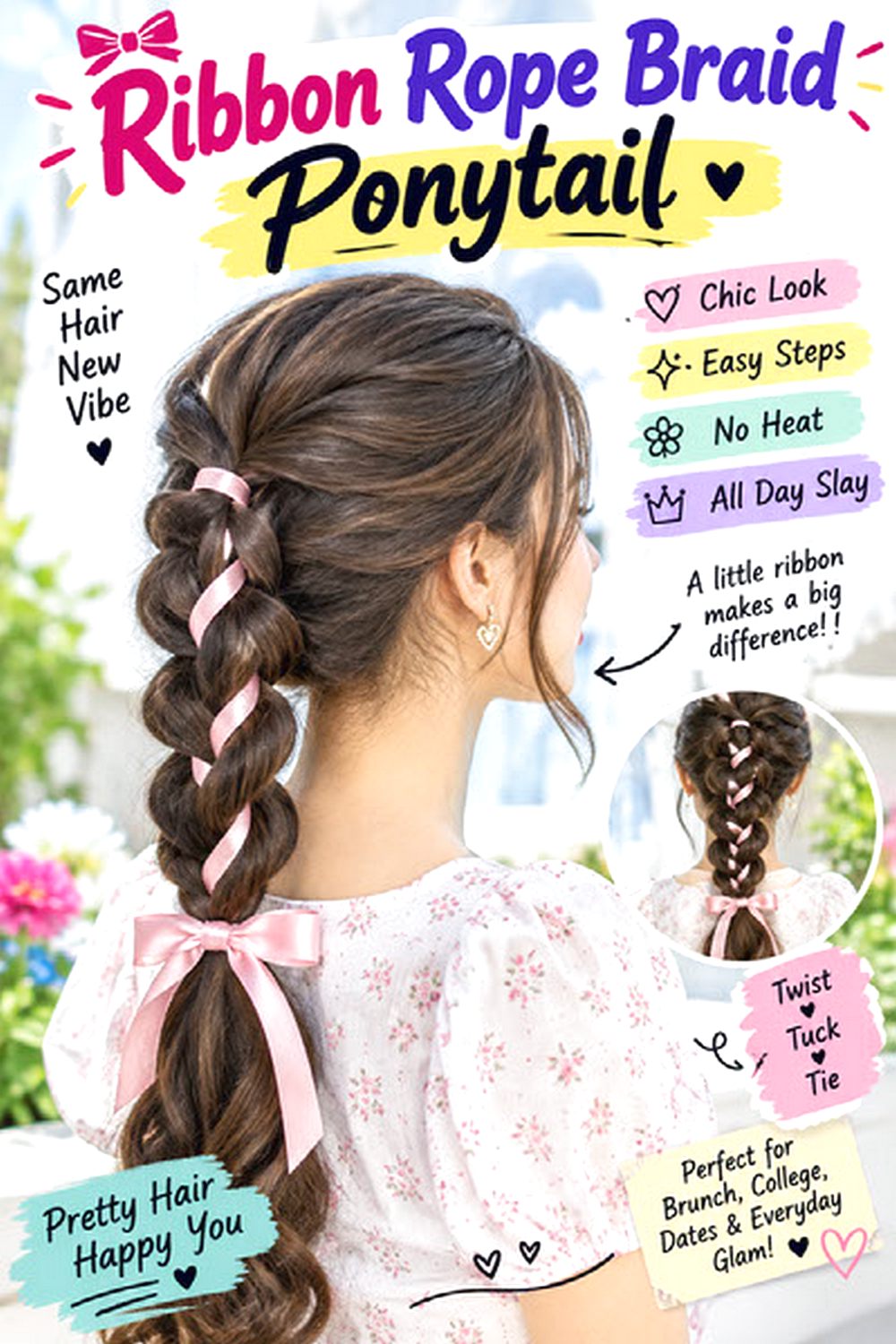
A rope braid creates a spiral rather than a traditional woven pattern, making the ribbon follow a clear twisting line from the ponytail base to the ends. Tie the hair into a mid or low ponytail, divide it into two sections, twist each section in the same direction, then wrap them together in the opposite direction with ribbon incorporated into one side. Straight and lightly wavy hair make the spiral easiest to see. Thick hair creates a bold rope, while fine hair should keep the twist relaxed so it does not become too narrow. Use a lightweight styling cream, two elastics, and a narrow ribbon with enough grip to stay inside the twist. Styling is fairly quick once the hand movement is familiar. At the salon, keep the lower perimeter strong and avoid excessive thinning if you want the rope to maintain thickness toward the ends.
Pro tip:
Twist both sections firmly before wrapping them together; if the individual twists are too loose, the rope can unravel and expose uneven ribbon spacing.
Burgundy Ribbon Bubble Braid hairstyle

A bubble braid gives the appearance of repeated braided sections without traditional weaving, making it useful when you want strong ribbon detail with less hand coordination. Start with a ponytail, place elastics down the length, and gently expand the hair between each elastic before tying burgundy ribbon over the bands. Long hair shows the repeated shape most clearly. Medium and thick hair create fuller bubbles naturally, while fine hair can build volume with light texturizing spray and careful widening. Use small snag-free elastics, volumizing powder, and narrow ribbon pieces cut to equal lengths. Styling is quick to moderate and easy to redo if one section becomes uneven. Keep the tension comfortable so the ponytail base does not pull at the scalp. At the salon, ask to preserve lower-length density because aggressively feathered ends can make the final bubbles look noticeably smaller than the upper ones.
Pro tip:
Expand each bubble before tying the ribbon over its elastic; adjusting volume afterward can loosen the bow or pull it off center.
Ribbon Braided Bun hairstyle

Braiding the hair with ribbon before coiling it into a bun creates a visible spiral of fabric through the finished updo. Start with a ponytail, braid the ribbon into the length, then wrap the braid around its base and pin it securely. Medium to long hair works best, and thick hair produces a larger bun without padding. Fine hair can loosen the braid slightly before coiling to create more width. Straight and wavy textures are easy to manage, while curly hair can keep some natural texture around the crown. Use lightweight mousse for grip, strong hairpins, and soft ribbon that bends without adding too much bulk. Styling takes moderate time but holds well once pinned. Loose front pieces can be curled or left natural. At the salon, ask for back layers that reach comfortably into a ponytail so the bun stays tidy rather than releasing short sections around the nape.
Pro tip:
Pin the braided coil as you wrap it instead of waiting until the entire bun is formed; this keeps the ribbon spiral visible and evenly spaced.
Ribbon Waterfall Braid hairstyle

A waterfall braid leaves selected pieces dropping through the braid, so ribbon adds a clear line across the side or back while the lower hair stays loose. Medium to long hair gives the falling sections room to show, especially with soft waves underneath. Straight hair displays the braid pattern sharply, while wavy hair blends the dropped sections more naturally. Fine hair should use a narrow ribbon so the braid does not overpower the loose lengths. Thick hair can work with larger sections but may take longer to keep organized. Use heat protectant if adding waves, a small elastic, and narrow satin or grosgrain ribbon. Styling requires more time and coordination than a simple braid, but the lower lengths need minimal maintenance afterward. At the salon, ask for connected side layers so the dropped pieces fall smoothly rather than ending abruptly near the temples.
Pro tip:
Keep the waterfall line slightly diagonal instead of perfectly horizontal; the gentle downward angle follows the head shape and helps the ribbon sit more naturally.
Ribbon Headband Braid hairstyle
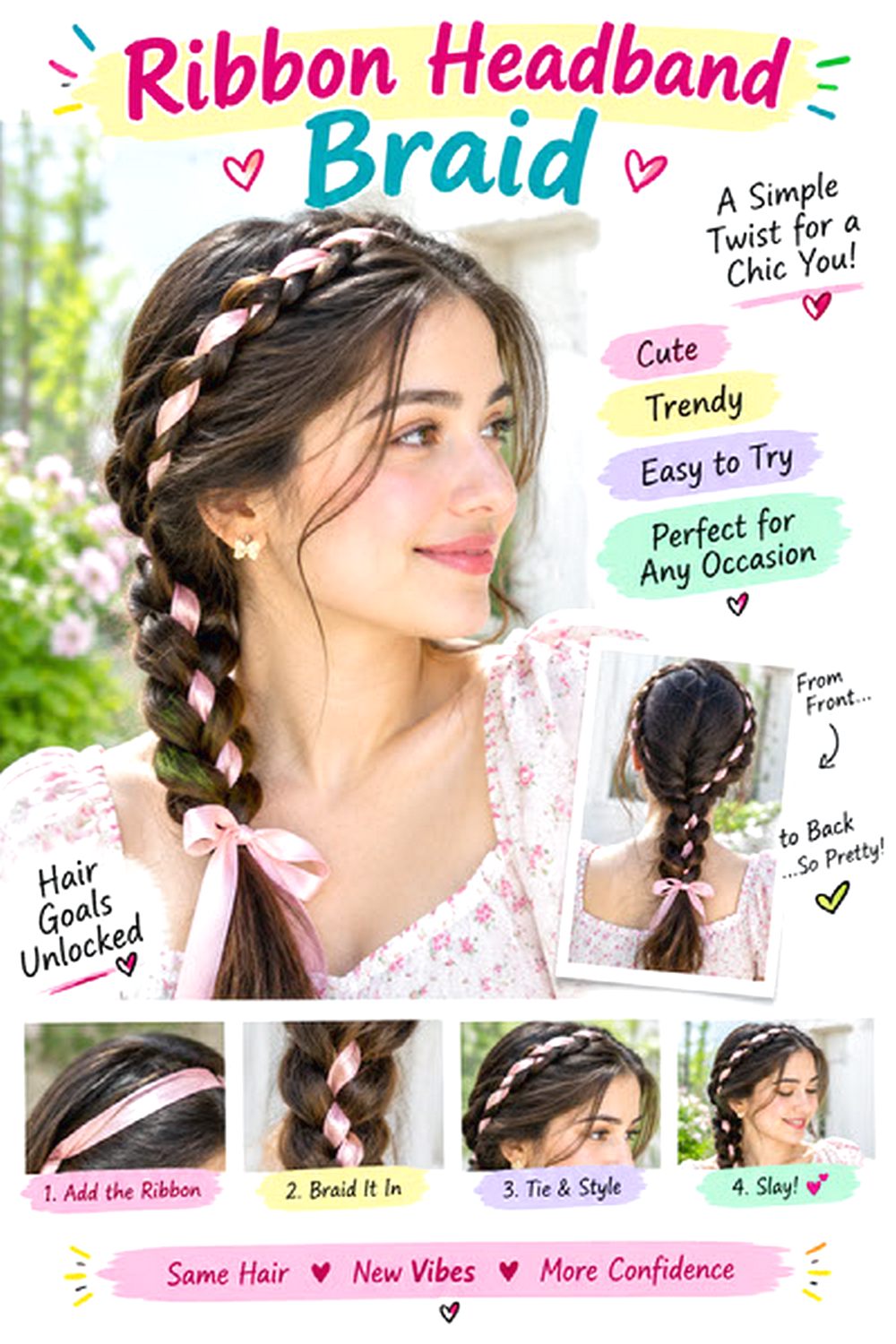
A headband braid runs across the front or just behind the hairline, creating a woven border that can hold shorter pieces away from the face. Ribbon makes that border more noticeable without requiring a separate accessory. Medium and long hair are easiest to section, though shoulder-length hair can create a smaller braid from one side to the other. Fine hair benefits from using a narrow section so enough density remains loose. Thick hair can support a broader braid but may need more internal control. Use texturizing spray for grip, a tail comb for a clean section, and narrow ribbon that lies flat against the braid. Styling takes moderate time because the front section is highly visible and needs even tension. At the salon, discuss fringe and temple length if you wear headband braids often; short disconnected pieces can be difficult to incorporate cleanly.
Pro tip:
Do not braid directly on the hairline under high tension; leave a small amount of softness at the roots so the style stays comfortable through the day.
Ribbon Braid with Curtain Bangs hairstyle
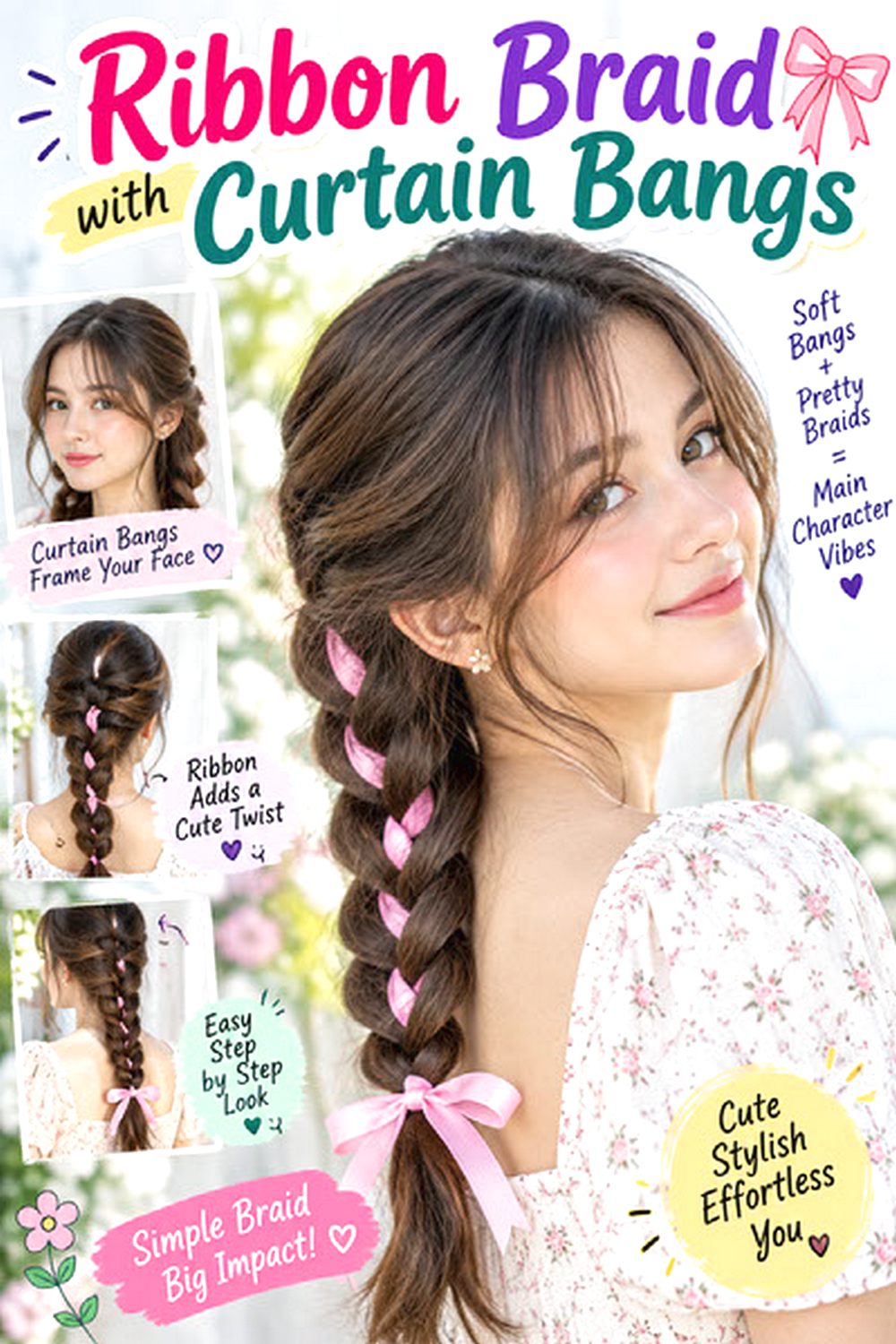
Curtain bangs soften the front of a ribbon braid by leaving movement around the cheekbones while the rest of the hair stays woven at the back. The shortest fringe pieces can sit around the brows or cheekbones, with longer sections blending toward the jaw. Straight and wavy hair are simple to shape, while curly textures need the fringe length adjusted for shrinkage. Fine hair usually benefits from a lighter bang section so too much density is not removed from the braid itself. Use heat protectant, a medium round brush, and lightweight hairspray for the fringe, then secure the braid with ribbon and a small elastic. Styling takes moderate time because the bangs should be shaped separately before braiding. Fringe trims may be needed more often than braid-friendly layers. At the salon, specify where the shortest curtain piece should fall and keep the back layers long enough to stay securely inside the braid.
Pro tip:
Style the curtain bangs before starting the braid; pulling the back sections tight first can change how the fringe separates and make the center opening too wide.
Ribbon Braid for Natural Curls hairstyle
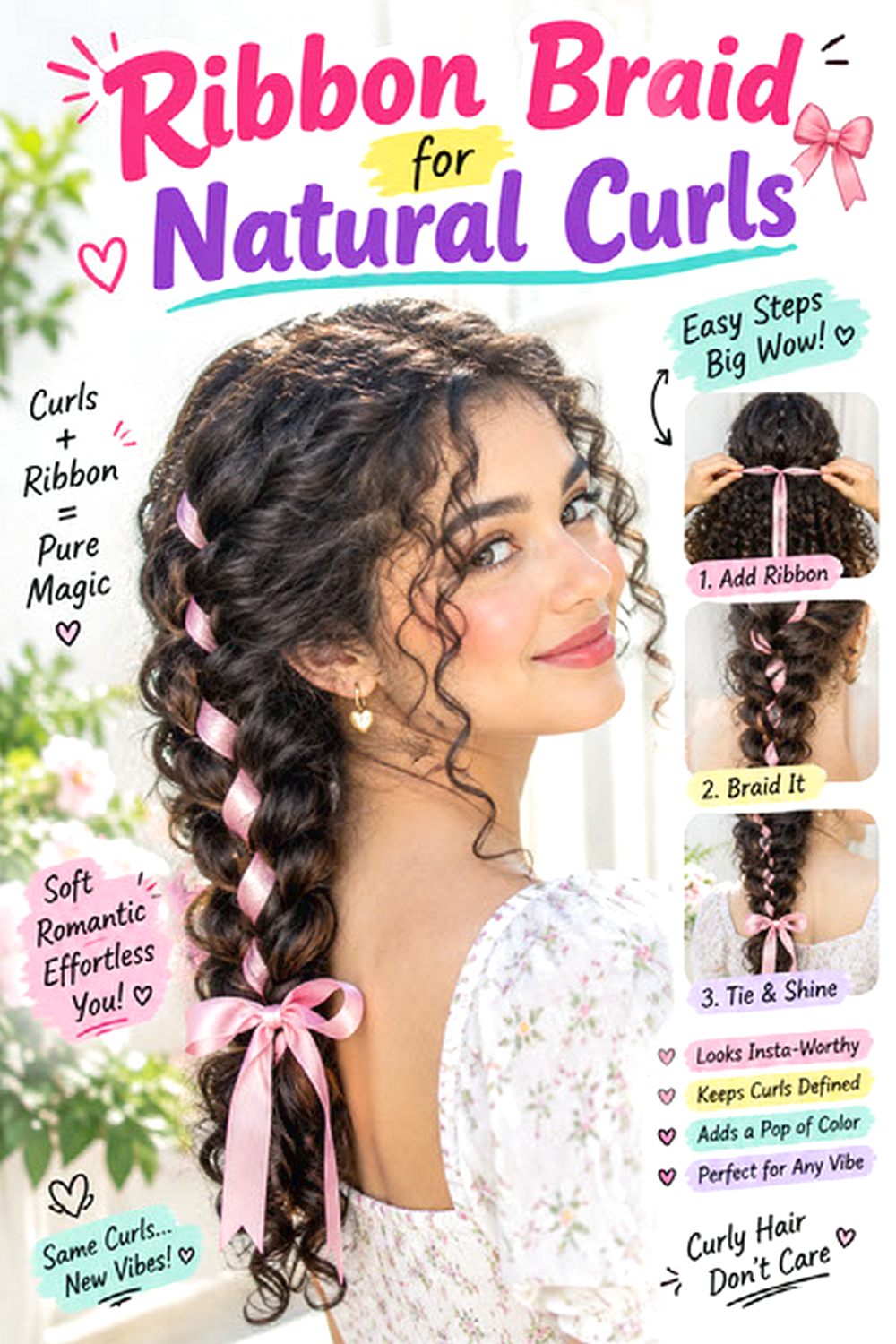
Natural curls give a ribbon braid more texture because the woven sections keep some spring and variation instead of forming a perfectly smooth pattern. Start with moisturized, defined curls and braid with gentle tension so the pattern is controlled without stretching the roots flat. Medium and thick curly hair creates a substantial braid, while finer curls may benefit from larger braid sections to preserve volume. Leave a few curls around the face if that suits the haircut and desired finish. Use leave-in conditioner, curl cream, and a wide-tooth comb or fingers for detangling before adding the ribbon. Styling takes more time on wash day but can be quicker on stretched or second-day curls. Avoid rough satin edges or stiff ribbon that may snag. At the salon, discuss shrinkage and keep enough length through the crown and sides for comfortable braiding without forcing shorter curls into tension.
Pro tip:
Choose soft ribbon with finished edges and weave it loosely enough that curls can keep some natural expansion rather than being compressed into a narrow braid.
Plaid Ribbon Loose Side Braid hairstyle

Plaid ribbon brings visible fall pattern to a loose side braid, so the braid itself works best when kept soft and uncomplicated. Sweep the hair over one shoulder, form a relaxed three-strand braid, and weave the ribbon through one section or tie it at intervals. Long hair gives the plaid pattern more room to appear. Naturally wavy hair creates an easy lived-in finish, while straight hair can gain grip from texture spray. Fine hair should gently widen the braid rather than over-teasing the crown. Thick hair may need a larger starting section and a sturdy elastic at the end. Use dry texturizing spray, a wide-tooth comb, and medium-width plaid ribbon. Styling is quick and easy to refresh if a section loosens. At the salon, ask for long blended layers rather than many short pieces so the side braid keeps a substantial shape from top to bottom.
Pro tip:
Let the plaid ribbon remain slightly flatter than the hair sections; twisting patterned ribbon too tightly can hide the print and make the braid look visually crowded.
Long Ribbon Braid with Bow Finish hairstyle

A long ribbon braid finished with a bow makes the ribbon part of both the braid and the final fastening detail. The effect works best on long hair because there is enough space for the woven fabric to remain visible before ending in a neat bow. Straight and wavy textures are easy to manage, while curly hair can create a fuller, more textured braid. Fine hair should preserve end density and keep the braid slightly loose; thick hair can use a wider ribbon without losing proportion. Use lightweight mousse for control, a small elastic hidden beneath the bow, and a soft ribbon long enough to leave generous tails after tying. Styling takes moderate time but does not require much refreshing once secured. Trim dry ends regularly because the bottom of the braid remains highly visible. At the salon, request long, connected layers and avoid excessive thinning through the final few inches.
Pro tip:
Secure the braid with a clear elastic before tying the bow; relying on ribbon alone can let the braid loosen as the fabric shifts throughout the day.
Choosing Ribbon Braid Hairstyles for Fall 2026
The best ribbon braid hairstyles for Fall 2026 depend on how much ribbon you want to show and how your natural hair behaves in a braid. Long, dense hair can support wide woven sections, crown braids, and larger bows, while fine hair often looks fuller with looser braiding and narrower ribbon. Straight hair displays intricate patterns clearly, whereas waves, curls, and coils create more texture and softness. Layer placement matters too: very short layers can escape from structured braids, while longer connected layers are easier to secure. Curtain bangs or face-framing pieces can stay loose when you want more movement around the face. Think about styling effort as well. Ponytail braids and bubble styles are quick, while Dutch, crown, and waterfall braids need more time and precision. The right version should fit your density, length, natural texture, maintenance preference, and usual routine.
Choose one or two favorite ideas and save clear photo references that show the braid from several angles. When you talk with your stylist, discuss your face shape, natural texture, density, preferred length, maintenance level, and regular styling routine. Point out the exact layer placement, fringe length, braid fullness, ribbon position, crown volume, or end finish you want. Those details will help the haircut support the braided styles you plan to wear instead of leaving too many short pieces or unnecessarily thin ends.
FAQs
What ribbon works best for braided hairstyles?
Satin, grosgrain, soft velvet, and lightweight fabric ribbon can all work. Choose a width that suits the braid size and avoid rough or unfinished edges that may snag the hair.
Can fine hair wear ribbon braids without looking thin?
Yes. Keep the braid slightly loose, gently widen each section after securing it, and avoid removing too much density through the haircut. Narrow ribbon usually looks more balanced on fine hair.
Do ribbon braids work with curly or coily hair?
Yes. Use gentle tension, work with moisturized hair, and account for shrinkage when choosing braid placement. Soft ribbon with smooth edges helps reduce unnecessary friction.
How can I stop ribbon from slipping out of a braid?
Anchor the ribbon around an elastic or secure it near the braid base before weaving. Satin may need extra grip, while grosgrain and velvet usually stay in place more easily.