14 Amber Lit Brunette Hair Color Ideas

Amber Lit Brunette is a warm dimensional brown color family rather than one fixed salon formula. The defining effect combines brunette depth with amber, honey-brown, copper-gold, or muted caramel light that appears to glow through the darker base. Brightness may sit around the face, skim the surface in fine threads, or build gradually through the mid-lengths and ends. Deep roots and darker interior sections are important because they keep the final result brunette rather than turning it into an all-over golden shade.
The idea can be adapted to straight, wavy, curly, and coily textures. Fine or lower-density hair may benefit from fewer bright sections and a stronger dark perimeter, while dense hair can support broader ribbons or more internal dimension. Natural color, previous processing, porosity, and the amount of warmth already present will affect how a colorist approaches the target.
Maintenance varies with contrast and placement. Fine amber strands close to the natural base generally grow more quietly than bright root-near pieces. Color-safe cleansing, moisture care, heat protection when styling, and tonal refreshes can help preserve the intended amber-brown balance. Comparing root depth, ribbon width, placement, and brightness is more useful than relying on the color name alone.
Quick List
- Deep Espresso Amber Lit Brunette Hairstyle
- Soft Mocha Amber Lit Brunette Hairstyle
- Face-Framing Amber Ribbon Brunette Hairstyle
- Amber Balayage Brunette Hairstyle
- Fine Amber Thread Brunette Hairstyle
- Golden Amber Brunette Hairstyle
- Chestnut Amber Lit Brunette Hairstyle
- Smoked Amber Brunette Hairstyle
- Rooted Amber Melt Brunette Hairstyle
- Curly Amber Dimension Brunette Hairstyle
- Coily Amber Glow Brunette Hairstyle
- Fine-Hair Delicate Amber Brunette Hairstyle
- Long Layered Amber Lit Brunette Hairstyle
- Glossed Amber Brunette Bob Hairstyle
Deep Espresso Amber Lit Brunette Hairstyle

An espresso-brown foundation gives amber dimension a strong dark background, so even narrow warm pieces become visible without needing to turn blonde. Keep the root, underside, and much of the interior deep brunette, then introduce amber-brown ribbons through the surface and selected face-framing sections. On long or shoulder-length hair, gentle waves can expose those warmer pieces as the hair moves, while straight styling makes the contrast look more precise. This option suits naturally dark brunettes who want warmth while preserving substantial depth.
Maintain the color with color-safe shampoo to slow fading, a hydrating mask to support reflective lengths, and heat protectant whenever hot styling is involved. A quick refresh between washes is mostly about smoothing the surface and controlling frizz; a complete wash-day style takes longer according to length, density, and natural texture. Tonal maintenance becomes useful when the amber turns noticeably orange or the espresso base and lighter sections stop feeling connected.
At the salon, specify how dark the deepest brunette should remain and how bright the amber should become. Ask for darker strands to continue through the ends instead of concentrating all depth near the root. If your hair has previous dark color, share that history because it can affect how much lighter the amber sections can realistically become.
Pro tip:
Check the finished shade in daylight before deciding whether it needs more brightness. Espresso can look almost black indoors while amber sections become considerably more visible outside.
Make It Work for You:
If your natural base is medium brown, soften the espresso depth near the root and keep the strongest darkness underneath so future regrowth does not create a harsh boundary.
Watch Out For:
Very pale highlights can overpower the dark base. Keep the lightest pieces within a warm brown-to-amber range if you want the result to remain brunette-first.
Soft Mocha Amber Lit Brunette Hairstyle

Mocha brown gives Amber Lit Brunette a softer foundation than espresso, allowing the amber pieces to sit closer to the base and create low-contrast warmth. Keep the root a little deeper, then weave muted amber-brown ribbons from the mid-lengths through selected ends. Around the face, one or two slightly brighter sections can begin near the cheekbones or jaw. A smooth blowout or loose waves make the transition easy to see, but the placement should still look blended when the hair is worn naturally.
Use gentle color-safe shampoo for cleansing, a lightweight conditioning mask for softness, and heat protectant when you style with heat. A short between-wash refresh can focus on the front and surface, while a complete wash-day routine takes longer depending on length and texture. Color upkeep becomes useful when the mocha base loses richness, the amber sections become too golden, or the difference between root and lengths becomes uneven.
At the salon, describe the goal as mocha brunette with restrained amber dimension rather than bright caramel highlights. Show how much root depth you want and whether the front should be noticeably lighter than the back. If your ends are already highlighted, ask whether adding mocha depth around them would create a better balance than lightening more hair.
Pro tip:
Compare the amber ribbons against a medium-brown reference. This helps keep the brightness within brunette territory instead of gradually pushing the entire result lighter.
Make It Work for You:
For lower-density hair, use fewer amber pieces and keep more mocha through the perimeter. The subtle contrast adds movement without making the ends appear unnecessarily light.
Watch Out For:
Too many similar light pieces can flatten the dimension. Preserve darker mocha gaps between ribbons so the amber remains visible as separate warmth rather than one uniform tone.
Face-Framing Amber Ribbon Brunette Hairstyle
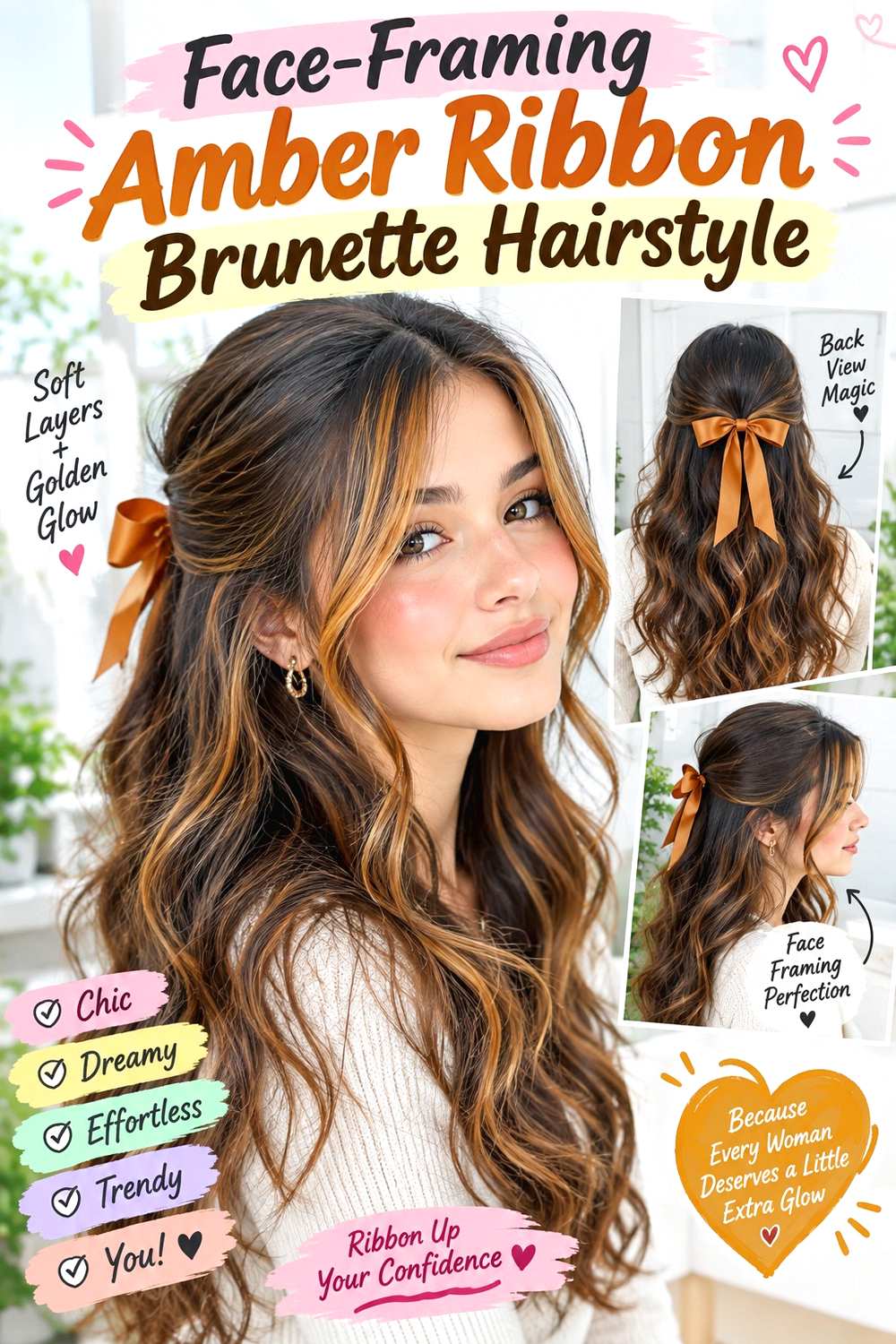
Concentrating amber around the face gives brunette hair noticeable warmth without changing every section. Keep the crown, back, and underside in a rich chocolate or medium brunette, then place slender amber ribbons through the temples and front layers. The brightest piece can begin close to the hairline or slightly lower for easier grow-out, while softer warmth continues through the cheekbone, jaw, or collarbone sections. This placement works on long layers, bobs, waves, curls, and straighter finishes because the front remains the visual focus.
Use color-safe conditioner to help protect the brighter pieces, heat protectant before shaping the face frame with heat, and lightweight shine serum through the finished lengths. A quick refresh can involve only smoothing or reshaping the front sections. A full wash-day style takes longer according to the haircut and natural texture. Color maintenance becomes more visible when regrowth moves the amber away from the hairline or the warm ribbons fade faster than the deeper base.
At the salon, wear your usual part and specify the width of the first bright section. Ask for several narrow amber ribbons instead of one solid pale panel if you want a softer result. The colorist should assess previous color around the hairline because those finer sections can respond differently from the back.
Pro tip:
Check the placement both tucked and untucked. Amber around the temples can become much more noticeable when the hair is moved behind the ears or pulled back.
Make It Work for You:
For lower-maintenance color, begin the brightest ribbons slightly away from the scalp and keep them close to the brunette base so regrowth remains relatively soft.
Watch Out For:
A thick golden panel can dominate the whole color. Break the front brightness into smaller ribbons and leave brunette between them to preserve dimensional contrast.
Amber Balayage Brunette Hairstyle
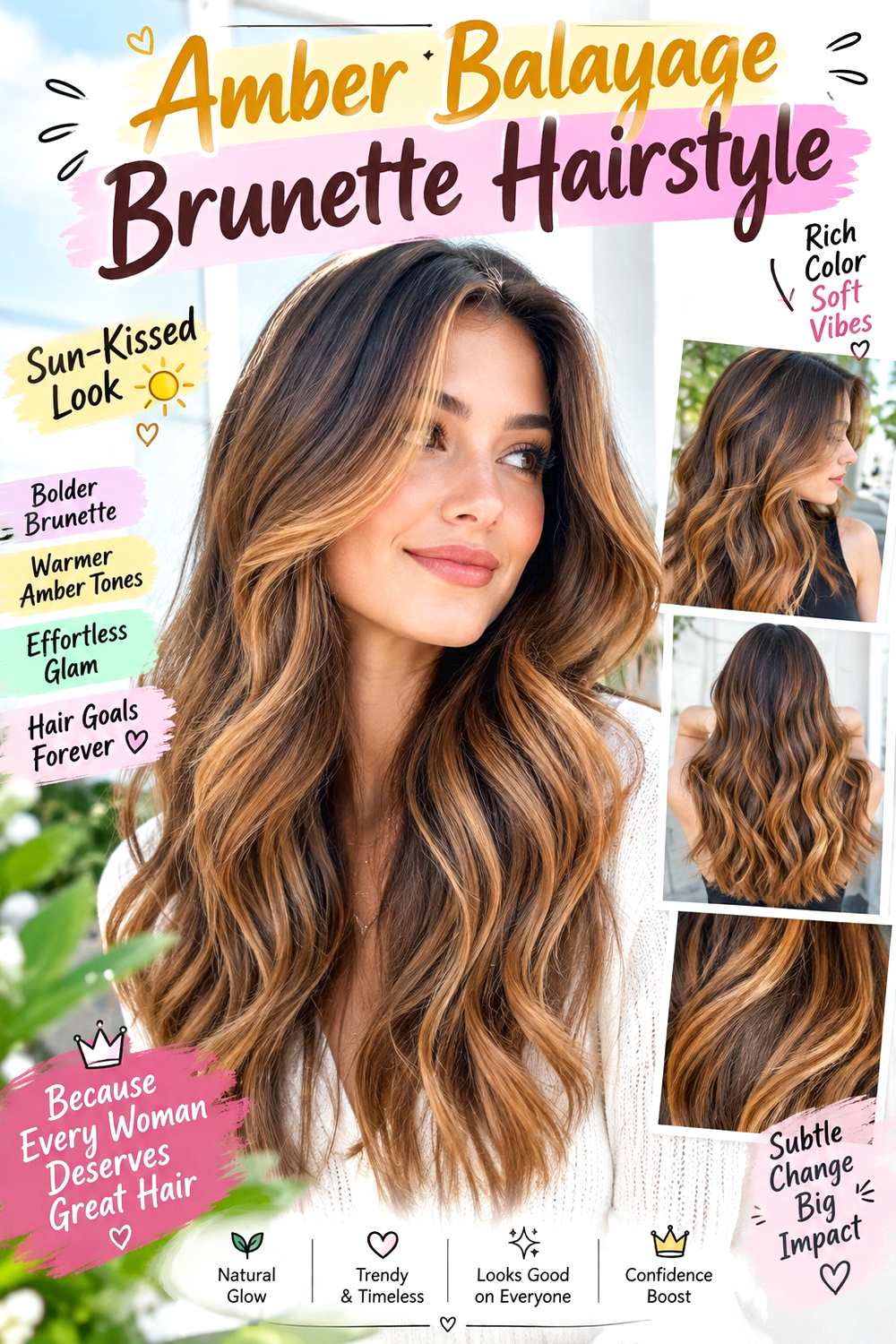
Amber balayage builds warmth gradually through the mid-lengths and ends while keeping brunette depth close to the root. The painted sections can begin around the cheekbones or jaw, with slightly more amber visible lower down, but darker strands should continue to the perimeter. That brunette-through-amber mixture prevents the color from looking like a simple dark-to-light ombré. Long layers and broad waves display the placement clearly, although the blend should remain convincing when the hair is straight or naturally textured.
Maintain the brighter areas with color-safe shampoo, a nourishing mask for moisture, and heat protectant before any hot styling. A quick refresh can focus on surface shine and the face frame; a full wash-day style takes longer depending on density and length. Salon maintenance becomes useful when the amber turns too yellow or orange, the ends become much lighter than the middle, or the placement grows too far down.
At the salon, show where you want the first visible amber section to begin and how much brunette should remain through the lower lengths. Ask for narrow, blended warmth rather than broad blonde panels. Previously lightened ends may need deeper brunette or richer amber added back instead of further lifting, so share your full color history.
Pro tip:
Ask to view the proposed starting point with your hair falling naturally. Balayage placed higher than expected can create more visible regrowth and stronger contrast.
Make It Work for You:
If your ends are already light, use some of that existing brightness as amber dimension and restore brunette depth around it rather than automatically lightening additional sections.
Watch Out For:
Lightening every end can erase the brunette character. Keep selected dark strands running to the perimeter so the balayage stays dimensional instead of becoming ombré.
Fine Amber Thread Brunette Hairstyle
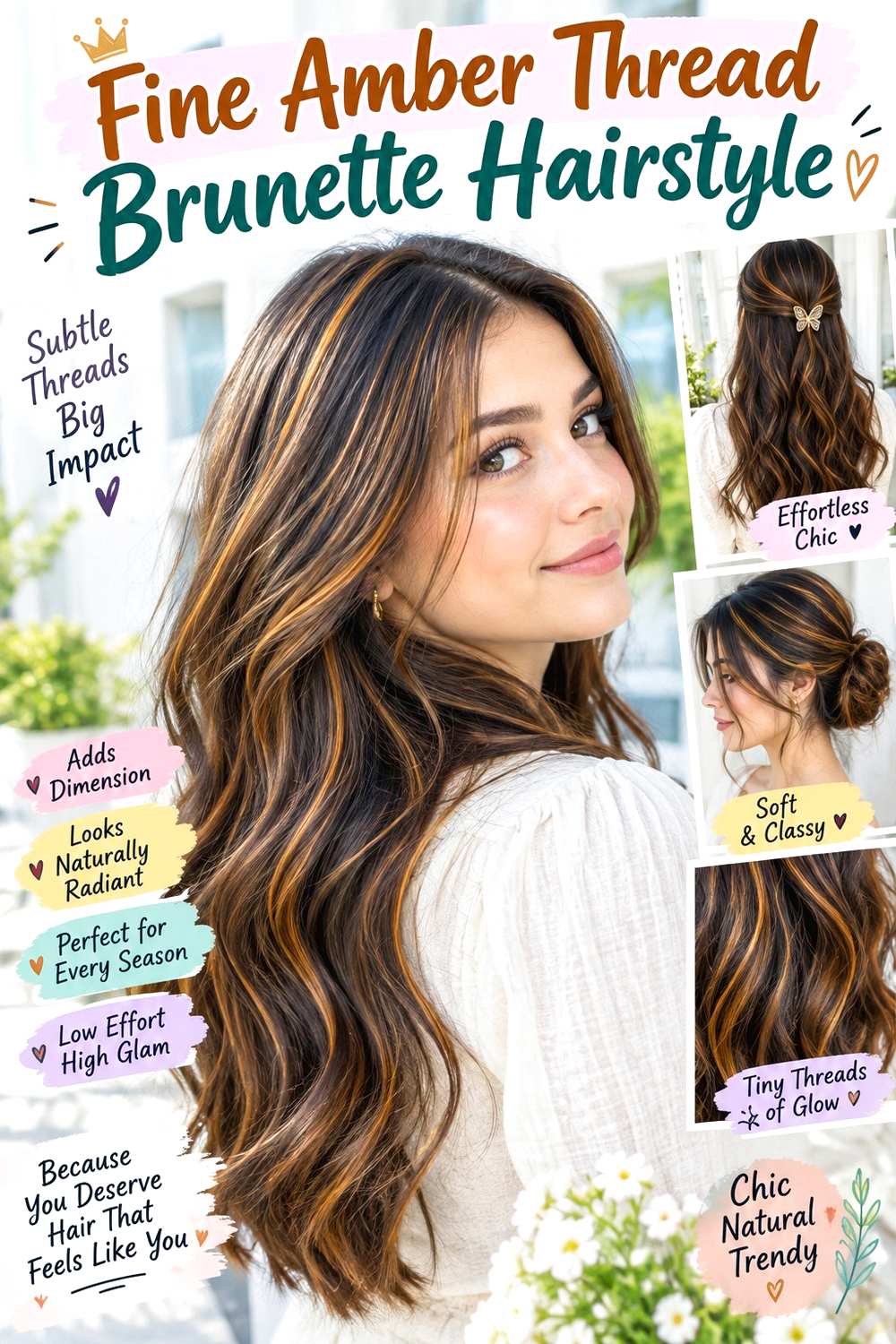
Fine amber threads create a delicate glow by placing very narrow warm sections through a brunette base. Keep most of the root and interior dark, then distribute tiny amber-brown strands around the part, hairline, and upper surface. The contrast can remain only a little lighter than the base, so the effect appears mainly when light catches the hair. Straight styles show the fine placement precisely, while loose waves blend the threads into a softer shimmer. This works especially well when you want dimension without obvious ribbons.
Use color-safe shampoo for regular cleansing, lightweight conditioner to keep the strands smooth without heavy buildup, and heat protectant before hot styling. A quick refresh between washes can focus on surface smoothness so the fine pieces remain reflective. A full wash-day style varies with length and texture. Tonal maintenance becomes useful when the amber threads turn brassy, fade into the base, or collectively become much lighter than the surrounding brunette.
At the salon, ask for micro-fine amber highlights with deliberate dark gaps rather than brightness in every section. Specify whether they should reach close to the scalp or begin with a softer root transition. The colorist should assess porosity because tiny previously lightened pieces may absorb tone differently from untouched hair.
Pro tip:
Keep the highest concentration around your normal part and selected front sections. Strategic placement makes very fine amber threads visible without requiring more highlights throughout the interior.
Make It Work for You:
If your hair is dense, you can support additional fine threads across the surface while preserving darker interior sections so the overall color still reads brunette.
Watch Out For:
Too many micro highlights can merge into one lighter surface. Leave enough untouched brunette between them for the thread-like contrast to remain clear.
Golden Amber Brunette Hairstyle

Golden amber shifts the color toward a brighter honey-brown glow while retaining enough brunette underneath to keep the finish grounded. A medium chocolate root can transition into warm amber-gold through the mid-lengths, with a few brighter pieces around the face and selected ends. The gold should remain brown enough that it does not become blonde-dominant. Medium-length and long hair give the tonal transition space to show, while loose movement helps darker and lighter sections overlap naturally.
Use color-safe shampoo to reduce unnecessary fading, a moisturizing mask to keep the brighter areas reflective, and heat protectant whenever heat styling is involved. A quick refresh can focus on smoothing the front and controlling flyaways. Full wash-day styling depends on texture and density. Tonal maintenance becomes important when the gold shifts too yellow, the amber becomes orange, or the root-to-length transition starts feeling disconnected.
At the salon, show how much gold you want compared with copper or brown. Ask for golden amber rather than generic warm highlights and specify whether the ends should stay mostly brunette or become noticeably brighter. If your natural base is very dark, discuss whether a softer brown-amber target may provide a more gradual result.
Pro tip:
Compare your reference with a true golden-blonde image. If your target starts reading blonde first, ask for more brunette and amber depth to keep the intended balance.
Make It Work for You:
For darker hair, reserve the brightest gold-amber pieces for the face and surface while leaving the interior closer to chocolate brown for stronger depth and easier grow-out.
Watch Out For:
Too much yellow can dilute the amber-brown effect. Keep enough brown and subtle copper warmth present so the final color remains dimensional brunette.
Chestnut Amber Lit Brunette Hairstyle
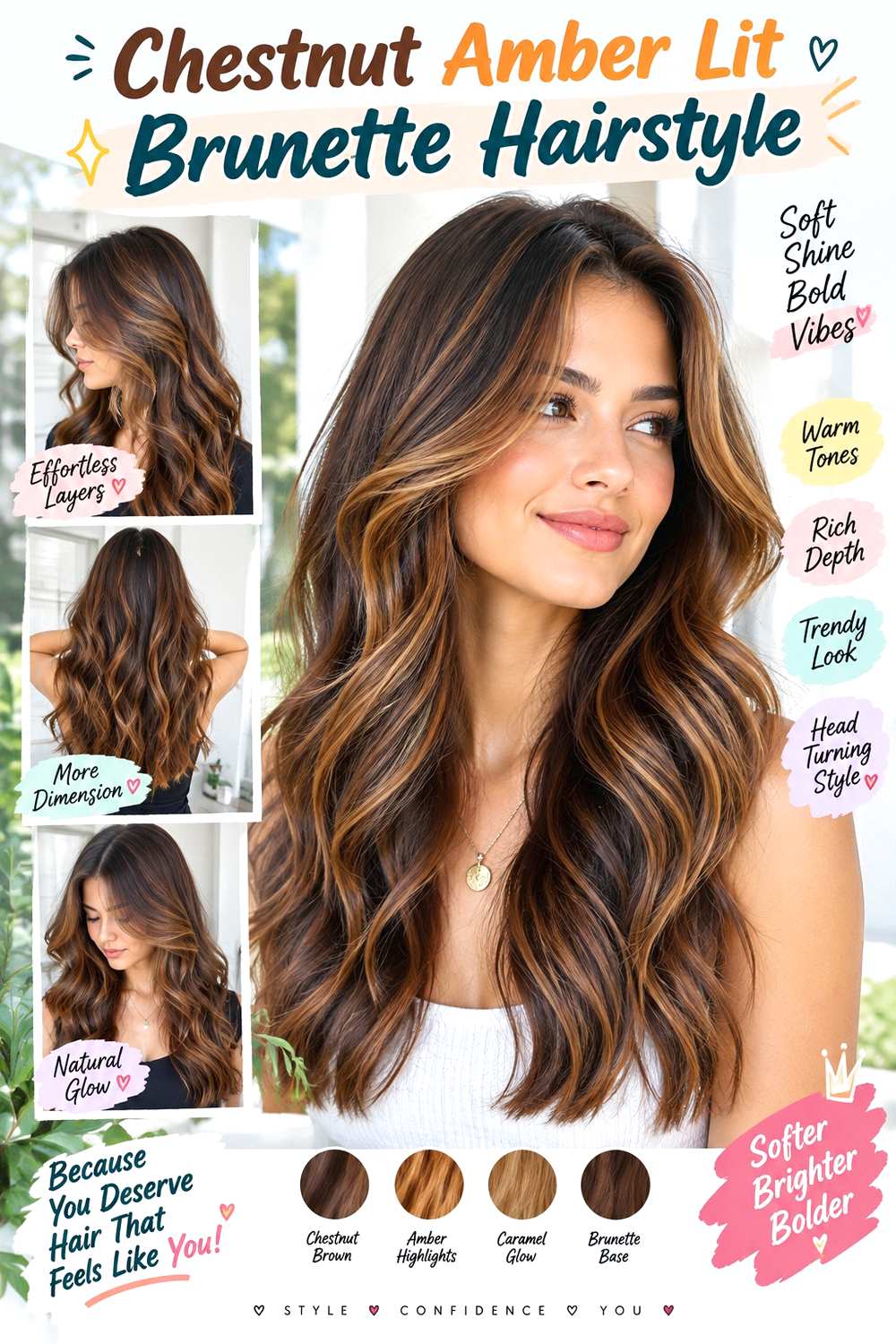
Chestnut amber introduces a subtle red-brown undertone, giving the warm highlights more depth than honey or golden amber. Keep the root and interior chocolate brunette, then weave chestnut-amber pieces through the face frame, crown, and selected mid-lengths. The reddish warmth should become clearer in daylight without turning the entire head into copper or auburn. Straight hair shows the tonal difference cleanly, while waves or curls allow the warmer pieces to appear and disappear through the deeper base.
Maintain the color with color-safe shampoo, a moisture-rich conditioner, and heat protectant before heat styling. A short refresh between washes may only involve smoothing the surface or reshaping front pieces. A complete wash-day style takes longer according to texture. Color maintenance becomes useful when the chestnut turns too orange, loses its red-brown richness, or fades into a flat medium brown.
At the salon, bring references showing exactly how red you want the chestnut component to appear. Ask for amber warmth to remain brown-dominant and preserve darker chocolate between brighter sections. If your hair has previous red or copper color, mention it because underlying warmth can affect the finished tone and how quickly it shifts with washing.
Pro tip:
View chestnut references outdoors before choosing your target. Red-brown undertones can appear far more visible in daylight than they do under warm indoor lighting.
Make It Work for You:
If you want restrained red warmth, keep chestnut amber concentrated through the mid-lengths and face frame while leaving the root and interior closer to neutral chocolate.
Watch Out For:
Adding too much copper can move the result away from brunette. Keep the dominant impression brown and use red-gold warmth as dimensional accents rather than the base.
Smoked Amber Brunette Hairstyle
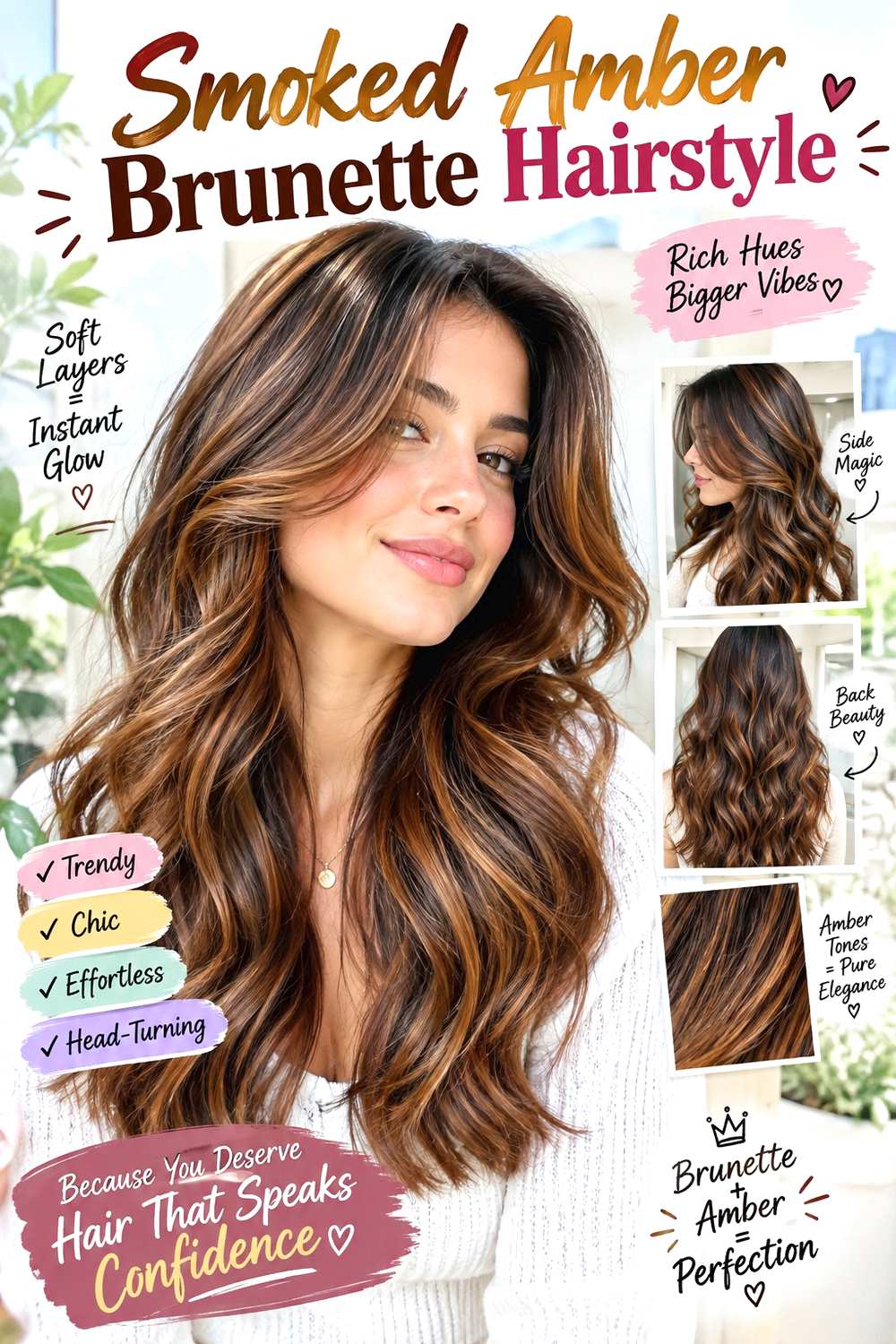
Smoked amber combines a muted neutral-brown foundation with restrained golden-copper warmth, producing a quieter finish than honey or caramel-based versions. Keep the root and interior cool-neutral brunette, then introduce softened amber through fine surface ribbons and selected ends. The contrast should stay low, with the warmer pieces appearing beige-brown or muted amber rather than bright orange. Straight and softly wavy hair make the subdued tonal differences easy to see, while medium to high density can support several fine ribbons without losing depth.
Use color-safe shampoo for gentle cleansing, a blue-toning cleanser only when unwanted orange warmth becomes excessive, and hydrating conditioner to keep the lengths supple. A quick refresh focuses on surface smoothness, while full styling time varies with texture and length. Tonal maintenance is useful when the brunette becomes much warmer or the amber sections turn dull and overly ashy.
At the salon, describe the base as neutral-to-cool brown with softened amber rather than asking for an entirely ashy result. Show how much warm reflection you still want in the lighter sections. If your hair naturally pulls warm, your colorist can assess whether neutral rather than strongly cool depth will be easier to maintain.
Pro tip:
Use corrective blue care only when unwanted orange is actually visible. Over-correcting can mute the amber dimension and make selected porous sections look dull.
Make It Work for You:
If your natural brunette is strongly warm, aim for a neutral base rather than forcing extreme ash, then let controlled amber pieces provide the intended glow.
Watch Out For:
Cooling every section can erase the defining warmth. Preserve a noticeable amber reflection in the lighter pieces so the result does not become flat neutral brown.
Rooted Amber Melt Brunette Hairstyle
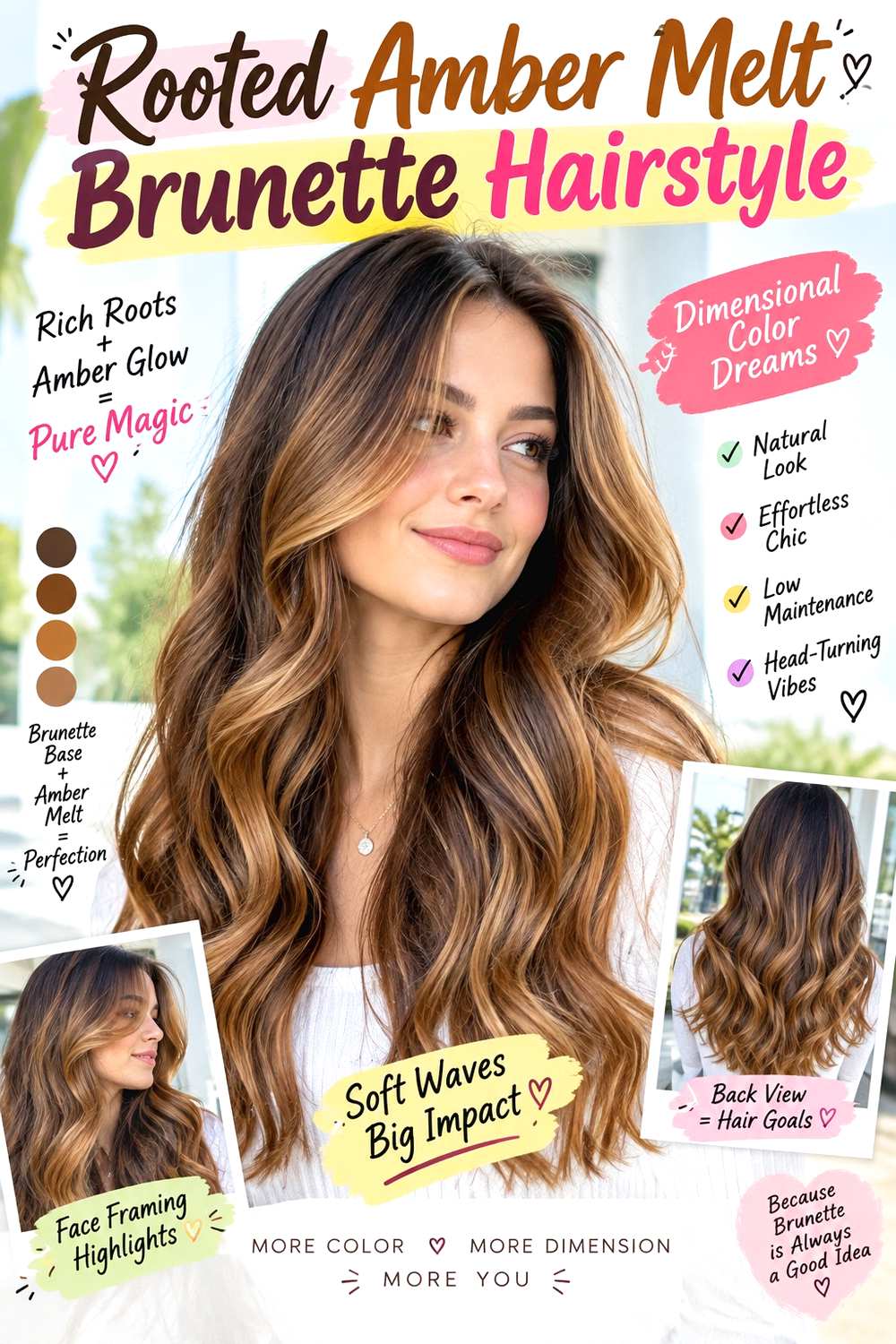
A rooted amber melt keeps natural or deep brunette near the scalp and gradually increases warmth through the mid-lengths and ends. Instead of a hard shadow line, the darker root should diffuse into medium brown, then amber, creating several connected levels. A few deep brunette strands can continue through the ends so the finish remains dimensional. Long hair shows the gradient clearly, while shoulder-length cuts can use a shorter transition with more amber concentrated near the lower half.
Use gentle color-safe shampoo, a nourishing mask through the lighter lengths, and heat protectant whenever hot styling is part of your routine. A quick refresh can focus on the face frame and surface. Full styling time depends on texture and density. Color maintenance becomes useful when the amber fades significantly faster than the root, the transition starts looking banded, or natural regrowth no longer relates to the colored root.
At the salon, compare the planned root depth with your natural regrowth and specify how far the deeper area should extend. Ask for at least one intermediate brunette-amber level before the brightest ends. If your natural root already fits the design, discuss preserving it rather than adding unnecessary darker color.
Pro tip:
Choose the deepest root by looking at your actual regrowth. Keeping those levels related can make future growth appear intentional instead of creating another line to maintain.
Make It Work for You:
If your natural base is medium brunette, use a softer root melt and keep the brightest amber mostly below the cheekbones for a gentler transition and quieter upkeep.
Watch Out For:
A very dark root beside bright amber ends can look disconnected. Maintain a medium brown transition zone so the gradient reads as a melt rather than two separate colors.
Curly Amber Dimension Brunette Hairstyle

Curly hair can show amber dimension clearly when the brighter color follows curl groups that remain visible in the dry shape. Keep a deep brunette foundation, then add amber-brown, honey-copper, or golden-brown accents to selected curls around the face, crown, and outer surface. Darker curl groups should remain between them to provide contrast and prevent the entire shape from becoming uniformly warm. Placement should be planned around the normal curl pattern because shrinkage and direction determine which sections stay visible.
Use color-safe cleansing conditioner for gentle washing, a moisturizing curl mask to support the processed lengths, and UV-protective spray when the hair will spend significant time in strong sun. A quick refresh between washes focuses on redefining curls rather than recoloring them. Full wash-day styling can take longer because the pattern needs time to dry and settle. Color maintenance becomes useful when the amber curls fade, turn brassy, or move out of balance as new growth changes placement.
At the salon, show your normal dry curl pattern and identify the curl groups you want brighter. Ask for dark interior sections to remain substantial. Previous lightening and current condition should guide how much extra brightness is appropriate.
Pro tip:
Bring a photo of your everyday dry curl pattern if salon preparation stretches the hair. It can help map amber onto sections that will remain visible later.
Make It Work for You:
For loose curls, use narrower amber ribbons with more scattered placement. Tighter curls may need brightness grouped more deliberately so it remains visible after the pattern reforms.
Watch Out For:
Random tiny highlights can disappear once curls contract. Place brightness on visible curl groups and keep deeper brunette between them so the dimensional pattern remains readable.
Coily Amber Glow Brunette Hairstyle
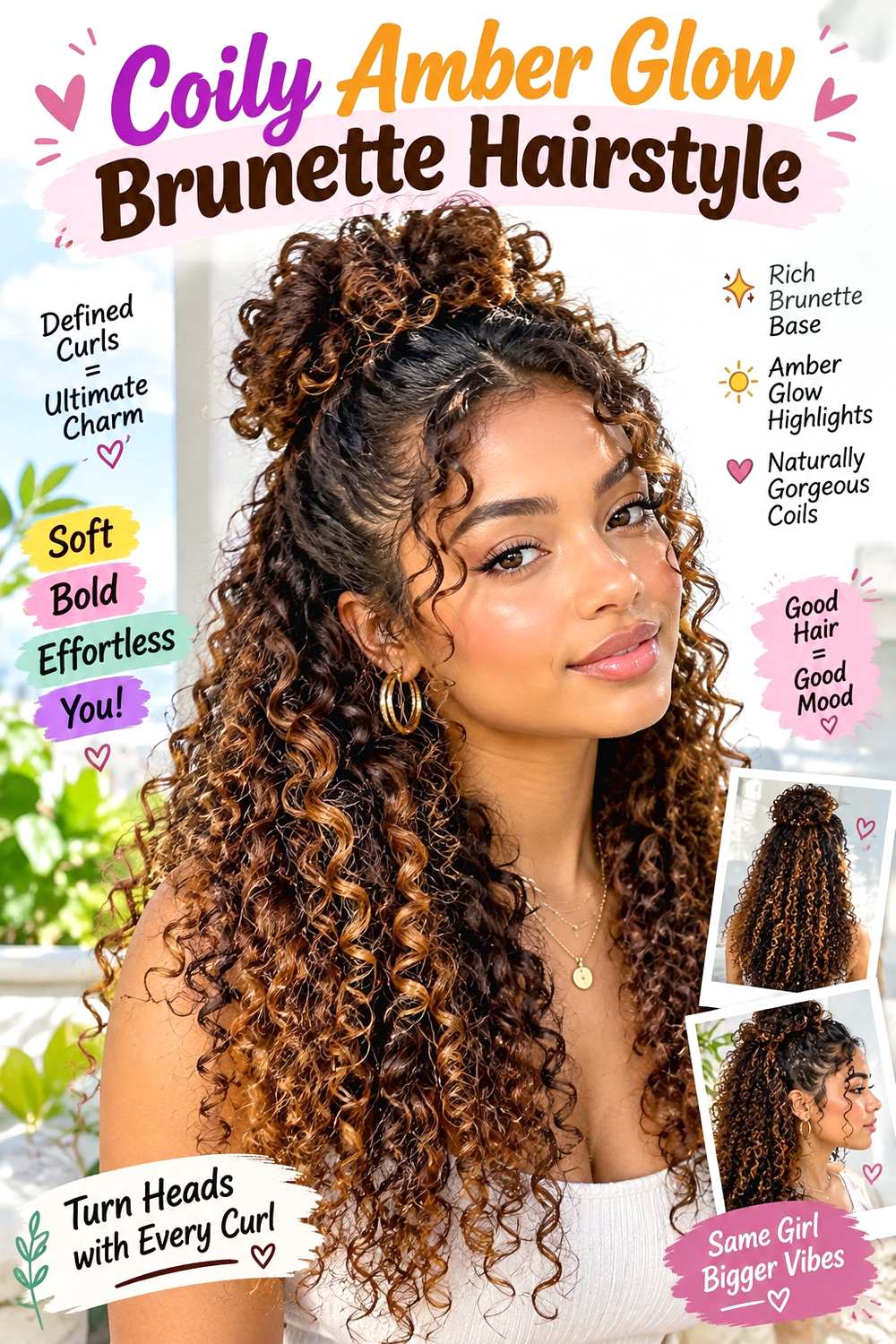
Coily hair can carry an amber glow through selected surface and face-framing sections while maintaining substantial brunette depth inside the shape. Start with deep brown, then place warm amber, muted copper-gold, or chestnut-gold on coil groups that stay visible after shrinkage. Keeping the strongest brightness near the outer surface allows the color to show without requiring uniform lightness throughout. The finished pattern can be subtle or stronger depending on starting color, previous processing, and how much contrast you want.
Use color-safe moisturizing cleanser, a deep-conditioning mask to support moisture, and UV-protective spray when prolonged sun exposure is expected. A quick refresh between washes focuses on restoring coil definition, while a full wash-day routine takes longer because the pattern needs to dry completely. Color maintenance becomes useful when the amber areas fade, turn excessively orange, or shift out of visual balance as new growth changes the silhouette.
At the salon, discuss placement with the hair’s usual dry, shrunken shape in mind rather than only its stretched length. Point to visible coil groups you want brighter and ask for plenty of deep brunette between them. The colorist should consider previous lightening and current condition before deciding how much brightness is realistic.
Pro tip:
Choose highlighted coils according to their position after shrinkage. A section selected while stretched may settle somewhere very different once your usual texture returns.
Make It Work for You:
For very dense coils, concentrate amber on the face frame and outer surface while leaving the interior deeper, giving brighter sections stronger contrast without lightening everything.
Watch Out For:
Too much scattered brightness can make the pattern visually busy. Group selected amber sections and preserve darker resting spaces so individual areas remain easy to distinguish.
Fine-Hair Delicate Amber Brunette Hairstyle
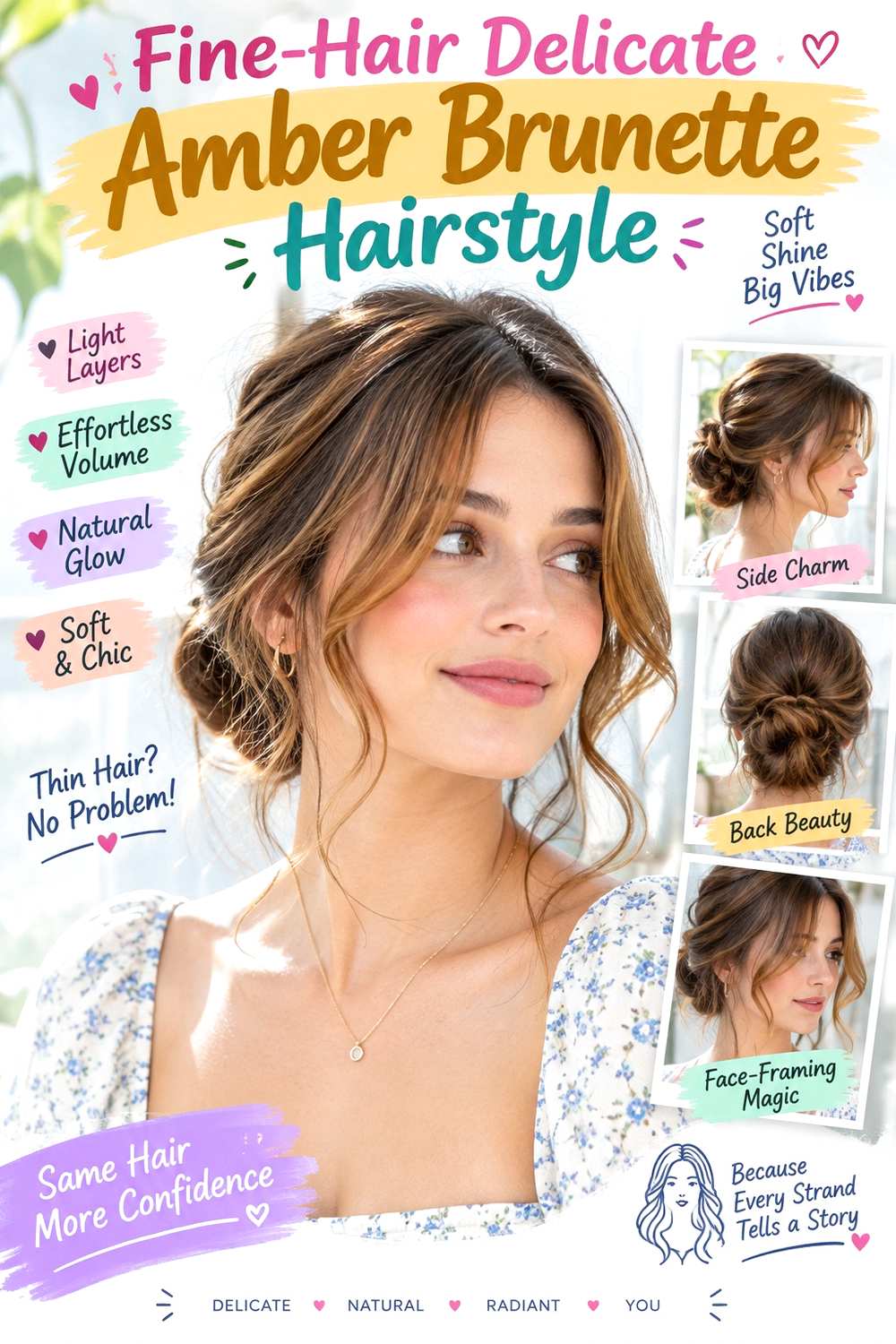
Fine strands often benefit from a restrained amber placement that adds warmth without making the perimeter appear lighter or thinner. Keep brunette dominant through the root, underside, and ends, then introduce a limited number of fine amber-brown threads around the part, temples, and upper mid-lengths. The contrast can stay low, especially if overall density is also limited. Straight or softly wavy styling helps the fine pieces catch light while maintaining a stronger-looking lower edge.
Use lightweight color-safe shampoo to avoid unnecessary buildup, a light conditioner for softness without weighing down the roots, and heat protectant before heat styling. A quick refresh can focus on root movement and surface smoothness, while full wash-day styling varies with length and density. Tonal maintenance becomes useful when fine amber pieces become too warm or the ends fade noticeably lighter than the brunette foundation.
At the salon, explain both strand thickness and overall density because fine hair is not automatically sparse. Ask for minimal brightness through the perimeter and concentrate most amber on visible upper sections. The colorist should preserve deliberate brunette gaps instead of assuming more highlights are needed to make fine strands dimensional.
Pro tip:
Assess the color with the hair hanging naturally rather than spread across the shoulders. This reveals how much brunette density remains visible when the strands fall together.
Make It Work for You:
If your fine strands are high in density, you can support more amber threads through the surface while still keeping the underside and lower perimeter noticeably deeper.
Watch Out For:
Too many tiny bright pieces can collectively reduce visual depth. Preserve enough brunette between them so the lower outline stays substantial and the amber remains dimensional.
Long Layered Amber Lit Brunette Hairstyle
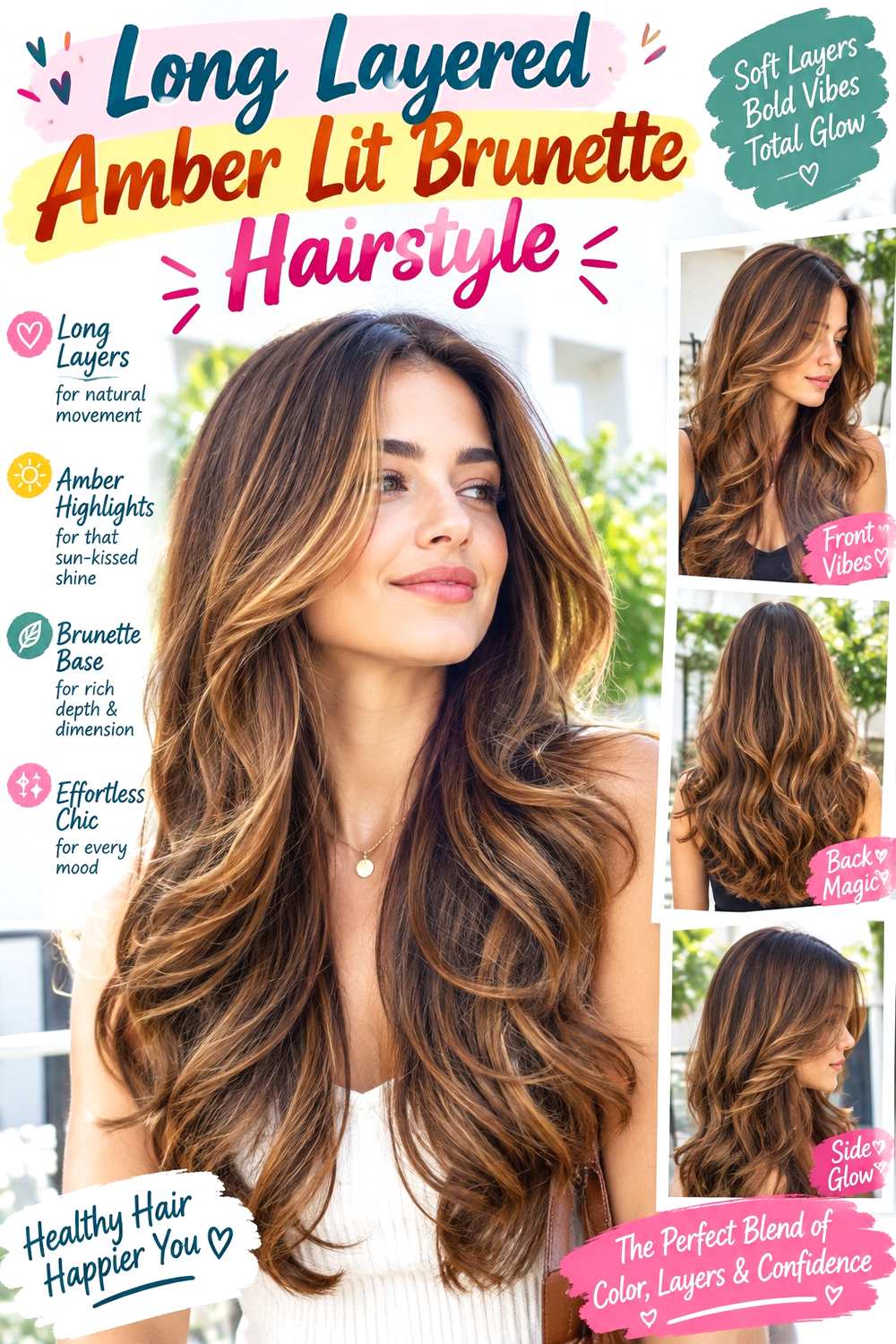
Long layers give Amber Lit Brunette several moving surfaces for warm color to follow. Keep the root, underside, and much of the back in rich brunette, then place amber-brown ribbons along face-framing layers and selected lengths. The brightest pieces can begin around the cheekbones or jaw and become more visible through the lower layers, while dark strands continue to the ends. Broad waves emphasize the placement, but a strong design should still look dimensional when the hair is straight.
Use color-safe shampoo for regular care, a nourishing mask through the long lengths, and heat protectant before blow-drying or curling. A quick refresh can focus on the front layers and surface. Full wash-day styling takes longer because of the overall length. Color maintenance becomes useful when the ends fade much lighter than the root or the face-framing ribbons grow far enough down that they no longer follow the haircut.
At the salon, point to the exact layers you want emphasized and ask for amber brightness to follow those sections rather than being spread evenly throughout the back. Preserve deeper strands through the longest perimeter. If the ends are already highlighted, discuss whether some areas should receive added brunette depth instead of more lightening.
Pro tip:
Align the brightest amber with layers that naturally move around the face. Color following the haircut creates visible dimension without requiring extra highlights through every section.
Make It Work for You:
If your long ends are fragile or sparse, keep them closer to the brunette base and concentrate brighter amber through healthier upper and face-framing layers instead.
Watch Out For:
Making every long end bright can create an ombré appearance. Carry selected dark strands through the perimeter so the amber remains woven into the overall brunette.
Glossed Amber Brunette Bob Hairstyle
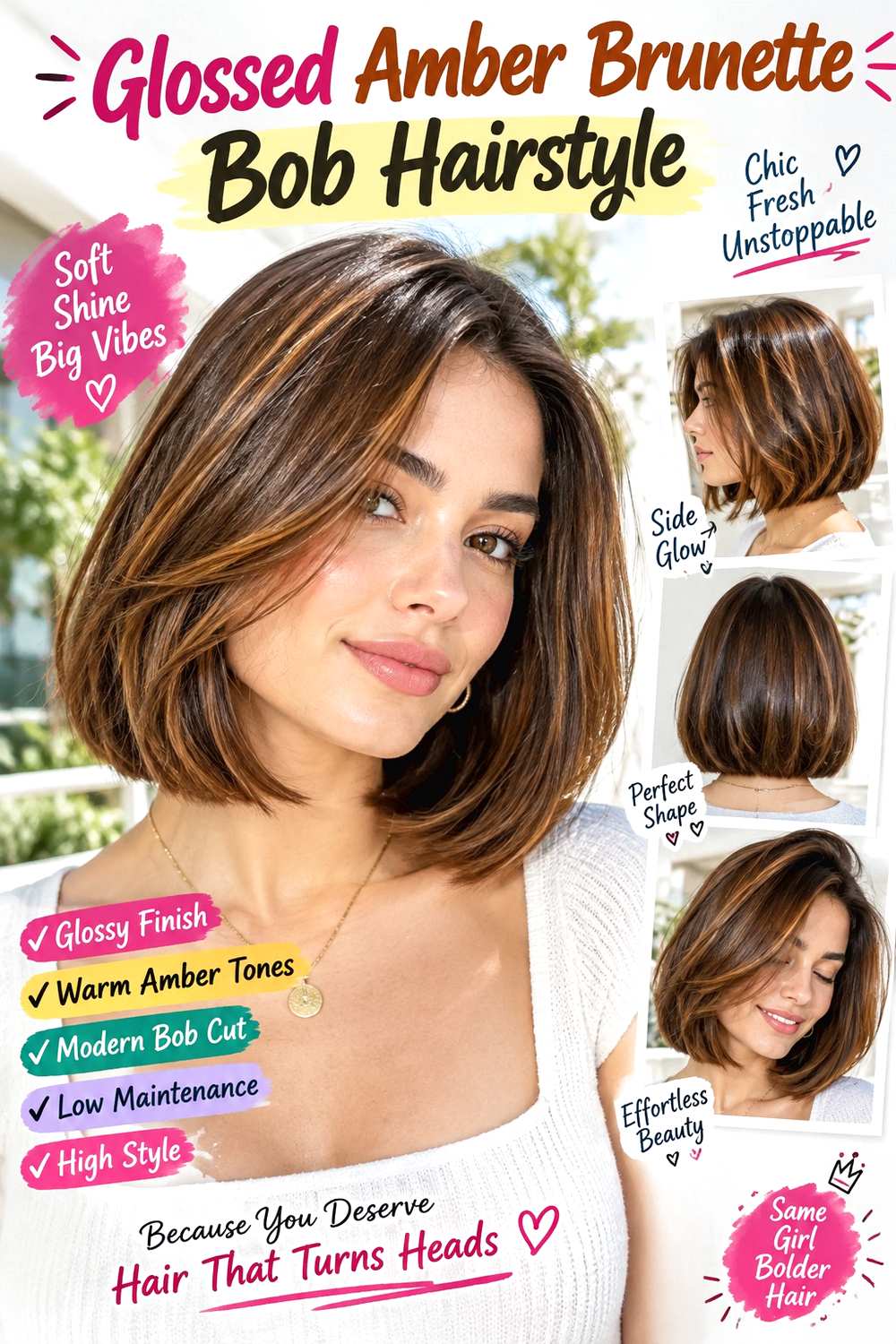
A bob makes subtle amber variation easy to notice because the color is concentrated within a compact shape. Keep the underside and much of the perimeter rich brunette, then add fine amber warmth around the front, part line, and selected surface sections. A glossy finish helps the small tonal differences appear as the bob moves. Chin, jaw, and neck-length cuts can all support this placement, and the ends do not need to become much lighter because the shorter silhouette already exposes them clearly.
Use gentle color-safe shampoo for regular cleansing, a lightweight conditioning mask for reflective softness, and heat protectant if you smooth or bend the bob with heat. A quick refresh can focus on the front and surface, while full styling time depends on your natural texture. Color maintenance becomes useful when the gloss fades, the front amber grows away from the face, or uneven fading becomes visible along the short edge.
At the salon, specify whether you want the amber to lean honey-brown, copper-brown, or neutral gold and keep the perimeter comparatively deep. Show whether you normally tuck one side behind the ear because that changes which sections stay exposed. Existing lightened ends should be assessed before adding more brightness.
Pro tip:
Check the placement with the bob both tucked and loose. A subtle front ribbon can become much more dominant once the side is exposed behind the ear.
Make It Work for You:
For a curly bob, place brighter amber on curls that remain visible when dry while keeping deeper brunette underneath so the compact outline stays clearly defined.
Watch Out For:
Over-lightening every short end can weaken the visual perimeter. Preserve deeper brunette around selected edges and use amber where the haircut naturally creates movement.
Conclusion
Amber Lit Brunette can range from deep espresso with tiny warm threads to golden amber, chestnut, balayage, and softly rooted melts. Fine threads and smoked amber offer lower contrast, while face-framing ribbons and brighter golden pieces create a stronger change. Fine or lower-density hair often benefits from preserving more brunette through the perimeter; dense hair can support additional warm sections. Curly and coily textures need color placed around the dry pattern so the amber remains visible after shrinkage. Root depth, previous color, hair condition, and the amount of gold, copper, or red in the warmth all affect upkeep. Choose a version that keeps the brunette depth you want while placing the amber where it will remain visible in your normal styling routine.
Before Your Salon Visit
Choose one or two favorites and save references that clearly show the brunette depth, amber tone, ribbon width, root placement, and amount of contrast you like. Discuss your natural color, previous processing, texture, density, condition, preferred length, upkeep tolerance, and usual styling routine. Point to exactly where the amber should begin and whether you want it strongest at the face, surface, curls, or ends. If you prefer the depth from one reference and placement from another, explain those details separately.
FAQs
Is Amber Lit Brunette more golden or copper?
It can lean either direction. Amber sits within a warm range that may appear honey-gold, copper-gold, or brown-gold depending on the surrounding brunette base. Bring daylight references showing the exact warmth you prefer rather than relying on the name alone, since starting color also affects the finished result.
Can Amber Lit Brunette work on naturally dark hair?
Yes. Dark brunette provides strong contrast for amber ribbons, fine threads, or balayage. Previously colored dark hair may respond differently from untouched hair, however, so share your color history. A professional can assess how much brightness is realistic while preserving the deeper foundation you want.
How can I keep amber brunette from becoming too orange?
Use color-safe care, avoid unnecessary heat and sun exposure, and reassess the tone when warmth shifts. Corrective products may help when orange becomes excessive, but they should match the actual unwanted tone. Overusing cool pigments can also mute the amber dimension you intended to keep.
Does Amber Lit Brunette work on curly and coily hair?
Yes. The most useful approach is to place brighter amber on curl or coil groups that remain visible in the normal dry shape. Keep deeper brunette between them for contrast, and discuss shrinkage, previous color, condition, and your usual styling pattern before deciding where the brightest sections should sit.