19 Blended Bangs Hairstyles for Fall 2026

Blended bangs are designed to flow into the rest of the haircut rather than stopping at a separate, obvious fringe line. The shortest pieces may skim the brows, cheekbones, or even the jaw, while progressively longer sections connect them to face-framing layers. That soft transition makes the fringe easier to adjust through length, density, texture, and parting, whether the rest of the hair is a bob, shag, collarbone cut, or long layered style.
These Blended Bangs Hairstyles for Fall 2026 can work across straight, wavy, and curly hair when the cutting approach matches the natural texture. Fine hair generally needs a lighter bang section and more weight around the perimeter. Thick hair can support fuller fringe but may need internal bulk removal so the sides do not become heavy. Curly and strongly wavy hair also need extra length to allow for shrinkage.
Daily effort depends on the finish. Air-dried and grown-out bangs can be relatively low maintenance, while sleek, full, or highly shaped fringe often needs a short morning reset. Before choosing a version, consider your cowlicks, hair density, face-framing preference, heat tolerance, and how often you want to maintain the fringe.
Quick List
- Soft Curtain Blended Bangs
- Cheekbone Blended Bangs With Long Layers
- Wispy Blended Bangs for Fine Hair
- Full Blended Bangs With Face-Framing Layers
- Wavy Blended Bangs
- Curly Blended Bangs With Rounded Layers
- Side-Swept Blended Bangs
- Center-Part Blended Bangs
- Collarbone Layers With Blended Bangs
- Long Shag With Blended Bangs
- Soft Bob With Blended Bangs
- Voluminous Blended Bangs With Crown Layers
- Low-Maintenance Grown-Out Blended Bangs
- Feathered Blended Bangs
- Thick-Hair Blended Bangs With Internal Layers
- Straight Sleek Blended Bangs
- Air-Dried Blended Bangs
- Bottleneck Blended Bangs With Soft Layers
- Long Blended Bangs With Flipped Ends
Soft Curtain Blended Bangs
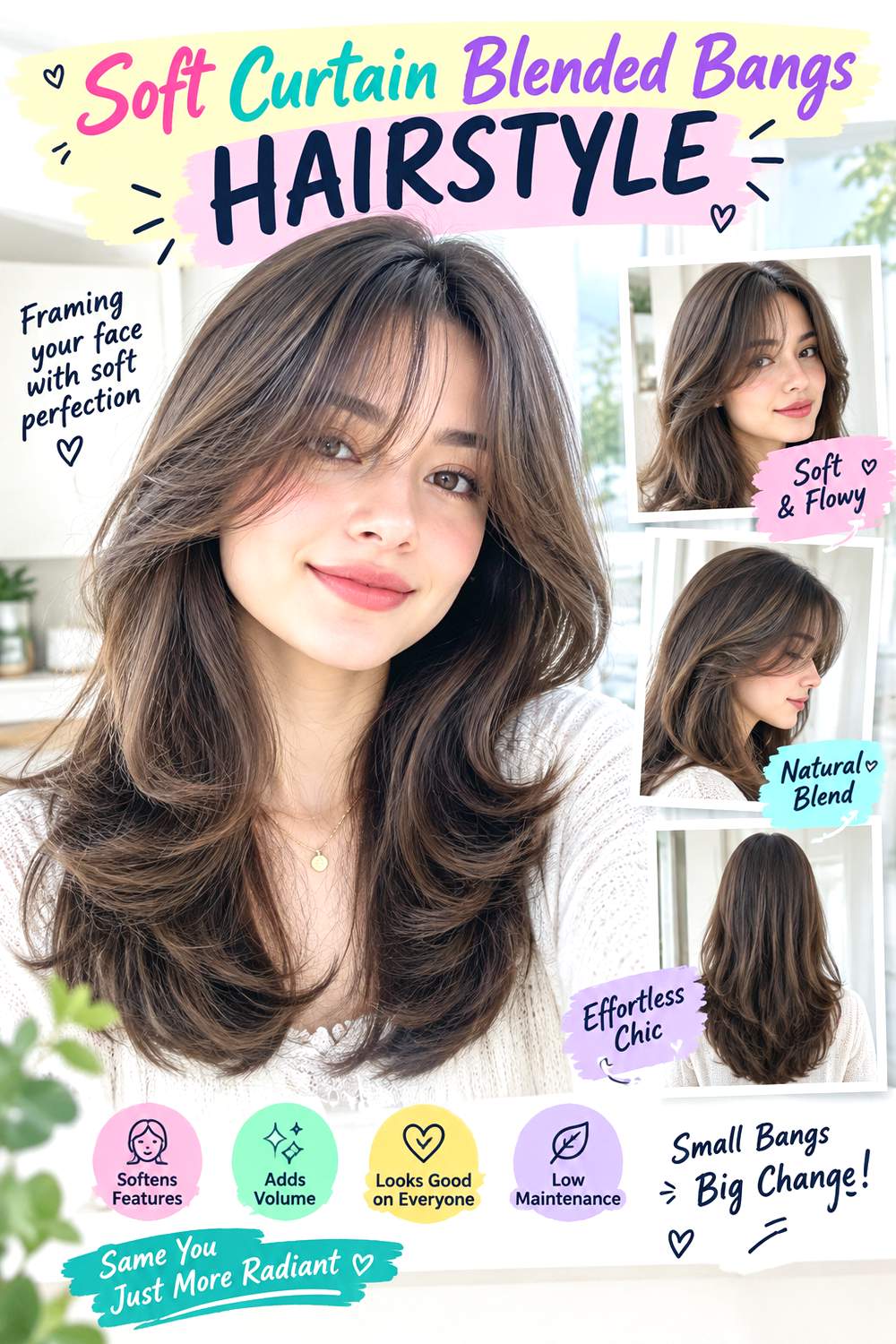
A soft curtain fringe keeps the center light while gradually increasing in length toward the temples. The shortest pieces can sit around the brows, with the corners extending toward the cheekbones so the bangs merge naturally into longer face-framing layers. Straight and gently wavy medium-density hair tends to hold this shape easily. Fine hair can wear it too, provided the fringe section stays shallow enough to preserve fullness near the temples. Styling is usually quick because only the front needs regular attention. Use lightweight mousse, a small round brush, and flexible hairspray to create a soft outward sweep without making the bangs rigid. The center pieces may need trimming before the surrounding layers do, especially once they begin falling into the eyes. At the salon, ask for a narrow-to-medium fringe section with brow-length center pieces and noticeably longer corners rather than a straight horizontal bang line.
Pro tip:
Blow-dry the bangs forward first, then separate them into the curtain shape. Starting with an immediate center split can create too much space between the two sides.
Cheekbone Blended Bangs With Long Layers

Cheekbone-length bangs are ideal when you want face-framing without the commitment of shorter fringe. The front pieces fall around the upper cheeks, then continue into long layers through the sides, creating a transition that is almost invisible from bangs to haircut. Medium and long hair both suit this placement, especially on straight or wavy textures that can hold a soft bend. Fine hair benefits because very little density needs to be removed from the front, while thick hair can support a broader face frame. Styling is quick to moderate depending on natural movement. Reach for heat protectant, a large round brush, and a lightweight finishing spray to direct the front away from the face. These bangs grow out quietly, so salon maintenance can focus more on preserving the layer connection than shortening them frequently. Ask your stylist to place the shortest dry section directly at your chosen cheekbone point.
Pro tip:
When choosing a reference photo, focus on where the shortest front piece ends rather than the overall hair length; that placement controls the entire frame.
Wispy Blended Bangs for Fine Hair

Fine hair often responds better to a light, narrow fringe than a deep section that takes density away from the rest of the haircut. Wispy blended bangs use small brow-skimming pieces through the center, then gradually become longer around the temples so there is no abrupt edge. Keeping more hair through the side panels and perimeter maintains a fuller overall appearance. Straight and softly wavy fine textures work particularly well, especially when the natural hairline is not heavily cowlicked. Styling takes only a few minutes. A lightweight styling foam, small round brush, and flexible hairspray provide enough control without coating delicate strands. Bangs may need a quick damp-and-dry refresh after sleeping, but they should not require heavy heat. At the salon, ask for a shallow fringe section and soft point-cutting rather than extensive thinning. The goal is airy separation while still preserving enough individual strands to make the fringe visible.
Pro tip:
Apply styling product to the roots and mid-lengths rather than saturating the tips; heavy product can make wispy bangs separate into thin strings.
Full Blended Bangs With Face-Framing Layers
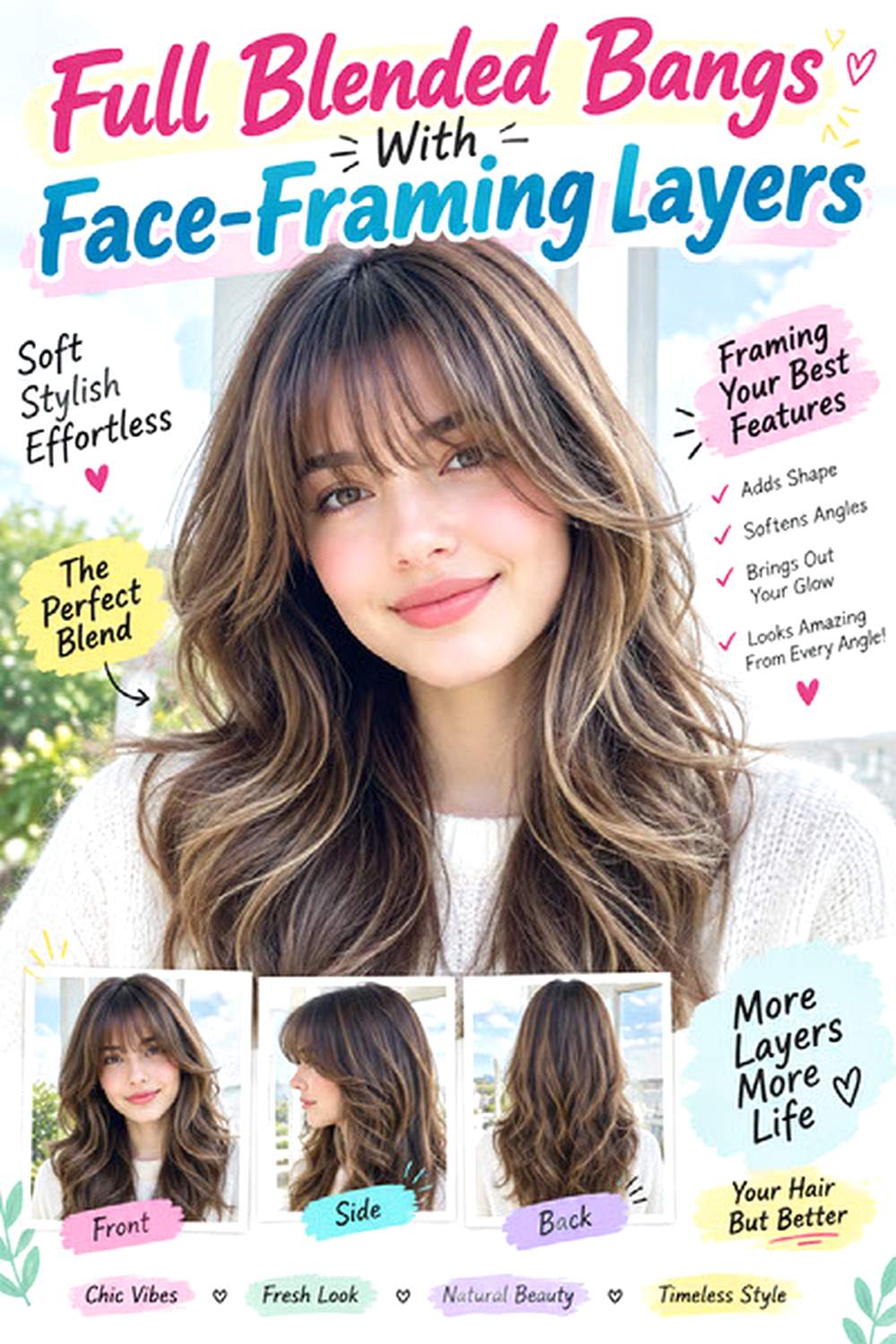
A fuller fringe gives more coverage across the forehead, but blending the corners into face-framing layers prevents it from looking disconnected from the rest of the haircut. The center can sit around brow level, while the sides lengthen toward the temples and cheekbones before joining longer layers. Medium-to-thick straight or wavy hair usually has enough density to support this shape without weakening the side sections. Fine hair can still wear a smaller interpretation with a narrower bang area. Styling is moderate because the fringe needs both smoothness and direction. Use a medium round brush, heat protectant, and flexible-hold hairspray to maintain movement instead of creating a rigid curve. Full fringe often needs more frequent reshaping than longer blended bangs. At the salon, agree on the width and depth of the bang section before cutting, and ask for the outer corners to remain visibly longer so they connect smoothly into the face frame.
Pro tip:
Check the temples before committing to a dense fringe. Taking too much hair from the sides can leave the surrounding layers noticeably thinner.
Wavy Blended Bangs

Natural waves can make blended bangs feel relaxed because the fringe does not need to fall in one perfectly smooth line. Longer brow-to-cheekbone pieces can follow the existing wave pattern, with side sections gradually joining the rest of the haircut. Medium-density wavy hair is the easiest match, while fine waves benefit from keeping the fringe light and thick waves may need controlled bulk removal. Wash-day styling takes a little attention, but later refreshes can be very quick. Use leave-in conditioner, wave cream, and a diffuser to encourage the natural bend without flattening the roots. If one front piece dries awkwardly, rework only that section instead of heat-styling the entire fringe. Humidity can increase expansion, so avoid cutting the bangs too short when dry weather is the only reference. At the salon, ask your stylist to consider the wave pattern and place the shortest fringe according to its natural dry position.
Pro tip:
Let the bangs dry almost completely before adjusting individual waves; constant touching while damp can increase frizz and disturb the natural pattern.
Curly Blended Bangs With Rounded Layers

Curly blended bangs work best when they are treated as part of the overall curl shape rather than as a separate straight fringe. Shorter curls can fall around the forehead while longer pieces travel toward the temples and merge into rounded side layers. Medium and thick curls often benefit from carefully placed layers that distribute volume, whereas fine curls usually need more density left around the perimeter. Shrinkage is the biggest consideration, particularly at the front where a small cutting change can create a noticeable difference after drying. Wash-day styling needs more time, but daily upkeep can stay light. Use leave-in conditioner, curl cream, and a diffuser, then refresh individual front curls with water as needed. At the salon, ask for the bangs to be assessed in their natural dry pattern and explain the shortest curl length you are comfortable wearing. Avoid treating stretched wet length as the final guide.
Pro tip:
Show your stylist how the front curls sit on both freshly washed and second-day hair; the fringe may spring differently once the curl pattern settles.
Side-Swept Blended Bangs
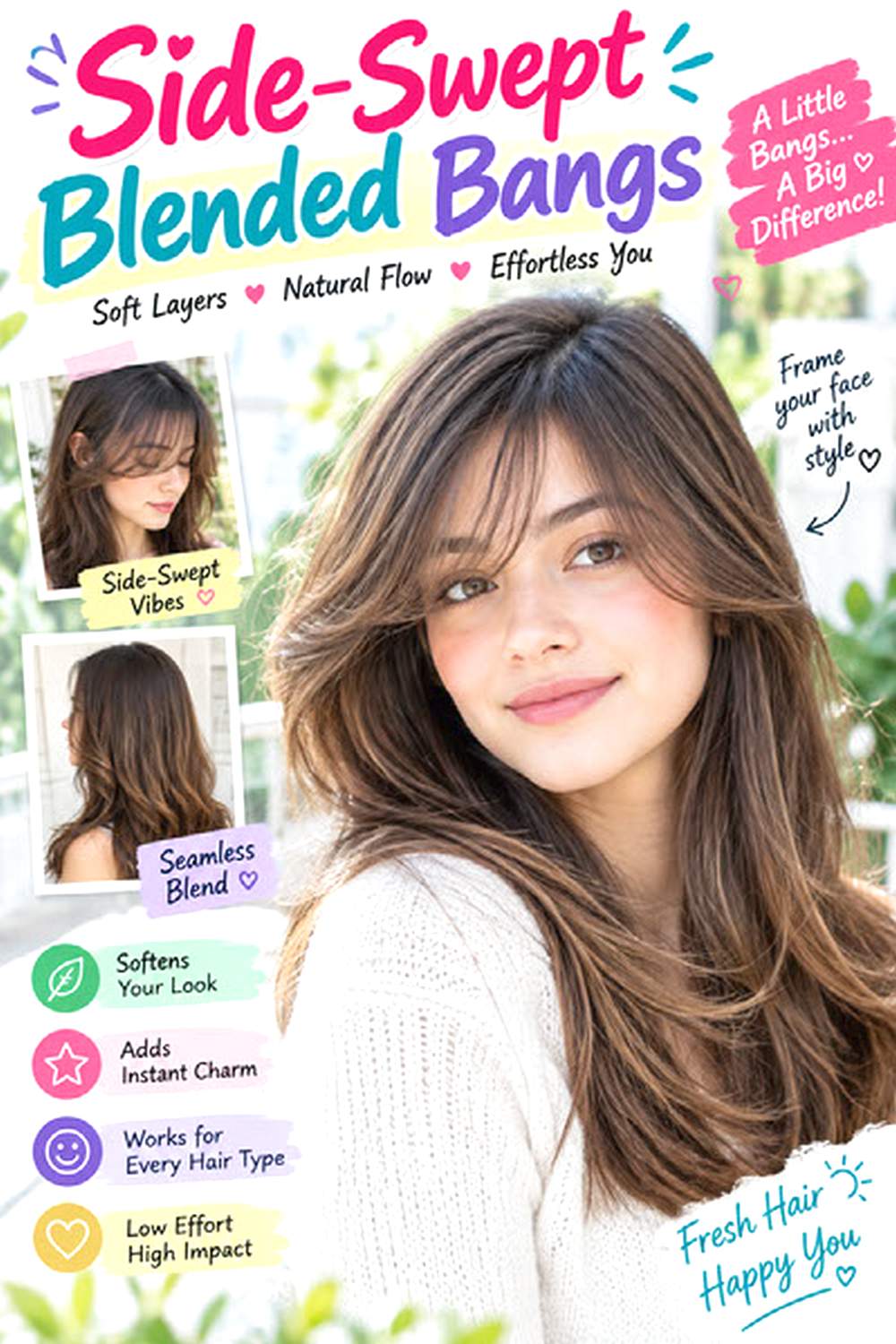
A side-swept fringe creates direction across the forehead while still blending gradually into longer side layers. The shortest area can begin around the brow on one side, then lengthen diagonally toward the opposite cheekbone or temple. This is particularly useful for hairlines with a natural side growth pattern or a cowlick that makes a center fringe difficult. Straight and wavy medium-density hair hold the sweep easily, and fine hair can gain extra visual lift from the shifted part. Styling is fairly quick once the roots learn their direction. Try volumizing spray, a medium round brush, and flexible hairspray for control without stiffness. Longer side bangs also grow out more quietly than a short straight fringe. Tell your stylist where your natural part falls before cutting, and ask for enough length at the outer edge to merge with your existing layers instead of ending as a separate shelf.
Pro tip:
Dry the fringe briefly against its final direction before sweeping it across; the root lift keeps the heavier side from falling flat.
Center-Part Blended Bangs
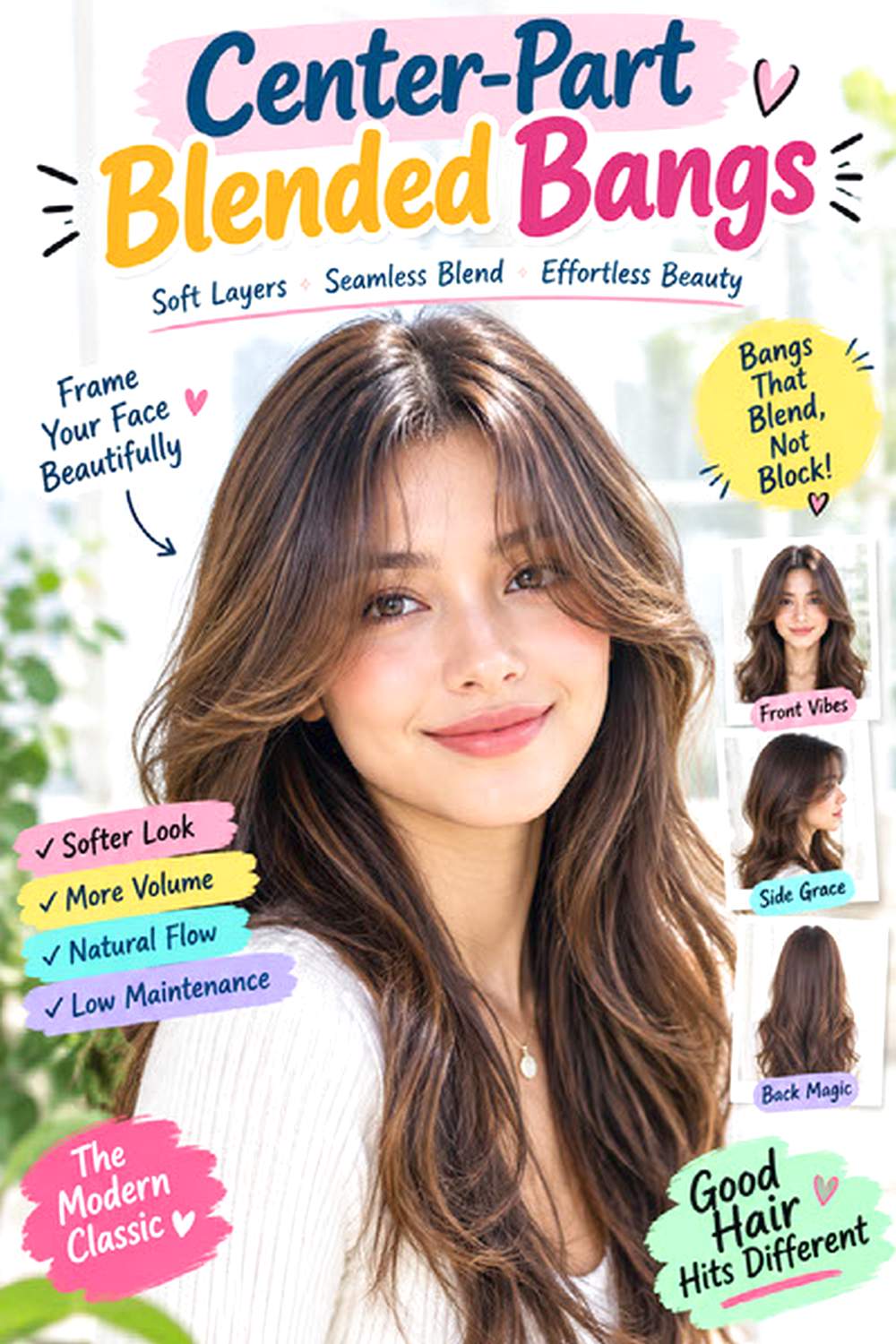
A center part makes the transition from fringe to face-framing especially visible because both sides mirror each other. The center pieces may begin near the brows or just below them, then extend toward the cheekbones in gradual steps rather than one sharp jump in length. Straight and softly wavy hair are natural matches, particularly at medium density. Fine hair should keep the fringe narrow so the side panels stay full, while thick hair may need slight weight removal beneath the longer corners. Styling is quick when the hair naturally divides in the middle and more involved when strong growth patterns resist the part. Use a small round brush, lightweight smoothing cream, and flexible spray. Salon upkeep focuses on preserving symmetry as the fringe grows. Ask the stylist to cut and check both sides with your natural center part already established rather than creating the part after the cutting is complete.
Pro tip:
Set the center part while the roots are damp. Trying to move a fully dry cowlick usually requires more heat and creates less natural movement.
Collarbone Layers With Blended Bangs

Collarbone length gives blended bangs enough room to connect into long layers without creating a dramatic difference between the front and back. Bangs can begin around the cheekbones, while the next layers travel through the jaw and shoulder area before meeting a fuller perimeter. This shape works across straight, wavy, fine, medium, and thick hair because the extra length leaves room to adjust density. Fine hair should keep the lower layers restrained, while thick hair can handle more internal movement. Styling may be quick with natural texture or moderate for a polished blowout. Use heat protectant, a large round brush, and lightweight smoothing serum to create a soft bend through the front. Grow-out is fairly forgiving because the bangs already resemble face-framing layers. At the salon, ask for the shortest piece to sit clearly above the rest of the collarbone layers while keeping enough weight through the ends.
Pro tip:
Check the cut against your usual jackets and sweaters; collarbone layers can turn outward where they repeatedly meet clothing.
Long Shag With Blended Bangs

A long shag gives blended bangs a more textured setting, with the fringe flowing into cheekbone, jaw, and shoulder layers instead of meeting one smooth length. Light crown shaping adds movement without creating an extreme top-heavy silhouette. Naturally wavy medium-to-thick hair tends to show the layered structure best, while fine hair can wear a softer version with fewer layers near the perimeter. Styling can stay low to moderate when the hair already has bend. Use texture mousse, a diffuser, and dry texturizing spray to encourage separation without making the ends feel rough. The bangs can be refreshed independently while the longer shag layers remain untouched. As the haircut grows, crown movement may collapse before the length becomes a problem. At the salon, ask for the bang corners to blend into the first cheekbone layer and request crown layers that remain long enough to connect rather than forming short disconnected pieces.
Pro tip:
Bring a side-view reference photo as well as a front image; the transition from bangs into shag layers is much easier to judge from the profile.
Soft Bob With Blended Bangs

A short bob becomes softer around the face when the bangs taper gradually into the perimeter rather than sitting as a separate block. Brow or eye-level center pieces can lengthen toward the temples, then connect with a jaw-length outline. Fine and medium-density hair often benefit from keeping the bob ends relatively full, while thick hair may need discreet internal weight removal so the sides do not expand. Straight and slightly wavy textures are the easiest to manage, although stronger waves can wear a less polished version. Styling takes moderate effort if you want a smooth bob shape. Use heat protectant, a small round brush, and lightweight smoothing serum, concentrating most of the shaping around the fringe and ends. Because both the bangs and bob are short, growth becomes noticeable sooner. At the salon, ask for dense perimeter weight and soft fringe corners without excessive thinning through the lower edge.
Pro tip:
Avoid taking the side fringe too short if you regularly tuck the bob behind your ears; a little extra temple length keeps the blend intact when tucked.
Voluminous Blended Bangs With Crown Layers

Volume through the crown balances a fuller set of blended bangs by keeping the haircut from feeling heavy only at the front. Brow-length center pieces can curve softly away from the face, while the outer fringe joins layers around the temples and cheekbones. Medium-to-thick straight or wavy hair usually supports this shape well. Fine hair can borrow the idea with a narrower fringe and fewer crown layers to protect density. Styling takes moderate time because root direction matters as much as the bangs themselves. Use volumizing mousse, a medium round brush, and light-hold hairspray to lift the crown while keeping the fringe flexible. The root volume may need a quick refresh after sleeping, but the lengths can usually be left alone. At the salon, ask for crown layers that create elevation without becoming very short, and specify how dense you want the fringe section before any hair is removed.
Pro tip:
Dry the crown in several directions before setting the final part; changing root direction creates lift without relying on heavy teasing.
Low-Maintenance Grown-Out Blended Bangs
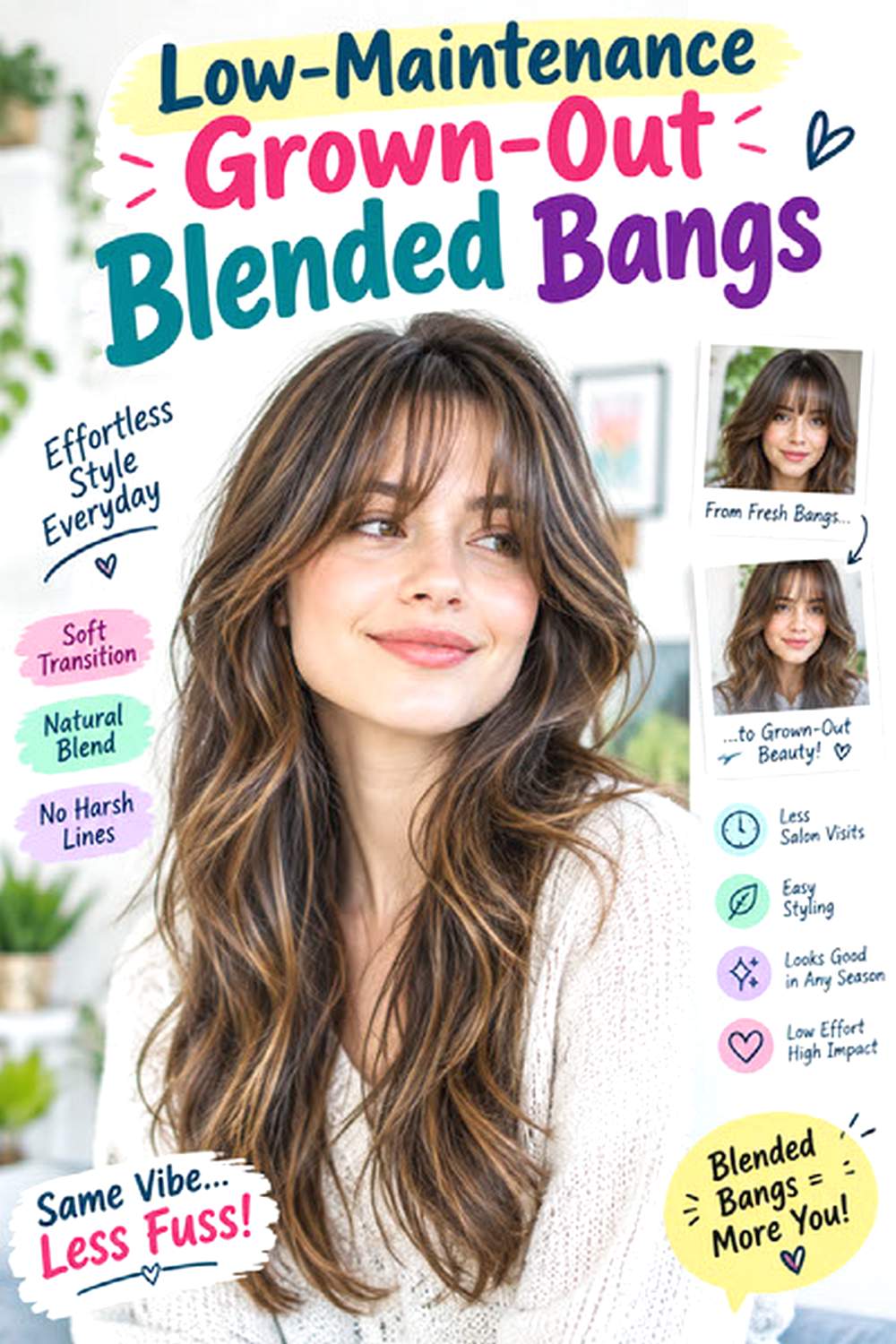
Grown-out bangs can become useful face-framing pieces rather than something that needs constant correction. Once the shortest sections reach the cheekbones or jaw, they can split in the center, sweep sideways, or tuck behind the ears while blending naturally into longer layers. Straight, wavy, fine, medium, and thick hair can all use this approach because the fringe density matters less once the pieces gain length. Styling is quick and often limited to redirecting the front after washing. Try a leave-in spray, large round brush, and light texturizing spray for movement without a set-looking curl. Maintenance is lower than with short bangs because a few extra weeks of growth do not drastically change the shape. At the salon, ask for the corners of old bangs to be blended gradually into the sides instead of shortening nearby hair just to match them.
Pro tip:
If you are actively growing your fringe, tell the stylist before the trim begins; otherwise, routine “reshaping” can remove several weeks of progress.
Feathered Blended Bangs

Feathering creates movement through the ends of blended bangs without leaving a heavy fringe line. The center may sit between the brows and eyes, while longer pieces open toward the temples and continue into softly feathered side layers. Straight and gently wavy medium-density hair show the separated finish especially well. Fine hair should keep the feathering subtle so the fringe does not become transparent, while thick hair can support stronger texturizing. Styling is moderate when you want the ends to sweep distinctly away from the face. Use heat protectant, a round brush, and lightweight finishing spray, turning only the last part of each section rather than curling from the roots. The fringe can be refreshed quickly between washes with a small amount of heat. At the salon, ask for soft point-cut or slide-cut ends while preserving visible density at the center, and make sure the side pieces blend gradually rather than creating obvious steps.
Pro tip:
Feather the ends in different-sized sections instead of making every piece identical; slight variation keeps the fringe soft rather than overly styled.
Thick-Hair Blended Bangs With Internal Layers

Thick hair can support substantial blended bangs, but too much weight around the temples may cause the fringe and side layers to puff outward. Internal layering removes bulk underneath the visible shape while preserving a dense outer surface. The center fringe can sit around the brows or eyes, then expand into longer cheekbone pieces with enough weight to stay controlled. Straight, wavy, and coarse textures all benefit from this approach when density is high. Styling is moderate after washing because thick sections take longer to dry, although later refreshes can focus only on the front. Use anti-frizz cream, a paddle brush, and lightweight serum to smooth the surface while retaining movement underneath. At the salon, ask for internal bulk removal through the side sections rather than aggressive thinning of the actual bang ends. Maintaining density through the visible fringe keeps the blend polished instead of fuzzy.
Pro tip:
Ask where weight will be removed before cutting; hidden reduction beneath the sides creates a very different result from thinning the fringe itself.
Straight Sleek Blended Bangs
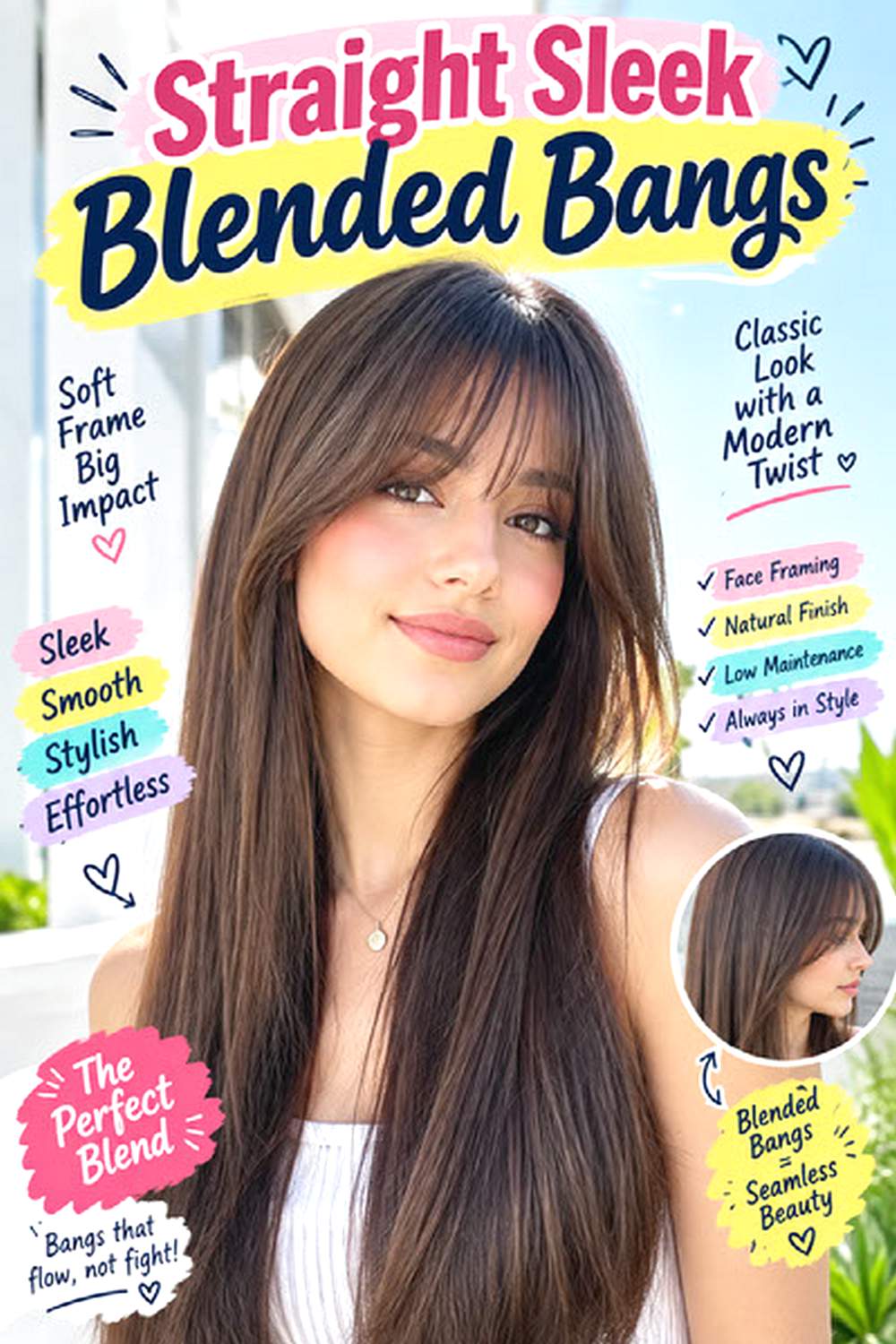
Straight styling makes every transition in blended bangs easy to see, so the cutting needs to be precise but not harsh. The fringe can skim the brows or eyes before extending gradually toward cheekbone and jaw-length pieces. A clean, smooth finish works especially well on naturally straight fine-to-medium hair, while thicker hair may need internal weight removed to keep the front from feeling bulky. Wavy hair can also wear it, but achieving the same sleek result may require more heat and humidity control. Use heat protectant, a paddle brush, and lightweight smoothing serum, applying only a small amount around the bangs so they keep movement. Styling is moderate if a full blow-dry is needed and quicker on naturally straight hair. At the salon, ask for a continuous transition from fringe to side layers and softly finished ends rather than obvious thinning or a blunt step between lengths.
Pro tip:
Keep the flat iron moving with a slight curve instead of clamping the fringe pin-straight; a small bend helps the bangs blend into the sides naturally.
Air-Dried Blended Bangs

Air-dried blended bangs rely on natural texture rather than daily heat, so their length should allow for bends, cowlicks, and shrinkage. A slightly longer fringe around the eyes or cheekbones is usually easier to manage than a precise short bang when the hair is left to dry on its own. Wavy and loosely curly textures are particularly suited to this approach, although straight hair with natural movement can work too. Fine hair benefits from fewer front layers, while thick hair may need some weight released around the temples. Use leave-in conditioner, lightweight wave cream, and a wide-tooth comb before arranging the fringe with your fingers and letting it dry. Styling effort stays low, and later refreshes may need only water. At the salon, explain that you normally air-dry and ask for the fringe to be evaluated in its natural texture rather than only after a smooth blowout.
Pro tip:
Arrange the part and front pieces while the hair is still very damp, then stop touching them; repeated adjustments during drying often create more frizz.
Bottleneck Blended Bangs With Soft Layers

Bottleneck bangs are narrower through the center and curve outward into longer pieces around the cheeks, making them naturally suited to a blended finish. The shortest area can sit near the brows, with the fringe widening as it reaches the cheekbones before joining soft side layers. Medium-density straight and wavy hair tend to show the shape most clearly. Fine hair can keep the central section small, while thick hair may support a fuller curve as long as the temples are not over-thinned. Styling takes moderate effort because the front needs a clear bend rather than simply falling straight down. Use a small round brush, lightweight mousse, and flexible hairspray to shape the center and sweep the sides. The shortest pieces need attention sooner during grow-out. At the salon, ask for a narrow center with noticeably longer, curved edges instead of a uniformly wide curtain fringe.
Pro tip:
Show the stylist a reference where the bangs are visible from the side; the cheekbone curve is what distinguishes a bottleneck shape from ordinary curtain bangs.
Long Blended Bangs With Flipped Ends

Long blended bangs can create a stronger directional finish when the outer ends are turned away from the face. The shortest front pieces may start around the cheekbones, then extend toward the jaw and merge into longer layers that finish with a soft outward flip. Straight and lightly wavy medium-density hair hold this movement easily, while fine hair can gain visual fullness from the bend without needing more layers. Thick hair may need some hidden bulk removed around the side sections. Styling takes moderate time after washing but is simple to refresh by reworking only the front. Use heat protectant, a medium round brush, and a flat iron or large curling iron to turn the final inch or two outward. At the salon, request long connected face-framing layers with enough end weight to show the flip rather than thin, heavily feathered tips.
Pro tip:
Start the outward turn near the ends rather than high on the cheek; flipping too early can create excessive width around the sides of the face.
How to Choose Blended Bangs Hairstyles for Fall 2026
Among these Blended Bangs Hairstyles for Fall 2026, the most useful differences are fringe length, density, layer placement, texture, and styling effort. Shorter brow bangs create a stronger fringe effect but need more frequent upkeep, while cheekbone and jaw-length pieces offer an easier grow-out. Fine hair usually benefits from shallow bang sections and fuller side density. Thick hair can handle more fringe but may need hidden bulk removal. Natural waves and curls can soften the transition into layers without daily heat, while sleek or feathered finishes take more styling. The best version depends on your face shape, hair type, natural growth patterns, preferred length, humidity concerns, and the amount of maintenance you want in your normal routine.
Before Your Salon Visit
Choose one or two favorite ideas and save clear reference photos showing the fringe from the front and side. Discuss your face shape, natural texture, density, preferred length, maintenance level, and usual styling routine with your stylist. Point out the exact shortest bang length, fringe width, temple connection, face-framing layers, volume, and finish you like. If you want low-maintenance grow-out, say that before the cut so the bangs can be designed to blend smoothly as they lengthen rather than requiring frequent corrective trims.
FAQs
1. What makes blended bangs different from regular bangs?
Blended bangs gradually lengthen into face-framing pieces instead of ending with a separate fringe edge. This creates a softer transition into the rest of the haircut.
2. Are blended bangs suitable for fine hair?
Yes. A shallow, lighter fringe section usually works better for fine hair because it preserves more density around the temples and overall perimeter.
3. Can naturally curly or wavy hair wear blended bangs?
Yes. The fringe length should account for shrinkage and the natural pattern, and it is helpful to judge the shortest pieces when the hair is dry.
4. Are blended bangs difficult to grow out?
Longer versions are generally forgiving because they gradually become face-framing layers. Brow-length bangs need more transition time, but soft corners and progressive lengths can make the grow-out easier.
The hairstyle-specific variation, maintenance, and reader-value approach follows the supplied editorial guidance.