12 Modern French Twist Hairstyles

Modern French twist hairstyles keep the classic rolled-up shape but make it easier to adapt to current hair textures, cuts, and styling preferences. Instead of one rigid, polished roll, the twist can sit low at the nape, rise vertically through the back, carry soft crown volume, or loosen around the face. Bangs, curtain fringe, natural curls, wispy ends, braids, and decorative pins can completely change the finish.
Medium to long hair gives the most room to build a secure twist, but shorter lengths can work when the sides are long enough to overlap and pin. Fine hair often needs texture and light root lift so pins have something to grip. Thick hair may need to be divided into smaller sections so the roll does not become bulky. Naturally wavy or curly hair can create useful volume without much teasing.
Daily maintenance is minimal because a French twist is usually created for a specific day rather than worn continuously. Styling effort ranges from a quick, intentionally loose version to a more precise event updo. Before choosing one, consider your hair length, layers, fringe, density, natural texture, accessory choice, and how polished or relaxed you want the finished twist to look.
Modern French Twist Hairstyles: Quick List
- Soft Textured French Twist Hairstyle
- Sleek Low French Twist Hairstyle
- Loose Face-Framing French Twist Hairstyle
- French Twist With Curtain Bangs Hairstyle
- Voluminous Crown French Twist Hairstyle
- Messy French Twist With Wispy Ends Hairstyle
- Braided French Twist Hairstyle
- French Twist With Pearl Pins Hairstyle
- Curly French Twist Updo Hairstyle
- Short-Hair French Twist Hairstyle
- Side-Parted French Twist Hairstyle
- Minimal French Twist With Tucked Ends Hairstyle
Soft Textured French Twist
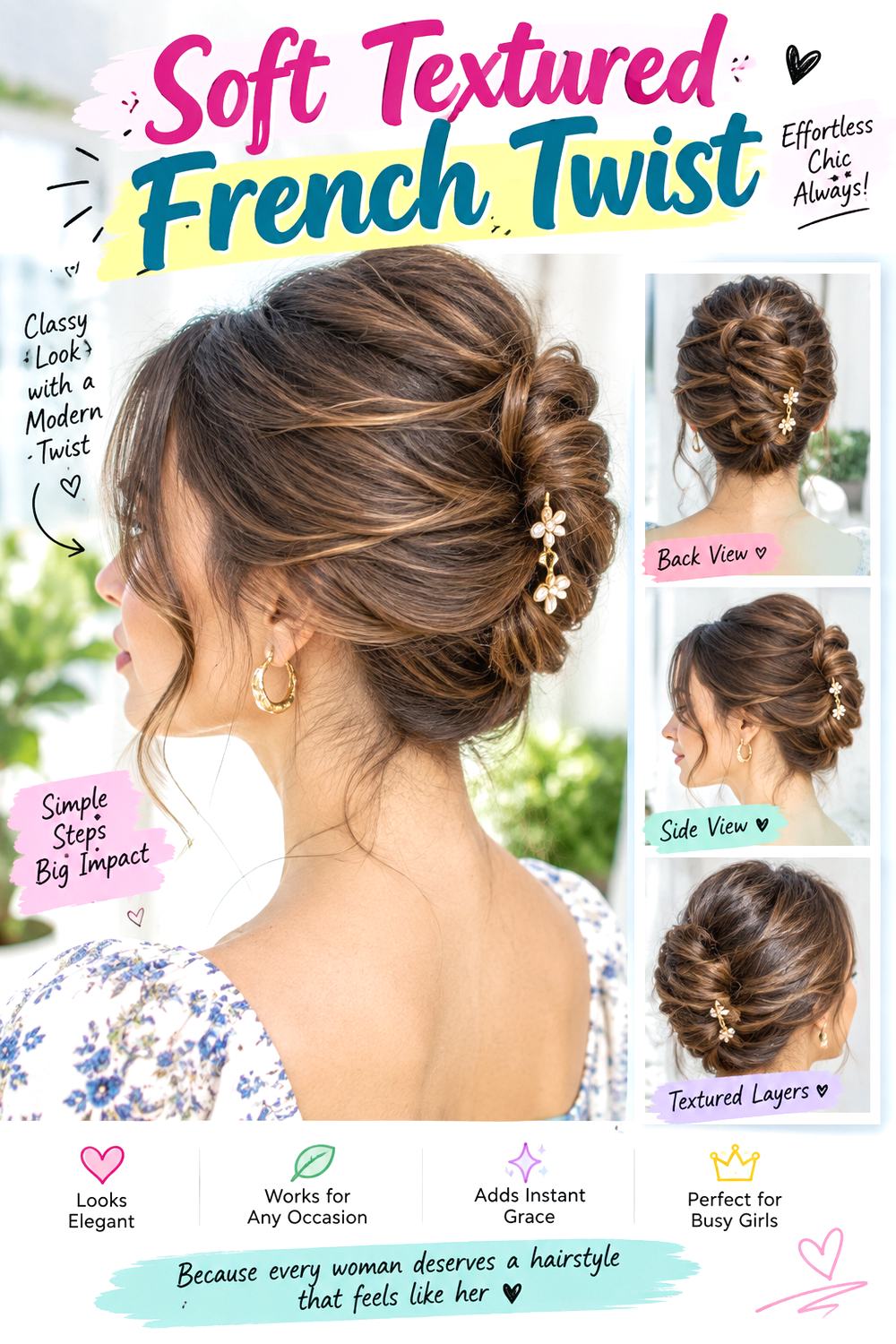
A soft textured French twist keeps the recognizable vertical roll but loosens the surface so the hairstyle feels less formal. A little lift through the crown, softly separated strands, and a few imperfect sections around the twist create movement without making the updo look unfinished. Medium to long hair with fine or medium density works particularly well because texture can create the appearance of extra fullness. Wavy hair needs very little preparation, while straight hair benefits from light grip before pinning. Use texturizing spray, bobby pins, and flexible hairspray; these give hold without creating a stiff shell. Styling takes moderate time because the roll should feel relaxed while still being securely anchored. For maintenance during an event, carry a few spare pins rather than adding heavy layers of spray. If a stylist is creating it, show the exact amount of crown lift you want and ask for the outer surface to stay softly separated instead of brushed completely smooth.
Pro tip:
Apply texture spray through the mid-lengths before rolling, not only on the finished surface. Internal grip helps the pins hold without requiring excessive teasing.
Sleek Low French Twist
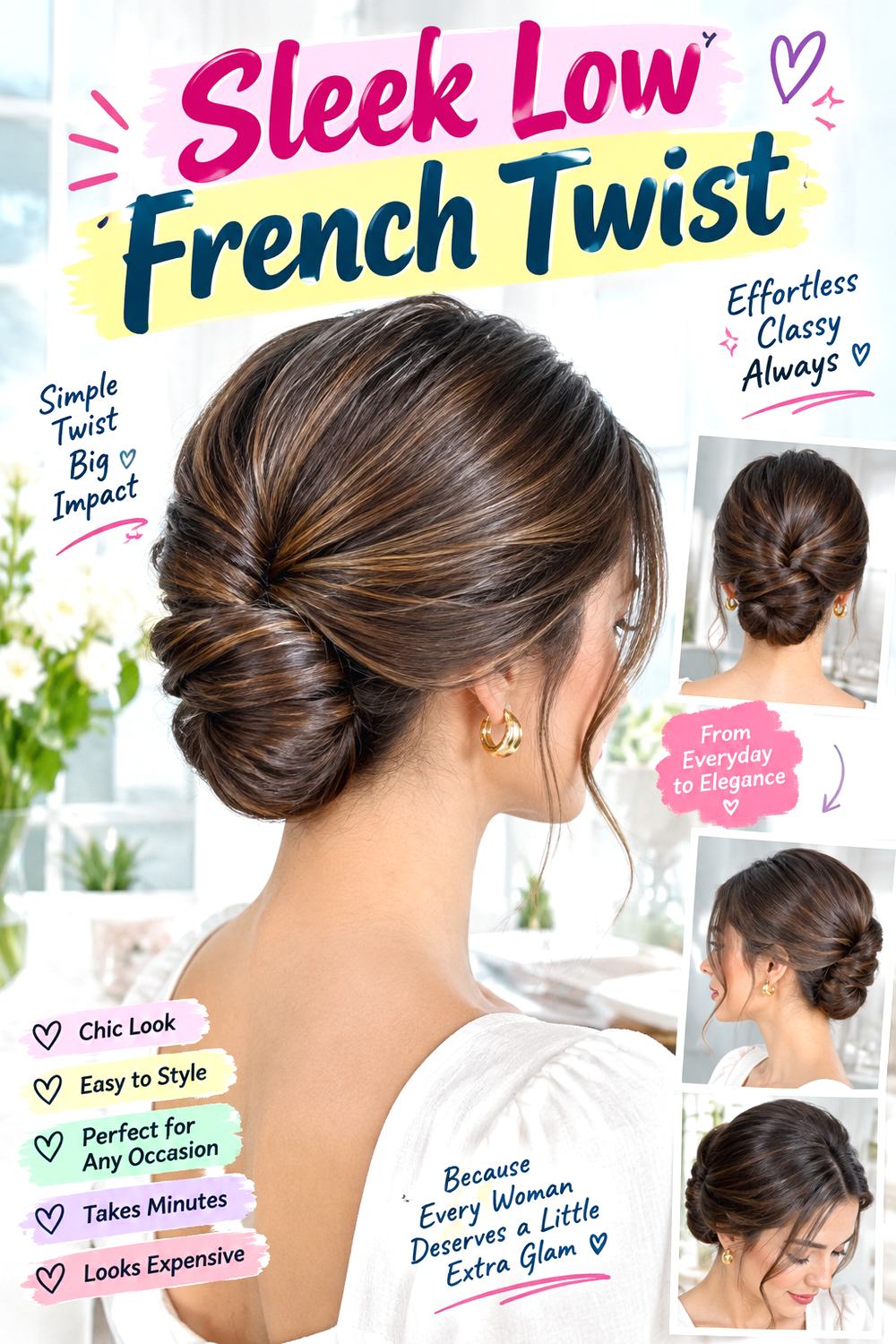
A low French twist sits closer to the nape, creating a compact shape that feels cleaner and less vertical than the traditional version. The sides are brushed smooth, the crown stays controlled, and the ends disappear neatly inside the roll. Straight or lightly wavy medium-to-long hair is easiest to smooth into this shape, while thick hair may need to be divided before twisting so the nape does not become bulky. A smoothing serum, fine-tooth comb, and strong bobby pins are the most useful supplies. Styling takes moderate time because neat sectioning and controlled tension matter more than added texture. Humidity can encourage flyaways, so a light anti-frizz product is more useful than excessive hairspray. This version is good for work events, dinners, and occasions where you want a restrained updo. At the salon, ask for the twist to sit directly at the nape with minimal crown volume and specify that no loose ends should remain visible above the roll.
Pro tip:
Smooth the side sections before forming the twist. Trying to flatten bumps after everything is pinned can distort the low shape and loosen the anchor points.
Loose Face-Framing French Twist
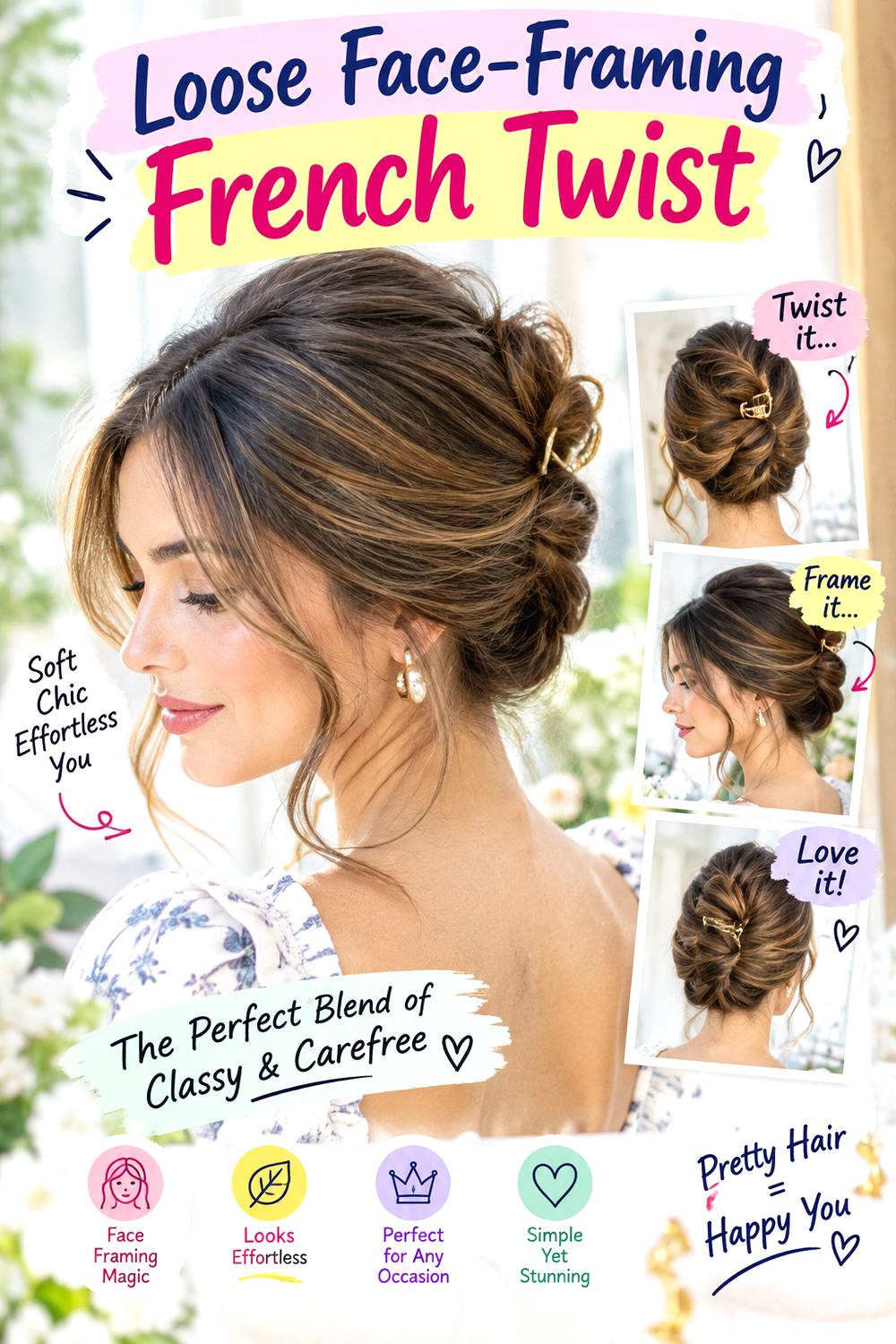
Loose pieces around the cheekbones and jaw make a French twist feel softer without changing the core rolled structure at the back. The main updo can stay secure while narrow front sections are left out intentionally, then bent or waved to connect with the rest of the style. Medium and long hair with face-framing layers works especially well because the shorter pieces already fall naturally around the face. Fine hair benefits from gentle root volume, while thick hair may need fewer loose strands to keep the front from feeling heavy. Use a curling iron, texturizing spray, and sturdy hairpins. Styling is moderate, although refreshing is easy because only the front pieces may need reshaping later. Avoid pulling out large random sections after the twist is finished; that can weaken the structure. For a professional updo, ask the stylist to leave the shortest face-framing pieces around the cheekbone or jaw and keep the remaining sides softly controlled.
Pro tip:
Choose the face-framing sections before pinning the twist. Pulling strands out afterward can create unwanted gaps along the temples and sides.
French Twist With Curtain Bangs
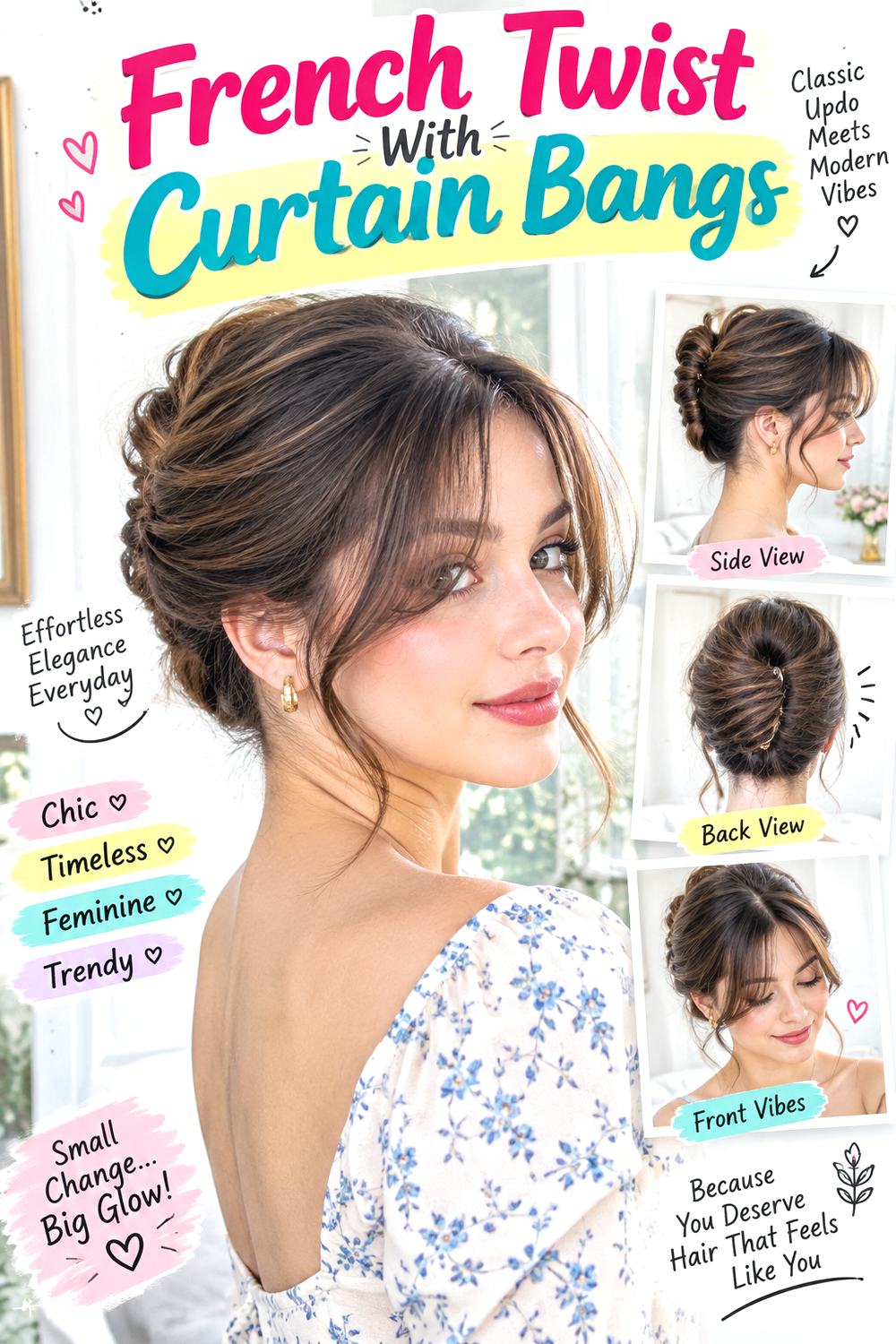
Curtain bangs give the French twist a softer front by opening through the center and sweeping toward the temples. The twist itself can stay smooth or lightly textured, while the fringe creates movement around the forehead and connects with longer face-framing pieces. This option works best when curtain bangs already reach somewhere between the brows and cheekbones. Straight and wavy hair are simple to shape with a blow-dry, while thicker fringe may need careful sectioning so it does not sit too heavily against the face. Use volumizing spray, a medium round brush, and flexible hairspray. Styling takes moderate time because the fringe should be shaped before the back is twisted and pinned. The bangs may need a quick refresh if humidity or movement causes the center to collapse. If you are having the style professionally done, show the stylist where you want the shortest curtain pieces to land and ask for the twist to stay balanced with the fringe rather than overly tight at the crown.
Pro tip:
Style curtain bangs first and clip them away while building the twist. This preserves the curved fringe shape and keeps stray hairs out of the pinned section.
Voluminous Crown French Twist
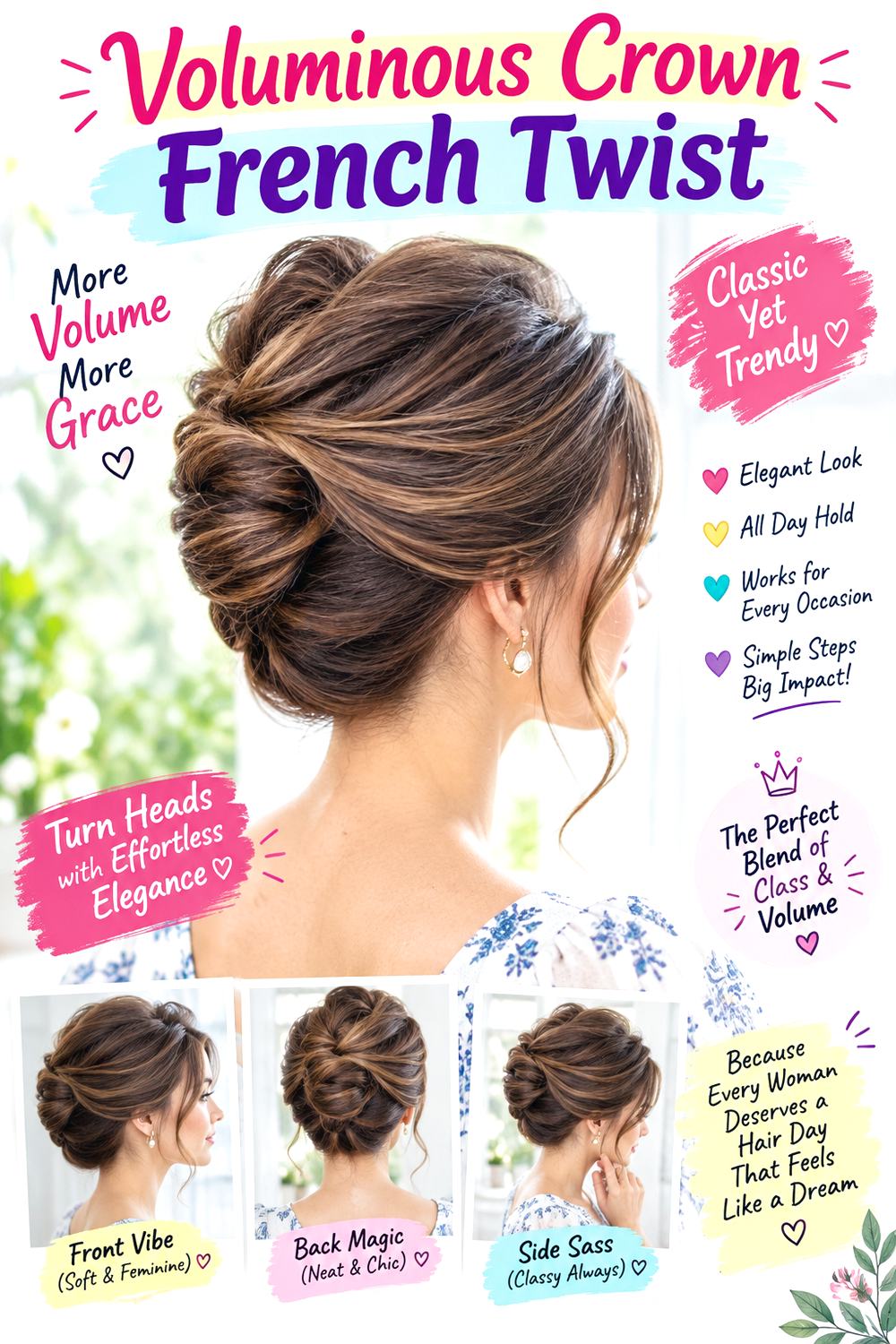
Extra volume at the crown gives the French twist a taller, more sculpted silhouette. The sides stay relatively close to the head while height is concentrated above the twist, preventing the overall shape from becoming wide. Fine and medium-density hair can benefit from the lift, especially if the hair tends to collapse when pinned. Thick hair usually needs less teasing because its natural density already creates volume. A root-lifting spray, teasing comb, and firm-hold hairpins are useful for building structure without overloading the surface with product. Styling takes more time than a loose twist because the crown must be balanced before the roll is secured. If the style starts to settle during the day, avoid pushing extra pins through the visible crown because they can flatten it. At the salon, ask for volume focused at the upper back of the head rather than at the sides, and specify how high you want the final silhouette before the stylist begins teasing.
Pro tip:
Tease underneath the crown in small sections and leave the top layer untouched. The smooth surface will hide the support while keeping the lift underneath.
Messy French Twist With Wispy Ends
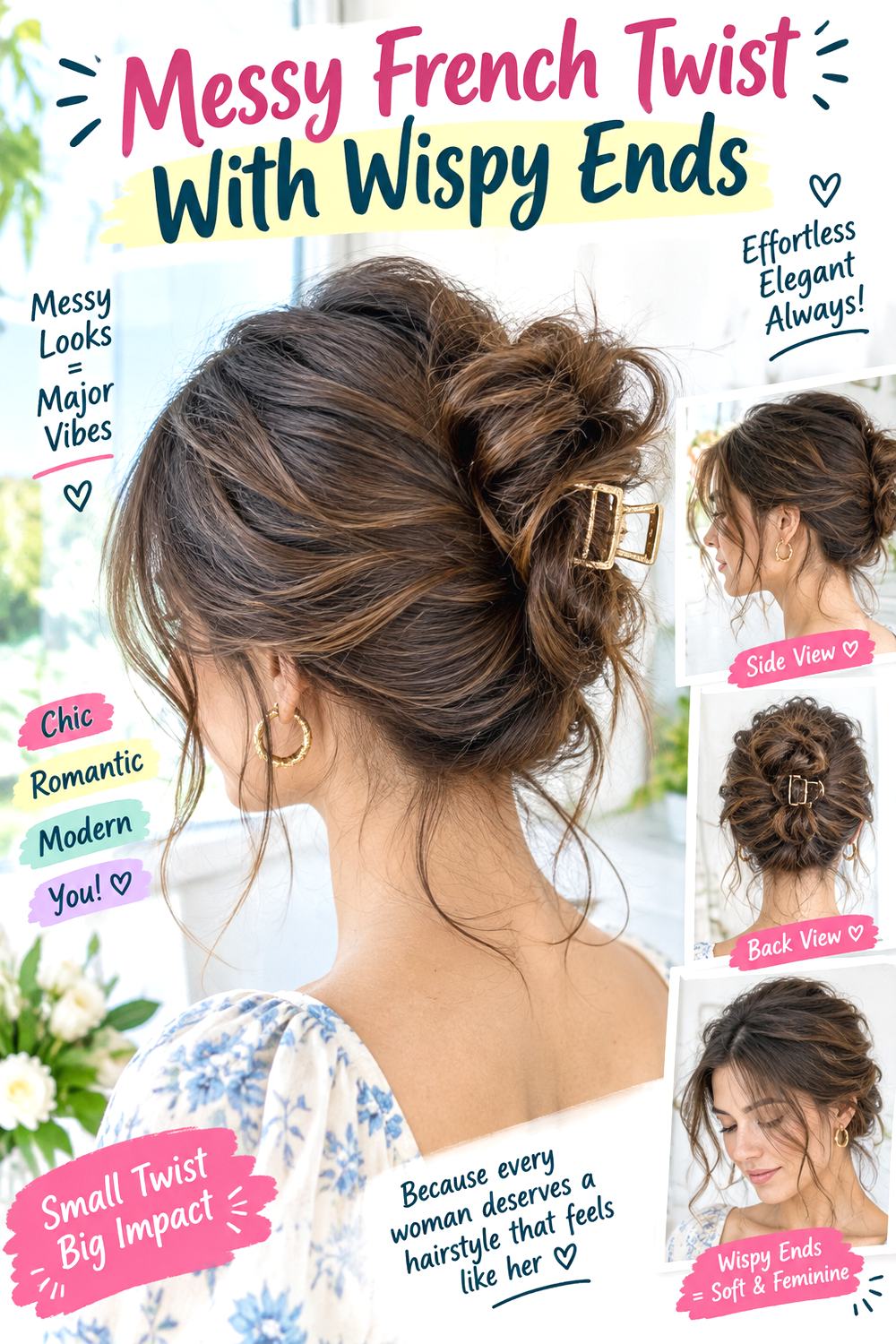
Leaving a few wispy ends visible above the roll gives the French twist a deliberately unfinished edge. The twist sits securely through the center back, but the crown remains airy and selected ends are allowed to fan out instead of being tucked away. Medium-length layered hair is especially useful for this style because shorter pieces naturally escape the roll. Fine hair gains fullness from texture, while thick hair may need some sections pinned separately to avoid a bulky center. Reach for dry texture spray, matte styling paste, and bobby pins with strong grip. Styling is relatively quick because perfect smoothness is not required, although the foundation still needs to be secure. A small amount of paste can redefine the wispy tips if they lose separation. At the salon, ask for the ends to remain visible only near the top of the twist and keep the sides intentionally soft rather than allowing loose pieces everywhere.
Pro tip:
Define only a few visible ends with styling paste. Coating every loose strand can make the airy finish look stiff and overly separated.
Braided French Twist
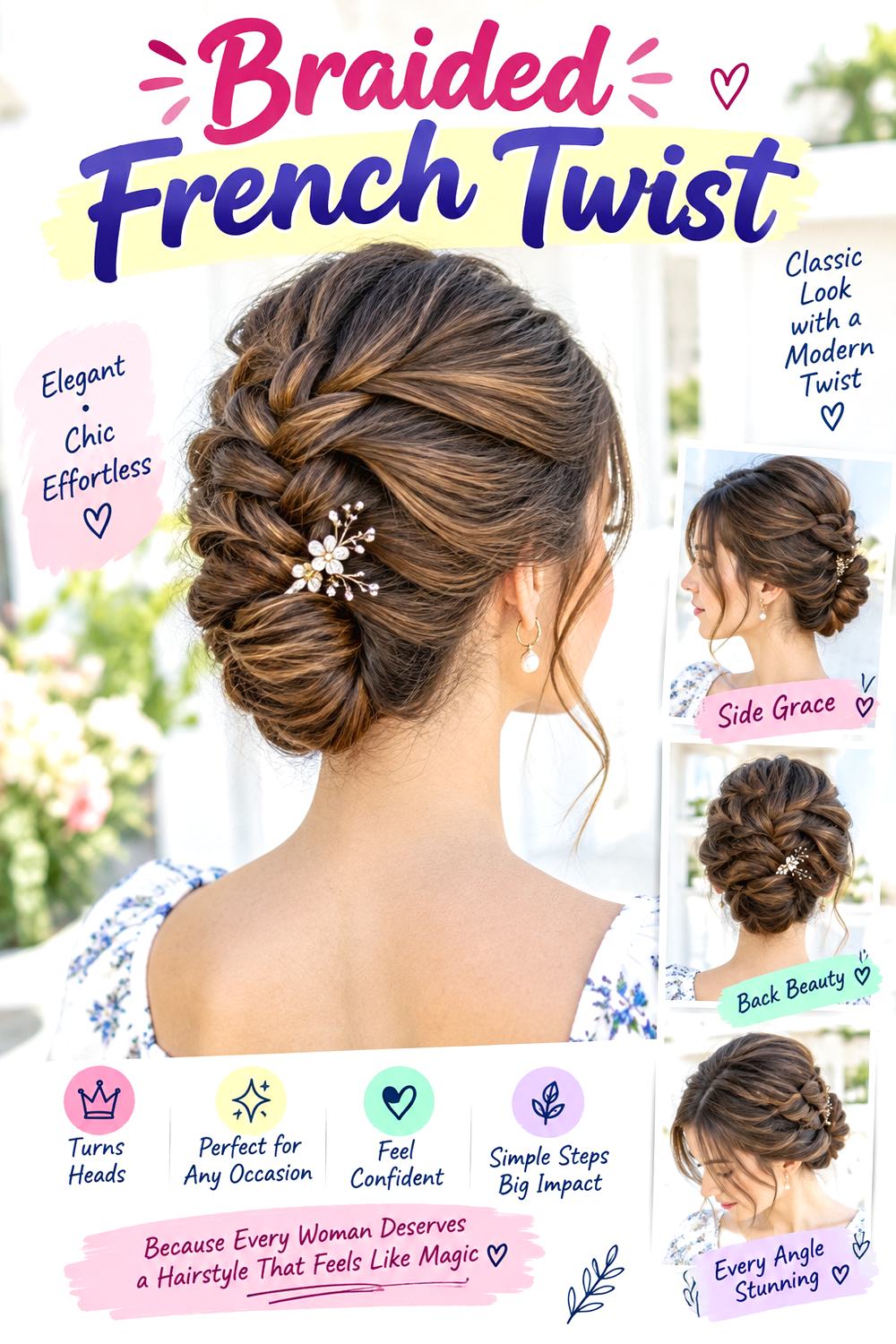
Adding a braid gives the French twist more visible structure before the hair disappears into the roll. A small side braid can travel toward the back and merge into the twist, or a larger woven section can become part of the central shape. Medium to long hair is easiest because there needs to be enough length for both the braid and the roll. Medium and thick density show the woven detail clearly, while fine hair benefits from gently loosening the braid after securing it. Use light mousse, small clear elastics, and hairpins that match the hair color. Styling requires more time than a basic French twist because the braid must be positioned before the roll is completed. For longer wear, keep the braid slightly firm at its base and loosen only the outer loops. At the salon, show whether you want the braid visible from the front or only from the side, and specify exactly where it should disappear into the twist.
Pro tip:
Gently widen the outer braid loops only after the braid is secured. Pulling too early can make the woven section uneven before it reaches the twist.
French Twist With Pearl Pins
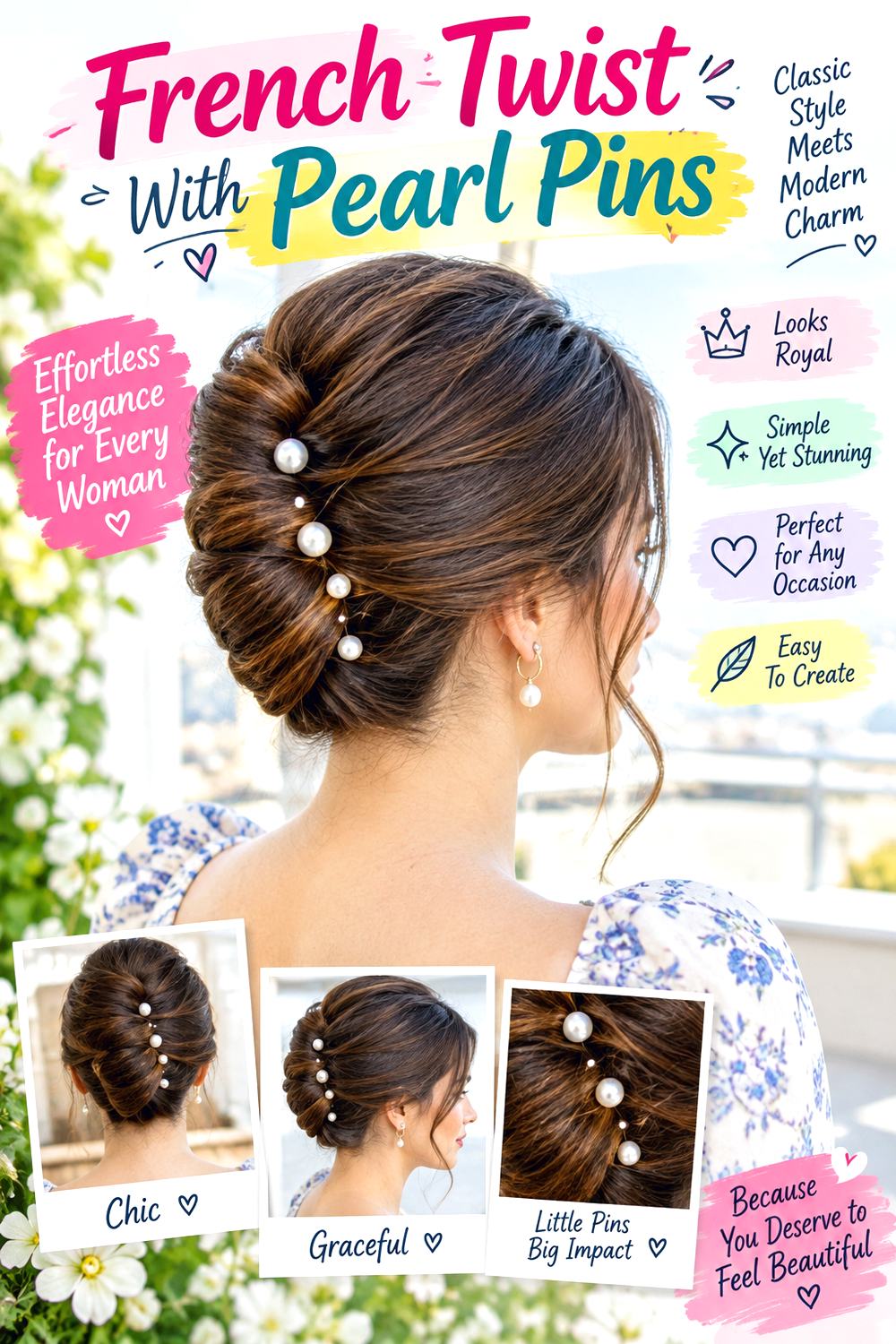
Pearl pins turn the French twist into an accessory-focused updo without requiring a complicated change to the basic structure. The twist can stay smooth and vertical while several pins trace one edge, or a smaller group can sit near the upper roll as a focal point. Medium to long hair provides enough room for both secure hidden pins and decorative pieces. Fine hair may need extra texture underneath so pearl pins do not slide, while very thick hair benefits from using functional pins first and accessories only after the shape is stable. Use texturizing spray, strong bobby pins, and decorative pearl pins. Styling takes moderate time, mainly because the accessories should look intentionally placed rather than scattered. Check that each decorative pin is anchored into the rolled section, not just the surface. At the salon, show the stylist whether you prefer a vertical pearl line, clustered accent, or asymmetrical placement before the twist is built.
Pro tip:
Secure the hairstyle completely with regular pins before adding decorative ones. Pearl pins should decorate the finished structure rather than carry most of its weight.
Curly French Twist Updo
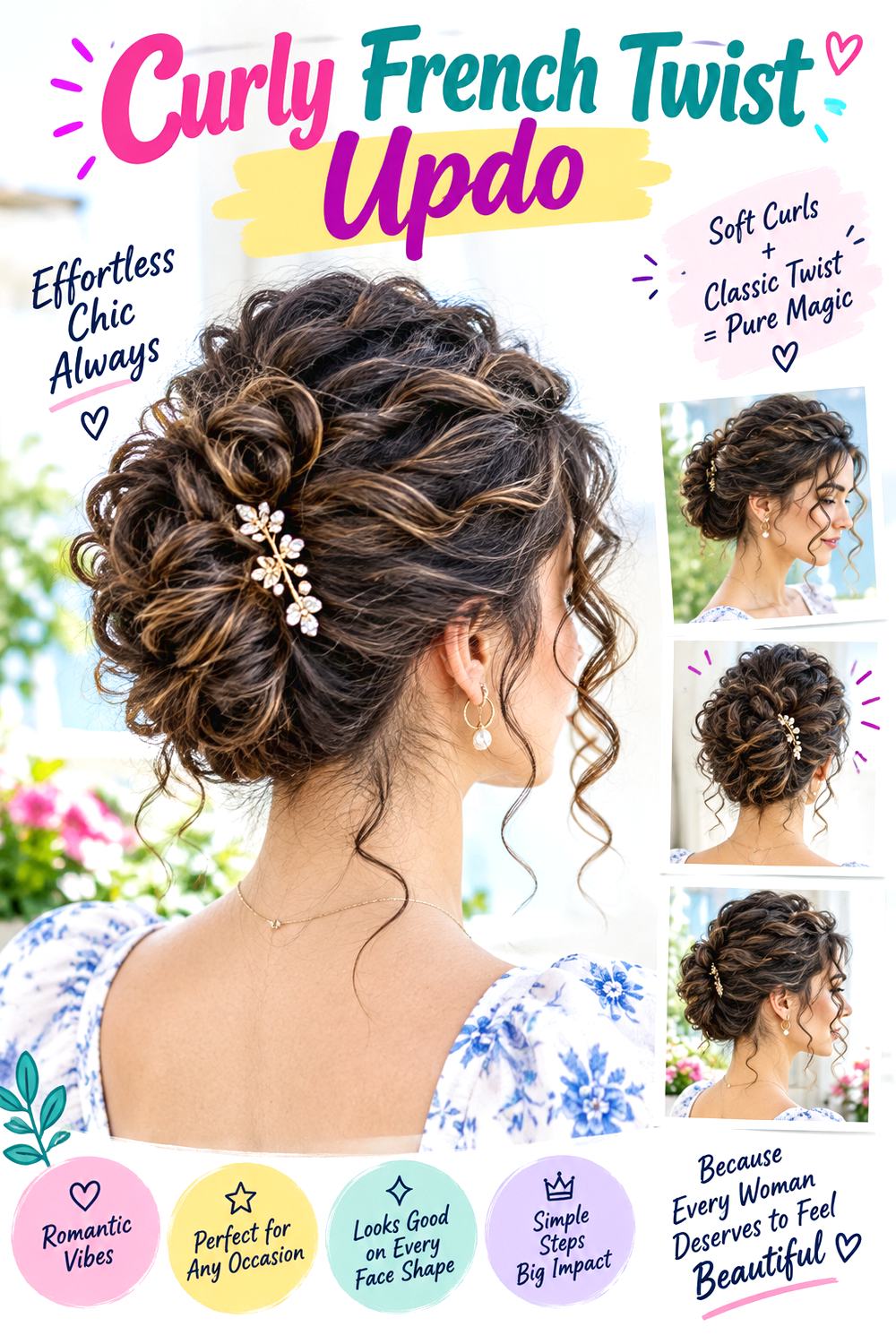
Natural curls create a fuller French twist with visible texture across the crown and sides. Instead of brushing the hair completely smooth, the curl pattern can remain recognizable while the lengths are gathered and rolled into the back. Medium to long curly hair works particularly well, and thick density often needs fewer volume-building steps than straight hair. Fine curls can use lightweight styling products so the twist stays full without becoming coated. A leave-in conditioner, curl cream, and strong hairpins are useful supplies; a diffuser can be used beforehand if the curls need refreshing. Styling takes moderate time because the goal is to preserve curl definition while creating a secure foundation. Avoid excessive brushing, which can expand the surface and remove the curl pattern. At the salon, ask the stylist to keep visible curls around the crown and outer twist rather than smoothing everything flat, and specify whether you want a few curls left loose around the temples or nape.
Pro tip:
Refresh and define the curls before starting the updo. Once the twist is pinned, adding moisture to individual sections can loosen the structure.
Short-Hair French Twist
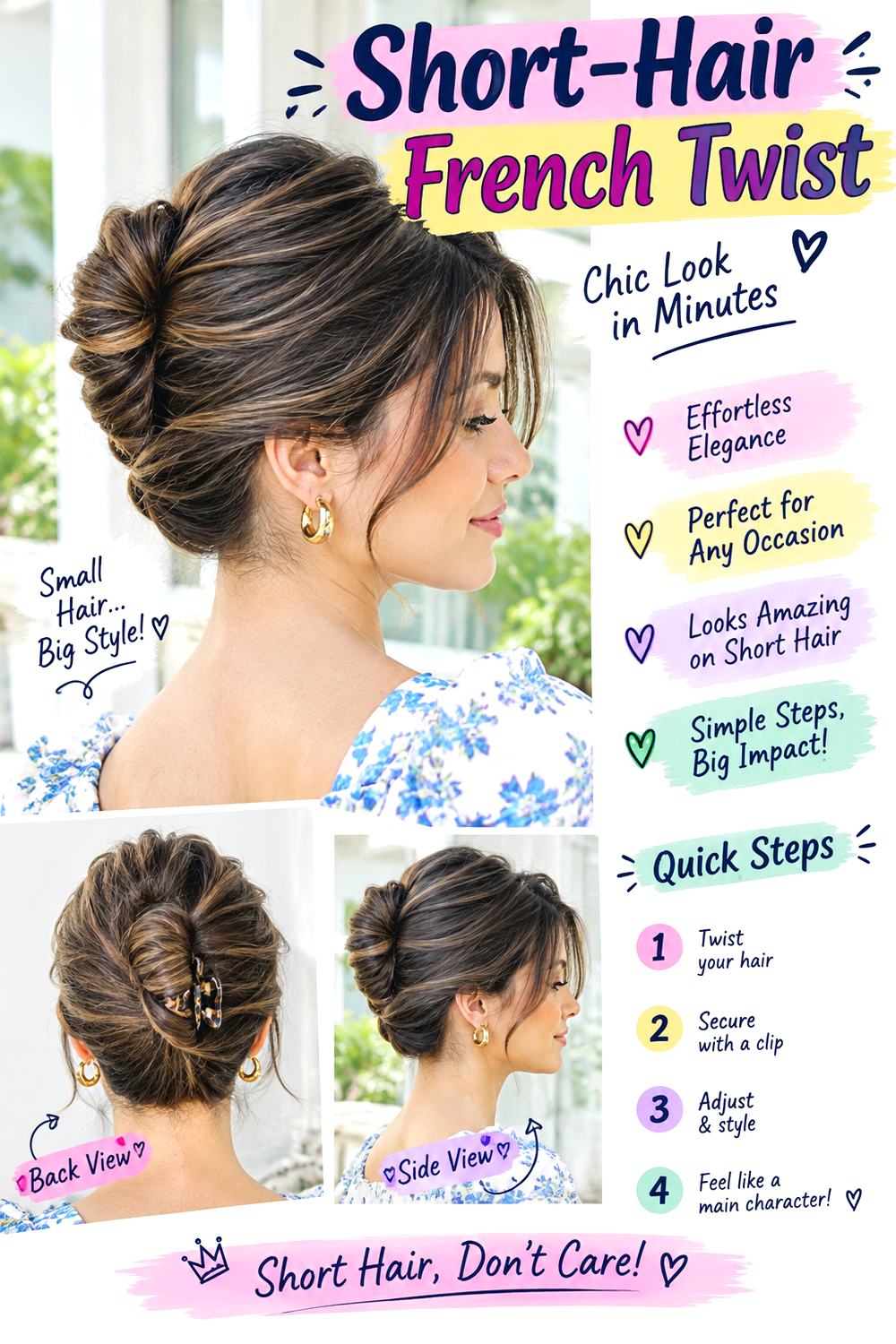
A French twist can work on shorter hair when the sides and back are long enough to overlap toward the center. Instead of one large vertical roll, shorter sections are tucked and pinned in stages, creating the impression of a continuous twist. Chin-length bobs and longer short cuts are the easiest starting point, especially when layers are not extremely short at the nape. Fine hair benefits from texturizing powder for grip, while thick hair may require several crossed pin anchors to control shorter sections. Use dry texture spray, small bobby pins, and flexible hairspray. Styling takes moderate time because more individual pieces need securing, even though the finished twist is compact. Some ends may remain softly visible near the top, which can suit the shorter shape. At the salon, show the stylist the shortest layer and ask whether it can reach the center back before planning the twist. Request a compact roll rather than forcing height that the length cannot support.
Pro tip:
Cross two hidden bobby pins at the center back to create an anchor. Shorter sections can then be tucked over that base instead of relying on one long roll.
Side-Parted French Twist
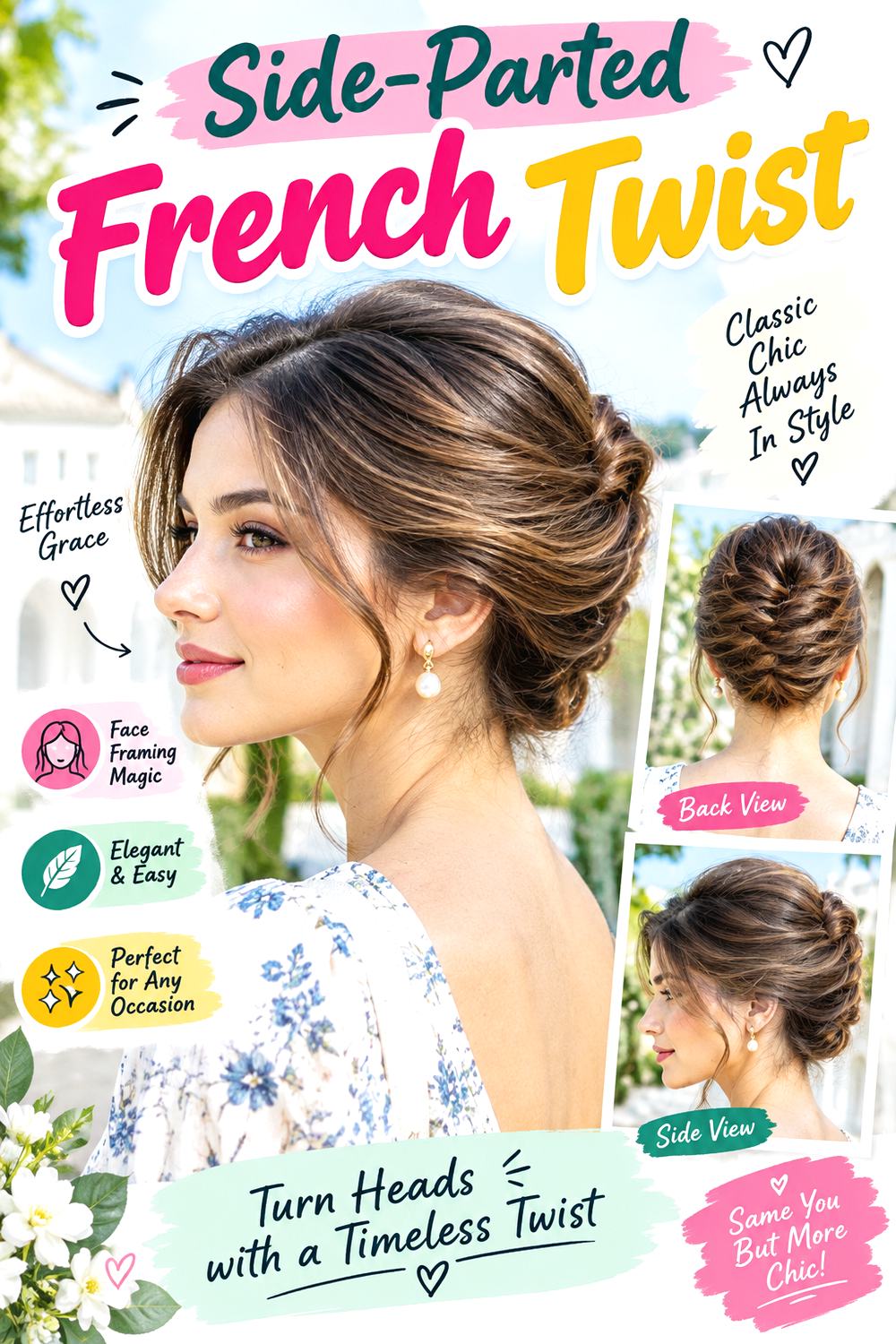
A deep side part changes the balance of a French twist by directing more hair across one side of the forehead before the lengths are pinned at the back. The result feels asymmetrical from the front while the twist itself can remain clean and centered. Straight, wavy, and medium-density hair work especially well because the side sweep stays visible without becoming too bulky. Thick hair may need some internal sectioning so the fuller side does not pull the twist off-center. Use smoothing mousse, a tail comb, and firm-hold hairspray for control and a clean part. Styling takes moderate time because the front direction should be established before the back is secured. If the sweep starts separating, a light mist of spray is usually enough rather than adding more pins near the hairline. At the salon, specify how deep you want the part and whether the fuller front section should stay sleek or have a little lift above the temple.
Pro tip:
Create the side part while the front is still slightly damp or freshly prepped. Establishing the direction early makes the sweep easier to control once the twist is pinned.
Minimal French Twist With Tucked Ends
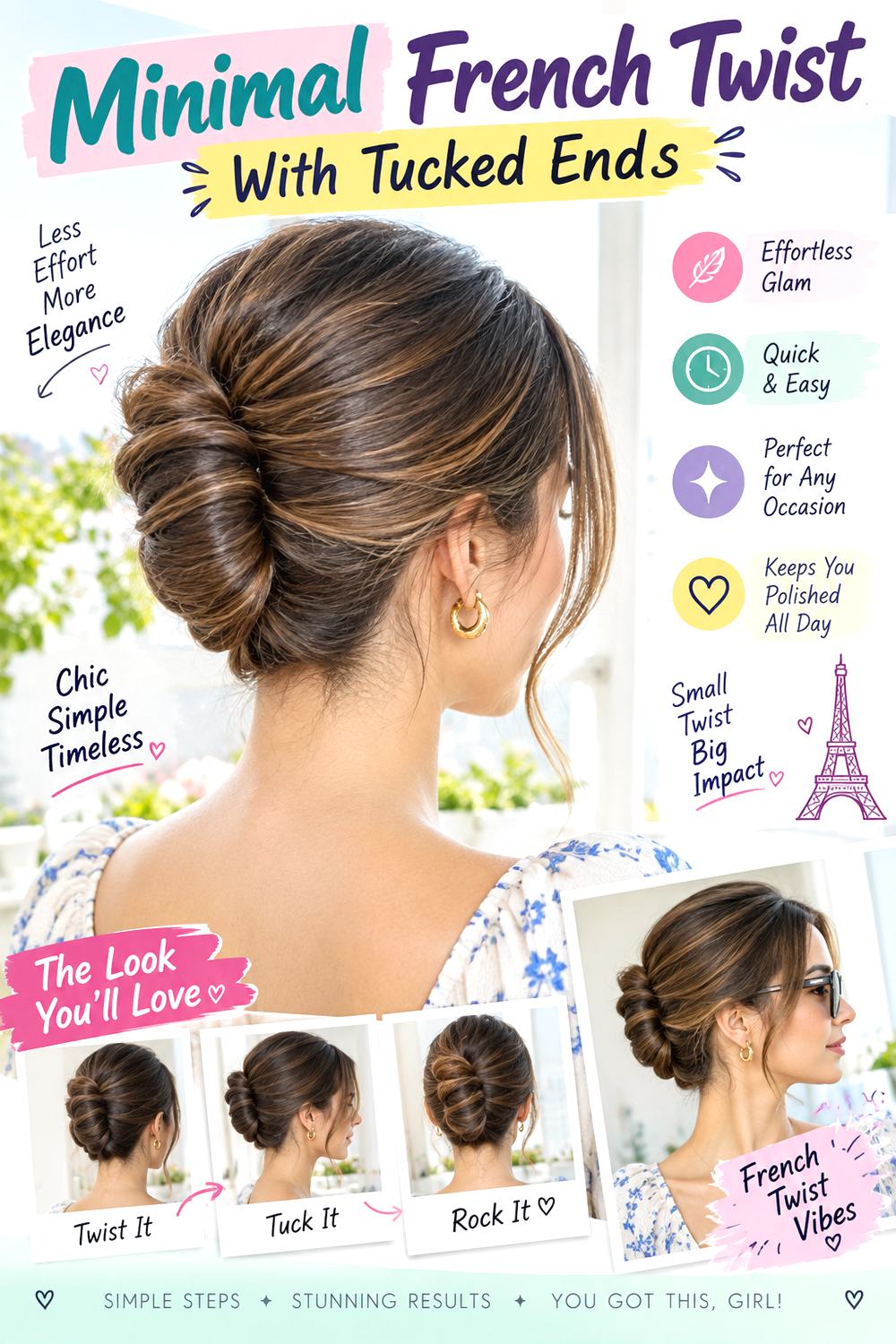
A minimal French twist removes extra volume, loose tendrils, and visible accessories so the shape itself becomes the focus. The sides are brought neatly toward the center, the roll stays narrow, and every end is tucked inside for a clean vertical line. Medium to long straight or lightly wavy hair is easiest to control, although medium-density hair tends to balance security and bulk especially well. Fine hair may need a small amount of grip product, while very thick hair can be divided into two sections before rolling. Use lightweight styling cream, a fine-tooth comb, and strong U-pins or bobby pins. Styling takes moderate time because simplicity exposes bumps and loose ends that a messier finish would hide. Once secured, it generally needs little refreshing. At the salon, ask for minimal crown volume, a narrow center-back roll, and completely hidden ends. Also specify whether you want the twist to finish at the crown or stop slightly lower for an even cleaner outline.
Pro tip:
Use only enough smoothing product to control flyaways. Too much cream can reduce grip and make the tucked roll slide during wear.
Conclusion
Modern French Twist Hairstyles can be adjusted through twist height, crown volume, texture, parting, fringe, accessories, and how tightly the ends are tucked. Fine hair may benefit from texture and discreet lift, while thick hair often needs stronger sectioning and pin support. Curly and wavy hair can preserve natural movement instead of being brushed completely smooth, and shorter cuts may use several small tucks to create the same rolled effect. A sleek low twist requires more precision, while messy and face-framing versions are more forgiving. The best option depends on your hair length, density, layers, natural texture, face shape, occasion, and how much styling time you want to spend creating a secure finish.
Choose one or two favorite ideas and save clear photo references from both the front and back. Discuss your face shape, natural texture, density, preferred length, maintenance needs, and normal styling routine with your stylist. Point out the exact crown volume, fringe placement, twist height, loose pieces, tucked ends, or accessory positioning you like so the finished updo matches the details that attracted you to the reference.
FAQs
How long does hair need to be for a French twist?
Medium-length hair is generally easier to roll and secure, but some chin-length or longer bobs can create a compact twist if the side and back sections reach the center.
Can fine hair hold a French twist?
Yes. Texture spray, light root lift, and a solid pin foundation can give fine hair more grip. Avoid heavy oils before styling because they can make the roll slippery.
Will a French twist work with naturally curly hair?
Yes. Curls can remain visible through the crown and outer surface rather than being completely smoothed away. Strong pins and careful sectioning help manage the extra volume.
How can I make a French twist last longer?
Start with hair that has some grip, build a secure hidden pin foundation, and use flexible hairspray rather than relying only on surface product. Carrying a few spare pins is useful for long events.