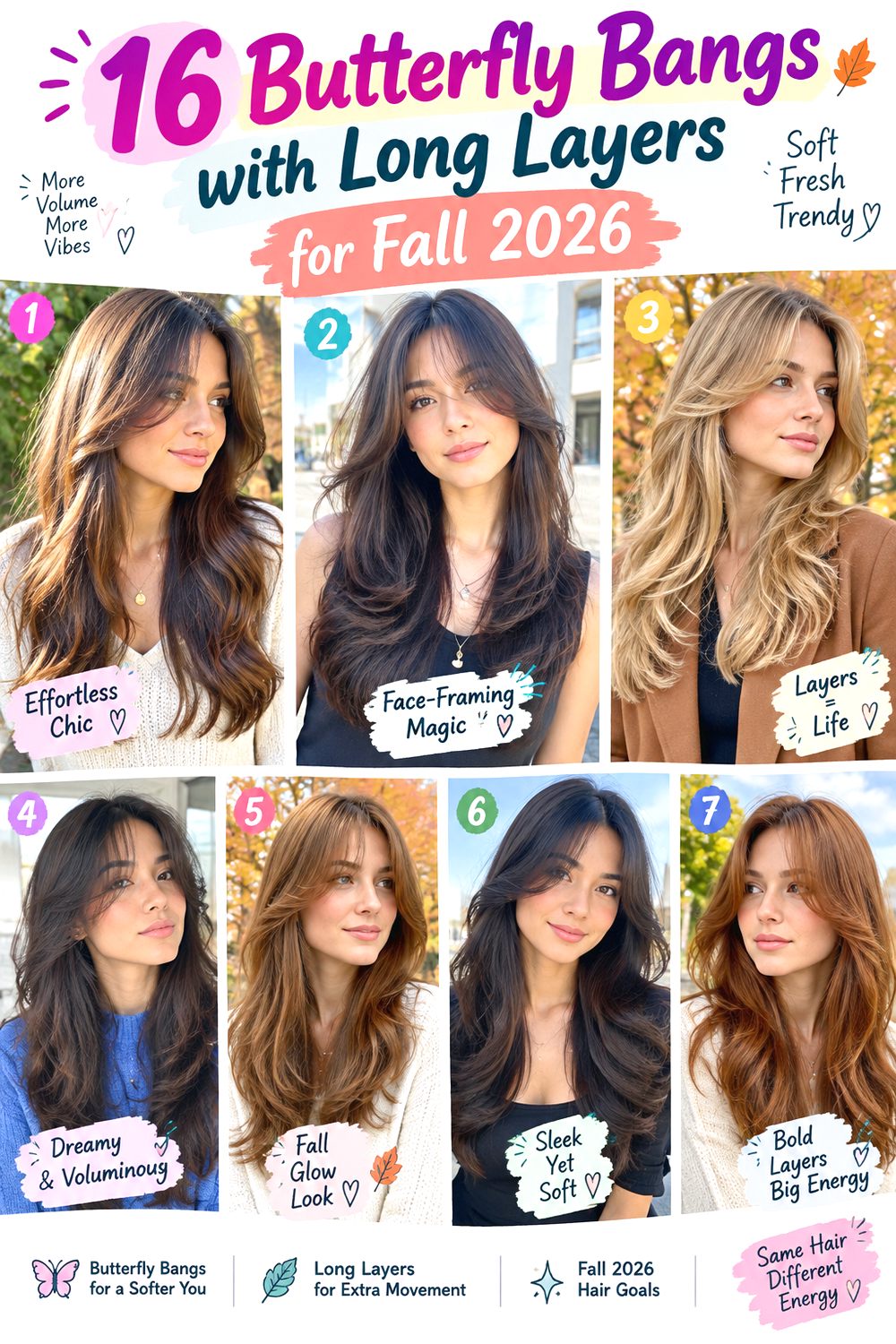
16 Butterfly Bangs With Long Layers for Fall 2026
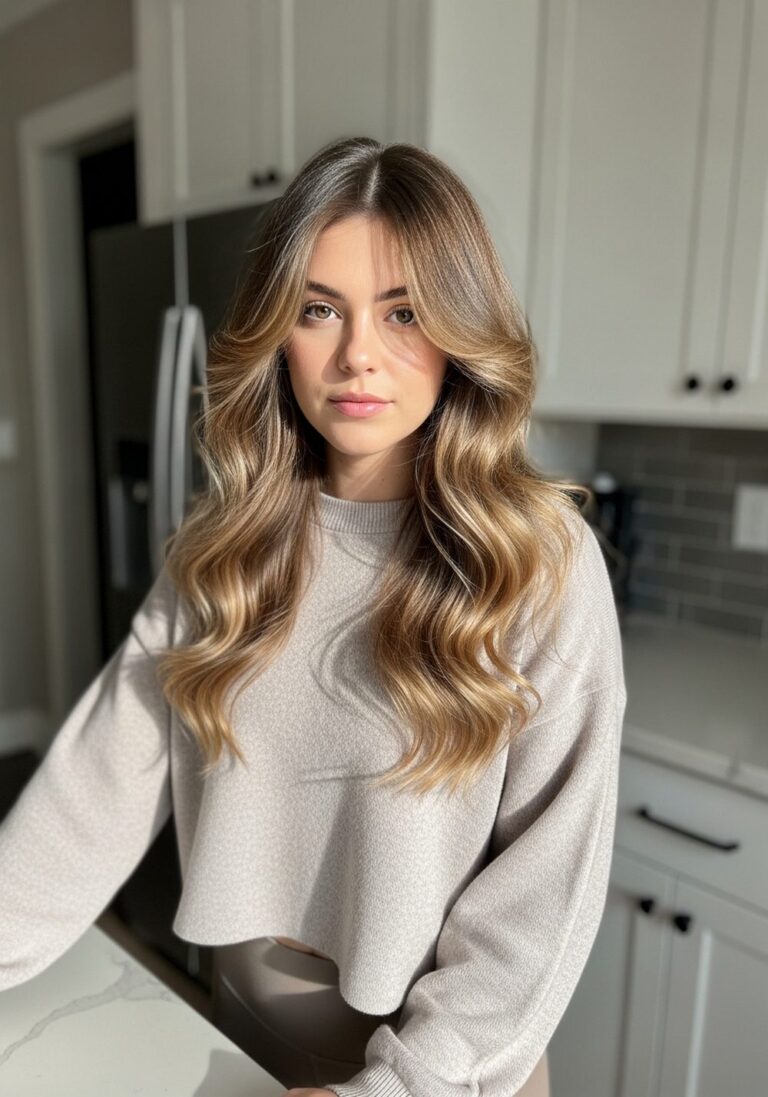
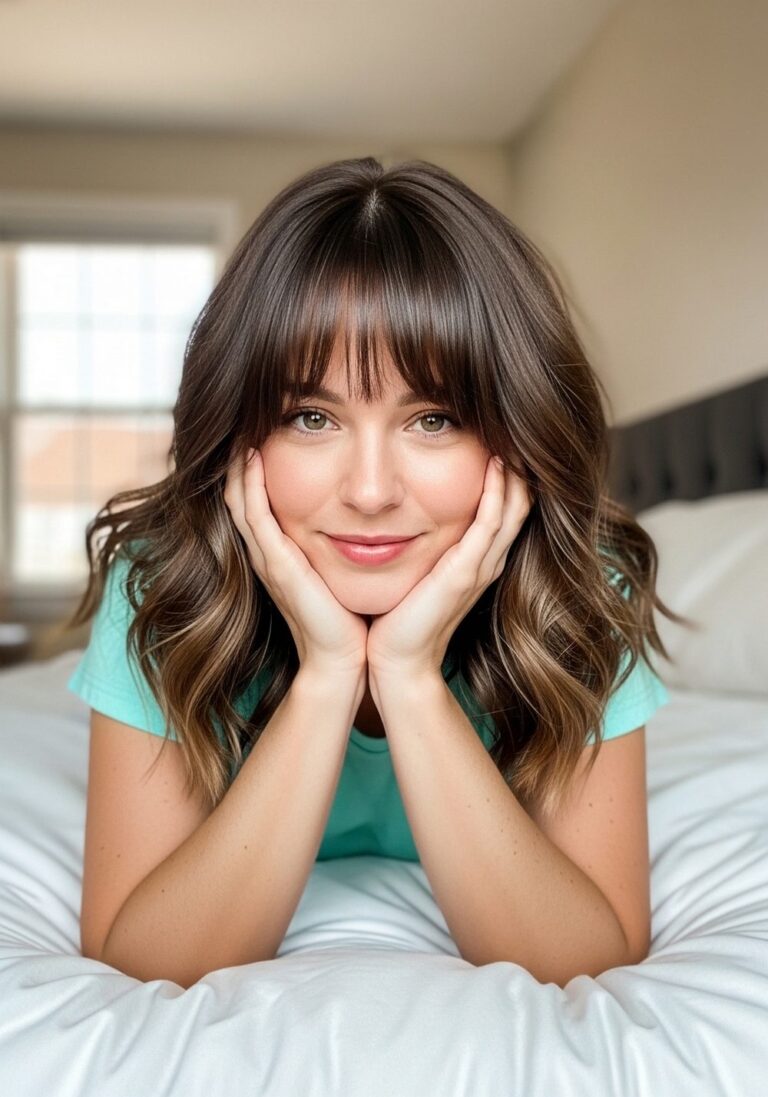
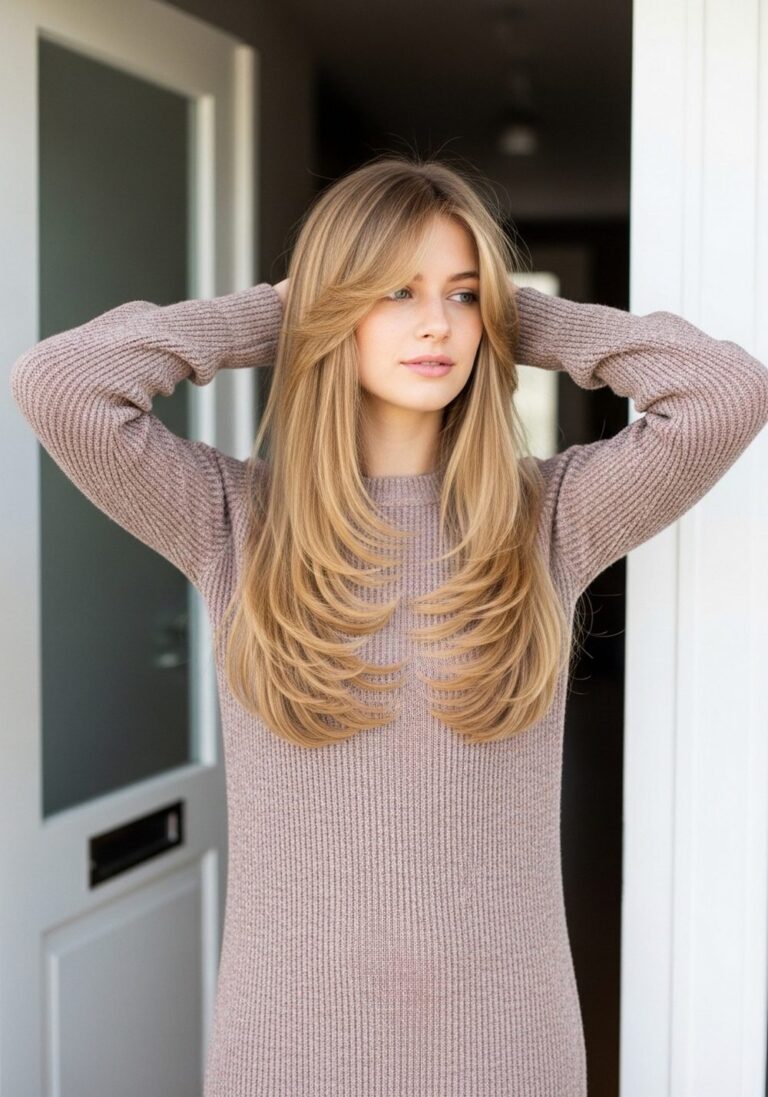
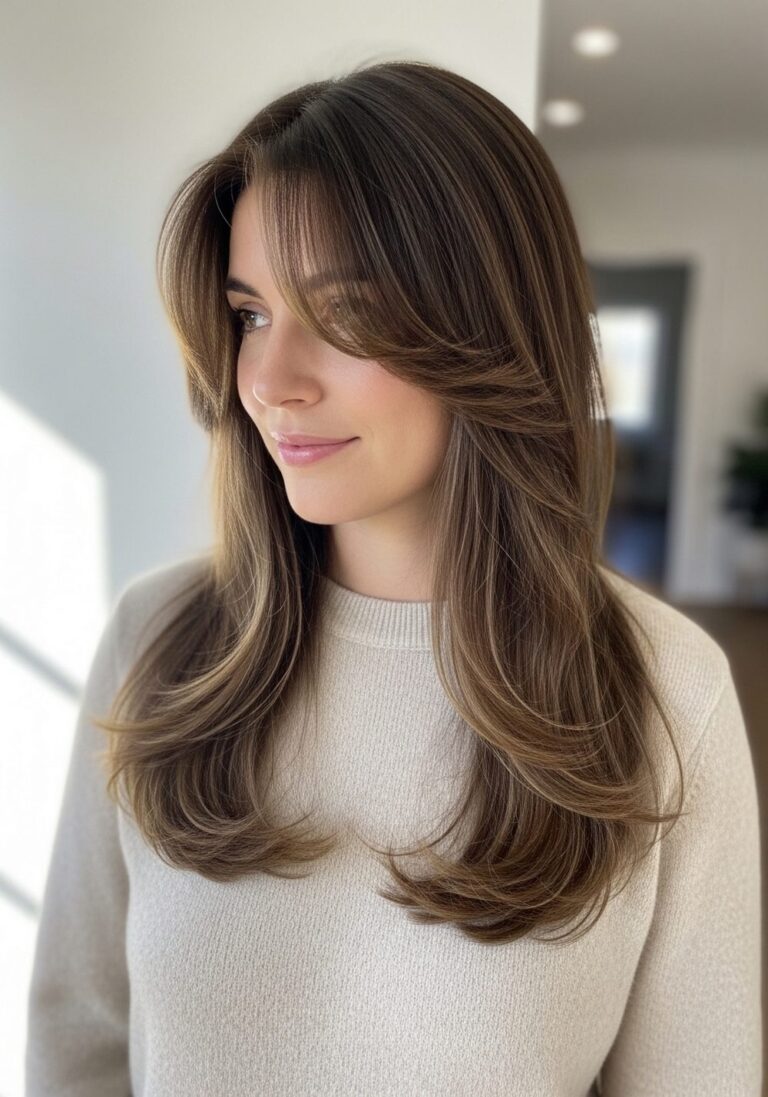
Butterfly bangs with long layers combine a split, sweeping fringe with cascading lengths that move away from the face. The bangs usually sit longer than traditional fringe, with shorter pieces around the cheekbones and outer sections blending into the haircut. Long layers continue that movement through the sides and ends, creating a light, winged shape rather than a heavy block of hair. Depending on styling, the finish can look airy and voluminous, softly wavy, smooth, or more relaxed.
These butterfly bangs with long layers for Fall 2026 can be adapted to fine, medium, or thick hair. Fine hair usually needs fewer layers so the perimeter stays full, while thick hair benefits from thoughtful internal weight removal. Straight and wavy textures show the layered movement clearly, and the bang length can be adjusted around different face shapes through cheekbone, jaw, or collarbone placement.
Daily styling is usually moderate because the bangs need direction even when the lengths are left natural. A round brush, rollers, or a quick blow-dry can refresh the front. Before choosing the cut, consider your density, natural part, heat routine, humidity, trim schedule, and how much face-framing movement you want.
Quick List
- Classic Butterfly Bangs with Flowing Long Layers hairstyle
- Butterfly Bangs with Feathered Face-Framing Layers hairstyle
- Butterfly Bangs with Voluminous Blowout Layers hairstyle
- Butterfly Bangs with Soft Wavy Long Layers hairstyle
- Butterfly Bangs with Sleek Polished Layers hairstyle
- Butterfly Bangs with Center-Parted Long Layers hairstyle
- Butterfly Bangs with Deep Side-Parted Layers hairstyle
- Butterfly Bangs with Long Layers for Fine Hair hairstyle
- Butterfly Bangs with Long Layers for Thick Hair hairstyle
- Butterfly Bangs with Long Layers for Wavy Hair hairstyle
- Butterfly Bangs with Long Curved Layers hairstyle
- Butterfly Bangs with Wispy Long Layers hairstyle
- Butterfly Bangs with Bouncy Rounded Layers hairstyle
- Butterfly Bangs with Extra-Long Face Frame hairstyle
- Butterfly Bangs with Softly Flipped Layers hairstyle
- Butterfly Bangs with Long Layers and Root Volume hairstyle
Classic Butterfly Bangs with Flowing Long Layers hairstyle
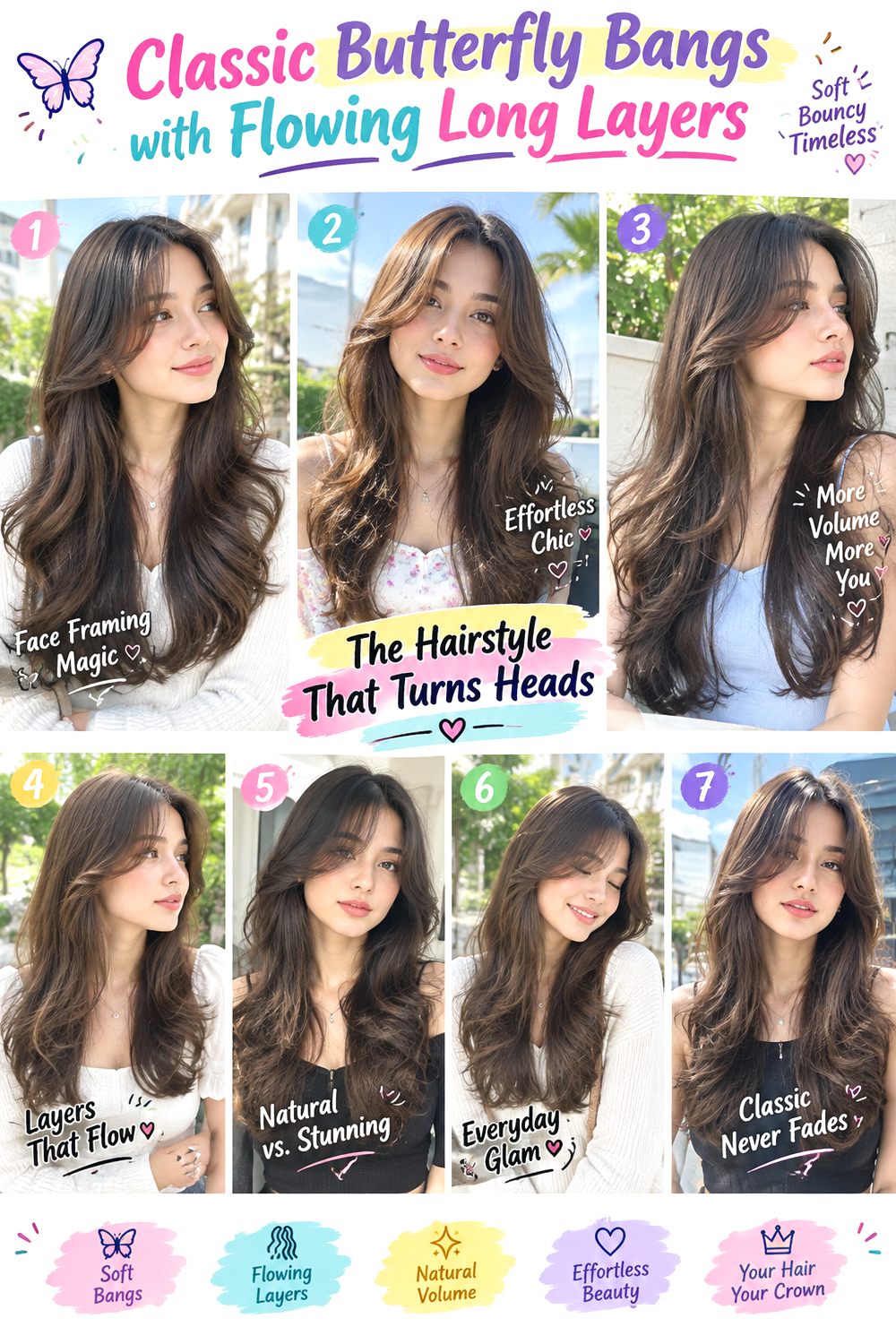
Classic butterfly bangs open through the center and sweep outward into long, connected layers, giving the haircut its recognizable winged movement. The shortest front pieces can sit around the cheekbones, while longer sections blend toward the jaw and collarbone before continuing through the length. Medium to thick hair carries the shape naturally, although fine hair can wear it with fewer layers and a stronger perimeter. Straight and wavy textures are easiest to style with a soft bend. Use heat protectant, a large round brush, and lightweight hairspray to direct the fringe away from the face without making it stiff. Styling takes moderate time after washing, but the bangs alone are quick to refresh the next morning. Trim the front before it loses its outward sweep. At the salon, ask for connected butterfly layers with the shortest fringe point at the cheekbone and enough density preserved through the lower perimeter.
Pro tip:
Ask the stylist to show you where the shortest front layer begins before cutting; that single point controls how dramatic the butterfly shape will look.
Butterfly Bangs with Feathered Face-Framing Layers hairstyle
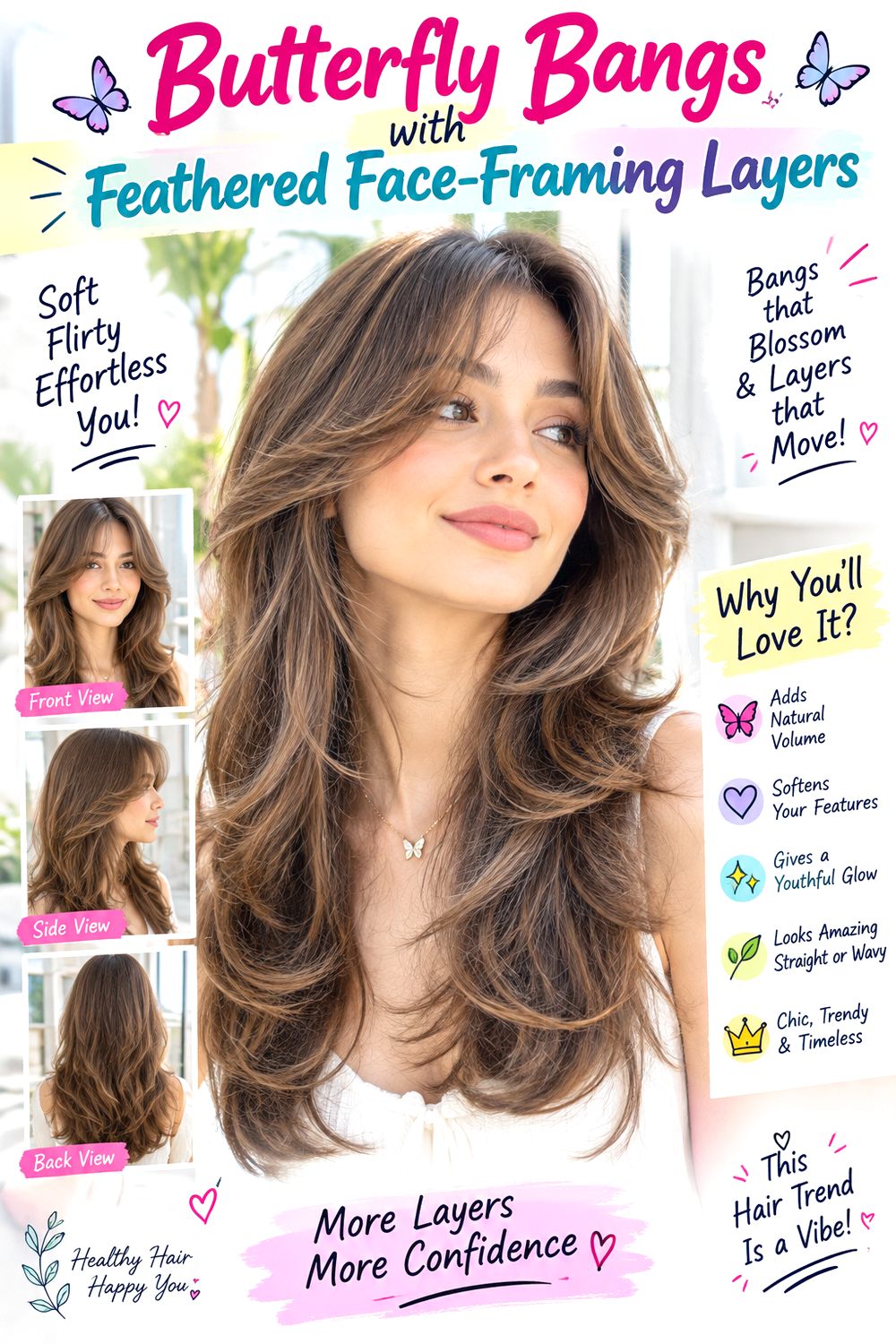
Feathered face-framing layers create a lighter version of butterfly bangs by breaking the front into soft, flowing sections rather than one heavy fringe. The bangs can begin near the cheekbones and gradually lengthen through the jaw and collarbone, giving the sides visible movement while keeping the back long. Fine and medium hair suit this approach because the front feels airy without removing too much overall density. Thick hair can also wear it when the feathering is balanced with internal weight control. Use heat protectant, a medium round brush, and a light texturizing spray to separate the layers after drying. Styling is moderate but easy to refresh by reworking only the front pieces. Over-feathering can make long ends look thin, so trims should maintain a solid lower shape. At the salon, ask for soft point-cutting through the face frame while keeping the back perimeter noticeably fuller than the shortest front layers.
Pro tip:
Keep the feathering strongest around the face and lighter toward the back; spreading it everywhere can make long hair lose too much visual density.
Butterfly Bangs with Voluminous Blowout Layers hairstyle
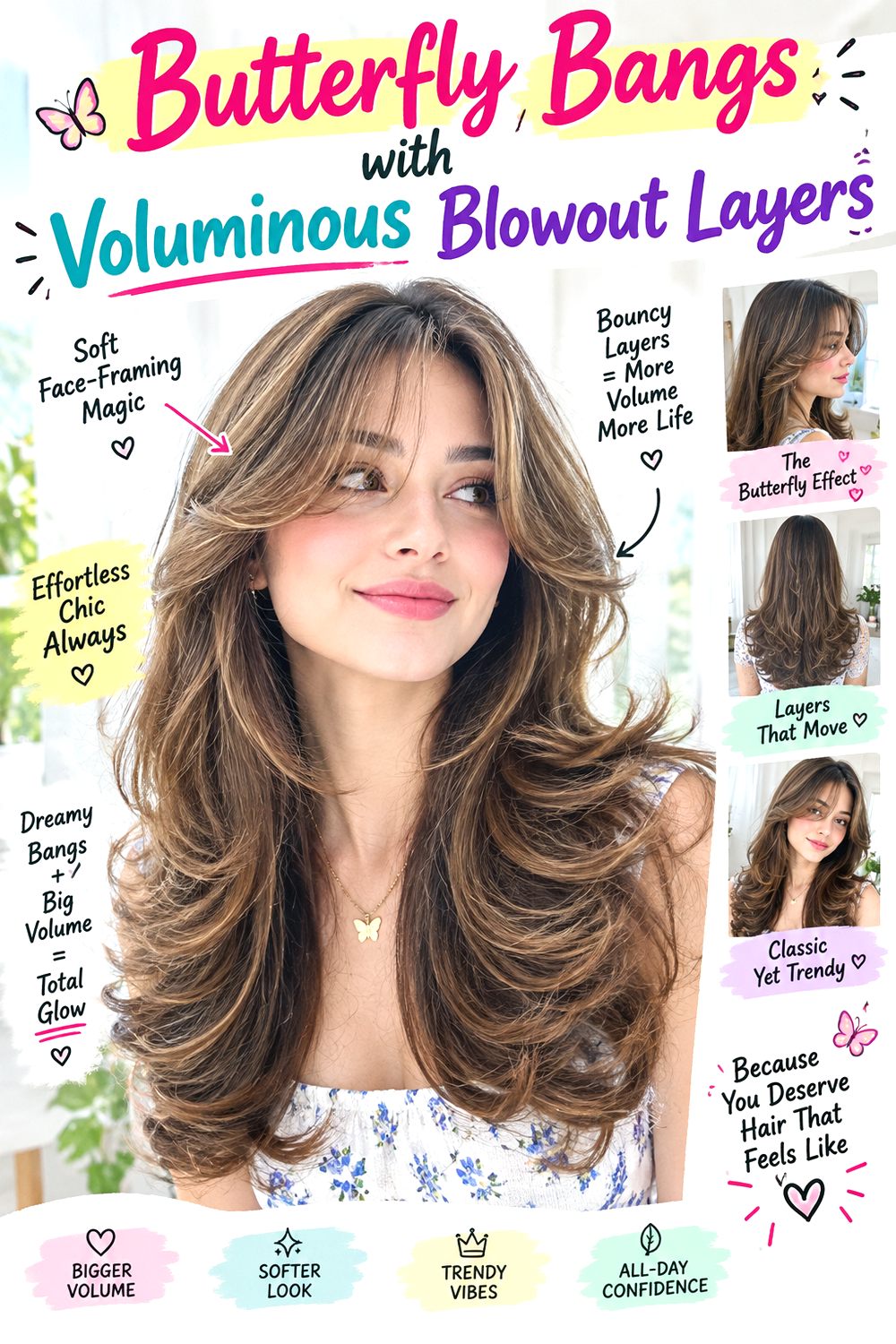
A voluminous blowout makes butterfly bangs look larger and more sculpted because the fringe lifts away from the forehead before curving back toward the sides. Long layers should move in broad sections through the mid-lengths and ends rather than forming tight curls. Medium and thick hair naturally hold the rounded shape, while fine hair can build volume with lighter products and longer layer spacing. Straight and wavy textures respond well to this finish. Prep with volumizing spray and heat protectant, then use a large round brush or oversized rollers to set the front and crown. Styling takes more time than a simple air-dried version, especially on long hair, but the shape can last well after cooling. At the salon, request long connected layers with enough crown length to hold lift without becoming choppy. Explain that you want the bangs to blow outward and merge into the first side layer.
Pro tip:
Set the bangs in large rollers away from the face while they cool; removing them too soon can make the butterfly bend collapse before the rest of the blowout is finished.
Butterfly Bangs with Soft Wavy Long Layers hairstyle
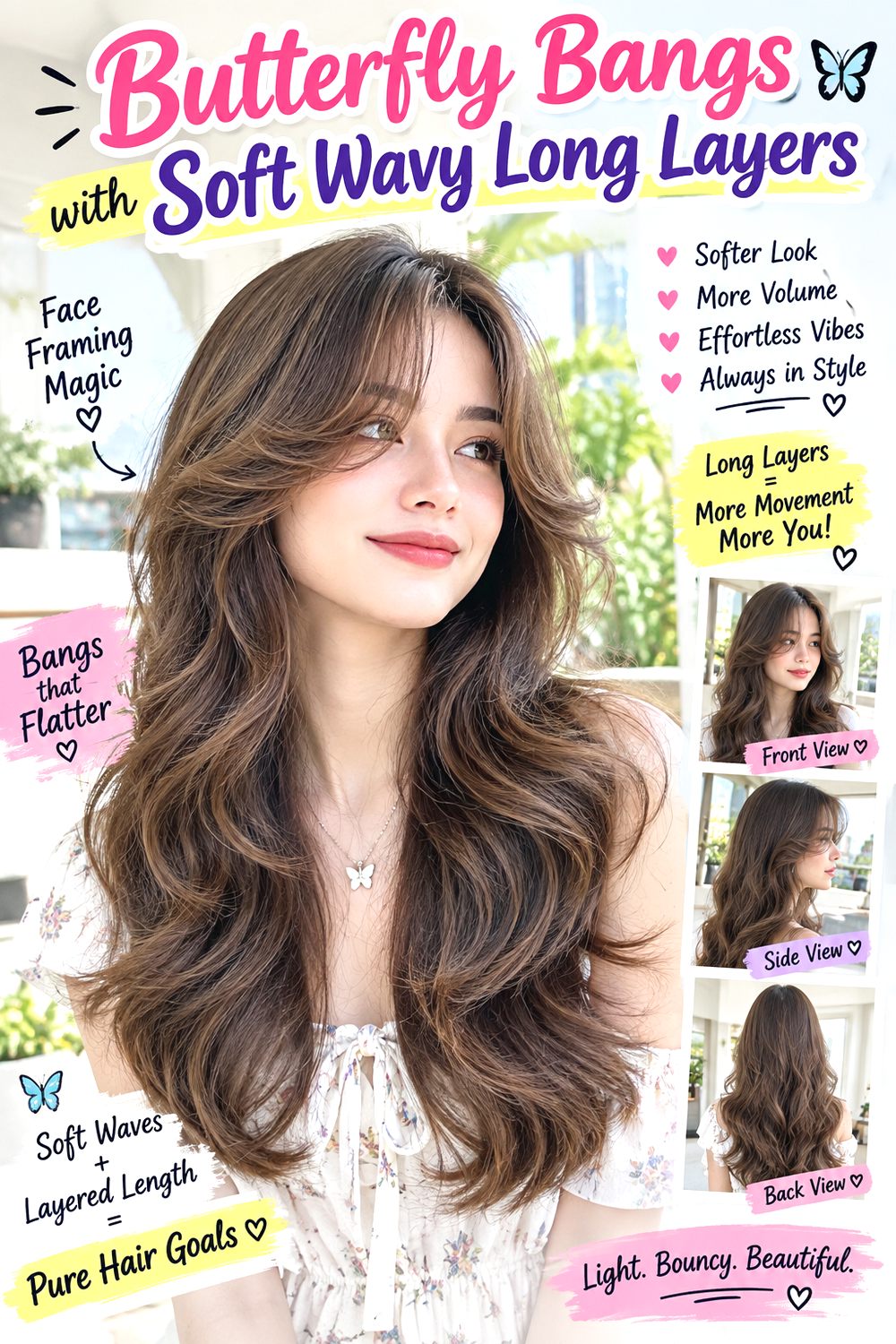
Soft waves give butterfly bangs a more relaxed finish by letting the layers move naturally instead of sitting in a polished blowout shape. The fringe can open at the center and blend into waves beginning around the cheekbones or jaw. Naturally wavy hair needs the least work, while straight hair can create the pattern with a large curling iron or loose overnight set. Fine hair should keep the wave broad so the ends stay full; thick hair can handle more separation between layers. Use leave-in conditioner, heat protectant if needed, and a wide-tooth comb to soften the finished bends. Styling is moderate when waves are heat-created and quicker when natural texture is encouraged. Humidity may increase frizz around the fringe, so a little anti-frizz cream can help. At the salon, ask for long layers that follow the wave pattern and enough length in the bangs to avoid springing shorter than expected.
Pro tip:
Wave the front pieces away from the face but alternate directions through the back; this keeps the butterfly frame defined without making all the hair look overly uniform.
Butterfly Bangs with Sleek Polished Layers hairstyle
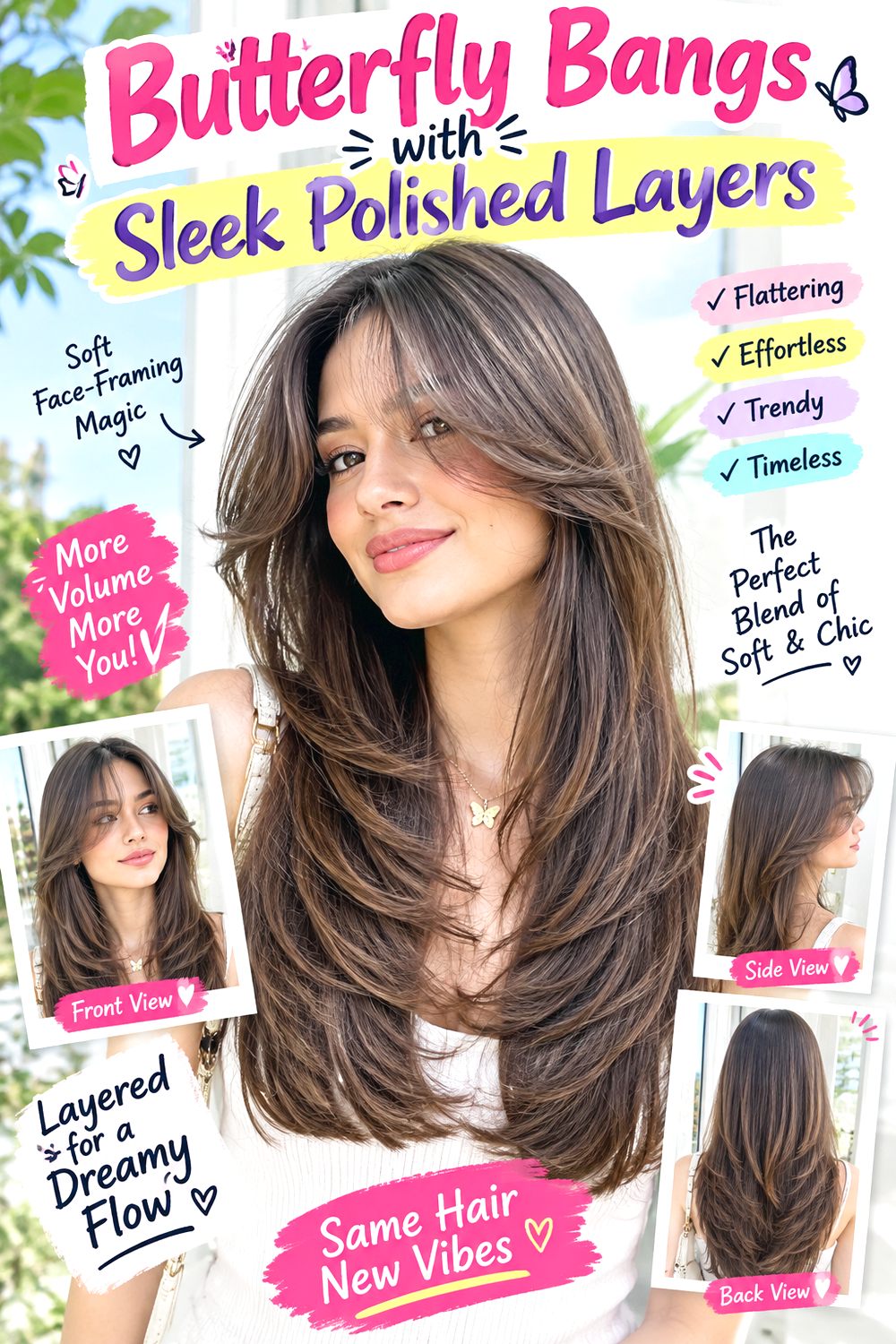
A sleek finish shows the actual shape of butterfly bangs clearly because every layer remains smooth and separated by length rather than texture. The fringe still opens around the forehead, but the curve is subtle and controlled instead of fluffy. Straight hair reaches this result most easily, while wavy or coarse hair may need stronger brush tension. Fine and medium density suit the polished outline, though thick hair can work with careful internal debulking. Use heat protectant, a paddle brush, and a lightweight serum concentrated through the ends. Styling is moderate, with extra time needed for textured hair or humid conditions. Too much flat-ironing can remove the movement that makes butterfly layers distinct, so keep a slight bend through the face frame. At the salon, request smooth, connected layering rather than heavily razored ends and ask that the shortest bang section still curve around the cheekbone when worn sleek.
Pro tip:
If you use a flat iron, turn the front sections slightly away from the face instead of pulling them pin-straight; that keeps the butterfly shape visible.
Butterfly Bangs with Center-Parted Long Layers hairstyle
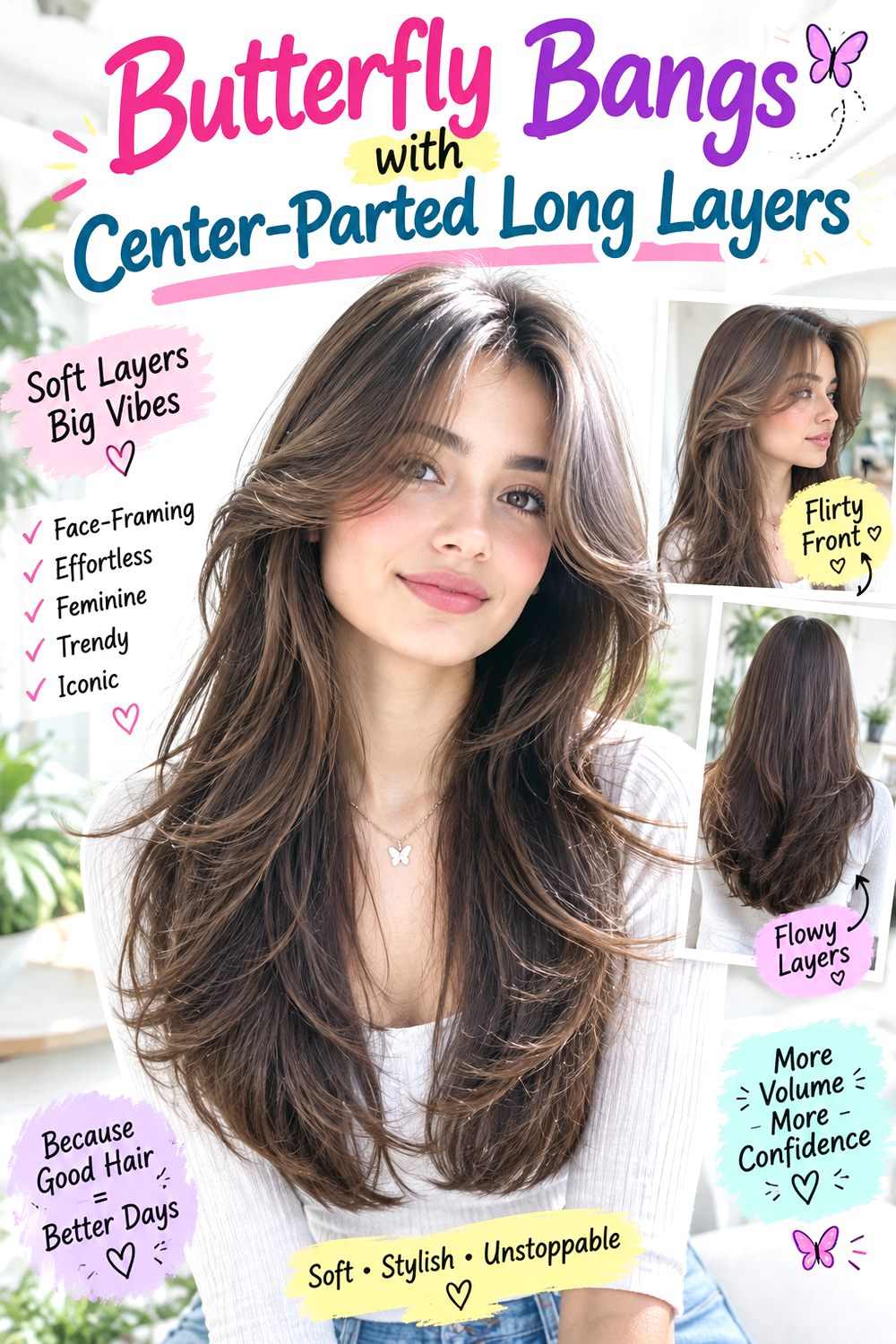
A center part makes butterfly bangs look balanced, with matching fringe sections opening on both sides of the forehead. The strongest movement usually falls around the cheekbones, then blends into longer layers that frame the jaw and shoulders. Fine hair can benefit from a narrower fringe section so the sides retain density, while medium and thick hair can support a broader sweep. Straight and wavy textures make symmetry easy to see. Use heat protectant, a medium round brush, and flexible hairspray to keep both sides moving outward without creating a hard split. Styling is moderate, but the front can be refreshed in a few minutes between washes. Natural cowlicks may make one side behave differently, so the cut should account for your growth pattern. At the salon, wear your usual center part and ask the stylist to check both sides dry to ensure the bang length and layer weight feel balanced.
Pro tip:
Dry each side from the center outward rather than crossing the bangs over the opposite side; this helps both wings settle more evenly.
Butterfly Bangs with Deep Side-Parted Layers hairstyle
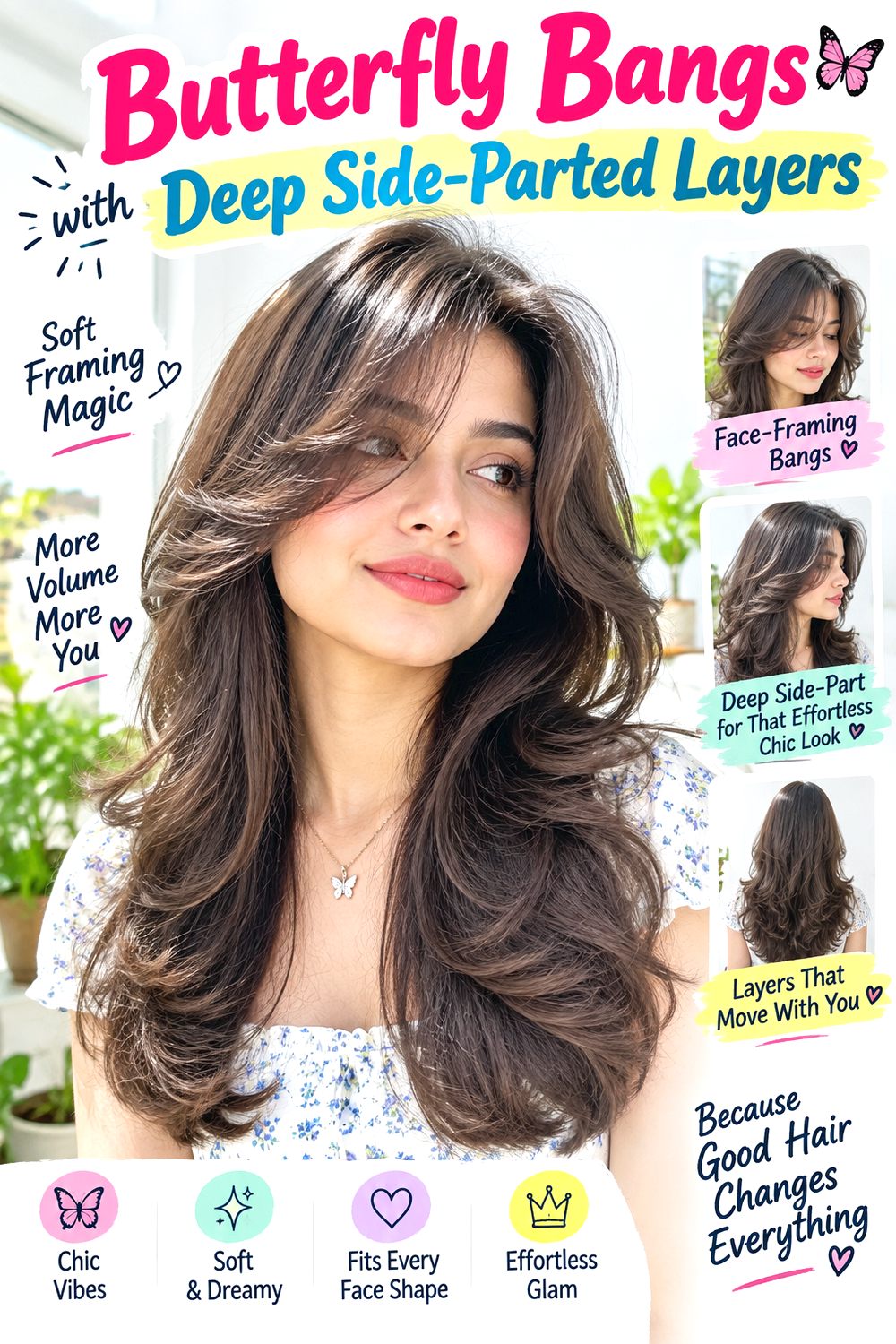
A deep side part gives butterfly bangs an asymmetric shape, with more fringe volume sweeping across one side before blending into the long layers. The lighter side can tuck behind the ear or stay softly framed, depending on the haircut. This option works especially well for people whose natural part already falls off-center. Fine hair can gain visible lift on the fuller side, while thick hair may need less density in the front to keep the sweep from feeling heavy. Use volumizing mousse, a large round brush, and flexible hairspray to support the root direction. Styling takes moderate time because the heavier side should cool in position before being released. The part can also be adjusted to change how much forehead and cheekbone framing is visible. At the salon, show your everyday part and ask for longer outer bang pieces that flow into the dominant side without creating a disconnected shelf.
Pro tip:
Lift the heavier side upward before directing it sideways; drying it flat across the forehead can remove the root volume that makes the side sweep work.
Butterfly Bangs with Long Layers for Fine Hair hairstyle
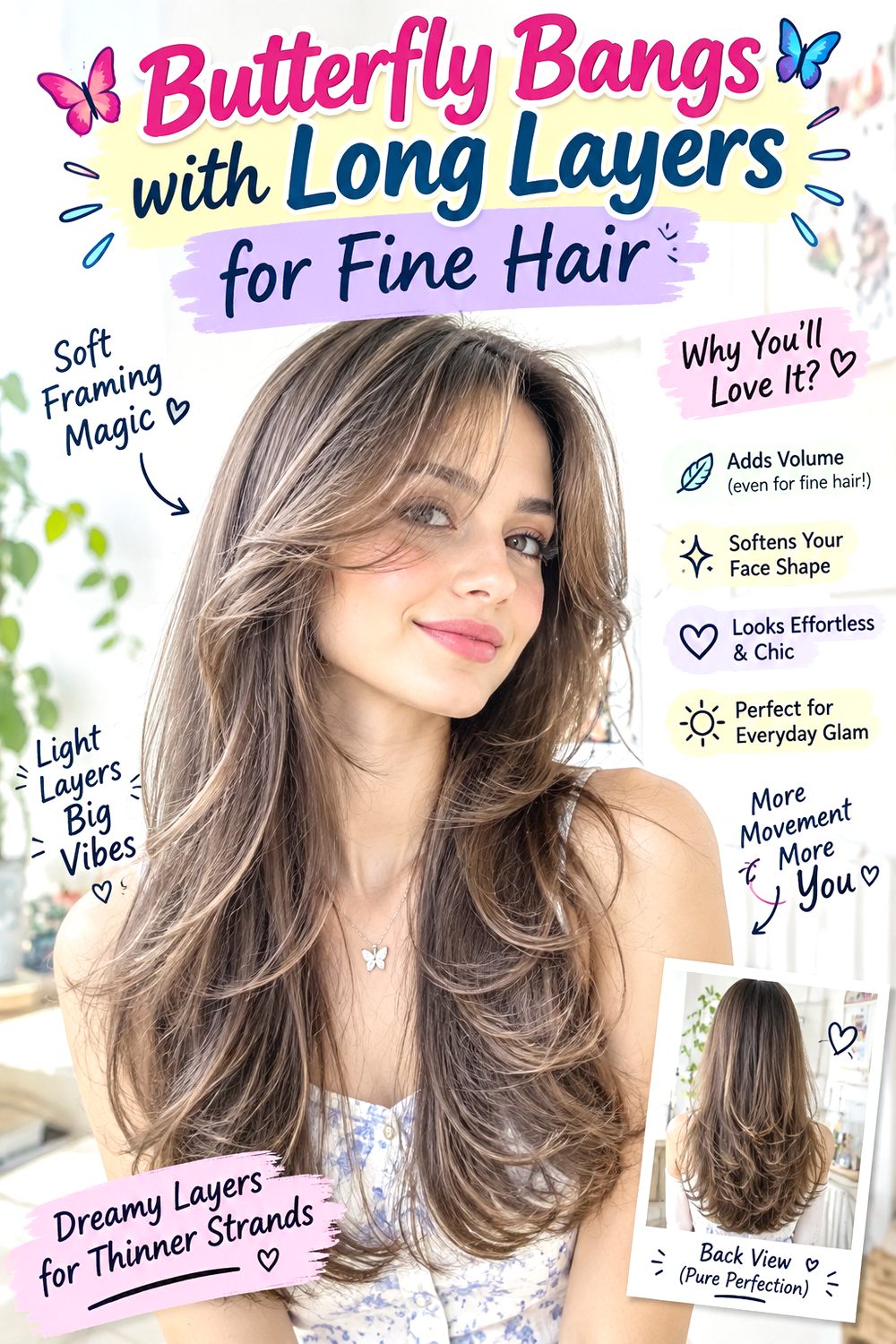
Fine hair needs a lighter approach to butterfly layering so the haircut keeps enough density through the bottom. The fringe can still open around the cheekbones, but the outer pieces should blend into fewer, longer layers rather than many heavily feathered sections. A strong perimeter helps the hair look fuller when worn straight or blown out. Use volumizing spray at the roots, heat protectant through the lengths, and a medium round brush for the bangs and ends. Styling is quick to moderate because fine sections dry faster, although heavy products can flatten the shape quickly. Avoid rich oils near the crown and use only a small amount on dry ends if needed. Salon maintenance should focus on keeping the lower edge healthy and substantial. Ask for restrained long layers, a narrow butterfly-bang section, and no aggressive thinning through the last several inches.
Pro tip:
Keep the shortest face-framing layer slightly longer than you would on thick hair; extra length preserves side density while still giving the bangs visible movement.
Butterfly Bangs with Long Layers for Thick Hair hairstyle
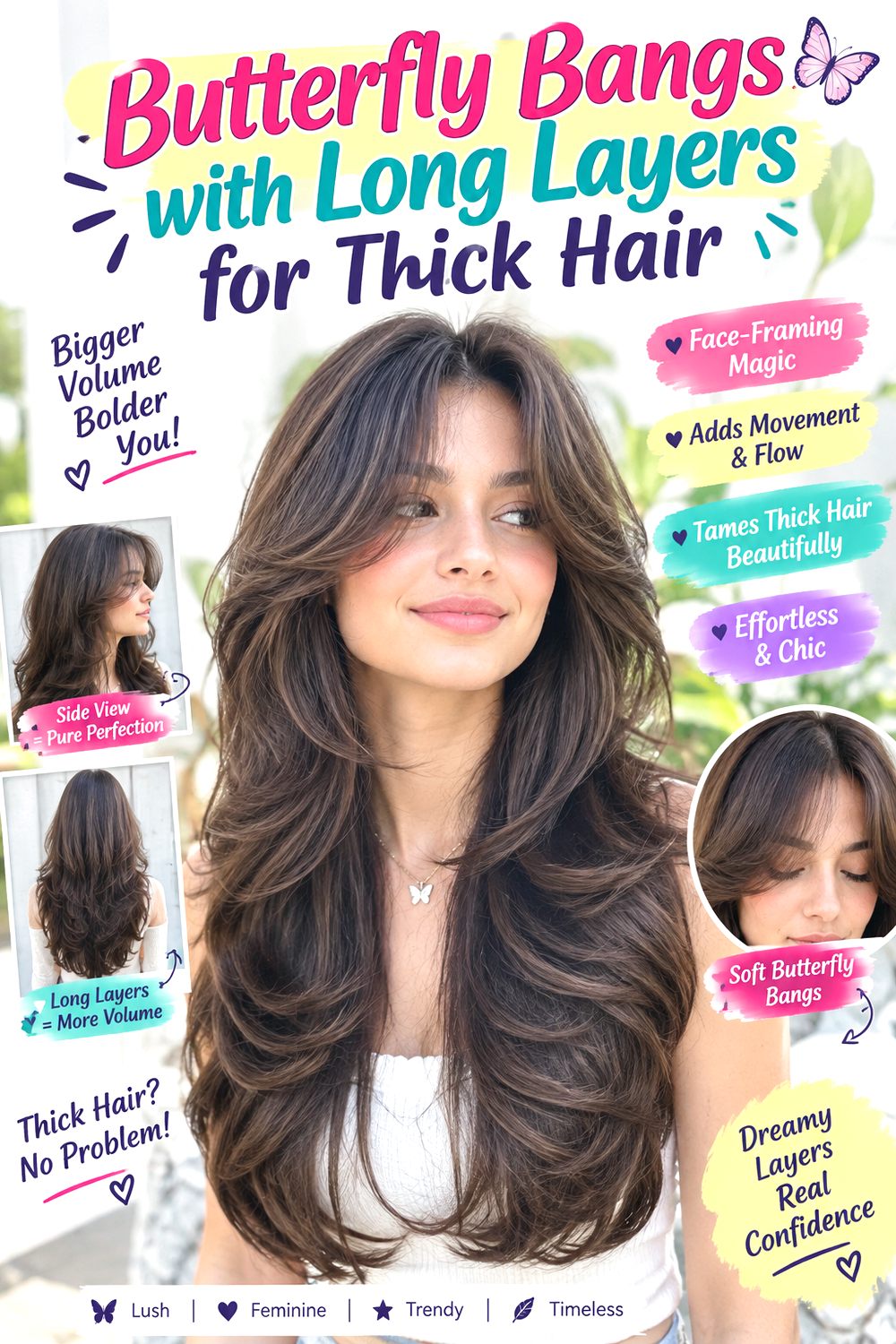
Thick hair gives butterfly bangs plenty of volume, but careful weight distribution keeps the haircut from becoming too wide around the sides. Long layers should remove bulk internally while preserving a smooth outer surface and substantial perimeter. The fringe can be fuller than on fine hair, with cheekbone-length pieces blending into longer sections through the jaw and collarbone. Straight, wavy, and coarse textures can all support the shape. Use smoothing cream, heat protectant, and a large round brush to control the front and outer layer. Styling takes moderate to longer time because dense hair needs thorough drying in smaller sections. Humidity can cause shorter internal pieces to expand, so over-thinning should be avoided. At the salon, ask for strategic internal weight removal under the surface rather than aggressive razor work, and keep the outer butterfly layers long enough to fall smoothly.
Pro tip:
Show the stylist where your hair naturally gets widest—often around the temples or shoulders—so bulk removal is targeted instead of evenly spread through the entire cut.
Butterfly Bangs with Long Layers for Wavy Hair hairstyle
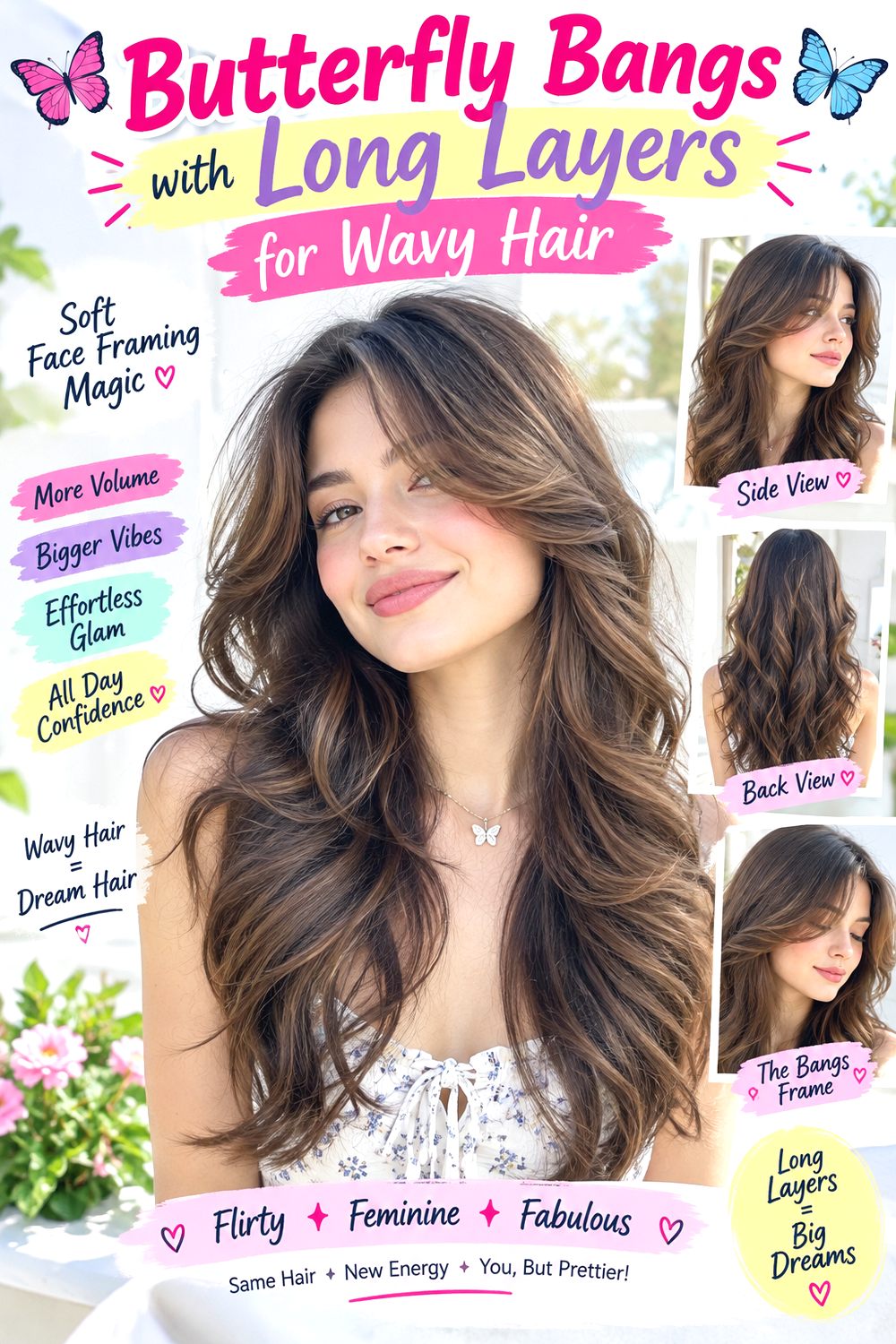
Wavy hair brings natural movement to butterfly bangs, allowing the fringe and layers to curve without a full blowout. The cut should follow the existing wave pattern so the shortest front pieces fall where they naturally bend rather than being forced into a straight-hair shape. Medium and thick waves can handle more layering, while fine waves usually need a fuller perimeter. Use leave-in conditioner, lightweight mousse, and a diffuser to encourage texture without flattening the roots. Styling is moderate on wash day and quick to refresh with water or a light mist afterward. The main maintenance issue is avoiding layers that spring too short or create a triangular shape through the sides. At the salon, ask for the bangs and face frame to be checked dry after cutting so their true length is visible. Keep longer layers connected through the back for smoother grow-out.
Pro tip:
Ask the stylist to cut the front pieces with your natural wave pattern visible; stretching them straight can lead to bangs that sit shorter than expected once dry.
Butterfly Bangs with Long Curved Layers hairstyle
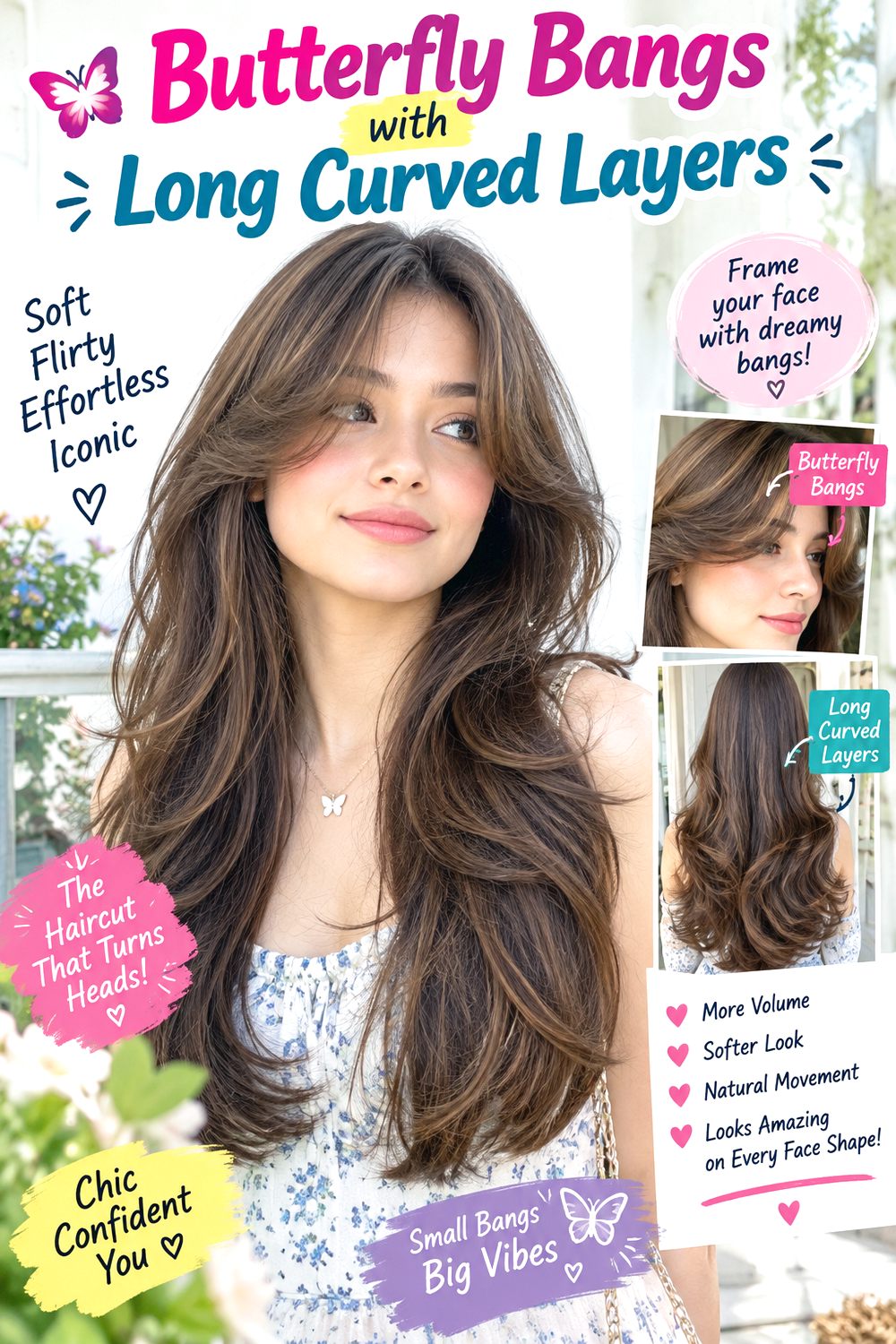
Long curved layers create a more sculpted version of butterfly bangs by shaping the hair into broad C-like bends around the face. The fringe begins near the cheekbones and moves outward, while the following layers curve through the jaw, shoulders, and long ends. Medium and thick hair show the stacked movement clearly, although fine hair can wear a simplified version with fewer layers. Straight and wavy textures are easiest to direct with heat. Use heat protectant, a large round brush, and oversized rollers to set the strongest curves while they cool. Styling takes moderate to longer time because each layer needs to be directed deliberately. Regular reshaping becomes useful when the curves grow too low to frame the face. At the salon, ask for connected C-shaped layering rather than short feathering and specify where the first curve should begin relative to your cheekbone or jaw.
Pro tip:
Set each layer in the direction you want it to fall rather than rolling every section identically; small directional changes create clearer, more dimensional curves.
Butterfly Bangs with Wispy Long Layers hairstyle
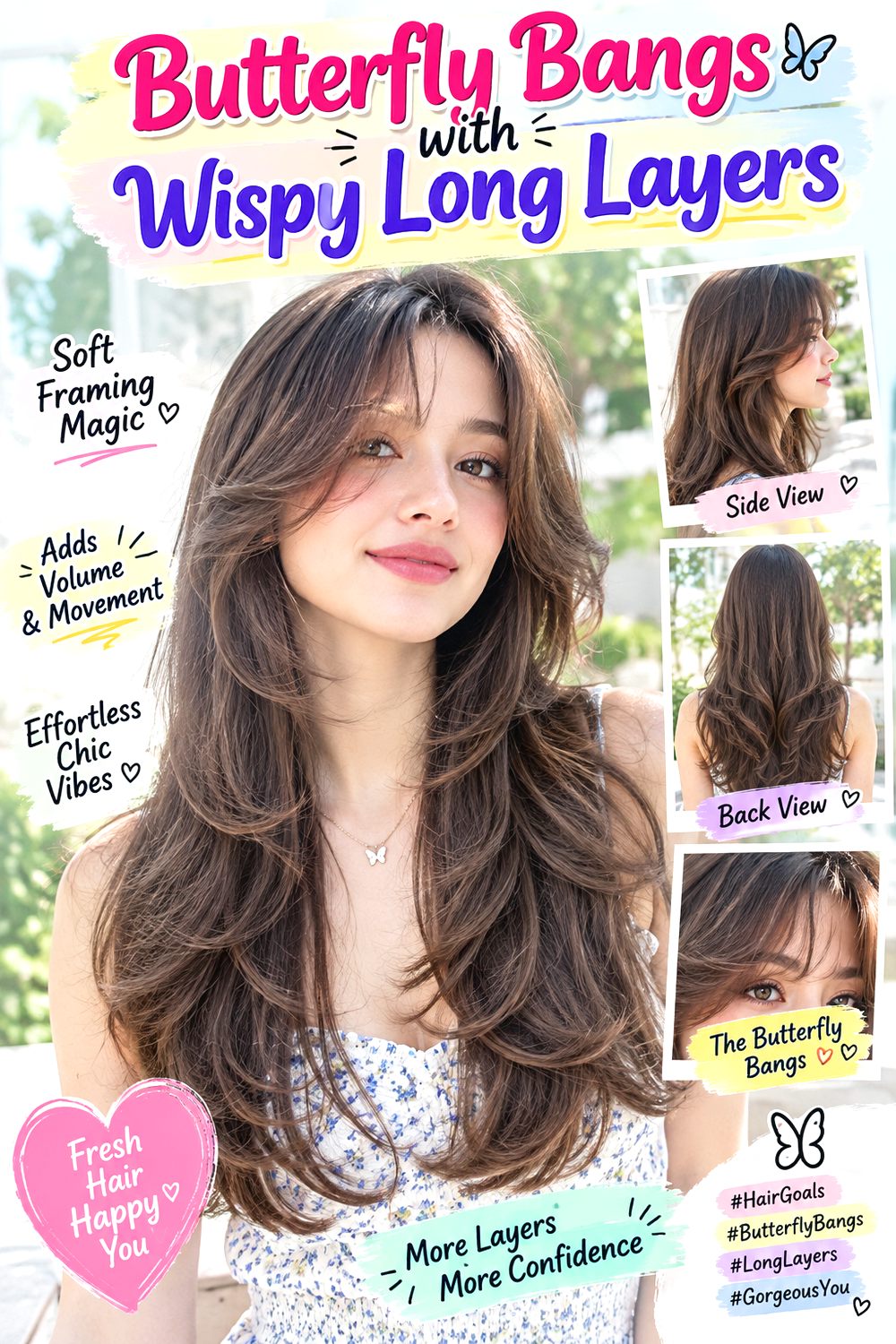
Wispy butterfly bangs keep the front light and separated, making them useful when you want face-framing without a dense fringe section. The shortest pieces can skim the cheekbones, while thin outer sections taper gradually into longer layers. Fine to medium hair often suits this lighter effect, but the back should remain full enough to prevent the entire haircut from looking sparse. Straight and softly wavy textures show the delicate separation best. Use a light volumizing mist, small round brush, and flexible texturizing spray to give the fringe movement without stiffness. Styling is quick because only a few front sections need shaping. The wispy pieces may require more frequent trims to keep their placement intentional. At the salon, ask for a narrow bang section with soft point-cut ends while keeping the long layers subtle and connected rather than heavily thinning the whole haircut.
Pro tip:
Avoid thinning shears directly through an already-light fringe; ask for controlled point cutting so the bangs stay wispy without becoming see-through at the center.
Butterfly Bangs with Bouncy Rounded Layers hairstyle
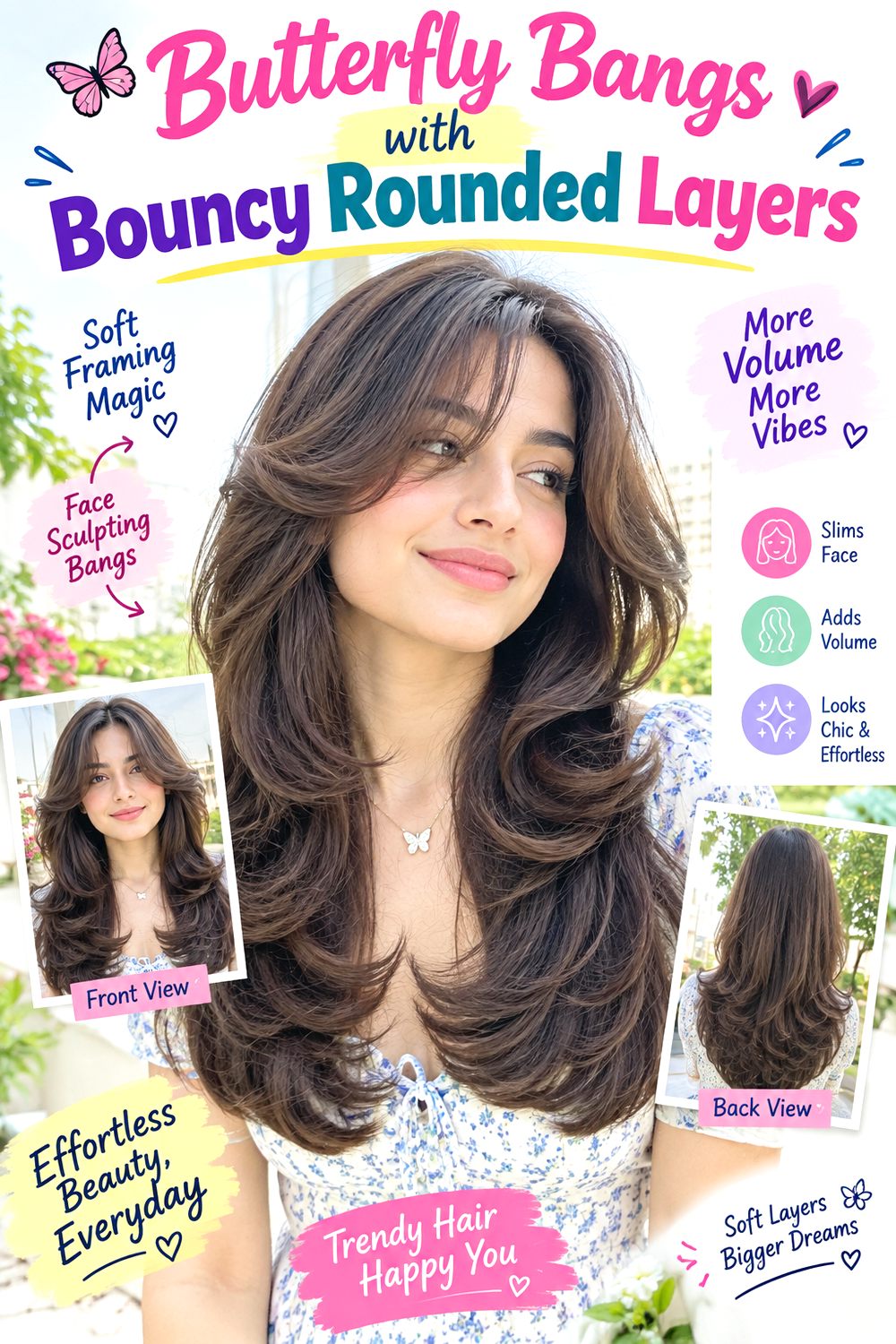
Rounded layers create a fuller, bouncier interpretation of butterfly bangs, with broad movement through the front and ends rather than thin feathering. The fringe lifts from the forehead, sweeps around the cheekbones, and connects to rounded layers through the shoulders and lower length. Medium and thick density usually supports the shape best, although fine hair can create a lighter version with fewer layers. Straight and wavy textures respond well to a blowout. Prep with volumizing mousse, heat protectant, and a large round brush, then let the front pieces cool before touching them. Styling takes moderate to longer time but is easy to refresh by reworking only the top and face frame. At the salon, ask for rounded, connected layers that keep visible weight through the ends instead of heavily tapered tips. The first side layer should blend smoothly from the butterfly fringe.
Pro tip:
Roll the ends only through the final third of the hair; starting the curve too high can make the lower layers look overly curled instead of bouncy.
Butterfly Bangs with Extra-Long Face Frame hairstyle
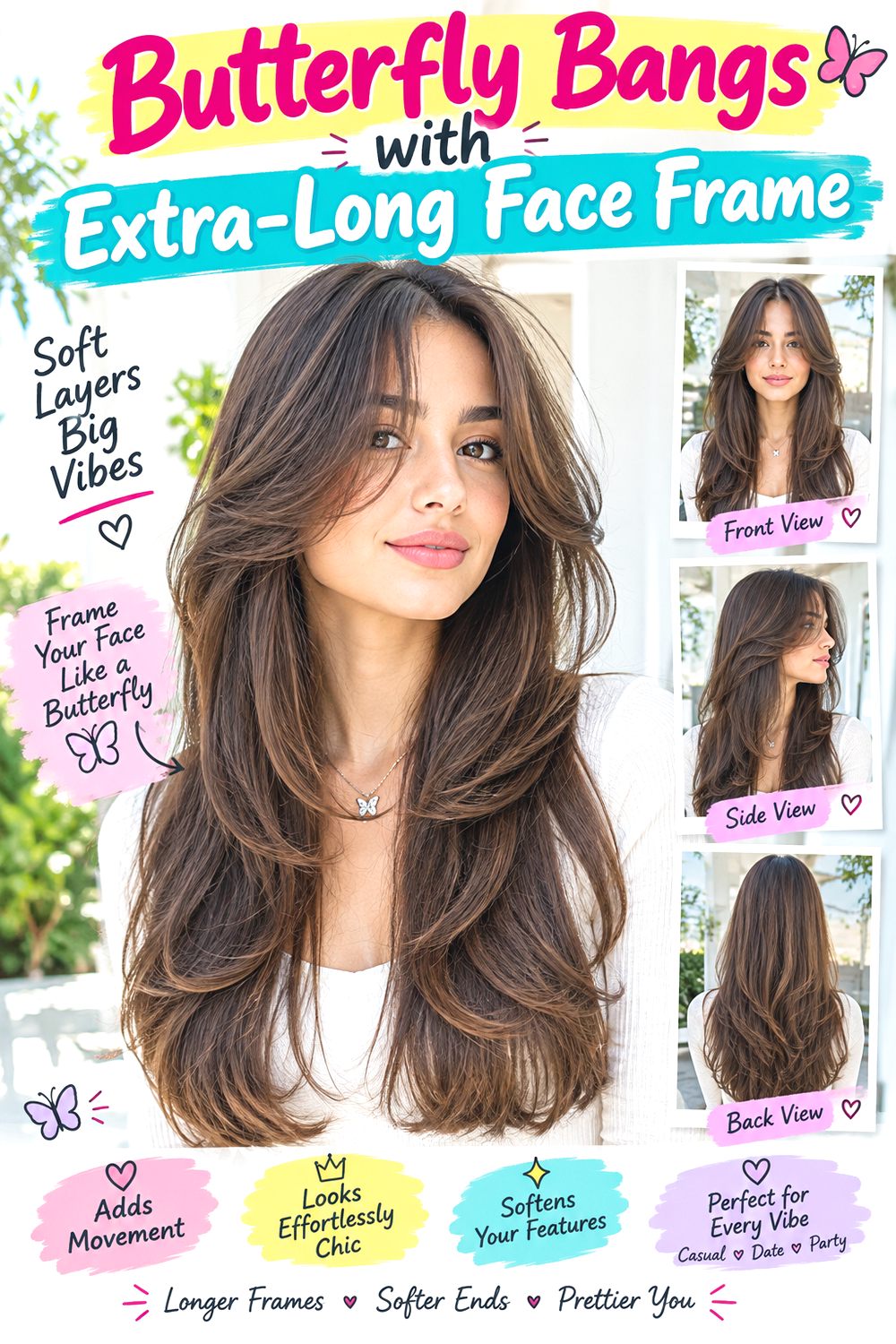
An extra-long face frame gives butterfly bangs a softer grow-out and requires less frequent fringe maintenance. Instead of beginning near the brows or upper cheekbones, the shortest pieces can start around the lower cheekbone or jaw before blending into collarbone-length layers. This works well for people who want the butterfly effect without a strong bang commitment. Fine hair benefits because more front density remains intact, while thick hair can use the longer frame to distribute weight smoothly. Straight, wavy, and softly curly textures all adapt well. Use leave-in conditioner, a medium round brush, and lightweight hairspray to shape the front away from the face. Styling is quick to moderate, and the pieces can usually be tucked behind the ears. At the salon, ask for a clearly defined jaw-level starting point with long connected layers behind it so the face frame does not look disconnected.
Pro tip:
If low maintenance matters, keep the shortest front piece below the cheekbone; it will retain the butterfly sweep longer as the haircut grows.
Butterfly Bangs with Softly Flipped Layers hairstyle
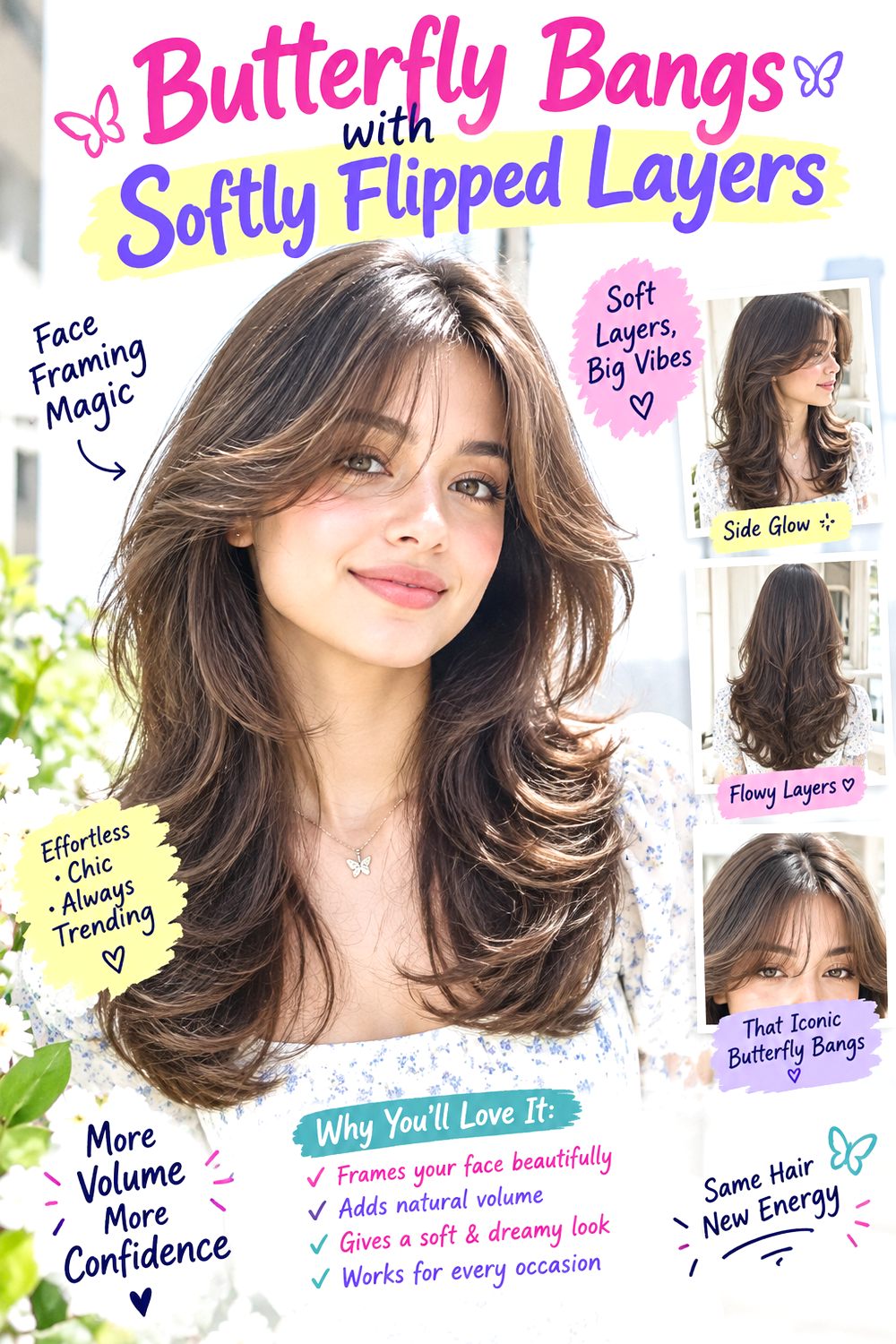
Softly flipped layers push the butterfly shape outward through both the bangs and longer sections, creating more visible movement along the sides. The front sweeps away from the face while selected layers through the shoulders turn slightly outward instead of curling under. Medium to long hair works best because the flip needs enough length to remain broad and soft. Fine hair should keep the flip subtle so the ends do not look sparse; thick hair can support stronger outward movement. Use heat protectant, a medium-to-large round brush, and flexible hairspray concentrated on the ends. Styling takes moderate time and may need a short refresh in humid weather. At the salon, ask for long connected layers with enough perimeter weight to support the outward bend. Avoid very short side layers, which can make the flip stick out sharply rather than flow.
Pro tip:
Turn the brush outward only near the ends of each layer; flipping from the mid-lengths can create too much width around the shoulders.
Butterfly Bangs with Long Layers and Root Volume hairstyle
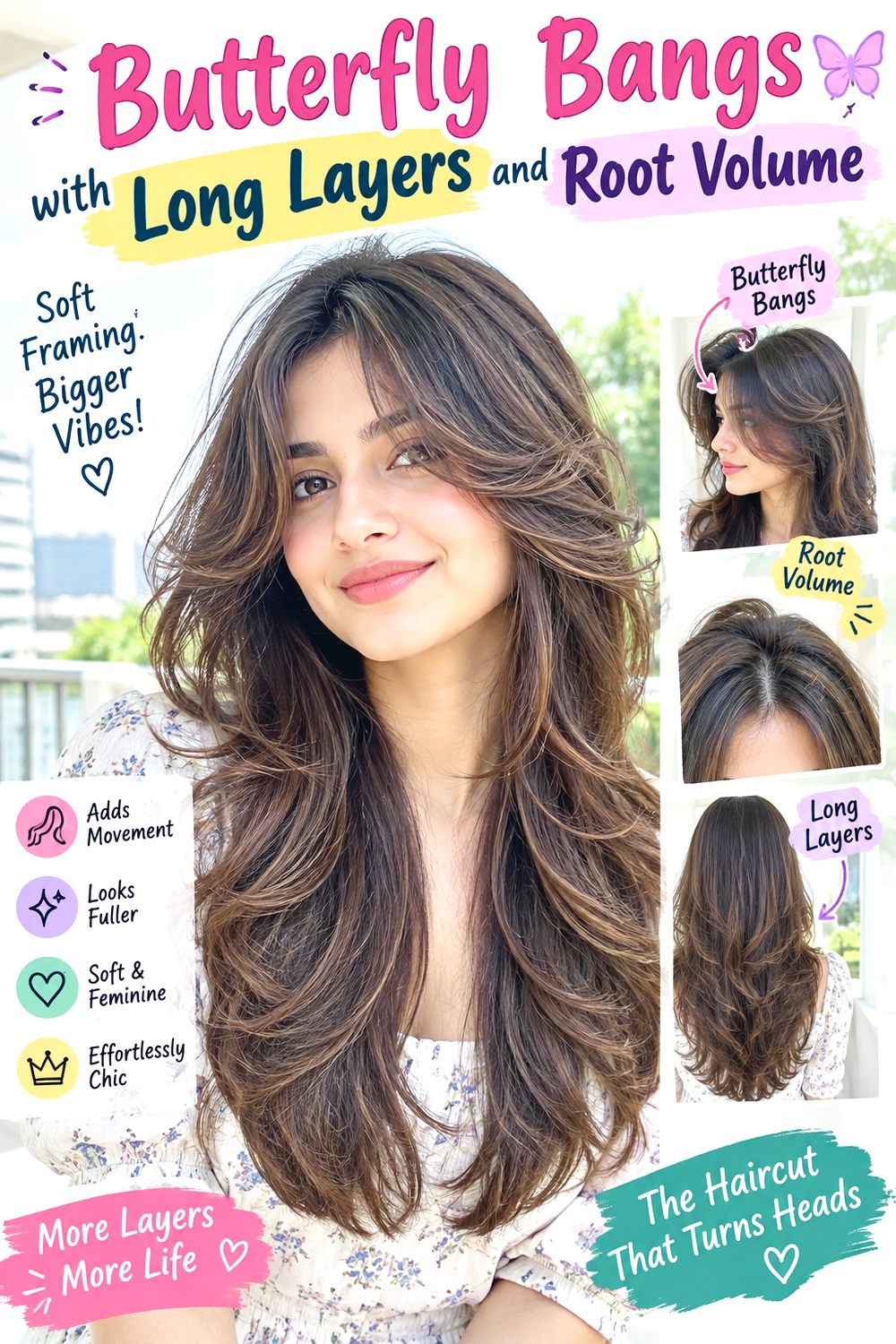
Root volume changes the overall balance of butterfly bangs by lifting the fringe and crown before the long layers fall away from the face. The effect works especially well on fine or medium hair that tends to sit flat at the top while keeping movement through the lower length. Thick hair can use a subtler version so the style does not become overly wide. Straight and wavy textures are easy to direct with a blow-dryer. Use root-lifting spray, heat protectant, and a large round brush, focusing the strongest lift behind the fringe rather than directly at the hairline. Styling takes moderate time, but next-day maintenance can be as simple as reworking two or three crown sections. At the salon, ask for long crown layers that support lift without becoming short or disconnected. Keep the butterfly bangs long enough to sweep outward once the roots are raised.
Pro tip:
Dry crown sections briefly in the opposite direction from where they will fall, then flip them back after cooling for lift without heavy teasing.
Choosing Butterfly Bangs With Long Layers for Fall 2026
The best butterfly bangs with long layers for Fall 2026 can be adjusted through fringe length, layer density, face-framing placement, parting, root volume, texture, and finish. Fine hair usually benefits from fewer long layers and a stronger perimeter, while thick hair often needs strategic internal weight removal. Straight hair shows the cut lines clearly, wavy hair adds natural movement, and longer fringe makes the style easier to grow out. A center part creates balanced wings, while a side part adds more directional volume. Styling effort also matters: soft natural waves need less heat than a full rounded blowout. The right version should suit your face shape, natural texture, density, preferred length, maintenance schedule, and the amount of daily styling you actually want to do.
Choose one or two favorite ideas and save clear photo references showing the bangs, side layers, and overall length. Discuss your face shape, natural texture, density, preferred length, maintenance level, and normal styling routine with your stylist. Point out the exact fringe length, face-framing position, layer starting point, crown volume, perimeter weight, and end finish you like. Those details make it easier to adapt the butterfly shape to your own hair instead of copying a cut that depends on a different density or styling routine.
FAQs
Do butterfly bangs with long layers work on fine hair?
Yes. Keep the bang section lighter, limit the number of long layers, and preserve a strong perimeter so the ends continue to look full.
How much styling do butterfly bangs need each day?
The full haircut does not always need restyling, but the fringe often benefits from a quick round-brush or roller refresh to restore its outward sweep.
What face shapes can wear butterfly bangs with long layers?
The shape can be adjusted for different faces by changing the shortest bang point, center opening, side volume, and face-framing length rather than using one fixed cut.
How often should butterfly bangs be trimmed?
The fringe usually needs attention sooner than the long layers. Trim timing depends on growth rate and how precisely you want the cheekbone or jaw-level framing to stay in place.